Retail News CRM

Tag: shoppers

  • Boost in Personalized E-Commerce Experience Demanded by Savvy Singapore Shoppers

    Boost in Personalized E-Commerce Experience Demanded by Savvy Singapore Shoppers

    Singaporean consumers are increasingly expecting more from their online shopping experiences, favoring personalised and relevant product discovery over novelty. This finding is according to a recent report called the Spark of Discovery 2026.

    Efficiency and Personalisation

    The study shared that Singaporeans are progressively seeking out efficient, customised experiences. Nearly half of the respondents (43%) stated that a swifter, more streamlined shopping process would be the most valuable improvement that retailers could offer them.

    In addition, the survey indicated that 63% of surveyed participants still find enjoyment crucial in online shopping, 62% prefer to stick with planned purchases, and 60% remain open to discovering new items. These data points signify a more purposeful approach to online browsing and purchasing.

    Trust Over Influence

    Trust is more important than influence when it comes to online shopping. Only 28% of Singaporean consumers admitted that content from influencers generates excitement about brands, which falls below the Asia-Pacific average of 34%. Meanwhile, positive reviews and readily accessible customer support emerged as the strongest factors driving engagement.

    Singapore is seen as a key indicator of the direction in which e-commerce in the Asia-Pacific region is moving, according to Sukesh Singh, MD, SEA at Criteo. Singh goes on to explain: “Consumers here are highly digitally literate; they know exactly what a great shopping experience looks like, and they have no patience for anything less. They want discovery to find them at the right moment, not interrupt them at the wrong one.”

    Artificial Intelligence and Personalisation

    These findings have emerged as retailers are boosting investments in artificial intelligence to enhance personalisation. Over half of the respondents declared that they are comfortable with brands leveraging their purchase history to provide customised recommendations, while 44% noted that timely and relevant advertisements enhance the shopping experience.

    On the retailer side, the report found that a vast majority (92%) plan on utilising AI to improve customer experiences, while 91% intend to employ it to make product discovery more efficient. These figures suggest that retailers are increasingly shifting their focus towards data-driven targeting as opposed to broad-reaching campaigns.

    The report also underscored the significant influence of shopping festivals on Singapore consumers, with 85% stating that they are swayed by such events. This reinforces the importance of providing pertinent recommendations during peak spending periods.

    Questions & Answers

    What value do Singaporean consumers see in online shopping experiences?
    Efficiency and personalisation are highly valued by Singaporean consumers in their online shopping experiences. A streamlined, less time-consuming shopping process is seen as the most valuable improvement that retailers could offer.

    How important is trust for Singaporean consumers when shopping online?
    Trust is crucial for Singaporean consumers when shopping online. Positive reviews and accessible customer support are among the strongest factors driving engagement.

    How are retailers responding to the demand for personalised experiences?
    Retailers are increasingly investing in artificial intelligence to enhance personalisation. They plan to utilise AI to improve customer experiences and make product discovery more efficient.

  • Singapore Online Retailers Exposed: Dark Patterns Mislead Shoppers into Rushed Purchases

    Singapore Online Retailers Exposed: Dark Patterns Mislead Shoppers into Rushed Purchases

    In Singapore, three prominent online retailers, namely Boarding Gate, Origin Sleep, and Light In The Box, have been implicated in deceptive practices aimed at manipulating consumers’ purchasing behaviors.

    These retailers were found to be manipulating elements of their websites. They employed tactics often referred to as ‘dark patterns’, which included showcasing sham visitor counts, fraudulent countdown timers, and bogus discount claims. These tactics are used to generate an unnatural sense of urgency and product demand.

    Deceptive Tactics

    In the case of Boarding Gate, the company’s website was found to be displaying random figures that purportedly represented the number of viewers per product. This sly practice gives consumers the impression of high demand and real-time visitor activity, thereby pressuring them into making rapid purchasing decisions.

    Origin Sleep, also, resorted to similar manipulative strategies. The company’s website featured countdown timers suggesting that purchases had to be finalized before the given time ran out, even though these timers held no actual significance. Moreover, Origin Sleep was found to be conducting a supposedly limited-time sales offer. However, this “flash sale” was discovered to have continued for nearly two years under various pseudonyms.

    Light In The Box, on the other hand, displayed ‘Almost sold out’ notifications on items to suggest scarcity. In actuality, these labels were arbitrarily applied to create promotional effects. The company also provided misleading information about savings by comparing discounted prices with higher ‘original’ prices, which were never genuinely offered.

    Alvin Koh, the CEO of the Competition and Consumer Commission of Singapore (CCS), said that “dark patterns are insidious as they are difficult to detect and erode consumer trust in the digital marketplace.” He vowed that the CCS would continue to act firmly to safeguard consumer trust and honest businesses from those who engage in unfair competition.

    The three accused companies have since provided formal promises to the CCS. They have ceased their misleading actions and pledged to refrain from unjust trading practices in the future.

    Previous Violations

    In the previous year, Courts and Prism+, retailers of electronics and home appliances, were found to have contravened trading laws. They either charged consumers for products that were not selected or employed specific website features to create a false sense of urgency to purchase.

    Questions & Answers

    What are ‘dark patterns’?
    Dark patterns refer to manipulative techniques used on websites to influence consumers’ purchasing decisions.

    How have companies employed these ‘dark patterns’?
    Companies have used bogus visitor counts, fraudulent countdown timers, and false discount claims to generate an unnatural sense of urgency and product demand.

    What are the steps taken by the Competition and Consumer Commission of Singapore (CCS) to prevent such practices?
    The CCS has been proactive in detecting and combating such unethical practices. The implicated companies have been made to cease their deceptive tactics and have pledged to refrain from unfair trade practices in the future.

  • Singaporeans Shift Focus: Declining Interest in Brand Ads and Social Media Messaging Revealed

    Singaporeans Shift Focus: Declining Interest in Brand Ads and Social Media Messaging Revealed

    Nearly half the population of Singapore appears to have tuned out traditional marketing efforts, as a recent report by Blackbox reveals that 49% of Singaporeans ignore brand advertising or social media outreach. This figure rises to an eye-opening 57% among consumers under 30, indicating a significant generational divide in receptivity to marketing messages.

    What’s particularly striking is that about 48% of all respondents admitted they can’t even remember the last ad that caught their attention. Among younger consumers, this figure climbs to a staggering 55%. Analysts blame the phenomenon on an “attention economy,” where consumers—especially younger ones—have perfected the skill of filtering out the marketing din surrounding them.

    Consumer Trust Takes a Hit

    As if these numbers weren’t sobering enough, 51% of Singaporeans feel that current brand messaging often “feels fake or tries too hard.” More than half (56%) outright dismiss the notion of “brand trust” as little more than empty rhetoric. In a telling statistic, half of the respondents—along with nearly two-thirds of those under 30—expressed a preference for trusting personal connections over brands.

    This disconnect between brand communications and consumer perceptions reveals a growing chasm. According to the findings, two key attributes influence whether a brand message resonates: honesty and proof. Consumers are increasingly drawn to messages that feel unscripted and are supported by tangible evidence, leaving clever slogans and polished presentations in the dust.

    The Challenge of Engagement

    The report suggests that brands are navigating a “double-disconnect,” struggling to capture consumer interest while also failing to listen to their audiences meaningfully. Traditional survey formats have only added to consumer frustration, as individuals cite long forms and repetitive questions as major turn-offs.

    Yet, there’s a glimmer of hope: six in ten respondents expressed openness to engaging with AI interviewers, a figure that jumps to 70% for younger consumers. Still, a quarter of participants remain unyielding, preferring a human touch. The suggestion here is clear—brands must find ways to create genuine dialogues rather than pushing out impersonal surveys.

    Authenticity is Key

    To bridge this growing gap, the report calls for marketers and researchers to shift gears—from surveying to conversing, treating consumers as active participants instead of passive respondents. Brands need to integrate authenticity into every interaction, moving away from superficial messaging and toward engaging, evidence-backed narratives.

    The potential of AI also looms large in the conversation. While technology can enhance speed and scale in brand communications, it’s essential that brands maintain a human-like presence—empathetic, responsive, and authentic. In a world rife with skepticism, delivering genuine connections might just be the secret ingredient for success.

    Questions & Answers

    How did the report measure consumer attitudes toward brand messaging?
    The report by Blackbox surveyed Singaporeans about their perceptions of advertising, finding that a significant percentage ignore ads, particularly younger consumers who have grown skilled at ignoring marketing noise.

    What key qualities do consumers look for in brand messaging?
    Consumers prioritize honesty and tangible proof, favoring unscripted messages supported by data over polished slogans that lack credibility.

    What innovative approach does the report suggest brands take to engage consumers?
    The report recommends transitioning from traditional surveys to authentic conversations that treat consumers as active participants, while also leveraging AI to create more meaningful interactions.

  • Vietnamese Shoppers Flock to Gold as Prices Soar to Record Highs

    Vietnamese Shoppers Flock to Gold as Prices Soar to Record Highs

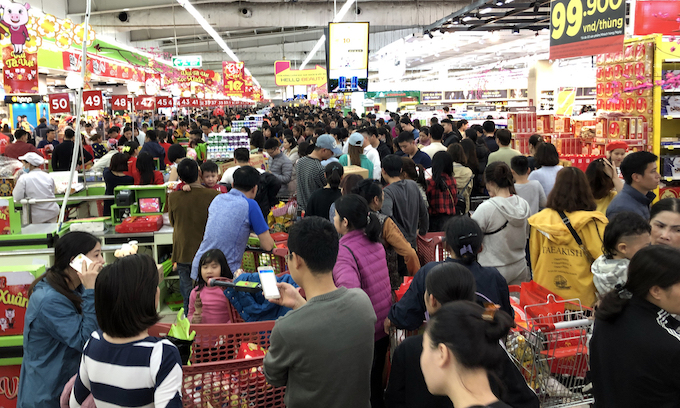
    At 8:30 a.m., a long line of eager customers snaked along Nguyen Thi Minh Khai Street in Ho Chi Minh City, awaiting entry to the Saigon Jewelry Company (SJC). As gold prices surged to an unprecedented VND134.4 million per tael, anticipation in the crowd was palpable. Each customer was limited to purchasing just one tael of bullion and 0.05 taels of 24K gold rings, which only heightened the sense of urgency.

    Among the crowd was Oanh from District 1, who expressed her anxiety about the rising gold prices. “I’ve waited for hours. Most shops have run out of gold, and I felt it was now or never,” she shared, echoing the sentiment felt by many. The line was predominantly filled with middle-aged and elderly individuals, while younger attendees appeared more interested in gold bars. Many were prepared for the wait, bringing snacks and drinks to keep their spirits high.

    The Gold Rush: A Unique Side Hustle Emerges

    In a surprising twist to the gold-buying frenzy, some young people are capitalizing on the situation by offering to stand in line for clients, like Tan Loi, a college sophomore, who was paid VND800,000 for his services. “I spent over an hour in line, but you’ve got to earn your keep somehow, right?” he remarked with a chuckle. An SJC employee confirmed this phenomenon, stating that many individuals are queuing up to buy on behalf of others, creating a secondary market for buying spots in line. This trend has sparked social media postings advertising paid positions to buy gold, offering pay rates that can exceed VND400,000 a day.

    Gold Fever Spreads to the Capital

    The gold buying excitement is not isolated to Ho Chi Minh City; similar scenes have unfolded in Hanoi. At two Bao Tin Minh Chau locations on Tran Nhan Tong Street, customers were left disappointed when both stores sold out by 10 a.m., despite imposing strict purchasing limits of 0.1 taels. Another shop, Phu Quy, allowed customers to buy as many rings as they wanted but remained constrained with available supplies, promising delivery for the remainder.

    The escalating demand for gold has been fueled by a relentless increase in prices, which have risen for 11 consecutive days. Meanwhile, global spot gold prices lag behind local rates by VND20.9 million per tael, adding pressure on consumers to make purchases now.

    Buyers and Sellers Navigate a Brisk Market

    Interestingly, the influx of buyers has given rise to sellers eager to seize the moment. Manh, who came to sell two taels of gold with his wife, cited rising prices as his reason for cashing in. “Gold’s value has skyrocketed, and I think it might soon decline,” he said, emphasizing the need for financial security. In the same vein, Hoa, an office worker in Hanoi, spoke of her habit of regular gold purchases. “I set aside part of my salary for gold; it’s a better return than most bank deposits,” she noted, reflecting the pervasive belief that gold remains a profitable investment, even in less favorable market conditions.

    Questions & Answers

    What is causing the surge in gold prices in Vietnam?
    Increasing demand and a steady rise in prices over 11 consecutive days have contributed to the surge in gold prices, which reached a record high this week.

    How are people adapting to the gold buying frenzy?
    Some individuals are taking advantage of the situation by offering to queue for others, with social media postings advertising paid opportunities to buy gold.

    What do buyers perceive as the benefits of purchasing gold now?
    Many buyers view gold as a safer investment compared to bank deposits, expecting better returns, and are anxious to buy before prices potentially drop.

  • FairPrice Group Teams Up with Google Cloud to Unveil Innovative AI Shopping and Workplace Solutions

    FairPrice Group Teams Up with Google Cloud to Unveil Innovative AI Shopping and Workplace Solutions

    Shoppers in Singapore can look forward to a transformative retail experience thanks to a groundbreaking collaboration between FairPrice Group (FPG) and Google Cloud. This expanded partnership aims to infuse Singapore’s largest retailer with cutting-edge AI-powered shopping and workplace tools, making the shopping process smarter and more efficient while enhancing employee productivity.

    AI Assistants Take Center Stage

    As part of FPG’s innovative Store of Tomorrow initiative, AI assistants, designed using Google Cloud’s Agent Development Kit (ADK), have made their debut at FairPrice Finest in Punggol Digital District. These sophisticated digital aides are set to offer personalized recommendations, streamline product searches, and assist shoppers with meal planning and recipes.

    Smart Carts: Your Personal Shopping Companion

    Armed with smart carts featuring multimodal AI assistants, shoppers can now navigate stores with ease. These high-tech carts allow customers to scan barcodes, uncover exciting promotions, and receive tailored product suggestions. For instance, a simple search for “yam paste” not only reveals ready-to-cook items and ingredients but also confirms in-store availability—a game-changer for lunch prep!

    Breaking Language Barriers

    The initiative doesn’t stop there. FPG is also piloting Vertex AI Search for Commerce, a tool adept at handling non-English and local dialect queries. This makes it significantly easier for customers to locate products, whether they are searching for “low fat cheese,” “荔枝” (lychee), or good old “orh nee” (yam paste). It’s retail becoming truly multilingual!

    Wellness Meets Convenience

    At Unity pharmacy, specialized AI agents provide personalized wellness advice, create meal plans, and generate shopping lists tailored to individual health needs. Meanwhile, wine aficionados can delight in a digital sommelier that recommends beverages based on taste preferences, price points, country of origin, and perfect culinary matches—a delightful approach that could turn you into a connoisseur faster than a cork pops!

    Empowering Employees with AI

    On the operational side, employees will benefit from Google Agentspace, which empowers them to create and utilize AI agents for various tasks ranging from research and ad creation to human resources and customer service. A standout feature of this collaboration is a custom creative agent that can generate ad visuals and copy up to ten times faster than traditional methods, giving staff the edge in a competitive landscape.

    With this partnership, FairPrice Group is stepping boldly into a future where AI enhances both the customer and employee experience, proving that the retail landscape in Asia is not just keeping up with technological advancements—it’s setting the pace.

    Questions & Answers

    What is the primary goal of the collaboration between FairPrice Group and Google Cloud?
    The partnership aims to introduce AI-powered tools to improve shopping efficiency and enhance employee productivity across FairPrice stores.

    How do the smart carts benefit shoppers at FairPrice?
    Shoppers can utilize smart carts with AI assistants to navigate the store, scan barcodes, find promotions, and receive personalized product recommendations based on their searches.

    What unique features does the Vertex AI Search offer?
    Vertex AI Search allows for non-English and local dialect queries, enabling customers to easily find products in their preferred languages, significantly breaking down communication barriers.

  • South Korean Retailers Combat Rising Food Prices With Ultra-affordable Products

    South Korean Retailers Combat Rising Food Prices With Ultra-affordable Products

    In South Korea, the rise in food prices has led to an increase in demand for ultra-low-cost products, specifically those priced under 1000 won. This surge in demand has prompted convenience stores to grow their range of super-value items.

    7-Eleven’s Affordable Coffee Selection

    On the 30th of July, the famous convenience store chain, 7-Eleven, introduced two new coffee products to its line: “Seven Select Black Coffee” and “Seven Select Cafe Latte.” Retailing at only 900 won each, these offerings are approximately 36% cheaper than the average market price of 1400 won for similar items. The black coffee offers a clean, Americano-style flavor, while the cafe latte provides a lightly sweet taste and aroma that appeals to a wide range of customers.

    This addition to 7-Eleven’s product line follows the mid-July release of “Seven Select Venti Coffee” in 600ml PET bottles. Available in black and hazelnut varieties, these beverages retail at 1800 won, making them 33% less expensive than typical 500ml bottled coffees. These products experienced a 70% increase in sales from July 18 to 25, compared to the preceding month, indicating robust consumer interest in large volume, low-cost options.

    According to 7-Eleven, reflecting the wider economic pressures, sales of all differentiated products priced under 1000 won increased by 30% from July 1 to 25 compared to the same period the previous month.

    CU Embraces the Ultra-Value Trend

    CU, another popular convenience store chain, has also responded to the ultra-value trend. In preparation for Korea’s traditional midsummer days, CU introduced two affordable traditional chicken dishes to its private-label “Duktem” series. These are the “Samgyetang Chicken Breast,” priced at 1900 won, and the “Samgyetang Whole Chicken Leg,” available for 3500 won.

    Easily prepared in a microwave in under two minutes, these dishes offer a cost-effective alternative to Samgyetang. This traditional Korean chicken soup, generally considered a restorative dish, has become increasingly expensive. Data from Korea Price Information shows the cost of making Samgyetang at home has risen to 9000 won per serving, while dining out costs an average of 17,654 won, a 4.6% increase from the previous year.

    Other Retailers Join the Trend

    Large retailers, such as Emart, Homeplus, and Lotte Mart, have also recognized this trend and begun offering aggressive promotions on fresh poultry and ready-to-eat health foods. For instance, Emart offered two antibiotic-free young chickens for 3580 won with a member card, while Homeplus sold first-grade whole chickens for 3650 won each with bulk purchases.

    As consumer spending power declines and economic uncertainty persists, ultra-affordable, high-value products are fast becoming a key strategy for retailers. The aim is to attract cost-conscious shoppers looking for reasonably priced alternatives to expensive meals and beverages.

    Questions & Answers

    What effect is the rise in food prices having in South Korea?
    South Koreans are increasingly seeking ultra-low-cost products. This demand has prompted convenience stores to expand their range of super-value items.

    How have 7-Eleven and CU responded to this demand?
    7-Eleven has introduced affordable coffee products, while CU has released cost-effective traditional chicken dishes to cater to this growing demand.

    What is the overall retail strategy in response to these economic pressures?
    Retailers, recognizing the need for affordable options amid declining consumer spending power and economic uncertainty, are focusing on providing ultra-affordable, high-value products to attract cost-conscious shoppers.

  • TikTok Shop Gains Ground, Closing In on E-commerce Leader Shopee in Retail Competition

    TikTok Shop Gains Ground, Closing In on E-commerce Leader Shopee in Retail Competition

    TikTok Shop is making waves in the Southeast Asian e-commerce landscape, capturing a notable 39% share of gross merchandise value, a substantial increase from 29% in the first half of the previous year, according to data from Metric. In stark contrast, its competitor Shopee has seen a decline, with its market share slipping from 63% to 58%. When it comes to revenue growth, TikTok Shop outpaced Shopee dramatically, reporting a staggering 69% growth compared to Shopee’s more modest 16%.

    Combined, TikTok Shop and Shopee command an impressive 97% of the market, leaving the remaining 3% to Lazada and Tiki, while other players remain too small to feature in Metric’s data. The analytics firm suggests that TikTok Shop’s ascent highlights a significant consumer trend towards platforms that marry entertainment with shopping, a seamless integration some are dubbing “shoppertainment.”

    At the recent TikTok Shop Vietnam Summit, the platform celebrated the remarkable success of this entertaining shopping model. Metrics from 2024 show revenue growth surging by 2.3 times in affiliate marketing and 1.9 times in livestreaming and short videos. However, TikTok Shop is not just riding the wave of entertaining content; official brand stores are emerging as a crucial growth driver. Despite representing only 3.4% of total stores on Shopee and TikTok Shop, these brand malls accounted for an impressive 28.7% of total revenues, reflecting an eye-popping year-on-year growth of 63% and 107% respectively. It seems consumers are becoming increasingly discerning, gravitating towards trusted brands amid the prevalence of low-quality goods.

    As we look ahead to the third quarter, forecasts from Metric indicate a projected gross merchandise value increase of 21.6% among the four major platforms, expected to reach VND122.8 trillion. Key sales events like the Mid-Autumn Festival and the back-to-school season are anticipated to fuel demand for education, gifting, and food products.

    In a recent forum, Nguyen Lam Thanh of TikTok Vietnam emphasized a commitment to optimizing seller operations, enhancing user security, and bolstering community support initiatives within the industry. Meanwhile, rival platforms Shopee and Lazada are ramping up competition by offering free shipping, with Shopee announcing free shipping on all orders, except for bulky items, and Lazada launching similar offers for orders under 15kg from official brand stores.

    Questions & Answers

    What trends are fueling TikTok Shop’s growth in Southeast Asia?
    The growth of TikTok Shop is largely attributed to the blending of entertainment and shopping—termed “shoppertainment”—which is increasingly resonating with consumers, alongside a notable rise in trust for official brand stores amidst a crowded market.

    How is the competition responding to TikTok Shop’s success?
    In response to TikTok Shop’s explosive growth, both Shopee and Lazada are implementing aggressive strategies, including offering free shipping on various orders to attract more customers.

    What does the future look like for e-commerce platforms in the region?
    The outlook for the coming months appears promising, with projections of a 21.6% increase in gross merchandise value across major platforms, driven by key shopping events and seasonal demand for various products.

  • South Korea’s ‘mallcations’ Trend: Unprecedented Weather Boosts Indoor Retail Sales

    South Korea’s ‘mallcations’ Trend: Unprecedented Weather Boosts Indoor Retail Sales

    As South Korea experiences an intense summer marked by unprecedented heatwaves and monsoon downpours, there’s been a noticeable uptick in customers choosing to spend their leisure time indoors. This trend, known as “mallcations,” is resulting in a significant surge in sales for department stores and outlet malls.

    Increased Footfall and Sales

    Major retailers have reported a sharp increase in foot traffic from July 1 to 17, compared to the same time frame last year. Lotte Department Store noted a 10% surge in visitor numbers, while Shinsegae and Hyundai Department Store registered increases of 14% and 13% respectively, translating into sales growth of 11.1% and 10.7%. Meanwhile, Hyundai Premium Outlet, which boasts an underground parking feature, saw its sales skyrocket by 21.2%.

    This changing consumer behavior is largely attributed to the unpredictable weather conditions, making air-conditioned indoor spaces far more appealing than outdoor venues. Notably, families are driving an increase in food and beverage (F&B) sales: Lotte observed a 10% rise, while Shinsegae and Hyundai reported increases of 15.8% and 12.4% in F&B revenue respectively.

    Seasonal Products and Experiences

    As the summer vacation season looms, seasonal product categories have also shown strong sales performance. Sales of swimwear at Lotte have jumped by 15%, supported by a government tax incentive for cultural activities. Appliance sales have increased by 10% under an energy efficiency rebate program.

    Cooling bedding has emerged as another hot-selling item. Shinsegae saw a 33.7% surge in its bedding category, while Hyundai recorded growth of 23.9% in sportswear and 18.8% in home living products.

    In addition to the increase in sales, retailers are also rolling out immersive, summer-themed experiences to capitalize on the increased footfall. Lotte is set to launch a “Summer Gourmet Week” across all its locations, complete with sweepstakes for F&B customers. The retail chain will also host a “Summer Wine Festa”, offering discounts on spirits, and pop-up jewelry boutiques catering to seasonal accessory shoppers.

    Shinsegae, on the other hand, has introduced pop-ups featuring surfing gear and is hosting art exhibitions. Hyundai Department Store is revamping its spaces with a Hawaiian resort theme under the “Hu’i Hu’i Maui” campaign which will run through August 21.

    Reinventing Retail

    With the Korean climate becoming increasingly erratic, retailers are adopting climate-proof leisure strategies. They are redefining malls as not just shopping centers, but as cool and curated summer destinations.

    Questions & Answers

    What is a “mallcation”?
    A “mallcation” refers to the trend of consumers spending their leisure time indoors at malls due to unfavorable weather conditions.

    What factors have contributed to the growth in foot traffic and sales for retailers?
    Unpredictable weather conditions, the appeal of air-conditioned indoor spaces, and the introduction of immersive, summer-themed experiences by retailers have contributed to the increase.

    How are retailers capitalizing on the rising trend of “mallcations”?
    Retailers are rolling out immersive, summer-themed experiences and pop-up shops, hosting art exhibitions, and transforming their spaces to provide a more engaging and enjoyable shopping experience for consumers.

  • Vietnamese Shoppers Enthralled by Irresistible Chinese Golden Plums at $19/kg

    Vietnamese Shoppers Enthralled by Irresistible Chinese Golden Plums at $19/kg

    The golden-yellow Chinese plum has burst onto the Vietnamese fruit scene, boasting a subtle fragrance, crisp texture, and a hint of delicate sweetness. Its size surpasses that of traditional Vietnamese plums, positioning it as a rival to pricier fruits like seedless lychees and milk grapes, which once ruled the marketplace.

    At a premium fruit shop in downtown Ho Chi Minh City, owner Tuyet shared her enthusiasm after selling over 200 kilograms of this new plum variety within just two weeks of importing it. “Customers often return after their first try,” she remarked, alluding to the fruit’s growing popularity.

    As if on cue, online vendors have ramped up their marketing efforts for this specialty fruit. Le Thoa, an importer of exotic fruits, praised the unique qualities of the Chinese plum, comparing it favorably to her past offerings from Chile and Australia. “It has golden flesh and is as crisp as Vietnamese plums with a mild sweetness that’s easy to enjoy without overwhelming the palate,” she explained, perhaps envisioning a fan base of budding plum enthusiasts.

    Currently, these plums are either hand-carried or imported in small quantities due to the lack of a formal trade agreement between Vietnam and China. Nguyen Lien, a trader in the border province of Lao Cai, revealed that the wholesale prices have skyrocketed, reaching VND300,000 per kilogram.

    Cultivated predominantly in regions like Yunnan, Xinjiang, and Miyun County, this plum variety has a substantial agricultural footprint. In Yunnan and Xinjiang alone, the golden plum occupies thousands of hectares, while in Miyun, approximately 660 hectares are designated for premium plum cultivation.

    The plum’s primary harvest season occurs from late June to August, a window that Vietnamese consumers will likely be eagerly watching. According to customs data, Vietnam imported $402 million worth of fruits and vegetables from China in the first half of this year, capturing 33.5% of total imports in this category. This statistic cements China’s position as Vietnam’s largest supplier of fresh produce, and it looks like the golden plum is ready to take its rightful place on the fruit crown.

    Questions & Answers

    What makes the golden Chinese plum stand out in the Vietnamese market?
    The golden Chinese plum is larger than traditional Vietnamese plums and offers a unique flavor profile with its crisp texture and mild sweetness, appealing to consumers looking for something new.

    How has the reception been for this fruit among consumers?
    Retailers like Tuyet have reported strong sales, with returning customers indicating that the plum is becoming a popular choice among fruit lovers.

    What are the challenges faced in importing these plums to Vietnam?
    Imports are currently limited to hand-carried shipments or small volume imports due to the absence of a formal trade agreement between Vietnam and China, impacting the supply chain for this fruit.

  • Vietnamese Shoppers Tackle the Challenge of Identifying Fake Products in a Complex Retail Landscape

    Vietnamese Shoppers Tackle the Challenge of Identifying Fake Products in a Complex Retail Landscape

    In early April, a 60-year-old woman in Hanoi visited the doctor, troubled by persistent joint pain that refused to ebb even under a regimen of various supplements. The diagnosis was disheartening: joint degeneration, osteoporosis, and herniated discs. Even more startling was the revelation that one of her supplements contained corticosteroids, potent anti-inflammatory medications known to weaken bones and contribute to adrenal insufficiency.

    In her quest for answers, Thuy turned to her child for help with research, only to uncover the troubling truth—many of her daily supplements had been flagged as counterfeits by local authorities. “I thought expensive medicines were good, but it turns out I have been buying fakes,” she lamented. A month later, her suspicion grew when she learned that another supplement, touted as a safeguard against osteoporosis, was part of a notorious counterfeit milk powder operation. “At this point, I suspect everything I have bought over the last five years is fake,” she confessed.

    Unmasking Counterfeit Operations

    Since early April, Vietnamese authorities have intensified their crackdown on counterfeit goods, unveiling a number of significant operations, including a fake medicine manufacturing ring in Thanh Hoa Province and a warehouse in Hanoi with counterfeit electronics valued at VND22 billion (US$842,270). A notorious milk powder scheme reportedly raked in nearly VND500 billion before authorities intervened.

    On June 7, officials dismantled a network producing counterfeit motor oils from reputable brands like Castrol, Motul, and Honda in Ho Chi Minh City. Two days later, a company in Phu Yen Province was implicated in selling 17 tons of fake coffee. The scale of the discovery is staggering: in the first quarter of 2025 alone, market management authorities conducted 6,192 raids, uncovering over 5,600 cases of counterfeit, smuggled, or substandard products.

    A Dismaying Discovery

    Thanh Truc, 29, visiting her parents in Nghe An Province, was shocked to find her hometown “full of fake products.” From toothpaste that tasted odd to body wash and shampoo that wouldn’t lather, each discovery felt like a betrayal. She even noted a shampoo labeled “Clean,” crafted to mislead consumers into thinking they were purchasing the reputable “Clear” brand.

    “These counterfeit products might not harm immediately, but over time, I cannot imagine the consequences,” she said, echoing a sentiment shared by many as counterfeit goods flood the market.

    E-commerce: A Hotbed for Counterfeit Goods

    Vu Van Trung, vice president of the Vietnam Consumer Protection Association, warns that online platforms have become a haven for counterfeiters. “The tactics employed are becoming increasingly sophisticated, taking advantage of e-commerce loopholes, especially through live-streamed sales on social media,” he explained. These platforms are easy to create, hard to monitor, and even simpler to erase once the counterfeit goods have been sold.

    The allure of counterfeit goods is further driven by significant profit margins. Nguyen Truong Son, president of the Vietnam Advertising Association, pointed out that while the fines for selling counterfeit products range between VND20-80 million, profits can soar into the billions, presenting a tempting risk for criminals.

    Consumers Take Control

    A survey conducted in 2021 by the Market Surveillance Agency revealed that 80% of consumers knowingly purchase fake goods due to their low price or a desire to have branded items that are otherwise unaffordable. April brought a particularly alarming account when Hai Long, 45, from Hai Phong, experienced seizures after taking what he believed were imported stroke prevention pills priced at VND1 million for ten. The discovery that these pills were counterfeit left his family in shock.

    In the wake of such incidents, Hai Long’s wife, Minh Ha, has become an activist for product integrity in her home, eschewing foreign drugs in favor of traditional remedies and devoting her supermarket trips to scrutinizing labels and scanning QR codes. “Living in a maze of real and fake goods, from vegetables to fish sauce and pills, I can no longer tell them apart. Now I have to protect my family on my own,” she stated, highlighting a growing trend towards self-advocacy among consumers.

    After discovering her counterfeit supplements, Thuy discarded everything and now faces daily pain while awaiting treatment. In response, her daughter Do Quyen, 25, has become proactive, committed to researching product authenticity and teaching her family to navigate the complexities of a market riddled with deception. This collective push for awareness is mirrored on social media, where posts offering advice on recognizing real versus fake products garner significant engagement.

    Experts suggest a proactive approach for consumers. Professor Nguyen Duy Thinh, a former lecturer at the Hanoi University of Science and Technology, recommends purchasing from authorized stores, supermarkets, and reputable pharmacies while remaining wary of unusually cheap products and dubious online tips. “Each individual’s action not only protects themselves but also helps protect the community,” Trung added, emphasizing the ripple effect of consumer vigilance in combating counterfeits.

    Questions & Answers

    What sparked Thuy’s realization about counterfeit products?
    Thuy’s diagnosis of serious health issues led her to research her supplements, revealing many were counterfeit.

    How are online platforms contributing to the counterfeiting problem in Vietnam?
    Counterfeiters exploit e-commerce loopholes, particularly through social media live-streaming, making it easier to sell fake goods.

    What proactive measures can consumers take to protect themselves?
    Experts advise purchasing from authorized outlets, scrutinizing labels and QR codes, and reporting suspected counterfeit goods to authorities.

  • Korean shoppers buy more eco-produce, but prices remain a hurdle

    Korean shoppers buy more eco-produce, but prices remain a hurdle

    Increasingly, consumers in South Korea are choosing eco-friendly agricultural products, but a key obstacle to wider adoption remains: high prices. This was revealed in a recent government survey.

    The Ministry of Agriculture, Food and Rural Affairs disclosed that 76.8% of the participants in the survey reported having bought eco-friendly produce at least once over the previous year. This marks a slight growth, 0.6 percentage points, compared to 2024.

    The main reasons consumers gave for choosing eco-friendly produce were perceived safety (39.5%) and family health (31.1%). Environmental protection also influenced their decision (13.6%). Taste and quality were not as important, with only 4.8% and 3.1% naming these factors, respectively.

    Yet, the higher cost of such products remains a significant deterrent. Of those who did not buy eco-friendly products, 65.1% stated that the higher prices, in comparison to conventional alternatives, dissuaded them.

    The most commonly bought items were strawberries, tomatoes, mushrooms, and leafy vegetables. Most consumers (68.1%) made these purchases at large supermarket chains. However, online purchasing has been steadily increasing, particularly through early morning delivery services, making up over 35% of transactions in 2025.

    Even with the increased interest from consumers, the market experienced a drop in overall sales. In 2024, the number of online and offline retailers selling eco-friendly products increased to 6,099, yet total revenue decreased by 158.3 billion won to 2.04 trillion won. Certified organic product sales also fell by 81.3 billion won to 904.5 billion won. The majority of retailers blamed the decline on dampened consumer sentiment due to continuing economic uncertainty.

    As a countermeasure, the ministry plans to introduce initiatives such as production subsidies and promotional discounts to lower the cost of eco-friendly foods. “We are dedicated to reducing the price obstacle through consumer incentives and production support to expand the eco-friendly food market,” says Kim Jung-wook, Director of Agri-Food Innovation Policy at the ministry.

    Questions & Answers

    What are the primary reasons South Korean consumers choose eco-friendly produce?
    The main reasons are perceived safety and family health.

    Why do some consumers avoid buying eco-friendly products?
    High prices compared to conventional alternatives are the main deterrent.

    What steps is the Ministry of Agriculture, Food and Rural Affairs taking to support the eco-friendly food market?
    They are planning to introduce initiatives such as production subsidies and promotional discounts to make eco-friendly foods more affordable.

  • New Google search feature shows shoppers in-store inventories

    New Google search feature shows shoppers in-store inventories

    Google has unveiled new search functions aimed at improving the online shopping experience, including allowing consumers to see retailers’ in-store inventory from wherever they are using their device.

    The enhancements have been enabled using advances in AI technology, the company said during its livestreamed Search On conference overnight.

    A new addition to search results – an “in stock” filter – will show if nearby stores have specific items on their shelves. In an example provided by the search provider, someone looking for a kids bike helmet can click on the filter to find stores nearby that have a helmet – right down to a specific brand or style – on their shelves.

    The new feature launched overnight in Australia, New Zealand and Japan, along with the UK, multiple European markets, Brazil, and Canada.

    Another feature aimed at creating what Google describes as “a more shoppable search experience” provides visual feeds. For example, search for “cropped jackets,” and Google will deliver a visual feed of jackets in various colours and styles alongside useful information like local shops, style guides and videos.

    “With this new capability, you can tap on the Lens icon when you’re looking at a picture of a shirt, and ask Google to find you the same pattern – but on another article of clothing, like socks,” said Alphabet senior VP Prabhakar Raghavan.

    “This helps when you’re looking for something that might be difficult to describe accurately with words alone.”

    This new feature is powered by Google’s ‘Shopping Graph’ which it describes as “a comprehensive, real-time dataset of products, inventory and merchants with over 24 billion listings”. This experience has been released only in the US for now, but other markets will follow.

    Another feature, called Lens in Chrome will be launched globally during the coming months, allowing consumers to select images, video and text content on a website and see search results in the same tab – without leaving the page they are on.

  • Online retailers in APAC drew 154 million new customers last year

    Online retailers in APAC drew 154 million new customers last year

    Asia Pacific’s online retail market is in good form, despite being one of the slowest growth markets when compared to global rates.

    According to new research from Forrester, Asia Pacific’s online retail market will be worth $2.8 trillion by 2025, up from $1.7 trillion in 2020.

    Last year Asia Pacific achieved $230 billion in online retail sales, with China accounting for almost an entire third of global sales.

    Within the e-commerce space China also dominates with an 82% share of the market, supporting overall APAC market growth of 16%.

    The grocery category will reach $473 billion by 2025, surpassing the consumer electronics category for the first time.

    The pandemic also drove newcomers to online retail – in Asia Pacific, 154 million more people bought online last year, which Forrester says is the highest number of new users ever in a single year. Of all the new buyers added globally in 2020, 69% came from Asia Pacific and 53% specifically from China.

    The Australian market experienced the fastest growth, while India was the slowest. Retailers also see the online market as a key way to leverage their distribution centres as a way of improving their reach.

    Forrester notes, “Alibaba took a controlling stake in Sun Art Retail, China’s largest supermarket chain, which has 76% of its stores outside urban areas, allowing Alibaba to break into the underserved nonurban customer market.”

    The strong grocery category attracted players such as Reliance Retail in India, which opened an online grocery company that covers more than 200 cities across the country.

    Forrester notes, “Flipkart in India had a limited presence in grocery; it then added a 90-minute delivery service to make the most of the fastest-growing category in India. Tata Group acquired BigBasket, the largest online grocery player in India, to make inroads into the Indian e-commerce market.”

    Organisations are increasingly looking to livestreams as a way of promoting their companies and fostering brand engagement.

    “ Farmers used livestreaming sessions on Douyin — Tiktok in China — to sell fresh produce, with some earning more than $1 million per month.”

    Social commerce also gained momentum. Forrester notes, “Meesho, a pure-play social commerce retailer in India, reports seeing monthly users grow from just 0.5 million to 5.5 million and monthly orders jump by 500% from 2019 to 2020. In China, community buyers (i.e., buyers congregating on WeChat) purchase grocery in bulk and pick it up from a nearby drop location. Retailers save on the last-mile shipping cost, and buyers get groceries at a discounted price.”

  • Ginza shoppers clean hands, phones with high-tech wash stations

    Ginza shoppers clean hands, phones with high-tech wash stations

    Shoppers washed their hands and sterilized their smartphones in the streets of Tokyo’s posh Ginza district on Saturday using handwashing stations that a Japanese start-up hopes will revolutionize access to clean water and better hygiene.

    WOTA Corp set up 20 of its WOSH machines near popular Ginza stores in an initiative with a district association aimed at encouraging shoppers to wash their hands to prevent the spread of the coronavirus.

    The machines don’t require connection to running water and don’t use fresh and wastewater tanks. Instead, they recycle the water through a three-stage process of membrane filtration, chlorine, and deep ultraviolet irradiation.

    They also have a device that cleans smartphones through 20-30 seconds of ultraviolet light exposure while users are washing their hands since touching a dirty smartphone would otherwise negate their handwashing efforts.

    The firm had already been developing the machine in part to alleviate long lines at restrooms when the COVID-19 crisis hit early this year, Chief Executive Yosuke Maeda said.

    “Amid the impact of COVID-19 we thought we had to implement this as soon as possible,” Maeda said. “So we sped up development and got things moving to have it in December in time for the third wave of the coronavirus.”

    On average 20 liters of water provides around 500 washes, while the filters should be changed after about 2,000, he said.

    The machine, however, needs a connection to a power supply.

    WOTA has now begun shipments within Japan of roughly 4,000 units. It aims to expand internationally next year, with many inquiries coming from the United States.

    Maeda hopes the smartphone feature in particular will transform hygiene habits.

    “We thought if it had the smartphone sterilization function, maybe people who never wash their hands will start doing so,” he said.

  • South Korean department stores refurbished to attract cashed-up MZ shoppers

    South Korean department stores refurbished to attract cashed-up MZ shoppers

    Department stores are undergoing renovations to attract the so-called MZ generation – encompassing the Millennials and Generation Z.

    After its first renovation in 11 years, Hyundai Department Store’s Jungdong branch reopened the ‘U-Plex’ Fashion House on Wednesday in Bucheon, west of Seoul.

    The storehouses 130 domestic and international fashion brands popular among the MZ generation, including the Street Fashion Zone, where the top 10 most-popular fashion brands online are located.

    The largest shopping mall dedicated to sportswear in the greater Seoul area opened on the department store’s fourth and fifth floors, featuring boutiques from Nike, Adidas, New Balance, and 34 other sports brands.

    Lotte Department Store Yeongdeungpo Branch also redesigned its floor space by filling the first and second floors with brands popular among the MZ generation. Cosmetics brands, originally located on the first floor, have been moved to the third floor.

    Shinsegae Department Store Yeongdeungpo Branch also completed renovations to attract younger customers.