Retail News CRM

Tag: shoppers

  • Singapore shoppers look to online shopping for good deals

    Singapore shoppers look to online shopping for good deals

    The extended season will lead to an eleven percent ($9.1 billion) increase in online sales to a total of $91.6 billion, according to Adobe’s 2016 Digital Insights Shopping Predictions report. Large retailers expected to account for the bulk of the growth, with an average growth rate of 16.6% compared to smaller retailers at 7%.

    “We expect to see a five percent spike in online shopping in early November and a record 24 percent increase in the last two weeks of December,” said Mickey Mericle, the vice president of marketing and customer insights at Adobe.

    “‘Click and collect,’ faster shipping and retail promotions starting earlier than ever are all contributing to the extended shopping season. Despite the uptick in sales we expect to see slower growth in total online sales this year,” he says.

    Singapore shoppers

    Closer to home, findings specific to the Singapore market show that consumer budgets are tight and the savvy shopper prefers online shopping due to the higher likelihood of finding good deals and bargains this way.

    Marketers can also expect fewer last-minute shopping rushes as respondents are now shopping slightly earlier in November. This suggests that marketers should make the effort to reach out to these early birds accordingly.

    Notably, consumers report visiting an average of 3-5 sites before making a purchase, which offers marketers a critical chance to target these potential customers once more and bringing them back on-site via remarketing

    Almost half of Singaporean millennials (49%) surveyed value experiences more than material goods, with a sizeable 41% echoing this sentiment when all local consumers who are surveyed are factored into the picture.

    Finally, the study shows that mobile shopping is king as consumers praise retailers for better optimizing their sites for mobile browsing, allowing them to shop on the go with their hectic schedules.

  • China’s personal shoppers are cashing in

    China’s personal shoppers are cashing in

    Julie Li is laden with Harrods carrier bags full of cosmetics, but they are not hers; the 30-year-old finance graduate from Beijing is a fulltime freelance retail consultant, something known in China as a daigou.

    “I worked as a daigou alongside my day job for about three years, but six months ago, I decided to quit my job to fully concentrate on the business because the profit margin is lucrative and the hours are more flexible,” said Li, who asked to be known by a pseudonym.

    Dressed in a fashionable white Reiss dress and holding a light color Chanel leather handbag, Li is glued to her smartphone. She is using the messaging app Wechat to communicate with clients in China who are willing to pay a premium for authentic luxury goods that are usually relatively cheaper than they are in China.

    Having developed three major wholesale clients, each with around 300 customers, Li buys 10,000 pounds’ worth of top-end lipsticks on behalf of clients every day.

    “The weak pound after Brexit is also giving a boost to my business and sales have doubled in recent months,” Li said.

    Charging 5 percent of the retail price and handling large quantities on a daily basis, she is able to pocket as much as 20,000 pounds in commission during a good month.

    “My clients are usually middle-incomers in China who have a strong appetite for high-quality products,” she said. “I believe the quality standards, the product ranges and the cheaper prices are the main reasons why Chinese consumers look to the West.”

    Li said a high-end daigou has to know about products, prices, colors, range, and availability.

    Experts say the agents have challenges because customers need to be convinced the goods they receive are genuine and that suppliers are reliable.

    “An important issue is the uncertainty faced by consumers who wonder whether products are genuine because, the higher the demand for a product, the more there is a chance it will be a fake or an adulterated product,” said Pervez Ghauri, professor of international business at Birmingham Business School.

    The buyers are mainly from the Chinese mainland and specialize in helping customers in China buy luxury products, including bags and cosmetics, as well as health supplements, such as baby milk formula.

    Business has boomed in recent years, accounting for RMB 34 billion to RMB 50 billion ($5 billion to $7.4 billion) in global sales last year, according to a report from consultants Bain & Company.

    In 2008, the baby milk scandal, in which Chinese milk and infant formula was contaminated with melamine, led to many Chinese parents shopping overseas for milk formula. At the height of the boom in demand for milk formula, retailers in the UK rationed the sale of powdered baby milk to ensure availability for domestic parents.

    Observers note that safety standards are one of the reasons why some Chinese consumers buy Western products.

    Geoffrey Wood, dean of the Essex Business School, said many Chinese consumers believe Western countries have more rigorous production standards, and the will to enforce rules ensuring quality.

    Seizing the opportunity presented by the baby milk scandal, 29-year-old Jimmy Zhen-not his real name-began buying milk powder for his Chinese customers in 2009 while working a fulltime job.

    “In the beginning, I only shopped for family and friends who knew I was abroad and felt the authenticity of the products was assured. Through word of mouth, I developed a large customer base, and built trust with my clients,” he said. After demand rose, he became a fulltime shopper in 2011.

    A restriction brought in by the UK government in 2013 to cap the sales of milk formula at two cans per customer stacked the deck against Zhen’s business, but he managed to find a way out by paying students 50 pence above the retail price for every can they sold him. He currently ships more than 8,000 tins each month.

    Earlier this year, the Chinese authorities tightened regulations around cross-border online shopping. Commentators say the changes, to Chinese customs regulations and ecommerce has dented the daigou’s trade, but Zhen has adjusted by shipping four cans at a time instead of six. It ensures he avoids paying import tax.

    Daigou shoppers admit their industry exists in a grey zone legally and is likely to be short-lived, but Li is cashing in for as long as she is able.

  • Korean Fashion Struts Authentic Style to Thailand’s Online Shoppers

    Korean Fashion Struts Authentic Style to Thailand’s Online Shoppers

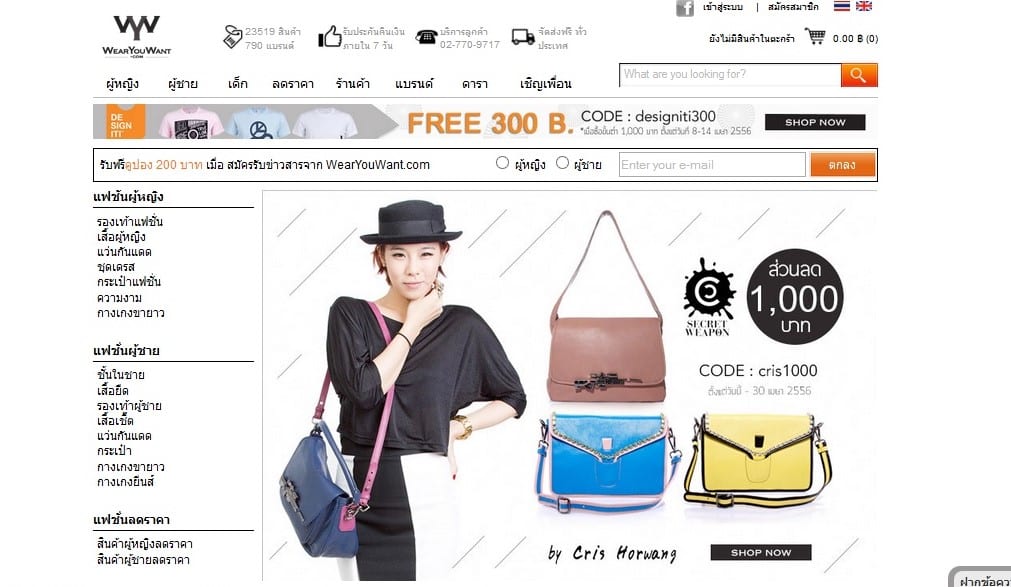
    WearYouWant, Thailand’s leading online fashion and beauty marketplace, is launching a premium, Korean fashion range in Thailand, designed and made in Korea, to satisfy the ever-growing love of Korean brands in the Kingdom. Developing a close relationship with online fashion house, Atria International Style, WearYouWant is sourcing authentic Korean brands, importing these for the Thai market from up-and-coming local Korean designers.

    Just as Korean pop music as captured a huge fan base in Thailand, there is high demand for Korean fashion too. The new Korean range of cool and stylish women’s apparel, accessories, bags and shoes, is to be showcased on WearYouWant. The launch, planned for December 2016, is big news for Thailand’s online shoppers. It is also a sign of growing focus from Korea on Thailand’s rapidly developing e-commerce market; the fastest growing in Southeast Asia.

    The WearYouWant collection is unique in Thailand and has been specially curated by fashion experts to assure quality and to appeal to the country’s online fashion-buying market who are actively seeking out Korean brands. Martin Toft Sorensen, Co-Founder and Co-CEO of WearYouWant confirms that this latest fashion collection launch is part of an ongoing strategy to understand and meet their customers’ needs and a response to the market in Korea too.

    Our decision to move forward with Korean brands is in part due to a general push for designers to expand beyond the saturated markets in Korea. WearYouWant is an ideal platform for this expansion as there is a great amount of passionate interest from our online shoppers for Korean fashions. We pride our success in being ahead of the curve with consumer trends and this is what makes our platform so vibrant, relevant and exciting.”

    This launch follows the Last Mile Fulfilment (LMF) Korea 2016 conference in September 2016, which Martin Toft Sorensen attended. The event focused on the attraction of Thailand’s solid e-commerce market and higher purchasing power for Korean brands looking to grow within Southeast Asia and succeed outside Korea’s competitive markets. Also clearly highlighted was the importance of fashion distributors in assisting Korean brands to spread out within the region and the value that this can bring to outside markets. The WearYouWant launch aims to add value to Thailand’s blossoming ecommerce market where demand is strong and expectations high.

    ATRIA STYLE (www.atriastyle.com), a powerful South Korean platform that sells contemporary fashion and beauty brands all over the world has been working closely with WearYouWant to fuel cross-border fashion and beauty relations in Thailand to build strong commerce presence between these two key retail luxury markets.

    Founder and CEO, Cindy Yun is optimistic about the future success of Korean fashion and beauty brands through the WearYouWant platform.  “Korean designer fashion is forward thinking, high quality and, in terms of production, there is a good lead time in creating output. This means that brands are stylish and affordable which greatly appeals to savvy Thai consumers. For designers looking to expand their collections outside of Korea, WearYouWant is a vital online lifeline and the e-commerce opportunity this launch entails will enable them to realize their true potential.”

  • Shoppers in Hyderabad welcome fourth SPAR Hypermarket

    Shoppers in Hyderabad welcome fourth SPAR Hypermarket

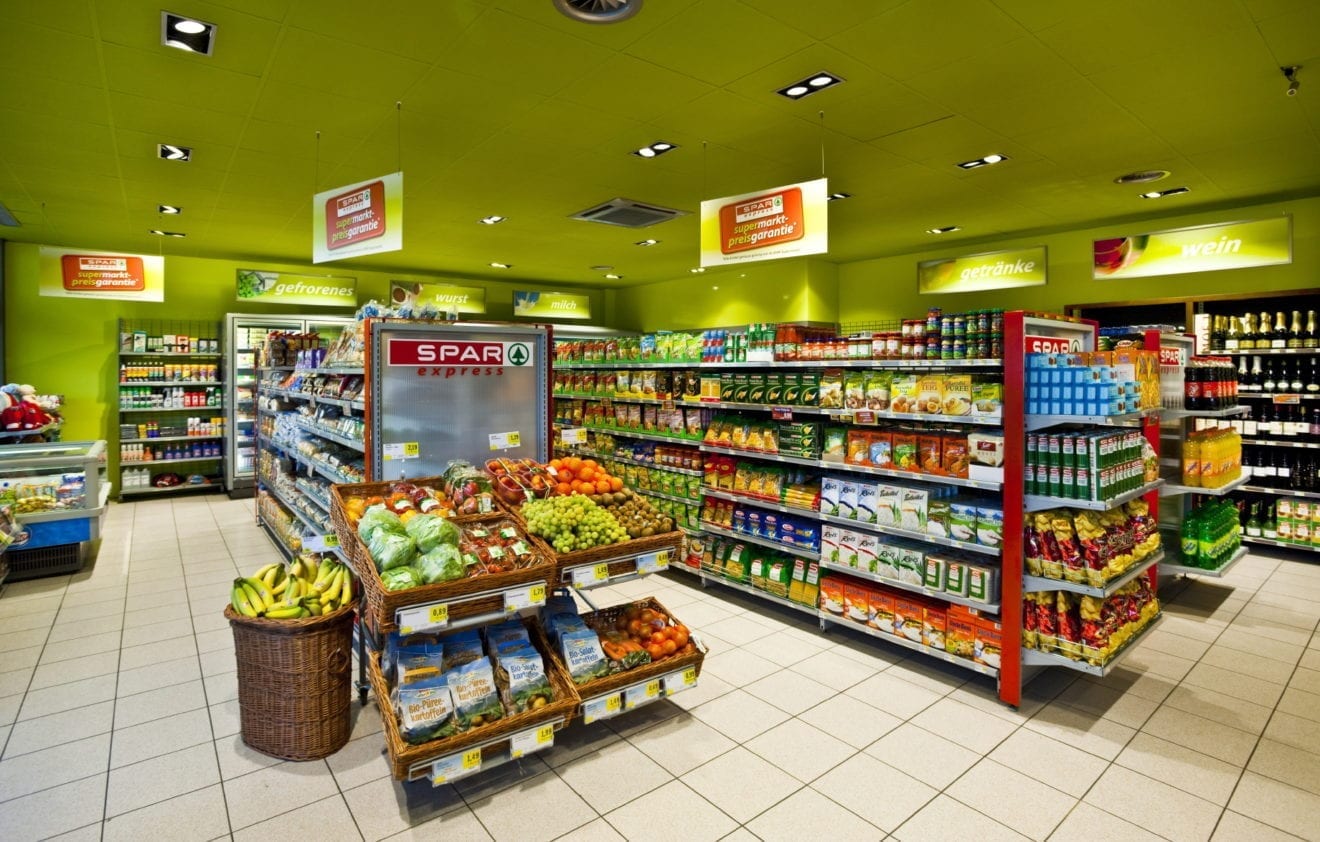
    Building on the SPAR Brand awareness amongst shoppers in Hyderabad, the newest hypermarket situated in Paradise Mall, Nacharam has been enthusiastically welcomed by customers. This is the 18th SPAR Hypermarket to open in the country, spread over seven states and nine cities, and the fourth in Hyderabad.

    The newly built hypermarket is a total of 6,000sqm and comprises one of the retail offerings in the Mall which is also managed by Max Hypermarkets, holder of the SPAR licence in India. In the retail selling area of 5,400sqm, customers can enjoy a diverse range of fresh foods from the fish, bakery, delicatessen and Food-to-Go service departments or browse the extensive non-food offer. The wide choice and high standard of products available throughout the hypermarket has seen customers react positively with particular attention on the Home & Living department.

    Many of the local customers are traditional families comprising a full target group of babies through to grandparents, requiring a broad range of products. In the build up to the opening on 18 October, SPAR India spread the word through extensive advertising. Customers took advantage of the opening specials with over 1,000 transactions taking place between 4:30 and 10:00 pm on the first day of trading. 

    Further advertising about the selection of fresh fish, meat and produce has begun together with greater awareness of the full hypermarket offer. Customers have commented favourably on the open layout, wide aisles and the merchandise available.

     SPAR India continues to focus on the range instore, building up their own brand products, which currently account for approximately 10% of retail turnover. SPAR India’s Managing Director, Rajeev Krishnan, stated at the opening ceremony that the group intends to expand its footprint by 30% in the next 12-18 months.

     SPAR India already offers an online shopping platform available for customers in Bengaluru. The platform offers same day delivery, payment by credit card, cash or food coupons and orders above Rs1,000 are free of charge. The online platform may be extended to other cities in the future. Furthermore, SPAR India continues to invest in the profitability and efficiency of its hypermarkets through the incorporation of new technologies such as the queue-buster solution to enhance the customer experience.

  • Worldpay research uncovers an elite club of shopaholics in APAC with enormous spending power

    Worldpay research uncovers an elite club of shopaholics in APAC with enormous spending power

    A global survey of 20,000 consumers by Worldpay has discovered that buying power in the internet age is highly concentrated within a group of high spending, high frequency Super-Shoppers. In China, Super-Shoppers make up just 5% of the general population yet accounted for an incredible 92% of all the money spent buying physical goods online in China each month. Worldpay’s research into three Asia Pacific markets further reveals that APAC Super-Shoppers are some of the most likely to shop online via a mobile device and some of the most demanding when it comes to payment method.

    Worldpay polled 2,000 consumers in each of the 10 countries covered by the Why Do They Pay That Way? Study including China, Japan and Australia. Key findings include:

    1. Chinese Super-Shoppers are more likely to use a credit or debit card than the average Chinese shopper.
    2. More than 60% of Japan’s online shoppers will switch to another retailer if they can’t use their preferred payment option at checkout.
    3. Australian Super-Shoppers were the world’s second biggest buyers, spending on average more than £200 (US$260[1]) during their last online transaction.
    4. The Chinese are the biggest mobile shoppers in the world, with 33% of Super-Shoppers making their last online purchase via a mobile phone.
    5. Australian Super-Shoppers had the second highest levels of mobile shopping (19%).

    Phil Pomford, General Manager Asia Pacific, Global eCommerce at Worldpay, said: “With ecommerce markets developing at lightning speed across the Asia Pacific region, it’s no surprise that elite shoppers are taking their spending power online. The Super-Shopper trend is driven by a growing middle class, high mobile penetration and recent advancements in consumer technology. APAC Super-Shoppers are passionate about what they buy and sophisticated in how they shop. They do research to find the most competitive prices, and will turn elsewhere if they discover they can’t use their preferred payment method at checkout.”

    Around the world, 36% of Super-Shoppers said they had experienced the situation of reaching checkout and being unable to pay with any of the listed payment options. This was particularly the case in China, where 44% of Super-Shoppers said they were unable to make purchases using their preferred payment method.

    When faced with not being able to use their preferred payment option, Super-Shoppers may buy the same item from another website or abandon their purchase all together. A staggering 61% of Japanese Super-Shoppers said they would switch to another retailer if unable to use their preferred payment option at checkout. Worldpay estimates that for each lost sale globally, retailers are missing out on as much as £100 (US$130) – representing a significant amount of lost revenue from such frequent and high value shoppers.

    Super-Shoppers in APAC, as around the globe, overwhelmingly preferred credit cards, even in markets where card use is low. Although 41% of the general population in China prefer to pay online with Alipay, only 18% of China’s Super-Shoppers said they were likely to use their nation’s most popular eWallet. Instead, 54% of Chinese Super-Shoppers said they preferred to pay with a credit card.

    Pomford added: “Retailers should be looking at Super-Shoppers as a distinct group that often behaves very differently from other customers. In APAC, Super-Shoppers prefer credit cards even where these cards have little or no traction among the general population. Therefore, a retailer who doesn’t support the right range of payment methods could actually be losing major revenue without noticing.

    “The Super-Shopper phenomenon gives retailers much food for thought – in terms of not only what payment options are available, but in how to merchandise to these consumers to maximise basket size, or market to an audience who thinks of online shopping as a daily task, not just as an occasional treat. With so much buying power concentrated in this group in APAC and around the world, it’s essential that retailers innovate in such a way that they deliver what Super-Shoppers want, when they want it and let them pay for it in the way that suits them best.”

    APAC Super-Shoppers’ most frequent purchases vary from country to country. According to the Worldpay research:

    1. One in 5 (21%) Australian Super-Shoppers buy groceries online – 8% above the global average.
    2. 2. Australian Super-Shoppers are less likely to buy clothes online (21%) than the global average (28%) yet more likely to buy health and beauty products (15% vs global average of 10%).
    3. China leads the world in online meal purchases, with 13% of Chinese Super-Shoppers taking to the internet when they want to order a takeaway.
    4. Super-Shoppers in China also love fashion, with 40% of them buying clothes the last time they shopped online, compared to the global average of 28%.
    5. In Japan, Super-Shoppers are most likely to buy electronics (30%) and groceries (28%).
  • Chinese Online Shoppers to ‘Walk Into Australia and New Zealand’ with Azoya

    Chinese Online Shoppers to ‘Walk Into Australia and New Zealand’ with Azoya

    A select group of influential online celebrities from China will arrive in Australia next week for the ‘Walk Into Australia and New Zealand’ campaign, organised by leading turnkey e-commerce solutions provider Azoya and China’s leading online shopping guide SMZDM

    The ‘Walk Into Australia and New Zealand’ campaign is focused on building the bridge between Chinese online shoppers and Australian retailers by offering face-to-face interactions to help them understand the authenticity and reliability of ethical products from Australia. Deterred by safety and quality issues with domestic products, particularly for healthcare and food supplements, Chinese consumers are increasingly looking to Australia to buy directly through cross-border e-commerce. 

    “China’s ecommerce landscape is rapidly evolving, offering Australian brands and retailers a huge opportunity to take advantage of it,” said Sylvia Wei, deputy managing director – Australia for Azoya. “If they’re going to survive in such a competitive market, they’ll need to build relationships with key online influencers, who are invaluable sources of promotion in China. This campaign will help them develop more effective and rewarding channels, as well as better understand what Chinese consumers need and want.”

    As traditional marketing channels continue to lose their impact in acquiring new consumers in China, live streaming marketing and influential online celebrities, known in China as key opinion leaders (KOLs), are emerging as the channels employed by the local ecommerce industry. While the marketing influence of celebrities in the Western world is useful, KOLs in China have a very powerful influence over consumers. They mainly attract followers by being an authority on a particular subject and gain credibility through a long history of interacting with followers, who have a high-level of trust in them. Therefore, leveraging high-profile bloggers and microbloggers boasting millions of followers is a very effective strategy for brands and retailers to reach target audiences. Retailers can directly influence a large community and reach thousands or even millions of potential customers.

    The 12 person delegation participating in the ‘Walk Into Australia and New Zealand’ tour – including four high-profile Chinese KOLs (selected from over 1,000 applicants) and editors from SMZDM – will participate in a series of online and offline events in Sydney, Melbourne and Auckland between 21-30 August. They will experience production, supply, marketing, order fulfillment and customer service from the stores and warehouses of five of Azoya’s participating retail customers, which all have established ecommerce businesses in China. These include Pharmacy Online (Sydney), Pharmacy 4 Less (Sydney), Amcal (Melbourne), Kiwi Discovery (Auckland) and Pharmacy Direct (Auckland). The delegation will also have the opportunity to meet with leading healthcare brands Swisse and Blackmores. 

    In return, the KOLs will share their experiences online on SMZDM and other sources, potentially exposing participating retailers and brands to more than four million Chinese consumers. The tour will also be broadcast by professional editors on online live streaming channels, giving Chinese consumers a glimpse into how their favourite products are packaged and distributed, showcasing the quality of the products they plan to purchase. During the live streaming, purchase links will be pushed to users to place orders immediately. In addition, a local team in China will help promote the ‘Walk Into Australia and New Zealand’ tour to attract more users to participate. 

    “We’re really excited to be able to offer our healthcare retail customers in Australia such an amazing opportunity to strengthen their brands with Chinese consumers,” added Ms Wei. “China’s healthcare sector keeps developing at an astonishing rate, fueled by favourable demographic trends, continuing urbanisation, an increasing disease burden, the overall economy’s healthy expansion and income growth. The campaign will help drive awareness of their quality healthcare products in China and take their ecommerce businesses to the next level.”

  • Indonesian shoppers flock to Singapore as rupiah surges

    Indonesian shoppers flock to Singapore as rupiah surges

    Tourist arrivals will spike this year.

    Buoyed by the resurgent rupiah, Indonesian holidaymakers are once again trooping to Singapore to shop and splurge, according to a report by Bloomberg.

    The rupiah has surged 9.9 percent against the U.S. dollar over the past six months, second only to Malaysia’s ringgit among emerging markets, as slowing inflation and a nascent commodity-price recovery lured money to the nation’s assets.

    “The rupiah has done really well this year and it makes things look cheaper elsewhere for Indonesians,” said Nizam Idris, head of foreign-exchange and fixed-income strategy at Macquarie Bank Ltd. in Singapore. “The currency will find support from decent yields and bottoming commodity prices.

  • Chinese shoppers in South Korea shun luxury for local brands

    Chinese shoppers in South Korea shun luxury for local brands

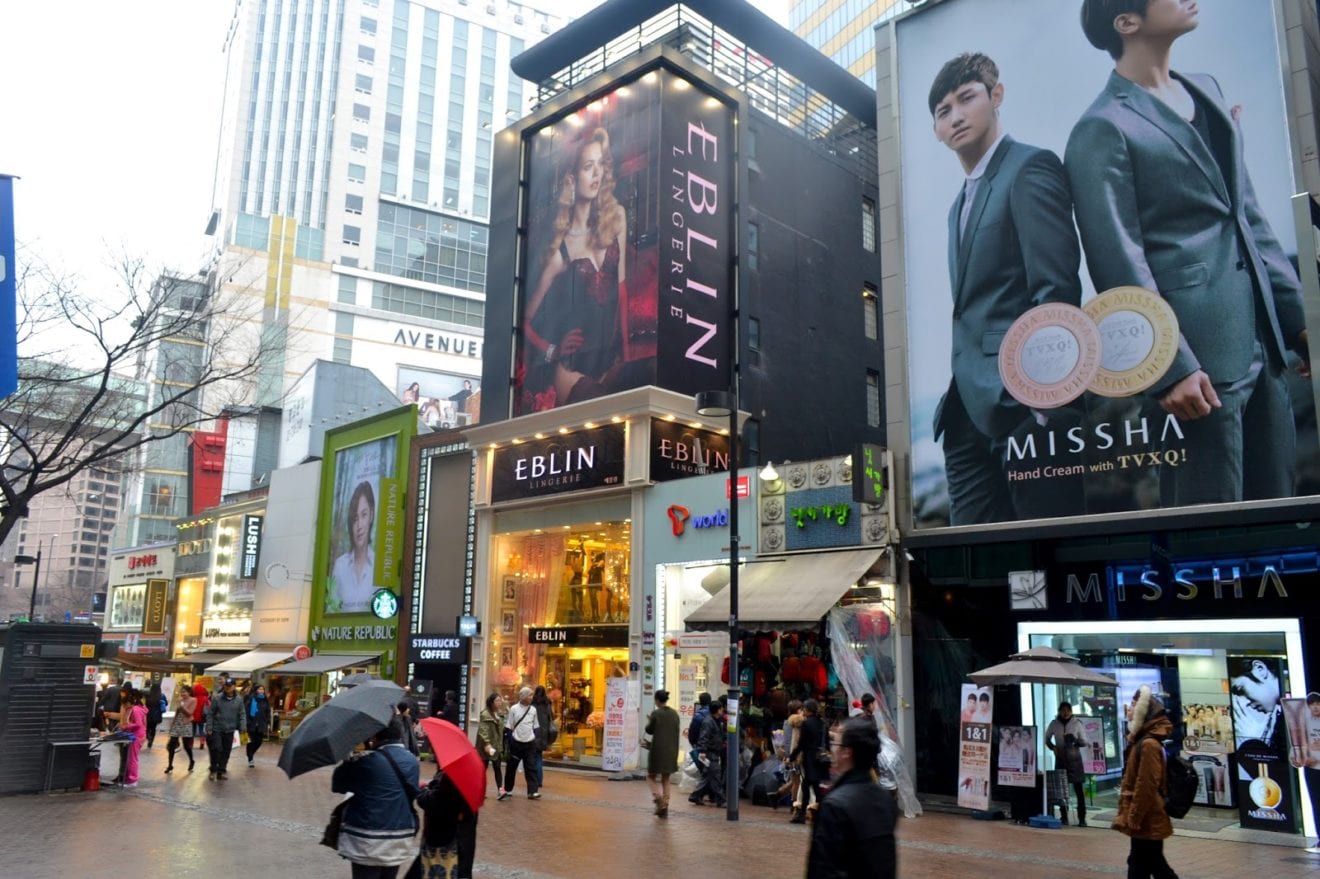
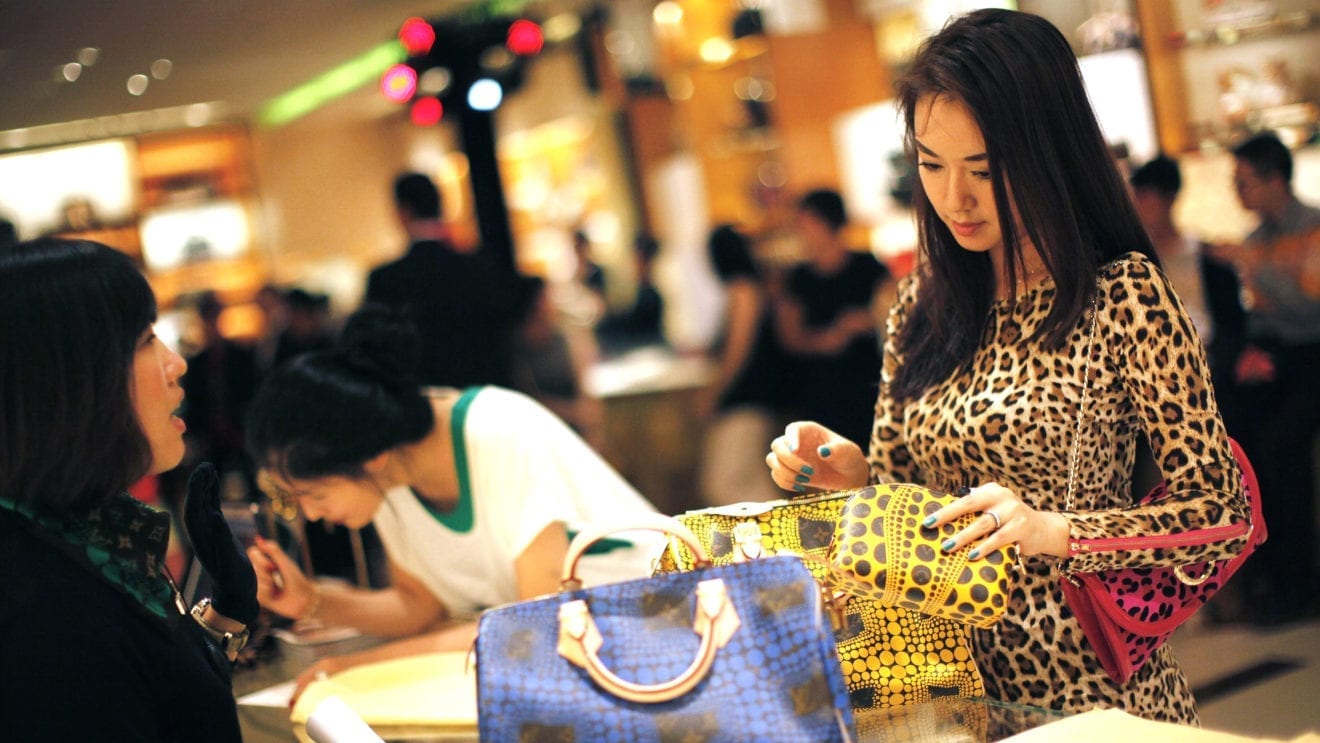
    Chinese visitors to South Korea are buying less from global luxury mainstays like Louis Vuitton and Chanel in favor of cheaper homegrown brands, as young, independent travelers make up a bigger share of tourists.

    Lured by the “Korean Wave” of culture exports, from soap operas and K-pop music to food and fashion, price-conscious younger Chinese visitors are seeking a more authentic and less expensive shopping experience.

    South Korea trails only Thailand as an overseas destination for Chinese travelers, whose heavy retail spending has helped make South Korea the world’s largest duty free shopping market.

    The emphasis on value will put further pressure on global luxury retailers already grappling with slowing sales in China after years of skyrocketing growth, as a government crackdown on graft and lavish spending bites.

    “You can buy those big brands everywhere, and it is actually cheaper to buy those brands in other countries compared to the prices in South Korea,” said 21-year-old Zhu Xin, who was shopping at the Stylenanda store in Hongdae, a Seoul neighborhood popular with young adults.

    “Now that we are here, we should buy local brands,” she said.

    Average prices on best-selling items from global luxury brands in South Korea are cheaper than they are in mainland China, but still cost more than in Europe, Singapore and Dubai, according to HSBC data.

    At downtown Seoul duty free shops run by Hotel Lotte’s, Lotte Duty Free and the Samsung Group’s Hotel Shilla, LG Household & Healthcare’s Whoo and Amorepacific’s Sulwhasoo cosmetics were the top-selling brands in 2015, overtaking Louis Vuitton, Chanel and Richemont’s Cartier, store data shows.

    “This doesn’t necessarily imply that luxury retailers have to launch cheaper stuff but it does necessarily imply that they have to be more relevant at every price point,” said Erwan Rambourg, an analyst at HSBC in Hong Kong.

    The number of Chinese tourists to South Korea dipped 2.3 percent in 2015 to about 6 million due to the deadly Middle East Respiratory Syndrome (MERS) outbreak. However, brokerage CLSA says Chinese inbound traffic growth rebounded from September and should jump by 28 percent in 2016. The South Korean government expects a record 8 million Chinese visitors this year.

    NEW GENERATION

    Chinese tourists to South Korea are getting younger: the share of those in their 20s and 30s rose to 46.1 percent last year, from 40.9 percent in 2013, according to the government-run Korea Culture and Tourism Institute.

    While older Chinese tourists typically travel in groups where they are ferried between shops catering to them, Chinese millennials tend to be better-informed about what they want, travel independently and spend less on shopping.

    “I use my mobile phone to research what products to buy in South Korea,” said 20-year-old Chinese tourist Liu Yuting. “Many Chinese girls like South Korean products, because most of them are cheap and cute.”

    At Lotte Department Stores, a chain owned by Lotte Shopping Co Ltd, average spending per Chinese visitor fell to 500,000 won ($412) in 2015 from 900,000 won in 2013, although the surge in overall visitors made up the difference, an official with the chain said.

    “Whereas past generations blindly purchased luxury goods, the younger generations have a more price-conscious consumption pattern,” KB Investment & Securities analyst Yang Ji-hye said.

  • Hong Kong sales slump as mainland shoppers stay home

    Hong Kong sales slump as mainland shoppers stay home

    Hong Kong retail sales posted a second straight annual decline despite sharp discounting, the Census and Statistics Department said, reflecting a sustained decrease in visitors from mainland China and the diminished buying power of a weaker yuan.

    Retail sales fell 3.7 percent to HKD475 billion (USD61 billion) last year, while volume dropped 0.3 percent. In December, when the tourism board counted nearly 11 percent fewer visitors, retail sales value fell 8.5 percent from a year earlier, worse than the 4.3 percent drop projected by analysts. The slump widened from 7.8 percent in November and was the largest since last January.

    Sales of jewelry, watches, clocks and valuable gifts were among the hardest hit, slumping 17 percent in December and 16 percent for the full year. Clothing and department store sales also declined. Erwan Rambourg, a retail analyst at HSBC Holdings Plc in Hong Kong, said high-­end watch and jewelry sellers suffered as shoppers from mainland China avoided lavish purchases and falling currencies in other Asian nations reduced prices for goods bought elsewhere.
    Hong Kong Tourism Board Executive Director Anthony Lau said late last month that same-day visitors to Hong Kong were “a bit weaker” than the same time last year, portending an inauspicious start to the Chinese New Year holiday next week.

    The Lunar New Year celebration is a peak season for tourism in Hong Kong, bringing in more than 5 million monthly visitors compared with about 4.5 million in an average month. Day trips before the holiday usually account for more than half those visits.
    Visits from the mainland fell 16 percent in December from a year earlier, the tourism board said last week. Total visits to Hong Kong fell 2.5 percent last year to 59.3 million.

    Hong Kong retail sales are down on an annualized basis every month from March through December, according to data compiled by Bloomberg Intelligence. The Hong Kong dollar has strengthened against the yuan, making it more expensive for mainlanders to shop.

    Chow Tai Fook Jewellery Group, the world’s largest listed jewelry chain, said last month that sales during Chinese New Year would be challenging. Emperor Watch & Jewellery Ltd blamed a preliminary 2015 loss on a drop in foot traffic caused by the strong Hong Kong dollar, high rental pressure in the city and austerity initiatives in mainland China.