American consumers were on track to spend US$ 7.8 billion in online shopping on Cyber Monday, up 18.3 percent from last year, according to Adobe Analytics, which tracks 80 percent of online transactions at 100 of the largest retailers in the US. Cyber Monday, which falls on the first Monday after Thanksgiving Day and Black Friday, is considered the biggest online shopping day of the year.
Last year, it hit a record US$ 6.6 billion in online sales.
With growing online sales, Black Friday might be stealing Cyber Monday’s thunder. Online sales for Black Friday reached US$ 6.22 billion, up 23 percent compared with last year.
Smartphone-enabled purchases amounted to US$ 2.1 billion, accounting for one third of the overall sales.
Figures from Internet Retailer, a publisher of e-commerce news and analysis, predicted that the total amount to be spent over the period between Thanksgiving Day and Cyber Monday will reach US$ 21.6 billion.
For the whole holiday season, which will last until end of December, online sales could hit a record US$ 124 billion, up by 15 percent from last year, Adobe Analytics said.
Figures from market research firm eMarketer put overall US holiday online sales at around US$ 123 billion, which accounts for 12 percent of the estimated 1 trillion retail sales for this holiday shopping season.
According to an annual survey, US consumers will spend an average of US$ 1,007 dollars during this holiday shopping season, up 4.1 percent from last year, the National Retail Federation said earlier.
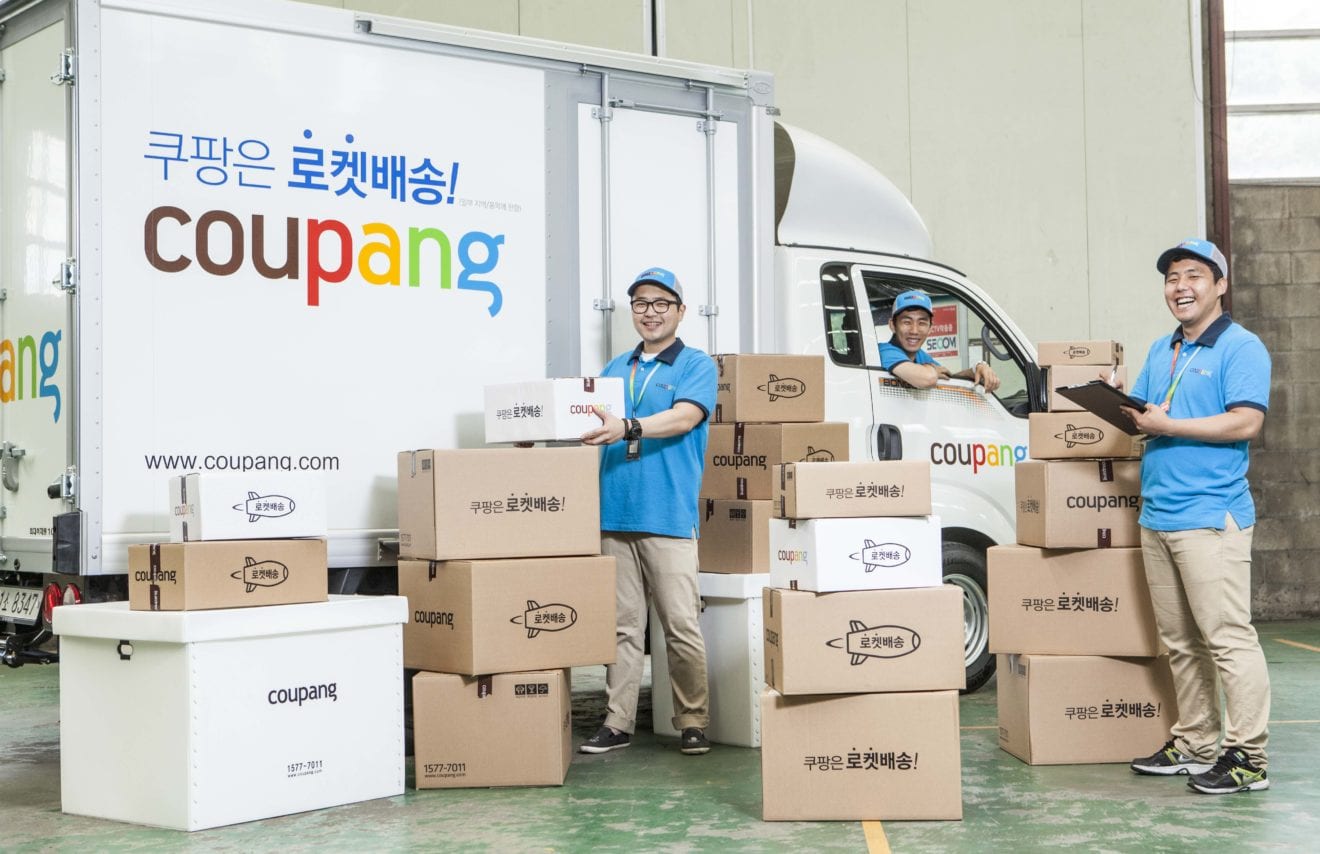
South Korean e-commerce firm Coupang is planning to launch a flagship store in Thailand to boost the online sales of Thai-sourced products. Thailand’s Ministry of Commerce has been promoting Thai products on the platform since August, which has brought in more than THB118 million (US$3.57 million) for mostly food and beverage items. The ministry has just met with Coupang executives to seal an agreement to expand cooperation, resulting in the establishment of a Thai Mall on the platform.
It is expected that the new partnership could result in an increase in sales to more than THB 200 million (US$6.06 million) over the coming year, a rise in export volumes to Korea by 7 per cent. Thailand’s total exports to South Korea were valued at $4.66 billion last year, an increase of 14.4 per cent from the year previous.
Commerce Minister Sontirat Sontijirawong said “South Koreans know Thai brands from travelling here”, with 1.5 million of them visiting Thailand annually.
Coupang is South Korea’s largest and fastest-growing e-commerce firm. It recently received an investment of US$2 billion from the SoftBank Vision Fund. It offers more than 120 million items for sale and 4 million available for guaranteed one-day delivery.
Uniqlo Hong Kong will launch its online store on December 4. A spokesperson for the company said the online platform for Hong Kong and Macau is a fitting solution considering rising rentals and limited space for retailers in Hong Kong, along with the strengthening popularity of e-commerce in the region.
The brand has operated an online flagship on Alibaba’s Tmall for nine years and has had its own online shop since October.
According to Uniqlo’s CEO for Greater China Ning Pan, the two existing e-commerce platforms take 15 per cent of sales in China, the majority of that figure from Tmall.
He explained that while TMall remains an important strategic partner, the new platform will allow the firm to leverage analytics and AI to evaluate buyer preferences.
The Hong Kong site is now under testing, and will be fully operational come launch day in December.
Online Black Friday retailers failed to enthuse customers with usual discounts, while brick and mortar stores saw heavy traffic. E-commerce giant Lazada combined its Black Friday and Cyber Monday into a four-day promotional event, offering discounts of up to 70 percent, mostly on cosmetics and fashion items.
New items were discounted by 15 percent, and the strongest price reductions were offered on low-value items of unpopular brands.
Other e-commerce services claimed to offer bigger discounts, of up to 91 percent on Tiki and 99 percent on Shopee, but these were restricted to a particular time frame after which the discounts passed on to other items.
However, such “flash sales” are familiar to online shoppers as daily offerings made by most e-commerce services.
Thus, retailers failed to enthuse customers with the discounts.
Minh Tien, an office worker in Ho Chi Minh City’s District 1, said that he regularly checks flash sale items on these websites. “It’s the same method this time, and I’m in no rush as the event will last three to seven days.”
Market observers said another reason that Black Friday online sales in Vietnam failed to catch fire was the Chinese Singles’ Day promotional event held earlier this month and the upcoming Online Friday hosted by the Vietnam E-commerce and Digital Economy Agency (iDEA), under the Ministry of Industry and Trade, on December 7.
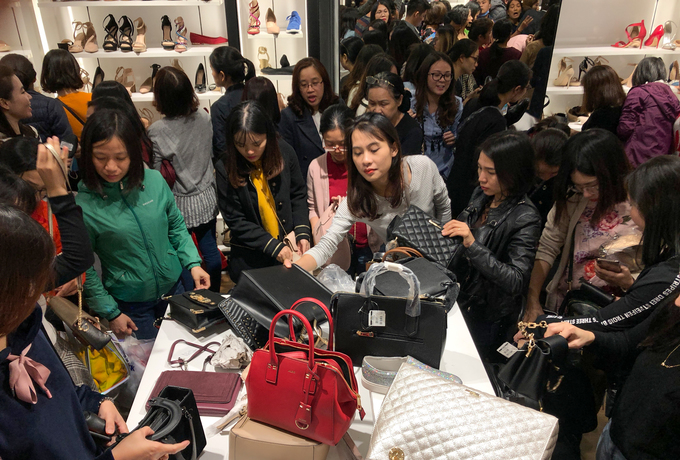
But in contrast to the online market, the shopping atmosphere was vibrant at brick-and-mortar stores. People started to queue up at large shopping centers in Hanoi and HCMC early Friday.
A large fashion store on Ba Trieu street in Hanoi offered a discount on all items for five hours, attracting a large number of customers.
In other stores, customers had to wait for up to two hours to buy household items. Office workers joined the shopping frenzy at lunch time, only to find out they were late because shops stopped letting new customers after 11 a.m.
As of 10 p.m. Friday night, customers were still queuing up at major shopping malls in Hanoi.
Cyber Monday is expected to be the largest online shopping day in U.S. history, generating a whopping $7.8 billion in sales. That’s 17.6 percent higher than last year, according to the projection from Adobe Analytics. But the National Retail Federation projects that the number of shoppers taking advantage of online bargains on Cyber Monday – about 75 million – will be 3 million fewer than in 2017.
Just as Black Friday has evolved into “Black November,” as retailers spread out their discounts, Cyber Monday has turned into “Cyber Week”, which is expected to alter some of its strength as a stand-alone day.
It has been estimated that more than 164 million people planned to shop over the five-day Thanksgiving weekend. But experts said Black Friday remains the busiest shopping day, with NRF projecting 116 million would shop, both in-store and online, on that day alone.
Based on Adobe Analytics data, a record $6.22 billion was spent online by the end of Black Friday, an increase of 23.6 percent over 2017’s $5.03 billion.
Data suggests that consumers are getting more comfortable buying more and bigger ticket items online.
The average order value of $146 set a new record for Black Friday, up 8.5 percent over last year.
Many brick and mortar retailers are trying to capitalize on Cyber Monday by offering “buy online, pick-up in store” deals.
A spokesperson from the NRF said that “Of those [shoppers] that choose to buy items online and pick them up at the store, nearly 70 percent will double their basket size by the time they walk out of the store. So, even on Cyber Monday, retailers will try to use this as an opportunity to bring consumers into their physical stores and cash in on impulse buys.”
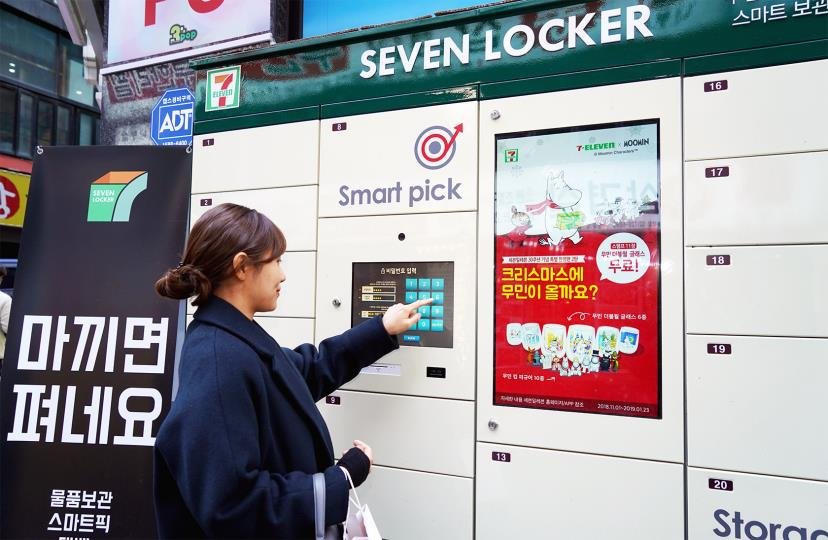
7-Eleven South Korea has launched an unmanned locker service called Seven Locker at two stores in Seoul.
The initiative is part of the company’s effort to diversify operations and generate more profits for its convenience stores.
The Seven Locker trial operations started at two stores in Seoul’s Hongdae and Jongno districts, with another eight on track to open by year’s end to better gauge customer response and growth potential. The plan calls for 100 lockers to be placed at 7-Eleven stores across the country in the first half of next year, with the service to be extended to all key stores going forward.
The lockers will be set up near tourist attractions and entertainment districts where there is demand for such services among locals and foreigners alike.
The convenience store chain said depending on the size of the space, storage fees will range from 2000 won (US$1.76) to 4000 won for a four-hour period, with users allowed to make payments using their credit cards.
“The lockers can create more profit for stores, while providing a differentiated service to our customers,” a local 7-Eleven executive said.
Spencer’s Retail, the multi-format retailer from RP-Sanjiv Goenka Group is on an expansion spree. It is presently focussing to expand the store count in existing clusters in east, south and north of India.nIn this effort, Spencer’s essentially opened one store in every 10 days and thereby augmented the retail network of the chain recently by adding 9 new stores in 90 days. With this expansion, the store count of Spencer’s has now reached 146 across 37 cities.
The strength of Spencer’s lies in its retail network which is constantly growing. It is an endeavour of Spencer’s to become more accessible to the customers and after receiving positive feedback from the clusters it operates in, the chain is poised to explore new territories.
In this phase, Spencer’s launched stores in existing cities and its adjoining areas like Rajarhat in Kolkata, Maheshtala (South 24 Parganas), City Mall (Gomti Nagar) in Lucknow, Raheja Mall (Sector 47) in Gurugram, Sector 48 in Noida, Madeenaguda in Hyderabad, and at Howrah’s Aurobindo Mall.
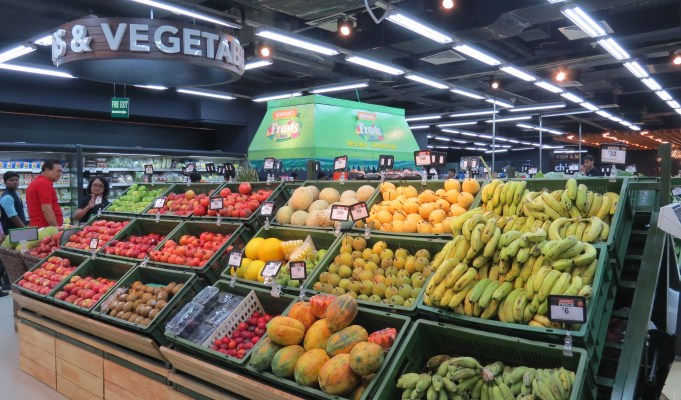
The size of these stores varies between 2,000 sq. ft. to 15,000 sq. ft.. The stores offer a wide range of assortment from different categories including Fresh Fruits & Vegetables, Fish & Meat, Staples and Groceries, FMCG, Dairy and Frozen products, Organic Food items, Dry Fruits, Apparels, Electronics and Electricals and Home Essentials. The product range in each of the new store has been meticulously planned to suit the tastes and preferences of the local neighbourhood.
According to the Spencer’s spokesperson, “To consolidate the business, Spencer’s is dedicatedly selecting 360 degree catchments where the customers are looking for aspirational products in an affordable range. The expansion of Spencer’s currently is focussed at metros as well as in Tier I and II cities. In this FY we are further concentrating at spreading our network in the profitable zones like West Bengal, Delhi NCR, East UP and down south in Hyderabad and Chennai. In terms of product range, with more than 25,000 SKU’s (Stock Keeping Units), Spencer’s is constantly evolving in terms of its offing at each store. It is not only limited to food category but Spencer’s has extended a similar experience in the non-food and general merchandise space.”
Spencer’s has been redefining the Indian retail landscape since 1863 and with the brand proposition ‘Makes Fine Living Affordable’, it continues to inculcate the same kind of trust and patronage among its millions of consumers across India.
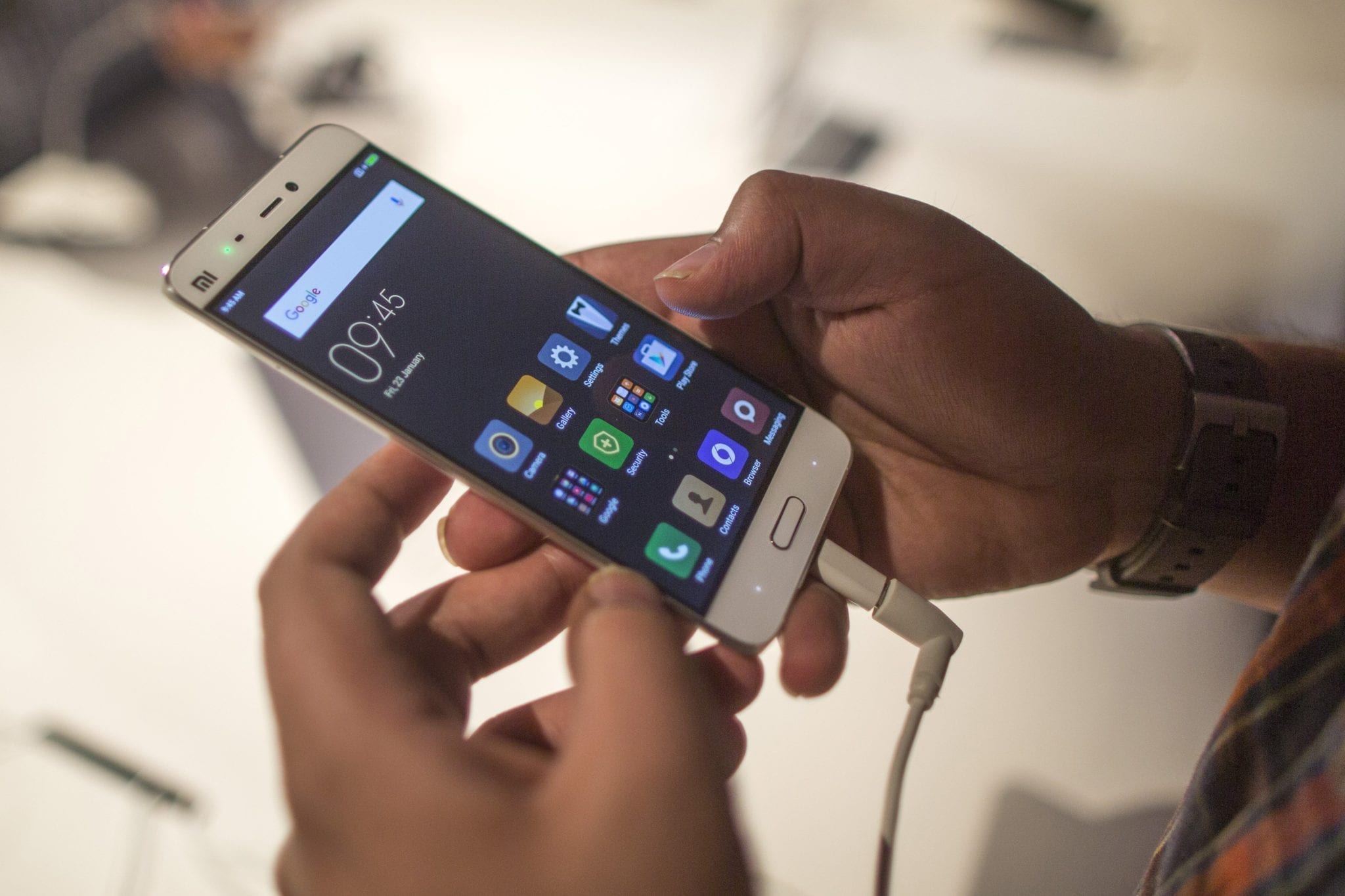
Meitu and Xiaomi have formed a strategic partnership to jointly launch Meitu-branded phones and other smart devices. The partnership between Meitu – best known for its selfie app – and Xiaomi, a fast-growing technology company with smartphones at its core – will have a far-reaching impact on the brand development of Meitu and Xiaomi as well as the smartphone market as a whole, according to research house IDC. It will allow both companies to expand their customer base and signals a further consolidation in the highly competitive Chinese smartphone market.
A spokesperson for IDC said that during the last year, Xiaomi has stepped up its efforts to improve the camera capabilities of its products and has done a lot in AI-powered photography research and development. “Leveraging Meitu’s image processing technologies and selfie algorithms will help Xiaomi further boost its AI-powered photography and photo quality and reduce its gap with leading vendors such as Huawei.”
IDC says Meitu is popular with females which will help draw more women to Xiaomi products which are currently “overrepresented by male users”.
“Introducing the Meitu brand also enables Xiaomi to offer greater diversity of smartphone products under multiple brands and series, including Redmi, Xiaomi, Black Shark, Pocophone, and Meitu. Xiaomi is gradually forming a multi-brand portfolio targeting different user groups, thereby laying the foundation for it to compete in the market in the long term.”
The spokesperson said that through Xiaomi’s sales network, Meitu’s software products will reach a larger group of customers via smartphones. “Moreover, licensing its hardware business to Xiaomi allows Meitu to focus on software development and the upgrade of its image processing technologies.”
And finally, with the top five vendors in China’s smartphone market taking up nearly 83 per cent market share, the growth potential will increasingly diminish for small vendors in areas such as marketing and supply chain resource integration.
“Going forward, more small vendors are expected to seek strategic cooperation with large vendors and drive consolidation in the China’s smartphone market.”
Meitu was founded in Xiamen in 2008 as a developer of selfie apps such as MeituPic and BeautyCam, and has been focussed on selfie algorithm development. In 2013, the company ventured into the smartphone market and launched smartphones targeting female users and the selfie market. Despite a higher profit per phone sold and a higher brand premium, the company has become increasingly marginalised in China’s brutally competitive smartphone market due to its meagre shipments.
According to IDC’s Worldwide Quarterly Mobile Phone Tracker, Meitu only had a mere 0.5 per cent market share in China with shipments of approximately 1.5 million units as of the third quarter of this year.
The winter promotion for Lotte Duty Free will kick off on 23 November and run until 2 January 2019. The large-scale event will see more than 50 overseas brands, including MaxMara, Ferragamo and Vivienne Westwood, offered at a discount of 20-80%.
During the six-week promotion, any customers spending more than $1 at the retailer’s Myeongdong head office, World Tower, Coex, Incheon Airport, Gimpo Airport, Busan or Jeju stores will be given the chance to enter a lottery. 10 winners from the lottery will be presented with a ₩3m ($2,658) travel voucher.
Customers spending a certain amount instore will be entitled to giveaways and gifts with purchase. Those that more than $800 in Lotte’s World Tower or Coex downtown stores will receive tickets for the Picasso and Cubism Art Exhibition; those spending more than $300 at World Tower, Coex, Busan or Jeju from 28 November will receive a Lotte calendar, while those spending more than $300 at Incheon, Gimpo or Gimhae airports after 1 December will receive a free microfiber knee blanket; and those that spend more than $100 at the retailer’s Coex store will be awarded a scratch coupon.
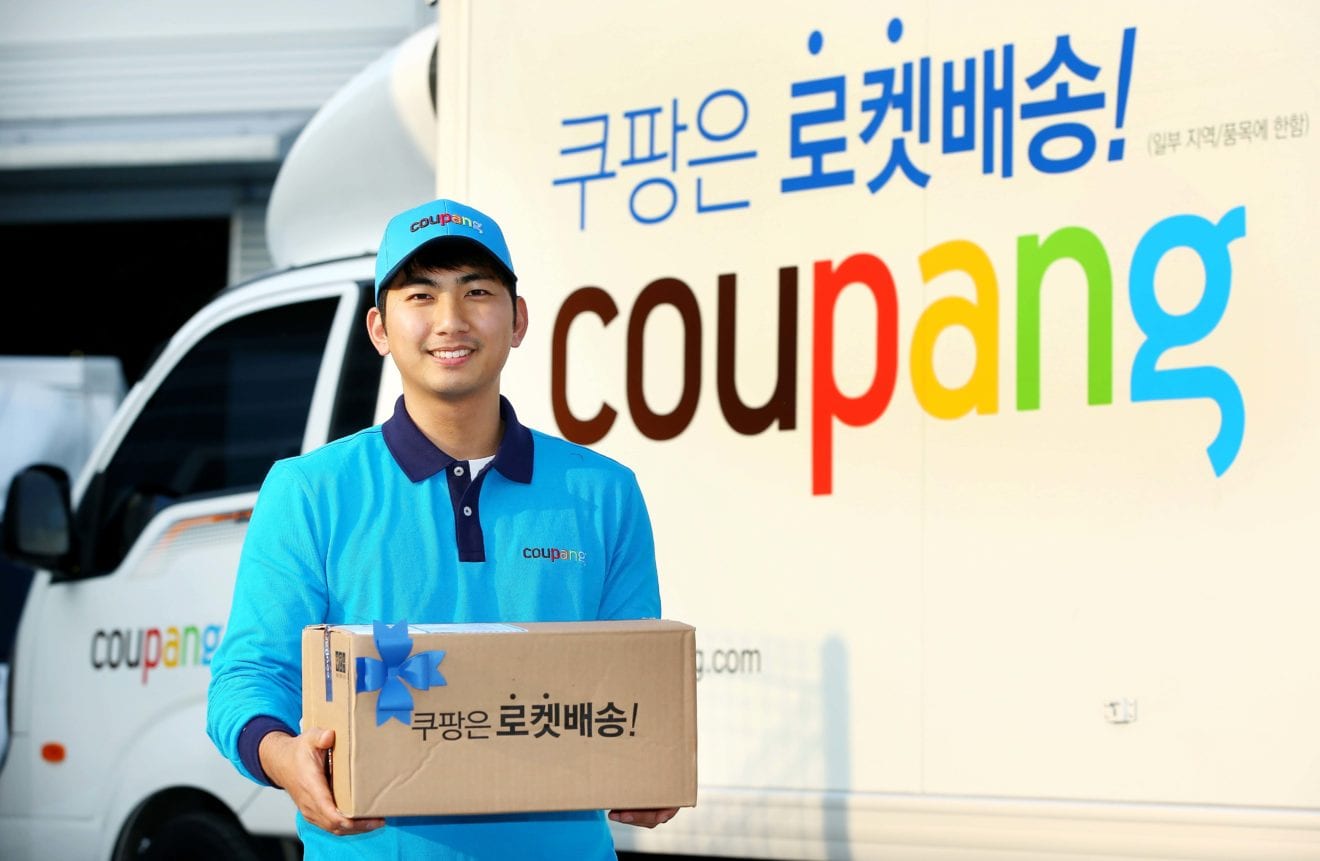
South Korea’s Coupan, the fast-growing e-commerce firm, will receive an investment of US$2 billion from the SoftBank Vision Fund. The funding follows SoftBank Group’s initial investment of $1 billion in June 2015. The new round of capital will enable Coupang to continue investing in consumer-first technologies.
Lydia Jett, partner at SoftBank Investment Advisers and a Coupang board member, said the company Coupang wants to have “a revolutionary technology platform and uncompromising focus on customer delight”.
“We believe the company is well-positioned to lead the Korean e-commerce market, with significant platform opportunities ahead given its data, payments and logistics advantage.”
With revenue more than doubling in the last two years and approaching $5 billion this year, Coupang is Korea’s largest online retailer with more than 120 million items for sale and 4 million available for guaranteed one-day delivery.
Millions of customers buy from Coupang more than 50 times per year, and one in every two Koreans has downloaded Coupang’s mobile application.
Coupang CEO Bom Kim said: “At Coupang, we are obsessed with making customers’ lives easier.
We’re excited to continue our partnership with SoftBank. We are confident this investment will allow us to leverage the platforms we have created in logistics, payments, and data to make e-commerce and other innovations even more indispensable to our customers.”
After Singles’ Day, the annual Black Friday shopping frenzy is back. A decades-old tradition celebrated every year the day after Thanksgiving, Black Friday marks the unofficial start of the Christmas shopping season in America.
Together with its more recent online counterpart Cyber Monday, the sales have become a major global event over the past few years as online shopping has brought the bargains to the rest of the world.
So what is exactly Black Friday like in emerging developing countries like the Philippines? What are Filipinos consumers’ expectations?
Large discounts expected
Customers will not waste the opportunity to save money on shopping.
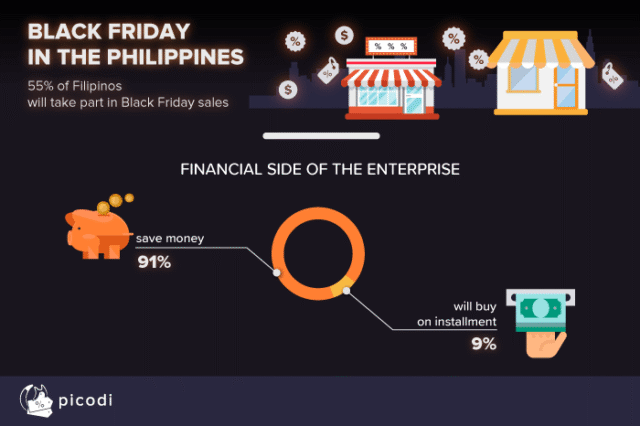
55% of Filipinos admitted that they’re going to take part in the upcoming Black Friday sales and 91% of shoppers save money prior to Black Friday just to shop on this day.
Let’s remember that Black Friday sales are usually associated with electronics and housewares which are the best-selling products.
The remaining 9% declared that they are going to buy on installments.
38% of consumers are planning to buy 2-3 products, and 36% are going to go on a shopping spree and buy more than 5 items.
What’s more, 59% of buyers already have an idea what’s going to end up in their baskets. This can be due to the infinite number of guides to what is worth buying and how to find the biggest discounts.
Black Friday symbolically opens the season of pre-Christmas sales. That is why it is a great opportunity for those who start searching for gifts in advance.
38% of consumers will take advantage of Black Friday exactly for this purpose—to buy Christmas gifts.
However, in the Philippines Black Friday is also an occasion to get a present for yourself as it is the intention of 67% of consumers.
What does an average shopper looks like?
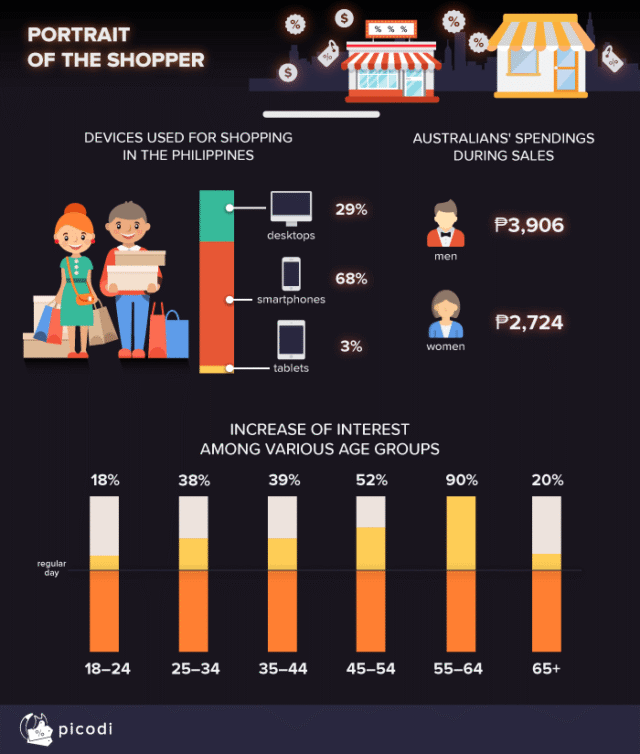
Spending differences vary by sex. Indeed, an average man will spend more money on sales than an average woman: 3906 PHP and 2724 PHP respectively.
When it comes to age the biggest interest for Black Friday discounts was among people aged 55-64 and 45-54.
Statistics also say that mobile devices dominated desktops with 68% of consumers shopping on their mobile phones and 29% on desktops.
As aftershocks of the clampdown on Daigous continue to reverberate through the luxury shopping community in China, e-commerce platforms are rising to fill the gap.
The launch of China’s new e-commerce law, coupled with the 928 Daigou crackdown at the Pudong International Airport in Shanghai, has stirred up uncertainty in the global luxury industry.
In fact, LVMH share prices reportedly fell in early October due to fears of a slowdown in Chinese spending.
Earlier this month, Luxury Society attended the live seminar “Reinterpreting the 300-billion Daigou market” hosted by Tencent media.
During a debate, luxury e-commerce platform OFashion’s CEO Xiao Yu and N5 Venture Capital’s founder Xiao Yiwei shared their insights on how luxury buying will likely evolve in the post-Daigou era.
According to Xiao Yu, the estimated Chinese luxury spending in 2018 is 600 billion RMB and Daigou purchases account for half of that, making it an estimated 300-billion industry.
Without Daigou, what is the next best alternative for Chinese consumers looking to buy authentic luxury goods at lower prices?
First, let’s revisit the 928 daigou crackdown in Shanghai’s Pudong airport and take a look at how China’s 300-billion Daigou industry is in danger.
What Happened During The 928 Daigou Crackdown
September 28 2018 marked an important date in the history of Chinese luxury consumption.
In Shanghai Pudong airport, all passengers returning from Seoul were stopped by Chinese customs for baggage inspection.
Seoul has been a classic shopping destination for Daigous to obtain global brands at a discount. More than 100 passengers from same Seoul-Shanghai flight were found guilty of illegal imports.
It was every Daigou’s living nightmare.
One of them relayed the unfolding events through WeChat text messages. Screenshots of this message thread eventually made its way online.
The messages read,
“In the line to pay my fine”
“I was live streaming in duty free shop during the day, but live streaming fine payment during the night (face palm emoji)”
Source: Sohu, A Daigou’s WeChat record of 928 crackdown got popular online.
Whether as a full-time profession or simply a hobby, the Daigou business is one based on relationships.
In fact, the first clients of most Daigous are generally from his or her own social network.
Since Daigous operate in a legal gray area and rely solely on private transactions, customers often have a hard time verifying the authenticity of their purchases.
Needless to say, seeking redress in the case of fraud is difficult or near impossible.
Within the last decade or so, Daigous have become rather ubiquitous.
Chinese netizens often joke on social media that “everyone has a Daigou friend on his/her WeChat”, or “Daigou is our generation’s best marketing guru”.
Rumors of Daigous making a minimum of $100k USD a year and buying houses while still in college flood the internet, making the Daigou profession both a mysterious and highly coveted one in China.
On September 28, however, this all came to a screeching halt.
Within a night, the image of Daigous as self-made businessmen was reduced to that of illegal importers.
Chinese Luxury Consumers Have Changed
The Daigou business flourished in China largely because of strong domestic demand for global luxury products. This demand is quickly changing.
During the seminar, OFashion’s CEO Xiao Yu offered his observations on shifting consumer tastes by analyzing the purchase data of its platform’s 3 million active buyers.
Here are our major takeaways.
1. Chinese Consumers Love Buying “Hits”
The biggest difference between luxury consumers from China and those from mature markets is that Chinese consumers prefer mainstream “hit” items, while mature market consumers also buy a brand’s long-tail (niche) products.
2. Entry-Level Luxury Sells Best
Out of all the luxury product categories, entry-level items with a price range of 2000-5000RMB (430-730USD) exhibit the strongest sales performance.
3. Consumer Tastes Have Diversified
While Chinese consumers concentrated their research on highly famous luxury brands in the past, they are now much more receptive to niche brands.
Bestselling product styles have also shifted from traditional classics like the Salvatore Ferragamo ballet flat, to streetwear brands.
Additionally, Chinese consumers are now searching more about domestic brands compared to four years ago, when most searches were about established global brands.
4. TheLipstick Effect Doesn’t Quite Apply In China
Considered an entry-level luxury product, lipsticks have been selling like hot cakes in the Chinese market recently.
While the “lipstick effect” – a global economic theory that postulates the correlation between beauty product sales and economic downturns – may hold true in many markets, industry professionals have stressed that it might not necessarily be the case in China.
While China might be in the midst of a lipstick craze, experts have noted that lifestyle brands that are inspiring, soulful, and fun, can still rise to the top of the market quickly.
How Platforms Can Rise To The Challenge
Now with the individual Daigou business in danger, it’s time for luxury cross-border platforms to shine.
As the live seminar’s two speakers noted, inefficiency is still a huge pain point in the cross-border industry.
That said, cross-border solutions aiming to improve efficiency would likely to grow fast.
As the luxury buying business faces tightening controls by regulators, consumers are turning to professional buyers, reliable platforms, or buyer’s platforms — a combination of the former two.
Besides established luxury e-commerce platforms such as Tmall Global, JD’s Toplife, Secoo and VIP, platforms that specialize in serving professional buyers are booming, too.
Tmall Global’s Luxury Direct has turned buyers into consultants and made fashion-consulting service a selling point.
The platform’s “About” page reads, “Our buying team takes orders straight from fashion weeks and selects products from brand official showrooms all across Europe.”
OFashion’s app “Buyer Box”, an app targeting professional buyers, has even a CRM (Client Relationship Management) system for users to personalize a client’s order.
As one of Asia’s leading retail hubs, Hong Kong has long been a mecca for luxury shoppers. Despite being home to APAC’s most expensive retail real estate (second globally to New York City’s 5th Avenue), there’s a reason why large, sprawling luxury shopping malls continue to dominate in a crowded city.
Hong Kongers will be glad to know, though, that it holds its own when it comes to homegrown luxury spending, which recently overtook foreign consumption at 55% of total purchases.
This figure is staggering when considering the total population of Hong Kong is roughly 7.3 million people, less than a quarter of the 60 million visitors it hosts each year.
For these locally based consumers, luxury isn’t a one-off, aspirational purchase — it’s an innate part of their lifestyle, which explains why 93% of shoppers intend to maintain or increase spending in luxury goods in the next five years.
This holds true especially for the younger millennial shoppers who will be driving the majority of the growth going forward.
Source: Think with Google
The evolving nature of consumers is a common challenge for many marketers, and the luxury industry is no exception.
The task at hand for brands in Hong Kong is to understand this distinct group of younger customers and the behaviors that shape their expectations when it comes making high-value purchases.
A curious and demanding bunch
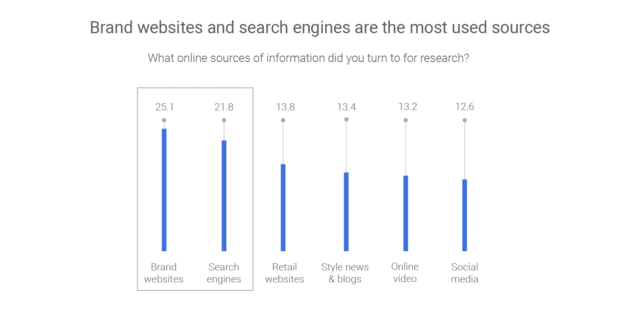
Reportedly, 90% of luxury shoppers conduct research online before making a purchase, and brand websites and search engines are the two most popular sources people turn to. In fact, they’ve become the digital storefront for this generation of digital natives.
Source: Think with Google
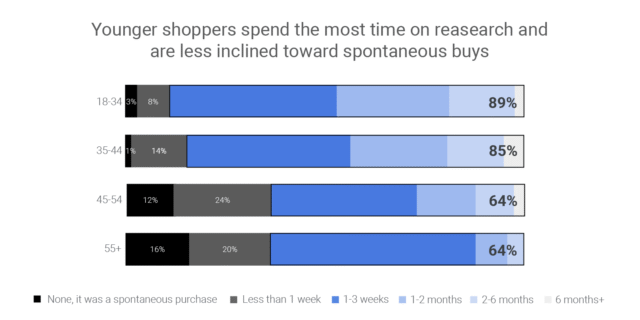
Having grown up with readily available information online, millennial and Gen Z consumers spend more time on research than ever before.
In fact, 89% of shoppers aged 18-34 spend up to three weeks researching a luxury purchase. And they’re not alone: 64% of consumers over 45 will spend the same amount of time on research leading up to a purchase.
Source: Think with Google
Retailers may have once treated online as a separate channel to physical stores, but this notion is quickly becoming outdated.
Whether customers are online or offline is a distinction made by businesses, not consumers.
Online and offline consumer behaviors are increasingly blurring, and the respective experiences need to follow suit, particularly when it comes to the inspiration and research phases.
In short, consistency across the two worlds is key.
It’s hard to imagine a luxury label leaving a customer linger unattended to in its boutique, so, by the same token, a customer should never be left unanswered or ignored on Google, YouTube, or social.
More is more
With a more exploratory consumer mindset, brand loyalty may be more elusive for brands targeting younger shoppers.
Engaging potential millennial and Gen Z luxury shoppers constantly by trying to stay top of mind and being always on will be crucial to gaining consideration.
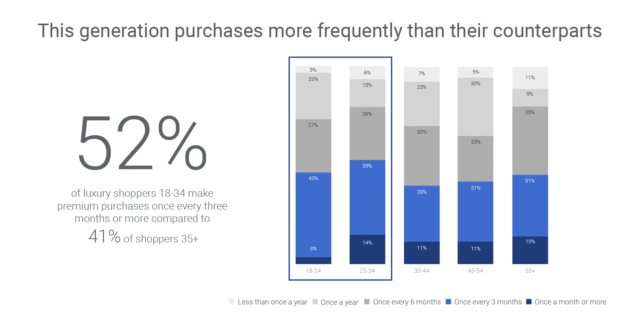
In today’s environment of fast fashion and overnight style sensations — while couture brands used to produce two collections per year, they now produce five to six — one of every three consumers surveyed said they make luxury purchases to keep up with trends.
The tendency to shop more often is evidenced among shoppers aged 18-34, of whom 52% reported making premium purchases once every three months, compared to just 41% of shoppers 35+ who did the same.
Source: Think with Google
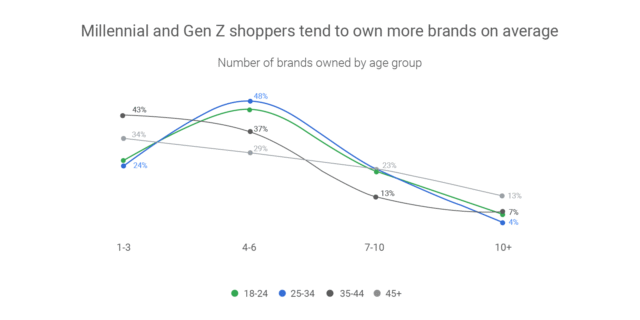
In addition to a higher frequency of purchase, our research also shows that millennial and Gen Z shoppers are likely to consider a wider breadth of brands. On average, this group owned products from a repertoire of four to six brands; compared to more brand-loyal 35+ shoppers, who owned between one and three brands.
Source: Think with Google
Inspiring online with offline
When it comes to in-store shopping, the aspects that customers value most are: 1) guaranteed authenticity, 2) the ability to touch and feel the product, and 3) personalized customer service.
How might these values translate online? With 63% of people expecting the same high-touch brand experience online and offline, the challenge is to emulate these qualities and provide satisfying digital experiences.
Offering free shipping on returns, for example, gives peace of mind to customers wary of counterfeit goods. Similarly, detailed product videos on the brand site or as a pillar of content on YouTube can help shoppers inspect items for quality while engaging them in a rich experience.
Leveraging customer data, such as previous purchases, to create individualized interactions and recommendations is no longer a nice-to-have, but a must. Just as consumers expect personalized customer service in store, personalization is fundamental for designing a top-notch digital brand experience.
Source: Think with Google
The shopping experience begins online for Hong Kong’s luxury consumers.
Search and brand sites are key because 90% of purchases are digitally influenced.
Millennial and Gen Z consumers spend the most time on research, so it pays to provide as much information as possible to this group. They also purchase more frequently, and they consider more brands when they do so.
To stay top of mind, brands should ensure that they are present at as many touch points as possible and that their media strategies are always on.
Expectations for online shopping are growing higher by the day, and this is especially true for premium brands.
Myntra has announced the integration of Jabong with the brand and Ananth Narayanan will continue to lead the team.“Since Myntra’s purchase of Jabong in mid-2016, the two brands have been steadily integrating key business functions and streamlining processes. This has resulted in revenue growth and a significant improvement in the customer experience. As the next step in this process, Myntra and Jabong will now fully integrate all the remaining functions including technology, marketing, category, revenue, finance and creative teams,” said company spokesperson.
“The closer integration of Myntra and Jabong is a necessary step in our continuing development. To remain the leader in fashion eCommerce in India, we have to find ways to operate more effectively and innovate more quickly. By better aligning our resources with our long-term plans, we can put the best structure in place to serve our sellers and brand partners and ultimately benefit our customers.” it added.
According to the company, Myntra’s independence as a business will be preserved. Myntra team will continue to operate independently to achieve even greater success.
“We will continue to lead the market, serve our customers, and do what we do best,” according to the company.
From a consumer perspective, the well-loved Jabong brand will remain.
US retailer Walmart has reported a 4.7 per cent increase in operating income in the third quarter to US$4.98 billion, and a 3.4 per cent increase in year-on-year comparable sales. Walmart sales for the period reached US$124.9 billion, an increase of 1.4 per cent.
“We have momentum in the business as we execute our plan and benefit from a favourable economic environment in the US,” Walmart president and CEO Doug McMillon said in a statement.
“We’re accelerating innovation and using technology to shape the future of retail [and] making shopping at Walmart faster and easier.”
The retailer saw a 43 per cent increase in online sales in the quarter, largely thanks to its investment in its e-commerce business, as well as key acquisitions, according to GlobalData Retail’s MD Neil Saunders.
“Making online work for customers has been a priority for Walmart, but the company is also conscious that online needs to deliver in terms of profitability,” Saunders said.
“On this front, we are impressed with the experimentation on automation and the testing of various last mile solutions for grocery. We believe that Walmart has the skill, financial muscle, and the physical infrastructure to drive profitable online growth in a way that many other retailers, especially grocery players, will struggle to achieve.”