Tag: Shopping

  • China’s slowing economy also slows Singles Day

    China’s slowing economy also slows Singles Day

    China’s slowing economy was the primary reason for the slowing growth of sales on Alibaba’s Singles Day on Sunday. This year marked the 10th anniversary of the online shopathon, and while everyone expected a new record Gross Merchandise Volume (GMV) would be set, no-one was sure whether the spectacular 39 per cent growth rate of last year would be bettered. It wasn’t.

    While the total volume of transactions this year was 213.5 billion RMB (US$30.8 billion), the growth was a more moderate 27 per cent. Singles Day still dwarfs similar events in the US, such as Black Friday ($8 billion) and Cyber day ($6.6 billion). But are there early signs the gloss is starting to wear off?

    Pascal Martin, partner at OC&C Strategy Consultants, says the striking topline Singles Day numbers demonstrate Chinese consumers continue to love these big commercial events, which allow them to try new premium brands – normally out of reach – at more affordable price points. “Singles Day is therefore a great opportunity for brands to reach out to new customers and more and more of them are excited to join the party.”

    Martin says the reduced sales growth for Singles Day reflects a slowing Chinese economy, a view backed up by Alibaba’s recent announcement that its growth for the year would be 5 per cent lower than it initially forecast. The ongoing trade war and more cautious consumer sentiment were also factors, combined with growing competition from other big promotional events such as JD’s recent 618 shopping festival, which generated a GMV of $24.7 billion over 18 days (40 per cent growth year on year) and the high number of promotional opportunities during the year, such as Spring Festival, Labour Day in May, and Golden Week.

    Martin says growing competition from e-commerce sites that offer everyday super-low prices such as Pinduoduo, an upstart e-commerce company that went from zero to 350 million customers in just three years. “Prices on Pinduoduo are hard to beat round-the-year and the application has become hugely popular in China’s smaller cities and towns.”

    Three remarkable features

    Meanwhile, Martin says there were three remarkable features of Singles Day this year:

    New Retail: There were more brand partners this year, both online and offline, leveraging Alibaba’s New Retail ecosystem. “For example, Tmall’s 3000+ convenience stores, Hema and RT Mart supermarkets, Suning and Auchan, were all part of the event. Altogether 200,000 brick and mortar stores joined the party.”

    Globalisation: Singles Day has expanded beyond China through Lazada, the Southeast Asia platform owned by Alibaba. “We saw increased participation of international brands that are taking advantage of the Tmall Global platform – which is the number one by far among Chinese cross-border platforms – to get introduced to Chinese consumers without having to build a direct presence in China.”

    Diversification: The event is moving beyond just being about consumes purchasing products, it is also increasingly about purchasing a variety of services such as food delivery on Ele.com, videos on Youku to mobile games on UC, theatre tickets on Taopiaopiao, music on Xiami music and travel on Feizhu.

    Martin believes given China’s slowing economy Chinese consumers are becoming more cautious and the fact that Singles Day is now in its 10th year, it is less of a big news story. “There might be some consumer fatigue setting in.”

    Obstacles moving forward

    Martin believes three main challenges need to be addressed to sustain the growth momentum of massive commercial fairs like 11.11.

    Firstly, given the growing competition from other promotional events, Alibaba will have to continue to reach out to consumers earlier and earlier, and to expand the scope of the event even more broadly.

    “Another challenge is to continue to ensure flawless delivery for millions of parcels all over China in such a short amount of time. As the event grows, the logistical challenge becomes greater and greater. The number of parcels delivered during this year’s event hit 1 billion on Tmall alone. That’s a huge jump over last year’s 812 million parcels. Additionally, although brands don’t like to talk about it, there is a significant challenge in taking care of huge quantities of returned goods. Singles Day is a massive test bed for Alibaba’s backbone infrastructure: the network of partners that make it all possible, from payment to delivery to data management, as well as AI and cloud technologies that are put to work to ensure a successful event.

    “Finally, 11.11 has become much more than a commercial fair, it is now a major annual milestone in China’s cultural calendar. To keep the event fresh and exciting, Alibaba will need to continue to surprise Chinese consumers with entertainment and festivals around the event. This year, the double 11 gala event featured Miranda Kerr, Mariah Carey and Cirque Du Soleil, but no current big stars. Is this enough to continue to excite consumers, particularly younger generations?”

  • Chinese grocery market set for solid growth, says IGD

    Chinese grocery market set for solid growth, says IGD

    A report released by the international grocery research organisation IGD has forecast growth of 32.6 per cent in the Chinese grocery market by 2022, preserving its status as the largest grocery market in Asia. Grocery retail sales in China are set to rise to CNY 11.4 trillion (US$1.637 billion), more than India, Japan and Indonesia combined.

    The market is expected to see a CAGR of 5.8 per cent over the next five years, on par with Thailand but slower than markets such as India, Vietnam and Bangladesh, where the economy is growing faster.

    Globally, China will remain the second largest grocery market in the world by 2022, behind the US in terms of value.

    Shirley Zhu, programme director for IGD’s Asia-Pacific research, said China continues to be an exciting market to watch with its significant size and rapid growth. “Retailers with nationwide networks such as Sun Art, Yonghui, Walmart, CRV and Carrefour will reap rewards from ongoing expansion, partnerships with e-commerce players, improved efficiency and investment in small formats.

    “Similarly, e-commerce giants such as Alibaba and JD.com will see significant growth from both online and offline channels and become the second and third largest grocery retailers in China, respectively. Regional players such as NGS, Wumart and Bailian will continue on their journey of transformation and consolidation and focus on profitability.”

    Market share for hypermarkets and supermarkets will remain steady, close to 40 per cent of the market up until 2022. However, the supermarket channel will overtake hypermarkets as the largest sales channel with a market share of 20.7 per cent, says IGD.

    “Convenience will be the fastest-growing physical store channel”, said Zhu. “This will be driven by Alibaba and JD transforming traditional mom-and-pop stores, retailers opening smaller format stores and both local and overseas players expanding their networks through partnerships. Online and offline integration will drive online growth. As the fastest growing channel, we forecast online to contribute up to 11.1 per cent of sales in 2022.”

    Less than half of the grocery sales in China currently go through traditional trade. As the market continues to mature, traditional trade will keep losing share to modern trade, which currently accounts for about 57 per cent of total grocery retail sales and is predicted to grow to 66 per cent by 2022.

  • JD.com to provide more imported product to China

    JD.com to provide more imported product to China

    JD.com, China’s largest retailer, will purchase nearly RMB 100 billion worth of products from overseas brands. As disposable incomes in China rise, consumers increasingly demand high-quality products, especially imported products.

    E-commerce has rapidly emerged as one of China’s most preferred channels for buying overseas brands. Last year, the number of users purchasing products from overseas brands grew by 37.1% compared to 2016.

    The volume of imported goods in 2018 to date has already skyrocketed 150% as compared with two years ago.

    JD’ “Retail as a Service” strategy has proved enormously appealing to household
    names from all over the world.

    Indeed, the growing family of leading international brands partnering with JD to facilitate their e-commerce strategy now includes the likes of Saint Laurent, Alexander McQueen, Dell, Nestle, Avène and many more.

    As China’s e-commerce transformation continues to unfold, consumers have gravitated especially towards premium, smart, and green products.

    According to JD’s data, the highest performing categories among its customers this year have been mobile phones, computer and office suppliers, home appliances, maternal and childcare, and digital products.

    Advanced economies such as the U.S., Japan, South Korea, Germany, and the Netherlands remain the most popular sources of imported goods.

    Chinese consumers buying online are mostly younger (26-45 years old), white-collar workers with middle-to-high incomes.

    China’s most developed regions, particularly the coastal cities, account for the largest uptake of imported goods.

    The growth rate for purchases of overseas brands, however, is now highest in fourth- and third-tier cities, where these brands are often not available in brick and mortar stores.

  • Coach enters KL’s SkyAvenue Genting

    Coach enters KL’s SkyAvenue Genting

    U.S. luggage, leather goods and accessories maker Coach has unveiled a new Malaysian boutique at Kuala Lumpur’s SkyAvenue, Genting Highlands. Located inside the Malaysia capital’s innovative shopping precinct on Level 2, Coach’s SkyAvenue store spans approximately 2,002 square-feet and stocks the New York brand’s ready-to-wear collections for both women and men, as well as its iconic hand bags, small leather goods, footwear, accessories and jewellery.

    Coach Creative Director Stuart Vevers in partnership with William Sofield, designer and president of Studio Sofield, were the talent behind the store layout.

    Embellished in modern luxury, as seen in the leather and natural wood finishes that reflect the sophisticated yet playfulness of Coach, the Kuala Lumpur store boasts custom-made cabinets – made from natural and ebonised ash.

    Other texture and material plays come via the use of blackened steel, vintage bronze and wood trimmings.

    Customers will also appreciate the pinewood floor, made of custom wool carpeting, and the tasteful mid-century furniture.

    The new Kuala Lumpur store even has a ‘Craftsmanship Bar’, offering personalised monogramming in addition to leather care and cleaning.

    With more than 100 retail options, SkyAvenue is one of Kuala Lumpur’s most unique shopping experiences.

    The mall is located 6,000 feet above sea level, and is home to a huge range of retail and F&B establishments spanning across five floors. The opening comes at a time when Coach is focusing on Asia, namely China.

    Last week, the New York brand revealed it will stage its next Pre-Fall 2019 runway show in Shanghai, in celebration of the brand’s 15th anniversary.

    Titled “Coach Lights Up Shanghai,” the collection of ready-to-wear, sneakers and accessories is scheduled to show December 8, and will be the first show of its kind that Coach has done outside of New York.

    Global sales at Coach, which makes up over 70% parent company Tapestry’s sales, rose 4% in the three months ended September 29.

    For the quarter period, Tapestry net sales rose to $1.38 billion. Net income was $122.3 million, compared with a loss of $17.7 million a year earlier.

  • Australia retail sales miss in September

    Australia retail sales miss in September

    Australian retail sales rose slightly in September 2018, missing industry expectations that the nation’s retail revenues would register a bigger increase for the first month of spring. Domestic retail turnover saw a 0.2 % gain in September, according to the latest Australian Bureau of Statistics (ABS) Retail Trade figures.

    While the growth remains positive, analysts were predicting a stronger result and forecast retail sales to climb 0.3%, on August’s 0.3% gain in the prior month.

    Year-on-year, September witnessed a rise of 3.67%.

    “Although September’s month-on-month figure isn’t as positive as we would have liked, we need to understand the year-on-year retail growth figure represents a better overview of the current state of Australian retail,” Russell Zimmerman, Executive Director of the Australian Retail Association said.

    “The ARA know personal tax cuts play a big role in discretionary spend, and believe a second round of personal tax cuts before the next election would certainly boost consumer confidence, and see an increase in retail sales in the new year.”

    For the month, café, restaurant and takeaway spending registered the highest growth in September, up 0.5%. This was followed by food retailing, up 0.4%, said the ABS.

    But the month of September was weighed down by lower sales across the clothing, footwear and personal accessories category, with three industries falling 1.2%. Household goods and department stores remained relatively flat from previous months.

    By state, sales were strongest in the state of Victoria and Tasmania, leading by 0.7%. New South wales fell 0.4%, while Western Australia and The Australian Capital Territory were relatively unchanged in September 2018.

    Online retail sales made up 5.6 % of total retail turnover in original terms in September 2018, an unchanged result from August, said the ABS.

    The ABS also released quarterly data that showed seasonally-adjusted retail sales rose 0.2%, a massive drop from the 1 per cent increase in the second quarter.

  • Big C to open in Malaysia

    Big C to open in Malaysia

    Thai Hypermarket Big C appears to be preparing to enter Malaysia. According to several websites, Fraser and Neave, a subsidiary of billionaire Charoen Sirivadhanabhakdi’s TCC Group, is in the process of completing local regulatory requirements through Ministry of International Trade and Industry to prepare for the launch of Big C Malaysia.

    The target opening date has not been confirmed.

    However, the first Big C Malaysia Supercentre is expected to be located in Kedah in northwest Malaysia, near the Thai border.

    Big C currently operates in Thailand, Vietnam and Laos.

    Many Malaysians reportedly cross the border into Thailand to shop at the Big C hypermarket in Hat Yai, in Thailand’s south, giving the company confidence its offer would be popular among residents of its neighbouring country.

  • DFS Group Launches “GIVE JOY” Holiday Gifting Campaign For 2018

    DFS Group Launches “GIVE JOY” Holiday Gifting Campaign For 2018

    DFS Group, the world’s leading luxury travel retailer, is launching its 2018 seasonal gifting campaign, “Give Joy”, to celebrate the spirit of the festive season and the gift of giving. From November 15, 2018 to January 1, 2019, customers will be able to add unique touches to exclusive products available at DFS’ first ever ‘Personalization Gift Shop’ concept. Boasting an assortment of specially curated luxury gifts, alongside an array of dedicated brand pop-ups, branded personalization stations and personalization services, the concept is designed to delight DFS’ discerning traveling customers and enhance their festive shopping experience in 13 T Galleria and airport locations worldwide.

    DFS is also launching the latest edition of its annual and much-anticipated “Give Joy” Holiday Gift Guide, offering customers a curated selection of personalized products. This year, the Holiday Gift Guide features DFS’ own employees as gifting experts, sharing their advice with customers on how to bring the festive season alive through the joy of giving. Showcasing an extensive selection of 143 incredible gifts from 108 world-famous brands across all of DFS’ luxury categories – from Fashion and Accessories and Beauty and Fragrance to Watches and Jewelry, Spirits, Wine and Food – shoppers will be spoiled for choice to treat their loves ones and themselves to something special.

    A stellar line-up of brands will also feature in DFS’ exclusive pop-ups during the “Give Joy” campaign:

    • Dior will host a special ‘Charms Bar’ offering customers the chance to create their own couture-inspired lucky charms accessory with a choice of four colors of ribbon and eight iconic Dior gold lucky charms.
    • Moët Hennessy will offer customers the opportunity to use elevated technology to write a tailored message in golden ink on champagne bottles on the spot.
    • Jo Malone London will offer a photograph transfer service on a beautiful Jo Malone classic gift box. Customers can choose from a personal favorite or an iconic city photograph, making it the perfect personalized gift for this holiday season.

    The exquisitely decorated Personalization Gift Shop will feature a life-size gift box, bringing an exclusive and enticing experience to DFS customers with personalization and the gift of giving. Holiday ribbons available in gold, silver and red and made especially for DFS allow customers to personalize their gifts with special greeting messages in six languages; superb leather goods can be made unique with on-the-spot monogramming; and t-shirts and tote bags can be adorned with limited-edition emoji iron-on patches so that customers can mix and match to create one-of-a-kind designs.

    “We’re excited to bring a sense of fun and individuality to our customers this festive season with our exclusive pop-up gift shops, offering a wonderful array of products from some of the best brands in the world,” said Ariel Gentzbourger, DFS Group Executive Vice President Merchandising. “We hope to enhance the pleasure of giving by offering our customers many ways to delight their friends and family, making the shopping experience a joy in itself.”

    Full serviced DFS’ Personalization Gift Shops will be available in the following locations:

    T Galleria by DFS, Hawaii, T Galleria by DFS, Okinawa, T Galleria by DFS, Guam, T Galleria by DFS, Saipan, T Galleria by DFS, Singapore, T Galleria by DFS, Angkor, T Galleria by DFS, Sydney, T Galleria by DFS, Bali,T Galleria by DFS, Hong Kong, Canton Road, and T Galleria by DFS, Macau, City of Dreams.

  • ShopBack: More people aware of 11.11 this year

    ShopBack: More people aware of 11.11 this year

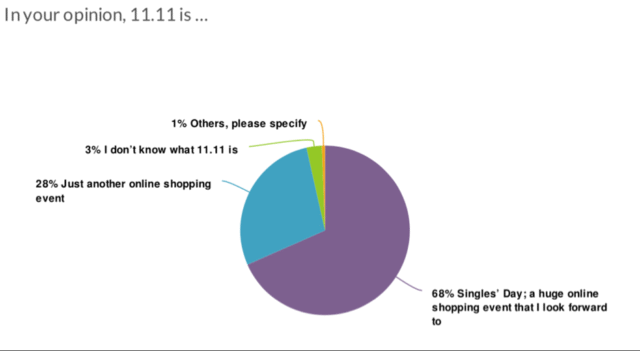
    Leading Cashback platform ShopBack conducted a survey recently and found the awareness level towards 11.11 Singles’ Day among Malaysian online shoppers has grown to 96% this year, from 69% in 2016. “In a 2016 survey to 2,000 Malaysian online shoppers, 69% answered they know what Singles’ Day is and 31% said they don’t. This year, 96% answered it is a huge online event (68%) or just another online shopping event (28%); only 3% from 2,000 respondents said they don’t know what 11.11 is, and 1% indicated that day has other meanings to them. This is an approximately 40% increase compared to 2016,” Alvin Gill, Country General Manager of ShopBack Malaysia says.

    According to Alvin, Alibaba’s investment in Lazada and massive promotions rolled out via multiple online and offline channels, as well as education efforts done by reward partners throughout the years likely contributed to the awareness growth. “Alibaba’s Taobao and Tmall have been collaborating with ShopBack on a regional level to boost market performance via cash rewards and multimedia educational efforts since 2014, of which include multi-lingual contents, digital and on-ground marketing exposures, as well as customer service support to encourage purchases through either Taobao, Tmall or Lazada’s Taobao collection, whichever suits their needs,” he adds.

    “While it is encouraging that a majority of them are looking forward to 11.11, online sellers should also target those who feel 11.11 is ‘just another shopping event’ via better product and promotional strategy. 98% of respondents said they are willing to make more purchases if the products they need are available with greater offers online. The top three offers that would encourage them to spend are high product discounts, free shipping/delivery, and promo codes/coupon,” Alvin points out.

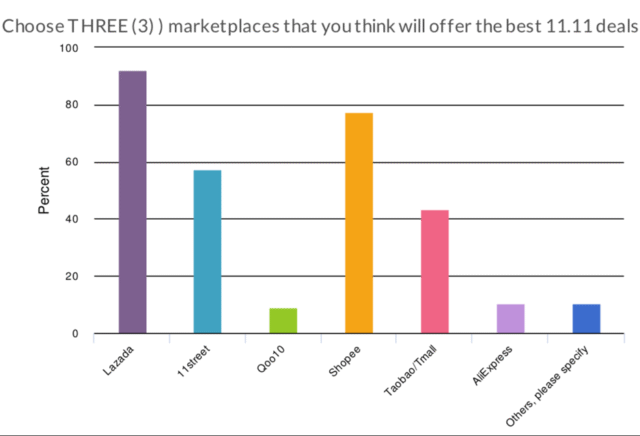
    When asked to choose three online marketplaces that they feel would provide the best 11.11 deals this year, Lazada emerged as the top choice, followed by Shopee and 11street.

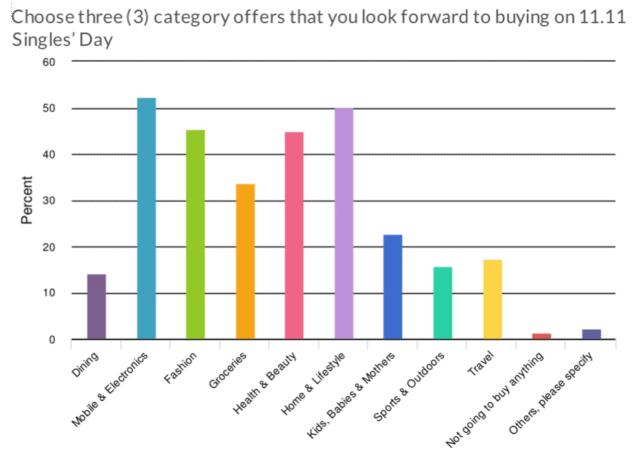
    The survey also reveals that online shoppers prefer their shopping to be affordable, fast and safe. “Mobile & Electronics emerges as the most popular category for 11.11 without surprise; the second is Home & Lifestyle which suggests shoppers could be looking for items to make over their living spaces before the New Year, followed by Fashion as well as Health & Beauty.”

    The 2018 ShopBack 11.11 online shopping survey covered views from 2,000 of ShopBack’s active online shoppers, of which 98.7% are aged 21 years old and above and around 85% have RM2,000 monthly income and above. 68.1% of the survey respondents use credit/debit card to make online payments while 25.4% select online banking as the preferred method, followed by cash on delivery 3.3%, Paypal 2.8%, and others 1.3%.

    “We witnessed 10 times more than usual web traffic directed to our partner’s sites on 11.11 in 2017, more than RM6 million worth of transactions were made through our platform and over RM200,000 cashback saved by using ShopBack. Together with our partner merchants, ShopBack Malaysia has tailor-made the 2018’s 11.11 campaign according to shopper’s needs and we aim to break the record by doubling our performance as well as cashback number this year,” Alvin says.

    Currently, more than 1 million Malaysians are using ShopBack for their daily purchases. The company works with online sites like Lazada, 11street, Taobao, Tmall, Booking.com, Expedia, Traveloka, ZALORA, Hermo, etc to give up to 30% cashback as a loyalty reward to online shoppers. Besides Malaysia, ShopBack also operates in Singapore, Indonesia, Philippines, Thailand, Taiwan and Australia. Over RM25 million worth of cashback has been given to its Malaysian users thus far. The cashback savings can be transferred out to a user’s bank account upon validation.

  • Lenovo opened an unmanned store in Beijing

    Lenovo opened an unmanned store in Beijing

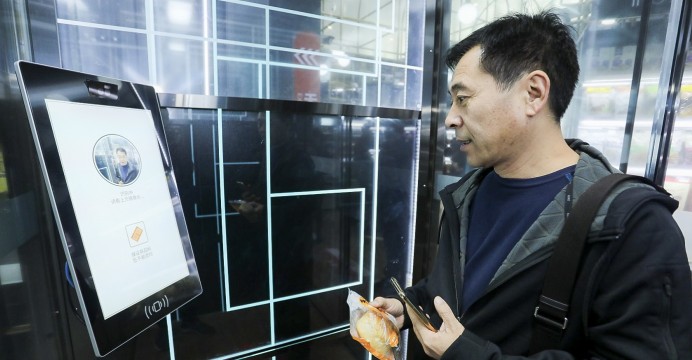
    Lenovo China has launched an automated store in Beijing based on facial recognition technology. The Lenovo Go store also features a mobile payment system. A blog post put out by the Taiwanese tech giant reads: “Shopping at the store is quite simple. You walk up to the door, cameras recognise your face, you browse the aisles, pick out what you want as usual, then – and here’s the magic – you just walk out, and your account is automatically settled via your mobile payment.”

    Lenovo’s head of research and technology Daryl Cromer said: “We can now understand some of the technologies and challenges our customers face, allowing us to make better devices and tailored solutions.

    The store becomes a powerful pilot program for technologies that move beyond the Lenovo campus.”

    Lenovo plans to use data gathered at the store to power future technologies, such as an espresso machine that can brew coffee to individual preferences based on facial recognition.

  • V-Mart India appoints new Independent Director

    V-Mart India appoints new Independent Director

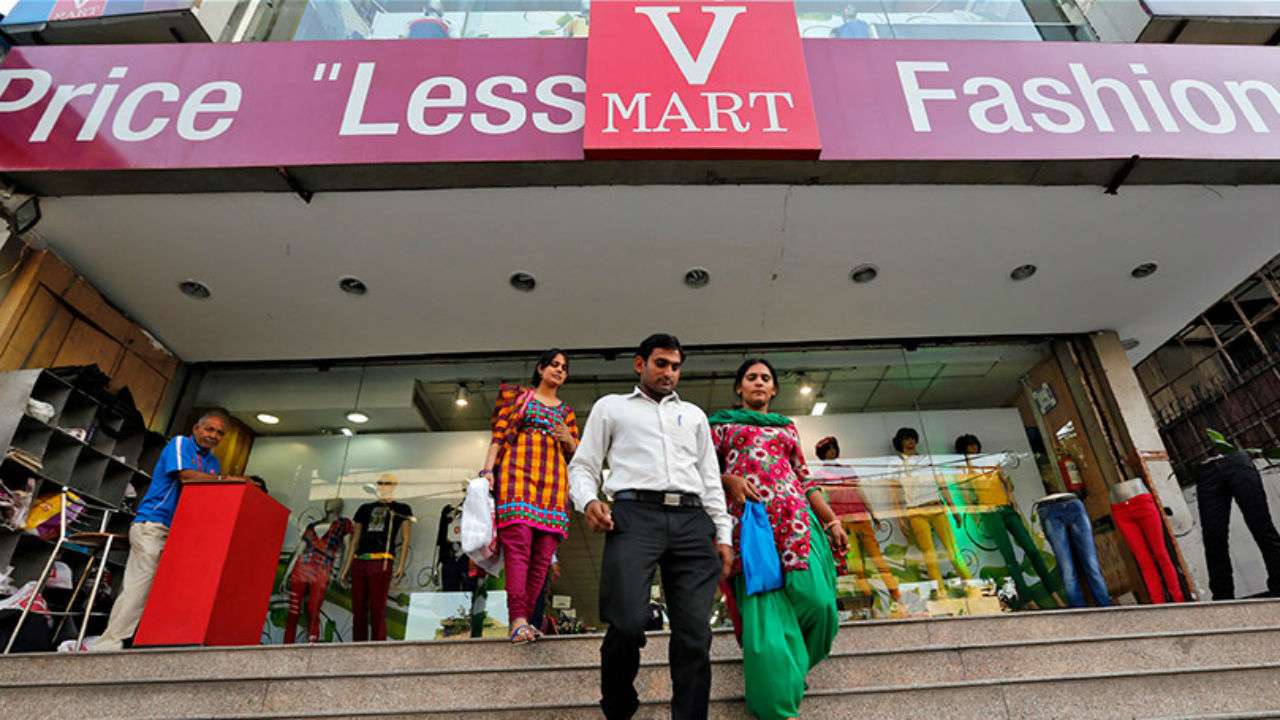
    V-Mart, the world’s best performing department store chain, has announced the appointment of Govind Shrikhande as an Independent Director of the company, effective Nov 2, 2018. Shrikhande possesses rich cross-functional experience in the textiles, apparel and retail industry. In his last professional role, he was the Managing Director of Shoppers Stop, where he started his stint in 2001 as the Vice President of Buying & Merchandising function, growing to the role of Chief Operating Officer role before being elevated as the MD.

    Prior to Shoppers Stop, he was associated with Mafatlal and Johnson & Johnson. He has the unique distinction of being part of the team that launched Arvind Denim and Arrow. Shrikhande has also worked with Bombay Dyeing.

    With this appointment, V-Mart’s current Board constitution is as follows: Lalit Agarwal, Chairman & Managing Director; Madan Agarwal, Whole Time Director; Aakash Moondhra, Independent Director; Murli Ramachandran, Independent Director; Sonal Mattoo, Independent Director; and Govind Shrikhande, Independent Director.

    Welcoming Shrikhande to the board, Lalit Agarwal, Chairman and Managing Director said, “We are excited to welcome Govind on the Board of V-Mart. His extensive experience in managing large scale organizational transformation to drive customer centricity, and successful adoption of enabling technology and processes will be a great asset to the value retailing ethos of the company.”

    “V-Mart has a strong brand as a value retailer, impressive connect with its customer base in Tier II and III towns, and is well-positioned to establish leadership in the affordable fashion segment,” commented Govind Shrikhande. “I am honored to join the Board during a time of opportunity driven by dynamic shifts in the Indian retail landscape, with millions of families in Tier II, III and IV towns transitioning to a modern retail and Omnichannel experience.”

  • Forever 21 revamps Mall of India store with an international twist

    Forever 21 revamps Mall of India store with an international twist

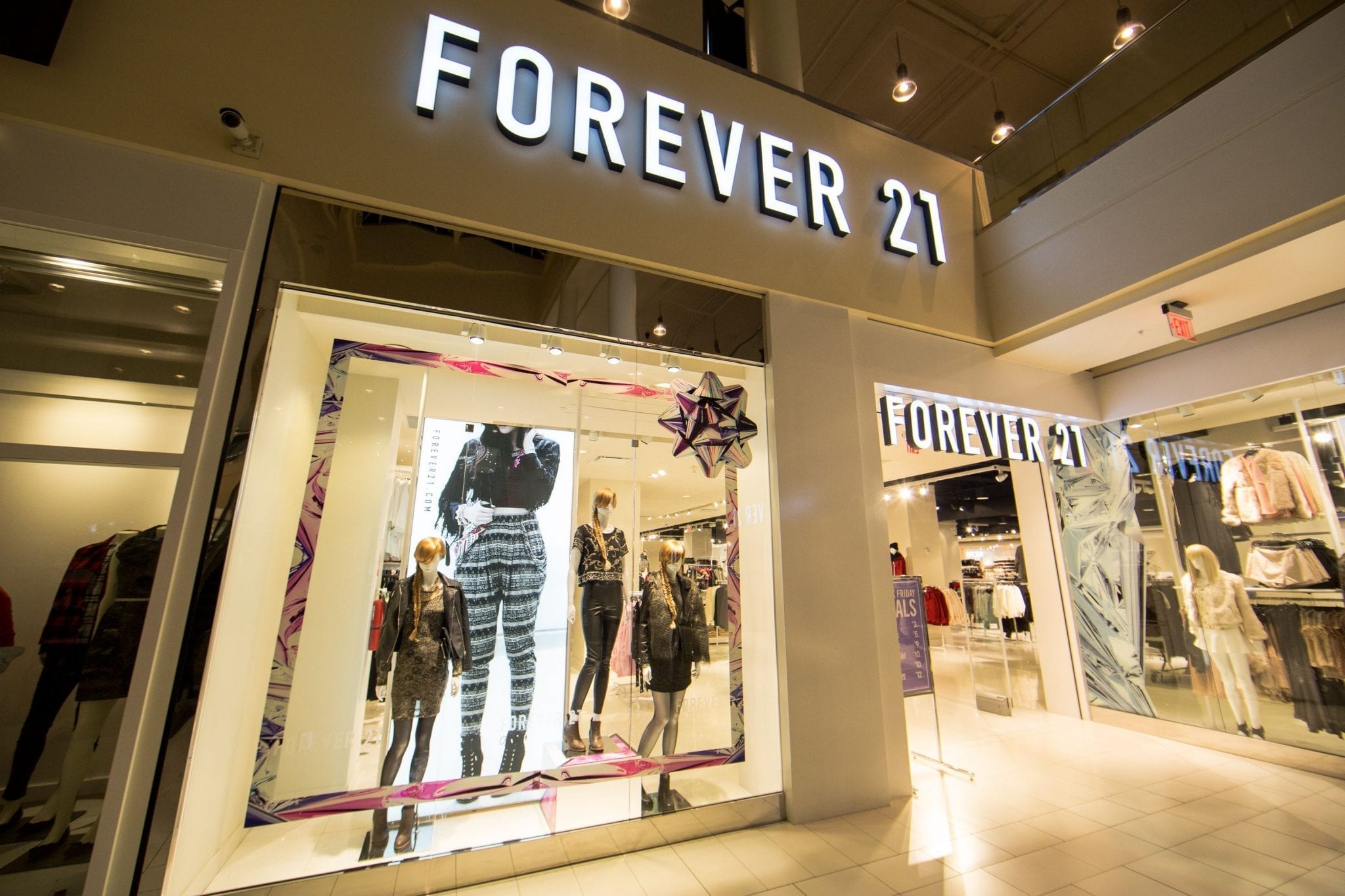
    Forever 21, the most loved international fast fashion destination from Los Angeles, California, and part of Aditya Birla Fashion and Retail Ltd. will be re-opening the store at Mall Of India on November 2, 2018. The refreshing new look gives the shoppers an unforgettable experience bringing classic, international designs with fresh and chic merchandise which effortlessly reflects the brand’s promise of an fulfilling shopping experience.

    The revamped store is best identified as ultra-modern, which houses fresh styles straight off the streets and fashion districts of LA.

    Customers can get their hands on the latest global, contemporary and chic designs loved by all under one roof. The new collection comprises of trendy party wear outfits, laid-back street wear styles, sophisticated contemporary outfits and edgy athleisure wear. They can step up their style quotient with a wide range of international footwear designs, which include – boots, slip-ons, sandals and much more.

  • DKSH adds 3 brands in path to double Thai luxury

    DKSH adds 3 brands in path to double Thai luxury

    Market expansion service provider DKSH Thailand has announced plans to double the scale of its Thai luxury and lifestyle business within two years. The firm has picked up three international brands this year, with another Italian lifestyle brand to be added to its portfolio next year.

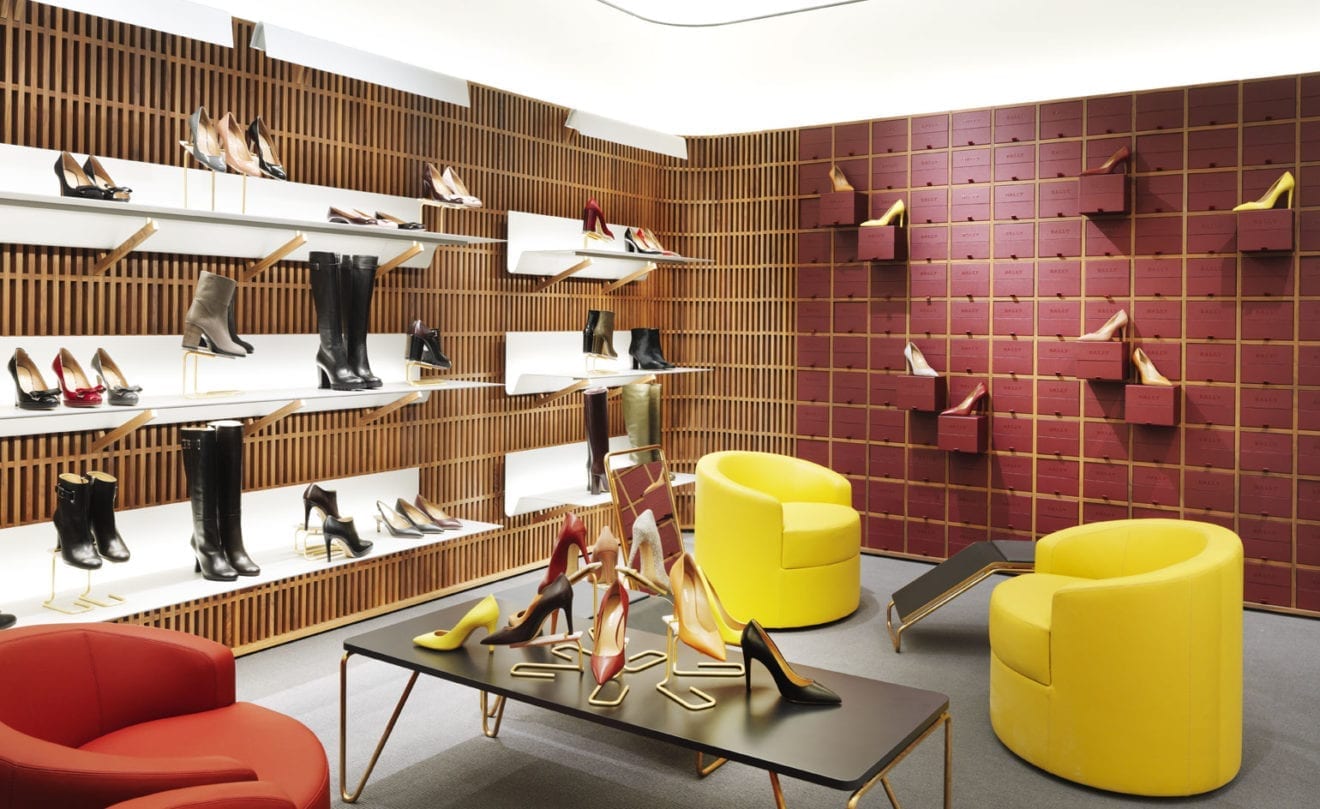
    Included in the expansion is a THB30 million (US$913,800) investment in a new 200sqm flagship Bally store in Thailand, opening at Iconsiam on Friday (November 9).

    DKSH regional VP of luxury and lifestyle business Franck Giacobini said luxury and lifestyle is picking up again and sales are strong.

    “DKSH’s luxury and lifestyle business in Thailand will strengthen in the next few years because the country has a young population with high spending power.”

    He added that DKSH will allocate a huge investment to the Thai market, considering the country’s high-end retail complexes and strong tourism.

    President of DKSH Thailand Douglas Humphrey added: “DKSH has been in Thailand for over a century. Our consumer product business in Thailand is the biggest market for the DKSH network globally. We will continue to invest here in terms of people, capability and supply chain in the coming years.”

  • Holiday boosts South Korean retail sales

    Holiday boosts South Korean retail sales

    A government report has shown a rise in South Korean retail sales of food during the Chuseok holiday. The holiday, likened to the Korean version of Thanksgiving, is thought to have sparked a 6.9 per cent spike in combined revenue for major online and offline retailers during September, compared with last year’s figures for the same period.

    Total online sales grew 8.6 per cent, with 6 per cent growth in offline sales during the holiday period.

    Ahead of the holiday, discount chain food sales increased by 8.1 per cent; department store food sales rose 4.7 per cent, and convenience stores saw 5.1 per cent increases in demand for imported beers and lunch boxes.

  • Insufficient measures to boost retail spending : RGM

    Insufficient measures to boost retail spending : RGM

    The latest budget announcement is not expected to stimulate consumer spending in the near term, as there is insufficient economic policies aimed at increasing retail spending, opined retail consulting firm Retail Group Malaysia.

    Managing director Tan Hai Hsin said that Budget 2019 is focusing more on managing government deficit and social programmes for the B40 group.

    “We hope the economic activities will improve significantly in the immediate future. Higher economic activities will lead to higher take-home pays (and higher retail spending subsequently),” Tan said.

    Prior to the Budget announcement, he said Malaysian consumers were told that they should not expect monetary incentives from the government in 2019. Malaysians were also informed that more taxes could be expected next year.

    “Based on the latest announcement, it should improve consumer confidence. At least in the next six months,” said Tan.

    For next year, the government continues to distribute one-off monetary incentives to Malaysians (including civil servants) to reduce their financial burden. About 4.1 million households are expected to benefit from it.

    Increment of minimum wage by RM50.00 will also lessen the financial burden of B40 group.

    “On the other hand, higher minimum wage will lead to higher cost of goods for retailers. It will lead to higher retail prices eventually.”

    He said the soda tax will not have major impact on retail spending, while noting that it is still early to comment on the impact of RON95 until more announcements have been made.

    “Same as previous budgets for many years, there were no direct incentive and new government policies related to retail industry.”

    Sunway Malls & Theme Parks Chan Hoi Choy said the 2019 Budget balances fiscal discipline while emphasising development in the right sectors.

    “Initiatives announced particularly with the emphasis on B40 group is lauded while efforts to grow Industry 4.0 especially knowledge transfer, artificial intelligence development, matching grants will drive higher productivity and cost rationalisation in mall & retail industries.”

    Similarly, it is encouraged by the government’s focus in housing, public transportation and education initiatives to form the bedrock for Malaysia’s economy into the future. The drive for greener adoption and women representation also signifies a greater sustainable and inclusive approach.

    “We take note of the significance of Malaysia’s economy projected GDP growth rate of 4.8% for 2018 and 4.9% for 2019, against IMF’s projected slowdown of global growth of 3.7% in 2019. This underscores the relative resilience of the Malaysian economy in face of global headwinds and protracted trade war. In the light of this and the current country’s fiscal position, the overall Budget 2019 is targeted while exercising prudence,” said Chan.

  • Alibaba’s second-quarter revenue jumps high

    Alibaba’s second-quarter revenue jumps high

    Alibaba’s second-quarter revenue grew 54 per cent year on year, reaching RMB 85.1 billion ($US12.3 billion). Net income attributable to shareholders was RMB 20 billion ($2.9 billion), a 13 per cent year-on-year increase. “Alibaba had another strong quarter of rapid growth,” said Alibaba Group CEO Daniel Zhang.

    “Annual active customers increased by 25 million to reach 601 million in the year ended September 30.”

    “Annual active customers increased by 25 million to reach 601 million in the year ended September 30.”

    Alibaba’s cloud-computing arm saw 90 per cent year-on-year growth to RMB 5.6 billion, launching more than 600 products and features during the quarter ranging from big data analytics, AI application innovation, security and internet-of-things enhancements.

    The business’s online Tmall operations saw a 30 per cent increase in gross merchandise value, driven by improved conversion rates and increased traffic in the fast-moving consumer goods, home furnishings and apparel categories.

    Alibaba’s New Retail strategy has continued to pay off across its Hema supermarkets network, with stores that have been in operation for at least 1.5 years seeing online sales account for 60 per cent of turnover for the September quarter. By the end of the quarter, 77 Hema stores had been opened in China.

    The group has dropped its forecast revenue guidance for the full year by 4 to 6 per cent to between RMB 375 billion and RMB 383 billion. As it stands, the group expects revenue to grow by 54 to 56 per cent.