Tag: Shopping

  • China’s singles day VS black friday

    China’s singles day VS black friday

    For the past few years, Black Friday has become a focal point for many US and UK retailers – and for media outlets hungry for images of shoppers bursting into stores in pursuit of posh televisions. The event, supposedly named after the moment when retailers move into profit for the year, has quickly escalated into a four-day shopping festival. But it is not the only game in town – or even the biggest.

    Black Friday falls the day after Thanksgiving in the US (November 23 this year) and is followed up by a long-weekend extravaganza which culminates in the online-focused “Cyber Monday”. It has recalibrated, and brought forward, many consumers’ pre-Christmas shopping plans.

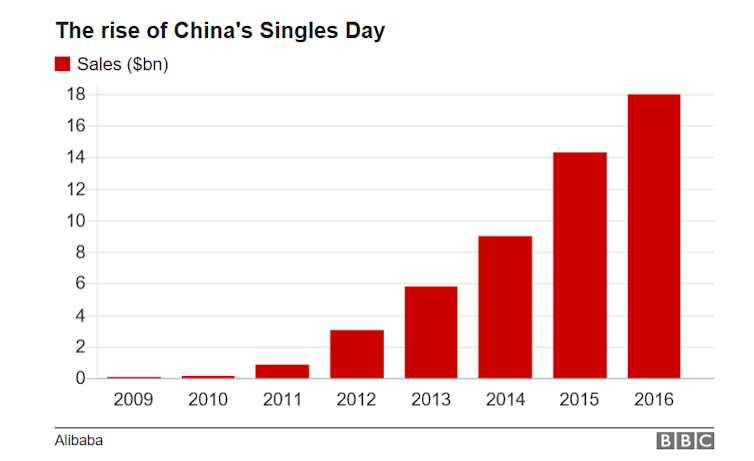
    However, unlike Black Friday, China’s November 11 “Singles Day” is still predominately focused on local consumers and completely dominated by one online retailer – Alibaba. The economic impact of Black Friday is dwarfed by this online one-day retail festival from China. Singles Day has gone under the radar for most of the general public in the West, but in 2016, Chinese shoppers spent an incredible US$17.8 billion in 24 hours on the Alibaba online platform – China’s Amazon equivalent.

    This online sales bonanza shifts more goods than the Black Friday and Cyber Monday sales days in the US combined. Black Friday in the US saw online sales hit a record of just over US$3 billion in 2016.

    Origins

    Singles Day started as an obscure “anti-Valentine’s” celebration for single people in China back in the 1990s. The popular story is that it was started by students at Nanjing University who celebrated their singledom by treating themselves. It takes place on November 11 every year and is sometimes known as “bare sticks holiday”, after the way the date is written (11/11).

    The event is also known as “Bachelors’ Day”, and it’s not hard to see why. China has a surplus of males caused by years of the government’s “one child” policy. By 2020, sociologists expect the gender imbalance to have widened to 35m and by 2030, it is estimated that one in four Chinese men in their late 30s will never have married. That is a big market.

    Black Friday was, of course, initially driven and then “exported” to the UK and other markets by major US retailers, specifically Walmart and Amazon. In China, it was the e-commerce giant Alibaba which adopted Singles Day in 2009, just as online shopping started to explode.

    It has now become a day when everyone, regardless of their relationship status, buys themselves gifts. Alibaba spotted this as a chance for retailers to generate interest and excitement and to boost sales in the lull between China’s Golden Week national holiday in October and the peak Christmas season.

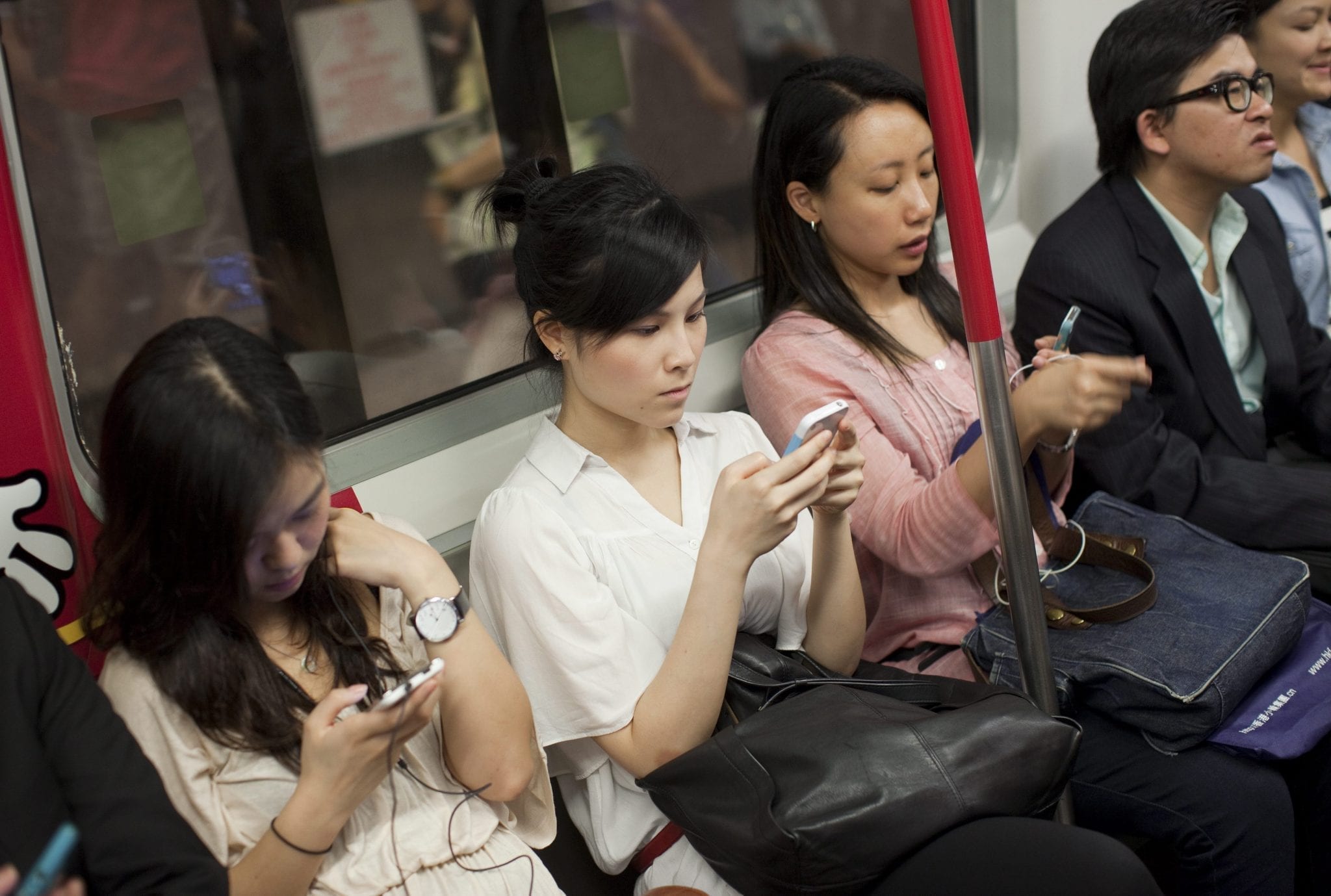
    Like much of the global growth in online sales, Singles Day has been driven by mobile. Nowhere is this more stark than in China where, with 1.3 billion smartphone users, mobile shopping is huge. Around 37 per cent of Chinese shoppers buy products using their phones, compared to the global average of 13 per cent.

    We’ve seen that Alibaba’s sales numbers for Singles Day are astonishing. And the growth has been too. The chart below shows how Singles Day sales for Alibaba have risen over the past seven years. Last year alone, sales were up 32 per cent on the previous year.
    Alibaba/BBC, Author provided

    According to Alibaba, during the event on 2016 they processed more than a billion payment transactions in total, with 120,000 transactions per second at peak and their distribution system processed more than 657m delivery orders.

    Analysts have predicted this year’s event could see Alibaba rack up sales of US$20 billion despite a slowdown in China’s economy, partly due to it having a broader audience.

    Copy cats

    Of course those kinds of numbers attract the interest of Western retailers too and the 2016 event saw 37 per cent of total buyers purchasing products from international brands or merchants. Companies like US retailers Costco and Macys as well as Britain’s Top Shop and House of Fraser have marketplaces on Alibaba’s Tmall site have already got involved.

    And, for the first time, Alibaba’s 2017 Singles Day festival will bring more than 100 Chinese brands to overseas buyers, offering special promotions targeting over 100m overseas Chinese consumers in Asia and around the world.

    There is one rather sensitive obstacle to the adoption of Singles Day in the UK, however. The eleventh day of the eleventh month is Armistice Day when Britain marks the end of World War I and the nation remembers all those who have died in military service. There will be many who think it distasteful to run a shopping event on that day. However, as David McCorquodale, head of retail at KPMG, pointed out: “Singles Day in China is the biggest promotions day in the world. [The date] will stall its entry to the UK, but not forever.”

    Given the rapid globalisation of most retail trends and the way online retail now allows immediate access to millions of products from thousands of manufacturers, it is indeed impossible to envisage that Singles Day won’t extend it’s reach, in some form, to Western consumers very quickly.

  • Chinese millennials driving luxury goods sales

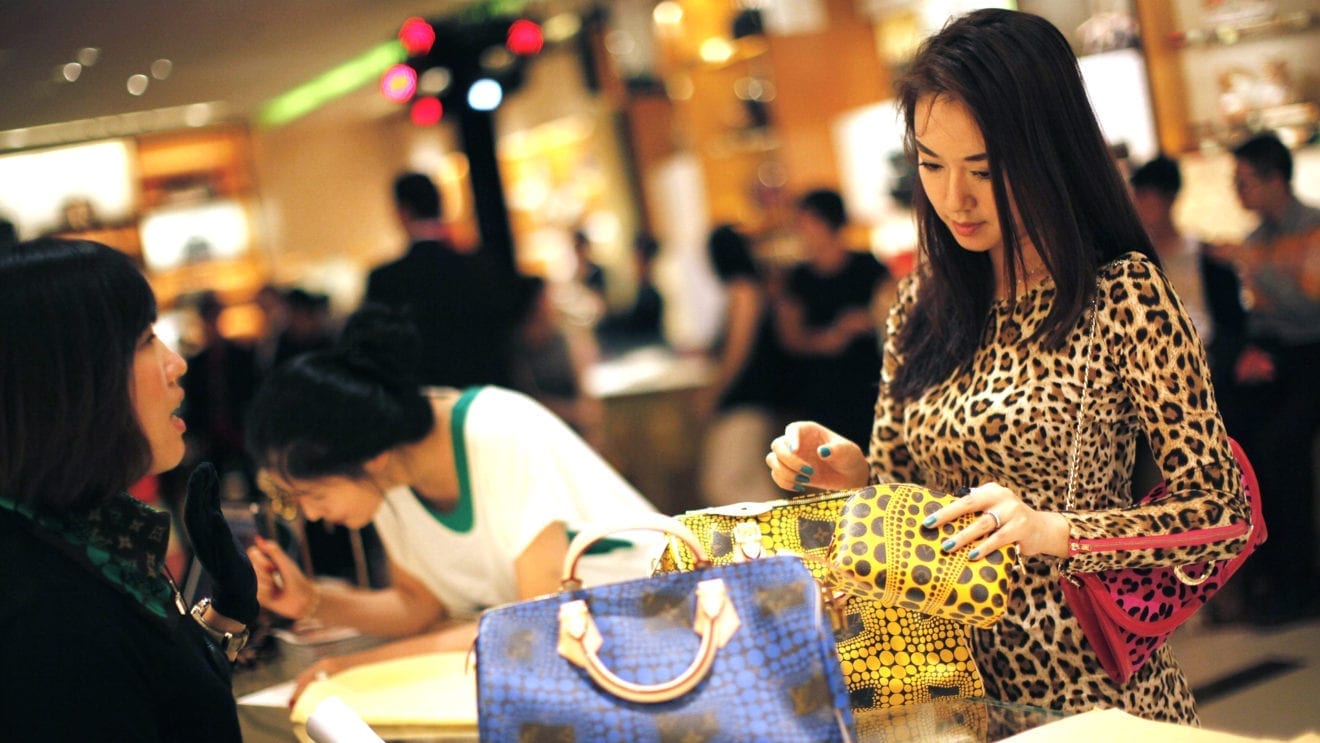
    Chinese millennials driving luxury goods sales

    Chinese millennials are driving faster growth than expected for worldwide sales of luxury goods, says consultancy Bain & Co.

    It says there is a thriving demand in China for items such as high-end handbags, shoes and jewellery.

    After stalling in 2016, revenues from personal luxury goods are set to rise 6 per cent at constant exchange rates this year to €262 billion (US$308 billion), Bain forecasts in an annual report compiled with the help of Altagamma, the trade association for Italian luxury brands. Earlier projections were for 2 to 4 per cent growth.

    Already, stronger earnings are being reported by luxury retailers including Brunello Cucinelli and LVMH, which owns Bulgari and Louis Vuitton.

    Bain says retailers’ efforts to connect with younger buyers and to bridge a price divide between Europe and Asia (more expensive) were also paying off.

    “Luxury goods companies have rethought strategies and are now regaining the trust they lost from customers,” says Bain partner Federica Levato, who co-authored the report.

    She says this year’s growth is “healthier”, being driven by a rise in volumes rather than in prices, and is balanced between tourist purchases and local buyers.

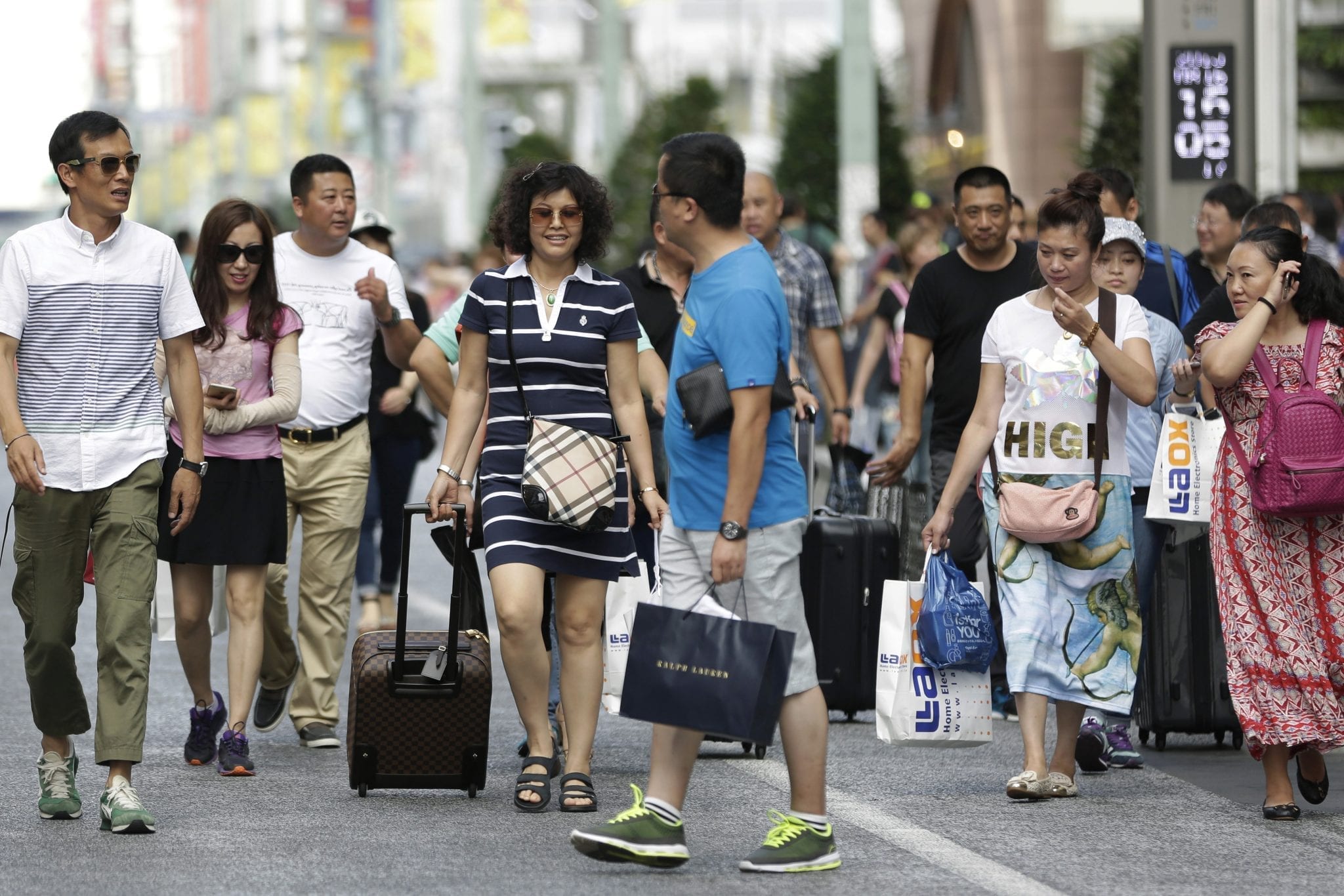
    Chinese buyers now make up 32 per cent of the luxury goods market, more than any other nationality, thanks to increased purchases in both their home market and abroad.

    As a whole, the industry could notch up annual growth rates of 4 to 5 per cent until 2020, says the Bain report, with online sales growing steadily and expected to reach a quarter of all sales by 2025, up from the present 9 per cent.

    Millennials already represent a third of the market, with the later “generation Z”, which grew up with smartphones, starting to make a dent in the luxury market, says Bain.

    Brands have been increasingly turning to social media or pairing up with pop stars and influencers, and branching into casualwear and streetwear, with t-shirts, sneakers and denim.

    However, while 65 per cent of luxury firms will grow sales this year, only 35 per cent will manage to increase their operating profit, says the report.

  • Warm-up starts for 11.11 Global Shopping Festival

    Warm-up starts for 11.11 Global Shopping Festival

    Pre-sale activities have launched for Alibaba Group’s latest 11.11 Global Shopping Festival.

    Three weeks of interactive marketing promotions, innovative retail experiences and new international product offerings lead up to the sale, with more details to be revealed by Alibaba at the end of the month.

    More than 140,000 brands will participate in this year’s 11.11 with more than 15 million product listings. The more than half a billion Chinese consumers visiting Alibaba’s platforms will be able to choose products from more than 60,000 international brands.

    A year after Alibaba announced its New Retail strategy, the festival will further showcase the possibilities for the future of retail by infusing physical retail elements in social media, interactive content and entertainment in one ecosystem at an unprecedented scale. Online-to-offline initiatives include:

    ● More than 1 million stores from different merchants will use various online and offline integrations under Alibaba’s New Retail models to create innovative customer experiences

    ● More than 1000 brands across various categories will be converting 100,000-plus physical locations into “smart stores” featuring New Retail experiences including browsing, shopping tours, virtual fitting rooms, payments and deliveries

    ● More than 600,000 neighbourhood convenience stores and 30,000 rural Taobao service centres will use Alibaba’s one-stop technology to digitise their businesses, and will partner international brands like Ferrero, Lay’s, Mondelez and P&G to serve more than 100 million consumers

    ● Augmented-reality games will let Chinese consumers earn promotion coupons and prizes when they find and scan the Tmall mascot using the Taobao app (the mascots will be stationed in thousands of retail stores including KFC and Starbucks outlets).

    For the first time, Tmall will take more than 100 Chinese brands overseas, offering special promotions targeting more than 100 million overseas Chinese consumers internationally.

    Alibaba’s logistics network, Cainiao Network, expects more than 3 million logistics personnel to handle the millions of packages generated from the 24-hour festival. The network will invest more than US$200 million to help merchants and logistics partners handle the spike in demand.

    For the second year in a row, Hollywood producer David Hill will direct the 11.11 Global Shopping Festival Gala in Shanghai on November 10. It will feature celebrity guests and performances livestreamed by Beijing TV, Shenzhen TV and Zhejiang TV.

    The 11.11 shopping festival launched in 2009 with just 27 merchants. Last year, nearly 100,000 merchants participated, with consumers spending RMB120.7 billion (US$17.79 billion) during the 24 hours.

  • Consumers get their mojo back

    Consumers get their mojo back

    Consumers appear to have a spring back in their step, which will be a welcome relief to retailers after the recent run of poor household spending figures.

    The Westpac-Melbourne Institute consumer sentiment index jumped 3.6 per cent in October to its highest level in a year and for the first time since November 2016 showed optimists outnumber pessimists.

    Releasing the survey on Wednesday, Westpac chief economist Bill Evans said this welcome boost is consistent with an improving global economy, less concern over a rise in interest rates because of heated house prices and strong employment gains.

    Data last week showed retail spending in August dropped for a second month a row, posting the worst performance in seven years.

    Commonwealth Securities chief economist Craig James said in the space of two months consumer confidence has gained over six per cent.

    “Consumers are getting their mojo back,” he said.

    However, the International Monetary Fund’s latest World Economic Outlook brought both good and bad news on the economic outlook.

    While it has upgraded its global growth forecasts again, bad weather events have meant Australia has failed to live up to its earlier expectations.

    IMF economic counsellor Maurice Obstfeld says the global recovery is continuing and “at a faster pace”.

    “We see an accelerating cyclical upswing boosting Europe, China, Japan and the United States, as well as emerging Asia,” he said.

    The Washington-based institution now expects the world economy to grow by 3.6 per cent this year and 3.7 per cent in 2018, both 0.1 percentage points higher than previously predicted in July.

    That compares with 3.2 per cent growth in 2016.

    By contrast, the IMF expects economic growth in Australia to slow to 2.2 per cent in 2017 compared to 2.5 per cent in 2016 – a downgrade from its previous prediction of 3.1 per cent.

    “Growth is expected to soften temporarily to 2.2 per cent in Australia, where housing investment and mining exports in the first half of the year were undermined by bad weather,” the report says.

    National Australia Bank senior economist David de Garis thought that forecast was a “little low” and is below his bank’s 2.5 per cent prediction.

    It also falls to the lower end of the Reserve Bank’s two to three per cent forecast range for this year.

    The IMF expects the economy to grow by 2.9 per cent in 2018.

  • South Korean shoppers set new mobile spending record

    South Korean shoppers set new mobile spending record

    South Korean shoppers set a new record for the volume of purchases made through mobile devices during September.

    Government data says mobile transactions through smartphones and tablets reached a new high of 4.04 trillion won (US$3.5 billion) in August, up 29.5 per cent from a year earlier.  Statistics Korea says the trend is being fuelled by the growing amount of time consumers are spending on their handsets.

    Mobile transactions accounted for 61.9 per cent of all online purchases made during the month.

    Shopping by mobile phone in South Korea has been on a steep rise for years as smart devices are widening their presence in the world’s most-wired country. They are rapidly replacing computers as a means of conducting online transactions.

    Mobile bookings for travel and movie tickets surged 35.5 per cent in August from a year earlier to a record 755.8 billion won in the summer vacation season, while South Korean shoppers spent 344.8 billion won on cosmetics during the month, up 20.7 per cent.

    Food delivery services increased 38.2 per cent year-on-year to 610.3 billion won last month, while 381 billion won worth of electronic goods was sold through smartphones, up 18.3 per cent from a year earlier.

  • ANZ markets outpaced in mobile shopping

    ANZ markets outpaced in mobile shopping

    Growth in online shopping in Australia and New Zealand is much slower compared to some emerging markets in the Asia Pacific region, according to the recent Mastercard Mobile Shopping Survey.

    Emerging markets in Asia Pacific have recorded high year-on-year growth in mobile shopping, outpacing their more developed counterparts. India, at 75 per cent, has retained its crown as the region’s top mobile shoppers for the second consecutive year; China, at 71.4 per cent, remains a close second.

    The Philippines (53.5 per cent) and Malaysia (55.6 per cent) have the highest year-on-year growth in mobile shopping, recording increases of 12.6 per cent and 10.1 per cent respectively.

    While the Philippines, Malaysia, China and India have recorded growth in mobile spending, the more advanced markets like Japan (31 per cent), Australia (26 per cent), and New Zealand (26 per cent) are keeping their mobile purse strings tight, the study showed.

    The study also revealed Asia Pacific’s penchant for mobile shopping has also fueled a steady increase in digital wallet adoption, with more than one in five consumers (22.3 per cent) using such payment methods. The region’s consumers are also embracing QR code payments. Over one in ten consumers use QR code payments with the most avid users hailing from China (42.6 per cent) by a wide margin.

    “Consumers in many of Asia Pacific’s emerging markets are mobile-first users, having leapfrogged the traditional payment evolution,” said Benjamin Gilbey, senior vice president, Digital Payments and Labs, Asia Pacific, Mastercard. “Their governments are making significant efforts to push the development of the e- and m-commerce landscape as well as its supporting infrastructure, which has in part contributed to the growth we’ve seen in the latest survey results.”

    Gilbey said today’s consumers have shifted from simply being one-device users to one-app users as they demand more seamless payment experiences.

    The Mastercard Mobile Shopping Survey, which was carried out across fourteen markets in Asia Pacific (Australia, China, Hong Kong, India, Indonesia, Japan, Malaysia, New Zealand, Philippines, Singapore, South Korea, Taiwan, Thailand & Vietnam) where total of 8,738 consumers aged 18-64 were polled online, revealed that majority of consumers across the region (53.6 per cent) cite convenience as a key reason for shopping on their mobile devices, particularly those in China (70.9 per cent), Thailand (60.8 per cent) and Taiwan (59.2 per cent). Contrary to the rest of the region, majority of consumers in Malaysia cited the ability to shop on the go as a key reason, as opposed to convenience.

    Clothing and fashion accessories (34.9 per cent), personal care and beauty products (21 per cent) and movie tickets (20.2 per cent) are the top purchases made by Asia Pacific’s mobile shoppers, the study showed. This was not the case, however, for mobile shoppers in Japan, New Zealand and Taiwan, whose top purchases include books, CDs and DVDs; toys and gifts; and personal and beauty care products, respectively.

    Preferences for in-store shopping continues its steady decline across Asia Pacific, dropping to 45.9 per cent from 48.6 per cent two years ago.

  • Time to Shop For Pink again

    Time to Shop For Pink again

    Nearly 30 retailers are sponsoring this year’s Shop For Pink charity event in support of the Hong Kong Cancer Fund next month.

    For the annual event, retailers offer pink items to raise money to support women with breast cancer. Exclusive pink offerings this year cover fashion, jewellery, accessories, lifestyle, beauty and dining, with the sponsors including Calvin Klein, Pandora and Pizza Express.

    Hong Kong Cancer Fund founder/chief executive Sally Lo says Shop For Pink serves as a reminder for all women to prioritise their health and have regular checks.

    She says breast cancer is the most common form of the disease among Hong Kong women, with one in 16 at risk. “With medical advancements, more and more women diagnosed with breast cancer are receiving timely and successful treatment. However, this also means the need for supportive care during recovery is increasing.

    Now in its 17th year of advocacy, the fund’s Pink Revolution is bringing together celebrities, medical professionals and breast-cancer survivors to raise awareness of the disease.

  • Jakarta shopping mall business ‘still promising’

    Jakarta shopping mall business ‘still promising’

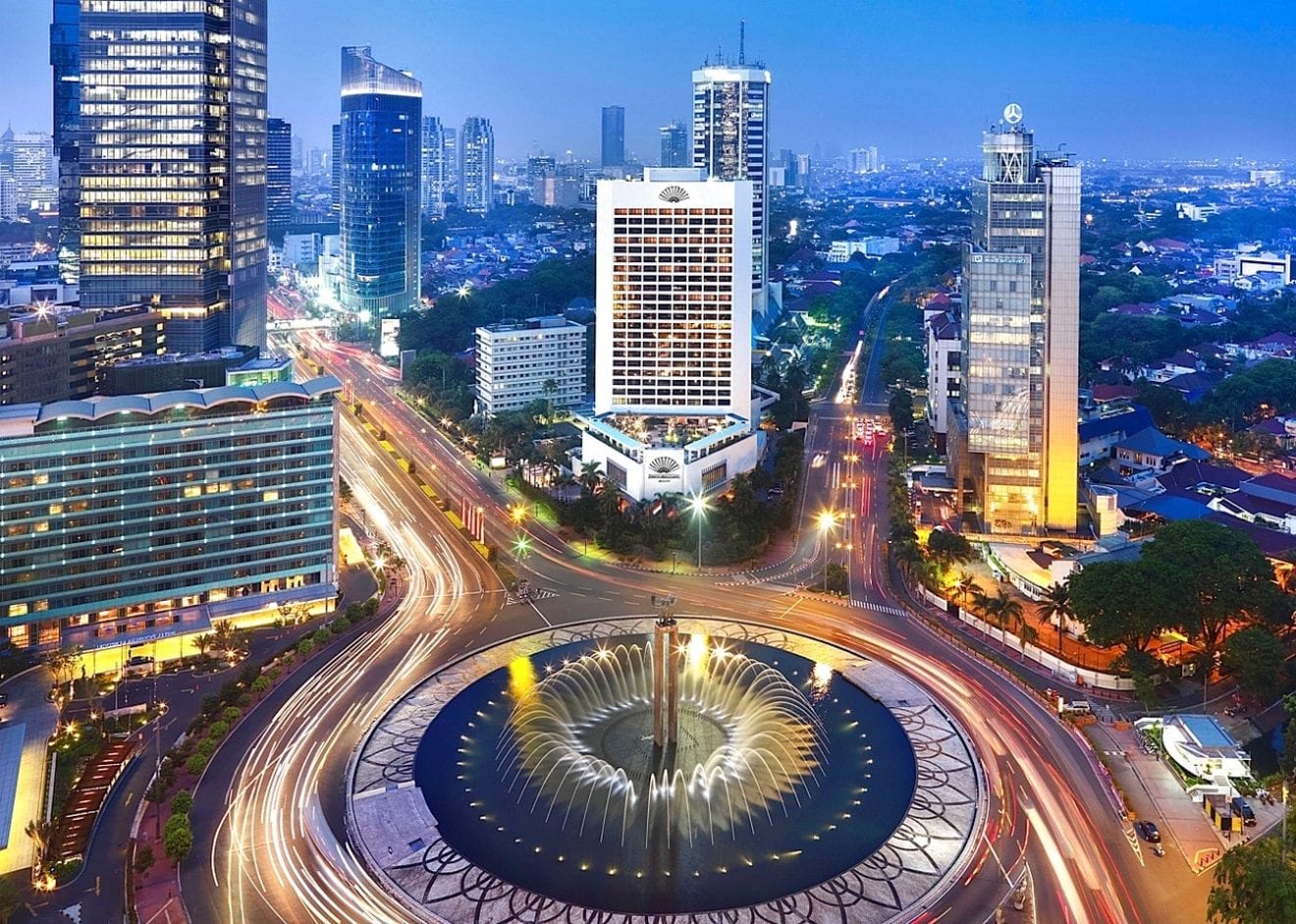
    Jakarta shopping malls are still a promising business despite online retailing becoming more popular, says US real-estate service company Colliers International Group.

    It says the reason for this is a lack of entertainment options for family holidaymakers in the Indonesian capital.

    Twelve shopping centres with a total floor space of about 600,000 sqm are expected to be completed by 2020, with 38 per cent now under construction, Colliers Indonesia says in its latest retail property outlook report.

    With little choice for family entertainment, malls still appeal to locals as family destinations,” says senior associate for retail service Steve Subadi Sudijanto.

    Aeon Mall Indonesia is planning to open four more stores, three of which are being built, in Jakarta and its suburbs through 2020. The Japanese brand’s first shopping mall opened in Tangerang in Banten on the capital’s outskirts in May 2015.

    Colliers says F&B continues to be the main attraction. More new brands from Asian countries are arriving and expanding in Indonesia.

    “Tough competition requires developers to be more dynamic in attracting locals through renovation and tenant reshuffles on the back of a government measure to curb the number of new store openings in Jakarta,” says Colliers senior associate director of research Ferry Salanto.

    “In fact, hunting for new brands, particularly in fashion and food, is continuing to become a common habit for shoppers in Jakarta.”

  • RIP high street retailers, faced by the relentless onslaught of mobile

    RIP high street retailers, faced by the relentless onslaught of mobile

    I overheard a young Hongkonger say recently, “I rarely buy anything at shops anymore. I only shop online.” It is not hard to notice the profound effect that e-commerce has had around the world and especially in an emerging and fast-growing market like China.

    But this phenomenon has yet to fully hit Hong Kong’s major luxury malls and department stores that are crammed with overpriced purses and overwrought window displays.

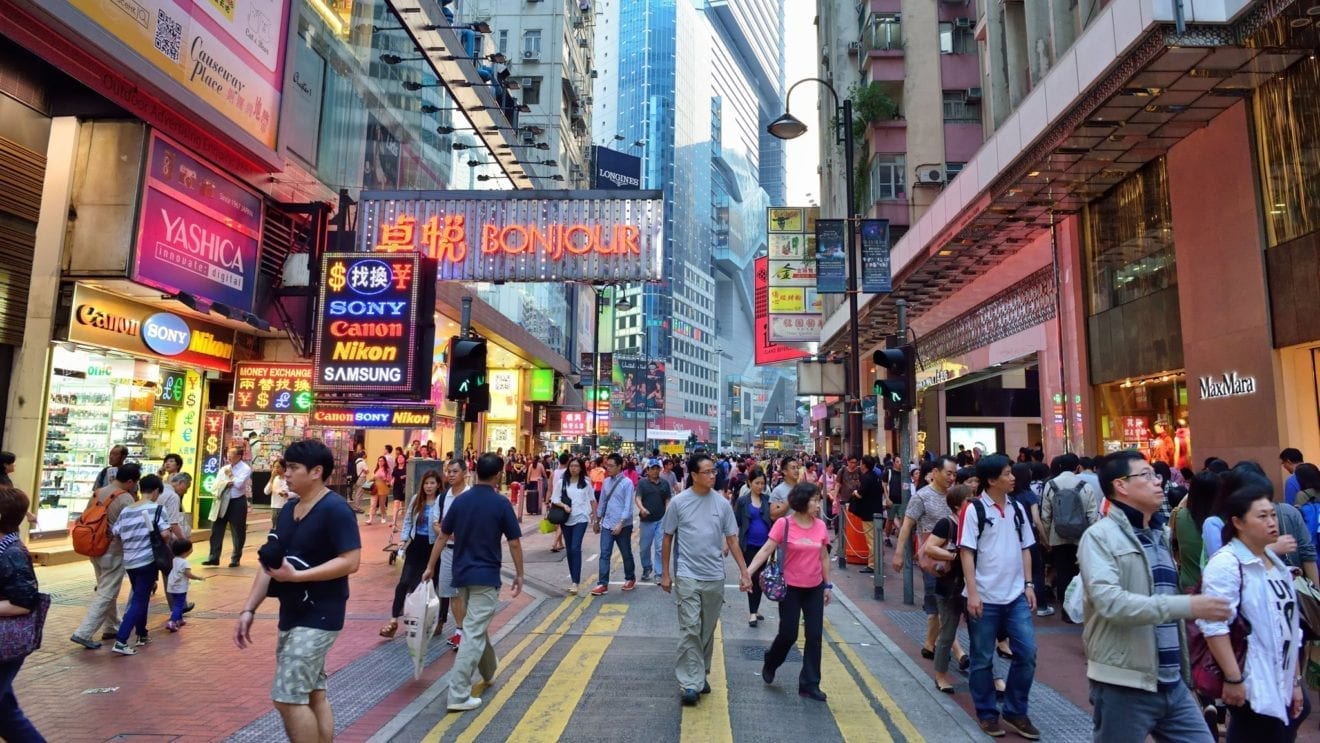
    Despite a restructuring of Hong Kong retail outlets by major luxury brands, the city still hosts more flagship stores than any other place. The lucrative wave of mainland shoppers has long receded and on any given day the luxury stores in Landmark and Pacific Place and other high-profile malls appear awfully sleepy.

    The fate of Hong Kong’s luxury malls against the online shopping onslaught has not yet unfolded.

    I don’t expect them to become ghost towns, but even they cannot avoid downward trends.

    But they are like the fixed fortifications on Frances’s doomed Maginot Line that were bypassed by the German army on the second world war – intimidating and monolithic, but easily made irrelevant by technological disintermediation.

    E-commerce has radically changed shopping habits in the US. Hudson’s Bay department store posted a US$152 million quarterly loss. Ralph Lauren is closing its fabulous and iconic Fifth Avenue flagship store. What is occurring goes beyond an economic cycle, but rather it represents technology enabling generational change. Millennials are conducting their entire lifestyle on smartphones.

    Will Hong Kong’s malls become obsolete or changed so much they will not mean the same thing.

    Sites like deadmalls.com chronicle the slow, but sure death and irreversible evolution of shopping malls in the US.

    Although not all of them are dying, certain segments in urban and suburban areas are empty, hastened by the rise of online. Changing consumer habits and online shopping is decimating the mall as a central retailing concept or necessary gathering place for the community.

    JD.com’s recent acquisition of a US$397 million stake in Farfetch, the London-based luxury fashion and boutique e-commerce service provider, marks a major milestone in the development of luxury retailing. The company, which reported gross sales of US$800 million last year, runs nine local language e-commerce sites, which include the mainland, South Korea and Japan.

    The two companies described their strategic partnership as a means to dominate market share in the estimated US$80 billion market in domestic and travel-related purchases of luxury goods by mainland consumers.

    “We’re just scratching the surface of China’s US$80 billion luxury market,” said Jose Neves, Farfetch’s CEO and founder after the announcement.

    “In China, there’s a huge movement from offline to online [shopping] and there are millions of new millennial luxury shoppers who live their lives digitally.”

    I met its Portuguese founder Jose Neves in 2012 after he raised US$23 million from venture capitalists. Four years into its start-up he expected to close the year with over US$100 million annual sales growth rate of 204 per cent and 56,000 customers in over 100 countries. Today, its online marketplace sells to about 1 million customers in more than 190 countries and territories.

    Farfetch demonstrates the irreversible momentum of change that is possible in shopping habits when shoppers are technologically enabled.

    Furthermore, disintermediation – the reduction in the use of intermediaries between producers and consumers – is an almost imperceptible event when it takes hold.
    What looks like an insignificant catalyst is like observing a distant car in your car’s rear-view mirror. Suddenly, it sling shots past you at great speed and is never seen again as it no longer competes directly with you. Rather it has redefined and recreated a new industry.

    Hong Kong retailers and shoppers have been slow to adopt e-commerce. During internet 1.0, department store owner tycoons woefully misinterpreted the idea by spawning “Dickson CyberExpress”, a misguided attempt to cross a website with a physical mall.

    It only showed how our retail tycoons cannot visualise retailing beyond renting floor space, seeking profits per square foot and abusing “cyber” and “e”.

    By waiting for the trend to materialise and prove itself rather than adapting, leading and innovating Hong Kong mall owners only ensure their extinction.

    The best malls will probably survive as every major city has a high street, but tenant mix and rent levels may not remain the same. But then again, if technology has taught us anything, it is that you still have to worry about some obscure person toiling away in a garage or flat somewhere, inventing the new killer platform.

  • Social media set to morph into shopping platform

    Social media set to morph into shopping platform

    China’s shoppers expect a more personalized customer experience in a new digital era where the distinction between online and offline matters less, a new report on Chinese consumer trends has found.

    McKinsey & Co released their report China iConsumer Research 2017 on the sidelines of the annual meeting of the New Champions 2017, also known as Summer Davos, in Dalian, Liaoning province.

    It found the primary shopping mode for Chinese customers has become the omni-channel experience that can offer both offline and online channels before making purchases.

    More than 95 percent of the 5,900 respondents said they either visited the physical stores before purchasing electronics online or bought them in stores after doing online research.

    The report predicted the e-commerce market in China would expand 19 percent in 2017, a relatively modest rate compared to six years of rapid growth including 74 percent in 2011.

    The report found that the solely online retail platforms are reaching their ceiling, but the full potential of the digital retail sector has not yet been fulfilled.

    “Having quickly evolved as a market for pure digital players, Chinese e-commerce is poised to enter a new retail era,” the report said.

    The term ‘new retail’ refers to a combination of the strengths of both online and offline retail.

    Founder of e-commerce giant Alibaba, Jack Ma, said new retail is wiping out the distinction between physical and virtual commerce.

    In addition to shoppers’ high expectations for omni-channel services, McKinsey suggested other major consumption trends are emerging in China in the new retail era.

    Chinese customers are pursuing scenario-triggered shopping – an e-commerce experience that adapts to whatever a shopper is doing and seeing at a given moment, the report said.

    The report also found various consumer activities such as discovering new products and making purchases are appearing on social media platforms.

    About 70 percent of the people surveyed by McKinsey who use WeChat, an instant messaging tool and social media app in China, showed interest in shopping through the platform if their favorite brands were available on it.

    The report also noted Chinese consumers’ rising enthusiasm for customized products and services.

    The report found existing online product recommendations received by consumers are far from personalized. They are based on consumers’ previous online search topics or shopping history but fail to indicate new items consumers would be interested in.

    Deeper personalization based on data and connecting online and offline experiences are key for brands and retailers in China’s new retail era, the reports said.

  • China’s tech giants in race to transform grocery shopping

    China’s tech giants in race to transform grocery shopping

    As Amazon.com looks to swallow United States grocery chain Whole Foods, China’s tech giants are already digesting hefty bricks-and-mortar deals, taking the lead in the battle to transform supermarket shopping with big data and better supply chains.

    China’s Alibaba Group Holding and JD.com have invested heavily in offline retail – bricks-and-mortar stores – in recent years to complement their online offerings.

    With their ready-made payment and social media platforms to lure shoppers, Alibaba and JD.com have helped China become the world’s largest online grocery market, far ahead of the US.

    This early lead, cemented by densely populated urban areas and cheap labour, could be key as retailers and tech firms race to boost margins on low-cost consumer goods by reinventing supply chains with big data analytics.

    “China is already the largest online grocery market in terms of value in the world, so it’s really advanced in terms of scale,” said Mr Nick Miles, head of Asia-Pacific for food and grocery industry research body IGD. Sales made online are set to more than double to around 6.6 per cent of China’s broader grocery market by 2020, compared with around 1.4 per cent for US sales by then.

    Both US and Chinese e-commerce firms are grappling with the challenge of increasing their margins on fast-moving consumer goods (FMCG), which include low-margin, high-demand goods with a short shelf-life – a staple of grocery stores.

    Alibaba, which has a burgeoning cloud business that competes directly with Amazon, plans to use its trove of consumer data to provide a suite of connected services back to the brands whose goods it sells. Services will include inventory management, smart manufacturing and logistics, which aim to slash waste and margins across the entire supply chain, according to the company’s “New Retail” strategy.

    Likewise, JD.com uses data from a partnership with China’s hugely popular messaging app WeChat, which has over 930 million users, to build data profiles for a range of brands including baby products, cosmetics and soft drinks.

    Alibaba has invested over US$9.3 billion (S$12.9 billion) in offline retail stores since 2015, including supermarket chain Sanjiang, department store Intime Retail Group and Suning Commerce Group, one of China’s biggest offline retailers. Last month, it took an 18 per cent stake in Lianhua Supermarket Holdings, part of retailer Bailian Group.

    JD.com bought Wal-Mart Stores’ Chinese online platform Yihaodian for about US$1.5 billion in shares last year.

    US firms are now looking to play catch-up as bricks-and-mortar stores are hit by a slowdown and online players battle with tight profit margins and high delivery costs.

    Amazon launched a US$13.7 billion bid for grocery chain Whole Foods Market last week, marking its intention to take on Wal-Mart.

    Wal-Mart, which got a stake in JD.com in the Yihaodian deal, raised its share in the Chinese firm to 12.1 per cent in February, having bought online retailer Jet.com in a US$3 billion deal last year.

  • AEON in Collaboration with The Mall Shopping Center Anniversary Happy Surprise

    AEON in Collaboration with The Mall Shopping Center Anniversary Happy Surprise

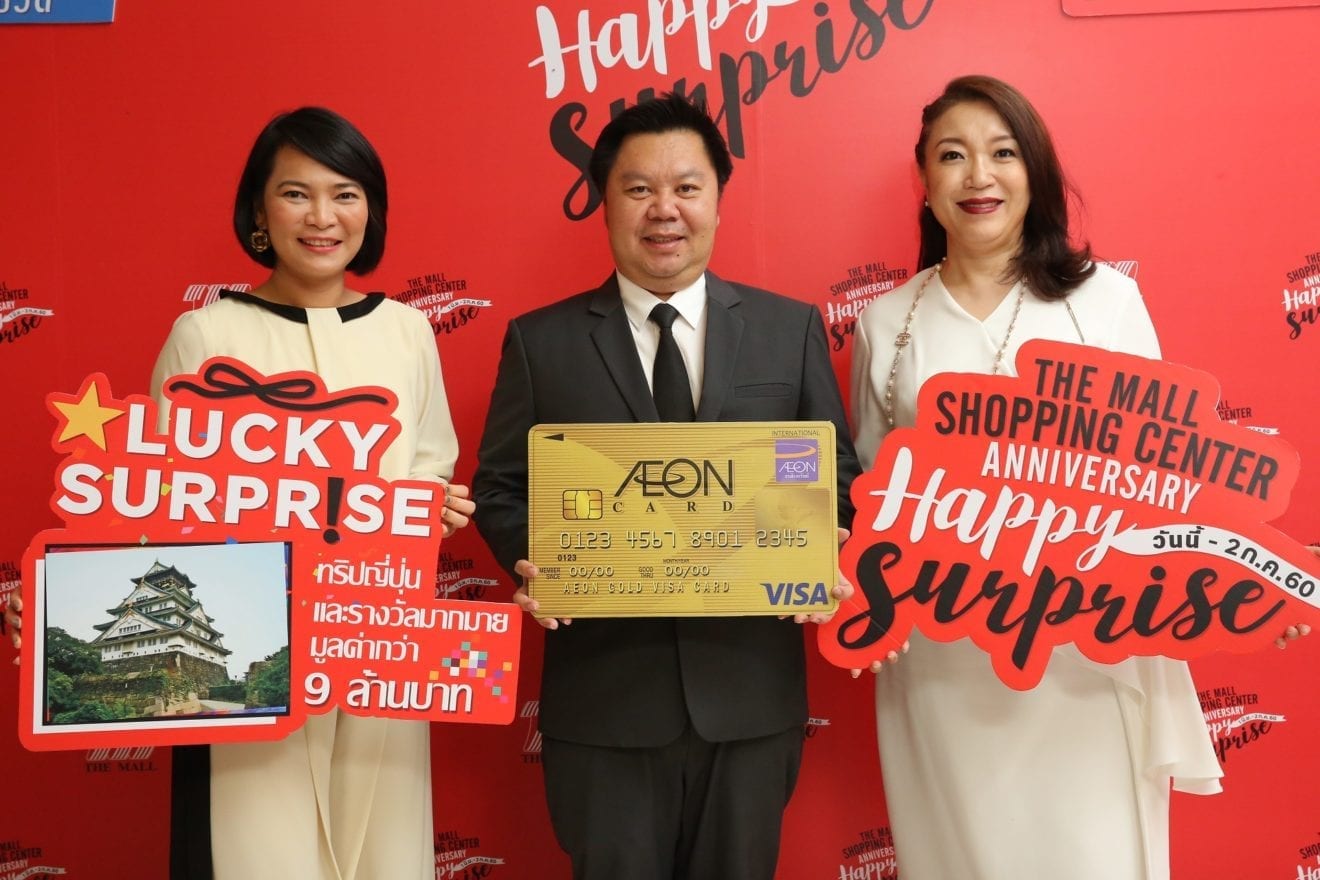
    Mr. Tula Pharuehaspailin (Middle), Marketing Senior Manager AEON Thana Sinsap (Thailand) Public Company Limited, Ms.Voralak Tulaphorn (Right), Senior Vice President Marketing The Mall Group, and Ms.Duangta Phongwilai (Left), Group General Manager – Shopping Center Corporate Marketing The Mall Group launches “The Mall Shopping Center Anniversary Happy Surprise” campaign for AEON shopping enthusiasts, with a “Lucky Surprise” draw when choosing to spend at every branch of The Mall Shopping Center.

    Every 1,000 baht spent, customers will get an x3 lucky draw coupon to win a special trip to Japan, Osaka with a round-trip flight ticket and accommodation for up to 5 prizes for 2 seats per prize totaling 650,000 baht. Followed by “Surprise Digital Box”, where customers spending 800 baht and above will get a chance to win a Surprise Digital Box. Most importantly with “AEON Surprise” ,when spending 5,000 baht or more with The Mall Shopping Center receive cash vouchers up to 500 baht , together with many promotions starting today until the 2nd of July, 2017.

  • Resorts World Manila set to reopen shopping section

    Resorts World Manila set to reopen shopping section

    Recovering from a deadly tragedy, the hotel-casino complex set on fire by an attacker last week will begin to open its retail section soon. Stephen Reilly, chief operations officer of Resorts World Manila, said that while management has been eyeing to open the shopping area which had 114 outlets, the gaming area will remain closed.

    “We’re not intending to open the gaming facilities at this given time. It’s insensitive to do so,” Reilly said on Friday.

    “But for the retail component, people still love to come to Resorts World. Go to restaurants, go to the cinema, go and dine and shop. We’d be looking to open up the retail component by the end of this week,” he added.

    Reilly maintained, however, that the business keeps as its priority the victims and families of the fatal incident on June 2 when gunman Jessie Javier Carlos armed with a rifle entered its premises and set parts of the gaming area on fire.

    Javier, the lone suspect behind the deadly attack, was a heavily indebted gambling addict, police said Sunday. Thirty-seven died due to suffocation while 78 others were injured. Outside the premises, people are still holding a vigil before a memorial set up for the victims of the assault.

    Reilly said Resorts World Manila is wholly shouldering medical expenses of the victims, among whom were its own employees, giving out P1 million for each and setting aside funding for their dependents’ education.

    Financial matters ‘irrelevant,’ says exec

    Asked how much the company is losing each day it remains closed, Reilly chose not to disclose and dismissed the concern as “irrelevant.”

    “What is important to me, to the company and to the executives is: let’s work through this in the best interest of everybody, the victims, the families, the industry, and also how the Philippines is perceived,” he said.

    Still, the franchise of casino giant based in Pasay City is facing threat as it remains in hot water over possible security lapses that resulted in scores of casualties.

    “I wouldn’t like to comment that we would lose our franchise. We’ll wait for the investigations to be concluded. That would also include PAGCOR. They are our governing body,” Reilly said.

    The executive, who has over a decade of experience in surveillance and security before helping set up Resorts World in the Philippines, also said experts and third parties are coming in to sort out the establishment’s fault in the tragedy.

    While insisting that the complex has followed international security standards, Reilly said it would not be foolproof.

    “We’re engaging experts from prior military field, intelligence field to totally review all areas of operation with regards to security protocols of Resorts World Manila,” he said.

  • Shilla duty free opens mobile app, online mall for Japanese clients

    Shilla duty free opens mobile app, online mall for Japanese clients

    Shilla Duty Free has launched a mobile app and an Internet website mall targeting Japanese clients to offset the decline in Chinese tourists triggered by the missile defense system row between Seoul and Beijing.

    It is Shilla Duty Free’s second mobile shopping mall for foreigners after one opened for Chinese customers in 2014.
    Chinese travel agencies have in recent months suspended sales of tour packages to South Korea as part of the Beijing government’s retaliation against Seoul’s decision to station the US Terminal High Altitude Area Defense system on its soil. China believes the missile system undermines its security interest. South Korea has maintained that THAAD’s sole aim is to counter North Korea’s evolving nuclear and missile threats.

    Shilla’s mobile app store and Internet shopping mall allow Japanese customers to use Naver Corp.’s flagship LINE messenger to carry out transactions.
    LINE has become a major mobile messenger platform with more than 200 million users around the world. It has a strong presence in Japan.

    The duty-free shop will also invite 1,000 Japanese clients to a fan meeting of popular K-pop boy group SHINee, the shop’s commercial model, in Seoul on May 13. The number of Japanese tourists rose 25 percent last year from the previous year, according to the Korea Tourism Organization. The figure also surged 13 percent and 28 percent in January and February of this year from the same period in 2016.

  • Hongkongers at home with mobile shopping

    Hongkongers at home with mobile shopping

    Mobile shopping in Hong Kong and has now become a vital part of local consumers’ online purchasing habits, with more than two in every five of them having made purchases via their mobile device in the last three months, according to the latest Mastercard Online Shopping Survey.

    The survey was carried out across fourteen markets in Asia Pacific — Australia, China, Hong Kong, India, Indonesia, Japan, Malaysia, New Zealand, Philippines, Singapore,   South Korea, Taiwan, Thailand and Vietnam. A total of 8,738 consumers were polled online in November 2016.

    Results show that well over three quarters (80%) regarded security of payment facility as a key consideration when shopping online.

    The survey revealed that 44% percent of local consumers made a purchase through their mobile phones in the three months preceding the survey, up from 43% in 2015 and 38% in 2014, when the survey was first launched. An additional 14% did not make any purchases but intend to do so in the first half of 2017.

    Convenience (55%) continues to be the key driver for mobile shopping, followed by the growing prevalence of apps (42%) that make it easier to shop and the ability to shop on the go (26%).

    Regarding their mobile shopping habits, half of local consumers said they had downloaded a shopping app on a mobile device in the last six months. Clothing/accessories (34%) remain the key category purchased through mobile phones, followed by cinema tickets (26%).

    Purchase of airline tickets shot up to 21% in 2016, compared to 10% in 2015, while transactions on hotel accommodations (21%) and personal care/beauty-care products (120%) remained relatively stable.

    In terms of tools, group buying (29%) is increasingly used in Hong Kong, followed by digital wallets (17%) and financial investment apps/ in-social network marketplace apps (15% each).

    The majority of consumers in Hong Kong (88%) made at least one purchase online in the three months preceding the survey, representing a 4% increase from 84% in 2015. Four in five local consumers revealed plans to shop online in the first half of 2017.