Tag: singapore airlines

  • Singapore Airlines CEO Goh Choon Phong’s Pay Falls to $5.5M Even Amid Strong Profit Surge

    Singapore Airlines CEO Goh Choon Phong’s Pay Falls to $5.5M Even Amid Strong Profit Surge

    Singapore Airlines has revealed that it paid CEO Goh Choon Phong SGD7 million (US$5.5 million) for the financial year ending March 31, marking a 13.5% decrease from the prior year, despite notable growth in both profit and passenger numbers.

    CEO’s Compensation Package Highlights Increases Amid Overall Pay Drop

    Goh’s latest compensation package comprises a SGD1.5 million salary and SGD3.1 million in bonuses, both of which saw an upward trend, as reported by The Business Times. However, the value of shares awarded to him took a significant hit, plummeting by 46% to SGD2.3 million.

    Sky High Performance Amid External Challenges

    Despite grappling with geopolitical tensions, supply chain disruptions, and inflationary pressures, Singapore Airlines has managed to soar above the challenges. Chairman Peter Seah expressed optimism in a letter to shareholders, celebrating the airline’s robust performance. The company posted a 3.9% rise in net profit to SGD2.8 billion while also welcoming a record 39.4 million passengers aboard its flights.

    Generosity in Profit-Sharing for Employees

    In a gesture of appreciation, Singapore Airlines has maintained a substantial profit-sharing bonus for its employees, offering eligible staff a share equivalent to 7.45 months’ salary. This is slightly less than the record-breaking 7.94 months’ profit-sharing bonus from the previous year, which was the highest in the airline’s history. It’s clear that while Goh might be tightening his belt, the company continues to reward its dedicated workforce generously — which, let’s be honest, is a refreshing change in these turbulent times.

    Questions & Answers

    What major factors contributed to Singapore Airlines’ resilience over the last year?
    Geopolitical tensions, supply chain issues, and inflation posed significant challenges, yet Singapore Airlines achieved a 3.9% increase in net profit and carried a record number of passengers.

    How does Goh Choon Phong’s current compensation compare to previous years?
    Goh’s total compensation is down 13.5% from the previous year, primarily due to a steep drop in the value of awarded shares, despite increases in his salary and bonuses.

    What profit-sharing bonus did Singapore Airlines offer its employees this year?
    The airline provided eligible staff with a profit-sharing bonus equivalent to 7.45 months of salary, just shy of the all-time high of 7.94 months from the previous year.

  • BeeBio aims to sweeten travel retail’s skincare offer

    BeeBio aims to sweeten travel retail’s skincare offer

    Key ingredients within the range include active medical grade Manuka honey – known for its healing properties – natural bee products (bee venom, Royal Jelly) and anti-oxidant botanicals from New Zealand. The products regenerate new skin cells by 80%, according to research conducted by the brand.

    BeeBio is performing strongly on the Australian domestic market, and earlier this year entered the inflight travel retail sector, with listings onboard Singapore Airlines, Hong Kong Airlines and Cathay Pacific. The brand is targeting a presence onboard 15 airlines by the end of the year.

    The BeeBio portfolio includes cleansing, moisturising and treatment lines. Star products include the Venomenous Bee Venom and Active Manuka Honey Anti-Aging Face Masque, Active Manuka Honey Eye Crème with Bee Venom, Royal Jelly Facial Crème and Active Manuka Honey Day Crème with SPF15. Body and hand care products are also available, while an anti-ageing serum is in the pipeline.

    “We believe we have a premium offer and want to go global,” Sales Director Liz Kolovos told The Moodie Report. “We are targeting travel retail expansion, and have already created special travel packs and exclusives for the channel.”

  • Singapore Airlines Shower Employees with Bonuses Exceeding Seven Months’ Salary in Generous Reward Initiative

    Singapore Airlines Shower Employees with Bonuses Exceeding Seven Months’ Salary in Generous Reward Initiative

    Singapore Airlines is celebrating its remarkable financial performance by rewarding its employees with a substantial bonus equivalent to 7.45 months of salary. This generous payout is a gesture of appreciation for the hard work and dedication that staff exhibited during the fiscal year ending March 31, which saw the airline achieve a record annual net profit of S$2.78 billion (approximately US$2.1 billion), as reported by The Straits Times.

    Recognizing Commitment Amid Challenges

    Although the bonus is slightly less than last year’s impressive 7.94 months, it comes amidst a cautious outlook. On Thursday, the airline warned that global trade tensions and geopolitical uncertainties might impact both travel and cargo demand, according to Bloomberg.

    Within the 2024 fiscal year, Singapore Airlines enjoyed a notable boost from a one-off gain of about S$1.1 billion generated from its merger with Vistara, which was completed in November. Group revenue surged by 2.8% year-on-year to a record S$19.54 billion, driven by consistent air travel and strong cargo demand. Cargo revenue rose by 4.4% as e-commerce and perishable goods gained momentum, although competition led to a 7.8% drop in freight yields.

    Operating profit took a hit, dropping 37% to S$1.71 billion, primarily due to a 5.5% decline in passenger yields, impacted by the airline industry’s expanded capacity, as reported by CNA.

    Despite navigating fluctuations in tariff policies and ongoing supply chain issues, Singapore Airlines remains vigilant, promising to adapt quickly to the changing landscape while keeping its workforce in high spirits. After all, who doesn’t enjoy a little extra cash in their pocket?

    Questions & Answers

    What is the amount of the bonus Singapore Airlines is providing?
    The airline is providing each employee with a bonus worth 7.45 months of salary.

    How did Singapore Airlines perform financially in the 2024 fiscal year?
    The airline reported a record annual net profit of S$2.78 billion and a group revenue increase of 2.8% year-on-year, totaling S$19.54 billion.

    What challenges is Singapore Airlines facing in the coming months?
    The airline cited global trade frictions and geopolitical uncertainties as potential factors that could impact travel and cargo demand.

  • Singapore Airlines’ profit plunges 59%

    Singapore Airlines’ profit plunges 59%

    Singapore Airlines saw net profit in the July-to-September quarter plunging 59% year-on-year to SGD290 million (US$) amid intense competition and surging costs.

    Revenue rose 2% to SGD4.8 billion in the second quarter of its financial year which began April, the company said in a financial report. It saw costs rising by 14.7 percent over the period.

    “The operating landscape will continue to be competitive,” the airline said. “The group will remain nimble and agile, adjusting its passenger network and capacity to match evolving demand patterns.”

    Singapore Airlines operates a fleet of 205 aircraft, with four Boeing 787-10 aircraft added in the July-September quarter.

    It has been increasing number of flights to popular destinations such as Hanoi, HCMC, Johannesburg, Melbourne, Phuket and Seoul.

    The airline is also investing SGD1.1 billion to upgrade its premium travel experience by installing long-haul cabins in 41 Airbus wide-body aircraft.

  • WFS and Singapore Airlines extend cargo handling partnership for launch of new flights to London Gatwick Airport

    WFS and Singapore Airlines extend cargo handling partnership for launch of new flights to London Gatwick Airport

    Worldwide Flight Services (WFS), a member of the SATS Group, has been awarded three-year cargo handling contract extensions with Singapore Airlines in the United Kingdom, France, and Belgium.

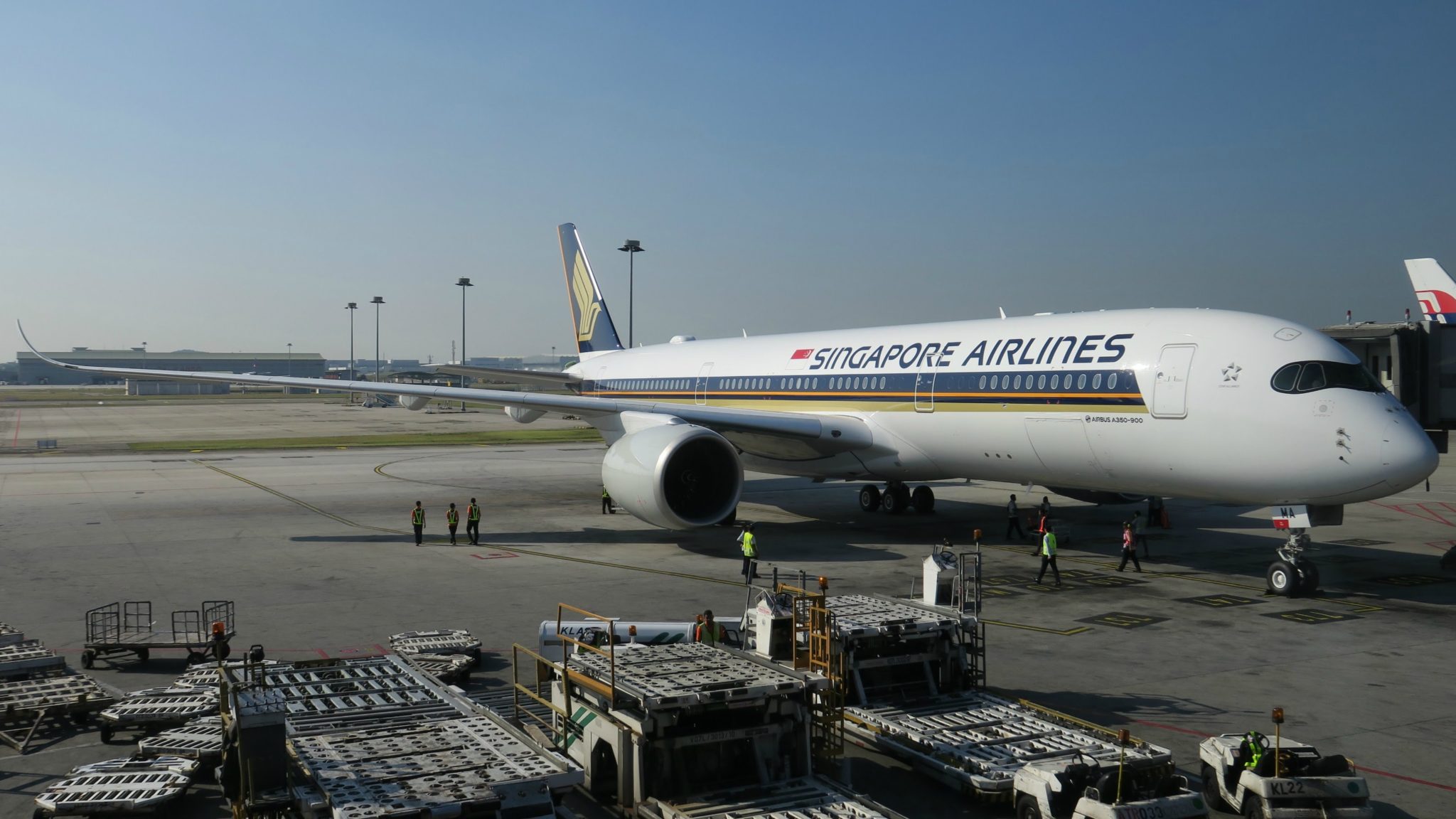
    In the UK, in addition to renewing its cargo handling and UK domestic road feeder services with WFS at London Heathrow and Manchester airports, Singapore’s national carrier is also partnering with WFS for cargo handling at London Gatwick Airport for the launch this month of five Airbus A350-900 direct flights a week connecting to Singapore Changi Airport.

    In Paris, the new 3-year contract will extend WFS’ service to Singapore Airlines in France to over 40 years, having commenced in 1986 at Paris Charles de Gaulle Airport. Singapore Airlines is also renewing its commitment to WFS in Brussels, where the two companies have worked together since 2021.

    “We are proud to be growing our relationship with Singapore Airlines and to be supporting the airline’s global reputation for service excellence. As part of SATS Group, WFS is now able to offer an end-to-end cargo handling solution on these routes, which leverages the uniqueness of our partnership and ownership,” commented John Batten, Chief Executive Officer, Europe, Middle East, Africa, and Asia (EMEAA) at WFS.

  • Singapore Airlines offers up to $25K compensation to passengers injured in turbulent flight

    Singapore Airlines offers up to $25K compensation to passengers injured in turbulent flight

    Singapore Airlines has offered compensation ranging from US$10,000 to $25,000 to passengers who were injured during the turbulent SQ321 flight.

    On Tuesday, the airline annnounced on its Facebook that who suffered “minor injuries” from the incident were offered $10,000, while passengers “having sustained serious injuries, requiring long-term medical care” were offered $25,000 in advance payment.

    The payment will cater to their immediate needs and constitute a portion of their final compensation.

    “For those who sustained more serious injuries from the incident, we have invited them to discuss a compensation offer to meet each of their specific circumstances,” it added.

    All passengers on board the turbulent flight, regardless of injury status, will also receive a full airfare refund, along with delay compensation in accordance with the relevant European Union or U.K. regulations.

    Additionally, Singapore Airlines has given all passengers S$1,000 (US$740) each for their immediate expenses upon departure from Bangkok, Thailand, where flight SQ321 made an emergency landing.

    It has also been covering injured passengers’ medical expenses and arranged for their family members and loved ones to travel to Bangkok if requested.

    211 passengers and 18 crew members were on board flight SQ321 from London to Singapore on May 21, when the plane dropped 54 metres in altitude in less than five seconds while flying over Myanmar.

    A 73-year-old British tourist, Geoffrey Kitchen, died of a suspected heart attack during the incident while several dozens of other passengers on the flight were later treated for paralysis, spinal and spinal cord injuries, as well as skull and brain trauma.

  • Garuda Indonesia and Singapore Airlines strengthen commercial partnership

    Garuda Indonesia and Singapore Airlines strengthen commercial partnership

    Garuda Indonesia (GA) and Singapore Airlines (SIA) today committed to deepen their commercial partnership, with the aim of offering reciprocal benefits for their frequent flyer programme members, and to explore revenue sharing arrangements for flights between Indonesia and Singapore, subject to regulatory approvals.

    The frequent flyer programme agreement was inked by Garuda Indonesia Chief Executive Officer (CEO) Mr Irfan Setiaputra and SIA CEO Mr Goh Choon Phong in Jakarta today, while the joint venture revenue share agreement was signed by Garuda Indonesia Director of Service and Commercial Mr Ade R. Susardi and SIA Chief Commercial Officer Mr Lee Lik Hsin.

    When launched, the frequent flyer partnership will allow GarudaMiles and KrisFlyer members to earn and redeem miles on codeshare flights operated by both airlines. The revenue sharing agreement, when implemented, will support joint capacity growth, marking a significant step in the plans for a proposed commercial joint venture arrangement that covers Garuda Indonesia and Singapore Airlines flights between Singapore and Indonesia.

    Both carriers are continuing with joint marketing activities to promote tourism. This potentially includes joint activities to promote tourist traffic to Indonesia, including familiarisation trips for travel trade and media.

    Singapore Airlines and Garuda Indonesia have a strong codeshare partnership that has expanded in recent months. Today, Garuda Indonesia codeshares on Singapore Airlines flights between Singapore and the Indonesian cities of Bali, Jakarta, Medan, and Surabaya, as well as long-haul routes between Singapore and Johannesburg, London (Heathrow), and Mumbai. SIA codeshares on Garuda Indonesia flights between Singapore and Bali, Jakarta, and Surabaya.

    Mr Irfan Setiaputra, President and CEO of Garuda Indonesia, said that this partnership is part of Garuda Indonesia’s efforts to improve the Company’s performance through a strategic commercial partnership, especially in providing added value to customers. “Having the same mission in optimising the potential of the aviation business ecosystem in South East Asia after the pandemic, this initiative is certainly an important manifestation of both airlines’ commitment to continue strengthening our well-established cooperation,” Mr Irfan explained.

    He added: “This partnership is a special moment for us, which also marks the 58 years of Garuda Indonesia’s journey in connecting Indonesia and Singapore. In the future, we hope that this partnership will continue to enhance social, cultural, and tourism relations between Indonesia and Singapore whilst offering seamless access for customers to enjoy various destinations served by both airlines.”

    “We hope that the expansion of this partnership will bring added value for Singapore and Indonesia, which are served by both airlines. Furthermore, this collaboration is also expected to not only provide added value for both airlines’ customers, especially through the ease of earning and redeeming miles for tickets and other exclusive benefits, but the hope is that it will strengthen Garuda Indonesia’s support for national tourism by providing more access to points in Indonesia for foreign tourists who will visit Indonesia via Singapore in the future,” Mr Irfan said.

    Mr Goh Choon Phong, Chief Executive Officer, Singapore Airlines, said: “Our win-win partnership with Garuda Indonesia will improve the connectivity between Indonesia and Singapore for our customers. This will help to meet the increasing demand for air travel between the two countries and beyond, as well as facilitate the growth of tourism and economic activities. Furthermore, by deepening the synergies between our frequent flyer programmes, we can enhance the benefits for our loyal customers, offering them more opportunities to earn and redeem miles when travelling with both airlines.”

  • After 30 Years Singapore Airlines Flies The Boeing 737 Again

    After 30 Years Singapore Airlines Flies The Boeing 737 Again

    Previously operated by Singapore Airlines (SIA) decades ago, the 737 as an aircraft type will once again operate under the carrier’s brand and livery. Up until now, the Southeast Asian airline had delegated much of its low-demand, short-haul operations to subsidiary airline Silkair. Now that the Silkair brand and its operations are being absorbed by SIA, the former’s 737s will be operated by the latter. The first of these SIA 737s took off for regular passenger service on Thursday, going from Singapore to Phuket. Let’s take a look at the flight and what it represents.

    Airline Geeks noted that on Thursday, March 4th, SIA completed its first 737-800 flight. This flight was designated as flight SQ736, from Singapore to Phuket (Thailand). RadarBox.com data shows that the Boeing 737-800 departed at 16:21 local time. After one hour and 44 minutes of flying time, the aircraft landed at Phuket’s airport (HKT) at 17:05 local time.

    After just over an hour on the ground in Phuket, the 737 took off on its return flight at 18:13, arriving back in Singapore (SIN) at 21:06 local

    As for the jet that operated this service, it was registered 9V-MGA. Data from Planespotters.net shows that it first flew with SilkAir in February 2014. After more than six years of service with the regional airline, it now flies with SIA.

    The aircraft, along with SIA’s other ‘newly acquired’ jets, will be configured to seat 12 in business class and 150 in the economy. The former will have a 2-2 setup while the latter is a standard 3-3 narrowbody economy configuration.

    It was noted by Airline Geeks that the inaugural flight to Phuket offered “an upgraded experience including food, beverages, and an amenity kit.”

    In fact, a menu of signature Singapore and Thai dishes were (and continue to be) available to business class and economy class passengers. This will run through to the end of March.

    Passengers in business class will also receive a unique celebratory cocktail named Tropical Sunrise. The special drink will be available on all Boeing 737 flights.

  • Singapore Airlines hopes to be world’s first airline fully vaccinated against COVID-19

    Singapore Airlines hopes to be world’s first airline fully vaccinated against COVID-19

    Singapore’s national carrier is hoping to become the world’s first airline to get all of its crew members vaccinated against COVID-19.

    Singapore Airlines confirmed to CNN Travel that all of their crew members — including pilots, gate agents, flight attendants and anyone whose job requires contact with the public – have been offered free coronavirus vaccines by the Singaporean government.

    The country has purchased the Pfizer vaccine, which requires two shots.

    “We are grateful to the Singapore government for making the aviation sector a priority in the country’s vaccination exercise,” the airline’s CEO, Goh Choon Phong, said in a statement that was emailed out to the whole company on January 18.

    “This reflects the sector’s importance and the crucial role we play in both Singapore’s economic recovery and the fight against the pandemic.”

    According to the airline, 5,200 SIA employees have already signed up to get their shots. Inoculations will begin in a few days.

    Phong, alongside Singapore’s transport minister Ong Ye Kung, was among the city-state’s first citizens to get vaccinated. He has received the first of his two shots, and reports that “the procedure was painless and fuss-free.”

    Once vaccinated, crew members will be subject to less scrutiny and fewer coronavirus-related security measures. For example, flight crew who are currently tested on the seventh day after their return to Singapore will be exempt from this test going forward.

    Singapore’s response to the pandemic has been largely successful due to border closures and a national contract-tracing app. The country has had 59,113 confirmed cases of the virus and only 29 deaths, according to data from Johns Hopkins University.

    Still, citizens of the city-state have expressed an interest in being able to travel again. A much-hyped “travel bubble” with Hong Kong was indefinitely postponed in December when Hong Kong had a spike in virus cases.

    The annual Henley Passport Index placed Singapore second in the world — just one point behind nearby Japan — for passport power. Singaporeans can enter 190 countries or territories around the world without needing a visa.

  • Singapore Airlines unveils new short-haul economy catering

    Singapore Airlines unveils new short-haul economy catering

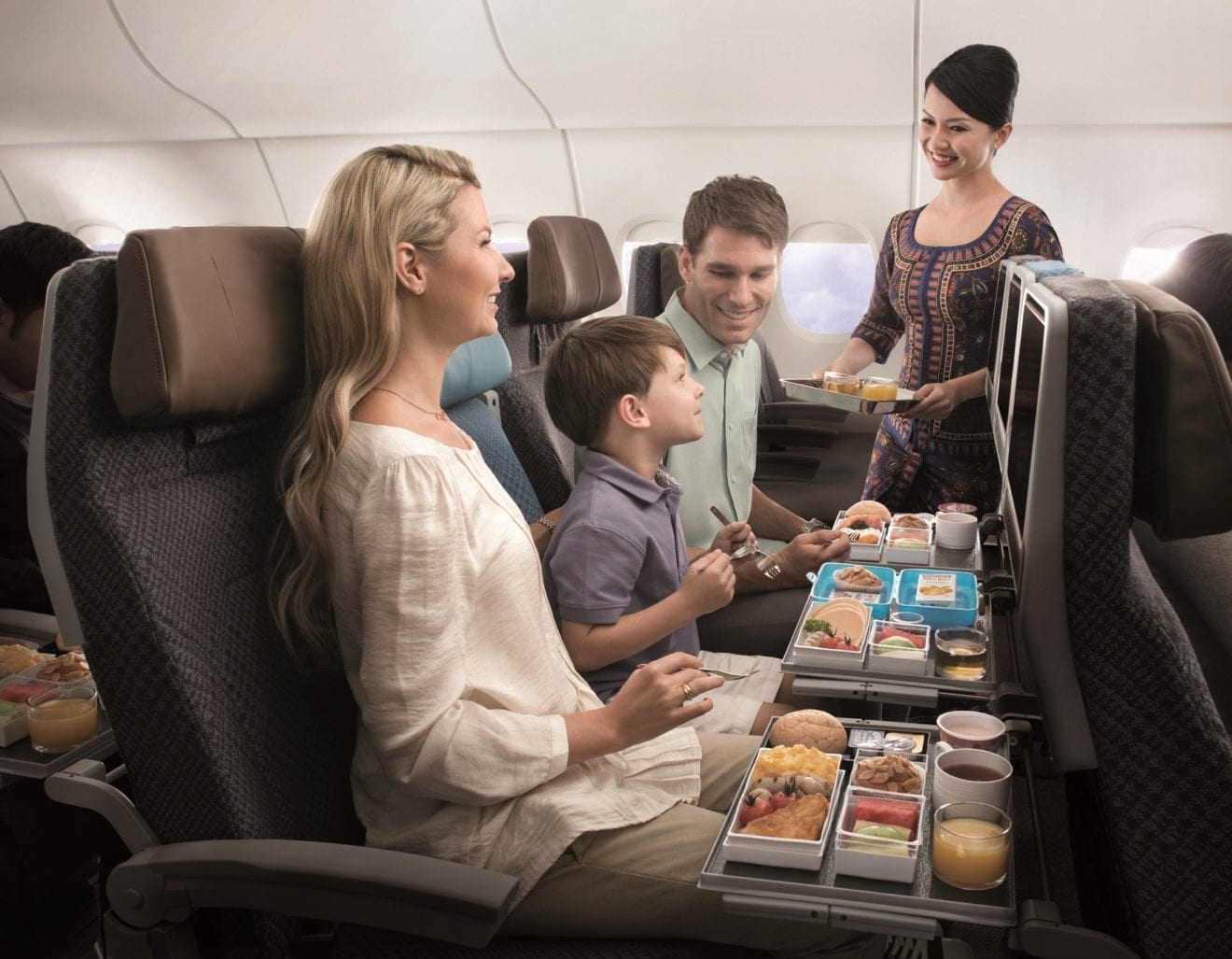
    Singapore Airlines passengers will see a change to short-haul economy class catering as the carrier ditches casseroles and appetizers in favour of boxed meals. Beginning on December 1, flights under three and a half hours will feature a rotation of more than 40 new Singaporean and international dishes.

    Economy class passengers on Silkair, a subsidiary of SIA, will also see the same catering changes as the regional carrier edges closer to fully merging with its parent.

    SIA’s new meal concept follows a broader trend among industry peers to shake up the economy class dining experience. In recent years, Delta and Qantas, for instance, have moved towards bistro-style catering on international flights with an emphasis on quality over quantity.

    Yeoh Phee Teik, senior vice president customer experience at Singapore Airlines, commented:

    “We are delighted to be able to offer a greater variety and quality of meals on our short-haul flights, including selections from Singapore’s popular local favorites that we hope both Singaporeans and international customers will find familiar and comforting.”

    The revamped breakfast dishes on SIA flights include congee with pork ball and century egg, mee siam, and pear cinnamon steel-cut oat porridge. Outside of meal hours, soups such as beef barley, beef goulash, and white bean with smoked duck, will be served.

    Meanwhile, flights featuring lunch or dinner will serve heartier courses including beef brisket with egg noodles, laksa goreng, and lamb albondigas. This is complemented by a variety of cakes for dessert, such as pulut hitam (pictured above) and earl grey chiffon.

    SIA said the new meal concept will help reduce the amount of inflight waste. By opting for leak-proof paper boxes, bamboo cutlery, and a simplified meal-offering, the airline will reduce single-use plastic consumption by 80 percent by weight.

    The boxed meals hold the same amount of food as the previous casseroles, according to the airline. However, SIA will remove appetizers such as bread rolls and fresh fruit portions, previously standard with economy class meals, as part of the new concept.

    A SIA spokesperson said:

    “We have done an extensive research to understand our customers’ preferences. From this, we have learned that most customers prefer a larger portion of the main course compared to an appetizer. We also found that there was high waste of appetizers, especially on short-haul flights. As such, we have removed the appetizers in [short-haul] economy class as part of efforts to reduce food waste.”

  • Singapore Airlines Sweetens Ticket Refunds with Added Value

    Singapore Airlines Sweetens Ticket Refunds with Added Value

    Singapore Airlines is looking beyond the value of its airline tickets. As airlines around the world reckon with a tsunami of return ticket requests for flights cancelled in the wake of the global pandemic, Singapore Airlines is telling its customers “we want you back.”

    With that in mind the luxury airline is enhancing its global travel waiver policy to offer even more flexibility that passengers will appreciate it, once again, are ready to book their travel.

    Customers who purchased a ticket on Singapore Airlines or on SilkAir on or before March 15, 2020, for travel through May 2020, can retain the full value of the unused portion of their tickets as flight credits.

    These can be used to book new flights through June 30, 2021. The extension gives customers the flexibility to plan, book and travel from now until then. The airline also waives no-show and rebooking fees, enhancing the full value of their flight credits.

    Naturally, flyers who had their flight plans canceled by the airline in response to the Coronavirus pandemic may want their refund executed as a cash transaction and the airline is honoring those requests in a complete and timely manner.

    However, Singapore Airlines is happy to award bonus flight credits to all customers who choose to retain their tickets as flight credits. The measure is the airline’s way of thanking its customers for their support during this challenging period. Based on the original cabin class of travel, they will receive the following bonus flight credits* when making a new booking with us:

    Economy Class: SGD75 ($53)
    Premium Economy Class: SGD100 ($70)
    Business Class: SGD200 ($141)
    Suites / First Class: SGD500 ($353)

    Customers who opted to keep their tickets open due to the Covid-19 outbreak will also retain the value of the unused portion of their ticket as flight credits. They will also automatically qualify for the bonus flight credits.

    Similarly, customers whose flights were canceled by SIA or SilkAir will retain the full value of the unused portion of their tickets as flight credits. They will also be awarded the bonus flight credits when rebooking their travel.

    Customers who meet the above conditions, but do not wish to keep the value of their tickets as flight credits, will be offered the option of a refund. Cancellation fees and no-show fees will be waived. Customers who used miles to redeem their flight tickets will have both their miles and taxes refunded. Those who purchased their tickets using a combination of miles and cash will receive a refund as well. They will not be eligible for any flight credits.

    “Besides offering cash refunds, Singapore Airlines will provide the opportunity for customers to retain their ticket value together with the added value of a bonus credit, which they can use for future travel on us,” said Joey Seow, Regional VP – Americas for Singapore Airlines. We know customers have varying needs and we believe offering different user-friendly options will help address those requirements.”

    Customers who booked directly with the airline should use the online assistance request form to cancel their booking and retain its value as flight credits.

    Customers who meet the criteria for the airline’s global travel waiver policy will receive a confirmation email. Other customers should allow up to two weeks for the airline to review the request. Customers booking through travel agencies should contact their agents for assistance to either retain the value of their tickets in the form of flight credits or to request for a refund.

    Customers should note that if a request is submitted before the original travel date, all no-show fees will be waived.

    *If the customer’s eligible ticket contains a combination of cabin classes, the bonus flight credits will be based on the higher cabin class. Customers holding partially flown tickets will only have the remaining value of their tickets retained as flight credits. They will not be eligible for any bonus flight credits.

    Singapore Airlines joins a small, but growing list of airlines offering something extra to flyers who choose to receive a voucher that will allow them to rebook with the airline at a later date.

    They include Qatar Airways, which is adding a 10 percent to the original fare on the face of the voucher issued. Air Lingus is also offering that deal to its now grounded passengers. Finnair is also offering the 10 percent bonus and Lufthansa is offering a 50 EUR discount to passengers who take a voucher instead of cash refund. Customers who choose to take the voucher option, however, need to be aware of the expiration policies and destination flexibilities on those vouchers.

  • Singapore Airlines Set To Fly The Airbus A350 to Ahmedabad

    Singapore Airlines Set To Fly The Airbus A350 to Ahmedabad

    Singapore Airlines will roll out one of its A350-900s on its new route between Singapore and Ahmedabad in Gujarat, India. Singapore Airlines’ new service is set to take flight from 1 February 2020. Ahmedabad will be the airline’s seventh Indian destination.

    The service would operate six days a week from the start of February, ramping up to a daily service at the beginning of April 2020.

    The outbound flights will push back from Singapore’s Changi Airport at dinner time for a mid-evening arrival into Ahmedabad’s Sardar Vallabhbhai Patel International Airport. The return flight is a late evening departure from Ahmedabad, flying through the night for a breakfast time arrival into Singapore. Flying time is five hours and 40 minutes. For the first two months, the flights will not operate on Wednesdays.

    The Singapore Airlines A350 is a popular option for the Simple Flying team. In April 2019, Jay Singh flew from Singapore to Johannesburg on an SQ A350, an experience he described as ‘almost perfect.’

    Well, he was drinking Charles Heidsieck and eating a chicken curry rustled up through the airline’s ‘Book the Cook’ service. What’s not to like about that?

    Now he wants to do the ultra long haul Singapore to Newark A350 flight.

    A few months later, Nick Cummins found himself on the same aircraft type when flying Singapore Airlines. He flew from Germany to Singapore in October 2019. Nick liked it so much he made a video about it.

    Having had a few dodgy airline ham and cheese toasties in his time, he’s now on a quest to discover the best and worst airline ham and cheese toasties. The Singapore Airlines toastie got the thumbs up. Nick’s only real complaint was the airline didn’t have an endless supply of desserts.

    This all bodes well for passengers on the same aircraft type on the new service to Ahmedabad. If, like Nick and Jay, you are lucky enough to be in business class, you’ll enjoy your Piper with 40 other passengers relaxing in lie-flat seats in a 1-2-1 layout. Even back in the main economy 3-3-3 cabin, the 263 passengers can enjoy one of the best economy class products in the sky.

    Services will be six days a week initially before going daily two months later. Photo: Singapore Airlines.
     

    The new service to Ahmedabad will provide local residents with one-stop access to North America, Oceania, Asia, and if you are not put off by a little backtracking, Africa, the Middle East and Europe.

    The six days a week Singapore Airlines A350 service between Singapore and Ahmedabad will begin on 1 February 2020. It will become a daily service on 29 March 2020.

  • Singapore Airlines To Trial Business Class Dine On Demand

    Singapore Airlines To Trial Business Class Dine On Demand

    For decades Singapore Airlines has been known for being one of the best airlines in the world, though I can’t help but feel like they’ve somewhat been resting on their laurels. I feel like the airline used to be super innovative, but is less innovative nowadays:

    • For the most part, I don’t find Singapore Airlines’ new cabins to be that cutting edge, and their business class seat hasn’t evolved that much in the past decade
    • Their meal services in business class are good, though nothing special
    • I will say that their cabin crew are consistently exceptional, and they’re one of the best parts of flying with the airline

    This is due to customer feedback, though Singapore Airlines is careful to note that they want to make sure they develop a system that works before fully implementing this.

    Part of that will be ensuring that flight attendants can deal with the increased work required from dine on demand while maintaining high levels of customized service.

    Is Business Class Dine On Demand A Good Thing?

    On the surface, the addition of dining on demand sounds like a good thing. Especially for an airline like Singapore Airlines, where I sometimes can’t figure out the flow of their meal service.

    But I’ve also sometimes in the past noticed that I don’t always think a dine on-demand system is best. Sure, in an ideal world dine on demand is great, but there are some downsides:

    • It significantly increases the workload for the crew, and will make them more stressed, and perhaps not provide the same level of service
    • If you’re like me and are a sensitive sleeper, I find that the sounds, lights, and smells, from people dining throughout the flight, can make it much harder to sleep

    So while I’m generally in favor of dine on demand, there are also some downsides that are at least worth acknowledging.

    I’d note that quite a few airlines have done dine on-demand trials in business class, but ended up deciding against it. Take Emirates, for example — they trialed it for a while, but then decided not to implement it on a widespread basis (meanwhile both Etihad and Qatar offer dine on demand).

    Bye Bye Lobster Thermidor?

    Singapore Airlines offers a “Book The Cook” menu, where you can order from a much larger menu before your flight. One of the most popular options is their lobster thermidor dish.

    It looks like that may not be on the menu forever in its current form:

    “Like everything, the Book The Cook programme evolves. The lobster thermidor is a perennial favourite but we’re looking at opportunities to modernise that, whether it be a lobster thermidor-type of dish or something similar and lobster- themed which is a little bit more modern, a little bit more healthy perhaps.

    People like lobster, but we’re moving to an environment where people are becoming more health-conscious so maybe the creamy lobster dish is not the right one… maybe a beautiful grilled lobster with fresh asparagus or veggies might be another alternative, as long as we maintain the integrity of the dish.”

    Bottom Line

    I’ll be curious to see what kind of a dine on-demand trial Singapore Airlines runs, and how successful it is. Generally, I’d say dine on demand would be a positive development, though assuming it allows the crew to maintain their high service standards.

    As someone who struggles to sleep without perfect conditions, I’m also generally somewhat apprehensive about dine on demand, though I realize that’s mostly just my problem.

  • Singapore Airlines, Silkair and Vistara to expand codesharing to international flights

    Singapore Airlines, Silkair and Vistara to expand codesharing to international flights

    Passengers traveling with Singapore Airlines (SIA), Silkair and Vistara will have more international flight options as the Singaporean flag carrier and its regional arm, Silkair, signed an agreement with Indian carrier Vistara to expand codesharing to international routes.

    Under the expansion of an existing codeshare agreement which covers Indian domestic flights, SIA and Silkair will add nine new codeshare destinations within India on Vistara-operated flights. The following destinations will be added: Chandigarh, Dibrugarh, Jammu, Leh, Pune, Raipur, Ranchi, Siliguri and Srinagar. SIA will add its ‘SQ’ designator code to Vistara’s new international flights.

    Vistara will add its ’UK’ designator code to SIA and Silkair-operated flights between Singapore and eight destinations in India, including Ahmedabad, Bengaluru, Chennai, Cochin, Hyderabad, Kolkata, Mumbai and New Delhi. As part of the arrangement, Vistara will codeshare on services to more than 40 destinations from Singapore to Australia, New Zealand, Cambodia, Indonesia, Malaysia, Vietnam, Thailand, Taiwan, Japan and the US.

    “These codeshares will be implemented in phases and are subject to regulatory approvals,” reads a press release from the airline.

    “We’re happy to deepen this strategic partnership which means a more seamless flying experience for travelers from India to destinations across Asia, Oceania and the United States,” said Vistara’s chief strategy officer Vinod Kannan.

    The codeshare flights will progressively be made available through SIA and Vistara booking channels once necessary regulatory approvals are obtained, according to the airline.

    Vistara is a joint venture between Singapore Airlines (SIA) and Indian company Tata Sons. It will begin its first international flights by offering daily flights to Singapore from Delhi and Mumbai operated by a Boeing 737-800NG aircraft, starting 6 and 7 August respectively.

    Earlier this year, Vistara signed a codeshare agreement with United Airlines. This agreement expanded the US carrier’s network to over 20 destinations throughout India. Over the past two years, Vistara has also signed codeshare deals with Japan Airlines, British Airways, as well as Singapore Airlines and Silk Air.

  • Singapore Airlines picks crucial fight against Emirates in India

    Singapore Airlines picks crucial fight against Emirates in India

    Singapore Airlines Ltd just picked a fight with Emirates in a grab for India’s international travelers, and a slice of one the world’s fastest-growing aviation markets.

    Singapore Air’s unprofitable Indian venture, Vistara, launched its first overseas service between New Delhi and Singapore late on Tuesday. It’s the start of an uphill battle against Middle East airline giants, led by Emirates and Etihad Airways, that dominate India’s offshore routes.

    For Singapore Air, ambushed all over South-east Asia by budget airlines, the prize is clear. The number of passengers in India will more than triple to 520 million by 2037, the International Air Transport Association says. And of the 63 million people that flew to and from the country last year, two-thirds were carried by foreign airlines.

    Vistara’s maiden offshore flight is due to touch down at Changi airport early on Wednesday.

    Vistara, 49 percent owned by Singapore Air and 51 percent by Indian conglomerate Tata Group, started out in January 2015. India doesn’t allow foreign airlines to fly between local airports unless they partner with a local company to start a domestic airline.

    The carrier operates 30 Airbus SE and Boeing Co jets and has a local market share of 5 percent, the smallest among six major players. It also plans to fly to Dubai and Bangkok. According to the CAPA Centre for Aviation, Vistara could break even in the year ending March 2020.

    Vistara is a key element of Singapore Airlines’ multi-hub strategy, and the launch of international operations offers additional opportunities to it, a spokesman for the South-east Asian carrier said. He declined to comment on competition. A representative for Vistara referred queries to Singapore Airlines, while Emirates declined to comment.

    Still, airlines from the Middle East have history on their side. They’ve traditionally flown westbound Indians to Dubai and Abu Dhabi on ultra-cheap fares, before putting them on a flight to Europe or North America. Emirates, often dubbed the “unofficial national carrier of India”, controlled almost 15 percent of the market to and from India last year, regulatory data compiled by Bloomberg showed.

    The fares offered by low-cost airlines in India’s notoriously price-sensitive market are another challenge for Singapore Air. A Vistara flight to Singapore from New Delhi on Aug 28 costs 17,379 rupees (S$338), according to online travel agent Makemytrip.com. In comparison, AirAsia Bhd was offering a flight at less than half that price, at 7,745 rupees, albeit with a stop in Kuala Lumpur.