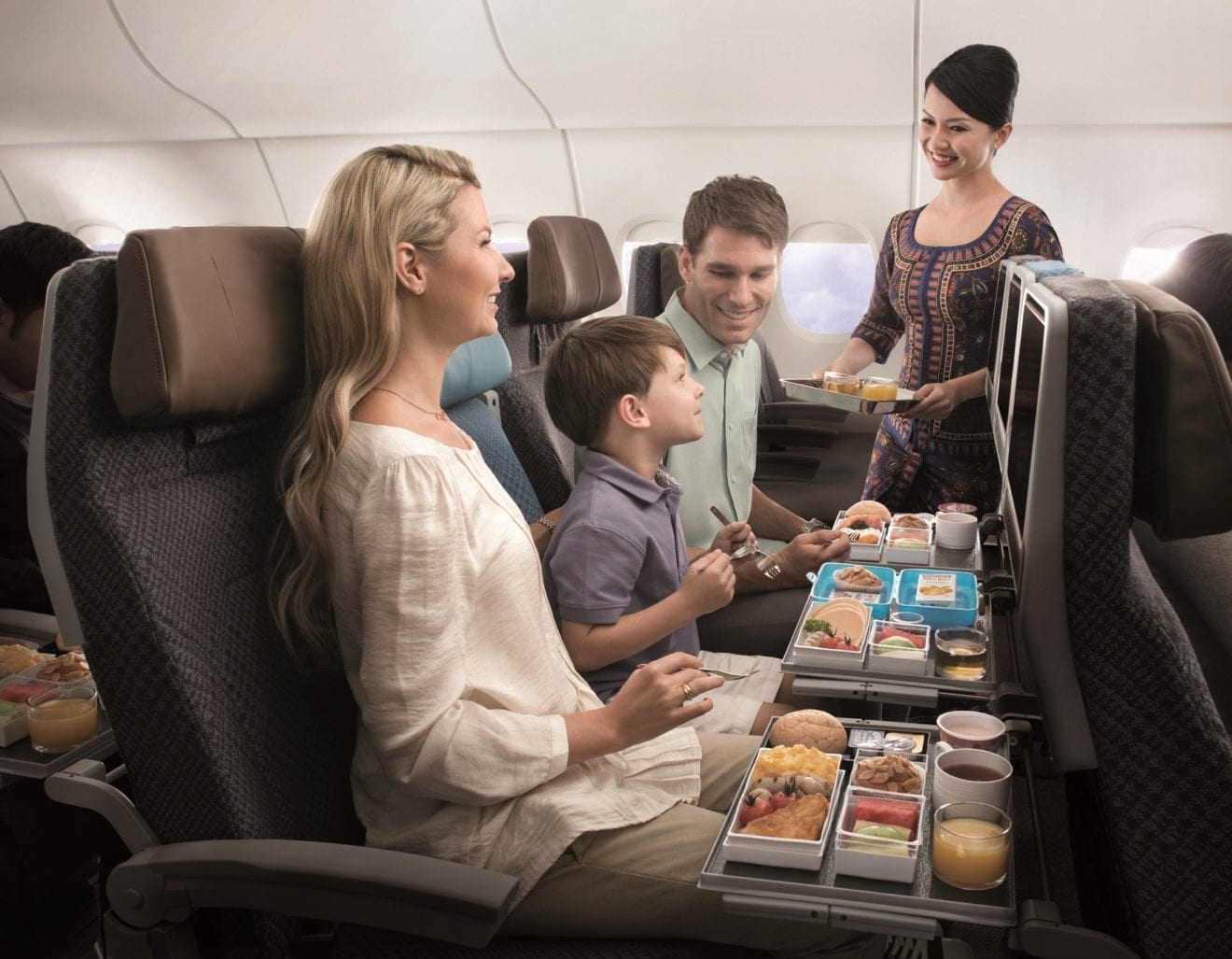
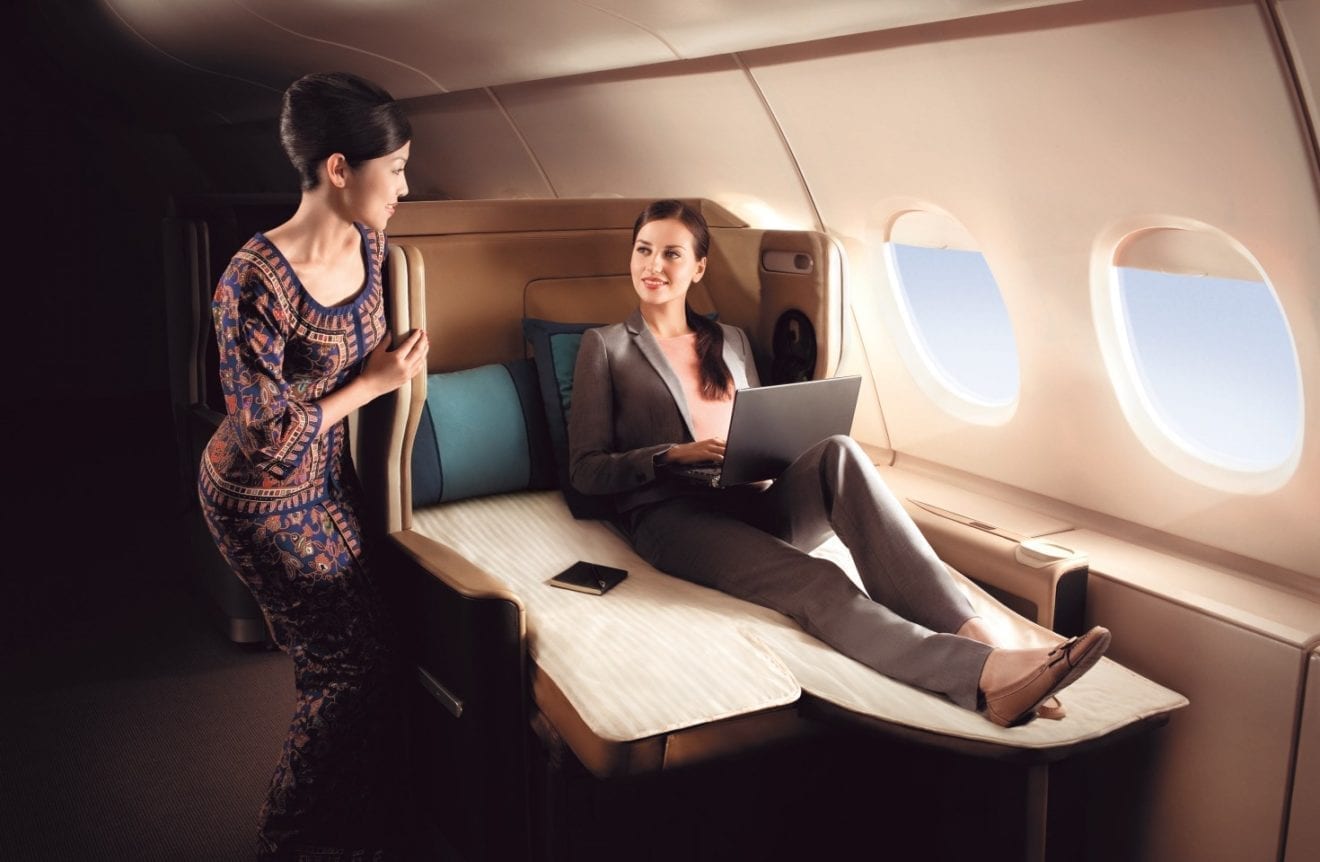
Singapore Airlines has teamed up with Wellington craft brewer Garage Project to put its beer on all flights to and from New Zealand.
The airline says that in response to growing demand for craft beer in the air, it will serve Hapi Daze throughout its planes from tomorrow.
Singapore operates 18 weekly services from New Zealand and the Pacific Pale Ale will be available to up to 400,000 passengers a year.
The airline’s general manager New Zealand, Simon Turcotte, said the brew showcased New Zealand ingredients, and had broad appeal as a ”great ambassador” for New Zealand craft beer.
”In the past we’ve always had a strong emphasis on the quality of our wine programme and that will remain but there’s a growing demand for craft beer.”
There was demand from traditional markets such as New Zealand, Australia, the United States and Britain but growing interest from new markets in Asia.
Garage Project is a leading independent, Wellington-based brewery that was started six years ago in an old car garage in Wellington’s Aro Valley.
Turcotte said his airline always tried to partner with local suppliers wherever it flew.
He said he was partial to the brew himself but the airline’s beverage experts in Singapore made the final call on the beer which sells for $3.50 a can through the Garage Project’s website.
Singapore Airlines is cancelling several flights from its capital connect services later this year, in response to low demand during the off season.
Since September, Singapore has flown Boeing 777-200 to Wellington via Canberra four times a week, a service which aviation experts said appeared to be winning strong support.
Wellington Airport has publicly linked the service to its case to extend its runway south into Cook Strait in a bid to enable direct, long haul services to the capital.
But the airline is dropping three return flights over three months. The flights were due to land and take off from Wellington on August 14, September 5 and October 24.
The cancelled flights appear to be equivalent to just over a 5 per cent cut in capacity over the August-October period.
Simon Turcotte, Singapore Airlines general manager New Zealand, said the decision not to operate the flights was part of normal operations.
“During the low season we regularly make ad hoc changes to our flight schedules to meet market demand and ensure we are optimising the performance of the route during the low season,” Turcotte said.
“We will work with affected customers to re-accommodate their travel requirements.”
Wellington Airport spokesman Greg Thomas said it was not unusual for airlines to change schedules when considering low and high season.
“We are happy with the performance of the service and have received positive feedback on the vast improvement in connectivity that Singapore Airlines has provided to Asia and onwards to Europe.”
Brent Thomas, commercial director for House of Travel, said it was not unusual for airlines to make changes to schedules between seasons.
“Ultimately the airlines will decide where they can get the best use of their aircraft because these are expensive pieces of machinery and the airlines need to determine where they can get the best returns.”
A slight change in frequency did not mean a service was in jeopardy, Thomas said, however because of the organisation involved and the potential disruption to customers, changes suggested demand was low.
“These kind of decisions, where they adjust schedules, certainly aren’t taken lightly,” Thomas said.
The Singapore Airlines service has been in the headlines, both for its improved connectivity to Asia, the fact that it is the first scheduled wide-bodied service from Wellington, and the support the airline received to bring it here.
When the service was confirmed, Wellington’s then Deputy Mayor Justin Lester said the short time on the tarmac in Canberra meant the service would cut the time it took to get from central New Zealand to Asia by at least 90 minutes.
In the following days documents emerged showing Wellington Regional Economic Development Agency could provide up to $800,000 a year in marketing support towards the service, for 10 years.
Shortly after flights commenced, it emerged that Wellington City Council generated almost no paperwork in the decision to agree the subsidy, prompting calls from councillors to rein in chief executive Kevin Lavery’s delegated authority over spending.
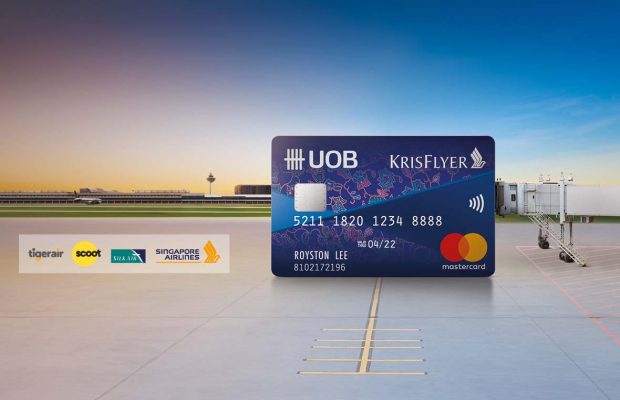
United Overseas Bank Limited (UOB) has teamed up with Singapore Airlines’ (SIA) frequent flyer program to launch KrisFlyer UOB Account.
Targeting those who prefer to use a debit card or millennials who may not yet be eligible for a credit card the account allows users to earn KrisFlyer miles whenever they save or spend. The miles can also be used for award flights and upgrades on SIA and SilkAir, or as travel vouchers on Scoot or Tigerair.
The miles earned will depend on the customers’ account balance. Those who have an account balance of S$350,000 (US$249,377) and above, for instance, will earn 5.4 KrisFlyer miles for every dollar they spend using their KrisFlyer UOB account.
“We have seen spending on UOB debit cards grow 40 percent over the past two years. Travel spend on debit cards also increased 15 percent in the corresponding period as our customers make more trips abroad,” said UOB head of personal financial services Singapore, Jacquelyn Tan, in a press release.
The bank is targeting to open at least 200,000 KrisFlyer UOB accounts in the next five years.
Meanwhile, SIA Marketing Planning senior VP Tan Kai Ping said, “The KrisFlyer UOB card leverages the wide reach of the KrisFlyer frequent flyer programme, giving card members access to all the airlines within the Singapore Airlines Group. This means seamless access to our four airlines – from full-service carriers Singapore Airlines and SilkAir to budget carriers Scoot and Tigerair – when they spend and save through this account.”
Singapore Airlines is locking in its advanced Airbus A350 jet for a year-round schedule between Melbourne and Singapore starting May 11, 2017.
The sleek jetliner has made a number of short-term appearances on the route, but later this year it’ll be running daily as Melbourne-Singapore flight SQ208 and the SQ207 return leg.
Travellers at the pointy end can relax in the Star Alliance member’s latest business class seat, evolved from that of the Boeing 777-300ER flagship.
It’s an “evolutionary, not revolutionary” approach, reported AusBT’s Suzanne Wu from one of the first SQ A350 flights – “and that’s not a bad thing. Not a whole lot was broke, so not a whole lot needed fixing.”
Melbourne’s SQ218/SQ217 is also running on an A350 until June 30, after which it will revert to the Airbus A380 superjumbo.
Asian rival Cathay Pacific already has one Airbus A350 on the Melbourne-Hong Kong route as CX104/105, with a second slotting into CX134/135 from October 29, while Thai Airways says its own on-again off-again Melbourne A350 flights should launch before the year’s end.
April sees Singapore Airlines celebrate 50 years of flying to Australia, and is tipped to debut its newest Airbus A380 – fitted with next-generation first class suites and business class seats – on the Singapore-Sydney route in October 2017.
The redesigned first class suites will be fewer in number – down the current superjumbo’s 12 to between six and eight – but much larger in footprint, and have been relocated to the upper deck.
Next year will see Singapore Airlines restart direct flights between Singapore and the USA, with both New York and Los Angeles in line for an ultra-long range version of the A350 dubbed the A350ULR.
This long-legged jet will carry all-new business class seats compared to the Melbourne A350, but only around 170 seats – some 80 less than the airline’s regular A350-900s – in order to minimise fuel burn and maximise range for the 18-19 hour journey.
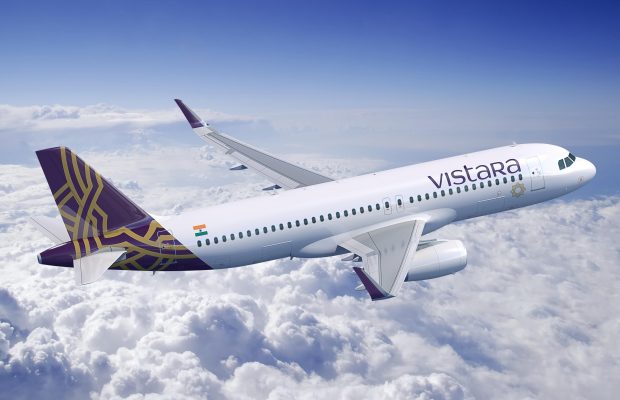
Singapore Airlines (SIA) and regional subsidiary SilkAir announced today that they have signed an agreement to codeshare on Indian domestic flights operated by Vistara, with effect from today.
“Under the agreement, SIA will add its ‘SQ’ designator code to Vistara-operated flights beyond Mumbai and New Delhi to 10 destinations within India. SilkAir will add its ‘MI’ designator code to Vistara-operated flights beyond Bengaluru and Kolkata to six destinations within India,”
SilkAir will add its ‘MI’ designator code to Vistara-operated flights beyond Bengaluru and Kolkata to six destinations within India,” said a release from the airlines.
The codeshare agreement is Vistara’s first with another airline group, as well as SIA’s and SilkAir’s first with an India-based domestic carrier. As a result of the agreement, four new destinations will be added to the SIA Group’s India network, namely Bhubaneswar, Goa, Guwahati and Port Blair. SIA Group airlines currently serve 15 destinations in India from Singapore, the release added.
This partnership would also contribute to Vistara’s topline by bringing in passengers on to its network.“As we continuously work towards eventually becoming a globally renowned airline, codeshare partnerships will play a very important role in helping us get closer to realizing that aspiration. Customers booked on any of the classes on Singapore Airlines and SilkAir will find an equally world-class experience when they travel within India, given Vistara’s service and operational excellence,” Phee Teik Yeoh, Chief Executive Officer, Vistara was quoted in the release.
Members of SIA’s and Vistara’s frequent flyer programmes, KrisFlyer and Club Vistara, will also enjoy additional tier benefits as a result of the new codeshare partnership. PPS Club and KrisFlyer Elite Gold members will enjoy lounge access, increased baggage allowance, and priority baggage handling, check-in and boarding when travelling on Vistara-operated flights. Likewise, Club Vistara Platinum and Gold members will enjoy the same benefits when travelling on SIA- operated flights. PPS Club and KrisFlyer members will also earn Elite miles when travelling on SIA codeshare flights operated by Vistara.
Turning your Singapore Airlines KrisFlyer miles into a business class seat and first class suite will require more miles from this month, with the Singaporean flag-carrier boosting the cost of Saver-category award flights out of Australia.
The 15% discount for making your frequent flyer redemption booking online rather than over the phone has also been axed.
However, fuel and insurance surcharges will no longer be added to KrisFlyer award bookings.
The changes kick in on March 23, 2017, although miles-based award bookings made and ticketed before March 23 will escape the hike.
There’s no change to the Standard award rates for flights from Australia to Singapore or Europe – but if you’re looking to snare a cheaper Saver award flight, here’s the uplift.
Who’ll pay more, and how much…
Business class flights between Australia (excluding Perth and Darwin) and Singapore bump from 55,000 KrisFlyer miles to 58,000 miles, with first class and A380 suites bookings nudging from 75,000 miles to 80,000 miles.
Economy Saver awards rise from 25,000 miles to 28,000 miles, with no change in the number of KrisFlyer miles needed for a premium economy booking.
No change either for flyers from Perth or Darwin, whose redemption rates remain the same if they’re headed to Singapore.
Going all the way to the UK or Europe?
First class and Suites awards from Australia (excluding Perth and Darwin) and Singapore go from 132,500 KrisFlyer miles to 148,000 miles; business class rates are up from 95,000 miles to 105,000 miles; and economy from 47,500 miles to 53,000 miles.
Perth and Darwin don’t escape that increase, with a business class bump from 85,000 KrisFlyer miles to 95,000 miles, and economy up from 40,000 miles to 43,000 miles.
The changes are part of a broader overhaul of SQ’s fare structure which will also see fuel and insurance surcharges progressively folded into base fares from late March through to May 2017.
You’ll find more information on the Singapore Airlines website here, where you can also download the current and new KrisFlyer Award charts.
Singapore Airlines (SIA) is among five international airlines that fly into Europe that have been told to pay passengers for delays they may have experienced.
The UK Civil Aviation Authority (CAA) said in its press release on Wednesday (Feb 22) that American Airlines, Etihad Airways, Emirates, SIA and Turkish Airlines will have to obey European laws or be taken to court. They all face enforcement action after a CAA review found them to be breaching consumer law, it added.
These airlines had told the UK Civil Aviation Authority (CAA) that they did not pay compensation to passengers who had experienced a delay on the first leg of a flight that caused them to miss a connecting flight and, as a result, arrive at their final destination more than three hours late, the press release said.
CAA added that SIA currently places compensation claims for these delays “on hold”.
Under European Union (EU) law, airlines may have to provide compensation if passengers arrive at their destinations late. These rules, however, only apply to certain flights to, from or within the EU and only if the airline was at fault, such as if it was through poor aircraft maintenance or flight crew being available, the UK CAA website said.
Compensation ranges from 250 euros (S$372.70) for delays of more than three hours for short-haul flights to 600 euros for delays of more than four hours for long-haul flights, it added.
Mr Richard Moriarty, director of Consumers and Markets at the CAA, said: “Airlines’ first responsibility should be looking after their passengers, not finding ways in which they can prevent passengers upholding their rights.
“So it’s disappointing to see a small number of airlines continuing to let a number of their passengers down by refusing to pay them the compensation they are entitled to,” he said.
In response to queries, SIA said it has been in contact with the UK’s CAA on the issue “for some time”.
“There is a lack of clarity in the law which is currently the subject of ongoing litigation before the Court of Appeal,” a spokesperson for the airline said, adding that SIA will continue to work with the CAA to resolve differences with respect to the application of the regulation to missed connections.
Singapore Airlines reported on Tuesday a 1.7 percent rise in third-quarter operating profit, helped by an unexpected growth from cargo and mail, while net fuel costs fell.
Profit reached S$293 million ($207 million) for the three months ended Dec. 31, S$5 million up from the same period last year.
The carrier, a barometer of the health of Asia’s airline industry, said “2017 is expected to be another challenging year amid tepid global economic conditions and geopolitical concerns, alongside other market headwinds such as overcapacity and aggressive pricing by competitors.”
The company has come under pressure due to weakening demand for full-service long-haul travel amid competition from low-cost carriers and Middle Eastern network carriers.
Operating profit in its main SIA brand fell 16.6 percent to S$151 million. Profit fell 9.1 percent in its Silkair regional airline, and was flat-to-slightly-higher for low-cost subsidiaries, Tiger Airways and Scoot.
SIA Cargo posted an operating profit of S$53 million, its best third quarter performance in nine years, due to stronger-than-expected demand. In the same period of last year, SIA Cargo only managed a S$2 million profit.
Net fuel costs declined $200 million, largely due to a $256 million reduction in fuel hedging loss, the company said.
Singapore Airlines (SIA) marks another milestone as they celebrate their 70th anniversary across the globe with exciting deals, service expansion, and the largest showcase and travel fair for its Filipino patrons.
According to Carol Ong, SIA general manager in the Philippines, “Innovation has always been at the core of SIA’s operations. For our 70th year, we continue to push our boundaries by expanding our network and pioneering services guaranteed to give the best experience to our customers.
“We want to continue doing our best to exceed our customers’ expectations—whether it be more travel destinations, more frequent flights, or more great value deals.”
Travel for less
All-inclusive round-trip Economy Class fares to Singapore and other Asian destinations are available from US$160. Fares to Australia are offered from US$570 while traveling to key destinations in Europe starts at just US$670. Customers can also travel to South Africa at fares starting from just US$770 and to the United States starting from US$970.
Passengers can experience SIA’s newest cabin offering, the Premium Economy Class, with the most attractive all-in round-trip rates. All-in fares on Premium Economy Class to Asian destinations are available from US$1,000, to Australia from US$1,350, to Europe from USD1500, and to South Africa from US$1,700. A trip to New Zealand is offered from USD1800, and to the United States for just US$1,850.
Customers can choose to travel in luxury and style with SIA’s all-in Business Class fares. Travelling to various Southeast Asian destinations is offered from US$850 all-in, and to Australia from US$2,000. Discounted rates to Europe and New Zealand are also available from just US$2,500. Starting at US$3,000, passengers can already fly Business Class to the United States or South Africa.
Travel to Austria and visit the Vienna Opera House. As part of its 70th anniversary celebration, Singapore Airlines is offering special airfare to Europe for as low as US$670.
For this year’s Singapore Airlines Showcase and Travel Fair, customers will also have access to SIA’s network of subsidiaries and partners and enjoy exclusive promotional rates. Customers will be able to travel from the Philippines to SIA’s online gateways in Europe and connect to additional destinations such as Brussels, Madrid, Hamburg, Oslo, Vienna, Venice, Lisbon, Prague and its newest destination, Sweden.
With 85 destinations to choose from at exceptional rates, SIA provides its customers the perfect opportunity to achieve their travel goals this year for less.
This sale is still valid for purchase at the Singapore Airlines Showcase and Travel Fair 2017 at the TriNoma Activity Center on February 26 to 28, 2017. The sale is also available online and at SIA and SilkAir ticket offices until 20 February 2017. Travel period is from February 1 until December 31, 2017. Promotional fares are available for travel from Manila, Cebu, Davao and Kalibo.
The promotional fares are exclusive to Singapore Airlines KrisFlyer members, BPI credit cardholders, Globe Platinum customers as well as TriNoma and Ayala Center Cebu shoppers.
Travel to Athens and visit Cape Sounion and the Temple of Poseidon for only USD570 via Singapore Airlines. Photo courtesy of SIA.
Exclusive rewards
Loyal patrons will also enjoy perks and rewards such as the Real 0% Installment Plan of up to 6 months for BPI credit cardholders and upfront US$50 Cash Back, an exclusive introductory offer of SG$25 Singapore exPass that gives access to two of Singapore’s world-class attractions, and a SG$20 Changi Dollar Voucher that passengers can redeem at Singapore Changi Airport, valid for use at participating shops and restaurants at the airport. Terms and conditions apply.
All these exclusive deals are in cooperation with SIA’s network of partner companies like BPI, Ayala Malls, Globe Platinum, Changi Airport Group and Singapore Tourism Board.
Visit singaporeair.com and Singapore Airlines’ Facebook page for the complete set of mechanics and guidelines, and for other announcements.
For bookings and inquiries, visit Singapore Airlines and SilkAir ticket offices, or call SIA Manila Reservations at (+632) 756-8888, SilkAir Cebu at (+6332) 505-7871, SilkAir Davao at (+6382) 227-5301, SilkAir Kalibo at (+6336) 500-7226, or contact any participating travel agent from 20 January to 20 February 2017. For details, visit singaporeair.com/FLYSQ70.
To enjoy up to 6 months Real 0% interest Special Installment Plan on your BPI credit card, book through SIA or SilkAir ticket offices.
Singapore Airlines flies from Manila to Singapore four times daily, which conveniently connects to onward flights to the rest of the world. Passengers traveling from Cebu, Davao and Kalibo can fly to Singapore via SilkAir, which flies 12 times weekly from Cebu, nine times weekly from Davao, and three times weekly from Kalibo.
French lifestyle brand Lalique is bringing its crystal wares to new heights through an alliance with Singapore Airlines.
Through the partnership, the airline will retail co-branded in-flight products such as toiletries and glassware in its suites and first class cabins. For Lalique, this represents an opportunity to introduce its brand range to a captive audience of affluent travelers.
In-flight branding
Singapore Airlines (SIA) and Lalique have signed a memorandum of understanding, which reflects their shared goal of enhancing the on-board experience for suite and first class travelers. Together they will market a co-branded collection that includes loungewear, bedding, toiletries, amenity kits and glassware.
The amenity kits available to these passengers will feature both lifestyle and crystal gifts. Additionally, travelers will be able to take advantage of special offers for Lalique’s manufacturing site, its five-star hotel Villa René Lalique and its two-Michelin star restaurant in France.
SIA’s KrisShop Magazine will advertise Lalique items that can be purchased in-flight or via mail order from the consumers’ home.
This partnership will launch with SIA’s next round of Airbus A380s starting in the second half of 2017. From there, the two companies are considering a long-term working relationship, with the possibility of additional collaborations and an exclusive agreement a possibility in the future.
“We are very pleased to partner with Lalique to offer our premium customers exquisite luxury in the air,” said Marvin Tan, senior vice president, product and services at Singapore Airlines. “Both Lalique and SIA have a long heritage. Leveraging the strengths of both companies, we look forward to bringing the finest traveling experience to our customers through this co-brand initiative.”
Department store chain Saks Fifth Avenue is similarly establishing in-transit placement by partnering with United Airlines’ newly redesigned business class experience.
For the United Polaris front cabin passengers, Saks teamed with the airline to create a custom bedding. This first-of-its-kind collaboration represents an opportunity for Saks to be part of travelers’ flight experience, giving them a tactile interaction with the brand on their journey.
Homegrown start-up ShopBack takes off the year with Singapore Airlines (SIA) and Scoot on board as its Flight vertical partners. The collaboration strengthens the runway for the smarter way to shop. All travellers can now access air tickets befitting their budget, elevated with Cashback from ShopBack all year round.
The checking in of SIA and Scoot adds significant weight to ShopBack’s Flight vertical as it widens the runway of travel options for travellers, from first-class to budget.
The start-up’s suite of top three world-class airlines (Source: Skytrax World Airline Awards) – Emirates, Qatar Airways and SIA – is now complete. With ShopBack, affluent travellers are empowered with a fuss-free way of spending and saving with poise.
Scoot, the Best Low Cost Airline (Asia Pacific) as named by AirlineRatings.com for three consecutive years, is the first budget airline onboard. With ShopBack, cost-sensitive travellers are able to maximise the worth of their dollars with Cashback stacked atop credit card rebates and miles.
“For a two-year-old start-up, being able to have the chance to soar to greater heights with long established aviation partners might sound impossible,” said Mr. Joel Leong, Head of Merchants and Partnerships, ShopBack. “But with the belief that we can overcome disparity in company age and size with concrete data-backed results, our team pursued the golden ticket relentlessly and pushed boundaries to seal the deal for consumers.”
Available on web, desktop and mobile (iOS and Android apps), ShopBack currently powers user’s online transactions with a stackable layer of savings in the form of Cashback, which translates to actual cash transferrable to either user’s bank or PayPal account.
Consumers can enjoy 1.0% Cashback from ShopBack for their air tickets purchased from the SIA x VISA as well as Scoot site. For those who prefer to buy on the go, both airlines are also available on ShopBack mobile app.
SIA and Scoot join ShopBack Singapore’s fleet of over 500 online retailers, including Uber, Cathay Cineplexes, Expedia, ASOS, Muji and more, to give consumers uplift in their savings through Cashback.
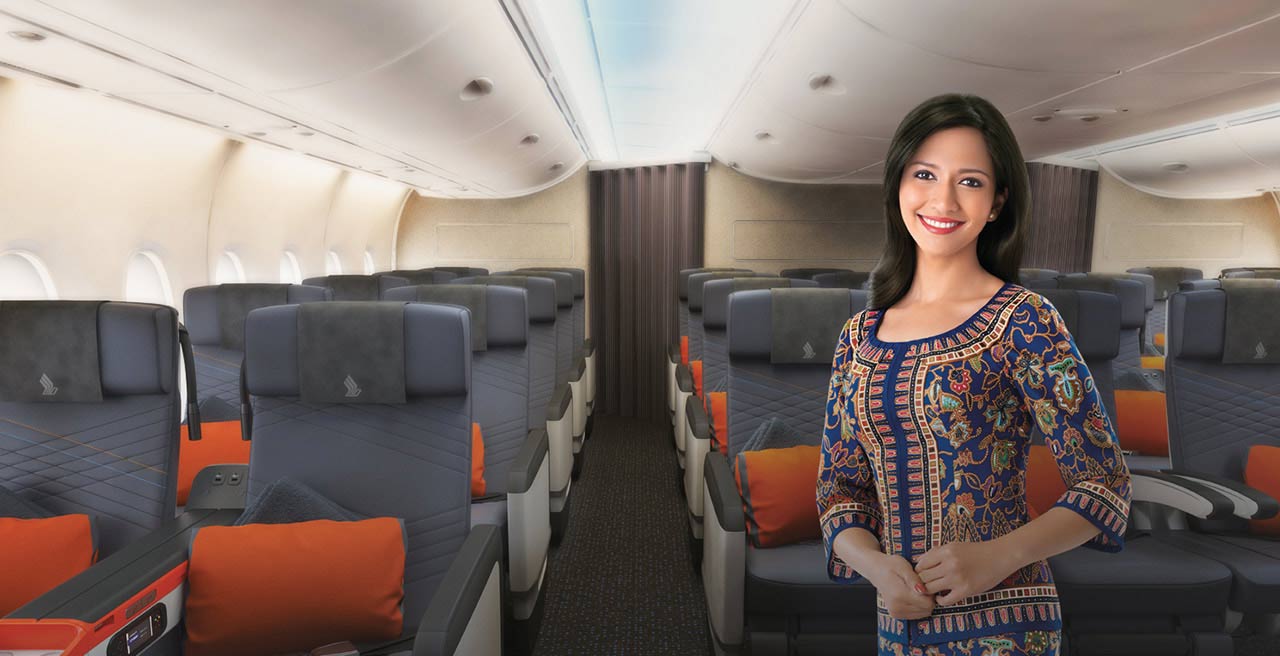
Singapore Airlines (SIA) is banking on premium economy services to entice travelers to pay more for extra comfort.
About four in 10 SIA planes now offer the service, slightly more than a year since it rolled out premium economy cabins, which offer perks such as more legroom and better food.
And the carrier said it will continue to retrofit more aircraft with such cabins to meet travelers’ needs.
Demand is especially strong on long-haul routes, said SIA spokesman Nicholas Ionides.
The premium economy cabin includes features such as wider seats with greater recline and more legroom.
First introduced more than two decades ago, such cabins are now found on more than 50 carriers worldwide, including American, European and Asian airlines.
Apart from SIA, airlines that have rolled out such cabins in recent years include Hong Kong’s Cathay Pacific, which introduced them in 2012.
Middle Eastern airlines, which have so far resisted the option, are now considering it as well.
Premium economy services have caught on as they are popular with travelers who do not mind paying more for extra comfort, especially on long-haul flights.
Cost-conscious businesses are also turning to them as an option for their executives on work trips, experts said.
A premium economy ticket can cost up to 1 ½ times more than the economy fare, though this also varies depending on routes and time of travel.
“The difference between the economy and premium economy fares for last-minute bookings can reduce significantly to just around 20 per cent to 30 per cent in some cases,” said Akshay Kapoor, director (Asia-Pacific) at CWT Solutions Group, which manages travel for corporate clients.
While most airlines have taken a keen interest in the premium economy product, most tend to roll this out rather cautiously, he said.
The number of premium economy seats is typically below 10 per cent of the total number of seats on the aircraft, said Kapoor.
One concern that airlines have is that instead of economy travelers upgrading, business travelers could end up downgrading.
Brendan Sobie, a Singapore-based analyst at the Centre for Aviation think-tank, said: “The idea is always to get economy class passengers to upgrade rather than to cannibalise business class.
“However, there is always some cannibalisation – generally not a significant amount but there’s always the risk.”
At Cathay Pacific and SIA, premium economy passengers are a mix of those who have downgraded from business and those who used to fly economy but are increasingly drawn to premium economy, especially on long-haul flights to North America and Europe, for example.
However, given the uncertain global economic outlook, experts expect more business travelers to downgrade.
Kapoor said: “With continued economic uncertainty expected over the next few quarters, we believe that organisations will increasingly be seeking avenues to drive savings in their travel spend without having to cut down on the amount they travel.
“Taking premium economy over business class could save 60 to 70 per cent of the airfare and allow for more trips to a destination for the same dollar amount.”
Rayman Som, 51, a human resource director who travels four to five times a year, has flown twice on SIA’s premium economy class on company expense.
He said he took a short flight to Hong Kong the first time, so it did not make much difference. But he flew to Paris the second time and it proved a different experience.
“The wider seat, more legroom and greater recline were much welcomed on the longer flight,” he said.
He added: “Would I pay out of my own pocket for premium economy? For a short flight, no. For longer journeys, it makes sense if the price is right. I think 30 to 40 per cent more is reasonable.”
Singapore Airlines is ramping up flights to Sydney, Melbourne and Brisbane in 2017, a year which marks the airline’s 50th anniversary in Australian skies.
Melbourne will see a fifth flight appear on the schedule from 17 July 2017, with the new SQ247/248 operating on Monday, Friday and Saturday.
The SQ247 Airbus A330 service will depart Singapore at 2am and arrive in Melbourne at 11.25am; SQ248 leaves Melbourne at 12.40pm to reach Singapore at 6.30pm.
In addition, from January Melbourne’s SQ227/228 will step up to a four-class Boeing 777-300ER with the Star Alliance member’s new premium economy class.
Brisbane will see SQ265/266 tick over to a daily frequency from 22 August 2017, up from the current four flights a week; it’ll stay on a Boeing 777-200ER aircraft with a fully-flat business class bed for the overnight flight between Brisbane and Singapore.
Sydney is also gaining extra flights. Beginning 4 June 2017, SQ251/252 will be bumped up from three times weekly to five times weekly, while SQ231/222 will continue as a four-class Airbus A380 from 18 June to 30 September 2017.
2017 will also see Singapore Airlines boost flights to popular cities in Europe and Asia – including Rome, Moscow and Bangkok – with a new via Moscow route to Stockholm.
Mancunians will be able to sample Singapore Airlines (SIA) latest A350 from January 17. SIA’s new three-class (business, premium economy and economy) twin-jet enters enters service on the Singapore-Manchester-Houston route. It will replace the larger B777-300ER which currently plies the route.
But the B777-300ER had the advantage of providing first class which will be unavailable with the A350.
I cannot talk about Houston, but in the case of the UK regions there is not the same demand for a top premium cabin as there would be from London.
Mancunians now have non-stop access both to Singapore and Houston. (Previously the Manchester-Singapore service was one-stop service via Munich. Singapore-Houston previously operated via Moscow).
Both are hub airports so the canny traveller can fly onwards to Asia/Australasia (in the case of the former) and Texas and the Southern US in the case of the latter.
Interestingly, for Mancunians seeking fast flights to Perth/Australia, what SIA is offering out of Manchester takes away the advantage of Qantas’ non-stop London-Perth service which launches in 2018.
Why fly Manchester-London-Perth with British Airways/Qantas (with a Heathrow terminal change) when SIA can take you Manchester-Singapore-Perth ?
Schedules are daily except Monday and Thursday.
Flight SQ052 will depart Singapore at 0215 arriving into Manchester the same morning at 0840. Its flight continues to Houston at 1010 arriving in the Texas city at 1430.
Return flight SQ051 departs Houston at 1850 to arrive into Manchester the following morning at 0840. It then departs at 1110 and, after another overnight aloft, it arrives into Singapore at 0755.
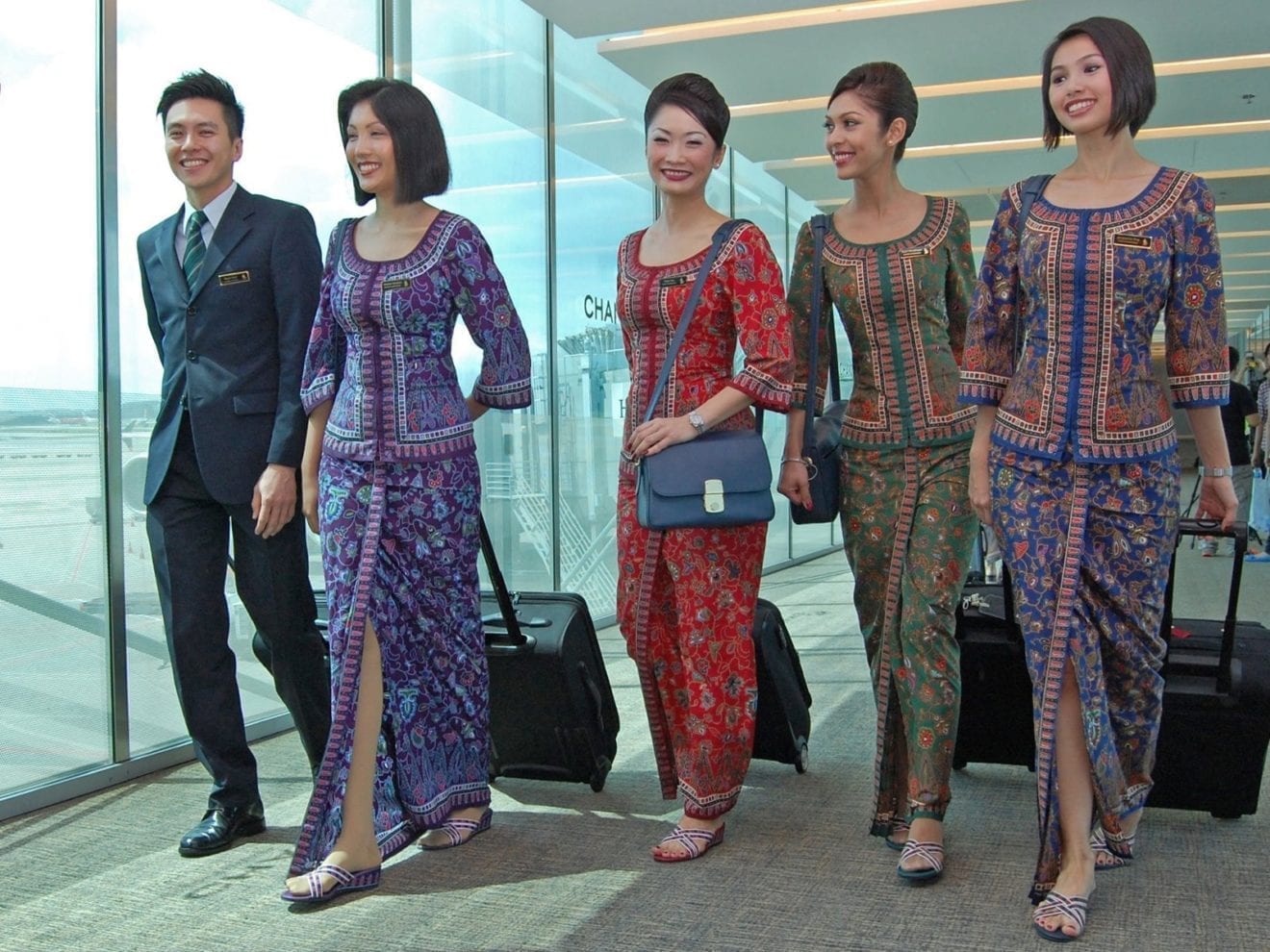
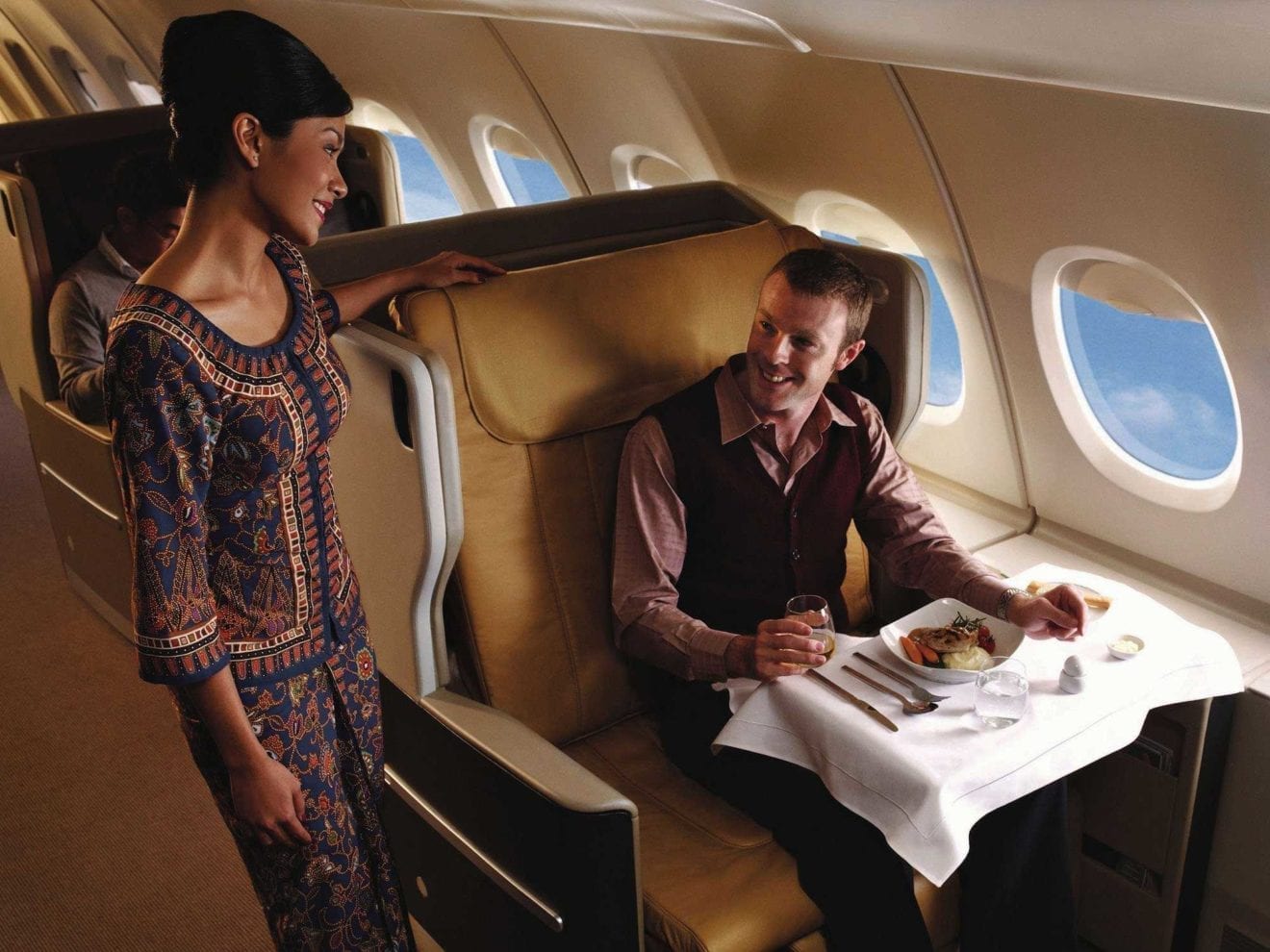
When you think of Singapore Airlines, visions appear of cushy premium cabins, bespoke leather seats, and free-flowing Champagne poured by the carrier’s throwback “Singapore girls” flight attendants.
It’s all that, yes. But the luxury carrier is working hard to diversify with budget airlines under its corporate banner. It owns low-cost carrier Scoot; 49 percent of Vistara, a joint venture in India with Tata Sons Ltd.; and NokScoot, a low-cost Thai airline Singapore owns in a joint venture with Nok Airlines. This collection of airlines—plus a new “ultra long range” Airbus A350 variant scheduled to arrive in 2018—enables Singapore to explore a range of expansion plans, many of which are currently focused on North America.
It’s no coincidence that the region continues to be the runaway success story of airline profitability. It will provide roughly two-thirds of the industry’s projected $29 billion net income next year, according to estimates released Dec. 8 by the International Air Transport Association.
Singapore’s portfolio of carriers offers “a lot more nimbleness and flexibility in addressing the needs of the markets,” Chief Executive Officer Goh Choon Phong said during an interview Dec. 6 in New York.
Squeezed on all sides
Last month, Singapore reported a 70 percent drop in net income and warned that 2017 could be challenging as well. The airline has struggled amid the expansion of low-cost carriers in its home region, and moves by a trio of Middle East-based full-service airlines to encroach on its core franchise of premium business travelers.
“It’s not going to be business as usual,” said Goh, an M.I.T.-trained engineer in computer science who chose an airline career over academia. “These are structural changes; these are changes that are not going to go away.”
Into this environment, the CEO has prescribed a diversification of revenue, a renewed focus on cabin comforts for big spenders, and new markets.
A chief pillar of the company’s expansion rests on further long-haul expansion, driven by firm orders for 67 new Airbus A350s and 30 of Boeing Co.’s largest 787 variant, the -10. The newest 787 is scheduled to enter commercial service in 2018. Of its A350s, Singapore will take seven from Airbus in an “ultra long range” configuration, which includes software changes and modest modifications to the landing gear. Other A350-900s can be altered to the ULR version, which is able to fly 8,700 nautical miles.
“We have called it a game changer for us and there’s a reason for that,” Goh said, alluding to the growth opportunities the A350 affords.
With these new, more fuel-efficient planes, Singapore executives have been keen to resume the nonstop flights from the city state to New York and Los Angeles, which operated for nine years before ending in 2013 because of the route’s extreme fuel costs. The airline is also considering the potential for new U.S. destinations, having for years studied traffic flows in places like Boston, Chicago, and Miami, Goh said. Many weren’t feasible, given the mix of large seat counts and the range limits of its existing aircraft. But the new, more fuel-miserly A350 may well change the math for such an expansion. (In March, for example, Singapore is swapping the 777 it flies to Houston with an A350.)
“The U.S. is an important market for us,” Goh said, but technological limitations required a stop between American cities and Singapore. No more.
Gateway to India and Southeast Asia
The airline is envisioning a day when the new fleet allows its hub at Singapore’s Changi Airport to become a connection for U.S. and Canadian corporate travelers bound for places such as India, Malaysia, Indonesia, and Thailand. It sees a precedent in the operations Emirates Airlines and Qatar Airways Ltd. have built at their hubs in the Persian Gulf, particularly for traffic to and from India.
Yet beyond the moneyed travelers who want frills on long flights, Singapore’s Scoot budget airline is also keen to expand. In June, Scoot will commence its longest flight to date, to Athens, a city where Singapore has ended service with its flagship. Scoot is increasing its all-787 fleet to 20 over the next few years, and is likely to look to markets where premium-cabin traffic is insufficient for flights by the flagship Singapore brand, Goh said.
“Scoot might also look to some kind of operation to the U.S,” Goh said. “At some point in time they will look at the U.S. to see if it makes sense.”
On the premium side of their house, Singapore executives have been cagey about the cabin configuration for the A350-ULRs to be deployed on the new U.S. nonstops to Los Angeles and New York. The latter will reclaim its title as the world’s longest route, at 19 hours or more, depending on winds. The airline plans a two-class service, but has declined to reveal the cabin mix or how many seats the planes will carry. They will have fewer than the 253 seats now on the three-cabin aircraft Singapore currently flies, with a stop in Asia, en route to Singapore, Goh said.
“The beauty of it is that this aircraft is not too big,” he said. “We can size it to best fit the traffic number that makes sense.”
Beyond the U.S., Singapore has identified India as a top priority in terms of greater market access. Within a decade, the nation is projected to become the No. 3 international travel market after China and America. Singapore’s Vistara venture will benefit from the Indian government’s recently altered “5-20” regulation that required local carriers to fly at least 20 aircraft for five years before they could offer international service. The change abolished the five-year flight period, and should help Vistara expand internationally sooner. It now has 13 Airbus A320s, with plans to reach 20 by 2018.
Some day, if it makes sense for Vistara, Goh says, the airline may acquire long-haul aircraft and set out for Europe and North America with nonstop routes. That’s a proposition that Emirates, Qatar, and Etihad can’t offer. “Logically speaking,” Goh says, “you can imagine Vistara should have a lot of potential for growth.”