Tag: singapore airlines

  • Singapore Airlines Sweetens Ticket Refunds with Added Value

    Singapore Airlines Sweetens Ticket Refunds with Added Value

    Singapore Airlines is looking beyond the value of its airline tickets. As airlines around the world reckon with a tsunami of return ticket requests for flights cancelled in the wake of the global pandemic, Singapore Airlines is telling its customers “we want you back.”

    With that in mind the luxury airline is enhancing its global travel waiver policy to offer even more flexibility that passengers will appreciate it, once again, are ready to book their travel.

    Customers who purchased a ticket on Singapore Airlines or on SilkAir on or before March 15, 2020, for travel through May 2020, can retain the full value of the unused portion of their tickets as flight credits.

    These can be used to book new flights through June 30, 2021. The extension gives customers the flexibility to plan, book and travel from now until then. The airline also waives no-show and rebooking fees, enhancing the full value of their flight credits.

    Naturally, flyers who had their flight plans canceled by the airline in response to the Coronavirus pandemic may want their refund executed as a cash transaction and the airline is honoring those requests in a complete and timely manner.

    However, Singapore Airlines is happy to award bonus flight credits to all customers who choose to retain their tickets as flight credits. The measure is the airline’s way of thanking its customers for their support during this challenging period. Based on the original cabin class of travel, they will receive the following bonus flight credits* when making a new booking with us:

    Economy Class: SGD75 ($53)
    Premium Economy Class: SGD100 ($70)
    Business Class: SGD200 ($141)
    Suites / First Class: SGD500 ($353)

    Customers who opted to keep their tickets open due to the Covid-19 outbreak will also retain the value of the unused portion of their ticket as flight credits. They will also automatically qualify for the bonus flight credits.

    Similarly, customers whose flights were canceled by SIA or SilkAir will retain the full value of the unused portion of their tickets as flight credits. They will also be awarded the bonus flight credits when rebooking their travel.

    Customers who meet the above conditions, but do not wish to keep the value of their tickets as flight credits, will be offered the option of a refund. Cancellation fees and no-show fees will be waived. Customers who used miles to redeem their flight tickets will have both their miles and taxes refunded. Those who purchased their tickets using a combination of miles and cash will receive a refund as well. They will not be eligible for any flight credits.

    “Besides offering cash refunds, Singapore Airlines will provide the opportunity for customers to retain their ticket value together with the added value of a bonus credit, which they can use for future travel on us,” said Joey Seow, Regional VP – Americas for Singapore Airlines. We know customers have varying needs and we believe offering different user-friendly options will help address those requirements.”

    Customers who booked directly with the airline should use the online assistance request form to cancel their booking and retain its value as flight credits.

    Customers who meet the criteria for the airline’s global travel waiver policy will receive a confirmation email. Other customers should allow up to two weeks for the airline to review the request. Customers booking through travel agencies should contact their agents for assistance to either retain the value of their tickets in the form of flight credits or to request for a refund.

    Customers should note that if a request is submitted before the original travel date, all no-show fees will be waived.

    *If the customer’s eligible ticket contains a combination of cabin classes, the bonus flight credits will be based on the higher cabin class. Customers holding partially flown tickets will only have the remaining value of their tickets retained as flight credits. They will not be eligible for any bonus flight credits.

    Singapore Airlines joins a small, but growing list of airlines offering something extra to flyers who choose to receive a voucher that will allow them to rebook with the airline at a later date.

    They include Qatar Airways, which is adding a 10 percent to the original fare on the face of the voucher issued. Air Lingus is also offering that deal to its now grounded passengers. Finnair is also offering the 10 percent bonus and Lufthansa is offering a 50 EUR discount to passengers who take a voucher instead of cash refund. Customers who choose to take the voucher option, however, need to be aware of the expiration policies and destination flexibilities on those vouchers.
  • Singapore Airlines Set To Fly The Airbus A350 to Ahmedabad

    Singapore Airlines Set To Fly The Airbus A350 to Ahmedabad

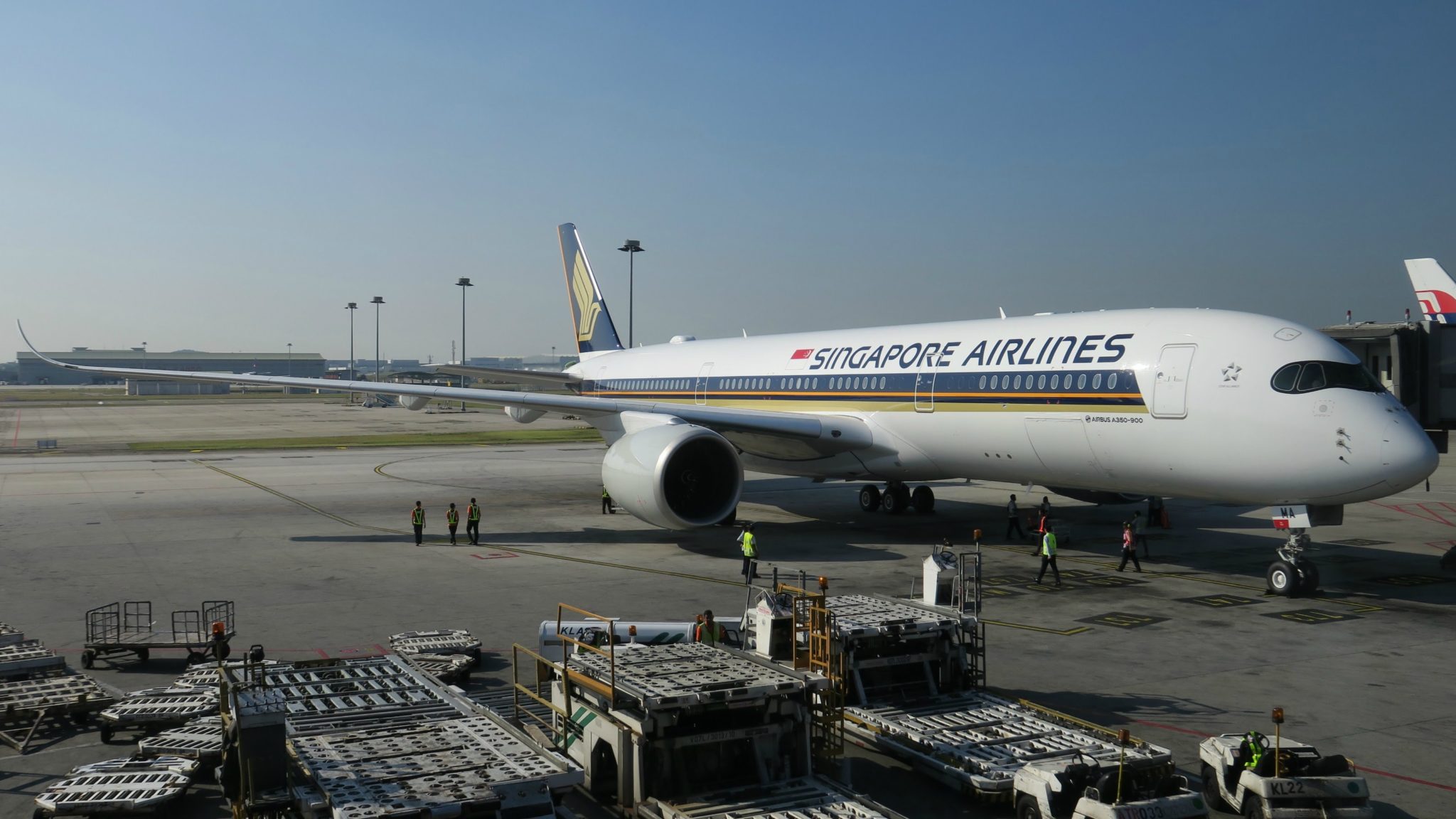
    Singapore Airlines will roll out one of its A350-900s on its new route between Singapore and Ahmedabad in Gujarat, India. Singapore Airlines’ new service is set to take flight from 1 February 2020. Ahmedabad will be the airline’s seventh Indian destination.

    The service would operate six days a week from the start of February, ramping up to a daily service at the beginning of April 2020.

    The outbound flights will push back from Singapore’s Changi Airport at dinner time for a mid-evening arrival into Ahmedabad’s Sardar Vallabhbhai Patel International Airport. The return flight is a late evening departure from Ahmedabad, flying through the night for a breakfast time arrival into Singapore. Flying time is five hours and 40 minutes. For the first two months, the flights will not operate on Wednesdays.

    The Singapore Airlines A350 is a popular option for the Simple Flying team. In April 2019, Jay Singh flew from Singapore to Johannesburg on an SQ A350, an experience he described as ‘almost perfect.’

    Well, he was drinking Charles Heidsieck and eating a chicken curry rustled up through the airline’s ‘Book the Cook’ service. What’s not to like about that?

    Now he wants to do the ultra long haul Singapore to Newark A350 flight.

    A few months later, Nick Cummins found himself on the same aircraft type when flying Singapore Airlines. He flew from Germany to Singapore in October 2019. Nick liked it so much he made a video about it.

    Having had a few dodgy airline ham and cheese toasties in his time, he’s now on a quest to discover the best and worst airline ham and cheese toasties. The Singapore Airlines toastie got the thumbs up. Nick’s only real complaint was the airline didn’t have an endless supply of desserts.

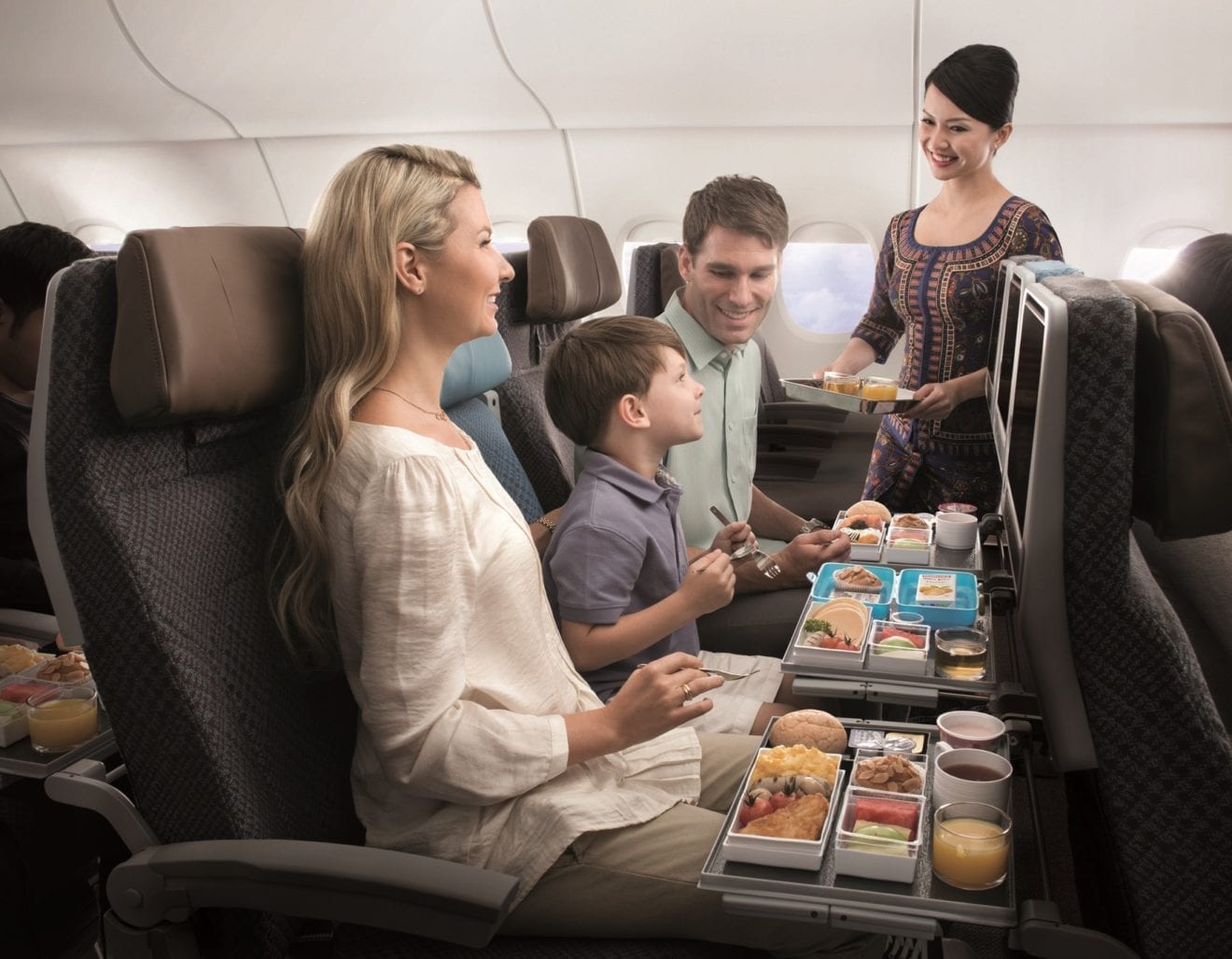
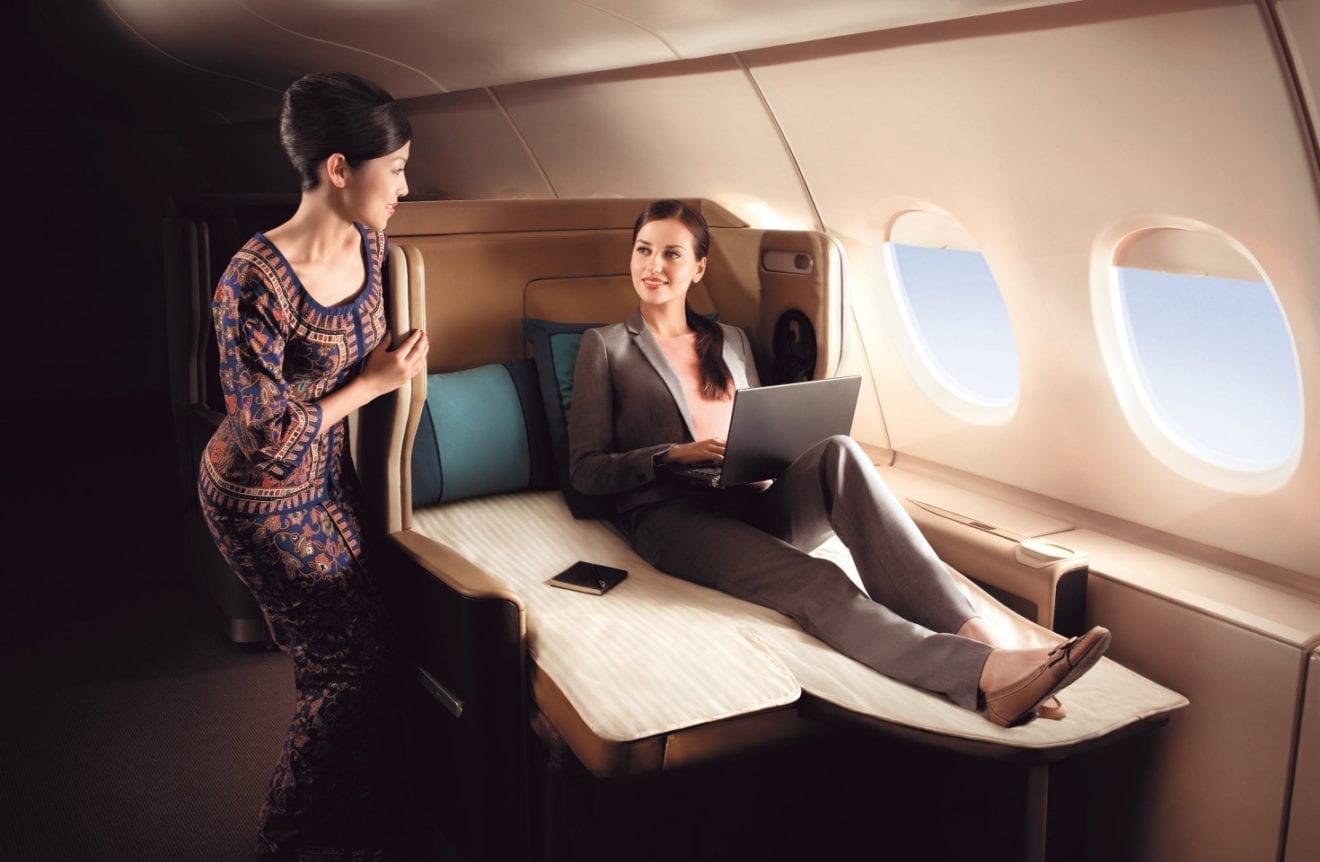
    This all bodes well for passengers on the same aircraft type on the new service to Ahmedabad. If, like Nick and Jay, you are lucky enough to be in business class, you’ll enjoy your Piper with 40 other passengers relaxing in lie-flat seats in a 1-2-1 layout. Even back in the main economy 3-3-3 cabin, the 263 passengers can enjoy one of the best economy class products in the sky.

    Services will be six days a week initially before going daily two months later. Photo: Singapore Airlines.
     

    The new service to Ahmedabad will provide local residents with one-stop access to North America, Oceania, Asia, and if you are not put off by a little backtracking, Africa, the Middle East and Europe.

    The six days a week Singapore Airlines A350 service between Singapore and Ahmedabad will begin on 1 February 2020. It will become a daily service on 29 March 2020.

  • Singapore Airlines To Trial Business Class Dine On Demand

    Singapore Airlines To Trial Business Class Dine On Demand

    For decades Singapore Airlines has been known for being one of the best airlines in the world, though I can’t help but feel like they’ve somewhat been resting on their laurels. I feel like the airline used to be super innovative, but is less innovative nowadays:

    • For the most part, I don’t find Singapore Airlines’ new cabins to be that cutting edge, and their business class seat hasn’t evolved that much in the past decade
    • Their meal services in business class are good, though nothing special
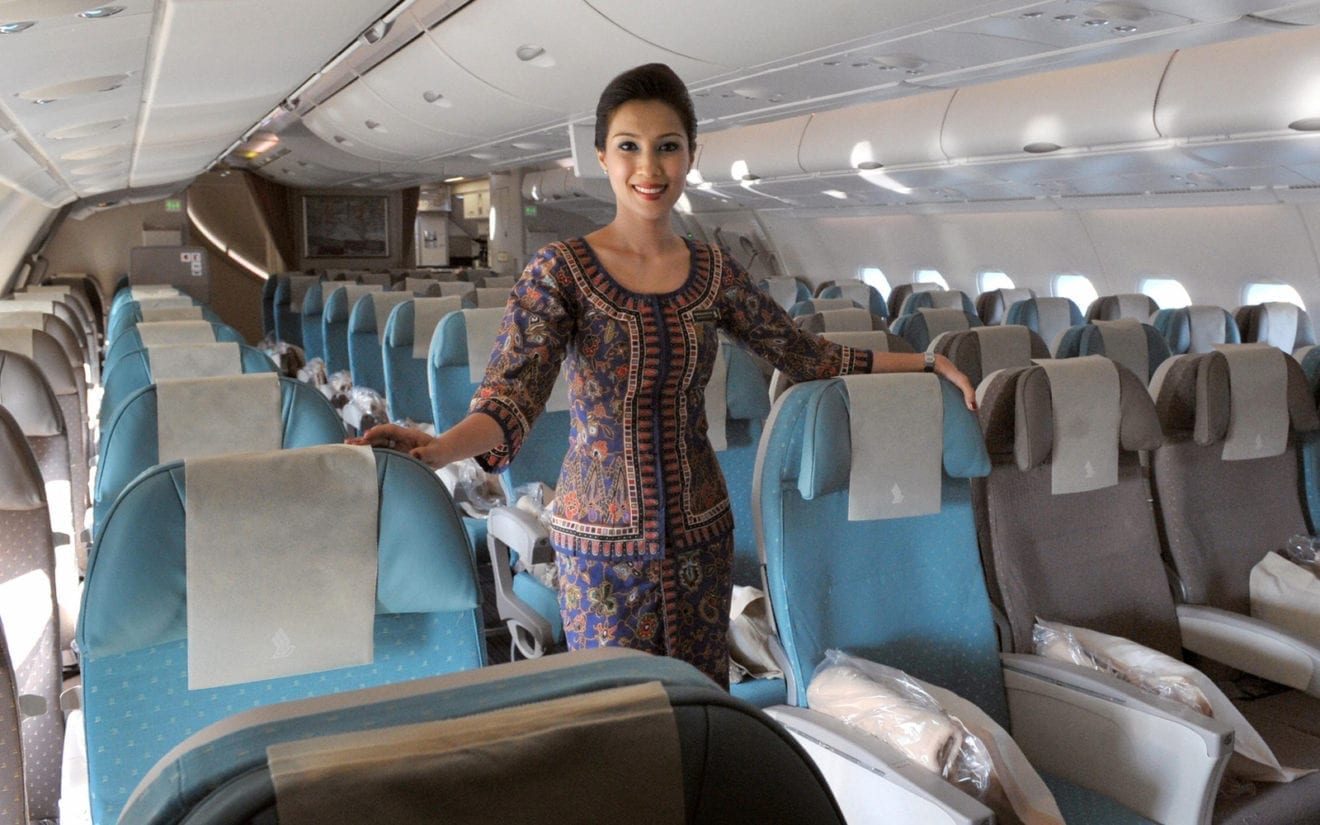
    • I will say that their cabin crew are consistently exceptional, and they’re one of the best parts of flying with the airline

    This is due to customer feedback, though Singapore Airlines is careful to note that they want to make sure they develop a system that works before fully implementing this.

    Part of that will be ensuring that flight attendants can deal with the increased work required from dine on demand while maintaining high levels of customized service.

    Is Business Class Dine On Demand A Good Thing?

    On the surface, the addition of dining on demand sounds like a good thing. Especially for an airline like Singapore Airlines, where I sometimes can’t figure out the flow of their meal service.

    But I’ve also sometimes in the past noticed that I don’t always think a dine on-demand system is best. Sure, in an ideal world dine on demand is great, but there are some downsides:

    • It significantly increases the workload for the crew, and will make them more stressed, and perhaps not provide the same level of service
    • If you’re like me and are a sensitive sleeper, I find that the sounds, lights, and smells, from people dining throughout the flight, can make it much harder to sleep

    So while I’m generally in favor of dine on demand, there are also some downsides that are at least worth acknowledging.

    I’d note that quite a few airlines have done dine on-demand trials in business class, but ended up deciding against it. Take Emirates, for example — they trialed it for a while, but then decided not to implement it on a widespread basis (meanwhile both Etihad and Qatar offer dine on demand).

    Bye Bye Lobster Thermidor?

    Singapore Airlines offers a “Book The Cook” menu, where you can order from a much larger menu before your flight. One of the most popular options is their lobster thermidor dish.

    It looks like that may not be on the menu forever in its current form:

    “Like everything, the Book The Cook programme evolves. The lobster thermidor is a perennial favourite but we’re looking at opportunities to modernise that, whether it be a lobster thermidor-type of dish or something similar and lobster- themed which is a little bit more modern, a little bit more healthy perhaps.

    People like lobster, but we’re moving to an environment where people are becoming more health-conscious so maybe the creamy lobster dish is not the right one… maybe a beautiful grilled lobster with fresh asparagus or veggies might be another alternative, as long as we maintain the integrity of the dish.”

    Bottom Line

    I’ll be curious to see what kind of a dine on-demand trial Singapore Airlines runs, and how successful it is. Generally, I’d say dine on demand would be a positive development, though assuming it allows the crew to maintain their high service standards.

    As someone who struggles to sleep without perfect conditions, I’m also generally somewhat apprehensive about dine on demand, though I realize that’s mostly just my problem.

  • Singapore Airlines, Silkair and Vistara to expand codesharing to international flights

    Singapore Airlines, Silkair and Vistara to expand codesharing to international flights

    Passengers traveling with Singapore Airlines (SIA), Silkair and Vistara will have more international flight options as the Singaporean flag carrier and its regional arm, Silkair, signed an agreement with Indian carrier Vistara to expand codesharing to international routes.

    Under the expansion of an existing codeshare agreement which covers Indian domestic flights, SIA and Silkair will add nine new codeshare destinations within India on Vistara-operated flights. The following destinations will be added: Chandigarh, Dibrugarh, Jammu, Leh, Pune, Raipur, Ranchi, Siliguri and Srinagar. SIA will add its ‘SQ’ designator code to Vistara’s new international flights.

    Vistara will add its ’UK’ designator code to SIA and Silkair-operated flights between Singapore and eight destinations in India, including Ahmedabad, Bengaluru, Chennai, Cochin, Hyderabad, Kolkata, Mumbai and New Delhi. As part of the arrangement, Vistara will codeshare on services to more than 40 destinations from Singapore to Australia, New Zealand, Cambodia, Indonesia, Malaysia, Vietnam, Thailand, Taiwan, Japan and the US.

    “These codeshares will be implemented in phases and are subject to regulatory approvals,” reads a press release from the airline.

    “We’re happy to deepen this strategic partnership which means a more seamless flying experience for travelers from India to destinations across Asia, Oceania and the United States,” said Vistara’s chief strategy officer Vinod Kannan.

    The codeshare flights will progressively be made available through SIA and Vistara booking channels once necessary regulatory approvals are obtained, according to the airline.

    Vistara is a joint venture between Singapore Airlines (SIA) and Indian company Tata Sons. It will begin its first international flights by offering daily flights to Singapore from Delhi and Mumbai operated by a Boeing 737-800NG aircraft, starting 6 and 7 August respectively.

    Earlier this year, Vistara signed a codeshare agreement with United Airlines. This agreement expanded the US carrier’s network to over 20 destinations throughout India. Over the past two years, Vistara has also signed codeshare deals with Japan Airlines, British Airways, as well as Singapore Airlines and Silk Air.

  • Singapore Airlines picks crucial fight against Emirates in India

    Singapore Airlines picks crucial fight against Emirates in India

    Singapore Airlines Ltd just picked a fight with Emirates in a grab for India’s international travelers, and a slice of one the world’s fastest-growing aviation markets.

    Singapore Air’s unprofitable Indian venture, Vistara, launched its first overseas service between New Delhi and Singapore late on Tuesday. It’s the start of an uphill battle against Middle East airline giants, led by Emirates and Etihad Airways, that dominate India’s offshore routes.

    For Singapore Air, ambushed all over South-east Asia by budget airlines, the prize is clear. The number of passengers in India will more than triple to 520 million by 2037, the International Air Transport Association says. And of the 63 million people that flew to and from the country last year, two-thirds were carried by foreign airlines.

    Vistara’s maiden offshore flight is due to touch down at Changi airport early on Wednesday.

    Vistara, 49 percent owned by Singapore Air and 51 percent by Indian conglomerate Tata Group, started out in January 2015. India doesn’t allow foreign airlines to fly between local airports unless they partner with a local company to start a domestic airline.

    The carrier operates 30 Airbus SE and Boeing Co jets and has a local market share of 5 percent, the smallest among six major players. It also plans to fly to Dubai and Bangkok. According to the CAPA Centre for Aviation, Vistara could break even in the year ending March 2020.

    Vistara is a key element of Singapore Airlines’ multi-hub strategy, and the launch of international operations offers additional opportunities to it, a spokesman for the South-east Asian carrier said. He declined to comment on competition. A representative for Vistara referred queries to Singapore Airlines, while Emirates declined to comment.

    Still, airlines from the Middle East have history on their side. They’ve traditionally flown westbound Indians to Dubai and Abu Dhabi on ultra-cheap fares, before putting them on a flight to Europe or North America. Emirates, often dubbed the “unofficial national carrier of India”, controlled almost 15 percent of the market to and from India last year, regulatory data compiled by Bloomberg showed.

    The fares offered by low-cost airlines in India’s notoriously price-sensitive market are another challenge for Singapore Air. A Vistara flight to Singapore from New Delhi on Aug 28 costs 17,379 rupees (S$338), according to online travel agent Makemytrip.com. In comparison, AirAsia Bhd was offering a flight at less than half that price, at 7,745 rupees, albeit with a stop in Kuala Lumpur.

  • Singapore Airlines and the art of airline management

    Singapore Airlines and the art of airline management

    Airlines compete to provide the best flying experience to passengers, in terms of safety, comfort, punctuality, hospitality and meals provided on-board. If you are a business or first-class traveller, you get that extra care and attention from the cabin crew. But behind those services are various training programmes, joint ventures with multiple organisations and immense planning.

    A look at what happens behind the scenes of one of Asia’s best airlines, Singapore Airlines.

    As safety of passengers hinges on the expertise of pilots, most pilots undergo recurrent/refresher training programmes at least twice a year.

    All the pilots from Singapore Airlines, who operate Airbus fleet, are trained in the Airbus Asia Training Centre (AATC) — a joint venture between Singapore Airlines (45 per cent) and Airbus (55 per cent). AATC, located in Singapore, trains about 6,000 pilots every year from 60 different airlines.

    Depending on the qualifications and experience of the pilot, the training programme at AATC spans between three days and one month. The three training technologies used in AATC include interactive training applications such as Airbus Cockpit Experience (ACE), Airbus Pilot Transition (APT) and Full Flight Simulators (FFS).

    ACE replicates the airplane’s cockpit either on a laptop or a tablet from which the pilot learns about aircraft systems and procedures, digitally. The APT is a fixed cockpit set-up that gives an idea about the position and functioning of an Airbus cockpit.

    And FFS simulates the aircraft and the environment in which it flies. It allow pilots to be trained in scenarios, such as take-off, landing, emergency landing and water landing; it may not be possible for pilots to undergo training in a few of these on a real aircraft.

    Behind Singapore Airlines’ in-flight meal, there’s enormous planning on the quantity and quality of meals, menus and meal specification for each class, raw material requirements, introduction or inventory of kitchen equipment, timely delivery and managing food waste.

    To meet the meal requirements for flights departing from Singapore, the Airlines has outsourced these catering services to SATS — the chief ground-handling and in-flight catering service provider at Singapore Changi Airport. SATS, in Singapore, prepares 120,000 meals per day.

    SATS operates with a team of food technologists, dietitians and culinary chefs who work together to develop various menus. Singapore Airlines, on its part,develops meals for the premium cabin classes, in association with celebrity chefs, including Alfred Portale from New York and Sanjeev Kapoor from India.

    Then, the ‘Think Lab’at SATS conducts various tests essential to the product’s development process. Further, the new items are tested in a simulated cabin, that recreates in-flight conditions when it is cruising at 30,000 ft. This is to assess the actual in-flight experience of the food, as our taste buds work differently at different altitudes. To prepare and process the meal, SATS uses new technologies such as omelette vending machine and a rice line that is capable of cooking varieties of rice — Jasmine rice, Japanese rice, Indian basmati rice and flavoured chicken rice.

    Recently, SATS also invested in a pasteurisation and sterilisation technology that can supposedly extend the shelf life of freshly cooked food from two to 90 days.

    Apart from food technologies, SATS is also making use of other scientific advancements, robots within its premises to carry food from one destination to another.

    At Singapore Airlines Training Centre, one can see well-groomed girls and boys training for cabin services, security and emergency evacuation drills at various aircrafts’ cabin mock-ups for first, business, premium economy and economy classes.

    The cabin crew are given training in activities that are construed as trivial, such as arranging news-papers, selecting appropriate glasses for each variant of beverage and serving meals of various cuisines — Indian, Chinese and Japanese. For instance, placing chop-sticks appropriately in Chinese and Japanese meal trays.

    One facility that catches everybody’s attention during a visit to this training centre is the wide swimming pool forsimulating water conditions, should the aircraft have an emergency landing on water. Training for newly-inducted Singapore Airlines’ cabin crew takes over 15 weeks.

  • Singapore Airlines adds another Airbus A350 to Perth

    Singapore Airlines adds another Airbus A350 to Perth

    Singapore Airlines is continuing its rolling upgrade of flights to Australia, with Perth set to see a second Airbus A350 from July 1, 2019.

    The advanced jet, which boasts Singapore Airlines’ latest flat-bed regional business class seats in what the airline calls a ‘medium-range’ configuration, will slot into daily flights SQ214 (departing Perth at 5.10pm) and SQ223 (wheels up from Singapore at 9.30am).

    SQ226/SQ213 already hosts an A350, with a Boeing 787-10 Dreamliner rostered onto SQ216/SQ215.

    This leaves just one daily flight on the Star Alliance member’s older Airbus A330, and its days are surely numbered.

    The Airbus A350’s 40 business class seats are arranged in a 1-2-1 layout, providing every passenger with direct aisle access, with access to inflight WiFi if you need to work rather than rest – or luxuriate over your Book the Cook meal – on the quick five-hour hop.

    Singapore Airlines intends to roll out lie-flat beds across its entire fleet from 2020, from the longest of globe-spanning trips to short hops such as Singapore-Kuala Lumpur on SilkAir, which will be adopting new flat-bed business class seats on its factory-fresh Boeing 737s.

  • DBS and Singapore Airlines form digital partnership

    DBS and Singapore Airlines form digital partnership

    DBS Bank and Singapore Airlines (SIA) have today come together to sign a memorandum of understanding (MOU) to enhance digital capabilities across various digital platforms, to enable a seamless banking and travel customer experience for travellers.

    Under the MOU, the two companies will introduce flight booking and merchandising capabilities on DBS’ platforms, a DBS-SIA Rewards Programme on KrisPay1, and the expansion of payment options for SIA customers using PayNow, via Application Programming Interface (API) technology. The MOU is in line with SIA’s move to enhance digital capabilities company-wide, and DBS’ vision to make payments simple and hassle-free for customers through building integrated digital ecosystems.

    “We are excited to be teaming up with DBS, which has been twice globally recognised as the World’s Best Digital Bank. The partnership will provide great benefits to both our companies, given our shared aim to be a digital leader in our respective industries, with enhanced customer benefits through new flight booking, merchandising and reward programme ties,” said Singapore Airlines Executive Vice President Commercial, Mr Mak Swee Wah.

    As the first bank partner that SIA will connect via API for flight ticket sales and KrisShop, DBS customers can now look forward to booking their holidays on the soon-to-be-launched DBS Travel Marketplace which will allow one to purchase flights, book hotels and buy travel insurance on a single integrated platform.

    “We are thrilled to partner Singapore Airlines, winner of multiple best airline awards, to create an inclusive digital travel ecosystem for our customers,” said Mr Shee Tse Koon, DBS Singapore Country Manager. “Singaporeans are among the most well-travelled in the world with over 10.3 million overseas trips made in 2018 alone. Through this partnership, we would be able to elevate the consumer travel experience by offering extensive travel and retail options for travellers to choose from and customise their journeys right at the start.”

    Facilitated by API technology, the collaboration is also expected to cover the following areas:

    DBS-SIA Rewards Programme, where KrisFlyer members can instantly convert DBS points into KrisPay miles via the KrisPay app. Miles can subsequently be used for retail purchases at KrisPay partners island-wide. Alternatively, the KrisPay miles can be converted into KrisFlyer miles instantly within seven days of accrual. DBS is SIA’s first conversion partner on KrisPay.

    By including PayNow as a payment mode, SIA can offer its passengers the flexibility and convenience to pay for their flights from their bank accounts using PayNow, and issue tickets instantly once the payment is done. This is made possible by DBS IDEAL RAPID, an enhanced solution that offers Instant Credit Confirmation, as well as consolidated daily credit and reporting. The comprehensive solution also includes other value-added options like automated refunds; for instance, if a trip is cancelled or changed, SIA can refund the outstanding amount back to the passenger’s bank account.

    The initiatives will be gradually rolled out this year, beginning with the DBS Travel Marketplace, with the full suite of updates to be made available by end of 2019.

  • SilkAir boosts Phuket-Singapore flights

    SilkAir boosts Phuket-Singapore flights

    SilkAir, the regional wing of Singapore Airlines, will add a sixth daily service between Phuket and Singapore from May to meet growing demand for travel between Singapore and Thailand. SilkAir currently operates five flights per day on the popular Singapore-Phuket route, and a sixth will be introduced with effect from May 24, noted a release announcing the new flights.

    “The new service will be operated by Boeing 737 aircraft, which feature both Business and Economy Class cabins. Customers can look forward to a full-service experience, including in-flight meals, wireless in-flight entertainment on SilkAir Studio, complimentary baggage allowance as well as through check-in if they are connecting to or from another SilkAir or Singapore Airlines point via Singapore,” the release noted.

    The additional service, MI760, will depart Singapore at 9:50am (Singapore Time) and arrive at Phuket at 10:45am (Phuket Time).

    The return flight will operate as MI759, departing Phuket at 11:35am (Phuket Time) and arriving in Singapore at 2:20pm (Singapore Time). (See schedule below.)

    As the regional wing of Singapore Airlines, SilkAir extends the SIA Group’s network by seeding and developing new destinations in the Asia-Pacific, noted the release.

    The airline took to the skies in February 1989 as Tradewinds the Airline, before evolving into SilkAir in 1992. In its early days, it catered to passengers holidaying in exotic destinations in the region, including Phuket and Tioman. As the carrier developed, regional business destinations such as Phnom Penh, Yangon and Kuala Lumpur were added.

    Today, the full-service airline operates about 400 weekly flights to 49 destinations in 16 countries.

  • Singapore Airlines extends cargo handling contracts with WFS

    Singapore Airlines extends cargo handling contracts with WFS

    In France, WFS provides handling services for the airline’s daily Airbus A380 flights from Paris Charles de Gaulle as well as offline cargo reception points, handling and domestic trucking at all WFS stations across the country. The two companies began working together in France in 1986.

    At London Heathrow, WFS handles cargo carried onboard Singapore Airlines’ double daily A380-800 services and its twice-daily 777-300 operations to Singapore. This cargo capacity is in addition to the airline’s twice-weekly Boeing 747-400 freighter services, which depart Heathrow every Thursday and Saturday.

    In addition to these latest contract extensions, WFS already provide cargo handling for Singapore Airlines in Copenhagen, Frankfurt and Stockholm.

    StéphaneScholving, Director of Cargo Sales Europe at WFS, stated: “Singapore Airlines is highly respected for the quality of its cargo services and WFS is delighted to be supporting this reputation through the expertise of our handling teams in France, the UK and at other stations in Europe and Scandinavia. In Paris, we have worked together for over 30 years, so we clearly understand Singapore Airlines’ service requirements. This is enabling us to continue to grow our relationship with the airline at other points in its international network.”

  • Singapore Airlines new Airbus service to begin out of Christchurch

    Singapore Airlines new Airbus service to begin out of Christchurch

    New Zealanders travellers between Christchurch and Singapore will soon have the additional choice of a Singapore Airlines A350-900 aircraft.

    It follows the recent introduction of Singapore Airlines flights from Wellington to Singapore via Melbourne, Singapore Airlines general manager New Zealand, Simon Turcotte said.

    The Christchurch service will begin in January 2019 with the A350-900 Airbus which has higher ceilings, larger windows, and wider body.

     The new aircraft have fewer seats at 253 compared with the current Boeing 777-200ER which has 312 seats – but there are more premium class seats on offer to make the airline more money per flight.

    The new A350-900 has a standard seating pattern of 42 business class fully reclining seats ($5500 one-way), 24 in premium economy class with partly reclining seats ($3300), and 187 economy class standard seats $1550).

    By contrast the Boeing 777-200ER aircraft had fewer of the more expensive premium seats.

    All the seats on the new service are described as “next generation”.

    Turcotte said the company was introducing premium economy class on the route for the first time.

    It will allow customers to enjoy the seating from the South Island to destinations such as Paris, London, New Delhi, Johannesburg, Dubai, Barcelona, and Hong Kong.

    “The introduction of premium economy will make Singapore Airlines the only long haul carrier offering the cabin daily out of Christchurch on a year-round basis.”

    Premium economy class gives customers priority handling and boarding, a 2-4-2 seating arrangement, seats with greater width up to 49.5 centimetres including a calf-rest and footrest, reclining up to 20cms with a 96cms seat pitch. They also get a  33.7 cms touch screen monitor, noise cancelling headphones, and champagne throughout the 10 hour flight.

    The business class cabin is configured in a 1-2-1 layout giving every traveller direct aisle access, a 71cms wide seat converting into a 198cms fully-flat bed with cushioned headboard, plus spaces for laptops, and 45cms HD LCD screen and noise cancelling headphones.

    Economy class passengers are stacked in a 3-3-3 configuration, 45cms seat with backrest cushion and headrest, plus smaller touch screen.

    Singapore Airlines has 67 of the A350-900 aircraft on order and has taken delivery of 21 since the first aircraft entered the fleet in March 2016.

    Passengers will also be able to use the Singapore Airlines companion app, to control their in-flight entertainment.

  • World’s First Boeing 787-10 Arrives with Singapore Airlines

    World’s First Boeing 787-10 Arrives with Singapore Airlines

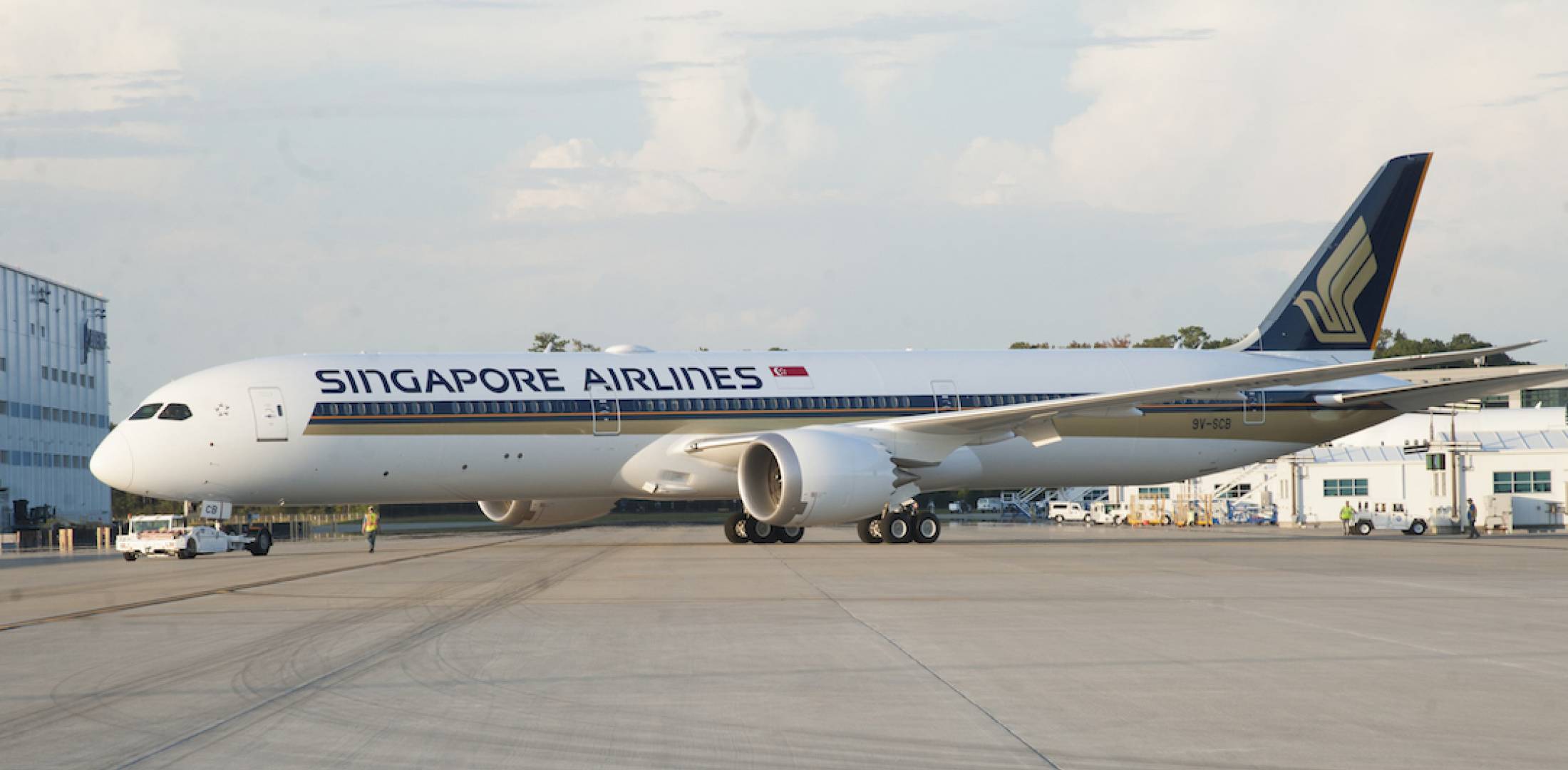
    Singapore Airlines welcomed the world’s first 787-10 aircraft as it arrived in Singapore from Boeing’s production facility in North Charleston, South Carolina.

    The newest variant of Boeing’s Dreamliner family of aircraft was received at an arrival ceremony at Changi Airport graced by Singapore’s Coordinating Minister for Infrastructure and Minister for Transport, Mr Khaw Boon Wan, together with beneficiaries from the Association for Persons with Special Needs (APSN) Katong School and other invited guests.

    Guests who attended the event also had the opportunity to witness the unveiling of SIA’s next generation regional cabin products, which will be fitted on the new 787-10s. They include all-new Business Class seats which recline into fully-flat beds.

    “The 787-10 is designed with the latest in technological innovations and SIA is proud to be the launch customer for this newest and largest variant of Boeing’s Dreamliner family,” said Singapore Airlines CEO, Mr Goh Choon Phong, who travelled on the delivery flight from North Charleston.

    “With the unveiling of our new regional cabin products, today’s milestones represent Singapore Airlines’ commitment and dedication to providing our customers with a premium travel experience like no other.”

    SIA’s 787-10s will be used on flights up to eight hours and will commence scheduled service between Singapore and both Osaka and Perth in May 2018, with more destinations to be added as additional aircraft are received. Prior to these services, the aircraft will be operated on select services to Bangkok and Kuala Lumpur for crew training purposes.

  • Singapore Airlines planning new first-class offering that will set industry standard

    Singapore Airlines planning new first-class offering that will set industry standard

    Singapore Airlines is developing a first-class offering for its new Boeing 777-9 planes that the carrier’s chief promises will set an industry standard.

    The planes, 20 of which SIA has ordered, are due for delivery from the 2021/22 financial year.

    The new first-class offering is currently in the conceptualisation stage. Said the airline’s chief executive Goh Choon Phong: “We believe when we launch it, we will set an industry standard.”

    The Boeing 777-9 will replace SIA’s 777-300ER planes.

    Mr Goh said: “(SIA will) be going out to our consumers and customers to get better ideas about what it is they really want in the next quantum leap of service and product.”

    The plans are part of the airline’s strategy to woo customers with new seats and features, among other service and product enhancements.

    It launched new cabin products for the Airbus 380 late last year. New cabin products for Boeing’s latest Dreamliner variant, the 787-10, will debut on Wednesday (March 28), with the arrival of the plane in Singapore. SIA is the first airline to operate this model.

    Mr Goh was in the United States to collect the first of SIA’s order of 49 B787-10 planes on Sunday from the airplane maker’s Dreamliner production facility.

    Speaking to reporters in North Charleston, South Carolina, on Monday, Mr Goh also revealed that SIA is eyeing a third route on which to deploy a new ultra-long-range (ULR) aircraft it will receive in the second half of this year.

    This is in addition to the relaunch of non-stop flights to New York and Los Angeles with this new aircraft.

    When asked about plans for the new Airbus 350-900ULR – which SIA will be the first airline to operate – Mr Goh said there is potentially one more destination that the carrier has “firm plans” for. However, he declined to reveal what the destination could be.

    With the Airbus 350-900ULR – which SIA has ordered seven units of – the carrier will resume the 19-hour flights to New York and 14-hour trips to Los Angeles that it scrapped in 2013.

    The flights were started in 2004, but the 2008 financial crisis, coupled with rising fuel prices, made the routes unsustainable.

    United Airlines launched a Singapore-Los Angeles service last October, but SIA is undeterred.

    “We think that Los Angeles is a good market, and our customers continue to tell us that they would like to have direct flights to Los Angeles… It’s part of competition, we are not afraid of it,” Mr Goh said.

    During a wide-ranging interview on the SIA group’s strategy and market positioning, Mr Goh said the coming financial year will see significantly more growth for parent carrier SIA.

    From 2011 till 2015/2016, SIA was not growing a lot, because of the transition period when planes were retrofitted with premium economy products, leading to a reduction in seat count for aircraft, said Mr Goh.

    “At the same time, we were waiting for aircraft with the right capabilities, like fuel efficiency, for us to grow in a commercially viable manner.

    “So when the A-350s and 787s were available, that’s how you see that we are beginning to again get back to the growth phase for the parent carrier.”

  • Luxury first-class suites coming to Singapore Airlines A380s

    Luxury first-class suites coming to Singapore Airlines A380s

    Luxury suites are coming to Singapore Airlines’ fleet of A380s. Starting in December, the carrier will offer passengers the option of flying in six suites configured on the plane’s upper deck.

    “Intimate privacy” is how the the airline describes the suites in a news release. Each will feature a lie-flat bed and a leather chair, upholstered by Italy’s Poltrona Frau, that reclines too. This way you don’t have to deconstruct your bed if you want to sit up and read or work on your laptop.

    Amenities include a 32-inch monitor, a private closet, an amenity box to stow your small items, mood lighting and two lavatories, one with a vanity.

    The suites will debut in December on five new aircraft; 14 existing planes will be retrofitted with the suites. Price tag for the redesign of 19 A380s: about $850 million, the airline’s release said.

  • Singapore Airlines Cargo feted at Payload Asia Awards

    Singapore Airlines Cargo feted at Payload Asia Awards

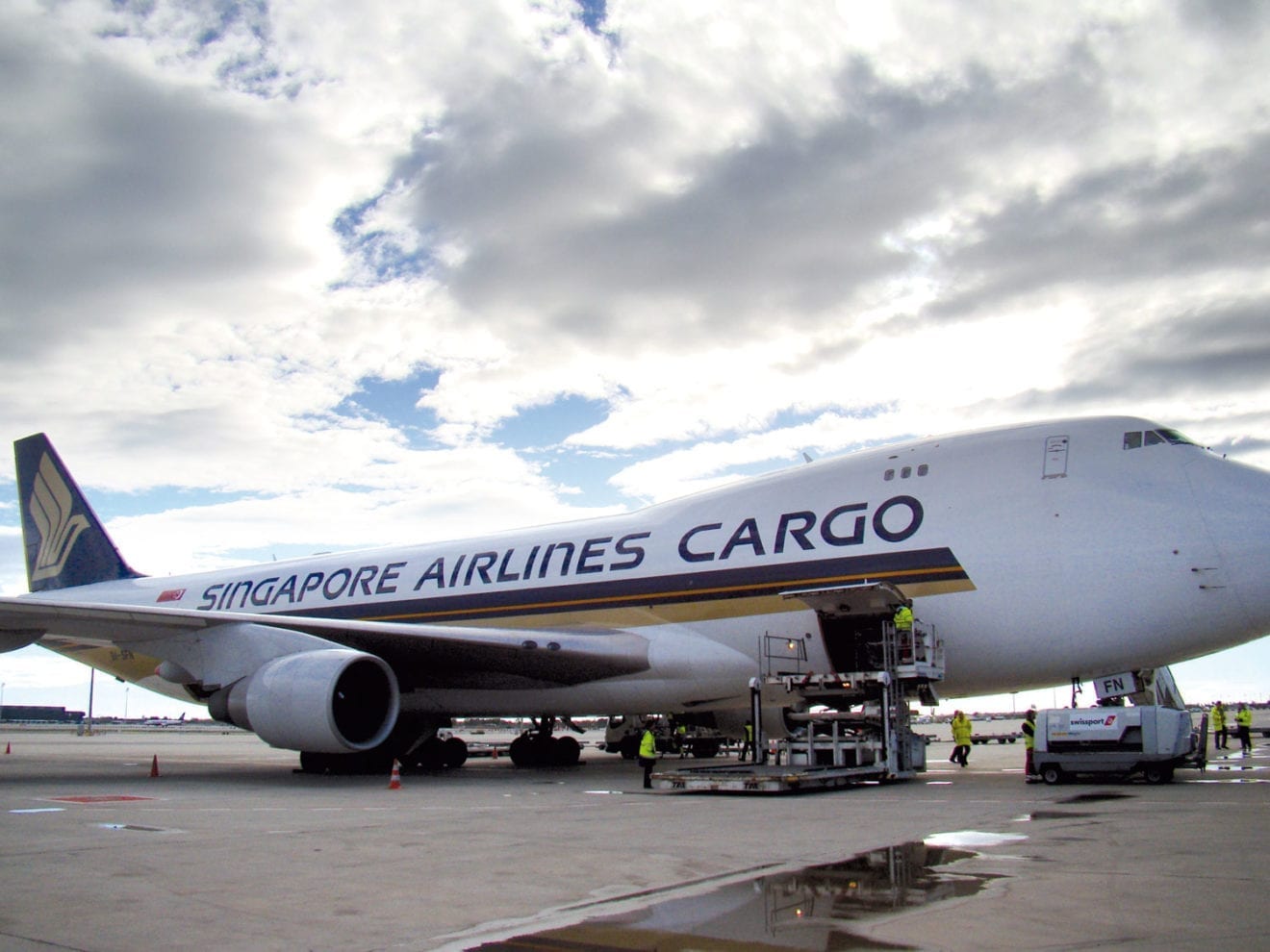
    Singapore Airlines Cargo was named Combination Carrier of the Year in the Customer Choice Awards category at the 2017 Payload Asia Gala Dinner and Awards Ceremony. The hallmark event, held at the Crowne Plaza Changi Airport on 12 October 2017, featured award categories voted by key stakeholders in the logistics business, reflecting the true voice of the industry.

    On the win, Chin Yau Seng, president of Singapore Airlines Cargo, said: “We are grateful to our customers for this vote of confidence in our service performance and efforts to stay responsive to their evolving needs. This award will serve as additional inspiration for our team to continue to seek greater heights in service excellence and product innovation.”

    Daniel Foong, regional vice president of East Asia was present at the ceremony to receive the award on behalf of the company.