Tag: Singapore

  • McDonald’s Singapore is turning Japanese

    McDonald’s Singapore is turning Japanese

    McDonald’s Singapore is turning Japanese, launching a Ninja Burger and reviving its Samurai Burger. To promote the two offerings, it has launched an “Honour Your Appetite” marketing campaign.

    Senior director of marketing, menu and digital innovation Agatha Yap says the Ninja Burger expands the brand’s variety of Japan-inspired promotional flavours, which kicked off with the Samurai Burger for a short while only in the late 1990s.

    To promote the return of the Samurai Burger, McDonald’s released a commercial featuring a fight between two samurais in a forest.

    Meanwhile, McDonald’s Singapore has started using UberEats so customers can order home delivery, which MD Kenneth Chan says will complement the fast-food chain’s 24-hour McDelivery platform.

  • Terminal 4 brings new retail brands to Changi Airport

    Terminal 4 brings new retail brands to Changi Airport

    Changi Airport retail has received a boost, with some 20 new retail brands making their debut at the new Terminal 4 (T4) which opened yesterday.

    The retail mix at the terminal, which was five years in the making, spans 81 shops, 62 of them retail and service outlets and 19 food and beverage operators. About a quarter of them are making their Changi Airport retail debut.

    Centrestage are integrated cosmetics and perfumes and liquor and tobacco stores operated by The Shilla Duty Free and DFS respectively. In a first for the airport, shoppers are able to pay for all their purchases from the two stores in a single transaction.

    In the departure transit area, there are several “double volume retail outlets” with frontages spanning up to 11 metres high.

    One of the main retail attractions at T4 is the Heritage Zone, with its facades of old Singapore shop houses, as well as the row of F&B outlets exuding nostalgia through their local delights and old-school furnishings. They serve up traditional Singaporean breakfast and snack items such as kaya toast, mee siam and kopi. At Live Prata Station, Indian roti is prepared right in front of customers.

    “We have received very encouraging feedback from passengers that the offerings curated for T4 are refreshing and bring a new dimension to shopping and dining at Changi Airport,” said Teo Chew Hoon, CAG’s group senior VP for airside concessions.

    “Our commercial team has paid attention to bringing in innovative concepts and new experiences for passengers spanning a range of categories, from the live cooking stations for prata and BBQ pork, to the sampling of cocktail mixes and the test-flying of drones. We will continue to work with our tenant partners to create a fun, vibrant and positively surprising experience for passengers and visitors at T4,” she said.

    On its first day of operations yesterday, following extensive testing, the terminal handled 19 arrivals and departures, carrying about 4200 passengers. Cathay Pacific and Korean Air are the first two of nine airlines scheduled to use the new facility.

    Tan Lye Teck, Changi Airport Group’s executive VP for airport management said the new terminal will increase Changi Airport’s capacity by 16 million passenger movements per annum, taking the total capacity to 82 million.

    Japanese theme

    Meanwhile, Changi Airport retail welcomed a Japanese Farmers Market to Terminal 3 last month, along with other retailers.

    Located in the Departure Hall, the market sells an extensive range of produce including Wagyu beef cuts, fruits, and bento boxes imported from Japan.

    Across from the Farmers Market, Kalms’ automated retail machines offer a range of gifts such as flower bouquets, soft toys and jewellery.

    And in the public area of T3, local beverage store LiHo opened its first airport outlet last month.

    In Terminal 1’s transit area, Michael Kors opened its second Changi Airport store.

  • AirAsia, Singapore’s SATS form ground handling partnership

    AirAsia, Singapore’s SATS form ground handling partnership

    Airasia is entering into a ground handling services joint venture with Singapore-listed ground handling and in-flight catering services provider SATS Ltd with the aim of growing the operations across the Asean region.

    This would be effected through a share swap agreement and a share sale agreement which will see AirAsia and SATS owning a 50% stake each in Ground Team Red Holdings Sdn Bhd (GTRH), the low-cost carrier told Bursa Malaysia.

    SATS is swapping an 80% equity interest in unit SATS Ground Services Pte Ltd (SGS Singapore) for an 11.4% stake in AirAsia’s unit GTRH. AirAsia will sell a further 38.6% stake in GTRH to SATS for S$119.3mil (RM370.97mil) in cash.

    At the same time with the share exchange, AirAsia will transfer 98% of Ground Team Red Sdn Bhd (GTR Malaysia) – which provides ground handling services in Malaysia – to GTRH, which (as mentioned above) will also hold 80% in SGS Singapore, which will serve SATS’ customers at Changi Airport’s new Terminal 4 (to open Tuesday).

    AirAsia will hold directly 2% in GTR Malaysia and 20% in SGS Singapore.

    According to AirAsia, it will realise a gain on disposal of RM365.7mil in the fourth quarter of this year following the sale of the GTRH stake.

    The airline also said the partnership with SATS would foster greater efficiency and cost savings to its ground handling operations.

    “This will facilitate growth of AirAsia, with SATS bringing in the necessary expertise and skills set to create a synergy which will enhance the ground handling business,” it explained.

    In a joint press statement, AirAsia and SATS said GTRH would be renamed SATS Ground Team Red Holdings Sdn Bhd.

    AirAsia and SATS, responsible for growing the ground handling business in their respective markets, would also explore expansion into Indonesia, the Philippines and Thailand in the near future, the statement said.

    AirAsia group chief executive officer Tan Sri Tony Fernandes said: “Today, we are very pleased to announce that two home-grown companies have partnered together to form a new Asean joint venture.

    “We believe this joint venture will allow AirAsia to unlock significant value and grow it as we have done with AirAsia Expedia, our aviation academy Asian Aviation Centre of Excellence and later this year, our leasing arm Asia Aviation Capital. Our assets are very valuable and slowly people are beginning to see the true value of AirAsia, as today’s announcement proves.”

    SATS, through wholly-owned subsidiary SATS Investments, also has an in-flight catering service partnership with Malaysia Airlines Bhd (MAB).

    SATS owns a 49% stake in Brahim’s SATS Investment Holdings Sdn Bhd, which in turn owns 70% in Brahim’s  SATS Food Services Sdn Bhd (BSFS). The remaining 30% equity interest in BSFS is held by MAB.

    BSFS, whose main customer is MAB, is the principal in-flight catering service provider at both Kuala Lumpur International Airport and Penang International Airport. It also provides cabin handling services covering laundry services for pillows and blankets, filling the cabin trolley with items for in-flight sales as well as providing passenger headsets, newspapers and periodicals.

  • Singapore Christmas village planned for Orchard Road

    Singapore Christmas village planned for Orchard Road

    Drawing inspiration from Europe, a Singapore Christmas village featuring pop-up stores from 25 brands, will make its debut at the annual Orchard Road light-up this year.

    Outside Ngee Ann City from November 25 to Christmas Day, the village will feature such brands as Fish & Co, Starbucks and Toast Box, with Singapore’s first-ever duplex carousel.

    “Christmas villages are very popular in Europe,” says Orchard Road Business Association (Orba) chairman Mark Shaw. “It will be a good opportunity for retailers to reach out to customers.”

    Running from November 11 to January 1, the ninth edition of Christmas on a Great Street will be themed “Endless Wonder”. Highlights will include the event’s highest-ever main arch, reaching 12m, outside Ion Orchard and a 5m Enchanted Tree installation outside Wisma Atria.

    Activities along the 2.8km stretch between Plaza Singapura and Tanglin Mall will start earlier this year, at 3pm rather than 6.30. There will be daily performances from bands, carol singers and roving cosplayers.

    Shaw says LED lights will enhance the installations even in the afternoon. Each of the 1200 hanging globes to be strung on trees comprise coloured fabric intertwined with LED fairy lights.

    Other attractions include the Walk of Wonder, a 12m-high 20m tunnel outside Forum the Shopping Mall made from reflective fabric and fairy lights.

    A 4.5m Tree of Time in front of Ngee Ann City will be topped with a countdown-to-Christmas Day clock, and will be the backdrop to a Christmas Eve concert featuring bands and a midnight pyrotechnics show.

    Orba expects the event to draw 3.6 million visitors this year. While this appears to be a sharp drop from the 6 million visitors counted last year, the association says it is introducing a new calculation method. In previous years, anyone who entered the event area would be counted as a visitor, but from this year visitors will be asked if they are there specifically for the event.

  • ‘Robust’ quarter for Suntec REIT

    ‘Robust’ quarter for Suntec REIT

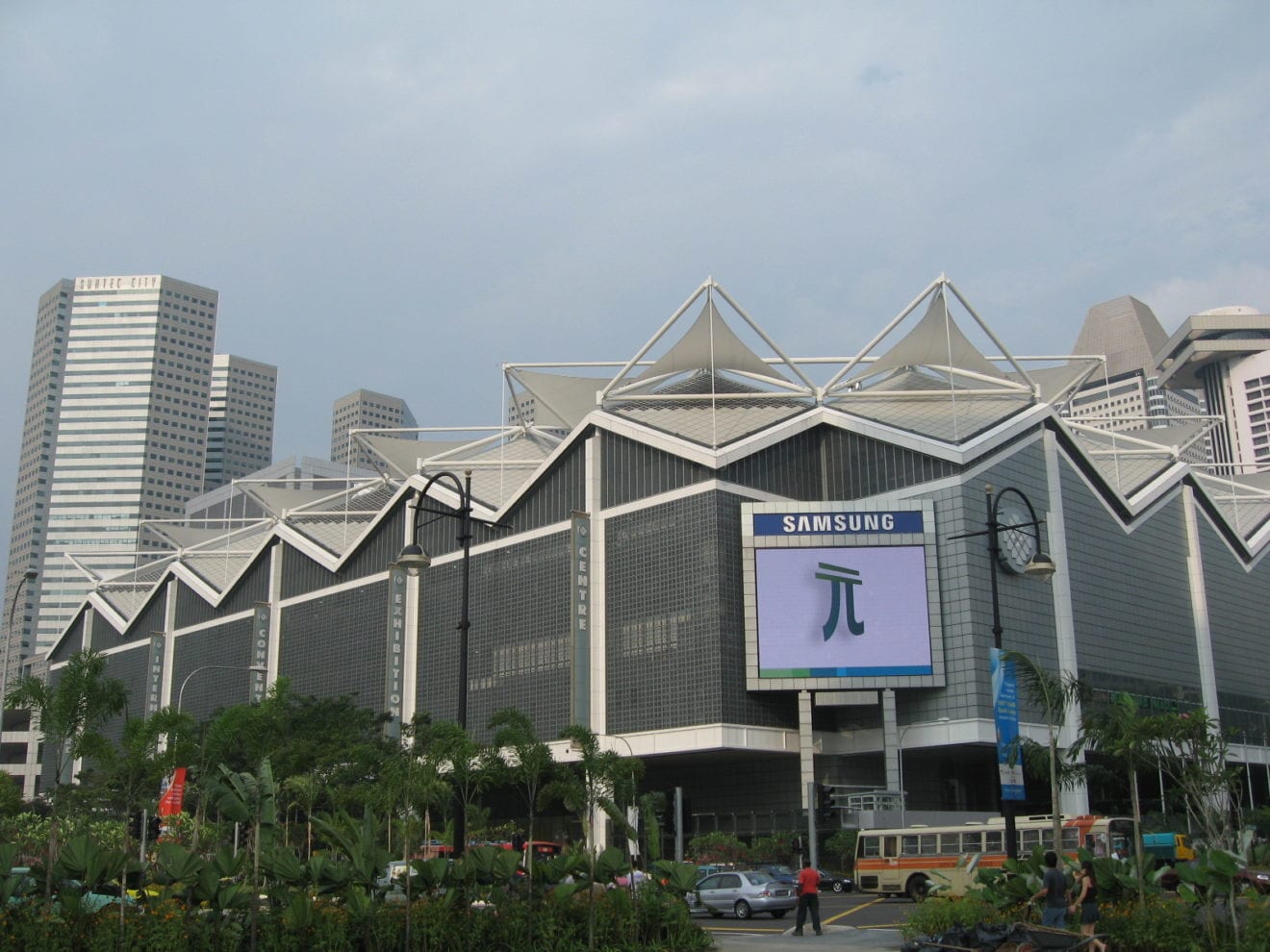
    Suntec Real Estate Investment Trust (Suntec REIT) reports a “robust” third-quarter performance, thanks to offshore properties.

    Gross revenue rose 10.6 per cent to S$91.1 million (US$66.7 million) for its third quarter, mainly because of a higher contribution from Suntec Singapore plus a new property in Sydney, says trust manager ARA Trust Management (Suntec).

    Net property income rose 11.6 per cent to $63.9 million for the quarter, while for the year to date, gross revenue was up 11.4 per cent to $266.9 million and net property income grew by 13 per cent to $185.1 million.

    “While the Singapore assets continued to deliver steady income, the two properties in Australia contributed to our robust performance this quarter,” says ARA Trust Management CEO Chan Kong Leong.

    For the Singapore retail portfolio, the overall committed occupancy as at the end of September was 99.1 per cent. The committed occupancy for Suntec City Mall was steady at 99.3 per cent while that for Marina Bay Link Mall stood at 93 per cent.

    Chan says Suntec City Mall saw a 12.2 per cent increase in year-to-date footfall while tenant sales per square foot grew by 4.9 per cent.

    “We also secured a number of new-to-market brands that will further enhance the city’s retail offerings.”

  • Oracle to accelerate Singapore cloud startups

    Oracle to accelerate Singapore cloud startups

    Oracle has launched a new six-month Oracle Startup Cloud Accelerator program in Singapore, announcing the class of six startup participants selected from hundreds of applicants.

    They are Arya.ai, FlexM, FOMO Pay, Hacker Trail, RL Club, and Unscrambl. These startups leverage new technology solutions across industries such as retail, recruitment, and finance.

    Arya.ai is an enterprise deep learning platform designed to automate complex data science tasks involved while building neural network based application or predictive models and in production.

    FlexM is a fast-growing Singapore-based fintech company working toward the financial inclusion of migrant and foreign domestic workers.

    FOMO Pay is a one-stop QR code payment solution platform that enables merchants to accept a full suite of new payment methods including WeChat Pay, NETSPay, mVISA, and more.

    Hacker Trail is a curated, cloud-based marketplace for the technology industry, designed to source, engage, curate and connect the right candidates with the right job opportunities across Southeast Asia.

    RL Club is a rewards and loyalty club mobile app that rewards consumers for brand engagement and advertisement consumption.

    Unscrambl is an Atlanta-based startup that has developed a disruptive, next generation real-time cognitive analytics platform.

    The startups will be granted technical and business mentoring by Oracle and industry experts, state-of-the-art technology with free Oracle Cloud credits, full access to a co-working space within Oracle’s premises, as well as access to Oracle’s global ecosystem of startup peers, customers, investors and partners.

    “Singapore has a vibrant entrepreneurial ecosystem and we received a brilliant response from the community,” Oracle group VP of R&D Sanket Atal said.

    “These startups are an exciting mix with expertise in artificial intelligence, machine learning, deep technology, payment gateways and other disruptive technologies.”

    Launched in April 2016, the Oracle Startup Cloud Accelerator Program is a next-generation acceleration initiative driven by Oracle R&D. The program focuses on reimagining enterprise innovation through collaborations with startups that foster co-development and co-innovation.

  • Lumine Singapore features fashion plus food

    Lumine Singapore features fashion plus food

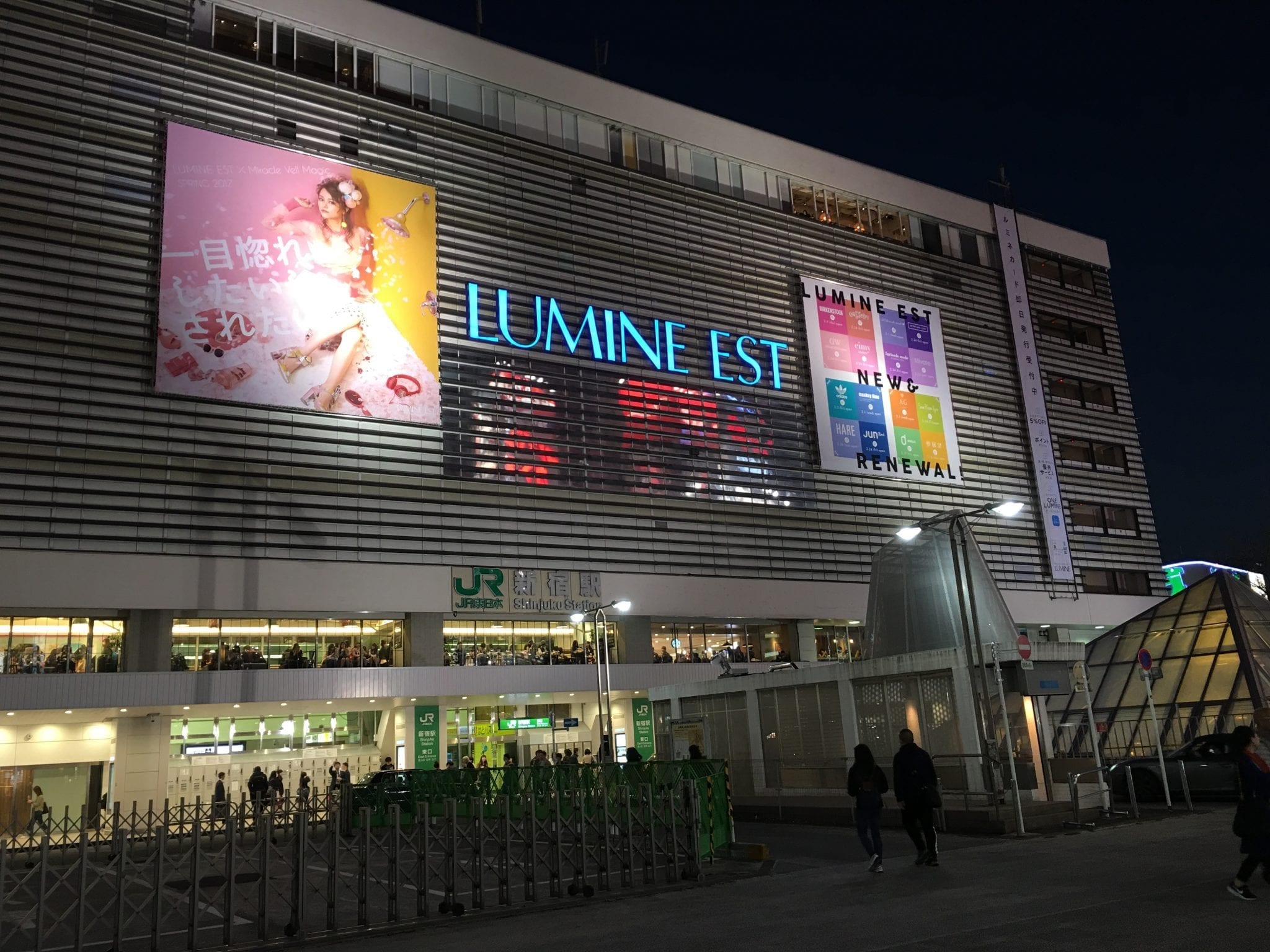
    Japanese fashion and food both feature in the new Lumine Singapore fashion mall in Clarke Quay Central.

    For its launch, in line with its philosophy “I am who I am”, the mall invited Japanese and Singapore personalities known for their individuality.

    “Singapore is an important milestone in our business plan because it is an important gateway to the Asian market and pivotal in positioning the brand on the world map,” says Lumine Singapore MD Naokazu Kozakai.

    With expertise in direct management and subleasing, plus access to more than 2200 tenants in its malls, Lumine intends its Singapore mall to be a platform for Japanese brands to jumpstart their entry in the city and other markets in the region.

    As tipped in July, the 10,000sqft (930sqm) specialty lifestyle store targets independent, sophisticated women, offering the same shopping experience as its 15 malls in Japan. Included is Lumine cafe, which will be run by Create Restaurants Asia.

    Lumine Singapore offers a collective of 20 fashion brands that are iconic in Japan including Fray ID, Ien, Lagunamoon, Lily Brown, Mila Owen, Moussy, Sly, Snidel, Spick & Span, Tomorrowland and Ungrid. There are also shoes and accessories from Drama HP France, Le Talon and RoomsShop, plus exclusive Zoff eyewear.

    A brand incubation program is part of Lumine’s business strategy. “We have created a space as a testbed for Japanese brands in the new store called Lumine Lab,” says Kozakai. “It aims to share and explore the diversity in Japanese fashion and craftsmanship.”

    Featuring first in the space are influencer-based Japanese brands including And Couture, Emoda, MercuryDuo, Murua and Rienda.

    Among women attending the official opening were musician/entrepreneur Aarika Lee, entrepreneur Savina Chai, food artist Suwa Ayako, model/DJ Una and musician Yuuki (YJY).

  • Singapore retail rent decline ‘moderated’

    Singapore retail rent decline ‘moderated’

    Fresh research from real estate house Edmund Tie & Company suggests the decline in Singapore retail rents has moderated.

    Dr Lee Nai Jia, head of research with Edmund Tie, says the retail leasing market remained subdued in the third quarter, despite the decline easing.

    “While e-commerce and the accessibility to shopping havens in neighbouring countries continue to affect retailers and the overall retail market, the impact seems contained for now,” he said in a research note.

    “In fact, we see more online shopping portals adopting the brick and mortar strategy, such as Reebonz.

    “Separately, local retailers are engaging consumers via omni-channels.”

    In the short term, Jia predicts food and beverage operators and educational institutions will most likely form the bulk of demand for retail space.

  • Aerin Beauty introducing its fragrances

    Aerin Beauty introducing its fragrances

    Lifestyle brand Aerin Beauty has arrived in Singapore, introducing its fragrance collection at The Shoppes at Marina Bay Sands.

    Founded by Aerin Lauder, a granddaughter of Estee Lauder, the brand also has beauty and home decor products, which may be introduced later.

    There are nine scents in the collection, each available as eau de parfum sprays or rollerball bottles as well as body creams.

    Each bottle has been designed drawing inspiration from the founder’s everyday life and featuring natural elements such as flowers and stones.

  • Singapore eyewear market looking at U$400m, says report

    Singapore eyewear market looking at U$400m, says report

    The Singapore eyewear market is expected to reach US$400 million in value in the near future, says a new study.

    The Ken Research report notes amplified demand for premium eyewear brands as consumer awareness grows, with an emphasis on individualisation.

    “The market is transitioning toward a large number of diverse products and short product cycle,” says Singapore Eyewear Market by Type (Spectacles & Contact Lenses), by Sunglasses and Eyeglasses and by Sales Channel – Outlook to 2021.

    Also, the market is set to benefit from a $49 billion merger announced by spectacles maker Luxottica and lens manufacturer Essilor, especially with an expected strong demand for prescription spectacles and sunglasses because of an aging population and increasing awareness about eyecare.

    The research also notes a 1.3 per cent increase in people with myopia. The aging population has also strengthened demand for spectacles to correct presbyopia and for ready-made reading glasses. Presbyopia has increased by 3.3 per cent.

    Despite continuous growth over the past five years, e-commerce has only a meagre share of the Singapore eyewear market, says the study.

    While more than 75 per cent of customers prefer to buy eyewear products at optical shops, higher use of mobile devices and the internet have encouraged major companies to start offering their products online, the latest being Owndays and Zoff.

    The report also provides information on frames, glass, contact lenses and distribution channels as well as major industry players.

  • Singapore named most robust data center market

    Singapore named most robust data center market

    Despite a large amount of supply coming through 2015–2016, the data center market in Singapore continues to lead some of its large neighbors in the Asia-Pacific (APAC) region in a race to the top of data center location rankings.

    According to Cushman & Wakefield’s Data Center Risk Index, Singapore is the most robust market out of 10 Asian countries in terms of business operations for data centers. Out of 10 Asian countries included in the index, Singapore scored 84.50 out of 100, ahead of Korea (83.23), Hong Kong (78.73) and Japan (76.48).

    The Data Center Risk Index identifies the top risks likely to affect data center business operations. It considers such criteria as energy, internet bandwidth, ease of doing business, political stability, natural disaster and energy stability.

    Singapore ranks strongly for network infrastructure, diverse connectivity to major APAC markets, its pro-business environment and political stability.

    Singapore has seen an influx of new data center capacity in the last two years, with an additional 130 MW on top of the existing capacity of 240 MW at the beginning of 2015.

    There has been some price and vacancy pressure, particularly among smaller data center players.

    However, over the medium to long term, Singapore should be able to expand its capacity by another 100 MW on the back of the Smart Nation initiative, as the government pushes for a national digital transformation program.

    Local data center providers such as Singtel, Keppel Data Centres and ST Telemedia stand to be the primary beneficiaries of this, while the international data center providers will continue to focus on winning international deals from medium to large enterprises coming into Singapore.

  • M1 launches 10Gbps symmetrical PON

    M1 launches 10Gbps symmetrical PON

    Singapore’s M1 has upgraded and expanded its suite of services for corporate customers, including through the introduction of the world’s first 10Gbps symmetrical passive optical network.

    The new symmetric PON service will allow M1 to provide low-latency 10Gbps symmetrical speeds with guaranteed bitrates across Singapore, for applications including SDN, cloud computing and 4K or 8K video transfers.

    In addition, M1 has introduced a new unified operations monitoring centre to provide real-time information on both network service and public or private cloud IT infrastructure to enterprise customers.

    This will include early warning of impending equipment failure to allow companies to conduct proactive maintenance to rectify potential faults before they occur.

    Finally, M1 has expanded its fiber network to the famous Shenton Way and Orchard Road major streets and the Buona Vista housing estate in Singapore.

    This will allow the operator to offer high-speed corporate connectivity services to more than 55 shopping malls, offices and commercial buildings in those areas.

    “The corporate segment is a key growth sector for M1, and we have accelerated our investments in technology, infrastructure and expertise to better serve our customers,” M1 chief corporate sales and solutions officer Willis Sim said.
    “With the successful launch of our symmetrical PON solution, next-generation unified operations monitoring centre and fibre to the building infrastructure, M1 can offer advance customised high bandwidth connectivity to meet the growing requirements of Internet of Things, smart nation, cloud and big data solutions from our customers.”

  • Telcos must transform service delivery: MyRepublic CIO

    Telcos must transform service delivery: MyRepublic CIO

    Founded in 2011, MyRepublic is best known for being the first ISP in Singapore to launch 1Gbps broadband plans at mass-market pricing. Seen somewhat as a disruptor, the Singaporean brand is now active in 4 markets in the region. Within the next two years, the company has plans for an IPO and already has teams actively looking for partnership opportunities for four further expansions. Potential sites include Cambodia, Myanmar, Malaysia, Philippines and Thailand.

    Eugene Yeo, Group CIO at MyRepublic, has been a part of the company since its earliest days, and started coding when he was in his early teens, he told Enterprise Innovation in an exclusive interview. But “rather than go to university and get a degree in IT, which I felt was not going to value add, I felt that I wanted to foray into something different,” he revealed. Yeo attended SMU to study business administration, which allowed him to learn about managing business, running an organization, and growing a team.

    Early adopters of cloud

    “We are firm believers of using IT as a strategic tool to make sure our company remains innovative and a disruptor, staying ahead of everyone,” said Yeo. “As we grew the company over the last 5 years, we realized that there was a huge potential. The way we do things is very different from the incumbents,” said Yeo. “Embracing open source, embracing technologies out there to help us become more agile and efficient …we realized that there’s huge value in them and that there’s potential to grow the business into something much bigger.”

    As a firm believer of utilizing IT to stay ahead of the competition, MyRepublic adopted cloud technology even before the idea of cloud infrastructure gained wide traction. This significantly differed from other telcos that had invested heavily in legacy infrastructure, according to Yeo.

    They also developed their own business support systems (BSS) and operations support systems (OSS), believing this to be a move critical to their agility as a company. MyRepublic originally adopted public cloud for their BSS and OSS stack, but placed network-critical applications on traditional VMs in their data centers.

    Eventually, their infrastructure evolved to be cloud native. Yeo highlighted: “We really wanted to move to a hybrid cloud infrastructure across the organization and leverage an on-premise private cloud to supplement our public cloud strategy.”

    MyRepublic started their first on premise cloud in Australia, and have now brought it across to their centers in Singapore and Indonesia, moving all core network applications onto the on-premise cloud. Setting their foundations in cloud allowed MyRepublic to scale flexibly and expand rapidly into new markets – taking fewer than 60 days for their Australia and New Zealand markets.

    “Because we already had our foundation set with cloud, for us to be able to scale from 300 thousand [cutomers] to a million to 5 million isn’t really a big challenge”, said Yeo. “Even though we are a fairly young company, we believe in continuous improvement, and we’re actually embarking on our own transformation program internally. We’re embarking on what we call a customer experience transformation within the entire organization – to make sure that customer-centric culture is right at the root of MyRepublic.”

    Emphasis on open source

    Apart from being a firm believer in the cloud, Yeo is also a staunch supporter of open source, and partnered with RedHat to deploy OpenStack earlier this year.

    MyRepublic’s open source journey started when they introduced their engineers to the open source community to kick-start their understanding on how the technology worked, what potential challenges might be faced, and the general sentiment of the community through feedback. MyRepublic started with three engineers – but now with a team of 70 – 80 engineers, Yeo believes the time has come to contribute heavily back to the community.

    “We would have never got to the first version of our software without open source – from open source databases, to open source libraries, workflow engines etc. These actually helped us get to the next level faster,” said Yeo.

    With internet giants likes Facebook and Google being very active in the open source community, there has been massive ratcheting up of input into the open source space over the past few years. To this, Damien Wong, Vice President and General Manager, ASEAN, Red Hat, added: “Innovation is still happening in the proprietary space. I don’t think open source is the only way of innovation, but I think that it has gained such momentum that it cannot be ignored by any organization.”

    The evolving telco industry

    Arguably, the telco industry is traditionally one of the most conservative industries when it comes to innovation, disruption and transformation, Yeo believes. With disruptive technologies such as cloud, open source, 5G, machine learning, and IoT looming on the horizon, the telco industry is transforming to keep up with the times.

    Traditional means of texting and calling are a thing of the past, replaced by alternative platforms – such as WhatsApp, Telegram, and Facebook Messenger – powered by mobile data. The rise of smartphones and the power to consume applications also changes the needs and requirements of customers. In the telco space, it is apparent that telcos are trying to move from being communication service providers to becoming digital service providers.

    “You want services provided by the service provider to be intelligent, relevant, affordable, and accessible – all those attributes have to be there. With all the technologies that have evolved and been created… I think it is quite clear that telcos are moving from hardware-based infrastructure to software-based infrastructure for reasons of agility,” said Wong. “Moving forward, we are going into 5G, and people who can capitalize on that 5G infrastructure are going to be extremely successful.”

    In the shorter term – over the next 3 years or so – telcos need to become very efficient in the way that they deliver their services, according to Yeo. Connectivity is going to become a utility like water or electricity. “It’s not about optic fiber, mobile SIM, etc – people don’t care. In the end, they just want to be connected. That’s really the value proposition and the demand from the consumers. They just want connectivity in the fastest and most affordable way, and don’t care how you deliver it to them. Telcos need to understand that and know how to create the efficiency in that space,” he said.

    “We are moving to the data world, and data is money,” said Yeo. “There will come a day where you don’t need to pay for a SIM card, because your data will already pay for that connectivity. Telcos’ business models have to evolve – I see that telcos are going to start moving towards monetizing the data that they get, figure out how best to innovate using that data, and then use that data to fund the growth of the business.”


  • Singtel unveils managed SDN solution for enterprises

    Singtel unveils managed SDN solution for enterprises

    Singaporean incumbent carrier Singtel has launched a new network solution to support enterprises’ evolving networking needs across the globe.

    The new solution, touted as Singtel Managed Software-Defined Branch (Singtel SD Branch), is delivered through a “white box” or generic hardware that enables enterprises to manage multiple and virtualized network functions at their existing sites or when they expand into new branch offices, Singtel said in a statement released Monday.

    Goh Boon Huat, vice president of global products at Singtel Group Enterprise said the new managed SDN solution is designed to help enterprises to tackle challenges of complex hybrid WAN architecture encompassing private and public Internet networks.

    “Singtel SD Branch provides a way to spin up and take down services seamlessly, offers full service visibility and manageability up to the application layer. This simplifies their WAN infrastructure, enabling agile managed network solutions to keep pace with growing business needs in different geographical regions,” Goh said.

    With Singtel SD Branch, enterprises are assured of enhanced security and optimal performance of their networks and applications.

    They can better monitor network usage, issues real-time as well as add new functions, such as unified threat management, to the same hardware without incurring additional installation charges. These will in turn reduce their capital and operating expenditures, Singtel said.

    Singtel SD Branch is available globally and integrated with Singtel’s underlay assets of submarine cables, IP VPN network of 428 Points of Presence, and its Global Internet service in more than 200 countries.

    Developed based on the network functions virtualization (NFV) concept, Singtel SD Branch is the latest addition to Singtel’s suite of next generation SD network solutions following the launch of its SD-WAN in 2015 and cloud-based NFV service last year.

  • Singapore malls are primed for Amazon’s click de grace

    Singapore malls are primed for Amazon’s click de grace

    Singapore’s malls are one click away from irrelevance, though the investment trusts that own them are carrying on as if nothing has changed. The first hint of trouble showed up in January when department store John Little shut down after a 174-year run. Then, in July, Amazon.com Inc. introduced its two-hour Prime  Now delivery service, choosing the city-state of 5.6 million people as the testing ground to fine-tune its Southeast Asia ambitions.

    The landlords don’t appear all that perturbed; at least not yet. CapitaLand Mall Trust, the island’s biggest retail real-estate investment trust, announced 2.78 Singapore cents (2 cents) in dividends last week, unchanged from a year earlier. That’s an annual yield of almost 5.5 per cent at a time when the 10-year Singapore government bond offers only 2.2 per cent. The tantalising premium is keeping investors hooked.

    Even the analyst community is discounting the threat from online shopping: There are 13 buy recommendations on the CapitaLand Mall REIT, and not a single sell, according to data compiled by Bloomberg. But look under the hood, and there are signs that not everything is hunky dory.

    While all its malls are almost fully occupied, agreements at some of the bigger properties are being struck at increasingly lower rents. Forget a suburban property like Westgate in Jurong East, which has seen 17 per cent of leases signed at rents 10.5 per cent cheaper than three years ago; even marquee names like Raffles City, a prime Singapore landmark, are settling for less:

    Singapore’s economy grew 4.6 per cent in the third quarter from a year earlier, with the government estimating full-year expansion of between 2 per cent and 3 per cent. Yet CapitaLand Malls’ tenants — from food and fashion to supermarkets and services — reported negative or mediocre sales growth in the first nine months of 2017. You can expect entertainment and electronics, the categories where tenants are still doing well, to start feeling the Amazon effect when the online service is able to iron out its early wrinkles.

    Then there’s fintech. By some estimates, the Singapore banking industry’s space requirement could shrink by 30 per cent, or 6 million square feet, over the next decade. To the extent suburban malls like to house a bank branch or two to catch footfalls, they’ll be affected. Indeed, the sharp drop in the rental reversion rate at CapitaLand’s Tampines Mall — from growth of 0.6 per cent in the first six months to a decline of 4.3 per cent in the first nine — was because of a change in tenant mix from banking to food and beverages, according to OCBC Investment Research.

    Ahead of further increases in US borrowing costs, CapitaLand Mall Trust has reduced its balance-sheet risk by selling the serviced-residence part of Funan, a 1980s-vintage mall that used to specialise in electronics and is currently undergoing a costly redevelopment. By the time Funan reopens in 2019, there may not be anybody left on the planet who still goes to a store to buy a computer or a phone. So the new address will play host to everything from a homegrown theatre company’s auditorium to a test zone for drone photography.