Tag: Singapore

  • Dairy Farm sales stagnate

    Dairy Farm sales stagnate

    Dairy Farm sales were described as “flat” in the third quarter to September 30.

    The Hong Kong-headquartered company said improved performances in health and beauty, Ikea, restaurants and Yonghui were offset by lower sales in the food and grocery division.

    “The lower food division sales, together with new store pre-opening costs in home furnishings, (Ikea) led to underlying profits being marginally below the same period in the prior year,” the company said in a statement issued in London, where it has a secondary listing. “Similar trading conditions are expected to continue for the remainder of the year.”

    Dairy Farm said the weakness seen in food and grocery sales was principally driven by difficult trading for the hypermarket and supermarket operations in Southeast Asia, where it operates Giant hypermarkets and Cold Storage supermarkets. It says reviews of “a number of the businesses” are being undertaken.

    The results from greater China (including its Hong Kong Wellcome supermarkets) showed improvement over the same period last year. Convenience store operations (including 7-Eleven stores in Hong Kong and Singapore) produced improved sales and profitability.

    Yonghui reported a strong 20 per cent  growth in revenue and 131 per cent increase in profit in the quarter.

    Improved sales in the health and beauty division (Manning’s, Guardian and Rose Pharmacy) were driven principally by a strong performance in Hong Kong and Macau. Home Furnishings (Dairy Farm has the Ikea franchises in Hong Kong and Taiwan) traded well, although profitability was reduced due to pre-opening expenses for the new store in Hong Kong.

    Maxim’s (which also includes Starbucks operations in Hong Kong, Vietnam and Cambodia) had a seasonally strong quarter in both sales and profit, benefiting from record mooncake sales during the Mid-Autumn Festival period. In September, Maxim’s acquired the existing business and exclusive rights to operate and develop Starbucks franchise stores in Singapore.

    In August, the group completed the acquisition of the remaining 34 per cent interest in Rustan’s in the Philippines from its joint venture partner.

  • Temasek Holdings to enter online fashion

    Temasek Holdings to enter online fashion

    Singapore state investor Temasek Holdings has led a new round of equity funding for US second-hand fashion marketplace Poshmark.

    Poshmark plans to use the cash to expand its footprint across Asia, broaden its product categories and develop data-driven shopping experiences. It will also introduce its voice-enabled Stylist Match service. Accessed via Amazon Alexa, this aims to offer shoppers a personalised experience through engaging with seller stylists on its platform.

    Founded in 2011, Poshmark hosts about 5000 brands and sells up to 7 million items daily.

    The latest funding round raised US$87.5 million, led by Temasek, with support from GGV Capital, Inventus Capital, Mayfield, Menlo Ventures, Uncork Capital and Union Grove Venture.

    That takes the aggregate equity investment in the business to date to $160 million.

  • Singapore Transforms into Pharma and Medtech Hub

    Singapore Transforms into Pharma and Medtech Hub

    Singapore is undergoing a significant infrastructure upgrade as its regional and international reach gains prestige. Research and consulting firm, GlobalData estimates Singapore’s pharmaceutical market at $948 million and increasing to $1.2 billion by 2021. With an estimated population of just shy of 6 million, Singapore’s domestic pharmaceutical market is small. However, its regional and international reach is well noted thanks to its pro-business environment and strong government support.

    Over 30 of the world’s leading pharmaceutical and medical technology firms including Abbott, GlaxoSmithKline, Lonza, MSD, Novartis, Pfizer and Sanofi-Aventis, have established their manufacturing, R&D and headquarter functions in Singapore.

    In 2015, GlaxoSmithKline designated Singapore as its Asia headquarters. The rapid growth of sales in the five biggest economies of the Association of Southeast Asian Nations (ASEAN) prompted the company to concentrate more business units in Singapore.

    US-based healthcare firm MSD opened an $8 million center also in 2015 to focus on innovation through data mining as well as conduct cyber-security surveillance. In addition, the company plans to develop mobile applications that help people live healthier lives and improve how patients follow their doctors’ instructions on taking medication.

    Pharma partnerships

    In September 2017, Singapore’s Agency for Science, Technology and Research, the National University of Singapore and pharmaceutical companies, GSK, Pfizer and MSD, signed a memorandum of understanding to launch an initiative to develop the country’s pharmaceutical sector.

    The initiative, the Pharmaceutical Innovation Programme Singapore, aims to transform the manufacturing operations and technologies of the industry including embracing such initiatives as enabling green and sustainable manufacturing and developing a fully automated supply chain that can predict and react to patient needs and market trends.

    Logistics hubs

    The logistics community has responded to Singapore’s plan to grow its pharmaceutical industry. One such example is the partnership between Singapore’s airport, Changi Airport Group and several airfreight providers including Bollore Logistics, CEVA logistics Singapore, DHL Global Forwarding, dnata Singapore, Expeditors Singapore, Global Airfreight International, SATS, Schenker Singapore and Singapore Airlines Cargo to create the Pharma@Changi initiative. All of the airfreight providers have achieved the IATA Center of Excellence for Independent Validators Certification for Pharmaceutical Handling (IATA CEIV Pharma).

    “Over the last three years, pharmaceutical cargo has consistently ranked among the top five cargo types transported via airfreight globally, in terms of total value. 

    As part of Pharma@Changi, the companies have promised to jointly pursue the best standards in pharmaceuticals handling, and promote Singapore Changi Airport as a trusted and reliable pharmaceuticals air freight hub in the region. According to Changi Airport Group’s Managing Director for Air Hub Development Mr Lim Ching Kiat, “Over the last three years, pharmaceutical cargo has consistently ranked among the top five cargo types transported via airfreight globally, in terms of total value. In the first eight months of 2017, Changi Airport handled more than 15,500 tonnes of pharmaceutical cargo.”

    The Changi Airport Group is also part of Pharma.Aero, an alliance founded by the Brussels and Miami Airports. The group is committed to sharing best practices and market knowledge to improve pharmaceutical handling for the air cargo industry worldwide.

    In early 2016, global logistics provider, Kuehne + Nagel opened its Singapore Logistics Hub facility. Within the facility, 46,000 sqm of the 50,000 sqm facility is dedicated to warehousing space, and 40% of the facility is furnished with advanced chilled storage, redressing and postponement facilities to support the growing base of pharmaceutical and healthcare companies in Singapore.

    Also in 2016, DHL Supply Chain opened its logistics center in Singapore in anticipation of increases in pharmaceutical and high-tech air cargo traffic in the Southeast Asian region. The 90,000-square-foot facility incorporates 130 robotic shuttles to retrieve and store products from up to 72,000 locations arranged in 26 levels.

    Other logistics providers including UPS, CEVA and Schenker have also established a pharmaceutical logistics presence in Singapore.

    Singapore’s medical technology sector is also a major contributor to Singapore’s life sciences industry. Due to a lack of domestic competition in other ASEAN markets and the strategic geographical location of Singapore in the region, medical device companies often decide to set-up their headquarters in the city state. According to consultant group, Dezan Shira & Associates, 10% of the world’s contact lenses, over 70% of microarrays, and roughly half of the world’s thermal cyclers and mass spectrometers are currently produced in Singapore.

    Singapore is well-positioned to be Southeast Asia’s hub for not only pharmaceuticals but also medical technology solutions.

    Currently most of the products are destined for international markets, as the region matures, domestic demand will increase and balance demand and thus logistical requirements.

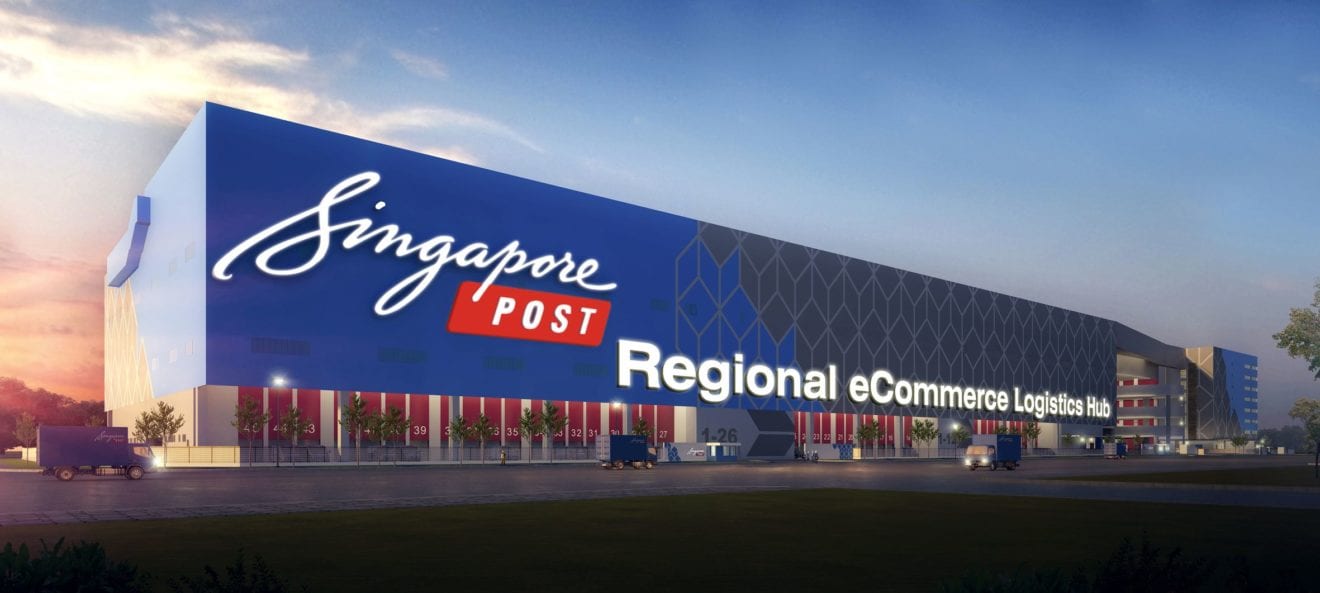
  • SingPost banks on e-commerce as Q2 net profit slips

    SingPost banks on e-commerce as Q2 net profit slips

    The e-commerce boom continued to prop up earnings at Singapore Post (SingPost), although it on Tuesday posted a fall in second-quarter profits, in the absence of a previous one-off gain.

    Net profit slipped by 9.5 per cent on the previous year, to S$28.47 million for the three months to Sept 30.

    But, with exceptional items excluded, underlying net profit was in fact up by 1.9 per cent, on the back of a 10.2 per cent rise in revenue to S$354.7 million. More than half of that sum – S$190 million, or 53.6 per cent – came from activities related to e-commerce.

    The postal service provider announced in August that it is going through a strategic review, and group chief executive Paul Coutts gave an update: “SingPost’s strategic vision of transforming from a postal provider to an e-commerce logistics player remains relevant and in the right direction.”

    Revenue was up by 16.9 per cent in the group’s postal segment, to S$148.3 million, on the back of more e-commerce deliveries. SingPost singled out China’s Alibaba Group – which owns marketplaces such as Taobao – as a key driver of international mail volume tied to online shopping.

    Meanwhile, logistics revenue increased by 7.6 per cent to S$165.9 million, spurred in part by higher last-mile e-commerce deliveries in Singapore and Australia, although profits were squeezed by the intense price competition in Hong Kong.

    The e-commerce division saw turnover dip by 0.8 per cent to S$63.48 million, largely from the poor performance of TradeGlobal, the United States firm that SingPost picked up in 2015 but has struggled to make money on.

    Mr Coutts said that SingPost is “fully focused on turning the company around”, particularly by drawing on best practices from its other American e-commerce unit, the “good-performing” Jagged Peak.

    This would include tapping automation to bring down manpower costs, he added: “We’re focused on moving from a labour-intensive organisation to being a technology-driven business.”

    Still, SingPost cautioned in its report that TradeGlobal is not expected to be profitable for the financial year ending March 31, 2018.

    Separately, cross-border e-commerce deliveries are expected to be hurt by upcoming changes in the international terminal dues system, although SingPost said that “mitigating measures” are under way.

    As margins are relatively low for international mail and domestic post drops amid a shift to electronic bills and statements, “blended postal margin is expected to decline”, it added.

    SingPost has declared an interim dividend of 0.5 Singapore cent a share, to be paid on Dec 8 – half the size of the one-cent dividend in the same period a year ago.

  • Singapore retail sales stagnate

    Singapore retail sales stagnate

    Singapore retail sales fell by a mere 0.2 per cent in September, compared to both the same month last year and August this year.

    SG retail sales September

    Including motor vehicles, sales fell 0.5 per cent year on year.

    SG FB retail sales September


    Sales of food & beverage services (seasonally adjusted) decreased 0.3 per cent year on year, with restaurant turnover down 3.7 per cent and fast food outlets, catering services and eating places up between 0.1 per cent and 8.3 per cent.

    Compared to September 2016, retail sales of computer and telecommunications equipment, furniture and household items, food, optical goods and books and by mini-marts and convenience stores declined by between 1.3 per cent and 7.4 per cent.

    However, retail sales by supermarkets and petrol service stations, of clothing and footwear, by department stores, of medical goods and toiletries, recreational goods and watches and jewellery increased between 4.4 per cent and 9.8 per cent year on year.

  • McDonald’s Singapore introduces mobile phone lockers, table service at Marine Cove outlet

    McDonald’s Singapore introduces mobile phone lockers, table service at Marine Cove outlet

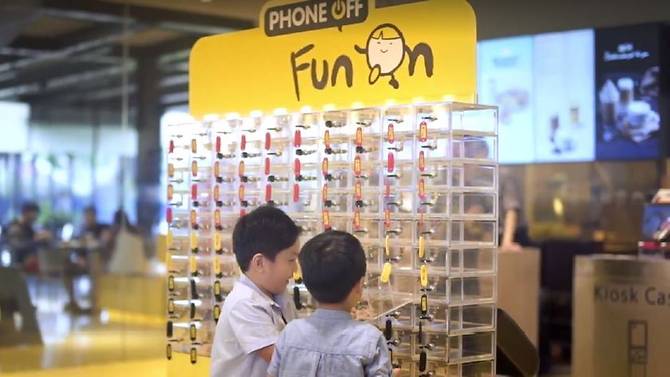
    McDonald’s has introduced mobile phone lockers and table service at its flagship Marine Cove outlet in Singapore to help families rediscover quality time together, the fast-food chain said.

    The mobile phone locker, the first-of-its-kind in Singapore, encourages parents and children to put their devices away safely and focus on family bonding, it said.

    “As a popular restaurant destination for families, we have observed that the use of mobile devices during meal times may sometimes get in the way of family bonding,” said director of brand communications and customer care Linda Ming.

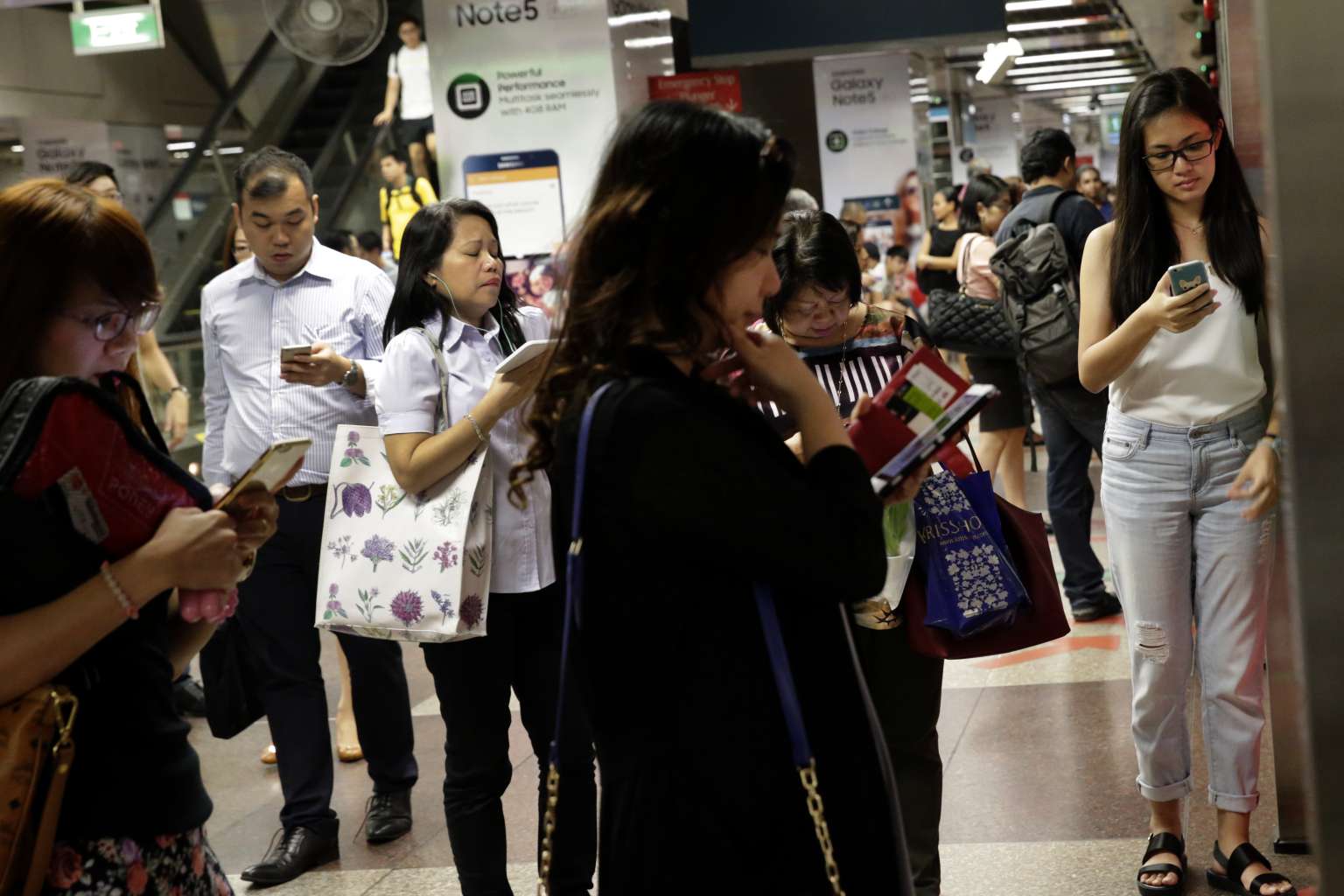
    A survey of 302 parents conducted by McDonald’s last month found that 98 per cent of parents and 91 per cent of kids use their mobile devices whenever they are together, with more than two-thirds of respondents using their smartphones during mealtimes.

    This is despite most of the parents in the survey saying that the use of mobile devices had decreased their interaction with their loved ones, and that they would like to be more disciplined in staying away from digital distractions during family time, McDonald’s said.

    To allow parents to spend more time tending to their children, the fast-food chain is also piloting table service at its Marine Cove outlet, led by “guest experience leaders” whose main role is to engage with families.

    Customers can select the table service feature when placing an order at the self-ordering kiosk, it said.

    Responding to queries from Channel NewsAsia, McDonald’s said there is no extra charge for customers who use the table service feature, and that the service is open to everyone, not just families or parents.

    “We have introduced the service in our Marine Cove flagship restaurant as well as selected restaurants, and have received positive feedback especially from families so far.”

    McDonald’s added that mobile phone lockers would be locked with physical keys. To make sure that customers do not forget to retrieve their phones, staff members will remind them about their phones before they leave the restaurant.

    The fast food restaurant chain will be “actively gathering feedback” from customers about the new initiatives, to decide on whether to expand them to other restaurants.


  • OCBC Bank to distribute health insurance via Mobile and Internet Banking

    OCBC Bank to distribute health insurance via Mobile and Internet Banking

    Digitalising the way customers buy health insurance products, OCBC Bank has again launched a first in the digital wealth management space. This first-of-its-kind way of buying a health insurance plan in a few simple clicks via OCBC Bank’s mobile and Internet banking channels makes access to essential health and illness coverage fast and frictionless.

    Typically, health insurance plans like critical illness, disability, hospitalisation and surgical are not sold via online channels as they require a health check-up to evaluate the applicant’s medical condition. However, with Early Cancer Care, eligible OCBC Bank customers simply need to make a health declaration with the click of a button.

    Early Cancer Care is the first health insurance product to be rolled out on OCBC Bank’s mobile and Internet banking channels, with more non-general insurance plans to be added over time. Underwritten by Great Eastern, it is a cancer insurance plan that provides coverage in the event early or major cancer is detected.

    Depending on the plan purchased, upon diagnosis of major cancer, the insured will receive a cancer recovery benefit of up to S$3,000 monthly for six months, and a lump sum benefit of up to S$150,000, which can be used to cover treatment costs. If early-stage cancer is detected first, the insured will receive 40 per cent of the sum assured, cancer recovery benefit for six months, and all future premiums will be waived. The remaining 60 per cent of the sum assured will be paid out if major cancer is diagnosed subsequently.

    OCBC Bank has radically simplified the purchase of health insurance by offering Early Cancer Care via the bank’s mobile and Internet banking channels, while keeping the process private and confidential in a secured environment unlike unsecured webpages touting similar products. Once the customer has logged in via two-factor authentication, their personal information will be pre-populated on the insurance product application form, and they can make payment from their OCBC Bank accounts or credit cards.

    Mr Aditya Gupta, Head of E-Business Singapore, said: “This is a game changer. So far, our customers in Singapore have had to contend with general insurance products being available for purchase online. By offering our customers access to directly buy insurance solutions like Early Cancer Care via our digital channels, we have upped the ante in meeting their insurance needs simply, quickly and securely. It’s the start of what I call ‘democratisation of insurance’.

    Mr Jerry Ng, Head of Bancassurance, said: “Early Cancer Care is probably one of the most important insurance plans you will buy; that’s why we have made buying it easy and paperless for our eligible customers. We will soon be including other insurance products for purchase on our mobile and Internet banking channels. A majority of cancer plans are renewable yearly, with premiums increasing with age. Early Cancer Care provides cancer coverage for both early and major cancer detection, and the premiums do not increase with age throughout the policy term.”

    Mr Roy Tan, Head of Bancassurance, Great Eastern Life Singapore, added: “A key focus for us at Great Eastern is to harness advances in digital technology to better enable our channel partners such as OCBC to deliver our product solutions to customers more efficiently. We will continue to collaborate to create greater value and better experience for all our customers.”

  • Giordano post a “quite okay” result

    Giordano post a “quite okay” result

    Third-quarter sales for apparel retailer Giordano International have been edging ahead in most markets, an exception being South Korea, a 48.5 per cent JV with an independent management team.

    While e-commerce sales jumped by 17.6 per cent in Mainland China, overall sales growth reached only 2.6 per cent, with a decrease of 2.5 per cent in directly run stores. The company closed 32 non-performing outlets.

    Comparative own-store sales grew by 8.4 per cent, with an 0.5-point decline in gross margin because of a change in channel mix as the contribution from the lower-margin e-business.

    In Hong Kong and Macau, sales for the three months to the end of September grew by 3.2 per cent.

    Gross margin fell 1.6 points as a result of sales promotions to counter an unusually hot and rainy summer and late autumn. These promotions pushed up sales volume by 13.8 per cent while reducing the average selling price by 9.2 per cent.

    Comparative-store gross profit rebounded in Taiwan, where sales and gross margin rose by 2.9 per cent and 1.1 points respectively. Giordano says the improvements are sustainable for the rest of the year. Gross margin also benefited from lower product costs on a strong local currency.

    In the rest of Asia Pacific sales increased by 5.4 per cent at constant exchange rates. The acquisition of Vietnam business in July contributed to 5.1 per cent of sales in the region.

    Unusually strong sales in Thailand last year resulted in an unfavorable year-on-year comparison for the quarter.

    Ramadan effect

    Indonesia sales rose by 3.5 per cent as a result of shop expansion. While comp-store sales fell by 4.1 per cent and gross profit eased 1.8 per cent as a result of the different timing of Ramadan, comp-store sales from June to September this year increased by 9.7 per cent against the same period last year.

    Early Ramadan also affected sales in Malaysia, which grew by 4.3 per cent. Comp-store sales rose by 2.6 per cent while gross profit eased 1.4 per cent. Comp-store sales for June to September strengthened 20.4 per cent compared with the same four-month period last year.

    Both comp-store sales and gross profit dropped in Thailand, by 4.9 and 6.3 per cent respectively, against an unusually high base in the same quarter last year.

    Sales fell 3.6 per cent in South Korea while gross margin improved by 0.7 points. The decline was mainly because of summer clearance sales and unusually hot weather in September hitting fall/winter merchandise sales.

    Overall group sales rose by 3.6 per cent to HK$1.2 billion (US$153.8 million). Group gross profit increased by 3 per cent on improved sales, partially offset by a 0.3-point decline in gross margin.

    Giordano attributes this partly to the change in channel mix and selective promotional activities. Group comparable-store sales and comparable-store gross profit for the quarter grew by 2.3 and 1.5 per cent respectively.

    At the end of September, the group’s distribution network comprised 2370 stores in more than 30 countries, about half of these being standalone stores. Most stores were in Greater China, South Korea and Southeast Asia.

  • Courts Singapore getting serious with flagship store

    Courts Singapore getting serious with flagship store

    Courts Singapore has redesigned its flagship megastore in Tampines, offering a new immersive experience for customers.

    For the upgrade, the retailer of home electronics, IT and furniture products has put a particular focus on the needs of modern apartment living.

    With its official grand opening on Saturday, the store offers 136,000sqft (12,600sqm) over three floors, with experiential areas making up most of the space.

    In conjunction with the makeover, Courts has also unveiled its relaunched online store which now seamlessly unifies the offline/online shopping experience. The webstore is the largest in its network, offering more than 17,000 SKUs as well as introducing intuitive navigation, search and a faster check-out experience. There is also the option to collect purchases in its physical stores.

    Courts Singapore - Tampines flagship - The newly redesigned Level 1 atrium at COURTS Megastore Tampines

    “We are making good living and great in-store experiences accessible and affordable to all Singapore homeowners – a vision we’ve stayed true to since we first opened 43 years ago,” says group CEO Dr Terry O’Connor.

    Courts Singapore - Tampines flagship - 50 per cent of COURTS online shoppers choose to buy online and collect in-store, at convenient Click and Collect counters

    $10 million investment

    The flagship upgrade is part of Courts Singapore’s S$10 million (US$7.3 million) investment into a series of store refurbishments for the financial year with a focus on new retail concepts and experiential areas. Courts has also launched a new brand slogan, “Better Living, Better Prices”.

    “The Courts Megastore transformation is the result of a year of planning and two months of renovation work, combining the expertise of the commercial, visual merchandising and store operations teams,” says Courts Singapore country CEO Ben Tan.

    Courts Singapore - Tampines flagship - Four new chef demonstration areas bring culinary delights and in-store theatre to shoppers

    “We’ve curated every aspect of the shopping journey,” he says. This includes online integration, a new range for lifestyle and smart technology trends, complementary furniture customisation and three-week delivery.

    Courts Singapore - Tampines flagship -Smart home link-up is demonstrated at Design Studio by COURTS, and available for purchase at COURTS' one-stop solutions provider GURU

    Courts Singapore - Tampines flagship -Customising your sofa is as easy as 1-2-3 with over 2,500 COURTS-exclusive fabrics and over 150 leather and half-leather options to pick from

    With every furniture consultation customers are offered a free cup of artisanal coffee. Bespoke options are available for every furnishing need from sofas, curtains and blinds to wardrobes, bedding and dining tables.

    In its bedding department Courts offers more than 1000 types of mattresses from 23 brands. Shoppers can customise their bed frames and headboards. The revamped bedding area has 11 galleries including new brand for healthy living.

    Courts Singapore - Tampines flagship- A wide array of dining tables in various materials, finishes and bases are offered on the floor

    Design services

    For new homeowners, the Courts Design Studio offers services covering interior design, renovation, furnishing, flexible finance and smart-home connectivity. Consultants are on hand from two award-winning interior-design firms. The studio houses a full-size four-room HDB apartment and studio apartment showroom, integrated with smart-home automation.

    Courts Singapore - Tampines flagship - COURTS is the largest bedding retailer with over 1,000 mattresses from 23 brands

    On the same level, the new Home Gallery is an adaptable showroom space that will be regularly refreshed with room settings and also doubles up as a furniture photoshoot studio. The showroom has two movable walls.

    There is also a Dulux Paint Experience area where shoppers can experiment with colours.

    Four new interactive cooking demonstration stations will feature chefs and cooking hosts. Hungry shoppers have the new Mo Cafe for single-origin coffee and cakes, and a Subway with a window overlooking the third level.

    Samsung Open House 2.0 is an experiential retail concept offering an interactive and connected smart-home experience. It showcases the brand’s range of digital appliances on a 85in. UHD display, allowing shoppers to visualise how each appliance might look in their home. The neighbouring LG Home Entertainment area showcases a range of setups.

    Hands-on gaming

    Courts Singapore - Tampines flagship - The new Gaming Zone at COURTS is a space hosting multiplayer gaming tournaments and a key experiential zone in the store

    Courts has also expanded its gaming zone with such brands as Acer Predator, Alienware, Asus Republic of Gamers, Lenovo Legion, MSI and Razer. shoppers can try out the latest PC games, and there is a space designed to host multiplayer gaming tournaments.

    Also launched at the megastore is Guru, which offers more than 100 repair and maintenance services for more than 20 home-product categories. It will be open 365 days a year with its own in-store service counter as well as a phone hotline, and will also offer home cleaning, painting and fix-it services with warranties.

    COURTS has expanded its gaming retail area with nine PC, console and augmented reality gaming brands

    To mark the flagship’s official opening, a four-week celebration will offer discounts of up to 90 per cent, and deals such as a free Xbox One, worth $499, with the purchase of any gaming laptop computer.

    There will also be a celebrity line-up including Arsenal and Liverpool football stars, singer Joanna Dong, Running Man star Kim Jong Kook and Singapore’s first boxing champion, Muhamad Ridhwan.

    Free public Wi-Fi as well as complimentary parking are also available.

  • SingPost to invest S$16 mil in island-wide Smart Post Office network

    SingPost to invest S$16 mil in island-wide Smart Post Office network

    The redeveloped SingPost Centre in Paya Lebar was officially launched on Monday (Oct 9) with the first “smart” post office and a new FairPrice supermarket that will serve as a testing ground for new initiatives in retail technology.

    Located next to the Paya Lebar MRT station, the centre houses a shopping centre, the country’s largest post office and SingPost’s flagship Philatelic Store.

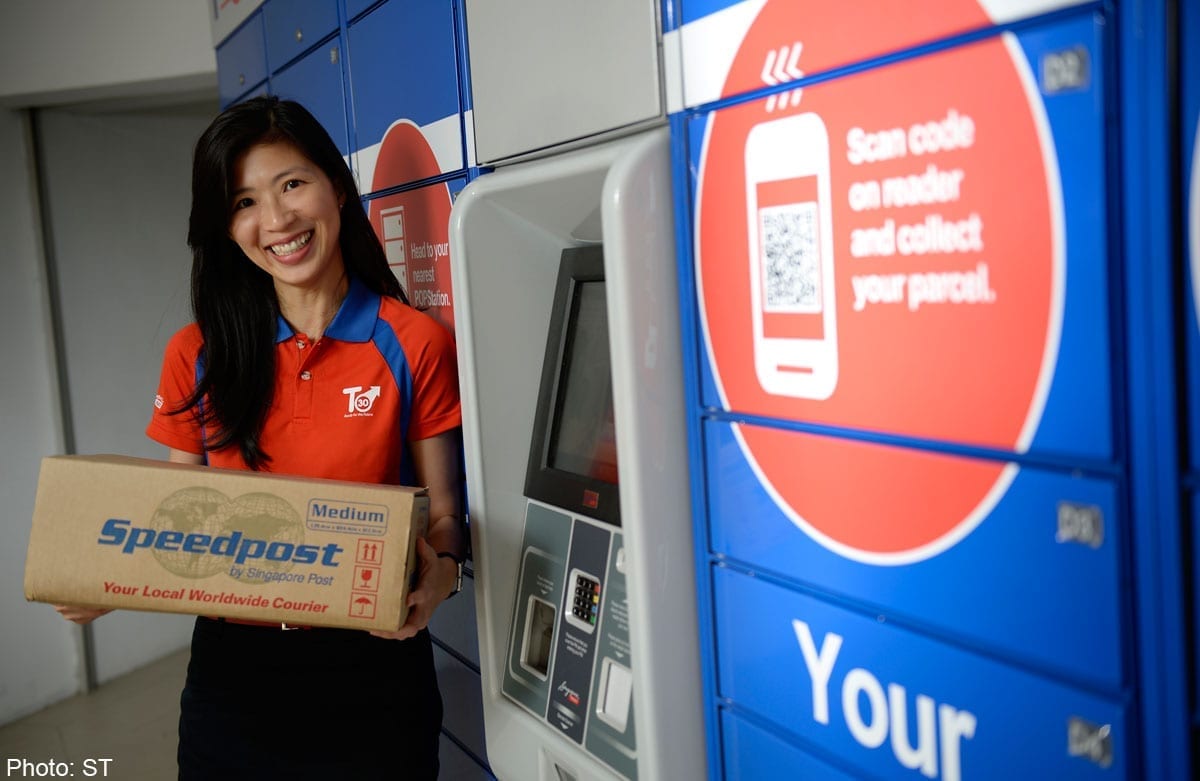
    The 5,328 sq ft General Post Office is the first of SingPost’s smart post offices, featuring a dedicated self-service area with POPStation lockers, upgraded SAM machines offering remittance and other postal services and a drop box for registered articles, accessible at all hours.

    The new drop box allows customers to skip the queue by weighing their parcels and printing labels at the SAM machines before depositing them, said SingPost head of post office network and digital services Bernard Leong.

    Unmanned smart post offices will be rolled out in estates with young families, such as Punggol and Sengkang, in the next one to two years, he added.

    Mr Mervyn Lim, SingPost’s deputy group chief executive (corporate services), said: “The launch of SingPost Centre underscores SingPost’s transformation for a future where technology is changing how people shop, dine and play.”

    The mall’s committed occupancy rate as at Sept 30 was about 80 per cent, he added.

    The five-storey mall, managed by CapitaLand, has 130 tenants including Golden Village, FairPrice, a Kopitiam foodcourt and a rock-climbing gym.

    Apart from bubble tea chain Gong Cha’s return to Singapore later this year (2017) with its flagship outlet in the mall, other new F&B concepts include a food hall designed to look like the old Tanjong Pagar Railway Station and Taiwanese hotpot chain Upot.

    FairPrice’s 22,000 sq ft supermarket, also launched on Monday, is piloting several new initiatives, including the FairPrice@SingPost mobile app that allows customers to locate products with in-store navigation and check stock availability.

    The app, available for download on Apple and Android app stores, also gathers data on shopping habits to deliver user-specific promotions.

    The store will integrate the Scan2Go system currently in use at its Bukit Timah Plaza outlet, where customers can scan purchases with a personal handheld scanner as they shop and pay at self-checkout counters.

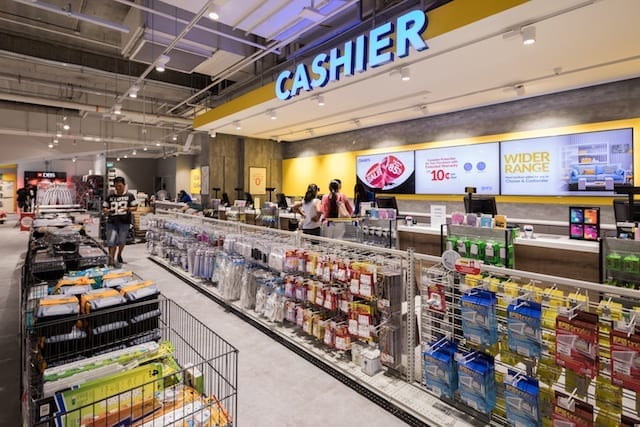
    It is also the first supermarket to feature self-checkout counters that can be converted to cashier-assisted ones in under a minute, to accommodate crowd sizes.

    Refrigerated lockers will be piloted at the SingPost Centre branch for the self-collection of online purchases, while an “experiential corner” in the store will allow brands to engage customers using augmented and virtual reality, digital games and interactive booths.

    Speaking at the launch, FairPrice chief executive Seah Kian Peng said: “This technology-driven supermarket will serve as a “living lab” to pilot new and innovative retail technologies, designed to revolutionise the grocery shopping experience.”

  • UnionPay Records Strong Growth in Spending by Cardholders During Singapore Golden Week 2017

    UnionPay Records Strong Growth in Spending by Cardholders During Singapore Golden Week 2017

    UnionPay, the Official Payment Card for Singapore Golden Week (SGW), revealed that total spending by UnionPay Cardholders in Singapore grew 40 percent year-on-year during the 17-day-long event held from 29 September to 15 October 2017. The growth was contributed by a surge in UnionPay card usage by locals and tourists during the SGW 2017 period, and boosted by the increase in participation by merchants and consumers in this year’s SGW.

    Into its second edition this year, SGW is a lifestyle event designed to bring fresh new experiences to local consumers and tourists as part of Singapore Retailers Association’s (SRA) efforts to inject vibrancy into the local retail scene. This year, SGW presented a wider range of golden privileges – featuring offers at over 300 participating merchant outlets island wide, up from the 200 participating merchant outlets last year. Shoppers also enjoyed better golden rewards – in the form of shopping e-Coupons redeemable on SRA’s GoSpree mobile app worth a total of S$25,000, up from S$10,000 last year; as well as golden experiences – with over 1,100 complimentary golden taxi rides made available for the public over the three SGW 2017 weekends.

    Following the close of SGW 2017 on 15 October, UnionPay revealed that spending by UnionPay Cardholders during the event grew 40 percent year-on-year, spurred by broad increases in spending across luxury goods, department stores, supermarkets, duty-free goods and food & beverage categories. Total spending by local UnionPay Cardholders in particular during the SGW 2017 period also doubled year-on-year, driven by growth in spending in fashion, supermarkets and food & beverage categories.

    “With a bigger and better Singapore Golden Week this year, we are delighted to see positive growth in spending by UnionPay Cardholders across the board. We received very positive feedback on SGW from customers and non-customers alike, some even complimented us on Facebook. Our local and overseas Cardholders gave their stamp of approval for SGW via strong spending – all in all we are delighted that this year’s event appealed to a broader range of consumers from different walks of life. UnionPay’s payment products and services have been gaining momentum through our participation in the Great Singapore Sale and Singapore Golden Week, and this will spur us on to continue rolling out programmes that delight our customers, as well as consumers in Singapore,” said Mr. Wenhui Yang, General Manager of UnionPay International Southeast Asia.

    “We are happy to see the expansion of SGW’s appeal to both locals and tourists this year. During the SGW 2017 period, SRA’s GoSpree mobile app gained more than 1,500 new members, bringing the total number of GoSpree members to more than 33,000 to date. We also saw a 15 percent increase in downloads of the GoSpree app from Chinese tourists, with over 1,300 e-Coupons redeemed during SGW 2017. As we continue to improve on the event, we hope to see more locals and tourists be part of the Singapore Golden Week festivities,” said Ms. Rose Tong, Executive Director of Singapore Retailers Association.

  • StarHub launches autonomous delivery robot

    StarHub launches autonomous delivery robot

    Singapore’s StarHub has entered a partnership with ST Kinetics to supply autonomous delivery robots to local businesses.

    Under the partnership, the companies will deploy Aethon TUG robots to business environments, starting with a roll out in three hotels to streamline the laundry supply chain.

    TUG robots (pictured) were designed by ST Engineering’s land systems business Aethon. They are designed to transport materials of up to 635kg per trip.

    The robots are integrated with a customer’s Wi-Fi infrastructure, elevator and IT systems to allow it to navigate autonomously on premises, including by opening doors and riding elevators.

    TUG will be the second robotics solution introduced by StarHub for corporate customers. The operator is offering managed robotics solutions through an as a service business model, which includes round-the-clock technical support and maintenance services.

    In addition, the partnership is part of StarHub’s connected building initiative to provide IoT solutions for companies to solve environmental sustainability, productivity or safety challenges.

    “Faced with continued manpower crunch, the hospitality industry is increasingly turning to innovation and automation to drive better business outcomes,” StarHub chief of enterprise Dr Chong Yoke Sin said.

    “We are pleased to partner ST Kinetics to offer the TUG to our customers, for tasks involving heavy lifting. This can help reduce lifting hazards and boost productivity, ultimately saving costs for customers.”

  • Hawkr opens a new branch in Pacific Place

    Hawkr opens a new branch in Pacific Place

    Following its launch in Quarry Bay three months ago, “grab-and-go” eatery Hawkr has expanded to Pacific Place

    Hawkr springs from a partnership between Myanmar-based lifestyle concept Pun+Projects founder and restaurateur Ivan Pun and private-equity professional Jake Astor. Pop-up dining chef Mina Park is in charge of the menu which offers original recipes and fresh ingredients without MSG, artificial flavours or preservatives. It was inspired by Southeast Asian fare from such food destinations as Indonesia, Malaysia, Myanmar, Singapore, Thailand and Vietnam.

    The second store has an expanded menu including Burmese tealeaf, Isaan beef and Song Que salmon salads, Mamak Mee noodles and roasted pork noodle with coriander pesto,plus tealeaf eggs. Hawkr’s bespoke coffee blend is again a feature, with a resident barista.

    Like the Quarry Bay flagship, Hawkr at Pacific Place continues a design theme of neon green signs against a rattan background, and colourful wall pattern inspired by the ikats of Burma and Thailand.

    Staff aprons are hand-dyed in indigo from the Isaan region of Thailand.

    All menu items are half price after 7pm every day, and the team also plans to work with local charities to ensure any leftover food goes to those in need. Catering menus are also available for corporate events, luncheons and parties.

  • StarHub Q3 profit falls 11%

    StarHub Q3 profit falls 11%

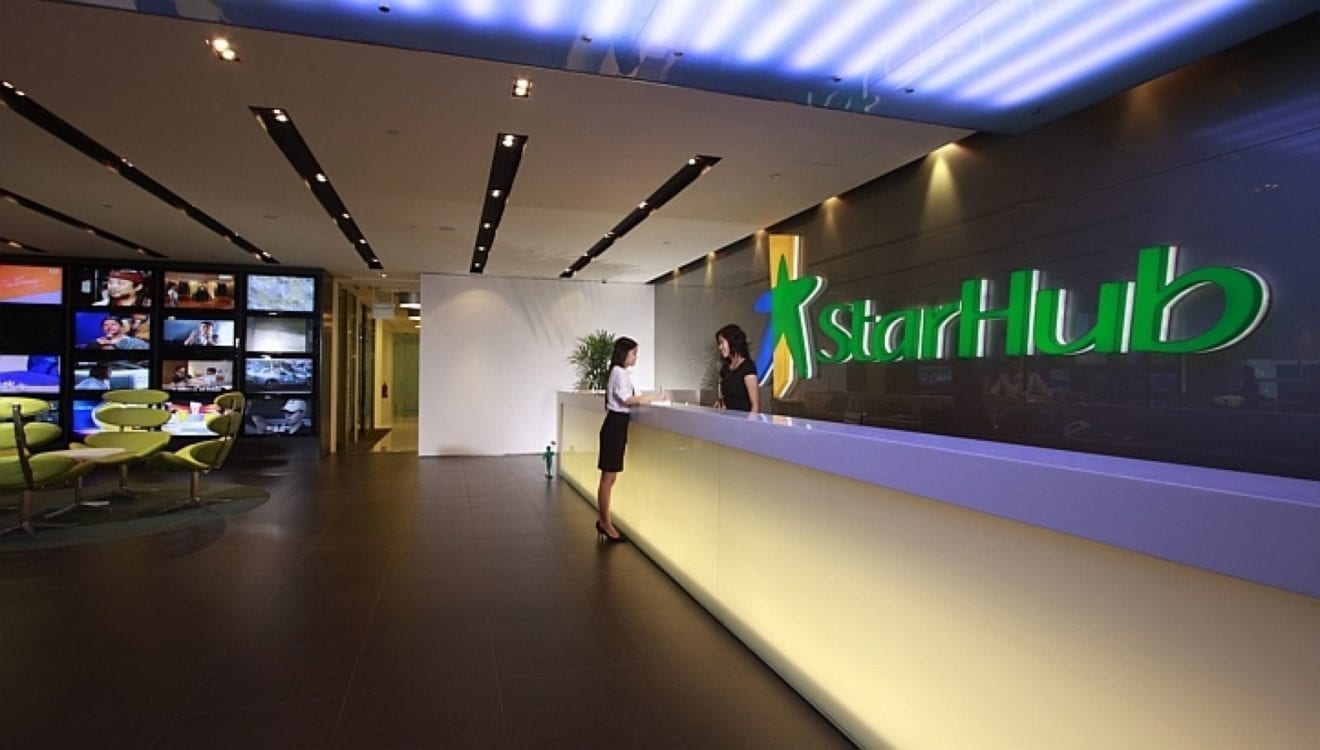
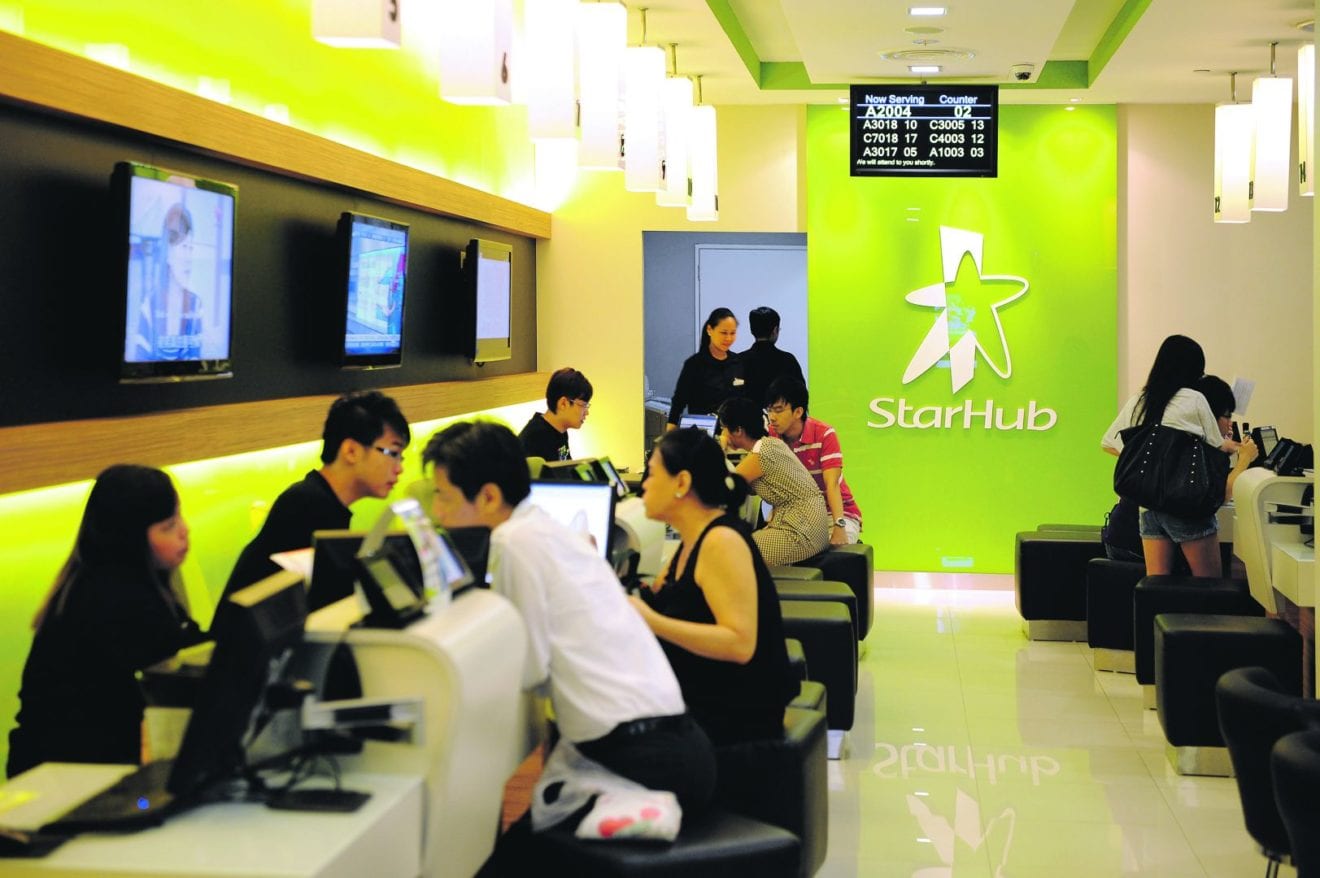
    Singapore’s StarHub has reported an 11% decline in net profit for the third quarter of 2017 to S$77 million ($56.6 million), partly as a result of lower core service revenue.

    Service revenue fell 0.7% to S$545 million, with mobile revenue down 2.3% to S$297 million, broadband revenue declining 1.5% to S$53.2 million and pay TV revenue falling 7.9% to S$85.7 million.

    Enterprise fixed line revenue by contrast increased by a healthy 11.1% to S$109.4 million, growing to account for 18.8% of total revenue (including device sales).

    This quarter, we are further seeing the fruits of our growth strategy as shown by the encouraging double-digit increase in our enterprise fixed revenue. We will continue investing in the enterprise space to drive our future growth,” StarHub CEO Tan Tong Hai commented.

    “We have recently struck Singapore’s first bank-telco strategic partnership with OCBC Bank. By harnessing our collective data insights, we can better understand customers’ needs and deliver even more relevant services to enhance their connected lifestyles.”

    For the first nine months of the year, service revenue likewise fell 1% to S$1.62 billion with net profit down 18% to S$235 million. Mobile service, broadband and pay TV revenues declined 0.8%, 1.8% and 7.7% respectively but enterprise fixed service revenue grew 5%.

    StarHub’s postpaid mobile customer base decreased by 11,000 year-on-year due to a termination of 23,000 inactive legacy data-only lines. Postpaid ARPU dipped by S$1 to S$69, while prepaid ARPU declined from S$16 to S$15.

    Broadband customers meanwhile decreased by around 1,000 to 466,000 but ARPU remained stable at S$37.

    For the full year, StarHub is projecting roughly flat revenue, but expects total capex to decrease to around 10% of total revenue.

  • More Tokyo snack brands in Singapore

    More Tokyo snack brands in Singapore

    Two Tokyo snack brands are setting up shop in Singapore, one opening today and the other in eight days’ time.

    Established in 2013, The Maple Mania is ready to roll out the red carpet at Ion Orchard. It is known for its maple butter cookies, maple baumkuchen with a caramelised top, and maple financiers.

    With its iconic cow logo, Tokyo Milk Cheese Factory will follow with an outlet at Raffles City. The six-year-old brand is known for its cheese cookies – salt and camembert, honey and gorgonzola, and porcini and gouda. It also offers milk cheesecake, a strawberry milk roll plus its own Cow Cow Ice ice cream in two flavours and a sundae option.

    During the festive season, The Maple Mania will sell cookies from Tokyo Milk Cheese Factory as well. Both are sister brands of LeTao, which was brought to Ion Orchard last year by Alvin Ng, the founder of The Rosti Farm and Once Upon a Milkshake, both at Waterway Point in Punggol.

    From Hokkaido, LeTao is known for its double fromage, a two-layer cheesecake.