Tag: Singapore

  • Singapore m-commerce set for 33 per cent growth

    Singapore m-commerce set for 33 per cent growth

    Singapore m-commerce is set for 33 per cent growth in the next five years, according to a new report.

    However, while it leads Southeast Asia in smartphone and mobile broadband use, Singapore is nearing saturation point for its e-commerce market, says Worldpay’s Global Payments Report.

    Despite its modest population numbers, the city/state is the region’s third-largest e-commerce market with 73 per cent of internet users already shopping online. But this growth is set to slow with a modest 9 per cent expansion to reach US$6.5 billion by 2021 predicts Worldpay, which analysed e-commerce spending patterns across 36 markets on five continents.

    In comparison, China’s e-commerce market is expected to grow by 11 per cent, South Korea should see 19 per cent growth and India is set for 24 per cent expansion.

    Despite Singapore’s decelerating growth, there will be plentiful opportunities for capturing a new wave of mobile shoppers in Singapore, says the report.

    Cross-border shopping is also increasingly popular, with more than half of Singapore’s online consumers buying from international merchants.

    ‘New set of demands’

    “Retailers looking for a foothold to the future must prepare to deliver on a new set of demands in Singapore,” says Worldpay Asia Pacific GM Phil Pomford. “Online shoppers are moving beyond the desktop, and beyond country borders. Savvy and well-connected across multiple devices, they increasingly prefer to shop via mobile and want more opportunities to buy from merchants around Asia and the globe.

    “To deliver on the demands of Singaporean shoppers who expect a convenient, seamless experience no matter how they shop, merchants need to create mobile-friendly payments.”

    Pomford says merchants will be able to capture more cross-border trade by accepting a variety of currencies and payment options.

    Worldpay also found that shoppers in Singapore still overwhelming prefer to pay with credit cards (66 per cent), but alternative payment methods are gaining a foothold. Bank transfers and e-wallets are both set to nearly double in share by 2021, increasing from 11 to 21 per cent and 13 to 21 per cent respectively.

    “Our report also uncovered that 70 per cent of Singaporean internet users would shop online more if offered loyalty benefits – a great tip for e-commerce businesses looking to gain a competitive edge,” says Pomford.

    Worldpay offers three main guidelines for merchants seeking to capitalise on the e-commerce and m-commerce opportunity in Singapore and the wider Asia-Pacific region:

    1. One-click ordering: Consumers are more likely to shop more often with companies that save their payment details for one-click ordering. This makes online checkout as seamless as possible, especially via mobile apps.

    2. Payment options: Merchants should look at the most popular payments methods in each territory, and prioritise those that complement their business model. There is no one size fits all in the Asia-Pacific region, so they need to understand their best options.

    3. Cross-border trade: Merchants should ensure they have local acquiring capabilities wherever they have a legal entity. They should also offer a range of currencies at checkout, and consider local-language customer support.
    Worldpay offers technology-led payment products and services to about 400,000 clients across 146 countries and 126 currencies.

  • Singapore Airlines Cargo feted at Payload Asia Awards

    Singapore Airlines Cargo feted at Payload Asia Awards

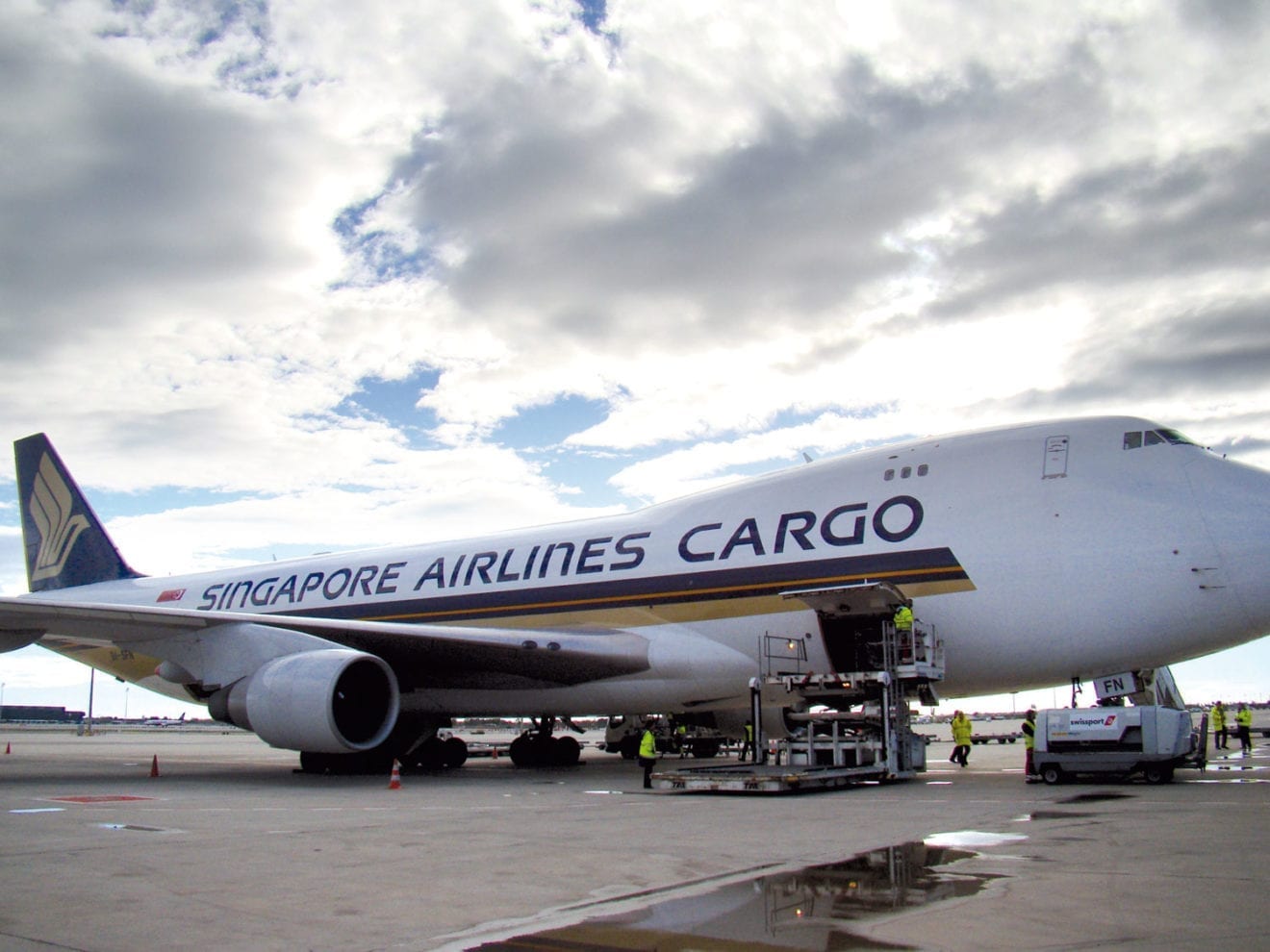
    Singapore Airlines Cargo was named Combination Carrier of the Year in the Customer Choice Awards category at the 2017 Payload Asia Gala Dinner and Awards Ceremony. The hallmark event, held at the Crowne Plaza Changi Airport on 12 October 2017, featured award categories voted by key stakeholders in the logistics business, reflecting the true voice of the industry.

    On the win, Chin Yau Seng, president of Singapore Airlines Cargo, said: “We are grateful to our customers for this vote of confidence in our service performance and efforts to stay responsive to their evolving needs. This award will serve as additional inspiration for our team to continue to seek greater heights in service excellence and product innovation.”

    Daniel Foong, regional vice president of East Asia was present at the ceremony to receive the award on behalf of the company.

  • Google store visits measurement comes to Singapore

    Google store visits measurement comes to Singapore

    A study by Google and Temasek revealed that 6.7% of all retail sales is expected to be done via e-commerce channels by 2025. What is significant about this data is that offline or storefront sales will continue to dominate retail sales for a foreseeable future.

    At the same time, retailers recognize the importance of smartphone as a channel for engaging customers. According to Hootsuite-wearesocial data, there are 8.44 million mobile subscribers in a city with a population of 5.74 million. The Infocomm Media Development Authority (IMDA) pegs wireless broadband penetration at 206.7% as of June 2017.

    According to eMarketer, Google and Facebook dominate the digital advertising space accounting for over 60% of ad spending. Both have developed solutions to allow advertisers to measure conversion that happen offline.

    This September, Singapore has become only the third country in Asia Pacific, after Japan and Australia, to have available Google’s store visits measurement, a technology designed to help businesses understand the offline effects of their online advertising campaigns.

    When people are trying to find a local business, they often turn to Google for help. According to Google nearly one-third of all mobile searches are related to location. To help consumers decide where to go, marketers are using innovations like location extensions and local inventory ads to promote nearby stores.

    Store visits measurement was first introduced in 2014 to give advertisers deeper insight into consumer journeys that start online and end in a physical business location. Google claims that in a span of three years advertisers around the world have measured over 5 billion store visits using AdWords.

    Google has combined its mapping and proprietary machine learning technology to help businesses measure store visits with the highest degree of precision and accuracy. Store visits are calculated based on aggregated and anonymized data from users who opt in to activate Location History.

    Store visits measurement is currently available for Search, Shopping and Display campaigns. Soon, this technology will also be available for YouTube TrueView campaigns to help retailers measure the impact of video ads on foot traffic to physical stores.

    Stephanie Davis, Country Director, Google Singapore said, ‘Bridging the gap between the online and offline worlds is a crucial step for retailers to understand the full value of their digital investments. But it’s not an easy task. Starting from today, businesses in Singapore can use Google’s industry-leading technology to accurately measure the impact of their online advertising campaigns on in-store sales.’

    In an exclusive interview with Retail Tech Innovation (see video below), Leonie Valentine, managing director, sales and operation for Google Hong Kong says there is not enough of a joined up view of how they can use analytics and data in retailers’ businesses.

    She acknowledges that retailers desire to know more about how customers are searching for products in stores, but there remains a limited organizational capability to be able to find all that data about their customers, make sense of it and interrogate it.

  • AirAsia to operate from Changi Airport’s new Terminal 4

    Low-cost carrier AirAsia is set to relocate its operations at Singapore’s Changi Airport from Terminal 1 to the new Terminal 4 on Nov. 7.

    Starting on that day, all AirAsia flights will depart from and land at Terminal 4. No changes will occur in the airline’s schedule at the airport.

    According to a press release issued on Thursday, passengers are advised to arrive at Terminal 4 at least three hours prior to their departure to ensure a smooth process at the new terminal. Those traveling to the airport using the MRT can make their way to the Terminal 2 arrival area and use a free 24-hour shuttle bus that runs every 10 minutes to reach Terminal 4.

    AirAsia Singapore CEO Logan Velaitham said the move was in line with the carrier’s vision to become a “digital airline.”

    “Our focus this year is to implement a Fast and Seamless Travel service,” said Velaitham.

    At Terminal 4, AirAsia is said to provide 19 check-in desks, 14 bag-drop machines, two document-screening counters and two payment counters at Line 4 and a group check-in service at Line 5.

    The newest terminal of Changi is set to open on Oct. 31.

  • McDonald’s Singapore: Lock up your phone

    McDonald’s Singapore: Lock up your phone

    In a bid to help families reconnect, McDonald’s Singapore has introduced a locker for mobile phones at its Marine Cove flagship.

    Its new“Family Playdate” concept includes table service with the aim of promoting human interaction.

    McDonald’s says a survey it ran shows that more than 90 per cent of parents and children use their mobile devices when they’re together, despite most parents wanting to be “more disciplined in staying away from digital distractions during family time”.

    Rather than go hi-tech, the 100 clear lockers have physical keys, and staff members will remind customers to take their phones when they leave.

    Staff members will also act as “guest experience leaders”, says the fast-food company. They will “engage with families”. When ordering at a self-service kiosk, customers can select the table-service option at no extra charge
    A McDonald’s Singapore says the restaurant will gather feedback on the initiatives to decide whether or not to expand them to other outlets.

  • M1 launches data-centric mobile plans

    M1 launches data-centric mobile plans

    Singapore’s M1 has expanded its data-heavy mySIM mobile plans to bundle the offers with handset subsidies.

    M1 launched a range of SIM-only plans in 2015 that offered large data allocations for customers who do not need a new handset.

    Building on the popularity of this plan, M1 has unveiled the new mySIMe bundled mobile plans, which start at S$40 for 5GB of local data, 100 minutes of voice calls and 100 SMS. M1 has also introduced a S$70 plan with 15GB of data and a S$90 plan with 30GB.

    The high-end S$118 plan meanwhile offers unlimited local data, SMS and voice, while a S$15 add-on can provide unlimited voice calls for the three other plans in the range.

    In addition, a S$10 Data Passport add-on will allow customers to use their local data bundles across 56 destinations worldwide, and a S$12 per month add-on will allow customers to share their plan bundles across up to three lines – this is not available for the unlimited plan.

    Our SIM-only mySIM plans have proven to be popular with our customers. We are now giving them the option to get their favorite smartphone or tablet at a more affordable price with the mySIMe plans,” M1 CMO P Subramaniam said.

  • Two more stores for Uniqlo Singapore

    Two more stores for Uniqlo Singapore

    Uniqlo Singapore is opening two more stores – at Changi Airport Terminal 4 at the end of this month and at Northpoint at the end of December.

    This will take its Singapore store total to 26, as well as its online outlet.

    Its airport store will be in the departures hall of the new Terminal 4, and will cover about 3000sqft (279sqm). Unlike the current Uniqlo airport store in Terminal 1, the new outlet will offer children’s clothing as well. Exclusive offers will be available from October 31 to November 12.

    The new store at Northpoint City in Yishun will cover about 10,500sqft and offer clothing for men, women and children.

  • Singapore retail sales rise 3.7 per cent in August

    Singapore retail sales rise 3.7 per cent in August

    Real Singapore retail sales – those excluding motor vehicles – rose by 3.7 per cent in August, compared with the same month last year.

    Compared with July, they fell by 1.2 per cent.

    Adding motor vehicles into the data, August sales rose by 3.5 per cent year-on-year and eased 0.3 per cent month-on-month.

    Statistics Singapore estimates total retail sales in August at $3.7 billion, higher than the $3.5 billion in August last year.

    Sales by petrol service stations, department stores and supermarkets and of recreational goods, medical goods and toiletries, apparel and footwear, computer and telecommunications equipment and furniture and household equipment rose between 2.8 per cent and 9.5 per cent in August.

    In contrast, retail sales of optical goods and books and watches and jewellery, and sales by food retailers, mini-marts and convenience stores, fell by between 0.4 per cent and 4.1 per cent.

    Sales of food & beverage services increased 3.7 per cent in August 2017, year-on-year, to $729 million.

  • Velox launches cloud PBX in Singapore

    Velox launches cloud PBX in Singapore

    Singapore startup Velox Networks has launched a new VoIP and cloud based private branch exchange (PBX) communications platform.

    Velox said the deployment will allow it to offer end-to-end communications services at a fraction of the costs charged by the incumbents – the company is promising business customers prices up to 95% lower than prevailing rates.

    The company has developed a customizable business communications platform               with functionalities including voicemail to email, groups, IVR and real-time updates on telecoms expenditure.

    The Velox mobile application will route landline calls to data connected mobile phones and customers will be able to port their current DID numbers to the Velox network.

    “Velox Networks aims to remove impediments to free-flowing communications with technological solutions so our customers can focus on relationships, ideas and growth, not on getting technology to work,” Velox founder and CEO Martin Nygate said.

    “With the internet as our network, no physical infrastructure and lean manpower requirements, Velox Networks is raising the bar for quality, inexpensive telecommunication services in Singapore.”

    He said Singapore and the wider region are lagging behind the US and Europe in the adoption of cloud-based PBXs, and are still relying on physical PBXs for their business communications needs.

  • DHL continues IoT drive with latest Huawei pilot

    DHL continues IoT drive with latest Huawei pilot

    When a business operates across hundreds of sites globally, the little things add up. And so German logistics company DHL has kick started a series of internet of things (IoT) pilots across its sites around the world – the latest being an automotive plant in Liuzhou, China, with the help of Chinese technology company Huawei.

    The proof of concept, delivered jointly with China Mobile and Huawei, will make use of Narrowband IoT and run with 100 DHL drivers. Narrowband IoT (NB-IoT) is a low power wide area (LPWA) technology that is designed to allow IoT devices to transmit data to and from one another across a network, and was standardised by the 3GPP group in June last year.

    Inbound truck drivers check a mobile app and are directed to a free dock as soon as it becomes available, and the results so far have seen the average waiting time halve from 40 to 20 minutes.

    Trucks can be prioritised according to the site’s needs, and incoming shipments can be sent to the dock most appropriate for them. DHL expects the pilot to run until the end of September.

    DHL has previously partnered with Cisco and IoT startup Conduce to introduce IoT ‘cockpits’ into its warehouses in Germany, the Netherlands and Poland. These systems took data from equipment and visualised it for real-time operation management.

    “We are working with everyone in the industry who offered us solutions that are interesting to us,” says Dr Markus Voss, CIO for DHL, speaking with Computerworld UK at Huawei Connect in Shanghai, China. “This is early stage in terms of the technology and we are open to partnerships, not just with tech giants but also startups, as well as research institutes. It really is an ecosystem of partners.”

    That ecosystem could also include smart cities or governments that have a certain need DHL could provide through its expertise in the field, and the company has run pilots for smarter city logistics.

    But Huawei, the Chinese business that went from providing switching equipment in the domestic market to becoming a worldwide player in networking and cloud, has long had a partnership with DHL.

    “We have been working with Huawei for decades, they have been a provider for us, and we have been a provider for them, so this is a long-term relationship,” says Voss.

    “The trial has already proved its readiness: we have reduced waiting time, which is awesome for productivity, as well as error rates quite dramatically. That, I would consider a success, so we can roll this out to other parts of our operations.”

    These pilot programmes, Voss says, quite clearly demonstrate both the results and the future possibilities that come with integrating newer technologies into the supply chain, and so buy-in at the board level has not been a particularly hard sell.

    “There has never been a better time to sit at the board level and have a very important seat at the table,” says Voss. “So when I talk to my colleagues about digitisation they are very, very open minded, see the possibilities themselves, and are excited. We work very closely together so it was an easy sell-in, essentially.”

    DHL Supply Chain, a Bonn-based division of Deutsche Post DHL, has run other pilots to demonstrate how it can apply new technologies to the supply chain.

    Last year, the company tested an augmented reality (AR) glasses programme across warehouses in the US and the UK. The smart glasses could be used to quickly locate where an item needs to be placed on a trolley, with the aim of reducing error rates while freeing up workers’ hands to pick items faster.

    It also ran a trial at a site in Unna, Germany for the use of ‘EffiBot’, a robotic trolley that follows pickers through warehouses and is designed to lighten the physical load of pushing heavy carts around. The company is also testing the Baxter and Sawyer robots (pictured above) in some warehouses.

    While AR glasses have been a consumer flop to date, Voss says the company saw “huge potential” in using the technology to create efficiencies in the workplace. While DHL keeps an eye on emerging trends in social, business and consumer technology, Voss stresses that IoT has the potential to generate as much as 1.77 trillion in additional value for the logistics market worldwide, and this could forge new paths for the business to build revenue.

    “There are still a lot of inefficiencies in today’s supply chains, there are trucks that are empty on one route,” Voss says. “There is a lot we can bring in, more algorithms, more knowledge, more data and information about what happens, so I think there’s huge potential for us to drive better efficiencies out of the supply chain.

    “What I’m sometimes more excited about are the completely new business models – how can we think of something that is out of the traditional offers a logistics provider would bring to the table?”

  • Sincere Fine Watches showcasing German masterpieces

    Sincere Fine Watches showcasing German masterpieces

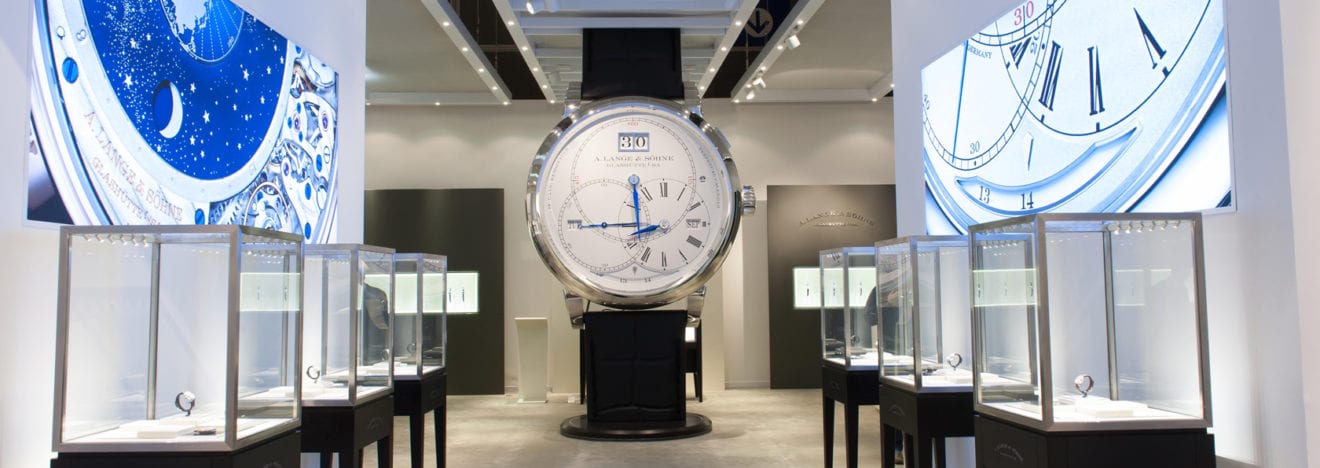
    Sincere Fine Watches in Singapore continues its “100” exhibition theme, this time showcasing that number of masterpieces from German watchmaker A Lange & Sohne.

    The series started in 2013 with the “100 Tourbillons” exhibition, bringing together 21 brands in a world-first showcase. In 2015, “100 Complications” featured 22 brands in the best of haute horlogerie.

    For 13 days from tomorrow, Sincere puts the focus on one brand with its “100 Masterpieces”. A Lange & Sohne is known for producing only a few thousand wristwatches in gold or platinum each year, each with proprietary movements, lavishly decorated and assembled by hand.

    This another world-first showcase by Sincere Fine Watches as the never-before-seen collection includes old pocket watches from the brand’s archives, the first four wristwatches created in 1994 when the brand was re-established, and its latest range alongside timepieces from each of its product families.

    The exhibition is at the Sincere Fine Watches flagship boutique at Takashimaya Shopping Centre.

  • Singtel, Ericsson to establish 5G CoE

    Singtel, Ericsson to establish 5G CoE

    Singtel and Ericsson have announced plans to jointly establish Singapore’s first 5G Center of Excellence to spearhead Singapore’s evolution to 5G.

    The center will receive co-funding from both Singtel and Ericsson, with the companies committing an initial $2 million investment for the next three years.

    It will seek to train 100 Singtel engineers in the critical competencies involved in designing and operating a 5G network, with Ericsson conducting workshops, field testing and providing hands-on experience.

    The center will also be open to Singapore’s wholly-owned Australian subsidiary Optus as well as its network of minority-owned regional mobile associates in Asia and Africa.

    “This is a critical next step in our journey to 5G. We’re pleased to partner Ericsson to enhance our 5G core competencies and create a robust 5G ecosystem that will allow Singtel and our enterprise customers to benefit from the anticipated growth opportunities 5G will bring,” Singtel group CTO Mark Chong said.

    “We invite customers in various verticals, such as transportation, port operations and next-generation manufacturing, to start shaping their new digital business models with us.”

    Singtel also plans to conduct 5G demos from its Comcentre headquarters to showcase potential future 5G applications such as immersive augmented reality experiences, haptic feedback for surgical operations and remote medical training.

    Next year Singtel also plans to deploy a 5G test bed to allow it to conduct live 5G field trials with enterprise customers, and engage research and tertiary institutions on potential collaborations to test 5G radios and use cases.

  • Paragon parent reports full occupancy

    Paragon parent reports full occupancy

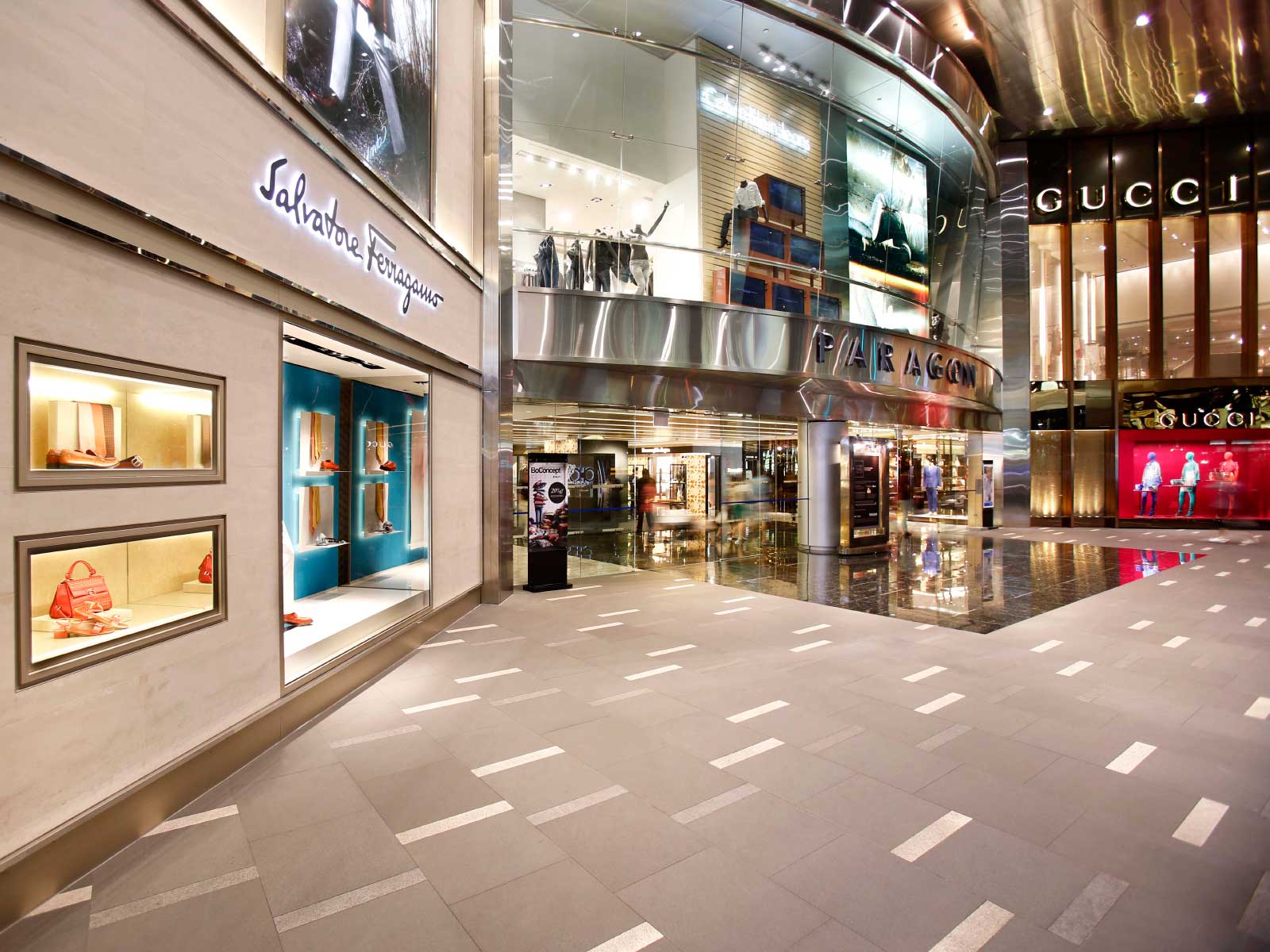
    Paragon parent SPH Reit says both its Singapore mall properties have continued their track record of full occupancy amid mounting competition.

    Despite a muted retail environment, gross revenue for the quarter ended August 31 grew 1.3 per cent to S$52.9 million (US$38.9 million). The trust says this is because of higher rental income from Paragon and The Clementi Mall.

    Net property income for the period was up 3.9 per cent year on year at $41.8 million, and ahead 4.5 per cent to $168.1 million for the 12 months. Gross revenue for the full year was up 1.5 per cent to $212.8 million.

    Tenant sales at Paragon rose 2.1 per cent to $675 million, even as visitor traffic held steady at 18.3 million. The Clementi Mall had visitor traffic of 29.9 million, down 0.3 per cent, while tenant sales fell 5.8 per cent to $225 million.

    SPH Reit CEO Susan Leng says that while the economic outlook has improved, the retail scene remains muted.
    Some segments, such as luxury watches and jewellery, are beginning to show signs of recovery, while the property market is also picking up, she says.

    Despite this, consumer sentiment has yet to pick up decisively even as structural changes like the rise of e-commerce have forced retailers to review their business models. “There are some positive indicators, but the recovery will take time to pan out.”

    Leng says SPH will partner its tenants toward mutual success and in riding through both structural and cyclical retail trends.

    Meanwhile, the trust will continue to invest in upgrading its malls. Paragon has started the second phase of its air-handling unit decanting project, which involves creating extra lettable area at higher-yielding retail space. This is expected to be completed by the middle of next year.

  • SIA, Grab integrate mobile apps

    SIA, Grab integrate mobile apps

    Singapore Airlines (SIA) and Grab have integrated their respective mobile apps to offer enhanced convenience to travelers.

    The partnership will benefit customers who are travelling to the airport in six countries across Southeast Asia – Indonesia, Malaysia, the Philippines, Singapore, Thailand and Vietnam.

    SIA customers can now book Grab rides through the SingaporeAir mobile app. Customers using the app will see an option to book a Grab ride to the airport seven days before their scheduled flight.

    Selecting this option will direct customers to the Grab app, where they can choose to order a Grab ride to the airport on-demand or in advance. The airport will be automatically listed as the destination, so the user simply fills in the pick-up point and desired time.

    The first 5,000 customers will receive GrabPay Credits worth S$10 ($7.38) in their Grab account for bookings made through the SingaporeAir mobile app for Grab rides in Singapore.

    “We are constantly seeking to enhance our SingaporeAir mobile app and KrisFlyer program to ensure that we provide more benefits to our customers,” said Campbell Wilson, SIA SVP for sales and marketing.

    Jason Thompson, head of GrabPay, said that with GrabRewards, a dollar spent on Grab is more valuable than a dollar spent in cash. “By integrating Grab’s and SIA’s loyalty programs, customers can look forward to using their points when they plan for their next holiday.”

  • One door closes, more opening for 7-Eleven Singapore

    One door closes, more opening for 7-Eleven Singapore

    Following the termination of its 11-year partnership with petroleum company Shell, 7-Eleven Singapore plans to roll out 80 stores by the end of next year.

    All 56 of the convenience stores at Shell petrol stations will close from early next year after the companies’ 2006 partnership agreement expired last month. However, 7-Eleven already has plans to open 30 stores by the end of this year, with another 50 to follow next year.

    Shell ended the partnership as part of a rebranding exercise that introduces its own Shell Select and Deli by Shell convenience outlets.

    However, the impact of the move “will not be material”, says a spokesperson from Dairy Farm Singapore, which manages 7-Eleven’s 422 stores islandwide.

    “We have had a good partnership with Shell over the past 10 years, with 7-Eleven contributing to the growth of Shell’s business with positive outcome and increase in sales, profitability and customer count,” says the spokesperson.

    “We respect their business decision not to renew the alliance arrangement in view of their plans to align their operations here with a long-term global business strategy.”