Tag: Singapore

  • Zoff to open flagship in Orchard Central

    Zoff to open flagship in Orchard Central

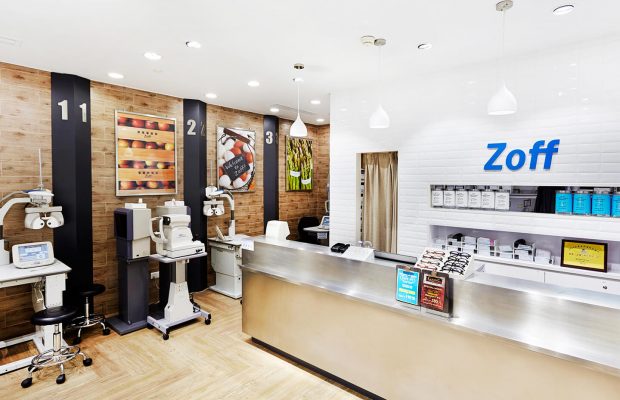
    Japanese eyewear chain Zoff is expanding into Southeast Asia with a flagship outlet at Orchard Central in Singapore.

    Zoff, known for consistently introducing two collections every month, has more than 200 stores in Japan and China. Its Singapore flagship store at Orchard Central will open on April 7 with a traditional lion-dance performance plus a performance by dance duo Scrach Marcs.

    Zoff president/CEO/COO Teruhiro Ueno will attend the opening and is expected to speak about the company’s expansion plans.

  • DFS and Changi celebrate the sixth Singapore MOWS event

    DFS and Changi celebrate the sixth Singapore MOWS event

    DFS Group and the Changi Airport Group celebrated the sixth annual Masters of Wines and Spirits event (MOWS) in Singapore last Saturday (25 March) with a collection of more than 60 Cognac expressions, plus wines and whiskies from more than 50 houses.

    This culminated in ’a spectacular gala event’ on Singapore’s famous Tras Street, with the specially selected collection now set to be exhibited in store and available for sale at DFS, Singapore Changi Airport’s Wines and Spirits Duplexes at Terminal 2 and 3.

    DFS management toast to the sixth annual Masters of Wines and Spirits
    DFS management makes a toast to the sixth annual Masters of Wines and Spirits event.

    DFS said that this year’s event also featured hands-on master classes and educational tastings for select VIP guests.

    MULTIPLE ACTIVITIES AND EXPERIENCES

    At the Dalmore house, Master Blender Richard Patterson also hosted a bespoke tasting to showcase The Dalmore’s ‘rich heritage and artistry’. At the same time, Frederic Dezauzier, CAMUS’ Global Brand Ambassador introduced guests to the smallest and rarest cru in the Cognac region, Borderies.

    This took the form of ‘a unique tasting experience’, featuring a selection of CAMUS Borderies Single-Cru Cognacs, including a Borderies Vintage and an exclusive Borderies blend that has never been released. Château Margaux’s Regional Ambassador Thibault Pontallier also conducted a vertical tasting across decades of the brand’s history.

    Thibault Pontallier, Asia Brand Ambassador Château Margaux, walked VIP guests through a vertical tasting across decades of Château Margaux's storied history
    Thibault Pontallier, Asia Brand Ambassador at Château Margaux (centre left, red tie), took various VIP guests through a vertical tasting across decades of Château Margaux’s long history.

    Guests were also able to meet various whisky brand ambassadors at DFS’ very own The Whiskey House – an exclusive and interactive whisky retail concept available to travellers at DFS, Singapore Changi Airport.

    This was moderated by DFS Group’s Director of Spirits, Frederik Vanden Bulcke and it included interactive discussion and tasting guidance with Brendan McCarron of Glenmorangie, Brian Kinsman of Glenfiddich, David Stewart of The Balvenie and Mike Miyamoto of Hibiki – all sharing their thoughts on heritage and innovation in the whisky industry.

    Commenting, Brooke Supernaw, DFS Group’s Senior Vice President Wines, Spirits, Tobacco, Food and Gifts said: “Returning to our traditional gala format, this year’s Masters of Wines and Spirits created an intimate and curated experience, tailored for our customers.

    Each piece in the collection was selected with our customers in mind, bringing together a spectacular array of the world’s finest and rarest wines and spirits right in the heart of historic Singapore.”

    CHANGI AIRPORT GROUP IS A KEY PARTNER

    As reported, the Masters of Wines and Spirits curated collection will be available for travellers and shoppers at DFS, Singapore Changi Airport’s Wines and Spirits Duplexes at Terminals 2 and 3 – following last Saturday’s gala event.

    DFS concluded that the 2017 collection included 27 Cognacs and whiskies and more than 25 vintage wines and Champagne offerings – many exclusive to DFS. As featured earlier this month, the retailer said that the highlights of the collection included the following: Bruichladdich Special Release; CAMUS 65 Year Old; Château Mouton Rothschild 18 Vintages Vertical; Château Lafite Rothschild 1982 Vintage Imperiale; Château Margaux Pyramid Set of 1990 Vintage; Dom Pérignon Malle P2; Glenmorangie Pride 1974; Hibiki Arita-yaki 2016, Kutani-yaki 2016; Martell Grand Champagne 1920; Masi Amarone Vertical Set with Watch; Penfolds Bin 707 Boeing 6L; Louis XIII Le Mathusalem; The Dalmore Richard Paterson 50 Year Old; and The Macallan Fine & Rare Treasury Collection.

  • Samsung store catches fire a day before Galaxy S8 announcement

    Samsung store catches fire a day before Galaxy S8 announcement

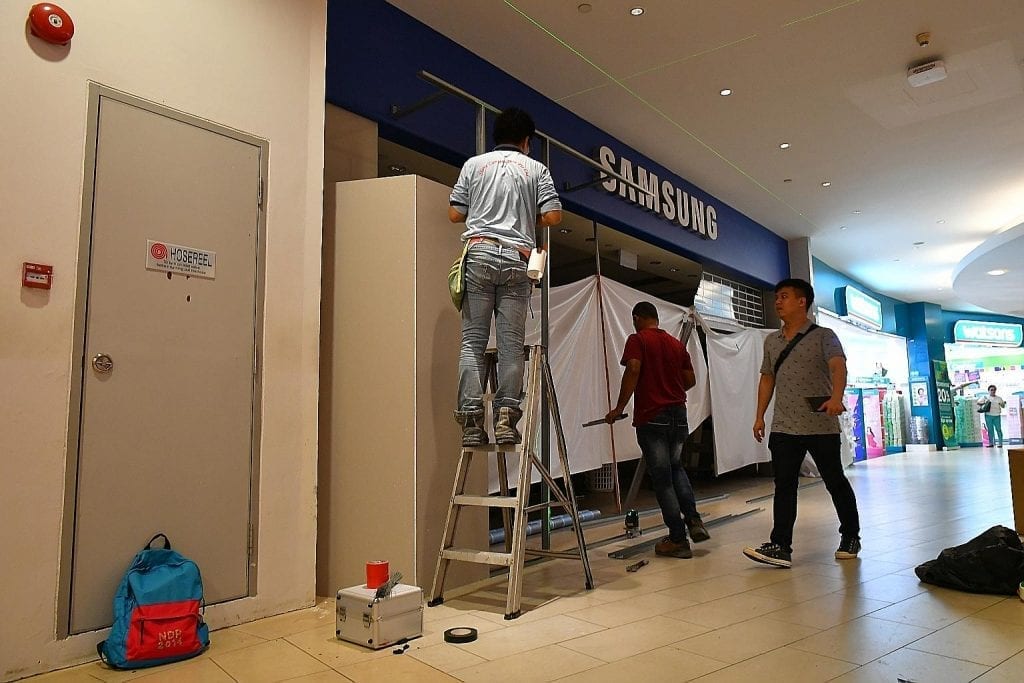
    A Samsung outlet in Singapore caught fire this morning, causing neighbouring shops in the mall to close temporarily for safety and cleaning, reports Channel News Asia.

    It’s not the first time Samsung has had trouble with fires. The company had to kill the Note 7 line following two recalls after reports of the phones exploding into flames last year. Its washing machines were also defective, and could have exploded, forcing the company to also recall the products citing “injury risks.” The two incidents have led to backlash from Samsung customers.

    “We were alerted to a fire at the Samsung Experience Store at AMK Hub in the early hours of Tuesday morning before store opening hours,” the South Korean phone manufacturer confirmed in a statement.

    “The fire was extinguished by water sprinklers in the store and no one was injured during the incident. We are currently assessing the property damage and working closely with the authorities to determine the cause of the fire.”

    The store will remain temporarily closed while investigations are ongoing, says Samsung.

    Samsung will announce the Galaxy S8 tomorrow — hopefully the new phones won’t go up in flames too.

  • Singapore fintech startup OOjiBO raises S$3.6M to serve the unbanked

    Singapore fintech startup OOjiBO raises S$3.6M to serve the unbanked

    Singapore-based fintech startup OOjiBO has raised a S$5 million (US$3.6 million) in a  Pre-Series A round led by Centurion Private Equity. Wong Kok Hoe, Director at Centurion, managed the investment and joined OOjiBO’s board of directors.

    The mobile payments platform plans to use its investment to launch into two new emerging markets in Southeast Asia — Indonesia and Thailand. It will also begin cross-border remittance within countries where OOJiBO has a presence. Currently, OOjiBO is only available in Myanmar.

    Launched in November 2014, OOjiBO was founded by co-founder and CEO Yeng Fook Hoo, a veteran in the banking industry with over 40 years of experience. Prior to OOjiBO, Yeng, who is in his 60s, started and listed the largest credit card terminal and payment system in South East Asia, GHL System. He retired after running it for 15 years.

    After three years, he came out of retirement to build OOjiBO with two co-founders, William Pu and Wong Hok Seng, also experienced professionals in the finance industry.

    OOJiBO says its solution works as a full stack retail banking system on a mobile phone. It offers a full suite of services from p2p transfers, retail payments, interest bearing accounts, e-commerce payments, cross-border remittance, cash in/cash out service, debit/credit card virtulisation, utilities payment and mobile phone top-ups.

    It is phone agnostic and can be used on both smartphones and feature phones. In areas where data connections are poor or non-existent, the OOjiBO system will automatically switch to an STK (SMS) format. This solution allows it to deliver financial inclusion to people living in rural areas or places with frequent electricity outages.

    “We have also designed ourselves to solely work on the mobile network and not requiring other infrastructure or the need to fully integrate into an existing core bank system. This has allowed us to bring the cost of reach and banking significantly lower. Basically, beyond your existing device, there is no other infrastructure that is needed to be installed or built”.

    One key feature that OOjiBO says makes it different from many e-wallets or digital platforms, which typically relies on a frontend system, is its agency network.

    “We run our own network of agents to create branchless banking. We believe in an offline-online model. Through owning our own agency network we are able to control our cost structure and not rely on other people,” says OOJiBO.

    “Our agency network has also allowed us to reach areas that were not previously available, for example, the Kachin state in Myanmar. Kachin state is still going through civil war and is a mountainous area, however through our agency network, we are able to operate within the region to bring much needed financial inclusion to the people of Kachin.”

    The other key feature of its system is its security feature.

    OOjiBO has created a hardware and software security chip that enables encryption and key rotation system. Depending the level of KYC and limit of transaction amount, it issues a physical sim sticker that contains a security chip and module that will do encryption each time a transaction is sent and received.

  • CapitaLand inks contract to manage mall at new SingPost Centre

    CapitaLand inks contract to manage mall at new SingPost Centre

    CapitaLand, through its wholly owned shopping mall business, CapitaLand Mall Asia, has signed a contract to manage the upcoming mall at the new SingPost Centre.

    This is the third mall management contract that CapitaLand has inked in slightly over six months, after securing the first two in China, the comnpany said on Tuesday (March 28). With this contract, CapitaLand said its network in Singapore will increase to 20 shopping malls with a combined gross floor area (GFA), excluding car park, of about 14.2 million square feet (sq ft).

    Mr Jason Leow, CEO of CapitaLand Mall Asia, said, “The signing of our first third-party mall management contract in Singapore – also our third across Asia in quick succession – demonstrates the scalability of our asset-light expansion strategy to grow our assets under management. We continue to be on the lookout for suitable opportunities to enlarge our retail footprint through third-party management contracts, to complement our core strategy of developing, owning and managing malls in Asia.”

    SingPost Centre is located in the up-and-coming Paya Lebar Central, next to the Paya Lebar MRT interchange station. CapitaLand currently owns and manages three malls in the eastern part of Singapore, namely Tampines Mall, Bedok Mall and Jewel Changi Airport, which is scheduled to open in early 2019.

    CapitaLand will oversee the pre-opening and retail management for the five-storey SingPost Centre mall, which has 269,000 sq ft of GFA, excluding car park, and a net lettable area of about 175,000 sq ft.

    Targeted to open in the second half of this year, SingPost Centre will house the new General Post Office, which combines traditional counter service with technology-enabled innovations such as POPStations and eSAM machines over a space measuring 3,330 sq ft. The General Post Office will also have a heritage corner, where customers can enjoy a learning journey through SingPost’s 150 years of history.

    Other tenants at SingPost Centre include NTUC FairPrice, Golden Village, Kopitiam, other retail brands, family entertainment outlets and enrichment centres.

    CapitaLand announced last August it is embarking on enlarging its retail footprint through management contracts with the signing of an agreement to manage the retail component of Fortune Finance Center in Changsha, China. In January this year, CapitaLand signed another agreement to manage a mall in La Botanica township in Xi’an, China.

  • CapitaLand to manage SingPost Centre

    CapitaLand to manage SingPost Centre

    CapitaLand, through its wholly owned shopping-mall business CapitaLand Mall Asia, has signed its first third-party shopping centre-management contract in Singapore to run the new SingPost Centre.

    Described as a world-first, Singapore Post is currently building the 25,000 sqm shopping centre which will allow online and offline retailers to showcase their products, side by side.

    The SingPost mall marks the third management contract CapitaLand has inked in about six months, the other two being in China.

    With this contract, CapitaLand’s network in Singapore will increase to 20 malls with a combined gross floor area (GFA), excluding parking, of about 14.2 million sqft (1.3 million sqm).

    CapitaLand Mall Asia CEO Jason Leow says the signing of its first third-party mall management contract in Singapore – also its third across Asia in quick succession – shows the scalability of the group’s asset-light expansion strategy to grow assets under management.

    SingPost Centre is in the eastern part of Singapore, where CapitaLand owns and manages three malls – Tampines Mall in Tampines Regional Centre, Bedok Mall in the rejuvenated Bedok Town Centre and Jewel Changi Airport, scheduled to open in early 2019.

    Five-storey mall

    Under the contract, CapitaLand will oversee the pre-opening and retail management for the five-storey SingPost Centre mall, which has 269,000 sqft of GFA, excluding parking, and a net lettable area of about 175,000 sqft.

    “With CapitaLand as our mall manager, we will be able to optimise the returns from this property while we focus our attention on our core business of postal services and e-commerce logistics,” says SingPost covering group CEO Mervyn Lim.
    Targeted to open in the second half of this year, SingPost Centre will house the new General Post Office, which combines traditional counter service with technology-enabled innovations such as PopStations.

    Other tenants at SingPost Centre include Golden Village, Kopitiam, NTUC FairPrice, retail brands, family entertainment outlets and enrichment centres.

  • DHL eCommerce Enables Singapore e-Commerce Retailers to Reach Out to the US Market

    DHL eCommerce Enables Singapore e-Commerce Retailers to Reach Out to the US Market

    DHL eCommerce, a division of the world’s leading logistics company Deutsche Post DHL Group, has launched a new commercial international shipping product facilitating Singapore-based e-tailers, online merchants, manufacturers, and traditional ‘brick and mortar’ retailers to ship their products to consumers in the U.S. using the reliable DHL network in a simple and cost-effective manner.

    Parcel International Direct U.S. is geared towards the burgeoning e-commerce market and seeks to respond to the growing appetite for cross-border e-commerce in the Americas region, allowing businesses to ship products up to 6.5 kg to their customers across the U.S.DHL Logo


    With 71% of retailers and 76% of manufacturers expecting the share of cross-border revenue to grow in the future[1], Parcel International Direct U.S. aims to enable Singaporean retailers to grow their business in the U.S. market with ease.

    The cross-border market is the newest blue chip of the digital retail industry and shows great promise, projected to grow at a rate of 25% annually between 2015 and 2020. This growth will bring the value of the market from USD300 Billion in 2015 to 900 billion in 2020 — almost triple in a matter of half a decade.[2]

    The product offers simple and cost-effective international shipping option with end-to-end tracking and a competitive transit time of 4-6 business days. Through IT integration, the DHL eCommerce Web Portal enables e-tailers to seamlessly integrate their orders into the DHL network by preparing orders for shipping individually or in bulk, track and generate reports all from a single portal. This product follows the company’s launch of Parcel International Direct Australia in October 2016.

    “DHL eCommerce aims to provide best-in-class e-commerce logistics for both merchants and end consumers through high quality, cost-efficient logistics solutions as well as a positive delivery experience. We want to enable local businesses to reach their international consumers with ease and allow them to fully leverage the massive potential that e-commerce brings,” said Sham Alexandra, Managing Director, DHL eCommerce Singapore. “Through Parcel International Direct U.S., we enable retailers in Singapore to expand beyond borders and reach out to the huge consumer market potential in the U.S.”

  • UOB AM Goes For Tech Growth

    UOB AM Goes For Tech Growth

    Singapore’s UOB Asset Management has partnered with a prominent U.S fund manager to tap into the current enthusiasm around all things tech.

    UOB Asset Management (UOBAM) has partnered US-based T. Rowe Price International Ltd. (T. Rowe Price) to offer retail investors in Singapore the opportunity to tap the long-term growth prospects arising from technology and innovation.

    Under the partnership, UOBAM will invest in T. Rowe Price’s Global Technology Equity Strategy (the Strategy) through the United Global Technology Fund. This is the first time retail investors in Singapore would be able to invest in T. Rowe Price’s highly-rated technology portfolio.

    Exponential Growth

    In the ten years between February 2007 and February 2017, the Strategy has seen annualised returns of 15.39 per cent versus the benchmark MSCI All Country World Index Information Technology’s 9.08 per cent over the same period.

    «The role of technology has grown exponentially over the past decades to become an essential part of global economies and industries. I am pleased to bring on board T. Rowe Price, an accomplished partner with extensive experience in investing in the technology sector,» said Thio Boon Kiat, CEO, UOBAM.

    T. Rowe Price has been managing dedicated technology portfolios since 2000. As at 31 December 2016, the Strategy has $5.6 billion of assets under management.

  • Lazada brings Alibaba’s biggest bazaar to Singaporean shoppers

    Lazada brings Alibaba’s biggest bazaar to Singaporean shoppers

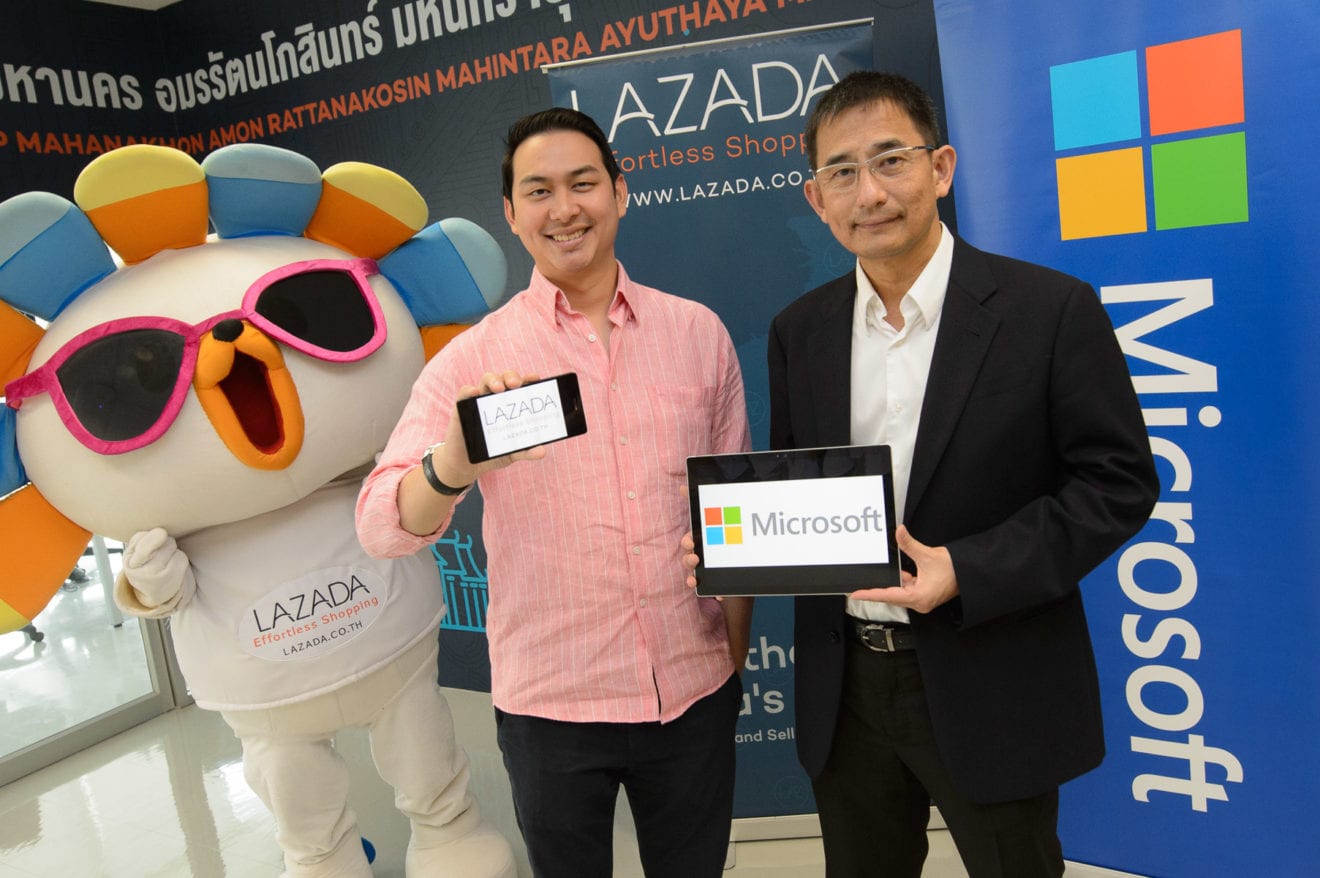
    China’s Alibaba Group has teamed up with online retailer Lazada to bring popular shopping site Taobao to Singapore, in a move to deepen the reach of the Chinese e-commerce giant into Asia ahead of US rival Amazon.

    Last year, Alibaba made headlines with a US$1 billion (S$1.4 billion) deal for control of Lazada, giving the Chinese retailer greater access to South-east Asia and closer to a goal of shedding its home-market reliance.

    The dedicated online store, Taobao Collection, went live this week, and links shoppers in Singapore directly to Taobao through Lazada’s website (taobao.lazada.sg).

    The collection targets shoppers in Singapore who want to shop directly from Taobao and are more comfortable with a local connection.

    Some 400,000 items, from electronics to home products, will be specially curated for the Singapore market, Mr Alexis Lanternier, CEO of Lazada Singapore told TODAY.

    The customised range is selected based on top selling products and customer reviews, from the existing line-up of about 1.5 billion offerings on the Taobao website, he said.

    The idea, according to Mr Lanternier, is to address some of the challenges that shoppers here face while shopping from Taobao, such as lowering shipping fees. By doing away with external agents, Taobao Collection is able to offer a flat delivery rate of S$2.99 per order.

    “Lazada is aiming at solving difficulties that currently exist when shopping from Taobao, enabling an effortless way for them to shop. The site will be translated into English (from Chinese) and shoppers don’t have to worry about shipping, payment methods and returns. Shoppers can also track their orders end-to-end on Lazada and can shop exactly as they would on Lazada Singapore,” Mr Lanternier said.

    Taobao’s entry into Singapore, according to industry players, is likely to have far-reaching implications even as it expands the playing field for e-commerce and creates a more dynamic landscape for retailers.

    “It will definitely require online retailers to continuously think on their feet to come up with new and fresh offerings, in order to keep their customers engaged. To ultimately drive Singapore’s weakening retail sector, online and offline retailers should synergise with — instead of cannibalise — each other,” said Mr Hyun Wook Cho, Qoo10 Singapore country manager.

    With more than 2.5 million registered users in Singapore, however, Qoo10 remains confident of its future prospects as an online shopping platform for Singaporeans, as it offers affordable products and understands the local market.

    “Singaporeans are highly savvy online shoppers who no longer only go for attractive prices, but also look for value-added services to have enjoyable shopping experiences,” Mr Cho added, highlighting the company’s interactive Live10 app which serves as a community chatroom where users can broadcast live demos or shopping tips to their followers.

    Meanwhile, avid shoppers in Singapore welcomed Alibaba’s move to bring its largest shopping platform much closer.

    “We now hope to have access to Taobao products much faster and expect them to be cheaper with no agents in between. Earlier, it used to take almost a month to get the products,” said 19-year-old Siglap resident Mr Nguyen Duc Thanh who buys electronic products for himself and others from Taobao at least once a month.

    “I would want to shop more now that Taobao is easily accessible through Lazada. I have always wanted to do so but given the language and other issues (related to agents), I was hesitant,” said Dakota resident Mr Andrew Fang, 30, who is keen on buying more home products.
    According to Qoo10’s Mr Cho, e-commerce players who successfully create lasting experiences that resonate with their user bases will be the ones to survive today’s increasingly competitive landscape.
  • Singtel, Telkomsel enter mobile money alliance

    Singtel, Telkomsel enter mobile money alliance

    Singapore’s Singtel and Indonesia’s Telkomsel have teamed up to launch a real-time mobile remittance service to Indonesia.

    The new service is being offered by SingCash under the Singtel Dash brand. It will allow customers in Singapore to send money to the state-owned PT Pos Indonesia’s 4,500 cash-out points across the nation.

    The initiative marks the first collaboration between Singtel and Telkomsel on a mobile money initiative.

    The agreement is expected to be expanded in the future to cover more cash pick-up points, and to support mobile remittance directly to Telkomsel’s TCash mobile wallet from Singtel mobile wallets.

    According to the Embassy of the Republic of Indonesia in Singapore, there are 200,000 Indonesians living and working in Singapore, and outward remittance from Singapore to Indonesia totals more than $409 million per year.

    “Telkomsel’s partnership in Singtel’s remittance service is one effort to support our government in promoting financial inclusion for Indonesian people, especially the unbanked segment,” Telkomsel CEO Ririek Adriansyah said.

    “Foreign remittance enables them to improve their quality of life as well as provide an opportunity to begin saving for the future. We believe every little effort to promote financial inclusion will also accelerate the growth of Indonesia’s economy.”

  • Singapore operators to switch off 2G from Sunday

    Singapore operators to switch off 2G from Sunday

    Singapore’s mobile operators will commence the process of switching off their 2G networks on Sunday as part of a scheduled sunsetting of the aging networking technology.

    Operators M1, Singtel and StarHub plan to conduct the switch-off in stages, and complete the process by April 18Singapore’s mobile operators will commence the process of switching off their 2G networks on Sunday as part of a scheduled sunsetting of the aging networking technology.

    Operators M1, Singtel and StarHub plan to conduct the switch-off in stages, and complete the process by April 18.

    As part of an agreement with regulator the Infocomm Media Development Authority (IMDA), operators are giving 2G users the ability to retain their numbers and subscription plans on 3G and 4G networks at no additional cost or requirement to re-contract.

    The IMDA has urged the nation’s remaining 2G-only users to switch to a 3G or 4G handset by this time.

    The regulator is holding information sessions for seniors wishing to learn how to use smartphones as part of the transition process, and has also worked with the operators to ensure that handset models costing below S$50 ($36) are available for the holdouts.

    The IMDA banned the sale of all 2G-only devices from January as part of the switch-off process, which is aimed at allowing 2G spectrum to be re-allocated for advanced mobile services.

    Singtel’s wholly-owned Australian subsidiary Optus is meanwhile following its parent in switching off 2G. Optus announced it will commence a staggered shutdown process from April 3, starting in the states of the Northern Territory and Western Australia..

    As part of an agreement with regulator the Infocomm Media Development Authority (IMDA), operators are giving 2G users the ability to retain their numbers and subscription plans on 3G and 4G networks at no additional cost or requirement to re-contract.

    The IMDA has urged the nation’s remaining 2G-only users to switch to a 3G or 4G handset by this time.

    The regulator is holding information sessions for seniors wishing to learn how to use smartphones as part of the transition process, and has also worked with the operators to ensure that handset models costing below S$50 ($36) are available for the holdouts.

    The IMDA banned the sale of all 2G-only devices from January as part of the switch-off process, which is aimed at allowing 2G spectrum to be re-allocated for advanced mobile services.

    Singtel’s wholly-owned Australian subsidiary Optus is meanwhile following its parent in switching off 2G. Optus announced it will commence a staggered shutdown process from April 3, starting in the states of the Northern Territory and Western Australia.

  • Diamond group De Beers buys out retail partner LVMH

    Diamond group De Beers buys out retail partner LVMH

    Anglo American’s diamond specialist De Beers has bought the 50 percent stake held by French luxury goods group LVM in De Beers Diamond Jewellers for an undisclosed sum, taking full ownership of the retail operation.

    Analysts said the joint venture no longer fitted LVMH’s strategy, while Anglo American, which has long dominated global rough diamond sales, has been developing its presence on the high-margin diamond retail market.

    LVMH had no comment. De Beers said in a statement that fully integrating De Beers Diamond Jewellers would enable the group to enhance value.

    Anglo American, which along with other mining companies has largely recovered from a deep commodities downturn in 2015, has put diamonds, along with copper and platinum, at the heart of its portfolio.

    One of the advantages of diamonds is that they are a counter-cyclical luxury product that can generate profits even when bulk industrial commodities are in a downturn.

    De Beers Diamond Jewellers’ retail network comprises 32 stores in 17 countries. This includes a growing business in greater China, an established presence in London and Paris, and a new flagship location in New York.

    In addition, De Beers’ Forevermark high-end diamond brand has expanded into 2,000 outlets globally and it says it expects the growth to continue this year.

    Analysts said LVMH had finally ended a joint venture that dated back to when the group did not have any branded jewelry of its own.

    “The situation is very different today, as they own one of the megabrands in this space: Bulgari,” Luca Solca, analyst at Exane BNP Paribas, said.

    “It seems appropriate therefore to turn the page on this and relegate it to the ‘experiments that didn’t work’ pile.”

  • StarHub opens Hubtricity innovation center

    StarHub opens Hubtricity innovation center

    Singapore’s StartHub has opened a new innovation center and converged operations cockpit named Hubtricity, aimed at accelerating Singapore’s transformation into a Smart Nation.

    The 58,000 square feet facility will act as a foundation to foster service innovation and co-creation with partners and customers.

    The centerpiece at Hubtricity is the converged command cockpit, where StarHub with real-time data can monitor how its fixed, mobile and pay TV networks and services are performing and understand how customers are using and responding to its service offerings through call center metrics and social media analytics.

    Tan Tong Hai, CEO of StarHub said Hubtricity is derived from three words Hubbing – the convergence of technology and services; Tri – the three core networks that power Hubbing; and City – where it is about the consumers.

    “Hubtricity not only showcases our extensive connectivity and deep competency in data analytics and cyber security, but is also a co-working space for partners and start-up companies to create solutions for a Smart Nation,” said Tan.

    “Currently, we are working with both local and global partners to build platforms, such as smart home, intelligent vehicles, connected buildings, virtual reality and smart retail, to meet the future needs of our customers,” added Tan.

    As a home-grown company, StarHub supports the nurturing of local talent and is keen to help drive the local tech startup ecosystem. Hubtricity aims to bring local technopreneurs together, who can create ideas and test out their solutions, catalyzing greater collaboration and innovation from Singapore.

    Kiren Kumar, assistant managing director at Singapore Economic Development Board, said that with Hubtricity, StarHub is investing in capabilities that will enable it to innovate and develop new digital products, services and solutions with partners across industries.

    “Hubtricity will add to Singapore’s position as the Digital Capital of Asia and will create exciting jobs in Singapore in areas such as cyber security and social media analytics,” said Kumar.

  • GoToMalls.com expands to Indonesia

    GoToMalls.com expands to Indonesia

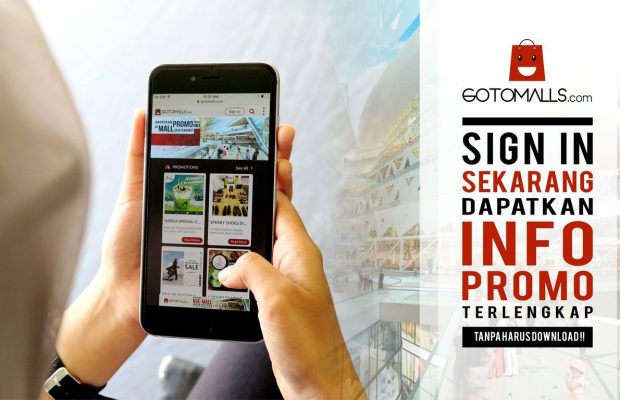
    Singapore-based company DominoPos has launched its proximity marketing and digital media platform GoToMalls.com in Indonesia.

    Offering a geo-located, profile-based smart directory of malls and stores in Indonesia, the website aims to revive offline transactions, “bringing the community’s spirit back to the malls through digital media support”.

    CEO Bruno Zysman says the platform helps offline retail brands publish their own call-to-action campaigns, and promote products or services on a digital platform to their target audience. It lists up to 375 malls and shopping complexes, along with 19,000 stores.

    To ease its entry into the Indonesian market, the site has partnered with telecommunications company PT Indosat, also known as Indosat Ooredoo, and ride-hailing app Grab.

    GoToMalls launched in Singapore in February and plans to expand further internationally.

  • Lazada launching website to sell Taobao products to Singapore shoppers

    Lazada launching website to sell Taobao products to Singapore shoppers

    Alibaba’s bringing its teeming Taobao internet marketplace to Singapore.

    Alibaba Group Holding and Lazada Group are teaming up to sell select Taobao products direct to shoppers in the affluent island-state, striking their first partnership since the Chinese company took control of Southeast Asia’s largest e-commerce operator a year ago.

    Lazada is launching a dedicated website that links directly to Alibaba’s largest shopping platform, said Alexis Lanternier, chief executive officer of Lazada Singapore. To start with, the new site will add 400,000 Taobao products that aren’t available now to an existing lineup of about 5 million products, he said.

    In linking Taobao with Lazada, the two are trying to ease a process that’s gained momentum in recent years. Bargain hunters in Singapore already buy directly from Alibaba’s Chinese marketplace, an eBay-like online bazaar where small merchants and individuals hawk items from electronics to bed-sheets. Its items often go for a fraction of retail prices in Singapore, the world’s most expensive city according to the Economist Intelligence Unit.

    Many people however buy through agents who help with English translations, payments and deliveries – for a fee. That’s led to problems with returns, Lanternier said. Scams may be another issue: Taobao re-joined the Notorious Markets list last year, a name-and-shame pool of global markets the US Trade Representative considers rife with counterfeits.

    Taobao can be difficult to police because it’s an open marketplace, but Lazada will take swift action to protect consumers if it’s notified of fakes, Lanternier said.

    “We want to solve those difficulties, enabling an effortless way for them to shop,” Lanternier said, sharing the new initiative for the first time. “Now it’s all translated into English and you don’t have to worry about shipping options, payment method, returning. You are going to be able to track your order end-to-end.”

    The move is another small step abroad for Alibaba, which has ambitions to expand beyond a slowing Chinese home market. The company and Lazada are now preparing to deepen their operations in the fast-growing region, anticipating Amazon.com’s entry this year.