Tag: Singapore

  • Lotte Department Stores take in online retailers

    Lotte Department Stores take in online retailers

    Online retailers in Korea are set to open 13 outlets at Lotte Department Store branches in the next three months.

    “Online brands are continuously expanding into offline stores to raise their brand value and to receive real-time feedback from consumers,” says Lotte Department Store.

    Statistics Korea says online sales of apparel and fashion-related items have grown each year by double digits from 6.2 trillion won (US$5.48 billion) to 10.2 trillion won between 2013 and last year.

    As these brands gain traction against traditional fashion houses, they start opening brick-and-mortar outlets as well, first as showrooms then as stores, says the Korea Herald. This helps them to tap into consumers who prefer to see products before they buy.

    A report from Open Survey last year shows that 53 per cent of consumers want to buy their clothes at offline stores.
    Lotte Department Store’s first offline store was for Style Nanda in 2012. Now about 100 online brands have offline outlets at Lotte’s department stores. Opening soon at Lotte are such brands as Imvely, Migun Style and Sappun.

    Some Korean brands, such as Liphop and Style Nanda, have even expanded to offline stores overseas in countries like China and Singapore.

  • Subscribe to Food launches in Singapore

    Subscribe to Food launches in Singapore

    Just launched in Singapore, Subscribe to Food is an e-commerce subscription service that offers food and wine products for consumers.

    Upon launch, the service acquired e-commerce start-ups The Frank Food Company and WineMasons.

    Philip Raff, who is also executive director of Velocity Property Group, out of Australia, led the investment group and acquisition of the two companies.

    “We believe that through e-commerce, modern logistics via our partner Yojee, and a commitment to a subscription model, even city folks can access premium, fresh, small-batch food and wine,” says Raff. “It’s all about cutting out the middleman and paying a decent price that takes into account the effort and expertise that goes into food production.”

    Subscribe to Food first acquired The Frank Food Company, which focusses on supporting regional farmers practising sustainability, fair-trade and organics, mainly in Indonesia. Its co-founders, brothers Liam and Duncan McCance, took up roles as CEO and food/content director respectively.

    WineMasons was set up by Matt Allanson and Josh Sims and has focussed on Australian small-batch wine producers, with a Singapore subscription commerce offering.

    After Subscribe to Food moves its newly acquired businesses to a shared e-commerce and logistics platform, it plans to launch a third brand focussed on premium beef from farmers in Tasmania.

  • Keppel boosts Saigon Centre stake

    Keppel boosts Saigon Centre stake

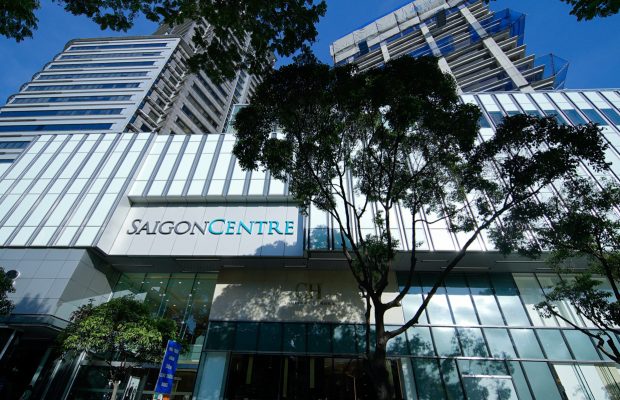
    Singapore-headquartered Keppel Corp has paid VND 845.9 billion (S$53.5 million) to boost its stake in Ho Chi Minh City’s Saigon Centre beyond 50 per cent.

    Saigon Centre, a mixed-use development incorporating a shopping centre anchored by Takashimaya department store, apartments and office space, is a joint venture between Keppel and local company Watco. The first stage, a small shopping mall beneath an 11-story tower, opened in 1996. Last year the expanded 55,000 sqm mall opened, and construction continues on a second tower of approximately 40 stories above it.

    The mall is trading well, 100 per cent leased, with several Japanese retailers, including Owndays, making their debut in the market. Chanel is constructing what is expected to be a make-up studio on the ground level in a prime space previously used for events and pop-ups.

    Keppel now owns 53.5 per cent of the Keppel Land Watco I, II and II companies and 76.2 per cent of Keppel Land Watco IV and V.

    “Keppel Land is committed to grow its commercial portfolio in key Asian cities. Vietnam, one of our key growth markets, continues to attract foreign direct investments which will drive positive demand in the property market from homes to offices and mixed-use developments,” said Keppel Land CEO Ang Wee Gee in a statement.

  • Miniso Singapore plans 20 more stores

    Miniso Singapore plans to open 20 more stores by the end of this year, taking its network in the city to 46.

    In an interview with The New Paper, Miniso Singapore director Alex Zhang said locals were responding well to its eclectic offer of homewares, electronics, bags and household items.

    And he is confident the brick-and-mortar model will continue to serve the brand well, despite growing volumes being sold online.

    “From what we observed, Singaporeans still enjoy the experience of shopping in malls. People here still love seeing the designs and products in person before buying them.”

    Miniso Singapore opened its first store in December 2015 and now has 26 operating across the city. The brand was founded in China, opening its first Japanese store in 2013. Despite its Chinese base – it has 1000 stores trading in the mainland already – it tries to position itself as a Japanese brand, a sort of discount version of Muji. That strategy has attracted criticism in the past.

    Miniso has also opened stores in Hong Kong, Australia, Vietnam, Russia and Turkey.

  • Singtel and Globe launch Tustwave MSS in Philippines

    Singtel and Globe launch Tustwave MSS in Philippines

    Singapore’s Singtel is bringing its Trustwave portfolio of managed security services to the Philippines, in collaboration with Globe Telecom.

    Under the collaboration, Globe is providing Trustwave’s services through its advanced security operations center (ASOC) in Manila, a new facility operated by Singtel’s Trustwave subsidiary.

    Globe’s ASOC will combine threat intelligence from Globe with global threat visibility from the global network of nine Trustwave ASOCs.

    The services will be supported by an ecosystem of global cyber security providers including Palo Alto Networks, FireEye and Arbor Networks.

    Singtel acquired a 98% stake in Trustwave for $810 million in a deal announced in 2015. In December that year, Singtel and Globe also signed a memorandum of understanding to strengthen Globe’s cyber security capabilities.

    Singtel and its managed security services business unit Trustwave also recently expanded their collaboration with Palo Alto to bring managed security services to multi-national businesses and government agencies, and the new agreement extends Singtel and Trustwave’s partnership.

    “As the leading cyber security services provider in the region, our deep global capabilities allow Trustwave Managed Security Services to monitor, assess and defend our customers’ operations round-the-clock against cyber attacks,” Singtel CEO group enterprise and Trustwave chairman Bill Chang said.

    “The launch of Trustwave Managed Security Services is timely as it complements the Philippine government’s National Cybersecurity Plan 2022.”

    The government’s plan is aimed at safeguarding the Philippines’ critical information structures, as well as governments, businesses of any size and all citizens using the internet.

  • Korea looks elsewhere as Chinese shoppers vanish

    Korea looks elsewhere as Chinese shoppers vanish

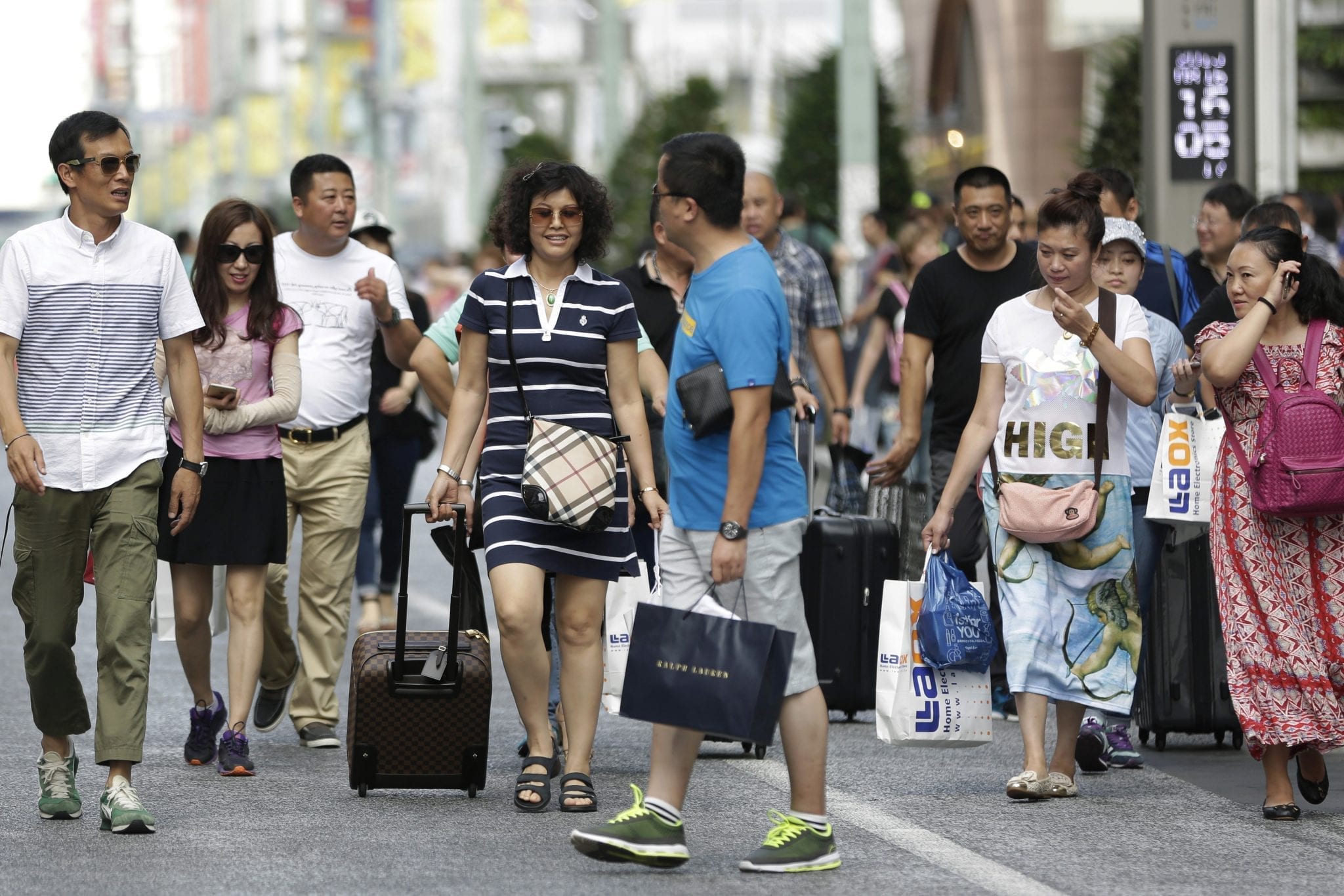
    South Korea has stepped up efforts to overhaul its dependence on Chinese shoppers by shifting the focus to other Asian countries.

    The country’s tourism sector – especially the duty-free retail industry – is bearing the brunt of the fallout triggered by the stationing of an advanced US missile defense system in Korea.

    In what appears to be acts of retaliation by Beijing against Seoul’s decision reached in July to host a Terminal High Altitude Area Defense (THAAD) battery, since Wednesday, all package trips from China to South Korea have been banned at the behest of authorities.

    China has vehemently objected to the missile move, saying THAAD’s high-power radar can be used to spy on its own military.

    This week, Chinese airlines have cut back on South Korea-bound flights and Chinese cruises are no longer making stopovers at local ports in popular tourist destinations.

    The slew of restrictions by Beijing has caused concerns among the local tourism and related sectors, such as the duty-free business, as they have heavily depended on Chinese visitors as sources of profit. Not only did they account for half of all foreign travellers last year, but they were big spenders who spent at least US$2000 per person buying things in Korea.

    In an effort to minimise the impact, Korea’s central and provincial governments are pushing to diversify foreign visitors to Southeast Asians and those from the Middle East, where Korean pop stars and TV drama series have gained huge popularity.

    Busan, South Korea’s largest port city, plans to bolster designing various tour programs that target Middle Eastern visitors, who are mostly big fans of Korean dramas, its city government said earlier.

    The city will also work with local businesses to develop medical and cruise tours for visitors from the Middle East, India, Mongolia and Russia.

    North Chungcheong Province, which has Cheongju International Airport, is pushing to increase flights to Taiwan, Vietnam, Russia and Japan.

    Related to such moves to diversify, the culture ministry said Thursday it plans to hold tourism exhibitions in Vietnam and Singapore next month to promote South Korea.

    Aside from state and provincial efforts, local firms, led by duty-free operators, are rushing to diversify their customer bases to tide over current difficulties. Hanwha Galleria, the duty-free unit of Hanwha Group, recently clinched deals with two travel agencies in the Middle East to secure foreign customers.

    It also plans to work with local hospitals to offer medical treatment services for Middle Eastern visitors as part of their tour programs.

    “The purchasing power of Middle Eastern customers on average is 30 per cent higher than people from China. We see (the THAAD issue) as a chance to boost our duty-free business through focusing more on individual tourists and VIP marketing,” Hanwha Galleria said.

  • Honestbee Thailand launches in Bangkok

    Honestbee Thailand launches in Bangkok

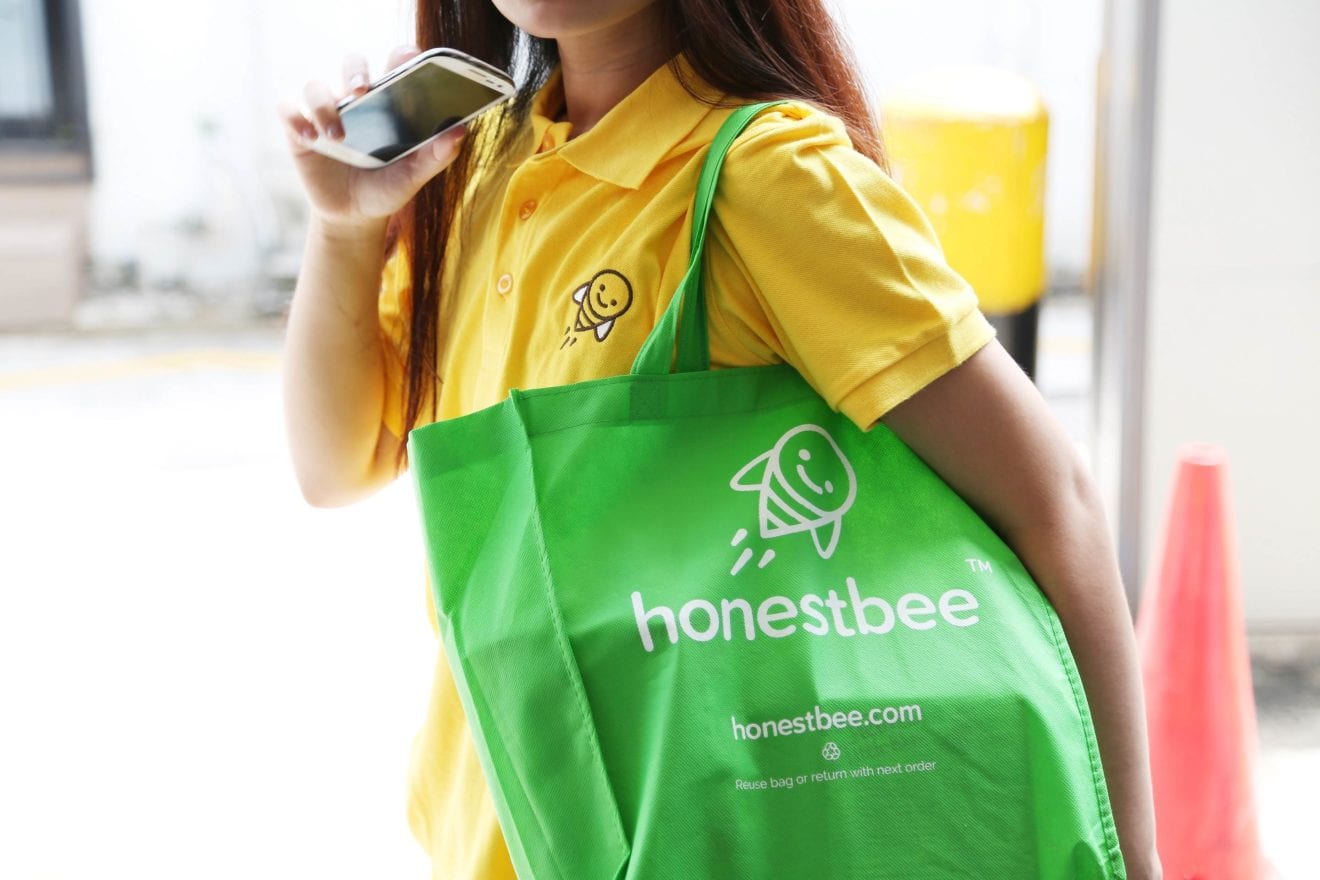
    Singapore on-demand online grocery concierge and delivery service Honestbee has launched in Bangkok.

    In partnership with retail chain Villa Market, Honestbee is offering customers a faster and easier way to obtain their daily groceries through concierge shoppers. Honestbee has been training the shoppers to select the best quality groceries and deliver them the same day.

    Under the partnership, Honestbee will use all Villa Market’s outlets throughout Bangkok as well as its bistro and cooking studio The Gastro, and the Villa Market Holiday Store.

    Honestbee co-founder/CEO Joel Sng says the company has been doing some trial runs during the past few months.

    Honestbee Executive - Mr Joel Sng

    He says Honestbee is committed to help Villa Market and other speciality stores work online through technology such as website and mobile apps, plus logistics. Honestbee also aims to create flexible jobs.

    Honest Bee website


    Honestbee’s one-stop app service will offer a range of more than 11,000 products from grocery chains and gourmet/specialty food suppliers. These include organic foods, fresh fruits, imported frozen meats, wines, specialty drinks, hampers, seasonal products and kitchen supplies from partners including Ahmad Tea London, Happy Flavour, Ja Guem Song, K-Market, Meyer, Perfect Earth Organics, Pierre Herme Paris, Pipper Standard, Simply W and Wishbeer, with more to come.

    Prices are the same as in store, and deliveries are to the customer’s doorstep. There is a special voucher promotion to help launch the service.

    As well as Singapore, Honestbee already has a presence in Hong Kong, Indonesia, Japan, Malaysia and Taiwan.

    Established in 1974, Villa Market was a retail pioneer when the only outlets to buy groceries in Bangkok were markets and small grocery stores.

  • China drives Tiffany Asia sales growth

    China drives Tiffany Asia sales growth

    Tiffany Asia sales rose 9 per cent on the back of new store openings in 2016, with a solid fourth quarter balancing out a difficult year.

    In the Asia-Pacific region, total sales of US$1 billion in the full year were approximately equal to the prior year and total sales of $284 million in the fourth quarter were 9 per cent up on 2015 as the company benefited from store network expansion.

    Tiffany Asia opened four new stores last year and another in Japan, taking its network to 85 in Asia-Pacific and 55 in Japan. Globally, it opened 11 and closed five.

    Same-store sales declined 9 per cent for the full year, but 2 per cent in the final quarter. On a constant-exchange-rate basis, total sales rose 1 per cent in the full year and 10 per cent in the fourth quarter, while comparable store sales declined 7 per cent and 1 per cent, respectively.

    “During the year, management attributed performance in this region to increased purchasing by local customers and declines in spending by foreign tourists. In addition, there was strong retail sales growth in China, increased wholesale sales in Korea, a decelerating rate of retail sales decline in Hong Kong and varying performance in other countries,” Tiffany said in its results announcement.

    In Japan, total sales rose 12 per cent to $604 million in the full year and 15 per cent to $185 million in the fourth quarter; comparable store sales increased 16 per cent and 19 per cent, respectively, while wholesale sales declined in both periods.

    On a constant-exchange-rate basis, total sales in the full year were approximately equal to the prior year while total sales in the fourth quarter were 8 per cent above the prior year with comparable store sales growth of 5 per cent and 12 per cent, respectively, partly offset by a decline in wholesale sales. Management attributed sales growth in both periods to higher spending by local customers, with declines in spending by Chinese tourists.

    Worldwide results

    Worldwide quarterly net sales increased 1 per cent to $1.2 billion and same-store-sales were unchanged from the prior year. Net earnings were $158 million, compared with $163 million in the prior year.

    For the full-year, sales reached $4 billion, down 3 per cent on 2015, reflecting a 5 per cent decline in same-store-sales. Performance was generally soft across all jewellery categories. On a constant-exchange-rate basis net sales and comparable store sales declined 3 per cent and 5 per cent respectively.

    Net earnings were $446 million, compared with the prior year’s $464 million.

    Chairman and interim CEO Michael J Kowalski said the company expects the macroeconomic and geopolitical challenges of the past year to continue in 2017.

    “We strongly believe that Tiffany’s strategies are sound and that we have meaningful growth opportunities. Our management team is focused on accelerating the execution of our strategies to deliver extraordinary products, communications and experiences that will delight our customers around the world. Through strong leadership and this accelerated execution, we believe we are well-positioned to deliver attractive total shareholder return over the long-term,” he said.

    Tiffany “failing to connect”

    Analyst Neil Saunders, MD of GlobalData Retail, said while Tiffany sales in the final quarter were soft, they at least indicate the declines which have plagued the company for a long period are starting to level off.

    But he maintains a lot of work lies ahead to reconnect with customers.

    “Although the business is making some progress, that progress is patchy and does not indicate a company that is back to full health. Indeed, under the detail of the numbers it is clear that Tiffany still has issues in a number of regions, including the Americas and Europe.

    “Part of the decline in the Americas is down to lower tourist spend which is impacting some flagship stores; that said, trend is now starting to dissipate and the effect on results is only slight compared to where it was at the start of the year. However, in the final quarter this was exacerbated by disruption at the Fifth Avenue flagship store which, due to its proximity to Trump Tower, saw customer traffic dip by around 14 per cent over November and December, and sales drop by 7 per cent in the final quarter. Given that this store usually contributes almost a tenth of company sales, it is reasonable to attribute some of the decline to this exceptional factor,” Saunders said.

    “The troubles, however, run wider than flagships and tourists. Tiffany is a brand that is increasingly overlooked by American consumers, especially younger demographics. Just as was the case at the start of the year, Tiffany is still failing to connect with many shoppers segments and continues to lose ground to rivals.”

    Saunders says jewellery has become a less-significant holiday purchase.

    “Jewellery is no longer at the top of the Christmas list. For a brand like Tiffany, where lavish gifting is an important driver of buying, such a trend is distinctly unhelpful.”

    Looking ahead, he says, it is clear Tiffany wants to re-establish its relevance and to project a much more distinctive image.

    “The advertising during the Super Bowl, which highlighted Lady Gaga as the face of the brand, was a good start. However, it is not enough: it needs to be accompanied by a step change in products, store environments, and the general approach to selling. There is a need for a more fundamental and deeper shift in the brand’s direction.

    “Fortunately, recent changes made to the management team, including the appointment of Reed Krakoff as chief artistic officer and the hiring of three new board members, should act as a catalyst for this change.”
  • MK Restaurants plans US$11m expansion

    MK Restaurants plans US$11m expansion

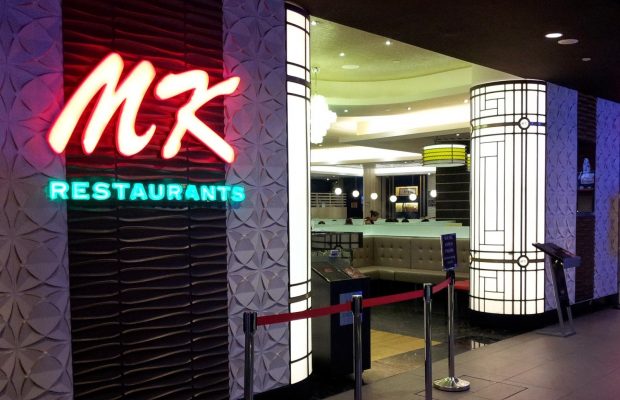
    Thailand’s MK Restaurants Group plans to invest about Bt400 million (US$11.3 million) a year over the next five years to expand in Thailand as well as its overseas markets, including Singapore.

    Chairman/CEO Rit Thirakomen says the group will open 15 MK branches in Thailand this year, together with 25 Yayoi and five Miyazaki Japanese restaurants. Three or four franchised restaurants will be added to each overseas market.
    “We are also open for acquisition deals with select companies in food, services and retailing, so they will be able to use our infrastructure and logistics,” says Thirakomen.

    MK Restaurants Group’s sales rose 4 per cent to Bt15.49 billion last year, but its profit spurted 13 per cent to Bt2.1 billion. It projects growth at 5 to 9 per cent annually for five years.

    The group’s first MK Live flagship restaurant was officially unveiled at The Emquartier shopping mall in Bangkok yesterday, targeting health-conscious and “lifestyle” consumers. It has 135 seats.

    MK’s other brands are Hakata Ramen, Le Petit coffee shop and bakery, Le Siam Thai Restaurant, Miyazaki Teppanyaki, MK Restaurants, MK Gold Restaurants, Na Siam Thai Restaurant and Yayoi Japanese Restaurant. As well as 600 outlets in Thailand, the group has 40 franchised outlets in Indonesia, Japan and Vietnam.

    It has also set up a JV in Singapore to run its restaurants there, including MK, Miyazaki and Yayoi.

    Rit says that under its third-generation management team, MK Restaurant Group has outlined a major expansion plan for this year to cash in on the burgeoning Thai food industry, predicted by Kasikorn Research Centre to grow at 2 to 4 per cent to about Bt390 billion this year.

    Assistant marketing director Tantawan Thirakomen says MK Live is a suki (hot pot) restaurant designed to attract teenagers, young adults and families.

    “The store is decorated to reflect a vegetable greenhouse, with natural decorative items – wood, trees and rocks – as well as hydroponic vegetables displayed on the walls,” she says.

    A feature is its Live Showcase open kitchen where customers can see the chefs working on their meals, including dim sum and meatballs. Also on the menu are lobsters from Canada, scallops from the US and Wagyu beef from Japan.

  • Delfi to exit venture with Meiji in Indonesia

    Delfi to exit venture with Meiji in Indonesia

    Singapore-based confectioner Delfi today announced plans to pull out of PT Ceres Meiji Indotama (CMI) – a confectionery manufacturing joint venture in Indonesia with Japanese pharma-to-food group Meiji Holdings.

    Delfi said the proposed sale of its 50% stake in CMI for US$8.3m will allow Delfi to “re-deploy financial and human resources to focus on growing our business, both in Indonesia and our regional markets”.

    Following completion of the sale, which is subject to various regulatory approvals, Delfi said CMI will cease to be an associated company and the joint venture agreement with Meiji will be terminated.

    Delfi said its involvement in CMI, a confectionery manufacturer and retailer, “has spanned more than 15 years and over that period, it played an instrumental role in developing the business of CMI and the Meiji brand in Indonesia”.

    However, following “an extensive review” Delfi said it believed CMI “is best suited to continue growing under the stewardship of Meiji”. The proposal to terminate the joint venture is the result of a “mutual and amicable agreement”, Delfi said.

    The proceeds of the sale “will further strengthen the financial position of the company and allow it to focus its resources on existing investments”, Delfi said. “Despite the sale… the relationship between Delfi and Meiji remains strong and Delfi’s subsidiary in Indonesia, PT Nirwana Lestari, will continue to distribute CMI’s products.”

  • Singapore retail sales rise

    Singapore retail sales rise

    The early timing of Lunar New Year has given Singapore retail sales a boost.

    Including or excluding motor vehicles, total Singapore retail sales rose 2 per cent in January. However, month-on-month they declined 1.3 per cent on December (excluding cars), reflecting the absence of Christmas trading.

    SG retail

    Data from Statistics Singapore shows total retail sales in January were estimated at $4.1 billion, $100 million higher than in January 2016.

    After seasonal adjustment, month-on-month retail sales of food & beverages declined 21.5 per cent in January and sales through mini-marts & convenience stores, furniture & household equipment, wearing apparel & footwear, recreational goods, medical goods & toiletries and department stores fell between 0.9 per cent and 9.2 per cent.

    On the other hand, retail sales of computer & telecommunications equipment, optical goods & books, supermarkets and watches & jewellery rose between 0.6 per cent and 8 per cent in January.

    Compared to January 2016, retail sales of supermarkets and food & beverages rose 13 per cent and 12 per cent respectively in January. Likewise, retail sales of petrol service stations, medical goods & toiletries, watches & jewellery, wearing apparel & footwear, department stores and computer & telecommunications equipment increased by between 1.2 per cent and 7.1 per cent.

    Conversely, retail sales of furniture & household equipment, optical goods & books, mini-marts & convenience stores and recreational goods decreased between 2.5 per cent and 9.7 per cent.

    Sales of food & beverage services

     SG F&B sales Jan.

    Sales of food & beverage services (seasonally adjusted) increased 5.2 per cent in January 2017 over the previous month.

    Compared to the same period last year, sales of food & beverage services rose 3.5 per cent in January 2017.

    The total sales value of food & beverage services in January 2017 was estimated at $739 million, higher than the $714 million in January 2016.

  • Indonesia holds investment week in Singapore

    Indonesia holds investment week in Singapore

    The government is holding an event to attract foreign investors called “Indonesia Investment Week Singapore Chapter 2017,” which started on Monday and will end on Wednesday.

    It is the first Indonesian Investment Week organized outside Indonesia.

    The event at Marina Bay Sands will feature various activities, including an exhibition, a business forum and one-on-one meetings with businesspeople, said Zaidin A. Zaiti, the president director of PT Eksibit Internasional, which organized the event.

    “The event is expected to welcome more than 5,000 international business people in Singapore,” Zaidin said on Tuesday, adding that it was expected to speed up infrastructure development in Indonesia.

    Indonesian Ambassador to Singapore Ngurah Swajaya said the two countries would soon commemorate their 50th year of diplomatic relations and the Indonesian Embassy would organize various events to mark the occasion.

    “The Indonesian Embassy in Singapore welcomes Indonesia Investment Week with the hope that it will be integrated into events to commemorate the 50th anniversary,” Ngurah said.

    Ngurah said the event was supported by a number of institutions including the National Economy and Industrial Commission, the Trade Ministry’s Export Development Directorate General, the Cooperatives and Small and Medium Enterprises Ministry, the Investment Coordinating Board, Agriculture Ministry and Industry Ministry.

  • Singtel announces tie-up with polytechnics to help F&B businesses go digital

    Singtel announces tie-up with polytechnics to help F&B businesses go digital

    Singtel has announced a new initiative with the two Singapore-based polytechnics — Nanyang Polytechnic (NYP) and Singapore Polytechnic (SP) — in Singapore to help F&B and retail businesses go digital.

    First, it will collaborate with the NYP – Singapore Institute of Retail Studies (SIRS) to help these SMEs hire digital professionals who will offer their expertise in e-commerce, retail analytics and digital marketing solutions such as SEO and Search Engine Marketing.

    These digital professionals will comprise of professionals, managers, executives and technicians (PMETs) who have been re-skilled.

    SMEs which sign up for this scheme will be able to claim up to 90 per cent in government subsidies.

    In addition, they can also seek additional support on social media marketing, online merchandising and analysis of online consumers from students and lecturers at the NYP’s Customer Experience and Analytics Centre.

    Next, Singtel will work with an integrated team of business, IT and communication students from SP to help F&B owners showcase their offerings on the 99% SME website — a portal set up by DBS and Singtel in 2015 which provides digital tools and resources to SMEs to boost productivity.

    Additionally, the SP students will help these businesses adopt Singtel’s Connected Restaurant solution. This solution offers an online reservation and pick up service.

    SP students will also offer recommendations and develop a suite of solutions to boost businesses’ products and digital and marketing capabilities.

    “Through the 99% SME movement, our collaboration with Nanyang Polytechnic and the Singapore Institute of Retail Studies are three-fold. First, it helps SMEs improve productivity, reduce costs, gain new revenue and scale their businesses,” said Andrew Lim, Managing Director, Business Group, Group Enterprise at Singtel, in an official press statement.

    “Second, PMETs are being re-skilled and re-employed while using their skills to help SMEs in their digital journey. Third, the students will acquire deep skills and develop entrepreneurial spirit, which prime them for their career development in the digital field.”

    Last week, Singtel and Lazada announced the launch of 99% SME e-marketplace – a dedicated portal hosted on Lazada Singapore’s website for SMEs to advertise their offerings and tap on a wider online customer base.

  • Genuine Broaster Chicken launches restaurant in Lucknow

    Genuine Broaster Chicken launches restaurant in Lucknow

    US restaurant chain Genuine Broaster Chicken (GBC) has launched at Singapore Mall in the Uttar Pradesh capital of Lucknow.

    It is the region’s first outlet of the fast-food chain, and franchise owner Atul Maurya says he plans to expand the brand throughout Uttar Pradesh and Uttarakhand this year.

    The Genuine Broaster Chicken company entered India two years ago in a partnership with F&B franchise-management company Yellow Tie Hospitality. The first outlet opened in Mumbai, with plans to roll out more than 300 outlets in 40 cities across India by next year.

    Founded in 1953, Genuine Broaster Chicken is known for serving pressure-fried chicken, but also offers burgers. It has a presence in 36 countries.