Tag: Singapore

  • Grab Indonesia buys e-commerce startup Kudo

    Grab Indonesia buys e-commerce startup Kudo

    Ride-hailing firm Grab Indonesia has acquired e-commerce startup Kudo for an undisclosed amount, striking its first deal since pledging to invest US$700 million in its largest market.

    Kudo helps consumers without bank accounts to shop online by connecting them with online merchants and other service providers across 500 cities and towns.

    Based in Singapore, Grab says it plans to accelerate the expansion of Kudo’s network while bringing more riders and drivers on to its own platform. The two companies also plan to explore new financial products such as consumer loans and insurance.

    Former payment-processing company Euronet Worldwide executive Jason Thompson has been hired by Grab to head GrabPay. This digital wallet for riders was introduced last year.

    Grab’s Indonesian investment promise entails building its digital payments network over the next four years in a bid to win over the 260 million people in its largest market. The company’s car- and motorcycle-hailing businesses grew more than 600 per cent in Indonesia last year.

    Valued at more than US$3 billion, Grab intends to set aside as much as US$100 million to bankroll early-stage domestic startups in mobile and financial services. It has started establishing research centres in Bangalore, Ho Chi Minh City and Jakarta to complement engineering offices in Beijing, Seattle and Singapore.

  • Digital ingenuity triumphs over logistics challenges at DHL Asia Pacific Innovation Day

    Digital ingenuity triumphs over logistics challenges at DHL Asia Pacific Innovation Day

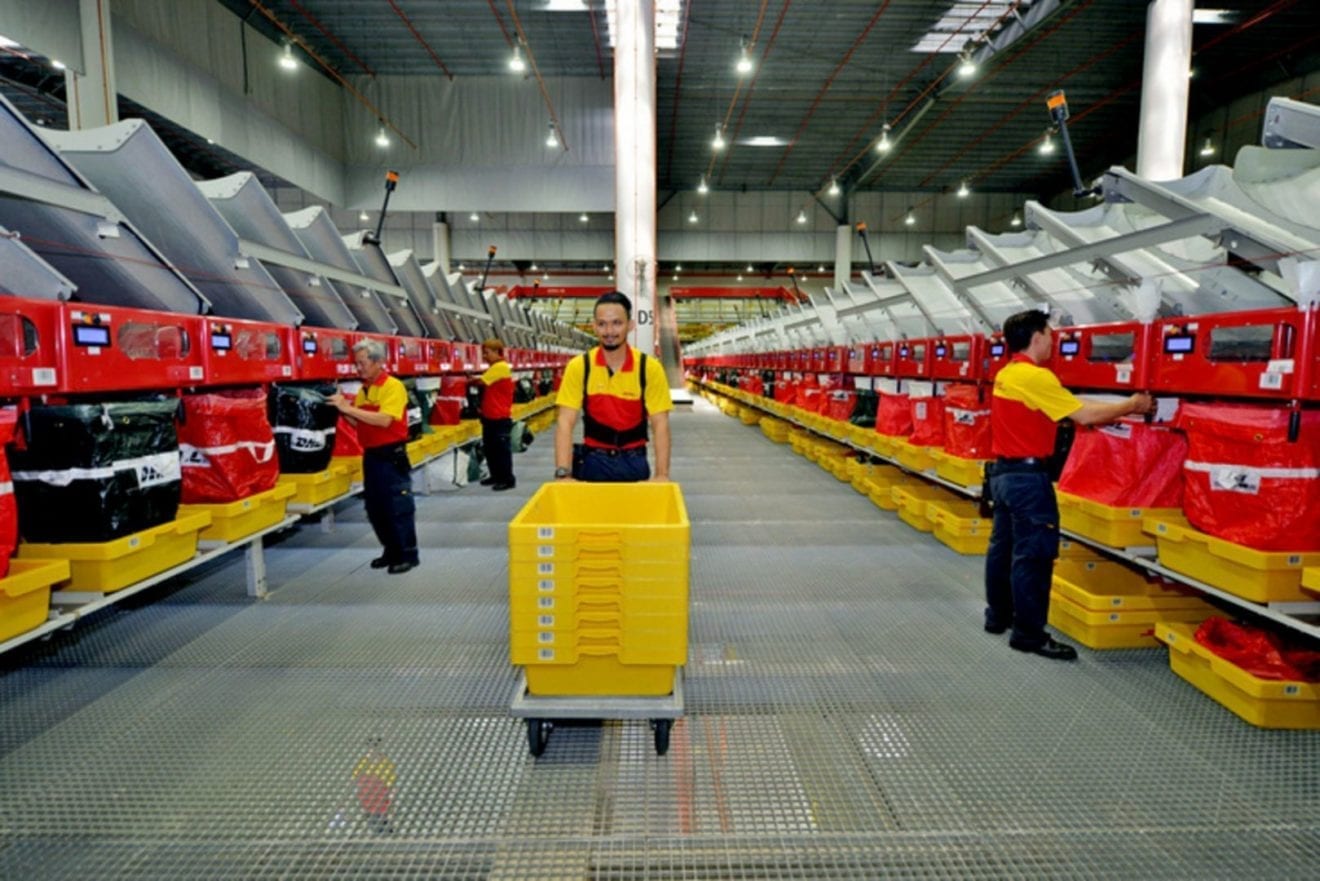
    Supply chain optimization platforms, digital payment, and robotics and unmanned aerial solutions were amongst the inventions which took center stage at the DHL Asia Pacific Innovation Day yesterday, hosted at the DHL Asia Pacific Innovation Center in Singapore. Focused on driving the future, DHL Asia Pacific Innovation Day showcased some of the latest trends and technologies shaping the logistics industry, awarding projects that have already applied these ideas to real-world challenges.

    One such project, which received the Most Innovative Customer Award, involved DHL collaborating with Schindler Lifts to develop a bespoke web-based tracking and optimization platform for their operations in Australia. Based on two years’ worth of past shipment data, the platform allows the elevator manufacturer to shave more than AU$500,000 from their annual running costs. The platform gives Schindler Lifts full visibility over the warehousing, shipping, and last-mile delivery of its elevator shipments, allowing the business to optimize end-to-end supply chain movements based on their required delivery dates.

    “The platform has enabled visibility at every stage of the process from collection to final delivery at the specified site address. Should any unexpected changes occur, both DHL and Schindler have the ability to instantly adjust with the amended delivery dates,” said George Lekkas, Strategic Procurement Manager, Schindler Lifts Australia. “Many logistics players are touting the potential of real-time tracking and data analytics to transform supply chains, but DHL has put those ideas into practice in a way that not only overcomes our unique shipment handling challenges, but can easily scale to meet ongoing growth in the Australian construction industry.”

    The Innovation Day also saw an award go to a digital payment solution developed by DHL eCommerce subsidiary Blue Dart, which enables couriers in India to collect cash-on-delivery (COD) payments through mobile Point of Sale devices and 15 different secure digital wallet options instead of physical cash. The system, which rolled out just as the Indian government took INR 500 and 1,000 notes out of circulation, enabled delivery staff to not only continue but significantly increase collection of COD payments, saving them more than 29 man-months between October 2016 and February 2017.

  • SQ, Ethiopian Airlines to expand codeshare agreement

    SQ, Ethiopian Airlines to expand codeshare agreement

    Star Alliance members Singapore Airlines and Ethiopian Airlines plan to expand their codeshare agreement on June 1 to also cover the daily non-stop flights of Ethiopian Airlines from Addis Ababa to Singapore, according to a statement.

    Under the agreement, Singapore Airlines customers can also fly through Ethiopian Airlines’ vast intra-African network, while in turn, Ethiopian Airlines customers will have access to multiple destinations across the Singapore Airlines network.

    The airlines’ codeshare agreement started in 2011 and the expanded codeshare flights were still subject to regulatory approvals, the statement added.

    Singapore Airlines marketing planning senior vice president Tan Kai Ping said that the extended agreement was part of the carrier’s efforts to continuously expand its network in Africa, Asia and the southwest Pacific.

    Meanwhile, Ethiopian Airlines strategic and alliances vice president Girma Shiferaw said that the agreement would offered the best connectivity options with one ticket and a single check-in at the first boarding airport.

    “It will also play a critical role in enhancing investment, trade and tourism ties between a rising Africa and business-friendly Singapore.” Shiferawa said.

    Singapore Airlines, with its subsidiaries, operates a modern passenger fleet of more than 100 aircraft to 130 destinations around the world, while Ethiopian Airlines serves more than 90 international destinations across five continents with more than 240 daily departures.

  • Cooking to coding: What free HTML classes mean for Indonesian maids

    Cooking to coding: What free HTML classes mean for Indonesian maids

    Jamilah’s newly obtained skills are beyond anything most would expect from an Indonesian maid working in Singapore – she is not only a cook and a cleaner, but a website builder.

    Jamilah learnt programming languages such as HTML and CSS at a free, eight-week coding course for domestic workers provided by Indonesia’s Creative Economy Agency. The agency plans to expand the programme, launched in Singapore in January, to Hong Kong later this month, then to Malaysia, Taiwan and Saudi Arabia.

    To cater to maids’ strict schedules, the classes are held every Sunday from 10am to 1pm. In Singapore, the demand to enrol was so high the programme was forced to move those about to leave the city state to the front of the line – such was the case with Jamilah.

    “I’m very keen on learning how to code,” Jamilah told. “I’m hoping to have my own business when I return to Central Java and use the website to market my products and bring in more customers from the internet.”

    Students are expected to bring their own laptops to class, and this posed a problem for Jamilah since her old computer was broken. “So I bought a brand new Dell laptop that set me back SG$499 (HK$2,765), or a month’s salary. But it’s worth it.”

    The 41-year-old said she was blessed to have an understanding employer who allowed her to take the course. “My boss even downloaded GitHub for me,” the mother of four said, referring to a popular software development platform.

    By advancing the skill sets of maids such as Jamilah, Indonesia aims to empower workers with entrepreneurial skills that will help them set up businesses once they return home.

    About a third of Indonesia’s six million migrant labourers work as housemaids in places such as Singapore, Hong Kong, Taiwan and the Middle East. In 2015, Indonesian migrant workers sent home about US$9.4 billion in remittances, according to official data. However, once they return home, a relative lack of workplace skills often prevents them from securing well-paying jobs or establishing their own businesses.

    Indonesia has a workforce of about 125 million people, 60 per cent of whom did not get past middle school or high school, according to Minister of Labour Hanif Dhakiri.

    “They do not have the skills needed to have a proper job that would lift them out of poverty,” he said. “We fully support the coding programme for maids as a solution to increase their self-sufficiency post tenure.”

    Through the programme, the government also hopes to bolster the talent supply in Indonesia’s creative workforce to 13 million people by 2019, about a million more than last year.

    “We need to have our own talents so, when it comes to software programming, we no longer have to depend on foreign companies,” said Triawan Munaf, head of the state agency that founded the programme.

    The coding course for maids is a twist on a similar course designed for stay-at-home mothers in Indonesia called “Coding Mum”, organised by the same agency. Launched in February last year, Coding Mum began in six cities and will be expanded to three more this year to meet demand. Its graduates either run their own businesses or are employed as front-end developers and beta testers by local tech firms such as e-commerce company Tokopedia.

    “We have positive results from Coding Mum, where housewives from all ages up to 60 years old have joined the programme,” said Izak Jenie, Coding Mum’s co-founder. “After Coding Mum, we felt challenged to teach coding to housemaids.”

    But teaching how to code to mostly undereducated housemaids is not without challenges. Despite sharing the same lessons with the stay-at-home moms, mentors need to be more patient and understanding with maids, since most of their experiences with the internet are limited to social media services such as Facebook or WhatsApp.

    “However, their motivation to succeed seems bigger. In Singapore, for example, they asked me questions outside of the classroom, sometimes until 1am,” said Henry Sutjipto, the programme coordinator for countries outside Indonesia.

    The classes for maids also require Indonesian-speaking tutors who are willing to volunteer, Sutjipto said.

    These same challenges face the programme as it looks to start classes in the New Territories of Hong Kong, starting on April 23.

    “In Kuala Lumpur it’s easy to find mentors because there are many Indonesians there,” Sutjipto said. “It was difficult to find one in Hong Kong, but we found two information technology lecturers from Indonesia who are currently studying in Guangzhou and are willing to come to Hong Kong to teach.”

    The programme has piqued the interest of Anggraeni Ustianingsih, an Indonesian maid living in Tseung Kwan O who has been working in Hong Kong for five years and whose tenure will expire in November.

    When she returns home, she hopes to expand her business of selling shumay (steamed fish dumplings) to a broader online market.

    “My boss is supportive because the class is scheduled on my day off,” the 42-year-old from Tegal, Central Java, said.

    She has a Lenovo laptop, and is ready to do any homework from the course in her spare time.

    Due to the high interest shown by maids in learning programming and coding, the Indonesian government also plans to bring the course to villages that have sent many migrant workers overseas. It will not, however, expand the programme to cities in the Middle East, other than Medina in Saudi Arabia.

    “It’s hard to implement the programme in the Middle East because housemaids there are not even allowed to get out of the house,” said Dhakiri, the labour minister.

    Back in Singapore, Jamilah dreams of becoming a tailor in her home town after her contract to work in the city state expires on September. But a question lingers: “I’m still not sure whether to return to Indonesia or renew my contract here… I still need more money to send my children to college.”

  • Louis Vuitton Changi duplex to open in January 2018

    Louis Vuitton Changi duplex to open in January 2018

    Louis Vuitton is to open a two storey store at Singapore’s Changi Airport – its first passenger terminal duplex in the world.

    The Louis Vuitton Changi store is scheduled to open in January 2018 as the centrepiece of a new garden in Terminal 3’s departure transit hall.

    Designed as a glasshouse it will be built in the centre of the planned Crystal Garden, which Changi management say is “inspired by artistic floral centrepieces” and a new space “chicly adorned with tiered garden beds featuring a curated selection of flora and spheres of artisan glass sculptures”.

    The 530 sqm Louis Vuitton Changi store will be first the airport store in Asia Pacific to be directly managed by the French luxury retail group and feature a tailored product mix suited to travellers.

    Michael Burke, chairman and CEO of Louis Vuitton, says his company had waited for “the perfect moment” and “the perfect place” to open the new store at Changi Airport.

    “Louis Vuitton is a brand intrinsically related to the history of modern travel. Given the right place and the right timing, it was more than natural for Louis Vuitton to create a space inside Singapore Changi Airport, dedicated to modern travelers.”

    Since it opened in 1981, Changi Airport has pioneered the concept of airport gardens, now well-loved among travellers.

    “This is the first time Changi is integrating a feature garden with a retail store – a testament to how the airport constantly strives to rejuvenate its award-winning amenities and offerings to enhance the Changi Experience.”

    Changi Airport Group CEO Lee Seow Hiang says Louis Vuitton shares the airport company’s vision to redefine the future of luxury retail in an airport.

    “The revolutionary duplex store, set amidst an elegant Crystal Garden, will become a distinctive attraction for passengers who fly through Changi Airport, and we look forward to embarking on an exciting journey of discovery with them when the store opens.”

  • Y3 Technologies opens new office, signs MoU with GOGOVAN

    Y3 Technologies opens new office, signs MoU with GOGOVAN

    Supply chain and logistics innovation providers Y3 Technologies (Y3) has officially launched its new 6722 sq. ft. office space. Located in heart of Singapore’s supply chain logistics hub – Bulim Avenue, the move to the new office housed within Supply Chain City highlights its commitment towards further providing businesses with top-notched technological logistics solutions.

    In line with that, Y3 Technologies also unveiled an MoU signing with hyperlocal on-demand delivery provider, GOGOVAN. As Asia’s pioneer app-based logistics platform, GOGOVAN connects users with real-time delivery services. Under the MoU, GOGOVAN will be part of Y3’s supply chain ecosystem, offering enhanced delivery capabilities to Y3’s end-to-end supply chain management system. Both entities will provide joint efforts involving collaborations between management systems and physical last mile deliveries.

    “We are extremely excited to be operating out of our new office space, with the move playing an integral part of our transformational journey over the past 18 months. Not stopping short of our aim to provide continued service excellence as well as business expansion, the partnership with GOGOVAN will further enable us to better cater to businesses in this digital age,” said Marc Dragon, CEO, Y3 Technologies.

    “It is a great opportunity to be able to collaborate with Y3 Technologies and we are extremely honored to be part of this partnership. This collaboration will enable us to be part of Y3’s supply chain ecosystem. We would also like to congratulate Y3 on the new office opening that we witnessed today,” shared Patrick Wong, country manager, GOGOVAN.

    Apart from the MoU announcement, attendees also had the opportunity to witness Y3’s Innovation Showcase and experience first-hand the company’s technological solutions and offerings. CEO, Marc Dragon, also carried out an insightful presentation addressing some of the key trends and challenges that businesses currently face, and the ability of supply chain technology solutions to empower businesses and enable them to overcome these challenges.

    Y3 has also recently acquired leading CRM and eCommerce solutions provider Ascentis, and is actively involved in the Chongqing Connectivity Initiative (CCI), Singapore’s third Government-to-Government (G2G) collaboration with China.

  • Consortium contracts ASN for INDIGO cable system

    Consortium contracts ASN for INDIGO cable system

    A consortium consisting of Asian operators, Google and telecommunications infrastructure company Superloop have commissioned a new subsea able system linking Singapore, Indonesia and Australia.

    Singtel, Indonesia’s Indosat Ooredoo as well as Australia’s Telstra and education sector network provider AARNet have joined Google and Superloop’s SubPartners to join the INDIGO cable system.

    The cable system, formerly known as APX West and Central, will be deployed by Alcatel-Lucent Submarine Networks.

    It will span around 9,000km between Singapore and Perth on the west coast of Australia, and onwards to Sydney on the east coast. A ranching unit with two additional fiber pairs will connect Singapore and Jakarta.

    Construction of the cable is expected to be complete by mid-2019. The system will use an open cable two fiber pair desgin, providing consortium members with spectrum ownership and giving them the ability to independently adopt technology advancements and upgrades as required.

    “With internet data consumption growing by 70% in Asia last year alone these sorts of investments in international networks are critical for meeting the needs of connected consumers and businesses,” Telstra group MD for global services and international David Burns said.

    “The construction of INDIGO is timely to meet the rising demand for high-speed broadband between Asia and Australia. This cable system complements our global connectivity that links Asia, the US, Europe, Australia and the Middle East,” Singtel Enterprise VP for carrier services Ooi Seng Keat added.

    Superloop has inherited its membership in the INDIGO consortium via the recent acquisition of subsea cable operator SubPartners for $2.5 million. As part of the acquisition Superloop has provided a guarantee involving the meeting of SubPartners’ construction capex costs for the project.

  • Singapore to raise $815m from spectrum auction

    Singapore to raise $815m from spectrum auction

    Singtel has emerged as the biggest spender in Singapore’s latest mobile spectrum auction, bidding nearly half of the total S$1.14 billion ($815.2 million) set to be raised.

    Singtel will pay S$563.7 million for 75MHz of spectrum, consisting of 40 MHz of 700-MHz spectrum, 10 MHz of 900-MHz spectrum, a right of first refusal for a further 10 MHz of 900-MHz spectrum and 15MHz in the 2.5-GHz band.

    The auction of spectrum in the four bands had four winning bidders. StarHub was the next highest bidder, committing to pay S$349.6 million for 30 MHz of 700-MHz spectrum, 20 MHz in the 2.5-GHz band and a right of first refusal to 10 MHz of 900-MHz spectrum.

    M1 bid S$208 million for 20 MHz of 700-MHz spectrum and a right of first refusal to 10 MHz in the 900-MHz frequency band.

    New market entrant TPG Telecom will meanwhile pay S$23.8 million for 10 MHz of 2500-MHz spectrum. TPG last year won the auction to become Singapore’s fourth mobile operator after bidding S$105 million for a provisional allotment of 60 MHz of 900-MHz and 2.3-GHz spectrum.

    A total of 175-MHz of spectrum was allocated during the auction, and this includes the 900-MHz spectrum due to be re-farmed following the retirement of 2G services. But the total allotment was 50 MHz lower than the 225 MHz requested by the industry, because no other spectrum was available for allocation.

  • Singapore Airlines locks in daily Airbus A350 for Melbourne

    Singapore Airlines locks in daily Airbus A350 for Melbourne

    Singapore Airlines is locking in its advanced Airbus A350 jet for a year-round schedule between Melbourne and Singapore starting May 11, 2017.

    The sleek jetliner has made a number of short-term appearances on the route, but later this year it’ll be running daily as Melbourne-Singapore flight SQ208 and the SQ207 return leg.

    Travellers at the pointy end can relax in the Star Alliance member’s latest business class seat, evolved from that of the  Boeing 777-300ER flagship.

    It’s an “evolutionary, not revolutionary” approach, reported AusBT’s Suzanne Wu from one of the first SQ A350 flights – “and that’s not a bad thing. Not a whole lot was broke, so not a whole lot needed fixing.”

    Melbourne’s SQ218/SQ217 is also running on an A350 until June 30, after which it will revert to the Airbus A380 superjumbo.

    Asian rival Cathay Pacific already has one Airbus A350 on the Melbourne-Hong Kong route as CX104/105, with a second slotting into CX134/135 from October 29, while Thai Airways says its own on-again off-again Melbourne A350 flights should launch before the year’s end.

    April sees Singapore Airlines celebrate 50 years of flying to Australia, and is tipped to debut its newest Airbus A380 – fitted with next-generation first class suites and business class seats – on the Singapore-Sydney route in October 2017.

    The redesigned first class suites will be fewer in number – down the current superjumbo’s 12 to between six and eight – but much larger in footprint, and have been relocated to the upper deck.

    Next year will see Singapore Airlines restart direct flights between Singapore and the USA, with both New York and Los Angeles in line for an ultra-long range version of the A350 dubbed the A350ULR.

    This long-legged jet will carry all-new business class seats compared to the Melbourne A350, but only around 170 seats – some 80 less than the airline’s regular A350-900s – in order to minimise fuel burn and maximise range for the 18-19 hour journey.

  • M1 to deploy vEPC solution from Huawei

    M1 to deploy vEPC solution from Huawei

    Singapore’s M1 Limited has announced plans to launch the nation’s first cloud-based virtual enhanced packet core (vEPC) network solution with Huawei.

    The deployment is aimed at further enhancing M1’s core network resiliency, while also enabling dynamic and more efficient use of network resources to support wide-ranging Smart Nation use cases, and shortening the time to market in the deployment of new IoT services.

    By harnessing the latest cloud-computing and Network Function Virtualization (NFV) technologies, M1’s fully distributed and agile packet core network will be able to dynamically deploy core resources wherever they are needed, and provide flexibility to swiftly scale up and down resources based on customer demands.

    Furthermore, with software functions separated from the underlying hardware platforms, the cloud-based virtualized core network allows faster “in-service” software upgrades, as well as significantly reducing downtime for maintenance and testing of new services. Through this, M1 expects to improve its operational efficiency and strengthen network resiliency.

    “The deployment of our agile cloud-based virtualised core network will strengthen our network resiliency and enable us to deploy our resources more efficiently, M1 CTO Denis Seek said.

    “The highly scalable nature of the network will also enable us to meet the dynamic resources demands of new products, shorten the time-to-market innovative products, and enable us to reduce implementation and maintenance costs.”

  • StarHub has no plans to buy M1

    StarHub has no plans to buy M1

    Despite speculation, Singapore operator StarHub has no intention of acquiring or merging with struggling rival M1, according to reports.

    StarHub’s management does not plan to acquire M1, Singapore’s smallest major operator whose major shareholders recently revealed are conducting strategic reviews of their ownership.

    But the research report noted that it will be up to StarHub’s majority owner ST Telemedia to decide whether to pursue a purchase or merger.

    ST Telemedia owns 56% of StarHub, and is itself wholly owned by Singapore state investment company Temasek Holdings.

    But even if ST Telemedia is interested in a deal, the report notes that Singapore’s regulator is not likely to permit a deal that would result in spectrum holding even if it would allow another operator to acquire M1.

    Maybank Kim Eng has maintained a sell rating for StarHub shares due to what it says are structurally poorer margins.

    StarHub has separately recently announced the appointment of a new chief for its enterprise business group – former Integrated Health Information Systems CEO Chong Yoke Sin.

  • Courts Singapore Looks to Tackle Southeast Asia’s Growing E-commerce Market

    Courts Singapore Looks to Tackle Southeast Asia’s Growing E-commerce Market

    Courts has recently unveiled its plans to capitalize on the growth of e-commerce in Southeast Asia by rebuilding its online business, originally launched in 2012 with an offering of 7,000 products that has increased to 14,000 today, through a partnership with premier e-commerce agency SmartOSC.

    Under these new plans, Courts will further penetrate into Singapore’s growing e-commerce market, which is estimated to reach US$6.42 billion by 2020, according to research firm Statista.

    Known as a Singapore based retailer specialising in furniture and consumer electronics, from its initial establishment, Courts has seen growth throughout Southeast Asia, most notably in Malaysia and Indonesia.  In April 2016, the business revamped its traditional brick and mortar stores to engage with customers more effectively – the two offline “testbeds” opened in Causeway Point, Singapore and Sri Damansara, Malaysia. As a result of that,  in parallel with an expected boost in productivity from traditional retail stores, the brand now looks at radically reshaping its e-commerce business, moving towards an integrated shopping experience both in-store and online.

    Stan Kim, Court’s Group CIO, explained that their strategy is really about creating an omni-channel experience for customers. The limitations of the current e-commerce framework, including extending functionalities, handling the increasing amount of visitors, as well as personalising the shopping experience, do not fit into the overall commerce strategy.

    “We were looking for partners who not only have technical expertise but more importantly understands how e-commerce and brick-and-mortar stores work together to create a seamless experience for modern shoppers. SmartOSC is a perfect match given their experience in building connected commerce solutions for top retailers, and their capability has been recognized by Magento as the platform’s enterprise solutions partner,” explained Stan Kim.

    Built upon the Magento Enterprise 2.0, combined with innovative technologies for omni-channel, marketing automation, and content management, Courts is looking to establish a new industry-standard for mobile first and user-centric experience. A real-time single view of inventory and customer profiles is activated through integrations with ERP and retail management systems. The brand will also enhance the click and collect offering, which is currently contributing about  50% of Courts’ online sales.

    The platform has also been architected to accompany and facilitate future expansion plans, ready for easier roll-out to other regional markets. Although Southeast Asia’s e-commerce is still in its infancy (relative to European and North American markets), it is expected to grow 32% year on year. The region is currently estimated to be worth $5.5 billion and expected to reach $88 billion by 2025, according to a report by Google and Singaporean sovereign wealth fund Temasek.

    When asked for a statement on the partnership, Stan Kim commented “We’ve been working closely with SmartOSC to ensure an integrated and smooth transition to the new platform. We’re very excited with the current progress – SmartOSC’s depth of knowledge in e-commerce, resource scalability and innovative development has helped us realize our omni-channel potential. We cannot wait to launch this to the public.”

  • Singtel launches global optimized internet service

    Singtel launches global optimized internet service

    Singtel has launched an optimized internet service promising to provide enterprises with up to ten times faster access to cloud applications.

    The operator’s new ConnectPlus Optimized Internet Service provides assured internet connectivity between enterprise’s offices worldwide by taking advantage of the ConnectPlus IP VPN network comprising around 430 PoPs worldwide.

    Enterprises can take advantage of the network by connecting their offices worldwide using a hybrid WAN configuration capable of delivering assured, high-performance connectivity, which will also allow enterprises to expose less critical data to attack over the public internet.

    The second component of the service is the ConnectPlus Optimised Internet Cloud Access service, which Singtel said can overcome latency problems to boost cloud connection speeds tenfold.

    “Many enterprises use the internet to access their applications on public clouds as it is convenient and widely available. However, internet access can be affected by unstable connectivity or latency issues,” Singtel CEO Bill Chang said.

    “With the Singtel ConnectPlus Optimized Internet service, enterprises are not only assured of reliable and secure internet connectivity, they can also raise their productivity by accessing their data and business solutions in the cloud much faster.”

  • Burger King, Foodpanda launch April Fool’s Day campaigns

    Burger King, Foodpanda launch April Fool’s Day campaigns

    A Whopper-flavoured toothpaste and a weekend staycation where you can chill in a panda costume… those were the first two April Fool’s Day pranks orchestrated by marketers this silly season.

    Putting aside for a moment the question of whether launching such promotions several days in advance really qualifies as an April 1 stunt, the issue is whether the marketing programs are designed to make the news media look foolish in an era of growing chatter about “fake news”, or are just an entertainment for consumers.

    Foodpanda Singapore issued a media release on Wednesday promoting a “wellness retreat” dubbed The Pandanctuary.  The food delivery service cited “UK research” (not referenced) as finding that more than 10,000 people “enjoy dressing up as animals to escape the pressure of modern living”.

    In the release, MD Aspa Lekka (her name checks out on Google) says: “With studies showing that dressing up like an animal is scientifically proven to reduce stress levels, we wanted to give our busy customers the opportunity to see what it’s like to live like our ‘chilled out’ mascot for the weekend – the beloved panda.”

    The release was distributed by Leon Tan, an account executive with W, whose signature file references an award for “Best new PR consultancy in Asia Pacific”. We sent Tan an email asking him to confirm it was an April Fool’s Day stunt. He didn’t reply.

    But the sheer detail of the promotion was impressive enough to fool the likes of mainstream media including the South China Morning Post, which appeared to treat it seriously in an online article.

    According to the release, Foodpanda has partnered with Studio M Hotel on Nanson Road to create “the ultimate panda experience, decking out bespoke ‘panda rooms’ with bamboo plants, play ropes and large water bowls”. Catering will be provided by Jamie’s Italian.

    The biggest hint of mischief in the campaign was at the bottom of the application form where those interested in participating in the “pandamonium” had until “23.59 on March 31” to apply.

    Here’s a video of The Pandanctuary:

    A whopper

    Meanwhile in Europe, Burger King France and its ad agency Buzzman claim to have teamed up with “experts” to create a signature toothpaste with extracts that recreate the distinctive barbecued beef flavour of its Whopper burger (also note that in western slang, “whopper” means a massive lie).

    They even created a realistic 60-second commercial to promote it, in movie-trailer style with the memorable tagline “the Whopper’s taste is so good, some people will do anything to keep it in their mouths”:

    As Marketing Interactive reported online, considering April Fool’s Day is this week “we can safely assume this is a joke – but we will report back if we get our hands on a sample”.

  • Katrina Group plans So Pho restaurants for Hong Kong

    Katrina Group plans So Pho restaurants for Hong Kong

    Singapore’s Katrina Group, an F&B business specialising in multi-cuisine concepts, has taken a step toward opening So Pho restaurants in China and Hong Kong.

    It has signed a non-binding memorandum of understanding with fast-casual restaurant group Ajisen (China) Holdings regarding collaboration on the restaurants. The parties will negotiate and determine if this will be through a franchise or JV, with a definitive agreement expected to be finalised within the next few months.

    Ajisen China, which is listed on the mainboard of Hong Kong Stock Exchange, has a chain of restaurants under different brands in China and Hong Kong.

    Katrina founder/CEO/executive chairman Alan Goh says the collaboration is a step toward the company’s aim of growing its overseas presence and diversifying its revenue stream.

    Katrina Group owns and runs 33 restaurants in Singapore under nine different brands, including Bali Thai and Streats, which services streetfood-style dishes. It also has two restaurants in China.