Tag: Singapore

  • Singapore establishes data science consortium

    Singapore establishes data science consortium

    Singapore’s National Research Foundation (NRF) will set up the Singapore Data Science Consortium, a national partnership that aims to improve strengths in data science and analytics.

    The consortium includes the National University Singapore (NUS), the Nanyang Technological University (NTU), the Singapore Management University (SMU) and the Agency for Science, Technology and Research (A*STAR).

    The consortium will strengthen collaborative research between institutes of higher learning, research institutes and industry in data science R&D, with the aim of facilitating industry adoption of the latest data science and analytics technologies to address real-world challenges. It will also train Singapore’s pipeline of talents with data science capabilities.

    The consortium will help the industry to identify and shape their data science problem statements, match companies to potential R&D partners, and conduct industry engagement events and workshops, in order to facilitate adoption and commercialization of data science technologies.

    Companies in six sectors will be engaged – finance, healthcare, retail, manufacturing, logistics and transport. Through the consortium, companies will be able access the latest data science technologies and expertise from academia, access publicly-funded intellectual property to develop new products and services, or create solutions to existing market challenges.

    Data has been identified as a significant growth multiplier for Singapore. Regionally, more than 50% of Southeast Asia’s data centers are located in Singapore. The ability to analyze complex data and predict relationships will build on Singapore’s existing strengths, creating data-driven solutions that can improve the lives of citizens or build products and services for regional or global markets.

    “The Singapore Data Science Consortium will build stronger public-private R&D collaboration by bringing together the key stakeholders – public agencies, data scientists and companies – in the data science ecosystem to realize innovation from the knowledge generated by our research efforts,” NRF CEO professor Low Teck Seng said.

    “It is through this synergy that we create solutions that have direct relevance to meeting industry needs or in addressing our national challenges.”

  • Singapore banks seek to simplify online transactions

    Singapore banks seek to simplify online transactions

    Four banks in Singapore are participating in a pilot that aims to explore ways to simplify online banking transactions with the use of the government’s MyInfo online authentication service.

    The pilot is backed by the Smart Nation and Digital Government Office (SNDGO) and Government Technology Agency (GovTech), in collaboration with the Monetary Authority of Singapore (MAS).

    Prospective customers of United Overseas Bank (UOB), Development Bank of Singapore (DBS), Oversea-Chinese Banking Corporation (OCBC) and Standard Chartered Bank (StanChart) with a registered profile on myinfo.gov.sg will be able to apply for a new bank account without needing to submit supporting documentation.

    This aims to provide greater convenience and a faster transaction time for consumers while benefiting banks in the form of higher productivity and lower compliance costs.

    Banks in Singapore currently require users to submit copies of their identity, income and CPF documents for applications. With MyInfo, customers can pre-fill these Government-verified personal particulars into the necessary forms, and avoid the need to submit supporting documents.

    MyInfo has been rolled out for SingPass users since May 2016 for popular government digital services such as balloting of the Housing Development Board’s Build-To-Order (BTO) flats. MyInfo is scheduled to be available on most government digital services with SingPass two-factor authentication (2FA) by 2018.

    Jacqueline Poh, Chief Executive, GovTech, said, “We want to explore how citizen-centric government digital services can be extended to better help industry and transform service-delivery to citizens. We have seen good take-up of MyInfo, and hope that this public-private collaboration will provide citizens with even more benefits.”

    Sopnendu Mohanty, Chief FinTech Officer, MAS, said: “MAS is excited by the opportunities that national infrastructure platforms can bring to the financial industry, such as hassle-free online account opening and instant account activation in the near future. MAS would like to urge the industry to reimagine their customer journey for instant gratification as they leverage platforms like MyInfo.”

    Michael Gorriz, Group CIO, Standard Chartered Bank, said: “Central database and central data-keeping is absolutely the way forward. If you look at the 3 parties – the Singapore government, the citizens and the banks or other entities – it is really a win-win-win situation. So first of all, for the consumer, he only has to enter the data once and then he decides who has access to the data. We as a Bank, we win, because we get qualified data from the consumer, which he puts all due diligence and care in to keep it up to date.”

    After this pilot, MyInfo may be extended later this year to other popular transactions such as applications for credit cards and home loans. MyInfo could also be extended to other sectors with strong citizen touch points such as insurance.

  • Starbucks Reserve opens 10th Singapore store in Changi airport

    Starbucks Reserve opens 10th Singapore store in Changi airport

    American coffee house Starbucks has opened its 10th Reserve café in Singapore. Located inside Singapore’s Changi airport, the 24-hour airport outlet has opened in T3’s public area, in the United Square section.

    While patrons will be familiar with Starbucks, Starbucks Reserve is the coffee chain’s more high-end version of a café or coffee bar.

    Every year, Starbucks coffee buyers travel to coffee-growing regions to find and purchase some of the world’s finest Arabica coffee beans. Starbucks Reserve then offers these to its customers, which are in limited quantity and only available at select Starbucks Reserve stores and online.

    On the ground, Starbucks Reserve allows customers to ask exactly how they would like their coffee brewed at the bar: Starbuck’s proprietary Clover brewer, the Chemex coffeemaker, the traditional Coffee Press and Pour-overs, mimicking a more boutique coffee house.

    While there are several other Reserve outlets in Singapores, the Changi store is the first to feature the interactive Coffee Bar, along with the Black Eagle espresso, and the Nitro Cold Brew, which is served from the tap.

    However, Reserve customers can still order normal Starbucks coffee as seen available at the regular stores.

    For the last financial quarter ending January 26, Starbucks reported revenues of $5.7 billion, up 6.7% on a year-over-year basis.

    Starbucks is a roaster, marketer and retailer of coffee. As of October 2016, the company operated in 75 countries.

  • Apple reportedly opening first Singapore store in May

    Apple reportedly opening first Singapore store in May

    Apple is reportedly opening its first store in Singapore this month, according to CNBC, which will also serve as the U.S. tech giant’s first Southeast Asia store.

    Located at the city’s Knightsbridge mall on Orchard Road, the hotly anticipated Apple store – which spans five storefronts and climbs four storeys, is due to open May 22, a retail fit-out worker has told CNBC.

    CNBC managed to speak with the Legends Interior employee onsite last Thursday after finishing work on the retail space, who said the store is planned to open May 22.

    When contacted via email, the Apple’s head of corporate communications for Southeast Asia and India. Katrina Tran, told CNBC, “We don’t have any new announcements about Apple retail.”

    The mega-store has been veiled in secrecy since works began on the site some two years ago, with problems relating to the construction in a busy part of central Singapore being the reason behind such delays.

    Singapore’s Ministry of Manpower (MOM) issued a stop work order to the contractor for the worksite, Legend Interiors, a retail interiors specialist. The order went into effect on October 24, 2016 and was lifted on November 16, 2016.

    MOM told that the stop work order was issued “for unsafe conditions relating to work at height, traffic management, scaffolding, electrical installation and lifting operations that were observed during an inspection at the worksite.”

    A sign outside the building site originally said the expected completion date was October 31, 2016. Then it was changed to January 30, 2017, before a date was erased completely.

    A source with knowledge of the project also told CNBC about problems with a neighbour — the Grand Royal Orchard Singapore hotel. That source said there had been a conflict over logistical and infrastructure issues related to the construction

    DP Architects PTE, the architect for the Singapore project, declined to comment on the new store, citing nondisclosure agreements, while civil and structural engineer, Rankine & Hill, and the mechanical and electrical engineer, J. Roger Preston, also avoided commentary.

    Apple is notorious for secrecy with new stores and is known for strict non-disclosure agreements for the company’s contractors and suppliers, including $50 million payouts for each breach.

  • Singapore leads region by online video consumption

    Singapore leads region by online video consumption

    Singaporeans lead the region in online video consumption, spending two hours every day tuning into video content, according to the results from a new YouTube Consumer Insights study conducted by Google Singapore and Kantar TNS.

    The survey of 1,035 Singaporeans aged 16 to 60 found that 78% of Singaporeans are turning to YouTube as their first stop for their daily dose of video. And perhaps not surprisingly, 6 in 10 agree that they visit YouTube for one video and end up looking at others.

    The study also found that Singaporeans are watching videos away from a desktop, with more than half of YouTube watch-time originating from mobile devices. Moreover, more than half are finding more content that they want to watch on YouTube than on TV, according to the study.

    Google pointed to recent research that it conducted with Ipsos that found attention to paid advertising on YouTube is 84% higher than advertising on TV. In addition, 95% of video ads on YouTube are also played with sound on, ensuring brands’ messages reach their audiences as intended.

    There is no question that the popularity of online video is at an all-time high; Google says that the hours of YouTube content uploads from Singapore has doubled compared to the previous year.

    “YouTube is popular with Singaporeans of all ages – who come to YouTube for entertainment, education, shopping and much more. With Singaporeans using YouTube to search for products, businesses looking to grow should use YouTube to tell their story and build their brands,” said Joanna Flint, country director of Google Singapore.

  • Digitalisation tops agenda on opening day of Sea Asia 2017

    Digitalisation tops agenda on opening day of Sea Asia 2017

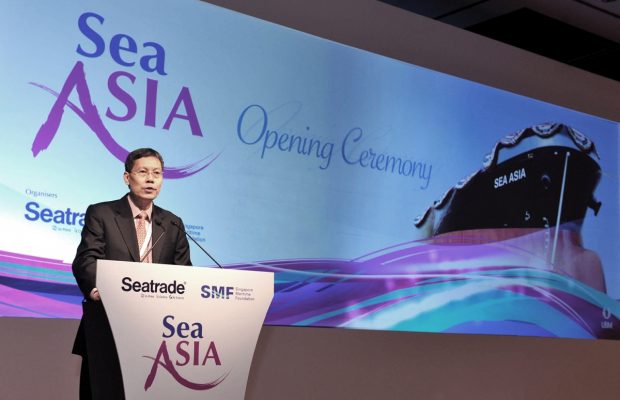
    Industry leaders kicked off discussions at the sixth edition of Sea Asia with a focus on digitalisation and the need for industry players to embrace this new reality in order to remain competitive in today’s market environment. In particular, industry leaders emphasised that there needs to be a change in mindset towards one that is more receptive to digital transformations in the industry.

    Taking place in Singapore until Thursday, 27 April, Sea Asia 2017 brings together leaders of the maritime and offshore industries to discuss, debate and analyse challenges and opportunities facing the sector.

    Speaking at the opening ceremony, Coordinating Minister for Infrastructure and Minister for Transport, Khaw Boon Wan, said that with the advent of digitalisation in the industry, the Government is taking steps to help companies in Singapore develop capabilities to succeed in the future.

    For example, the Maritime and Port Authority of Singapore’s (MPA) enhanced Maritime Cluster Fund now provides more co-funding for companies that want to use technology to optimise their processes or transform their business models.

    Khaw also highlighted the importance of preparing the local workforce for transformations driven by digitalisation in the industry, adding that the jobs of tomorrow will be markedly different from today.

    “We have to ensure that our maritime manpower is equipped to handle transformation, and for some of them, to drive the transformation,” said Khaw.

    Experts on the panel of the Sea Asia Global Forum commented on the need to provide an enabling environment that allows for the maritime workforce to learn and be comfortable with the idea of digitalisation in the industry.

    “When it comes to digitalisation, the word to think about is not disruption, but transformation. There are many opportunities that come with the transformations that digitalisation brings to the industry and hence, we have to learn to change the way we’re thinking about it. The maritime industry needs to create an environment that allows for its people to experiment with new technologies and learn how to use them.

    “It’s all about changing people’s mindsets on digitalisation and making them confident that they can work with the changes,” said Piyush Gupta, CEO of DBS Group who was one of the panellists of the Sea Asia Global Forum.

    Despite this, industry leaders still recognise the ongoing need for a more human element in the industry.

    Oskar Levander, VP Innovation, Engineering & Technology – Marine, Rolls-Royce, said at ‘The Fourth Industrial Revolution: Threat or Opportunity?’ session: “Digitalisation is changing everything in the industry, from the way ships are run to how business models are shaped. With digitalisation, I believe there will eventually be remote and autonomous shipping; but this is not to say that all ships will be unmanned and that no crew is needed.”

    With expanded technology also comes added risk — another factor companies need to consider when adopting a more digital approach.

    Speaking at the same session, Michael Montoya, chief cybersecurity advisor, Microsoft Asia, said: “Companies must embrace technology… but as you expand your digital footprint, you do open yourself to risks in the form of cybersecurity. However, there are ways to protect yourself from that risk, and there are smart ways that you can implement that will allow you to continue on that maturity journey to put much better services and systems in place.”

    The industry leaders also highlighted the importance of coming together to discuss and analyse new trends such as digitalisation at a regional platform such as Sea Asia.

    Seatrade chairman Chris Hayman said: “Since the first event in 2007, Sea Asia has trebled in size and we are expecting more than 16,000 participants from around 80 countries for this year’s edition.

    “This event gives us all the opportunity to hear from the leaders of the industry in this region, and their counterparts from around the world,” he said.

  • Singapore to help SMEs compete in the global marketplace

    Singapore to help SMEs compete in the global marketplace

    Finance Minister Heng Swee Keat’s Budget 2017 has placed a strong emphasis on helping businesses stay competitive and grow in an increasingly global marketplace.

    Helping Singapore SMEs Go Digital

    Mr Heng has emphasized the importance of digital capability as the Singapore economy continues to mature. He says it is essential that SMEs in particular embrace the digital age and adopt new and innovative digital solutions. Digital technology has the power to transform all businesses, but many SMEs lack the capability to use digital technology.
    The new Go Digital Programme is a government ‘leg up’ for SMEs and an exciting new addition to a series of strategies to strengthen small and medium-sized businesses in Singapore. More than $80 million will be made available from the government to fund these initiatives.

    Industry Digital Plans

    Industry Digital Plans will be provided by the government to help businesses use technology at each stage of their growth. Sectors targeted by the Go Digital Programme include retail, wholesale trade, food services, logistics, security and cleaning. Mr Heng indicated that he felt these sectors were the ones where digital technology could make the biggest difference to productivity levels.
    Network of SME Centres.

    Start-ups and SMEs can seek basic ICT help in person from SME centres, where advisors can offer help with everyday technology solutions. If businesses need more specialist advice, specialist advice will be made available from new SME Technology Hubs, which are being set up by IMDA and will complement existing SME Centres. SMEs can also seek advice and funding support for pilot ICT solutions already in place.
    Corporations have also been included in the Go Digital Programme. There is support available for them to help them adopt impactful and interoperable digital solutions.

    Cybersecurity Measures

    Mr Heng recognises that SMEs need to strengthen their data and cybersecurity, so the Cyber Security Agency of Singapore will be working with professional bodies to help increase cybersecurity and ensure business networks function smoothly.
    The Singapore government is also keen to promote innovation in technology, and will be creating Regulatory Sandboxes where rules and regulation is suspended, so companies can experiment with FinTech platforms like City Index and self-driving vehicles.

    Technology Innovation

    A Tech Access Initiative is designed to help small companies build prototype products. The Agency for Science, Technology and Research (A*STAR) will work with companies, providing access to its advanced machine tools so small businesses can prototype and test. SMEs will also have access to the Headstart programme so they can co-develop intellectual property licences.
    Most analysts and the majority of SMEs have welcomed the digital initiatives, as they say it fills a gap in the ecosystem, but some experts believe the measures don’t go far enough. However, these changes are definitely a step in the right direction, and with a strong network of SME centres in place throughout Singapore, thousands of small and medium-sized businesses now have access to help as they work to digitise their businesses.

  • Funan woos consumers with cutting edge showsuite ahead of 2019 opening

    Funan woos consumers with cutting edge showsuite ahead of 2019 opening

    The public can get a preview from this Sunday of what to expect when Funan mall opens its doors in the final quarter of 2019.

    Funan, an integrated development redeveloped from the former Funan DigitaLife Mall in the heart of Singapore’s Civic & Cultural District, has scored a retail sector-first with a one-of-a-kind experiential showsuite, landlord CapitaLand Mall Trust said at the launch of the suite yesterday.

    Located at the junction of High Street and Hill Street, the two-storey showsuite brings to life a new live-work-play paradigm with cutting-edge immersive virtual reality simulation technology.

    It incorporates design elements reflective of Funan’s centerpiece “Tree of Life”, a wood-and-steel structure extending from Basement 2 to Level 4 that will house a variety of open platforms and studios that promote new forms of retail, experimentation and social learning, CapitaLand Mall Trust said.

    The showsuite will open to the public daily from 11am to 9pm, from this Sunday, which coincides with this month’s edition of car-free Sunday SG in the Civic District.

    In conjunction with opening festivities, visitors can expect activities that include watercolouring and terrarium workshops, conversations with creative entrepreneurs, and an exclusive InstaMeet helmed by popular Instagrammer Yafiq Yusman, known for his unique perspective on architectural photography on the social media site.

    “Funan sets out to be an aspirational and experiential space that fosters collaboration among complementary partners, to spark inspiration and discovery for consumers.

    “And this commitment to break new ground has been carried through to the way Funan’s showsuite is designed — accessible, community-centric and experiential,” said Mr Wilson Tan, CEO of CapitaLand Mall Trust Management.

    With a project development expenditure of S$560 million, Funan will have a total gross floor area of 887,000 sq ft, including 500,000 sq ft for retail, 266,000 sq ft for offices and 121,000 sq ft for 279 apartment units.

    Funan has received commitments for about 25 per cent of its total retail net lettable area of 324,000 square feet, the landlord said.

    Local theatre company W!ld Rice’s 380-seat theatre spanning 18,000 sq ft will be Singapore’s first theatre venue within a commercial complex that is designed, managed and programmed by a theatre company.

    Some of the other key tenants at the new Funan include IT retailers Newstead Technologies and AddOn Systems, supermarket chain FairPrice Finest, cinema operator Golden Village, Kopitiam food court and rock climbing facility Climb Central.

    Well-known photography store TK Foto will have a dedicated test zone for drone filming.

    Funan, which will have one floor entirely dedicated to IT, aims to merge smart shopping technologies such as drive-through collection for products ordered online, a pick-up concierge and a basement storage facility for retailers.

    In a separate announcement yesterday, Challenger Technologies said it will open its flagship store at Bugis Junction Basement 1 this weekend. Challenger, the largest homegrown IT products and services provider in Singapore, had closed its 53,000 sq ft flagship megastore at Funan DigitaLife Mall in late 2015 after CapitaLand Mall Trust said it would redevelop the mall.

    The new 14,000 sq ft flagship brings the total number of Challenger stores in Singapore to 40. The flagship store offers a smart, interactive experience featuring 15 lifestyle concept zones backed by data analytics to guide shoppers in their purchases. The integrated retail space, with carefully curated merchandise, experiential areas and engaging displays, aims to draw shoppers in to explore and experience before making an informed purchase, Challenger said.

  • Illva Saronno brands in the spotlight in Singapore

    Illva Saronno brands in the spotlight in Singapore

    Italy’s Illva Saronno returns to this year’s TFWA Asia Pacific Exhibition & Conference with the aim of consolidating its brand presence and meeting new clients.

    The brand’s main focus will be on its trademark Disaronno, which is also available as a limited edition with the Disaronno wears Etro bottling.

    Each year, Disaronno forges a partnership with an Italian fashion designer to produce a bespoke bottle. This year’s upcoming collaboration remains under wraps for now, says the brand.

    Also on display will be new packaging for acclaimed coffee liqueur Tia Maria, which is backed by a cerebral marketing campaign fusing traditional marketing with neuroscience and psychology to test customers’ reactions to products and brands.

    Meanwhile, Italian aperitif Rabarbaro Zucca, which is made from an infusion of rhubarb rootstocks and a secret collection of rare herbs, will also be presented to buyers.b

    Zucca is prepared using the root of the true Chinese rhubarb, which grows in mountainous regions of the Gangsu province.

    DISARONNO RISERVA

    Furthermore, Disaronno Riserva – a blend of Disaronno Originale and blended Scotch whisky from the Highland and Speyside Islands – will be presented to buyers.

    The limited edition, which features an eye-catching bottle design, marries the fluid in oak barrels that contained Marsala wine reserves, with Illva Saronno believing the product is particularly well suited for buyers in Asia Pacific.

    Wines from Duca di Salaparuta and Florio will also be showcased, including Duca Enrico, made from Nero d’Avola grapes harvested in an area of south-western Sicily that benefits from a unique relationship between its micro-climate, vines and land.

    Domenico Toni, International Sales Director, Illva Saronno comments: “Asia Pacific is still a very new region for us, and we have been slowly introducing our brands over the past year.

    “We are planning on greatly building our business there, in both travel retail and domestic, over the next 5 years, so the TFWA Asia Pacific Exhibition & Conference is a vital resource for us to accomplish our goals.

    “We first exhibited at the show last year, and received plenty of interest from buyers. We have high hopes that this year will be even more successful for us.”

    Visitors to the TFWA Asia Pacific Exhibition & Conference can sample Disaronno’s famous Disaronno Sours cocktail at the TFWA Asia Pacific bar, situated on level 4 of the convention centre, from Monday to Wednesday at selected times.

  • Prime retail rents in Singapore dip 0.4% in Q1

    Prime retail rents in Singapore dip 0.4% in Q1

    Marina Centre, City Hall, and Bugis precincts reported lower rents. The challenging retail scene was proven by the drop in island-wide prime retail rents, which slipped 0.4% in the first quarter of the year.

    According to the Singapore Retail Bulletin by Knight Frank, this was largely due to lower rents in the Marina Centre, City Hall and Bugis precincts.

    Rents of prime spaces in Marina Centre, City Hall and Bugis precincts fell by 3.7% YoY as landlords continue to offer attractive rental packages to draw retailers.

    On a yearly basis, prime rents at the Orchard Road reported precinct reported a 0.7% slump.

    Meanwhile, average rents of prime spaces in suburban malls fell by 2.1% compared to one year ago.

    “Whilst well-established and well-managed malls generally report strong footfall trends, some other suburban malls still grapple with weakening patronage and having to achieve the right retail trade mix in a bid to improve attractiveness for consumers,” Knight Frank noted.

  • Indonesia, Singapore partner to develop startups

    Indonesia, Singapore partner to develop startups

    Local co-working space EV Hive is collaborating with Singapore’s working space BASH to provide places for startups from both countries to develop and thrive. These spaces with assist startups with business development and funding.

    “Regional companies based in Singapore can use EV Hive as a launch pad to the Indonesia market. Indonesia companies can use BASH as a stepping stone to access the regional stage,” said Willson Cuaca, managing partner of Singapore-based venture capital firm East Ventures, during the launch of the collaborative project on Tuesday. East Ventures manages EV Hive.

    Startups at the later stage (series B and above) of development can leverage support from EDBI, the global investment arm of the Singapore Economic Development Board.

    East Ventures, BASH management or SGInnovate, a development body wholly owned by the Singapore government, will work on more programs to expand talent, markets and knowledge-sharing for the customers of both co-working spaces.

    EV Hive currently manages two co-working spaces in South Jakarta and one in the Breeze mall in Banten. It plans to reach seven offices by the end of the year.

    EV Hive has facilitated the development of 36 startups, six of which are Singaporean.

    BASH, meanwhile, manages an integrated startup space in Singapore.

  • Lazada loyalty program link to other ecommerces

    Lazada loyalty program link to other ecommerces

    A Lazada loyalty program for Singapore shoppers looks set to be expanded to other Asian markets.

    Alibaba-owned Lazada has teamed up with Netflix and Uber Technologies – the first time the companies have jointly created an online rewards program, according to Lazada CEO Maximilian Bittner.

    The program is aimed at consumers who primarily go online for shopping, entertainment, transportation and food delivery.

    Alibaba acquired a controlling stake in Singapore-based Lazada for US$1 billion last year. The “LiveUp” program links their online services, from Netflix and UberEats to grocer RedMart and Taobao marketplace.

    Consumers pay S$28 (US$20) a year for such benefits as six months of Netflix streaming, discounts on Uber rides and free delivery on Lazada or Taobao purchases. A mobile app will be rolled out in the second half of the year.

    “Singapore is the market on the cutting edge of validating what we think consumers might want, so we will focus on Singapore first,” says Bittner, who expects to add more partners.

    E-commerce in Singapore, which accounted for 0.9 per cent of total retail there in 2003, has grown from 2.4 per cent in 2013 to 4.8 per cent last year, according to Euromonitor data.

    Bittner and RedMart co-founder Vikram Rupani hatched the loyalty program over breakfast on Christmas Eve before approaching Netflix and Uber. “Their decision to do it was very fast because they have the same goal,” says Bittner.

    Uber, which entered Singapore four years ago, will offer members benefits including free rides and promotions. “This is just the beginning,” says Uber Singapore GM Warren Tseng.

  • Maritime industries need to gear-up for digital transformation

    Maritime industries need to gear-up for digital transformation

    Singapore’s port and maritime industries need to gear up to deal with digitalization and disruption of global transport supply chains – that was the message of Khaw Boon Wan, Coordinating Minister for Infrastructure and Minister of Transport at the official opening of Sea Asia 2017.

    The role of hub ports such as Singapore, the world’s largest container transhipment hub, are set to change as digitalization takes a hold.

    “The landscape is changing rapidly digitalization is disrupting and transforming the global transport supply chains,” Khaw said.

    “The lines between e-commerce, shipping and supply chains are blurring, for example Amazon is looking at having its own shipping and logistics operations. Freight forwarders will also have noticed Maersk and CMA CGM partnerships with Alibaba to allow shippers to book space on containerships online.”

    The downside to disruption is that there would be winners and losers, and Singapore would have to “gear up” to be on the right side of that dividing line.

    Painting a picture of the new landscape Khaw said: “Nearer to home we are seeing the rise of multi-modal logistics infrastructure and the growth of other hubs in Asia fuelled by e-commerce. These trends have also sparked talk about the emergence of new trade routes and even a multi-hub network in the longer term where no single hub will enjoy superior connectivity.”

    Exactly how these developments will pan out no-one knows but the Minister said Singapore had ensure it was ready for transformation.

    “Superior connectivity will be measured in multi-modal terms and maybe as much digital as physical,” he stated.

    While digital disruption has loomed large over many sectors such as taxis, hotels and retail, Singapore Maritime Foundation chairman Andreas Sohmen-Pao highlighted that goods and commodities will still require ocean shipping.

    “I know there has recently been plenty of talk about the challenges facing the maritime industry buts lets remember this industry is a cornerstone of the modern global economy even as we advance into an era of modern technology the vehicles that provide our Uber rides, the steel that holds up our Air B&B houses, and the goods that arrive in our Amazon boxes have typically spent some of their life on a ship,” Sohmen-Pao said in his opening speech.

  • IMDA warns StarHub over October outages

    IMDA warns StarHub over October outages

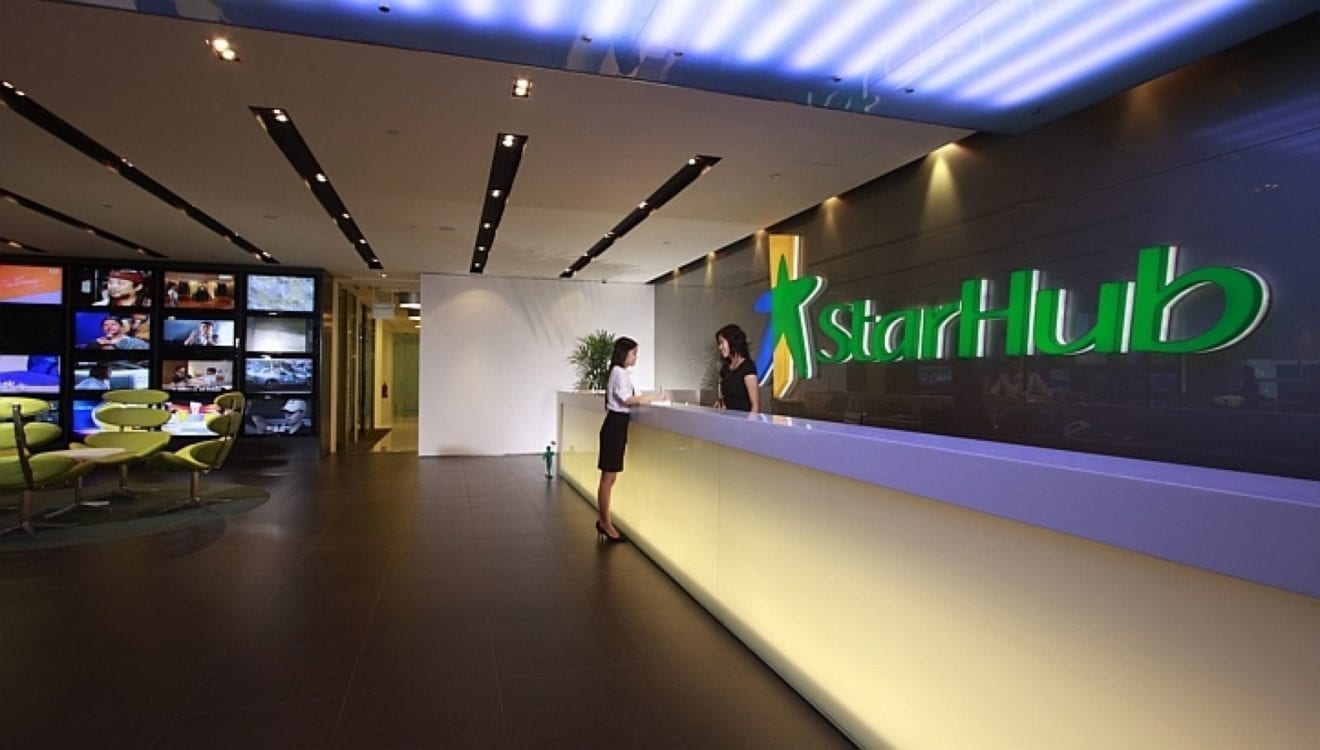
    Singapore’s Infocomm Media Development Authority (IMDA) has issued StarHub a warning over two brief home broadband outages from October last year, after finding that the disruptions were caused by a surge in legitimate DNS traffic.

    StarHub Online’s home broadband network was disrupted on October 22 and October 24, causing fiber customers in parts of the market to lose connectivity intermittently for around 130 minutes and 55 minutes respectively.

    The initial symptoms of the outage bore the hallmarks of a DDoS attack, and the timing coincided with the massive DDoS attacks on DNS provider Dyn in the US.

    But IMDA said an in-depth investigation involving reviewing logs of StarHub DNS servers and consumer devices identified as responsible for the disruptions did not uncover any evidence to suggest that the cause was a DDoS attack.

    Instead, a higher-than-usual build-up in StarHub DNS traffic just prior to the disruption appears to be to blame, as these mostly legitimate DNS requests eventually overloaded part of StarHub’s home broadband infrastructure.

    IMDA and the Cyber Security Agency of Singapore (CSA) identified areas of improvement in StarHub’s network infrastructure during the investigations, and said StarHub has taken steps to mitigate the risks of further outages, including boosting home broadband DNS server capacity and enhancing traffic monitoring.

    In an emailed statement, StarHub said it noted the findings that the outages did not fit typical DDoS patterns.

    “The authorities have acknowledged the fact that we have increased our DNS processing capacity and taken additional security measures to better avert similar incidents,” the statement reads.

    “We assure our customers and the regulator that we will continuously review our security posture and enhance network resilience in partnership with network and security providers.”

  • M1 shareholders may seek sale to China Mobile

    M1 shareholders may seek sale to China Mobile

    Major shareholders in Singapore’s M1 have reportedly approached China Mobile with an offer to sell their majority stake in the operator.

    Malaysia’s Axiata Group, Singapore Press Holdings and Keppel T&T – which together hold a controlling 61% stake in M1 – are reviewing their investments in the operator in the wake of lackluster financial results and intensifying competition.

    The shareholders have now reached to China Mobile as well as other prospective bidders with a proposal to sell the stake, citing unnamed sources.

    Negotiations are still at an early stage and it is unclear whether China Mobile was receptive to the offer, the report notes.

    M1 is worth around S$1.9 billion ($1.36 billion), and has long been considered an acquisition target due to its smaller size and diverse shareholder base. Rumors were circulating last month that rival StarHub may be considering acquiring or merging with M1, but later reports disputed those rumors.

    The report adds that Singapore trading rules would require the purchaser of the stake to make an offer to buy out the rest of M1.

    The review comes ahead of the arrival to the market of new entrant TPG Telecom, the Australian fixed line operator that recently won the auction to become Singapore’s fourth mobile operator. TPG is also planning a mobile foray in its home market.