Tag: Singapore

  • Spirits retail salon The Proof Flat opens in Singapore

    Spirits retail salon The Proof Flat opens in Singapore

    A new spirits and cocktail retail ‘salon’ has opened in Singapore. Dubbed The Proof Flat, the new space is located on HongKong Street and is the third retail experience launched by Proof & Company — the firm also behind award-winning bar concepts 28 HongKong Street and Manhattan Bar.

    The Proof Flat is a residential apartment, situated on the second floor of a 1940s’ Singapore shop house. It is home to the fictional EC Proof, the embodiment of Proof and Company and an ‘advocate for extraordinary spirits’.

    “We imagined the apartment as the place where EC’s friends would visit him to hang out and relax with bartenders and distillers, sampling some of the world’s best artisanal spirits,” said Proof and Co founder Spencer Forhart, a press release. The bricks and mortar retail salon is for those who appreciate fine spirits and cocktails – and value insider advice from some of the industry’s most prolific drinks experts.

    Customers enter a stylish ‘home’ where they can taste and purchase a wide array of spirits (roughly 350 bottles), as well as get the full set of apparatus required to setup their own at-home bar. The Proof Flat also accepts personal appointments and includes bar tools, bar pantry items and books on cocktails and spirits.
    The store design is by the group’s long-time collaborators, Matt Shang and Paul Semple from multidisciplinary design studio, Hassell.
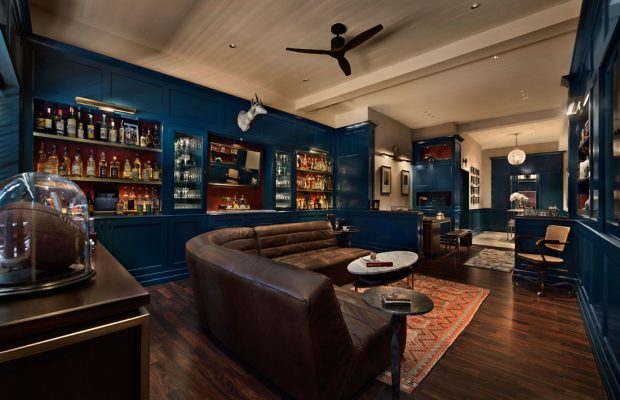
    Inside, a neutral palette of whites and marble floors meets glossy cabinetry and panelling of teal blue with burgundy contrasts.

    Key styling points include customised furniture pieces from Indonesia, an ethnic rug from Turkey, as well as reindeer pelts and portraits of fictionalised characters, known to the elusive EC Proof.

    The Proof Flat also boasts an e-commerce store found at ecproof.com.

  • Decathlon opened its biggest Singapore store

    Decathlon opened its biggest Singapore store

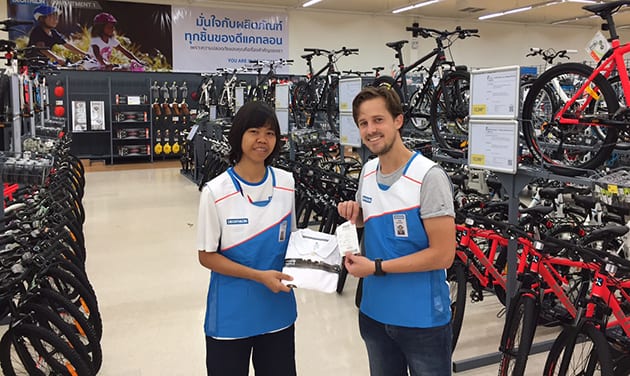
    Sporting goods retailer Decathlon‘s biggest store yet in Singapore has opened its doors on Saturday (May 13) morning.

    Already boasting two mega stores here in the Republic – one at City Square Mall and another at Bedok, its third and largest outlet is located at the FairPrice Hub, Joo Koon.

    Spanning 4,000 square metres of sporting retail space, the outlet will also be the site of Decathlon’s new e-commerce hub which will provide a multi-channel sales experience.

    Shoppers can order items online through its new website which will be launched in June. Sports advisers on site will pick the items directly in the store and package them for delivery within the same day. It is aiming for delivery within six hours.

    Shoppers can also opt for the “Click and Collect” option and pick items up from any of Decathlon’s three stores.

    Additionally, the store has 10 experience zones and Singapore’s first slack line, golf-putting green, mini-football arena and a running track with two different surfaces. Customers will be able to test equipment before purchasing them, and can return equipment if unhappy with the product.

    “Since we launched our first e-commerce and retail store in Singapore, we have seen a remarkable response from Singaporeans,” said Bastien Grandgeorge, Decathlon Singapore’s country leader.

    “Here we have 62 sports, and all under the same roof. We want the best experience for our customers and accessible sport for all.

    “Even if you’re not wealthy, anyone should be able to access sport.”

  • OCBC buys Australia bank’s retail, wealth business in Singapore, Hong Kong

    OCBC buys Australia bank’s retail, wealth business in Singapore, Hong Kong

    With Australian banks retreating from the retail business in Asia, OCBC has scooped up the retail and wealth business in Singapore and Hong Kong of Australia’s largest business bank, National Australia Bank (NAB), to bump up both its mortgage portfolio and customer base.

    Observers said the deal reflects the surging costs for foreign banks in competing against local players in the retail and wealth space in Asia.

    While there is undoubted growth in wealth in the region, non-domestic players would have to spend significantly to expand their product and services suite beyond a boutique presence.

    “In American football, there’s a phrase, ‘Go big or go home’. And based on a cost-benefit analysis, it was time to go home,” said one observer, pointing to NAB’s exit from the Asian wealth business.

    The negotiations for the profitable business unit took about three months, The Business Times understands. The acquisition, in effect, has Singapore’s second-largest bank buying up about US$1.7 billion of mainly residential mortgage loans, with more than half of the properties in the major Australian cities of Sydney, Melbourne and Brisbane, OCBC announced on Thursday. Notably, over 50 per cent of these mortgage loans are booked in Hong Kong.

    The purchase price will match the value of the loan-book at the time that the transaction closes, which is expected to be by the end of the year.

    To be clear, the purchase comes with a US$3.05 billion deposit portfolio comprising a mix of currencies that include the Australian, Hong Kong, Singapore and US dollar.

    OCBC will reach about 11,000 new customers, with more than 7,000 in Singapore and about 4,000 in Hong Kong. Most of the customers are Singapore and Hong Kong residents.

    With the mortgages increasing the bank’s overall mortgage portfolio by about 4 per cent, one analyst noted that the bump is “negligible”.

    “OCBC does get 11,000 customers out of it – though how sticky they are is another issue. (But) the low customer acquisition cost is probably the attraction for OCBC,” he said.

    OCBC said the acquired business will be earnings accretive to the bank within the first year of completion.

    The mortgage portfolio is made up of mainly home loans with an average loan-to-valuation ratio of below 60 per cent, as weighted according to the value of the loans. NAB also has a “strong track record with negligible delinquencies”, OCBC said.

    The business adds to the bank’s overseas property financing programme for real estate in Australian cities such as Sydney, Melbourne and Perth.

    “This deal makes financial and strategic sense to us,” said Ching Wei Hong, OCBC’s chief operating officer, noting that the mortgage loan book would have required “time and money” to grow via organic means.

    “The mortgage portfolio to be transferred to us is a high quality and well-supported one, (while) the customers are in the affluent segment that we have been building.”

    The deal also comes amid surging profit contribution of regional business for OCBC. The bank’s shares closed on Thursday at S$10.56, up 10 cents.

    The market is drawing comparisons between the NAB transaction and the one signed by DBS and ANZ in November, with ANZ selling most of its wealth and retail business in Asia for S$110 million to Singapore’s largest bank.

    That S$110 million represented about 0.5 per cent of the S$23 billion of assets under management from ANZ’s wealth business, mostly out of Singapore and Hong Kong.

    The ANZ sale to DBS also included loans and deposits, but was also in effect a self-funded loan book. At the point of announcement, DBS said it would take up about S$11 billion of loans once financed by ANZ, as well as S$17 billion in total deposits owed to former ANZ customers.

    It should also be noted that ANZ took a A$265 million (S$275 million) loss on the sale to DBS, reflecting write-offs taken for software, goodwill and fixed assets, as well as transaction costs. By contrast, NAB said the sale will not have a material financial impact on it. It is now focused on helping business customers in Australia and New Zealand access the Asian markets.

    In a media statement, Neil Parekh, NAB’s general manager for Asia (ex-Greater China) said: “We wanted a buyer that could meet our customers’ growing demand for a wide range of wealth management solutions in Asia. OCBC is uniquely qualified to do so.

    “We will work closely with OCBC during the transition to completion to ensure a smooth process for customers moving to a business with a comprehensive product offering and strong presence in Asia.”
  • Hugo Boss opens menswear store at Singapore Changi

    Hugo Boss opens menswear store at Singapore Changi

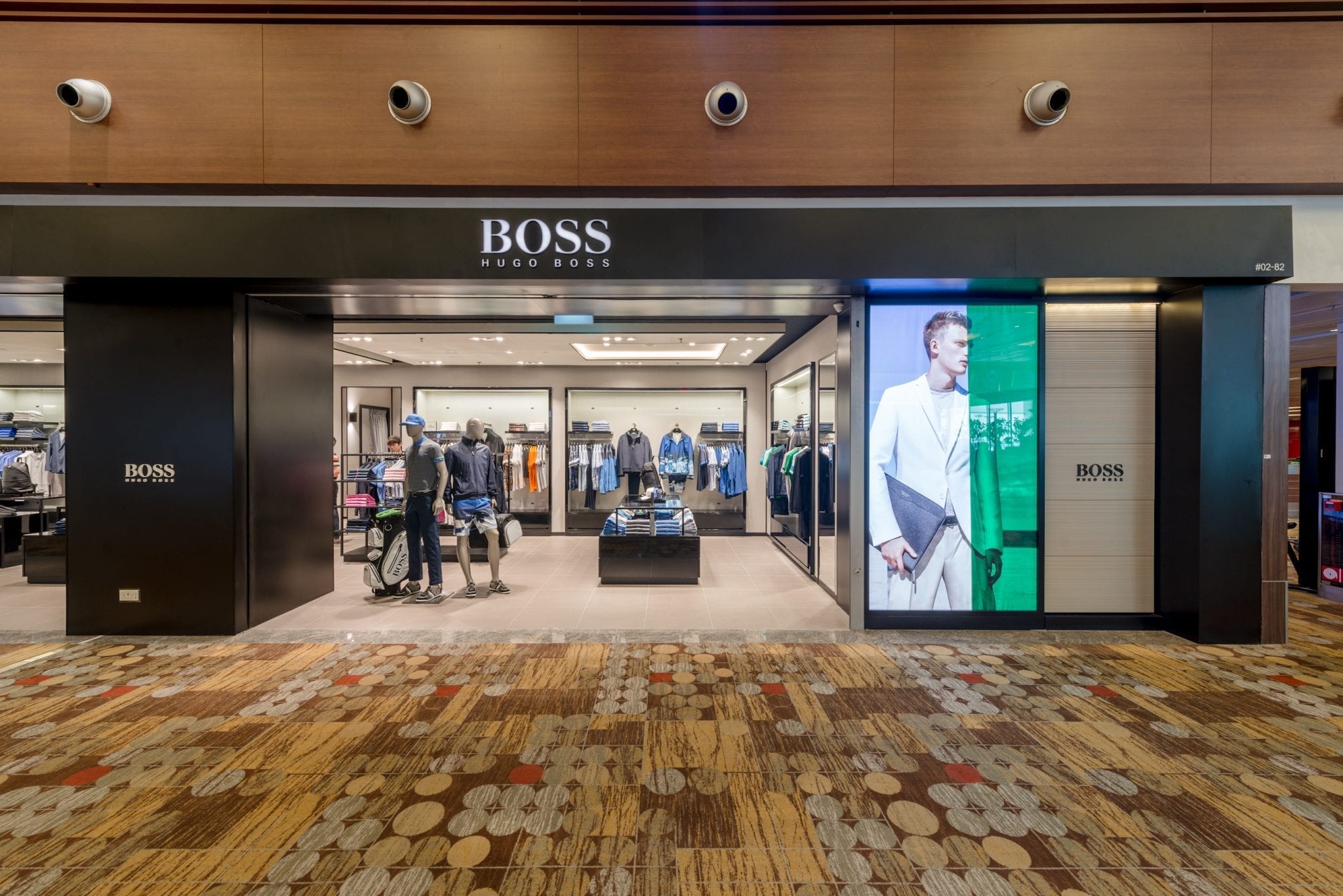
    Hugo Boss has opened a 95sq m store at Singapore Changi Airport Terminal 1.

    The Boss Menswear Store features a new interior concept featuring “clean, angular aesthetics” that has already been adopted by select stores in other cities.

    Hugo Boss considers the travel retail channel to be a dynamic part of the fashion business, and has opened its latest store at Changi Airport.

    The design is said to embrace harmony between lines, shapes and colours, and showcases the brand’s collections.

    “Throughout the store layout, matte and textile surfaces contrast with high-gloss and mirrored materials,” noted Hugo Boss. “The overall outcome is a refined space with a classic, yet airy, modern feel.”

    The store offers Boss Clothing, Boss Sportswear, Boss Green, and men’s shoes & accessories.

  • DBS to reduce carbon footprint in 3-year partnership with DHL

    DBS to reduce carbon footprint in 3-year partnership with DHL

    DBS Bank will partner logistics company DHL Express Singapore to reduce its carbon footprint, according to a joint press release by the two firms on Tuesday.

    The three-year partnership will enable the bank’s global express shipments to become carbon neutral through DHL’s proprietary GoGreen Climate Neutral Service.

    Singapore’s largest bank will utilise the eco-friendly patented solution provided by DHL to calculate and estimate the carbon dioxide emissions of every DBS shipment based on weight and distance travelled.

    The emissions are then offset through reinvestments by the DHL carbon management programme into global climate protection projects. The entire process will be verified by an independent third party for accountability.

    “We believe that we have a role to play in promoting sustainable development,” said Ms Donna Trowbridge, group head of procurement services at DBS Bank.

    “Participating in this innovative initiative is another step we are taking to actively manage our carbon footprint, complementing ongoing efforts to cut our carbon emissions such as incorporating sustainable designs and practices into our offices and branches.”

    At the end of each year, DBS will receive an annual certificate that details the estimated carbon emissions from its GoGreen shipments that were neutralised in environmental protection projects.

    Examples of the global climate protection projects that are part of the carbon management scheme include a biomass power plant in India and wind farms in the eastern and north-central regions of China.

    “As large global companies, we have the power to make huge waves not only in the economy but also in the well-being of societies and the environment. Hence, we are obligated to utilise business practices that ensure both quality of service and future of our green environment,” said Mr Frank-Uwe Ungerer, senior vice-president and managing director of DHL Express Singapore.

    In 2016, DBS’ carbon emissions across its offices and branches in six key markets — Singapore, Hong Kong, China, India, Indonesia and Taiwan — fell by 4 per cent, said the bank.

    Other efforts to cut down on the bank’s carbon footprint include reducing air travel by encouraging video-conferencing and online collaboration tools.

    DBS was the first bank in Singapore to achieve the Green Mark certification endorsed by the National Environment Agency for its branch network in Singapore.

    The DHL GoGreen policy is part of the international group’s commitment to contribute to the communities and regions in which the company operates, and covers environmental management, waste consumption and sustainable sourcing.

    In Singapore, DHL Express tracks its annual carbon emissions and is the official logistics partner of the e-waste recycling Renew programme.

  • Paul & Shark opens stores in Singapore and takes control of Asian business

    Paul & Shark opens stores in Singapore and takes control of Asian business

    Italian sportswear label Paul & Shark, produced and distributed by Dama Ltd, has opened two new monobrand stores: one in London, its first in the UK, and another in Singapore.

    The 200 m2 London store is located inside St. James’s Market, a newly re-developed business and retail complex in the West End featuring starred restaurants and a luxury shopping parade. The Paul&Shark store overlooks Regent St. and showcases the label’s men’s, women’s and children’s collections.

    The Singapore store, also extending over 200 m2, is instead located inside the Marina Bay Sands shopping mall, one of the city’s most popular retail destinations. “This is more than just a new opening, it is where we will directly manage our Asia business,” said Andrea Dini, CEO and owner of Paul & Shark, at the store’s inauguration, which marked the operational debut of the Paul & Shark Asia Pacific company.

    From January 2017, the newly created company manages the label’s Asian operations, having taken over the franchised stores opened by Paul&Shark’s former local partner, the ImagineX Group, a satellite of the Lane Crawford Joyce Group.

    The Italian label celebrated its new Typhoon 20000 technology, with three performances staged at the Singapore Wine Vault, inside refrigerated cells recreating different climactic conditions, and presenting a trailer of the ‘Typhoon Planet’ short film by director Wong Kar-wai.

    Paul&Shark is distributed in 73 countries via over 250 monobrand stores, featuring men’s, women’s and children’s total-look collections and several capsule collections inspired by the world of sailing and adventure.

  • Anchanto raises funds to expand its Southeast Asia e-commerce network

    Anchanto raises funds to expand its Southeast Asia e-commerce network

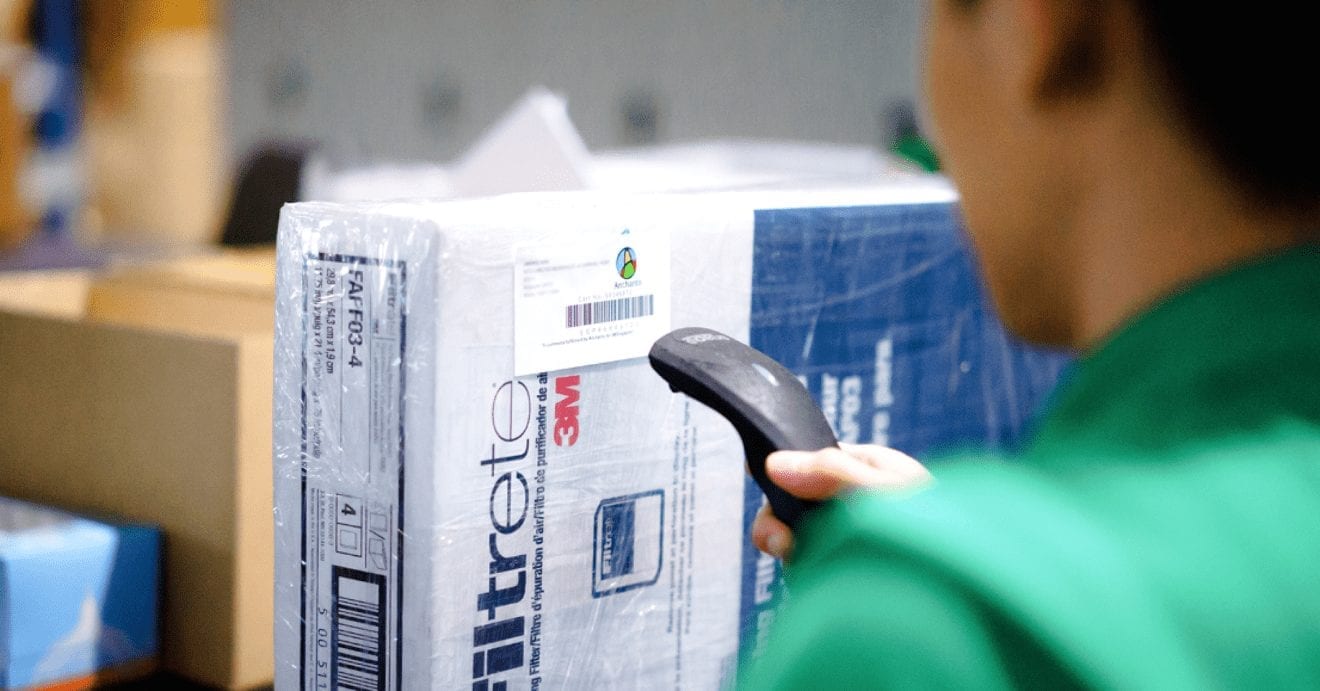
    Anchanto, a Singapore-based e-commerce logistics and selling platform, announced that Luxasia Group (Luxasia), Asia’s leading omnichannel retailer, and transcosmos inc. Japan (TCI), a TSE-listed global end-to-end e-commerce enabler, have made investments to be part of Anchanto’s growth story and offer overall partner services across its network.

    This partner round exemplifies the confidence that two of the largest players in the Asian e-commerce domain have in Anchanto’s current and future business plans.

  • Singaporeans feel ignored by retailers 40% of the time

    Singaporeans feel ignored by retailers 40% of the time

    Qualtrics conducted a recent survey of 1,700 shoppers including respondents from Singapore. Findings show that 40% of the time, shoppers in Singapore believe that feedback never reaches the relevant department or right employee that would be able to assist them, while online shoppers believe the same holds true 39% of the time.

    Singaporean shoppers see little distinction between the efficiency of feedback channels and believe that complaining via social media, surveys or directly to an employee has no significant impact to their feedback reaching the right people within the company.

    Despite that, Singaporeans still expect retailers to respond promptly to their questions and complaints especially on social media. When sharing feedback on an offline retailer’s social media page, 31% of shoppers expect a response on the same day, and 78% expect a response within a few days. For online retailers, 36% of shoppers expect a response on the same day and 74% expect a response within a few days.

    Creating a positive retail experience for shoppers is key to customer acquisition. With 61% of shoppers stating that their expectations of offline retailers are shaped by social media, friends and family referrals, retailers need to be able to live up to customers’ perceptions. When it comes to online retailers, 68% of shoppers indicated that their expectations are influenced by social media, friends and family referrals.

    The Qualtrics survey reveals that delivering an ideal brick-and-mortar experience lies in the availability of a wide selection of products and the least important is automatically emailed receipts. The most important element that makes for a stellar online shopping experience is easy-to-see product pictures and details while the least important factor is the ability to receive email support.

    Other data points reinforce the urgency for online retailers to listen to and act upon customer feedback:
    • 16% of shoppers expect retailers to respond to their email question or complaint same day while 22% of shoppers expect the same from online retailers
    • 28% of shoppers will drop a retailer without notice if they experience a major service failure while 29% of shoppers will do the same when it comes to an online retailer
    • 50% of shoppers like a retailer more than before if their problem is quickly resolved while 51% of shoppers would feel the same when it comes to an online retailer
    • 72% of shoppers blame a retailer if one of their employees provides unfriendly or unhelpful service while 68% of shoppers would blame an online retailer for the same incident

    “Companies are witnessing what we call an “experience gap” which refers to the gap between the experience that companies believe they are delivering and the experience their customers are actually receiving, said Bill McMurray, Managing Director for Asia-Pacific and Japan at Qualtrics. “The challenge for companies is to close this gap through the use of an experience management solution, which makes it easy to capture, gain insights and take actions from experience data. There are two sets of data: operational data “O data” and experience data “X data”. X data is the human-factor data, the beliefs, emotions and sentiments that tell you why things are happening and that help predict what will happen next. For too long organisations have only focused on collecting O data, and often fail by not leveraging their X data. To address the experience gap, shown in the survey results above, the retail industry must improve the level of customer experience they provide. When they are able to do this, they will satisfy and retain their customers, generate increased revenues and grow faster than their competitors.”

  • Unilever Foundry launches co-working space in Singapore

    Unilever Foundry launches co-working space in Singapore

    Unilever Foundry, a Unilever-lead initiative for start-ups and innovators, has opened a collaborative working space at the firm’s regional office in Singapore – the first of its kind for Unilever.

    Dubbed Level3, the new collaborative space was launched by the Unilever Foundry to provide startups with the opportunity to interact and partner with Unilever and other ecosystem partners to solve business challenges. This ranges from marketing to finance, logistics, supply chain and customer development.

    “Level3 offers our business a direct connection with disruptive technologies and changemakers to shape the way we work — ultimately impacting people’s lives,” said Pier Luigi Sigismondi, president, South East Asia and Australasia. “Level3 is the springboard for startups to scale and build successful businesses.”

    Opening February 14, within the Unilever regional headquarters in Singapore, the 22,000 square foot workspace aims to connect startups to Unilever brands, and give them access to existing Unilever Foundry programs.

    Fifteen international and local startups are taking part, including Adludio, ConnectedLife, Datacraftt, EcoHub, GetCraft, Next Billion, Olapic, Snapcart, TaskSpotting and Try and Review.

    It comes at a time when industry experts are attempting to foster relations in Singapore between big multinationals and innovators.

    “The set-up of Level3 in Singapore — a global first for Unilever — is a strong testament to the growing vibrancy of Singapore’s startup ecosystem,” said Dr Beh Swan Gin, Chairman, Singapore Economic Development Board. “Level3 represents an emerging corporate innovation model that is aligned with EDB’s efforts to encourage collaborations between multinational companies and other enterprises such as startups.”

    Unilever tapped Padang & Co to design the building and manage all programs within the space. The innovation experts will host learning and networking opportunities, such as fireside chats, sharing sessions, mentoring programs and access to training and resources offered by technology partners.

    “We envision Level3 as a vibrant workspace offering global opportunities for entrepreneurs. We are passionate about connecting members of the startup ecosystem to spark collaboration and ignite innovation,” said Derrick Chiang, CEO, Padang & Co.

  • Changi Airport Group names DHL Partner of the Year

    Changi Airport Group names DHL Partner of the Year

    Changi Airport Group (CAG) recognized its top airline partners at the Changi Airline Awards 2017, where a total of 25 awards were presented to airlines whose efforts over the past year contributed significantly to the growth and development of the Singapore air hub.

    The Partner of the Year award was presented to DHL Express, in recognition of their strong partnership with CAG to grow and strengthen Changi Airport’s air cargo hub status. DHL Express launched their fully-automated South Asia Hub at Changi Airfreight Centre in October 2016, which tripled their cargo handling capacity to 628 tonnes during the peak processing window, and increased their parcel-sorting speed by six-fold  to 24,000 shipments and documents per hour.

    DHL Express also added new flights through its joint venture (JV) airlines and other airline partners. Last year, with the expansion of the DHL Express operations, Changi Airport welcomed Neptune Air and the return of K-Mile.  As of April 2017, the company’s JV and partner freighter flights at Changi Airport totalled over 30 weekly services or about 12% of Changi’s total weekly freighter services.

    Sean Wall, Executive Vice President, Network Operations and Aviation, DHL Express Asia Pacific said, “The successful launch of our South Asia Hub last year was made possible thanks to the close collaboration we had with Changi Airport Group as well as the Singapore Government. As the heart of our DHL network in South and Southeast Asia, the South Asia Hub in Singapore has allowed us to add more network flights in and out of the country to meet our customers’ needs, and to further capitalize on the country’s prime position for regional and global trade. Singapore remains a strategic node in our global network and we are honored to be named Partner of the Year by the Changi Airport Group.”

    Speaking at the awards event, Mr Lee Seow Hiang, CEO of CAG said, “As we celebrate our successes, we will continue to transform Changi Airport, in preparation for challenges in the future. We will do so by catering supply for future growth, as well as working with our partners to grow sustainable demand for aviation services. Mr Lee mentioned the Airport Collaborative Decision Making (ACDM) initiative as an example of Changi Airport adding capacity to the existing airport eco-system. He said, “ACDM was only possible with the strong support and commitment of all our airline, ground handling and airport partners. As a result, there has been a reduction of 90 seconds in the average taxing time for departing flights during peak hours, translating into fuel savings for airlines.”

    2016 was a positive year for the aviation industry, with lower oil prices offering some respite amidst a highly competitive environment. Changi Airport saw a record-breaking 58.7 million passengers passing through its gates, a growth of 5.9% year-on-year. Changi also welcomed four new airline partners and eight new city links during the year. The airport is on track to receive 60 million passengers in 2017.

  • StarHub Q1 profit falls 21%

    StarHub Q1 profit falls 21%

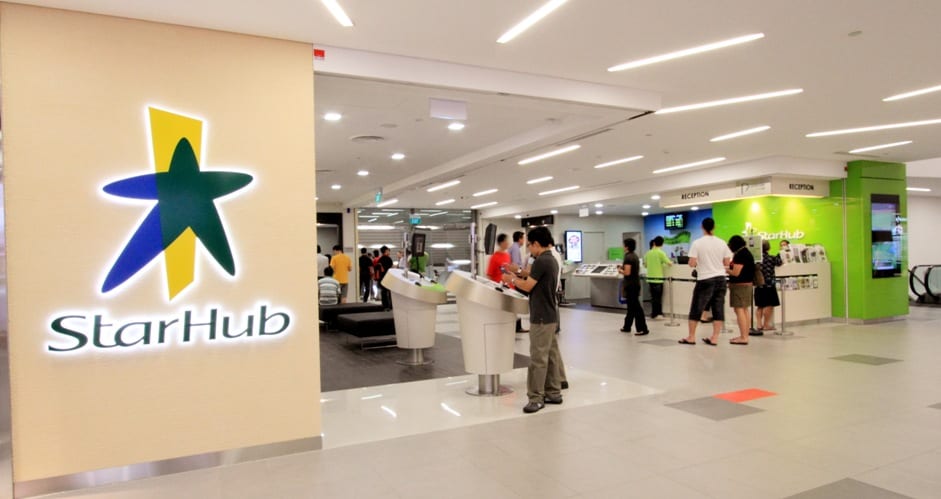
    Singapore’s StarHub has reported a 21% year-on-year decline in net profit for the first quarter to S$73 million ($51.9 million), partly as a result of declining revenue from pay TV and mobile services.

    Revenue for the quarter increased marginally to S$592 million, but service revenue declined 1% to S$537 million, the company said.

    Mobile revenue was down 1% to S$296 million, despite net additions of 43,000 pre-paid customers and 48,000 post-paid subscribers. Prepaid and post-paid ARPU also both declined by S$2, to S$15 and S$67 respectively.

    StarHub’s Pay TV revenue meanwhile fell 7% to S$88 million as a result of a decrease in the operator’s total pay TV subscriber base of 41,000 to around 487,000 households. This was despite a low 0.9% churn rate.

    Broadband revenue increased slightly to S$54 million, even as residential broadband customers fell by 3,000 to 470,000 households.

    Enterprise fixed revenue increased 3% year-on-year to S$99 million, with data and internet services contributing S$88 million of this while enterprise voice revenue fell 19% to S11 million.

    The declining pay TV subscriber base meanwhile led to a roughly 12,000 household reduction in StarHub’s triple play or higher customer base to 338,000.

    Based on the results and the current economic outlook, StarHub said it expects service revenue for the year to be roughly flat, and has set a projected capex budget of around 13% of total revenue.

    “We have made the necessary investments in the recent spectrum auction to continue delivering quality mobile services to our increasing Mobile base. The acquired spectrum will also facilitate our roadmap towards 5G,” StarHub CEO Tan Tong Hai said.

    Driving growth in the enterprise business remains our priority and we are on track to introduce new cyber security, IoT and smart retail solutions to the market. We will grow our enterprise digital services offerings with our latest strategic management addition.”

  • Juul-Mortensen is awarded Singapore Tourism accolade

    Juul-Mortensen is awarded Singapore Tourism accolade

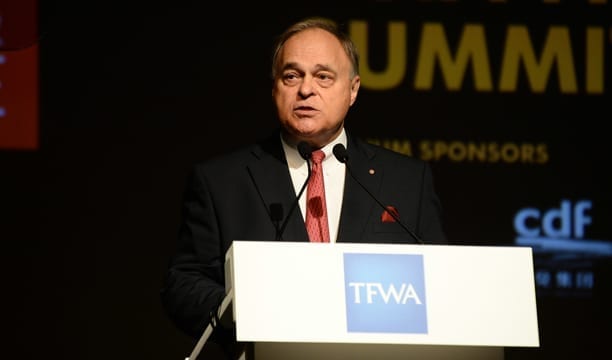
    The President of Tax Free World Association (TFWA) Erik Juul-Mortensen has been named as the Singapore Tourism Board’s (STB) Best Business Event Champion at its recent prestigious Singapore Tourism Awards.

    The STB says the award was made in recognition of his ‘instrumental role at TFWA’ amongst several other category awards which recognise the best and most significant contributions made by individuals and organisations to Singapore’s tourism sector.

    Commenting after the awards ceremony, Erik Juul-Mortensen said: ‘I am honoured to receive this accolade and am thrilled to see recognition that TFWA Asia Pacific Exhibition & Conference is valued not only by our duty free and travel retail industry, but also by its host, Singapore.

    “I would like to thank all the TFWA team that work so hard to ensure that standards are constantly high at our flagship event in Asia, as well as our colleagues across the industry who support it year after year.

    “Singapore has proved, over and over again, to be a successful and popular venue for the TFWA Asia Pacific Exhibition & Conference and we were also very pleased that TFWA was named Best Exhibition Organiser at the 2016 Singapore Tourism Awards for TFWA Asia Pacific Exhibition & Conference 2015.”

    Adding his comments, Oliver Chong, Executive Director, Communications & Marketing Capability, Singapore Tourism Board said; ‘The Singapore Tourism Awards aim to raise industry standards through showcasing the best of what Singapore has to offer.

    “We would like to congratulate Best Business Events Champion recipient Mr Erik Juul-Mortensen, whose efforts have enhanced Singapore’s appeal as an attractive, compelling business events destination.”

  • Apple plans new store in Red Dot Centre Singapore

    Apple plans new store in Red Dot Centre Singapore

    Apple is getting ready to open its first Apple Store in Singapore on the island’s prime Orchard Road shopping boulevard.

    The storefront at Knightsbridge Mall is covered by a white facade with a large red Apple logo next to a heart and red dot above the store name “Apple Orchard Road”.

    Singaporeans often refer to their city state as a “little red dot” on the map of Southeast Asia.

    Barricades outside the store were removed on Wednesday night, suggesting the store would open soon. In the Asia-Pacific region the Cupertino, California-based company already operates retail stores in China, Japan, Hong Kong, Macau and Australia.

  • Singapore Airlines partners with UOB for frequent flyer program

    Singapore Airlines partners with UOB for frequent flyer program

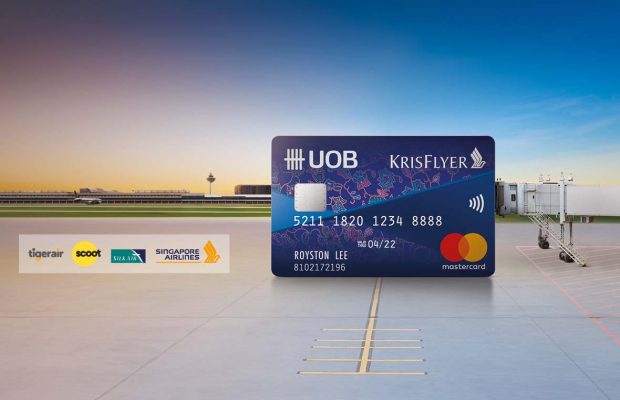
    United Overseas Bank Limited (UOB) has teamed up with Singapore Airlines’ (SIA) frequent flyer program to launch KrisFlyer UOB Account.

    Targeting those who prefer to use a debit card or millennials who may not yet be eligible for a credit card the account allows users to earn KrisFlyer miles whenever they save or spend. The miles can also be used for award flights and upgrades on SIA and SilkAir, or as travel vouchers on Scoot or Tigerair.

    The miles earned will depend on the customers’ account balance. Those who have an account balance of S$350,000 (US$249,377) and above, for instance, will earn 5.4 KrisFlyer miles for every dollar they spend using their KrisFlyer UOB account.

    “We have seen spending on UOB debit cards grow 40 percent over the past two years. Travel spend on debit cards also increased 15 percent in the corresponding period as our customers make more trips abroad,” said UOB head of personal financial services Singapore, Jacquelyn Tan, in a press release.

    The bank is targeting to open at least 200,000 KrisFlyer UOB accounts in the next five years.

    Meanwhile, SIA Marketing Planning senior VP Tan Kai Ping said, “The KrisFlyer UOB card leverages the wide reach of the KrisFlyer frequent flyer programme, giving card members access to all the airlines within the Singapore Airlines Group. This means seamless access to our four airlines – from full-service carriers Singapore Airlines and SilkAir to budget carriers Scoot and Tigerair – when they spend and save through this account.”

  • Louis Vuitton plans first airport duplex boutique for Changi

    Louis Vuitton plans first airport duplex boutique for Changi

    French luxury maison Louis Vuitton will open its first duplex boutique in an airport early next year, opting to bow the store inside Singapore’s Changi Airport.

    Opening January 2018, the duplex boutique will be located in Changi’s new ‘Crystal Garden’ in Terminal 3’s Departure Transit Hall.

    Covering 530 square metres and two levels, the new space will feature tiered garden beds with a selection of flora and spheres of artisan glass sculptures. It is the first time the airport is integrating a feature garden with a retail store, and first airport boutique for Louis Vuitton to span two levels.

    The Changi debut is also the first airport store in Asia Pacific to be directly managed by Louis Vuitton.

    “Singapore Changi Airport is such an important location for us, and we are happy to offer this new store, not only to our Asian customers but also the international travelers who transit by this airport,” said Michael Burke, Chairman and CEO of Louis Vuitton, via a press release.

    Louis Vuitton will be the latest addition to Changi Airport’s retail fold, which boasts more than 360 retail stores sprawled over 76,000 square metres of floor space.

    “We are thrilled to partner with Louis Vuitton, who shares our vision to redefine the future of luxury retail in an airport,” said Changi Airport Group chief executive officer Lee Seow Hiang.

    “The revolutionary duplex store, set amidst an elegant Crystal Garden, will become a distinctive attraction for passengers who fly through Changi Airport, and we look forward to embarking on an exciting journey of discovery with them when the store opens.”

    Changi Airport generated retail sales of S$2.3bn in 2016.