Tag: Singapore

  • Sheng Siong’s net profit expands 8.2% to $15.7m in Q3

    Sheng Siong’s net profit expands 8.2% to $15.7m in Q3

    Even with the sluggish retail sales numbers published by the Department of Statistics, Singapore’s supermarket giant Sheng Siong reported a considerable improvement in earnings for 3Q16.

    According to the group’s announcement, its net earnings jumped $15.6m, from $14.5m recorded last year.

    This came after its headline increased marginally by 1.2% to $202m mainly driven by new stores.

    “But (this) was offset by the temporary closure of the Loyang Point store and a contraction in comparable same store sales of 1.15% caused mainly by poor festive sales during the Chinese Seventh month and sluggish sales in September,” Sheng Siong noted.

    Excluding the closure of the said store, revenue would have grown by 4.2%.

    Looking forward, the group expects the supermarket industry to remain competitive, as consumers continue to be even more cost conscious.

    “The Group is still looking for suitable retail space particularly in areas where the Group does not have a presence. However, competition for retail space, particularly for new HDB shops is expected to remain keen, which have escalated bidding prices,” the group said.

  • Singapore ranks 2nd in global connectedness

    Singapore ranks 2nd in global connectedness

    Singapore is the world’s most connected and globalized country, according to DHL’s Global Connectedness Index (GCI).

    All but two of the top 10 most globalized countries in the world are located in Europe, with Singapore and the United Arab Emirates as the exceptions.

    The 2016 edition of the report shows that global connectedness, measured by cross-border flows of trade, capital, information and people, surpassed its 2007 pre-crisis peak during 2014.

    In 2015, globalization’s post-crisis expansion slowed, but the data indicate that it did not go into reverse. Currently available evidence — still preliminary in some areas — suggests that the world was about 8% more connected in 2015 than in 2005.

    North America is the second most globally connected region and leads on the capital and information pillars, with the United States as the most connected country in the Americas. Overall the US is ranked 27th out of the 140 countries measured by the GCI.

    North America had the largest gain in overall global connectedness during the past two years,

    followed by South & Central America & the Caribbean. Countries in South & Central Asia and Sub-Saharan Africa suffered a drop in their average levels of global connectedness.

    Suriname, Jamaica and Fiji were the biggest gainers in terms of rank changes from 2013 to 2015, moving up 23 (112th to 89th), 22 (107th to 85th) and 20 (94th to 74th) places respectively.

    Suriname’s rise was driven by a substantial broadening of its international interactions, whereas Jamaica and Fiji increased on both the depth and breadth dimensions of their global connectedness.

    Nigeria, Togo and Nicaragua experienced the largest decreases in terms of overall rank, dropping 28 (67th to 95th), 21 (72nd to 93rd) and 19 (71st to 90th) places respectively.

  • Blue Coral Samsung Galaxy S7 edge officially confirmed, launching November 5 in Singapore

    Blue Coral Samsung Galaxy S7 edge officially confirmed, launching November 5 in Singapore

    If you recall, a photo leak last week revealed a new Blue Coral variant of the Samsung Galaxy S7 edge, and that it’s headed to Verizon in the US. Now, the South Korean company has officially confirmed the new Galaxy S7 edge color.

    Specifically, the confirmation came from Samsung’s Singapore subsidiary which announced the retail availability for the handset on its official website.

    The image that leaked last week

    “Samsung today also announced the retail availability of the Samsung Galaxy S7 edge 4G+ in Blue Coral, adding a stunning colour variant to this sleek and stylish device,” the company said in a press release.

    “Currently available in Black Onyx, Gold Platinum, Silver Titanium and Pink Gold, the new colour variant of the Galaxy S7 edge 4G+ features a refined design coupled with powerful functionality while encased in a cool blue hue.”

    As for availability, the subsidiary said the phone (32GB variant) will go on sale in the Asian country starting November 5. It will carry a price tag of SGD 1,098 ($787).

  • CapitaLand’s retail REIT records 6.7% fall in 3Q 2016 DPU

    CapitaLand’s retail REIT records 6.7% fall in 3Q 2016 DPU

    CapitaLand Mall Trust has posted a DPU of 2.78 Singapore cents for its 3Q 2016, a year-on-year fall of 6.7% compared to the 2.98 cents achieved in the corresponding period of 2015.

    Gross revenue for the period improved by 4.9% to SGD170 million (USD121 million) while its net property income of SGD119.5 million represents an increase of 5.5% over the SGD113.3 million recorded in 3Q 2015.

    This was mainly due to a contribution of SGD14.5 million from Bedok Mall which was acquired in October 2015, higher rental revenue achieved for IMM Building, Tampines Mall, and Bukit Panjang Plaza after asset enhancements, and higher occupancy at Clarke Quay.

    However distributable income for 3Q 2016 was SGD98.4 million, 4.7% lower than 3Q 2015.

    The distributable income for 3Q 2015 included the release of SGD8.0 million taxable income retained in 1Q 2015, and excluding this release, the distributable income for 3Q 2016 would have been 3.3% higher year-on-year, said the Singapore-listed retail REIT.

    “Despite uncertainties in the macroeconomic environment and challenging retail conditions in Singapore, CapitaLand Mall Trust’s portfolio occupancy rate as at 30 September 2016 remained high at 98.6%”, said Wilson Tan, CEO of the REIT’s manager.

    “For the first nine months of 2016, the REIT also registered year-on-year growth of 2.9% and 1.2% in shopper traffic and tenants’ sales per square foot respectively”, he added.

    The REIT’s aggregate leverage as at 30 September 2016 was at 35.4%, up slightly from 35.3% in the previous quarter, while portfolio weighted average lease expiry (WALE) was at 2.0 years by gross rental income.

    Units of CapitaLand Mall Mall Trust finished the trading day about 0.5% lower from its previous close on the Singapore Exchange to end at SGD2.11.

  • Real Singapore retail sales ease up in September

    Real Singapore retail sales ease up in September

    Real Singapore retail sales recovered marginally month-on-month in September after a series of declines.

    Real retail sales, are the figures excluding motor vehicles. They rose 0.7 per cent against August but fell 1.9 per cent on September 2015. Sales including motor vehicles, sales fell 0.7 per cent month-on-month and rose 2 per cent.

    Total retail sales value in September 2016 was estimated at $3.5 billion, higher than the $3.4 billion in September 2015.

    Retail sales index September

    Month-on-month, retail sales of motor vehicles, watches & jewellery, medical goods & toiletries, optical goods & books, department stores and supermarkets decreased between 0.1 per cent and 6.3 per cent in September 2016 over August.

    Sales of recreational goods and computer & telecommunications equipment grew by 12.4 per cent and 11.1 per cent respectively. Sales of petrol service stations, furniture & household equipment, mini-marts & convenience stores, food & beverages and wearing apparel & footwear also increased between 1 per cent and 9.7 per cent.

    Compared to September 2015, sales of recreational goods, mini-marts & convenience stores, medical goods & toiletries, petrol service stations and furniture & household equipment increased between 0.1 per cent and 6.7 per cent. Sales of computer & telecommunications equipment, food & beverages, watches & jewellery, department stores, supermarkets, optical goods & books and wearing apparel & footwear declined between 2.9 per cent and 9.6 per cent.

    Food & Beverage results

    Sales of food & beverage services (seasonally adjusted) increased 3.6 per cent in September 2016 over the previous month and 3.5 per cent compared with September 2015.

    The total sales value of food & beverage services in September 2016 was estimated at $687 million, higher than the $664 million in September 2015.

    FB index September

    Turnover of restaurants and other eating places (such as cafes) increased 6.6 per cent and 6.2 per cent respectively in September over August. Sales by food caterers and fast food outlets decreased 6.6 per cent and 2.2 per cent.

    Year-on-year, sales by other eating places, fast food outlets and restaurants increased between 0.9 per cent and 7.9 per cent. Food caterers’ sales fell 1.4 per cent.

  • Asia Pacific leads for mobile cross-border shopping

    Asia Pacific leads for mobile cross-border shopping

    Asia Pacific leads the world in mobile cross-border shopping, according to the third PayPal Annual Global Report, released in conjunction with global market research company Ipsos.

    With its investigation of the online domestic and cross-border shopping habits of more than 28,000 consumers in 32 countries, the report reveals international opportunities for merchants.

    Of the Asia Pacific shoppers interviewed, 68 per cent said they had made a cross-border purchase by smartphone in the past 12 months.

    There has been a marked shift to mobile purchasing in China, with an average of 35 per cent of cross-border purchases being made on a smartphone this year compared to 27 per cent last year.

    Fewer than 15 per cent of shoppers in both western and eastern European as well as North America, however, used a smartphone for cross-border purchases.

    Meanwhile, their online spending will increase in the next 12 months according to 64 per cent of internet users in China, 39 per cent in Russia and 26 per cent in the UK. This is primarily driven by convenience (76 per cent), changes in disposable income (30 per cent), faster shipping (35 per cent) and cheaper shipping (27 per cent).

    “Selling internationally is a substantial opportunity for merchants around the globe to grow their business,” says PayPal director of global initiatives Melissa O’Malley. “We’ve seen our cross-border volume grow 38 per cent in the past two years, from $14 billion in the third quarter of 2014 to $19 billion in the same quarter this year.

    Merchant benefits

    “PayPal’s mobile payment volume is also up 56 per cent over last year, so we see the direct benefits merchants can reap by optimising their mobile shopping offerings.”

    For the first time in the survey’s three years, China is the most popular online cross-border shopping destination – 21 per cent of online shoppers interviewed claimed to have shopped from Chinese websites in the past 12 months, followed by the US (17 per cent) and the UK (13 per cent).

    What is attractive about cross-border shopping? Of the global consumers in the survey, 76 per cent cited better prices, while 65 per cent said they could buy items not available in their own country.

    Factors that would make online shoppers more likely to buy from a website in another country include free shipping (46 per cent of respondents) and secure payment system (44 per cent).

    In 24 of the 32 countries surveyed, PayPal is most used for payments. Key factors for choosing particular payment methods include security (53 per cent of respondents), convenience (44 per cent) and acceptance by retailers (41 per cent).

    Of the shoppers using PayPal, 44 per cent say it is their preference as they do not need to share financial details with the seller.

    On behalf of PayPal, Ipsos interviewed a representative quota sample of about 800 to 2000 (28,012 in total) adults who use an internet-enabled device in each of 32 countries, including China, India, Japan, Singapore and Thailand. Interviews were conducted online between late August and early October.

  • Changi Airport Group strengthens pharmaceutical supply chain in Singapore

    Changi Airport Group strengthens pharmaceutical supply chain in Singapore

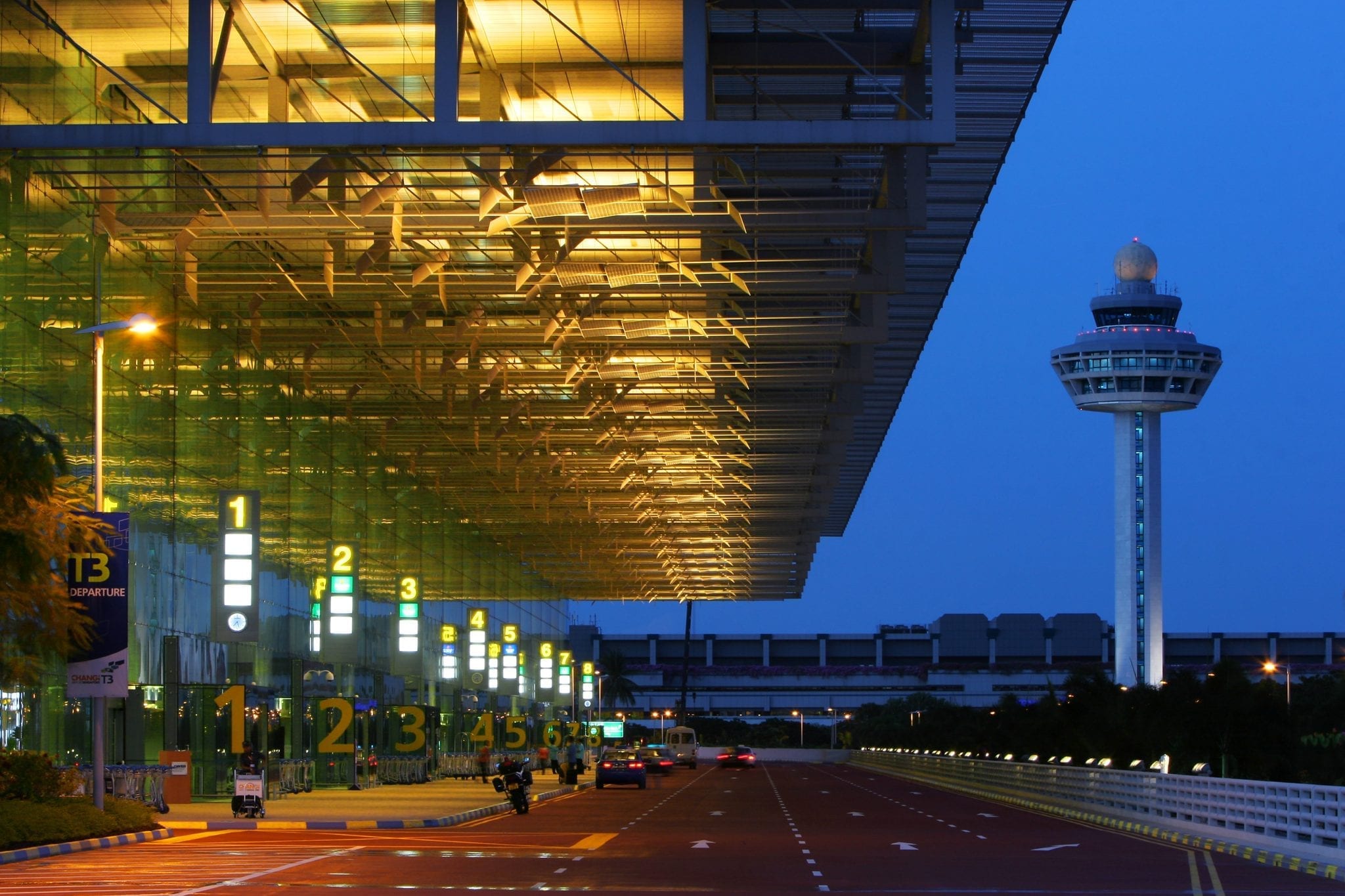
    Changi Airport is the first airport in Asia to join Pharma.Aero as a strategic member, together with partner Singapore Airlines Cargo who comes on board as a full member. Both parties envisage that this effort will raise pharmaceutical handling capabilities at Changi Airport.   An organization comprising stakeholders of air cargo supply chain from around the world, Pharma.Aero is dedicated to achieving excellence in end-to-end air transportation for pharma cargo.

    Pharmaceutical cargo is among the fastest growing segments at Changi Airport, growing 19 percent year-on-year for the first nine months of 2016, and registering a five-year compounded annual growth rate (CAGR) of 13 percent from 2010 to 2015.

    The South West Pacific and North East Asia regions account for 45 percent of total share of pharmaceutical cargo at Changi Airport. In terms of volume, Australia, China and India are Changi’s top three pharmaceutical markets on a year-to-date (January to September 2016) basis. The top markets showing strongest growth for the period are China (+51 percent), Vietnam (+35 percent) and Hong Kong (+32 percent).

    Pharmaceutical products that pass through Changi Airport include vaccines, tablets and pills. These products are highly sensitive to fluctuations in temperature. Pharmaceutical cargo is the sixth most valued segment in terms of total air cargo handled, and account for under 10 percent of total value of cargo handled.

    Changi Airport is well-equipped with specialized facilities to be the preferred gateway of pharma cargo in Asia, with the two ground handlers (Coolport by SATS and Coolchain by Dnata) having the ability to handle more than 300,000 tonnes of temperature sensitive cargo annually. Our excellent connectivity (6,800 flights to 330 cities served by over 100 airlines) and strong mix of freighter and bellyhold capacity provides ample options for pharma shippers to access the global economy.

    Changi Airport is the first airport in Asia to embark on a community approach for the IATA CEIV Pharma certification, thereby raising the local community’s handling standards and capability for temperature-sensitive pharma cargo. The pioneer group of companies in the Changi CEIV Community consists of Singapore Airlines Cargo, dnata Singapore, Global Airfreight International Expeditors Singapore, CEVA Logistics Singapore, and Schenker Singapore.

    SATS Coolport, a major cargo player at Changi Airport, was the first facility in the world to attain the IATA CEIV Pharma certification in 2014.

    Global spending on pharma cold chain logistics is projected to grow at eight-nine percent per year, totaling US$16.7 billion by 2020 according to Pharmaceutical Commerce. Asia is expected to account for the largest regional share growth with more than $1.2 billion of cold-chain growth through 2019.

  • Ant Financial deploys V-Key tech for m-payment security

    Ant Financial deploys V-Key tech for m-payment security

    Ant Financial Services Group has deployed technology from Singapore-based V-Key to augment mobile payment security.

    V-Key will provide a virtual software solution called V-OS for Ant Financial to secure transactions on e-Commerce platform AliExpress, Ant Financial’s sister company. V-Key will also provide cryptographic services and trusted environments to help secure payments processed by Alipay on AliExpress, along with risk management for each transaction.

    V-OS, which is currently deployed by top banks, mobile payment providers, and governments globally, is the world’s first virtual secure element. With V-OS, card and cardholder data will be encrypted, providing for more secure user authentication.

    V-Key’s solutions allow businesses to roll out cloud-based payments, trusted digital identity and authentication necessary for mobile banking and other secured mobile applications. V-Key brings advanced user data protection to its partners without the need to use any form of hardware secure elements. Its mobile security solution works on both iOS and Android devices.

    “As more users opt for mobile payments, account safety assumes utmost importance. V-Key’s unique technology helps us deploy our risk engine to enhance mobile security. The partnership is part of our commitment to secure our services,” Ant Financial VP of fraud management Jason Lu said.

  • 7-Eleven Singapore ups its game

    7-Eleven Singapore ups its game

    7-Eleven Singapore convenience stores are about to have a makeover, with some of them being enlarged by 30 per cent to offer freshly prepared meals and seating.

    COO Steven Lye says the chain will stock premium products, introduce seating areas and create a range of fresh-chilled, ready-to-eat meals delivered to the store daily.

    7-eleven-singapore

    “We want to convey the message that we are no longer just a place for small needs. We want to be at the top of our customers’ minds,” says Lye.

    As well as the ready-to-eat meals, the expanded and elevated product range includes lifestyle items and even IT gadgets. The stores are also adding 7-Connect lockers, self-collection stations where parcels from online shopping can be picked up, and cash-withdrawal machines.

    In July, 7-Eleven invested S$350,000 (US$247,384) in a branding campaign with the tagline “There’s Always 7-Eleven”, seeking to shift customer perception of its outlets from that of a stop for basic needs to a one-stop shop for groceries, toiletries, bill payments, cash withdrawals and more.
    “To accommodate the extensive additions, future 7-Eleven stores will have an area of about 800 sqft [74 sqm] where possible.”

    Vary by location

    He says the items sold at each store will depend on its location. Those in tourist areas such as Marina Bay and Orchard Road will stock backpacks, suitcases and souvenirs while its Marine Parade outlet near East Coast Park will sell kites.

    Tech developments are also in the pipeline, says Lye. One is a loyalty app, 7-Rewards, set to roll out next year. Another new service is the 7-Connect Kiosk, a self-help machine for quicker bill payments. Also, 7-Eleven counters will accept wave-payment methods such as Android Pay, Apple Pay and Visa Paywave.

    “As a brand, we understand the importance of keeping up with the times and constantly evaluating the needs of customers, hence we have made a conscious effort to innovate,” says Lye.
    He says the new range of meals, prepped and delivered upon order to ensure freshness, will replace the store’s frozen-thaw meals by the first quarter of next year.

    “The tech behind the fresh-chilled meals is a strong value proposition we are introducing to the market,” says Lye. “Over the past 18 months we have embarked on a strategy to take these ready-to-eat meals to a whole new level.”

    Flavours will include Hainanese chicken rice, braised duck rice, butter chicken biryani as well as three flavours of Japanese pastas. By next year there will be more than 40 choices.

    Run by Dairy Farm Group, 7-Eleven Singapore has a network of more than 430 outlets.
  • MyRepublic, TPG to bid for Singapore mobile license

    MyRepublic, TPG to bid for Singapore mobile license

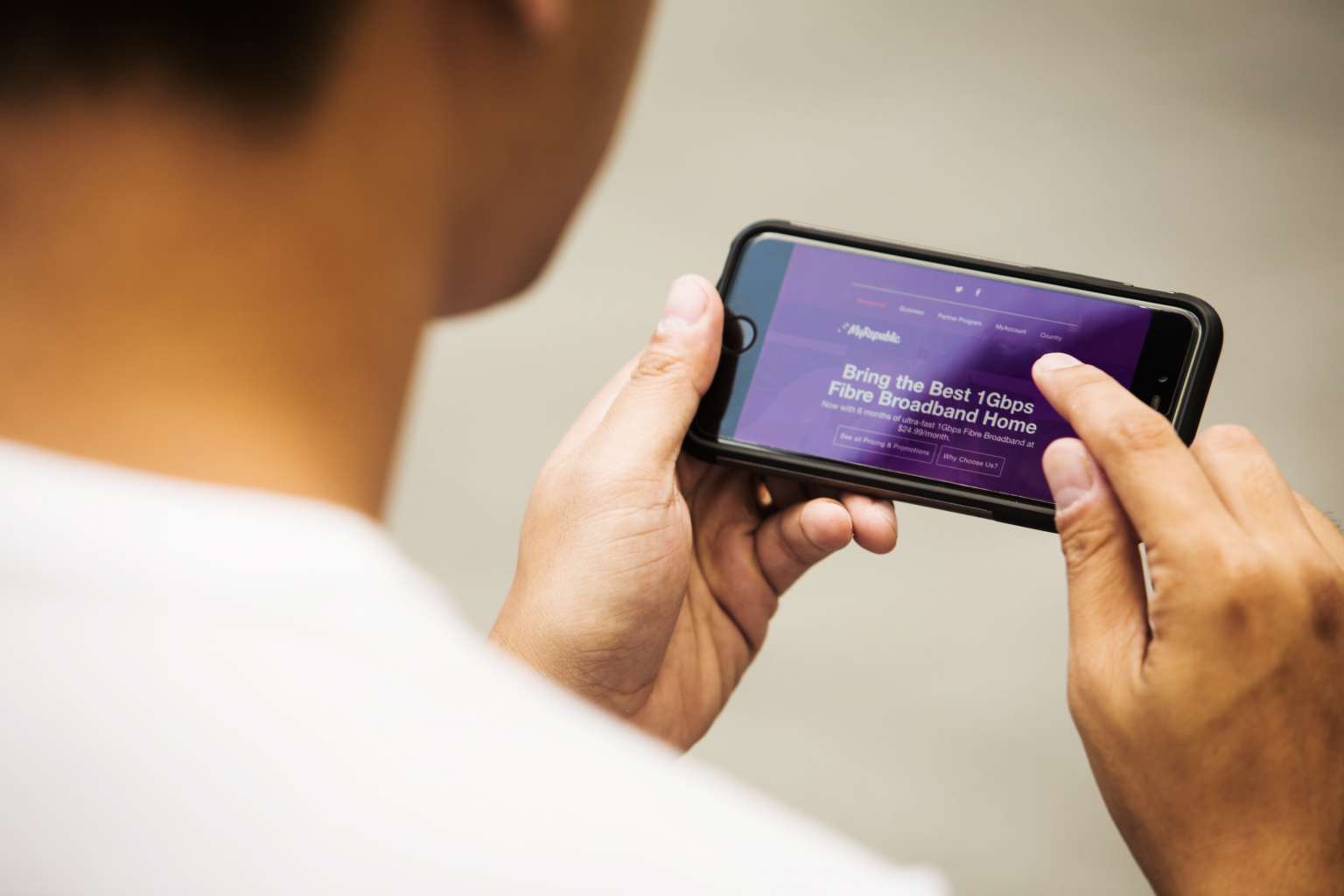
    Singapore’s Infocomm and Media Development Authority has pre-qualified ISP MyRepublic and Australian telecoms group TPG Telecom to participate in an auction for a fourth mobile license.

    MyRepublic and TPG will bid for a 60-MHz lot of spectrum in the 900-MHz and 2.3-GHz bands, in an auction expected to be complete by the end of the year.

    A third applicant for the auction, airYotta, has been disqualified for failing to meet the required pre-qualification criteria.

    The auction will be followed by a general spectrum auction open to existing mobile operators M1, Singtel and StarHub, as well as the winner of the new entrant auction. This second auction is expected to commence in the first quarter of next year.

    MyRepublic is a fiber-based ISP with a solid presence in Singapore, and a growing regional reach. The company recently arranged to launch broadband services with speeds of up to 100Mbps in Australia over the national broadband network (NBN), and also has operations in New Zealand and Indonesia.

    TPG Telecom is Australia’s second largest fixed line ISP and largest MVNO. The company has been steadily expanding through acquisitions and organic growth.

    Singapore MVNO Circles.Life has announced it “ welcomes IMDA’s on-going efforts to support competition in the telco space.”

    Circles.Life entered this year as a digital telco and has been aiming to disrupt the market with innovative offers for data-savvy customers, and looks forward to further disruption if a new entrant arrives in the market, the company said in a statement.

  • Gamified Trading App TradeHero’s Brand Acquired by Ayondo

    Gamified Trading App TradeHero’s Brand Acquired by Ayondo

    Ayondo, a social trading technology developer for the financial services industry, has acquired the TradeHero brand, a Singapore-based trading gamification app.

    The acquisition for TradeHero’s brand outside of China and the United States, expands ayondo’s footprint in Singapore nearly a year after it announced a partnership with KGI Fraser Securities Pte Ltd to launch KGI Contrax, a platform for investors to trade Contracts for Difference (CFD).

    Robert Lempka, CEO of the ayondo Group, says: “For ayondo, mobile technology is a big part of the Group’s strategy for expansion and growth. The TradeHero brand is extremely well established in Asia and was the missing piece in our product range. Following Top Traders and taking social trading to the next level, in offering fully automated execution is exactly what is in ayondo’s DNA.”

    Dominic Morris, co-founder of TradeHero and the new Head of Innovation for ayondo Group, adds: “ayondo and TradeHero share the same vision, that is to democratise the world of investing through easy-to-use disruptive technology and knowledge sharing.”

    The team of TradeHero’s mobile technology specialists built the foundation for ayondo’s Singapore based Mobile Lab, where the group’s latest research and development takes place. The group is engaged in advanced negotiations with a SGX-listed company on a Reverse Takeover (RTO) transaction. This could result in ayondo being the first fintech company to be listed on the Singapore Exchange (SGX) and the head office being moved to Asia’s fintech hub.

  • Neo Group’s 1H net profit soared 65.7% to $0.4m

    Neo Group’s 1H net profit soared 65.7% to $0.4m

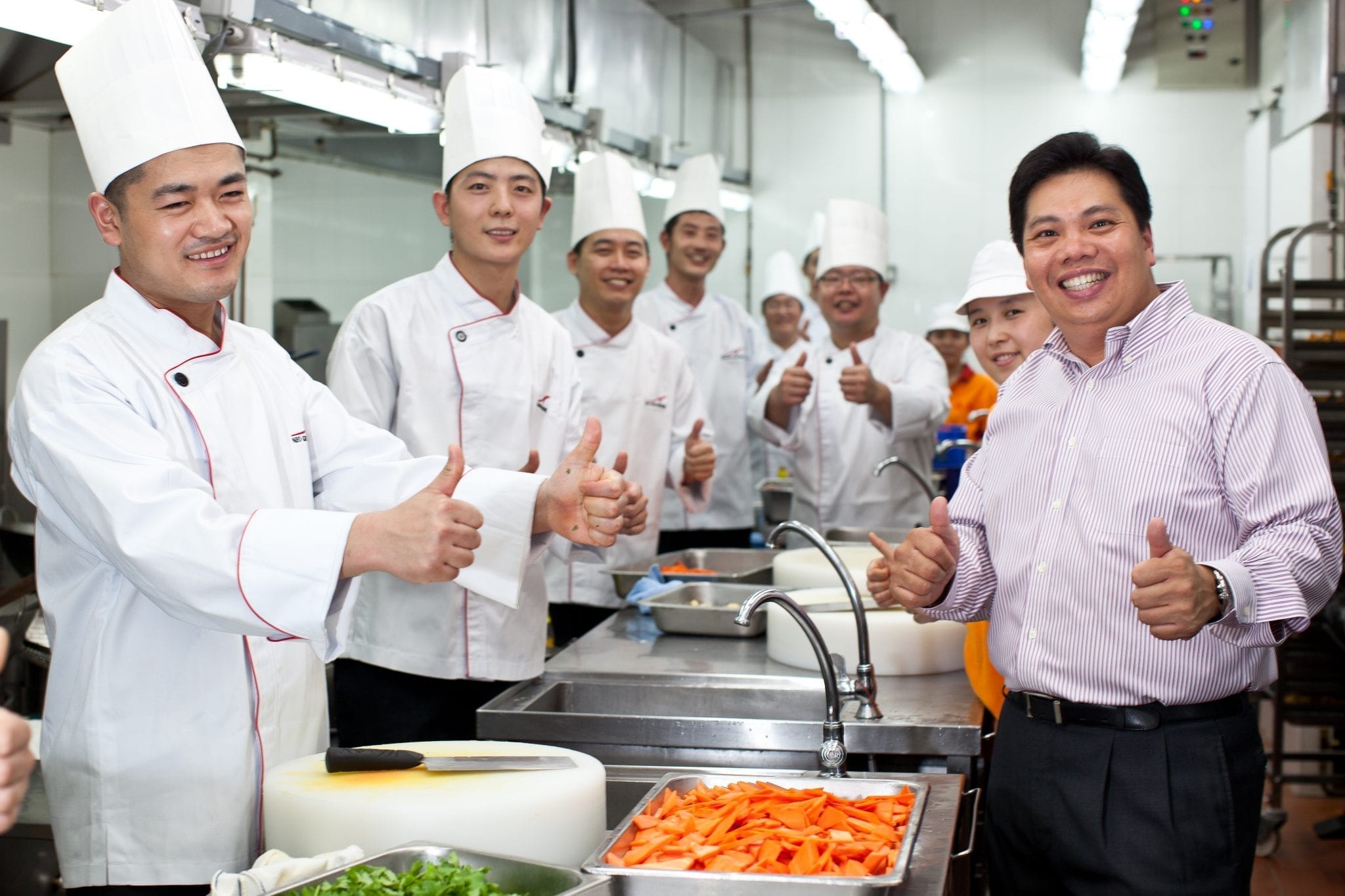
    Singapore’s food catering group, Neo Group announced that its revenue for the six-month period ended 30 September 2016 (1H2017) grew 29.6% to S$67.4 million from S$52.0 million in the equivalent period last year.

    Improved performance across most business segments and a S$7.7 million revenue contribution from the Food Trading business segment lifted the integrated catering solutions provider’s 1H2017 topline performance.

    Food Retail grew 11.7% to S$9.8 million in 1H2017 from S$8.8 million on an increase in number of stores and effective promotions launched during the period under review.
    Similarly, Food Manufacturing reported a 45.9% growth in revenue of S$21.9 million compared to S$15.0 million across the comparative periods.

    Impacted mostly by seasonality due to the lack of festivities and in the absence of SG50 celebrations that lifted catering volumes last year, the Food Catering segment
    slid marginally by 1.2% to S$27.3 million in 1H2017 from S$27.6 million in 1H2016.

    In tandem with the stronger topline performance, coupled with other income earned of S$3.0 million, consisting mainly of a S$1.8 million one-time gain on disposal of a noncore
    property, Neo Group reported 1H2017 net profit attributable to owners of the parent (net profit) of S$0.4 million, a 65.7% rise from S$0.3 million in 1H2016.

    For the three-month financial period ended 30 September 2016 (2Q2017), Neo Group reported a 40 times increase in net profit of S$2.9 million compared to S$0.07 million a year ago (2Q2016) on a 13.4% rise in revenue to S$35.5 million from S$31.3 million across the same comparative periods.

    Removing the impact of the one-time gain on disposal, which amounted to S$1.8 million in 2Q2017, the Group reported an operational profit of S$1.1 million, turning
    around from an operational loss recorded in the preceding quarter.


  • FinTech hub opens in Singapore

    FinTech hub opens in Singapore

    LATTICE80, a not-for-profit FinTech Hub, has opened an innovation facility in Singapore’s central business district.

    The new two level facility has been established with the aim of supporting FinTech firms with product development, testing and go-to-market strategies.

    LATTICE80 measures more than 30,000 square feet and features an open event space with the capacity to host 250 people, a private and public lounge, semi-open and open-plan offices, a cafe, boardrooms, meeting rooms, a podcast studio and a nursing room.

    To date, more than 20 foreign and local FinTech companies and associations at varying stages of growth have signed up to be based at the facility. Solution types being worked on by these firms include blockchain, robo-advisors, trading systems, online marketplaces, financial education, cognitive computing, big data analytics and fund management.

    LATTICE80 has partnered with key financial and technology players such as IBM, UOB, KPMG, MatchMove, EZ-Link, Singapore Fintech Consortium, Femtechleaders SG and Metropolitan Management Services to provide solutions and services like APIs, cloud technology and blockchain to support companies.

    Additionally, the National University of Singapore will work hand-in-hand with LATTICE80 to shape the curriculum for FinTech. It will also involve roll outs of training and capability development programmes particularly in the areas of cybersecurity, payment gateway and developing dynamic mobile applications.

    “We want to create a platform that can support the FinTech ecosystem in Asia and form bridges that link to global players. We’re serious about fostering connections with the technology and financial communities here in Singapore and globally,” LATTICE80 CEO Joe Seunghyun Cho said.

    “We’re co-creating the future of innovation, banking and finance in Singapore and considering the enthusiastic group of start-ups we have today, I’m very confident that we have the foundation to create a truly unique world-class community.”

    Companies onboard LATTICE80 include Spark Systems, which is building new generation trading platforms for hedge funds, banks, financial institutions and other high volume institutional participants in the foreign exchange market, and Percipient, a Singapore-based startup which has developed a customized digital solution for the State Bank of India.

  • BHG Retail REIT beats 3Q 2016 DPU forecast by 4.9%

    BHG Retail REIT beats 3Q 2016 DPU forecast by 4.9%

    China-focused BHG Retail REIT has reported a DPU of 1.29 Singapore cents for its 3Q 2016, beating forecast made at listing by 4.9%.

    However gross revenue for the period came in 6% lower than expected at SGD15.4 million (USD10.9 million), while net property income missed its target by 3.5% at SGD9.5 million.

    The REIT has attributed the lower figures to new taxes imposed by the Chinese government, and a weaker RMB against the SGD.

    Distributable income for the period came in at SGD4.5 million, beating expectations by 5.1%.

    “Portfolio occupancy remained high at 97.4%, rents for new and renewed leases turned in another quarter of healthy reversions”, said Chan Iz-Lynn, CEO of the REIT’s manager, in a statement on 11 November.

    The REIT’s gearing was at 30.5%, with weighted average term to maturity of 2.2 years.

    Moving forward, BHG Retail REIT pointed to China’s growing retail sales figure, which expanded by 10.4% year-on-year for the first three quarters of 2016 despite a slowing global economy, as reasons to be optimistic.

    “The higher demand for mid-range retail brands is expected to continue, and will move in tandem with China’s rising middle income population”, said Chan, underscoring her confidence that the REIT’s properties are well positioned for this growth.

    Units of BHG Retail REIT finished trading trading day about 0.8% higher from its previous close on the Singapore Exchange to end at SGD0.59.

  • Indonesia, Singapore launch Kendal Industrial Park

    Indonesia, Singapore launch Kendal Industrial Park

    President Joko Widodo, along with Singapores Prime Minister Lee Hsien Long, launched the Kendal Industrial Park in Central Java Province as a new model of bilateral economic relationship.

    “Prime Minister Lee and I agreed that the investment cooperation in Kendal Industrial Park marks a new milsestone in our bilateral relationship, particularly in the investment sector,” Jokowi said in a joint press statement here on Monday.

    Both heads of state also discussed the potential for more such bilateral investments, as Jokowi believed there was a big opportunity to further develop this economic cooperation.

    The president also stated that Indonesia was committed to improve its competitiveness to become an investment destination country.

    “During discussions, I explained that we are continuously reforming the economic and legal sector to improve Indonesias economic competitiveness,” Jokowi added.

    Jokowi reminded that both Indonesia and Singapore are also enhancing cooperation in the tourism sector by developing new tourism destinations in Indonesia.

    Indonesia hopes that a range of Memorandums of Understanding (MoU) that have been signed would lead to more effective cooperation in the tourism sector.

    Jokowi noted that Singapore also supports Indonesia on several regional and international issues such as counter terrorism measures as well as in the South China Sea dispute.

    “Singapore is an important partner of Indonesia in many sectors. Indonesia and Singapore will also celebrate the 50th year of their diplomatic relationship,” Jokowi noted.

    A project being built in Central Java through bilateral cooperation will create about 4,000 jobs.

    Prime minister Lee underlined that many Singapore companies have been investing in Indonesia, not only in the free trade areas of Batam-Bintan-Karimun (BBK) in Riau Islands, but also in other areas in the country.