Tag: Singapore

  • Grab Selects Adyen as Payment Solution Partner in Southeast Asia

    Grab Selects Adyen as Payment Solution Partner in Southeast Asia

    Adyen, the global payments technology company, today announced that Grab, Southeast Asia’s leading ride-hailing platform, has selected Adyen to extend the capabilities of its GrabPay platform in Indonesia, Philippines, Thailand and Vietnam. Grab will partner with Adyen to deliver a consistent, frictionless payment experience for customers traveling across markets regardless of their device or payment method.

    “As part of Grab’s drive to make ride-hailing even safer, easier and more accessible to everyone in Southeast Asia, providing trusted, seamless mobile payments is crucial for the overall customer experience. Grab wanted a partner who could support a variety of traditional and alternative payment methods to support our growth across the region. Adyen fits the bill and we are excited at now being able to offer our passengers even more payment options when they pay through GrabPay,” said Joel Yarbrough, Head of Payments & Commerce Product, Grab.

    With Adyen supporting 250 payments methods around the world, Grab customers will be offered both traditional cards and, over time, country-specific payment methods, using Adyen’s expertise and data to expand payment options.

    Business travelers who work within the region can also easily tabulate their business ride spending with Grab through the Grab for Work portal, and companies can automatically pay for their employees’ rides through the use of corporate cards.

    “Southeast Asia is a diverse and highly fragmented region and there is no one preferred method of payment. However, mobile penetration in the region remains high and drives several key trends including the rise of mobile payments and platforms as a service. Partnering with a fellow innovator and disruptor such as Grab, we are eager to empower commuters in Southeast Asia with the same convenience of hailing a ride seamlessly as paying for their Grab ride with equal ease,” said Warren Hayashi, President, APAC, Adyen.

    This partnership announcement is in conjunction with Adyen’s growth momentum in the region as it expands its presence in Singapore with a new, bigger office. Adyen began operations from its new office in August 2016.
  • Singapore REITs’ performance falls flat in 2Q

    Singapore REITs’ performance falls flat in 2Q

    Overall DPU growth sits at -0.1%.

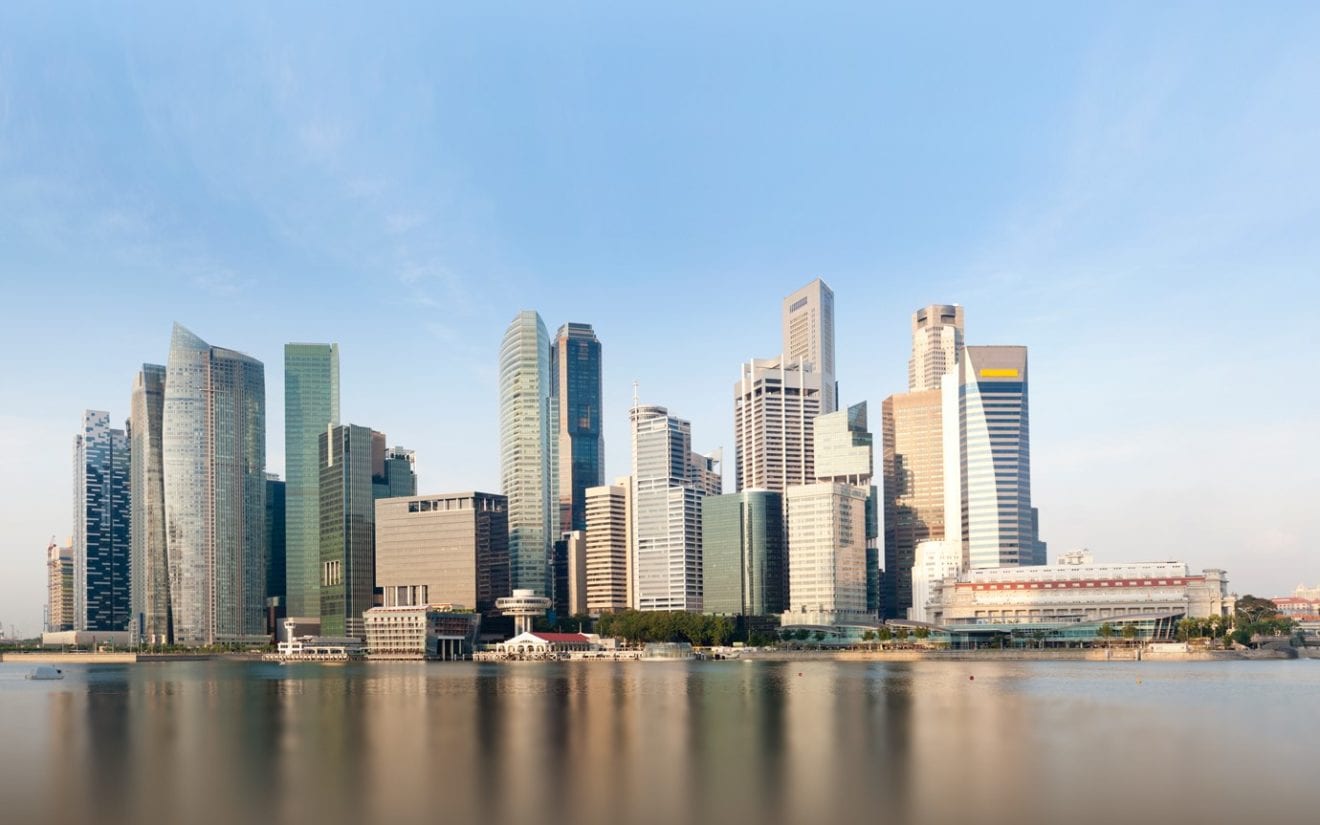
    While its retail sector remained resilient, other sectors such as hospitality and industrial have continued to impede Singapore real estate investment trust (REITs)’s growth, registering a flat -0.1% improvement in 2Q16.

    Even with the dismal performance, OCBC Investment Research said the REITs’ performance in 2Q is in line with the expectations.

    OCBC noted that the strong performances of OUE Commercial Trust, Lippo Malls Indonesia Retail trust and Mapletree Greater China Commercial Trust have offset the underwhelming performance of their peers in the hospitality and industrial sector.

    The three registered DPU growths of 34.7%, 16.4%, and 9.1%, respectively.

    Overall, the flat REIT DPU growth was amid the decent uptick in net property income at 8.2% and distributable income 5.2%.

    “This can be attributed to the regular issuance of new units as partial/full payment of management fees, coupled with REITs which have recently carried out equity fund raising exercises,” OCBC explained.

    Meanwhile, it explained how hospitality sector have remained the main drag during 2Q, pointing out to the weakness in revenue per available room for Singapore hotels and revenue for available unite in serviced residences.

    “Most industry players highlighted that June was a particularly poor month. We believe this could be attributed largely to the absence of the SEA Games which took place in June last year. Another key factor for the muted performance was due to weaker demand from the corporate sector,” OCBC said.

    For the industrial sector, its poor performance came from small-mid cap REITs.

    Looking forward, OCBC said the operational performance of the REITs would continue to be be pressured by the macroeconomic uncertainties and supply concerns.

    More so, it explained that some REIT managers are making use of the soft environment to carry out asset enhancement initiatives to reposition their assets in the future.

    These projects, the report warned, would result in a fall or loss of income contribution in the near future and will eventually mute DPU growth.

  • Consumer prices fall for 21st straight month in July

    Consumer prices fall for 21st straight month in July

    Consumer prices fell further in July, marking the 21st straight month of decline, according to data released by the Department of Statistics on Tuesday (Aug 23).

    The consumer price index (CPI) fell 0.7 per cent last month, unchanged from the previous month, as a smaller decline in the cost of private road transport offset the impact of lower retail goods prices, the Monetary Authority of Singapore (MAS) and Ministry of Trade and Industry (MTI) said in a joint statement.

    Private road transport costs fell by 4.4 per cent, compared to the 5.7 per cent decrease a month earlier, largely due to a smaller decline in car prices from a year ago.

    Prices of retail goods fell 0.2 per cent, compared to an increase of 0.5 per cent in June. This was mainly because of steeper discounts on clothing and footwear during the Great Singapore Sale, MAS and MTI said.

    Services inflation was 1.6 per cent, unchanged from the previous month. While the cost of education services rose more sharply, this was offset by a slower pace of increase in holiday travel expenses.

    Food prices rose 2.1 per cent in July. Although there was a stronger pickup in the cost of non-cooked food items, it was offset by a smaller increase in the price of restaurant food.

    The cost of electricity, liquefied petroleum gas and gas fell by 12.7 per cent, compared to the 13.7 per cent decline in June. This was due to a smaller decrease in electricity tariffs on a year-ago basis, the agencies said.

    Core Inflation, which excludes the costs of accommodation and private road transport, fell slightly to 1 per cent from 1.1 per cent in June, due to the fall in retail goods prices.

    Ms Selena Ling, Head of Treasury and Strategy at OCBC Bank, said that the main drags on inflation were familiar.

    “Looking ahead, with headline inflation having likely troughed in the second quarter and likely to creep higher in the coming months, we maintain our full-year inflation forecast of -0.4 percent year-on-year,” she said.

  • Singtel interested in MobiFone privatization

    Singtel interested in MobiFone privatization

    Singtel has joined the ranks of operators interested in becoming the strategic partner of Vietnamese operator MobiFone.

    Singtel’s VP for business development Oliver Foo met with deputy ICT minister Pham Hong Hai recently to discuss a possible investment in the venture.

    The Vietnamese government plans to privatize the currently state-owned operator MobiFone, and is seeking a foreign operator interested in participating in the privatization. Companies including Norway’s Telenor, Sweden’s Comviq and Australia’s Telstra have previously expressed an interest.

    Now Singtel has also indicated it may want to participate in the opening up of the operator to private investors.

    MobiFone has an estimated brand value of $539 million. The company jointly controls the majority of Vietnam’s telecoms market together with fellow state-owned operator VinaPhone and military-run Viettel.

    But the government has not yet announced its plans for the privatization of MobiFone.

    MobiFone recently contracted Ciena to build a 300Gbps backbone networkspanning more than 1,400km across the country.

    Singtel has meanwhile been expanding its regional operations, having recently announced plans to indirectly increase its stakes in Thai mobile operator AIS and India’s Bharti Airtel.

  • M1 to deploy NB-IoT network by 2017

    M1 to deploy NB-IoT network by 2017

    M1 and Nokia have teamed up to roll out the first nationwide commercial narrowband Internet of Things (NB-IoT) network in Singapore by 2017.

    When completed, the deployment – Nokia’s first large-scale deployment with an operator partner in Asia – is expected to be among the world’s first commercial NB-IoT deployments.

    NB-IoT networks and devices are designed to deliver improved network performance for M2M (machine-to-machine) communications – low-bandwidth, robust indoor penetration, and low power consumption, while delivering the benefits of licensed spectrum such as network reliability and security.

    The NB-IoT standards were finalized by the GSMA Standards body 3GPP in June 2016. Commercial NB-IoT devices are expected to be available by mid-2017.

    According to Bell Labs Consulting, there will be up to five billion IoT devices connected through mobile networks by 2020. In Singapore, NB-IoT deployment will support the nation’s journey to become a Smart Nation underpinned by data to deliver anticipatory services to its people.

    “NB-IoT is emerging to be a potentially promising technology for smart city’s machine-to-machine type of applications and services. We look forward to working with NB-IoT partners to explore the use of NB-IoT in developing innovative Smart Nation services that improve our citizens’ lives and make our businesses more productive,” said Jacqueline Poh, Chief Executive-designate, Government Technology Agency (GovTech).

    Sandeep Girotra, Nokia’s Senior Vice President of Asia-Pacific and Japan, said Nokia’s joint collaboration of NB-IoT deployment with M1 lays an important groundwork for further application of LTE-based IoT services.

    M1 also recently announced it is working with Nokia on Singapore’s first commercial HetNet deployment.

  • Singapore testing SIM logins for US visitors

    Singapore testing SIM logins for US visitors

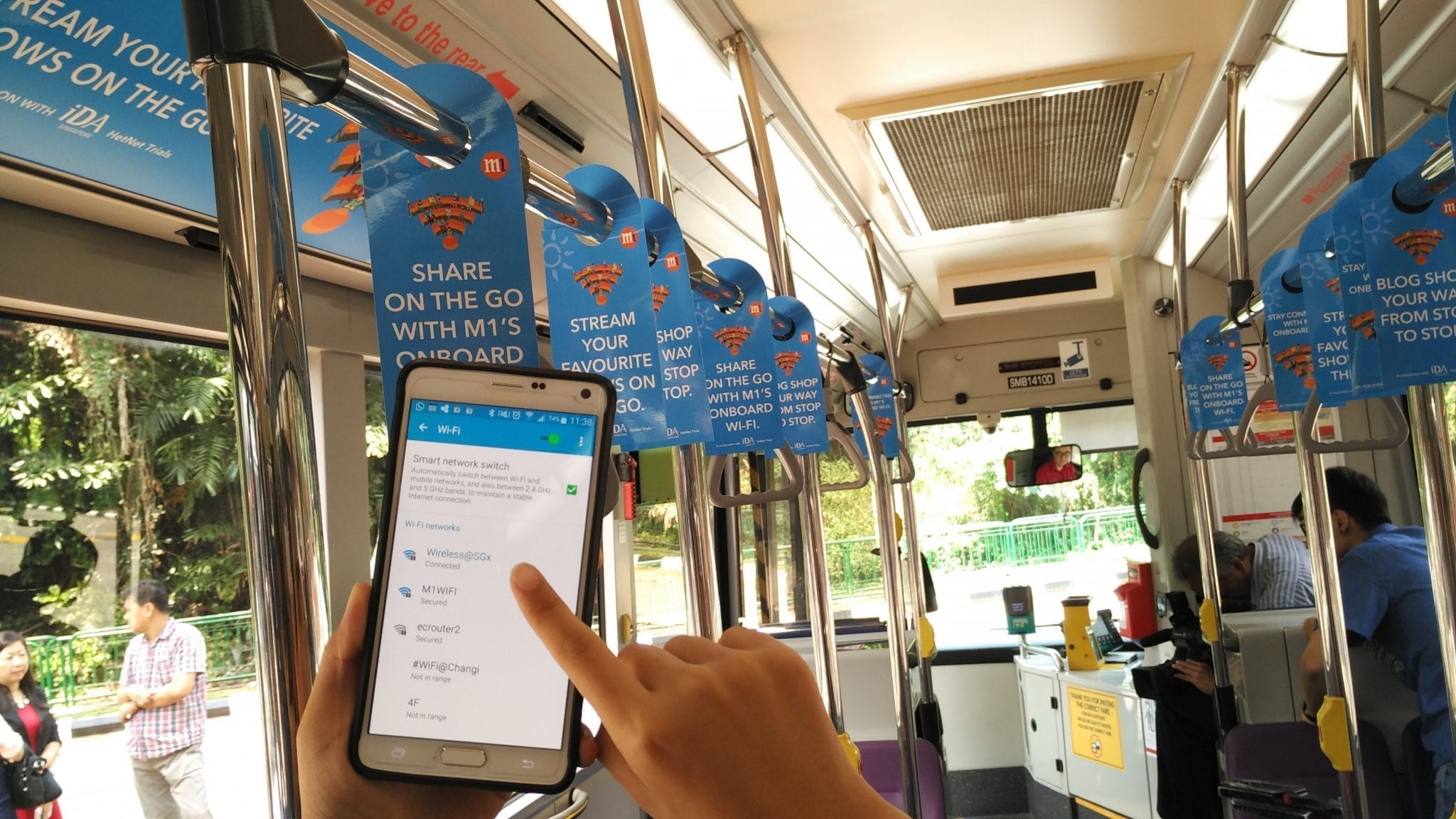
    The Infocomm Development Authority of Singapore (IDA) is piloting trials for US visitors to connect to the local wireless broadband network, Wireless@SG.

    The trials, which commenced yesterday and will run until September 21, will be conducted in partnership with the Land Transport Land Transport Authority (LTA), M1, Sentosa Development Corporation (SDC) and Singtel.

    Under the project, T-Mobile US subscribers can connect automatically to Wireless@SG after a one-time setup on their SIM devices. This would enable them to connect to around 290 hotspots in designated test areas – Sentosa and major MRT stations. Other US visitors who are not subscribers of T-Mobile can sign up for a free account in the government website.

    “Wi-Fi is fast becoming a daily necessity and Wireless@SG as the largest city-wide federated Wi-Fi network will be an important enabler to improve connectivity and liveability in Singapore as we move towards a Smart Nation,” said Khoong Hock Yun, IDA’s assistant chief executive.

    “Trialing the SIM-login method for foreign visitors is something new to us, and we hope to gather new insights, fine tune technical challenges, and enhance the Wireless@SG program further,” he added.

    IDA said the trial is taking place in conjunction with the Wireless Broadband Alliance (WBA) City Wi-Fi Roaming Project, which also allows Singapore visitors to the US to roam automatically and securely between free public Wi-Fi hotspots in participating US cities, namely, San Jose, San Francisco and New York for the same period.

    The City Wi-Fi Roaming Project is likewise a supporting activity of World Wi-Fi Day initiative. Both initiatives are backed by the Connected City Advisory Board, which aims to deliver the vision of Connected Cities around the world

  • Korean fashion brands in Zalora pop-up

    Korean fashion brands in Zalora pop-up

    South Korean fashion brands are featuring in an online pop-up store on regional sites of online fashion portal Zalora.

    It’s all part of a concerted bid to expand recognition of Korean fashion bards across the broader Asia-Pacific region.

    Launched in Singapore, the Premium Korean Fashion pop-up shop is open until October in Zalora sites in Singapore, Malaysia, Indonesia, the Philippines, Hong Kong and Taiwan, according to the officials at the Korea Trade-Investment Promotion Agency (Kotra) and the Korea Fashion Association.

    Seventeen South Korean designer brands, which have been recognised for their competitiveness both at home and abroad, are showcasing their products on the pop-up store.

    A launch ceremony was attended by some 80 Southeast Asian fashion journalists and so-called power bloggers. It marks South Korea’s first marketing activity targeting the entire Southeast Asian region.
    At the event, Giulio Xiloyannis said there is growing interest in Korean fashion in Southeast Asia and that the opening of the pop-up store is not only a new attempt but also an important event for Zalora.

    A Kotra official said the trade agency will step up efforts to gain access to major online portals in an effort to make inroads into regional markets.

    “Southeast Asia is emerging as the next eCommerce market after China as youths account for a large portion of its population and regional economies are growing at a fast pace,” Lee Byung-woo, head of Kotra’s office in Kuala Lumpur. “Efforts will be made to help Korean brands gain a foothold there.”

  • Sennheiser Singapore store an Asian first

    Sennheiser Singapore store an Asian first

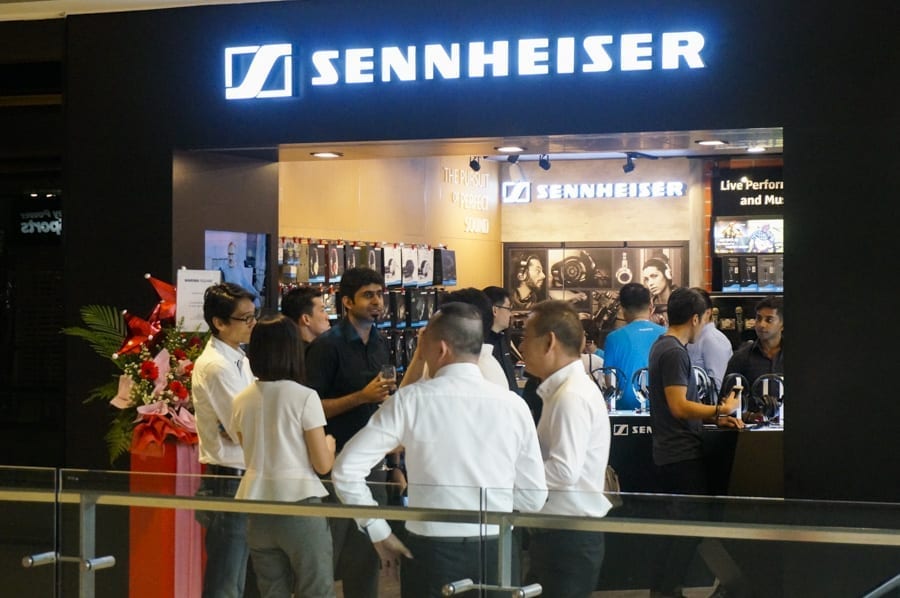
    Headphone brand Sennheiser Singapore has opened its first store, at Marina Square.

    After its home country Germany, the store is only its second fully owned outlet, but it is the only one to offer a one-week free trial service.

    sennMS-10 (1)

    Customers can take home the HD650, HD800S and Momentum Wireless models to trial for a week. The company says this will allow customers to experience product features to help them decide which model to buy.

    Sennheiser also offers a pick-up and drop-off  point for customers who want to have their products checked and/or repaired. This saves them having to go to the company’s service center at Alexandra Technopark.

    Compared to the previous outlet run by a distributor, the new Sennheiser brand store offers a wider range of products. As well as headphones there are microphones – models mainly used by musicians and video journalists – as well as enterprise audio products.

    “Singapore is a key market for us, and this is an integral part of our regional go-to-market strategy,” says Sennheiser Asia sales and marketing VP Martin Low.

  • StarHub brings back 12GB+ mobile data bundles

    StarHub brings back 12GB+ mobile data bundles

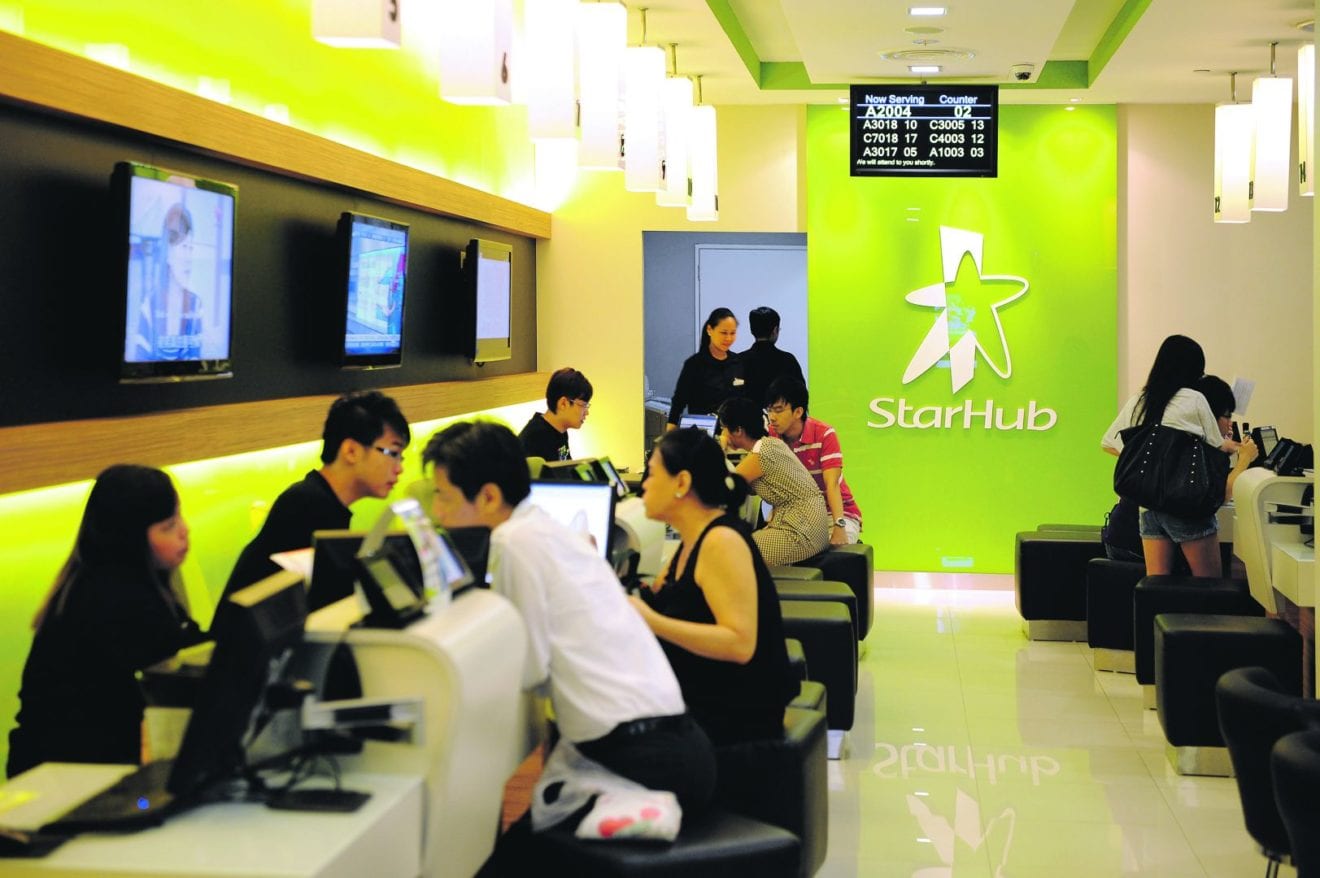
    Singapore’s StarHub has launched a new range of plans bundling large volumes of mobile data with 1Gbps fiber broadband subscriptions.

    The operator’s new SurfHub plans include between 12GB and 24GB of 4G data as well as the 1Gbps home broadband plan.

    Prices start at under S$100, which is about half the cost of a standalone 12GB mobile plan, StarHub head of product and marketing Wang Li-Na said.

    “We know customers miss the freedom that huge data bundles offer and wish they were as affordable as before. Faster 4G technologies have catalysed the adoption of data-intensive services, and our customers are now sharing more and watching for longer on their smartphones, she said.

    “With SurfHub, we want to continue giving our Hubbing customers the best value, which is what StarHub is known for.”

    The plans also come with between 150 minutes and 700 minutes of talk time and 1000 to 1500 SMS, and offers for 50% off value-added services including international roaming, multiSIM and the StarHub Go Select online streaming service.

    StarHub has also increased the mobile data allocation for its five-services-in-one pack HomeHub Go – which combines 3G and 4G mobile broadband, fiber home broadband, fiber TV and home phone services – to 15GB.

  • M1 commences Singapore’s first HetNet rollout

    M1 commences Singapore’s first HetNet rollout

    Singapore’s M1 has announced it has commenced Singapore’s first commercial HetNet rollout in collaboration with Nokia.

    As part of the rollout, M1 plans to progressively deploy Nokia’s Flexi Zone small cells and Wi-Fi equipment at hundreds of high-traffic hotspots across Singapore, including mass transit stations, malls and popular outdoor areas.

    The operator will also use small cell technology to bring connectivity to hard-to-reach areas including car parks, basements and parks.

    M1 plans to use LTE-WiFi Aggregation (LWA) technology to deliver peak download speeds of more than 1Gbps over its 4G+ network by 2017.

    The rollout follows HetNet trials earlier in the year at multiple locations including three MRT stations. During the trial, download speeds were improved by 60%.

    M1, MyRepublic, Singtel and StarHub have all been working with the Infocomm Development Authority (IDA) of Singapore on nationwide HetNet trials. M1’s participation has included trials of HD VoWiFi, as well as Wi-Fi on public buses.

    “The results from our HetNet technology trials were positive. 90% of users enjoyed a better mobile experience, with faster download and upload speeds. We are pleased that the trials have given our partners such as M1 useful insights and confidence to further enhance the mobile experience through commercial HetNet deployment,” IMDA chief executive designate Gabriel Lim said.

    The IMDA is due to be formed through the merger of IDA with the Media Development Authority (MDA) of Singapore.

    “As Singapore moves towards a Smart Nation, we look forward to working closer with companies in the tech, engineering and R&D space to develop solutions that can enhance connectivity and improve Singaporeans’ lives,” Lim added.

  • Singapore makes cashless payments push

    Singapore makes cashless payments push

    In 2014 Singapore was one of the first countries in the world to build a 27/7, real-time interbank fund transfer system, called Fast.

    However, cash in circulation is 8.8% of GDP, compared to 4.4% in Australia and 2.12% in Sweden. Nearly 13 cheques per person were written in the country in 2014, compared to seven in Australia and effectively none in Sweden.

    According to research from the Monetary Authority of Singapore and KPMG, the social costs of this heavy reliance on cash and cheques is around 0.5% of GDP, or S$2 billion a year.

    In a speech, MAS managing director Ravi Menon says that the fact that Singapore is so far behind these other countries shows that the Fast infrastructure is “grossly under-utilised”.

    One of the key reasons for this is that people do not know the bank account numbers of people that they want to send money to. Therefore, MAS and the country’s banks are developing a Central Addressing Scheme (CAS) that will allow payments to be made through Fast using only a recipient’s mobile number, or NRIC number, or Unique Entity Number.

    “If all goes well, by this time next year, we will no longer need to remember bank account numbers for a majority of our electronic fund transfers,” says Menon.

    In his speech, the MAS MD also says that cost is holding back the take up of Fast among small businesses. Some banks charge up to S$10 to transfer funds through the system while cheque payments are free.

    Menon also bemoaned Singapore’s complicated point-of-sale situation, which sees many stores cluttering up counters with multiple terminals to accept different cards.

    To tackle this, the country is pushing ahead with a unified POS terminal that can read all kinds of cards at retail and hospitality outlets. About 1000 of them have been deployed at convenience stores such as 7-Eleven, with more to follow.

    Meanwhile, Singapore’s Land Transport Authority is teaming up with MasterCard for a pilot that will see participants pay for their train and bus journeys by tapping their contactless credit and debit cards.

    On MAS’s own role, Menon says that the central bank will streamline and strengthen the payments regulatory framework to create a single and modular regime that will be applied on an activity basis, rather than specific payment systems.

    KPMG’s report also recommends strengthening the governance model and creating a national payments council that fosters innovation, competition and collaboration, coordinating key initiatives, such as promoting interoperability and adopting common standards.

  • Singtel sale slide offset by Indonesia, Thai mobile affiliates

    Singtel sale slide offset by Indonesia, Thai mobile affiliates

    Singapore Telecommunications announced a net profit of S$944 million for its first quarter ended June, up 0.3 per cent on the year, mainly due to stronger contributions from its mobile affiliates in Indonesia.

    Singtel’s sales fell 7.1 per cent on the year to S$3.9 billion. Singapore consumer revenue declined by 8.5 per cent to S$558 million. The growth in mobile data use could not fully offset the revenue decline in roaming and voice services in the city-state. The company’s operating revenue in Australia also fell by 15 per cent due to higher mobile service credits from device repayment plans and a weaker Australian dollar.

    Weaker equipment sales also dragged revenue down for both countries. “Equipment sales both in Singapore and Australia showed a decline and that reflects lower re-contracting volumes. There was also a higher take-up of SIM-only plans where they don’t buy the handset from us,” said Chua Sock Koong, group chief executive of Singtel, in a media briefing on Thursday.

    Contributions from Singtel’s other mobile affiliates helped to offset its losses. Indonesian mobile operator Telekomunikasi Indonesia’s profit after tax jumped 31.1 per cent on the year to US$244 million (S$327.78 million), supported by strong growth in voice, data and digital businesses. Thailand’s Advanced Info Service also generated higher contribution for the quarter, a 5.1 per cent increase to US$98 million after tax on the year.

  • H&M Beauty sets opening date

    H&M Beauty sets opening date

    The Swedish fast-fashion brand, H&M has set September 10 as launch date for its beauty line in Asia.

    After making its debut late last year, H&M beauty line will come to its Asian customers this September, with Singapore as the first destination.

    The first two Singapore stores to present the line are at Orchard Building and H&M Raffles Place.

    The range covers cosmetics, skincare, body-care and haircare products. The makeup range will include more than 700 products for all makeup styles and occasions. The body-care products are said to be made from premium ingredients with ‘Conscious’ collection using recyclable packaging.

    The beauty line is part of H&M’s philosophy to offer shoppers the latest styles and quality with affordable prices.

  • Singtel to lift stakes in AIS, Airtel

    Singtel to lift stakes in AIS, Airtel

    Singtel has confirmed it has arranged to indirectly increase its stake in Thai mobile affiliate AIS, and revealed it will also increase its share in India’s Bharti Airtel.

    The operator announced it has entered a conditional agreement to acquire 21% of Thai operator AIS’ largest shareholder Intouch Holdings from Singtel’s majority shareholder Temasek Holdings, confirming reports from earlier in the week.

    Intouch is AIS’ largest shareholder with a roughly 40% stake, while Singtel owns a 23% stake in AIS.

    Singtel has meanwhile also agreed to acquire a 7.39% stake in Bharti Airtel’s holding company Bharti Telecom, adding to the 39.78% it already owns.

    The acquisitions have a total value of S$2.47 billion ($1.84 billion). Singtel will pay cash, and fund the acquisition through a combination of internal cash, short-term debt and proceeds from a S$1.6 billion placement of new Singtel shares to Temasek. The deal still requires shareholder and regulatory approvals.

    “Singtel has been a strategic partner to both AIS and Airtel for more than 15 years. We have built deep and trusted relationships, worked well together through the years, sharing knowledge and expertise and we have grown together, from strength to strength,” Singtel Group CEO Chu Sock Koong said.

    “Today, they have a combined mobile customer base of more than 380 million across Asia and Africa. This is a unique opportunity for us to deepen our relationships with two great market leaders.”

  • CropLife Asia Signs Partnership with Asian Apiculture Association

    CropLife Asia Signs Partnership with Asian Apiculture Association

    CropLife Asia announced today that it has signed a Memorandum of Understanding (MoU) with the Asian Apicultural Association (AAA) to support a research initiative to catalogue and study the bee species and populations in Asia. CropLife Asia Executive Director Dr. Siang Hee Tan and AAA President Dr. Siriwat Wongsiri signed the agreement at Singapore’s M Hotel.

    It is estimated that at least 87 out 115 global primary food crops require some form of animal pollination, and insect pollination occupies a high value in the production of daily produce including vegetables, fruits, edible oil and spices.

    Comprehensive data on pollinators in Asia is scarce and much of the information that does exist has been derived using an array of different methods, making it difficult to draw comparisons across geographies and time. To better understand the state of Asia’s pollinators, a first step in protecting them and promoting their use in agriculture, CropLife Asia and AAA have agreed to collaborate in developing a harmonized method to survey the pollinators in key Asian countries.

    “When it comes to pollinators in Asia, there is a general lack of both awareness as to the important role they play in agriculture as well as reliable data reflecting their overall health,” said Dr. Tan. “Our industry has a responsibility to work with chief stakeholders who have unique perspective and expertise in this area, and our partnership with AAA is an important and impactful step forward on this front.”

    A key component of the MoU is developing a universally-applicable, harmonized method to capture the state of bee health in particular in key countries across the region. Specifically, this will entail surveying bee species in order to identify major pollinators (including indigenous subspecies) and their relative abundance.