Tag: Singapore

  • TripleA Wins Singapore Crypto License

    TripleA Wins Singapore Crypto License

    The crypto payments firm is the fourth to receive a digital payments token (DPT) license in the city-state.

    The Monetary Authority of Singapore (MAS) has awarded a DPT license to TripleA, allowing the company to provide end-to-end cryptocurrency payment services, according to an announcement this week.

    Founded in 2017 by mobile and payments entrepreneur Eric Barbier, TripleA currently operates in Singapore, with a presence in Hong Kong and Europe.

    CEO Barbier said in the announcement that the license will enable the company to «expand cryptocurrency access to more residents and also strengthen TripleA’s positioning as a trusted and reliable crypto payments partner for businesses worldwide.

    MAS has awarded DPT licenses to DBS Vickers, Australian crypto exchange Independent Reserve and fintech firm Fomo Pay.

    It has received over 170 license applications from digital payment token service providers, including global crypto exchanges such as Coinbase and Kraken.

  • Singapore and Philippines Step Up Digital Payment Cooperation

    Singapore and Philippines Step Up Digital Payment Cooperation

    The regional neighbors aim to boost cross-border collaborations that will strengthen Asean regional payments and provide financial inclusivity to Overseas Filipino Workers (OFWs) and micro-small-to-medium-sized enterprises (MSMEs).

    The central banks of Singapore and the Philippines have signed an agreement at the World Fintech Festival Philippines to boost payments cooperation, which includes the linkage of the two countries’ QR and real-time payment systems.

    The agreement expands on the Fintech Innovation Function Cooperation Agreement, which was signed between the two countries in 2017. According to the announcement, the 2021 agreement will make cross-border payments cheaper, more inclusive, and more transparent and drive financial inclusion, particularly underserved Filipinos.

    MAS managing director Ravi Menon called the agreement a concrete step towards the vision of an ASEAN network of interconnected real-time payment systems.

  • Singapore, UK sign MOUs on digital trade, digital identities and cybersecurity

    Singapore, UK sign MOUs on digital trade, digital identities and cybersecurity

    Singapore and the United Kingdom will work more closely to facilitate digital trade between the countries, as part of a partnership that will make digital transactions by businesses easier, safer, and cheaper.

    The partnership was deepened by the inking of three memorandums of understanding (MOUs) by the two countries on Monday (Nov 29).

    The MOUs will strengthen the digital connectivity between them, said Singapore’s Ministry of Communications and Information and the UK’s Department for Digital, Culture, Media and Sport in a joint statement.

    “In 2019, 70 percent of UK cross-border services exports to Singapore were digitally delivered,” said the government organizations. The exports amounted to £3.2 billion (S$5.8 billion) in value.

    “These MOUs will further support opportunities to grow digital delivery of cross-border services between the UK and Singapore, provide a basis for working closely with like-minded digital partners, and help set a global benchmark on high-standards digital cooperation to bring economic and societal benefits to both countries,” they added.

    The MOUs will also support the shared goals and key tenets of the UK-Singapore Digital Economy Agreement, which seeks to promote trusted, robust and connected digital markets for people and businesses.

    The agreement, which is being negotiated, will establish rules to enable trusted cross-border data flows and ensure high standards in data protection.

    Singapore’s Minister for Communications and Information Josephine Teo and the UK’s Secretary of State for Digital, Culture, Media and Sport Nadine Dorries signed the MOUs in London on Monday.

    Mrs. Teo is also in London to attend the London Future Tech Forum, which aims to facilitate discussion on the role of technology in supporting open societies and tackling global challenges, among other things. Participants include governments and those from academia.

    Under the first MOU, the countries will share knowledge and implementation of pilot projects in areas such as electronic trade documents and invoicing.

    This will help drive the development and adoption of digital trade facilitation solutions at a bilateral and international level, said the ministries.

    Benefits to the digitalization of trade include improving accessibility for small and medium-sized enterprises to engage in cross-border trade, among other things.

    “The sharing of best practices will also influence the creation of secure global supply chains and interoperable digital ecosystems,” added the ministries.

    Under the second MOU, Singapore and the UK will work more closely to develop mutual recognition of digital identities between the countries.

    The MOU is “an important step in the route to achieving interoperability of digital identity regimes between different jurisdictions”, which can allow for more reliable identity verification and faster processing of applications, among other things, the ministries added.

    “This would, in turn, reduce barriers in cross-border trade and enable businesses and individuals to navigate the international digital economy with greater ease, confidence and security.”

  • Linklogis Opens Singapore Office

    Linklogis Opens Singapore Office

    The move advances the firm’s plans to open a digital bank in Singapore in early 2022. Linklogis, a key provider of supply chain finance technology in China with growing operations in Southeast Asia, has established a branch office in Singapore, the company said on Thursday in a statement.

    The company said it is looking forward to working with Singaporean companies to streamline supply chain finance and intends to leverage innovative technology to address the funding gap for SMEs.

    Singapore is a strategic jurisdiction for international trade and a place where we have already created important joint ventures, Charles Song, founder, chairman, and CEO of Linklogis, said.

    Linklogis was awarded a digital banking license by the Monetary Authority of Singapore (MAS) in December 2020, and is currently in the process of establishing a new Singapore-based entity, Olea, its trade finance joint venture with Standard Chartered.

    In April 2021, the company raised HK$8.967 billion ($1.153 billion) in a Hong Kong initial public offering, from investors including BlackRock, EDBI – the investment arm of Singapore’s Economic Development Board – and Fidelity.

  • Multi-Currency Wallet YouTrip to Grow B2B Offerings

    Multi-Currency Wallet YouTrip to Grow B2B Offerings

    Singapore-based YouTrip aims to scale its product offerings, including venturing into the B2B payments space, and accelerate its expansion across Southeast Asia.

    YouTrip has raised $30 million in a Series A funding round driven by returning investors from major Asian family offices and prominent financial technology investors, bringing its total funding since launch to $60 million, it said in an announcement on Tuesday.

    The company has set its sights on the growing B2B payments space, as it said SMEs are showing a strong willingness to adopt digital banking services, specifically for cross-border payments. To cater to this segment, it will be rolling out its YouBiz product in Singapore in the first quarter of 2022, and with plans to bring it to five other Southeast Asia countries in the next 12 months. It has already received over 1,000 sign-ups in a beta launch.

    It is a segment with a deep market, as companies increasingly operate in a distributed and borderless manner and we expect their cross-border payment needs to go up, Arthur Mak, co-founder said in the announcement.

    This latest round also gives us the resources to strengthen our multiple growth engines to stay resilient and well-primed for expansion into new vistas, Caecilia Chu, co-founder, said.

    YouTrip said its transaction volume has rebounded to pre-COVID levels, driven by strong traction in cross-border e-commerce transactions and return of travel spending. Exponential growth is expected in the upcoming months following the opening of more Vaccinated Travel Lanes in Singapore and progressive return of regional travel.

    According to YouTrip, it has processed over $800 million in card spending globally, with almost 20 million transactions and over 1.5 million app downloads.

  • Feeding a Nation – RedMart West Fulfilment Centre, Singapore

    Feeding a Nation – RedMart West Fulfilment Centre, Singapore

    Providing productivity, space efficiency, speed, and accuracy – with the bonus of increased safety and social distancing.

    An Advanced Grocery Online Fulfilment Centre – Scaling Up to Meet Growing Demand

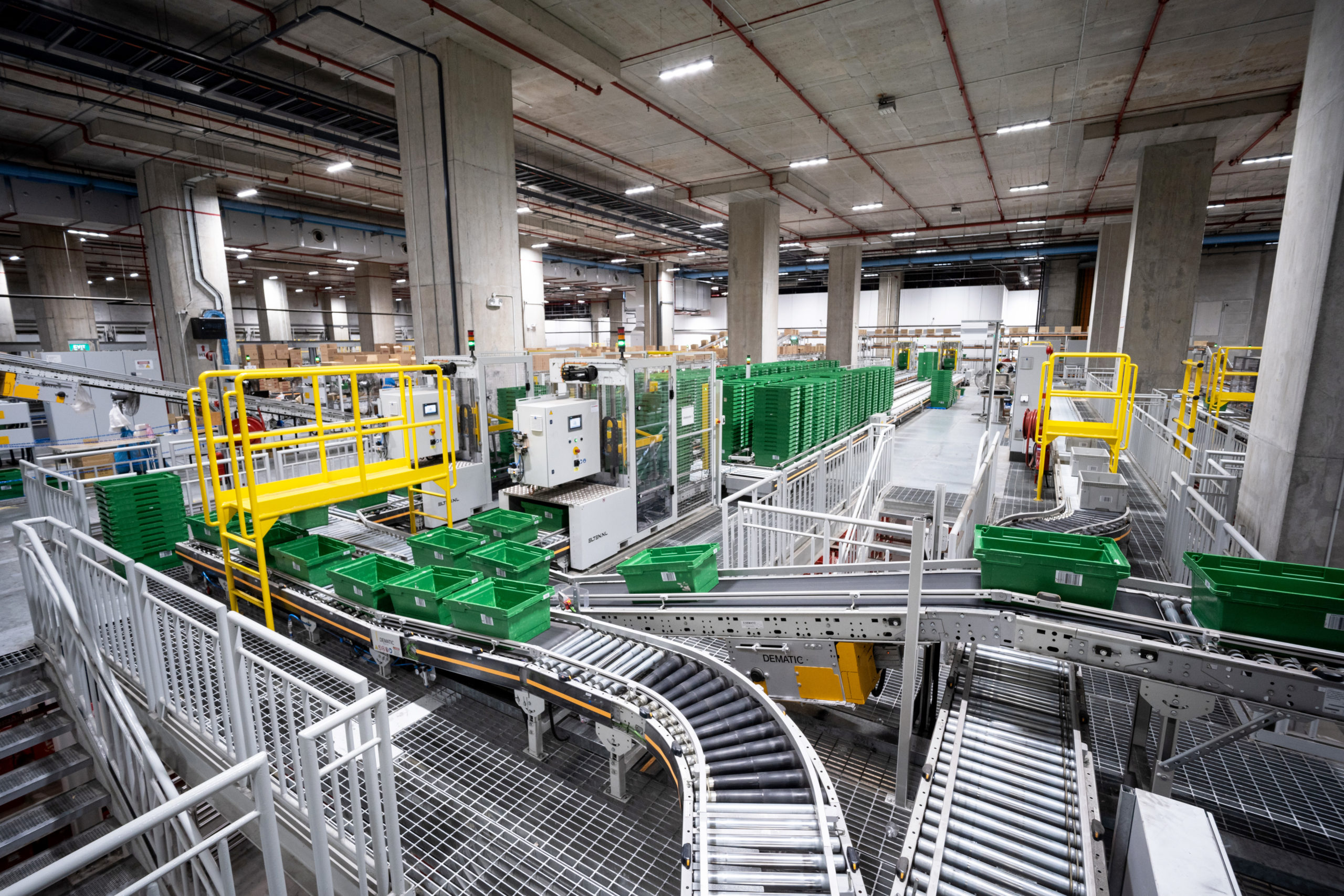
    Occupying 32,500 square metres (350,000 square feet), one of the largest logistics facilities in the country belongs to the biggest online grocery platform in Singapore –RedMart. RedMart is the online grocery service of e-commerce giant, Lazada, which serves all of Singapore. The RedMart West Fulfilment Centre has been able to build up its logistical prowess through automation, thanks to intelligent, innovative solutions from Dematic.

    “At RedMart, we offer over 100,000 assorted products to Singaporeans”, said Mr. Gerald Glauerdt, Co-Founder & Chief Logistics Officer at RedMart and Lazada. “This RedMart Fulfilment Centre is our main hub, seeing a lot of hustle and bustle as we are open 24/7, fulfilling orders for our customers as soon as they are placed.”  Mr. Glauerdt also went on to add that this advanced fulfilment centre for groceries is the first one of this scale and complexity in Singapore.

    RedMart’s West Fulfilment Centre is powered by market leading automation from Dematic to meet the increasing demand for online grocery shopping. The Dematic automated solution includes robotic shuttles, ergonomic high-speed pick stations, an intelligent conveying system, and a high-rate sortation system, all managed by a sophisticated software platform to make processes incredibly easy and efficient for pickers, packers, and management staff.

    In its previous setup, RedMart operators would have to manually travel around aisles and aisles of shelving to pick the items required for orders. In addition to spending a lot of time travelling, pickers would need additional time for receiving instructions, locating products, and loading and unloading trolleys, resulting in a highly inefficient process that was not only time-consuming, but prone to errors. Errors made by the pickers in such a manual process are difficult to detect, hard to prevent and extremely costly to resolve. With the automated solution provided by Dematic, RedMart’s productivity and accuracy have both improved significantly.

    Another key factor in developing the overall infrastructure for the RedMart West Fulfilment Centre was the building footprint. In Singapore, a big component for businesses is the cost of space. When RedMart first started talking to Dematic, they were receiving less than 2,000 orders per day, and had around 5,000 products in their range. However, the RedMart West Fulfilment Centre needed to be designed to handle a significantly greater number of orders and products on a daily basis. RedMart realised they would not be able to find the space or the workforce to meet their growth target using their current practices.

    The COVID-19 Pandemic – Providing Solutions to meet this Disruption

    Online grocery shopping had been experiencing strong growth in Singapore for several years but saw some explosive growth because of the pandemic.

    Mr. Glauerdt mentioned that the decision to install a high level of automation at this facility was made well before the onset of COVID-19, but the importance of the automated solution to RedMart’s business has been underscored by the pandemic, where the rate at which consumers have turned to online platforms to purchase their groceries has grown exponentially.

    According to RedMart, sales jumped by more than four times during the start of the pandemic, with unique visitors to the website rising by more than 11 times.

    “A lot of elements that we designed into these solutions put RedMart in a really good position to adapt and respond to the pandemic”, said Mr. Michael Bradshaw, Senior Regional Director, Sales & Solutions Development, Dematic. “They now have operators working at socially distanced workstations, rather than crossing paths, pushing a trolley around to pick an order. With the pandemic, we saw an incredible surge in demand for online grocery shopping, and the volume that Redmart had planned for several years in the future, was brought forward.  With the capacity they had available with the automated solution, Redmart were able to take on the increased demand and service their new customers.”

    Challenges faced by RedMart – Exponential Growth Required Scalable Infrastructure

    The online market for groceries had seen a growth rate of 300% since 2017, however with RedMart’s previous infrastructure and manual processes, it would not have been able to cost-effectively take advantage of this growth opportunity.

    “Our previous model was no longer working for us as we continued to grow. To meet the demand of consumers when it comes to online grocery shopping, the old method of manually hand-picking an order to pack and send to customers was too time-consuming, inefficient, and low in productivity,” said Mr. Glauerdt. “We knew we needed to scale our model of operations up, and we needed to find a solutions provider who was highly experienced in warehouse and logistics automation. Dematic was chosen as they were able to provide us with highly customisable solutions that would bring us the productivity increases that we were looking for.”

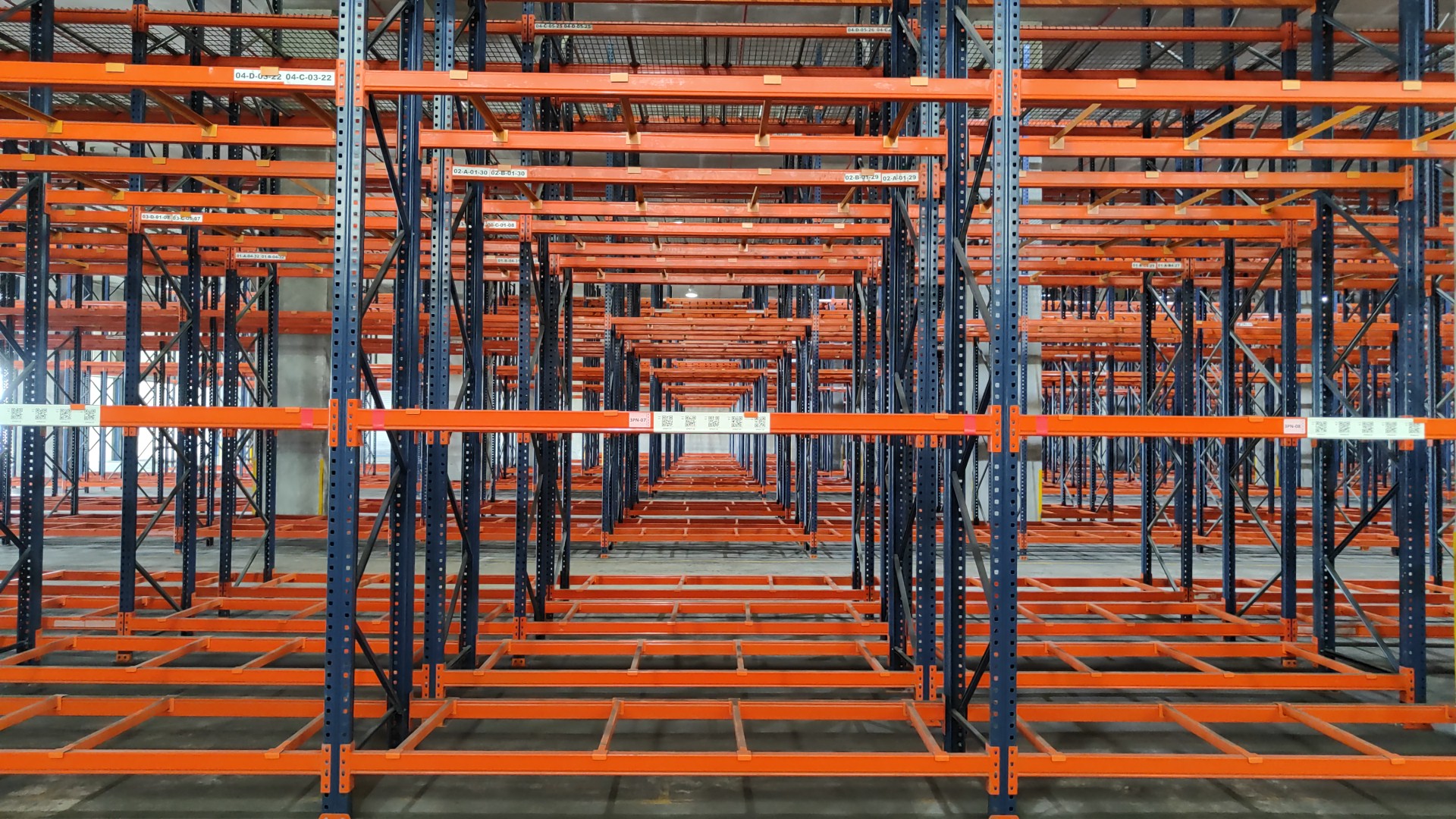
    One of the technologies Dematic has provided as part of the automated solution is the Dematic Multishuttle® system. Products are placed in totes, which are automatically stored in high-density racks by robotic shuttles. The Dematic Multishuttles automatically transport totes between storage locations and operator pick stations, eliminating the need for operators to travel and preventing them from picking the wrong product. These towering racks extend from floor to ceiling, maximising the storage density of the warehouse.

    “The automated solution uses robotic shuttles to store and retrieve products automatically and deliver them to goods-to-person (GTP) workstations where operators can work up to 5 times faster than they were previously”, said Mr. Bradshaw. “This part of the solution covers a huge product range in a small footprint, with an extremely effective picking method. The shuttles are also used to automatically replenish pick locations allocated for faster moving products where we use light picking technology to direct the operators, making the picking process as fast and accurate as possible.”

    Whenever there is an order to be fulfilled from the goods-to-person area, the Dematic Multishuttle system automatically retrieves totes containing the required items. Totes are retrieved in a specific sequence and conveyed to the GTP workstations where they are picked and placed into order containers. The operator stays in one place while items are delivered to their pick station automatically, increasing picking speeds and productivity by eliminating the need for the picker to walk around many aisles of shelving.

    “This example of the GTP brings a highly productive solution in terms of processes, where a picker could now pick and pack 500 items in the same time that it used to take us to pick and pack 100 items in the past using the manual process”, said Mr. Glauerdt. “Dematic was able to offer this customised solution to help reduce the burden on our pickers, whilst boosting productivity and efficiency, helping us to meet the growing demand of online grocery shopping.”

    Dematic’s system also includes order fulfilment of fresh produce in multiple temperature zones including a freezer pick area. Customer orders are transported through the various picking areas of the facility as required using an intelligent routing conveying system and consolidated at ergonomic packing stations in preparation for despatch. Once packed, orders are conveyed and automatically sorted to specific delivery vehicles using one of Dematic’s high rate sliding shoe sorter. The solution minimises customer orders touch points, maximising both productivity and hygiene.

    Challenges met with Challenges – Maintaining Customer Service Levels

    “To make sure that the system keeps running around the clock, Dematic provides service and support that’s available 24/7”, said Mr. Bradshaw. “We have technicians located on-site to help look after the equipment and attend to any issues faced by RedMart during their operations. The early warning system integrated into our software tells us about something that might cause us a problem before it actually does, ensuring that our system runs at the highest level of availability for RedMart and its customers.”

    The whole system is covered by support from the Dematic Software Centre, staffed by a dedicated team of specialist engineers available 24 hours a day, who can be dialled into the system in a matter of minutes to provide help whenever needed.

    RedMart Fulfilment Centre System Benefits

    • Increased productivity with intelligent order routing, paperless picking technology, automated replenishment and Goods to Person picking stations supported by the Dematic Multishuttle
    • Improved ergonomics and safety at operator workstations
    • Reduced order fulfilment times
    • Improved space efficiency and storage capacity, with high-density storage provided by the Dematic Multishuttle.
    • Improved inventory and order accuracy ensures customer orders are fulfilled correctly and reduces the cost of resolving errors and addressing returns
    • Products in multiple temperature zones handled by the one system streamlining the order fulfilment process and speed of delivery to customers.
    • Flexibility to handle a growing product range and diversity of order profiles.
    • Improved operational efficiency with real-time monitoring of inventory, orders, workload progress and system performance.

  • DBS May Face Regulatory Action Over Outage

    DBS May Face Regulatory Action Over Outage

    The Monetary Authority of Singapore said it will consider appropriate supervisory actions on DBS, which suffered recurring disruptions to its online banking services, including its payments app.

    This is a serious disruption and MAS expects DBS to conduct a thorough investigation to identify the root causes and implement the necessary remedial measures, Marcus Lim, MAS’ assistant managing director (banking and insurance), said in a statement.

    The regulator said the bank informed it about a problem with its access control servers that resulted in customers experiencing difficulties logging on to its digital banking services.

    Lim said MAS expects all financial institutions to have systems and processes to ensure the consistent availability of financial services to their customers.

    This week, DBS faced two consecutive days of disruptions to its online banking services, marking the worst outage for the Singapore lender since its ATM glitch in 2010.

    DBS Singapore country head Shee Tse Koon apologized for the outage in a video posted on the bank’s website and various social media pages on Wednesday afternoon.

    The bank also extended services at its branches for two hours and encouraged customers to use its phone banking services. In the meantime, I want to assure you that your deposits and monies are safe, Shee said.

  • UBS Officially Opens Singapore Office

    UBS Officially Opens Singapore Office

    Swiss banking giant UBS has opened its largest Asia Pacific office in Singapore, alongside the announcement of two new tech-related initiatives.

    UBS officially opened its Singapore office at 9 Penang Road yesterday in a ceremony that featured chairman Axel Weber, global chief executive Ralph Hamers, APAC CEO Edmund Koh and more.

    Fully running on renewable energy, the 400,000 square feet of the prime property will be the Swiss bank’s largest office in the Asia Pacific region.

    Accompanying the office launch was the introduction of two new tech initiatives: TechConnect SEA and UBS Circle One.

    TechConnect SEA is an ecosystem that aims to connect and grow Southeast Asia’s next generation of unicorns.

    The bank is also piloting its UBS Circle One app which will connect investors to ideas on a global ecosystem.

    Also in attendance at the event was Singapore’s Minister of Finance Lawrence Wong who lauded UBS’ efforts in the city-state especially with regards to talent development.

    UBS has come a long way, starting out with a handful of professionals in 1970 and growing to employ over 3,000 staff in the Wealth Management, Investment Banking and Asset Management businesses today, Wong said on a social media post.

    It has remained committed to building up Singapore’s local talent pool, while deepening the capabilities and expertise of the industry in meaningful areas such as innovation, philanthropy, and sustainable investing.

  • Grab’s Ride-Hailing Services Disrupted In Southeast Asian Countries

    Grab’s Ride-Hailing Services Disrupted In Southeast Asian Countries

    Southeast Asia’s Grab on Tuesday said it was experiencing disruption to its services, with customers and drivers in Singapore, Indonesia, and Malaysia complaining that they were having trouble using the app’s ride-hailing functions.

    “Some of our services are not accessible at the moment,” Grab posted on its Facebook page.

    “We are looking into this and we will update when the app is back up and running.”

    Grab operates Southeast Asia’s most popular “super app”, which provides ride-hailing, food, and grocery delivery, and payments in over 400 locations in eight countries.

    “We are experiencing some technical difficulties with the app and our engineers are working to recover the issue,” Grab said.

  • Fintech Funding in Asean Reaches Record High

    Fintech Funding in Asean Reaches Record High

    The region’s fintech firms brought in $3.5 billion in funding in the first nine months of 2021 – up more than three times compared to the whole of 2020.

    The rebound in fintech funding was driven by 167 deals including 13 mega-rounds, which accounted for $2 billion of the total funding, said in the FinTech in ASEAN 2021 report, published by UOB, PwC Singapore, and the Singapore FinTech Association (SFA) this week.

    The largest share of funds was channeled into late-stage fintech firms from the payments sector. Predictably, the pandemic was the main catalyst for the resurgence in fintech funding, as accelerating digital adoption across the region prompted a rise in digital payments and a shift towards digital channels within the financial services sector.

    According to the report, the strong interest in late-stage fintech firms signals a shift in the strategy of investors as they take a more cautious and risk-averse approach of backing mature firms that are seen as standing a higher chance of emerging stronger from the pandemic.

    Singapore-based fintech firms continued to attract the strongest funding in Asean, securing 49 percent of the total 167 deals, amounting to $1.6 billion in funding. This includes six mega-rounds worth $972 million in total. Indonesia retained its second position, with $904 million in funding (26 percent), followed by Vietnam at $375 million (11 percent) as a result of two mega-rounds.

    Singapore, in particular, has seen the most robust funding, supported by a growing number of fintech looking to set up their headquarters here due to the strong regulatory support, opportunities for regional collaboration, and a flourishing startup-focused investor ecosystem, Shadab Taiyabi, president at SFA, said in a statement.

  • Huobi Pulls Plug on Services in Singapore

    Huobi Pulls Plug on Services in Singapore

    The cryptocurrency exchange, one of the world’s largest, will be gradually phase out access to its services for Singapore-based users and close their accounts on March 31, 2022, to comply with local regulations.

    To comply with the laws of Singapore, we will have to include Singapore as a restricted jurisdiction. Regrettably, this means Huobi Global can no longer offer services to Singapore-based users, Huobi said in an announcement, advising them to take immediate action to close out all active positions and withdraw all digital assets.

    In a statement, Huobi said this was a planned move ahead of the launch of Huobi Singapore – a new, regulated entity that is expected to launch by the end of the year.

    Huobi Singapore is here to stay for good…and we are excited to launch a new platform…committed to complying with both local and international regulations to provide a regulated and safe trading platform for retail and corporate users, Edward Chen, executive director and CEO of Huobi Singapore, said.

    In September, MAS ordered Binance to halt services for Singapore-based users. The regulator said the exchange provided payment services to and solicited business from Singapore residents without an appropriate license.

    Despite this, Singapore is among the most crypto-friendly jurisdictions globally, with the Monetary Authority of Singapore trying to position the city-state as a global crypto hub.

    Some 70 firms, including the Singapore units of Coinbase, Kraken, and Binance, are seeking permits to provide cryptocurrency services in the city-state, according to a report on Thursday. Bybit and KuCoin have also set up their headquarters in the city.

  • J&T Express Singapore expands its warehouse network to support growing demand

    J&T Express Singapore expands its warehouse network to support growing demand

    As part of its ongoing commitment to provide efficient, secure, and quality express services amid the growing demand for domestic and international delivery, J&T Express Singapore today announced the opening of two new warehouses in Singapore at Changi Airfreight Center and Penjuru.

    A first for J&T Express, the strategic location of the new warehouse at Changi Airfreight Center is part of J&T Express’ expansion plans to offer quality international delivery services to customers locally and regionally. The new warehouse will help to improve the processes and flow of international parcels between the airport and the sorting hubs. It will also allow J&T Express to provide tighter control and a higher service level for the delivery of international parcels.

    The warehouse at Changi Airfreight Center will also serve as a strategic hub for transhipment within the J&T network including Singapore, Indonesia, Vietnam, Malaysia, Thailand, the Philippines, Cambodia, and China. The new warehouse will help optimise the shipping lane planning and lower operational costs through greater collaborations within J&T Express’ global network, in turn ensuring greater efficiency and security in the transit of parcels from these countries.

    As part of its strategy to develop a nationwide warehouse network and to strengthen its position as a one-stop e-commerce solutions provider, J&T Express has also unveiled a new fulfilment centre at Penjuru to meet the growing demand for e-commerce warehousing solutions within Singapore. The 82,000 square feet fulfilment centre will enable J&T Express to onboard more fulfilment clients with a seamless e-commerce experience.

    In line with J&T Express’ ongoing digitalisation efforts, the new fulfilment centre will also be equipped with an integrated e-commerce warehouse management system (eWMS) to optimise the fulfilment management from inventory and orders to transport flows and last-mile deliveries. As a one-stop e-commerce specialist, J&T Express also looks to increase employee headcount to support fulfilment operations and data analysis to cater for the growing demand driven by the e-commerce boom.

    Complementing its expansion efforts, J&T Express also announced its first wave of J&T points across Singapore, which is currently available to both its VIP and selected e-commerce platform sellers to support the upcoming Single’s Day shopping festival. The J&T points aim to provide sellers with greater flexibility when making shipping arrangements by enabling them to drop off parcels at their own convenience and receive real-time tracking.

    The island-wide network of service points will also support J&T Express in handling the anticipated year-end delivery spikes with greater efficiency. J&T Express will look to expand access to more users, and gradually establish more service points across the country.

    Commenting on the recent milestones, Andrew Sim, CEO of J&T Express Singapore, said that these developments not only reflect the company’s commitment to drive service excellence in the logistics industry, but also strengthening J&T Express’ position as a one-stop e-Commerce specialist across each and every touchpoint across the value chain.

    Mr Sim added, “Singapore is an exciting growth market for J&T Express, and we are focused on building our business in the country due to its strategic location within Southeast Asia. At J&T Express, we are committed to providing efficient, secure, and quality express services to our customers and the expansion of our network of warehouses in Singapore and the launch of J&T points will help us to build stronger relationships with our customers and enable us to meet the growing demand for domestic and international delivery not only in Singapore but also across the region.”

  • Barclays Adds Private Banking Trio in Singapore

    Barclays Adds Private Banking Trio in Singapore

    Barclays Private Bank has strengthened its Asia business with three new appointments in Singapore.

    Adrian Khoo and Jaime Huang join Barclays Private Bank in Singapore, according to a statement, as head of strategic client coverage and a private banker, respectively reporting to newly appointed head of the private bank in Singapore, Evonne Tan.

    Khoo joins from Julius Baer where he was a senior relationship manager covering ultra high net worth (UHNW) and family office clients in Southeast Asia. Previously, he held senior roles at BNP Paribas Wealth Management, Asia Capital & Advisors, Goldman Sachs and Macquarie Bank.

    Huang joins from Bank of Singapore where she spent the last four years as a director advising UHNW and family office clients in Southeast Asia and China. Huang has over 18 years of private banking and investment advisory experience, previously with Citi, HSBC and ABN AMRO.

    Ken Sze has also been named as the Singapore-based Asia head of investments, reporting to Tan and Barclays Private Bank’s global co-head of investments Jean-Damien Marie.

    Sze will relocate from London where he the British lender’s global head of the funds and ETF business and he retains his role as an active member of Barclays Private Bank’s global investments team. Prior to joining Barclays, Sze worked with HSBC Private Bank in various investment roles.

    These senior appointments underscore our commitment to the region and our growth expansion plans,» said Tan in the statement.  I look forward to working with them as we continue to harness the synergies between our strong business platforms across the Asian region and focus on the collaboration opportunities with Barclays leading investment and corporate Bank to bring bespoke solutions to our family offices and UHNW clients in Singapore and Asia.

  • VanEck Expands in Singapore

    VanEck Expands in Singapore

    New York-headquartered fund house VanEck expands in Singapore with the hire of a new marketing manager.

    VanEck hires Tiffany Tan as a marketing manager based in Singapore, according to a statement.

    Prior to joining, Tan was an investment writer at Nikko Asset Management Group. Previously, she also worked for Eastspring Investments as a fixed income portfolio specialist and Partners Group as a product manager.

    We are continuing to see strong appetite for our strategies, said VanEck Asia Pacific chief executive and managing director Arian Neiron.

    In addition, we expect further momentum to build in the Asia-Pacific region as the low-interest rate environment has seen an uplift in institutional investor risk-taking in the pursuit of income strategies, and thematic ETFs drawing attention from investors seeking structural growth opportunities.

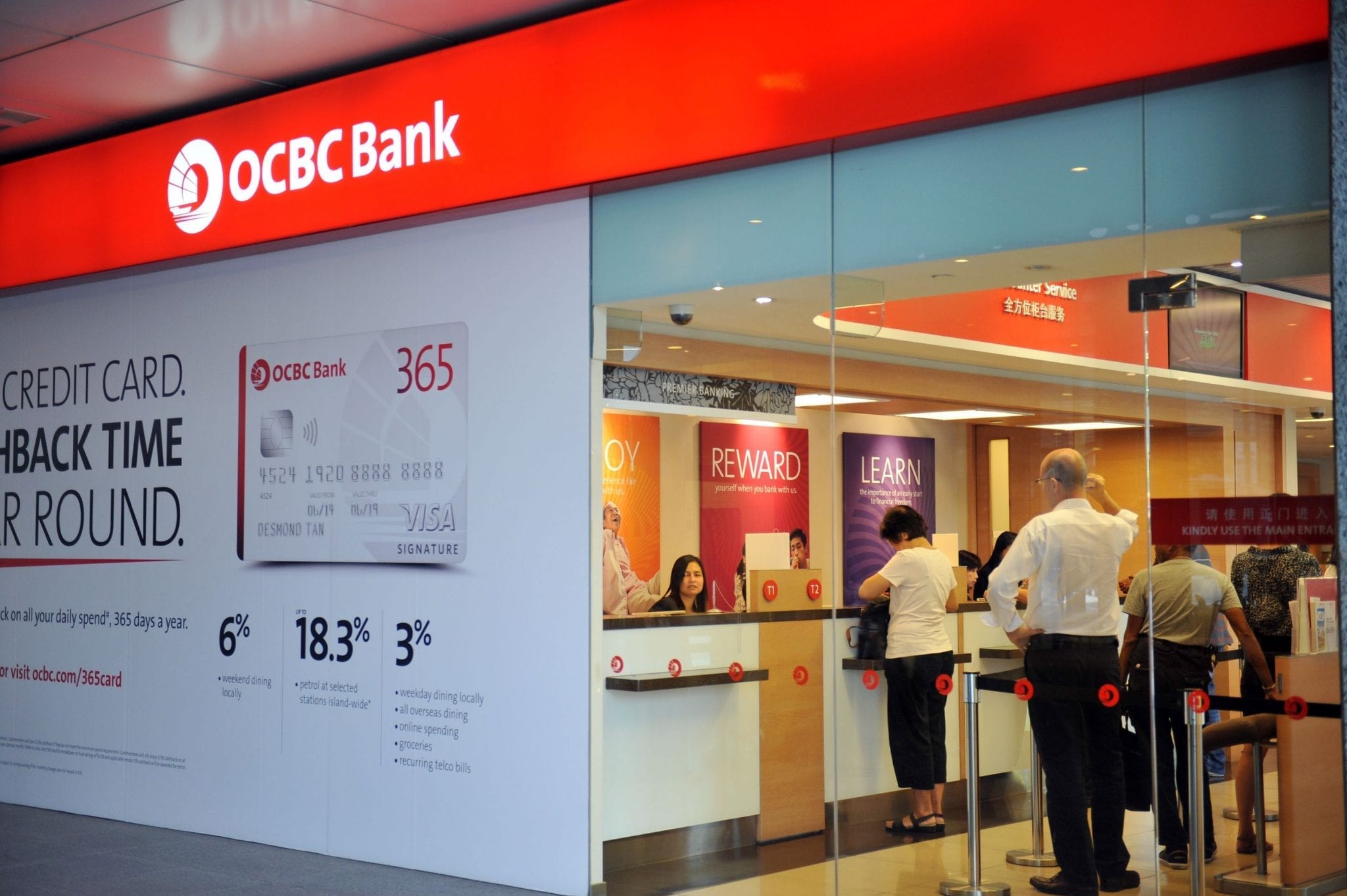
  • OCBC Profits Climb Higher on Lower Allowances

    OCBC Profits Climb Higher on Lower Allowances

    OCBC’s posted a robust profit increase in the third quarter, which was fueled by a significant reduction in allowances.

    OCBC registered S$1.22 billion ($904 million) in net profit for the third quarter, according to its latest results, marking a 19 percent year-on-year increase.

    A significant reduction of allowances by 54 percent to S$163 million due to an improved credit outlook was a major contributor to profit growth.

    Total income was flat at 1 percent growth to S$2.56 billion while operating expenses and associates grew 8 percent and 33 percent, respectively. As a result, pre-allowance operating profit was flat, decreasing 1 percent to S$1.576 billion.

    Overall wealth management income – including insurance, premier and private banking, asset management and stockbroking – was down 7.4 percent to S$897 million.

    OCBC’s private wealth arm, Bank of Singapore, saw assets under management increase 6 percent to S$167 billion ($123 billion) driven by inflows of net new money and positive market valuations.

    Our third-quarter results were resilient, despite the challenging conditions associated with the Delta virus variant,» said OCBC chief executive Helen Wong. We remain positive on the long-term outlook but are watchful of the near-term headwinds from the pandemic.