Tag: Singapore

  • Fintech Startup Aspire Sets Sights on Southeast Asia’s Digital Economy

    Fintech Startup Aspire Sets Sights on Southeast Asia’s Digital Economy

    The Singapore-based neobank has raised a $158 million led by renown VCs and fintech founders.

    Aspire is looking to double down on existing markets, while building the foundations to serve growing business clients across the whole South East Asia region, the firm said in an announcement on Monday.

    The oversubscribed funding round consisted of $58 million in equity and $100 million in debt. It was led by an undisclosed global growth equity firm, together with DST Global Partners, CE Innovation Fund, B Capital Partners and global hedge fund Fasanara Capital. Existing investors including Hummingbird Ventures, Mass Mutual Ventures, Picus Capital, and AFG, as well as a number of individual investors also participated.

    The company also operates in in Indonesia and Vietnam and is laying the groundwork for expansion into other Southeast Asian markets.

    Founded in 2018, Aspire provides an all-in-one finance operating system, which incorporates accounting, payroll, invoice management, FX, credit solutions, and banking. It serves more than 10,000 business accounts, which transact a total of around $2 billion annually, doubling in five months from May.

  • Singapore and Malaysia to Link Real-Time Payment Systems

    Singapore and Malaysia to Link Real-Time Payment Systems

    The link will enable more seamless payments for the high volume of remittances between the two neighbors, which reached S$1.3 billion ($960 million) in 2020.

    Singapore and Malaysia’s central banks will be embarking on a phased linkage of PayNow and DuitNow, their national real-time payment systems, the Monetary Authority of Singapore (MAS) said in an announcement.

    In the first phase, to be launched in the fourth quarter of 2022, customers of participating financial institutions will be able to make real-time transfers using a mobile phone number and make retail payments by scanning a PayNow/DuitNow QR code.

    The linkage will subsequently incorporate a wider range of features and participants. Both regulators will also explore the feasibility of integrating innovative features such as distributed ledger technology-based solutions to catalyse greater efficiencies in payments clearing and settlement between participating banks, the announcement said.

    Singapore’s remittance corridor with Malaysia is the city-state’s largest remittance corridor. The two countries also saw 12 million travelers crossing the border pre-pandemic.

    The PayNow-DuitNow linkage will be an important infrastructure to support cross-border payment needs of individuals and businesses, as well as the growing digital economic activity between both countries, Sponendu Mohanty, MAS chief fintech officer, said.

    The linkage also allows MAS and counterpart Bank Negara Malaysia (BNM) to incorporate the use of distributed ledger and smart contract technologies in the wholesale cross-border payments space, he added.

    Earlier this month, MAS also announced that it is working to connect PayNow to India’s Unified Payments Interface (UPI) by mid-2022.

    Singapore and Thailand have also connected their payments infrastructures to enable cross-border peer-to-peer transactions.

  • Binance Halts Crypto Trading for Singapore Users

    Binance Halts Crypto Trading for Singapore Users

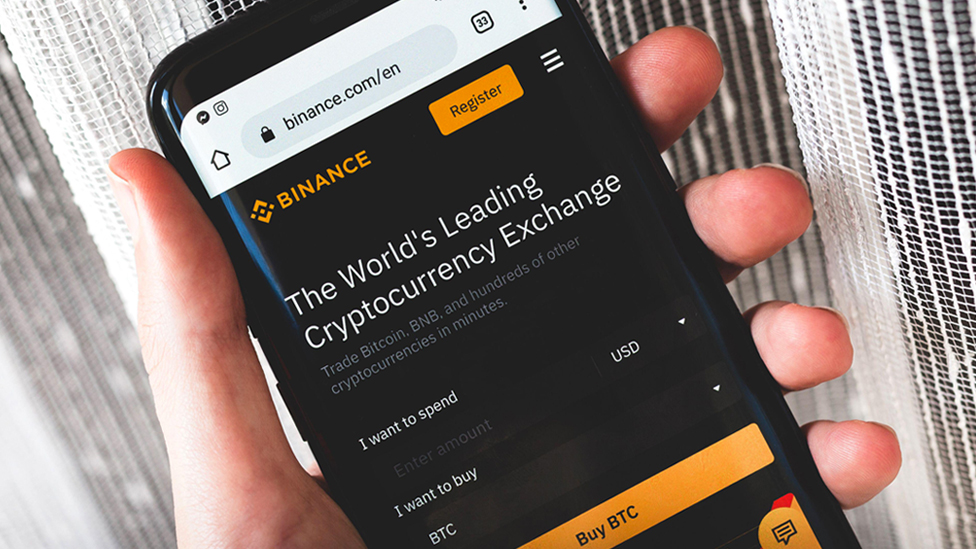
    Binance announced a new round of curbs for its Singapore business, restricting crypto trading for users in the city-state.

    Users in Singapore will no longer be able to deposit fiat money, trade or purchase crypto via Binance.com from October 26, according to a statement.

    Advisers were also told to cease all related trades, withdraw fiat assets and redeem tokens by the deadline.

    We will be restricting Singapore users in respect of the regulated payments services in line with our commitment to compliance, said Binance. Our aim is to create a sustainable ecosystem around blockchain technology and digital assets, and we hope that such efforts will help the industry grow in the local market in the long-run.

    While the Monetary Authority of Singapore has issued warnings about potential breaches of the Payment Services Act at Binance.com, which is operated by Binance, it is currently reviewing a license application from Binance.sg, which is operated by Binance Asia Services (BAS).

    Binance.sg is viewed by some users as the lighter version of Binance.com with a smaller offering and significantly less liquidity.

  • Singapore-Based Fintech Thunes Makes Strategic Appointments

    Singapore-Based Fintech Thunes Makes Strategic Appointments

    The fintech startup has made a pair of executive hires to support its global growth strategy. Thunes has appointed Irina Chuchkina as chief marketing officer and Babul Balakrishnan as head of customer care, who will both be based in Singapore, the global cross-border payments firm said on Tuesday.

    Fintech marketing leader Chuchkina, who is also an Executive Committee Member in the Singapore Fintech Association, brings over 15 years of experience in the payments and technology space in Europe and Asia, including at Rapyd, Grab and Visa. She will lead Thunes’ global marketing strategy.

    Balakrishnan has over two decades of experience across various industries with a focus on customer service and customer experience. He joins from telco StarHub, where he was AVP of customer experience operations. He will work with the various business units to elevate customer care into customer experience across Thunes’ partner network.

    The appointments follow the announcement of Thunes’ acquisition of Europe payments platform Limonetik, to complement its cross-border payments solutions. The company has also made several other strategic hires the last 12 months to support its expansion plans.

    Launched in 2016, Thunes is headquartered in Singapore and operates regional offices in London, Shanghai, New York, Dubai, and Nairobi. In September 2020, it raised $60 million in a Series B funding round led by Africa-focused Helios Investment Partners.

  • Singapore’s Yacht 21 rebrands with a new label and purpose

    Singapore’s Yacht 21 rebrands with a new label and purpose

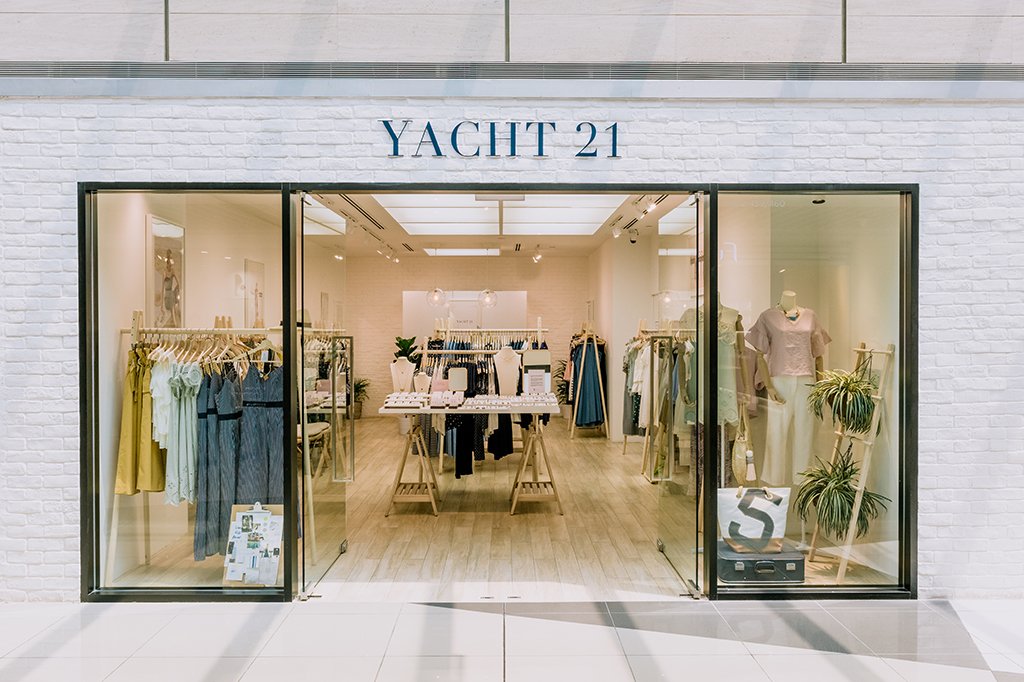
    Singapore fashion label Yacht 21 has been renamed Y21, changing its logo and purpose in response to the change in fashion after the pandemic.

    Founded in 2009, Yacht 21 was known for its travel-friendly and resort collection inspired by Scandinavian designs. As international travel has been put on hold and will not be possible for a while since Covid-19, Yacht 21 has decided to shift its focus to functional, fuss-free and seasonless pieces for women to adapt to the new normal.

    “We believe it is for the better as we learn to embrace the importance of versatility, comfort and quality in our designs to align with the new lifestyles women are leading,” said Jarenis Ho, founder of Y21.

    “Where women used to have different pieces for work, parties and vacations, we now have a more blended existence and need outfits that can be worn anywhere while maintaining a strong sense of purposeful style.”

    Y21 brand colour palette features three colours – grey, beige and orange. The tagline has also been changed from ‘Everyday’s A Holiday’ to ‘Wear Anywhere’.

    Y21 will feature its new image on its website this Thursday.

  • Singapore and India to Link Real-Time Payment Systems

    Singapore and India to Link Real-Time Payment Systems

    The link will facilitate instant, low-cost fund transfers directly from one bank account to another between Singapore and India.

    Singapore will be linking its national e-payments system PayNow to India’s Unified Payments Interface (UPI) by mind-2022, according to an announcement by the Monetary Authority of Singapore on Tuesday.

    This means that users in Singapore will be able to make fund transfers to users in India using a UPI virtual payment address. Transfers from India to Singapore can be made using the user’s mobile phone number.

    The linkage will provide for increased volumes of remittance traffic, multi-entity participation, automation of capital control rules, and enriched message formats to accommodate future innovation by linkage participants, the announcement said.

    As the cost and inefficiencies of remittances between Singapore and India is expected to be substantially reduced, MAS said the link will further anchor the substantial trade, travel and remittance flows between the two countries.

    Earlier this year, Singapore and Thailand connected their payments infrastructures to enable cross-border peer-to-peer transactions of up to S$1,000 or THB25,000 using just their mobile numbers.

  • SGX Directors to Retire

    SGX Directors to Retire

    Singapore Exchange (SGX), has announced personnel changes to its board of directors.

    Jane Diplock, non-executive non-independent director, will be retiring from the board by rotation at the end of the bourse’s 22nd Annual General Meeting on 7 October, SGX said in a filing on Tuesday.

    Diplock, 72, was also a member of SGX’s audit and risk management committees. She was appointed to her role in 2011.

    Also retiring from office on 7 October is non-executive non-independent director Ng Wai Keng, who is being considered for an appointment that requires him to address any potential conflict of interest. Ng, 54, was appointed to the position in 2018, and was also a member of SGX’s remuneration and staff development committee.

  • Citi Commercial Bank Opens China Desk in Singapore

    Citi Commercial Bank Opens China Desk in Singapore

    The new China desk in Singapore adds to CCB’s network of six Asia desks in the region, which supports clients’ banking needs across intra-Asia growth corridors.

    Citi Commercial Bank (CCB) Asia Pacific has set up a China desk in Singapore, facilitating access to the cit-state and wider ASEAN region for emerging corporates from China, it announced on Monday.

    Mona Zhang, previously parent account manager for mid corporates in CCB China’s office, is leading the desk. Zhang brings a wealth of knowledge and experience in understanding the business landscape in China and serving the needs of Chinese corporates.

    She will build the bank’s relationships with China-based clients and support their expansion plans into Singapore and as well as the rest of ASEAN, Citi said in a statement.

    Citi highlighted CCB’s growth across China to Singapore as well as China to ASEAN corridors. Last year, it more than doubled revenue in the China to Singapore corridor, supported by 35 percent growth in new client acquisition. Momentum in new client acquisition also resulted in a doubling of revenue in the China to ASEAN corridor last year, Citi said.

    Singapore and the broader ASEAN region are key markets for growth for expanding Chinese emerging corporates. A majority of these clients set up holding companies in Singapore for their ASEAN units, with the market serving as a treasury and funding hub, Lin Hsiu-Yi, CCB ASEAN and Singapore head, said.

    Other CCB desks in the region include a Korea desk in China, Hong Kong, India and Vietnam; a Greater China desk in Hong Kong; and a China desk in India.

  • Singapore retail sales stabilise at below pre-Covid levels

    Singapore retail sales stabilise at below pre-Covid levels

    Singapore’s retail sales rose 79.7 percent year on year in May to S$3.3 billion, rebounding from the low base during the 2020 “circuit breaker”, according to a Singapore Department of Statistics released on Monday.

    This was up from April’s 54 percent jump and exceeded economists’ expectations of a 65 percent rise. Yet retail sales remain below pre-Covid levels, noted Singstat. May’s figures were also down 6.8 percent on a month-on-month seasonally adjusted basis.

    Online sales accounted for 13.7 percent of May’s takings, up from 11.2 percent in April. Excluding motor vehicles, May’s retail sales were up 61.6 percent year on year, but down 5.2 percent on a month-on-month seasonally adjusted basis.

    Due to “the low base in May 2020 when most physical stores were closed for the whole month”, all retail industries saw major year-on-year increases, except for two categories: supermarkets and hypermarkets, and mini-marts and convenience stores. These saw falls of 12.1 percent and 9.2 percent respectively.

    The largest increases were seen for watches and jewelry, with May’s takings more than 20 times the year-ago figure; department stores; and wearing apparel and footwear.

  • Binance Halts Singapore Products

    Binance Halts Singapore Products

    Cryptocurrency exchange Binance has responded to a warning by Singapore’s regulator by removing some of its offerings in the city-state.

    Binance will cease Singapore dollar trading pairs and payment options, according to a blog post over the weekend, alongside the removal of its app from Singapore’s online stores.

    The halt will begin as of Friday and users have been advised to complete all related peer-to-peer trades and remove related trade ads by Thursday to avoid disputes.

    Consumer protection is important to all of us, Binance.com said in a statement. We are ready to assist regulators from around the world and together find the optimal way to set a fair playing field.

    The latest move only relates to Binance.com with no services changes on Binance.sg, Binance’s Singapore entity, according to a spokesperson.

    Binance Asia Services, which operates Binance.sg, recently submitted a license application to the Monetary Authority of Singapore. It is currently exempt from holding a license for the provision of digital payment token services until the review of its license application is completed.

  • MAS Orders Binance Halt

    MAS Orders Binance Halt

    The Monetary Authority of Singapore has ordered crypto giant Binance to halt its services in the city-state over a potential breach of local payment rules.

    Binance must stop offering services in Singapore, according to a report citing a MAS statement, over a potential breach of the Payment Services Act.

    According to the regulator, Binance provided payment services to and solicited business from Singapore residents without an appropriate license.

    In response, Binance said its Singapore operations are conducted via Binance Asia Services (BAS) which is a separate legal entity from Binance.com.

    BAS operates Binance.sg, does not offer any products or services via Binance.com, and has its own local executive and management team.

    BAS has submitted a license application and is currently exempt from holding one for digital payment token services, MAS said, adding that the application remains under review and is subject to the firm demonstrating that it is able to meet requirements.

    On the other hand, Binance didn’t apply for a license under local law and the regulator has added the crypto firm to its investor alert list.

    MAS has been engaging BAS and expects an immediate it to begin an orderly suspension of its facilitation of transfers of digital payment token assets between BAS and Binance, the regulator added.

  • Nordea AM to Open ESG Hub in Singapore

    Nordea AM to Open ESG Hub in Singapore

    The hub will enable Nordea to to enhance its local servicing, ESG capabilities, investment platform and distribution reach in the region.

    The asset management arm of financial services group Nordea is planning to open an ESG hub – its first outside its Nordic headquarters – in Singapore, in response to its growth and successes in the region, the firm announced on Wednesday.

    The hub will allow NAM to be closer to clients in the Asia-Pacific region and better understand how companies are embracing sustainability in the region, Nordea Asset Management said in the statement.

    Sustainability issues have gained significant interest in Asia in recent years, and investors are increasingly asking for ESG solutions. The time is right to meet that demand, Nils Bolmstrand, CEO of Nordea Asset Management, said.

    NAM’s local Singapore distribution office was established in 2013, and will be fully integrated with NAM’s ESG-focused internal investment boutiques as well as NAM’s Responsible Investments team.

    The hub is slated to be launched in the latter part of 2021.

  • SGX to Ease Rules for SPAC Listings

    SGX to Ease Rules for SPAC Listings

    Singapore Exchange is reportedly readying to issue easier rules for the listing of special purpose acquisition companies in the city-state.

    SGX is preparing to be the first major Asian bourse to accept SPAC listings, according to a Reuters report citing unnamed sources.

    The exchange’s regulatory arm is now considering easing a minimum S$300 million ($223.2 million) market value proposal for SPACs and a proposal that warrants cannot be detached from underlying shares.

    SGX is expected to introduce other measures to safeguard investor interests but would simplify proposed guidelines to maintain attractiveness for SPACs.

    The latest report of looser listings rules follows market feedback that some of SGX’s earlier proposals were too strict.

    Singapore is attempting to improve its profile as an IPO destination of choice while Southeast Asian startups have been listing in their home markets or the U.S.Funds raised at SGX fell to a six-year low of $239 million, according to Refiniv data, representing less than 3 percent of Southeast Asia’s total $8.4 billion.

    Within the region, Singapore ranked behind Malaysia, the Philippines, Indonesia, and Thailand in terms of funds raised.

  • Reopening Economy: Preparing Offices for Onsite Work in Singapore

    Reopening Economy: Preparing Offices for Onsite Work in Singapore

    For the majority of 2020, most people have been stuck at home in the midst of the Covid-19 pandemic. Work from home setups have been utilized, and after a year, we’ve gotten used to the blend of work and home life.

    However, with the reopening of many offices around Singapore in 2021, workers are now dealing with the shift back to onsite office work.

    Despite the Pandemic

    While the pandemic is still ongoing, offices have started to reopen alongside reopening the economy. Workers are now coming back to work in offices, albeit in intervals and with a skeletal workforce. The current state of the pandemic has made full workforce operations difficult, as many businesses continue to shift around pandemic regulations.

    Pandemic regulations are confusing, as expert recommendations change as the virus advances. However, some regulations are set in stone for all virus variants, such as wearing of masks, disinfecting surfaces, and social distancing rules.

    Back to Work

    Workers going back to work in a physical office can start preparing themselves for the physical and mental challenges of working in an office setting during a pandemic. Keep in mind that the current pandemic situation has eliminated casual office settings wherein employees can freely work together in small areas.

    Back to work means it is safe to assume that offices will start preparations for working under the new normal, especially as the virus continues to spread from person to person. Office managers and business owners are starting to put new normal regulations in place, considering the recommendations of infectious diseases experts, the CDC, and the local health department.

    Preparing the Office Amidst the Pandemic

    Disinfection and thorough cleaning is a standard practice in preparing the office for onsite operations; but as the virus continues to shake the country, business managers will need to prepare their workforce for working under the new normal.

    Social Distancing Rules

    The CDC continues to recommend a circumference of 6 feet around each individual for the best chances of preventing the virus from spreading. Social distancing is still a standard practice for any individual, and offices will need to prepare for this new set up.

    Office cubicles, break room tables, and workforce density will need to keep in line with new social distancing rules. Employees will no longer be allowed to freely loiter around the office, and water cooler conversations are discouraged in efforts to prevent the virus from spreading.

    Mask Mandates

    Masks continue to be staples in protective garb. Masks are as required as any other piece of clothing, especially in commercial spaces where different people gather. Double masking is the new recommendation of the CDC, as virus particles are less likely to pass through two layers.

    Employees will need to be trained for proper mask usage, as well as for identifying personal levels of exposure with and without masks. Double masking should now be standard practice for all offices, as workers prepare to return to their commercial workspace.

    Vaccination Requirements and Regular Testing

    By the 1st of October 2021, the Singaporean government has announced that selected sectors will have vaccination requirements in their onsite workforce, as well as regular testing for Covid-19 infected individuals. Majority of these sectors deal with commercial and onsite public services.

    Private businesses may opt to have vaccination requirements for employees upon return to onsite working, and provide regular Covid-19 testing to any individuals they assume has been exposed to the virus.

    Office Cleaning Services in Singapore

    Regular office cleaning and disinfection is a must in returning to work during the pandemic, as these services will get rid of any traces of harmful bacteria and viruses that may spread from one individual to another.

    In Singapore, Luce Office is one of the reputable office cleaning companies that offer disinfection services for commercial spaces on top of general cleaning and deep cleaning. Their cleaners will arrive in protective gear and sterilize your office for the next shift, ensuring that every nook and cranny has been cleaned and cleared of virus particles.

    Luce Office

    Office Address: 100D Pasir Panjang Rd #05-03A, Singapore 118520

    Services: General Cleaning, Deep Cleaning, Regular Office Cleaner, One-time Cleaning, Carpet Cleaning, Air Conditioner Repairs, Organizing, etc.

    Website: https://www.luceoffice.sg/

    Contact Number: 6872 1224


    https://www.pexels.com/photo/woman-having-a-video-call-4031818/

  • Singapore’s Shopee disrupts the Brazil’s e-commerce sector

    Singapore’s Shopee disrupts the Brazil’s e-commerce sector

    Shopee took just two years to become Brazil’s most downloaded shopping app, winning users to its low-cost marketplace with its game-changing approach to e-commerce: in-app mini-games offering coupons to winning users.

    The Singapore-based company has combined online shopping with the gaming nous of its separate mobile game arm Garena – creator of “Free Fire”, Brazil’s most downloaded title for eight consecutive quarters – to generate sales analysts estimated at almost a third of local champion Magazine Luiza.

    Back home, Shopee only needed five years to become Southeast Asia’s most-visited e-commerce website, overtaking the likes of Lazada, backed by China’s Alibaba Group Holding, and Tokopedia, backed by Japan’s SoftBank Group.

    “Shopee has a track record in Southeast Asia of coming into the market late, looking at how others have solved existing problems and then building a system to leapfrog those issues,” said analyst Jianggan Li at advisory firm Momentum Works.<

    Shopee’s early surge highlights the space left for foreign entrants to grow in a sector once dominated by regional firms like Magazine Luiza and Argentina’s MercadoLibre.

    To be sure, the startup’s timing was fortuitous, launching in Brazil just as the COVID-19 pandemic drove consumers away from physical stores, pushing up 2020 e-commerce sales by 44% to $42 billion, showed data from Brazilian payments company EBANX.

    Shopee – akin to Alibaba’s AliExpress, carrying Chinese-made knick-knacks – emerged as Brazil’s top app by downloads and time spent in use, showed data from analytics platform App Annie.

    Yet, in pursuit of growth, Shopee is still losing money, propped up by Sea’s profitable gaming division. In the second quarter of this year, Garena posted adjusted earnings before interest, tax, depreciation and amortization (EBITDA) of $740.9 million even as the e-commerce arm lost $579.8 million.

    “Money being generated by one side of the business, which is a cash cow, is being reinvested aggressively in Brazilian e-commerce – with success,” said Itau BBA analyst Thiago Macruz.

    Sea’s Brazil foray is just one element of its global ambition. Investment arm Sea Capital is also considering putting money into startups in Latin America and beyond, said a person with knowledge of the matter, who was not authorized to speak with media and so declined to be identified.

    The firm has also taken Shopee to Chile, Colombia and Mexico where, unlike Brazil, it has no locally based staff and so has partnered social media influencers to increase brand awareness, said two people familiar with the matter.

    Sea, whose shareholders include Chinese gaming leader Tencent Holdings, declined to comment.

    The firm has disclosed little data about Shopee Brazil, but Itau BBA analysts estimated the value of goods and services sold on the platform last year hit 12 billion reais ($2.27 billion).

    The average price on its marketplace is 40 reais, other estimates showed, less than a third that of e-commerce leader MercadoLibre, which often carries higher-value branded products.

    Sea’s biggest challenge for Shopee Brazil is delivery in such a vast country. It reduced its reliance on the local postal system this year in favor of private carriers, but is still competing against rivals with proprietary delivery services.

    Shopee aims to have one main logistics partner per country in the region, a company source said.<

    The company itself expects e-commerce growth in the region to spawn more delivery partnerships, as happened in Southeast Asia, Sea executives told analysts on a call this month.

    On the same call, Group Chief Corporate Officer Yanjun Wang called Brazil “a good market for continued investment.”

    Competition in Latin America’s largest economy stepped up this month when Shopee’s nearest rival in terms of product offering, AliExpress, opened up its marketplace to domestic sellers charging a single-digit commission. AliExpress had been in Brazil for 11 years; Shopee did similarly after its first year.

    Small-business owner Luciana Carvalho began selling plastic packaging products on Shopee in February, attracted by the free shipping and 6% commission – compared with MercadoLibre’s 17%.

    “It’s easy to sign up, calculate your commission, get your delivery tags, your receipts. It makes us invest more in the platform,” she said.

    In a move toward profitability, Shopee has since raised commission to 18% – as much as twice marketplaces can charge in some Southeast Asian countries, indicating Latin America’s potential profit margins. Carvalho continues to use Shopee, though she prefers MercadoLibre for its “unbeatable” delivery.

    To further improve profitability, Goldman Sachs analysts said Shopee could start selling higher-ticket items, as it has in Southeast Asia. Momentum Works’ Li expects Shopee to add financial services to its Brazil app as it has in Indonesia.

    “I wouldn’t be surprised,” if they reached number one, said Li, “Given what they have done in Singapore, Indonesia and Malaysia, Thailand.”