Tag: Singapore

  • BoS Adds Sustainability to Investment Financing Framework

    BoS Adds Sustainability to Investment Financing Framework

    The bank will be incorporating environment, social and governance (ESG) factors when assessing loan financing, as part of its push for sustainable investing.

    The loan quantum for investment financing will be higher for mutual funds that are rated AAA or AA in the MSCI ESG Fund Ratings, Bank of Singapore (BoS) said in an announcement.

    Previously, financing against mutual funds was based on the volatility of the asset’s value, liquidity of the asset and the credibility of the fund manager. Now, the advance ratio – the maximum percentage amount of the market value of the collateral that could be extended as a loan – will be increased by 5 percentage points for such funds, the announcement said.

    BoS said that investment financing is commonly used by high-net worth individuals in growing wealth and enhancing investment returns. The private bank registered a compounded annual growth rate of close to 10 percent in the loans for investment financing from 2016 to 2020.

    By adding an ESG lens to our lending framework, we hope to create a direct and positive impact in the investment of highly rated ESG assets, starting with mutual funds, Alexandre Lotfi, BoS global chief risk officer, said.

  • Singapore to invest $70 million in research, innovation and enterprise

    Singapore to invest $70 million in research, innovation and enterprise

    Speaking at the opening address of the ATxSummit, Singapore Deputy Prime Minister and Coordinating Minister for Economic Policies, Mr Heng Swee Keat announced that Singapore will be stepping up investments to unlock the full potential of the digital revolution through collective action.

    Investment in research and innovation is key to building solutions for the future and staying at the forefront of the digital economy. Singapore will invest close to S$70 million (US$50 million) under the Research, Innovation and Enterprise (RIE) plan, to launch our first national Future Communications Research & Development Programme (FCP).

    The FCP supports cutting-edge communications and connectivity research, and will in turn grow local capability to translate that into innovative products, services, and companies. This will be accomplished through the setup of new communications testbeds in 5G and beyond-5G, and support technology development, translation and training, while building up the talent pool in the areas of communications and connectivity technologies. As a start, the FCP has established a Memorandum of Understanding (MOU) with the 6G Flagship of Finland.

    As the Global-Asia node for technology and innovation, such digital cooperation with like-minded partners reaffirms Singapore’s role in bolstering growth opportunities in the global digital economy. Singapore Minister for Communications and Information Mrs Josephine Teo also signed a Memorandum of Cooperation (MOC) with Japan and an MOU with Thailand, at the sidelines of the ATxSummit.

    The MOC seeks to strengthen ICT collaboration between Singapore and Japan, enabling closer policy alignment and regulation on businesses. The MOC will facilitate a pilot project on electronic transferable records and the exchange of information on best practices and policies relating to the Digital Economy, Artificial Intelligence, and cybersecurity. It also includes closer collaborations through joint training and programs on AI implementation, AI governance and ethics, as well as cybersecurity capacity building.

    The longstanding Thailand-Singapore relationship will deepen with the signing of this MOU, which has been expanded to include new areas of cooperation in the Digital Economy such as digital connectivity, smart cities and AI governance. Both sides are also exploring interoperability between digital systems and frameworks that enable e-documentation.

    The pandemic has accelerated the overall shift to digital. Building a common “digital infrastructure” to underpin and ease data sharing will enable multiple stakeholders to come together and drive economic transformation. A new common data infrastructure and framework, the Singapore Trade Data Exchange, or SGTraDex was therefore launched to enable this trusted sharing of trade data. Designed as a neutral and open digital infrastructure through a public-private partnership, it was conceptualized by the Alliance for Action (AfA) on Supply Chain Digitalisation. SGTraDex will support ecosystem-wide digital transformation, connecting supply chain ecosystems both locally and globally.

    Three initial use cases were developed to push the boundaries of a trusted data exchange. The use cases demonstrated how SGTraDex can enable participants to strengthen the financing integrity of trade flows, enhance operational efficiency by optimizing logistics functions across partners, and provide visibility on supply chain transactions. The use cases have the potential to unlock more than S$200 million (US$150 million) of value annually when fully developed.

    SGTraDex will continue to build on this initial momentum, develop more use cases, and drive adoption locally and globally. SGTraDex also has the flexibility to be the data infrastructure for many other sectors ranging from construction to aviation, unlocking even more potential value. This is part of a suite of digital infrastructure and utilities being developed, including the SGFinDex for the financial sector, that provides a strong foundation for Singapore’s Digital Economy.

  • North Asia Specialist Joins Indosuez Singapore

    North Asia Specialist Joins Indosuez Singapore

    He brings extensive knowledge of the regional wealth management industry, as well as the North Asia market, from his experience as a team leader for other global wealth managers.

    Indosuez, the global wealth management brand of Crédit Agricole Group, has appointed Alfred Low as the firm’s Head of North Asia Market and Strategic Partnerships in Singapore, effective September 2021, according to an announcement on Tuesday.

    Low joins the firm following senior management and advisory roles covering North Asia clients at HSBC Private Bank, Credit Suisse Private Bank, UBS Wealth Management, and Citigroup Private Bank. He previously held various functions with the Ministry of Trade and Industry in Singapore.

    Omar Shokur, Indosuez CEO, Asia, and Singapore branch manager, said the firm is committed to North Asia an is deepening its talent pool to better serve clients.

    North Asia, in particular, is one of the world’s fastest wealth creation region and is an important growth market for Indosuez, Shokur said.

    As of end-2020, the firm had €128 billion in assets under management.

  • OCBC Creates Dozens of Sustainability-Related Jobs

    OCBC Creates Dozens of Sustainability-Related Jobs

    Singapore’s OCBC has created more than 50 sustainability-related jobs over the last two years as part of a broader plan to internally promote the space.

    The 50 jobs span across sustainable business development, sustainable product development, sustainability research, ESG assessment, ESG reporting, ESG regulatory and compliance, sustainable stewardship, and community development and environmental conservation programs, according to a statement.

    This is part of the «OCBC Future Smart Program» which is now in its second phase with an investment of $30 million over the next three years.

    The program and its first phase were launched in 2018 with an investment commitment of $20 million over three years.

    Since the program kicked off, the bank has developed numerous training modules, sub-programs, certification pathways while further driving learning through desktop and mobile platforms.

    1,900 programs have been launched for OCBC’s 30,000 employees groupwide which have achieved more than 178,000 completions.

    Major change is afoot on the job front and roles that are available today may no longer be needed or will be significantly disrupted tomorrow, said OCBC’s head of group human resources Jason Ho. New threats to the business emerge continuously. We are confident that as long as we continue to learn, un-learn and re-learn as an organization, we will be able to turn threats into opportunities.

  • Citi Singapore Appoints Senior Execs

    Citi Singapore Appoints Senior Execs

    The bank has appointed five locals to senior positions across Asia Pacific in various business groups, according to an announcement.

    Chan San-San, who joined Citi in 2003, was appointed private banking high net worth head for Asia Pacific, effective July. She will continue to be based in Singapore and will join the Global Private Bank leadership team as well as the Citi Global Wealth Asia management team.

    Singapore-based Kelvin Goh was appointed Asia Pacific head of financial institutions group for investment banking, effective immediately. Goh, who joined the bank in 2018, brings 17 years of experience in the field and was most recently Citi’s Asia Pacific head of insurance, investment banking.

    Gary Chan, who joined Citi in 1997 and was most recently Singapore head of the integrated corporate bank, has been appointed Taiwan head of the integrated corporate bank, effective October 1. He will be taking over from Vivian Tan, who will be retiring from Citi after 21 years of service.

    Taking over from Chan is Gilbert Ng, who will be responsible for clients belonging to the corporates, financial institutions and public sector groups, and will have oversight of the global subsidiaries group, effective immediately. Ng joined the bank in 2006 and was most recently head of global subsidiaries group, Singapore.

    Toh Jian Xun was appointed as co-head of TMT, Asia Corporate Bank, effective immediately. He will continue to serve in his current role as head of TMT for China corporate bank, based in Shenzhen. He joined Citi in 2010.

    The moves signal our commitment to develop local talent, provide opportunities for personal and professional growth across our global network, and offer our people a long-term career in the bank,» Amol Gupte, ASEAN head and Citi country officer for Singapore, said.

    The appointments come on the heels of two other senior moves in Singapore: Serene Gay as the head of credit cards and personal loans for Citibank Singapore and Faye Ong as the head of family office advisory for Asia at its private bank.

  • Singapore retail sales still running below pre-Covid times

    Singapore retail sales still running below pre-Covid times

    Singapore retail sales (excluding motor vehicles) increased 61.7 percent in May, but the figure was skewed significantly by the low base of the previous year when Covid-related movement orders effectively shut the offline retail sector down for a whole month.

    Of the total estimated retail sales in May of about SG$2.8 billion, excluding motor vehicles, online sales accounted for about 16.1 percent.

    The largest online categories were computer and telecommunications equipment where e-commerce accounted for 54.4 percent of total sales; furniture and household equipment (30.7 percent) and supermarkets and hypermarkets (12.1 percent).

    May’s overall sales increase followed a 39.2-per-cent rise in April – however, Statistics Singapore says sales continue to track at lower levels than before the outbreak of Covid.

  • Sweaty Betty opens first Singapore store

    Sweaty Betty opens first Singapore store

    British activewear retailer Sweaty Betty has made its Singapore debut, more than two years after entering Asia.

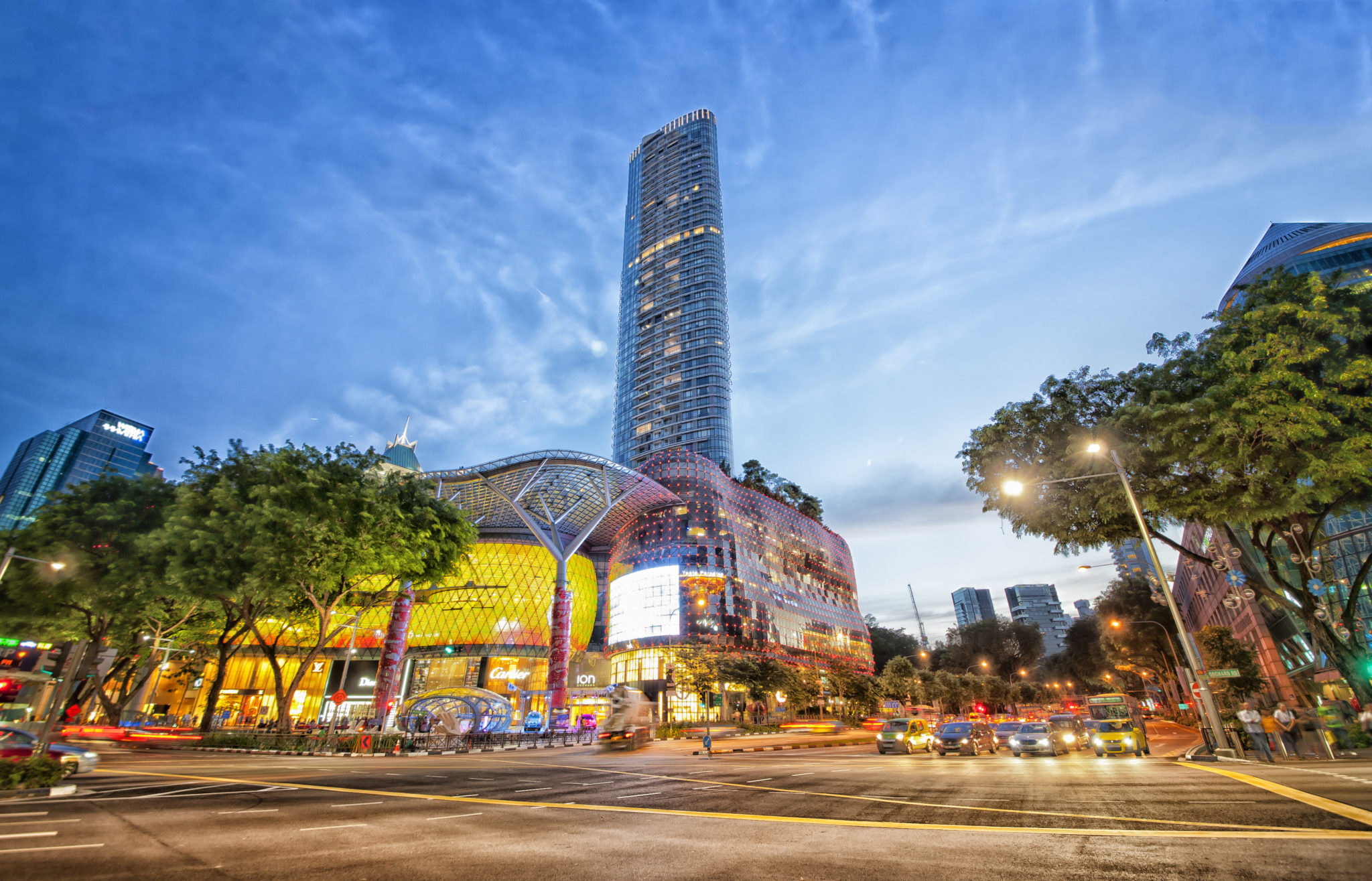
    Located in the city’s Ion Orchard mall, Sweaty Betty Singapore offers a full range of its lifestyle and activewear, including Pride Collection and Halle Berry x Sweaty Betty Collection.

    The Singapore launch is part of Sweaty Betty’s plan to expand and strengthen its presence in the Asian market. The brand, often referred to as a rival to Canada’s Lululemon, first entered Asia in 2019 opening a store in Hong Kong’s IFC mall.

    Founded in Notting Hill, London in 1998 by Simon and Tamara Hill-Norton, Sweaty Betty is renowned for its bum-sculpting leggings, innovative prints, and technical high-performance fabrics.

    The retailer now operates more than 60 outlets, mostly across the UK and the US.

  • Singapore Leads Banking-as-a-Service Adoption

    Singapore Leads Banking-as-a-Service Adoption

    Almost half (47 percent) of all financial institutions in the republic have invested in banking-as-a-service in the last year, and 45 percent are looking to do so in the next 12 months, according to a new survey by Finastra.

    Financial institutions (FIs) in Singapore are among the most confident in BaaS globally, with 87 percent saying they expect to see benefits in the coming year, Finastra said in its Financial Service State of the Nation Survey 2021, published on Tuesday.

    At the same time, 97 percent said open banking is important to their business, with 56 percent calling it a must-have and highlighting its ability to deliver new services.

    Hong Kong FIs are also some of the most optimistic towards BaaS, with 42 percent deploying or improving BaaS in the last 12 months and 92 percent expecting to see positive impacts from BaaS and embedded banking (89 percent) in the next 12 months.

    Covid-19 Boost

    Singapore financial institutions had the largest increase in digital banking investment (25 percent) in response to COVID-19 among markets surveyed, and the highest proportion of respondents globally saying their bank increased overall investment/budgets in response to the pandemic (84 percent).

    The study was conducted in March 2021 among 785 professionals at financial institutions and banks in France, Germany, Hong Kong, Singapore, the U.A.E., U.K. and U.S.

  • Bank of Singapore Loses Market Head

    Bank of Singapore Loses Market Head

    Bank of Singapore has lost an industry veteran and market head for Greater China, sources said.

    Greater China market head Richard Hu has left Bank of Singapore, sources said, after joining in the role two years ago.

    Hu is an industry veteran with more than 20 years of experience in the region. He previously held multiple senior roles covering Greater China markets with Julius Baer, HSBC Private Bank, Credit Suisse, UBS, and Citi Private Bank.

    A spokesperson for the bank confirmed the exit. Although Bank of Singapore continues to be in hiring mode – it recently welcomed ex-UBS head of wealth planning for Singapore Paul Chua – it has also seen an outflow of executives in 2021.

    Earlier this month, we reported the departure of its head of Russia and Eastern Europe Vadim Bondarev.

    Several rival banks have been beneficiaries from recent exits such as RBC Wealth Management which named Vincent Cheng as a Hong Kong-based relationship manager and Credit Suisse which hired Rohit Narayanan to cover the India market. And In Janaury, Suresh Nair joined Standard Chartered Private Bank as a senior client partner.

  • SGX RegCo to Expand Enforcement Powers

    SGX RegCo to Expand Enforcement Powers

    The wholly-owned subsidiary of bourse operator Singapore Exchange (SGX) said on Thursday it will broaden its range of enforcement powers and require issuers to implement a whistleblowing policy.

    The move follows a public consultation, in which market participants had broadly supported the changes to listing rules, Singapore Exchange Regulation (SGX RegCo) said in an announcement.

    This will pave the way for swifter enforcement outcomes and reinforce confidence in Singapore’s capital markets, act as a greater deterrent against malfeasance, and enhance the protection of investors, SGX said.

    From 1 August 2021, SGX will be able to issue a public reprimand and require an issuer to comply with specified conditions, which are non-appealable.

    It will also be able to prohibit an issuer from accessing the facilities of the market for a specified period or until the fulfillment of specified conditions, prohibit any issuer from appointing or reappointing a director or an executive officer for up to 3 years, and require a director or an executive officer to resign.

    More severe sanctions, such as fines, will continue to be reserved for the independent Listings Disciplinary Committee

    SGX RegCo will require all issuers to establish and maintain a whistleblowing policy where the identity of the whistleblower is kept confidential and the individual is protected from reprisal.

    Issuers will be required to state in their annual reports that such a policy is in place for financial years commencing from 1 January 2021, as well as an explanation of how they have complied with key requirements such as independent oversight of the policy and commitment to the protection of the identity of the whistleblower.

  • Singapore to increase ICT spending to accelerate Government digitalisation

    Singapore to increase ICT spending to accelerate Government digitalisation

    Singapore’s Government Technology Agency (GovTech) will spend up to an estimated S$3.8 billion on info-communications technology (ICT) procurement this year, an almost 10 percent increase from FY20’s procurement value of S$3.5 billion.

    This spending will go towards transforming government digital services used by both citizens and businesses and re-engineering government digital infrastructure to support modern application development. It will build on the momentum generated by past years’ investments and serve to lock in the digitalization gains brought about by the COVID-19 pandemic. Small and Medium Enterprises (SMEs) will be able to participate in close to 83 percent of the total potential procurement opportunities.Transforming government digital services for the future

    An estimated S$2.7 billion (70 percent out of S$3.8 billion) will be spent on 250 projects to transform, integrate and streamline digital services across different sectors to create a more digitally empowered nation.

    Of the S$2.7 billion expected to be spent on digital application services, 44 percent will be developed on the cloud in FY21. Developing applications on the cloud increases agility and innovation, resulting in faster delivery of new public services for citizens and businesses. In addition, leveraging on cloud infrastructure increases resiliency and scalability, leading to better performance during periods of high demand. To date, the government has close to 600 systems on cloud and is on track to have 70 per cent of eligible systems on the cloud by FY2023.

    Number of Artificial Intelligence projects to increase

    Over S$500 million (13 percent out of S$3.8 billion) will be spent to accelerate the adoption and deployment of Artificial Intelligence (AI) for the public sector. AI can help the Government to deliver better services, make better decisions based on data-driven insights, and optimise operations to increase productivity. To support government agencies in deploying AI, GovTech has built various central platforms to support common use cases in the area of video analytics, natural language processing, fraud analytics and personalization to help agencies reduce the cost of onboarding AI solutions. The central platforms also enable agencies to access common features and enjoy lower cost of management, maintenance and updating of systems.

    More projects for SMEs to participate in Govt ICT procurement

    The increase in ICT procurement spending will create more opportunities for SMEs, with more than 80 percent of ICT contracts to be made available through streamlined procurement methods. These procurement methods will improve SMEs’ access to Government ICT procurement opportunities. For instance, the government has incorporated dynamic contracting in bulk tenders to allow new suppliers and requirements to be introduced throughout a contract period. Barriers of entry for SMEs are also lowered as government agencies put out more cloud-based services and smaller system projects that allow suppliers with a lower financial grading to bid.

    Mr Kok Ping Soon, Chief Executive, GovTech, said: “We are heartened by the results of the G2C and G2B annual survey on Government Digital Services, which are an affirmation of the Government’s commitment to invest heavily in ICT and digital transformation. Providing more opportunities for SMEs to take on government projects is also important, as SMEs have always been the lifeblood of Singapore, and form a key pillar of our Smart Nation efforts. GovTech will continue to innovate to provide seamless and easy-to-use services and improve the resilience and security of our digital platforms for citizens, businesses and public officers.”

  • Singapore Fintech Association Launches Networking Club

    Singapore Fintech Association Launches Networking Club

    The initiative aims to foster deeper social engagements among local fintech professionals and corporates and enhance the vibrancy of the industry ecosystem.

    Members of Singapore’s fintech community can look forward to more industry networking, upskilling opportunities, and lifestyle privileges with the launch of the SG Fintech Club by the Singapore Fintech Association and the Monetary Authority of Singapore (MAS).

    Among its programs are talent matchmaking sessions, industry expert mentorship programs, and masterclasses organized by SFA. The Institute of Banking and Finance (IBF) and J.P. Morgan have also been brought on board to curate skills and career development events, the announcement said.

    The rapid shift towards digital acceleration and increasing competition in the ecosystem has made it more urgent for fintech professionals to stay relevant, connected and competitive, Damien Pang, MAS deputy chief fintech officer, said in the announcement.

    He said he hopes the club will help build a tight-knit community of talents, facilitate more collaboration within the industry and bring more value to the fintech ecosystem.

    The lineup of events for the next month is already packed, and includes fireside chats with fintech founders, strategy sessions, and masterclasses. Find out more at https://club.singaporefintech.org.

  • Singapore Loses Top Spot in Competitiveness Rankings

    Singapore Loses Top Spot in Competitiveness Rankings

    The republic lost its crown to rival financial hub Switzerland in IMD’s latest «World Competitiveness Rankings,» as it slipped to fifth place overall.

    Singapore fell behind Switzerland, Sweden, Denmark, and the Netherlands in competitiveness as the city-state suffered significantly on an economic level during the pandemic, as it depends on the export and import of services and on people’s mobility, according to experts at IMD’s World Competitiveness Center.

    Governments that has focused in innovation, diversifying their economies, and implementing good policies pre-pandemic triumphed, IMD said in the report. The top-performing economies were characterized by varying degrees of investment in innovation, diversified economic activities, and supportive public policy.

    Singapore and Switzerland ranked highly in innovation, which takes into account education and other factors driving both a productive workforce and research, and also took top spots in health infrastructure. Singapore was also top among the 64 countries in terms of digital advancement.

    Commenting on Switzerland’s strengths, IMD said both independence and access to Europe during a period when global supply chains faced major risk was important. The country is not in the European Union (EU), but part of the bloc’s single market for goods, people and services.

    The health crisis – while devastating – is only temporary, while competitiveness measures longer-term impact, IMD said.

    Published since 1989, The ranking analyzes and ranks countries according to how they manage their competencies to achieve long-term value creation.

  • Singapore Reconsiders Economic Reopening

    Singapore Reconsiders Economic Reopening

    A growing cluster of infections threatens to derail Singapore’s economic reopening, while expats in the country are growing restless from being cooped up on the island with no end in sight.

    Singapore’s Multi-Ministry Task Force is closely monitoring the growing number of community cases, particularly the expanding cluster of cases that now number 56, which originated from a neighborhood market.

    Day by day, we are seeing the number of unlinked cases – the cryptic cases in the community – is likely to be rising too. Given these developments, we are evaluating the timing and scope of the next stage of reopening, Finance Minister Lawrence Wong said in a video recording posted on Facebook and Instagram on Wednesday.

    The country is set for further relaxation of heightened alert restrictions from Monday, following a month of heightened Covid-19 related restrictions, during which community cases fell sharply, and a week-long first stage of reopening.

    Singapore’s borders have been effectively shut for more than a year now, and many expats are getting restless, particularly as the U.S. and Europe return to normalcy.

    According to a report on Thursday, many feel the country is too slow in reopening its borders and may depart in the next six months if vaccinations and travel re-opening do not go as planned. Currently, returning residents face three weeks of quarantine – if they are allowed back into the country.

    Singapore said any ease in travel curbs will depend on the pace of vaccinations, which it has targeted for half of its population by the end of August and 75 percent by October. Currently, about 35 percent of the population is vaccinated, according to «Bloomberg» estimates.

  • OCBC Appoints Group COO

    OCBC Appoints Group COO

    OCBC has appointed a new group chief operating officer in an effort to drive and accelerate transformation at the Singapore-based bank.

    Lim Khiang Tong has been named group COO – a newly created role – according to a statement, effective June 21 this year. Lim will report to recently appointed group chief executive Helen Wong.

    Lim has 30 years of management experience in strategic tech development, information technology, process reengineering, project management, and banking operations. He joined OCBC’s IT management team in 2000 before being appointed to lead the unit in 2002. In 2007, he was named head of group IT and in 2010, he assumed the role of head of group operations and technology.

    Lim will take on the expanded role in an effort to «optimize and intensify» investments across tech, product processes, and people.

    Lim has been instrumental in building our operational and technology capabilities and in driving our digital transformation efforts, Wong said. He is highly regarded by colleagues, business partners and industry peers. It is only fitting that he assumes this new role.

    Lim has already made various efforts to bolster the bank’s tech capabilities including the development of the first technology command center monitoring and managing both cybersecurity and daily operations – the OCBC Regional Data Center.