Tag: Singapore

  • Lazada to play key role in the next Great Singapore Sale

    Lazada to play key role in the next Great Singapore Sale

    The Great Singapore Sale (GSS) will take an omnichannel format this year, with Lazada as its official e-commerce platform – a move that its organizers said is timely as the country returns to stricter Covid-19 measures and shoppers are encouraged to stay home.

    The GSS will run from June 6 to July 7 and will showcase products across different categories such as groceries, technology, health and beauty, and sporting goods.

    According to the Singapore Retailers Association (SRA), small and medium-sized enterprises (SME) can benefit from Lazada’s technology infrastructure, payments gateway, and delivery solutions from its logistics partners, eliminating costly challenges retailers face when selling online.

    In addition, a new key feature will let shoppers will be able to pick up their purchases at the Lazada seller’s physical store, allowing retailers to utilize a “hybrid” model with both online and offline outlets.

    Each retailer will also have a dedicated account manager to help them navigate features such as live streams, games, and flash sales.

    SRA President, R Dhinakaran, said that as an incentive for trying out the platform, retailers do not have to pay commission for the first three months of using Lazada.

    “The attractive ‘0% commission’ offer for the first three months extended by Lazada for all new LazMall sellers is our way to incentivize retailers, especially SMEs, to go online and try out the Lazada e-commerce platform to generate sales, build on their brand awareness and learn new marketing tools, such as LazLive to engage shoppers online interactively,” said Dhinakaran.

    “The Great Singapore Sale is a national institution and sentimental for Singaporeans and those who remember flying into the country to enjoy the sales,” said James Chang, CEO at Lazada Singapore.

    “By supporting sellers with the tools they need to move their businesses online, we’re helping them be prepared for the future – both during the pandemic and beyond.”

    The 27-year-old shopping affair first went online last year as one of the main events in the Singapore Tourism Board’s SingapoRediscovers campaign. SRA’s eGSS GoSpree platform hosted the eGSS 2020, which combined retailers’ products and guided shoppers to the merchants’ e-commerce sites to make purchases.
  • Tod’s unveils revamped Marina Bay Sands boutique

    Tod’s unveils revamped Marina Bay Sands boutique

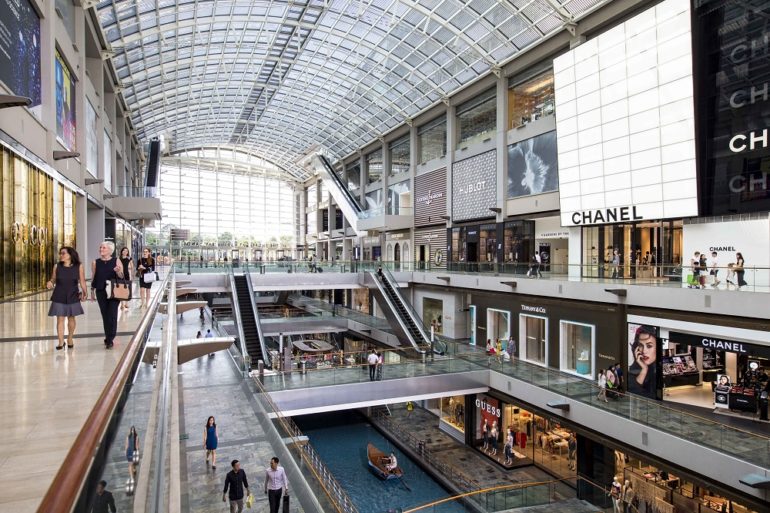
    Italian fashion brand Tod’s has unveiled the new look of its boutique at The Shoppes at Marina Bay Sands, Singapore.

    Spanning about 135sqm, the Tod’s Marina Bay Sands follows the brand’s store concept with signature elements that can be found in other stores, such as silver and taupe saddle-stitched leather paneled steel vitrines and marble.

    “The boutique is linear, modern, and in line with the brand’s image worldwide,” the company said in a statement.

    Floor-to-ceiling glass doors at the entrance allow Tod’s to display its latest products with different setups. The storehouses a full selection of Tod’s bags, shoes, and accessories, including its Full Summer Collection which will be sold exclusively at the Marina Bay Sands outlet.

    Founded in 1920, Tod’s operates more than 200 stores, including large flagship stores in Europe, the US, China, Japan, Malaysia, Singapore, Hong Kong, Indonesia, and Australia.

  • Royal Enfield Begins Operations In Singapore With New Store

    Royal Enfield Begins Operations In Singapore With New Store

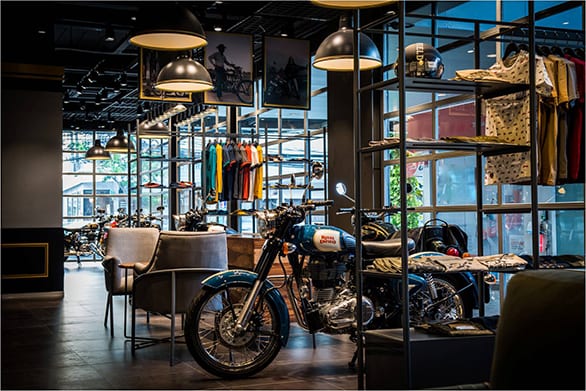
    Royal Enfield has started operations in Singapore by setting up a new flagship store in the city’s Ubi Road. The new Royal Enfield Singapore store showcases the entire range of Royal Enfield motorcycles, including the RE Interceptor 650, Continental GT 650, Himalayan, and the Classic. The Royal Enfield Singapore store also has a complete range of Royal Enfield’s genuine accessories for its motorcycles, as well as apparel and riding gear range. While the 650 Twins spearheaded the brand’s global aspirations, the updated Himalayan and the new Meteor 350 have also been positioned as global products, and will likely suit the requirements of Asian motorcyclists.

    The Royal Enfield Singapore store expands the Indian motorcycle brand’s footprint across South East Asia

    Royal Enfield has ambitious plans to establish itself as a global leader in the mid-size motorcycle segment and is expanding aggressively across Asia, as it aims to tap into the world’s biggest motorcycle market, after India. With a focus on increasing sales across India, Royal Enfield now has operations across Japan, Indonesia, the Philippines and Thailand, with plans to open a new factory in Thailand, which will be a hub for exports to other countries in the region, including the motorcycle-intensive markets of Vietnam and Indonesia. The Thailand factory is the second overseas plant for Royal Enfield, after its factory in Argentina.

    Royal Enfield has 36 showrooms in Thailand and has started operations in other ASEAN (Association of southeast Asian Nations) countries including Vietnam, the Philippines, Malaysia and Indonesia over the last few years. With the brand’s lion’s share of sales coming from the domestic market, which is the world’s biggest market for motorcycles sales, Royal Enfield will be increasingly looking to expand its presence in other strong motorcycle markets in the region.

  • OCBC Posts Record High Quarterly Net Profit

    OCBC Posts Record High Quarterly Net Profit

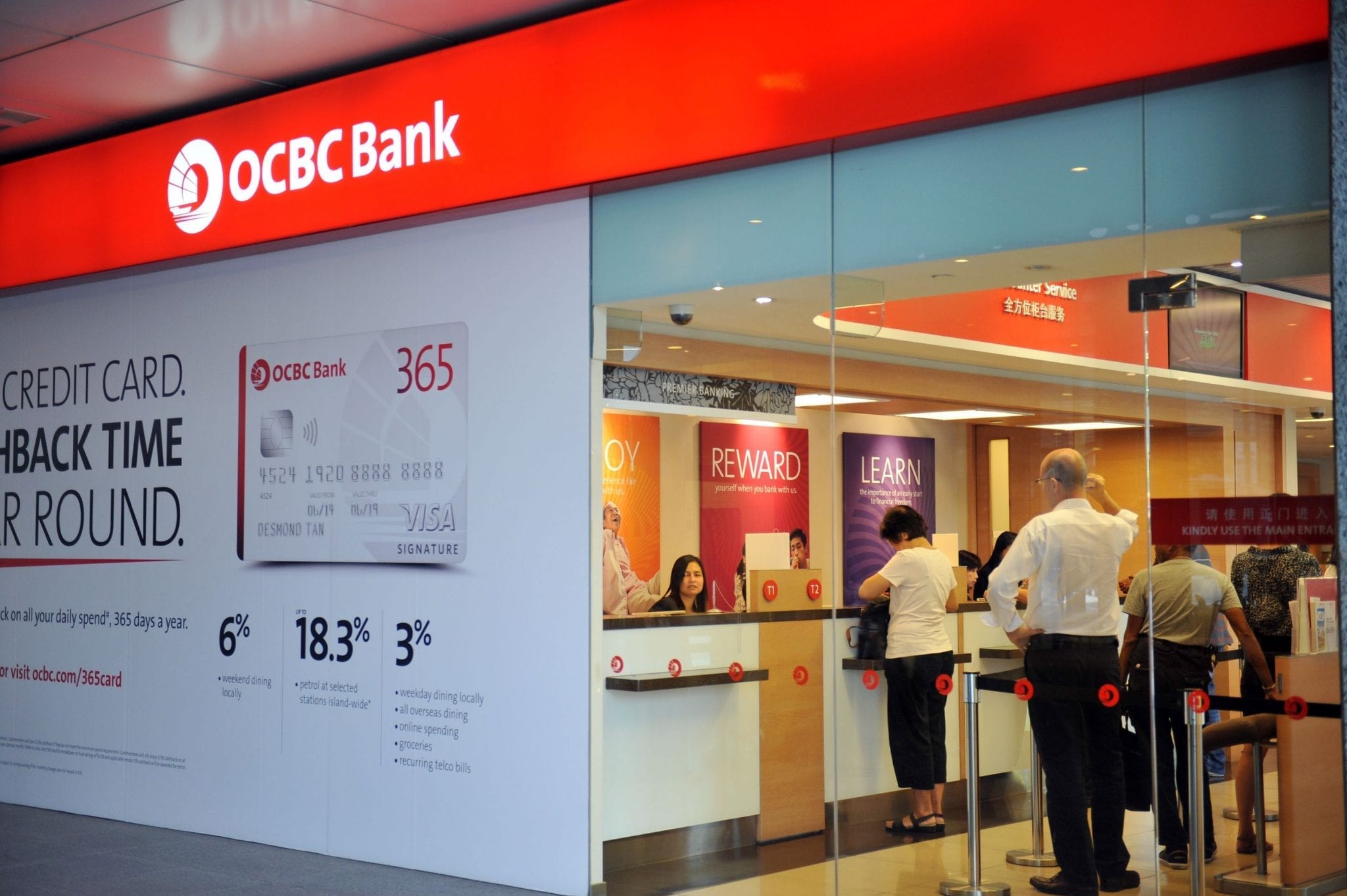
    The quarter’s earnings were driven by broad-based income growth and lower allowances. OCBC Bank recorded a net profit of S$1.5 billion ($1.13 billion) for the January-March period, a jump of 115 percent from the same period last year (S$698 million), and 33 percent higher than the preceding quarter (S$1.13 billion), according to financial results posted on Friday.

    The bank said the record quarterly profit was driven by broad-based income growth and lower allowances. OCBC hit a new high in fee income (S$585 million), while making a far smaller allowance compared with the year-ago period (S$161 million vs. $657 million). Performance was also boosted by its insurance arm Great Eastern, which reported a twelvefold increase in profits this quarter.

    Income from wealth management, comprising insurance, premier and private banking, asset management, and stockbroking, rose 40 percent to S$1.21 billion – 41 percent of the group’s total income.

    Assets under management at Bank of Singapore, its private banking arm, rose 1 percent from the previous quarter to reach $123 billion as of 31 March 2021.

    OCBC highlighted growing momentum from renewed market optimism across its businesses, as well as improved quarterly earnings from its overseas banking subsidiaries.

    While we remain watchful of the prevailing risks in the operating environment, our strong balance sheet and capital position will enable us to capitalize on opportunities arising from improved economic conditions, particularly in ASEAN and Greater China,» OCBC chief Helen Wong said.

    Earnings at Singapore’s «big three» local banks all beat analyst estimates (DBS: S$1.44 billion, OCBC: S$1.13 billion, UOB: S$891.4 million, according to Refinitiv).

    DBS, which announced its first-quarter results last week, also experienced a strong quarter, doubling its income from the quarter before to reach S$2.01 billion and posting record wealth management fees.

    UOB’s earnings grew to S$1 billion for the same period – up 46 percent on the back of strong fees, trading, and investment income.

  • OCBC Posts Record High Quarterly Net Profit

    OCBC Posts Record High Quarterly Net Profit

    The quarter’s earnings were driven by broad-based income growth and lower allowances. OCBC Bank recorded a net profit of S$1.5 billion ($1.13 billion) for the January-March period, a jump of 115 percent from the same period last year (S$698 million), and 33 percent higher than the preceding quarter (S$1.13 billion), according to financial results posted on Friday.

    The bank said the record quarterly profit was driven by broad-based income growth and lower allowances. OCBC hit a new high in fee income (S$585 million), while making a far smaller allowance compared with the year-ago period (S$161 million vs. $657 million). Performance was also boosted by its insurance arm Great Eastern, which reported a twelvefold increase in profits this quarter.

    Income from wealth management, comprising insurance, premier and private banking, asset management and stockbroking, rose 40 percent to S$1.21 billion – 41 percent of the group’s total income.

    Assets under management at Bank of Singapore, its private banking arm, rose 1 percent from the previous quarter to reach $123 billion as at 31 March 2021.

    OCBC highlighted growing momentum from renewed market optimism across its businesses, as well as improved quarterly earnings from its overseas banking subsidiaries.

    While we remain watchful of the prevailing risks in the operating environment, our strong balance sheet and capital position will enable us to capitalize on opportunities arising from improved economic conditions, particularly in ASEAN and Greater China,» OCBC chief Helen Wong said.

    Earnings at Singapore’s «big three» local banks all beat analyst estimates (DBS: S$1.44 billion, OCBC: S$1.13 billion, UOB: S$891.4 million, according to Refinitiv).

    DBS, which announced its first-quarter results last week, also experienced a strong quarter, doubling its income from the quarter before to reach S$2.01 billion and posting record wealth management fees.

    UOB’s earnings grew to S$1 billion for the same period – up 46 percent on the back of strong fees, trading and investment income.

  • Vietnam stock market daily trading value closes in on Singapore

    Vietnam stock market daily trading value closes in on Singapore

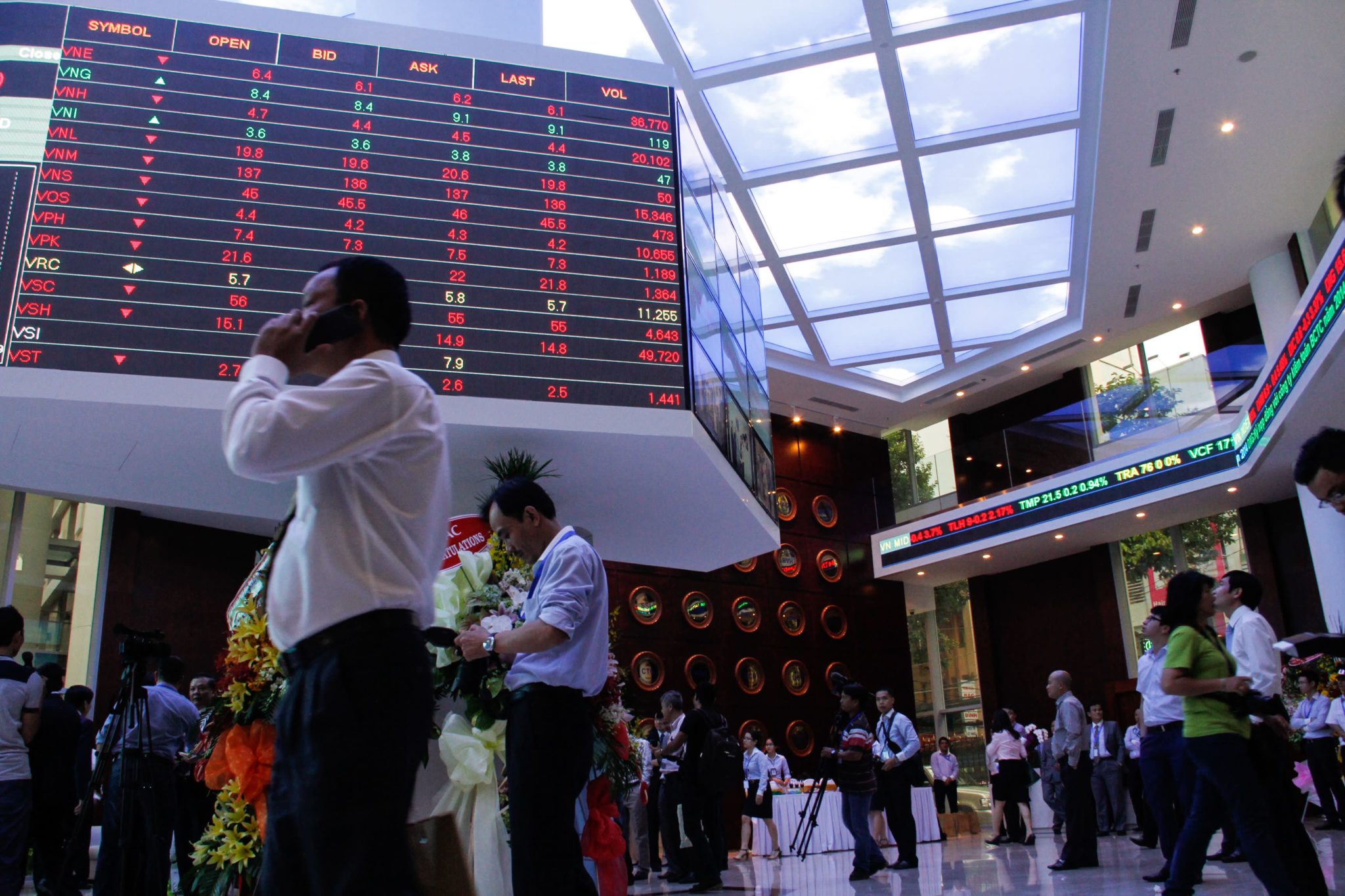
    The average daily securities trading value surged 5.6 times year-on-year in April to $725 million, nearly equivalent to that of Singapore, according to HSBC.

    The lender said in a recent report that the figure, which far exceeds those of Malaysia and Indonesia, was due to the increase in new investors and recovery of the economy.

    In March, the number of new trading accounts hit a record 113,900, taking the total to over 3.02 million.

    The economic recovery is underpinned by strong FDI flows, improvements in the manufacturing segment, and increased consumption, the report said.

    The benchmark VN-Index has risen 12.9 percent in the year-to-date compared to 4.2 percent for Asia ex-Japan.

    The index has repeatedly scaled new peaks this year after surpassing the psychological barrier of 1,204 points first reached in 2018.

    HSBC expected the market to continue to rise in the absence of alternative asset classes and bank deposit rates in decline.

    Though foreign investors have been pulling out of the stock market, HSBC said they would not be able to ignore Vietnam for much longer since it has proved to be one of the most resilient growth economies and 24 out of the 30 blue chips have still not reached the foreign cap.

    Besides, despite rising to record levels, the VN-Index remains 5 percent lower than its five-year average level with a price-to-earnings ratio of 15.1.

  • Singapore retail sales growth eased up in March

    Singapore retail sales growth eased up in March

    Retail sales continued to recover in March as the Singapore economy rebounded, though the figures were boosted by the comparison with the situation a year ago when Covid-19 safe distancing measures began and border restrictions were in place.

    Takings at the till grew by 6.2 percent in March on a year-on-year basis, compared with the revised 5.3 percent increase recorded in February, according to data out on Wednesday (May 5).

    This made for a second consecutive month of retail sales growth after a 24-month-long year-on-year slide. Excluding motor vehicles, sales increased 4.4 percent in March. Almost all segments registered jumps in turnover, with the sales of watches and jewelry jumping the most, by 60.2 percent. This was followed by the sales of apparel and footwear, which increased by 35.6 percent. This was due to the lower base in March 2020 when there were low tourism receipts arising from tightened border restrictions, said the Department of Statistics (SingStat).

    Sales of recreational goods grew by 28.3 percent, while takings by retailers of computer and telecommunications equipment increased by 19.9 percent.

    Petrol service stations registered an increase of 18.6 percent, while vehicle sales went up by 15.6 percent.

    But sales at supermarkets and hypermarkets reversed their growth streak from last year and dropped by 14 percent.

    This was in comparison with March 2020 when there were higher sales as more people stayed home after safe distancing measures were introduced, SingStat noted.

    Sales of cosmetics, toiletries, and medical goods also fell, by 13.2 percent.

    On a seasonally adjusted month-on-month basis, SingStat observed that most retail industries recorded growths in sales.

    “Discretionary industries such as motor vehicles, watches, and jewelry, wearing apparel and footwear and department stores recorded growths in sales of between 5.2 percent and 7.8 percent, attributed to higher domestic spending given overseas travel restrictions,” it said.

    But sales of furniture and household equipment declined during this period, as demand for furniture slowed down, with more people returning to the workplace, it added.

    Meanwhile, sales of food and beverage services grew by 8 percent year on year in March, a reversal from the 3.4 percent decline in February.

    This growth was mainly attributed to the lower sales in March 2020 when safe distancing measures were first introduced to contain the Covid-19 outbreak, SingStat said.

    Restaurant sales grew by 17.9 percent, while cafes, food courts, and other eating places saw takings rise by 5.6 percent. But food caterers continued to suffer a slide in sales, of 25 percent. The total sales value of food and beverage services in March was estimated at $730 million, with online sales making up an estimated 23.5 percent. The estimated total retail sales value in March was about $3.5 billion. Of this, online retail sales made up an estimated 11.8 percent.

  • Tech Roles Dominate Singapore Job Outlook in Finance

    Tech Roles Dominate Singapore Job Outlook in Finance

    Technology continues to play a dominant role in the development of financial services in Singapore with related functions accounting for more than a quarter of job opportunities in the sector. Technology will continue to lead hiring demand in 2021, according to the Monetary Authority of Singapore (MAS), with 1,700 hiring opportunities such opportunities within the financial sector.

    This accounts for more than a quarter of the total 6,500 newly created positions for the year by financial institutions.

    Technology has become central to how financial services are produced, distributed, and consumed, said MAS managing director Ravi Menon in a published statement. The Singapore financial sector has harnessed technology across a wide range of functions – from risk management, business analytics to customer service.

    Within the fintech job market, software engineers were the highly demanded role by employers. Net job growth for software engineers in 2019 was 200, 10 times more than UI or UX designers. These jobs require strong programming skills and in-depth business domain and system knowledge, Menon said, noting that local citizens landed less than one-fifth of such jobs. There are not enough Singaporeans applying for these jobs in the first place, let alone qualifying for them.

    Despite the tech focus, non-tech roles remained in demand especially in areas like relationship management, product sales, compliance, and risk management.

    Relationship managers are will account for 1,300 jobs or 28 percent of hiring

    Menon noted that demand will be underpinned by wealth management growth, highlighting expansion plans by major banks like Citi and DBS.

    Overall, the financial sector posted net job growth of 2,200 in 2020 compared to a 180,000 net loss in the broader economy.

    MAS expects momentum to continue with the sector expected to add 2,500 to 3,500 tech jobs each year over the medium term.

    The size of the tech workforce within the sector is estimated to be 25,000, a 30 percent increase compared to 2014.

  • Singapore-Hong Kong Travel Bubble Hits Snag

    Singapore-Hong Kong Travel Bubble Hits Snag

    The arrangement for quarantine-free travel between the two cities was due to begin on May 26, following two previous postponements. Singapore is reassessing plans for a travel bubble with Hong Kong after the city-state moved to reintroduce tighter social distancing measures amid a growing cluster of Covid-19 cases tied to a large public hospital. The number of cases in the cluster stands at 40 and is linked to the India variant.

    We will monitor the situation and we will review and assess whether or not there will be any changes,» Lawrence Wong, the minister who co-chairs the Singapore government’s virus taskforce, said.

    The travel bubble has already been delayed several times from its scheduled start in November 2020, as a result of infection outbreaks.

    According to the terms of the agreement, the travel bubble will be closed for two weeks if the seven-day moving average of the daily number of unlinked local cases is more than five in either Singapore or Hong Kong.

    On Tuesday, Singapore authorities announced stricter rules on social gatherings, to last till May 30, to stem the spread of Covid-19 in the community. Gatherings are now limited to groups of five, down from eight previously.

    Offices are also to implement a flexible working and more people are to work from home – only 50 percent of staff are allowed at the workplace at any one time, down from 75 percent at present.

  • SGX Restores Services After Outage

    SGX Restores Services After Outage

    The bourse’s web pages were discovered to be progressively inaccessible across different network providers from 4:30 p.m. SGT on Tuesday.

    Singapore Exchange’s website and web-based applications were restored on Tuesday night, following an outage that took place in the afternoon.

    Its case was a domain name system (DNS) issue, SGX said on Twitter, noting that it’s trading and clearing systems are separate from the website. It also said that there is no indication that its systems were compromised.

    While it did not affect trading, the outage limited access to SGX price information and SGX-listed company announcements.

    Several mainboard companies were due to release their financial results on Tuesday evening. Users were urged to visit their brokers’ websites or alternative sources during the outage.

  • Singapore and Thailand Link National Payment Infrastructures

    Singapore and Thailand Link National Payment Infrastructures

    In a world-first, the two countries have established a link between Singapore’s PayNow and Thailand’s equivalent PromptPay.

    Customers in Singapore with DBS, OCBC, and UOB accounts, and customers of Bangkok Bank, Kasikorn Bank, Krung Thai Bank, and Siam Commercial Bank in Thailand will be able to securely perform cross-border peer-to-peer transactions of up to S$1,000 or THB25,000 using just their mobile numbers.

    The transactions will take place at the near real-time speed at a fee that is competitive to remittance services. Over time, participating banks and use cases will be scaled up and expanded, the Association of Banks in Singapore said in an announcement on Thursday.

    Monetary Authority of Singapore (MAS) and the Bank of Thailand first mooted the possibility of a link between their respective countries’ networks in 2017.  The announcement said the two sides spent the past few years working to align their target operating model, business rules, technical connectivity as well as legal framework.

    Wee Ee Cheong, ABS chairman, deputy chairman and CEO of UOB, said the initiative is also «an important step to connecting payment systems across ASEAN at scale in the future.

    MAS managing director Ravi Menon previously said MAS is keen to help other central banks in the region to expand the linkage, so that more people across Southeast Asia can benefit.

  • OCBC to Review Office Space Needs

    OCBC to Review Office Space Needs

    The bank is considering reducing the number of branches and office space as it moves towards a hybrid work model.

    We may not need so many branches servicing our customers, so certainly I think there will be a review in terms of our office requirements as we move forward,» chairman Ooi Sang Kuang said at the bank’s virtual annual shareholder meeting on Thursday.

    Last year, former OCBC chairman Samuel Tsien said the bank expects fewer physical branches and offices being open in the future, as a surge in the adoption of digital banking services prompted OCBC to rethink its branch network strategy, and Covid-19 prompted a shift towards hybrid working from home and the office.

    Other banks that have permanently reduced their physical footprint in Singapore include DBS, which will give up 75,000 square feet of space – about two and a half floors out of the more than a dozen floors it occupies at Tower 3 of the Marina Bay Financial Centre; Citi, which is offloading three floors; and Mizuho, which is cutting less than one floor of office space.

    During the meeting, Helen Wong, OCBC’s new chief executive, said the bank would focus on deepening its reach into Asean markets and to capitalize on the growing Asean-Greater China flows, expanding its wealth management franchise, accelerating digitalization and building a regional sustainable bank.

  • HSBC Singapore Offers Flexibility as Employees Return

    HSBC Singapore Offers Flexibility as Employees Return

    The bank has outlined a vision for its approach to flexible and hybrid-location working and will give its employees the opportunity and choice to return to the office.

    HSBC Singapore’s Future of Work plans will be underpinned by ensuring customer focus; flexibility for how, when, and where employees work; and ensuring that its offices are designed and used to build collaboration and networks, according to a statement on Friday.

    Forward-looking companies are change-makers. This includes creating working environments that enable employees to set up arrangements that deliver high customer impact whilst suiting their personal lives, Brandon Coate, head of human resources, said.

    The bank, which has about 3,300 employees in Singapore, has made a number of policy, location, technology, and cultural changes in the past year, including becoming the anchor tenant of Marina Bay Financial Centre Tower 2, which it moved to last year after its lease at 21 Collyer Quay ended.

    It will upgrade its offices at MBFC and at its split-site at Mapletree Business City, in preparation for a more permanent shift to hybrid and flexible working, the bank noted. This includes state-of-art design, technology, and sustainability, and moving from traditional fixed-desk seating to an activity-based workplace, where employees have a variety of individual and shared spaces available to work or collaborate with others.

    As more employees prepare to return to the workplace, following an extended period of working from home, HSBC said it will maintain operational and business continuity risk.

    For example, it is allowing a maximum of 65 percent of its total staff in the office, and not allowing cross-site deployment.

  • First Digital Trust Partners Crypto Storage Firm Amid Asia Demand

    First Digital Trust Partners Crypto Storage Firm Amid Asia Demand

    The multi-asset custodian will work with Fireblocks, a blockchain-based platform for securely moving, storing, and issuing digital assets in the finance industry, to cater to the increasing demand from fintech companies seeking custodial solutions in Asia.

    Hong Kong-based First Digital Trust (FDT) will integrate Fireblocks’ digital asset infrastructure on its platform to improve institutional-grade digital asset custody and protection in Asia as investor interest and demand grows, according to a joint statement on Wednesday.

    Fireblocks will automate the depositing of assets into FDT’s custodial structure, which will allow it to provide more interoperable custody solutions by enabling fintech clients to instantly send money to various digital asset providers without needing to see a wallet address.

    FDT will also be able to provide investors access to DeFi, lending and staking, as well as more than 200 trading venues and 300 tokens, enabling them to expand their revenue streams from day one, the announcement said.

    The collaboration with Fireblocks will enable us to build a strong bridge between the East and the West for fintech visionaries in Europe and the US who are looking to tap into the Asian market, Vincent Chok, CEO of First Digital Trust, said.

    Digital asset trading activity in Asia is equivalent to the U.S. and Europe combined, and accounts for more than 90 percent of ethereum and bitcoin derivatives volumes.

    Since launching in June 2019, Fireblocks has opened offices in Hong Kong and Singapore, and has raised $46 million in funding to support its growth ambitions.

  • Citi Names Wealth Co-Heads for Asia Pacific

    Citi Names Wealth Co-Heads for Asia Pacific

    Citi made a raft of new appointments to its wealth management unit including the promotion of its Asia head of private banking.

    Citi named Steven Lo co-head of the wealth unit in the region alongside APAC head of retail banking Fabio Fontainha, according to an internal memo.

    Lo was named Asia head of the private bank in 2017, succeeding ex-head Bassam Salem.

    The bank also appointed Ida Liu – most recently head of the private bank in North America – as the global head of private banking, overseeing the bank’s private capital group, global trust, and private bank global marketing operations.

    Other notable appointments for the wealth business include chief operating officer Eduardo A. Martinez Campos and chief of staff Running Du.

    Chief investment officer and global head of investments David Bailin will form a group that combines investment teams from the private bank and consumer bank globally.

    Head of investment finance for the private bank Giuliano Malacarne will expand his remit and coordinate the delivery of banking and lending products to wealthy clients.

    The appointments coincide with the bank’s reorganization of its wealth business to encompass the full spectrum from emerging affluent to high net worth clients.

    Our clients are looking for more — whether it’s access to investment opportunities and advice, tools and analytics, a focus on environmental, social and governance concerns or more engaging digital experiences, said Jim O’Donnell, Citi’s head of global wealth in the memo.