Tag: Singapore

  • PayPal Launches Singapore Hiring Spree

    PayPal Launches Singapore Hiring Spree

    The U.S. online payments giant is expanding the Singapore-based workforce by 25 percent to support the region’s growing demand for digital solutions.

    Some 150 job openings are on offer at PayPal’s its international headquarters in Singapore, under the Infocomm Media Development Authority of Singapore’s TechSkills Accelerator (TeSA) program and supported by Digital Industry Singapore (DISG), according to an announcement on Tuesday.

    PayPal said it will provide opportunities over the next three years for Singaporeans in areas such as product management, software engineering, cybersecurity, and data science, according to a statement.

    The new hires will work on projects that cover SME digitalization, PayPal’s e-wallet and commerce platform, as well as risk, compliance, trust and security, the announcement said.

    Singapore is a strategic market for the online payments platform, and is home to the only international PayPal Innovation Lab, which has contributed to over 140 patents.

    PayPal is determined to support Singapore’s continued digital transformation into a global technology and fintech hub, Aaron Wong, chief executive officer of PayPal Pte Ltd, said.

    According to the company’s recent earnings report, PayPal processed a total payment volume of $311 billion during in second quarter of 2021, up 36 percent year-on-year. There are 403 million active accounts, including 32 million merchant accounts, on the platform.

    PayPal operates in over 200 markets, with 44 percent of active accounts located outside of the United States.

    Earlier this week, PayPal announced the first international roll-out of its crypto product that first launched in the U.S. in October last year, which lets customers buy or sell bitcoin, bitcoin cash, ethereum or litecoin. It said it hopes to open this functionality to other global markets in the coming years.
  • Robot baristas to serve coffee in over 30 train stations in Singapore

    Robot baristas to serve coffee in over 30 train stations in Singapore

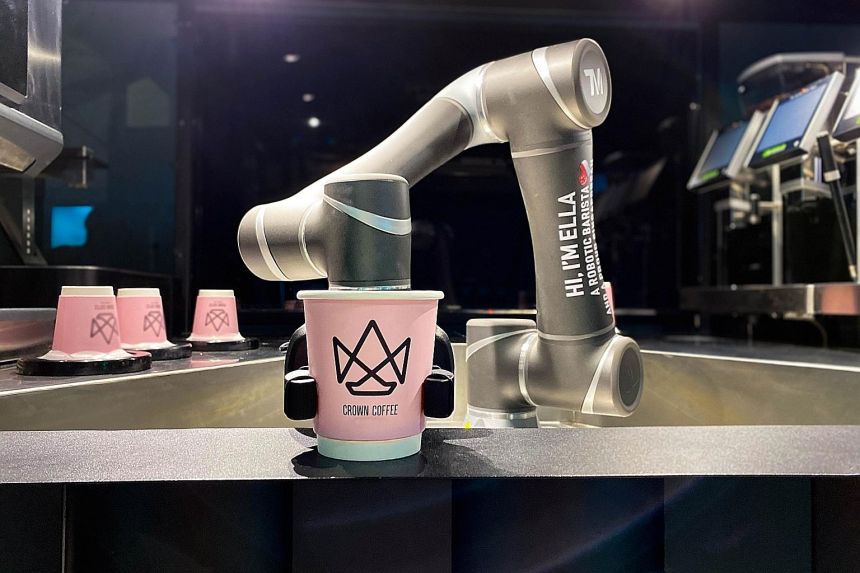
    Singapore-based Crown Digital announced yesterday that it will be installing its robotic baristas at 30 Mass Rapid Transit (MRT) stations in that country by the end of 2022.

    Dubbed “Ella,” Crown Digital’s robo-coffee kiosk is 5 sq. meters, serves a variety of coffee and tea drinks, and can make up to 200 coffees per hour. While Ella uses an articulating arm to make and serve drinks, one of its standout features is its transparent screen that can display information about drinks, orders and even full-motion videos and graphics.

    For these MRT installations, Crown Digital has collaborated with Stellar Lifestyle, which has “expertise in property and retail management, media and digital advertising solutions,” according to the Crown Digital announcement blog post. Crown Digital also wrote that Stella Lifestyle has invested an undisclosed sum in Crown Digital’s pre-Series A round of funding.

    This is the second rail network that Crown Digital has partnered with, following a pilot deal with Japan’s JR East‘s train stations signed at the end of last year. With their high-traffic audiences looking for refreshment on-the-go, transit hubs like MRT stations and airports are popular target markets for robotic coffee kiosk companies that are just now coming market such as Crown Digital, Smyze, and Cafe X.

    Another benefit to robotic coffee baristas in these pandemic times is that they are contactless. Robots don’t get sick, and don’t act as a vector of viral transmission the way that humans do.

    While there are a number of robot baristas coming to market, we have yet to see big coffee chains jump into automation. The exception is Costa Coffee, which bought Briggo last year and re-branded those Coffee Hauses into Costa Coffee BaristaBots. Though I suspect that as more deals like Crown Digital’s start popping up, we’ll soon see other big coffee brands like Starbucks and Dunkin add their own robots as well.

  • Coach Singapore introduces first concept store

    Coach Singapore introduces first concept store

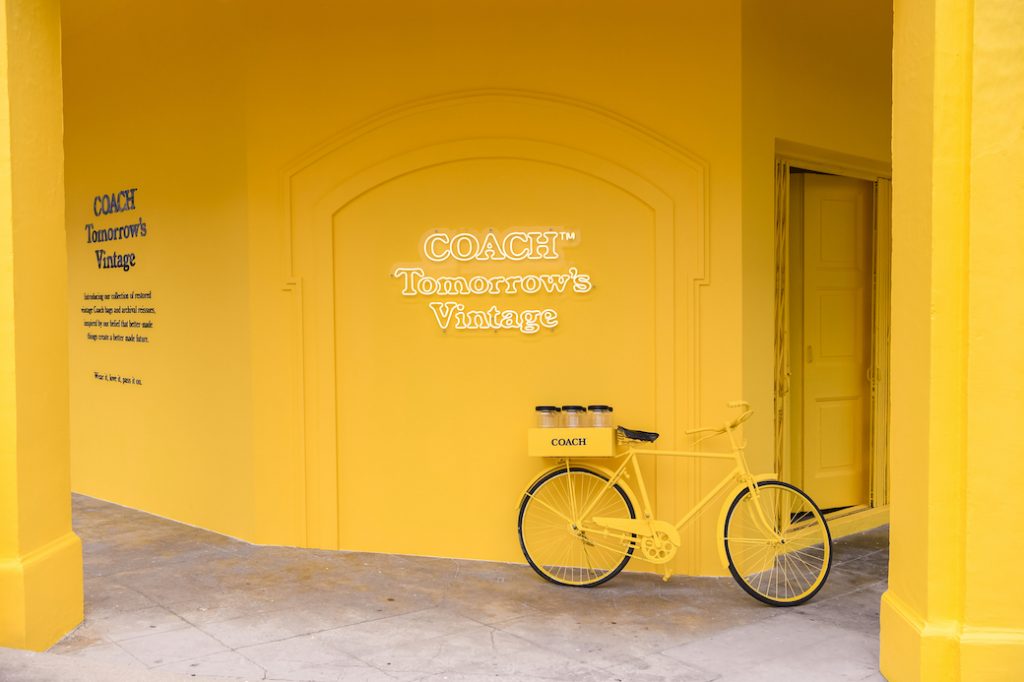
    Coach is launching their first-ever concept store in Singapore, Tomorrow’s Vintage, a pop-up that celebrates Coach’s timeless style and its commitment to a better-made future.

    Inspired by Coach’s commitment to restoring, repurposing, and reimagining, the Tomorrow’s Vintage concept store will be hosted in a conservation shophouse located at 1 Teck Lim Road from today to 12 September 2021.

    In celebration of the brand’s 80th anniversary, the store space will pay homage to Coach stores from the past, with vintage television showcasing films featuring Coach’s renowned leather restoration specialist Debi the Restorer. Bags from Coach’s archival collection will be on display, including iconic designs from Bonnie Cashin’s era such as the Ergo and the Cashin, and a selection of re-released Coach Originals bags.

    Tomorrow’s Vintage will feature a limited-edition pop-up of the famous Coach craftsmanship bar and a dedicated craftsman trained by Mauricio, Coach’s master craftsman in New York City will offer leather cleaning, monogramming services, and customization options.

    From 3 to 5 September, customers can also have their bags customized by local artist Tiffany Lovage. Between 27 to 29 August and 10 to 12 September, professional embroiderer Zoey Wong will be on-site to personalize leather goods.

    Coach has also partnered with Big Crown Records, a Brooklyn-based independent record label that reissues rare vinyl and produces new releases on vintage equipment to curate a playlist for the Tomorrow’s Vintage pop-up store and a selection of vinyl records for display.

    Coach’s Tomorrow’s Vintage also adds a local touch, with a Tikam Tikam game available to play in the concept store. Each visitor can pick a random number from the Tikam board for the chance to win a complimentary Coach Create pin or patch. To drive visitors to the pop-up, Coach will also launch a ‘Digital Tikam’ game (mobile only):https://tomorrowsvintage.coachexperiencesg.com.

    Coach’s Tomorrow’s Vintage concept store will adhere to the government’s advisory and safe distancing regulations. All visitors have to adhere to regulations including Safe Entry check-in, temperature checks and wearing of masks at all times.

  • Tokio Marine Hit by Ransomware Attack in Singapore

    Tokio Marine Hit by Ransomware Attack in Singapore

    Japanese-headquartered insurer Tokio Marine Group was the latest ransomware victim with an attack launched on its Singapore unit.

    Some of Tokio Marine Insurance Singapore’s (TMiS) internal servers were targeted on July 31, according to a statement, which was isolated detection to prevent further damage. The Japanese insurer also filed reports to local governmental agencies.

    We sincerely apologize for any inconvenience and concern caused to our customers or related parties, the group said.

    The group is still identifying the extent of the damage but thus far, there has been no indication of loss of any customer or confidential information and none of TMiS’ core insurance operating systems were affected.

    The life insurance unit Tokio Marine Life Insurance Singapore (TMLS) was also unaffected as it maintains different servers but TMLS still took immediate action to screen its own servers and adopt additional safeguards.

    Tokio Marine has also appointed an external specialist to perform a third-party analysis of its systems to determine the scope of the attack’s impact.

    A growing number of companies have been victims of attacks via ransomware – typically malware that threatens to publish data or block access unless a ransom is paid.

    In May, French insurer AXA also announced that it was also a ransomware victim in Asia with affected operations in Thailand, Malaysia, Hong Kong and the Philippines.

  • Deutsche Bank Hires Ex-Pictet Singapore Chief

    Deutsche Bank Hires Ex-Pictet Singapore Chief

    Deutsche Bank continues to expand in Asia with the latest addition of the former Singapore chief executive from Pictet.

    Deutsche Bank names Dominique Jooris as Asia Pacific head of wealth solutions, according to a statement,

    Jooris was most recently CEO of Bank Pictet in Singapore before he was succeeded in January this year by Sharon Chou. Previously, Jooris held various senior dept capital management roles including 11 years at Goldman Sachs.

    According to the statement, Jooris will be focused on driving coverage of the family office segment in the region.

    Asia Pacific continues to be the fastest-growing region in the world for wealth accumulation and has been for the last 20 years. Asia Pacific is already home to more billionaires than any other region, the bank added.

    Given this dramatic wealth accumulation, many Asian families are institutionalizing their wealth management through more efficient structures and vehicles, primarily via family offices.

  • Singapore Relaxes Border Restrictions for Travellers

    Singapore Relaxes Border Restrictions for Travellers

    The city-state will reopen its borders to fully vaccinated travelers from certain countries and is removing stay-home requirements for short-term visitors from several countries.

    Fully vaccinated travelers from Germany and Brunei will be able to come to Singapore without serving a stay-home notice, under a new Vaccinated Travel Lane arrangement announced on Thursday.

    At the same time, all travelers from Hong Kong and Macau, Mainland China, New Zealand and Taiwan, regardless of vaccination status, can enter without serving a stay-home notice, the Civil Aviation Authority of Singapore (CAAS) said.

    Vaccinated Travel Lane visitors will have to meet a set of criteria that includes taking designated flights that serve only vaccinated travelers, not transiting elsewhere, and undergoing PCR tests while in Singapore. Those who arrive on flights not under the Vaccinated Travel Lane will be subject to prevailing quarantine measures upon arrival, CAAS said.

    In response to the relaxed border measures, Singapore Airlines will operate five weekly Vaccinated Travel Lane flights from Frankfurt and Munich beginning September 7.

    Lufthansa, will also increase its flights to Singapore to three weekly, up from one currently – two of these will be for the designated Vaccinated Travel Lane.

    Separately, the Ministry of Transport announced that Singapore and Hong Kong have agreed not to pursue further discussions on the air travel bubble, owing to differences between the two cities in their strategy for managing the Covid-19 pandemic.

    «Both parties agreed that it would not be possible to launch or sustain the air travel bubble in its present form,» the announcement said.

  • Korean Internet Giant Opens Blockchain Units in Singapore

    Korean Internet Giant Opens Blockchain Units in Singapore

    Kakao Group will pursue the globalization of its public blockchain project, Klaytn, from the city-state.

    South Korea’s Kakao Group has established two new blockchain entities in Singapore – nonprofit Klaytn Foundation and global accelerator unit Krust, it announced in a statement.

    Kakao Foundation said in a statement that it would work proactively and systematically to expand the Klaytn network, while Krust, led by Dean Song, will work with the foundation to help accelerate its mission.

    We will actively invest our human as well as financial resources in developers and businesses of the blockchain world to accelerate the growth of our ecosystem and the development of our technology, the foundation said. Founded in 2010, Kakao Group operates messenger app KakaoTalk and internet bank KakaoBank. Kakao also recently won a bid to pilot South Korea’s central bank digital currency (CBDC) project.

    The Singapore development is funded by a $300 million blockchain development war chest that also includes an improvement reserve fund used for service maintenance purposes.

  • DBS Receives In-Principle Crypto Approval in Singapore

    DBS Receives In-Principle Crypto Approval in Singapore

    DBS becomes Singapore’s second crypto player to secure an in-principle approval from the Monetary Authority of Singapore to offer token services.

    DBS Vickers – the brokerage arm of DBS – has received in-principle approval from the MAS under the Payment Services (PS) Act to provide digital payment token services, according to a statement.

    As a member of DBS Digital Exchange (DDEx), DBS Vickers will be able to «directly support asset managers and companies to trade in digital payment tokens through DDEx.

    DBS will also upgrade its digital exchange with operations running beyond the previous Asian hours to round-the-clock trading from August 16.

    We have seen keen interest among asset managers and corporates for access to digital payment token services, and with DBSV receiving in-principle approval under the PS Act, we are well-placed to meet this growing demand,» said DBS group head of capital markets Eng-Kwok Seat Moey.

    This could add to DDEx’s volumes in the coming months, and, coupled with DDEx going operational round-the-clock, help accelerate growth for DDEx. We are confident of doubling our investor base by the end of the year.

    DDEx has just completed its second quarter since launching in December 2020 and houses around 400 investors with close to S$130 million ($95.8 million) of digital assets in its custodial services.

    Trading volume in the second quarter reached S$180 million, more than quintupling the previous quarter.

    In June, DDEx listed its inaugural security token offering in the form of a S$15 million digital bond.

  • Singapore and Hong Kong Named as Unicorn Incubators

    Singapore and Hong Kong Named as Unicorn Incubators

    The city-state’s unicorn businesses take an average of 6 years and 11 months to reach the valuation of $1 billion.

    Singapore is the joint fourth best country in the world for unicorn start-ups, according to a recent study by credit broker Money.co.uk, with six businesses currently valued at over $1 billion.

    The top country for unicorns is China, with 155 such companies, which take an average of 5 years 10 months to reach this status. Hong Kong, which has five unicorns, is the second-fastest country for businesses to reach $1 billion, which take an average of 6 years and 1 month, followed by Japan unicorns, which take average of 6 years and 3 months.

    According to the study, which cited data by private equity firm CB Insights, there are only 750 unicorns – defined as independently owned and valued at over $1 billion – globally. The U.S., also in joint fourth position, has the most, at 378.

    Globally, there are 131 fintech unicorns, which took an average of 7 years 1 month to reach $1 billion.

  • SGX Profits Fall on Higher Expenses

    SGX Profits Fall on Higher Expenses

    The bourse attributed its weaker performance to higher expenses increased and declining treasury income amid a low-interest rate environment.

    Singapore Exchange’s fiscal full-year net profit fell 6 percent year-on-year to S$445.4 million ($329.5 million), despite operating revenue growing by 0.3 percent to S$1.06 billion, according to financial statements released on Thursday.

    Operating revenue fell 6.8 percent year-on-year for the six months ending 30 June 2021 to S$535.1 million, with the decline coming from its equities segment, SGX said. Its net profit for this period totalled S$205.6 million, down 20.5 percent from S$258.6 million the previous year.

    FICC revenue, comprising Fixed Income as well as Currencies and Commodities – Derivatives revenues, increased 24 percent to S$211.8 million, or 20 percent of total revenue. Equities revenue, comprising Equities – Cash as well as Equities – Derivatives revenues, declined 8 percent to S$701.1 million, or 66 percent of total revenue.

    Data, Connectivity and Indices revenue increased 18 percent to S$143.1 million, or for 14 percent of total revenue.

    Scientific Beta and BidFX contributed 7 percent to the group’s total revenues in FY2021. Along with recently acquired FX trading platform MaxxTrader, total revenue contribution from SGX’s recently acquired subsidiaries would exceed 9 percent, SGX said.

    While the low-interest rate environment will continue to impact our treasury income, we believe it will also spur demand for our multi-asset offerings as investors seek enhanced returns, CEO Loh Boon Chye said.

    The Board of Directors proposed a final quarterly dividend of 8 cents per share, payable on 22 October 2021, which would bring total dividends in FY2021 to 32 cents per share, up from 30.5 cents in FY2020.

  • Singapore Crypto Startups Join Mastercard Engagement Program

    Singapore Crypto Startups Join Mastercard Engagement Program

    Two Singapore startups will help the payment giant accelerate innovation around digital asset technology. Singapore-based Mintable, a non-fungible token (NFT) marketplace; and Stacs, which provides a blockchain infrastructure for the financial industry to unlock value and enable effective sustainable financing, are among of a new cohort of seven startups at Mastercard’s «Start Path» global startup engagement program.

    The program supports fast-growing digital assets, blockchain, and cryptocurrency companies by providing access to strategic partnership opportunities, insights, and tools to grow. Companies participating in the new program aim to address pain points including asset tokenization, data accuracy, digital security, and seamless access between the traditional and digital economy.

    The announcement comes amid increased enthusiasm for a broader range of payment technologies in the Asia Pacific region as a result of the pandemic, and growing awareness of cryptocurrencies among the general public. Mastercard also said consumers are increasingly showing interest in being able to spend crypto assets for everyday purchases.

    We believe we can play a key role in digital assets, helping to shape the industry and provide consumer protection and security. Part of our role is to forge the future of cryptocurrency, and we’re doing that by bridging mainstream financial principles with digital assets innovations, Jess Turner, Executive Vice President of New Digital Infrastructure and Fintech, Mastercard, commented.

    Mastercard announced last week that it was looking to simplify for its partners the conversion from cryptocurrency to traditional fiat currency, and would be leveraging partnerships to help crypto companies offer card programs.

    Earlier this month, rival Visa reported that consumers spent more than $1 billion worth of cryptocurrency on goods and services through Visa’s crypto-linked cards in the first half of 2021.

  • Nearly Half of Singaporeans Own Cryptocurrency

    Nearly Half of Singaporeans Own Cryptocurrency

    Despite market volatility and regulatory pressures, the outlook for crypto adoption remains positive especially in Singapore where nearly half of its residents own the digital asset class, according to a survey.

    43 percent of Singaporeans own cryptocurrency, according to a survey by Independent Reserve, a digital set exchange with operations in the city-state since 2020. And adoption is expected to continue to rise with 46 percent of respondents plan to buy crypto in the next 12 months.

    Naturally, awareness has been high in Singapore with 93 percent claiming they have knowledge of cryptocurrencies and 90 percent claiming they heard of bitcoin.

    Unsurprisingly, younger individuals have led adoption rates at 66 percent for those aged 26 to 45 compared to 31 percent cumulatively for all other age groups.

    The same age group was also twice as likely to buy crypto in the next 12 months at 61 percent.

    Crypto adoption is expected to increase in Singapore with 59 percent of Singaporeans believing it will reach mass-scale adoption and 70 percent for those under the age of 45.

    The price outlook is also positive with half of the respondents expecting bitcoin’s value to rise to S$50,000 by 2030. 13 percent of those under 45 forecast bitcoin’s price to reach S$250,000 by the same year. The data is based on a survey of 1,000 Singaporeans conducted by Independent Reserve.

    Independent Reserve also launched its inaugural Cryptocurrency Index for Singapore and scored it at 63 out of 100 using criteria based on awareness, adoption, trust and confidence.

    With digital currency gaining momentum worldwide, Singapore continues to emerge as a key hub in Asia due to its robust and well-regulated financial markets infrastructure and openness to new technologies,» said Independent Reserve CEO Adrian Przelozny.

    The strong awareness and adoption of crypto among Singaporeans in the survey findings are probably a natural reflection of the country’s progressiveness and commitment to preparing for the future.

  • Singapore Wealth Fund Posts Best Performance Since 2015

    Singapore Wealth Fund Posts Best Performance Since 2015

    Strong asset performance amid the pandemic and exits through initial public offerings by portfolio companies boosted the fund’s performance.

    GIC, whose investment performance is measured using a rolling 20-year real rate of return, posted an annualized USD nominal rate of return of 6.8 percent for the period that ended 31 March 2021, or 4.3 percent accounting for inflation, it said in the announcement. In 2015, it recorded a return of 4.9 percent.

    Asia excluding Japan took up 26 percent of GIC’s portfolio, up from 19 percent a year earlier, while emerging markets comprised 17 percent, up from 15 percent. At the same time, its Japan exposure fell to 8 percent, from 13 percent the year before, according to its annual report. Its largest region by exposure continued to be the U.S., at 34 percent. The fund manages in excess of $100 billion in assets, though exact figures are not available.

    GIC said it is cautious about the macro outlook in the long term, given rising inflation, elevated asset valuations, more fragile fundamentals in the global economy and less policy room.

    Chow Kiat, GIC chief executive officer, said GIC is positive on the micro prospects, given new areas of growth that are driven by increasing emphasis on sustainability, accelerating technological transformation, and growing needs for businesses to reconfigure their supply chain.

    Earlier this year, GIC opened its 11th office globally in Sydney, Australia, saying it would be seeking investment opportunities in the country.

    The fund has also been loading up on crypto assets of late. So far this year, GIC has taken stakes in U.S. based digital asset bank Anchorage; BC Group, the parent company of regulated crypto exchange OSL; and blockchain analysis company Chainalysis.

  • Singapore’s Reopening Takes a Step Back

    Singapore’s Reopening Takes a Step Back

    Covid-19 measures will be tightened again from Thursday (July 22) to Aug 18, as the city-state tries to stem a spike in community cases.

    Singapore is scaling down social gatherings to a maximum of two and banning dining out amid a spike in Covid-19 infections in the city-state that emerged from karaoke lounges and the city’s main fishery port, which has spread to 26 markets and food centers.

    Based on the assessment on the way the cases have developed and the many clusters we are seeing, and how it is likely to have transmitted into the community, we have to put in place something to slow down the transmission, Finance Minister Lawrence Wong, who chairs the country’s Covid-19 task force, said in a press conference on Tuesday.

    The number of new cases in the community has increased from 19 cases the week before, to over 500 cases in the past week, according to the Health Ministry.

    A review of the long-awaited air travel bubble (ATB) between Singapore and Hong Kong was also pushed back to late August.

    Both parties will remain in close contact and monitor the public health situation in both places before taking stock in late August on the ATB, Singapore’s Transport Ministry said in a statement on Tuesday.

    The ATB was slated to launch in November 2020, but has been beset by numerous delays. Last week, Hong Kong lawmakers urged the government to scrap the arrangement, citing Singapore’s shift from a «Covid zero» strategy towards learning to live with the virus.

    Health Minister Ong Ye Kung said the country is on track to achieve its target of having two-thirds of the population vaccinated before National Day, which falls on August 9.

    Currently, 50 percent of the population is fully vaccinated, but 200,000 seniors have yet to take the jab.

  • Singapore Firm Partners China’s The9 for Cloud Crypto Mining

    Singapore Firm Partners China’s The9 for Cloud Crypto Mining

    Singapore Myanmar Investco (SMI) will develop a cryptocurrency cloud-mining platform with The9, according to a memorandum of understanding signed by the two sides.

    The mining business is expected to be launched in the fourth quarter of the year, subject to regulatory approval, SMI said in an announcement on Friday.

    Operations will be hosted in a range of facilities across Canada, U.S., Central Asia and the ASEAN region, and will cover a basket of cryptocurrencies inclusive of bitcoin (BTC), filecoin (FIL) and chia (XCH). This move follows SMI’s entering into a subscription agreement with The9 for new shares in SMI, which was announced in June.

    SMI also said it reached an agreement with Chinese cloud mining software-as-a-service company Nhash for technical and support services for five years, as well as an option to purchase up to 4,000 crypto mining machines.

    SGX-listed SMI is an investment and management company focused on Myanmar. In June, it announced its intention to pivot to cryptocurrencies and to diversify its core business to include gaming, digital entertainment and robotics.

    Originally an online gaming firm, Nasdaq-listed The9 pivoted into mining in January and started operations the next month. However, it has been facing regulatory headwinds in China, where it operates. Like other miners, The9 has been looking to shift operations abroad.