Tag: Singapore

  • Citi Singapore Doubles Paternity Leave

    Citi Singapore Doubles Paternity Leave

    The move is part of the bank’s initiatives to create an inclusive workplace and follows moves to increase female representation in senior roles and narrow the wage gap between male and female staff.

    Citi Singapore is extending its paid paternity leave from the government-mandated two weeks, to four weeks, under enhanced parental leave policies that are being rolled out globally in 74 markets this year.

    This move is in line with Citi’s new global paid parental leave policy to recognize the role that both parents play in raising a child, as well as to build an inclusive workplace, a statement on Wednesday said.

    The policy was launched on January 21, but will be backdated to January 1 for the first 18 markets, which includes Singapore. The leave, which applies to staff of all nationalities, must be used within the year of the child’s birth. New mothers will continue to receive 16 weeks of paid leave, the bank said.

    The move helps to drive greater gender equality, transform the perception that caregiving is only a female responsibility and create a more level playing field at home and at work, Jorge Osorio, head of human resources, Citi Singapore, said.

    In January, the bank said it would work towards increasing global representation of women in Assistant Vice President to Managing Director level roles to a minimum of 40 percent by 2021 to address its unadjusted pay gap. The share of females in such roles in Singapore grew from 32 percent in December 2017, to 36 percent in December 2019.
  • UOB Launches Financial Solution for Women in Singapore

    UOB Launches Financial Solution for Women in Singapore

    United Overseas Bank and Prudential Singapore launched a financial solution for women in Singapore that combines a savings account with complementary medical insurance for six female-related cancers.

    United Overseas Bank (UOB) designed a solution for women who may not be placing enough emphasis on their own financial and health needs such as the 37 percent who put the needs of their loved ones before themselves, according to a 2017 survey by UOB and Prudential Singapore. Among married women, this figure went up to 52 percent. The survey also found that close to one in two women (45 percent) say they want a savings account that comes with free critical illness protection.

    To help women protect their wealth and health, UOB and Prudential Singapore have worked in partnership to offer women a dedicated savings account that comes with free coverage for six female-related cancers. The coverage amount is based on their monthly average balance over the past three months.

    For example, if the account holder saves between $50,001 to $75,000 on average over the past three months, she will receive $75,000 in coverage. If the account holder saves more than $100,000 on average, the sum assured increases to $200,000.

    «Women in Singapore today juggle multiple responsibilities, including our careers, parenthood, aging parents, relationships and community involvement, and often this means our own wellbeing takes a backseat. Even as more women are placing a priority on growing their savings, such as our female customers who have increased their current and savings account balances by 20 percent in the past five years, more than one in four women are still not sufficiently protecting their savings with insurance in the event of a critical illness,» Jacquelyn Tan, Head of Personal Financial Services Singapore, UOB, said the UOB Lady’s Savings Account was created with the intent to help women take care of themselves so they would not have to exhaust their personal savings in the unforeseen event of a cancer being diagnosed.

    The UOB Lady’s Savings Account will help female consumers to fill the gap for medical insurance coverage in their financial portfolios. While each individual needs an estimated $316,000 in critical illness protection needs, the average Singaporean only has $60,000 in coverage, leaving a gap of $256,000.

  • Lunar New Year timing boosts Singapore retail sales in January

    Lunar New Year timing boosts Singapore retail sales in January

    Excluding motor vehicles, Singapore retail sales in January rose by 0.6 percent, but it will be another month until the effects of the growing coronavirus crisis on tourism and domestic consumer spending is evident.

    Including vehicles, Singapore retail sales in January decreased by 5.3 percent year on year, but this as much reflects changing criteria for vehicle ownership certificates of entitlement in the city-state as an economic trend. Month on month, retail sales were down by 0.5 percent excluding vehicles.

    Online retail sales in January comprised about 5.8 percent of the total. The major categories here were computer & telecommunications equipment, where online accounted for 25.9 percent of total category sales, furniture & household (10.9 percent) and supermarkets & hypermarkets (7.8 percent).

    Overall retail sales of furniture & household equipment declined by 16 percent in January, while sales of optical goods & books fell by 9.4 percent.

    However, sales by supermarkets & hypermarkets, food & alcohol, and apparel & footwear grew by between 6.4 percent and 8.7 percent, due partly to increased spending during the Lunar New Year.

    January saw 9.1 percent growth in sales of food & beverage services, again due mainly to the timing of Lunar New Year, which was earlier this year. On a seasonally adjusted basis, sales of food & beverage services increased by just 0.8 percent in January.

    The value of food & beverage services in January was estimated at S$963 million. Of that, online sales comprised about 9.8 percent.

    Turnover of restaurants, fast-food outlets, and food caterers increased by between 8 percent and 16.4 percent in January, again fuelled by increased spending due to the Lunar New Year.

    Sales by cafes, food courts & other eating places fell by 2 percent.

  • Japan Food Town in Isetan Singapore shuttered

    Japan Food Town in Isetan Singapore shuttered

    Isetan’s Japan Food Town restaurants on the Singaporean department store’s fourth floor have been unexpectedly shuttered.

    A Straits Times report said Isetan filed a statement with the Singapore Exchange in late January, saying that notice had been served to the development for non-payment, immediately terminating the tenancy. The food court was a collaboration between the Japan Association of Overseas Promotion for Food & Restaurants and the Cool Japan Fund, backed by the government of Japan.

    Optimistic reports dating from just four years ago spoke of a long term commitment to the success of the project – those sentiments have now given way to an austere notice on Japan Food Town’s website announcing its closure and social-media announcements of promotions that faded out in late February.

    At least one of the tenants has now relaunched in multi-stall restaurant Picnic Food Park down in Wisma Atria, with potentially more to follow.

  • Fresh insights on how Singaporean men shop online

    Fresh insights on how Singaporean men shop online

    The majority of Singaporean men spend at least 30 minutes of shopping online every day, according to a survey by Southeast Asian e-commerce platform Shopee.

    The Men’s Online Shopping Behaviour Survey 2020 has also found the target group of 2515 Singaporean male spends almost 70 percent more money online compared to last year.

    Comparing prices to find the best deals is very important to close to 70 percent of Shopee’s male users. The data also revealed that most male users prefer to shop after work, especially from 11 pm to 1 am, or during lunchtime.

    Singaporean men tend to shop for consumer electronics such as phone cables and wireless earphones as well as beauty & personal care products such as hair pomades and pimple patches. When not shopping, close to 60 percent of survey respondents revealed that they regularly use Shopee’s entertainment features, including in-app games.

  • Ex-Citi Singapore Banker To Join Grab-Singtel

    Ex-Citi Singapore Banker To Join Grab-Singtel

    Citibank Singapore’s head of retail banking Charles Wong is set to join the Grab-Singtel entity that is bidding for a digital full bank in Singapore.

    With strong credentials for bringing about a strong turnaround of Citi Singapore’s business, Charles Wong is likely to play a key role in the digital full bank if the Grab-Singtel consortium secures the license, according to a report.

    Wong had resigned from the U.S. bank in February after more than 20 years at Citibank, where he spent nearly five years in his last role as head of retail banking at Citibank Singapore. Under his leadership, the unit delivered consistent double-digit growth.

    Grab Holdings and Singtel have jointly applied for a digital full bank license, with Grab holding a 60 percent stake in the proposed consortium, and Singtel holding the rest.

    Both partners see financial services as a natural extension of their core businesses.

  • Taiwan’s Chun Fun How opens new outlet in Singapore

    Taiwan’s Chun Fun How opens new outlet in Singapore

    Taiwanese bubble-tea chain Chun Fun How is preparing to launch a flagship store at the Esplanade in Singapore this month.

    The floral-themed store will offer takeaway drinks only in its new outlet – mostly premium fruit tea blends in attractively designed “Instagrammable” cups – with a heavy emphasis on sanitization as the coronavirus outbreak continues. The brand is expected to be offering new drinks and menu items exclusive to the Singapore market.

    The brand is known for its low profile in Taiwan, with the majority of its stores targeting students and local business people rather than tourists.

    Chu Fun How has 14 outlets within Taiwan, a franchise outlet in both Hong Kong and Canada, and plans to expand in Indonesia as well as Singapore.

  • OCBC Cuts Days In Issuing First Electronic Banker’s Guarantee

    OCBC Cuts Days In Issuing First Electronic Banker’s Guarantee

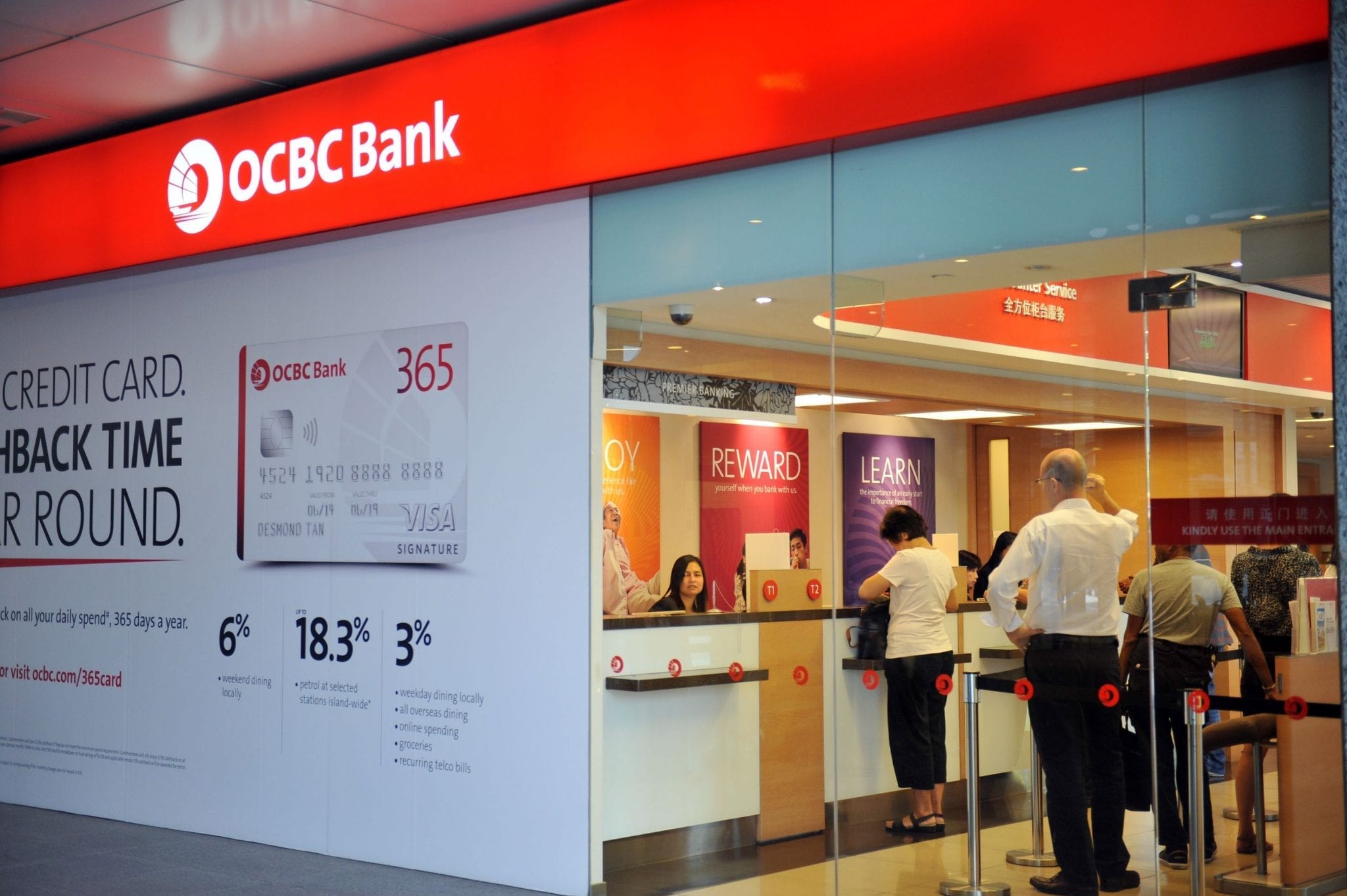
    OCBC Bank has issued an electronic banker’s guarantee (eBG), making it the first lender to tap on Singapore Custom’s Electronic Guarantee Program.

    OCBC Bank became the first bank to leverage Singapore Customs’ electronic Banker’s Guarantee program launched on Monday, issuing an electronic banker’s guarantee (eBG) to Singapore Customs on behalf of vCargo Cloud, an Infocomm Technology solution and service provider that performs customs declaration services for forwarders and shippers.

    It has taken some time for trade finance to be digitalized, but the momentum has picked up over the last few years. Already, close to half of our trade transacting customers who were previously sent in paper trade applications are now doing so via our internet banking portal Velocity@ocbc,» said Melvyn Low, Head, Global Transaction Banking, OCBC Bank in a media statement.

    «And now, with this inaugural eBG, we have seen the end to end digitalization of the Banker’s Guarantee process, which is a milestone for the trade industry’s digital transformation,» added Low. OCBC Bank said its API connectivity with the Networked Trade Platform (NTP) has enabled the bank to electronically transmit details of its customers’ eBG to Singapore Customs.

    As a result, the time taken from an application – which can be done via the bank’s business online banking platform Velocity@ocbc – to delivery of the Banker’s Guarantee to Singapore Customs, has gone from 7 working days to 1 working day. Businesses can benefit from this more efficient process as it mitigates the risk and costs that result from delays and disruptions to their imports into Singapore.

  • Malaysia’s 99 Speedmart starts in Singapore

    Malaysia’s 99 Speedmart starts in Singapore

    Malaysian convenience-store chain 99 Speedmart has opened three mini-market stores in Singapore.

    According to IGD, the 99 Speedmart stores in Singapore follow the same concept as Malaysia’s stores and range in size from 250 to 500sqm. They trade from 10am to 10pm daily.

    Besides normal grocery items, shoppers also can find Malaysian products displayed closer to the back of the stores.

    In Malaysia, 99 Speedmart operates more than 1500 grocery stores.

    “The retailer’s success is driven by low prices, carrying a narrow range of top-selling brands and great store visibility,” explains IGD senior retail analyst Soo-Eng Tan. “A quick look into its flagship store in Singapore suggests that it is pursuing the same strategy there.”

    99 Speedmart in Singapore aims to expand its retail network further this year. The company has acquired sites in commercial areas and light industrial parks.

  • Uniqlo Singapore goes paper shopping bags

    Uniqlo Singapore goes paper shopping bags

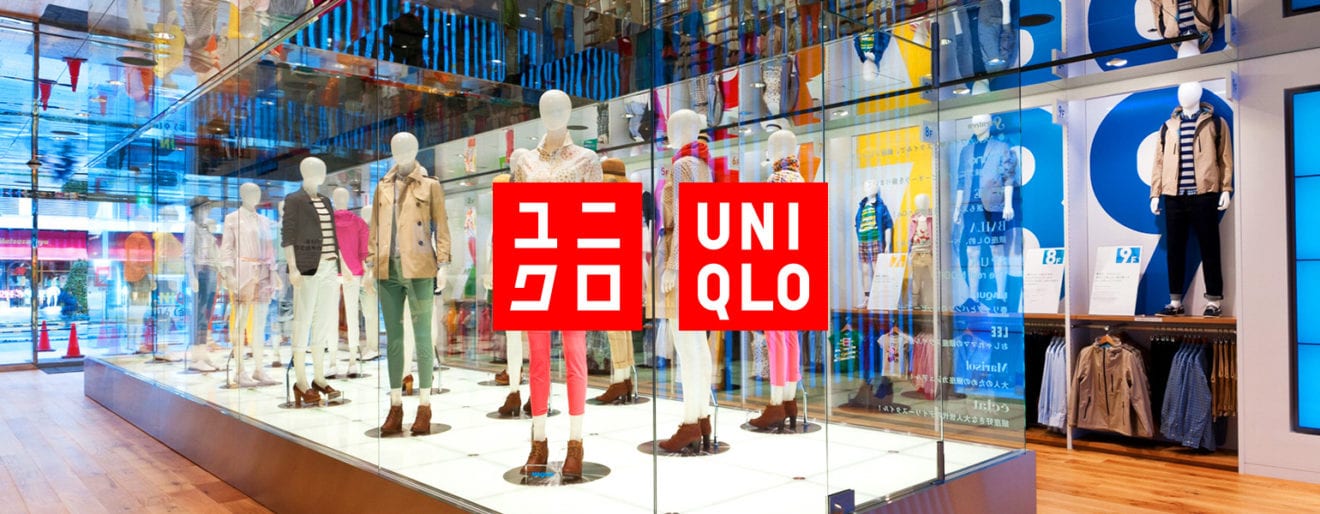
    Uniqlo Singapore is ditching its plastic shopping bags in favor of paper.

    The decision reflects a global move by the brand to become more environmentally friendly and reduce its reliance on single-use plastics. The new bags will retail at 10 cents each, with a more robust eco-friendly tote bag available at SG$2.90.

    Uniqlo’s Japanese parent Fast Retailing Group announced intentions to eliminate unnecessary plastics use throughout its supply chain in July last year. The firm plans to reduce single-use plastic by 85 percent (around 7800 tons annually) by the end of this year.

    Uniqlo is also addressing other factors in its supply chain, including reducing the volume of water used in its jeans washing process by an average of 90 percent as well as introducing new material in its clothing items – Dry-Ex – derived from recycled plastic bottles

  • Changi Airport rents halved in wake of coronavirus outbreak

    Changi Airport rents halved in wake of coronavirus outbreak

    Retailers at Singapore’s Changi Airport will be granted half-cost rents for six months, backdated to February 1 due to the impact on passenger movements resulting from the coronavirus epidemic.

    The Changi Airport rents rebate will cover more than 540 retail, F&B and service tenants at the airport who are facing a sharp drop in sales during the outbreak. Retailer operating hours will also be reduced at the airport, optional for those trading landside.

    The rent reductions are in addition to rebates that automatically apply when airport traffic is down.

    The moves follow a government announcement of a SGD112 million (US$80 million) package for the aviation sector to help protect businesses and jobs at the airport as well as preserve the connectivity of the travel hub. It includes a property tax rebate that the airport is passing on to its shops in full.

    Management is holding ongoing discussions on how to further support retail tenants in addition to the Changi Airport rents cut.

  • Singapore Liang Sandwich Bars close amidst dispute

    Four Singapore Liang Sandwich Bars have closed suddenly, angering the master franchisee for Southeast Asia, Liang Group.

    The company said the closures were unauthorized.

    Liang Group CEO Jarvin Leow said the company had not authorized the stores’ shuttering and that it had taken measures to resolve the situation.

    While the reason for the closures remains unclear, the stores are currently in the midst of a rebranding effort across the region later this year, when the Singapore Liang Sandwich Bars will be renamed “Liang Crispy Roll”. The closures have proved a hindrance to the rebranding efforts.

    Stores in other territories have already gone through the rebranding exercise.

    Leow offered a formal apology to customers for any confusion caused and for the stores having been cast in a bad light.

    The franchise is due to launch in new outlets in several major international cities shortly.

    Described as an “Asian-style sandwich” chain, the first Singapore Liang Sandwich Bar opened at VivoCity mall in July 2018. A second store followed in Raffles City.

    The Taiwanese brand has more than 12,000 outlets worldwide throughout Asia and North America. It is endorsed by a prominent Mandopop rap artist Jay Chou.

  • OCBC Posts Record Net Profits in 2019

    OCBC Posts Record Net Profits in 2019

    OCBC’s posted a record in net profits after broad-based growth across interest and non-interest income growth drove the bottom line 8 percent higher.

    Annual net profits at OCBC reached S$4.87 billion ($3.48 billion) after the bank ended the year on a strong note with a 34 percent increase to fourth-quarter net profits.

    Net interest income climbed 7 percent to reach a new high of S$6.33 billion driven by both asset growth and an increase in net interest margin, mainly in Singapore and Greater China.

    Non-interest income increased 19 percent to S$4.54 billion driven by growth across the board. Net income rose 5 percent to S$2.12 billion led by higher wealth management and credit card fees while net trading income nearly doubled to S$977 million primarily due to increases in client flow income and mark-to-market gains in Great Eastern Holdings’ investment portfolios. Investment securities sales also grew ten-fold to S$171 million.

    In addition to another year of record earnings, according to OCBC group CEO Samuel Tsien, the bank had also met its loan targets and its ESG (environmental, social, governance) ambitions, especially within its green and renewables financing portfolio, are on track to meet its 2022 target.

    OCBC achieved a strong performance in 2019 which marked another consecutive year of record earnings, Tsien said. Looking ahead, the global economic outlook is expected to be weaker than originally expected. We are watchful of the impact to our business and customers from the continuing trade tensions, heightened geopolitical risks and the COVID-19 outbreak, and will extend support to customers to help them overcome the market challenges.

  • Sheng Siong looks for new store sites as sales and profit grows

    Sheng Siong looks for new store sites as sales and profit grows

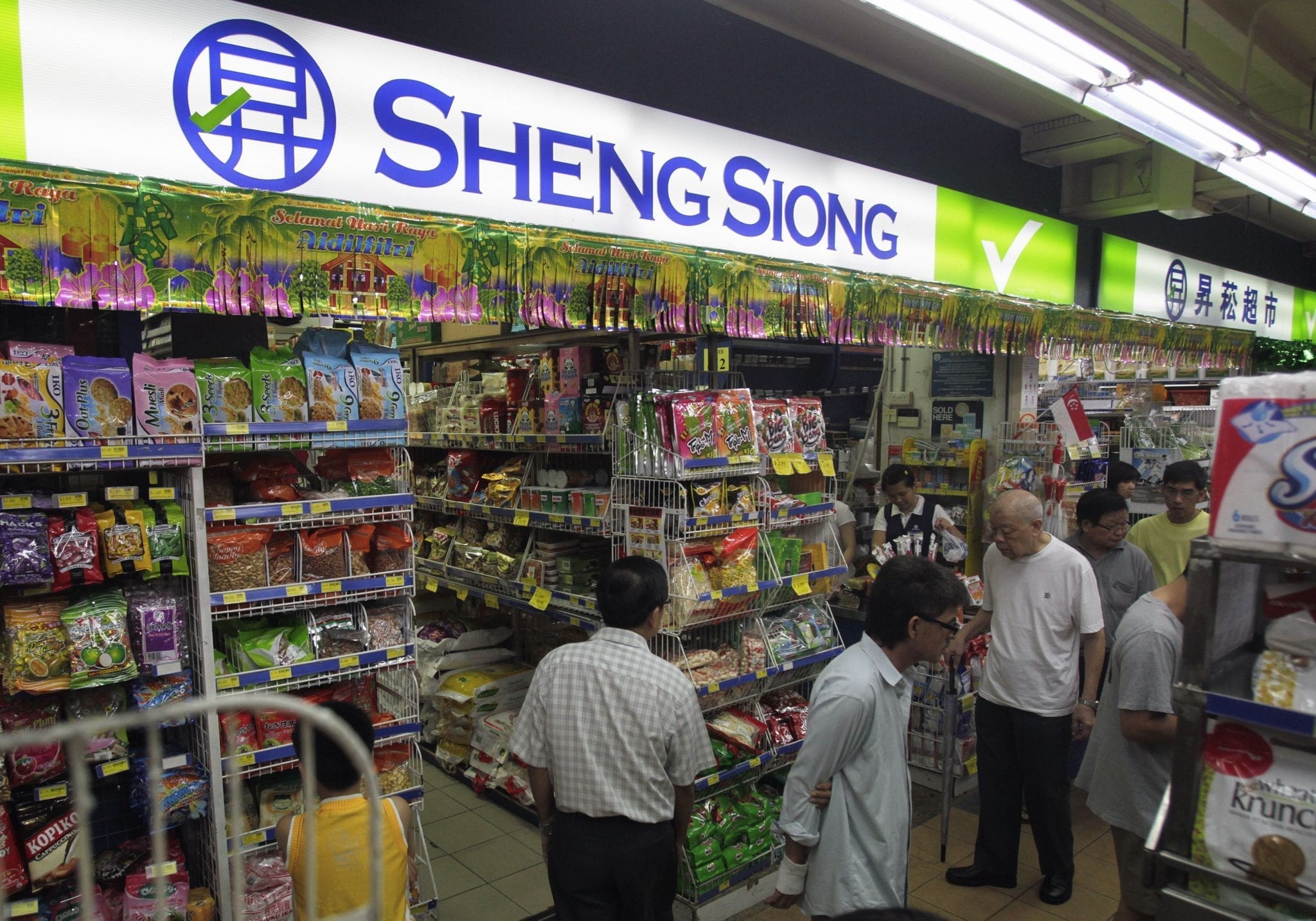
    Singapore supermarket operator Sheng Siong says it plans to open more stores across the city in the wake of a 7.4-per-cent profit increase last year.

    Sheng Siong Group achieved a net profit of S$75.8 million (US$54 million) for the December year on revenue up 11.3 percent to S$991.3 million, largely due to store network growth.

    “Our store expansion plan in Singapore is progressing well,” said CEO Lim Hock Chee.

    Five new stores opened last year and two more already this year adding 56,820sqft of trading area and taking the network to 61.

    “Moving ahead, we will stay focused on looking for new retail spaces especially in areas where our potential customers reside with an aim in mind to expand our retail network in Singapore.”  The company says it will focus on continuing to look for retail space in new and existing Housing Development Board housing estates, particularly in estates where the group currently has no presence.

    “Our key priorities are nurturing the growth of our new stores in Singapore and China while enhancing the gross margin and lowering input cost remain as one of the core areas that we will be working on,” said Lim.

    He added the company would seek to adjust stores’ sales mix adding a higher proportion of fresh produce and deriving more efficiency gains in the supply chain in the year ahead.

    The company remains optimistic about trading this year despite expectations Singapore’s economic growth will slow to less than 1.5 percent – potentially even entering a recession – due to the impact of the coronavirus.

    The company’s results commentary said retail sales, in particular at supermarkets had “not been exciting” last year and could be negatively affected this year.

    “Competition in the supermarket industry is expected to remain keen.”

    This year’s openings were a store on the first floor of Block 118 Aljunied Avenue 2, with an area of approximately 18,000sqft on January 1 and at Block 202 Marsiling Drive (5540sqft) on January 11.

  • Binance Unveils Singapore Crypto License Ambitions

    Binance Unveils Singapore Crypto License Ambitions

    Cryptocurrency exchange giant, Binance, has applied for an operating license in Singapore which continues to lure new players following the recent progressive developments in its regulatory regime.

    Founded in 2017, Binance experienced extremely rapid growth before achieving an estimated market cap of $1.3 billion by early January 2018. The Malta-headquartered exchange now has offices located globally including in Singapore where it is backed by Temasek’s venture capital arm Vertex Venture.

    Whilst initially focused only on crypto-to-crypto trading platforms, which allowed Binance to grow without dealing with banks and regulators, the firm began to focus on the development of formal exchanges in jurisdictions with a relevant regulatory regime like Singapore.

    We have already applied,» said Binance co-founder and CEO Zhao Changpeng. «We submitted the application pretty fast. Binance’s Singapore entity has been in close touch with the local regulators, and they have always been open-minded.

    Last month, Singapore introduced the Payment Services Act which will formally regulate companies engaging in activities ranging from digital payments to the trading of tokens like Bitcoin or Ether. In addition to an expanded regime, the Monetary Authority of Singapore’s supervisory powers were also enlarged to cover cybersecurity risks and controls on money laundering and terrorism financing from such activities.

    Greater clarity for businesses through explicit regulation was expected to be a key driver for new entrants. Other reported applicants thus far include Tokyo-based crypto exchange operator Liquid Group Inc and London-based Luno.