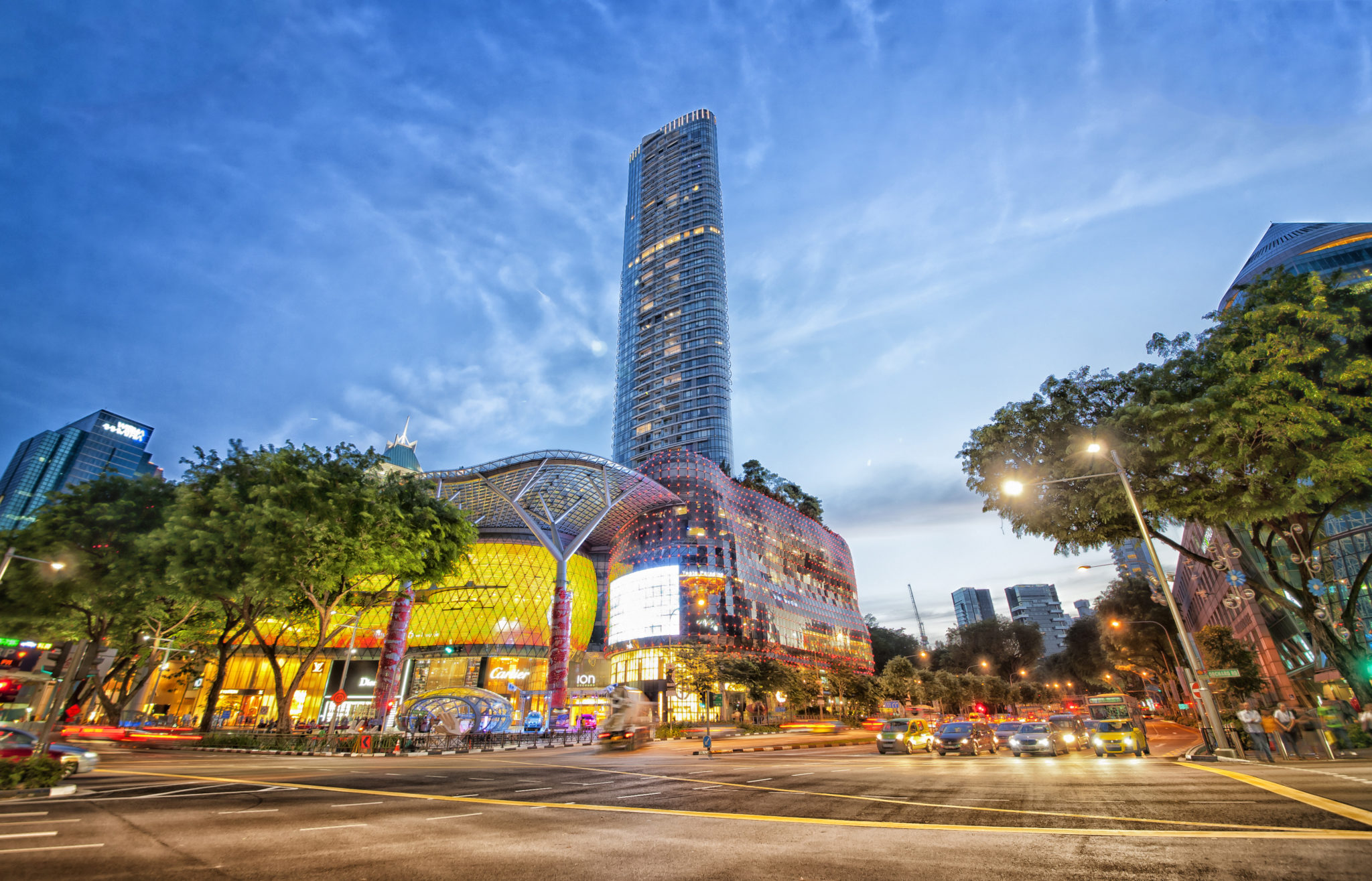
Tag: Singapore

  • DBS and Singapore Airlines form digital partnership

    DBS and Singapore Airlines form digital partnership

    DBS Bank and Singapore Airlines (SIA) have today come together to sign a memorandum of understanding (MOU) to enhance digital capabilities across various digital platforms, to enable a seamless banking and travel customer experience for travellers.

    Under the MOU, the two companies will introduce flight booking and merchandising capabilities on DBS’ platforms, a DBS-SIA Rewards Programme on KrisPay1, and the expansion of payment options for SIA customers using PayNow, via Application Programming Interface (API) technology. The MOU is in line with SIA’s move to enhance digital capabilities company-wide, and DBS’ vision to make payments simple and hassle-free for customers through building integrated digital ecosystems.

    “We are excited to be teaming up with DBS, which has been twice globally recognised as the World’s Best Digital Bank. The partnership will provide great benefits to both our companies, given our shared aim to be a digital leader in our respective industries, with enhanced customer benefits through new flight booking, merchandising and reward programme ties,” said Singapore Airlines Executive Vice President Commercial, Mr Mak Swee Wah.

    As the first bank partner that SIA will connect via API for flight ticket sales and KrisShop, DBS customers can now look forward to booking their holidays on the soon-to-be-launched DBS Travel Marketplace which will allow one to purchase flights, book hotels and buy travel insurance on a single integrated platform.

    “We are thrilled to partner Singapore Airlines, winner of multiple best airline awards, to create an inclusive digital travel ecosystem for our customers,” said Mr Shee Tse Koon, DBS Singapore Country Manager. “Singaporeans are among the most well-travelled in the world with over 10.3 million overseas trips made in 2018 alone. Through this partnership, we would be able to elevate the consumer travel experience by offering extensive travel and retail options for travellers to choose from and customise their journeys right at the start.”

    Facilitated by API technology, the collaboration is also expected to cover the following areas:

    DBS-SIA Rewards Programme, where KrisFlyer members can instantly convert DBS points into KrisPay miles via the KrisPay app. Miles can subsequently be used for retail purchases at KrisPay partners island-wide. Alternatively, the KrisPay miles can be converted into KrisFlyer miles instantly within seven days of accrual. DBS is SIA’s first conversion partner on KrisPay.

    By including PayNow as a payment mode, SIA can offer its passengers the flexibility and convenience to pay for their flights from their bank accounts using PayNow, and issue tickets instantly once the payment is done. This is made possible by DBS IDEAL RAPID, an enhanced solution that offers Instant Credit Confirmation, as well as consolidated daily credit and reporting. The comprehensive solution also includes other value-added options like automated refunds; for instance, if a trip is cancelled or changed, SIA can refund the outstanding amount back to the passenger’s bank account.

    The initiatives will be gradually rolled out this year, beginning with the DBS Travel Marketplace, with the full suite of updates to be made available by end of 2019.


  • New Head of Swiss Business Hub in Singapore

    New Head of Swiss Business Hub in Singapore

    The Swiss Embassy in Singapore appointed a new Head of the Swiss Business Hub for the ASEAN region.

    Renee Koh joined the Swiss Embassy already in November 2018 as the new Head of the Swiss Business Hub for the ASEAN region, according to a news release on Thursday.

    The Swiss Business Hub ASEAN is part of the Embassy of Switzerland in Singapore with antenna offices in the Embassies of Switzerland in Malaysia (Kuala Lumpur), Vietnam (Hanoi) and at the Consulate General of Switzerland in Ho Chi Minh City.

    The Swiss Business Hub facilitates commercial relations between Switzerland and ASEAN. Its activities are supported by Switzerland Global Enterprise (S-GE), which has been officially commissioned by the Swiss government to promote exports and investments.

  • Is Asia the Art Market’s New Frontier?

    Is Asia the Art Market’s New Frontier?

    Despite pre-opening jitters over the state of the Chinese economy, Art Basel Hong Kong has already reported brisk sales at its seventh edition, which opened to the public today.

    With the region’s growing wealth and appetite for art, art fairs like Art Basel Hong Kong, which opened to the public today, are big business, drawing collectors from China and across Asia, as well as farther afield. Of the 80,000 visitors expected at the Hong Kong Convention and Exhibition Centre, 40,000 are coming from abroad, Art Basel said.

    The Art Market, a report jointly published by Art Basel and UBS earlier in March noted that art fairs are highly important in Asia, with between 92–97 percent of HNWI collectors from Hong Kong and Singapore having purchased from an art fair in the past.

    It’s not just China—it’s Singapore, it’s Malaysia, it’s Taipei. It’s not one market, Artnet quoted New York-based dealer Sean Kelly as saying about the fair, which has 242 galleries from 35 countries participating through the weekend.

    Increasingly, the market’s center of gravity does feel as if it is being pulled eastward,» Artnet reported from the exhibition floor, while Artnews reported «high energy» at the fair and quoted a dealer as saying, The quality of this fair is now on par with the great European fairs. It is highly sophisticated.

    Swift Sales

    The Art Newspaper also reported swift sales among the 107 galleries – 75 percent of which are Asian – at the Art Central fair concurrently taking place just around the corner from Art Basel. Here at we’re meeting a lot of Australian and Chinese collectors. Hong Kong is a very good market, a dealer exhibiting from the Philippines was quoted as saying.

    Art Basel reported that sales already concluded include a significant work by Andy Warhol at White Cube for $2.85 million, a work by Alice Neel for $1.7 million at David Zwirner, and a painting by George Condo at Almine Rech Gallery for between $1.2 million to $1.4 million. David Zwirner sold its entire booth, including four new sculptures by Carol Bove for $400,000 to $500,000 each, on Wednesday, the first VIP day.

    China Dominates

    We previously reported that the global art market grew by 6 percent in 2018, reaching total sales of $67.4 billion – its second-highest level in 10 years.

    Asia’s has recorded a growing share of world imports of art and antiques in the past decade, which mirrors the growing regional wealth. In particular, sales in China reached $12.9 billion in 2018. China accounted for 45 percent of all art imports into Asia (compared to 17 percent in 2000), with 95 percent of these imports going into Hong Kong, according to «The Art Market» report.

  • Singapore Fintech Launches Platform for Personal Loans

    Singapore Fintech Launches Platform for Personal Loans

    The new digital platform, which offers lower lending rates and encourages prompt debt repayment, could compete with banks’ personal loan facilities. Singapore fintech company Credit Culture has announced the launch of its moneylending platform, making it the first licensee from a pilot by the Ministry of Law for new business models in the personal loans industry, to do so.

    Promising transparent loan terms with no late interest and no early repayment fees, Credit Culture says its platform allows 24/7 access to personal loans with monthly interest capped at 1 percent, disbursed within only 10 minutes.

    We have seen how inefficiencies have affected the industry for years and the move to use technology to improve the system is long overdue. This is a win-win situation whereby improving the ecosystem, customers will be able to gain better access and management of their finances, said Edmund Sim, founder and CEO of Credit Culture.

    New Models for Loans

    Credit Culture’s credit scoring and application process is simpler, cheaper and more transparent than the manual processes offered by traditional banks. Its platform is built on the Amazon Web Services (AWS) cloud and taps on MyInfo, the central data repository of Singapore citizens’ information to populate loan applications.

    A proprietary credit-scoring engine then uses this data to assess the creditworthiness of a customer instantly. Apart from lower backend costs, the AWS approach is also scalable depending on customer demand, allowing the firm to grow quickly and roll out in new markets with ease.

    The rates charged by Credit Culture are significantly lower than those charged by banks on overdue credit card payments, which average 24 percent per annum, or more than 2 percent per month. However, the effective interest rate could turn out higher than personal loan rates offered by some banks.

    Ministry of Law Pilot

    Credit Culture was founded by a group of banking industry veterans with knowledge of the consumer credit and technology space. In December 2018, the firm was among six selected by the Ministry of Law as part of a pilot to professionalize the personal loans space in Singapore.

  • Singaporean firm’s taxi joint venture in Vietnam suffers losses

    Singaporean firm’s taxi joint venture in Vietnam suffers losses

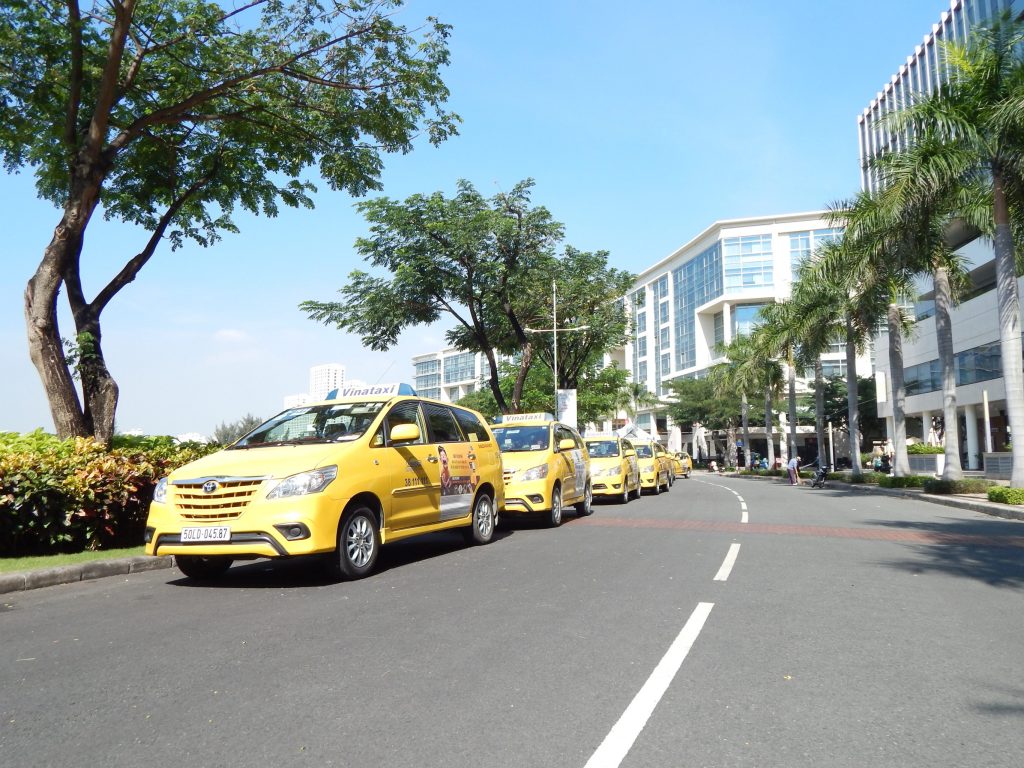
    ComfortDelgro Savico Taxi, a joint venture between a Singaporean transport corporation and Vietnamese motor vehicle dealer, lost $103,000 last year. This figure is mentioned in the latest financial statement published this month by local retail, motor vehicle and parts dealer Savico, the Vietnamese joint venture partner. ComfortDelgro Savico Taxi has been in constant trouble in the last few years. After nearly ten years of operation, the joint venture had to restructure and upgrade its fleet to maintain an exploitation rate of 90 percent, which meant heavy investments.

    However, just when it was becoming profitable enough to offset cumulative losses of the previous years, the joint venture met fierce competition from ride-hailing start-ups Grab and Uber.

    Savico decided to close the taxi firm’s operations last March to preserve its capital. At closure time it had 352 cars but only 140 drivers.

    Following the joint venture’s closure, ComfortDelGro’s revenue in Vietnam fell to $3.3 million in 2018 compared to $6.8 million the previous year, down by more than half.

    ComfortDelGro’s Vietnam earnings now account for less than 1 percent of its total revenue. The firm also has business in Singapore, the U.K., Australia, China and Malaysia.

    According to financial statements, ComforDelGro’s non-current asset value in Vietnam has also fallen from $12.8 million in January 2017 to only $4.8 million in 2018.

    Although the Singaporean transport firm’s management did not give a reason for the fall, experts have not ruled out the possibility that it has already liquidated all its long-term assets in the joint venture and is waiting to complete dissolution procedures.

    ComfortDelgro Savico Taxi, formerly known as Tourism Taxi Savico Enterprise, was established in March 2005 as a joint venture between Savico (40 percent) and ComfortDelGro (60 percent) – a leading public passenger transport operator in Singapore.

    ComfortDelGro still owns a 70 percent stake in another local taxi firm called VinaTaxi, which takes up the third largest market share in the HCMC taxi market.

    However, last November, its Vietnamese partner, the Transport and Industry Development Investment Corporation (Tracodi), withdrew its 30 percent stake from the joint venture, citing poor business performance.

  • Home-and-living brand Jiyoujia debuts in Singapore

    Home-and-living brand Jiyoujia debuts in Singapore

    Alibaba’s e-commerce platform Taobao has launched its home-and-living channel, Jiyoujia in Singapore.

    Marking the brand’s first foray into an overseas market, products are on show at Taobao Home store at NomadX store.

    “Singapore is an important market for Taobao, and we continue to witness strong and sustained demand for the home-and-living category here by shoppers,” said Mickey Xiong, country director for Southeast Asia, at Taobao.

    “In fact, the home-and-living category is our fastest-growing segment here.”

    Jiyoujia also launched its Home Lab portal, one week after its debut in China. Using the portal, curated sets of Jiyoujia products are recommended to customers, promoted through interactive digital showcases. Surfers can hover over each item for more information.

  • Chili’s Singapore closing Down

    Chili’s Singapore closing Down

    American grill & bar Chili’s Singapore has quietly closed all three remaining outlets in the city.

    ““As of 24th March, we have closed all of our restaurants in Singapore. It’s been a wonderful 10 years serving our loyal community. Thank you for all the great moments and memories we shared,” the company posted on Facebook.

    A fan responded: “We are thankful for the past 10 years that they have been with us and for all the burgers, steak and fajitas they’ve served us.”

    Chili’s opened its first branch in Singapore in Tanglin Mall in June 2009. The other three outlets were at Resorts World Sentosa, Clarke Quay Central and JCube.

    The restaurants served Southwest American cuisine with Mexican flavours, craft burgers and baby back ribs, alongside fajitas and enchiladas.

    Established in Dallas in 1975, Chili’s had expanded to 32 countries worldwide.

  • Dominic Barton joins Singtel board

    Dominic Barton joins Singtel board

    Singtel has appointed Dominic Barton (pictured) as an independent director with immediate effect, the Singaporean telco announced Monday.

    Barton is currently global managing partner emeritus of McKinsey & Company. Prior to that he was global managing partner of McKinsey until July 2018, a role he held for nine years. He has also served as chair of the board of Canadian mining company Teck Resources since October, 2018.

    “Dominic brings rich expertise and insights from across a broad swathe of industries, having advised clients in banking, consumer goods, tech and industrials over three decades of consulting,” said Singtel chairman Simon Israel said. “The diversity of his experience will be invaluable as Singtel’s digital transformation takes the group into businesses and partnerships that cut across multiple industries.”

    The Singtel Board now comprises 12 directors: Simon Israel (chairman), Chua Sock Koong (Group CEO), Gautam Banerjee, Dominic Barton, Bobby Chin Yoke Choong, Venky Ganesan, Bradley Horowitz, Gail Kelly, Low Check Kian, Peter Mason, Christina Ong, and Teo Swee Lian.

    HKBN names Elinor Shiu marketing chief for residential services

    Elinor Shiu, CMO, Residential Services, HKBN Group

    HKBN Group has named Elinor Shiu (pictured) as chief marketing officer, residential services.

    In her new role, Shiu will lead the marketing strategies and operations of the group’s residential market business. She has also joined the group’s management committee, overseeing HKBN’s continued growth with six other senior executives, according to a company announcement.

    Shui has extensive experience in marketing management and business operations. She has held several senior positions across the group’s residential and enterprise solutions business before becoming head of marketing in 2018.

  • Digital Realty breaks ground on third Singapore data center

    Digital Realty breaks ground on third Singapore data center

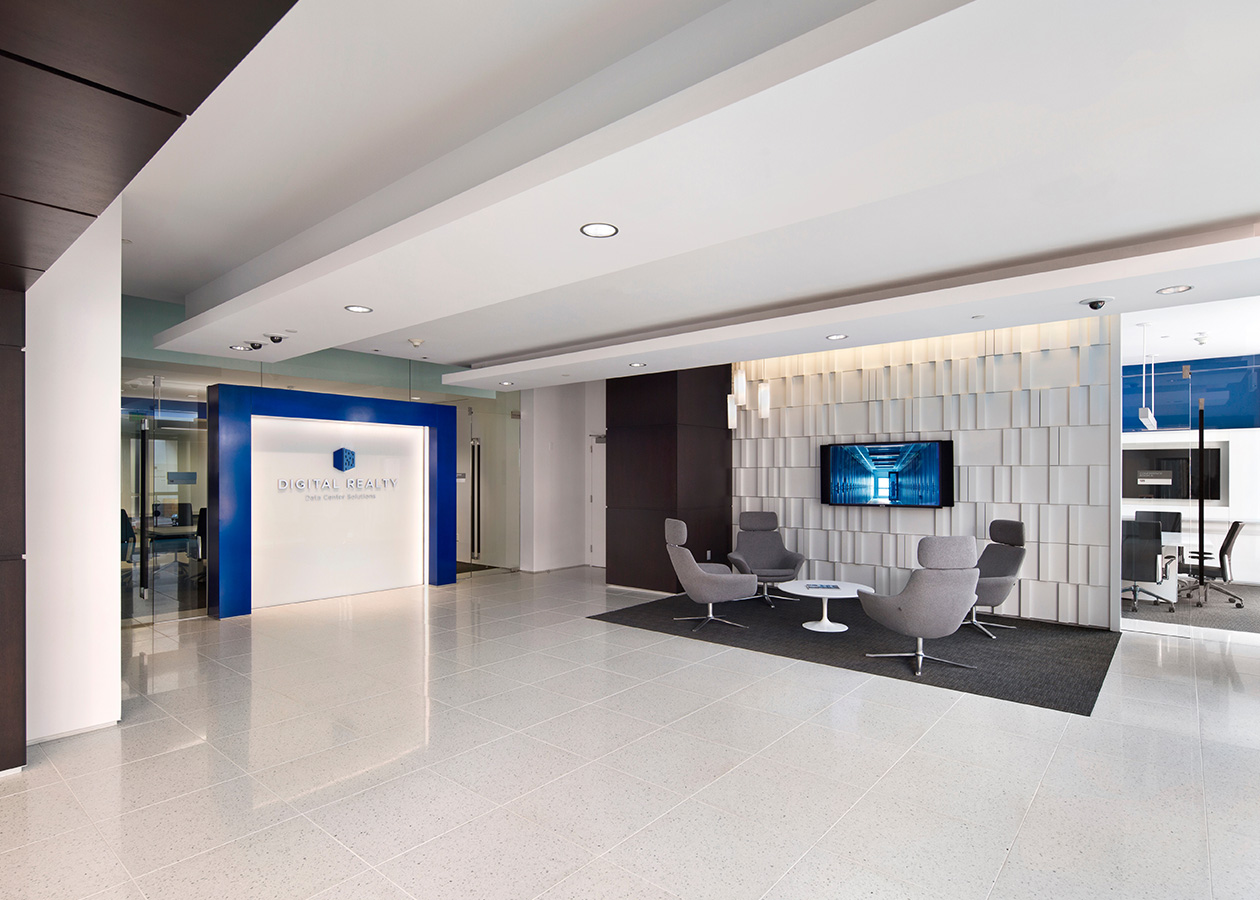
    Data center, colocation and interconnection provider Digital Realty has commenced construction of its third data center facility in Singapore.

    The 12,800 square meter plot of land will be the foundation of Digital Loyang II (SIN12), an expansion and further development of a Digital Loyang Connected Campus.

    SIN12 will be located less than 25km from Singapore’s CBD and will capable of supporting up to 50 megawatts (MW) of IT capacity. The new facility will span a gross floor area of 34,000 square meters.

    The facility is expected to be operationally ready in the second quarter of 2020.

    Digital Realty has so far invested a total of $500 million developing its first two facilities in Singapore.

    “The development of SIN12 reaffirms Digital Realty’s commitment to supporting Singapore’s digitalization efforts and smart nation initiative,” Digital Realty CEO A. William Stein said.

    “As more global technology brands increasingly look to expand their digital footprint, Singapore remains their preferred destination. With the addition of SIN12 to our connected campus, customers will soon be given new ways to connect, extend their reach and find new business opportunities through our global data center platform.”

    SIN12 will also be incorporating sustainability features into the construction of the facility that aims to lower power usage effectiveness (PUE) to between 1.2 to 1.3, making it the best PUE in a commercial data center in Singapore.

    “Sustainability will also play a big role in the development of SIN12. Our vision is to build the greenest commercial data center within the region,” added Stein.

  • DiSa unveils integrated mobile warranty program

    DiSa unveils integrated mobile warranty program

    Singapore-based digital security company DiSa Limited aims to pioneer a new integrated mobile phone warranty program, and has signed up M1 as the first operator to offer the program to its mobile users.

    The new insurance offering, developed to tackle the rising global trend of e-wallet theft, will allow victims of theft of their e-wallets to make a claim for an amount up to the retail cot of the phone.

    Every phone covered under the warranty program will be tagged with DiSa’s encrypted 3S smart barcode, which is designed to prevent invalid returns.

    “DiSa is delighted to provide this unique Cyber Theft Warranty to M1 customers. With the proliferation of mobile payments, more and more phone users are finding themselves exposed to cybercrimes, some at very sophisticated levels,” DiSa group executive Eddie Chng said.

    He noted that the proliferation of e-wallets, the rising tide of mobile fraud and the  growing use of smartphones for two-factor identification exposers smartphone owners to significant risks if their device is stolen.

    “DiSa is confident that our solution will give peace of mind to smartphone users and add value to M1’s services.”

    Worldpay estimates that payment by e-wallets makes up 10% of e-commerce spending in Singapore.

    But research from the Cyber Security Agency of Singapore found that a wide majority of consumers are concerned about the risk of having their financial and personal information exposed through malware infected mobile devices.

  • Singapore, Australia to collaborate on FinTech development

    Singapore, Australia to collaborate on FinTech development

    Singapore FinTech Association (SFA) and FinTech Australia (FA) have agreed to further strengthen opportunities for FinTech firms across both countries.

    An MoU between the two parties aims to contribute to the development of the FinTech industry in general across ASEAN and Australia. They will collaborate from time to time on particular initiatives relating to the FinTech industry.

    The two bodies have also arranged to seek input and opinions from each other, in respect of matters relating to the FinTech industry and invite each other to participate in relevant events and support each other in interfacing regulators and other bodies.

    According to the EY FinTech Australia Census 2018, Singapore is among the top four markets that Australian FinTechs are looking to expand into.

    “Australia and Singapore have long enjoyed a strong and vibrant relationship, it is now timely to extend that cooperative relationship to the FinTech industry.”

    “The shared capabilities and high levels of collaboration between Melbourne and Singapore will pave the way for continued two-way knowledge sharing and long term success for FinTech businesses in both markets,” SFA president Chia Hock Lai said.

    FA general manager Rebecca Schot-Guppy added that, “FA is proud to be building the network for our members by signing an MoU with the SFA. Singapore is seen by Australian FinTechs as a top four region for expansion and by signing this agreement we hope it fosters opportunities for our members. We look forward to working with the SFA.”

  • 3 seconds for mobile video to loadon Singapore’s 4G networks

    3 seconds for mobile video to loadon Singapore’s 4G networks

    In Opensignal’s recent State of Mobile Video report, we lauded Singapore’s high achievements in Video Experience. It was one of a handful of countries that earned a Very Good score on our 100-point Video Experience scale, and individually, all three of Singapore’s major operators met the same high standard in our operator breakdown of video quality. But what’s behind that “Very Good” score? We thought this would be a good opportunity to examine the particulars of operators’ high ratings in Singapore over LTE networks, which account for the vast majority of our video tests in the country. We focused on two major components of our Video Experience calculation: 4G Video Loading Time and 4G Video Stalling Occurrence.

    Our first metric, 4G Video Loading Time, is fairly self-explanatory. It’s the average period of time mobile users have to wait for a streamed video to begin playing over an LTE connection. Singapore consumers, quite frankly, don’t spend much time staring at loading icons as you can see in our first chart. The longest Video Load Time in our measurements was on Starhub’s networks, and that wait was only 2.7 seconds. Singtel and M1 were statistically tied at 2.4 seconds, making them incrementally faster in Video Load Time than StarHub, but the differences between the three were practically negligible.

    Our next metric 4G Video Stalling Occurrence measures the proportion of users that experience an interruption in playback after a video begins streaming. If a video halts to buffer or stutters due to a weak connection, then those moments when pictures aren’t moving are all factored into our Video Stalling Occurrence metric.

    While 10% 4G Video Stalling Occurrence isn’t uncommon even in countries with advanced 4G infrastructures, Singapore’s operators came in well under that mark. Starhub had the highest rate of stalling at 4.3% in our analysis, followed by Singtel at 2.9%, but the real star of the show was M1. Its 4G Video Stalling Occurrence score was just 1.6%, meaning interruptions in video playback were rare among our users.

    No single factor explains why mobile video quality is so good in Singapore. It’s true that Singapore is one of the fastest countries in the world when it comes to download, but while speed does have some impact on Video Experience, faster isn’t always better when it comes to video quality. Countries with higher download speed averages than Singapore actually often do much worse in Video Experience, according to our analysis. Latency has a bearing on Video Loading time, as the faster a video request traverses the network the sooner that content begins buffering and playback starts. And our analysis has shown Singapore’s operators are among the best in the world in maintaining nimble, low-latency networks.

    Finally, consistency of connection speed plays a major role in Video Experience. Last month, Opensignal published a report titled The 5G Opportunity, which highlighted the wild swings in 4G Download Speed over the course of a day we see on networks around the world.

    Video is particularly sensitive to fluctuations in speed. A video that plays without difficulty one moment may find itself suddenly starved for bandwidth in the next if download speeds suddenly drop due to congestion or other factors. In Singapore we found the same speed fluctuations as in other countries, but the difference was Singapore’s operators were able to maintain strong connections despite those fluctuations. According to our analysis, average 4G Download Speeds in Singapore never dropped below 41.4 Mbps no matter the hour of day. And a consistent 40 Mbps connection is more than enough to support all but the most demanding HD video streams.

    Singapore is preparing for the entrance of TPG, a fourth operator that aims to shake up competition in the Singapore mobile scene. While TPG will likely try to challenge Singapore’s three incumbents in pricing, it will be interesting to see if TPG can also be competitive from a mobile network experience perspective. The three incumbents have already set a very high bar in Video Experience as well as speed, availability and latency. It will be difficult for a network to match those standards right out of the gate.

  • Patisserie Janice Wong opens in Changi, Singapore

    Patisserie Janice Wong opens in Changi, Singapore

    Singaporean pastry chef Janice Wong has opened her first airport store, at Changi Terminal 3.

    Janice Wong concession at T3 1

    Janice Wong concession at T3 5

    The concession allows international travellers to purchase a selection of Janice Wong’s signature products alongside special-edition chocolate bars, available in three artisanal flavours, ruby chocolate, sea salt and palm sugar.

    Janice Wong concession at T3 3

    Janice Wong concession at T3 2

    Other products include Janice Wong’s chocolate crayon box set, chocolate paint jar set, signature tea, chocolate boxes, bon bons, single-origin chocolate bars, cookies and lollipops.

  • SP Telecom offers direct connection to Google Cloud

    SP Telecom offers direct connection to Google Cloud

    SP Telecom, a joint venture between ST Engineering and Singapore Power group, has become the first network service provider in Singapore to announce support for Google Cloud Partner Interconnect.

    With the agreement SP Telecom, a fiber network provider which builds its network using the passive infrastructure of Singapore’s national power grid, will allow customers to connect to Google Cloud Platform globally.

    The connectivity will be enabled by SP Telecom’s Cloud Interconnection Service to enable direct connectivity to Google Cloud, while taking advantage of SP Telecom’s network infrastructure.

    SP Telecom will provide direct connectivity from customers’ facility to Google Cloud’s points of presence at the Equinix SG3 or Global Switch Singapore data centers.

    SP Telecom VP of product management and business line IT Tan Choon Chai said SP Telecom’s network infrastructure being built on diverse paths that run along the Singapore power grid provides  a reduced risk of network interruption from a power outage or active equipment failure.

    “Today’s rapidly digitizing environment has called for businesses to turn to cloud platforms to support their business needs. SP Telecom is pleased to partner with Google Cloud to bring more flexible and convenient connectivity options to help enhance business operations,” he said.

    “Coupled with our in-built network diversity capabilities, customers can be assured of a network infrastructure which provides resilient network connectivity capable of withstanding risks of network interruption.”

  • Octopus inks partnership with JD.com providing retail innovations

    Octopus inks partnership with JD.com providing retail innovations

    Octopus Retail Management (Octopus), a Singapore-based company and a pioneer in offering a holistic suite of retail management solutions, today announced that it has partnered with JD.com for its cutting-edge Point of Sales (POS) suite of solutions which has benefitted a variety of businesses spanning the retail, F&B and ecommerce sectors.

    With Octopus’ partnership with China’s largest retailer, JD.com, Octopus will be the first B2B software provider for the retail industry and will have access to more than 300 million active customers that shop on JD.com. This strategic alliance is in light of Octopus’ vision to digitally transform the retail industry.

    Octopus is a Cloud-Based Retail Management Company that offers a comprehensive Point of Sale solution to brick and mortar SMEs. With a presence across 7 countries — Singapore, Malaysia, Philippines, China, Sri Lanka, Indonesia and the USA, Octopus generates around $2 billion of GMV on their platform from over 20,000 retail points across 3000 customers.

    Ong Whee Shiong, Founder and Managing Director, Octopus said, “The digital age has thrown several challenges at businesses today. It has become critical for retailers to have an efficient retail management system to enhance their business productivity. Our products aim to empower the retailers to embrace digitalisation and streamline their online business.”

    The company’s cloud-based retail management solution helps firms to leverage social media interactions to curate personalised offerings based on consumer’s shopping and dining behaviours. The solutions can also synchronise inventory, support customer promotions, and offer loyalty points to add more value propositions to their customers. The solutions also allow its customers to onboard a mobile platform through its cloud offering. This enables real-time visibility over the network to monitor sales, the performance of staff, and inventory which leads to efficiency and better decision-making.

    According to an article citing joint research by Google and Temasek in 2017, more than half of Southeast Asia’s population is a millennial and of that, 70 per cent are under the age of 40. The retail space per capita remains low, indicating limited access to offline stores and products. Whilst the report shows that consumers in the region show the interest and willingness to shop online, there have been emerging trends focussing on omnichannel and online-to-offline solutions.

    “We believe online and offline need to go hand in hand today. Through our integrated solutions, our clients are able to offer their customers enhanced seamless shopping experience and create more value,” he added.