Tag: smart

  • Connected consumers driving growth of smart devices in Asia Pacific

    Connected consumers driving growth of smart devices in Asia Pacific

    Action cameras, flat panel TVs and wearables were the fastest-growing technology products in the past year.

    The consumer technology market in Asia Pacific (APAC) has grown tremendously over the past year, with the introduction of new technologies and advancements of existing technologies.

    One innovative product that is gaining popularity in the market is the action camera. More brands (from 2 brands in 2015 to 13 brands in 2016) that offer 360-degree features have entered the market. In the last 12 months, emerging markets in APAC have been the key growth driver for such action cameras, registering 57% and 33% increase in sales volume and value respectively, while the region’s developed markets experienced a corresponding 9% and 40% growth last year.

    Action cameras with 4K features are also selling well with sales accounting for 47% and 52% growth in volume and value respectively in APAC. Meanwhile, emerging markets in the region contributed up to 46% share of the pie in both volume and value terms.

    “Nowadays, consumers are increasingly sharing videos, contributing to the rising popularity of action cameras,” said Gerard Tan, Senior Director, Technology at GfK Asia. “Besides one of its key draw factors of being able to connect seamlessly to today’s smartphones, action cameras also tend to appeal to active consumers who are seeking new and interesting ways to record their lifestyle activities to view or share in full HD quality.”

    Another product which has jumped onto the 4K bandwagon is TVs. In the past year, 4K TVs, also known as Ultra High Definition (UHD), have been gaining traction as sales growth hit over 103% in units across APAC in the past 12 months, with the market upgrading the display resolutions from Full High Definition (FHD) to UHD. Demand is expected to continue to rise at a rate of 42% in 2017, with emerging economies projected to register higher growth (55%) due to the erosion of UHD prices.

    “There is a rising uptake of 4K TVs as discerning consumers are increasingly choosing UHD TV technology due to its sleek design and better image quality,” observed Tan. “The popularity of UHD will subsequently create more opportunities for content studios to produce better image content, especially when more recording devices are beginning to support 4K recording, enabling more UHD content to be made readily available for consumers.”

    Since the advent of the Smart TV in 2011, there have been ample opportunities for companies to develop TV software for its platforms. In the last 12 months, sales of Smart TVs in APAC continued to increase by 40% to reach over 5 million units.

    One of the latest technologies available in the TV market is OLED TV—a TV display technology based on the characteristics of organic light-emitting diodes. According to GfK findings, OLED TV has been registering significant growth since its launch in APAC in 2014, growing in demand from 7,000 units in 2014 to 98,000 units in 2016. As more brands continue to come into the equation, the OLED TV market is projected to expand further by more than 63% in 2017, with huge growth anticipated from the developed markets in APAC.

    Meanwhile, core wearables, comprising smart watches, and, health and fitness trackers, is yet another thriving category within the consumer electronics. Total sales units in the last year reached 3.3 million across developed APAC markets as consumer spending on the product category grew 9% year on year.
    “Heart Rate Sensor and GPS are generally the key features that appeal to consumers looking to purchase a wearable device, and this is reflected in the significant increase in devices that provide these features. The sales of wearables with heart rate sensors rose by 28% within a year, while devices with inbuilt GPS almost doubled (98%) during the same time period,” said Tan.

    With consumers embracing the digital lifestyle and using smart devices, the overall consumer technology market in APAC is expected to perform positively this year, with TVs, action cameras and wearables likely to experience further growth.

  • Singtel, AXA launch safe driving smart car service

    Singtel, AXA launch safe driving smart car service

    Singtel has collaborated with AXA Insurance to launch a joint smart car solution aimed at promoting better and safer driving habits.

    The joint solution comprises a Modus smart car device synchronized with a cloud-based smart car application over Singtel’s mobile networks. It analyzes driving patterns through a vehicle’s On-Board Diagnostic (OBD) port.

    Features include driver analysis covering areas such as breaking, acceleration and speed, real-time location monitoring to make it easier for users to find their car and trip history, and provide driving scores based on analysis of this data.

    The solution can also monitor engine health information and provide scheduled maintenance reminders, and provide alerts for speed and mileage limits and geo-fence boundaries.

    To promote the new solution, Singtel and AXA are offering a year worth of free AXA car insurance to the safest driver in Singapore using the solution. Drivers will need to travel at least 3,000km during the contest period.

    “The smart car solution is yet another innovative service that we are bringing to our customers, following the successful launch of Singtel SmartHome,” Singtel CEO consumer Singapore Yuen Kuan Moon said.

    “Now, our customers can enjoy an integrated connected lifestyle both in and out of the home. The solution will allow car lovers to track their driving habits and empower them to have a smarter drive.”

  • Smart’s 2016 revenue grows 26% on mobile data growth

    Smart’s 2016 revenue grows 26% on mobile data growth

    The Philippines’ Smart Communications has reported a 26% increase in revenues for 2016 to 25.5 billion pesos ($509 million), in a result attributed to sustained growth in the company’s mobile data business.

    Smart, the wireless subsidiary of incumbent operator PLDT, said mobile data revenues for the year grew a strong 42% to 17 billion pesos.

    During the year, data revenues edged out voice calls and text messages as the operator’s largest wireless revenue source for the first time. Total usage reached 148,000 terabytes, up 49% from 2015.

    “The shift to data and digital services continues to gain momentum. With access to PLDT’s extensive fixed line network, Smart is rolling out the country’s fastest mobile internet network to address the growing demand of our subscribers for data services at home, their schools and offices and while on the go,” PLDT chief revenue officer Eric R. Alberto said.

    To help meet the steep rise in demand for mobile data, Smart has accelerated its rollout of LTE and 3G data networks and is incorporating the use of low-brand frequencies such as 700-MHz. The upgrade has now been completed in Metro Davao and is now underway in Metro Manila and Metro Cebu.

    Smart is also adopting LTE-A technology in selected areas, and recently entered a 5G partnership  with Huawei aimed at preparing its network for an evolution to the standard.

  • PLDT, Smart seal 5G partnership with Huawei

    PLDT, Smart seal 5G partnership with Huawei

    PLDT, together with its mobile arm Smart Communications, has signed a MoU with Huawei Technologies to jointly conduct research and development into 5G mobile technology.

    The goal of the partnership is to commercially launch 5G networks in in the Philippines by 2020, PLDT said in a statement released this week.

    Under the MoU, PLDT and Smart will work with Huawei to shape the strategic and commercial development of a 5G ecosystem in the country.

    The companies will identify and develop areas of technical innovation to deliver 5G. Plans include setting up a 5G innovation lab and the creation of a showcase network.

    Late last year, Smart and Huawei combined five frequencies through Carrier Aggregation (CA) to achieve data speeds of 1.4 Gbps. Smart also used CA in April 2016 to roll out a LTE-A service. Initially deployed in Boracay and soon in major urban areas such as Metro Davao, Metro Cebu, and Metro Manila, Smart’s LTE-A service delivers peak speeds of more than 100 Mbps to users with LTE-A capable devices.

    “Smart is focused on LTE, as it provides us the best platform to bring high-speed mobile internet throughout the country. LTE facilities, with strengthened transport links, can be quickly upgraded to LTE-Advanced (LTE-A), and will be an integral part of our future 5G network,” said Joachim Horn, chief technology and information advisor for PLDT and Smart.

    At present Smart is in the middle of a multi-year, multi-million dollar nationwide network expansion program to improve both coverage and quality of its 4G LTE service. A major leg of this network expansion was recently completed in Metro Davao, where Smart users are already reporting much improved mobile data experience, the operator said.

    The rollout is currently underway in Metro Manila and in Metro Cebu, and is expected to significantly boost Smart’s voice, SMS, and mobile data services – especially its indoor LTE coverage – in these urban centers. An upgrade of PLDT’s fixed access networks, part of the company’s transformation toward 5G-readiness, is also underway.

    “We are focused on ensuring that our current investments in network facilities will enable us to be ready with the necessary infrastructure foundation for 5G when it arrives sometime in 2020,” Horn noted.

  • Here come ‘smart stores’ with robots

    Here come ‘smart stores’ with robots

    Tomorrow’s retail stores want to take a page from their online rivals by embracing advanced technology — everything from helpful robots to interactive mirrors to shelves embedded with sensors.

    The goal: Use these real-world store features to lure shoppers back from the internet, and maybe even nudge them to spend more in the process.

    Amazon’s new experimental grocery store in Seattle, opening in early 2017, will let shoppers buy goods without needing to stop at a checkout line. Sensors track items as shoppers put them into baskets or return them to the shelf. The shopper’s Amazon account gets automatically charged.

    “Amazon, for good or bad, has been setting the path,” said Robert Hetu, research director at Gartner Research. “Each retailer is going to have to respond in some way. But it’s not one-size-fits-all.”

    Kroger, Neiman Marcus and Lowe’s are among the companies already experimenting with futuristic retail stores. Robots, for instance, could help guide shoppers to the right aisle, while augmented reality apps could help you see how a particular shade of paint will look in the living room — or how you might look in a pair of jeans. Many of these technologies will be unveiled or demonstrated at the CES gadget show in Las Vegas, which begins Tuesday with media previews.

    Plenty of retailers have learned through trial — and error — that technology can’t get too far ahead of shoppers. It has to be easy to use and beneficial to shoppers in some way, whether it’s to save time or money. If retailers get it right, they might succeed in boosting spending at retail stores at a time when consumers increasingly prefer to shop online.

  • Smart, Nokia conduct Philippines’ first 5G demo

    Smart, Nokia conduct Philippines’ first 5G demo

    The Philippines’ PLDT, through mobile subsidiary Smart, has completed the first showcase of 5G speeds in the nation.

    During the trial the companies achieved a peak speed of 2.5Gbps using 100 MHz of spectrum, as well as a latency of just 1ms.

    The demo was conducted at the Nokia Manila Technology Center in Quezon City, and demonstrated use cases for 5G including 3D 360-degree VR streaming and the Nokia AirFrame data center platform for distributed cloud architectures capable of supporting real-time IoT operation.

    “We are excited to work with Nokia in conducting cutting-edge research and development for 5G,” PLDT and Smart CEO Manuel Pangilinan said.

    “This is a key part of our efforts to transform the PLDT and Smart network into the country’s most future-ready data infrastructure delivering a wide range of gigabit digital solutions.”

    He said 5G will be critical to realizing Smart’s full vision for the IoT. The operator has a track record of investing in and helping drive the development of the IoT, including the founding the Philippines’ first Internet of Everything consortium in 2014.

    Nokia’s Bell Labs predicts that there will be up to 5 billion IoT devices connected through mobile networks by the year 2020.

  • Smart Axiata deploys SMS spam filtering suite

    Smart Axiata deploys SMS spam filtering suite

    Cambodia’s Smart Axiata announced it has deployed an SMS spam filtering and A2P SMS monetization platform from 365squared for its more than 8 million customers.

    The operator is using the 365secure service to continuously monitor and filer SMS traffic from any source on a round-the-clock basis. The service is designed to detect and block fraudulent SMS messages delivered through gray routes.

    Smart will also be able to use the service’s proprietary 365analytics software to conduct detailed traffic analysis and reporting. The implementation was conducted by 365squared last month.

    “Spam messages are disliked by everyone. The partnership with 365squared stands on our desire to strengthen customer relationships based on trust,” Smart Axiata CEO Thomas Hundt said.

    “By filtering intrusive and uninvited messages we provide to our customers peace of mind and therewith step up our customer experience efforts further.”

    Smart Axiata launched LTE services in January 2014, and has now expanded the network to cover 25 key provincial capitals as well as other key cities. The company’s combined 2G, 2.5G, 3G, 3.75G and 4G mobile network covers more than 98% of the Cambodian population.

  • Smart footwear market due for rapid growth

    Smart footwear market due for rapid growth

    More than 6 million units of smart footwear will ship in 2021, up from just 300,000 this year, ABI Research predicts. This would represent a CAGR of 82%.

    “The growing elderly population is driving change in the way healthcare can and will be provided, and remote monitoring is one aspect of the m-health industry that can cut costs and improve care,” said ABI Research analyst Stephanie Lawrence said.

    By supporting sensors within shoes or smart socks, home monitoring and remote patient management applications can track a host of valuable parameters with minimal disruption to those being monitored.

    Lawrence further explained that new home and remote patient monitoring smart footwear devices also grant healthcare providers 24×7 access to in-depth, real-time health updates concerning their patients’ posture and gait.

    “Such detailed reporting used to be constricted to a hospital bed; now healthcare providers can paint a fuller picture of their patient’s health outside of the hospital, ultimately allowing them to better monitor ongoing issues and make more accurate diagnoses,” he said.

    ABI Research said that for remote patient monitoring, companies are already turning to smart footwear as a form factor to support diagnostic medical data collection. This includes companies like Plantiga, FeetMe, and Orpyx.

    For instance, diabetic patients are at risk for peripheral neuropathy, or sensory loss, and often cannot detect dangerous pressure levels in their bodies. Orpyx’s SurroSense RX has insoles that use sensors to detect the amount of pressure that a person places on each part of the foot. The device can then alert the user and his/her doctor to any issues.

    “Rising vendors in the smart footwear market need to develop devices that can detect exactly how a person is walking, and provide accurate feedback concerning any issues,” concluded Lawrence.

    “This will ensure that healthcare workers receive detailed health information about their patients, and will allow the smart footwear market to continue to advance and grow significantly.”

  • Axiata has no plans to downsize regional operations

    Axiata has no plans to downsize regional operations

    Axiata Group has no plans to downsize its operations in any of its eight markets, according to CEO Jamaludin Ibrahim.

    Last months, reports suggested that the company is considering selling stakes in its Indonesian, Cambodian and Sri Lankan operations, leading to speculation that the company may seek to exit the markets.

    But Kamaludin said Axiata Group is a long-term investor in each of its operating countries, the Khmer Times reported. Regardless of if the company does plan to reduce its stakes in the regional operations, the group will maintain majority ownership.

    He also told  that if the company does decide to reduce its 83.3% stake in Sri Lanka’s Dialog Axiata, money raised will be reinvested back into Sri Lanka for another venture.

    We quote Axiata’s group chief strategy officer repeating the same sentiment for funds raised through any divestment of Cambodia’s Smart Axiata.

    According to last month’s reports, Axiata was said to be seeking buyers for stakes worth up to $700 million in the regional subsidiaries. The reports indicated that the potential sales are part of efforts to reduce the group’s debt, although Axiata executives are declining to comment on this aspect.

    But Kamaludin said Axiata Group invests around $600 million to $700 million per year in expanding its regional operations.

  • Smart commences enhanced Wi-Fi project

    Smart commences enhanced Wi-Fi project

    Smart Communications is rolling out enhanced WiFi to the Philippines’ major transportation hubs, government offices and key business establishments.

    The PLDT subsidiary has earmarked close to 1 billion pesos ($21.2 million) for the service expansion. The investment forms part of PLDT’s 43 billion pesos in capital expenditure for 2016.

    Smart said its free WiFi public hotspots are currently undergoing upgrades in all the four terminals of the Ninoy Aquino International Airport in Pasay City; Francisco Bangoy International Airport in Davao; Iloilo International Airport; Bacolod-Silay International Airport in Negros Occidental; and Dumaguete-Sibulan Airport in Negros Oriental.

    It  has also been expanded to cover more public areas such as city halls, schools, and establishments such as malls, restaurants, and coffee shops, and  terminals of major bus companies.

    Eric R. Alberto, Executive Vice President at PLDT and Smart, and ePLDT President and CEO, the aggressive rollout of the Smart Wifi footprint was made possible through key partnerships with government institutions and business establishments.

    Users of the service can avail of free connectivity for an initial number of minutes just to be able to check essential services such as email, after which they may purchase credits.

    Beyond providing internet access to as many people as possible, Smart WiFi is also designed as an essential tool for small and medium enterprises and institutions.

    “WiFi connectivity has been proven to contribute to business growth by equipping SMEs and various organizations with an indispensable tool to engage customers, build loyalty, and gather significant information that will help them understand customer needs,” said Alberto.

  • Smart starts deployment of LTE-Advanced

    Smart starts deployment of LTE-Advanced

    The Philippines’ PLDT, through wireless subsidiary Smart, has commenced the rollout of LTE-Advanced carrier aggregation.

    The operator has initially deployed the technology in the popular tourist destination of Boracay, marking the first implementation of the technology in the Philippines.

    Smart said the Boracay LTE-A network has posted speeds of up to 250Mbps. The company started testing the technology in Boracay and other locations in 2013, and has commenced the rollout now commercial devices that support LTE-A are available.

    “Combined with our other network improvement initiatives for both our mobile and fixed line networks, the introduction of LTE-A will help boost internet services in the country and enable more Filipinos to enjoy and benefit from the fast-growing range of digital services that PLDT and Smart offer,” PLDT and Smart CTO and information adviser Joachim Horn said.

    These initiatives include a program to integrate the networks of PLDT mobile brands Smart and Sun to improve network quality for subscribers of both. This is expected to improve the effective coverage for subscribers by anywhere from 50% to 100% depending on service area.

    Horn said particular attention is being paid to enhancing 3G coverage because 90% of Smart and Sun’s mobile internet users have 3G handsets.

    “We are also planning ahead, in anticipation of future advances in technology. Our current investments in network facilities are already being done in a way that will enable us to be ready for 5G when it arrives sometime in 2020. For this purpose, we are working closely with NTT DoCoMo, which is one of the global pace-setters in the development of 5G,” Horn added.

  • Google unveils 2 affordable smartphones in Philippines

    Google unveils 2 affordable smartphones in Philippines

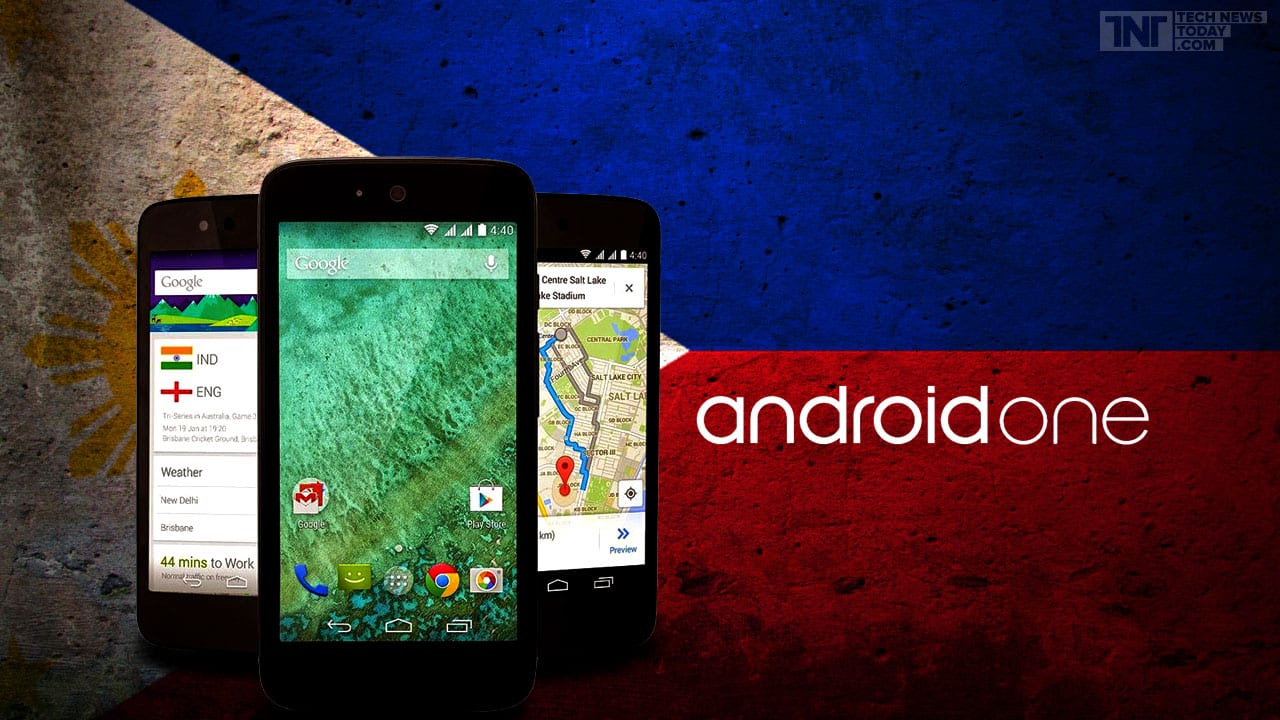
    Google unveiled two affordable smartphones in the Philippines built from the Android One program, a global initiative to bring high-quality smartphones to emerging markets.

    The two phones, developed by local manufacturers Cherry Mobile and MyPhone, will retail for PHP5,000 (USD113.4) in the coming weeks.

    Caesar Sengupta, Vice President, Product Management, Google, said the Philippines is the sixth country in Asia where the Android One program was rolled out, after India, Bangladesh, Nepal, Sri Lanka and Indonesia.

    Android One phones come with the latest version of Android Lollipop and the two phones that will sell in the Philippines will both have 4.5” FWVGA display, Cortex A7 1.3 GHz Quad-Core processor, 1GB RAM, 2 SIM card slots, and front and rear facing cameras and 4GB and 8GB storage (expandable to 32GB).

    Sengupta said Google is also working to reduce data costs for Android One users in the Philippines. For one, the data compression feature on the Android One Chrome browser helps compress the amount of data flowing between the phone and the Internet.

    The Philippines is one of the few countries where YouTube users can take videos offline to watch later during periods of low or no Internet connectivity.

    Telecommunications companies Smart Communications Inc, and Sun Celluar are pitching in effort to make the mobile experience better for users through free over-the-air (OTA) updates to the Android operating system and certain amounts of app downloads from Google Play for the first six months.

    Globe Telecom, on the other hand will be working with Android One users to better access the Internet through its network.

    Ken Lingan, Google’s Country Manager for the Philippines, said during the launch that the country now has over 44 million Internet users. The projection is that by 2016 there would be 66 million Filipinos online.

    “Currently, the Philippines is already the second largest Internet market in Southeast Asia, the 6th largest in Asia. The numbers are growing. There is a massive potential that we see for e-commerce and growing content online because as we see more Filipinos going to the Internet primarily through a mobile device,” he said.

    Sengupta said that it is part of Google’s mission to help connect the four billion or so people around the world who still do not have access to smartphones and are not yet online, mostly in emerging markets like the Philippines.

    “There are lots of first smartphone users do not really get a very nice experience with their gadgets, the software are pretty old and connectivity is expensive and the bandwidth limited,” Sengupta added. “We put together this programming called Android One as an integrated approach to try to solve these problems.”

    Mobile Internet in the Philippines is growing 112 percent year-on-year. By the end of this year, Google expects 50 percent of the population with smartphones. This growth is largely being powered by Android.

  • Philippine telcos unveil more payment options for digital goods

    Philippine telcos unveil more payment options for digital goods

    Telecommunications companies in the Philippines are making it easier for Filipino shoppers to purchase digital goods such as apps, games, books, magazines, music and movies.

    With only around four percent of Filipinos owning credit cards, according to the CIA Fact Book in 2013, it is difficult for consumers to participate in e-commerce and fully enjoy a digital lifestyle.

    With the direct carrier billing service now provided by both Smart Communications Inc. the and Globe Telecom, it is expected that

    The pay-with-load service of Smart Communications, dubbed Pay-With-Mobile, unveiled on Friday, allows subscribers to purchase from the App Store and iTunes using prepaid load or to charge the purchase to their monthly phone bill.

    The service, which Smart said will be fully available on 18 February, eliminates the need for a credit card to make in-app purchases, which has long been a barrier for many Philippine shoppers.

    Smart said a 15 percent premium will be charged on top of the published App Store and iTunes rates to account for VAT (value-added tax) and foreign exchange rate difference in US dollars.

    To get started, users need to register their mobile number to get a Pay-With-Mobile number, which they can enroll in their Apple ID account to start making purchases.

    “Smart understands that not everyone owns a credit card, but that shouldn’t stop people from realizing the full potential of their mobile devices,” said Charles Lim, EVP and Wireless Consumer Division Head at Smart.

    Globe Telecom, for its part, has earlier launched its own direct carrier billing services for in-app purchase on Google Play last October.

    For Apple customers, Globe susbscribers can purchase from the Apple App store through the GCash American Express Virtual Pay, a service it introduced in 2012.

    Globe said app purchases comprise 27 percent of total GCash American Express Virtual Play purchases. Meanwhile, Google Play Store app purchases has more than doubled since its launch last October.