Retail News CRM

Tag: software

  • Apple releases minor iOS, iPadOS updates along with second beta of iOS and iPad 15.3

    Apple releases minor iOS, iPadOS updates along with second beta of iOS and iPad 15.3

    Not every iOS update is chock full of features. Today, Apple released iOS 15.2.1 and iPadOS 15.2.1 to fix a couple of minor issues. The update fixes a bug that caused Messages not to load photos sent via an iCloud link. It also exterminates a bug that prevented third-party CarPlay apps from responding to inputs.

    To update your iPhone or iPad go to Settings > General > Software Update. If you’re a member of the Apple Beta Software Program, you will also receive a link to download and install the second betas of iOS 15.3 and iPadOS 15.3. It’s been three weeks since the first beta versions of iOS 15.3 and iPadOS 15.3 were released, and about a month since iOS and iPadOS 15.2 were dropped by Apple.

    Thus far, it isn’t clear what we might expect from the upcoming iOS 15.3 update although there are some new features that are expected from Apple such as the ability to put Digital IDs in the Wallet app. States (in alphabetical order) that have agreed to offer this include: Arizona, Georgia, Connecticut, Iowa, Kentucky, Maryland, Oklahoma, and Utah. Florida is reportedly in talks to be included.

    Apple first discussed putting Digital IDs inside the Wallet app back at WWDC seven months ago. This feature was not found in both beta 1 and beta 2 of iOS 15.3 and iPad OS 15.3

    Another feature that could come to iPadOS 15.3 is called Universal Control. This allows iPad and Mac users to control their devices using the same keyboard and mouse. It is now scheduled to be released this spring following a delay.

    Apple originally called for a fall 2021 release of Universal Control but had to push back the release date. With that in mind, we might not see this surface on a stable release until iPadOS 15.4 is pushed out by Apple.

    This update is too minor to join the Apple Beta Software Program for, but anytime you don’t want to wait to try out an upcoming iOS feature, you can enter the program and receive beta updates OTA. Remember though, most beta updates are not stable and you could find that your most important iOS capabilities are incapacitated. Or, you might find that the beta update has your device drinking battery juice like Andy Capp consumes ale.

    If you can’t wait for the stable update to be disseminated, you can quit the beta program and install a backup that you created in iTunes before entering the beta program. You’re still going to lose the data created since you made the backup. Another option is to factory reset your device which is one thing that this writer compares to the sound of scratching nails on a blackboard.

    Or, you can join the beta program, install the beta software, and simply quit the beta program when the next stable build of the software is released to the public. For example, let’s say you must have (for some reason) iOS 15.3 while it is still being tested. So you go to the Apple Beta Software site and install iOS 15.3 beta 2. And you sit through beta 4 and by beta 5 the battery life of two hours and twenty minutes (just an exaggeration because we don’t know what the battery life will be on beta 4 and beta 5 or even if there will be a beta 4 and beta 5) is driving you batty.

    As we said, if you have a fairly recent backup to load, things might not be so bad. But if you forgot to create a backup and don’t feel like performing a factory reset, you can stay in the beta program until the next public version of iOS is available which in this scenario would be iOS 15.4.

    If that is your game plan, you can quit the beta program and install iOS 15.4 by going to Settings > General >Profiles & Device Management. Select iOS 15 & iPadOS 15 Beta Software Profile, and tap on Remove Profile. Once that is complete, you would update to the next stable release (iOS 15.4 in this example).
  • Waze launches soothing experience to combat negative effects of driving

    Waze launches soothing experience to combat negative effects of driving

    We live in a world where driving has become an activity that often affects our mental health. Traffic is probably in top three reasons for stress, and can many times lead to much worse effects, including back pain, depression, and even blood pressure.

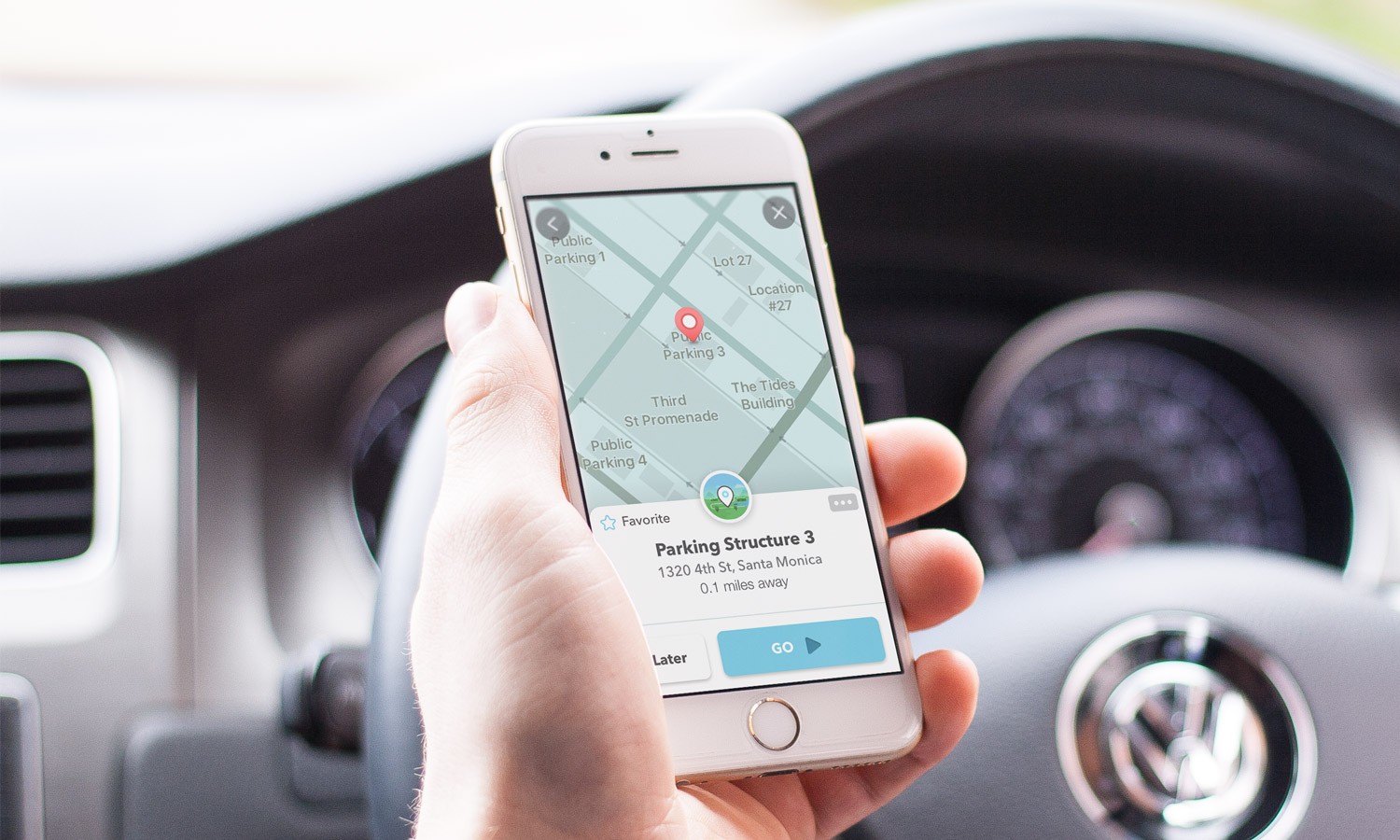
    To help combat these negative effects of driving, Waze launched a new Headspace experience that is meant to help drivers learn “how to find more joy and meaning on the road.” Headspace is a new Waze theme that provides users with custom navigation prompts from the mindfulness teacher and Director of Meditation, Eve Lewis Prieto.

    There are five moods that can be selected when listening to the Headspace experience: Aware, Bright, Hopeful, Joyful, and Open. Also, the new theme allows users to swap out the in-car icon with an air balloon.

    Equally important is the fact that drivers can stream a custom Spotify playlist with music and content from Headspace, which is also available via the Waze Audio Player. The Headspace experience is rolling out today and is available for a limited time in English, French, Spanish, and Portuguese.

    If you’re looking for a soothing driving experience, you can activate the new theme by tapping My Waze to find the “Drive with Headspace” banner.

  • General Motors Invests In Oculii, Radar Software Maker For Self-Driving Cars

    General Motors Invests In Oculii, Radar Software Maker For Self-Driving Cars

    General Motors Co’s venture capital arm has invested millions of dollars in Oculii, a U.S. startup maker of software for radar sensors used in self-driving cars, Oculii co-founder Steven Hong said. GM can use Oculii’s low-cost software to boost the resolution of radars and scale up its partially automated vehicles and full self-driving cars, he told Reuters in an interview.

    The investment is a “fantastic signal they’re serious about the technology and bullish about radar in general,” said the Stanford University graduate who founded Oculii with his father, Lang Hong, an engineering professor at Wright State University. He declined to disclose the financial details.

    Tesla Inc eliminated radar sensors from its volume models this year, rekindling questions about the safety and performance of its advanced driver assistant system. Radars, which measure the distance between objects, enable a car to accelerate or brake to match its speed with that of the vehicle in front. Radars also work well in adverse lighting and weather conditions. Tesla Chief Executive Elon Musk has called additional sensors like lidars and radars “crutches,” doubling down on cheaper cameras and artificial intelligence for its driving automation system.

  • Tesla Plans To Deploy FSD Software To Public In Four Weeks

    Tesla Plans To Deploy FSD Software To Public In Four Weeks

    Tesla has said that it plans of releasing the final version of its full self-driving software to the public in a month’s time. As of now it is still in a beta stage being tested by internal Tesla employees and members of the beta program. This program has been ongoing for almost a year now. This software is different from AutoPilot as it allows the car to drive by itself using computer vision on highways and city streets. This, however, is still considered to be level 2 autonomous system.

    Recently, Tesla’s CEO revealed that the current beta build of the FSD software 9.2 isn’t great but he has noticed great improvements in the 9.3 software which is he already using. Elon Musk had stated that the program will come out of beta once it hits version 10. The FSD software has been promised to users who have opted for the FSD package. This release has been in limbo for a while.

    Now, Musk has announced plans to accelerate the release stating that v10 of the software will be pushed to early access members in a beta stage next week. Musk expects testing for the v10 build to last 4 weeks before a wider release.

    “We should be there with Beta 10, which goes out a week from Friday (no point release this week). It will have a completely retrained NN, so will need another few weeks after that for tuning & bug fixes. Best guess is a public beta button in less than 4 weeks,” he said.

    This release is going to be an over-the-air update for the folks who have purchased the FSD package and will be downloadable by a push of a button. Tesla has moved to a full vision-based system for its autonomous technology using cameras on its cars that ping back some data to its Dojo supercomputer which trains algorithms using a neural network. Tesla’s process the information based on these algorithms in real-time using a the FSD chip that’s present on many of its vehicles.

    Tesla will deploy the next generation of its FSD hardware next year with a new chip and camera system that Musk says will debut with the Cybertruck.

  • Apple could release surprise update before dropping iOS 15 next month

    Apple could release surprise update before dropping iOS 15 next month

    Developer Brendan Shanks posted a tweet recently in which he noted that according to a beta of Apple’s Xcode software development platform, the tech giant is planning to release iOS 14.8 which is something of a surprise considering that iOS 15 is currently being beta tested with the final version expected to drop as soon as next month. The update could be needed to set up the iPhone to work with a new feature that Apple has already announced.

    As Apple says, “iOS now offers a choice between two software update versions in the Settings app. You can update to the latest version of iOS 15 as soon as it’s released for the latest features and most complete set of security updates. Or continue on iOS 14 and still get important security updates until you’re ready to upgrade to the next major version.” The update to iOS 14.8 could contain the software necessary to make this possible.

    Other possibilities include adding the software needed for the child sexual abuse material (CSAM) detection system that Apple recently announced. While most people would be in favor of ending the spread of material that would be considered sexual child abuse, some would consider this the beginning of a slippery slope. The fear is that Apple will exploit the system to scan pictures taken by users that have nothing to do with child abuse.

    A website containing an Open Letter to Apple shares concerns about photo scanning by stating that “Apple’s proposal introduces a backdoor that threatens to undermine fundamental privacy protections for all users of Apple products.” The letter goes on to say that Apple’s measures could turn every iPhone into a device that is always scanning images thus turning the handset into a “a radical new tool for invasive surveillance, with little oversight to prevent eventual abuse and unreasonable expansion of the scope of surveillance.”

    Apple released iOS 14 on September 16th, 2020 which gives us a possible release date for iOS 15 sometime over the next five weeks.

  • Avaloq Names New Regional Directors

    Avaloq Names New Regional Directors

    The Swiss-based banking software provider has announced a pair of senior promotions at its Asia-Pacific business.

    Avaloq has appointed Gery Dachlan as managing director for South Asia and Australia, and Pascal Wengi as managing director for the North Asia region, according to an announcement on Wednesday.

    Based in Singapore, Dachlan joined Avaloq in 2013 and was previously its market head of South Asia and Japan, responsible for driving business development and expanding key relationships in the region.

    Wengi, based in Hong Kong, joined Avaloq in 2020 as head of sales for Greater China.

    The appointments reflect the region’s growing prominence in its growth strategy, Avaloq said in the announcement.

    The moves follow the firm’s acquisition by Japanese tech giant NEC in December 2020. In March 2021, Juerg Hunziker stepped down as CEO, with product chief Martin Greweldinger and technology boss Thomas Beck (below, right) taking over from him as co-CEOs.

  • India’s software market revenue projected to reach US$7.6 billion by year end

    India’s software market revenue projected to reach US$7.6 billion by year end

    According to the International Data Corporation (IDC) Worldwide Semiannual Software Tracker 2H20 (July–December), the India software market is estimated to reach US$7.6 billion by the end of 2021. The India software market was pegged at US$7.0 billion in 2020, registering a growth of 13.4% year-over-year (YoY) compared with that in 2019. India accounted for 17.5% share of the overall Asia/Pacific (excluding Japan and China) (APEJC) region software market in 2020. Microsoft, Oracle, and SAP maintained their leadership positions in the India market during the same year. 

    Shweta Baidya, Senior Research Manager for Software and IT Services at IDC India says, “Although the pandemic had a minor impact on the overall growth of the India software market, it acted as a catalyst for strong growth across some of the software segments as enterprises reevaluated their IT strategies and took concrete steps to move toward digital business models. Digitally matured enterprises were able to smoothly navigate through the crisis and maintain business continuity and operational resilience. However, enterprises with traditional business models charted out new strategies to leverage cloud and digital to stay relevant and consistent. Investment in collaborative platforms, network transformation, and security re-architecture witnessed a spike during the last few quarters.”

    IDC classifies the software market into three primary categories: applications, application development and deployment (AD&D), and systems infrastructure (SI) software. Applications contributed 60.4% to the overall market revenue, followed by AD&D and SI software with shares of 21.6% and 18.0%, respectively, in 2020.

    As per IDC’s current estimates, engineering applications, collaborative applications, customer relationship management (CRM) applications, enterprise resource management (ERM) applications, and content workflow and management applications are the leading software segments in terms of revenue. The collaborative applications market witnessed the highest growth of 36.7% in 2020, followed by artificial intelligence (AI) platforms and system and service management software at 30.9% and 24.8%, respectively.

    India Market Forecast

    IDC estimates India’s overall software market to grow at a compound annual growth rate (CAGR) of 11.6% from 2020 to 2025. India enterprises will continue to invest in technologies that will help them spur innovation to improve operational efficiency and employee productivity, and in turn, maintain business momentum. IDC expects acceleration in demand for technologies, such as robotic process automation (RPA) software, conferencing and collaborative applications, AI platforms, digital commerce applications, and IT service management (ITSM) software, among others. Additionally, cloud is also becoming one of the critical elements of enterprises’ digital strategy. IDC expects the contribution of platform-as-a-service (PaaS) and software-as-a-service (SaaS) markets to the overall software market to increase from 36.8% in 2020 to 57.1% in 2025.

    “In spite of the adverse impact of the pandemic, India continued to be one of the most resilient markets across the APEJC region. India software market registered a growth of 13.4%, which was the highest in the region. Enterprise sentiments improved during the second half of the year and investments were ramped up quickly on digital work models to enable smooth transition to a remote work environment. IT budgets were re-apportioned and allocated in accordance with the increased spending on emerging technologies. Software vendors have been aggressively acquiring customers by supporting them in the digital journey with flexible and scalable options,” adds Baidya.

  • Tesla Launches Subscription Service For Advanced Driver Assistance Software

    Tesla Launches Subscription Service For Advanced Driver Assistance Software

    Tesla Inc said on Saturday it has introduced an option for some customers to subscribe to its advanced driver assistance software, dubbed “Full Self-Driving capability”, for $199 per month, instead of paying $10,000 upfront. Tesla has previously said its subscription service would generate recurring revenue and expand the customer base for pricy features including lane changing on highways and parking assistance.

    But the U.S. electric carmaker reiterated on Saturday that the current features “do not make the vehicle autonomous,” adding they “require a fully attentive driver, who has their hands on the wheel.””FSD capability subscriptions are currently available to eligible vehicles in the United States. Check your Tesla app for updates on availability in other regions,” Tesla said on its website.

    Tesla’s CFO Zachary Kirkhorn said in April that its planned subscription service would generate recurring revenue for the company, although “there could be a period of time in which cash reduces in the near term.”

    “If … you look at the number of customers who did not purchase FSD upfront or on a lease and maybe want to experiment with FSD, this is a great option for them,” he said during an earnings call in April.

    Tesla said the subscription service is available in vehicles equipped with Full Self-Driving computer 3.0 or above. It told customers that upgrading to the new hardware will cost $1,500.

    Tesla Chief Executive Elon Musk forecast in 2019 that robotaxis with no human drivers would be available in some U.S. markets in 2020. In March, Tesla told a California regulator that it may not achieve full self-driving technology by the end of this year.

    Tesla has been testing its new semi-autonomous driving software for city streets and last week released “FSD Beta v9” to a limited number of customers.

  • Huawei aims to “lead the world” in software

    Huawei aims to “lead the world” in software

    Chinese tech giant Huawei said it would launch a long-awaited new operating system for smartphones next week, part of an all-out push into the software industry aimed at weathering US sanctions and taking on Google’s Android.

    Huawei tipped the June 2 launch of its HarmonyOS platform in a short teaser on social media, just as an internal memo came to light in which company founder and CEO Ren Zhengfei outlined plans to go big in software.

    The 76-year-old assured staff that “in the software domain, the US will have very little control over our future development, and we have much autonomy.” Huawei’s founder and CEO emphasized that “objectively speaking, the only domain in which we can extend our roots deep is software”

    Huawei’s plans are the latest signs of a radical transformation at the Shenzhen-based company, which is moving quickly into new product lines seen as less vulnerable to US pressure and a re-focus on its core domestic market.

    Huawei had already announced in April that it would work with Chinese automakers to develop intelligent vehicles after earlier unveiling moves into enterprise and cloud computing.

    Saying “the best defense is a good offense”, Ren outlined an ambitious plan to develop software that “embraces the world”.

  • Ford recalls nearly 2,500 vehicles to update engine software

    Ford recalls nearly 2,500 vehicles to update engine software

    Ford Vietnam has issued a recall order of 2,470 Ranger and Everest vehicles to update the software in the transmission control module (TCM) and powertrain control module (PCM).

    The recall program will begin on March 16 this year and last until March 15, 2023.

    The affected vehicles were produced between September 2019 to February 2020 in Thailand and imported by Ford Vietnam for distribution in the local market.

    According to the company, the issues could cause problems for transmission oil pumps, which can lead to torsional vibrations while the engine accelerates and decelerates and lead to transmission malfunction, increasing the risk of collision.

    Authorized dealerships will provide free inspection and repair and the whole process will take about two hours to complete.

    Ford Vietnam said it will still carry out the replacement for drivers of Ford Ranger and Ranger Raptor models imported to the country by the Ford Motor Company.

    Ford sold 24,663 vehicles last year, accounting for 8.7 percent of total car sales, according to the Vietnam Automobile Manufacturers Association.

  • Bosch, Microsoft Join Forces To Develop Vehicle Software Platform

    Bosch, Microsoft Join Forces To Develop Vehicle Software Platform

    Bosch will work with Microsoft on a software platform for vehicles, it said on Thursday, as it strives to get a foot in the door to the fast-growing market for electromobility and automated driving technologies. By using cloud technology, the software platform will ensure that vehicles’ control units and computers can get software throughout their lifetime, the German auto supplier said.

    By using cloud technology, the software platform will ensure that vehicles’ control units and computers can get software throughout their lifetime

    The technology is based on Microsoft Azure and includes software modules from Bosch, it said, adding that they plan to use the software platform in-vehicle prototypes by the end of 2021. “We are thus creating the conditions for wireless updates to work just as smoothly and conveniently on vehicles as they do on smartphones,” said Bosch Managing Director Markus Heyn.

    The companies will also cooperate to adapt existing software tools to let automakers and suppliers to simplify and accelerate their own software updates. Last week, German carmaker Volkswagen AG announced similar cooperation with Microsoft to use its cloud computing services to help it streamline its software development efforts for self-driving cars.

  • Time to update your Apple iPhone, iPad, and Apple Watch

    Time to update your Apple iPhone, iPad, and Apple Watch

    Apple today released several updates including iOS 14.4, iPadOS 14.4, and watchOS 7.3. With the iPhone and iPad updates, the “Find My” app adds a feature called “Find My Items.” This allows users to find misplaced accessories made by third-party manufacturers who build this capability into their products. The only compatible device available at the moment is Belkin’s SoundForm Freedom true wireless earbuds.

    In addition, the update allows smaller QR codes to be read by the iPhone’s camera, the ability to put Bluetooth connections into categories and headphone type in order to prevent eardrums from getting blown out with audio notifications and delivers a notification when the camera on your iPhone 12 series model cannot be verified as a genuine Apple camera. It also uses the U1 chip in the iPhone 11 series and iPhone 12 series to determine the distance between your iPhone and HomePod mini to allow an improved transfer of music between devices.

    The update also exterminates several bugs including one that allowed image artifacts to appear on photos snapped with an iPhone 12 Pro model using HDR. Another bug fixed by the update prevented the Fitness+ widget from including updated Activity data. One issue that the new iOS 14.4 update solves is one in which the keyboard would appear with the wrong language in the Messages app. A pair of bugs that prevented word suggestions from appearing on the keyboard and delayed the results of typing on the keyboard are both gone after the installation of iOS 14.4.

    The latest iOS build also eliminates an issue that prevented phone calls from being answered on the Lock Screen when Switch Control in Accessibility was enabled. And lastly, iOS 14.4 gets rid of a bug that did not allow stories from CarPlay’s News app to resume after being placed on pause to hear spoken directions or a response from Siri. The update is available to compatible iPhone and iPad models and can be received by going to Settings > General > Software Update. It weighs in at 344.3MB.

    Apple also pointed out that the iOS and iPadOS updates include security patches that eliminated three zero-day security flaws. Apple believes that these flaws might have been exploited in the wild. A Kernel flaw might have allowed attackers to give permission for the affected phone to run certain apps. A WebKit flaw could have allowed the hackers to make an iPhone do just about anything. The watchOS update rid the device of a security flaw that could have elevated privileges on a unit under attack.

    Apple also released watchOS 7.3 today which includes a new Unity watch face based on the colors of the Pan-African flag (Black, Red, Green, and the Pan-African colors which includes the prior three hues and yellow). The shapes of the colors change throughout the day as you move thus creating a unique look. Apple Fitness+ subscribers will receive the “Time to Walk” feature that plays inspirational audio in the Workout app as you walk. The electrocardiogram (ECG) monitor that checks for abnormal heart rhythms on the Apple Watch Series 4 and later is good to go in Japan, Mayotte, Philippines, Taiwan, and Thailand following the update. Those with abnormal readings in those countries will receive a notification. And a bug that makes the Control Center and Notification Center unresponsive when Zoom is enabled will be exterminated.

    To update your Apple Watch, open the Apple Watch app on your iPhone and tap on My Watch > General > Software Update and Install. The timepiece needs to be on the charger for the update to take place and the watch needs to be in the range of your iPhone connected to a Wi-Fi signal.

  • Elektrobit Unveils New Software Platform For Next-Gen Vehicle Electronics Architectures

    Elektrobit Unveils New Software Platform For Next-Gen Vehicle Electronics Architectures

    Elektrobit (EB), a global supplier of embedded and connected software products for the automotive industry, announced EB xelor, an industry-first software platform designed to streamline the development of next-generation automotive electronics architectures based on high-performance computing (HPC). The EB xelor platform provides car makers and Tier 1 suppliers with a secure, stable, and easily upgradable software foundation for connected and intelligent vehicles, allowing them to focus less on automotive infrastructure and more on innovation.

    EB xelor brings together production-proven software from EB, open-source and third-party software, plus tools and services that are absolutely critical for HPC environments but won’t necessarily differentiate one vehicle from another. By choosing EB xelor, car makers and Tier 1s can save the time, resources, and staff required to source and integrate these elements on their own. Based on its experience with car makers on production projects involving software for HPC architectures, EB conservatively estimates savings of up to 30 per cent in overall engineering costs.

    EB xelor integrates a high-performance functional safety software stack based on Linux and Adaptive AUTOSAR, a real-time and safety software stack based on Classic AUTOSAR using EB tresos- a hypervisor- plus software for HPC updates and platform health management capabilities. It also includes tools and services to automate builds and facilitate integration. The EB xelor platform is optimized for HPC environments using leading system-on-a-chip (SoC) devices from NXP and Renesas. Car makers can then add their own vehicle-specific software on top of these stacks.

    Maria Anhalt, Chief Technology Officer at Elektrobit said, “With EB xelor, EB draws upon its decades of expertise to do the heavy lifting for the car maker. We’re providing pre-integrated, production-proven software that will jump-start the process.”

    While EB xelor is a new product, it is based on software and technology used in vehicles on the road today.

  • Why Retail Businesses Needs Small Business Management Software

    Why Retail Businesses Needs Small Business Management Software

    Retail businesses’ owners and managers are always looking forward to finding approaches that can improve their businesses. There are several wise and effective ways to do it, and one of those is the implementation of project management software and online collaboration. These refer to the web-based applications that allow anyone involved in the company to work remotely and sign in anywhere. Nevertheless, this is just one of many reasons why startups and small businesses must have small retail business management software solutions. Here are further reasons to persuade you more. 

    • Business managers and owners can be helped by integrated calendars to view what tasks are done by the staff with ease. 
    • It can help you save, as well as your employees a great time every working day. When there is only one application being used within the entire work, additional or switching to other applications will not be needed just to complete the task. 
    • Invoicing and quoting is more straightforward through the creation of both in one application. This then leads to increased sales that are followed by easy and simple checking of quotes created, as well as those that aren’t followed up. Also, whenever a quote is accepted, there is a change into an invoice, which means more time is saved. 
    • With online project management software, there is even simple project management. This is possible through the creation of projects and then assigning each to the entire staff. Afterward, it can be tracked, especially the process through a simple click on the project. Hence, there will be no more chasing of employees just to view if they are already done with the assigned project. 
    • Small businesses with 50 employees can use the management software, which means that they aren’t small businesses anymore to benefit from it. 
    • The document storage often sparks problems within the whole business process. Good thing, it can now be streamlined with the small business management software. Here, as soon as the documents are created, it can be directly saved onto the application. Hence, there will be no more waiting for the documents to be done and emailed to anyone in the business. Also, once the documents are saved in one application, it can be retrieved easily when lost. In addition to that, the small business management software helps businesses to wave goodbye to any missing documents that everyone will welcome. 
    • Off Site employees in any business need to fill up the timesheets so that the management software can easily track the employees during working hours. They can log into the application that will be used by the owners and managers as information to work their wages. This is considered a very useful and important software since it is way easier and more effective compared to the manual filling up of timesheets. 

    Hence, there are lots of reasons why your business must consider having small business management software. This has a lot of uses, especially cutting down time spent on drastic tasks. It also has comprehensive business functionality, as well as it is easy to access. 

    Moving forward, let us proceed to the benefits that can be gained when you use small business management software. 

    10 Benefits of Using Small Business Management Software

    1. Small business management software is web-based, which means only the internet connection and PC are accessible by the employees. These then help the employees to work from home or in another country. 
    2. In a more streamlined way, the leads can become or turn into sales. This is possible through the small business management software, which stores the information in one safe place. So, every time there is a quote created, it makes the customer’s information able to be held in a lead file for later follow up calls.
    3. There is only one needed application to store and create documents, quotes, invoices, timesheets, projects, calendars, and a lot more. This means that loading several applications up every morning is no longer needed, as well as switching in between to accomplish tasks and projects.  
    4. Projects can be easily monitored or tracked by the owners and managers. This is done through a simple login into the application of online project management. There will be less due to missed deadlines as an outcome of inefficient practices. This is good news for the managers and owners. 
    5. The workers can still log in by giving their username and password to the small business management software application, despite being away. This applies to workers who are in other places yet still connected to their jobs. 
    6. A small business management software can accommodate and make sign-ups for up to 50 employees. This only means that it doesn’t require the business to be huge to make it benefit from its services. 
    7. The purchasing habits of customers can be tracked and monitored easily. This is a huge advantage for the business when anticipating the customer’s purchases, as well as to provide them with improved experiences in the business. 
    8. The license for applications can be stopped or ended. Besides, why will you spend a lot of money per month or year when there is a single application to help you run your business easily. Just take a look at other small business owners who already implemented their CRM software and look at how they saved a lot and made the business run towards success. 
    9. An internal email system is no longer needed to help the employees share a particular document. This may be a useful tool; it can still take a lot of time from writing to sending emails. But with small business CRM software, the files are stored in a single place, accessed, and sent at one time. 
    10. It is easy to use that the employees are no longer required to spend a lot of time to learn how to use it effectively. 

    After viewing and understanding these 10 reasons why small business management software is a must-have, you can now see how much you need it. This can help a lot to revolutionize your business and increase profits and customer satisfaction and decrease inefficiency.  

  • Tesla’s Release Of New ‘Self-Driving’ Software Closely Watched By U.S. Regulator

    Tesla’s Release Of New ‘Self-Driving’ Software Closely Watched By U.S. Regulator

    The U.S. auto safety regulator said on Thursday it was closely watching Tesla Inc’s release of a software version intended to allow its cars to drive themselves, saying it stood ready to protect the public against safety risks. Tesla on Tuesday night released a beta, or test version, of what it calls a “Full Self Driving” software upgrade to an undisclosed number of “expert, careful” drivers. The release prompted online posts by excited recipients who shared video snippets of their car driving apparently autonomously on city streets at night.

    During a Tesla earnings call on Wednesday, Chief Executive Elon Musk said the latest upgrade was planned to be widely released by the end of this year, with the system becoming more robust as it collected more data.

    “NHTSA has been briefed on Tesla’s new feature, which represents an expansion of its existing driver assistance system. The agency will monitor the new technology closely and will not hesitate to take action to protect (the) public against unreasonable risks to safety,” the National Highway Traffic Safety Administration said in a statement.

    NHTSA in July said its special crash investigation team had “looked into 19 crashes involving Tesla vehicles where it was believed some form of advanced driver assistance system was engaged at the time of the incident.”

    Musk for years has promised self-driving for the company’s vehicles but missed several self-imposed deadlines.

    Researchers, regulators and insurance groups say true self-driving is still years away and more complex than companies anticipated several years ago. They have criticized Tesla’s promotion of its existing semi-automated Autopilot system as dangerously misleading.

    A consortium of self-driving technology companies, Partners for Automated Vehicle Education (PAVE), which includes Ford Motor Co, General Motors Co and Google’s self-driving unit Waymo, criticized Tesla’s approach.

    “Public road testing is a serious responsibility and using untrained consumers to validate beta-level software on public roads is dangerous and inconsistent with existing guidance and industry norms,” PAVE said in a Thursday statement.

    Autopilot and similar advanced driver assistance systems can provide steering, braking and acceleration support under limited circumstances, generally on highways.

    Tesla’s website describes the new software release as “Autosteer on City Streets,” saying the system requires active driver supervision and does not make the car autonomous.

    Tesla owners can purchase “Full Self Driving” for $8,000 in hopes of eventually receiving the upgrade. Musk said early Thursday the price would rise by $2,000 on Monday, but later in the day tweeted U.S. price hikes would be pushed to Thursday next week. Similar price increases will apply in other countries as the test version was released there, he added.

    On Twitter, Tesla owners receiving the test version posted videos of their experience, claiming the car “literally sees everything,” setting indicators on its own and navigating turns even without clear lane markings. https://bit.ly/3kpgvUu

    They also posted a picture of the software update release notes, which said the system “may do the wrong thing at the worst time,” urging drivers to keep their hands on the wheel and pay extra attention.

    Reuters could not reach Tesla for comment on NHTSA’s statement and to confirm the authenticity of the release note.