Retail News CRM

Tag: software

  • Lazada to tackle counterfeit Korean products more seriously

    Lazada to tackle counterfeit Korean products more seriously

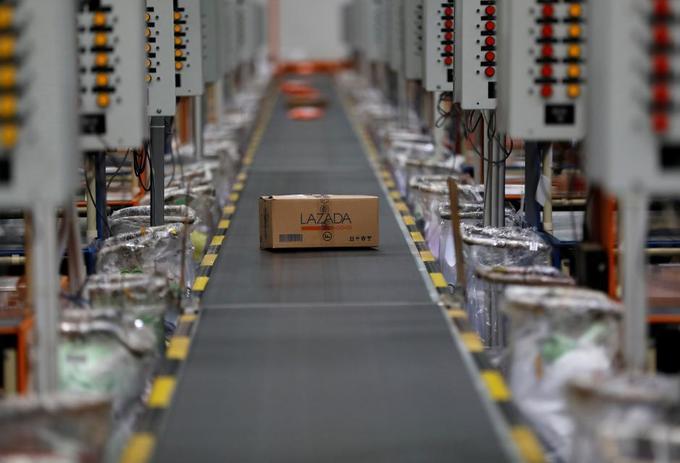
    Lazada has pledged to remove any counterfeit South Korean goods from its platform in a Memorandum of Understanding signed with the Korea Intellectual Property Protection Agency (KOIPA). It is reportedly the first time a Southeast Asian e-commerce company has reached an agreement with the Korean IP regulator and reflects the growing popularity of Korean beauty and fashion products online across Asia.

    Korean brands online and considered at risk from counterfeit products include Etude House, Innisfree, Laneige, Mamonde and 3CE.

    “The combined followers for [those brands’] Lazada flagship stores are more than 200,000,” Gladys Chun, general counsel and head of government affairs at Lazada Group said.

    “Laneige, Mamonde, Innisfree and 3CE were top search terms in Malaysia, Singapore, Thailand, and Vietnam during the recent Lazada 11.11 Shopping Festival.”

    Lazada has undertaken to remove any counterfeit goods from sale on its platform when alerted by brand owners, once it has confirmed authenticity. Sellers caught trying to sell copy goods on its site face blacklisting.

    “Such measures to curb illicit trading of goods on Lazada are aimed at boosting the confidence and preserving the trust of shoppers on our platform,” Chun said.

    “At Lazada, we respect and collaborate with rights holders in safeguarding their IP through a combination of proactive and reactive measures. It is incumbent on us to create that trusted space for shoppers and brands, giving them the peace-of-mind that we will always be acting in their best interests.”

  • Angular 6 & its Features

    Angular 6 & its Features

    Google released a brand new version of Angular in the month of April which was the first major release by Google in 2018 which majorly focuses on the toolchain and has also made the application much easier for the users to create their different applications. This new launch comes packed with a lot of new features and some of the major upgrades. This new version of angular is much faster, easier, and lighter than its former versions and has come out to be a boon for the developers. You can undergo an Angular JS course to have an in-depth knowledge of the newly introduced features.

    Let us discuss a few of the major changes made in Angular 6:

    • Angular Elements: Angular acts as one of the most ideal frameworks for creating Single Page Applications. However, in the former versions of Angular, adding up a new component to any of the existing web pages was not at all an easy task. But in the latest version of Angular, it can be done easily with the input to Angular Elements. Moreover, Angular 6 is the first version release that completely supports Angular Elements.
    • Ivy-The Brand New Rendering Engine: Angular 6 comes packed with the third rendering engine from the Angular team. Ivy can be termed to as the next-gen rendering engine which is capable of increasing the speed and reducing the size of the application.
    • i18n: One of the major changes brought about in Angular in its latest launch is the launch of i18n on the global platform. Angular 6 has introduced i18n with runtime rendering; moreover, Angular would no more round up the currency values with 2 digits. Moreover, Angular 6 also has revealed some new formatting functions publically, such as formatDate, formatCurrency, formatPercent and formatNumber.
    • Bazel Compiler: it is basically a build mechanism which is used to building almost all of the software at Google. Moreover, it rebuilds only what is necessary to be built, neglecting any kind of inapplicable data. Moreover, it does not make any sense to rebuild the whole of the application with every little change as the source code changes very often. Keeping this in mind, Bazel Compiler only rebuilds the changes which have been incorporated and required rebuilding. Ultimately, we shall be capable of achieving faster and incremental builds.

    The above-mentioned are just a few advancements that have been bought about in the latest version of Angular, for a complete knowledge of the working of Angular 6.0 you can easily receive Angular 6 training through offline as well as online portals which will provide you with a wholesome information about the mechanism of this wonderful application.

  • Stocking up on Digitalization to Increase Share-of-Basket

    Stocking up on Digitalization to Increase Share-of-Basket

    With the rise of e-Commerce, Asian retailers are under tremendous pressure to continuously push traditional boundaries and embark on digital transformation to engage consumers. Keeping up with the latest trends in providing the best consumer experience have retailers looking to tech innovations, particularly digital technologies, to play a key role in capturing and keeping customers’ attention and loyalty.

    Technologies such as the cloud, Internet of Things (IoT), mobility solutions, and augmented reality (AR) are driving customer-facing innovations such as digital marketing, smart shopping carts, couponing, and mobile apps – that bring people into the store and keep them coming back. Cloud applications also make it easier for store associates and corporate staffers alike to collaborate and take care of back-office needs.

    The reality is that retailers need to embrace digital transformation and use technology in innovative ways to enhance the customer experience if they want to remain competitive.

    Technology Challenges

    However, rapid adoption of digital in retail not only improves outcomes but ignites new challenges for IT administrators in retail organizations. Among the challenges are how to:

    • Support increased customer engagement with in-store technologies that have high-bandwidth demands
    • Support increasing use of applications in the cloud with a resilient and secure network
    • Ensure connectivity and provide secure access for point-of-sale (POS) applications and electronic payment transactions
    • Ensure performance for real-time applications such as voice, video, and unified communications

    Taking on one of these efforts in the past may have required every resource, but now all of these must be accomplished by the same IT staff.  Also, these changes must be deployed across hundreds and even thousands of store locations spanning vast geographical regions.

    Yet the connective element that brings everything together for retailers –  existing networks are now too complex, too expensive, and frankly, too outdated to support the challenges and opportunities that come from digital transformation. A new approach to the retail network is required.

    With a Virtual Cloud Network, retailers can create an end-to-end software-based network architecture that delivers services to applications and data wherever they are located at global scale from edge to edge, with consistent, pervasive connectivity, and security.

    Faster service delivery on the cloud

    Alfamart in Indonesia is an example of a retailer that embarked on digital transformation by adopting cloud and mobility solutions, and reaped the benefits of a modernized, connected business network.

    Faced with a vast network of over 10,300 minimarts spread across the Indonesian archipelago and basic internet infrastructure in many far-flung areas, it was difficult for Alfamart to convey information in a timely manner across its network.

    The slow flow of information impeded the business’ ability to make critical decisions in a timely manner,  resulting in them not being able to react quickly enough to customer feedback or market trends, and affected overall competitiveness.

    Alfamart decided to connect all of its store employees and partners with a bring your own device (BYOD) strategy and an enterprise mobility management platform over the cloud.

    All store employees are now equipped with the most up-to-date product information, prices and stock level at their fingertips, enabling them to act quickly to meet market trends, and manage peaks in demand for the fast-moving perishable goods they provide.

    This has improved their speed-to-market, reduced training costs by 20 per cent, enhanced mobility across device and platforms, and improved internal communications between management and employees. Customer satisfaction levels have also gone up.

    Keeping systems up and goods in stock at all times

    City Mart in Myanmar is another retailer which benefited from modernizing its legacy IT infrastructure by adopting virtualization. Lengthy downtimes were a common occurrence under their old IT system, which affected their supply chain and resulted in unfulfilled customer orders, negatively impacting revenues.

    The supermarket network implemented a software-defined IT infrastructure and automated certain IT processes, which not only eliminated server downtime but also cut operational expenses by half. Predictive analytics and smart alerts also helped improve the system performance.

    With a new inventory management system, City Mart is now able to gain visibility of their stock across their entire network of 180 stores, whether on storeshelves or in the warehouse. This enabled them to better understand changing consumer demand patterns across different stores, ensure that goods are in stock at all times, and build stronger relations with suppliers.

    Ultimately, the virtualized IT infrastructure supports City Mart’s expanding business, enabling the retailer to meet the needs of Myanmar’s growing consumer class.

    Networking for Retail 2020

    The future of networking is software, and the network of the future is the Virtual Cloud Network. Virtual Cloud Networks allow retailers to create a digital business fabric for connecting and securing applications, data, and users across the entire network in a hyper-distributed world. In this way, retailers can simplify networking and wide area network management, optimize cloud access from all locations, assure high performance for even the most demanding applications, and enforce security and compliance across the network in every store location.


    – Sanjay K. Deshmukh, Vice President and Managing Director, South East Asia and Korea, VMware
  • Audi’s Electric SUV Faces Four Week Delay Due to Software Issues

    Audi’s Electric SUV Faces Four Week Delay Due to Software Issues

    Audi’s first electric sport utility vehicle (SUV) will hit showrooms four weeks later than planned because of a software development issue, a spokesman for the German luxury car brand said on Sunday. The spokesman said Audi’s e-tron midsize SUV faced delay because the carmaker needs new regulatory clearance for a piece of software that was modified during the development process.

    Audi staged a global launch of the e-tron in San Francisco last month as part of its effort to expand the market for premium electric vehicles and grab a share from California-based Tesla, which has had the niche largely to itself.

    The e-tron delays were first reported by German newspaper Bild am Sonntag, citing sources close to the company. The paper said delivery could be delayed by several months. The paper also said Audi was locked in price negotiations with LG Chem, the South-Korean supplier of batteries for its electric vehicles, which wants to increase prices by about 10 percent because of high demand.

    LG Chem supplies electric vehicle batteries for Audi, its parent Volkswagen and Daimler. An LG Chem official declined to comment on the report, citing the confidentiality of its relationship with a client. The Audi spokesman also declined to comment on price negotiations with LG Chem.

  • Cashmaster Launches QR-Connect in Asia Pacific

    Cashmaster Launches QR-Connect in Asia Pacific

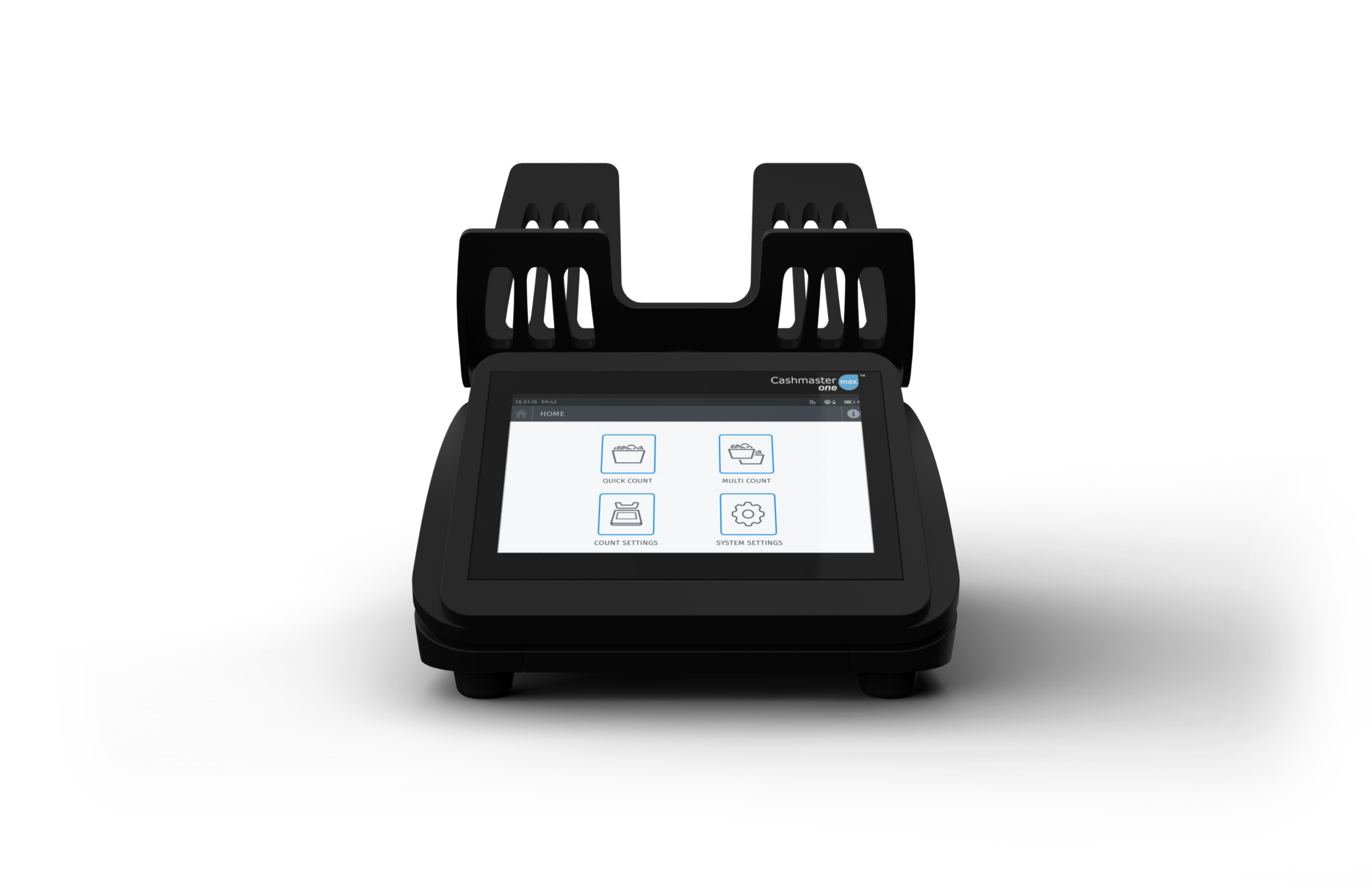
    Cashmaster Asia announced the Introduction of Cashmaster QR-Connect, a QR code application providing enhanced software functionality for its Cashmaster One range of count-by-weight cash counting devices that offers an innovative, simple solution to integrating with back office or POS systems.

    When installed, count data is presented as a QR code on the display of the Cashmaster One device that can be scanned by a standard POS scanner or the camera of a mobile/tablet device. The count data is instantly transferred to the POS or other system. The QR code avoids the need for USB or ethernet cable connectivity between the POS and the Cashmaster Cash counter – effectively providing wireless transfer of the cash count (including vouchers/coupons in addition to notes and coins) as well as other information for process traceability, such as cashier ID and till ID.

    In a connected world, a deeper level of integration and seamless transfer of data to the POS is a growing requirement for Cashmaster’s clients. Its customers are looking to remove multiple levels of manual processing of data across their businesses in order to: reduce opportunities for errors; speed up the processing of data; give more real-time information that businesses can use to make better, faster decisions; and provide greater accuracy and accountability to their enterprises. Integration can be seen also as a key component in a loss prevention strategy.

    No matter the level of operation, these solutions provide data in a format that can be easily digested by cash management and analytics programs for big, medium or small companies. As competition increases, the rewards of deploying Cashmaster One and Cashmaster QRConnect can show directly in bottom line improvements.

    Gordon McKie, Group CEO of Cashmaster, commented, “Companies are under intense pressure to maximise income and improve efficiencies, while at the same time motivating staff. It’s a complex dynamic that Cashmaster understands; it has also been a powerful imperative for us in designing the intuitive technology for cash management that helps clients achieve those goals.

    “Solutions can be tailored to customers’ specific needs, from simple off-the-shelf tools requiring minimal customer resources to implement, to working with customers’ IT teams in providing more complex solutions. With a proven quick return on the initial investment to boot.”

  • Cashmaster Launches QR-Connect in APAC – New Integration Software Solution for Cash Management

    Cashmaster Launches QR-Connect in APAC – New Integration Software Solution for Cash Management

    Cashmaster Asia today announced the Introduction of Cashmaster QR-Connect, a QR code application providing enhanced software functionality for its Cashmaster One range of count-by-weight cash counting devices that offers an innovative, simple solution to integrating with back office or POS systems. When installed, count data is presented as a QR code on the display of the Cashmaster One device that can be scanned by a standard POS scanner or the camera of a mobile/tablet device.

    The count data is instantly transferred to the POS or other system. The QR code avoids the need for USB or ethernet cable connectivity between the POS and the Cashmaster Cash counter – effectively providing wireless transfer of the cash count (including vouchers/coupons in addition to notes and coins) as well as other information for process traceability, such as cashier ID and till ID.

    In a connected world, a deeper level of integration and seamless transfer of data to the POS is a growing requirement for Cashmaster’s clients. Its customers are looking to remove multiple levels of manual processing of data across their businesses in order to: reduce opportunities for errors; speed up the processing of data; give more real-time information that businesses can use to make better, faster decisions; and provide greater accuracy and accountability to their enterprises. Integration can be seen also as a key component in a loss prevention strategy.

    No matter the level of operation, these solutions provide data in a format that can be easily digested by cash management and analytics programs for big, medium or small companies. As competition increases, the rewards of deploying Cashmaster One and Cashmaster QRConnect can show directly in bottom line improvements. Gordon McKie, Group CEO of Cashmaster, commented, “Companies are under intense pressure to maximise income and improve efficiencies, while at the same time motivating staff. It’s a complex dynamic that Cashmaster understands; it has also been a powerful imperative for us in designing the intuitive technology for cash management that helps clients achieve those goals.

    “Solutions can be tailored to customers’ specific needs, from simple off-the-shelf tools requiring minimal customer resources to implement, to working with customers’ IT teams in providing more complex solutions. With a proven quick return on the initial investment to boot.”

    Cashmaster is a global company that specialises in the design and manufacture of count-by-weight cash counting devices using the most advanced touch-screen technology. The company has more than 30 years’ experience in creating innovative and reliable cash handling solutions for a wide range of international clients including supermarkets, convenience stores, retail, banking, fast-food restaurants and coffee shops.

    Website: www.cashmaster.com

    All trade enquiries for Cashmaster One:

    Tel (Hong Kong): +852 9334 8578; E-mail: [email protected]

    Tel (UK): +44 (0) 1383 416 098; [email protected]


  • Operators shift IT spend to IT services and software

    Operators shift IT spend to IT services and software

    The 4Q17 Telecom Infrastructure Services Benchmark report by Technology Business Research (TBR) revealed that the spending shift by operators towards offerings from IT services‐ and software‐centric companies may spell bad news for equipment vendors. The spend coincides with an industry that itself is following the global digital transformation movement.

    TBR Telecom senior analyst Chris Antlitz noted that operator spend on digital‐related initiatives will accelerate over the next few years. “IT services companies will continue to garner a disproportionate share of digital‐related, software‐centric business from operators as their competencies and capabilities align with what operators need to pursue digital transformation,” he added.

    Lower RAN (radio access network) volumes globally significantly impacted most RAN vendors’ telecom infrastructure services (TIS) revenue throughout 2017. TBR’s research suggests the global RAN market peaked in 2015 with product-attached services revenue now tapering off as payments are fully recognized. RAN vendors are responding to this headwind by diversifying into other areas, such as the IT domain, and are concurrently restructuring their network deployment businesses to profitably align with the new demand level.

    The global RAN market is likely to bottom out in 2019 and then return to growth in 2020 as 5G deployments ramp up. Until then, operators are likely to continue to shift spend from RAN and RAN‐related services to other business areas.

    Huawei spokesperson noted this trend towards IT, software and services, which forced the company to also make a course correction. “We have been actively investing in and developing these capabilities for some time. In addition, we have built an active global ecosystem of industry partners to support this industry shift, and count many of the world’s leading IT and software providers among our strategic partners today.”

    It is a similar comment from long time equipment vendor Nokia. Danial Mausoof, head of Strategic Marketing for Asia Pacific and Japan, commented that Nokia has taken steps to help the industry address this.

    “As an example, we are working on a common software foundation (CSF) which allows for a scalable library of common components and this gives us greater speed and flexibility by using pre-integrated blueprints to address the customer’s needs. In addition, we have identified key enterprise verticals such as energy and public sector transportation where we are able to leverage our extensive solution offerings to help industry players accelerate their digital transformation journeys,” he added.

    Not just operators

    “We do see the trend and it is not only happening to operators but many large enterprises as well. Apart from the cloud security and cloud infrastructure are more mature so that buying services on the cloud than the actual equipment on-site is more viable, said Linda Hui, managing director of Ruckus Hong Kong and Taiwan.

    “Secondly, many enterprises find that the technology has moved very fast, hence, before they can amortize the equipment, they need to upgrade their infrastructure to cope with the existing traffic, hence, it will be easier for them to just subscribe the service.”

  • AI to be in almost all new software by 2020

    AI to be in almost all new software by 2020

    Market hype and rising interest in artificial intelligence (AI) are compelling established software vendors to introduce AI into their product strategy, creating significant confusion in the process, according to Gartner.

    Analysts predict that by 2020, AI technologies will be virtually pervasive in almost every new software product and service. Gartner believes that by 2020, AI will be a top five investment priority for more than 30% of CIOs.

    “As AI accelerates up the Hype Cycle, many software providers are looking to stake their claim in the biggest gold rush in recent years,” said Jim Hare, research VP at Gartner.

    “AI offers exciting possibilities, but unfortunately, most vendors are focused on the goal of simply building and marketing an AI-based product rather than first identifying needs, potential uses and the business value to customers,” said Hare.

    To successfully exploit the AI opportunity, technology providers need to understand how to respond to three key issues.

    First is the lack of differentiation is creating confusion and delaying purchase decisions. More than 1,000 vendors with applications and platforms describe themselves as AI vendors, or say they employ AI in their products.

    This widespread use of “AI washing” — using the term indiscriminately — is already having real consequences for investment in the technology.

    A second key issue is that proven, less complex machine learning capabilities can address many end-user needs.

    Advancements in AI, such as deep learning, are getting a lot of buzz but are obfuscating the value of more straightforward, proven approaches. Gartner recommends that vendors use the simplest approach that can do the job over cutting-edge AI techniques.

    Third is that organizations lack the skills to evaluate, build and deploy AI solutions. More than half the respondents to Gartner’s 2017 AI development strategies survey indicated that the lack of necessary staff skills was the top challenge to adopting AI in their organization.

    The survey found organizations are currently seeking AI solutions that can improve decision making and process automation. If they had a choice, most organizations would prefer to buy embedded or packaged AI solutions rather than trying to build a custom solution.

  • Fiat Chrysler recalls 1.25 million trucks over software error

    Fiat Chrysler recalls 1.25 million trucks over software error

    Fiat Chrysler Automobiles said on Friday it would recall more than 1.25 million pickup trucks worldwide to address a software error linked to reports of one crash death and two injuries.

    The erroneous code could temporarily disable the side air bag and deployment seat of belt pretensioners – which reduce seat belt slack during impacts – during a vehicle rollover spurred by a significant underbody impact, such as striking onroad debris or driving off-road, the Italian-American automaker said.

    The company will reprogram computer modules in the affected vehicles to address this error.

    An FCA spokesman said the likelihood of an incident was very low because a sequence of events was needed to cause an incident.

    There is no definitive proof the error was involved in two accidents, one of which resulted in a fatality, but the automaker was conducting the recall proactively, he said.

    The spokesman declined to say whether the code was produced inhouse or by an FCA supplier, saying “we do not discuss supplier relationships.”

    Fiat Chrysler Automobiles said on Friday it would recall more than 1.25 million pickup trucks worldwide to address a software error linked to reports of one crash death and two injuries.

    The erroneous code could temporarily disable the side air bag and deployment seat of belt pretensioners – which reduce seat belt slack during impacts – during a vehicle rollover spurred by a significant underbody impact, such as striking onroad debris or driving off-road, the Italian-American automaker said.

    The company will reprogram computer modules in the affected vehicles to address this error.

    An FCA spokesman said the likelihood of an incident was very low because a sequence of events was needed to cause an incident.

    There is no definitive proof the error was involved in two accidents, one of which resulted in a fatality, but the automaker was conducting the recall proactively, he said.

    The spokesman declined to say whether the code was produced inhouse or by an FCA supplier, saying “we do not discuss supplier relationships.”

    Fiat Chrysler has been working to move faster to address vehicle issues after being fined twice in 2015 by the NHTSA.

    In December 2015, the company was fined $70 million for failing to report vehicle crash deaths and injuries since 2003.

    In July 2015, Fiat Chrysler agreed to a $105 million settlement with NHTSA for mishandling nearly two dozen recall campaigns involving 11 million vehicles.

    It agreed to a three-year consent agreement and monitoring by former Transportation Secretary Rodney Slater.

  • Centric Software Opens New Office in Hong Kong

    Centric Software Opens New Office in Hong Kong

    Centric Software announces the opening of a new office in Hong Kong, bringing its innovative Product Lifecycle Management (PLM) solutions to local retailers, brands and manufacturers. Centric Software is the leading PLM solution for fashion, retail, footwear, luxury, outdoor and consumer goods companies.

    The opening of the Hong Kong office confirms Centric Software’s explosive growth in Asia, having recently opened an office in Tokyo, Japan in 2016 and Shanghai, China in 2014. In addition, the company recently announced the signature of its first customer in Australia, Redbubble. Leveraging the success and continued growth in the region, now with 25 Asian customers, Centric plans to further develop the market in Hong Kong and the surrounding regions.

    “Prior to the opening of our new Hong Kong office, we had already built strong momentum with several large customers.  Companies in Hong Kong and throughout South East Asia need modern, mobile-based PLM solutions. It’s a big space to grow,” said Nick Wei, Regional Sales Director Hong Kong at Centric Software.

    “The fashion market is very competitive and companies need every possible advantage beginning with the products they make and sell; products are the heart of any brand, retailer or manufacturer.  Making great products starts with great product development technology, like Centric PLM,” Wei adds.

    Supporting not only retailers and brands, but also original design manufacturers (ODM) and original equipment manufacturers (OEM) with flexible, configurable, out-of-the-box and intuitive PLM, Centric Software solutions enable companies to speed time to market, improve team collaboration and cut costs while developing deeper bonds with trading partners.

    “Fashion companies here are really excited to finally have a modern, mobile PLM solution available to them. They want innovative easy to use, cloud and mobile-based PLM software that provides a ‘single version of the truth’ solution,” Wei explains, “Centric’s mobile applications, which are the first to be developed in the sector, keep product teams connected at all times to aid product design development and execution.”

    “In Asia, when a company invests in a technology partner, they want to know you are present and a have strong local team to service them. This new office will allow Centric Software to work in close proximity with our customers and provide them with the industry best practices and Agile DeploymentSM knowledge needed to enable their ambitious growth strategies,” Wei concludes.

    “We are very excited to announce the opening of our new home in Hong Kong,” said Chris Groves, CEO of Centric Software. “We will continue to build on innovations made with our customer partners in the region and will look forward to welcoming new ones into the Centric family.”

  • Renault denies report of emissions cheating software

    Renault denies report of emissions cheating software

    Renault is denying a report that its vehicles are equipped with software that allowed its vehicles to cheat on emissions testing.

    The statement Wednesday from the French carmaker followed a report in the newspaper Liberation, which claimed to have obtained an investigative document from the Economy Ministry indicating that emissions from two models – the Renault Captur and the Clio IV – spewed emissions more than 300 percent higher than the legal limit in real-life conditions.
    The ministry’s fraud department handed its findings to prosecutors in November.

    French authorities raided Renault premises after Volkswagen was found to have used software to cheat on U.S. diesel emissions tests. Renault recalled 15,000 cars last year over excessive levels of harmful gases, but the company insisted there was no intentional wrongdoing.

  • China Mobile taps Brocade software for SDN cloud rollout

    China Mobile taps Brocade software for SDN cloud rollout

    China Mobile will deploy NFV software from Brocade at several of its key data centers as part of its first SDN-based commercial public cloud rollout.

    The operator is deploying virtual traffic management technology from the networking vendor, initially at its Southern Base and Northern Base data centers.

    The deployment will be conducted in conjunction with China Mobile’s strategic SDN and NFV supplier Nokia. Brocade’s software will run within the Nuage Networks virtual service platform, which is being implemented by Nokia as part of a project announced last week.

    China Mobile is playing a major role in the Chinese government’s Internet Plus initiative to support the development of new business models enabled by ICT, such as fixed and mobile internet connectivity, cloud, big data and the IoT.

    As part of this effort, China Mobile has taken on the role of a large-scale cloud service provider for major enterprise and government customers, and is deploying SDN-based cloud services to support these operations.

    “The promise of network functions virtualization is the ability to scale services on demand. When it comes to service providers, they don’t come much bigger than China Mobile in terms of potential scale,” Brocade China country manager Henry Zhu said.

    “We’re naturally delighted that Brocade’s advanced NFV appliance technology has been selected by China Mobile. This is a groundbreaking project within China’s service provider landscape and we are fully committed to ensuring it results in complete success.”

  • Digital video software market to exceed $9b by 2021

    Digital video software market to exceed $9b by 2021

    The video software market is expected to exceed $9 billion in revenue by 2021, according to a new report recently released by IHS Markit.

    The atomization of media distribution and the switch from hardware-based technology solutions to cloud implementations are key drivers for the $3 billion in revenue growth over the next five years, according to the new Video Software, Security, and Analytics Intelligence Service report from IHS Technology.

    “Taken together, these two forces have created a market where value is shifting towards the frontend,” said Cecilia Zhu, analyst at IHS Technology. “A superior user-experience has become fundamental to securing increased consumer spend.”

    Globally, content security accounts for 32% of the digital video software market. While demand for robust security solutions is unlikely to deteriorate,  particularly in the presence of high-value UHD and HDR content,  the segment is effectively saturated.

    North America is the key region for the video software market, and generates roughly $2.9 billion. The region’s value relates primarily to confluence of three factors — the presence of large media companies, their outright scale, and their sheer number.

    The region’s economic dominance should not, however, overshadow the existence of cutting-edge video services in Europe, Asia, and the Middle East, and the technology demand that these services generate.

    Cisco has a 15% share of the video software segment, the largest globally. The company has proven adept at transitioning into the video space, and in using its longstanding presence in core, metro, and access-network infrastructure to cross and upsell video-specific software.

  • JDA expands in Australia

    JDA expands in Australia

    JDA Software Group, Inc. announced the opening of a new North Sydney office that expands on the company’s Australia and New Zealand (ANZ) presence, which includes an office in Melbourne.

    JDA opened its first office in Sydney in 1994 and now counts more than 100 customers across retail, manufacturing, third-party logistics and wholesale distribution.

    “Since its beginning in 1994, JDA’s ANZ presence has continually grown and we’re proud to count so many customers across industries and solutions that count on JDA to power their supply chains,” said Amit Bagga, regional vice president for Asia-Pacific, JDA.

    “The move to a new office in Sydney represents a commitment by the business to continue to build on the success that our team has achieved.”

    JDA offers a rich portfolio of solutions that have been delivering great value for its customers for more than 30 years, including technology from its merger with RedPrairie (2012), and acquisitions of i2 Technologies (2010) and Manugistics (2006).

    “The Australian and New Zealand market is unique globally. In all of our target market segments, customers face a highly competitive landscape and high operating costs. In addition, their consumers are rapidly embracing omni-channel and demanding a more personalized experience. In such a market, our customers are continuously looking to reduce inventories, increase supply chain velocity, and use their people and capital assets efficiently,” said Bruce How, vice president of sales, ANZ, at JDA.

    “JDA’s solutions are backed by years of experience and driven by continuous customer feedback and research thereby enabling success for our customers. Looking ahead, we plan to continue our focus in empowering customers and driving profitable customer commerce, adaptable manufacturing, and intelligent fulfillment,” continued How.

    The new office is located at Level 3, 60 Miller St, North Sydney.

  • Companies expect Olympics to strain their networks

    Companies expect Olympics to strain their networks

    The vast majority of companies (85%) plan to more closely monitor the performance of their applications and networks, including Wi-Fi, because of potential strain due to employees accessing Olympic content.

    A survey conducted by Riverbed Technology revealed that only 2% stated that they were very unlikely to monitor any differently during this the Olympics.

    The network strain in office is likely to be prevalent in Singapore, with national broadcaster Mediacorp only being able to air delayed telecasts of the Olympics due to broadcasting rights.

    “The time zone difference mean that finals will be aired during working hours, and with no live telecast in Singapore, sports fans are likely to turn to live streaming to cheer on Team Singapore – on company networks. IT organizations need to come together and prepare for the significant increase in network traffic that will occur as a result of employees streaming and accessing online content,” said Bjorn Engelhardt, SVP, Riverbed, Asia Pacific and Japan.

    Companies expected employees to access Olympic content using the company’s networks, including Wi-Fi, most frequently via their desktops and laptops (48%); followed by smartphones (34%); and then tablets or other non-smartphone devices (18%).

    The reason for monitoring employees’ access to Olympic content could potentially be linked to companies being unable to quickly pinpoint and resolve performance issues of critical business applications:  Less than half of the companies surveyed, 43%, were very confident that their organizations could safeguard critical applications during high network traffic events such as the Olympics, while 12% were not confident that their companies could handle the added strain and traffic.

    In one of the most revealing statistics, companies were asked if they’ve had an issue, even once, with their networks, including Wi-Fi, specifically because employees were accessing content during a popular event such as the Olympics. The majority of companies responded yes (69%), with 30% of these same companies saying that they have experienced more than one episode of issues. The survey also found that the majority (70%) of companies said they would limit or probably limit employees from accessing Olympic content through company networks, including Wi-Fi, in some way, with 24% saying they will definitely limit content and 46% saying they would probably limit content.

    “The results of the survey highlight how popular events such as the Olympics and the impact of BYOD are affecting companies and the need for greater visibility to safeguard networks and business critical applications. IT must take a proactive approach to managing application performance with end-to-end visibility across the network from the server to the end user,” said Engelhardt.