Tag: south korea

  • Starlink Powers Up South Korea: A New Era of Maritime, Aviation, and Emergency-Response Connectivity

    Starlink Powers Up South Korea: A New Era of Maritime, Aviation, and Emergency-Response Connectivity

    SpaceX’s satellite internet service, Starlink, has officially commenced operations in South Korea. By doing so, the company is expanding its worldwide low-Earth orbit (LEO) satellite coverage. It is positioning itself to be a crucial provider of high-availability connectivity across the country’s maritime, aviation, and emergency-response sectors.

    Starlink’s Korean Launch

    Starlink Korea has begun accepting nationwide subscriptions through its official website, introducing both residential and business offerings. The residential plan is priced at KRW 87,000 (USD 59) per month, providing unlimited data with anticipated download speeds of 135 Mbps and upload speeds of 40 Mbps. The cost for customer hardware is established at KRW 550,000.

    Analysts believe that Starlink’s greatest market potential in Korea is outside the domestic arena. Given that the nation already operates one of the fastest terrestrial networks globally, with LTE speeds averaging 179 Mbps, LEO satellite broadband is anticipated to serve as an additional layer in areas where ground-based coverage is limited.

    Maritime, Aviation, and Emergency-Response Sectors

    The demand is expected to increase in the maritime, aviation, and emergency-response sectors, where traditional satellite services are expensive and operate at a slower speed. Despite Korea’s ranking as the fifth largest commercial shipping capacity worldwide, many vessels continue to face difficulties in maintaining real-time connectivity at sea. LEO constellations, which orbit much closer to Earth than geostationary satellites, offer lower latency and more reliable links for ships and aircraft, supporting digital operations and crucial communication.

    Enterprise Offerings

    Starlink’s enterprise offerings are targeting land-based mobile and fixed business users. Packages start at KRW 90,000 per month for 50 GB and go up to KRW 755,000 for 2 TB. Once the data limits are reached, the speeds are reduced to 1 Mbps download and 0.5 Mbps upload, although users have the option to purchase additional data. The business packages include prioritized bandwidth and service-level guarantees.

    Local operators SK Telink and KT Sat will manage sales and technical support, as well as develop customized offerings for commercial vessels, budget airlines and government agencies.

    Aligning with National Strategy

    This initiative is in line with South Korea’s strategic aim to reinforce disaster-resilient networks. According to the Electronics and Telecommunications Research Institute (ETRI), satellite links, which remain operational even if terrestrial base stations are damaged, provide an essential backup layer for remote, mountainous, or infrastructure-challenged areas.

    Globally, Starlink operates over 7,600 satellites and provides service to more than 8 million users across 115 countries, emphasizing its growing significance in the future of connectivity ecosystems.

    Questions & Answers

    What are Starlink’s offerings in South Korea?
    Starlink has introduced both residential and business internet services. The residential plan provides unlimited data with download speeds of 135 Mbps and upload speeds of 40 Mbps. The business plans range from 50 GB to 2 TB with prioritized bandwidth and service-level guarantees.

    What sectors could benefit from the launch of Starlink in South Korea?
    The maritime, aviation, and emergency-response sectors in South Korea are expected to benefit from this launch due to the high-availability connectivity that Starlink provides.

    What is the strategic significance of Starlink’s launch in South Korea?
    The launch aligns with South Korea’s strategic push to enhance disaster-resilient networks. Satellite links can remain operational even when terrestrial base stations are damaged, providing a crucial backup layer for remote or infrastructure-challenged areas.

  • South Korea’s Retail Industry Expands Private Label Business Beyond Food And Household Items

    South Korea’s Retail Industry Expands Private Label Business Beyond Food And Household Items

    South Korea’s retail industry is swiftly growing its private label (PB) business by extending beyond food and household items to include clothing, innovative digital platforms, and even international markets. This expansion comes as firms ranging from convenience stores and hypermarkets to e-commerce businesses vie to fortify their brand identities and profitability.

    Private Label Sales on the Rise

    BGF Retail, the parent company of the CU convenience store chain, reported noteworthy growth in PB sales. The years 2023 and 2024 saw increases of 17.6 percent and 21.8 percent, respectively, followed by an additional 19.1 percent surge during the first nine months of 2025.

    GS25, another retail chain, offers around 800 PB items via the YouUs line, which now make up nearly 30 percent of total sales. Their affordable Real Price range saw a significant year-on-year increase of 125 percent.

    Leading supermarkets are also jumping on the bandwagon. Approximately 8 percent of Emart’s sales and 10 percent of Lotte Mart’s sales come from private-label goods. Emart boasts well-known PB labels such as No Brand, Peacock, 5K Price, and Days, while Lotte Mart promotes Today’s Good and Cookit.

    Online retailers aren’t left behind either. Kurly, for example, reported a year-on-year increase of over 10 percent in sales of its flagship PB lines, echoing the growing consumer demand for retailer-exclusive products.

    Expanding Across Platforms and Borders

    The once rigid boundaries between retailers are now blurring as PB products start to appear across rival platforms. Even Coupang, an e-commerce platform, sells Lotte Mart’s Today’s Good and Homeplus’s Simplus brands, while Emart’s Peacock products can be found on Kurly’s online marketplace.

    Convenience chains are also making their mark on the global stage. GS25 exports PB products to 33 countries, including the United States, Australia, Japan, and China. CU also sells its own-label items in more than 20 countries, through outlets such as Japan’s Don Quijote stores.

    Earlier this year, BGF Retail forged a partnership with China’s Ningxing Youbei, a prominent importer and distributor. The partnership’s goal is to introduce CU-branded sections on Chinese e-commerce platforms and operate pop-up stores that showcase its products.

    In addition, 7-Eleven Korea ventured into the clothing sector in April, launching its own line of socks, underwear, and T-shirts, and recently, knitwear.

    A spokesperson from the retail industry emphasizes that selling robust PB products via external channels provides both marketing and revenue advantages. The more positive experiences that customers have with a retailer’s PB products, the more likely they are to become loyal to that retailer’s own platform.

    The Challenges and Risks of Brand Identity

    Despite the success of the PB trend, it has stirred concerns about potential conflict with national brands. For instance, Coupang was previously accused of allegedly manipulating search rankings to favor its own PB products.

    Experts also caution that expanding PB lines too broadly across platforms could blur brand identity and complicate logistics and inventory management, thereby undermining the very benefits that PB lines are intended to provide.

    Kurly, which previously sold select CU PB products, reverted to an in-house-only model. A spokesperson stated that the company is more interested in preserving brand integrity than achieving broader exposure, and has no plans to offer its PB products on external platforms.

    Questions & Answers

    What is the trend of private label sales growth in South Korea’s retail industry?
    The trend shows consistent growth, with companies like BGF Retail reporting significant year-on-year increases in private label sales.

    How is the expansion of private labels affecting the retail industry?
    The expansion is blurring boundaries between retailers, causing them to compete on multiple platforms. It’s also leading retailers to venture into new markets like clothing and international sales.

    What are the potential risks associated with the expansion of private label lines?
    Potential risks include conflicts with national brands, the blurring of brand identity, and complications with logistics and inventory management.

  • South Korea’s Payment Card Market Set to Hit $1 Trillion by 2025: A Game Changer for Retail!

    South Korea’s Payment Card Market Set to Hit $1 Trillion by 2025: A Game Changer for Retail!

    In a remarkable shift towards digital finance, South Korea’s payment card market—encompassing both point-of-sale (POS) payments and ATM withdrawals—is projected to grow by 3.8%, reaching an impressive $1 trillion (KRW1.4 quadrillion) by 2025, as revealed in a recent report by GlobalData. This growth is largely fueled by a burgeoning preference for digital payment solutions among consumers.

    Between 2020 and 2024, card payments in South Korea are anticipated to experience a robust compound annual growth rate (CAGR) of 7.8%, spiking to about $972.4 billion (KRW1.3 quadrillion) by 2024. In stark contrast, cash withdrawals from ATMs are expected to grow only marginally at 0.9%, as more consumers opt for card-based transactions over traditional cash withdrawals.

    “South Korea’s cards and payments industry is well-developed, with each individual estimated to hold more than six cards as of July 2025,” noted Shivani Gupta, a banking and payments analyst at GlobalData. Gupta also highlighted that the frequency of card usage is on the rise, increasing from an average of 86.2 transactions per card in 2021 to a projected 97.8 transactions per card by 2025.

    By 2025, POS transactions are expected to dominate the landscape, accounting for a striking 96.1% of all card payments, leaving a minuscule share for cash withdrawals. The total number of card payment transactions is forecasted to increase from 24.2 billion in 2021 to 30.7 billion by 2025, achieving a CAGR of 6.2%, and advancing further to 35.9 billion by 2029.

    Efforts to enhance card usage are evident in recent industry initiatives. In January 2025, payment company NHN KCP partnered with Verifone to launch the all-in-one POS terminal “KCP Terminal The Black,” specifically designed to assist small and medium-sized businesses. Additionally, a collaborative agreement signed in July on Jeju Island between six organizations, including the Korea Payment Service Promotion Agency, aims to broaden the use of contactless cards on local bus services. Who knew public transport could be this tech-savvy?

    Looking ahead, the payment cards market is expected to continue its upward trajectory, forecasted to grow at a CAGR of 3.6% from 2025 to 2029, ultimately reaching KRW1.6 quadrillion ($1.2 trillion) by 2029, according to Gupta.

    Questions & Answers

    What is driving the growth of the South Korean payment card market?
    The growth is largely attributed to a rising preference for digital payments among consumers, significantly influencing both POS payments and ATM withdrawals.

    How many cards does the average South Korean hold?
    As of July 2025, it is estimated that each individual in South Korea will hold more than six payment cards, reflecting the market’s robust development.

    What innovations are being introduced to enhance card usage?
    Recent innovations include the launch of the all-in-one POS terminal “KCP Terminal The Black” by NHN KCP and Verifone, aimed at supporting small and medium-sized businesses, as well as initiatives to expand contactless card use in public transport on Jeju Island.

  • Korean retailer launches do-not-disturb shopping service

    Korean retailer launches do-not-disturb shopping service

    Lotte Department Store, one of South Korea’s country’s major department-store chain operators, will introduce a do-not-disturb shopping service it dubs ‘shop-alone’.

    Aimed at customers who do not wish to be approached by sales clerks and other employees – a bugbear of many consumers used to shopping in many Asian countries – has been inspired by the Covid-19 crisis and social-distancing practices.

    Customers will be able to shop alone without any offer of assistance from staff if they carry a ‘shop-alone’ sticker or bag ring available near stores’ information desks or escalators.

    The do-not-disturb shopping service is the brainchild of new, young staff born after the 1980s, and will be tested at Lotte Department Store’s flagship Young Plaza, and the company’s Jamsil branch starting today.

    For VIP customers, a personal-shopping consultant will be available for reservations, made via Lotte Department Store’s smartphone app, after they choose an item of interest.

  • Korea’s Retail Sales Surge 9.2% in March: Strong Consumer Demand Boosts Growth

    Korea’s Retail Sales Surge 9.2% in March: Strong Consumer Demand Boosts Growth

    South Korea’s Retail Sector Sees 9.2% Growth Amid Rising Online Sales

    In a marked turnaround, South Korea’s retail industry experienced a remarkable 9.2% year-on-year growth in March 2025, driven by a surge in online shopping. While brick-and-mortar stores faced challenges, the digital marketplace thrived, particularly in food and essential services.

    Digital Sales Propel Retail Growth

    According to the latest data from the Ministry of Trade, Industry, and Energy (MOTIE), online sales soared by an impressive 19.0%. This shift highlights changing consumer patterns, as shoppers increasingly turn to e-commerce for their purchasing needs. In contrast, traditional offline sales reported a slight decline of 0.2%.

    Despite the overall positive growth, not all retail segments fared well. Both hypermarkets and department stores recorded declines, with drops of 0.2% and 2.1%, respectively. Categories like fashion and home appliances were particularly hard-hit.

    Growth in Convenience and Supermarkets

    Amid the fluctuating landscape, convenience stores and supermarkets bucked the trend with notable gains. Convenience store sales increased by 1.4%, while super supermarkets enjoyed a robust growth of 3.6%, driven by local shopping preferences that continue to dominate the market.

    Strong Demand for Food and Services

    Online sales significantly benefited from the rising demand for food products, which climbed by 19.4%. Additionally, services experienced a staggering 78.3% boost, largely due to an increased reliance on food delivery and online orders. However, fashion and sports categories struggled, witnessing declines of 4.7% and 10.1%, respectively.

    Notably, back-to-school shopping stimulated demand for home appliances and consumer electronics, which rose by 7.8%. The cosmetics sector also saw a growth of 7.5%, thanks to ongoing online sales momentum.

    Implications for Consumer Trends

    The retail landscape in South Korea is evolving rapidly, with online sales playing a pivotal role in shaping consumer trends. As digital shopping continues to expand, it presents significant opportunities and challenges for retailers, necessitating adaptations to meet the shifting preferences of consumers.

    As the retail sector navigates these changes, the potential for sustained growth remains promising, particularly for brands that embrace innovation and enhance their online presence.

  • IKEA Unveils First Mixed-Use Store in South Korea, Boosting Retail Growth

    IKEA Unveils First Mixed-Use Store in South Korea, Boosting Retail Growth

    IKEA Expands Footprint in South Korea with New Mixed-Use Store

    Dive into IKEA’s latest venture in Seoul as the global home furnishings giant enhances its local presence in a rapidly evolving retail landscape.

    A Strategic Investment in South Korea

    IKEA has officially opened its fifth store in South Korea, a significant milestone that is part of the brand’s ambitious strategy to invest over $341 million (approximately €300 million) in the country. This latest store, located in the Gangdong I-Park The River complex in eastern Seoul, marks IKEA’s first foray into a mixed-use facility, innovatively combining shopping, entertainment, and business spaces.

    Innovative Offerings for Modern Consumers

    The IKEA Gangdong store showcases a robust selection of 7,400 products, with 3,700 available for immediate purchase. Among its notable features are a sustainable living shop, designed to promote eco-friendly practices, and a circular hub that encourages recycling and repurposing. Furthermore, the introduction of electric vehicle deliveries aligns with IKEA’s commitment to achieving zero emissions and underscores its dedication to addressing emerging consumer trends toward sustainability.

    Reinforcing Digital and Physical Presence

    This opening is a key component of IKEA’s broader strategy to deepen its engagement within the South Korean market. The company is focused not only on expanding its physical stores but also on enhancing its digital presence to cater to the evolving needs of consumers. With this investment, IKEA aims to provide an elevated shopping experience that meets the demands of today’s discerning customers.

    Impact on the Retail Sector

    IKEA’s strategic expansion in South Korea reflects a dynamic shift in the retail landscape, responding to the rising consumer demand for integrated shopping experiences. As brands evolve to embrace sustainability and innovation, the implications for consumers and the broader retail sector are significant, paving the way for more versatile shopping environments that foster convenience and eco-consciousness.

  • Zara to open first cafe in South Korea

    Zara to open first cafe in South Korea

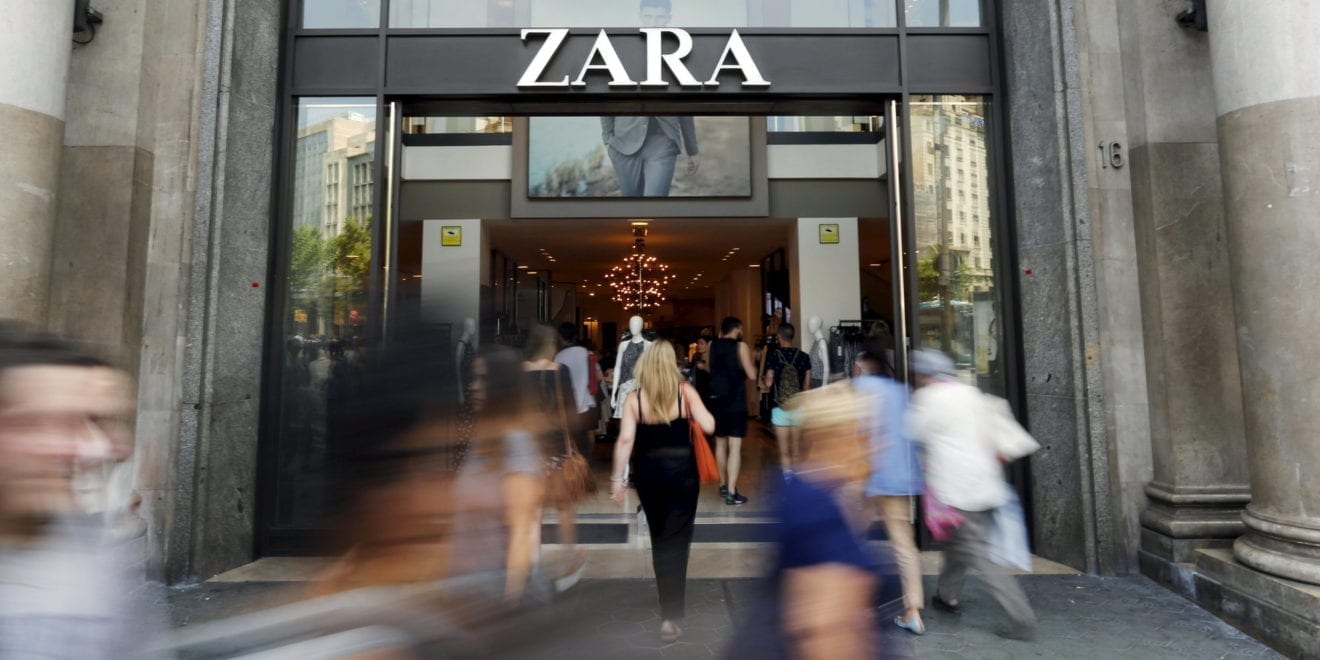
    Zara, the Spanish fashion giant, is set to open its first Zacaffe location in South Korea this May, launching inside the brand’s newly renovated flagship store in Myeong-dong, Seoul.

    The move reflects a growing trend among global fashion brands incorporating cafes into their retail spaces, offering customers a more immersive brand experience.Zara introduced Zacaffe in Madrid in November 2024, integrating a cafe space within select stores to serve coffee, desserts, and branded merchandise, including tumblers, hats, eco-bags, and t-shirts. Following its China debut in Nanjing this month, the Seoul location will be its third global outpost, with an Osaka store also in the pipeline.

    “Myeong-dong is a prime shopping and fashion district, attracting both locals and tourists, making it the perfect location for a flagship Zara store and our cafe experience,” a Zara representative said.

    Zara also plans to introduce Korean-inspired desserts and a cafe design that reflects local aesthetics, aiming to attract both domestic customers and international visitors. The company is considering further expansion within South Korea.Zara is not alone in blending retail and café culture. Luxury fashion brands have increasingly adopted coffeehouse ventures to strengthen their brand presence and enhance customer engagement.

    Ralph Lauren introduced Ralph’s Coffee to South Korea in September 2024, opening a cafe in Seoul’s Garosu-gil district, a decade after launching the brand in New York in 2014. The cafe, featuring classic green-and-white interiors and American-style menu offerings, has drawn long queues, even on weekdays. Ralph’s Coffee also opened a popular pop-up store at The Hyundai Seoul last month.
    Maison Kitsune, the Parisian-Japanese brand under Samsung C&T fashion division, launched cafe Kitsune in Seoul’s Garosu-gil in 2018. The brand has since expanded to Hyundai Department Store’s Mokdong and Pangyo locations, as well as Shinsegae’s Centum City branch, where the cafe welcomes over 400 customer groups daily on weekends.

    Gelato Pique, a Japanese homewear brand, entered the cafe scene in September 2024 by opening Pique cafe in Hannam-dong, Seoul. The cafe offers specialty crepes and gelato, aligning with the brand’s “comfortable luxury” ethos and attracting foot traffic to the store.The trend underscores a strategic shift in the fashion industry. With the rise of e-commerce reducing in-store foot traffic, brands are reinventing retail spaces as lifestyle destinations.

    “Online shopping has made it harder for brands to showcase their identity in physical stores,” a fashion industry insider noted. “By launching cafés and selling branded merchandise, fashion labels create a more tangible, memorable experience for customers.”

    As more brands adopt cafe-driven retail strategies, the industry’s shift toward experiential shopping is expected to accelerate, blurring the lines between fashion, lifestyle, and hospitality.

  • South Korean hypermarket Emart to launch in Laos

    South Korean hypermarket Emart to launch in Laos

    Emart, the South Korean hypermarket retailer, will expand into Laos this year through a master franchise deal with U-Dee, an investment entity owned by LVMC Holdings.

    The move follows the company’s announcement earlier this month that it would expand into Cambodia in June.

    The agreement includes opening one Emart discount retail outlet and three hard-discount outlets under the brand name No Brand – Emart’s house label – in Laos later this year.

    Emart operates three Emart stores in Vietnam, four in Mongolia, and 17 No Brand stores in the Philippines.

    The firm intends to open 20 E-Mart locations and 70 No Brand stores in Southeast Asia during the next 10 years.

    LVMC Holdings, originally known as Kolao Group, was founded in 1997 by South Korean businessman Oh Se-young. The group debuted its footprint in the retail market with a local hypermarket chain dubbed Kok Mega Mart in Laos last year.

  • Italian outerwear label Herno makes global duty-free debut in Korea

    Italian outerwear label Herno makes global duty-free debut in Korea

    Italian luxury brand Herno has made its first presence in South Korea, in partnership with Shinsegae International. The launch also marks Herno’s first presence in a duty-free shop.

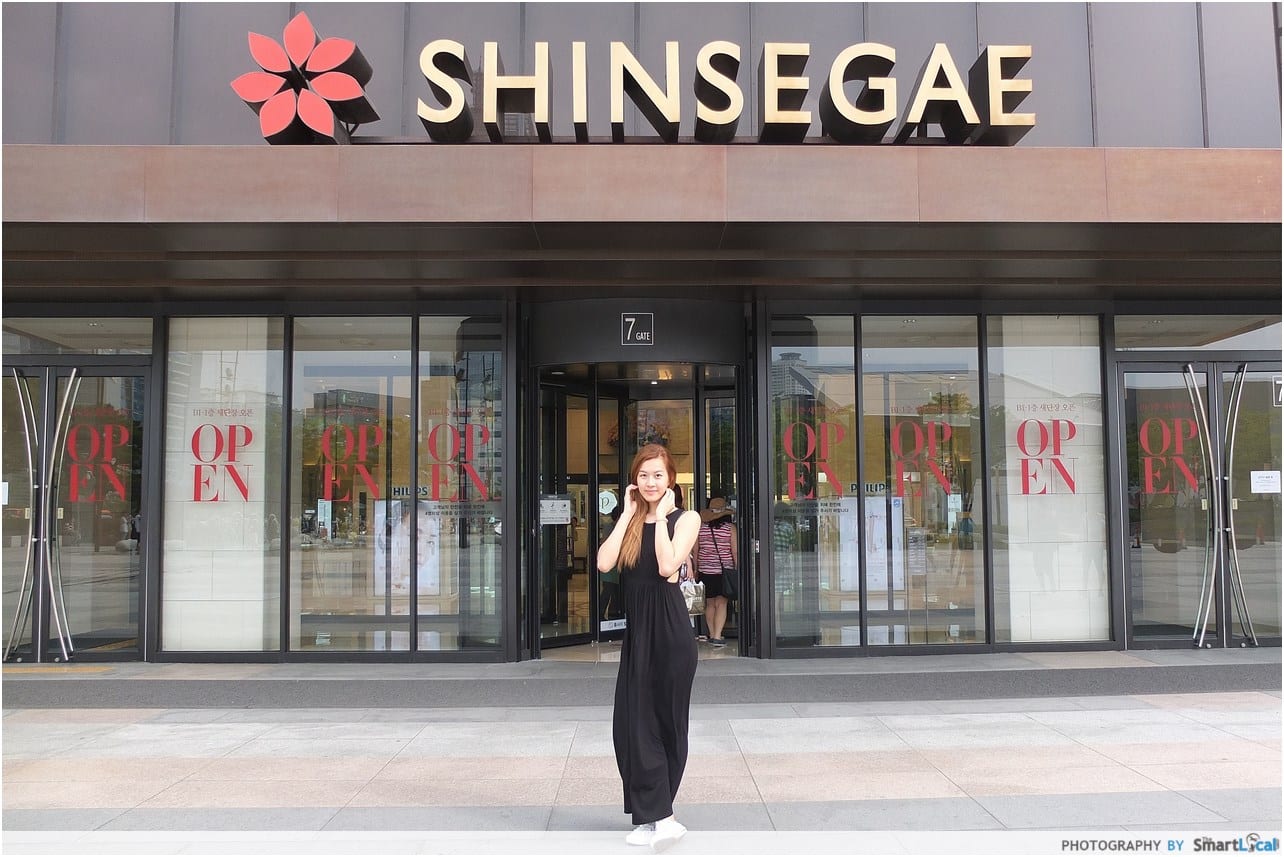
    Located on the ninth floor of the Shinsegae Duty-Free Myeongdong branch, the store offers its latest winter collection in a variety of colors, with products made primarily of cashmere, silk, goose down, and nylon.

    “Even though outerwear is expensive, there is a perception that people buy high-quality products and wear them for a long time, so the demand for luxury padding is steadily increasing,” said a representative for Shinsegae International Herno.

    “As the number of travelers leaving overseas, including foreign tourists, is rapidly increasing ahead of the end of the year. We are expecting a good response from the Shinsegae Duty Free Myeongdong branch.”

    Herno, founded in 1948 by Giuseppe Marnezi, is notable for not showing its logos, in line with the quiet luxury trend. The decision to create a duty-free store was made in reaction to South Korea’s emergence as a centre of luxury fashion, the recent growth in international tourists visiting Korea, and the rapid increase in overseas travel by Koreans.

  • South Korea’s retail sales increase in October

    South Korea’s retail sales increase in October

    South Korea’s retail sales increased 6.4 per cent year-on-year in October amid higher demand for food items and daily necessities.

    The combined sales of 25 major offline and online merchants grew to 15.3 trillion won (US$11.87 billion) during the month from last year’s 14.4 trillion won, Ministry of Trade, Industry and Energy (MOTIE) data showed.

    Online sales grew 12.6 percent to 7.95 trillion won attributed to an increase in bulk economy-size purchases and strong demand for travel packages and outdoor autumn season activities-related items.

    Online food products sales rose 23.4 per cent while sales of cosmetic products and living/furniture items increased 21.5 per cent and 16.9 per cent, respectively.

    However, online fashion/clothing sales dropped 3.7 per cent while sporting goods sales slid 4.1 per cent.

    Meanwhile, offline sales climbed 0.5 percent to 7.36 trillion won, led by a 6.8 per cent rise in sales at convenience stores. Sales at super supermarkets advanced 3.1 percent.

    On the other hand, sales at hypermarket chains dropped 4.1 per cent as sales of innerwear and miscellaneous goods fell 10.5 per cent. Home/living, home appliances/culture sales at hypermarkets also declined 5.6 per cent and 1.5 per cent, respectively.

    Sales at department store chains went down 2.6 per cent as sales declined across all categories except women’s casual, which grew 1.0 per cent.

  • Capital Elite attracts South Korean investors

    Capital Elite attracts South Korean investors

    Capital Elite is a popular investment destination for Korean investors due to its prime location in Hanoi’s new CBD and diverse entertainment and leisure areas.

    The Vietnamese real estate market is attracting South Korean investors due to rapid infrastructure development, reasonable property pricing, and potential value appreciation.

    The proportion of foreign individuals interested in Vietnam’s real estate is increasing, with a particular focus on Korean investors.

    According to The Chosun Ilbo, Vietnam is the second most popular destination for real estate investment among Korean investors.

    Experts point out that it primarily stems from the high-profit potential and high-quality products, coupled with the participation of reputable developers, which have contributed to driving the investment trend. The relaxation of Vietnam’s housing law is also making it easier for foreigners to purchase property.

    Furthermore, the attractive market prices are a crucial factor in drawing the attention of Korean real estate investors.

    According to Le Thi Hang, CEO of Indochine Real Estate, with the same amount of money, they can purchase three high-quality apartments in Vietnam instead of investing in one apartment in their home country. This allows them to diversify their investment portfolio.

    Moreover, rental yields in Vietnam are quite favorable. Continuous infrastructure growth also brings excellent price appreciation potential to the real estate market.

    Renowned for their culture and lifestyle that leans towards apartment living, up to 79% of Korean customers opt for premium high-rise condominiums in major urban centers.

    One of the luxury apartment projects in Hanoi, Capital Elite is capturing the attention of the Korean community.

    Not only does Capital Elite boast a prime location right on Pham Hung Street, one of the most rapidly developing thoroughfares, but it also sits at the heart of the new CBD, the new economic hub of Hanoi, which is home to major administrative centers, headquarters of large corporations, and a variety of entertainment and leisure areas.

    As a result, residents enjoy seamless connectivity to a plethora of educational, healthcare, entertainment, and government facilities in the area, all within just a few minutes’ commute, making it a perfectly integrated living space.

    The My Dinh area is also a hub for a substantial expatriate community in the capital city. Capital Elite serves as one of the ideal destinations to meet the rising demand of Korean nationals living and working in Vietnam, a number that increases each year.

    Especially in the My Dinh-Me Tri urban areas, there is a concentration of affluent Korean residents.

    With the growing demand for housing, workspace, and entertainment for this group, the potential for both rental income and property appreciation is on the rise.

    In addition to its favorable location, on-site amenities and living spaces are also factors that investors pay special attention to.

    With a collection of 36 exclusive amenities, including a shopping center, international restaurants, a luxurious sky bar, all-season swimming pools, a jacuzzi, and a premium gym and fitness center, Capital Elite aligns perfectly with the notion of enjoying the most extensive amenities when living in an apartment for Korean residents.

    Furthermore, the project’s abundant amenities, along with the fact that 100% of the apartments cover over 100 square meters and have 3 bedrooms, ensure that it meets the standards of even the most discerning Korean guests.

    For further information, contact the Development & Project Management Unit for Capital Elite on the first floor of the CT4 Vimeco Building, Nguyen Chanh Street, Cau Giay District, Hanoi.

  • South Korea e-commerce market to surpass $160 billion mark in 2027

    South Korea e-commerce market to surpass $160 billion mark in 2027

    South Korea continues to evolve as a major e-commerce market and is expected to register a strong compound annual growth rate (CAGR) of 7.7% between 2023 and 2027 to reach KRW202.6 trillion ($160.4 billion) in 2027, forecasts GlobalData, a leading data and analytics company.

    GlobalData’s E-Commerce Analytics reveals that South Korea e-commerce market has been on growth trajectory, registering a CAGR of 17.4% between 2018 and 2022 to reach KRW136.6 trillion ($108.2 billion) in 2022. This trend is expected to continue in 2023, with e-commerce sales expected to grow by 10.0%.

    Shivani Gupta, Senior Analyst Banking and Payments at GlobalData, comments: “South Korea has a well-developed e-commerce market supported by high-speed internet, rising smartphone penetration, availability of secure online payment systems and increasing consumer confidence in online shopping.”

    South Koreans are frequent online shoppers with over 80% of the consumers reported to have shopped online in the past six months, while only 10% indicated that they never shopped online, according to GlobalData’s 2023 Financial Services Consumer Survey*.

    The availability of new and innovative mode of online shopping such as video live streaming is also encouraging shoppers to go online. South Korean e-commerce giant Naver leads this space by enabling merchants to live stream their products on its “Naver Shopping Live” platform. Customers can view the product details, interact with the seller and buy from the platform on real-time.

    International brands are also venturing into this space, contributing to the e-commerce growth in the country. In June 2023, YouTube launched its first official online shopping channel in South Korea, live-streaming products in Korean language.

    Gupta adds: “Koreans increasingly prefer shopping online even for day-to-day products, a trend that continued post COVID-19. GlobalData’s survey revealed that everyday essentials such as food and drinks account for nearly one fourth of the e-commerce purchases by value in 2023, while clothing and footwear account for 12.2%.

    Gupta concludes: “South Korea’s e-commerce market registered sustainable growth during the last five years. The uptrend in e-commerce sales is likely to continue over the next few years supported by the growing consumer preference, improving payment infrastructure, and growing popularity of innovative online shopping modes.”

    *GlobalData’s 2023 Financial Services Consumer Survey was carried out in Q2 2023. Approximately 50,000 respondents aged 18+ were surveyed across 40 countries.

  • Charles & Keith opens first flagship store in South Korea

    Charles & Keith opens first flagship store in South Korea

    CHARLES & KEITH’s inaugural duplex flagship store in South Korea, situated in the vibrant shopping district of Gangnam, Seoul, is now open. Spanning an expansive area of over 330 sqm, the two-storey flagship store stands as the largest CHARLES & KEITH boutique in South Korea. Staying true to the brand’s signature minimalist aesthetic, the brand-new flagship store showcases a thoughtfully designed interior characterized by gradual curves and fluid lines. These design elements are seamlessly integrated with a clean and understated colour scheme, resulting in a space that emanates a modern and refined ambiance.

    The flagship store features striking sculptural artworks by South Korean artist Jeesun Park, making a bold statement throughout the space. These sculptures, while harmoniously complementing the spatial design, stand out with their unique shapes and artistic presence. Fragmented hemispheres, arcs, cut-out shapes, ellipses, and other unfinished forms intertwine to create new compositions.

    In addition to its remarkable features, the flagship store in South Korea is the first in the country to introduce Made for Me by CHARLES & KEITH, an exclusive in-house personalization service. This offering empowers customers to express their unique individuality by embroidering their names onto selected items. The embroidery also includes two exclusive icons inspired by Seoul: a magpie and a graphic artwork depicting the city’s vibrant essence. Going beyond the celebration of creativity and individuality, the Made for Me service adds an invaluable personal touch that brings deeper meaning to the act of gifting.

  • South Korean pizza chain GoPizza eyes major Asian expansion

    South Korean pizza chain GoPizza eyes major Asian expansion

    South Korean fashion chain GoPizza has launched its first physical location in Indonesia as part of a broader Asian expansion plan.

    This brand’s first direct-to-consumer store in Indonesia is located in Jakarta. It follows the opening of a small store inside CGV Grand Indonesia in October of last year in collaboration with Korean multiplex operator CGV. The brand reportedly will open its second branch at Mall of Indonesia this month and the KM 6B Toll Rest Area the following month.

    Beyond Indonesia, the company aims to increase its footprint in India from 25 to 100 locations this year and is preparing to expand into other markets, including Vietnam, Thailand, Malaysia, and the US.

  • Apple launches Apple Pay in South Korea

    Apple launches Apple Pay in South Korea

    After a years-long wait, Apple Pay today launched in South Korea, allowing those living in the country to use Apple’s payment system to make contactless payments using the iPhone or Apple Watch.

    Apple has been working to bring ‌Apple Pay‌ to South Korea since 2017, but Apple was unable to be registered as an electronic financial business operator because regulators were investigating whether ‌Apple Pay‌ violated local regulations and laws. Apple was finally approved by financial regulators back in February.

    NFC terminal adoption was also low in retail stores in South Korea around when ‌Apple Pay‌ first launched, which continues to be an issue. There are more NFC terminals than there were six years ago, but The Korea Times suggests ‌Apple Pay‌ will face “significant challenges” in Korea due to the limited number of NFC terminals.

    With ‌Apple Pay‌, credit and debit cards from supported banks in South Korea can be added to the ‌iPhone‌ and Apple Watch to make purchases at stores that have contactless payment options. ‌Apple Pay‌ cards can be used on ‌iPhone‌, iPad, and Mac to make ‌Apple Pay‌ purchases on the web.

    At the current time, ‌Apple Pay‌ is limited to Hyundai Card users, which could see South Koreans interested in using the service picking up a Hyundai Card. No other card companies are participating in ‌Apple Pay‌ as of yet.