Tag: spending

  • Asia Pacific’s five most popular cities o pay with Mastercard

    Asia Pacific’s five most popular cities o pay with Mastercard

    Five destinations attract 22 per cent of all international traveller arrivals in Asia Pacific and a quarter of travel spend in the region, according to a new Mastercard report.

    Asia Pacific’s five most popular destinations for international travellers – Bangkok, Singapore, Kuala Lumpur, Tokyo and Seoul – welcomed over one-fifth of all overnight visitors to the region’s top 161 cities and regional centres last year. Hong Kong is notably absent from the list.

    The data has been revealed in Mastercard’s Asia Pacific Destinations Index (APDI), a regional subset of the Global Destination Cities Index (GDCI) which is now in its tenth year.

    Primarily driven by explosive growth in outbound travel from Mainland China, these five cities are also capturing more than 25.2 per cent of total international travel spending in the region.

    Last year, Asia Pacific hosted travellers making 342.2 million business and leisure trips, up from 159.1 million in 2009, representing an 8.9-per-cent compound annual growth rate (CAGR) over the nine-year period. During the same period, travel spending in Asia Pacific more than doubled, rising from US$117.6 billion to $281.1 billion, equating to a compound annual growth rate of 10.2 per cent.

    “While the world’s economic, geopolitical, technological and societal landscapes have all changed dramatically since Mastercard launched this research 10 years ago, one thing has remained constant: the desire of ever-growing numbers of people to explore the world beyond their own borders,” said Mastercard’s senior VP data & services Asia Pacific Rupert Naylor. “With the top 20 cities attracting nearly half (49.8 per cent) of all international overnight arrivals to the 161 destinations ranked in the APDI, it is important to understand not only how continuously rising travel numbers impact cities and destinations for the better, but also the challenges they pose. This equips governments, merchants and the global travel industry with the information and insights they need to better serve their residents and visitors.

    The research shows that Mainland China continues to exert the greatest influence over travel patterns and expenditure flows. Since 2009, overnight arrivals by Mainland Chinese travellers in markets across Asia Pacific surged from 10.5 million to 62.4 million last year, representing a 21.9 per cent compound annual growth rate over the period.

    “While Mainland China serves as a focal point for Asia Pacific’s top destinations, there are also bright spots in South Korea, Japan and India,” said Naylor. “As travellers from these markets continue to increase by remarkable percentages year over year, it is imperative that we bring together resources from both the public and private sectors to help tourism partners better understand commerce patterns and deliver attractive experiences for eager travellers from across the region.”

  • LVMH sales up despite global tensions

    LVMH sales up despite global tensions

    Luxury brand owner LVMH has reported a solid 15 percent increase in sales in the first half of this year, shrugging off gloomy consumer sentiment in many markets.

    The parent of Louis Vuitton, Christian Dior, Bulgari, Sephora, DFS, Moet and a raft of other brands recorded sales of €25.1 billion. Organic growth was 12 percent ahead of the same period a year earlier.

    Second-quarter growth was also up by 15 percent of the beginning of the year, with the US, Asia and Europe all showing good growth and an obvious rebound in France in the second quarter.

    While the company noted a slowdown in demand in Hong Kong and Macau over the past few months, its DFS department-store subsidiary recorded “good” performance during the first half of the year.

    Profit from recurring operations was €5.295 billion for the first half, up by 14 percent, with operating margin reaching 21.1 percent – about the same as last year.

    “These results once again illustrate the effectiveness of our strategy and the exceptional desirability of our Maisons, whose products transcend time,” said chairman and CEO Bernard Arnault.

    “Their constant demand for quality and their consistently refreshed creativity are key to LVMH’s success, always guided by a long-term vision, combining exemplarity and responsibility in all the company’s actions. Despite buoyant demand, we will continue to manage costs and remain vigilant into the second half of the year. We are therefore entering the second half of the year with confidence and count on the talent of our teams and their shared entrepreneurial passion to further increase, once again in 2019, our leadership in the world of high-quality products.”

    The company’s fashion and leather goods business group recorded organic sales growth of 18 percent and profit from recurring operations was up 17 percent. The Louis Vuitton brand business achieved growth in all businesses and regions. Christian Dior had “a remarkable performance during the first half,” the company said, with its new 30 Montaigne line a standout.

    The selective retailing business group achieved organic revenue growth of 8 percent, with profit from recurring operations up 17 percent. Within that group, Sephora recorded strong revenue growth and gained market share in all of its locations, LVMH reported.

  • Credit cards decline amid buy now pay later boom

    Credit cards decline amid buy now pay later boom

    In the twelve months to March 2019, almost half a million Australians got rid of their credit cards, with the total number of credit cards in the country falling to 14.6 million compared to the 15 million a year prior.

    This trend, highlighted in illion’s second Credit Card Nation report, suggests that Australia has surpassed ‘peak card’ and is now on a long-term downward trend in terms of credit card ownership.

    According to illion chief executive Simon Bligh, falling house prices have had the secondary effect of causing urban Australians to consolidate their financial position – including a focus on clearing unnecessary debt.

    “In the country, it’s a different story, and many parts of rural Australia have faced extenuating circumstances with their livelihoods heavily impacted by the drought,” Bligh said.

    “Farmers have needed support with their cash flow and have turned to credit cards.

    “The Australian economy is facing weak spending patterns, low wage growth, high levels of mortgage debt and low rates of saving.

    “While the number of credit cards overall is falling, those who have them are using them more often. Some consumers are struggling to manage their cash flow and are opting to drift into debt rather than pay off their bills immediately.”

    According to the report, card-based transactions are likely to continue to fall in volume due to the rise of alternative payment systems, such as direct debit, PayPal, BNPL, and payment through social platforms such as Facebook.

    According to Bligh, as credit lenders have adjusted their assessment criteria based on increased pressure from regulators, credit users who were already problematic are finding it more difficult to obtain further credit, while those who are low-risk and high-reward have been able to maintain strong credit ratings.

    “But here’s where it gets interesting – our research this time around shows that millennials are now the only group that have increased ownership of credit cards,” Bligh said.

    “Granted the numbers are small, and you may be asking why this is – especially as we know that young people under 25 pose the greatest risk of failing to pay back their debts and are almost six times more likely to be two months behind in their repayments than their parents.”

    There are two potential reasons for this, Bligh said. Firstly, millennial men are using both credit cards and buy now pay later services, and secondly that market forces may be pushing credit lenders to take on more risky endeavours to keep their numbers up as overall credit usage falls.

    “Our society is in the early stages of moving towards a buy now pay later approach for many low-cost items, with this coming at the cost of a general decline in the usage of credit cards,” Bligh said.

    “Young people are at the forefront of these changes and are using both at the moment – almost in equal measure.”

  • Easter spending up 4.6 per cent over Last Year

    Easter spending up 4.6 per cent over Last Year

    While nationwide spending was down year-on-year over the week to Easter Monday, the holiday period performed better compared to its 2018 counterpart, according to nationwide spending data from Paymark.

    The seven days to Monday, April 22, 2019, saw spending increase by 4.6 per cent compared to the Easter week in 2018, which ran to April 2. This is down slightly from the 4.9 per cent year-on-year spending increase in 2018.

    Gisborne saw the strongest growth at 14.6 per cent, followed by Marlborough at 13.3 per cent, when comparing Easter periods.

    Spending was also up across clothing and footwear stores (13.8 per cent), and liquor retailers (9.9 per cent).

    Compared to the exact same week in 2018, rather than last year’s East period, spending in the Canterbury region was down 7 per cent, with Kiwis spending a total of $125.1 million in the region over the week.

    Wellington brought in $106.2 million, a 5.9 per cent drop, while Auckland brought in $454.1 million – a 6 per cent drop compared to the same period in 2018.

    Auckland made up about a third of the spending in the country, with Paymark recording $1.19 billion spent over the week (0.8 per cent down on 2018), though the region was far outstripped in terms of overall growth.

    The Bay of Plenty saw spending grow to $92.9 million – a 14.5 per cent increase year over year. Gisborne enjoyed 19.6 per cent spending growth to $11.7 million, while Otago brought in $76.6 million, or an increase of 7.1 per cent.

    According to Paymark, grocery, fuel and hospitality providers, drove almost all of the spending increase.

    “This year these merchants recorded $43 million more spending (up 15.7 per cent) outside of the three largest Paymark regions,” Paymark said.

  • 5G spending undeterred by economic downturn

    5G spending undeterred by economic downturn

    Fitch Ratings says telecom operators will continue putting money and resources on 5G investments over the intermediate term, even though revenue may materialize gradually.

    The agency attributes this to “fairly resilient top lines and the flexibility to reduce operating costs, or even dividends before capex, if necessary. This should not have negative credit implications due to substantial cash flow and balanced capital allocation for most issuers.”

    Wireless investment, particularly related to the densification of the network, continues to be an area of emphasis for telecom companies due to the strong demand for 4G LTE capacity for rapidly growing data services and to position networks for 5G’s arrival.

    5G is a strategic priority for the sector due to the internet of things growth and the highly competitive and evolving competitor landscape.

    Upgrades to networks are required to support increased speed and connectivity, and to maintain and grow market share.

    Fitch said the company anticipates that the path for 5G adoption will be more evolutionary than revolutionary. Network deployment must be completed and customers will need to assess the added benefit and cost of next generation technology.

    The ratings agency anticipates over 4 billion 5G subscriptions globally by 2028, representing around 45% of the global total.

  • Retail spend on AI services to Multiply by 2023

    Retail spend on AI services to Multiply by 2023

    Global spending by retailers on AI services will reach US$12 billion by 2023, according to Juniper Research.

    That figure is more than three times the amount expected to be spent this year, of $3.6 billion and represents investment by more than 325,000 retailers expected to adopt the technology during the next four years.

    According to Juniper Research’s report, AI in Retail: Segment Analysis, Vendor Positioning & Market Forecasts 2019-2023, AI use by retailers will unlock efficiencies across back office operations. Advanced analytics employed in functions such as demand forecasting and automated marketing will make retailers more agile and improve margins.

    Juniper forecasts that retailers will face an AI adoption race, where AI-equipped retailers, which have adopted systems as early movers, will displace slower moving retailers, offering superior service at optimised price points.

    Demand forecasting crucial

    The use of machine learning in demand forecasting will prove to be a key market for AI vendors, with associated service revenues reaching $3 billion by 2023, up from $760 million in 2019.

    Juniper Research says demand forecasting will be essential to enable an effective omnichannel experience and drive higher margins.

    “With the rise of collect-in-store and one-off events such as Black Friday, understanding demand and supply chains is more crucial than ever with AI playing the central role,” said research author Nick Maynard.

    The research also found that smart checkouts, largely powered by AI technologies such as computer vision, will have a strong future in the convenience area; leading to annual transaction volumes of more than 1.4 billion by 2023, compared with just 42 million this year.

    While Amazon is currently highly visible with its Go model, China will be the biggest driver of future growth. This reflects the rapidly growing Chinese market, as well as the backlash Amazon has had recently due to its cashless model.

    Juniper Research provides research and analytical services to the global hi-tech communications sector, providing consultancy, analyst reports and industry commentary.

  • Do election periods impact retail spending by consumers ?

    Do election periods impact retail spending by consumers ?

    It is well known that retail sales have regular cycles that can be disrupted by external events, such as federal elections. While anecdotally it has been suggested that uncertainty around elections causes shoppers to curtail their spending, there appears to be very little evidence either domestically or globally to support the claim that an election campaign will negatively impact consumer spending.

    Retailers are notorious at playing the ‘blame game’ when it comes to their sales and profit reporting. They too quickly point the finger at Mother Nature – unseasonal hot weather, or cold weather impacting apparel sales. The release of blockbuster movies has been blamed for distracting shoppers, and even customers themselves for being too price-conscious, chasing discounts that erode their margins.

    Facts matter

    Researchers from Princeton and the University of Chicago found elections had very little impact on consumer spending. In their study, spanning four presidential elections, their initial findings identified a correlation between a voter’s ‘opposition towards a winning candidate’ and a lower score on a Consumer Sentiment Survey. Simply, if your chosen candidate doesn’t win, you’re apparently less likely to start spending.

    However, the correlation did not prove causality. They found, for example, when President George W. Bush was elected in 2000, shopper’s opposition to President Bush had no effect on consumers’ self-reported spending plans or on their subsequent automobile purchases and credit-card use.

    It is a similar picture here in Australia, where commentators are looking a little more closely at claims elections negatively impact retail sales. A review of the ANZ-Roy Morgan
    Consumer Confidence Index demonstrates a similar phenomenon to that in the US. With the exception of the November 2001 election, marred by the 9/11 attacks in the US, confidence remained positive.

    In 2019, ANZ’s Australian economics team analysed 14 elections since 1980, finding that, “elections don’t have all that much influence on the economy”.

    A ‘wait and see’ approach

    During times of uncertainty, we often hear that shoppers are ‘deferring’ their spending. IBISWorld chairman Phil Ruthven finds that shoppers tend to take a “wait-and-see approach” during election campaigns. This simply means that shoppers will curtail purchasing big ticket items like cars, consumer electronics and high-end fashion, but household basics such as food and basics generally remain insulated. In most cases, consumer confidence tends to bounce directly after elections.

    There are far too many variables in play to suggest that a federal election alone will derail consumer confidence and stifle retail spending. In fact, some consumers who expect to be the
    recipients of election sweeteners such as tax cuts, infrastructure projects and or job opportunities, may actually increase spending.

    Once consumers anticipate a specific positive outcome will occur, they believe their subsequent thoughts and behaviours will actually help to bring about that outcome.

    Categories exposed

    Food, groceries, fuel and basic clothing generally remain well protected during uncertain times. Despite increasing competition from new players like Amazon, the growth of Aldi and the entry of Kaufland, both Coles and Woolworths food, grocery and liquor divisions will remain moderately strong. However, most exposed are ‘big ticket’ retailers selling furniture, consumer electronics and automobiles. This will be a challenging quarter for JB Hi-Fi, Harvey Norman and Steinhoff.

    The future of fashion

    Footwear, apparel and accessories retailers are expected to struggle, as such purchases are tied to discretionary spending. However, the challenges incumbent players like Myer, David Jones, Target, Big W and Premier Investments are facing are mostly related to new entrants, not elections.

    The growth of global fashion retailers like H&M, Uniqlo, Zara, Forever 21, and online marketplaces like The Iconic, Amazon and eBay in the domestic market, will definitely pose a challenge for these retailers.

    While most consumers remain confident, some retailers are certainly looking towards challenging times ahead.

    An unseasonably warm autumn and a glut of global fashion retailers in the market, will encourage incumbent retailers to cut prices little deeper this year. Great for shoppers, but tough on the books. It is looking to be a tough year ahead for retailers.

  • Retail slow in January despite Luxury growth

    Retail slow in January despite Luxury growth

    While several retailers have talked about conditions improving since a somewhat dismal holiday trading period, the Australian Bureau of Statistics have released a more muted view of month of January, with retail sales having improved by 0.1 per cent.

    This increase followed a fall of 0.4 per cent over December 2018, and a 0.5 per cent increase in November off the back of successful Black Friday and Cyber Monday sales events.

    “While January hasn’t proved to be a ground-breaking month by any stretch, on the plus side it does indicate that retail is slowly picking itself up and heading in the right direction,” National Retail Association chief executive Dominique Lamb said.

    Department store spending saw a 2.1 per cent decline over the month, while spending on clothing, footwear and personal accessories dipped 0.3 per cent.

    Food retailing and cafes, restaurants and takeaway services saw spending 0.3 per cent higher than the month prior, while ‘other retailing’, which brings together several industries such as pharmaceuticals, books and recreational goods, saw a jump of 0.7 per cent.

    The increase in cafe spending could be indicative of consumers beginning to feel more comfortable spending on ‘little luxuries’, according to Australian Retailers Association executive director Russell Zimmerman.

    “We hope this trend will continue to increase and spill into other retail categories across the retail sector,” Zimmerman said.

    The NRA’s Lamb went on to point to the upcoming Federal Budget, stating the importance that the Government puts a focus on encouraging consumer spending.

    “Measures such as tax cuts, infrastructure spending and initiatives that ease the burden on small businesses can all help improve the economy and assist retail in getting out of this sluggish phase it’s experiencing,” Lamb said.

  • 7-Eleven Malaysia predicts improved trading conditions

    7-Eleven Malaysia predicts improved trading conditions

    7-Eleven Malaysia CEO Colin Harvey believes the company can do ever better this year after a modest improvement in sales last financial year. The company’s revenue crept up 1.3 per cent last year to RM2.22 billion (US$546 million), with after-tax profit up 2.4 per cent to RM51.3 million ($12.6 million). Harvey says sales growth was driven by new stores and an improvement in same-store sales and consumer-promotion activity.

    “We continue to see opportunity for improvement. We are confident that our strategy roadmap focussed on strengthening the key areas of assortment, supply chain, operational excellence, store base, and digitally enabling the organisation will bear fruit in terms of financial performance, and overall customer shopping experience.”

    7-Eleven Malaysia’s board believes the trading conditions for the next quarter will improve,  driven by domestic demand and anticipated heighted consumer sentiment. The group plans to “continue to refresh the 7-Eleven brand in the mind of the customer” through innovative promotions, products and pricing.

  • Starbucks Reserve® Roastery Tokyo opened door

    Starbucks Reserve® Roastery Tokyo opened door

    This week, Starbucks celebrates the opening of the Starbucks Reserve® Roastery Tokyo, a four-story tribute to premium coffee quality, innovation and human connection. This will be the fifthRoastery globally, opening to the public on Thursday, February 28, at 7 a.m. JST, reaffirming the company’s 23-year commitment to Japan. The Roastery pays tribute to the important role that Starbucks Japan has played in shaping the foundation of the Company’s international growth. The Roastery introduces customers to more than 100 unique coffee and tea beverages and merchandise, as well as a menu of artisanal Princi Italian fare for the first time in Japan.

    It also celebrates the Japanese culture of connection and craftsmanship through the first AMU Inspiration Lounge –from the Japanese “amu,” meaning “knit together”–to host community gathering events and is planned to become Starbucks first Specialty Coffee Association certified training location in Japan.
    “As the first international market outside of North America, Starbucks Japan has contributed 23 years of innovation for the company globally,” said Kevin Johnson, CEO, Starbucks Coffee Company.

    “The opening of the Tokyo Roastery will further amplify what Starbucks Japan has done across all stores in the market for more than two decades—innovating and delivering the finest quality coffee one person, one cup and one neighborhood at a time.” Takafumi Minaguchi, CEO, Starbucks Japan, added, “The Roastery will amplify and inspire coffee passion across all Starbucks stores, and will serve as a catalyst for a new wave of growth centered on the customer experience and passion for coffee and service. Beginning with the “Make it Yours” campaign that will commence at every store in Japan upon the opening of the Roastery, customers will be invited to experience the first Starbucks coffee roasted exclusively in Tokyo, for Japan, and available in a variety of coffee beverage styles.”

    Collaborative Design Highlights Japan’s Natural Beauty

    Located in Tokyo’s vibrant and creative neighborhood of Nakameguro, the Roastery’s enchanting design was inspired by the famous cherry blossom trees lining the Meguro River.

    The building’s glass walls and terraced floors seamlessly fold into the fabric of the neighborhood, bringing visitors eye-level with the cherry blossoms and the four seasons of the river to reflect the natural beauty and sense of harmony found across Japan.

    The Tokyo Roastery is the only Starbucks Roastery location designed in collaboration with a local architect from the ground up.

    The exterior was brought to life in collaboration with renowned Japanese architect Kengo Kuma. Envisioned by Liz Muller, Starbucks chief design officer and lead designer for all five Roasteries globally, the Roastery highlights the work of local craftsmen and women to create an enchanting destination for coffee exploration and discovery.

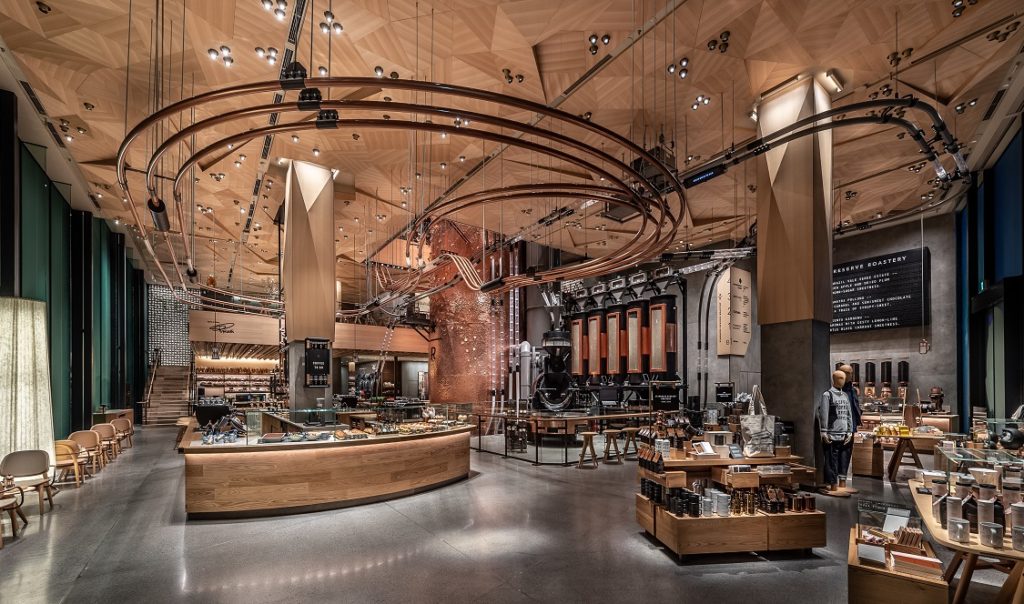
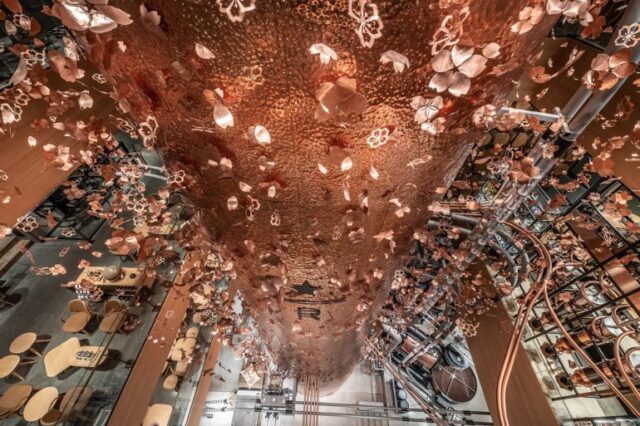
    The Tokyo Roastery merges traditional and modern design to deliver a unique and inspired experience across all four floors. Upon entering the Roastery, customers are greeted by the world’s largest Starbucks Roastery coffee cask, four-stories and over 55 feet of blush-tinted copper adorned with hand-crafted copper cherry blossoms, which changes hues throughout the day in different lights.
    The expansive cask was built using the technique of tsuchime, a tradition of copper beating, where each person involved in the building of the Roastery was offered the chance to hammer a portion to create its texture and pattern. The cask’s unique color is balanced against the light wood which has been carried into the interior to give the store a brightness found throughout traditional Japanese architecture.

    Throughout the Roastery, local craftsmen and women were brought together to incorporate their expertise and traditional craft into the design elements.

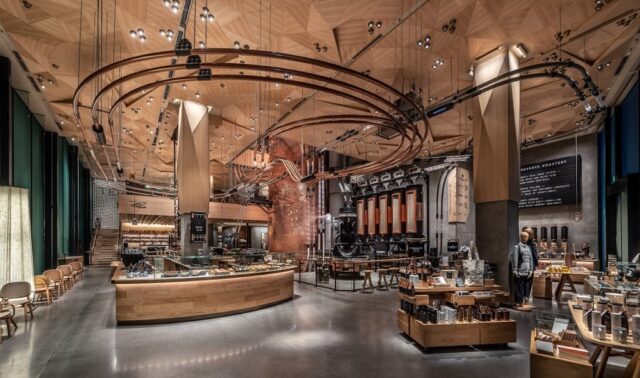
    The wood-tiled ceiling was inspired by the art of origami, providing a stunning visual experience. The light and airy space carries the light wood used on the exterior to the inside, giving the experience an enchanting aura.

    The wood, sourced locally, has been treated throughout with a traditional technique which prevents it from aging, ensuring the brightness is maintained inside and outside in the years to come.

    Enchanting Immersive Coffee, Tea and Mixology Experience

    The coffee journey at the Reserve Roastery Tokyo is an immersive experience and education in coffee, and its process—from green bean to cup—which begins at the Main Bar on the first floor.

    The open floor plan draws customers into the immersive experience, introducing them to the skilled art of roasting, brewing and hand-crafting beverages. The Reserve Roastery serves the freshest cup of coffee and it is here on the first floor that customers can taste Reserve coffee beverages such as Barrel-Aged Cold Brew.

    The Princi bakery serves handcrafted, authentic artisanal Italian fare that is baked fresh in the Roastery throughout the day. For the first time in Japan, customers can enjoy freshly-baked breads, cornetti, focaccias, pizzas, salads and more.

    An airy staircase leads to the second floor, where customers will be transported into the tradition of Japanese tea at the world’s largest Teavana Bar.

    Exclusive tea beverages, such as the Pop’n Tea Sakura Jasmine, featuring a vibrant hibiscus and cherry popsicle atop a floral jasmine tea, will delight customers with their charming appearance, Japanese ingredients and unique flavor combinations, modernizing the tea experience. On the terraced third floor, Starbucks Japan’s first cocktail bar, Arriviamo™, puts innovation, mixology and cocktail craft on full display.

    The two walls of spirits bring together the Arriviamo menu, featuring coffee and tea-inspired cocktails only available at the Tokyo Roastery, including the Nakameguro Espresso Martini made with chestnut liqueur, crème de cacao and espresso, then paired with decadent chocolate  from Nakameguro’s “green bean to bar CHOCOLATE” brand. Wine, beer and classic mixology beverages will also be available.

    Conversations with an Impact

    Starbucks Japan has more than two decades contributing to the communities it serves.

    The fourth floor of the Starbucks Reserve Roastery Tokyo is home to AMU Inspiration Lounge–a dedicated space for the community to gather for hosted social impact conversations. The concept of “AMU,” which means “to knit together” in Japanese, is founded on human connection and passions coming together, something Starbucks has long believed in. For the first time at any Starbucks location in the world, this intimate space will serve as a platform to host change-makers and creative thinkers from across Japan. The first event in April will celebrate the role of women leaders in Japan.

    The Roastery is planned to become Starbucks first certified Specialty Coffee Association (SCA) location offering training for coffee professionals in the near future.“We believe that where passions connect, the future is sparked, and we will offer the Tokyo Roastery as a gathering space to spark new ideas and create an impact,” said Minaguchi.

    “The Roastery signifies our commitment to fostering moments of human connection over a cup of coffee and using these moments to create positive social impact in the communities we serve.”

    With more than 37,000 partners who proudly wear the green apron across Japan’s 47 prefectures and 250 at the Roastery itself, Starbucks Japan will amplify coffee craft and innovation by freshly roasting small-batch coffees from around the world every day in Tokyo and introducing new beverages, concepts and inspiration to all 1,400 stores across Japan. This amplification will begin with Tokyo Roast coffee, a Starbucks Japan-exclusive coffee, available throughout the market on opening day.

  • Wayne’s Coffee debuts in China

    Wayne’s Coffee debuts in China

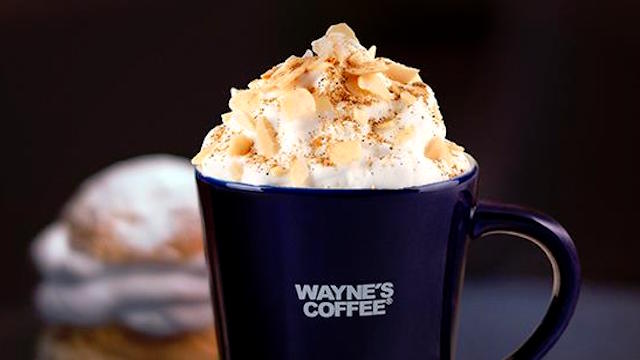
    Swedish cafe chain Wayne’s Coffee has opened its first outlet in China. The new store on Shanghai’s Nanjing Xi Lu serves coffee, sandwiches and Swedish pastries to consumers. The move represents a courageous first step in a market dominated by international and local competitors. China is Wayne’s second market in Asia after the brand launched in Vietnam in June last year. It currently operates seven locations in Ho Chi Minh City.

    While the brand has been criticised for lacking a distinctive look and presumed by some observers to be a local Starbucks clone, the brand has in fact been running in Sweden since 1994, where it was the first venue in the country to serve cafe latte. It was also the first to serve the latte in Saudi Arabia when it opened there in 2010.

    Wayne’s more aggressive expansion phase was recognised when the brand won “Franchise chain of the year 2017” in Stockholm. It currently operates more than 140 locations internationally.

  • Wing Zone reveals its Manila expansion plan

    Wing Zone reveals its Manila expansion plan

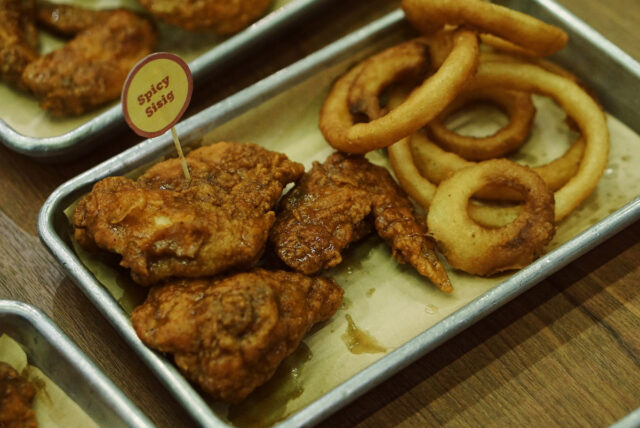
    US-based restaurant chain Wing Zone plans to open five more outlets in Manila by the end of this year ahead of pursuing more Southeast Asian opportunities. As Wing Zone opens new restaurants internationally, the company is exploring more local flavours and also plans to incorporate new menu options available in the US such as Zesty Breaded Wings and Chicken Ribs.

    “We have built a solid international presence and reputation with dedicated franchisees who share our values and understand the commitment to customer service. As we continue to find those qualified franchisees to help in our growth in the US we will be exploring even more partnerships to bring Wing Zone to more cities and countries internationally as well,” said Matt Friedman, co-founder and CEO of Wing Zone.

    Processed with VSCO with a6 preset

    In the US, Wing Zone will open eight new domestic locations in 2019 in North Carolina, South Carolina and Alabama. In Asia, after the Philippines, the chain will also explore other Southeast Asia markets.

    Wing Zone has nearly 100 locations across the US, and overseas including in Panama, Guatemala, Malaysia, Singapore and the Philippines.

  • Belgian Waffle Co expands to Southeast Asia

    Belgian Waffle Co expands to Southeast Asia

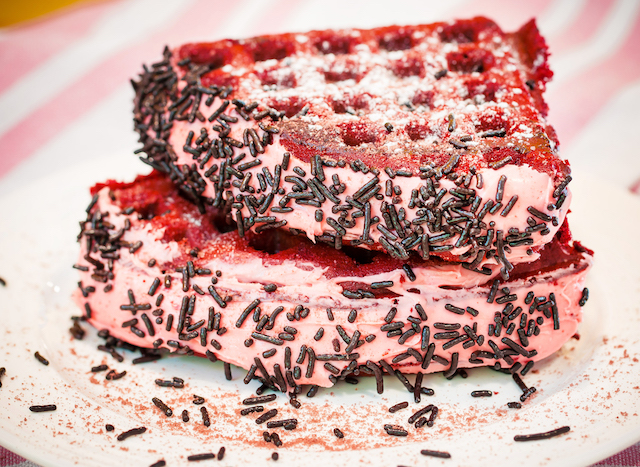
    Indian-headquartered Belgian Waffle Co has partnered with VF Franchise Consulting to expand into Southeast Asia. The chain is operated under small kiosk and cafe models, and is best known for its waffle sandwiches. “The Belgian Waffle Co has seen exponential growth in India in less than three years with unprecedented success,” said Shrey Aggarwal, cofounder of The Belgian Waffle Co.

    “Our vision is to be a Global Player in the QSR segment, being recognised for dessert offerings and our values of affordability, quality and simplicity.”

    Founded in 2015, Belgian Waffle Co now has more than 200 outlets in 55 cities in India, Nepal and Dubai.

    “We are delighted about partnering with The Belgian Waffle Co as the company seeks to expand further into Southeast Asia,” said Sean T Ngo, CEO of VF Franchise Consulting.

    “Belgian waffles have universal appeal amongst Asians and non-Asians alike. They have taken a fork-and-knife approach to eating waffles and turned the industry upside down into a fast, on-the-go food for people who enjoy delicious-tasting breakfasts, snacks and desserts and a business that offers potential fast returns.”

  • eat darling eat opens in Hong Kong

    eat darling eat opens in Hong Kong

    This February, foodies in Hong Kong will salivate over scrumptious treats and desserts at eat darling eat, the new Causeway bay eatery that is bringing a playful twist on iconic Chinese desserts to spread love and evoke warm childhood memories.

    The 1,300 ft design-centric space is bold, surreal and out of the ordinary, sharing an array of lip-smacking treats with an eclectic twist. Situated in Fashion Walk, eat darling eat is the latest addition under Ming Fat House. The dessert spot is further enhanced by the interior design, with large playful stickers on the walls, and creative food photographs that make visitors do a double take. At eat darling eat, all delicious culinary creations are all about stimulating the senses, each of them made with utmost care and loving attention.

    eat darling eat’s extensive menu features iconic Hong Kong desserts such as the homemade fluffy Pineapple Buns (HK$38) that are quintessential to the city, filled with pineapple custard. Chinese “tong sui” desserts get a modern reinterpretation with such intriguing combinations such as double-boiled Papaya (HK$68) with snow fungus, candied papaya and mascarpone cheese. Sweet Potato (HK$68), a sweet potato soup playfully pairs with a luscious chocolate cake and taro ice cream; and Red Bean (HK$68), mixed with tangerine peel soup with a scoop of matcha ice cream.

    Other signature creations are home-made icy treats that have a modern flavour. Set to become a favourite is the Double-strength Milk (HK$48), that features two scoops of the milk flavoured ice cream that are infused with Chinese rice wine. Sichuan Pepper (HK$48), with scoops of the ice cream that bring out the spicy taste of Sichuan peppercorns and complemented with the sweetness from candied bacon.

    The icy treat that is sure to be popular amongst the fans is the Chinese Ginger Vinegar (HK$48), creatively topped with crispy pork skin. Inspired by a traditional Cantonese dish that is typically shared by new mothers to celebrate the arrival of a newborn baby, this trail blazing creation promises a spoonful to remember.

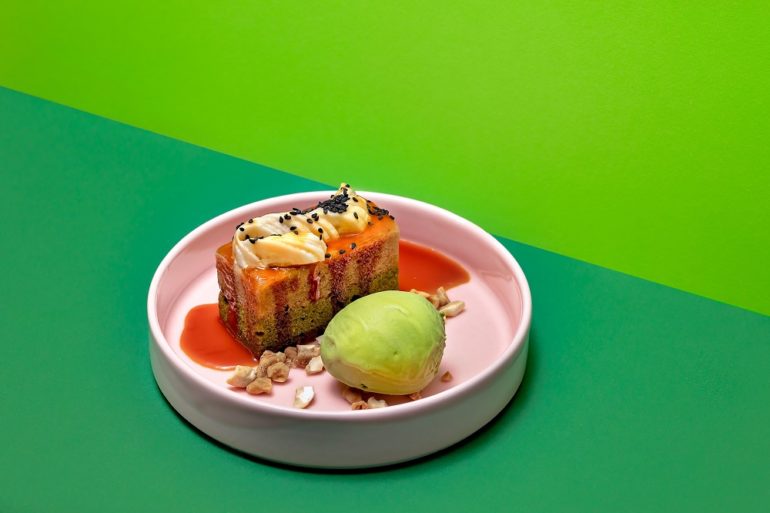
    Other delectable desserts include the Lava Cake (HK$78), featuring a decadent Valrhona dark chocolate filled cake with the earthy taste of walnut soup, and Matcha Cake (HK$58), a sweet caramel sponge cake topped with caramelised banana, and finished with scoops of matcha ice cream.

    “At eat darling eat, we strive to bring the element of traditional Hong Kong desserts that not only touch the heart, but also add a modern twist that will create new memories for our customers,” explained Jonathan Bui, owner of eat darling eat.

    The creative talent behind these quirky and tasty desserts is Executive Chef Jason Luk who tucked international experiences under his sleeve having worked in Bangkok, Shanghai and Miami. In Hong Kong he has honed his skilled at The Drawing Room and Zuma Hong Kong and brings a limitless array of culinary ideas at eat darling eat.

    “While living abroad, I learned a lot about desserts in other places, but at the same time I missed eating food from home. Since coming back to Hong Kong, I want to share the recipes from my experiences and present them to foodies in Causeway Way, which is the perfect place to showcase new and exciting trends and styles,” says Jason.

    eat darling eat offers guests a respite from busy Causeway Bay with its whimsical interiors that mirror the eclectic menu. The design draws inspiration from the experimental Post-modern era, incorporating designs, shapes and colours that challenge convention.

    The interior highlights split-level architecture, where the lower level entrance area is an open concept, while the upper space is framed as a theatre featuring fluorescent colours and reflective surfaces. The overall design is bold, surreal and out of the ordinary, emphasizing the creativity of the desserts.

    While eat darling eat offers mainly fun and playful desserts, it also offers savoury dishes for lunch and dinner that can be chosen from the a la carte menu and signature lunch menu alongside an extensive coffee, tea and cocktail menu. eat darling eat invites diners to take a break, slow down, and savour the moment in the midst of the hustle and bustle of Causeway Bay.

  • How much do Hongkongers spend on Valentine’s Day?

    How much do Hongkongers spend on Valentine’s Day?

    If you were in Hong Kong for Valentine’s Day you must have seen cascades of flowers around the city, couples flooding the restaurants, and inevitably thought: “love is definitely in the air”. You were actually right. Hong Kong is one of the top Asian markets for sentimental spending according to the Mastercard Love Index, showing continued growth since 2016 and some intriguing behavioural insights.

    Now, whether you think of it as the most romantic day of the year or a sickening slog, it’s undeniable that Valentine’s Day is a big deal for people splurging on their loved ones, and in Hong Kong even more so. The Mastercard Love Index has gathered data from credit, debit, and prepaid card transactions from the last three Valentine’s Day holiday periods(11th-14th February 2016-18) to discover the change in how fluffy feelings have translated into cold hard cash.

    The results show that since 2016, Hong Kong ranks third in growth for sentimental spending at 62%. China takes the top spot at 88% followed by Japan at 68%, which had a 35% surge. Overall across Asia-Pacific, sentimental spending has jumped up 33% with Valentine’s Day period transactions rising by 37% since 26%

    What was the biggest increase seen? Flowers of course. Since 2016 spend value on the holiday staple has gone up by 89% with 73% more transactions. In comparison, Hong Kong transactions for the pretty petals went up by 46% with total spend rocketing up by 93%.

    Here are some other interesting insights about Hongkongers from the research:

    Hongkongers aren’t early Valentine’s shoppers. Last minute buys for gifts are the norm with the 28% majority of sales happening on the day itself.

    Restaurant dates are still a growing favourite and getting flashier. Transactions in restaurants have grown by 20% since 2016 with the amount spent at meals up by 30%.

    More romantically, there has been a huge increase in couples popping away for romantic trips for Valentine’s Day. Transportation transactions showed a 205% increase in 2018, making up a significant 23% of the total spend for the day.

    Hotel rendezvous are also on the rise with 63% growth in transactions since 2016 and a boost to the total spend by 66%.

    Bling is still in. Jewellery transactions for Valentine’s Day have climbed with spend up 43% since 2016.

    Hongkongers like the personal touch when it comes to gifts for Valentine’s Day. 88% of gifts were bought in face-to-face transactions versus 6% online. However, online shopping for Valentine’s Day is still rising with a 146% increase in online transactions over the period since 2016.