Retail News CRM

Tag: spending

  • Korea’s card spending jumps 16% in January

    Korea’s card spending jumps 16% in January

    Korea’s card spending rose sharply in January, data showed Friday, on the back of increased consumption for the Lunar New Year holiday and a gradual recovery in domestic demand.

    Purchases made with plastic cards reached 56.1 trillion won ($45.4 billion) last month, up 15.9 percent from a year earlier, according to data compiled by the Credit Finance Association (CREFIA).

    Of the amount, credit card spending went up 15.9 percent on-year to 44.79 trillion won, while those of debit cards advanced 16.2 percent to 11.2 trillion won over the cited period, according to the data.The data includes transactions on credit, debit and prepaid cards. Cash advances, overseas spending and card loans were not included.

    “This year, the new year holiday started earlier than last year, which mainly led to the growth in January’s credit card spending,” a CREFIA official said.

    The retail sector, including department stores and big retail chains, enjoyed a 20.4 percent surge in credit spending on-year to 6.7 trillion won, the data showed.

    In particular, purchases made by credit cards in convenience stores spiked 56 percent thanks to the increase in small families and the solid growth in sales of their private-brand products, according to the association.

  • Where Chinese tourists are spending their shopping dollar

    Where Chinese tourists are spending their shopping dollar

    Mainland China has become one of the main global suppliers of tourists, and that has been paying dividends for retailers globally.

    But as the Chinese are roaming further afield, Hong Kong and Macau retails have seen their sales dropping.

    A fresh analysis from international market research company GFK shows China had 109 million outbound tourists last year… and they spent US$229 billion in retail stores. These statistics consolidate China as one of the main global sources of tourists, both in terms of number of trips and money spent while travelling internationally.

    “At the same time, there have been profound changes in the behaviour of the typical Chinese traveller, with millennials firmly established as the core drivers of spending,” says GFK.

    Because of its cultural similarity, accessibility and lower travel costs, Hong Hong was the preferred destination for Chinese tourists up until 2013. Shopping was a big motivation for visiting. However, since 2014, says the report, more Chinese tourists have been opting for other destinations offering historical and cultural experiences – as well as shopping.

    Air travel and accommodation statistics show that at the start of November, the top five favourite destinations for Chinese travellers were South Korea (visits up 112 per cent since 2011), Thailand (up 263 per cent), Japan (up 157 per cent) and Taiwan (up 54 per cent. Surprisingly, given its loss of retail sales, Hong Kong had 37 per cent more Chinese visitors. This is explained by the new emerging middle class – consumers who do not have enough disposable income to travel further abroad, nor to spend on high-end purchases.

    Europe is the most popular destination outside Asia for Chinese tourists, with 97 per cent more visits in the past four years. This is followed by North America (up 151 per cent) and the Middle East (up 177 per cent).

    “China’s tourists remain strategic to Hong Kong and its businesses, as other destinations are jumping ahead in winning their favour,” says GFK global head of travel and hospitality Laurens van den Oever.

  • Singapore male youth burn more money shopping online than women

    Singapore male youth burn more money shopping online than women

    About 5 in 10 say they spend more than $100/month. Singapore male youth spend more than women on online purchases, according to Singapore Polytechnic’s survey of 816 youth aged 15 to 35. About 5 in 10 (50.6%) males say they spend more than $100 per month on online purchases, compared to about 4 in 10 (41.3%) women.

    On the other hand, the survey revealed that women shop online more often. About 2 in 10 (20.4%) female respondents browsed for products and services online daily, compared to 14.5% of male respondents.

    More males (29%) also purchase from stores that stock limited edition items, compared to 32.5% of women. Meanwhile, female respondents (47.6%) purchase from online stores they liked or are subscribed to on social media, compared to 32.5% of male respondents.

    For male youth, the most popular purchase categories include apparel, technology, and movies. Meanwhile, young women’s top purchase categories include apparel, beauty, and travel.

    The survey also showed that Singapore youth prefer to keep their online shopping habits private. Almost 6 in 10 (59.5%) indicated that they shop online to purchase items without their friends or family knowing, while 57.9% do so to keep their identity private. Also, more male respondents (61.8%) agreed that they shop online as it gives them privacy, compared to women (54.1%).

    It was also revealed that young shoppers were more receptive to special online deals, peer influence and social media. Celebrity endorsements appeared to be the least effective sales strategy, as only 11.4% of respondents purchased from stores endorsed by their favorite celebrity.

  • Online, mobile luxury spending rises in China

    Online, mobile luxury spending rises in China

    Online and mobile commerce for luxury brands in China has risen at an exponential pace while smartphone penetration continues to grow rapidly, results of a recent survey shows.

    The new study of online spending in the country was conducted by KPMG in partnership with Mei.com, a China-based online luxury flash sales retailer, and Weibo, an online social media platform in China.

    Among the key findings is that 45 percent of respondents said they purchased most of their luxury items through online options, and the maximum amount they felt comfortable paying online for a single item is RMB4,200 ($660.8), far higher than the RMB1,900 ($298.9) they indicated in a similar survey in 2014, or an increase of 121 percent.

    The average spend levels also went up about 28 percent compared to the previous 2014 survey.

    China’s consumers are spending close to one-third more on online purchases – averaging around RMB2,300 ($361.9) on each single luxury transaction.

    The top driver for purchasing online remains pricing and better deals, however, close to one-third of respondents had made luxury online purchases at the full, non-discounted price.

    “Price is becoming less of a driver. But value remains important as customers are well informed about global prices since most of them travel physically or digitally,” said Thibault Villet, CEO of Mei.com.

    The survey likewise points to an increase in the average amount spent on luxury purchases in most product categories.

    A higher amount was spent on average for popular categories such as bags (109 percent), women’s apparel (58 percent) and cosmetics (18 percent), and also noted a significant increase in spending on categories such as watches (126 percent) and jewelry (65 percent) that accounts for a relatively smaller share of total online luxury sales.

    Cosmetics is the most popular product bought online, followed by women’s shoes, bags and leather goods, women’s apparel and accessories.

    The survey finds that among the key online triggers to purchase luxury e-commerce, the most persuasive one is reading about a product on a blog or social site and seeing the product in an online shop.

    While online shops are setting up temporary or pop-up stores, most luxury brands are also increasingly developing their China websites and shops on popular e-commerce platforms.

    “The pace of change in today’s marketplace in China is taking retailers and brands by surprise. This change is unrelenting and now outrunning the company strategy in many cases,” Egidio Zarrella, Clients and Innovation Partner, KPMG China, noted.

    In addition to luxury items, the survey finds increased numbers of luxury services purchased online, including online hotel and restaurant bookings, followed by domestic and overseas trips.

    Forty-eight percent of respondents said they had bought items overseas over the previous 12 months, close to a majority. More than two-thirds of these claimed they increased their overseas online luxury purchases in the past 12 months.

    The survey sees a near doubling of Chinese luxury online consumers planning to buy overseas trips online – from 35 percent who indicated they bought an overseas trip online during the past 12 months, to a forecast 61 percent during the next 12 months, or a growth of more than 70 percent.

    “Chinese consumers have a significant propensity to spend, they are technology savvy and want the best quality. Therefore, both new and existing entrants to China must expect to compete in a dynamic and fast-paced market. They must develop the right strategies to survive and thrive in an increasingly disruptive environment,” Zarrella concluded.
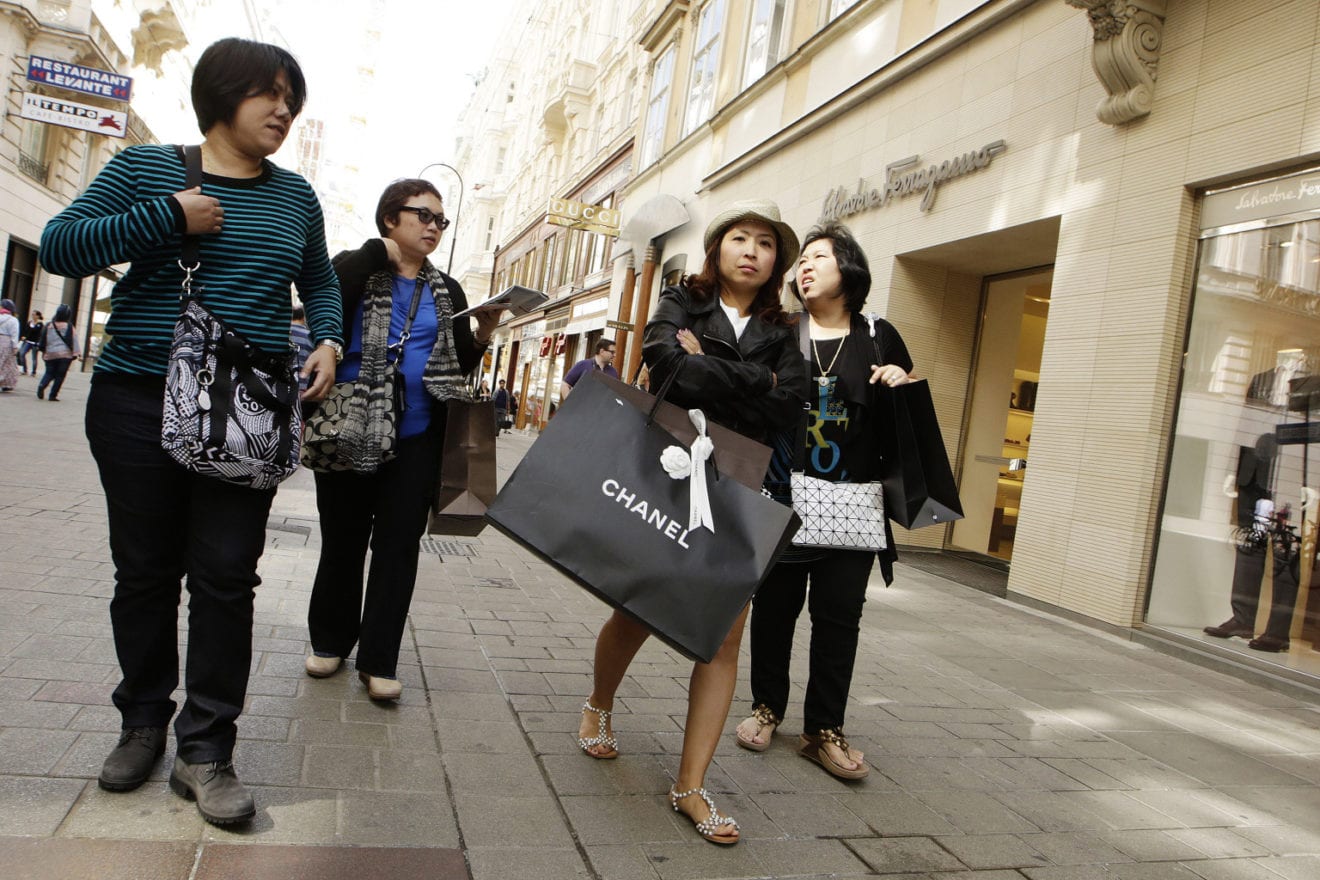
  • Spending on luxury falls on mainland China

    Spending on luxury falls on mainland China

    China remained the world’s largest consumer of luxury products last year even though domestic sales fell for the first time due to the government’s anti-corruption campaign and increased spending overseas.

    Chinese spending on luxury goods increased 9 percent to CNY380 billion (USD61.3 billion) in 2014, accounting for 30 percent of global spending, according to Bain & Company’s 2014 China Luxury Market Study.

    However, sales of such products on the Chinese mainland fell 1 percent from a year earlier to CNY115 billion, the consulting firm said on Tuesday.