Tag: spending

  • US Cyber Monday online sales to reach record US$7 billion

    US Cyber Monday online sales to reach record US$7 billion

    American consumers were on track to spend US$ 7.8 billion in online shopping on Cyber Monday, up 18.3 percent from last year, according to Adobe Analytics, which tracks 80 percent of online transactions at 100 of the largest retailers in the US. Cyber Monday, which falls on the first Monday after Thanksgiving Day and Black Friday, is considered the biggest online shopping day of the year.

    Last year, it hit a record US$ 6.6 billion in online sales.

    With growing online sales, Black Friday might be stealing Cyber Monday’s thunder. Online sales for Black Friday reached US$ 6.22 billion, up 23 percent compared with last year.

    Smartphone-enabled purchases amounted to US$ 2.1 billion, accounting for one third of the overall sales.

    Figures from Internet Retailer, a publisher of e-commerce news and analysis, predicted that the total amount to be spent over the period between Thanksgiving Day and Cyber Monday will reach US$ 21.6 billion.

    For the whole holiday season, which will last until end of December, online sales could hit a record US$ 124 billion, up by 15 percent from last year, Adobe Analytics said.

    Figures from market research firm eMarketer put overall US holiday online sales at around US$ 123 billion, which accounts for 12 percent of the estimated 1 trillion retail sales for this holiday shopping season.

    According to an annual survey, US consumers will spend an average of US$ 1,007 dollars during this holiday shopping season, up 4.1 percent from last year, the National Retail Federation said earlier.

  • Online Black Friday runs lackluster campaign in Vietnam

    Online Black Friday runs lackluster campaign in Vietnam

    Online Black Friday retailers failed to enthuse customers with usual discounts, while brick and mortar stores saw heavy traffic. E-commerce giant Lazada combined its Black Friday and Cyber Monday into a four-day promotional event, offering discounts of up to 70 percent, mostly on cosmetics and fashion items.

    New items were discounted by 15 percent, and the strongest price reductions were offered on low-value items of unpopular brands.

    Other e-commerce services claimed to offer bigger discounts, of up to 91 percent on Tiki and 99 percent on Shopee, but these were restricted to a particular time frame after which the discounts passed on to other items.

    However, such “flash sales” are familiar to online shoppers as daily offerings made by most e-commerce services.

    Thus, retailers failed to enthuse customers with the discounts.

    Minh Tien, an office worker in Ho Chi Minh City’s District 1, said that he regularly checks flash sale items on these websites. “It’s the same method this time, and I’m in no rush as the event will last three to seven days.”

    Market observers said another reason that Black Friday online sales in Vietnam failed to catch fire was the Chinese Singles’ Day promotional event held earlier this month and the upcoming Online Friday hosted by the Vietnam E-commerce and Digital Economy Agency (iDEA), under the Ministry of Industry and Trade, on December 7.

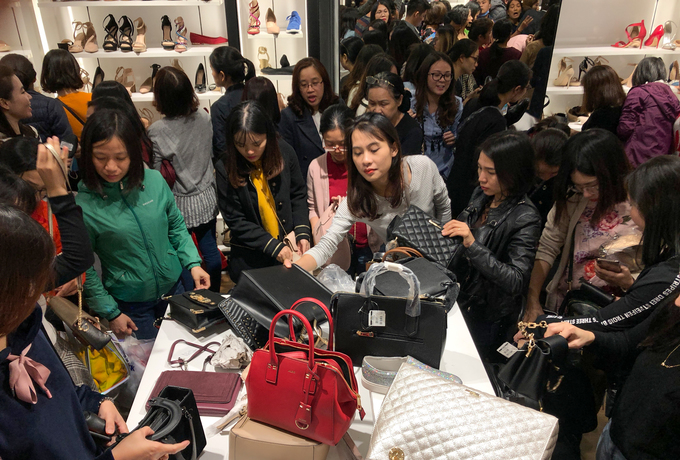
    But in contrast to the online market, the shopping atmosphere was vibrant at brick-and-mortar stores. People started to queue up at large shopping centers in Hanoi and HCMC early Friday.

    A large fashion store on Ba Trieu street in Hanoi offered a discount on all items for five hours, attracting a large number of customers.

    In other stores, customers had to wait for up to two hours to buy household items. Office workers joined the shopping frenzy at lunch time, only to find out they were late because shops stopped letting new customers after 11 a.m.

    As of 10 p.m. Friday night, customers were still queuing up at major shopping malls in Hanoi.

  • Insufficient measures to boost retail spending : RGM

    Insufficient measures to boost retail spending : RGM

    The latest budget announcement is not expected to stimulate consumer spending in the near term, as there is insufficient economic policies aimed at increasing retail spending, opined retail consulting firm Retail Group Malaysia.

    Managing director Tan Hai Hsin said that Budget 2019 is focusing more on managing government deficit and social programmes for the B40 group.

    “We hope the economic activities will improve significantly in the immediate future. Higher economic activities will lead to higher take-home pays (and higher retail spending subsequently),” Tan said.

    Prior to the Budget announcement, he said Malaysian consumers were told that they should not expect monetary incentives from the government in 2019. Malaysians were also informed that more taxes could be expected next year.

    “Based on the latest announcement, it should improve consumer confidence. At least in the next six months,” said Tan.

    For next year, the government continues to distribute one-off monetary incentives to Malaysians (including civil servants) to reduce their financial burden. About 4.1 million households are expected to benefit from it.

    Increment of minimum wage by RM50.00 will also lessen the financial burden of B40 group.

    “On the other hand, higher minimum wage will lead to higher cost of goods for retailers. It will lead to higher retail prices eventually.”

    He said the soda tax will not have major impact on retail spending, while noting that it is still early to comment on the impact of RON95 until more announcements have been made.

    “Same as previous budgets for many years, there were no direct incentive and new government policies related to retail industry.”

    Sunway Malls & Theme Parks Chan Hoi Choy said the 2019 Budget balances fiscal discipline while emphasising development in the right sectors.

    “Initiatives announced particularly with the emphasis on B40 group is lauded while efforts to grow Industry 4.0 especially knowledge transfer, artificial intelligence development, matching grants will drive higher productivity and cost rationalisation in mall & retail industries.”

    Similarly, it is encouraged by the government’s focus in housing, public transportation and education initiatives to form the bedrock for Malaysia’s economy into the future. The drive for greener adoption and women representation also signifies a greater sustainable and inclusive approach.

    “We take note of the significance of Malaysia’s economy projected GDP growth rate of 4.8% for 2018 and 4.9% for 2019, against IMF’s projected slowdown of global growth of 3.7% in 2019. This underscores the relative resilience of the Malaysian economy in face of global headwinds and protracted trade war. In the light of this and the current country’s fiscal position, the overall Budget 2019 is targeted while exercising prudence,” said Chan.

  • Overseas spending by Korean travellers sets new record in Q1

    Overseas spending by Korean travellers sets new record in Q1

    South Korean travelers’ spending overseas hit a record high in the first quarter this year as people went on trips during winter school breaks and extended holidays, statistics from the central bank showed on 6 May.

    Some 7.43 million South Koreans went abroad in the first three months, up 14.1 percent from the same period last year, setting a new record, according to the Bank of Korea. The period coincided with winter vacation and the extra-long lunar New Year holiday that combined with two weekends and a bridge off-day.

    The travelers spent US$8.5 billion, US$1.12 billion more than in the first quarter of last year. The latest number beats the previous record of US$8.21 billion in the fourth quarter last year. A monthly record was set in January with US$3.24 billion in spending.

    A strong local currency apparently encouraged overseas trips, especially to relatively close destinations such as Japan, Taiwan and Vietnam.

    The travel sector deficit in the first quarter increased from US$1.13 billion in the same quarter last year to US$4.87 billion this year. The level or deficit this year, however, is US$50 million less than the previous quarter, marking the first contraction in five quarters.

    Spending by foreign visitors to Korea contributed to the contraction. They spent US$3.63 billion while in the country in the first quarter this year, an increase of US$340 million from the previous quarter. In March, the incoming visitors spent US$1.4 billion, the biggest amount since December 2016.

    A total of 3.36 million foreigners came to Korea in the first three months, down 9.1 percent from the same period the previous year. The number of Chinese travelers dropped 30.5 percent, but people from Japan increased 2.5 percent.

  • Online spending eases in June

    Online spending eases in June

    The growth rate for New Zealanders’ total online retail shopping eased back slightly in June, but spending was still up 10 per cent compared to June last year.

    According to the latest BNZ and Marketview monthly report on New Zealand’s online retail sales, purchases from offshore online retailers accounted for 44.5 per cent of the month’s online spending, and spending at these retailers was up 13 per cent on June 2016.

    A surge in spending on Computers and Electronics drove half of the increase.

    Clothing had a quieter month than usual, with purchases from offshore online retailers only up  per cent on June last year.

    Spending at local online retailers was up 9 per cent on June last year.

    “While slower than the double-digit growth rates we’ve generally been seeing since 2016, this level of growth is still more than double that of local bricks-and-mortar stores, which were only up 4 per cent on June last year,” said Gary Baker, director, institutional research, Bank of New Zealand.

    Food store-types drove approximately half of the growth at local online sites (June 2017 vs June 2016).

    Clothing purchases were also strong at local online merchants, up 16 per cent on last June.

  • Weak peso to weaken consumer spending

    Weak peso to weaken consumer spending

    Household spending in the Philippines is expected to post a slower growth this year because of rising consumer prices and a weaker currency, Business Monitor International, a unit of Fitch Group, said in a report over the weekend.

    “In US dollar terms, household spending growth will experience a significant deceleration from 6 percent in 2016 to 0.8 percent in 2017 as we forecast the Philippine peso to depreciate against the US dollar over 2017,” BMI said.

    “With that said, household spending will grow at an annual average of 8 percent between 2017 and 2021, reaching $337 billion up from $232 billion in 2017,” it said.

    BMI expects essential spending to remain dominant over its forecast period and account for 74 percent of total household spending in 2017 and 75 percent by 2021.  Essential items include food, beverage, housing, clothing, utilities and basic services.

    Essential spending is expected to grow at an average annual rate of 9.5 percent between 2017 and 2021, with non-essential spending growing at an average rate of 8.4 percent over the same period.

    “As a result of low average incomes and a large rural population, essentials will continue to account for the majority of household spending in the medium term at least. Food and non-alcoholic drinks, housing and utilities and transport will continue to account for the majority of household retail spending, rising from 74 percent of total spending in 2017 to 75 percent by 2021,” it said.

    The increasing cost of housing and utilities will demand a greater portion of household income over the coming years. Albeit declining, the share of household spending on food and drink will remain the largest, forecast at 37.3 percent in 2021 (down from 38 percent in 2017), it said.

    “Non-essential spending is expected to continue to account for a roughly stable portion of total household retail spending over our forecast period. Real wages are steadily on the rise, however, which should boost spending in the non essentials sector over the long term, and will prompt consumers to upgrade to higher quality essentials,” BMI said.

    Household spending in the Philippines is dominated by spending on food and non-alcoholic drinks; housing and utilities and transport, which accounts for 69 percent of total spending. BMI expects spending patterns in the Philippines to remain fairly static over the medium term with the top three spending categories retaining their positions.

    “Housing and utilities will make the greatest gains over our forecast period, increasing by 1.15 percentage points as a proportion of total spending on the back of rising costs in this segment. Food and

    non-alcoholic drinks spending will experience the largest decline over this period, registering a decline 0.7 percent as a proportion of total household spending,” it said.

    “Food and non-alcoholic drinks account for the largest share of retail spending in the Philippines, at 38 percent of total household spending in 2017. We expect that the sub-sector will maintain its

    dominant role in the Philippines’s retail basket, as low household income levels in the country encourage subsistence-based spending,” it said.

    Households are forecast to spend P4.4 trillion on food and non-alcoholic drinks in 2017, while spending another P190 billion on alcoholic drinks and tobacco. BMI said over the medium term, food and drink will continue to dominate household spending, as overall income levels remain low.

  • Pick-up in Chinese luxury spending won’t save traditional retailers

    Pick-up in Chinese luxury spending won’t save traditional retailers

    Chinese consumers are buying more luxury items at home, but it may not be enough to save struggling department stores – particularly those that don’t boast a restaurant, cinema or ice rink.

    Offline shops may benefit from a recovery in domestic luxury spending, but the future is still gloomy for traditional retailers that have been increasingly losing out to e-commerce platforms, according to analysts at Fitch.

    The stores need to focus on providing a ‘shopping experience’ in order to win over the country’s internet-savvy consumers and survive the fierce competition, said analysts Yee Man Chin and Cathy Chao.

    “The previous few years have been difficult for Chinese brick-and-mortar retailers, who had to grapple with increasing competition both offline and online as well as changing spending patterns, with consumers choosing experiences over shopping,” they wrote. “The pick-up in luxury spending could provide some relief, particularly for mid-to-high end retailers.”

    China’s domestic luxury sales have been recovering recently due to the ‘wealth effect’ from higher property prices – meaning homeowners spend more since they feel more secure about their wealth – and a drop in overseas purchases, the analysts said.

    Weak consumer sentiment and the government’s anti-corruption crackdown had caused a slump in luxury spending in the last five years, while a gulf between prices at home and abroad prompted many to shop in places such as Hong Kong, Japan and Europe.

    To encourage people to spend at home, the Chinese government has cut import taxes and allowed more duty-free stores. Some global luxury brands have cut their prices in China amid sluggish demand.

    A weaker yuan against the Japanese yen and US dollar, and a series of high-profile terrorist attacks in Europe, have also encouraged Chinese buyers do their shopping on home turf.

    International brands have recently reported improving growth momentum in China. Coach said its Greater China local-currency sales rose 6 per cent in the last quarter of 2016, while Swatch spoke of “very good growth” in mainland China sales from November to January, according to Fitch.

    This trend could boost sales growth at department store operators Golden Eagle Retail Group and Parkson Retail Group, as well as watch retailer Hengdeli Holdings, Fitch said. All three have seen their profit margins shrinking in the past few years.

    However, the boost from luxury sales is no long-term solution to the threat from online stores and fancy shopping malls.

    Consumers are choosing e-commerce. Even when they buy offline, people go to shopping malls rather than department stores/

    In November, the credit rating agency issued a “negative” rating for China’s 2017 retail sector outlook. Parkson was in January downgraded to B- as its profitability worsened, while Golden Eagle Retail was downgraded to BB- last year due to changes in consumer behaviour.

    “Consumers are choosing e-commerce. Even when they buy offline, people go to shopping malls rather than department stores,” Chin said. “The amount of retail space has also increased, so there is much more competition.”

    Analysts said offline retailers need to offer food and beverage, lifestyle and entertainment options to attract China’s young consumers who are increasingly demanding a full shopping experience.

    Although young consumers have been buying more online, they still go to physical shopping centres to relax and socialise, according to property consultancy CBRE.

    A 2015 survey of 1,000 Chinese millennials showed they ate out an average of 5.9 days per month and went to the cinema or live events on four days, according to CBRE.

    A quarter of the respondents said they considered “seeing and feeling the products” as the primary reason for shopping in physical stores.

    Chin said many traditional department store chains were adding restaurants and cinemas to their portfolios.

    “They don’t necessarily get people to shop, but they at least get people to go in those places,” she said.

  • Spending power to back China’s growth in 2017

    Spending power to back China’s growth in 2017

    Consumer spending will continue to grow at a healthy pace in 2017 as the country moves quickly toward a consumption-driven economy, analysts have said.

    Market observers estimated the country’s consumption will grow at an annual rate of 10 percent in 2016 and 2017, a key driver of overall growth eclipsing investment and exports.

    Consumption has played an increasingly important role in stabilizing the world’s second-largest economy, with its contribution to GDP growth up from 50.2 percent in 2014 to 71 percent in the first three quarters of 2016.

    Li Yang, an expert with the Chinese Academy of Social Sciences, expected retail sales in China to increase by 10 percent to reach 33.1 trillion yuan in 2016. Consumption will contribute 73 percent of GDP growth, the highest level since 2001.

    Consumption data in the fourth quarter of 2016 is slated to be released on Friday.

    China has embarked on a historic rebalancing from exports and investment to consumption in order to boost the economy’s potential amid volatile global conditions.

    China’s fast-growing middle class has become a key driver of consumption growth as they seek more expensive and premium brands and spend more on high-quality goods and services.

    According to research by the Economist Intelligence Unit (EIU), a think tank, the proportion of the population earning upper-middle and high incomes in China will expand from 10 percent to 35 percent by 2030.

    Gao Yuwei, an analyst with Bank of China’s research department, estimated retail sales will grow at around 10.2 percent in 2017, with spending on healthcare, telecommunications and high-end products rising rapidly.

    To encourage the spending potential of wealthy families, Chinese authorities are considering reducing tariffs of imported goods, which typically cater to the demands of the upper-middle class.

    In the past, Chinese consumers tended to buy foreign premium brands overseas to avoid high customs duties, which usually account for at least 15 percent of the full price.

    The Ministry of Commerce is creating policy to further reduce import tariffs for high-end consumer goods, expand categories of duty-free products, and open more duty-free malls to guide consumption back to China.

    With consumption becoming a key engine of growth, experts warned the slowing growth of personal income could restrain spending power.

    China’s economy grew 6.7 percent in the first three quarters of 2016. Analysts have forecast China’s 2016 annual growth to remain at 6.7 percent, significantly faster than the growth rate of other major world economies.

  • China’s beauty market has a new era

    China’s beauty market has a new era

    The total FMCG spending sees a slowdown in nearly everywhere across the globe in 2016 and significantly reached a 5-year low in China. However, China’s beauty market is booming and has been growing strongly and consistently on a double-digit rate for years, according to “Decoding beauty market for China” report released by Kantar Worldpanel.

    Premiumization, regime sophistication, omni-channels, mobile interaction and young consumers are the key growth drivers of Beauty market. Consumers are also buying across all price tiers, with premium items increasing the share of basket and contributing to 82% of total market growth.

    In the same way, in terms of regimen sophistication, the average number of cosmetic items purchased per buyer have increased continuously from 2012 to 2016. In that sense, facial masks have advanced from the 6th most important skin-caring regimen to the 4th in 4 years.

    Consumers are leading the changes in cosmetics channels in China. On average, Chinese consumers shop at 2.5 channels with 6.4 trips a year for cosmetics purchases, 23% of them are omni-channel users buying from at least 3 types of trade. Their average spending, RMB 1,314 a year and 15-29 year-old age group is key contributor, accounting for 58% of these omni shoppers.

    “These Omni shoppers are young and category heavy buyers. They choose different products in different channels as each channel has different expertise that meets different needs and purposes”, said Marcy Kou, CEO of Kantar Worldpanel Asia. ”For example, they shop online to try something new while going to cosmetics stores to try on makeups”. 

    Girls in their 20s play an important role for personal care sales, because in a 14.3% of total population, they contribute 38% of makeup sales value. They also have a clear profile showing that they use a variety of niche categories, like to try new products, are good at mix-and-match brands, purchase premium sectors, use omni-channel users and embrace e-commerce. 

    Finally, in spite of China’s beauty market experiencing a strong growth, it’s still far to reach Korea, an advanced market that serves as a good reference fort the beauty industry in the region. Now some of the trends in Korea are the situational care for micro moments, multi-function products are growing from 8% to 17% from 2011 to 2015, and formats and benefits keep diversifying. It is expected that the China beauty market picks up those trends as well.

    “Considering what is happening in China and in Korea, we believe that situational care leads the way to the future of beauty market, meaning that consumers will change their beauty routine according to the needs, events, mood and emotions at the moment”, said Marcy Kou, CEO of Kantar Worldpanel Asia. “Today, brands may still be able to get ahead by winning consumer’s loyalty, but in the future, only those who are able to breathe with consumers through highs and lows in life will win”.

  • Strong yen could send Chinese spending back to Hong Kong

    Strong yen could send Chinese spending back to Hong Kong

    Chinese tourists’ consumption in Japan has begun to wither in the face of a strengthening yen, setting up Hong Kong to recapture spending that has moved elsewhere in recent years.

    Affordability is key

    A country appeals more to foreign travelers as its currency weakens, making shopping and food more affordable than in other destinations. This is doubly true for Chinese travelers, who tend to spend heavily while abroad.

    Such was the case for Japan from mid-2014 onward. The yen moved from the level of 16 to the yuan back then to between 19 and 20 in less than a year. Chinese tourism there more than doubled from the previous year to 4.99 million visitors in 2015, with per-visitor spending growing 20%.

    Hong Kong was on the other side of the shift. Mainland visitors dropped 3% in 2015, while retail sales fell 3.7% in a second straight year of decline. Emperor Watch & Jewellery, a seller of luxury watches from such brands as Audemars Piguet and IWC Schaffhausen, reported a 25% drop in sales for the year ended Dec. 31. It blamed a “strong local currency” and an unfavorable tourism environment.

    Chinese buyers’ spending in 2015 accounted only for around 1% of Japan’s retail market excluding such goods as automobiles and gasoline, Nomura International has calculated. That share was 50% in Hong Kong and 30% in Macau, exposing retailers dependent on mainland consumption to heavy damage as spending slipped away.

    Trouble returns

    Yet the landscape is shifting once again as the yuan weakens against the yen. 1 yuan now fetches around 16 yen, compared with 18 yen at the start of the year. Chinese tourists’ spending in Japan came in 10% below the year-earlier level for the January-March quarter. The total value of retail sales shrank 0.8% for April, Japan’s Ministry of Economy, Trade and Industry said Monday — a second straight month of year-on-year drops.

    Retail sales in Hong Kong fell 9.8% for March, indicating improvement following February’s 20.6% tumble. Visitors from mainland China were still 6.9% below the year-earlier level. But overnight visitors declined only 0.8%, compared with a 20%-plus fall in February. Tourism from the mainland over the holidays surrounding Labor Day on May 1 swelled more than expected. While challenges continue, headwinds are gradually weakening.

    Shifts in the Hong Kong dollar compared to the yen bolster this view. According to the Nikkei Currency Index, the Hong Kong dollar became stronger than the yen overall in September 2014, just as Chinese visitors’ so-called explosive buying of goods was taking off in Japan. The yen then continued to weaken while the Hong Kong dollar appreciated.

    But the yen’s value hit bottom in May 2015, with the Japanese currency’s overall strength overtaking the Hong Kong dollar’s in April. The yuan, meanwhile, strengthened through the summer of 2015, only to weaken around 5% to its current level, the index shows.

    Close to home

    Changes in a locale’s exchange rate alter the affordability of goods there. An HSBC index tracking prices of 38 luxury items in various places compared with their home markets of France and Italy demonstrates this for top-of-the-line goods.

    The Japanese market overall rated 121 on the index in February, with home-market prices serving as the baseline of 100. By mid-May, the figure had risen to 127. Hong Kong, meanwhile, has fallen from 119 to 116 over the past three months. The mainland-market figure has dipped slightly as well, from 137 in February to 135.

    Chinese tourists will now feel less benefit from buying luxury brands in Japan as opposed to elsewhere. So while the Hong Kong figure has changed little in absolute terms, shopping here as compared with Japan has taken on fresh appeal, HSBC said. Some goods can even be found more cheaply here than in their home markets.

    Bain & Co. sees Japan’s luxury goods market growing 5% in 2016 — the most among major countries. But a strengthening yen and shrinking Chinese tourism hint at a coming deceleration, according to the U.S. consulting firm.

    Some 120 million Chinese headed abroad in 2015, plunking down more than $200 billion at their destinations. More detailed patterns of consumption will inevitably shift as the focus of spending turns from goods to services. But exchange rates will remain a key factor in these travelers’ buying power worldwide.

  • Myanmar consumers go on spending spree

    Myanmar consumers go on spending spree

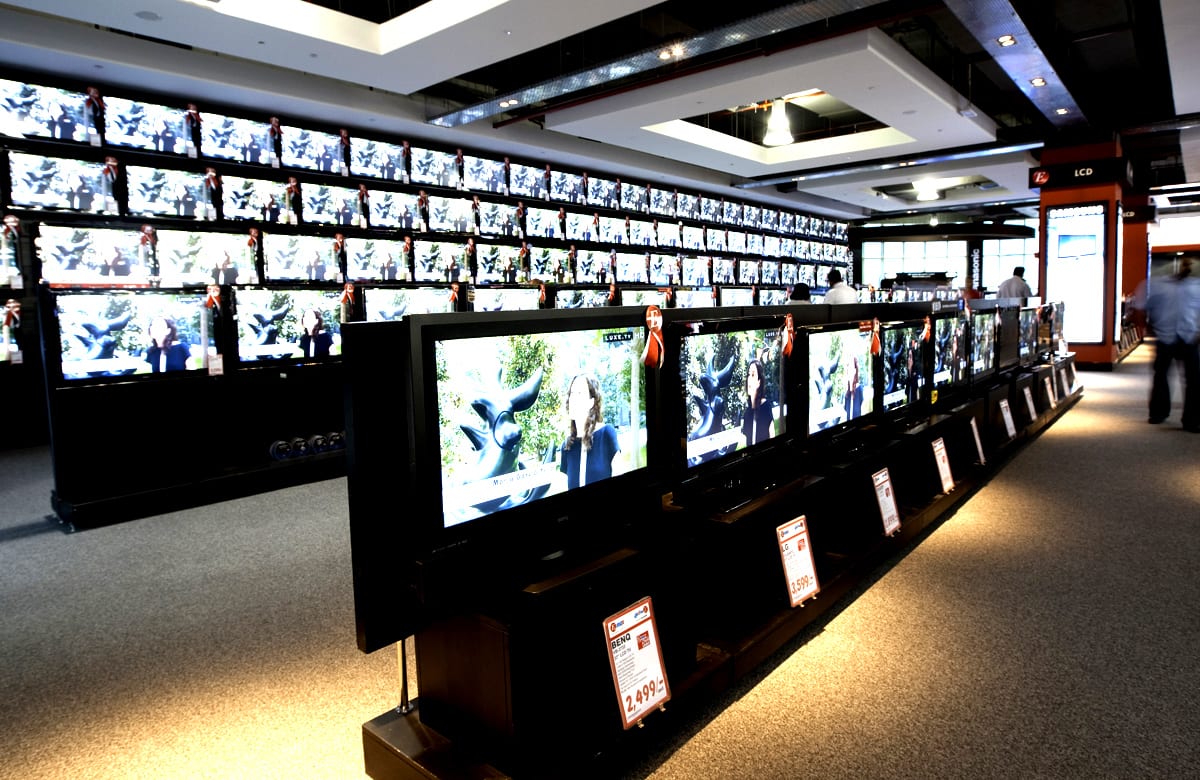
    Myanmar consumers are buying more and more flat-screen TVs, refrigerators and washing machines each month as the country’s economy strengthens following its liberalisation.

    In a study in the Mandalay and Yangon regions, commissioned by market information company GFK Asia, nearly 152,000 TVs were bought in the first quarter of 2016, generating sales totalling more than US$36 million.

    While 49 per cent of market demand was skewed toward 32” LED TV models in the quarter, the 40-43” segment grew from 12 per cent in January to 20 per cent of total sales in March. The trend was similar for the full-HD and UHD segments, in a market largely made up of HD ready-only models (55 per cent).

    GFK Southeast Asia MD Stanley Kee says there was “robust” buying in the months leading up to the Burmese new year last month. “This is an important period for retailers as aggressive efforts to drive sales are in full force.”

    While 38 per cent of TV units sold were in the $200-300 price range, GFK found a consecutive monthly incremental demand for TVs priced $400 and above, with the volume share nearly tripling from 5 per cent in January to 15 per cent in March. In value terms, the segment accounted for 36 per cent of entire TV sales that month alone. Overall, smart TVs made up less than 7 per cent of TV sets sold.

    In the refrigerator market, the number sold in March more than doubled the combined total sales in January and February, netting $6.9 million within a single month. One-door fridges dominated (65 per cent of sales volume), while 34 per cent were two-door, freezer-top models. Consumers spent $21.5 million on nearly 116,000 units in the quarter.

    Meanwhile, more than 59,000 washing machines worth nearly $10.5 million were bought in the period – 70 per cent single-tub washers and the rest double-tub models.

  • Hong Kong consumers favour saving over fun

    Hong Kong consumers favour saving over fun

    Hong Kong consumers lead the world for their saving and investment mindset, while savers outnumber fun-lovers overall in Asia Pacific.

    Market research company GFK has found that 54 per cent of online consumers in Hong Kong “disagree completely” or “disagree somewhat” with the notion of enjoying life today and worrying about savings and investments later.

    At the other end of the scale, China has the highest proportion of consumers of the APAC countries surveyed (38 per cent) who favour having fun now, followed by Australians at 32 per cent.

    GFK polled more than 27,000 internet users across 22 countries, including Australia, China, Hong Kong, Korea and Japan, to find how strongly they agree or disagree with the statement “I want to enjoy life today and will worry about savings and investments later”.

    Internationally, people in favour of saving slightly outnumber the “have fun now” respondents – but the numbers are very close. Hong Kong stands out as the only state where more than half of the online population puts up its hand for saving.

    Though 33 per cent of women internationally are happy to worry about financial security later, 40 per cent disagree. Men, however, are more evenly split with 36 per cent agreeing and 35 per cent disagreeing.

    Respondents in their 20s are the highest percentage of fun-lovers of any age group, with 41 per cent happy to worry about saving later. Teenagers (15 to 19 years old) and those in their 30s come next, almost equal at 37 and 36 per cent respectively. Of respondents in their 50s and older, 26 per cent also agree with living for today.

    Meanwhile, the numbers with a “save now” attitude increase fairly steadily with each age group, starting at 34 per cent for both teenagers and those in their 20s, and peaks at 43 per cent of those in their 50s, and 42 per cent of those older.

    “These findings give financial service brands a useful, top-level picture of the differences in attitude toward the concept of savings and investments across countries, age groups and genders,” says GFK APAC chief commercial officer Frans Janssen.

  • HSBC Going Solo in China Credit Cards Gives Boost to Expansion

    HSBC Going Solo in China Credit Cards Gives Boost to Expansion

    HSBC Holdings Plc winning approval to start a credit-card business in China’s $1 trillion market offers Chief Executive Officer Stuart Gulliver added flexibility in his push into the nation’s retail banking and wealth-management industries.

    The approval from Chinese authorities came as HSBC ended a card venture with Bank of Communications Co., the bank’s Asia-Pacific head Peter Wong said in a weekend interview, paving the way for the U.K. company to join Citigroup Inc. and Bank of East Asia Ltd. as the only foreign credit-card issuers on the mainland. Wong didn’t say when HSBC won the nod from regulators, or provide any specifics on how the business will be rolled out.

    Gulliver’s Asian ambitions have been dealt a setback by crashing commodity prices, a slowing Chinese economy and a pretax loss in the fourth quarter. An independent card unit in China would improve HSBC’s access to a fast-growing market that had 449 million cards on issue as of September and allow the bank to find new clients for its retail bank.

    Getting approved for its own operation in China “is a meaningful step for HSBC as it gives the bank the autonomy to run the business,” said Chen Xingyu, a Shanghai-based analyst at Phillip Securities Research. “Since the Pearl River Delta is HSBC’s focus, having its own credit-card business can help the bank expand in the region.”

    Credit-card offerings can act as a springboard for drawing customers to other parts of the business such as private banking, Chen said. HSBC is getting a license for a planned brokerage venture with Shenzhen Qianhai Financial Holdings Co.

    The Pearl River Delta, located to the north of Hong Kong and centered around the city of Guangzhou, is home to more than 40 million people. HSBC plans to add 4,000 jobs in that area as the bank shifts about $100 billion of investment to Asia in an effort to expand retail banking and wealth management. The bank will slow the pace of thathiring amid China’s economic downturn, but HSBC won’t alter its strategy, Gulliver said last month.

    Good Relations

    While the bank has ended its card venture with Bank of Communications, HSBC intends to maintain its roughly 19 percent stake in the Chinese lender, Asia-Pacific Chief Executive Officer Wong said Saturday in an interview on the sidelines of China’s annual congress of lawmakers in Beijing.

    “We still have a lot of other initiatives” with Bank of Communications, Wong said. “We have a very good relationship.”

    HSBC’s card offerings would compete with its old venture partner, which had 40 million domestic cards as of June, while Industrial & Commercial Bank of China Ltd. had 108 million, according to their 2015 interim reports.

    The London-based company has been working with Bank of Communications, China’s fifth-largest lender by assets, since 2004 on businesses including credit cards. The Chinese bank announced the establishment of the credit-card venture — with 2.5 billion yuan of capital — in an October 2009 statement to Hong Kong’s stock exchange.

    HSBC shares in Hong Kong fell 0.3 percent on Tuesday to HK$49.50 as of 1:31 p.m. local time, compared with the benchmark Hang Seng Index’s 0.8 percent loss. The bank’s stock dropped 20 percent this year.

    The number of Chinese credit cards in circulation at the end of the third quarter had nearly doubled to 449 million since 2010, central bank data show. That total is about the same as the combined populations of the U.S. and Japan. The outstanding balance on those cards was 6.7 trillion yuan, up 26 percent from a year earlier, according to the People’s Bank of China data.

  • Singapore start-up betting on more luxury consumption

    Singapore start-up betting on more luxury consumption

    The global economic chill may have helped cool the runaway growth in luxury brands as consumers start to think twice before splurging. One e-commerce player, however, is hoping for an Indian summer.

    Daniel Lim, one of the co-founders of Reebonz, said the “aspirational middle class” – particularly in Asia – will underpin demand for personal luxury products.

    Reebonz sells new and pre-owned designer bags, shoes and other personal luxury items on its website and mobile app. It has a service, Reebonz Closet, available in selected markets, that lets users buy and sell directly to one another.

    Merchants from around the world are also able to list their items on Reebonz Marketplace, creating variety in selection. The company also has in-store presence in Australia and pop-up stores in Singapore.

    Aspiring toward luxury

    Lim’s forecasts come at a somewhat challenging time for personal luxury goods. A study by management consulting firm Bain & Company released in December showed the real growth in the global personal luxury, at constant exchange rates, was only 1 to 2 percent in 2015. This compared with a 3 percent growth in 2014 and 7 percent in 2013.

    Bain said in the report that a combination of currency fluctuations, contracted local spending, government reforms against graft, and tourist arrivals influenced regional performances in 2015.

    “Macroeconomic factors will always be there,” said Lim in an exclusive interview with CNBC. However, “luxury is one of the few classes of products, where people aspire to constantly upgrade,” he said.

    Erwan Rambourg, global co-head of consumer and retail research at HSBC echoed the sentiment, telling CNBC that luxury demand is “often driven by social, cultural and fashion trends rather than by mere financial means.”

    Unlike other purchases, luxury items have great resale value, the Reebonz co-founder added.

    Online shopping has seen rapid growth over the last several years, underpinned by emergence of e-commerce giants such as Amazon and Alibaba. Euromonitor data showed in 2015, internet retailing totaled $990.7 billion worldwide, up from $851.20 billion in 2014.

    Luxury players have been relatively slow to adopt e-commerce due to fear among brands of not being able to replicate the experience of in-store buying, according to Lim.

    Data from Bain showed online shopping currently comprises only 7 percent of the luxury market, with 93 percent of market share still resting with brick-and-mortar stores.

    But Lim expects more innovation to take place as more players explore online options and models to sell to customers. “We have only touched the tip of the iceberg,” he said.

    Since its foundation in 2009, Reebonz has expanded into several developed and developing markets in Asia Pacific, including Australia and Indonesia among others. While the company is still focused on Asia Pacific, it delivers to 30 countries worldwide, including the United States.

    Tackling China

    Last April, Reebonz entered Asia’s largest luxury consumption market: China.

    Lim said Reebonz’s decision to enter China was influenced by favorable cross border e-commerce tax policies, the huge market for luxury, and strong local partnerships the company has forged.

    Even though some of the tax policies that attracted his company to China are now being reversed, Lim remains unfazed.

    Last week, China announced it will charge imported retail items purchased online in the same way as any other imported goods, scrapping a provision that enabled e-commerce companies to import goods more cheaply, reported China’s Xinhua news agency. The changes will be effective from April 8, said Xinhua.

    The move will see many e-commerce retailers experience a cost increase through higher taxes, according to Yating Xu, an economist at IHS Global Insight. Xu told CNBC the tax reform is designed to level the playing field for traditional retailers, who have, in recent years, been hurt by the tax benefits enjoyed by e-commerce players.

    He acknowledged, however, the steep competition Reebonz faces from local players in China.

    Many luxury brands, such as Burberry, Estee Lauder, and Calvin Klein, have launched e-boutiques on Alibaba’s Tmall platform to penetrate broader areas of China, according to Hui Wan, research team lead at Euromonitor International.

    Other brands such as Alexander McQueen and Balenciaga have established official websites “to present their brand image, launch their new collections and sell products as well,” she said.

    Wan told CNBC, currently “Chinese consumers prefer to browse online but buy at the stores, especially for luxury goods purchases.”

    Lim is banking on Reebonz’s strong reputation for selling authentic products, wide range of options and good customer service to make headway into the biggest luxury market in Asia Pacific.

    “Penetrating China obviously will take a bit of time but I think we see a great opportunity there.”

  • South Korea’s card spending jumps 16 pct in Jan.

    South Korea’s card spending jumps 16 pct in Jan.

    South Korea’s card spending rose sharply in January, data showed Friday, on the back of increased consumption for the Lunar New Year holiday and a gradual recovery in domestic demand.

    Purchases made with plastic cards reached 56.1 trillion won (US$45.4 billion) last month, up 15.9 percent from a year earlier, according to data compiled by the Credit Finance Association (CREFIA).

    The data includes transactions on credit, debit and prepaid cards. Cash advances, overseas spending and card loans were not included.

    Of the amount, credit card spending went up 15.9 percent on-year to 44.79 trillion won, while those of debit cards advanced 16.2 percent to 11.2 trillion won over the cited period, according to the data.

    “This year, the new year holiday started earlier than last year, which mainly led to the growth in January’s credit card spending,” a CREFIA official said.

    The retail sector, including department stores and big retail chains, enjoyed a 20.4 percent surge in credit spending on-year to 6.7 trillion won, the data showed.

    In particular, purchases made by credit cards in convenience stores spiked 56 percent thanks to the increase in small families and the solid growth in sales of their private-brand products, according to the association.