Tag: sportswear

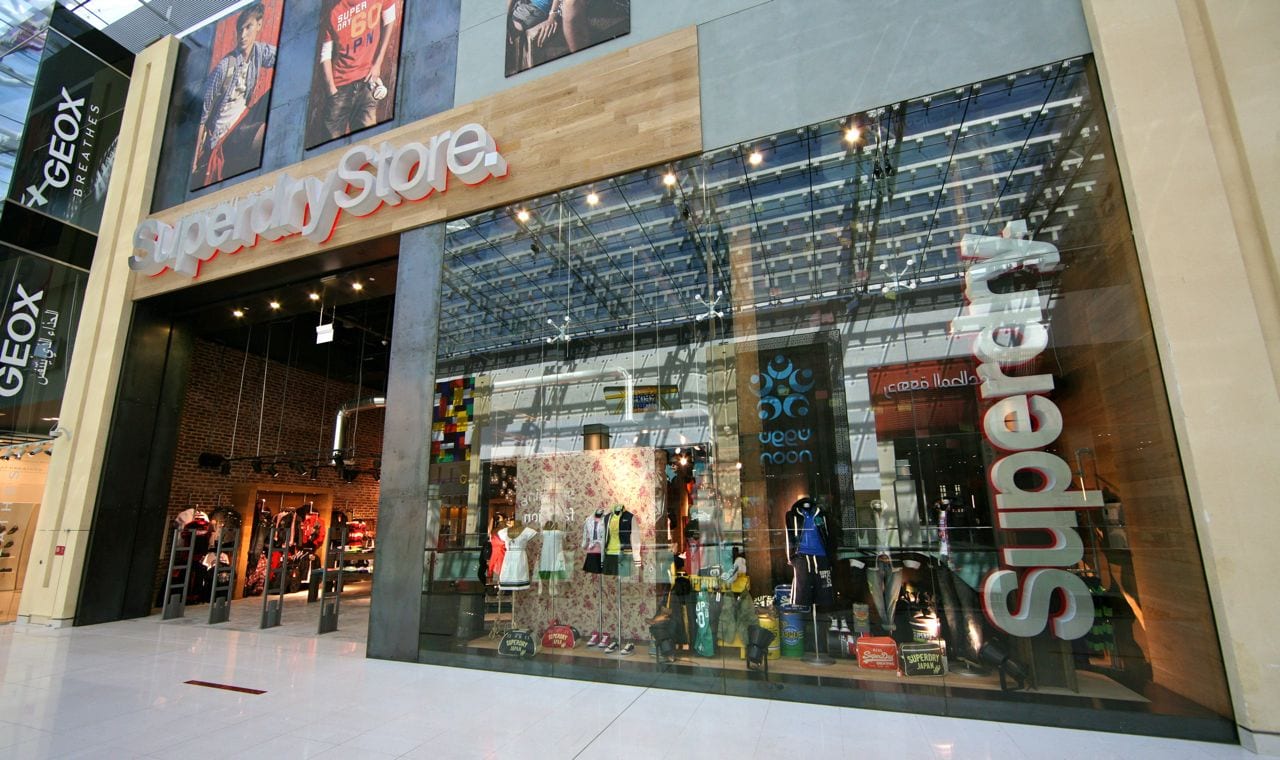
  • Superdry Struggling To Stay in the Game

    Superdry Struggling To Stay in the Game

    A poor fourth quarter has resulted in another profit warning from casualwear-brand Superdry and one analyst describes the embattled label as “struggling to remain relevant”.

    Amy Higginbotham, a retail analyst at GlobalData, the data and analytics company, said a poor fourth quarter has exacerbated Superdry’s woes and dragged down overall performance for the year.

    The company, reeling from a mass exodus of board members and senior executives in the wake of co-founder Julian Dunkerton’s return to an active role in the business, now expects its underlying profit before tax for the full year to be about 50 per cent down on last year’s £97 million.

    With the board distracted by the disruption caused by Dunkerton and his eventual return, Superdry’s group revenue dropped 4.5 per cent in the fourth quarter.

    “This was driven by a particularly poor performance in its wholesale and online divisions, which the retailer attributed to an increased volume of product returns and a reduction in promotional activity,” said Higginbotham.

    Group revenue remained flat at £871.7 million, while growth in wholesale and online revenues slowed significantly, and store sales dropped £14.4 million to £373 million.

    “The lack of detail regarding Dunkerton’s long term plans to turn the retailer’s fortunes around is not very reassuring, and investors will no doubt be eagerly awaiting a more detailed update in July with the publication of the retailer’s full-year results,” said Higginbotham.

    “Initial changes made by Dunkerton on his return have included reducing promotions to improve margins and supporting sales with more stock in flagship stores. He also plans to introduce 500 new products within the next six months, though the details of what these products are exactly remains unclear.”

    But she says Superdry will have to do a lot more if it is to regain its relevance amid tough competition from the likes of JD Sports and boohoo.com, which have much stronger brand appeal – and Superdry must be clear about which demographic it wishes to target.

    “Dunkerton has indicated that he does not intend to go ahead with the previous management’s plans to enter childrenswear, and will instead focus on targeting teenagers, though this will require the retailer to justify its high price points, which could be done using brand exclusives and celebrity endorsements.

    “The outlook for Superdry remains challenging. Though a new executive team will take Superdry in a much-needed new direction and eventually provide more stability, the board still lacks a clear strategy to turn the retailer’s fortunes around, and any new initiatives will take time to bear fruit.”

  • Sportswear brands Merrell and Saucony heading to China

    Sportswear brands Merrell and Saucony heading to China

    Chinese sportswear retailer Xtep has signed a deal with Wolverine World Wide to distribute Merrell and Saucony products in Mainland China, Hong Kong and Macau.

    The joint venture plans to start operating in the second half of this year.

    “We are delighted to have Wolverine, a global company with a portfolio of premium brands, as our partner,” said Ding Shui Po, Xtep chairman and CEO. “We look forward to working shoulder-to-shoulder with them to seize the numerous business opportunities we see in these key Asian markets.”

    New stores will trade under the Merrell and Saucony banners, with the majority slated for shopping malls in China’s larger cities. Xtep plans an expanded presence for both brands in Hong Kong and Macau.

    “Wolverine is extremely pleased to partner with Xtep to accelerate the growth of two of our best-known global brands – Saucony and Merrell – in the critical markets of mainland China, Hong Kong and Macau,” added Blake W. Krueger, chairman, CEO and president of Wolverine.

    “We have seen incredible sportswear growth in these markets, and our brands are now poised to excel as we engage Xtep’s significant retail presence and regional expertise to tap into the booming running and outdoor sectors.”

  • Anta Sports shows positive result

    Anta Sports shows positive result

    Anta Sports Products is planning more than 1000 new stores this year after revealing another record profit. The Hong Kong-listed Chinese sports apparel and footwear manufacturer operates more than 11,600 stores in Greater China and beyond under its own Anta brand, and banners like Fila and Descente, for which it owns regional rights.

    In September last year it led a takeover bid for Amer Sports, which owns Salomon, Wilson, Arc’teryx, Suunto, Peak Performance and Precor, among other brands – a deal likely to be completed as early as next month.

    This year’s net profit was the fourth consecutive annual record and reflects growing popularity of sport and fitness in Mainland China and a strengthening of its online offer.

    The company’s profit jumped 32.9 per cent to RMB 4.103 billion ($613.13 million) last year on sales up 44.4 per cent to RMB 24.10 billion (US$3.597 billion).

    In a stock exchange filing, Anta said it was “cautiously optimistic” about the prospects of the business in China in the coming year, despite reduced business confidence across the region. It plans to open more than 1000 Anta-branded stores on the mainland this year along with up to 250 Fila, Fila Kids and Fila Fusion stores on the mainland and in Hong Kong, Macau and Singapore.

    Anta-branded products saw a mid-teens increase in retail sales in the latest quarter compared to the same period last year, however sales in stores bearing other banners rose between 85 and 90 per cent.

    Anta Sports, was founded in 1991 as a manufacturing supplier to the footwear industry. Since then it has grown to become China’s largest domestic sportswear brand, and industry analysts estimate it is the world’s third largest by market capitalisation after Nike and Adidas.

  • Puma reports strong sales, profitability in 2018

    Puma reports strong sales, profitability in 2018

    Sportswear giant Puma reported strong annual results in 2018, as the German company witnessed double-digit growth across all geographic zones and product divisions. For the year ending December 31, 2018, the Herzogenaurach-based company said sales increase by 17.6% currency adjusted to €4,648 million (+12.4% reported) with double-digit growth in all regions.

    Asia-Pacific, despite being the smallest of Puma’s three regions after the Americas (+16.9%) and market leader EMEA (+11.4%), was the strongest in growth terms for 2018, up 28.8% to €1,235.5 million. APAC was mainly driven by high growth in China and Korea, while sales in Japan increased at a more moderate mid to high single-digit rate.

    In product terms, Puma highlighted the success of new sneaker styles Thunder, RS-0 and RS-X in 2018, as part of the company’s debut into the “chunky shoe” category.

    Puma also spent 2018 re-entering the basketball category after 20 years, and signed supermodel Adriana Lima as its women’s training ambassador.

    Net earnings increased by 38 % from €135.8 million to €187.4 million, and earnings per share lifted from €9.09 to €12.54.

    “We are very happy with how our business developed in 2018. Sales rose organically by 17.6% to €4,648 million and the operating result (Ebit) improved by 37.9% % to €337 million, which shows our strong momentum,” said Bjørn Gulden, Chief executive officer of Puma.

    “The double-digit growth in all regions is a proof that the we have strengthened the Puma brand globally and the double-digit growth in all product divisions shows that we have enhanced our product portfolio,” added Gulden.

    In 2019, Puma said it expects currency adjusted sales to grow around 10% and operating results to increase to a range between €395 million and €415 million.

    “We still have a lot to improve, but we feel we are moving our brand and company in a good direction,” said Gulden.

  • Puma pips rivals, becomes top sportswear brand in India

    Puma pips rivals, becomes top sportswear brand in India

    German sportswear major Puma on Monday claimed that it has become the top sportswear retailer in India, surpassing rivals such as Nike, Adidas, Skechers and Reebok in terms of yearly sales. Puma, the third-largest sportswear manufacturer in the world, has reported sales of Rs 1,157 crore for the 12-month period ending December 2018 against Rs 958 crore reported in the year ago period.

    The company follows the January-December calendar year, while its Nike, Adidas, Skechers and Reebok go by the April-March financial year (FY) cycle.

    In FY 2017-18, Puma’s compatriot Adidas had registered sales of Rs 1,132 crore, up from Rs 1,100 crore reported in FY 2016-17.

    During the same period, American sportswear giant Nike reported sales of Rs 828 crore against Rs 807 crore reported in the previous fiscal.

    Reebok, which is owned by Adidas, saw its sales drop from Rs 416 crore in FY 2016-17 to Rs 391 crore in FY 2017-18.

    Another American brand Skechers, which is relatively new in the Indian market, reported sales of Rs 440 crore in FY 2018-19, up from Rs 282 crore reported in FY2016-17.

    “We are making strong progress in both sports performance and sport style categories,” Puma India Managing Director Abhishek Ganguly was quoted as saying.

    Interestingly, India is the only country where Puma’s sales have crossed the sales of other sportswear giants such as Adidas and Nike.

    Over the past few years, India has rapidly caught up with the wider global fitness trends. From 2015 to 2016, the Indian sportswear market grew 22 per cent, outpacing the segment’s global increase of 7 per cent, according to Euromonitor International. By 2020, it is expected to grow an additional 12 per cent CAGR (compound annual growth rate) with sales expected to reach $8 billion.

    The bitter rivalry between Puma and Adidas goes beyond mere corporate competition. It was in fact a sibling fallout that created two of the world’s biggest sportswear brands.

    In the 1920s, German brothers Adolf and Rudolf Dassler launched a shoe company together. Their business picked up after Dassler shoes were used by medal-winning Olympians through out the 1930s.

    But along with sales, tension also spiked between the Dassler brothers, which reached a boiling point during World War II. While it was not clear what exactly caused the rift, it was said to be a result of miscommunication.

    The brothers eventually split in 1947 with Rudolf forming a new firm that he called Ruda – from Rudolf Dassler – later rebranded Puma, while Adolf, who preferred to be called Adi, named his business Adidas.

  • Footasylum shares soar after JD Sports takes stake

    Footasylum shares soar after JD Sports takes stake

    Shares in Footasylum soared after British retailer JD Sports said it had acquired an 8.3 percent stake and could buy nearly 30 percent of its smaller rival. JD, which has used a number of corporate acquisitions to assemble its network of more than 2,400 stores over the past two decades, said that it “confirms it is not intending to make an offer for Footasylum” under merger regulations.

    But investors drove shares in the company, which is listed on the secondary market of the London Stock Exchange, rose 58.6 percent to 46 pence in the first hour of trading.

    Footasylum, started by JD Sports co-founder David Makin in 2005, was forced to cut prices at its 60 stores after a disappointing run up to Christmas which saw British consumers rein in spending.

    It now competes with JD Sports, Sports Direct and Asos among others, which are all feeling the impact of sluggish British consumer spending amid squeezed household incomes and uncertainty ahead of Britain’s impending exit from the European Union.

    Makin and fellow JD Sports founder John Wardle were bought out by the company’s current majority owners Pentland Group in 2005 and later resigned as directors.

    Footasylum said in January its full-year core earnings would come in at the lower end of analysts’ estimates.

    JD Sports shares were up about 1 percent at 454.03 pence.

  • Under Armour Thailand predicts sales growth

    Under Armour Thailand predicts sales growth

    Under Armour Thailand is targeting a 20-per-cent sales increase in the kingdom, according to the brand’s exclusive Asian distributor Triple Pte Ltd. The company is focusing on footwear sales to follow up on its gains in the apparel sector in a sporting goods market expected to see 5–7 per cent growth this year. It will also offer a wider range of branded products, including sleepwear.

    “Under Armour is a relatively new brand in Thailand, and it has huge potential to spread its wings here,” said company CEO Michael Binger during a visit to Thailand last week. “We want to grow our footwear business at a faster pace than in the past and expect footwear sales to increase to 35 per cent of total sales by 2020, up from 25 per cent last year.”

    As part of this year’s expansion plans, Triple Pte is planning exploratory Under Armour Thailand outlets in the country’s north, with a shop-in-shop scheduled for the Mall Nakhon Ratchasima as well as a potential new shop in popular tourist destination Chiang Mai. It will also launch another branch in suburban Bangkok.

    “We see huge potential in the sporting goods business in Thailand,” said Binger, “and we feel confident in our capability to propel Under Armour to success here because we are an alternative brand for people looking for innovative performance shoes.”

    Thailand is Under Armour’s second fastest-growing market in Southeast Asia after Singapore.

  • Skechers passes store milestone

    Skechers passes store milestone

    Skechers China has opened a new superstore in Shenyang, the footwear brand’s 3000th globally. The footwear brand’s largest store yet covers more than 32,000sqft, showcasing a diverse range of footwear, apparel and accessories styles for men, women and children. It features shops-in-shops for different categories and a Skechers Kids entertainment zone.

    US-headquartered Skechers says it is continuing to expand its retail, sales and logistic infrastructure and is improving its customer experience with new-generation point-of-sale technologies.

    “We sell in more than 170 countries through our extensive network of distributors and joint ventures, and we have many more opportunities to build our retail store business even further and expand our global presence for years to come,” said Michael Greenberg, president of Skechers.

    China has the largest number of Skechers retail stores at 941, followed by the US at 472, and India at 222.

    To date, there are 690 company-owned stores worldwide, including two opened in the US in the first quarter. The company plans to open another 70 to 80 company-owned stores and another 500 third-party owned stores this year.

  • Largest Nike store planned to open in Singapore at Jewel Changi

    Largest Nike store planned to open in Singapore at Jewel Changi

    SUTL Corporation will open its eighth and largest Nike Singapore store at Jewel Changi Airport in the first half of this year. Located on the second floor, the duplex store will span more than 1000sqm, and boasts the latest and most extensive range of Nike footwear, apparel and merchandise in the city. Shoppers who visit the store can look forward to customising their Nike t-shirt and footwear purchases at the Nike By You customisation area.

    SUTL Corporation  says the store will seek to enhance shopper engagement with multiple touch points offering customers “a fully immersive Nike experience” as they walk through the store.

    “Despite the rise of e-commerce as a viable option for shoppers, we believe that brick-and-mortar spaces remain an important part of the retail landscape. Nike at Jewel Changi Airport reaffirms our confidence in this space and we look forward to strengthening our partnership with Nike on its journey to transform the sporting world,” said Arthur Tay, chairman at SUTL Corporation.

    SUTL operates in more than 18 markets across Asia-Pacific, distributing products ranging from tobacco, liquor, spirits, beer, water and wine to fragrances and cosmetics for airports and seaports in Southeast Asia and the Indian Subcontinent.

    Jewel Changi is a 10-storey mega complex that will feature gardens and attractions, retail and dining, a hotel and facilities for airport operations.

  • Skechers Takes Control of India Business

    Skechers Takes Control of India Business

    Skechers has bought its joint venture partner in Skechers India, taking the business inhouse. Skechers India has 223 retail locations across the country, 61 of which are company owned and operated, with the remainder franchised. Last year, Skechers saw double-digit increases in wholesale and retail sales and an 80 per cent increase in pairs sold, reaching 2.7 million.

    An additional 80 to 100 stores are planned for this year – of which about 20 will be company-owned.

    The dual-ownership model is expected to allow Skechers India to grow and expand its presence faster, the parent company said in a statement.

    “Skechers is still a relatively young brand in this country, having been in India for less than a decade, yet in the last five years, we have seen significant growth through our joint venture,” said Michael Greenberg, president of Skechers.

    “The substantial existing retail network of over 200 stores, a strong wholesale business and a recently launched e-commerce site is a solid foundation that we can build upon. These accomplishments, as well as opportunities we see to increase the brand’s exposure and drive sales, give us great optimism and confidence for the growth of Skechers in India.”

    Rahul Vira, CEO at Skechers South Asia, said the company was delighted to become a wholly-owned subsidiary of Skechers.

    “This development will enable us to amplify our growth plans, accelerate expansion of our operations and build a stronger network to further gain market share in India,” he said.

    Skechers India will continue operating under its existing structure and from its existing headquarters in Mumbai.

  • Foot Locker buys out Goat Group stake

    Foot Locker buys out Goat Group stake

    Specialty athletic retailer Foot Locker is making a US$100 million strategic minority investment in Goat Group, a managed marketplace for authentic sneakers operating the Goat and Flight Club brands. The partners expect to make joint efforts across digital and physical retail platforms to create exclusive experiences for their customers in an attempt to elevate customer engagement. The investment is also expected to help accelerate Goat Group’s global operations, expanding its omnichannel experience and innovative technologies.

    “At Foot Locker we are constantly looking at new ways to elevate our customer experience and bring sneaker and youth culture to people around the world”, said Foot Locker’s chairman and CEO Richard Johnson. “We are excited to leverage Goat Group’s technology to further innovate the sneaker buying experience and utilise their best-in-class online marketplace to help meet the ever-growing global demand for the latest product.

    “Together, Foot Locker and Goat Group’s shared commitment to trust and authenticity in the sneaker industry will provide consumers with unparalleled experiences and diversified offerings,” said Johnson.

    “In 2015, we pioneered the ship-to-verify model with a mission to bring a seamless and safe customer experience to the secondary sneaker market,” said Goat Group’s co-founder and CEO Eddy Lu. “With more than 3000 retail locations, Foot Locker will support our primarily digital presence with physical access points worldwide, bringing more value to our community of buyers and sellers. Having Foot Locker as a strategic partner will also expand our business as we continue to scale our operations both domestically and internationally.”

    Scott Martin, Foot Locker’s senior VP for strategy and store development, will join Goat Group’s board of directors.

    The Goat Group deal follows Foot Locker’s recent investments in innovative, digital-first companies including leading women’s luxury activewear brand Carbon38; tactical play and children’s lifestyle brand Super Heroic; and footwear design academy Pensole.

    Foot Locker’s investment will bring the total raised by Goat Group to $197.6 million since it was founded in 2015.

  • Puma Shuffle makes its debut in India

    Puma Shuffle makes its debut in India

    Global sportswear brand Puma has launched Puma Shuffle, a street style weekend pop up space in Indiranagar, Bangalore on February 02, 2019. With an aim to become the hub for growing sub-cultures in the city, Puma has introduced a brand new concept that emerges over weekends to provide a dedicated space for creative expression.

    PUMA Shuffle is created on the notion of an alter ego where the identity of the place oscillates between a friendly neighbourhood bar, Watson’s and a high-energy creative space that celebrates live music and sub-cultural communities of the city over the weekend. The fluid pop up space by Puma comes to life on Friday and Saturday evenings with gigs by an eclectic selection of DJ’s, musicians, artists, designers and sneakerheads.

    Speaking about the new concept, Abhishek Ganguly, MD, Puma India, says, “Bangalore has always been a hub for culture, but it’s time to re imagine the city’s cultural landscape with the rise of a new generation of youngsters who are using sneaker, street art, skateboard, hip hop battles, and basketball as a form of self expression. Puma Shuffle, is an innovative concept aimed at being the hotbed for such communities and sub cultures, giving them a dedicated space, impetus and empowerment they need. This new concept of shuffling between two spaces will also be a great visual, gastronomical and creative experience for our consumers all under one roof.”

    Resonating the dual identity of the space, the aesthetics are all about fusing the two entities and creating a concept that allows a smooth transformation from one identity to the other. The interiors exude an old world, heritage charm with soaring arched windows and a barrel roof with an unfinished surface that gives the space raw yet regal feel. The quirky wall art and live animation breaks the earthy palette to give the space a distinct personality. The mezzanine floor displays live graffiti – a cat silhouette and Puma Shuffle artwork are brought to life by animated projections. Vibrant layered art with mixed styles of graffiti adorns the wall beside the staircase.

    Created by artist Badaal, the edgy illustration also pays homage to two of Puma’s big sneaker names – Puma Suede and RS-X Toys. There are also 5 arched frames that house images of international Puma assets on the top floor. In keeping with Puma’s first sustainable store, located below, the idea was to retain elements from the existing space and reuse materials to construct the new venue.

    Puma Shuffle provides both a great visual and gastronomical treat for the audience. Much like the vibe of the place, the menu curated for Puma Shuffle is new age, vibrant and refreshing. On offer is a medley of cuisines from different corners of the world, including a few local favourites, that makes one keep coming back for more. In keeping with the theme of the space, the bar is hooked up with a mechanical pulley system used to elevate the wrought iron lighting at the facade. Here, an array of fun cocktails are created by expert mixologists.

  • Fila to open 100 exclusive retail stores in India over the next 5 years

    Fila to open 100 exclusive retail stores in India over the next 5 years

    Fila India, owned by Cravatex Brands Limited, the Indian arm of the $150 million Batra Group, is adopting an aggressive expansion strategy in India. 2018 saw the comeback of sports brands, both globally and in India, due to the shift in consumer preference towards sports inspired athleisure clothing. A key player in the Indian market, Italian sports and fashion brand Fila has planned to capitalize on this trend and strengthen its presence in the country with an aggressive expansion strategy. The brand is projecting sales to grow more than 50 percent by the end of this financial year.

    As part of the new Heritage Store format, Fila has been opening one store a month and expects to keep this momentum going in 2019. The next 3 months will see stores coming up in Mumbai, Bhubaneswar, Baroda and Chennai among other cities. The focus will be skewed largely towards Fila Heritage format stores, driving fashion lifestyle imagery in the premium sportswear segment with a global Heritage collection across footwear, apparel and accessories.

    Aside from main metros and mini metros, Fila has set its sights on the North Indian market with a focus across Delhi, Gurgaon, Noida, and the entire region of Punjab; followed by South India. While company owned stores will be the primary objective, the brand is identifying some key partners to pursue a franchise model.

    Maintaining uniformity across layout and design, the average store size is expected to be between 1000-1200 sq feet carpet area with larger flagship locations in metros.

    Speaking on the strategy, Rakesh Singh Kathayat, Chief Operating Officer, Cravatex Brands said, “The resurgence of sportswear in mainstream fashion is the most relevant conversation in the industry today, particularly among millennials and Gen Z. Fila’s retro aesthetic and nostalgia-tinged DNA has thus, gained relevance and this conversation has supplemented its evolution into a sports fashion label. While we’re steadily making this progression in perception, supplementing consumer demand with supply is the need of the hour. Our offline retail growth in India focuses on strengthening our pan-India presence to create easier access and increased engagement with our growing consumer base.”

    Fila India is a licensee held by Cravatex Brands Limited which is a part of the Batra Group, a Global Retail, Brand Licensing, Distribution and Sourcing company with a presence across the Indian Subcontinent, United Kingdom, Europe, North Africa and the Middle East.

  • Onitsuka Tiger store in Singapore is biggest yet

    Onitsuka Tiger store in Singapore is biggest yet

    Onitsuka Tiger Singapore has opened its largest boutique in Ngee Ann City. As part of its efforts to become recognised as a fashion lifestyle brand beyond its sneaker business, the Japanese footwear firm’s new 165sqm store – the label’s fifth in Singapore – exclusively stocks the label’s Nippon Made collection as well as its usual retail offerings, focused on hand-made shoes following traditional Japanese methods.

    The store also sells Japanese-designed athleisure apparel and accessories in a store space fitted out with plush tiger toys.

    Onitsuka Tiger is owned by Asics.

  • The coolest men’s sneakers from Paris Fashion Week

    The coolest men’s sneakers from Paris Fashion Week

    Paris Fashion Week Men’s was not lacking in head-turning street-style looks this year. Attendees brought their sartorial A-game to take in new fall ’19 collections from the hottest designers. A guest paired trendy Off-White socks with shiny silver Maison Margiela sneakers that featured a chunky platform sole and an iridescent finish. Cuffed denim jeans highlighted the pairing perfectly.

    Elsewhere, a guest showed off J.W. Anderson’s new Converse collab sneakers, which feature a rubber jagged platform sole. The high-tops debuted on the catwalk at Anderson’s spring ’19 show.

    Meanwhile, Adidas x Alexander Wang Turnout Mint White runners caught our attention with its chunky midsole design, a mash-up inspired by several previous Adidas sneakers.

    The Nike x A-Cold-Wall Zoom Vomero +5, designed by Samuel Ross, undeniably stands out with its enlarged heel counter. The style, which dropped in November, blends retro and futuristic elements.

    Lastly, the oversized red and white contrast leather sneakers by Alexander McQueen, which Timothée Chalamet has worn on the red carpet, of course, made an appearance at fashion week.