Retail News CRM

Tag: sportswear

  • FILA India collaborates with Streetwear Label Norblack Norwhite

    FILA India collaborates with Streetwear Label Norblack Norwhite

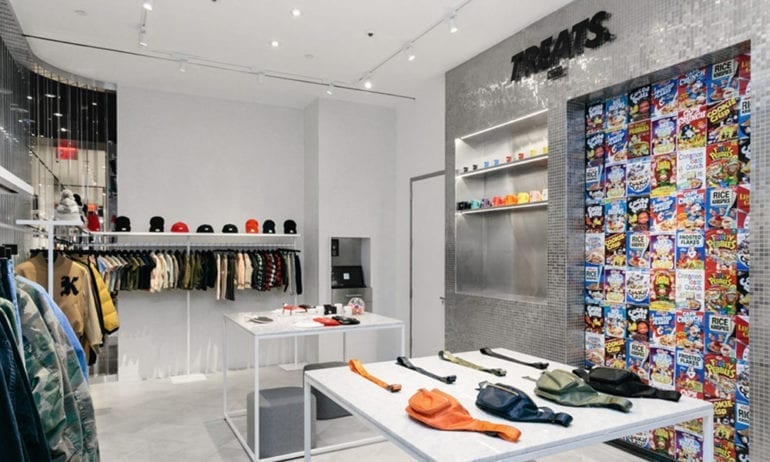
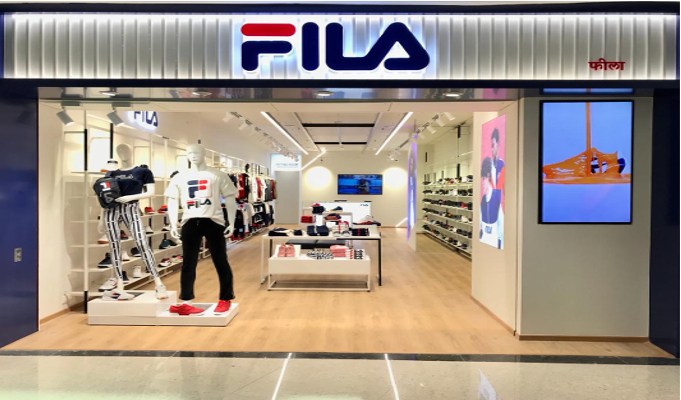
    The Italian sports-fashion brand Fila has announced its first ever Heritage collaboration with indie streetwear brand Norblack Norwhite which are now available in its stores. FILA India’s partnership with Norblack Norwhite pays homage to a heritage of textiles from Italy and to the age-old traditions of Indian textile makers, debuting with this India-only exclusive collaboration.

    Fila India’s Creative Director, Abdon Lepcha worked closely with NBNW for almost a year to design a limited edition collection that fuses iconic FILA silhouettes with their signature prints and patterns. The collaboration is a fusion of Indian streetwear with sports fashion. The collection was created applying the NBNW love for pattern and color, keeping it breathable within the sporty space. The styles focus on comfort, playing off some of Norblack Norwhite’s textile styles applied in a new way to work with Fila fabrics.

    Speaking on the collection, Mriga Kapadiya & Amrit Kumar said, “NBNW celebrates textiles and colors and patterns so creating within the FILA form and brand has taken us out of our comfort zone and pushed the boundaries on our design capacity. Fila is a brand we grew up on and we were super excited when Fila India approached us to collaborate on this capsule collection. We’ve never got to design athletic wear and it’s been super fun and also challenging to apply our style and aesthetic in this form! It’s important for our process to stay true to things we feel comfortable and empowered in while balancing the visual story of our favorite elements of India combined with our guiding feelings of classic streetwear.”

    Rohan Batra, the MD of Cravatex Brands, the Licensee for Fila in India, says, “This collaboration is one that is very special for us. It is the first time a global brand has collaborated on an entire collection with an Indian streetwear label. The limited India-only drop for the collaboration is part of our commitment to building and nurturing the streetwear fashion culture in India.”

    The collection comprises of baseball jerseys, tracksuits, fanny packs, tees and a special edition Disruptor. The price points for apparel, footwear and accessories start from Rs 1,999 and go up to Rs 8,999.

  • Xtep Sports opens sportswear store in India

    Xtep Sports opens sportswear store in India

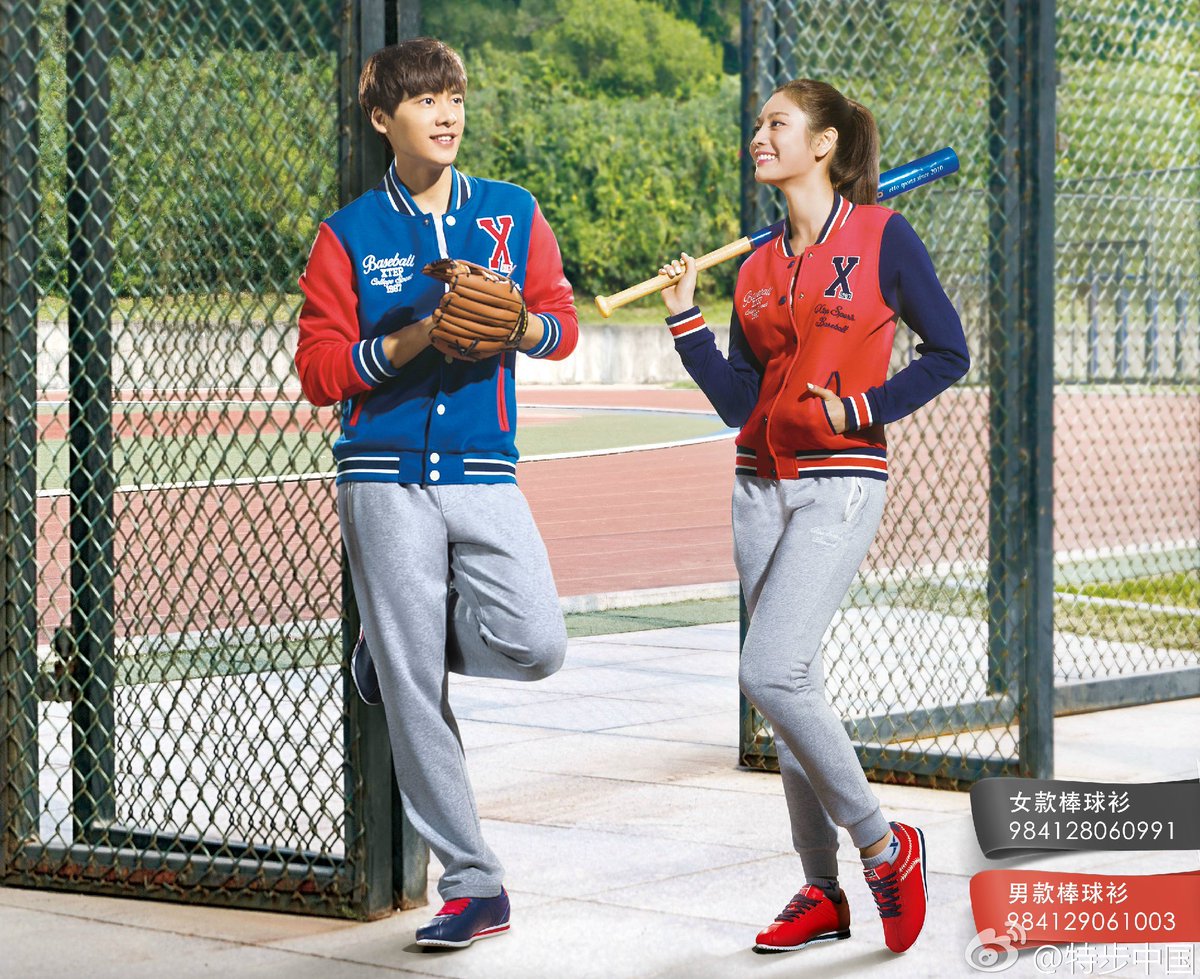
    Hong Kong-headquartered Xtep Sports has opened its first Indian flagship store, in Bengaluru. The Xtep group, which specialises in footwear and sportswear, currently has 6035 stores in 31 Mainland China provinces as well as in Vietnam, Nepal, Saudi Arabia and Spain. The company was founded by Ding Shui Po, now its CEO, in 1999 as an original equipment manufacturers for global sports brands. It launched its own label in 2002.

    The company is reportedly planning to open five stores in India by the end of this year and will also sell through local online marketplaces.

  • Tencent closed to buy sports firm Amer

    Tencent closed to buy sports firm Amer

    Social media conglomerate Tencent Holdings is believed to be close to joining a Chinese investment group bidding to acquire Finnish sports goods firm Amer. The consortium, spearheaded by Anta Sports Products, would see Tencent participating as one of a few minority investors under the proposal. Its involvement would serve to boost considerably Amer’s brands in the Chinese market.

    In a statement made two months ago, Anta spoke of joining with local buyout company FountainVest Partners to offer a potential €40 (US$45.60) per share for Amer, a target value of around €4.7 billion ($5.3 billion). The consortium has sought at least €3.5 billion ($3.99 billion) in loans. Anta has a market value of about $11.6 billion.

    The acquisition agreement could potentially be complete within several weeks.

  • High tech Nike NYC store opens

    High tech Nike NYC store opens

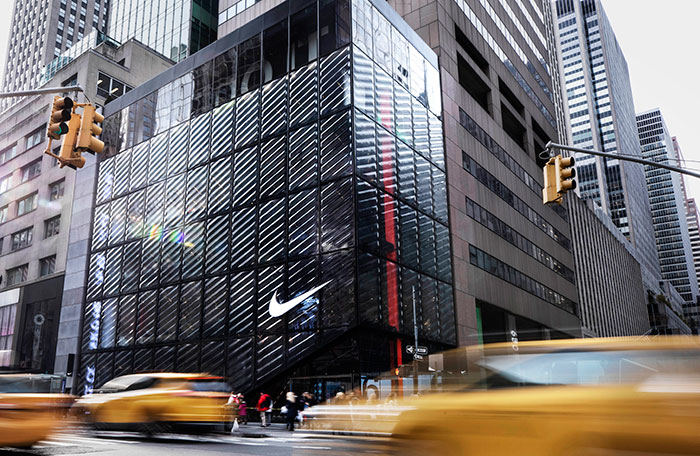
    Nike opened its newest Nike House of Innovation overnight, a 68,000sqft, six-storey store on Fifth Avenue.

    Nike NYC is described by the sportswear brand as a cross-category premium store, “the pinnacle expression of modern retail, representing the best of Nike global product, experiences and sport innovation”.

    “Nike NYC is designed to be a dynamic store environment, that is just as personal and responsive as digital,” said Heidi O’Neill, Nike Direct president. “This premium destination gives consumers an authentic, immersive and human connection to the Nike Brand.”

    The store is packed with technology, interactive experiential features and zones for both professional athletes and amateurs.
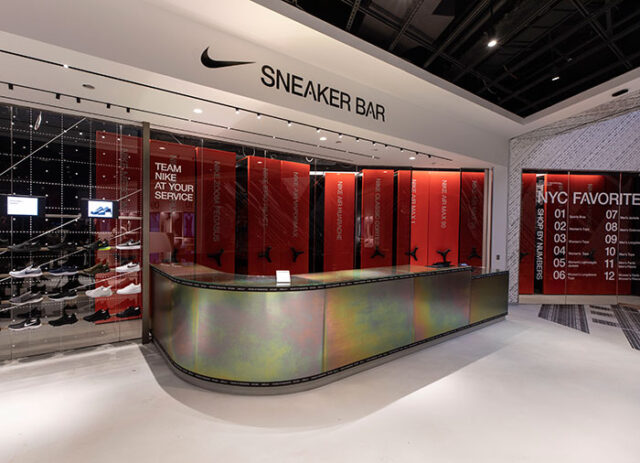
    Nike NYC uses the Nike App to create digitally connected journeys for consumers to discover, learn about and find the products they want quickly and easily. New and expanded Nike App in-store features include Shop the Look, Instant Checkout and updated functionalities with Scan to Try which the company says will give consumers greater opportunity to shop in-store displays, checkout in-store or request to try-on items throughout the store.

    The store is planned as something of a testbed for Nike’s digital service offerings which will “continue to evolve … giving NikePlus members even more choice in their shopping journey”.
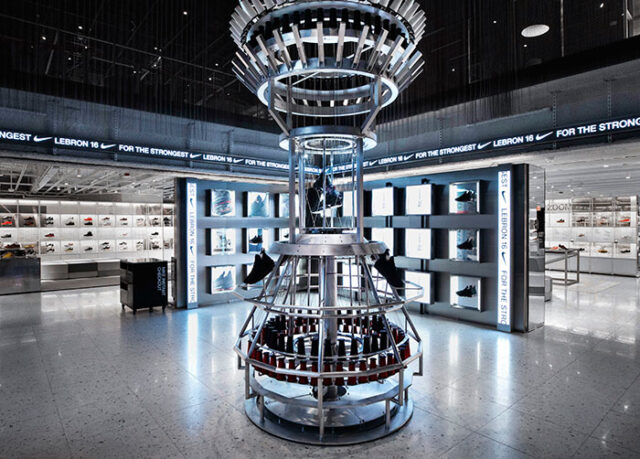
    “Powered by digital commerce data and inspired by Nike’s newest retail concept, Nike Live, the ground floor of Nike NYC features the new Speed Shop – offering on-the-go access to the products local members know and love most,” the company said.

    Consumers can shop these curated New York City favourites alongside seasonal picks, visit the Nike Sneaker Bar or reserve items in the Nike App and pick them up in the Speed Shop digital lockers.

    On the fifth-floor is the Nike Expert Studio – the company’s first dedicated floor to provide even more personal service to NikePlus members, including bookable sessions with Nike Experts and the Nike by You Studio, offering members-only exclusive seasonal products, one-on-one styling sessions and even create personalised products.
    Nike NYC features separate product floors for men, women and kids. On the fourth floor is the Nike Sneaker Lab, billed as home to the largest concentration of seasonally current Nike footwear anywhere in the world.

    The entrance to the store – dubbed the Nike Arena – showcases the most immersive seasonal and sport-inspired storytelling moments from the brand.

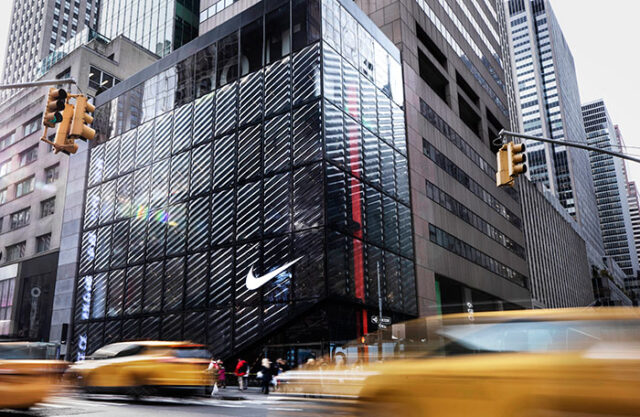
    The store’s exterior features slumped and carved glass designed to “reflect and create motion that mirrors the movement of athletes”, elevates the Nike Swoosh logo and reflects “the iconic aesthetic of Nike Air”.

    Technology at Nike NYC

    Here’s a quick rundown of the new and existing technology featuring in the new flagship:

    Shop the Look: By scanning a QR code on an in-store mannequin, consumers can browse every single item on the mannequin, check to see if their size is available in-store or online and see available colours. Then with just a tap, they can request for select products to be sent to a fitting room of their choice or receive the items from a store athlete at a designated pick-up spot.

    Nike Instant Checkout: Using Nike Scan, NikePlus members can skip the line and easily checkout from within their Nike App using stored or new payment methods. Members can scan the product(s) of their choice, check out like a traditional Nike App purchase and receive their payment receipt within the app. Nike Instant Checkout stations are positioned throughout Nike NYC so that shoppers can fold and bag products if they choose before leaving the store.

    Nike Scan to Try: While this technology was released earlier this year it has now been refined and expanded. After discovering any product in the store and scanning the item to learn more, shoppers can now simply tap “request to try-on” for various items. Requested products can then be collected at designated pick-up areas in Nike NYC, or they can be reserved to a fitting room location of the consumer’s choice.

    Nike Reserve: Using the Nike App, NikePlus members can reserve product at home to pick up in store. They can shop the product they want in the Nike App and then complete their purchase with an in-store athlete or with Nike Instant Checkout.

    Retail Home: When entering Nike NYC, members will gain access to an array of new features and content via their Nike App homepage.

    NikePlus Unlocks: NikePlus Member Unlocks are delivered through the Nike App to reward the best of Nike product, to deliver immersive brand experiences, to award activity achievements and to share partner rewards with members. Member Unlocks can be given directly from a Nike Expert in-store or targeted to consumers based on their sport and style interests. Select Member Unlocks may also be delivered to consumers outside of Nike NYC, which they can redeem in-store with an athlete.

    Product Concierge: If a product is unavailable in Nike NYC, an in-store staff member can search inventory across the entire marketplace – online or offline in Nike-owned stores, as well as its reseller network. If found, and available to ship or reserve, customers can have the item held at a local store or have it delivered. This service will be exclusively available on the fifth floor Nike Expert Studio Service Desk.
  • Why did Under Armour stock rise by 27% ?

    Why did Under Armour stock rise by 27% ?

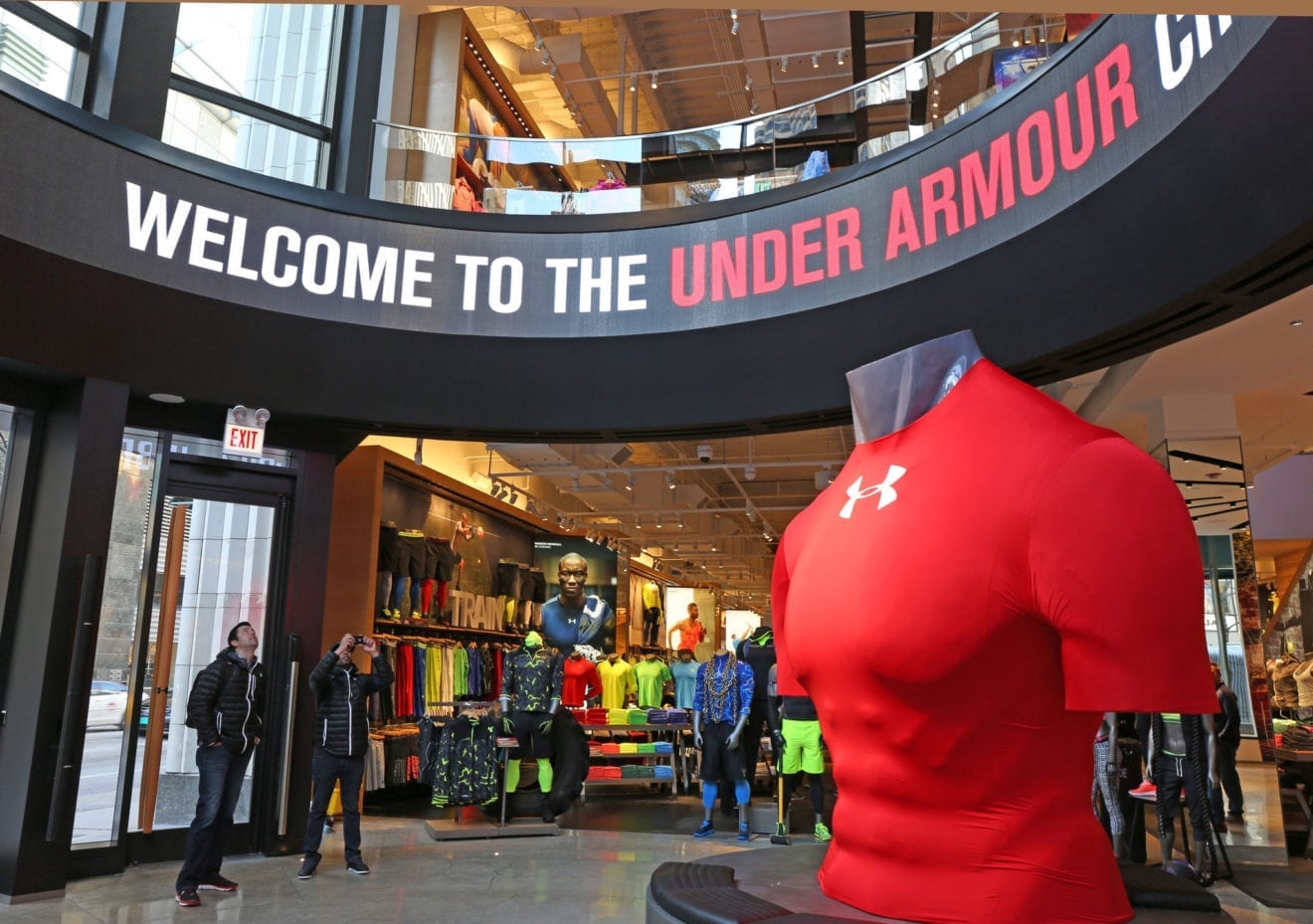
    The sportswear maker, in the midst of a convincing turnaround this year, blew away Wall Street estimates in third quarter earnings reported this week and injected a dose of optimism into the stock market. Under Armour shares were up an overwhelming 27.82 percent.

    The broader index seesawed for much of the day but a late afternoon rally lifted it to a gain of 1.55 percent.

    While few companies this quarter have been rewarded for good financial results, Under Armour scored the trifecta: It beat estimates on earnings and revenues, and it raised forward guidance on profits by nearly 20 percent.

    Akamai Technologies also soared today on strong earnings.

    The online content delivery company beat earnings estimates by more than 10 percent and revenues by more than 1 percent on the strength of demand from video-gamers and cyber-security customers.

    The stock was up 16.92 percent.

    Tech services provider Cognizant Technology, on the other hand, saw its stock fall 3.9 percent — the biggest decline on the index — after it lowered fourth quarter guidance because of weak demand from bank customers.

    The broader technology sector rallied strongly with Twitter (4.54 percent), Facebook (2.91 percent) and Alphabet Inc. (1.58 percent) posting gains while Amazon.com (-0.55 percent) and Adobe Systems Inc. (-0.56 percent) had small losses.

    Chipmaker NVIDIA Corp. continued to play the tech sector pinball. Down 6.39 percent then up 9.36 percent.

    Telecom giant Comcast continued to draft off its strong earnings report last week and what appears to be a shift in the market to more defensive stocks with dependable outlooks.

    The stock gained 4.78 percent and is up more than 10 percent since it reported earnings last week.

  • Belle International sells sportswear division

    Belle International sells sportswear division

    The private-equity owners of Chinese women’s shoe retailer Belle International Holdings are considering a spinoff of its sportswear distribution business.

    Hillhouse Capital and CDH Investments, which took Belle private in a US$6.8 billion deal completed in July, are weighing a Hong Kong IPO of the unit as soon as next year, insiders say. A listing could raise about $1 billion, reports Bloomberg.

    With more than 20,000 retail outlets, mostly in Mainland China, Belle sells such brands as Adidas, Nike and Puma. The Shenzhen-based company also makes shoes under its own labels including Belle, Millie’s and Staccato, and its separate sportswear and apparel business sells sneakers and clothing under other brands.

    Belle was taken private last year as Chinese shoppers went increasingly online. The buyout gave Hillhouse a 57.6 per cent stake, while CDH holds 11.9 per cent and management members own the balance.

    Hong Kong-based Hillhouse, led by founder Lei Zhang, oversees more than $25 billion while CDH, established in 2002 by former China International Capital Corp. dealmakers, invested in Belle before the shoe company’s IPO.

  • Sportswear sales growth goes up

    Sportswear sales growth goes up

    Sportswear sales grew faster than those of luxury goods in China between 2012 and last year, says research group Euromonitor International.

    Market leaders Adidas and Nike have both had double-digit sales growth, while Lululemon and Under Armour are also dominant.

    Meanwhile, local brand Particle Fever is attracting attention with its designer sportswear.

    “People in China, especially Beijing, want to be seen differently,” says co-founder Zoe Liu, who says it is the only local activewear brand that takes a creative approach to marketing and branding. It makes sports bras, leggings and running shorts designed to be trendy and fashionable as well as comfortable for activities.

    Liu’s line, which is sold on Tmall as well as by Lane Crawford, sits alongside the sportswear collections of New Balance and Reebok in retail outlets like Runner Camp, a concept fitness store that opened in Shanghai six months ago and includes an experience centre and running track as well as a gym.

    Less than 10 years ago, most young Chinese female tourists in the country’s mountains wore a dress and heels. Booming interest in health and fitness has generated demand for more practical and fashionable fitness gear.

    Liu is now making final preparations for opening her second showroom in China, in WF Central, a new high-end shopping mall on Beijing’s oldest shopping street, Wangfujing. It will look more like an art gallery or a designer concept store as Liu and her team collaborate with artists to create visual displays.

    They also plan to invite emerging sports groups, such as modern dance troupes, for in-store performances.

    WF Central, developed by Hongkong Land, prioritises wellness, with its tenants including Under Armour with its largest showroom internationally, Superdry with a flagship store and Hong Kong’s Pure Yoga with its first studio for China.

  • Columbia Sportswear China under bid

    Columbia Sportswear China under bid

    Columbia Sportswear Company is moving to take over Columbia Sportswear China JV partner Swire Resources.

    The US brand holds a 60 per cent shareholding, and the acquisition is subject to conditions, including regulatory approval in China. The transaction is expected to be completed in January.
    Columbia president/CEO Tim Boyle says Swire Resources has been an exceptional partner “and we look forward to continuing our strong relationship in Hong Kong and Macau”.

    He says Columbia was pleased with the performance of the JV, formed in 2014. “We have positioned the Columbia brand for long-term sustained growth in the crucial Chinese market. The acquisition is consistent with our strategy to accelerate investment as a brand-led, consumer-first business in the areas of highest growth potential for our brands”.

    While the JV had an initial term of 20 years, there was a provision for the purchase or sale of the minority interest after the fifth year. Its sales in China last year totalled about US$168 million, generating low-teens operating margin.

    Future plans include continued investments in building the Columbia brand in China, as well as expansion of direct and dealer-run retail locations. “We also intend to maintain the management team, staff, dealers and distribution networks that have helped the Columbia brand flourish in China,” says Boyle.

    Jason Zhu will continue as GM of Columbia Sportswear Commercial (Shanghai) Company.

    At the end of last year, the JV ran 86 retail stores in China, and was selling through brand-specific e-commerce sites in China across multiple platforms. It has distribution relationships with about 50 wholesale dealers running about 750 retail locations.

    Swire Resources will continue as exclusive independent distributor of Columbia Sportswear in Hong Kong and Macau.

    Founded in Portland, Oregon, in 1938, Columbia is selling its brands in about 90 countries.

  • Top 10 streetwear retailers

    Top 10 streetwear retailers

    This year was an exceptional one for independent luxury stores and the biggest names were at the top of their game, creatively outdoing one another each step of the way.

    Most notably, with streetwear strongly part of the high-fashion vernacular nowadays, it is no longer a surprise to see shops place astronomically-priced brands next to mid-range streetwear labels.

    It all comes down to a careful curation and not only did some of our favorite spots refine their stock list but they also went a step above by delivering exciting activations and must-have collaborations.

    Whether it was a pop-up shop partnership with a music artist, an in-store art installation or a well-aligned product collaborations, it was evident that the most focused boutiques had the goal in mind to bring hordes of customers through their doors. While selling out product was a plus side to it all, the more important factor was continuing to bolster their reputation as elite purveyors of quality goods. And for some, especially the names we have listed below, they continued to make their mark with class and an undying commitment to their customer base.

    These are the top 10 retailers of 2017, in no particular order.

    1. Maxfield LA
    Los Angeles’s Maxfield and Maxfield Gallery crushed the competition in terms of pop-up installations. They were already a cut above the rest when they partnered up with Vetements in January for a Dry Cleaning-themed space, then Fear of God followed suit as well as a team-up with music acts such as Daft Punk and Guns N’ Roses. Needless to say, Maxfield was the king of pop-ups in 2017.

    2. colette
    It will be hard to see colette go as it closes its doors this December. Despite this, the iconic French retailer continued to show love for indie labels possessing great potential. Considered as “the trendiest store in the world,” colette brought us a slew of special activations and collabs this year including a Balenciaga takeover, a Chanel partnership that produced one of the most coveted Pharrell adidas Hu NMDs ever made and a Saint Laurent pop-up for its grand and final opus.

    3. KM20
    Olga Karput is a true visionary and her newly-opened mega store, KM20 in Moscow, has without a doubt cemented the city and the country of Russia as a true force in fashion. It’s an outpost for the coolest of the cool with the likes of Gosha, Virgil and Heron having had a helping hand in putting it on the map. But with Olga’s continued focus, KM20 is poised to make some even bigger waves this upcoming year.

    4. Dover Street Market London
    No other retailer in the world can add whimsy and wonder to a shopping experience quite like Dover Street Market. Its London flagship had a monumental 2017 spearheading a number of collabs ahead of its competitors. The brand forges on as a formidable name in fashion and this year was just another impressive milestone for its creators Rei Kawakubo and Adrian Joffe.

    5. KITH Manhattan
    Ronnie Fieg had another big year with the grand opening of the new Manhattan KITH store in Soho. In addition to his long list of collaborations in 2017, Fieg also brought something new to his shop’s latest outpost — an art gallery in partnership with friend and collaborator Daniel Arsham. KITH’s name continues to expand globally but Fieg’s quest for domination will always be rooted in this particular New York location.

    6. HAVEN
    HAVEN was another store that relocated and reopened — it’s now a bigger and brighter space located at 190 Richmond Street East in Toronto. HAVEN’s rep has always preceded itself as a first-rate curator of fine Japanese streetwear and sneakers. Now, it has an even better outpost to house these hard-to-find gems. In addition to celebrating its 10th anniversary this year, HAVEN also debuted an in-house line of garments and accessories.

    7. SSENSE
    SSENSE has firmly established itself as a top online shopping destination. The retailer does have an outpost in Montreal but most of its efforts are dedicated towards its web presence. With that said, much praise should be given to how SSENSE has transformed itself to become a triple threat in 2017, as a quality online shop, a cutting edge brick and mortar space and a must-read editorial site, all this thanks to founder Rami Atallah and 032c’s Joerg Koch.

    8. END.
    Online and offline shoppers will always be lucky to have END. The U.K. shop, which also has a newly-opened Glasgow outpost, had a massive 2017 with its unforgettable sneaker and fashion collaborations. END.’s brand list continues to grow and more careful consideration is being taken to assure customers not only get the best products but the finest service, whether that’s fast shipping times or the not-to-be-missed discount codes and sales.

    9. Slam Jam Socialism
    Globally, Slam Jam has defined the cool allure of streetwear for decades. 2017 brought the brand plenty of collaborations with some of the industry’s most respected brands, like 032c, NEIGHBORHOOD and Carhartt WIP. It also upped its editorial game through behind-the-scene stories and interviews alongside important street culture figures. SJS’s stock lineup remains healthy and its special events continue to give strength to the surrounding community.

    10. GR8 Tokyo
    Japan has always been at the forefront of streetwear and GR8 is one of the retailers in Tokyo making some groundbreaking moves. For one, its brand list is made up of all the who’s who in streetwear today. There’s a progressive mindset to the curation and it trickles down to the shop’s ultra-hip brand identity and special store activations. 2017 was a breakout year for GR8 and it’s an establishment worth paying attention to in 2018.

  • H&M activewear goes sustainable

    H&M activewear goes sustainable

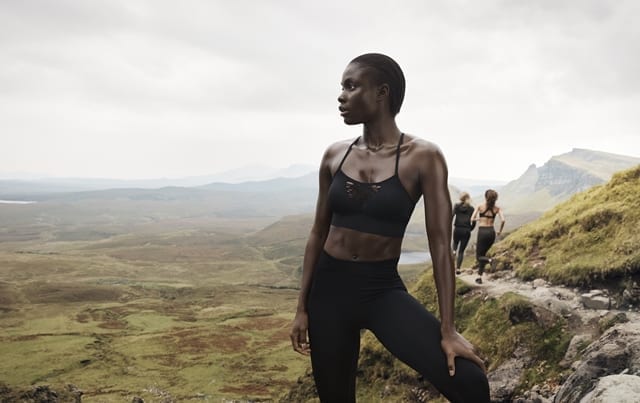
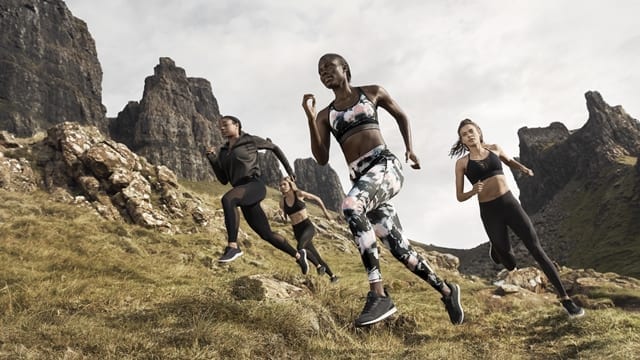
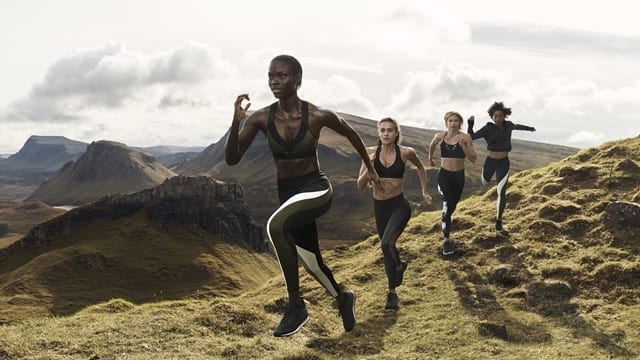
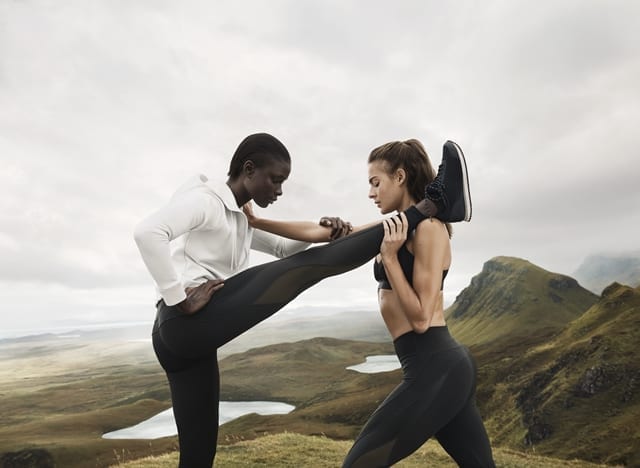
    Blending fashion and practicality, H&M activewear is using sustainable materials in its latest collection.


    With the theme “In it for the long run”, the Swedish fast-fashion brand’s collection includes tights, sports bras, hoodies and tops for training, running and yoga. As well as nature and sustainability being underlined through the prints and colour palette of green tones, black and beige, every piece predominantly uses recycled polyester and elastane.

    The garments are quick-dry and seamless for maximum comfort, offering built-in support and ventilation. The designs feature contrast panelling, criss-cross backs and decorative webbing.

    “By bringing together the functional and feminine, the aim is to give customers a stylish, eco-conscious sports collection,” says H&M head sportswear designer Petra Smeds. “We used a new knitting technique that creates seamless garments using less yarn and producing less fabric waste.”

    Ultimately, H&M aims to create a closed loop for textiles in which unwanted clothes can be reused or recycled.

  • GXG joins an Australian sportswear brand

    GXG joins an Australian sportswear brand

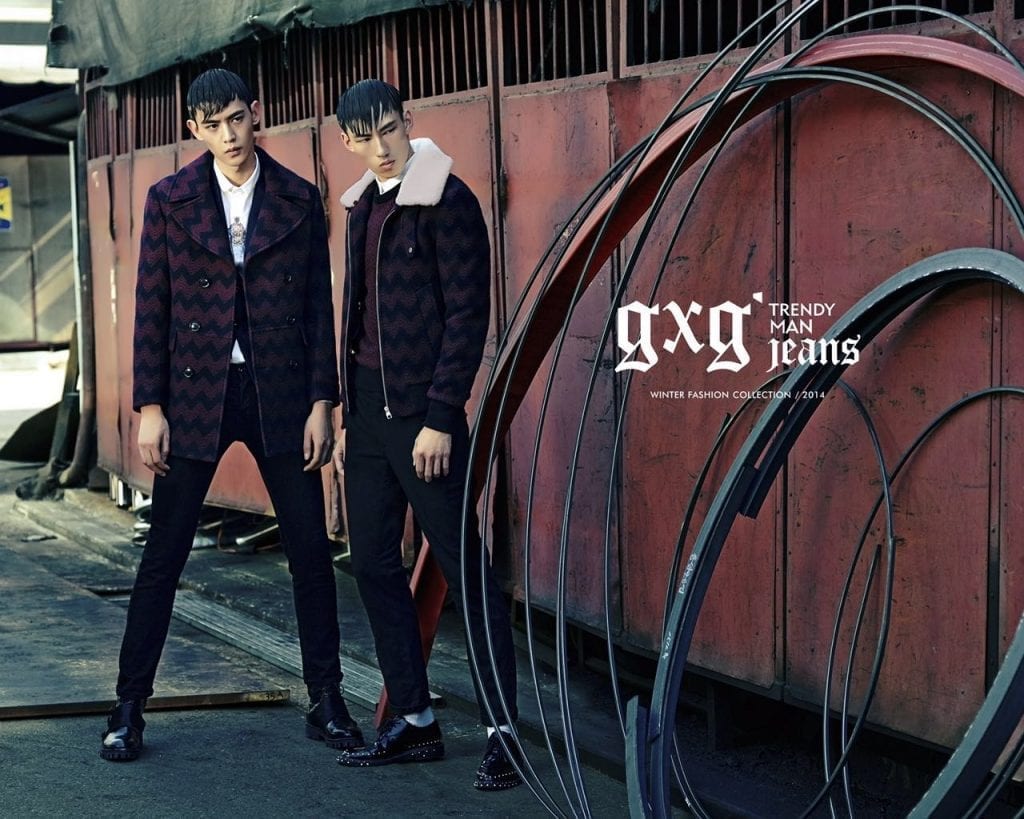
    Australian compression and high-performance sportswear brand 2XU has formed a JV with Chinese fashion retailer GXG as part of an Asia expansion plan.

    This will give it access to more than 1 billion Chinese consumers, and 2XU plans to add special apparel lines for the market. China’s gym and fitness industry has been growing at an annualised rate of 11.8 per cent since 2011 and generated nearly US$4.6 billion in revenue last year.

    Under the JV, 2XU plans to open up to 50 retail stores throughout mainland China in the next three years as well as its online and wholesale business.

    CEO Paul Higgins says the move is significant for the business, which launched in Melbourne 12 years ago. It first entered Asia in 2008 with a wholesale presence in Hong Kong and Singapore, and is now in 13 markets across Asia Pacific. It plans to increase its stores from 22 to 50 in the next 12 months, and to 100 in the next three years.

    Growth in the sportswear market in China has been driven by an upswing in sports participation rates. About 2.8 million runners last year took part in events, according to the Chinese Athletic Association – double the number in 2015. However, the number of gym attendees across 70 major cities has grown by up to 5 million every year since 2011.

    Already 2XU has been generating 51 per cent year-on-year growth in Asia Pacific in the past 12 months. The brand is available in Mainland China via concept stores in seven major cities, and has retail and wholesale channels in Hong Kong, Indonesia, Japan, Malaysia, Singapore, South Korea, Taiwan, the Philippines and Vietnam.

    Under the new JV, 2XU Performance Centres will start opening in major Chinese cities from early next year.

  • Paul & Shark sportswear opens Elements flagship

    Paul & Shark sportswear opens Elements flagship

    Paul & Shark sportswear has taken more than year to reach the city after landing at Hong Kong International Airport with a boutique store.

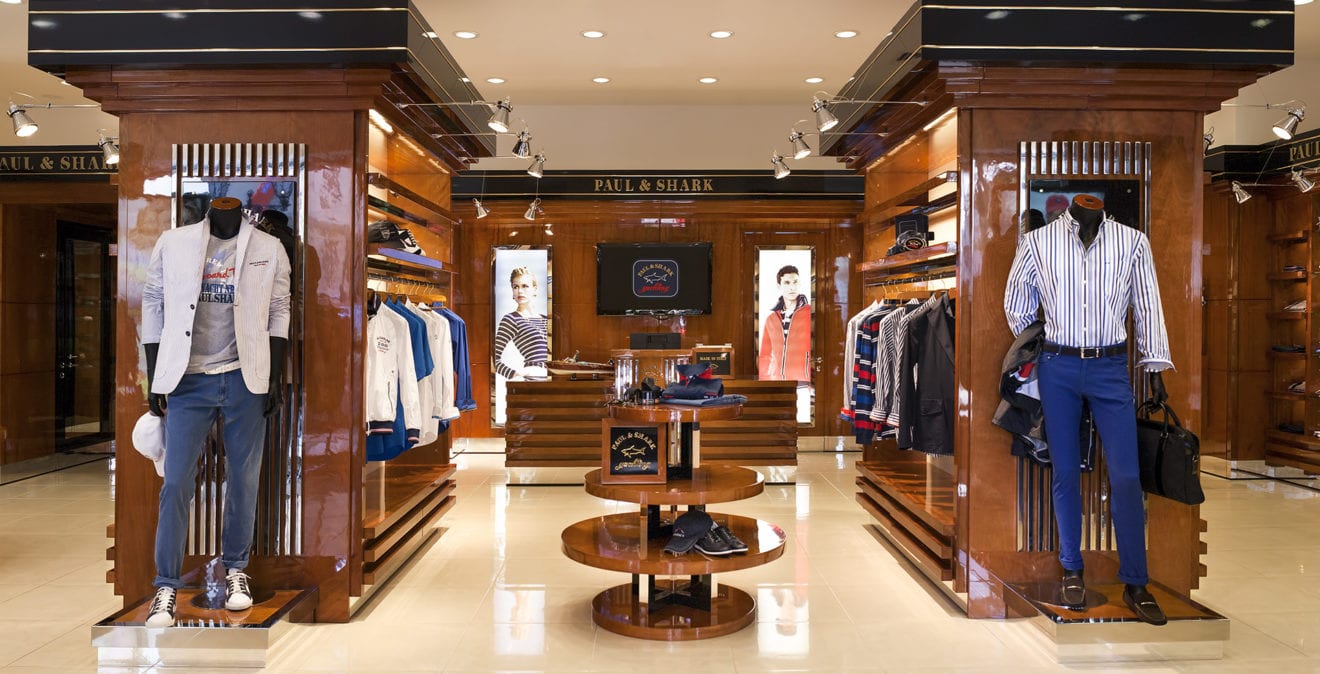
    Its new a flagship at Elements mall in Tsim Sha Tsui covers 140sqm and features a minimalistic design in white with the brand’s iconic blue using mirrored steel, marble, metal, glass and wood.

    To mark its opening, the brand presented a photo exhibition by Chinese visual artist Chen Man focused on the shark spirit. It will be open until the end of Tuesday.

    A special guest at the official opening was Hong Kong Women’s Federation honorary president Pansy Ho. Paul & Shark is donating a share of the proceeds of sales to support the federation, which supports women’s leadership and gender equality, and protects women’s legal rights.

    Paul & Shark was founded in 1975 and is distributed in 73 countries and 458 cities, including Singapore.

  • New Look founder backs emerging sportswear brand

    New Look founder backs emerging sportswear brand

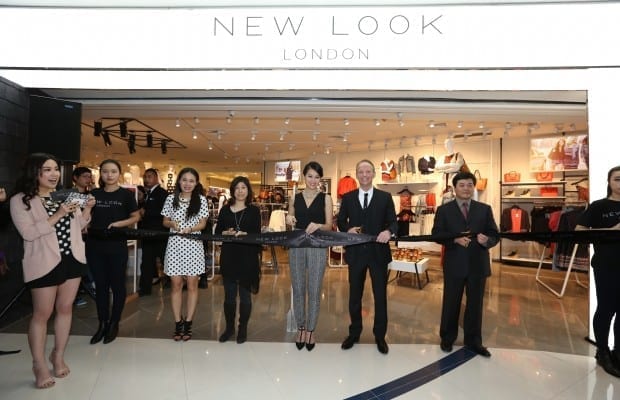
    New Look founder Tom Singh is among a group of private investors backing emerging men’s sportswear brand Castore.

    Singh remains a non-executive director of the high street chain he founded in 1969 and is also a member of the advisory board of Bridges Fund Management. He is one of a team of five investors to back Castore to the tune of £1.2m.

    Castore was founded by former professional athletes Tom and Phil Beahon, who are both in their 20s, and offers performance sportswear for “the most discerning athletes who value the attention to detail and precision performance features that underpin all garments”.

    The brand is currently sold on its website but there are plans for stores in London’s Canary Wharf, Bank and Chelsea and it also has international retail ambitions with stores in Hong Kong, Shanghai and New York in its sights. Prices range from £85 for a vest to £245 for a jacket.

    “The premium sportswear market continues to expand rapidly and although currently dominated by a small group of multinational companies, there is undoubtedly appetite for a premium brand committed to superior product quality like Castore,” Singh told.

    High end British cycling brand Rapha was recently acquired by RZC Investments, a private equity firm run by Steuart and Tom Walton, heirs to the Walmart fortune, for £200m.

  • Puma sportswear finds traction with footwear

    Puma sportswear finds traction with footwear

    German sportswear brand Puma achieved double-digit growth in all regions and in both footwear and apparel in the second quarter.

    CEO Bjørn Gulden says the company’s gross margin improved 90 points and sales grew 16 per cent on a currency-neutral basis. He credits the success to re-establishing strong traction in the footwear category and success with its women’s lines.

    In Asia/Pacific, sales increased 19.5 per cent on a currency-neutral basis in the quarter to €229 million (US$268.8 million).

    Overall sales jumped to €968.7 million (US$1.14 billion), footwear leading the way with sales of €463 million, up 27.2 per cent on a currency-neutral basis.

    Apparel revenues were €334.8 million, up 11.4 per cent, while accessory sales reached €170.9 million, up 1.3 per cent.

    Despite negative currency effects, the gross profit margin improved from 45.6 per cent in the quarter last year to 46.5 per cent, thanks to improving sourcing and price adjustments.

    EBIT increased from €11.9 million to €43.4 million, or 4.5 per cent of sales.

    Gulden says Puma started its turnaround plan four years ago with a mid-term aim to re-establish the brand “stone by stone”, but says revenues grew faster than expected.

    He says footwear is leading the way, which is critical for a sports brand because that’s where innovation and technology lie “and that’s where you get a niche for your brand”.

    But Gulden says there is still much that needs to improve, with the turnaround still a work in progress. But it is a step in the right direction as its operating margins still significantly lag competitors.

    “We feel more comfortable now than a year ago, and a year ago we felt more comfortable than the year before.”

  • Sportswear retailer streamlines trade operations in China

    Sportswear retailer streamlines trade operations in China

    Adidas Group wants to kick off its expansion in China on the right foot. The sportswear brand plans to bolster its retail sales network to 12,000 outlets in China by 2020, with much of the growth slated for smaller cities. However, the company also knows that conducting international trade within China can be difficult and complex due to challenges presented by huge import and export volume, and minimal advance notice of regulatory changes.

    As a result, Adidas began searching for an automated solution to help reduce manual-based operations, minimize clearance delays and compliance risks, and respond to regulatory changes quickly. The company found its solution through the CTM platform from Amber Road.

    Specifically, Amber Road’s CTM InSight function will equip the Adidas China team with self-compliance capabilities, which will help them conduct comprehensive and regular internal audits to proactively identify and resolve non-compliance issues with agencies in a timely fashion. Meanwhile, the CTM Business Intelligence (BI) Dashboard will supply information to centralize management, improve clearance process visibility, and enhance internal controls.

    By implementing Amber Road’s CTM solution, Adidas Group will be well prepared to apply for China Customs Advanced Certified Enterprise (AEO) status, which will enable the company to enjoy international trade facilitation measures, according to Kae-Por Chang, managing director, Amber Road China.