Tag: starbucks

  • Starbucks and Jay Chou Ignite the Summer with Fantasy Experience Across Asia-Pacific

    Starbucks and Jay Chou Ignite the Summer with Fantasy Experience Across Asia-Pacific

    In a creative move, Starbucks has teamed up with Mandopop sensation Jay Chou to introduce a unique ‘Fantasy’ Summer Experience throughout the Asia Pacific. This novel initiative includes exclusive beverages, limited-edition merchandise, and music-themed in-store experiences influenced by the superstar’s discography.

    The campaign kicked off in Taiwan on June 20 and will gradually unfold in Hong Kong, Macau, Malaysia, and Singapore at various points during the summer season.

    A Unique Blend of Music and Merchandise

    This one-of-a-kind partnership draws inspiration from Chou’s iconic ‘Fantasy’ musical universe. The collaboration features themed drinkware and lifestyle products, along with personalised beverage recommendations. These drink suggestions are based on the star’s favourite Starbucks drinks, offering customers the option to customize them to their preferences.

    Furthermore, select Starbucks locations will offer immersive experiences, such as music-inspired displays and creatively designed spaces. These interactive elements aim to highlight Chou’s unique artistic style and his enduring bond with his fanbase.

    Nancy Lo, Starbucks Asia Pacific’s VP of Product and Marketing, said, “Music and coffee both have a unique way of connecting people and transporting us to a particular memory in time. With this partnership with Jay Chou, we hope to celebrate those small, yet significant moments in our daily lives – like the pleasure of sipping a favourite drink or listening to a beloved song.”

    In further collaboration news, Starbucks and Jay Chou joined forces earlier in May to unveil a unique partnership in China. This venture introduced exclusive beverages and merchandise across more than 8,000 stores.

    Questions & Answers

    What is the ‘Fantasy’ Summer Experience?
    The ‘Fantasy’ Summer Experience is a unique initiative launched by Starbucks in collaboration with Mandopop star Jay Chou. It features exclusive beverages, limited-edition merchandise and music-themed in-store experiences influenced by Chou’s music.

    Where and when will the ‘Fantasy’ Summer Experience be available?
    The experience kicked off on June 20 in Taiwan and will gradually unfold in Hong Kong, Macau, Malaysia, and Singapore throughout the summer season.

    What does this partnership entail for Starbucks store guests?
    Customers will have access to customized beverages based on Jay Chou’s favorite Starbucks drinks, themed drinkware, lifestyle products, and immersive in-store experiences celebrating Chou’s unique artistic style.

  • Starbucks Brews Major Expansion in India: Targets 100 New Stores Annually

    Starbucks Brews Major Expansion in India: Targets 100 New Stores Annually

    Starbucks has announced ambitious plans to open up to 100 outlets annually in India, marking an accelerated expansion in one of the company’s most rapidly growing global markets.

    Sushant Dash, CEO of Tata Starbucks, emphasized the potential for significant expansion in India, despite the country’s dominant tea culture. Coffee remains a smaller category, but the industry size and potential for growth cannot be overlooked.

    Tata Starbucks, a successful joint venture between Starbucks and the Tata Group, presently manages more than 500 outlets across India, accounting for roughly 30% of the nation’s structured coffee market. The partnership plans to amplify its presence by inaugurating between 50 to 100 stores each year.

    According to Dash, India ranks as one of Starbucks’ fastest expanding markets globally. The renowned coffee chain has more than doubled its number of stores in the country within the last four to five years.

    This aggressive expansion comes in response to the observed increase in coffee consumption amongst the youth and urban consumers in India. This uptick has sparked intensified competition from both local and international brands.

    To seize this opportunity, Tata Starbucks is considering a multi-format expansion strategy that includes drive-through outlets, highway locations, kiosks, and experiential stores. The company has also invested in its Starbucks Reserve concept, with six locations currently operating across major cities like Mumbai, Delhi, and Kolkata.

    This most recent expansion supports the company’s aspiration to reach 1,000 stores in India by 2028. In line with this goal, Tata Starbucks aims to increase its workforce to approximately 8,600 partners and further extend its network of drive-through outlets, airport cafes, and 24-hour locations.

    Notably, the company’s expansion plans extend beyond metropolitan areas. Tata Starbucks seeks to tap into India’s next wave of consumer growth by stepping up its presence in Tier 2 and Tier 3 cities.

    Questions & Answers

    What are Starbucks’ expansion plans in India?
    Starbucks plans to open between 50 to 100 outlets annually in India, aiming to reach 1,000 stores in the country by 2028.

    Is coffee popular in India?
    Despite India’s tea-dominant culture, the consumption of coffee is rising, particularly among the younger and urban demographics, leading to a surge in growth opportunities for coffee retailers.

    How does Starbucks plan to capture the growing coffee market in India?
    Starbucks, through its joint venture with the Tata Group, aims to leverage the growing coffee market in India by expanding its network of drive-through outlets, airport cafes, and 24-hour locations. The company is also broadening its reach to Tier 2 and Tier 3 cities.

  • Starbucks Brews Plan for India Expansion, Aiming for 100 New Stores Annually in the Tea Land

    Starbucks Brews Plan for India Expansion, Aiming for 100 New Stores Annually in the Tea Land

    Starbucks is setting its sights on India, one of its fastest-growing markets worldwide, with plans to launch up to 100 stores per year. The renowned coffee chain, despite coffee being a less popular choice than tea in India, sees substantial potential for growth in the region.

    Tata Starbucks, a joint venture between Starbucks and the Tata Group, currently boasts over 500 stores across India, holding around 30% of the country’s structured coffee market. It intends to continue expanding its footprint by adding 50 to 100 outlets each year.

    Sushant Dash, Tata Starbucks CEO, highlighted the significant growth rate India represents for Starbucks on a global scale. He noted that the store count in India has more than doubled over the last four to five years. This growth coincides with the rise in coffee consumption among younger and urban consumers, which has sparked competition from both local and international entrants.

    Adapting to Local Consumer Needs

    To seize the emerging opportunities, Tata Starbucks is broadening its horizons by diversifying its store formats, including drive-through stores, highway locations, kiosks, and experiential outlets. The company is investing in the Starbucks Reserve concept, now operating in six different locations in Mumbai, Delhi, and Kolkata.

    This expansion aligns with the company’s ambition to operate 1,000 retailers in India by 2028. In line with this aspiration, Tata Starbucks intends to increase its workforce to approximately 8,600 partners and extend its network of drive-through stores, airport cafes, and 24-hour locations.

    In addition, the company is exploring opportunities beyond major metropolitan areas, intending to extend its presence in Tier 2 and Tier 3 cities to capitalize on India’s upcoming wave of consumer growth.

    Questions & Answers

    What is Starbucks’ growth plan for India?
    Starbucks plans to open up to 100 stores per year in India, aiming to operate 1,000 stores by 2028.

    How is Tata Starbucks adapting to the Indian market?
    Tata Starbucks is diversifying its store formats to meet local needs, including drive-through stores, highway locations, kiosks, and experiential outlets. It is also expanding its presence in Tier 2 and Tier 3 cities.

    What is the current position of Starbucks in the Indian coffee market?
    Starbucks, through its joint venture with the Tata Group, Tata Starbucks, currently operates over 500 stores and holds about 30% of the country’s structured coffee market.

  • Starbucks Korea Closes for Sensitivity Training Following Historic Campaign Controversy

    Starbucks Korea Closes for Sensitivity Training Following Historic Campaign Controversy

    Following public disapproval over a marketing campaign, Starbucks Korea, operated by Shinsegae Group, has announced it will close all stores across the country at 3pm on June 22 for employee training related to historical awareness and social sensitivity. The coffee giant came under fire for a campaign last month that was reminiscent of a harsh military suppression of pro-democracy demonstrators in 1980, leading to significant sales losses.

    Training and Education Initiative

    E-Mart, an affiliate of Shinsegae and owner of Starbucks Korea, initiated the promotional campaign named ‘Tank Day’ tumbler on the anniversary of the Gwangju Uprising on May 18. The historical event saw the military government deploy troops and tanks to quell pro-democracy rallies. In response to the backlash, staff and executives from Starbucks Korea and E-Mart division at Shinsegae will undertake the same training on June 17 at the group’s internal training center. Shinsegae Chairman Chung Yong-jin and affiliate CEOs will partake in a separate session on June 24. Shinsegae’s decision to implement these measures reflects the gravity with which it views the recent marketing misstep and signifies its dedication to avoiding similar situations in the future. Chairman Chung has previously issued a public apology for the controversy.

    The training will be spearheaded by a history professor from Sungkyunkwan University and will delve into significant events in South Korea’s modern and contemporary history since the 1950s. A separate social sensitivity training, facilitated by a sociology professor from the same university, will focus on how businesses should take into account societal factors such as history, labor, gender, and human rights in marketing and all corporate activities.

    Introducing New Measures

    This will be the first nationwide early closure for Starbucks Korea since its establishment in the country in 1999. In light of recent events, Starbucks Korea also intends to revamp its marketing approval procedures. This includes the introduction of a social-sensitivity checklist that covers history, commemorative dates, politics, disasters, military issues, gender, violence, and hate expressions.

    As of the end of 2024, Starbucks Korea had more than 2000 stores in the country and is regarded as the leading coffee chain in terms of customer payments.

    Questions & Answers

    What spurred Starbucks Korea to close its stores for employee training?
    Starbucks Korea faced public criticism due to a marketing campaign reminiscent of a harsh military suppression in 1980, which led to a significant drop in sales. The company has decided to close all stores in the country for staff training on historical awareness and social sensitivity.

    What will the training sessions entail?
    The history awareness lecture will be conducted by a history professor from Sungkyunkwan University and will review significant events in South Korea’s modern and contemporary history. Another professor from the same university will conduct a separate social sensitivity training, focusing on how companies should consider societal issues in their operations and marketing activities.

    What changes does Starbucks Korea plan to implement moving forward?
    Starbucks Korea plans to overhaul its marketing approval procedures by introducing a social-sensitivity checklist that covers history, commemorative dates, politics, disasters, military issues, gender, violence, and hate expressions. This is aimed at ensuring such marketing missteps do not recur in the future.

  • Starbucks Considers Billion-Dollar Stake Sale in Japan: Potential Bidders Emerge

    Starbucks Considers Billion-Dollar Stake Sale in Japan: Potential Bidders Emerge

    Starbucks, the prominent Seattle-based coffee chain, is contemplating various strategies concerning its Japanese operations, which could potentially involve selling its stake in the region. This business decision could garner attention from other industry contenders and private equity companies.

    Valuation estimates for the potential stake sale hover around ¥400 billion (A$3.5 billion) to A$4.4 billion. However, Starbucks has yet to respond to inquiries regarding these speculations, leaving industry analysts and investors awaiting official correspondence.

    A brief look back reveals that the coffee company took full control of Starbucks Coffee Japan Ltd in 2014. This entity was previously a joint venture between Starbucks and its partner, Sazaby League, a partnership that began in 1995.

    In relation to Starbucks’ other international dealings, the company concluded an agreement with Boyu Capital in April to sell the majority of its Chinese operations. This decision placed a value of approximately A$5.6 billion on the business.

    Despite posting its most robust quarterly sales growth in over two years this past April, Starbucks faces increasing costs. This is largely due to CEO Brian Niccol’s turnaround strategy. As a result, uncertainties linger regarding the pace at which profit margins can rebound.

    Questions & Answers

    What is Starbucks currently considering for its Japanese operations?
    Starbucks is considering various options, including potentially selling its stake in its Japanese business.

    What is the estimated value of the potential stake sale?
    The potential stake sale is anticipated to be valued between ¥400 billion (A$3.5 billion) and A$4.4 billion.

    What challenges is Starbucks currently facing?
    Despite recording strong sales growth, Starbucks is experiencing increased costs due to CEO Brian Niccol’s turnaround strategy. This has led to concerns about how quickly the company’s profit margins can recover.

  • Starbucks Korea Leader Axed Over Distasteful Tank Day Promo that Ignited National Fury

    Starbucks Korea Leader Axed Over Distasteful Tank Day Promo that Ignited National Fury

    Shinsegae Group, a major food corporation in South Korea, has terminated the employment of Starbucks Korea’s chief after a marketing campaign sparked widespread controversy on the commemoration of historical pro-democracy protests.

    Shinsegae, the South Korean holder of the Starbucks license, announced on Monday that Chairman Chung Yong-jin dismissed Sohn Jeong-hyun, the leader of Starbucks Korea, on the grounds of conducting “unsuitable marketing.”

    Hours before the announcement, Starbucks Korea initiated a ‘Tank Day’ promotional campaign which provoked backlash from South Koreans who interpreted it as an insensitive reference to the violent suppression of protestors by military tanks during the anti-dictatorial movements in the 1980s. The campaign, which offered discounts to customers purchasing tumblers, employed language that evoked a South Korean official’s explanation for the torture-related death of a student protestor in 1987.

    On Monday, South Korea observed the Democracy Movement Day, commemorating the student-initiated Gwangju uprising. Reportedly, hundreds or even thousands of individuals were killed when the public rebelled against the military dictator Chun Doo-hwan on May 18, 1980.

    In response to the public’s outcry, Starbucks Korea issued a formal apology for the insensitive promotional campaign on its website.

    President Lee Jae Myung expressed his “fury” regarding the issue and insisted on an official apology from the company to the families affected by the uprising.

    Starbucks Coffee Company Spokesperson: 

    “We are deeply sorry for an unacceptable marketing incident in Korea that referenced and coincided with May 18, the commemoration of the Gwangju Democratization Movement – a day of profound historical and human significance. 

    “While unintentional, this should never have happened. We recognize the deep pain and offense this has caused, particularly to those who honor the victims, their families, and all who contributed to Korea’s democratization. 

    “Starbucks Korea immediately halted the campaign, and we are taking this matter with the utmost seriousness. Leadership accountability actions have been taken, and a thorough investigation is underway. We are implementing stronger internal controls, review standards, and company-wide training to ensure this does not happen again.  

    “We sincerely apologize to the people of Gwangju, to those impacted by this tragedy, and to our customers and communities.”

    Questions & Answers

    What was the cause of the termination of the head of Starbucks Korea?
    Starbucks Korea’s chief, Sohn Jeong-hyun, was dismissed due to a controversial ‘Tank Day’ promotional campaign that was seen as insensitive towards the historical pro-democracy protests in South Korea.

    How did the public interpret the ‘Tank Day’ promotional campaign by Starbucks Korea?
    The campaign upset South Koreans as it seemingly reminded them of the violent suppression of protestors by military tanks during the anti-dictatorial movements in the 1980s.

    What was the reaction from the South Korean government to the promotional campaign?
    President Lee Jae Myung expressed his anger regarding the issue and demanded an official apology from the company to the families of those who lost their lives in the uprising.

  • Revolutionizing Beverage Discovery: Starbucks Tests ChatGPT for Personalized Drink Recommendations

    Revolutionizing Beverage Discovery: Starbucks Tests ChatGPT for Personalized Drink Recommendations

    Starbucks is testing an innovative feature, ChatGPT beta, which allows customers to explore and customize their drinks through interactive prompts. This latest feature, which was rolled out this week, provides consumers with personalized beverage recommendations based on their mood, preferences, or situations, with the optional use of image inputs to further tailor the suggestions.

    The ChatGPT tool signifies a shift from traditional menu browsing to a more user-friendly, intention-based interaction. The platform allows customers to customize their order, select a store, and initiate an order. The final checkout can be completed via either the Starbucks app or their website.

    Reimagining the Ordering Process

    The addition of the ChatGPT beta feature to the Starbucks digital ordering process reflects the company’s commitment to making online ordering more instinctive and emotionally engaging. The aim is to transform the beverage selection process into an enjoyable journey of discovery, rather than a mere transactional search.

    Paul Riedel, Senior Vice President of Digital and Loyalty for Starbucks, stated, “Our goal is to engage with customers at the point of inspiration and make it as simple as possible for them to find a beverage that resonates with them.” He further added, “The introduction of the Starbucks app into ChatGPT is a significant move towards making this a reality, in a manner that is uniquely Starbucks – welcoming, warm, and steeped in creativity.”

    Stages of Development

    Starbucks is presenting this beta version as an initial testing phase. The development and enhancement of this feature will rely heavily on feedback from users.

    Questions & Answers

    What is the purpose of the new ChatGPT beta feature launched by Starbucks?
    It allows customers to discover and customise their beverages based on their preferences, moods, or occasions through interactive prompts.

    How does Starbucks view the new feature?
    Starbucks views the new tool as a shift from conventional menu browsing to a more user-friendly, intention-based interaction. It aims to make digital ordering more instinctive and emotionally engaging.

    What will determine the further development of the ChatGPT beta feature?
    The further development and improvement of the ChatGPT beta feature will depend on the feedback received from its users.

  • Starbucks Seals Deal with Boyu Capital, Sets Sight on 20,000 Stores in China’s Coffee Market Rivalry

    Starbucks Seals Deal with Boyu Capital, Sets Sight on 20,000 Stores in China’s Coffee Market Rivalry

    Starbucks recently finalised a significant strategic transaction with Boyu Capital, effectively transferring majority control of its China-based operations to the investment firm. Initiated back in November, this strategic move is designed to stimulate the coffee chain’s expansion in the world’s second-largest economy. Starbucks faces fierce competition in this market from regional contenders such as Luckin and Cotti, who have managed to gain substantial market share through their affordable pricing strategies.

    Boyu Capital, whose founders include a descendant of previous Chinese President Jiang Zemin, will now oversee a significant 60% stake in Starbucks’ Chinese outlets. Despite this shift in ownership, Starbucks will maintain a 40% interest in these stores and will persist in licensing its distinguished brand and intellectual property rights to the joint venture.

    Molly Liu, the Chief Executive Officer of Starbucks China, expressed her affirmation of the deal, stating that it would foster a “hyper-localisation” of the Starbucks brand within the Chinese market. This essentially means that the brand will be more effectively tailored and marketed towards local consumers, creating a more resonant and culturally appropriate experience for them.

    Currently, China is home to approximately 8,000 Starbucks outlets. With this new agreement, the company plans to dramatically increase the number of stores with Boyu Capital’s assistance. The intended target is an ambitious 20,000 outlets across the country.

    Questions & Answers

    What is the purpose of Starbucks’ deal with Boyu Capital?
    The deal is designed as a strategic move to stimulate Starbucks’ growth in China, the world’s second-largest economy. It is a response to the fierce competition Starbucks faces in China, particularly from local brands offering lower prices.

    What will be the role of Starbucks in the new joint venture?
    Starbucks will retain 40% ownership in its Chinese stores and will continue to license its brand and intellectual property rights to the joint venture.

    What is the future plan of Starbucks in terms of its store count in China?
    Starbucks, in collaboration with Boyu Capital, plans to increase its current store count in China from approximately 8,000 to a target of 20,000 outlets.

  • Starbucks Reaches New Heights: Unveils Asia’s Highest Coffeehouse on Vietnam’s Fansipan Peak

    Starbucks Reaches New Heights: Unveils Asia’s Highest Coffeehouse on Vietnam’s Fansipan Peak

    Starbucks has inaugurated a new outlet at the peak of Fansipan, making it the highest Starbucks branch in Asia.

    Location and Significance

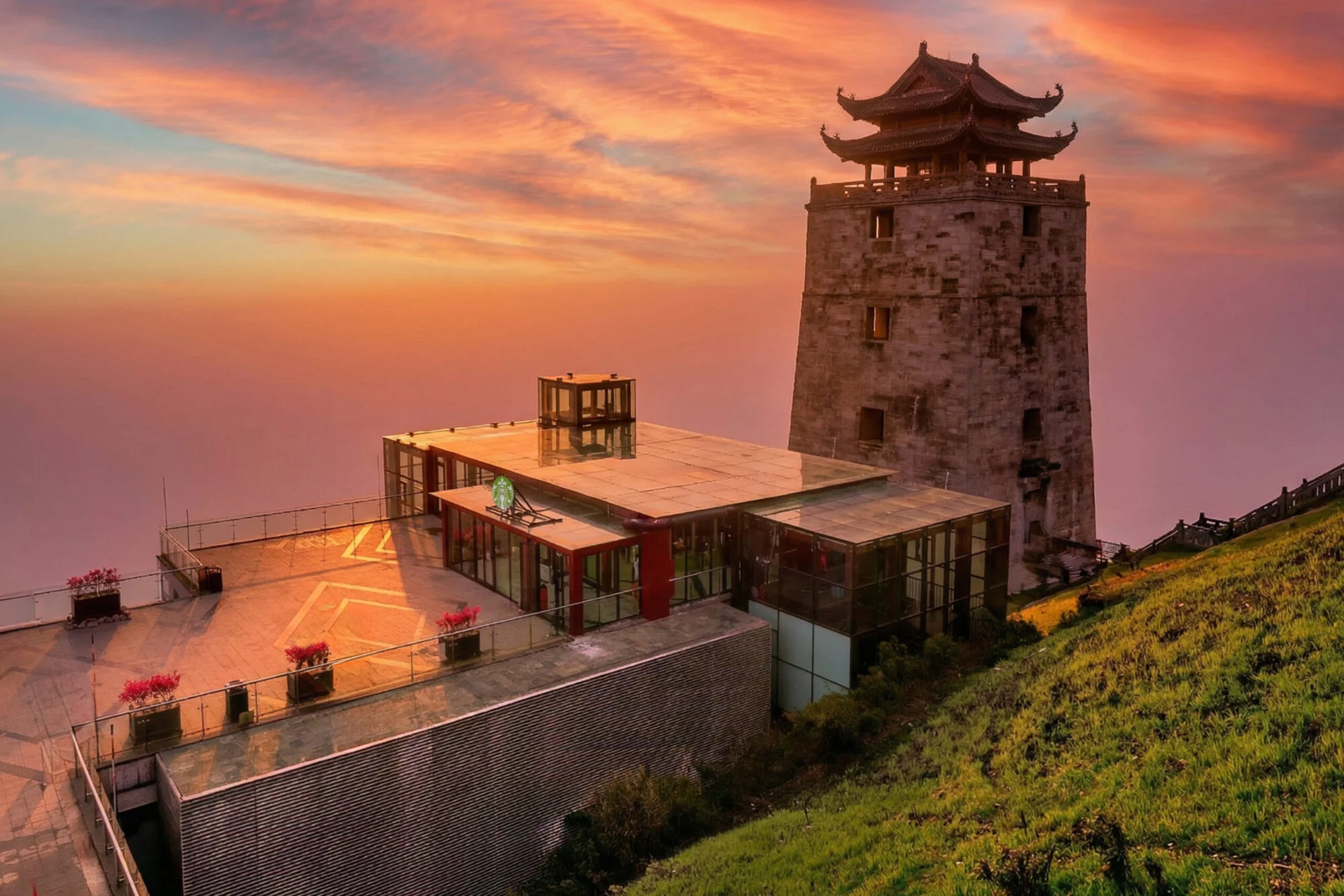
    Positioned 3063 meters above sea level, the store is a part of the Sun World Fansipan Legend tourism complex in Sa Pa, located in the northern region of Vietnam. This new Starbucks outlet not only broadens the company’s presence in popular tourist destinations, but also signifies another milestone in its market expansion.

    Regarding this notable accomplishment, Chi Nguyen, Starbucks Vietnam’s Public Affairs Manager, stated, “This achievement signifies the unwavering support from our customers and partners. The store, with its stunning location and design that embraces both the local culture and Starbucks’ craftsmanship, will unquestionably become a must-visit spot for travelers from Vietnam and from around the globe.”

    Design and Décor

    The design of the outlet draws inspiration from architectural elements typical of Sapa. The exterior showcases a sage-green facade and integrates local textiles. In contrast, the interior utilizes wood textures, neutral tones, and greenery to replicate the surrounding highland scenery.

    Additionally, a personalized sandblasted glass artwork positioned above the bar illustrates the contours of Fansipan and Vietnam’s coffee-growing regions. The seating areas are purposefully arranged to provide visitors with a panoramic view of the surrounding mountains.

    New Beverage Introduction

    To celebrate the inauguration, Starbucks Vietnam has launched a limited-time Cloud Macchiato beverage series. These beverages will be available in both hot and iced versions at Starbucks outlets throughout the nation.

    Starbucks made its first entry into Vietnam in 2013, opening in Ho Chi Minh City. The brand now boasts over 150 stores spread over 25 cities and provinces in the country.

    Questions & Answers

    Where is the highest Starbucks store in Asia?
    The highest Starbucks store in Asia is located at the peak of Fansipan in northern Vietnam.

    What unique design elements does the Fansipan Starbucks store feature?
    The Fansipan Starbucks store embraces local architectural influences, featuring a sage-green exterior that incorporates local textiles. The interior uses wood textures, neutral tones, and greenery to reflect the surrounding highland landscape.

    What special beverage series has Starbucks Vietnam introduced to celebrate the new store opening?
    To commemorate the opening of the new store, Starbucks Vietnam has introduced a limited-time Cloud Macchiato beverage series, available in both hot and iced versions.

  • Starbucks Eyes Major Global Expansion: China in Spotlight Despite Market Challenges

    Starbucks Eyes Major Global Expansion: China in Spotlight Despite Market Challenges

    Starbucks, the renowned coffee chain, is fast-tracking global expansion plans that extend beyond fiscal year 2028. The company considers China as the bedrock of its long-term development strategy, notwithstanding the increasingly competitive landscape and looming economic challenges.

    During the 2026 Investor Day, the coffee behemoth announced plans for significant expansion in both domestic and international markets.

    International Growth

    Starbucks intends to double its international cafe presence over time, aiming for nearly 40,000 non-US stores. China is anticipated to play a major role in this planned growth. Starbucks plans to open between 15,000 and 20,000 additional stores in the Chinese market over the long term.

    Brady Brewer, CEO at Starbucks International, provided insights on the company’s international strategy. He stated, “Our international business fills a very clear role. We are an asset-light growth driver for Starbucks that bolsters the company’s margins.”

    Challenges and Opportunities in China

    China, while being a strategic priority, continues to be one of the most challenging markets for Starbucks. Local competitors such as Luckin Coffee and Cotti Coffee are gaining traction via aggressive pricing strategies, swift expansion, and localized innovation. Simultaneously, economic slowdown is causing increased price sensitivity, challenging Starbucks’ premium positioning.

    In response to these challenges, Starbucks has reorganized its operations in China. The company has established a joint venture with Boyu Capital, transitioning to a licensed business model while maintaining a 40% stake.

    First Quarter Financials

    For the first quarter of fiscal 2026, Starbucks reported a revenue of US$9.9 billion. This shows an upward sales trajectory and continuous growth across the coffee giant’s global network of stores.

    Questions & Answers

    What is Starbucks’ plan for international growth?
    Starbucks intends to double its international store presence, targeting nearly 40,000 non-US locations.

    What role does China play in Starbucks’ expansion strategy?
    China is expected to account for a major portion of Starbucks’ international expansion. The company plans to open between 15,000 and 20,000 additional stores in the Chinese market.

    What changes has Starbucks made in its China operations?
    In response to increasing competition and economic challenges, Starbucks has restructured its China operations through a joint venture with Boyu Capital, transitioning to a licensed business model and retaining a 40% stake.

  • Starbucks Debuts Culture-Inspired Concept Store in Hong Kong Palace Museum: Merging Art, Coffee, and Custom Engraving Experience

    Starbucks Debuts Culture-Inspired Concept Store in Hong Kong Palace Museum: Merging Art, Coffee, and Custom Engraving Experience

    Starbucks has unveiled a novel concept store at the Hong Kong Palace Museum in West Kowloon, positioned as a serene oasis amidst the hustle and bustle of the city.

    Store Design and Art Collaborations

    The store showcases unique design collaborations with three prominent local artists. Calligrapher Westley Wong is the creative genius behind the Chinese “Starbucks” brush signage that welcomes visitors at the entrance. Elsa Ngai, another inspiring artist, has enriched the interiors with layered botanical artworks that narrate the life cycle of a coffee plant using mineral pigments and gold leaf.

    Drawing on the serene landscapes of Yunnan and the wisdom of Chinese philosophy, porcelain sculptor Leo Wong has crafted a remarkable ceramic wall installation. Patrons of the store can also enjoy an uninterrupted view of Victoria Harbour while sipping their coffee.

    Exclusive Beverage and Food Menu

    The concept store has launched a new seasonal range of beverages inspired by the plum blossom. The range includes oolong tea and coffee-based creations, all served with plum sauce, a whole plum, and a topping of creamy foam. Customers can choose between hot and iced versions of the drinks, with an option to add tonic water to the chilled variants. The store also offers an exclusive Turmeric Oatmilk Latte, only available at this particular location.

    In terms of food, the store has introduced two unique desserts inspired by Ancient Egypt: the Golden Pistachio Pyramid Cake and the Mummy’s Secret Roll.

    New Services and Experiences

    This concept store is the first in the city to offer a Starbucks engraving service, providing customers with the opportunity to personalize their tumblers. The store will also be hosting Coffee Micro-Experiences like hand-brewing sessions, latte art demonstrations, and curated coffee tastings.

    General Manager of Starbucks Hong Kong and Macau, Alan Chan, states that the HKPM store aims to reflect local culture in its design, range of products, and in-store experiences. The goal is to reimagine the Starbucks Third Place experience by integrating local elements to foster deeper and more meaningful connections with the community.

    Questions & Answers

    What unique design features does the new Starbucks concept store offer?
    The store showcases design collaborations with local artists, including a Chinese “Starbucks” brush signage, botanical artworks, and a ceramic wall installation inspired by Yunnan’s landscape and Chinese philosophy.

    What exclusive beverages and food items are available at the new store?
    The store has introduced a plum blossom-inspired beverage range and an exclusive Turmeric Oatmilk Latte. The food menu includes two Ancient Egypt-themed desserts: the Golden Pistachio Pyramid Cake and Mummy’s Secret Roll.

    What unique services and experiences does the new store offer?
    The store offers a Starbucks engraving service and hosts Coffee Micro-Experiences such as hand-brewing sessions, latte art demonstrations, and curated coffee tastings.

  • Starbucks Brews Success with Q1 Sales Surge: ‘Back to Starbucks’ Strategy Fuels Global Expansion

    Starbucks Brews Success with Q1 Sales Surge: ‘Back to Starbucks’ Strategy Fuels Global Expansion

    In the first quarter of fiscal 2026, Starbucks has announced a robust revenue of US$9.9 billion, pointing towards a general expansion in sales and steady growth of its worldwide store chain.

    Global Sales Progress

    Comparable store sales on a worldwide level saw a growth of 4 per cent during the quarter. Primarily, this rise was fuelled by a 3 per cent growth in transactions and a 1 per cent increase in the average ticket size. Unlike previous quarters, this expansion was mainly supported by an increase in customer traffic rather than price escalations.

    Uplift in North American Sales

    In the North American region, inclusive of the US, comparable sales saw a 4 per cent rise. This included the first transaction growth in the US in the past eight quarters. The management credits this growth to improvements in operations and a renewed focus on the in-store experience under the guidance of CEO Brian Niccol’s ‘Back to Starbucks’ initiative.

    CEO Brian Niccol expressed his satisfaction with the results, saying, “Our Q1 results indicate that our ‘Back to Starbucks’ strategy is proving effective, and we believe we are advancing faster than our original schedule.”

    Strong Performance in International Markets

    The international markets posted even stronger outcomes, with comparable store sales rising by 5 per cent. China emerged as the strongest performer, with a 7 per cent growth in comparable sales, backed by a 5 per cent increase in transactions and a 2 per cent rise in the average ticket size.

    During the quarter, Starbucks launched 128 new stores, raising its worldwide total to 41,118 locations. Currently, 52 per cent of the stores are company-operated and 48 per cent are licensed. The US and China remain the largest markets for the company, accounting for 61 per cent of all stores, with a total of 16,911 and 8,011 locations respectively.

    Future Expectations

    Starbucks anticipates the current growth trend to persist. The company forecasts at least 3 per cent comparable sales growth in the current fiscal year and aims to launch between 600 and 650 new stores globally, underscoring its confidence in its revival and expansion strategies.

    In a recent development, Starbucks declared its intentions to sell a controlling stake in its China operations to Boyu Capital, in a US$4 billion deal. However, it will retain a 40 per cent stake while continuing to own and license the Starbucks brand and intellectual property.

    Questions & Answers

    What was the growth rate of global comparable store sales in the first quarter?
    The global comparable store sales grew by 4 per cent in the first quarter.

    What was the primary factor for the rise in global sales for Starbucks in the quarter?
    The rise was primarily supported by a growth in customer traffic rather than price escalations.

    What are Starbucks’ growth plans for the current fiscal year?
    Starbucks plans to achieve at least 3 per cent comparable sales growth and intends to launch between 600 and 650 new stores globally.

  • Starbucks Joins the Nespresso Vertuo Family: First-Ever Capsules Hit the Market

    Starbucks Joins the Nespresso Vertuo Family: First-Ever Capsules Hit the Market

    Nespresso has unveiled an expansion to its Vertuo range which now includes Starbucks coffee capsules. This marks a pivotal moment as it is the first instance of Starbucks’ blends being incorporated into the Vertuo system.

    The new additions to the lineup consist of Espresso Roast and Blonde Espresso Roast, each prepared for 40ml espresso servings. Additionally, 230ml mug formats will now include Caffe Verona, Pike Place Roast, and Single-Origin Colombia. These expansions aim at offering customers an opportunity to explore a more diverse variety of coffee blends.

    Stefan Vermeulen, the Managing Director of Nespresso ANZ, emphasized the significance of the partnership. He mentioned that this collaboration further strengthens Vertuo’s commitment to variety and versatility. The Vertuo system, according to Vermeulen, is designed to promote coffee exploration as it offers a broad array of coffee blends.

    Moreover, the system’s ability to produce multiple types of beverages from a single capsule adds to its appeal. The inclusion of popular Starbucks blends into the range not only widens the options for customers but also facilitates their access to a globally recognized, cafe-style experience.

    The latest Nespresso and Starbucks collaboration in the form of Vertuo capsules will be accessible to customers online as well as in Nespresso boutiques.

    Questions & Answers

    What is the new addition to Nespresso’s Vertuo range?
    The new addition to Nespresso’s Vertuo range includes Starbucks coffee capsules, marking the first time Starbucks’ blends have been made available for the system.

    What types of roasts have been added to the lineup?
    The new roasts added to the lineup include Espresso Roast and Blonde Espresso Roast for 40ml espresso servings, and for 230ml mug formats, Caffe Verona, Pike Place Roast and Single-Origin Colombia have been added.

    Where will the new Nespresso x Starbucks Vertuo capsules be available?
    The new Nespresso x Starbucks Vertuo capsules will be available for purchase online and in Nespresso boutiques.

  • Japanese Coffee Titans Brew Expansion Strategy to Rival Starbucks in India and Southeast Asia

    Japanese Coffee Titans Brew Expansion Strategy to Rival Starbucks in India and Southeast Asia

    Japanese-themed full-service café chains are accelerating their proliferation across India and Southeast Asia. They are banking on the allure of their high-end atmosphere and Japan-centric menus to the emerging middle and upper-class consumers in these regions.

    Emergence of Full-Service Cafés

    Coffee-Kan, a full-service café where customers place their orders at the table and enjoy comprehensive waiter service, is gearing towards inaugurating its debut international outlet in India by 2027. The company is targeting to set up 60 stores throughout India and Southeast Asia within the next decade.

    Targeting urban office-goers and middle to high-income consumers in cities like Mumbai and Bengaluru, café operator C-United anticipates an average spending to surpass JPY2,000 yen (US$12.90), which is over double its average expenditure in Japan.

    The number of international café chain outlets in India saw a 13% hike in 2024 from the preceding year, tallying up to around 5,300 outlets. Leading the pack was Starbucks, followed by native brands Barista and Café Coffee Day, all of which only offer counter service. Industry experts believe that full-service cafes have a high growth potential.

    “Full-service cafes are gaining in popularity as a space where office employees and university students can relaxingly spend longer durations indulging in food, reading, and socializing,” remarked Takanori Higuchi of the Japan External Trade Organization office in New Delhi.

    C-United’s President Yuki Tomonari commented that “there is a demand for more expensive options in the full-service café format.”

    Thriving Market Potential

    Market research company Euromonitor International predicts that by 2030, India’s middle to high-income population will leap to over 40% from just 10% in 2020.

    Another Japan-based firm, Doutor Nichires Holdings, has plans to inaugurate the first international branch of its full-service concept Kanno Coffee in Taiwan by March 2026. The chain, which currently operates 12 outlets chiefly in urban areas in Japan, will spotlight matcha-based offerings in Taiwan and anticipates an average customer spending of approximately 1,000 yen.

    Doutor Nichires has already opened roughly 20 branches of its Hoshino Coffee brand across Taiwan and the Philippines. Kanno Coffee boasts numerous Japanese-style menu items that incorporate matcha,” observed President Masanori Hoshino. “We believe it will be successful even at a higher price point than Hoshino Coffee.”

    Komeda is also broadening its reach in Taiwan and Indonesia, managing about 80 international stores compared to 18 as of February 2021.

    Questions & Answers

    What does the term ‘full-service café’ refer to?
    Full-service cafes offer a dining experience where customers place their orders at their tables and enjoy complete waiter service.

    What are the expansion plans of Coffee-Kan?
    Coffee-Kan plans to open its first overseas outlet in India by 2027 and aims to establish 60 stores across India and Southeast Asia by 2030.

    What is the special offering of the Kanno Coffee chain?
    Kanno Coffee, a chain run by Doutor Nichires Holdings, places special emphasis on matcha-based offerings at its outlets.

  • Starbucks Strikes Success: Turnaround Strategy Brews Positive Sales Growth After Two Years

    Starbucks Strikes Success: Turnaround Strategy Brews Positive Sales Growth After Two Years

    Starbucks has finally shown a surge in comparable sales growth, marking the first increase in nearly two years. This promising development suggests the early success of the renowned coffee company’s turnaround strategy.

    Turnaround Indicators

    The fourth quarter, which ended on September 28, witnessed a 1 per cent increase in global comparable store sales. This significant growth, the first in seven quarters, was mainly due to an increase in comparable transactions.

    In North America, and particularly in the US, comparable store sales remained steady. There was a 1 per cent rise in the average ticket, which was counterbalanced by a 1 per cent drop in comparable transactions. This is a notable improvement from a 2 per cent dip in the third quarter, a change credited to the positive momentum generated by the ‘Back to Starbucks’ initiative. Moreover, the company pointed out that comparable sales in the market began to show positive growth as of September.

    International Growth

    International comparable store sales saw a 3 per cent increase, with China’s comparable store sales experiencing a 2 per cent hike.

    The consolidated net revenues for the quarter grew by 5 per cent, amounting to US$9.6 billion, thus extending the 4 per cent rise witnessed in Q3.

    Brian Niccol, the chairman and CEO, expressed his optimism regarding the progress of the ‘Back to Starbucks’ strategy. He stated, “It’s clear that our turnaround is taking hold. Our return to global comp growth and the momentum we are building give me confidence that we are on the right path to deliver the very best of Starbucks for our customers, partners and shareholders.”

    However, for the entire year, comparable store sales witnessed a 2 per cent fall, with a 2 per cent decline in North America and the US, a flat growth in international markets, and a 1 per cent decrease in China.

    Financial Summary

    On the financial front, net earnings plummeted by 85 per cent to $133 million in the fourth quarter and fell by 50 per cent to $1.8 billion for the entire year.

    Starbucks closed 107 net stores in Q4, including 627 stores, with a majority (90 per cent) being in North America. This aligns with the restructuring plan announced earlier, where Starbucks unveiled its plans to cut its North American store network by approximately 1 per cent and eliminate around 900 non-retail partner roles.

    At the quarter’s end, Starbucks’ global portfolio consisted of 61 per cent of stores located in the US and China, including 16,864 stores in the US and 8,011 outlets in China.

    Questions & Answers

    What is the ‘Back to Starbucks’ strategy?
    The ‘Back to Starbucks’ strategy is a turnaround plan designed to boost the company’s sales growth and profitability.

    How has this strategy impacted Starbucks’ performance?
    The ‘Back to Starbucks’ strategy has positively impacted the company, resulting in a 1 per cent increase in global comparable store sales and a 5 per cent rise in consolidated net revenues in Q4.

    What is the future plan of Starbucks in light of the recent restructuring?
    Starbucks plans to focus more on the US and Chinese markets, which currently comprise 61 per cent of the company’s global portfolio. The company also intends to reduce its North American store network by about 1 per cent and cut 900 non-retail partner roles as a part of its restructuring plan.