Tag: starbucks

  • Starbucks tests smart smartphone case

    Starbucks tests smart smartphone case

    Starbucks Japan is involved in a unique trial which allows customers to order and pay for their coffee with a swipe of their phone.

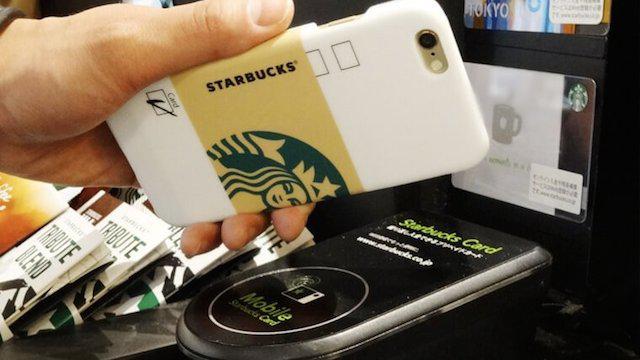
    The concept uses a branded smartphone case which is preloaded with the customer’s preferences.

    Trend monitoring website Springwise.com reports the Starbucks Touch phone case was developed in collaboration with Japanese clothing brand Uniform Experiment, and can currently be used in two Starbucks branches in Japan.

    The case – made for iPhone 6 – is designed to resemble a Starbucks coffee cup and features the brand’s iconic logo. It works like a prepaid Starbucks loyalty card, letting customers make cashless coffee purchases. It also enables users to save their preferred store and favorite beverage via a companion app. Upon arrival, customers simply launch the app and place their order, settling up by touching their phone case on the contactless payment device.

    The Starbucks Touch is available online for JPY 3000, or about US$25.

  • Dairy Farm reports modest growth

    Dairy Farm reports modest growth

    Dairy Farm says it achieved “modest” like-for-like sales growth in most of its major markets in the first half of this year.

    However, underlying profit fell 14 per cent to US$193 million, largely due to margin pressures in the food businesses and a disappointing half for its Guardian health & beauty group in Malaysia.

    With the early completion of the acquisitions of the San Miu supermarket business in Macau and the Yonghui stake (20 per cent) in China, both in April, sales for the period rose 27 per cent to US$8 billion. But like for like sales rose a more modest three per cent to $6.5 billion, or by seven per cent on a constant exchange rate basis.

    Dairy Farm International says that despite solid sales growth, cost pressures and food price deflation on certain commodities combined to squeeze margins in the first six months for the group’s Food businesses.

    “In Hong Kong, there were higher rental and labour costs. In Singapore profits were significantly lower due to competitive pressures, higher rents and a weaker Singapore dollar. Sales were buoyant in Malaysia, but there was continued margin investment to attract customers,” said chairman Ben Keswick in his half yearly report.

    “There was good like for like sales growth in Indonesia, but profitability declined materially due to higher labour costs following a further increase in the minimum wage, a rise in shrinkage costs associated with greater fresh sales and more rigorous stock management, and store rationalisation.

    “In the Philippines, the upscale and community supermarkets enjoyed sales growth, but the hypermarkets struggled.”

    Dairy Farm’s convenience store businesses in Hong Kong and Macau performed satisfactorily. Sales in Singapore, however, were weaker due to a reduction in the number of stores and the impact of recently introduced regulations restricting late night sale of alcohol.

    The Health & Beauty division produced higher sales. Hong Kong and Macau performed well despite some impact from a decline in tourist arrivals. In mainland China, there was further growth in the store base and an improvement in results. In Malaysia, profitability was lower following the introduction of GST on 1st April. In Indonesia, the results were impacted by wage and rent increases, while sales growth remained good. In the Philippines progress was made on the integration of Rose Pharmacy.

    In Home Furnishings, the IKEA stores in both Hong Kong and Taiwan traded well, and the new IKEA store in Indonesia continues to perform in line with expectations.

    In the Restaurant division, Maxim’s maintained its consistent performance with increased sales and profits in Hong Kong and mainland China. The group is growing its presence in Mainland China and continuing to expand its Starbucks network in Vietnam.

    At the end of June, Dairy Farm operated over 6400 outlets across all formats, including the newly added San Miu and Yonghui stores, and employed in excess of 170,000 colleagues.

  • Using WeChat to Grow Your Business in China

    Using WeChat to Grow Your Business in China

    In the world of mobile commerce, all eyes are on China.

    Even as China’s economy and overall retail sales growth drops, business-to-consumer (B2C) online sales are growing by 25 per cent each year. Data gathered from iResearch in a March 2015 report states that China’s gross merchandise volume (GMV) of the mobile shopping market reached 929.71 billion RMB in 2014, increasing by 239.3 per cent from the previous year.

    The growth was significantly larger than that of the overall GMV of the online shopping market. China has the world’s largest digital marketplace, and is predicted to grow three times faster than overall retail. The industry is primed for growth not only in the first-tier cities, but also in the third-tier and lower cities with an estimated half of total online sales coming from the lower tier cities by 2018.

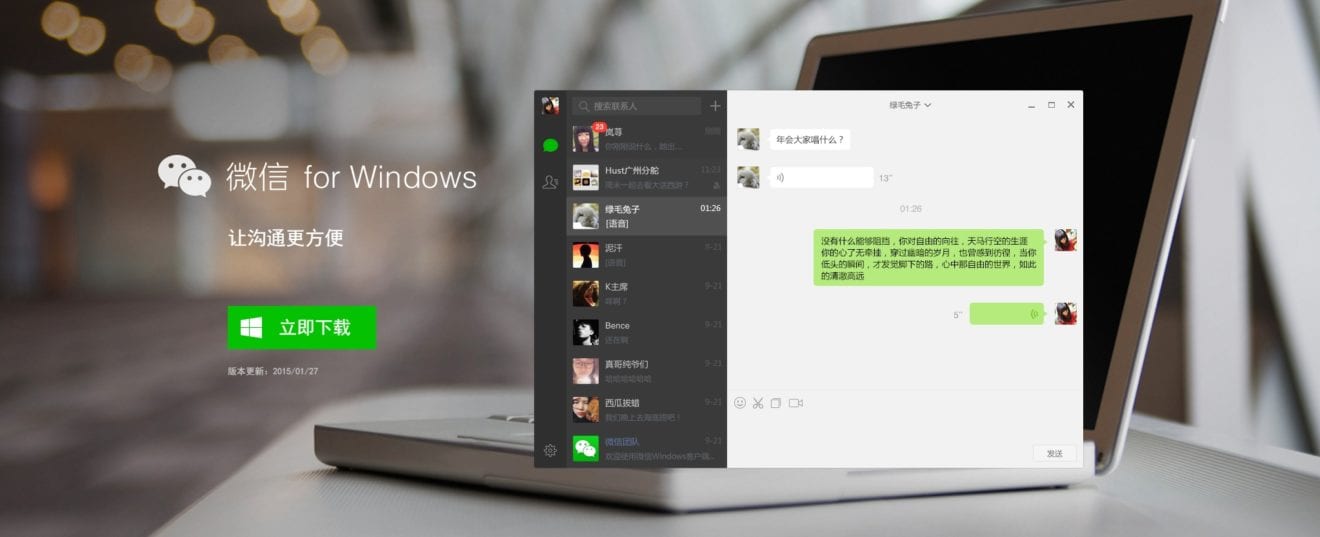
    When considering the mobile commerce industry in China, one name stands out: Tencent’s WeChat has long been impacting the lives of Chinese consumers, and with its move to digital payment systems it now has the ability to revolutionise the mobile commerce industry in China.

    WeChat has a massive scale, with over 468 million monthly active global users and 25 per cent of users checking WeChat over 30 times a day. Last year, users spent US$15.3 billion on mobile data using WeChat.  As the fastest growing social media platform in the world, and the primary source of interaction between brands and Chinese consumers, foreign investors looking to be successful in China should take note. Chinese consumers actively embrace mobile commerce due to its easy to use, cost-effective payment and delivery system.

    There is huge potential for foreign investors to take advantage of WeChat payment systems for their Chinese consumers and to maximise their profits. WeChat allows foreign investors to interact with their consumers in a way that has not reached the same scale in the Western world.

    Fewer than 20 per cent of internet users in the US have used their mobile phones to pay for services and goods while more than half of users in China have done so. Multiple incentives exist for Chinese consumers to make their purchases through WeChat; enabling businesses to use these schemes to generate profit. Loyalty cards, membership schemes and discounts for paying online all compel cost-effective shoppers to make a purchase.

    In addition to this, due to the convenience of paying through WeChat, there is a higher chance of impulse purchases. However, this ease does not simply apply to the consumer. Brands are able to bridge the gap between attracting new consumers and engaging with paying consumers, which has already begun to change the face of shopping and retailing worldwide. Businesses utilising WeChat payment systems are already experiencing huge profits, and Tencent has stated that several official accounts are now making over US$1 million.

    Not only can consumers purchase items, but can also purchase services inside WeChat. Businesses with service accounts can take advantage of WeChat’s online-to-offline (O2O) business model. Both online and offline purchases are available to consumers. Customers can either pay for services or items by scanning the QR codes of products provided by offline retailers, or pay on web pages inside the app.

    All vendors, from big name brands to small and medium-sized enterprises are able to create service accounts in WeChat. Big name companies like McDonalds, Starbucks, Xiaomi, Watsons, and Pacific Coffee have all created service accounts. WeChat allows all vendors the potential for success and the ability for SMEs to create accounts is an important aspect for foreign investors to capitalise on.

    Certain industries, such as food, beverage and retail, tend to generate more profit as they are more primed for mobile commerce. That being said, taxi companies, airlines, newspapers, government organisations, and pharmaceutical companies are all using WeChat payments to their advantage.

    Tencent has now enabled users to pay their utility bills through WeChat, and more and more businesses are finding a way to use WeChat mobile payments to grow their business and attain a competitive advantage.

    It is crucial for foreign businesses entering a new market to take advantage of domestic trends in order to be competitive in that marketplace. Mobile commerce in China is constantly evolving and businesses like WeChat are revolutionising how business is conducted. WeChat allows both big name brands and SMEs to compete in the same market space which has the ability to change the entire industry. Entering the Chinese market has its difficulties, but applications like WeChat make it easier for foreign investors to communicate effectively with their Chinese consumers.

  • Starbucks Asia ’s prime ‘restaurant’ model

    Starbucks Asia ’s prime ‘restaurant’ model

    Starbucks Asia has been ranked Asia’s 15th prime model – the very best rating of any quick meals retailer or restaurant.

    The highest 5 corporations on the record in Asia are Samsung, Sony, Nestle, Apple and Panasonic.

    Marketing campaign Asia-Pacific’s annual research of Asia’s Prime 1000 Manufacturers is predicated on a web-based survey developed by Marketing campaign Asia-Pacific and the Nielsen analysis firm. The survey requested clients to listing manufacturers by business sector they most trusted and felt had the perfect status. 4 hundred respondents have been polled in every market, apart from India and China, the place 800 and 1200 individuals have been polled respectively.

    Along with an general rating of probably the most favored manufacturers, the survey drills right down to the market degree with 13 country-specific rankings. Starbucks is the quantity 10 model in China, 12th in Hong Kong and Thailand, and 17th in Japan and Korea.

    “This necessary recognition is a mirrored image of our companions’ (staff) enthusiasm and keenness for delivering the Starbucks Expertise to clients throughout Asia,” stated John Culver, group president, Starbucks China and Asia Pacific, channel improvement and rising manufacturers.

    “We’re extraordinarily humbled by how our clients have embraced the Starbucks model, our top quality Arabica espresso and the genuine moments of connections we share.”

    Starbucks Asia expects that greater than half of its new retailer progress globally over the subsequent 5 years will come from the China Asia Pacific area, led by Japan and China. In 1996, Japan turned Starbucks first operational market outdoors of North America; Shanghai has extra Starbucks shops than some other metropolis on the earth.

  • Starbucks baristas in China and Japan

    Starbucks baristas in China and Japan

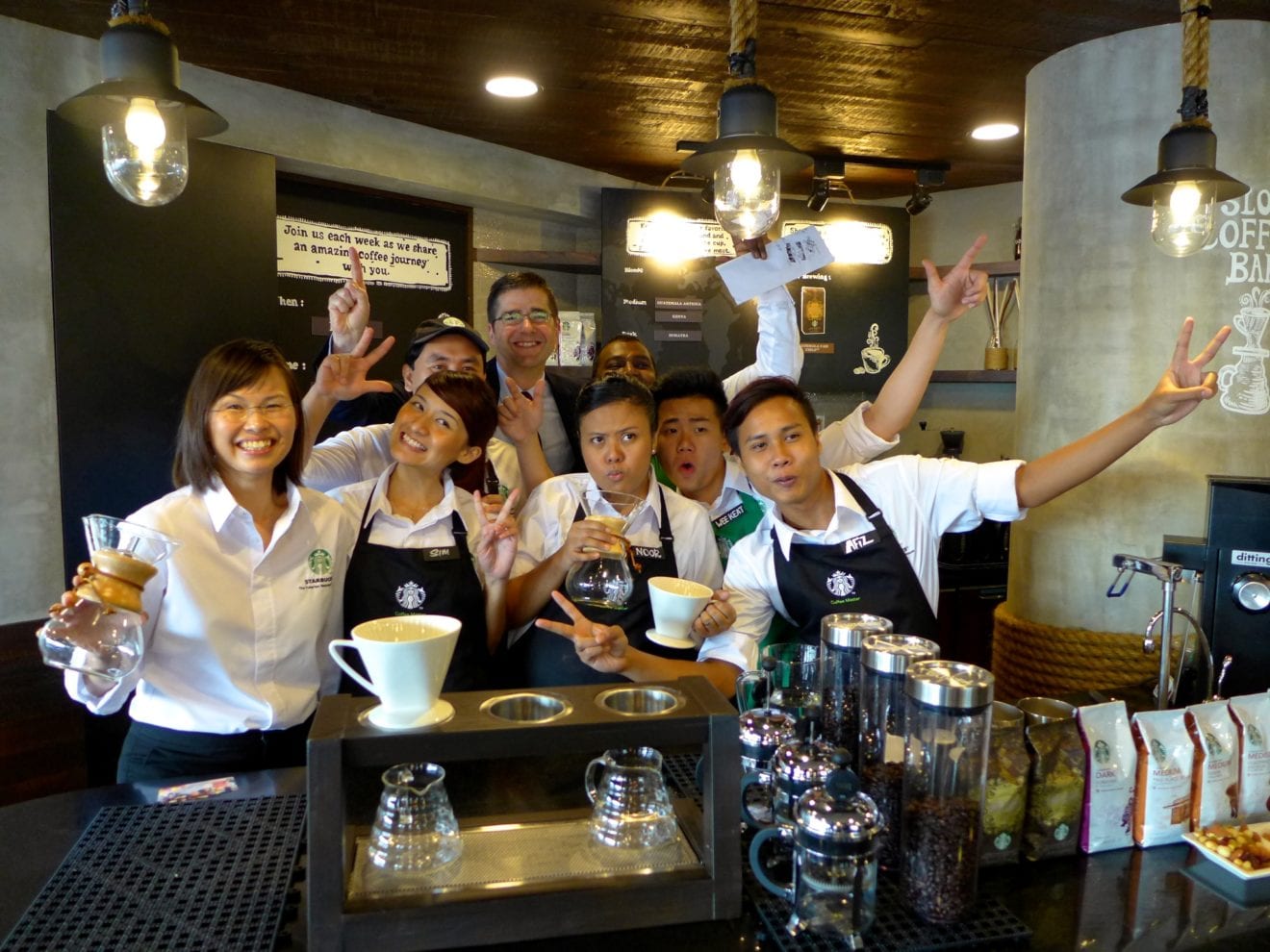
    From sourcing and roasting to crafting and innovating, Starbucks partners (employees) are passionate about brewing and handcrafting the world’s best coffee beverages. Starbucks baristas in China and Japan recently celebrated coffee artistry through competitions in pour-over brewing and latte art.

    The Starbucks coffee journey began in Asia nearly 20 years ago, with the company’s first store outside of North America opening in Tokyo in 1996, followed later in 1999 with the first store at the Beijing World Trade Centre. It started with the introduction of a cup of fresh-brewed coffee, followed by educating customers on the joy and indulgence of enjoying a handcrafted cup of espresso beverage, such as the Café Latte and Café Mocha.

    Today, customers in Japan and China have even more ways to enjoy their favorite cup of Starbucks coffee – through pour-over brewing or latte art – at more than 1,000 stores and more than 1,600 stores in Japan and China, respectively.

    Craftsmanship and Artistry in Each Cup of Starbucks Coffee

    “Every cup of Starbucks coffee, whether it’s our fresh brew or an espresso beverage, starts with sourcing the finest coffees from around the world. By extending our offerings to include the pour-over and latte art, we are showcasing these quality ingredients in a full-flavored coffee beverage,” said Belinda Wong, president, Starbucks China.  “More significantly, the craftsmanship and artistry that goes into each cup of Starbucks pour-over or latte art is highlighted in an exceptional way. We are excited to share this experience with our customers in China.”

    Most recently, Starbucks wrapped up the final event of its Starbuck China Third Annual Latte Art Throwdown Tour and Second Annual Pour-Over Competition, which covered six cities, including Shenzhen, Guangzhou, Xian, Beijing, Tianjin and Shanghai. A total of 79 Starbucks China baristas competed in the competitions.

    The idea of the tour and competitions began about three years ago as a way to build excitement and momentum around the launch of latte art as a standard offering in China.  Today, the tour and the competition leading up to these events has become a celebration of partners’ coffee artistry and genuine passion for coffee.

    “It was especially symbolic that while a group of our China partners were in Sumatra experiencing the ‘first 10 feet’ of the coffee bean journey, this competition was celebrating the work that our partners do every day to deliver the ‘last 10 feet’,” said Jeff Miller, vice president, retail and operations, Starbucks China. “I am certain that if the farmers could see how our baristas honor their work through the care they put into brewing these coffees, whether in a latte or a cup of pour-over, they would be as proud as we are.”

    The top four winners from each Starbucks China region will travel later this year to Chengdu to attend the Starbucks China National Latte Art and Pour-Over competitions.  These events will coincide with the China Coffee Ambassador Cup, where the winner will be crowned Starbucks China Coffee Ambassador, representing the pinnacle of coffee expertise.

    “As the leading coffee company in China, I am so excited to represent my North China region partners at this national competition. This is a dream come true for me and a firm demonstration of our dedication to only deliver the perfect Starbucks coffee beverage to our customers every time they visit our stores,” added Kevin Zhang from the Starbucks Beijing Kerry Center flagship store.

    Coffee Has Become an Important Part of ‘the Japanese way of life’

    In Japan, Starbucks partners also challenged each other and showcased their coffee passion and talent with the best baristas at the Starbucks Coffee Japan Annual Leadership Conference. As part of this gathering, Starbucks hosted the second “We Connect Cup” – a competition to demonstrate and highlight how Starbucks partners exercise the best services, operation, and connections with customers.

    “Since the opening of our first store in Ginza, coffee has become such an important part of the Japanese way of life,” said Jun Sekine, ceo, Starbucks Coffee Japan. “Over the past 19 years, our baristas have been pulling perfect espresso beverages for our customers, sharing our passion for the world’s most premium Starbucks Reserve coffee, and building individual moments of connections with customers. We want to continue to elevate their coffee experience whenever they come to a Starbucks store.”

    At the second We Connect Cup competition, Starbucks Coffee Japan partners from 13 regions pit their coffee skills and expertise in three categories – operational excellence, beverage routine and service basics.

    “It’s by perfecting these three combinations that will make Starbucks world class customer service vision a reality in Japan,” added Masayo Mameta, partner at the Starbucks Fukuoka University Hospital store.
  • MAP Expects Slower Gross sales, to Spin Off Attire Division

    MAP Expects Slower Gross sales, to Spin Off Attire Division

    Mitra Adiperkasa, or MAP, a life-style retailer that holds the licenses for Starbucks, Burger King and Zara in Indonesia, forecasts slower gross sales progress this yr, citing climbing prices and the nation’s financial slowdown.

    Fetty Kwartati, company secretary at MAP, stated that the corporate focused gross sales to develop between 13 % and 15 % this yr. That may be a steep stoop in comparison with final yr’s gross sales that grew 22 % to Rp 11.eight trillion ($895 million).

    “We’re conscious that the state of affairs can be difficult this yr so we’re setting this objective from the very starting,” Fetty stated on Monday. “Hopefully, issues will flip for the higher within the second half of the yr.”

    Revenue for retailers like MAP has declined resulting from Indonesia’s slowing financial system, which grew at its weakest tempo in 5 years at four.7 % within the first quarter, coupled with a weak foreign money that has pushed up the price of import.

    Internet revenue at MAP fell 78 % to Rp 10 billion between January and March from Rp 78 billion final yr, as larger prices reduce the corporate’s year-on-year revenue margin to zero.three % from 1.5 % final yr.

    Beneath such circumstances, the native retailer is setting a extra “prudent” enlargement plan, setting apart as much as Rp 500 billion in capital spending this yr — 17 % decrease than final yr’s Rp 600 billion — stated Virendra Prakash Sharma, vice chairman director at MAP.

    “So far as the enlargement plan goes this yr, we’re going to be very prudent. We’re going to be very selective on the subject of enlargement,” Sharma stated.

    A lot of the spending will go in the direction of the corporate’s plan to confide in 45 new Starbucks branches this yr, he added.

    The retail may also be spinning off its active-lifestyle enterprise division, Mitra Aktif Adiperkasa, this yr in hopes to “unlock the brand new division’s potential,” Sharma stated. The corporate goals to listing Mitra Aktif Adiperkasa on the Indonesia Inventory Change inside the subsequent 4 to 5 years, he stated.

    Beneath Mitra Aktif Adiperkasa, the retailer will consolidate the corporate’s lively attire division with its socks division Putra Agung Lestari and garment enterprise Mitra Garindo Perkasa, working as a lot as 878 retail branches underneath the corporate, the vice chairman director stated.

    The transfer follows Mitra Adiperkasa’s stake sale on two of its meals and drinks manufacturers — Domino’s Pizza and Burger King — final yr.

    The agency bought 51 % of its stake in Domino’s Pizza, in addition to 39.four % of Burger King, to Everstone Capital, a Singapore-based personal fairness agency, final yr.

    MAP will promote one other 11.6 % of Burger King to Everstone Capital later this yr, leaving the native retailer with a 49 % stake on the fast-food model, in accordance with Sharma.

    MAP holds the license to over 150 worldwide manufacturers  — together with Sogo, Zara and Krispy Kreme — with a complete of 1,879 retail outlets throughout 65 cities in Indonesia as of April.

  • Tottori Starbucks opening draws 1,000 people

    Tottori Starbucks opening draws 1,000 people

    About 1,000 people lined up Saturday for the opening of the first Starbucks outlet in Tottori Prefecture.

    Japan’s least populated prefecture was the last in which the coffee chain lacked a presence.

    The outlet, near a train station in the city of Tottori, the prefectural capital, started forming lines from around noon Friday. About 150 people had gathered by midnight to camp out for the opening.

    College student Atsushi Miyagawa, 19, was first in line. “It tastes good. It’s unlike any other coffee I know,” he said.

    An established coffee shop nearby, named Sunaba Coffee, gave away free mugs and offered a full refund to any customer who thought that Starbucks coffee tasted better.

    Sunaba Coffee was launched in April last year partly to mock Starbucks and partly to promote Tottori’s famous sand dunes. The Japanese word for sand issuna.

    The nation’s first Starbucks opened in Tokyo’s Ginza district in 1996. Although Starbucks has become a major player in Japan’s coffee market, major convenience store chains recently jumped into the fray by offering improved coffee products.

  • Starbucks Hong Kong opens new Landmark cafe

    Starbucks Hong Kong opens new Landmark cafe

    Starbucks Hong Kong has opened a new cafe in the heart of Hong Kong’s Sheung Shui.

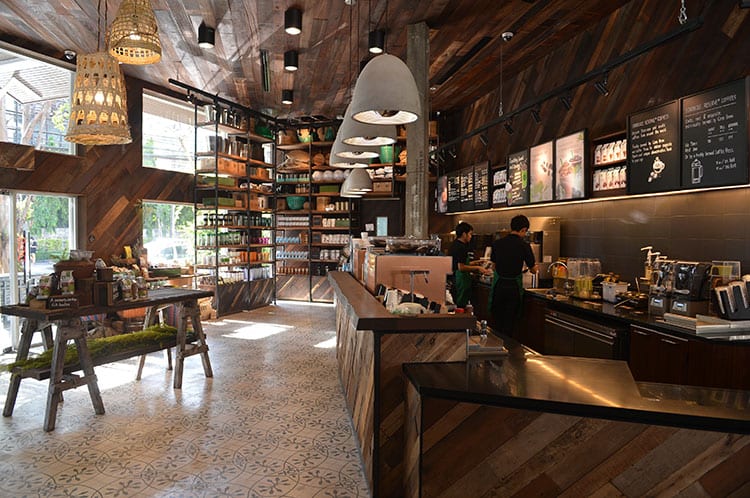
    The cafe is unique in that it features an indoor brewing and restaurant area together with a large, open air verandah seating space.

    Starbucks Landmark North Hong Kong 415 2

    The new cafe opened this month in Landmark North, a 230,000 sqft shopping centre connected to the Sheung Shui MTR station close to the Shenzhen border crossing.

    Starbucks Landmark North HK 415 3

    The new cafe will be open from 8am to 10pm daily.

    Starbucks Hong Kong and Macau is run by master franchisee Maxim’s Group.

  • Starbucks Malaysia earns employer accolade

    Starbucks Malaysia earns employer accolade

    Starbucks Malaysia has earned top honors for its employment practices at the Aon Hewitt Best Employers of 2015 Awards.

    The Best of the Best award was presented to Starbucks Malaysia at the Awards Presentation and Learning Conference in Kuala Lumpur.

    The Aon Hewitt Best Employers Award is one of the most prestigious awards recognising companies with strong employee engagement, high-performance culture, effective leadership and a compelling brand. Aon Hewitt’s research is conducted over nine months and is active in a dozen Asia Pacific markets, including China, Japan, Australia, and Malaysia. The Malaysian survey was completed in partnership with TalentCorp Malaysia.

    Sydney Quays, MD of Starbucks Malaysia and Brunei, called the honor “one of the most significant recognitions that a company could get in validation to its human resources practices and talent management initiatives”.

    “We’re known for our coffee, but our people make us famous,” Quays added.

    A substantial part of Starbucks recognition was related to the company’s efforts to retain, engage and motivate partners.

    “Retention starts from hiring the right talent,” said June Beh, partner resources and compliance director for Starbucks Malaysia and Brunei.

    “We also highly invest in the training of every partner (employee) empowering them with the necessary skills and knowledge.”

    Starbucks store manager Desmond Soon was given the opportunity last year to lead a district for the company. “This allowed me to create a lasting connection with the community, to be involved in company programs, and to share our amazing stories with customers,” Soon said.

    Starbucks Malaysia opened in Kuala Lumpur in 1998 and today has more than 190 stores across the country.

  • Starbucks Indonesia to double network

    Starbucks Indonesia to double network

    Starbucks Indonesia plans to double its current 200-strong store network within five years.

    In an interview with Indonesia Real Time, Starbucks Indonesia COO Anthony Cottan says demand is growing for the American-based global coffee giant’s products – and so, too, is Indonesia’s middle class.

    Starbucks made its Indonesian debut in 2002, opening its first store in the luxury Jakarta mall Plaza Indonesia. It now has cafes in 13 of the nation’s larger cities, located in shopping centres, airports, hospitals and motorway laybys.

    Cottan said the company plans to introduce bubble tea in June in a trial in several stores and is planning its first ‘Community store’, which, like those in markets like Thailand and Korea, will return a share of profits to community causes.

    He said it was great that Indonesians are adopting more of a coffee cultures.

    “More people are doing it and taking a deeper level of interest. I love all these independent coffee shops; they have great coffee. They roast it fresh, using Indonesian beans most of the time.”

    Starbucks Indonesia is trying to make its global culture relevant to the Indonesian market, Cottan said.

    “We try to make each [cafe] relevant to its neighborhood. The [outlet] in Grand Indonesia Mall has a very Batavia feel about it. The one we have in Stasiun Kota (in central Jakarta)… has an industrial look. So just because we’re a big company doesn’t mean that we can’t build with some consciousness and some connection to heritage. That makes it more exciting,” he told Indonesia Real Time.

  • Starbucks who? The other java king named Schultz

    Starbucks who? The other java king named Schultz

    When I first entered the coffee industry in 2002, it was one dominated by Starbucks. Not much has changed.

    However, when a consumer industry is dominated by one player, I look at that as an opportunity. Consumers will always want choice, whether that is in the US, Japan, China or, to be honest, anywhere in the world. Starbucks created an industry that did not exist 25 years ago, but it is impossible for a company to be all things to all people, no matter how dominant.

    Over the past five years, Honolulu Coffee has grown from six stores in Hawaii to 32 stores in Tokyo, Osaka, Shanghai, Guam and Hawaii, with another 10 to 15 stores scheduled to open this year.

    Our growth is attributable to three factors: 1) well-developed points of differentiation, 2) efficient use of capital and 3) continual focus on quality over competing for the lowest price point.

  • Starbucks China expands in grocery

    Starbucks China expands in grocery

    US coffee retailer Starbucks has signed a joint venture in China to manufacture and distribute ready-to-drink beverages in the grocery channel.

    Starbucks China chose listed Chinese drinks company Tingyi Holding Corp, which trades as Master Kong, to make and sell the drinks in supermarkets and convenience stores.

    Starbucks will be responsible for providing coffee expertise, brand development and future product innovation, and Tingyi will manufacture and sell Starbucks RTD portfolio in China.

    China is already Starbucks’ fastest growing market worldwide with the chain already operating more than 1500 cafes in 90 cities. Now it wants to use its brand strength to gain its share of the coffee-on-the-go and home-consumption markets.

    The RTD coffee and energy category is a $6 billion business, and is projected to grow by 20% over the next three years, according to Euromonitor data.

    In a statement, Starbucks said the agreement leverages the respective strengths of Starbucks and Tingyi to bring the entire Starbucks RTD portfolio to customers in China as well as the ability to innovate specifically for the China market.

    Tingyi is a leading Chinese food and beverage producer which, after more than 20 years of development, boasts world-leading production facilities and management expertise with a broad spectrum of quality channel resources. Tingyi’s local manufacturing, sales and distribution expertise combined with Starbucks strong brand recognition and coffee expertise will unlock new market opportunities.

    “We are pleased to work with Tingyi, a leader in China’s RTD beverage category, to unlock the massive ready-to-drink market and grow local demand for Starbucks,” said John Culver, group president, Starbucks Coffee China and Asia Pacific, channel development and emerging brands.

    “Our agreement enables us to develop new categories and occasions to delight our customers and connect people outside of our stores to Starbucks where they live, work and play.”

    James Wei, CEO of Tingyi Holding Corp, said the China RTD market has a huge growth potential.

    “The agreement with Starbucks will further expand Tingyi’s beverage product portfolio and enables us to provide consumers with more high-quality and convenient product options and experiences. As part of this cooperation, Tingyi will leverage its strength in production and distribution to increase the market share of Starbucks’ RTD products in the Chinese market.”

    Today, customers in China can purchase Starbucks Bottled Frappuccino beverages in nearly 6000 locations including select Starbucks retail stores, grocery and convenience stores throughout mainland China. Through this agreement, Starbucks and Tingyi plan to bring new and existing Starbucks Bottled Frappuccino in the marketplace during 2016, which will be followed by innovation and an increased number of locations and cities for consumers to purchase Starbucks RTD products.

  • Starbucks stores roll out Lunar New Year merchandise across Asia

    Starbucks stores roll out Lunar New Year merchandise across Asia

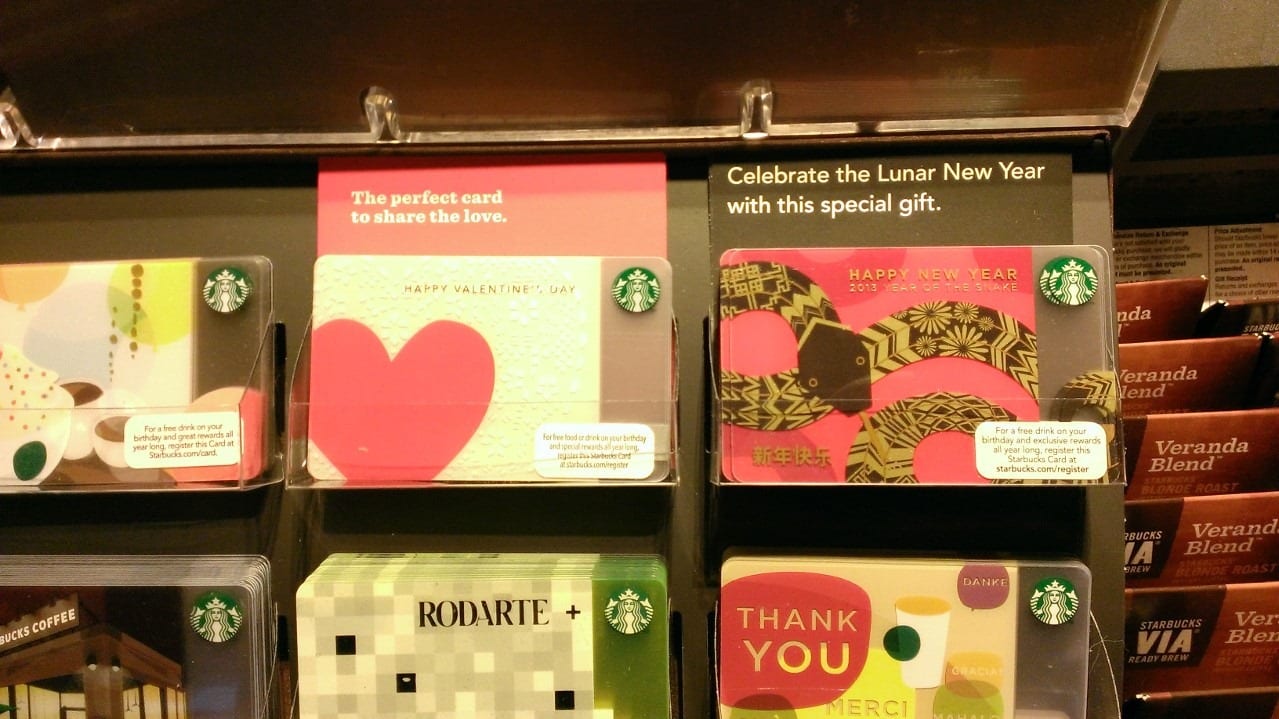
    Starbucks stores has unveiled new card designs, mugs, tumblers and other merchandise in Asian markets in time for the celebration of the Lunar New Year.

    As one of the world’s grandest and most significant cultural celebrations, the Lunar New Year, also known as the Spring Festival, is a time to sweep out the old and bring in the new with family gatherings, celebrations and the exchanging of gifts.

    Starbucks senior designer Victor Melendez created the design for the 2015 Starbucks Lunar New Year Card, available in dozens of countries around the world. His design, crafted using a linoleum block printing technique, features the seasonal colors of red and gold.

    Complete set includes 12 Hong Kong USD20 gift vouches and a complimentary tall handcrafted beverage voucher and 16 delicate packets in red and gold.

    Starbucks Coffee Wafer Rolls are also made available in China, Singapore, Taiwan. Meanwhile, a delicate treat of aromatic peach blossom and Earl Grey tea with freshly steamed milk, topped off with whipped cream and peach blossom sugar sprinkle.

  • Delta to serve Starbucks coffee on all flights

    Delta to serve Starbucks coffee on all flights

    Delta Air Lines officially began serving Starbucks Coffee on all its flights worldwide this month as part if its ongoing in-flight enhancements to its food, beverages, seats and entertainment.

    Mike Henny, Delta’s Director of Customer Experience, said with this enhancement to the airline’s core in-flight service product, it hopes to improve the travel experience for customers.

    “We are delighted to provide Starbucks coffee wherever Delta’s customers are traveling,” said Michelle Burns, vice president Branded Solutions, Starbucks.

    Delta initially partnered with Starbucks in 2013 to offer coffee to customers traveling on select cross-country and West Coast Shuttle flights.

    Delta has commissioned artists from around the world to create three larger-than-life art installations made solely out of Starbucks cups.

    The pieces feature famous landmarks and sites of global destinations where Delta and Starbucks fly together: Big Ben in London, Tokyo’s Sensoji Temple in the historic district of Asakusa, and a Carnaval float in São Paulo, Brazil.

    The cup sculptures are on display in Terminal 4 at New York’s-JFK International Airport.

    Starbucks said it expects to serve 68 million cups of coffee on Delta in 2015.

  • Starbucks’ breathtaking ‘Shrine to Coffee’

    Starbucks’ breathtaking ‘Shrine to Coffee’

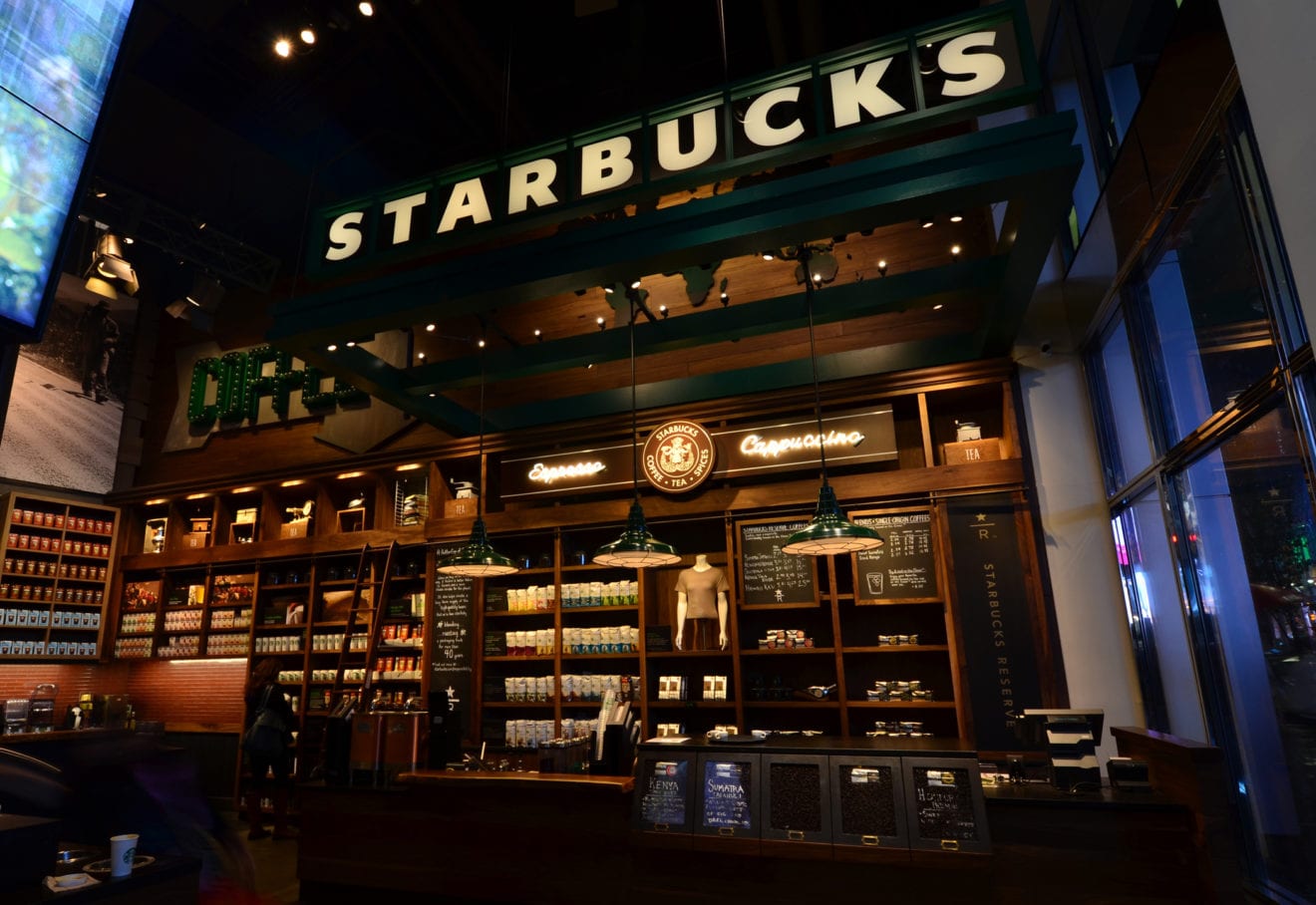
    Lovingly carved into a handsome thick timber bench at the new Starbucks Reserve Roastery & Tasting Room in Seattle is a Victor Hugo quote: “There is nothing like a dream to create the future”.

    It serves as a mantra for this ambitious ultra flagship, meant to be the forerunner of 100 Roastery cafes across the US. For this indeed is a dream brought to life with breathtaking scale, incredible quality, and painstaking detail.

    The “shrine to coffee” (as it was referred to in Wired Magazine) sits at the base of Seattle’s hipster Capitol Hill and is massive – 15,000sqft (or about 1500sqm). It’s designed to be a “totally immersive experience” (a retail cliché, which in this case is an accurate description).

    As a customer, you literally walk into a scrupulously clean, polished to within an inch of its life coffee bean roasting plant. You are greeted by a kind of coffee maître de and order your beverage from a restaurant-like menu on a clipboard – specifying your preferred bean, naturally.

    Food is also on the menu, and I selected a pretzel sesame seed bagel with smashed edamame mixed with mint and lemon, to accompany my Colombian Americano. (The premiumisation of everything is somewhat hilarious. How did we get to this? What ever happened to a cup of Joe and a plain bagel and cream cheese?)

    The service is a little slow (it takes longer to order craft coffee), so while I waited I was able to absorb the space and fitout. From the gleaming copper roasting kettle to the leather curtains; from the blackboard illustrations to the manifesto on entry (“every cup we’ve ever served has led us here”), Starbucks Reserve Roastery is seriously impressive. (If you’re hungry for more than a snack, there is also a Serious Pie gourmet pizza restaurant on the premises.)

    My only reservation is that by the time my coffee arrived, my expectations were through the (cavernous) roof. While the food was delicious, the coffee was, well… still Starbucks. Coming from Australia, I like my coffee strong and flavorful, and this was just a little “meh”.

    Nevertheless, Starbucks Reserve Roastery is remarkable, and well worth a visit. The single star motif above the signature ‘R’ should really be five stars.

    On my way out, I noticed another quote embedded into the bench where a barista was hard at work: “Crafted by hand and heart.”  That sums up the love that has gone into this store – led by designer Liz Muller and CEO, Howard Schultz. God is in the details, and they have most of the details absolutely right.