Retail News CRM

Tag: starbucks

  • Price war scratches Korean espresso chains

    Price war scratches Korean espresso chains

    Major franchised Korean coffee chains saw their revenue fall in 2015 in the face of tougher competition with cheap take-out coffee amid economic slowdown, heading to another tough year, data shows.

    Homegrown coffee brands have sprung up in Asia’s fourth-largest economy over the past decade to capitalise on the growing population of coffee drinkers, but their growth has slowed recently in the saturated domestic market.

    Adding to their woes, low-cost coffees at convenience stores and mini take-out stalls have enjoyed growing popularity among price-conscious consumers, posing a threat to franchise coffee shops standing on every corner of major streets.

    Coffee Bean & Tea Leaf, an American franchise chain owned by Seoul-based Mirae Asset Private Equity Fund, posted 138.9 billion won (US$121.3 million)  in sales last year, down 5.1 per cent from a year ago, its regulatory filing showed. Its operating profit tumbled 68.5 per cent to 3.9 billion won, although the number of its shops increased by just nine to 234 during the period.

    Paul Basset, a specialty coffee house operated by Maeil Dairies Co, said it logged 48.4 billion won (US$42.3 million) in sales, but its net swung to a loss of 180 million won due to rising marketing costs and aggressive store expansion.

    Sales at Caffe Bene sank 14.9 per cent on-year to 121 billion won, expanding operating loss nearly four times to 11.4 billion won due to slumping businesses of other food franchise subsidiaries.

    While mid-end franchise stores had a sluggish year, brands at both ends of the price spectrum were largely unscathed by the latest consumption trend.

    Ediya, a low-end coffee shop with the largest number of outlets – over 1500 nationwide – raised 135.5 billion won in sales, up 16.5 per cent from a year ago. It plans to expand its network to 2000 this year.

    And sales at US coffee giant Starbucks also rose 25.4 per cent on-year to 773.9 billion won (US$675.7 million) in 2015 on the back of high-end specialty coffee service and bakery items.

    Another tough year is awaiting the major coffee brands as convenience stores have been aggressively expanding in-store coffee services nationwide. Their coffee is considered drinkable at a price as cheap as 1000 won, about a quarter of Starbucks’ tall Americano sold at 4100 won in South Korea.
  • Starbucks baristas vie for best of Asia honour

    Starbucks baristas vie for best of Asia honour

    Starbucks baristas from across Asia took part in the first Regional Barista Championships in Hong Kong.

    The contest, held before more than 600 spectators, drew 2000 entries from markets including China, Thailand, Hong Kong, Malaysia, Japan and Indonesia before the field was narrowed to the final 14.

    Finalists were judged on coffee knowledge, beverage mastery and customer service. Each partner had 20 minutes to demonstrate technical and communications skills, craftsmanship and knowledge of the barista profession.

    “Our judges group, made up of eight partners and one guest who is an accredited global coffee-competition judge, was immensely impressed and inspired by the professionalism and passion demonstrated by the final competitors,” said Major Cohen, senior project manager, Starbucks Global Coffee.

    The top three partners from round one of the finals were:

    • Nopparat “Yong” Arpornsuwan who joined Starbucks Thailand in 2002 as a part-time barista and is currently the store manager at the Baan Chart Khaosan Starbucks in Bangkok. She has a personal connection and understanding of coffee, having grown up near coffee farms in Thailand.
    • Hirokazu Terasaki of Japan, who joined the global coffee giant because of the friendly service culture a year ago. He is now an assistant store manager at the Maguro store in Japan.
    • Ryan Wibawa of Indonesia, who became a part-time barista with Starbucks in 2011 and just two years later was designated as a Coffee Master. Now a full-time shift supervisor at the first Starbucks Reserve store in Indonesia, Wibawa earned first-place honors in the first Indonesian Brewers Cup Championship finals in November 2015.

    Starbucks partners from China and Asia Pacific region finalists in the first Regional Barista Championships in Hong Kong. From left: Wibawa, Terasaki and Arpornsuwan.

    Arpornsuwan took top honors, based on her “perfect execution, personal storytelling and knowledge of coffee sourcing,” to become the first Starbucks Barista Champion. She was awarded a first-place trophy, a hand-crafted leather roaster brewers kit complete with coffee and accessories, and a three-week coffee experience in Seattle, which will include a visit to the first Starbucks at Pike Place Market and a tour of Starbucks Reserve Roastery and Tasting Room.

    Starbucks will celebrate additional barista champions across the globe in 2016. The company will host the Europe, Middle East and Africa Barista Championships and US Barista Championships later this year.

  • Growth plan for Starbucks Vietnam and Cambodia

    Growth plan for Starbucks Vietnam and Cambodia

    Dairy Farm Group says it plans to expand its Starbucks Hong Kong and Vietnam networks.

    Last year, Dairy Farm opened six new Starbucks Vietnam cafes and its first in Cambodia – in the capital city Phnom Penh last December.

    “This new market offers significant opportunities as there is no dominant market player,” said CEO Graham Allan. “The group is currently working to fully understand local tastes and preferences.”

    In Vietnam, the company says it will continue – for now – to focus expansion in the main cities of Ho Chi Minh and Hanoi.

    Starbucks operations in Vietnam, Cambodia and Hong Kong – where the network is also set to be expanded this year – is operated by Dairy Farm’s restaurant subsidiary Maxim’s.

    “Maxim’s delivered another year of solid results,” Allan said in the company’s annual operational review.

    “Expansion of its Chinese casual dining restaurants and Japanese restaurants continue in Mainland China.”

    Maxim’s opened 44 net new outlets during the year, including six in Mainland China and the new Starbucks outlets.

    Dairy Farm’s restaurants division reported US$1.9 billion in total sales, representing an increase of 8 per cent year-on-year, while the profit contribution increased by 9 per cent as the business delivered another year of record earnings.

    “Looking ahead, the macro economy and local business environments are expected to be challenging in 2016, with continued currency volatility and fragile consumer confidence,” said Allan.

    “The group sees exciting prospects, however, with a number of establishments opening at the Shanghai Disney Resort in June 2016, including the staff canteen, The Cheesecake Factory and Japanese chain concepts Ippudo and Dondonya.”

    He said besides expanding in Vietnam and Cambodia, Maxim’s will continue to explore further opportunities for acquisitions and/or franchising throughout Asia.

  • CapitaLand China growth outpaces economy

    CapitaLand China growth outpaces economy

    Singapore-based shopping mall investment company CapitaLand Retail China Trust (CRCT) grew its income last year by 10.3 per cent to S$89.2 million ($63 million) from S$80.9 million.

    With China’s economy growing 6.9 per cent last year, the company’s retail sales drew 10.7 per cent of RMB30.1 trillion ($4.58 trillion), reports CRCTML chairman Victor Liew (CRCTML manages CRCT).

    “China’s slower growth is reflective of an economy undergoing transition, but it is expanding from a much larger base now and its growth is still considerably faster than those of most other economies,” says Liew. “CRCT’s family-oriented shopping malls are well-placed to benefit from China’s growing urban population and rising retail sales as domestic consumption becomes the country’s new growth engine.”

    It was the first time CapitaLand China’s gross revenue had crossed the RMB1-billion mark, says CRCTML CEO Tony Tan. “Portfolio occupancy remained high at 95.1 per cent  as at December 31, while rental reversion for the full year was 8.1 per cent.

    “Annual tenants’ sales increased 11.6 per cent and shopper traffic rose 1.8 per cent year-on-year.

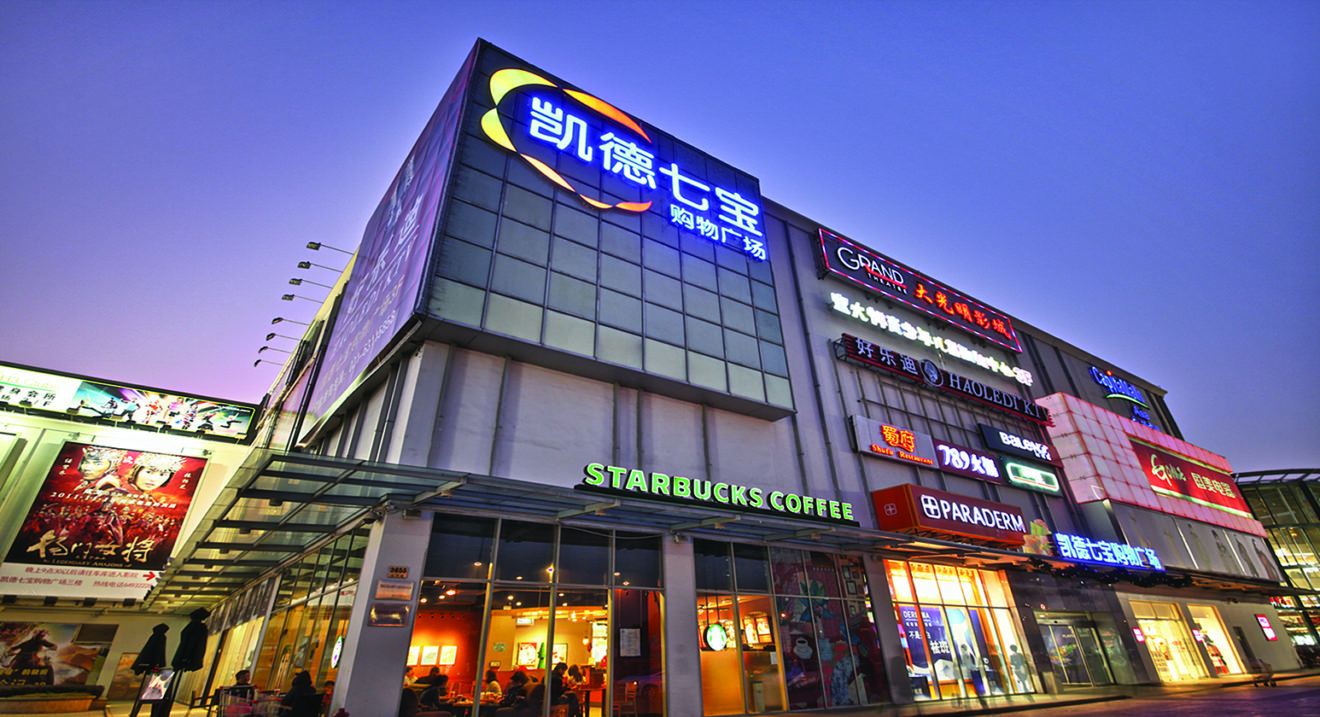
    “We continually refresh our mall offerings to stay relevant to our shoppers’ evolving preferences and needs. For example, CapitaMall Xizhimen (pictured) brought in the popular Jing Ge Steamboat to increase the variety of its F&B offerings, while CapitaMall Qibao introduced a water park.

    “To improve sustainability and the shopping experience, CapitaMall Grand Canyon installed energy-saving LED lights in common areas and upgraded its car park with new flooring.

    “CapitaMall Wangjing is carrying out renovation work to rejuvenate its façade, and is on track to unveil its new look by June.

    “We will continue to strengthen our malls’ tenant mix and uplift the shopping experience through continual asset enhancement initiatives.”

    Gross revenue for the year increased RMB17.5 million, or 1.8 per cent, over the previous year. This was attributed mainly to rental growth from the multi-tenanted malls, partially offset by lower revenue fromCapitaMall Minzhongleyuan, which was impacted by road closure for the building of a subway line, and from CapitaMall Wuhu, where tenancy adjustments are being introduced to achieve stronger positioning and better trade mix.

    CRCT is the first China shopping mall real estate investment trust (REIT) in Singapore, with a portfolio of 10 malls. Listed in Singapore in 2006, its objective is to establish long-term investments in a diversified portfolio of real estate used primarily for retail in China, Hong Kong and Macau.

    A significant portion of CapitaLand China’s properties’ tenancies comprises major international and domestic retailers such as the Beijing Hualian Group, Carrefour and Wal-Mart. The anchor tenants are complemented by specialty brands such as BreadTalk, Innisfree, KFC, Nanjing Impressions, Nike,Sephora, Starbucks, Uniqlo, Watsons and Zara.

  • Korean grocery prices among world’s highest

    Korean grocery prices among world’s highest

    A recent report from a Korean consumer protection agency reveals that the prices of imported fruit, wine, beer and Starbucks coffee in Korea are much more expensive than in other countries.

    According to Consumers Korea, the domestic prices of imported grapes, wine, and domestic pork belly were among the highest levels in the world. The prices of groceries in the major cities of 13 countries were compared.

    The report indicated that 800 grams of American grapes cost 7009 won in Korea, which was twice as high as the price in the U.S. (4069 won), and wine was being sold for an average of 38,875 won, which was 71 per cent higher than the price of wine in the Netherlands (22,681 won), which has the fifth-highest wine prices in the world.

    The price for a kilogram of domestic pork belly (27,930 won) was almost twice as high as the comparable price in China (14,679 won), which was the second-highest among the 13 countries compared.

    The cost of coffee at Starbucks (Americano tall size), domestic beef sirloin (one kilogram, steak), imported sirloin (one kilogram, steak), bananas (Philippines, one bunch), American oranges (one), American grapefruit (one), Coca Cola (1.5l), Heineken (330ml), and Miller (355ml) in Korea were the second highest among the 13 countries compared.

    Of note, the price of Heineken in Korea (2016 won) was 2.9 times higher than the price in the Netherlands (729 won), and the price of Miller in Korea (2203 won) was 2.3 times higher than the price in the US. (960 won).

    Officials from Consumers Korea commented that among the 35 products compared across the 13 cities, the Korean grocery prices of 31 products ranked in the top five.

    “Prices of Korean agricultural products were expensive compared to prices in other countries. Since customs tariffs are being lowered due to different free trade agreements, regulations should be established so that the financial benefits of free trade can be passed on to consumers,” said the officials.

  • Starbucks Asia performance concerns

    Starbucks Asia performance concerns

    Starbucks’ latest overall figures look impressive- but this first set of results of its new fiscal year show a marked polarisation in performance around the globe.

    In the Americas, the company’s largest market, sales and profits powered ahead. However, the same cannot be said of both Europe and China, where the results were far more subdued.

    Turning first to China and Asia Pacific, at first glance the results do not look too bad, with revenues up by a very solid 32 per cent. However, most of this increase is attributable to incremental revenues from the acquisition of Starbucks Japan early in the last fiscal year.

    A significant 885 net new store openings across the region also helped to boost top line growth.

    Despite this there are two areas for concern. The first is underlying sales growth, which at 5 per cent has come in below expectations; the concern is that some of this is related to a general slowdown in China which, if part of a longer term trend, could harm company earnings.

    The second is the margin position which has deteriorated because of higher wage costs and the change of ownership of the Japanese operation.

    Turning to the Americas: Despite having been accused of “declaring war on Christmas”,  Starbucks’ results showed much more holiday cheer than its generic red cups. Across the region revenue rose by a very respectable 11 per cent, underpinned by 9 per cent comparable growth.

    Operating income also rose by 14 per cent. Tweaks to the menu which saw the inclusion of some more expensive drinks options and an enhanced range of food helped to drive up average ticket across the period.

    The American results were particularly impressive given the warmer weather across most of the holiday period. That this did not deplete sales underscores the habitual nature of Starbucks and its importance as a small indulgence for many of its regular customers. This loyalty has, in our view, been further strengthen by strong take-up of the mobile app which encourages and stimulates regular buying.

    Within Europe and the wider EMEA region, the net addition of 79 stores did little to bolster overall revenue which declined by 6 per cent on a year-over-year basis. Admittedly much of this was related to unfavorable exchange rates but some is also attributable to weak underlying sales growth at existing shops. The impact on profits has been negative, something further exacerbated by the shift to developing more licensed stores which operate at a lower margin than company-owned outlets.

    Looking ahead, initiatives such as the evening sale of alcoholic beverages and an enhanced food menu, will help to further drive productivity in US stores.

    However, Starbucks will need to work harder to ensure that these gains are not diminished by the deteriorating environment in Asia and the lackluster performance in Europe.

  • Starbucks Indonesia reopens stores after attack

    Starbucks Indonesia reopens stores after attack

    Starbucks Indonesia has reopened stores today after yesterday’s terror attack on one cafe in downtown Jakarta.

    In a statement, Starbucks head office in Seattle said it was “deeply saddened by the senseless act” that took place in Jakarta.

    “Our hearts are with the people of Indonesia. Amidst the attack in Jakarta, initial reports are that an explosion took place close to our store in the Skyline building. One customer sustained injuries; our partners (employees) are all confirmed to be safe.”

    The company said it would be business as usual today (Friday) as it works closely with local authorities and looks to them to provide further updates on what transpired as they learn more details.

    “While this store will remain closed, based on the stabilisation of the situation being conveyed by local authorities, we will open all other stores in Jakarta and across Indonesia.”

    The Starbucks cafe was one of three targets by Isis-linked terrorists in Indonesia’s capital city on Thursday. Two people lost their lives in the attacks, along with five suspected terrorists who either blew themselves up or were shot by police.

  • Starbucks China plans massive expansion

    Starbucks China plans massive expansion

    Starbucks China is planning to open a further 1400 cafes by 2019, the company has revealed.

    Currently, the US headquartered coffee giant has about 2000 locations in 100 Chinese cities – and it uses Alibaba’s Tmall to sell giftcards and coupons to Chinese customers, at the same time boosting its brandawareness and appeal.

    Starbucks said its Tmall Global virtual store collected 300,000 registered fans in the past month and launched a “social gifting” feature that allows users to send those cards and coupons to friends and family through the Tmall platform. On top of its digital push, Starbucks said it was aiming to boost its overall store count to 3400 by 2019.

    “As Starbucks’ second largest and fastest-growing market globally, China represents the most important and exciting opportunity ahead of us,” Schultz said.

    The news followed a milestone meeting between Starbucks CEO Howard Schultz and Alibaba founder Jack Ma who said afterwards they sought to “redefine the roles and responsibilities of a for-profit public company, one that invests in its people, giving back to the local communities in meaningful ways, and creating unique developmental opportunities for the youths of today.”

    Alibaba and Starbucks share a similar vision, according to the two businessmen: building a company that’s doing more than just generating profits.

    During a speech in Chengdu at an annual Starbucks event celebrating the company’s Chinese employees, Ma emphasised the point by highlighting the important role that young people play at both companies. At Alibaba, the average employee age is 26, while at Starbucks it’s 26.

    “Alibaba hopes to work together with Starbucks to create even more opportunities to develop Chinese youth because they are our future,” Ma said at the Starbucks China Partner-Family Forum, sharing the stage with famed Starbucks CEO Howard Schultz. “All of you at today’s event represent China’s future.”

    The China Partner Family Forum celebrates Starbucks’ 30,000 Chinese employees, reinforcing the company’s commitment to what it calls “conscious capitalism.” The goal is to boost company productivity by enhancing the work experience for those employees.

    Starbucks launched its Tmall Global, store in December. The platform allows foreign companies to sell into China without having a physical presence in the country. Already major brands such as Costco, Macy’s and Nike, Japan’s Uniqlo and Germany’s Metro Group operate stores on the platform. Some of these companies, including Nike and Metro Group, do have physical stores in China, but they are selling through Tmall Global because the continued growth of eCommerce gives them another way of reaching consumers.

  • Starbucks Will Be Bigger In China Than In the US

    Starbucks Will Be Bigger In China Than In the US


    The future of Starbucks is in China. The company opened nearly 1,000 new stores in the country over the past year, bringing the total to about 2,500 stores. It’s still opening more than one store per day, and expects to open 5,000 stores by 2021.

    At the company’s investor day in December, CEO Howard Schultz said he expects profits in China to exceed those in the United States eventually.

    Starbucks China CEO Belinda Wong expects several factors to contribute to the coffee company’s ability to grow revenue and operating income threefold over the next five years: the growing middle class and their increasing demand for coffee, global improvements to Starbucks’ core retail business, and digital partnerships with local companies like Tencent.

    A market that will be double the size of America in six years

    China’s middle-class growth isn’t slowing down. Over the last decade, the number of people considered middle class in China grew from 66 million to 300 million, according to reports collected by Wong. By 2022, Starbucks expects China’s middle class to double in size again to 600 million. For reference, the entire United States has about 324 million people.

    While the growth of China’s middle class is important, a bigger driving factor may be that Chinese are still developing a taste for coffee. As such, the demand for Starbucks will grow even faster than the rapidly expanding middle class.

    Over the next five years, the demand for specialty coffee in China is expected to grow at a rate of 15% per year, according to Euromonitor. What’s more, Starbucks already holds the lead in market share.

    More reasons to visit a Starbucks store

    One of the biggest organic drivers of store visits is Starbucks’ loyalty program, My Starbucks Rewards. Wong says new signups for MSR increased 63% per year from 2013 to 2016. Gold membership increased 53% per year. Importantly, members are “very intentional about their path to gold,” and as a result MSR members visit stores more frequently.

    Additionally, Starbucks plans to invest in new reasons to visit Starbucks. The company plans to expand its lunch menu in all of its stores globally, introducing things like soup and other food items. It expects lunchtime revenue to double over the next five years.

    Starbucks also has an opportunity to capitalize on Teavana in China, which has a huge tea culture. Incorporating more Teavana products into its stores could bring in customers who aren’t particularly fond of coffee, but still want the experience Starbucks offers.

    Lastly, Starbucks is expanding its consumer goods business in China. It just released its bottled Frappuccino nationwide. That could give potential customers a taste for Starbucks, inviting them to visit a store.

    Partnering with digital leaders

    One of the biggest announcements Starbucks made regarding its operations in China is its new digital partnership with WeChat, the messaging app owned by Tencent. WeChat has 864 million monthly active users, and its built-in wallet is often used to pay for goods in stores. Starbucks shoppers can now use WeChat to pay for their food and drink orders in store as well.

    Starbucks loses about 5% to 10% of sales in China due to long lines where customers are unable to pay fast enough, according to Shaun Rein, managing director of China Market Research Group. The partnership with WeChat should help speed up the checkout process, driving more sales.

    Starting early next year, WeChat users will be able to send each other Starbucks drink certificates or gift cards through the app. The service will operate in the same way as WeChat’s digital red envelopes, which allow users to send each other money. It’s one of the most popular functions of WeChat in China, and Starbucks will be smart to get the service launched before Chinese New Year, when red envelopes peak. The move provides a social marketing benefit to Starbucks as well, as it aims to attract new customers to its stores.

    The overall opportunity for Starbucks in China is huge. The company’s efforts to capitalize on the growing demand for specialty coffee from the middle class should fuel growth for many more years. Add in the company’s global efforts to expand into other parts of the day, plus its willingness to work with native digital leaders like Tencent, and Starbucks’ Chinese operations could surpass the U.S. sooner rather than later.

  • Digital Push In China: Can This Impact Starbucks’ Revenues In The Region?

    Digital Push In China: Can This Impact Starbucks’ Revenues In The Region?

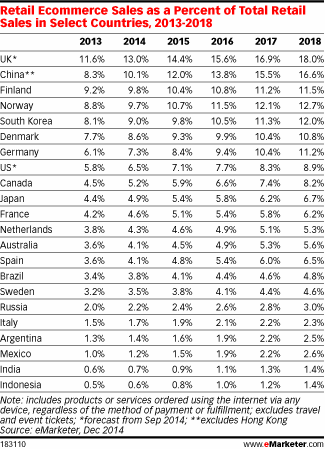
    Recently, Starbucks Corporation China announced the opening of its first online store in China’s popular ecommerce site, Tmall, which will feature unique and specially designed e-cards, Starbucks cards and coffee vouchers providing an easy gifting option. [].While this initiative is part of the company’s increased focus on digital presence, it could tap into the significant growth of retail ecommerce in China. According to eMarketer, retail ecommerce sales in China are projected to grow at more than 30% each year, over the next three years and reach more than $1500 billion by 2018. []. While mobile is expected to account for nearly half of the total ecommerce sales in China in 2015, this figure is expected to increase to 70% by 2019. []. We believe Starbucks’ ecommerce initiative in China should benefit from the growing internet users in the region and the online shopping habits of Chinese consumers.

    More Than 16% Of Total Retail Sales In China Through Ecommerce By 2018

    It is estimated that in 2015, ecommerce sales will account for nearly 7% of the total retail sales in the U.S., while this number is much higher at 12% for China. By 2018, it is estimated that these figures will increase to nearly 9% for the U.S. and more than 16% for China.

    183110

    Given the preference of Chinese consumers towards online shopping, we believe Starbucks’ initiative to expand its digital presence in the region is the right strategy.  China is a growth market for Starbucks. For the fiscal year 2015, comparable store sales in the China Asia Pacific region grew by 9% compared to a 7% number for the Americas. This growth was driven by a 8% increase in traffic while the corresponding number for Americas was 3%. []. The company plans to double its store count in the China Asia Pacific region to 10,000 stores in the next five years, with the store account in China projected to be 3,400 by the end of 2019. As the Chinese economy shifts from an export focussed industrial region to one relying on services and domestic demand, we believe Starbucks will benefit from this trend with the urban middle class increasing and becoming well off. With aggressive expansion plans in China, which the company expects will be its biggest international market; we believe the ecommerce entry could drive growth in the region and also provide a boost to the Starbucks loyalty program.


  • Starbucks volunteers joined 500 middle and high school students

    Recently, Starbucks volunteers joined 500 middle and high school students for the Youth Skill Development and Food Sustainability Project in partnership with the Books for Children Foundation. The event took place at the Bumrung-Raviwan Wittaya School, which promotes healthy food and living, grows vegetables for school and home meals, and sells leftover crops to student families. Combined, 330 volunteer hours impacted nearly 5,000 students and their families, along with others in the community.

    “At Starbucks, our long-term commitment is to make a positive and sustainable change in the areas of environment, society and economy,” said Murray Darling, managing director of Starbucks Coffee Thailand. “The community event allowed us to reaffirm the company’s long-term commitment to local communities.”

    For part of the day, students practiced project planning, leadership and communications skills during a food sustainability project. Students and volunteers built nursery shelves for vegetables, created an organic shade plot for crops and repaired the pier for a small fish farm.

    The majority of the community project focused on skills development through an English conversation class. Starbucks Thailand partners helped students hone their English-speaking skills through songs and word games.

    Starbucks volunteers also read stories to a kindergarten class with Ruangsakdi Pinprateep, managing director of the Books for Children Foundation and author of “Ping Pong, Will You Come with the Bear.” This children’s book was funded by a portion of sales from Starbucks Thailand Barista Bears.

    “It was such an honor for Starbucks to join us in service,” said Naiyana Aua-amnueychai, director of Bumrung-Raviwan Wittaya School. “We place a great deal of emphasis on English skills development and food sustainability at our school and Starbucks volunteers helped our teachers and students in these areas. We are pleased that Starbucks and our school share the same goal to contribute back to our society.”

    Starbucks Thailand has collaborated with Books for Children since 2005. Together, they have collected more than 400,000 books through an annual Christmas book drive and completed a library renovation at Silapadech community. In addition, they completed the Bookstart for Intellectual Disability Children’s Project at Rajanukul Institute and renovated the Wat Kla Cha-um School library and playground.

    “By working with Books for Children for the past 10 years, we have delivered educational opportunities to both public and private organizations nationwide,” said Sumonpin Jotikabukkana, marketing and communications director of Starbucks Coffee Thailand. “We realize that literacy is an essential element for children’s development and we aim to do our best to continue to promote and support these areas for Thai children in every sector of the society.”

  • Starbucks barista Ryan Wibawa took top honors in the first ever Indonesian Brewers Cup

    Starbucks barista Ryan Wibawa took top honors in the first ever Indonesian Brewers Cup

    For Starbucks barista Ryan Wibawa, mastering coffee artistry was the key to becoming a champion.

    “I’ve worked really hard to hone my craft,” he said. “I’m now seeing the results of my hard work.”

    Wibawa took top honors in the first ever Indonesian Brewers Cup Championship finals held in central Jakarta. The competition, which occurred in stages over four months and wrapped up in November, featured 79 competitors from Bali, Jakarta and Semarang. Participants were judged on their coffee-brewing expertise, presentation skills and customer service. As the first place winner, Wibawa will represent Indonesia at the World Brewers Cup Championship in Dublin, Ireland next year.

    “This experience has given me another level of confidence to share my skills and knowledge about coffee,” said Wibawa. “I’m honored to represent Starbucks Indonesia at the World Championships in February.”

    Wibawa was first exposed to coffee when he joined Starbucks two years ago. He learned quickly and developed an enthusiasm for all things coffee. In 2014, he was selected as his district’s coffee master and earlier this year he won Starbucks Indonesia’s Barista Championships. He will also represent Indonesia at the China and Asia Pacific (CAP) region’s Starbucks Barista Championships in Hong Kong in February 2016.

    Ryan works at Indonesia’s first Starbucks Reserve store in Jakarta, where he delights customers with his coffee craft. He has also shared his expertise by training other Starbucks partners at Indonesia’s third Starbucks Reserve location in Bandung, which opened earlier this year.

    “I am proud to be a Starbucks partner,” said Wibawa. “At Starbucks, I can do what I love and what I’m passionate about, which is coffee.”

    To prepare for the Indonesian Brewers Cup Championship, Wibawa practiced twice per month with Mirza Luqman, Starbucks Indonesia’s learning and development manager.

    “Ryan was very eager and committed to learning everything about coffee,” said Luqman. “I couldn’t be happier for him.”

    “I can’t believe I will compete in the world championships,” added Wibawa. “I am so happy and proud to represent Starbucks and my country.”

    Starbucks barista Ryan Wibawa took top honors in the first ever Indonesian Brewers Cup Championship finals

    Starbucks barista Ryan Wibawa took top honors in the first ever Indonesian Brewers Cup Championship finals

  • Starbucks Korea to launch ‘Startup cafe’

    Starbucks Korea to launch ‘Startup cafe’

    Starbucks Korea is to launch a ‘startup cafe,’ in partnership with the country’s government, to stimulate innovation.

    The South Korean arm of the world-famous coffee chain Starbucks and the country’s ICT ministry said Tuesday the “startup cafe” will be a place where visitors can share experiences and ideas on starting a new company.

    Starbucks and the Ministry of Science, ICT and Future Planning said they will host venture-related programs, including lectures at one of its stores in central Seoul, in their latest effort to beef up local startups.

    The ministry said around 46,000 startups kicked off in the first half of 2015 in South Korea, adding it is vital to establish an ecosystem where new companies can share their know-how and experiences to keep the trend sustainable.

    The accessibility and openness of cafes are suitable places for startups to gather, the ministry added.

    Starbucks will provide the venue, as well as drinks and food, for participants. It also plans to roll out joint programs, such as a tumbler design competition.

    The Starbucks-supported startup cafes will expand to areas outside Seoul starting next year.

  • Starbucks Malaysia gives back to Malaysian communities with its Connecting Communities Project

    Starbucks Malaysia gives back to Malaysian communities with its Connecting Communities Project

    Weaving with Mengkuang leaves used to be a leisurely pastime of coastal women in Malaysia. Today, a small Malaysian business is revisiting this craft and selling Mengkuang products in Starbucks® stores.

    “Giving back to Malaysian communities is important to our company as well as our partners (employees),” said Sydney Quays, managing director, Starbucks Malaysia. “Featuring products from small villages provides increased exposure and ultimately contributes to the livelihood of local residents.”

    Earlier this year, Starbucks Malaysia developed a relationship with Craft CT 01 Enterprise – a small company is located on the east coast of Malaysia. The business develops products made from Mengkuang, a tropical plant with tall, thorny leaves. Their products including hot cup sleeves, coasters and placemats are currently sold in 50 Starbucks locations throughout the country.

    “We have seen a great deal of interest in the Mengkuang products since we began selling them in our stores,” Quays said.

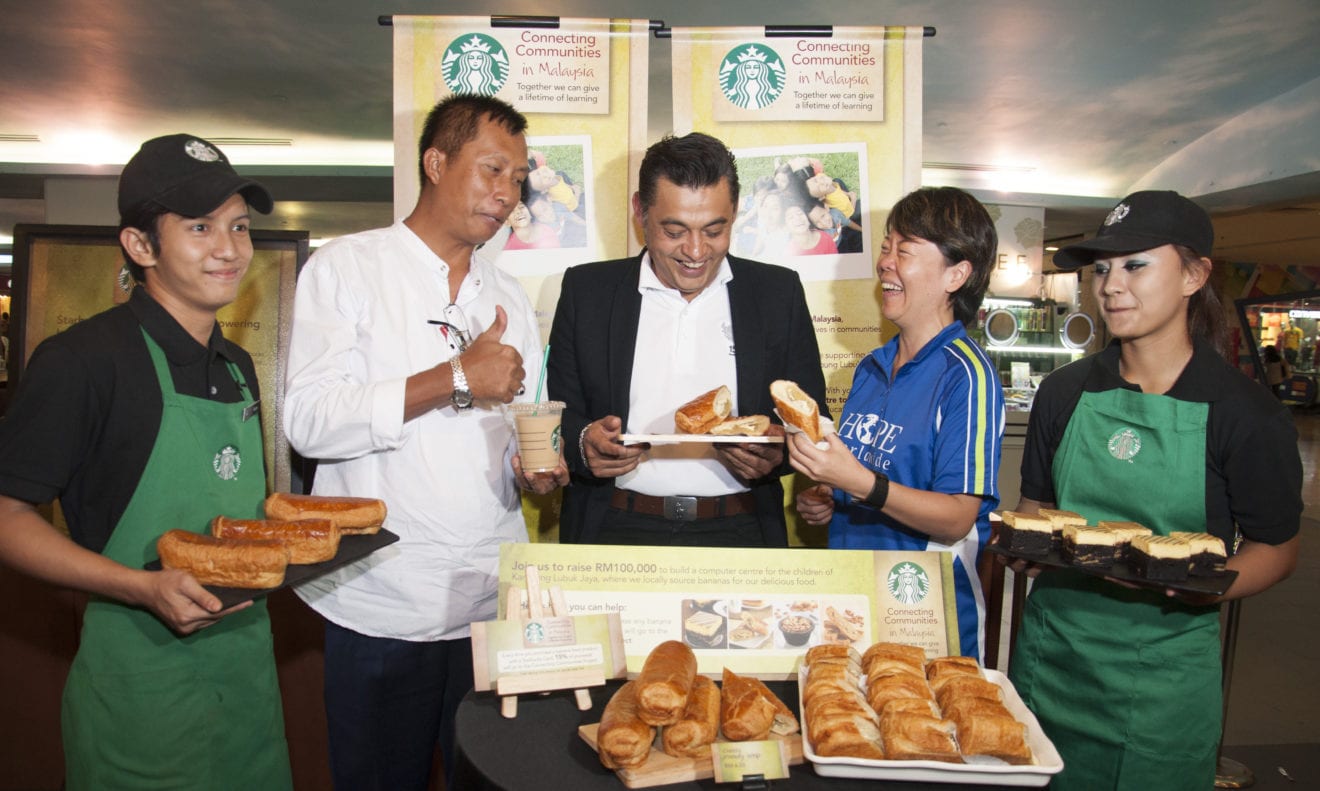
    Sourcing of Mengkuang products is one outcome of Starbucks Malaysia’s Connecting Communities Project, which has helped farmers and their families since 2013. As part of this project, Starbucks also purchased a sizable amount of fresh bananas from small farmers in the Kampung Lubak Jaya village on the west coast of Peninsular Malaysia. The bananas were used to develop the Signature Banana Chocolate Chip Muffin and Banana Chocolate Decadence, offered in West Malaysia Starbucks® stores.


    “The banana-based food items are quite popular with our customers,” added Quays.

    The first Starbucks® store in Malaysia opened in Kuala Lumpur in 1998. The company reached a milestone of 200 stores in the country this past September.The 200th store, known as Starbucks Ansa, is located in what was formerly the Piccolo Hotel. The store design aims to introduce customers to the Connecting Communities Project through a community table with banana and Mengkuang leaf carvings, a merchandise wall dedicated to Mengkuang products and specially-woven Mengkuang mats that serve as wall hangings.

    “We will continue to find ways to grow our Connecting Communities Project. There is more we can do positively impact the lives of Malaysia’s small farmers and businesses,” said Quays.

  • Dairy Farm struggles in SE Asia

    Dairy Farm struggles in SE Asia

    Dairy Farm International Holdings says softer sales growth and steep cost increases led to weakened margins in the third quarter.

    In an interim management statement, which does not include financial data, the Hong Kong-based pan-Asian retailer says the group faced more difficult economic conditions, and focused on building market share and investing for the long-term health of its businesses.

    Tighter margins and unfavourable exchange rate movements continued to affect the group’s US dollar reported results and led to lower underlying earnings for the period.

    “The group expects similar trading conditions to prevail for the remainder of the year.”

    Dairy Farm says profitability of its Singapore food business – where it owns the 7-Eleven franchise and Cold Storage supermarket chain – fell, principally due to weak performances from newly opened supermarkets and the impact on 7-Eleven of government restrictions on alcohol sales.

    In Malaysia, the introduction of GST and softer consumer confidence dampened spending at itsGiantstores.

    “In Indonesia, despite good sales momentum in July and August, higher labour costs and price investments to attract customers have reduced margins,” the company said.

    The Health and Beauty Division – led by the Guardian and Mannings brands – continued to perform well in Hong Kong, despite the slowdown in Mainland Chinese tourist arrivals, and has seen improvements in profitability in Singapore. The overall results were, however, held back by poorer performances in Malaysia and Indonesia.

    Both the Home Furnishings and Restaurants Divisions have increased sales and profits. Ikea performed well in both Hong Kong and Taiwan, and the new Ikea store in Indonesia continues to trade ahead of expectations.

    Restaurant group Maxim’s, which operates Starbucks amongst other brands,  maintained its consistent performance.

    The group is to invest a further US$210 million in Yonghui Superstores in early 2016 so as to maintain its 19.99 per cent stake following a placement by Yonghui of a 10 per cent shareholding to internet retailer, JD.com. The investment by JD.com will provide Yonghui with additional opportunities for expansion into eCommerce.

    “With respect to recent investments, there have been positive contributions from [supermarket chain] San Miu in Macau and from Yonghui in China, despite the challenging trading environment. Meanwhile, progress continues on the integration and repositioning of the Rose Pharmacy business in the Philippines,” the company said.

    “Notwithstanding the challenging conditions, Dairy Farm was able to maintain its cashflow from operating activities through better working capital management.

    Dairy Farm operates over 6400 outlets – including supermarkets, hypermarkets, convenience stores, health and beauty stores, home furnishings stores, cafes and restaurants – employing over 170,000 people, and had total annual sales in 2014 exceeding US$13 billion.