Retail News CRM

Tag: starbucks

  • Inside Starbucks Taiwan new concept

    Inside Starbucks Taiwan new concept

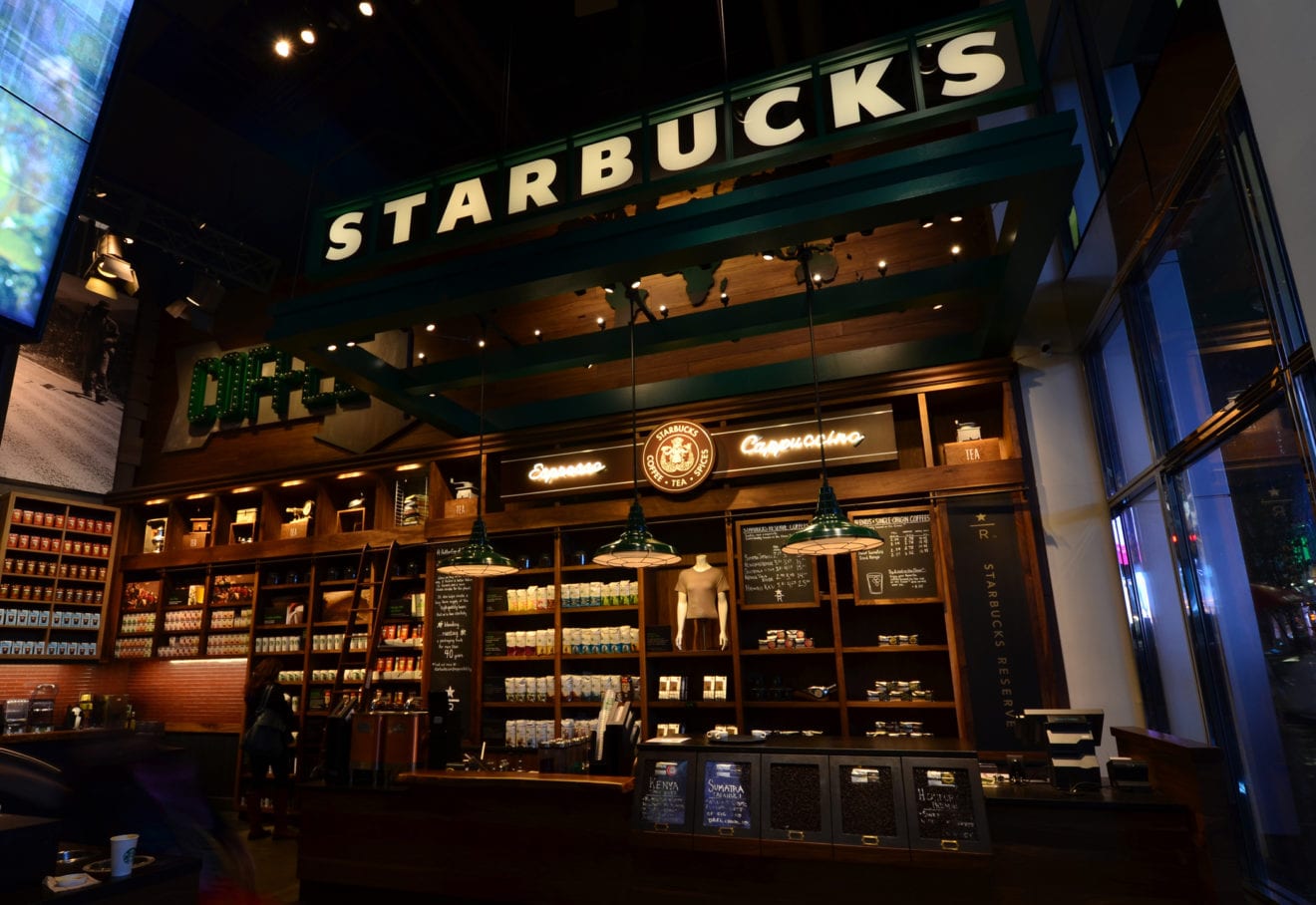
    The design team behind the new generation Starbucks Taiwan Longmen concept store set out to create a “theatre for coffee”.

    The new store features Starbucks Reserve coffees and is located in one of the busiest shopping and fashion districts in the city of Taipei.

    Starbucks Taiwan new concept 5
    “We wanted to elevate the Reserve coffee experience for customers and inspire them with our coffee passion,” said Wen Lin, project leader, Starbucks Taiwan.

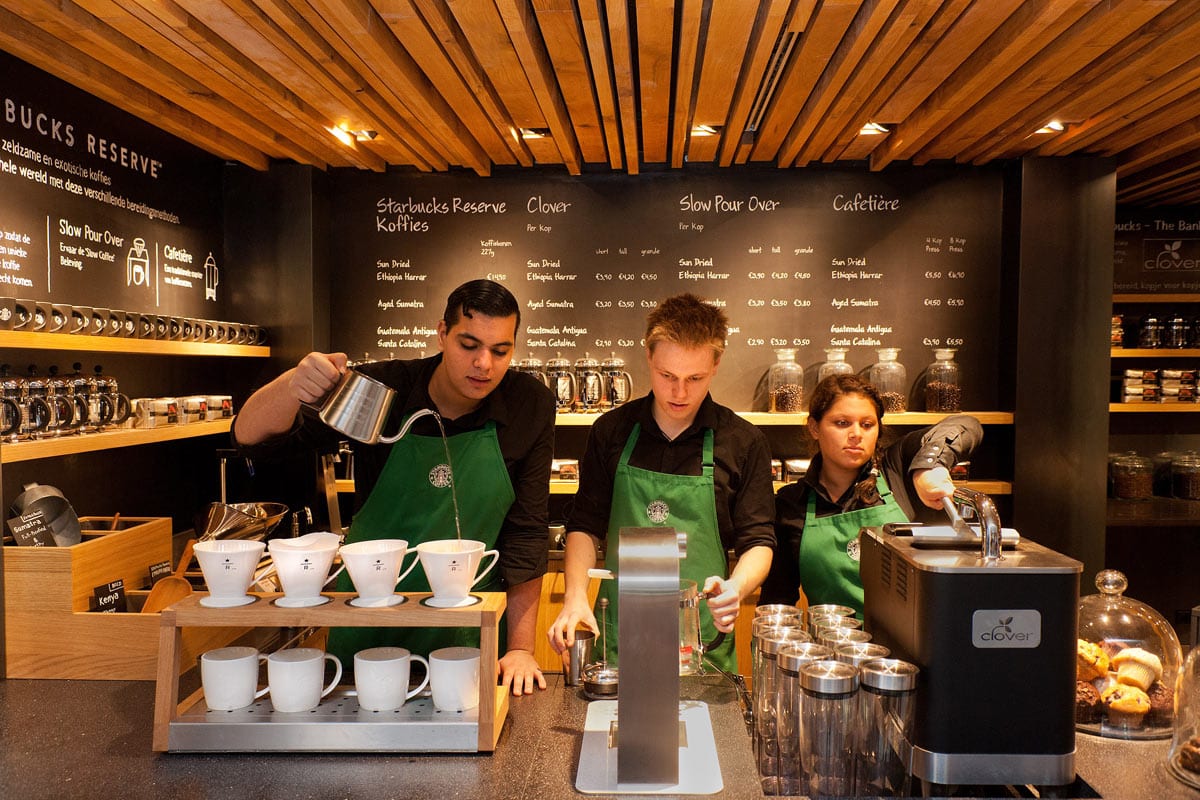
    “A Reserve coffee bar is located in the center of the store or ‘center stage,’ so customers can watch partners handcrafting beverages from every vantage point.”

    Starbucks Taiwan new concept 2

    Behind the coffee bar is a central column with an abstract graphic, created from blackened metal with laser cutouts in a coffee bean pattern. Diffused lighting inside the column creates a lantern effect.

    “The column draws the eye to the bar to offer an extra layer of interest and evokes the romance of enjoying our coffee,” said Claudia Lee, director, Starbucks Store Design.

    Starbucks Taiwan new concept 6

    Visual representations of the coffee journey are featured in select areas throughout the store, highlighting the regions where coffee is harvested. This includes a 14-meter coffee belt map, created by Taiwanese wood veneer artist, Sandy Lee.

    “We want our customers to have a different visual experience every time they visit our store,” said Lin.

    The store’s design takes advantage of existing architectural elements such as an irregular-shaped floor plan and various ceiling heights to create a strong spatial look and feel. Elevated platforms were crafted into seating areas for customers, where they can look down at what’s taking place at the coffee bar. Taiwanese-designed wood tables and chairs round out inside seating and reflect local styles.

    Starbucks Taiwan new concept 3

    “We selected stools and cafe chairs that have a handcrafted quality to complement the store aesthetic,” said Percy Lee, senior design manager, Starbucks Store Design.

    “The terrazzo floor tile is the same that is traditionally found in residential buildings. This connects customers to local culture and provides a sense of familiarity and comfort when relaxing in the store.”

    Starbucks Taiwan new concept 7

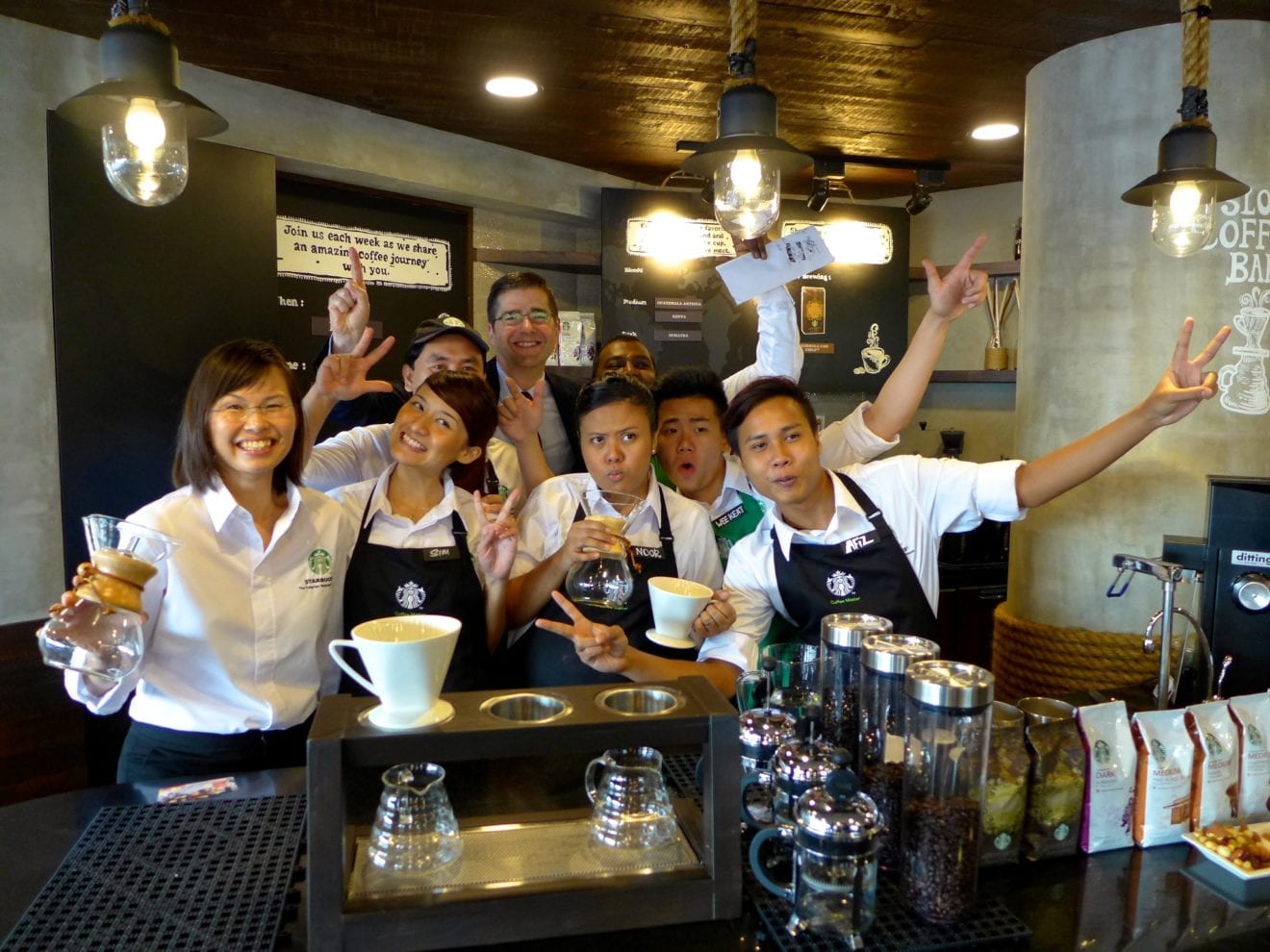
    Featuring a variety of coffee brewing methods, the Longmen store is the first Starbucks in Taiwan to offer both Clover and the Black Eagle machines. Baristas will also offer coffee using the Pour Over method with a three-cup station designed and made by Iron Wang, a local Taiwanese artist who specialises in coffee brewing equipment.

    To pair with coffee, the store’s food menu includes creations by Sadaharu Aoki, a Japanese pastry chef, who owns boutiques in Paris, Taipei, Tokyo and additional cities in Japan. Along with sandwiches and desserts, customers will find Opera, a French sponge cake, created specifically for the store and made with Starbucks Colombia coffee.

  • Gloss coming off Starbucks Asia growth

    Gloss coming off Starbucks Asia growth

    Global coffee giant Starbucks has finished its financial year on a high, reporting a 17 per cent increase in annual revenue to a record US$19.2 billion.

    But is the Starbucks Asia Pacific business underperforming?

    Neil Saunders, CEO of Conlumino, believes so. He says the company’s last quarter figures were boosted by the acquisition of the balance of its Japan joint venture from partner Sazaby League. Globally it finished the quarter with 1666 more cafes than in the previous year, an impressive figure in itself.

    “For a company of Starbucks size and scale, such results are exceptional and a testament to the company’s innovative attitude, as well as the continued relevance of coffee across many geographies,” says Saunders.

    “While the overall numbers are strong, there is an interesting trend in the detail: namely that although Starbucks performed well across many geographies – including in the more mature core Americas territory – performance in Asia Pacific was surprisingly muted.”

    Saunders says while total revenue held up well, rising 110 over last year, this is mainly because of the Japanese acquisition.

    The opening of 767 new stores in Asia-Pacific (which is essentially Asia given Starbucks has only 25 cafes in Australia and 26 in New Zealand, both run by franchise partners) certainly helped.

    “However, on an underlying basis, same store sales only rose by six per cent – a slightly disappointing outcome, and one that is partly attributable to the general slowdown in China,” says Saunders.

    “If the emerging markets proved to be soft, the same cannot be said of the Americas where comparable sales rose by eight per cent. Here some of the menu changes, including the continued growth of the food offer, have helped to push up average ticket within existing stores. However, in our view the various digital initiatives Starbucks has been developing and pursuing have also paid dividends. Its popular digital app is already widely used for payment, and locks in loyalty both by saving customers time at the register and by making Starbucks a destination by virtue of the fact that the card is preloaded with cash. It is also notable that the average ticket from customers using the mobile app for payment tend to be higher. Naturally, some of this is because Starbucks enthusiasts and most loyal customers are more likely to have the app. However, we also believe that the rewards and advertising, which the app supports, help to stimulate add-on sales.”

    Saunders says Starbucks’ plan to drive evening sales through offering alcoholic beverages and an enhanced food menu in US and UK stores is also encouraging.

    “These improvements should be in a quarter of US stores by the end of 2019. In our view, they’re another example of why Starbucks outperforms: it evolves and innovates its in a way that’s relevant to customers.”

    Next year, Starbucks says it plans to open about 900 new stores in Asia-Pacific, two thirds of them licensed. And it says it expects it earnings in the region to be flat or even down.

  • Starbucks Cards with Swarovski crystals will be available in limited quantities in China, Hong Kong …

    Starbucks Cards with Swarovski crystals will be available in limited quantities in China, Hong Kong …

     Since the first Starbucks Card launched in 2001, designers have created hundreds of varieties of these collectible cards.

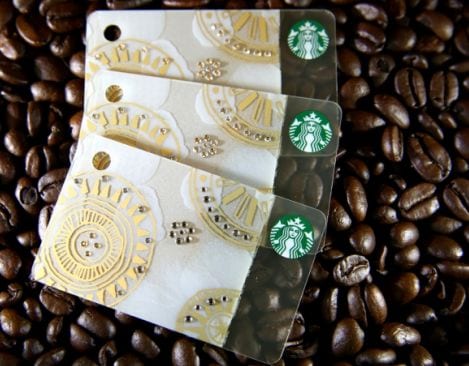
    One of this year’s new designs, available at participating Starbucks stores in Asia, is a Starbucks Card adorned with Swarovski crystals. The premium mini Starbucks Card – small enough to fit on your keyring – will be available in select markets across the region.

    The limited-edition mini Starbucks Card creates the feeling of a snowscape for holiday gift-giving. The design, awash in champagne and silver hues, is studded with 29 dazzling Swarovski crystals applied in Austria. This international exclusive will be available starting in November in limited quantities in China, Hong Kong, Indonesia, Philippines and Thailand.

    “We continually innovate to find convenient and expressive ways to pay,” said Brady Brewer, senior vice president of Category Brand Management for Starbucks China and Asia Pacific Region. “We’ve featured premium materials like sterling silver, and of course we introduced mobile payment in several Asia markets.”

    Production of the one-of-a-kind Starbucks Card with Swarovski crystals was a collaboration between the Austria-based company for crystal application and a U.S. supplier that printed the cards. The Starbucks Card features a barcode, rather than a magnetized stripe, to enable crystals to be placed across the entire face of the card. The Starbucks Card has a minimum load amount that varies by market.

    “This Starbucks Card is a premium option for customers looking to give a gift to themselves or their favorite Starbucks fan with something special,” Brewer said. “This is just the beginning of what we’re going to see for the holidays at Starbucks.”

    Starbucks Cards with Swarovski crystals will be available in limited quantities in China, Hong Kong, Indonesia, Philippines and Thailand this Holiday

    Starbucks Cards with Swarovski crystals will be available in limited quantities in China, Hong Kong, Indonesia, Philippines and Thailand this Holiday

  • The Starbucks Community Store in Daehakro neighborhood in Seoul, Korea celebrates one-year …

    The Starbucks Community Store in Daehakro neighborhood in Seoul, Korea celebrates one-year …

    The Starbucks Community Store in the Daehakro neighborhood in Seoul, Korea, commemorated its one-year anniversary (October 7, 2015) with a community service project, a donation and free brewed coffee and rice cakes for 365 customers as a token of gratitude.
    [embedded content]

    The Starbucks Community Store in Daehakro, like the Langsuan Neighborhood Starbucks in Bangkok, plays a role in supporting education, job training and apprenticeship initiatives by working directly with non-profit organizations to offer local services. In the United States, Starbucks will soon open similar stores that partner with local nonprofit organizations to provide skills training for opportunity youth in underserved, low-income communities in Ferguson, Chicago, Queens, Phoenix and Milwaukee.

    A social hub in the education and arts district of Seoul, the Daehakro coffeehouse hosts workshops and seminars and monthly volunteer activities called “green care” dedicated to improving the environment. The store’s design reflects its vibrant neighborhood. “Community Store messaging can be found throughout the location and it’s a conversation piece that engages customers with store partners,” said Yena Cho, who has been focused on the operation since she joined Starbucks two years ago.

    An art-wall collage, created by university students, and a digital community board that showcases corporate social responsibility efforts are among the distinctive touches that align the store with its surroundings. Also on display is a 3D coffee mug wall that represents students from the Starbucks Comprehensive Youth Leadership Program.

    Yena, who is a global communications manager at Starbucks Korea, said the first year of operation for the Daehakro Starbucks passed by quickly, aided by a flurry of activity around the store, a positive reception by the community and significant media interest.

    Since its opening last October, the equivalent of 30 cents U.S. from each item purchased in Korea’s Community Store has benefited the Green Umbrella ChildFund Korea to support lifelong skills development for youth through the Starbucks Comprehensive Youth Leadership Program. A donation of $100,000 U.S. accumulated from a portion of sales over the past year was presented to Green Umbrella ChildFund Korea at the anniversary celebration. The program offers academic scholarships through graduation for a curriculum that focuses on business skills, collaborative communications and social consciousness.

    Starbucks Korea, which is the company’s fourth largest market outside the U.S., and the Green Umbrella ChildFund Korea maintain an ongoing alliance to address the nation’s social and community needs with an emphasis on assisting young people seeking work. Korean tuition costs are among the world’s highest, creating roadblocks to higher education for the nation’s disadvantaged.

    “Being a relevant part of the community we serve in is an important part of who we are,” said S.K. Lee, ceo and president of Starbucks Coffee Korea. “Our Community Store is a telling example of our commitment to building a different kind of company in Korea that is performance driven through the lens of humanity.”

    The focus on finding jobs for youth is an extension of Starbucks global commitment to hiring Opportunity Youth — those between the ages of 16 and 24 who aren’t in school and aren’t working.  The 100,000 Opportunities Initiative, a coalition of 33 leading U.S. companies including Starbucks, is America’s largest employer-led private sector coalition committed to creating pathways to employment for young people. The businesses will host the next Opportunity Hiring Fair in Phoenix on Oct. 30.

  • Starbucks execs optimistic on mobile ordering and China

    Starbucks execs optimistic on mobile ordering and China

    Starbucks is investing heavily in ‘mobile order and pay’, with plans to roll out the feature across the US by the end of this month, CFO Scott Maw said at the Goldman Sachs retailing conference on Thursday.

    Previously, the coffee giant had set itself the end of the year as a deadline to finish implementing the service nationwide, with the Android version poised for release a little earlier.

    “We have a winner, and it’s running ahead of our expectations,” Maw told analysts and investors at an investment conference in New York.

    The mobile ordering and pay feature was introduced last year and is gaining traction. In June Starbucks announced it will spend £30m on a technological revamp of its UK business and Starbucks’ UK MD Mark Fox told Retail Gazette that mobile has played a valuable role in the retailer’s success. Last year, the Seattle based chain process over $2bn in mobile transactions.

    Next year, the app will add suggestions for orders based on consumer data.

    Starbucks has recognised the power of e-commerce and is wielding it to allow for its next revolution: delivery.

    Supposedly, the hazelnut latte maker hasn’t been hampered by the economic stagnancy in China,

    the company “is not seeing any material impact on profitability or revenue,” Maw said. “The number of transactions that we’re seeing is good,” and this quarter’s results are “going to stack up really well in China,” he added.

  • Store’s e-receipts pay off with cash-saving extras

    Store’s e-receipts pay off with cash-saving extras

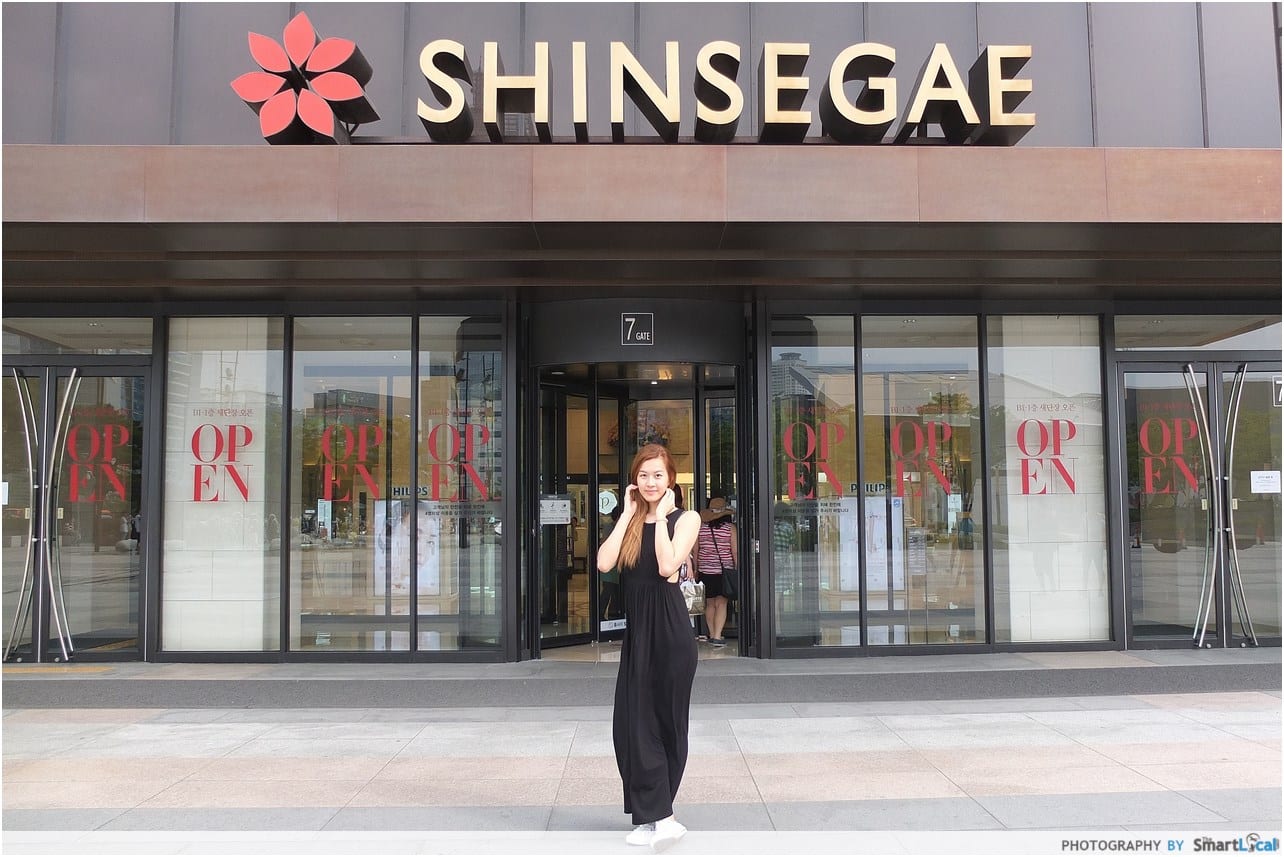
    Shinsegae Department Store is set to launch a new smartphone app that offers online and offline shoppers e-receipts with extras.

    While the electronic receipt app avoids the hassle of scraps of paper receipts, it can also provide discount coupons and make it easier for customers to park cars.

    Scheduled to launch on Friday, the retailer said the app will help it engage with customers and potentially learn consumer shopping habits from the digital records, and make exchanges or returns easier.

    Retailers outside of Korea have already adopted e-receipts, but local shops have been slow to utilize the system.

    Global marketing company Epsilon International said the e-receipt is “an innovative communications vehicle for retailers that offer limitless marketing possibilities, providing deeper insight into consumer shopping habits, which can lead to more targeted advertising mailers, promotions and emails.”

    On top of offering e-receipts, the platform will provide information about different sales events and discount coupons, the department store chain said.

    The Shinsegae app will also help the store’s parking service. If a customer registers a car number, they can check the length of time they have spent in the parking lot.

    In the Gangnam and Incheon branch, customers can confirm their parking locations on the app and also get their parking ticket validated for free parking.

    The company said that users are allowed to log in with cell phone numbers instead of having to create IDs and passwords.

    Starting in September, users of the app can also receive a list of bestselling products. In addition to the new features – an upgrade to the old app which gave basic store information – Shinsegae said it will add other services to the platform.

    The retailer also unveiled a pickup service that allows online users to pick up their orders at Shinsegae Department Store.

    The new service is part of “omni-channel retailing” which is used by retail giant Amazon, which is a marketing strategy aimed at bridging the gap between online and offline stores.

    “The boundary between online and offline shopping is getting blurry,” said Hong Jeong-pyo, director at the marketing strategy division at Shinsegae. “Shinsegae launched the services that combine the advantages of online and offline shopping.”

    The release is the latest digital service offered by Shinsegae. The group introduced a new mobile payment system called SSG Pay, where consumers can pay with the app at Shinsegae affiliates, including Shinsegae Department Store and E-Mart, WithMe convenience stores, Starbucks, Premium Outlet and SSG.com.


  • Studio City retail tenants revealed

    Studio City retail tenants revealed

    Studio City and Taubman Asia, have revealed the lineup of fashion brands that will open inside The Boulevard at Studio City.

    A mix of fashion-forward labels and internationally-renowned luxury brands include Macau’s first Balmain, Macau’s first Belstaff, and Tom Ford’s largest store in Asia, amongst many others. The selection was assembled by Taubman Asia and Melco Crown Entertainment’s combined team of retail specialists to meet Chinese consumers’ increasing desire to express their individuality through high quality, expertly crafted clothing and accessories. Bespoke and personal services will be offered to ensure our shoppers take center stage.

    Taubman says The Boulevard at Studio City will bring “an unparalleled shopping experience” to Studio City.

    “Unlike any retail offering to be found in Asia, the unique 35,000 sqm ‘immersive’ retail entertainment environment brings shopping to life by ‘transporting’ visitors to high-energy street-scapes and entertaining them at every turn with featured streets and squares inspired by iconic shopping and entertainment locations, including New York’s Times Square and Hollywood’s Beverly Hills,” Taubman said in a statement.

    “At the futuristic Times Square Macau, inside The Boulevard at Studio City, a variety of entertainment from ‘virtual’ musicians to film stars will be shown through holographic projections.

    “Leveraging our global expertise increating extraordinary retail environments, and our exceptional relationships with the world’s leading brands, our talented team in Asia has brought together an exciting mix of brands for The Boulevard at Studio City,” said René Tremblay, president of Taubman Asia.

    “Our merchandising and management services are the industry standard for performance and excellence. We are thrilled to welcome these brands to our latest project and are committed to supporting them for the long term.”

    List of brands:

    Aeronautica Militare
    Balmain
    Bank of China
    Belstaff
    Boss
    Bottega Veneta
    Bulgari
    Cigar Emporium
    Coach
    Cosmos Food Station
    Din Tai Fung
    Dunhill
    Emporio Armani
    Fendi
    Girard-Perregaux
    Givenchy
    Glashutte Original
    Graff
    Gucci
    Hide Yamamoto
    Hublot
    ICBC
    Trattoria Il Mulino
    Image Digital
    IWC Schaffhausen
    Jaeger-LeCoultre
    Jaquet Droz
    kate spade new york
    Kenzo
    Longines
    McCafe
    McDonald’s
    MCM
    Michael Kors
    Montblanc
    Philipp Plein
    Piaget
    Prada
    Rainbow
    Rimowa
    Roberto Cavalli
    Saint Laurent Paris
    Shiki Hot Pot Restaurant
    Starbucks
    Tag Heuer
    T Galleria Beauty by DFS
    Tiffany & Co.
    Tom Ford
    UM
    Vacheron Constantin
    Valentino
    Van Cleef & Arpels
    Versace Collection
    Ermenegildo Zegna
    Zenith

  • Starbucks tests smart smartphone case

    Starbucks tests smart smartphone case

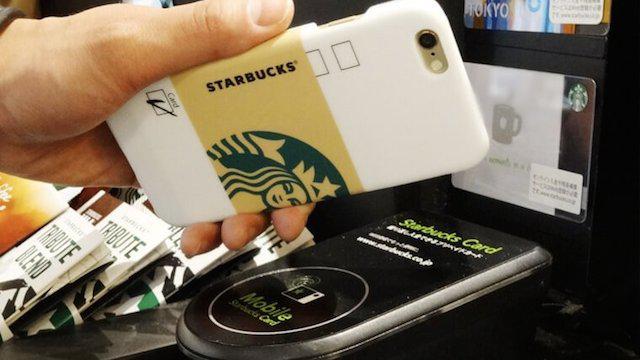
    Starbucks Japan is involved in a unique trial which allows customers to order and pay for their coffee with a swipe of their phone.

    The concept uses a branded smartphone case which is preloaded with the customer’s preferences.

    Trend monitoring website Springwise.com reports the Starbucks Touch phone case was developed in collaboration with Japanese clothing brand Uniform Experiment, and can currently be used in two Starbucks branches in Japan.

    The case – made for iPhone 6 – is designed to resemble a Starbucks coffee cup and features the brand’s iconic logo. It works like a prepaid Starbucks loyalty card, letting customers make cashless coffee purchases. It also enables users to save their preferred store and favorite beverage via a companion app. Upon arrival, customers simply launch the app and place their order, settling up by touching their phone case on the contactless payment device.

    The Starbucks Touch is available online for JPY 3000, or about US$25.

  • Dairy Farm reports modest growth

    Dairy Farm reports modest growth

    Dairy Farm says it achieved “modest” like-for-like sales growth in most of its major markets in the first half of this year.

    However, underlying profit fell 14 per cent to US$193 million, largely due to margin pressures in the food businesses and a disappointing half for its Guardian health & beauty group in Malaysia.

    With the early completion of the acquisitions of the San Miu supermarket business in Macau and the Yonghui stake (20 per cent) in China, both in April, sales for the period rose 27 per cent to US$8 billion. But like for like sales rose a more modest three per cent to $6.5 billion, or by seven per cent on a constant exchange rate basis.

    Dairy Farm International says that despite solid sales growth, cost pressures and food price deflation on certain commodities combined to squeeze margins in the first six months for the group’s Food businesses.

    “In Hong Kong, there were higher rental and labour costs. In Singapore profits were significantly lower due to competitive pressures, higher rents and a weaker Singapore dollar. Sales were buoyant in Malaysia, but there was continued margin investment to attract customers,” said chairman Ben Keswick in his half yearly report.

    “There was good like for like sales growth in Indonesia, but profitability declined materially due to higher labour costs following a further increase in the minimum wage, a rise in shrinkage costs associated with greater fresh sales and more rigorous stock management, and store rationalisation.

    “In the Philippines, the upscale and community supermarkets enjoyed sales growth, but the hypermarkets struggled.”

    Dairy Farm’s convenience store businesses in Hong Kong and Macau performed satisfactorily. Sales in Singapore, however, were weaker due to a reduction in the number of stores and the impact of recently introduced regulations restricting late night sale of alcohol.

    The Health & Beauty division produced higher sales. Hong Kong and Macau performed well despite some impact from a decline in tourist arrivals. In mainland China, there was further growth in the store base and an improvement in results. In Malaysia, profitability was lower following the introduction of GST on 1st April. In Indonesia, the results were impacted by wage and rent increases, while sales growth remained good. In the Philippines progress was made on the integration of Rose Pharmacy.

    In Home Furnishings, the IKEA stores in both Hong Kong and Taiwan traded well, and the new IKEA store in Indonesia continues to perform in line with expectations.

    In the Restaurant division, Maxim’s maintained its consistent performance with increased sales and profits in Hong Kong and mainland China. The group is growing its presence in Mainland China and continuing to expand its Starbucks network in Vietnam.

    At the end of June, Dairy Farm operated over 6400 outlets across all formats, including the newly added San Miu and Yonghui stores, and employed in excess of 170,000 colleagues.

  • Using WeChat to Grow Your Business in China

    Using WeChat to Grow Your Business in China

    In the world of mobile commerce, all eyes are on China.

    Even as China’s economy and overall retail sales growth drops, business-to-consumer (B2C) online sales are growing by 25 per cent each year. Data gathered from iResearch in a March 2015 report states that China’s gross merchandise volume (GMV) of the mobile shopping market reached 929.71 billion RMB in 2014, increasing by 239.3 per cent from the previous year.

    The growth was significantly larger than that of the overall GMV of the online shopping market. China has the world’s largest digital marketplace, and is predicted to grow three times faster than overall retail. The industry is primed for growth not only in the first-tier cities, but also in the third-tier and lower cities with an estimated half of total online sales coming from the lower tier cities by 2018.

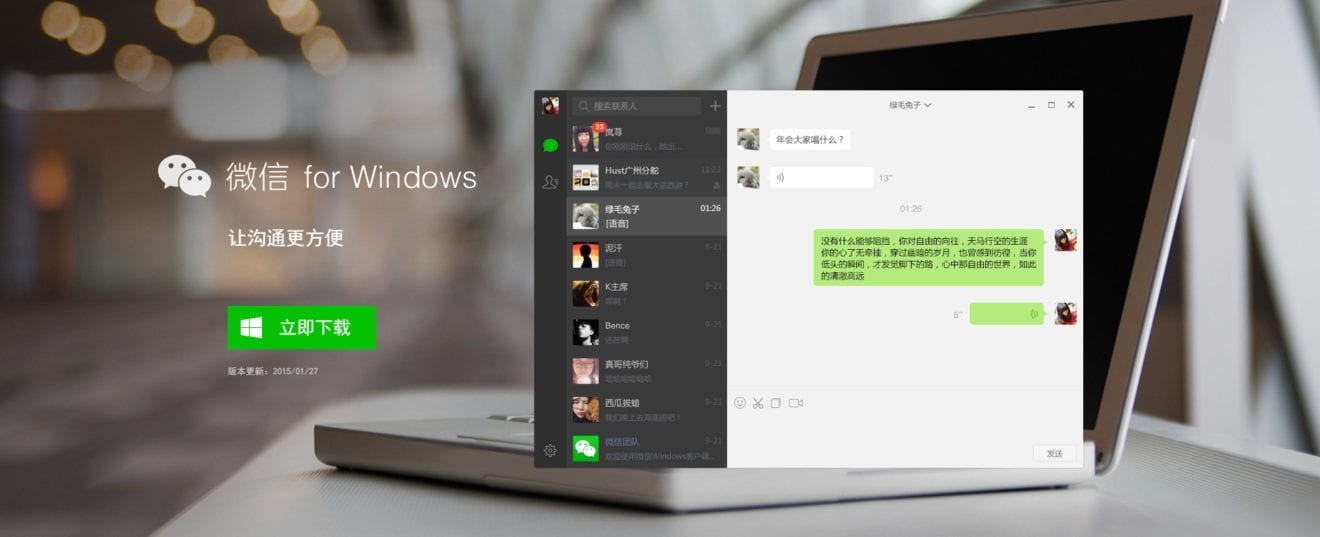
    When considering the mobile commerce industry in China, one name stands out: Tencent’s WeChat has long been impacting the lives of Chinese consumers, and with its move to digital payment systems it now has the ability to revolutionise the mobile commerce industry in China.

    WeChat has a massive scale, with over 468 million monthly active global users and 25 per cent of users checking WeChat over 30 times a day. Last year, users spent US$15.3 billion on mobile data using WeChat.  As the fastest growing social media platform in the world, and the primary source of interaction between brands and Chinese consumers, foreign investors looking to be successful in China should take note. Chinese consumers actively embrace mobile commerce due to its easy to use, cost-effective payment and delivery system.

    There is huge potential for foreign investors to take advantage of WeChat payment systems for their Chinese consumers and to maximise their profits. WeChat allows foreign investors to interact with their consumers in a way that has not reached the same scale in the Western world.

    Fewer than 20 per cent of internet users in the US have used their mobile phones to pay for services and goods while more than half of users in China have done so. Multiple incentives exist for Chinese consumers to make their purchases through WeChat; enabling businesses to use these schemes to generate profit. Loyalty cards, membership schemes and discounts for paying online all compel cost-effective shoppers to make a purchase.

    In addition to this, due to the convenience of paying through WeChat, there is a higher chance of impulse purchases. However, this ease does not simply apply to the consumer. Brands are able to bridge the gap between attracting new consumers and engaging with paying consumers, which has already begun to change the face of shopping and retailing worldwide. Businesses utilising WeChat payment systems are already experiencing huge profits, and Tencent has stated that several official accounts are now making over US$1 million.

    Not only can consumers purchase items, but can also purchase services inside WeChat. Businesses with service accounts can take advantage of WeChat’s online-to-offline (O2O) business model. Both online and offline purchases are available to consumers. Customers can either pay for services or items by scanning the QR codes of products provided by offline retailers, or pay on web pages inside the app.

    All vendors, from big name brands to small and medium-sized enterprises are able to create service accounts in WeChat. Big name companies like McDonalds, Starbucks, Xiaomi, Watsons, and Pacific Coffee have all created service accounts. WeChat allows all vendors the potential for success and the ability for SMEs to create accounts is an important aspect for foreign investors to capitalise on.

    Certain industries, such as food, beverage and retail, tend to generate more profit as they are more primed for mobile commerce. That being said, taxi companies, airlines, newspapers, government organisations, and pharmaceutical companies are all using WeChat payments to their advantage.

    Tencent has now enabled users to pay their utility bills through WeChat, and more and more businesses are finding a way to use WeChat mobile payments to grow their business and attain a competitive advantage.

    It is crucial for foreign businesses entering a new market to take advantage of domestic trends in order to be competitive in that marketplace. Mobile commerce in China is constantly evolving and businesses like WeChat are revolutionising how business is conducted. WeChat allows both big name brands and SMEs to compete in the same market space which has the ability to change the entire industry. Entering the Chinese market has its difficulties, but applications like WeChat make it easier for foreign investors to communicate effectively with their Chinese consumers.

  • Starbucks Asia ’s prime ‘restaurant’ model

    Starbucks Asia ’s prime ‘restaurant’ model

    Starbucks Asia has been ranked Asia’s 15th prime model – the very best rating of any quick meals retailer or restaurant.

    The highest 5 corporations on the record in Asia are Samsung, Sony, Nestle, Apple and Panasonic.

    Marketing campaign Asia-Pacific’s annual research of Asia’s Prime 1000 Manufacturers is predicated on a web-based survey developed by Marketing campaign Asia-Pacific and the Nielsen analysis firm. The survey requested clients to listing manufacturers by business sector they most trusted and felt had the perfect status. 4 hundred respondents have been polled in every market, apart from India and China, the place 800 and 1200 individuals have been polled respectively.

    Along with an general rating of probably the most favored manufacturers, the survey drills right down to the market degree with 13 country-specific rankings. Starbucks is the quantity 10 model in China, 12th in Hong Kong and Thailand, and 17th in Japan and Korea.

    “This necessary recognition is a mirrored image of our companions’ (staff) enthusiasm and keenness for delivering the Starbucks Expertise to clients throughout Asia,” stated John Culver, group president, Starbucks China and Asia Pacific, channel improvement and rising manufacturers.

    “We’re extraordinarily humbled by how our clients have embraced the Starbucks model, our top quality Arabica espresso and the genuine moments of connections we share.”

    Starbucks Asia expects that greater than half of its new retailer progress globally over the subsequent 5 years will come from the China Asia Pacific area, led by Japan and China. In 1996, Japan turned Starbucks first operational market outdoors of North America; Shanghai has extra Starbucks shops than some other metropolis on the earth.

  • Starbucks baristas in China and Japan

    Starbucks baristas in China and Japan

    From sourcing and roasting to crafting and innovating, Starbucks partners (employees) are passionate about brewing and handcrafting the world’s best coffee beverages. Starbucks baristas in China and Japan recently celebrated coffee artistry through competitions in pour-over brewing and latte art.

    The Starbucks coffee journey began in Asia nearly 20 years ago, with the company’s first store outside of North America opening in Tokyo in 1996, followed later in 1999 with the first store at the Beijing World Trade Centre. It started with the introduction of a cup of fresh-brewed coffee, followed by educating customers on the joy and indulgence of enjoying a handcrafted cup of espresso beverage, such as the Café Latte and Café Mocha.

    Today, customers in Japan and China have even more ways to enjoy their favorite cup of Starbucks coffee – through pour-over brewing or latte art – at more than 1,000 stores and more than 1,600 stores in Japan and China, respectively.

    Craftsmanship and Artistry in Each Cup of Starbucks Coffee

    “Every cup of Starbucks coffee, whether it’s our fresh brew or an espresso beverage, starts with sourcing the finest coffees from around the world. By extending our offerings to include the pour-over and latte art, we are showcasing these quality ingredients in a full-flavored coffee beverage,” said Belinda Wong, president, Starbucks China.  “More significantly, the craftsmanship and artistry that goes into each cup of Starbucks pour-over or latte art is highlighted in an exceptional way. We are excited to share this experience with our customers in China.”

    Most recently, Starbucks wrapped up the final event of its Starbuck China Third Annual Latte Art Throwdown Tour and Second Annual Pour-Over Competition, which covered six cities, including Shenzhen, Guangzhou, Xian, Beijing, Tianjin and Shanghai. A total of 79 Starbucks China baristas competed in the competitions.

    The idea of the tour and competitions began about three years ago as a way to build excitement and momentum around the launch of latte art as a standard offering in China.  Today, the tour and the competition leading up to these events has become a celebration of partners’ coffee artistry and genuine passion for coffee.

    “It was especially symbolic that while a group of our China partners were in Sumatra experiencing the ‘first 10 feet’ of the coffee bean journey, this competition was celebrating the work that our partners do every day to deliver the ‘last 10 feet’,” said Jeff Miller, vice president, retail and operations, Starbucks China. “I am certain that if the farmers could see how our baristas honor their work through the care they put into brewing these coffees, whether in a latte or a cup of pour-over, they would be as proud as we are.”

    The top four winners from each Starbucks China region will travel later this year to Chengdu to attend the Starbucks China National Latte Art and Pour-Over competitions.  These events will coincide with the China Coffee Ambassador Cup, where the winner will be crowned Starbucks China Coffee Ambassador, representing the pinnacle of coffee expertise.

    “As the leading coffee company in China, I am so excited to represent my North China region partners at this national competition. This is a dream come true for me and a firm demonstration of our dedication to only deliver the perfect Starbucks coffee beverage to our customers every time they visit our stores,” added Kevin Zhang from the Starbucks Beijing Kerry Center flagship store.

    Coffee Has Become an Important Part of ‘the Japanese way of life’

    In Japan, Starbucks partners also challenged each other and showcased their coffee passion and talent with the best baristas at the Starbucks Coffee Japan Annual Leadership Conference. As part of this gathering, Starbucks hosted the second “We Connect Cup” – a competition to demonstrate and highlight how Starbucks partners exercise the best services, operation, and connections with customers.

    “Since the opening of our first store in Ginza, coffee has become such an important part of the Japanese way of life,” said Jun Sekine, ceo, Starbucks Coffee Japan. “Over the past 19 years, our baristas have been pulling perfect espresso beverages for our customers, sharing our passion for the world’s most premium Starbucks Reserve coffee, and building individual moments of connections with customers. We want to continue to elevate their coffee experience whenever they come to a Starbucks store.”

    At the second We Connect Cup competition, Starbucks Coffee Japan partners from 13 regions pit their coffee skills and expertise in three categories – operational excellence, beverage routine and service basics.

    “It’s by perfecting these three combinations that will make Starbucks world class customer service vision a reality in Japan,” added Masayo Mameta, partner at the Starbucks Fukuoka University Hospital store.

  • MAP Expects Slower Gross sales, to Spin Off Attire Division

    MAP Expects Slower Gross sales, to Spin Off Attire Division

    Mitra Adiperkasa, or MAP, a life-style retailer that holds the licenses for Starbucks, Burger King and Zara in Indonesia, forecasts slower gross sales progress this yr, citing climbing prices and the nation’s financial slowdown.

    Fetty Kwartati, company secretary at MAP, stated that the corporate focused gross sales to develop between 13 % and 15 % this yr. That may be a steep stoop in comparison with final yr’s gross sales that grew 22 % to Rp 11.eight trillion ($895 million).

    “We’re conscious that the state of affairs can be difficult this yr so we’re setting this objective from the very starting,” Fetty stated on Monday. “Hopefully, issues will flip for the higher within the second half of the yr.”

    Revenue for retailers like MAP has declined resulting from Indonesia’s slowing financial system, which grew at its weakest tempo in 5 years at four.7 % within the first quarter, coupled with a weak foreign money that has pushed up the price of import.

    Internet revenue at MAP fell 78 % to Rp 10 billion between January and March from Rp 78 billion final yr, as larger prices reduce the corporate’s year-on-year revenue margin to zero.three % from 1.5 % final yr.

    Beneath such circumstances, the native retailer is setting a extra “prudent” enlargement plan, setting apart as much as Rp 500 billion in capital spending this yr — 17 % decrease than final yr’s Rp 600 billion — stated Virendra Prakash Sharma, vice chairman director at MAP.

    “So far as the enlargement plan goes this yr, we’re going to be very prudent. We’re going to be very selective on the subject of enlargement,” Sharma stated.

    A lot of the spending will go in the direction of the corporate’s plan to confide in 45 new Starbucks branches this yr, he added.

    The retail may also be spinning off its active-lifestyle enterprise division, Mitra Aktif Adiperkasa, this yr in hopes to “unlock the brand new division’s potential,” Sharma stated. The corporate goals to listing Mitra Aktif Adiperkasa on the Indonesia Inventory Change inside the subsequent 4 to 5 years, he stated.

    Beneath Mitra Aktif Adiperkasa, the retailer will consolidate the corporate’s lively attire division with its socks division Putra Agung Lestari and garment enterprise Mitra Garindo Perkasa, working as a lot as 878 retail branches underneath the corporate, the vice chairman director stated.

    The transfer follows Mitra Adiperkasa’s stake sale on two of its meals and drinks manufacturers — Domino’s Pizza and Burger King — final yr.

    The agency bought 51 % of its stake in Domino’s Pizza, in addition to 39.four % of Burger King, to Everstone Capital, a Singapore-based personal fairness agency, final yr.

    MAP will promote one other 11.6 % of Burger King to Everstone Capital later this yr, leaving the native retailer with a 49 % stake on the fast-food model, in accordance with Sharma.

    MAP holds the license to over 150 worldwide manufacturers  — together with Sogo, Zara and Krispy Kreme — with a complete of 1,879 retail outlets throughout 65 cities in Indonesia as of April.

  • Tottori Starbucks opening draws 1,000 people

    Tottori Starbucks opening draws 1,000 people

    About 1,000 people lined up Saturday for the opening of the first Starbucks outlet in Tottori Prefecture.

    Japan’s least populated prefecture was the last in which the coffee chain lacked a presence.

    The outlet, near a train station in the city of Tottori, the prefectural capital, started forming lines from around noon Friday. About 150 people had gathered by midnight to camp out for the opening.

    College student Atsushi Miyagawa, 19, was first in line. “It tastes good. It’s unlike any other coffee I know,” he said.

    An established coffee shop nearby, named Sunaba Coffee, gave away free mugs and offered a full refund to any customer who thought that Starbucks coffee tasted better.

    Sunaba Coffee was launched in April last year partly to mock Starbucks and partly to promote Tottori’s famous sand dunes. The Japanese word for sand issuna.

    The nation’s first Starbucks opened in Tokyo’s Ginza district in 1996. Although Starbucks has become a major player in Japan’s coffee market, major convenience store chains recently jumped into the fray by offering improved coffee products.

  • Starbucks Hong Kong opens new Landmark cafe

    Starbucks Hong Kong opens new Landmark cafe

    Starbucks Hong Kong has opened a new cafe in the heart of Hong Kong’s Sheung Shui.

    The cafe is unique in that it features an indoor brewing and restaurant area together with a large, open air verandah seating space.

    Starbucks Landmark North Hong Kong 415 2

    The new cafe opened this month in Landmark North, a 230,000 sqft shopping centre connected to the Sheung Shui MTR station close to the Shenzhen border crossing.

    Starbucks Landmark North HK 415 3

    The new cafe will be open from 8am to 10pm daily.

    Starbucks Hong Kong and Macau is run by master franchisee Maxim’s Group.