Tag: starbucks

  • Starbucks store opening in Penang

    Starbucks store opening in Penang

    A second Starbucks signing store has opened in Malaysia, this one in the heart of Penang’s historical deaf community.

    The world’s fourth Starbucks signing store it is part of the company’s ongoing commitment to inclusion, accessibility and diversity. It employs six deaf and seven hearing employees fluent in Malaysian Sign Language, expanding career advancement opportunities for the deaf and hard-of-hearing community in Malaysia.

    Starbucks’ first signing store globally opened in 2016 in Kuala Lumpur. The outlet’s success has inspired Starbucks to open signing stores in Washington DC in the US and in Guangzhou, China.

    In partnership with the Penang Deaf Association, Starbucks will support the professional training and development of the store’s employees, including internship opportunities and sign language classes.

    The three-story, 4600sqft store showcases how digital innovation enhances inclusive design. The store has been designed specifically to meet the needs of the deaf and hard of hearing employees and customers, including visual alarms, digital trays, and point-of-sale systems with an attached customer display.

    The Starbucks signing store also features a unique wall mural created by local deaf artist Lim Anuar, along with unique merchandise featuring sign language to raise awareness of the deaf community.

  • Starbucks Chicago opens today

    Starbucks Chicago opens today

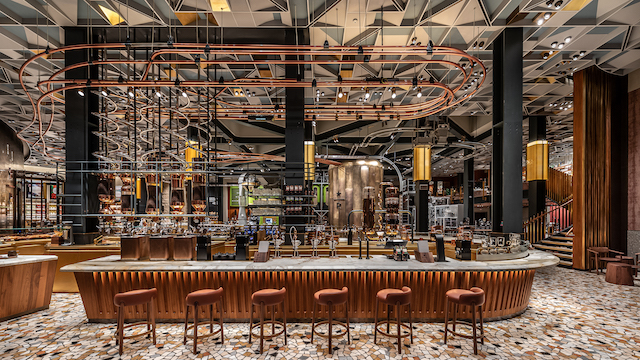
    Global coffee chain Starbucks today unveils a giant 35,000sqft Reserve Roastery outlet in Chicago, its largest store in the world to date.

    The five-story Starbucks Chicago store features a unique menu of Starbucks Reserve specialty coffee, boutique Milanese Princi bakery items, and an Arriviamo Bar featuring coffee cocktails Tributes to Chicago abound, including locally inspired craft cocktails, barrel aged coffee and collaborations with local artists and vendors.

    The Starbucks Chicago Reserve Roastery marks the brand’s sixth global Roastery and third in the US. Visitors will be able to see, hear and learn about the journey of coffee through intentional design, while enjoying a menu featuring unique beverages exclusive to this location. The Chicago Roastery joins locations in Seattle, Shanghai, Milan, New York and Tokyo.

    “Over the past five years, we have created the ultimate immersive experience around all-things-coffee in spectacular Starbucks Reserve Roasteries in flagship cities around the world,” said Starbucks CEO Kevin Johnson. “This week we are delighted to open our doors on the sixth global Roastery in an iconic building located on Chicago’s renowned Magnificent Mile.

    “These Roasteries amplify the Starbucks brand, serve as innovation hubs, and create experiences for millions of customers around the world.”

    “The design of the Chicago Roastery was inspired by the iconic Chicago landmark, and the city itself,” said Roastery design & concept for Starbucks VP Jill Enomoto. “We embraced the building’s natural light, married it with shades of classic Starbucks greens and intentionally wove in design features to encourage customer exploration and highlight the love and respect we have for coffee.”

    The Starbucks Chicago Reserve Roastery is a working coffee roastery where Starbucks roasters will be small-batch roasting Starbucks’ rarest single-origin coffees and blends called Starbucks Reserve. The coffee roasted in Chicago will be served exclusively to visitors of the location, available in handcrafted beverages as well as freshly scooped whole bean coffee.

    In a nod to the city’s vibrant history, artwork from local Chicago artists that tell stories and encourage customers to explore can be found throughout the building’s five floors. Customers can also purchase limited-edition merchandise from Chicago-based visual artist Mac Blackout to take home with them.

    There are three coffee bars at the Roastery, which in total offer seven brewing methods, including espresso, pour over, coffee press, siphon, Chemex, Clover and cold brewing:

    Starbucks Reserve Coffee Bar: Upon entering the Roastery, visitors can visit the Reserve coffee bar on the main level, where baristas are crafting classic espresso beverages such as cappuccino, latte and cortado.

    Experiential Coffee Bar: The third floor is home to the Experiential coffee bar which provides customers the opportunity to immerse in the art, science, and theatre of coffee.  It features elevated brew methods and pairings, as well as specialty Roastery creations and brew comparison flights.

    Barrel-Aged Coffee Bar: The barrel-aged coffee bar is found on the fourth floor and showcases a variety of spirit-free coffee beverages whose beans aged in barrels. Here, visitors can explore a menu of cocktail-inspired coffee creations exclusive to the Chicago Roastery, including the Smoked Cold Fashioned (a lightly sweetened whiskey barrel-aged cold brew with aromatic bitters, smoked tableside), Minted Cold Brew (whiskey barrel-aged cold brew, shaken with mint syrup and served over pebble ice) and more.

    On-demand nitrogen gelato

    The Starbucks Chicago Reserve Roastery is the only Starbucks location in the US to offer on-demand liquid nitrogen gelato. Designed to pair with Starbucks Reserve coffee, nitrogen gelato is mixed by hand, with every scoop made on the spot. Nitrogen gelato previously debuted at the Milan Roastery when it opened in September last year.

    Arriviamo cocktail bar

    The Chicago Roastery will feature a dedicated Arriviamo Bar, like the Starbucks Reserve Roastery locations in New York and Milan. Located on the fourth floor, the Arriviamo bar features traditional and unique cocktails, all designed by local mixologists Julia Momose, Annie Beebe-Tron and Rachel Miller. Some of the cocktails feature coffee and tea.
  • Starbucks Pickup store concept unveiled in NYC

    Starbucks Pickup store concept unveiled in NYC

    Starbucks Coffee has opened the first-ever Starbucks Pickup store in New York City’s Penn Plaza.

    The location uses the Mobile Order & Pay feature of the Starbucks mobile app as the primary ordering and payment method for customers. Customers who visit the location will place and pay for their orders using the app, selecting Penn Plaza as their location and building their order using the full Starbucks menu. After arriving at Penn Plaza, customers can track the progress of their order on a digital status board and pick up their beverage and food items directly from a Starbucks barista.

    In designing the Starbucks Pickup location, the company began with a prototype in the Tryer Centre, a center for innovation at the Starbucks Support Centre in Seattle. At Tryer, teams focused on operations, digital innovation and design worked with store partners (baristas) to create an experience that gave store partners the tools they needed to deliver the best customer experience.

    “Our customers who are on-the-go have told us that connection and convenience are important to them,” said Urban Markets for Starbucks VP Katie Young. “By designing a store specifically for the mobile order occasion, we can deliver both for these customers using the store’s design, location and the expertise of our baristas.”

    The concept is being evaluated for introduction in other markets where app-bas

  • Starbucks will accept Bitcoin from next year

    Starbucks will accept Bitcoin from next year

    Global coffee chain Starbucks is now on track to accept payments in the world’s best-known cryptocurrency, Bitcoin.

    The firm is partnering with Wall Street-listed Intercontinental Exchange (ICE) which will begin testing its consumer app Bakkt in Starbucks stores in the first half of next year in as many as 30,000 Starbucks outlets globally.

    Starbucks hinted it might embrace cryptocurrencies early last year when founder and former president Howard Schultz told an earnings call that he believed one or a few legitimate cryptocurrencies would emerge in the future.

    But at the time he said: “I don’t believe that bitcoin is going to be a currency today or in the future.”

    Starbucks will serve as Bakkt’s first merchant client after more than a year of reportedly slow setup due to delays in its futures exchange launch. The coffee chain began researching the Bakkt app with ICE in August last year.

    Mike Blandina, chief product officer with Bakkt said in a blog post that the companies had set up a strong team of payments engineers and is now nearing completion of the core payments and compliance platform.

    “We’re now focused on the development of the consumer app and merchant portal, as well as testing with our first launch partner, Starbucks, which we expect in the first half of next year.”

  • Contaminated water forces seven Vietnamese Starbucks stores to close

    Contaminated water forces seven Vietnamese Starbucks stores to close

    Coffee chain Starbucks has temporarily closed seven outlets in Hanoi, Vietnam as the city copes with serious oil contamination of its water supply.

    According to a customer service staff member, the Starbucks Hanoi stores are closed in areas where water comes from the Da River, including Cau Giay, Ha Dong and Nam Tu Liem districts. The coffee chain has not confirmed a reopening date.

    The contamination traces back to a truck seen dumping used oil into a mountain creek in Phu Minh Commune, Hoa Binh Province last week which has led to contaminated tap water for about 1 million Hanoi residents.

    While Starbucks is not alone in closing stores, other major coffee chains and eateries in the contaminated areas have arranged alternative sources of water and remain open.

    Local news media report that tap water has now passed safety tests, but Hanoi officials advise consumers against drinking or cooking with it.

    Meanwhile, there are widespread reports of bottled water prices soaring in the city as people rush to buy safe water. While tap water in Vietnam is not considered safe to drink it is generally acceptable to use it for cooking.

  • Starbucks closes seven Hanoi stores over contaminated water

    Starbucks closes seven Hanoi stores over contaminated water

    Coffee shop giant Starbucks has temporarily closed seven stores in Hanoi’s southwestern districts over the ongoing oil contamination crisis.

    A customer service agent said Friday that the closed stores are located in Cau Giay, Ha Dong and Nam Tu Liem districts, all of which use water that comes from the Da River in Hoa Binh Province. No reopening date has been set.

    Other major coffee chains in the southwestern districts of Hanoi have remained open, with their managers saying, without elaborating, that they are getting clean water from a supplier.

    Like Starbucks, many restaurants and eateries in Hanoi are struggling to get clean water.

    Nghia, owner of a pho noodle stall in Hoang Mai District, said that he has spent hundreds of thousands of dong (VND100,000 = $4.3) on bottled water this week because the tap water smelled bad and could not be used for cooking.

    A buffalo-meat restaurant chain with outlets in affected areas mobilizes staff to work till midnight Wednesday to stock bottled water.

    In some areas, bottled water prices have increased 2-3 times due to high demand. The Vietnam Directorate of Market Surveillance has asked Hanoi authorities to stop merchants from overpricing bottled water.

    On Tuesday last week, a 2.5-ton truck was seen dumping used oil into a mountain creek in Phu Minh Commune, Hoa Binh Province. The oil spread and contaminated the tap water for about one million Hanoi residents.

    Tests of the smelly water by authorities later found that the level of styrene, an organic compound that is classified as “probably” carcinogenic, was 1.3-3.6 times higher than normal.

    On Thursday, Hanoi officials said the tap water samples collected Monday this year passed safety tests, but continued to advise against drinking or cooking with it.

  • Starbucks Launches Bar Mixato in Starbucks Reserve Roastery Shanghai

    Starbucks Launches Bar Mixato in Starbucks Reserve Roastery Shanghai

    Starbucks today announced the new addition of Bar Mixato to the Starbucks Reserve Roastery in Shanghai, further elevating the multi-sensory experience of China’s coffee wonderland. Starbucks unique interpretation of the modern café and bar experience, Bar Mixato brings together the craftsmanship of specialty coffee and the artistry of cocktail concoctions to offer a novel nighttime third-place experience that will enthrall coffee lovers and bar-goers alike. It features a full bar menu, which includes the global debut of 11 innovative coffee- and tea-based cocktails specially created and available only at the Shanghai Roastery.

    “The Roastery has been at the forefront of innovation since its opening two years ago, epitomizing Starbucks relentless efforts to create imaginative new experiences that exceed customers’ expectations,” said Belinda Wong, chairman and chief executive officer, Starbucks China. “The launch of Bar Mixato elevates the nighttime third-place experience with the exquisite fusion of coffee and cocktail art, to delight customers with unique Starbucks Experiences throughout the day. As Starbucks Innovation Lab in China, we will continue to leverage the Starbucks Reserve Roastery to pilot and gradually scale new products and offerings that our Chinese customers love.”

    Bar Mixato extends Starbucks passion for coffee to the theater of cocktail mixology, conjuring new creative expressions of coffee, while adding a novel dimension to cocktails to meet the discerning tastes and growing thirst for unique experiences among consumers in China. Customers at the Starbucks Reserve Roastery may now enjoy Starbucks ReserveTM Coffee expertly handcrafted by Starbucks Coffee Masters by day, and connect over coffee- and tea-inspired cocktails mixed with precision by Starbucks Mixologists by night. Altogether, Starbucks has launched seven Bar Mixatos at Starbucks Reserve stores across Shanghai, Beijing, Tianjin and Shenzhen since the concept was first introduced in China in May.

    Located on the second floor of the Starbucks Reserve Roastery, the bar was personally designed by Starbucks global design officer, Liz Muller. It is helmed by Timothee Becqueriaux, winner of the globally prestigious 2019 Chivas Bartender Competition (China region), and his team of more than 20 talented Mixologists, who are not only experts in cocktail mixing, but also coffee and tea aficionados. From the use of ingredients to mixing techniques, they have reinterpreted traditional cocktails to create drinks with unique taste and aesthetic profiles, providing an unprecedented sensory experience for customers.

    Headlining the comprehensive bar menu are 11 unique coffee- and tea-based cocktails specially created by Starbucks China in collaboration with leading bartenders in the industry. Classic cocktails, Italian aperitivo, wine, draft beer and mocktails are also available, as is a thoughtfully curated selection of complimentary food choices that customers can pair with their favorite cocktails. The menu will be refreshed quarterly based on the flavors of new Starbucks Reserve coffees.

    Since opening in December 2017, the Roastery has played a leading role in Starbucks retail innovation, incubating new offerings such as Modern Mixology, a new beverage category boasting natural fruit ingredients. With the addition of Bar Mixato, the Roastery will expand to serve as the hub for Starbucks cocktail innovation, before launching to other Bar Mixatos locations nationwide.

  • Starbucks teams up with Alibaba in ‘Genie-us’ delivery service

    Starbucks teams up with Alibaba in ‘Genie-us’ delivery service

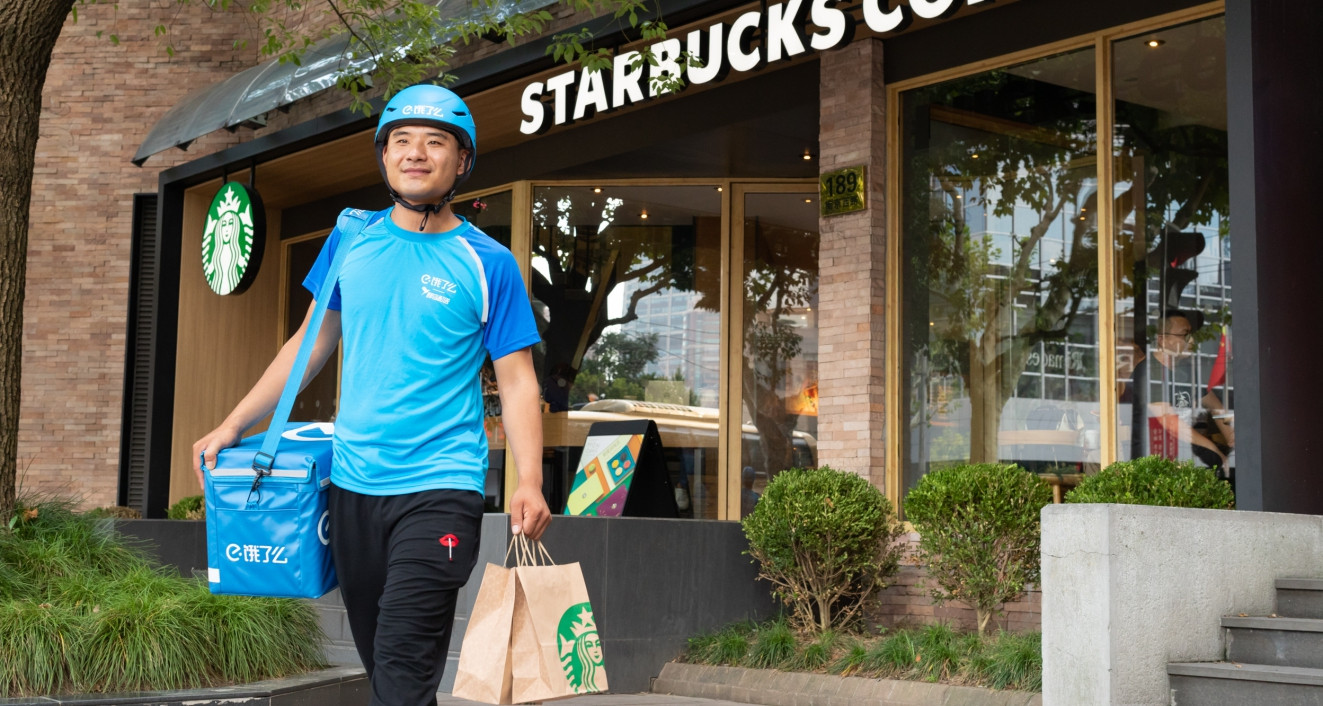
    Starbucks and Alibaba have teamed up to allow consumers in China to order coffee using their Tmall Genie smart speaker.

    From the comfort of their sofa, those seeking a hot latte or an iced tea can simply call out “‘Tmall Genie: I want Starbucks delivered’. And within 30 minutes of placing a verbal order for food and beverages, it will arrive, thanks to Alibaba’s Tmall.

    They can also track the delivery status of their orders in real-time, as well as connect membership accounts to the smart speaker to earn Star rewards with every purchase, which add up to free food and drinks.

    Soon, members will also receive personalised recommendations based on their previous orders and trending items from Starbucks’ seasonal menu, says Miffy Chen, GM of Alibaba A.I. Labs, the artificial-intelligence research unit behind the Tmall Genie.

    She said the collaboration helps both companies meet the needs of China’s digitally savvy consumers, who are increasingly expecting seamless, on-demand deliveries for everything from ordering groceries to food and medicine.

    Molly Liu, VP and GM of the digital ventures division at Starbucks China, said the new smart speaker marks a new era of digital customer engagement for Starbucks and will help “[elevate] their connection with customers to new heights.”

    “We are focused on ensuring that Starbucks voice-ordering is truly personal, and we look forward to offering our customers more convenient moments and new opportunities to engage with Starbucks on a single integrated platform as they move throughout the day,” Liu said.

    As part of the partnership between Starbucks and Alibaba, the Seattle-based coffee chain has also exclusively debuted a new Starbucks-themed Tmall Genie through its flagship store on Tmall, Alibaba’s B2C e-commerce site. The smart speaker, which comes in the brand’s classic shade of green, features its teddy-bear mascot “Bearista” behind a DJ turntable. Users can play music from a curated playlist by telling the Tmall Genie to “play some Starbucks music,” a feature powered by Alibaba’s music-streaming app Xiami.

    About 3000 Starbucks Genies, priced at RMB 199 (US$28) each, sold out instantly during a livestream hosted by popular Taobao livestreamer Viya Huang on Monday. Huang’s five-hour stream had attracted more than 829 million views.

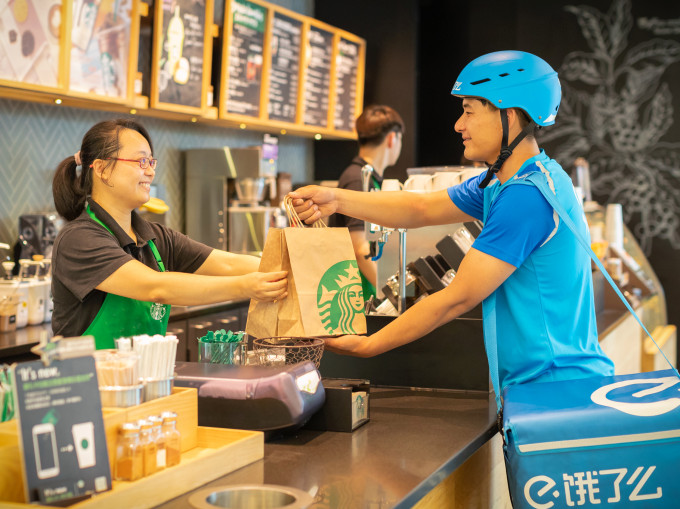
    The new Tmall Genie feature comes as Starbucks and Alibaba celebrates the one-year anniversary of their strategic partnership to transform the coffee experience in China. Starbucks has since tapped Alibaba’s New Retail infrastructure, such as partnering with Ele.me to expand its delivery coverage or opening back-of-room “Star Kitchens” inside Freshippo, which leverage the supermarket chain’s fulfillment capabilities to enhance its delivery speed and reach.

    In 2017, Starbucks’s cafes began accepting mobile wallet Alipay for payment. In December of the same year, Starbucks opened its first roastery outside of its home market in Shanghai, which featured mobile technology and augmented-reality experiences designed by Alibaba.

    While China’s per-capita demand for coffee is still a fraction of US consumption – an average mainland Chinese consumer drinks three cups a year versus 363 cups in the US – total consumption grew at an average annual rate of 16 per cent in the last decade, significantly outpacing the world average of 2 per cent, according to the International Coffee Organization.

  • Restaurant Brands posts lift in 2Q sales despite Starbucks exit

    Restaurant Brands posts lift in 2Q sales despite Starbucks exit

    Restaurant Brands posted a lift in quarterly sales largely due to the success of its 97 KFC stores in the country.

    The fast food retailer posted total sales of $259.7 million for the quarter to September 9, a 3.5 per cent increase from the previous corresponding period’s $8.8 million, despite its exit from Starbucks in October last year.

    Restaurant Brand’s New Zealand arm, which accounts for more than half of its revenue, posted a 1.5 per cent rise in operation sales to $134.8 million and a 5.4 per cent increase on a same store basis.

    Its operating divisions in Australia and Hawaii also showed strong same-store sales growth with sales increases of 5.8 per cent and 9.6 per cent respectively.

    Local KFC outlets posted an 8.8 per cent lift in sales to $113.5 million, more than making up for the group’s exit from Starbucks, which contributed $7.3 million.

    Australian KFC outlets produced sales of $62.0 million, up 5.8 per cent on both a total basis and a same store basis. Hawaiian operations sales were $62.9 million, up 6.4 per cent on a total basis and 9.6 per cent on a same store basis.

    There was 5.9 per cent decline in second quarter sales for Restaurant Brands-owned Pizza Hut stores to $10.6 million from the same period last year. Same store sales for the quarter decreased by 4.3 per cent.

    Total Carl’s Jr. sales for the second quarter were $10.7 million, an increase of 8.3 per cent on the equivalent period last year following the introduction of delivery via the UberEats platform. Same store sales for the quarter were up by 8.2 per cent.

    Total Taco Bell sales were up $38.1 million on the back of several successful promotions, an 11.1 per cent increase.

    Pizza Hut Hawaii sales were flat, $24.7 million, compared to the prior year.

    The retailer’s year to date sales rose 2.7 per cent to $442.6 million compared to the previous corresponding period.

    Company store numbers were down by 20 on the equivalent period last year to 285, primarily from the sale of the 22 Starbucks Coffee stores.

  • Starbucks Japan lets customers pay with a pen

    Starbucks Japan lets customers pay with a pen

    Starbucks Japan has launched a new pen-shaped digital wallet called “Starbucks Touch The Pen” allowing customers to buy their coffee without taking out their wallets.

    The pen’s design resembles a drip coffee machine and comes in three colours – black, silver, and white. The new cashless-payment device is run by NFC (near-field communications) technology through FeliCa chip and contains “coffee brown” gel ink, meaning it works as a digital wallet and has the same function as a normal pen.

    Starbucks’ Touch The Pen will cost ¥4000 (US$37) including ¥1000 preloaded credit when it is available to purchase online next week.

    Before The Pen, the cafe chain had three other digital payment models including The Drip (a key fob), The Cup (a phone case) and The Hug (a keyring handbag).

  • Starbucks and Alibaba Launch Voice Ordering and Delivery through Tmall Genie

    Starbucks and Alibaba Launch Voice Ordering and Delivery through Tmall Genie

    Starbucks is taking another step toward evolving the digital customer experience for customers in China by launching voice ordering and delivery capabilities within Alibaba’s smart speaker, Tmall Genie. Customers can now order their favorite Starbucks beverages and food simply by using their voice for delivery within 30-minutes. Leveraging Alibaba’s on-demand food delivery platform, Ele.me, the voice ordering capabilities for Starbucks, further extend the customer experience within Starbucks digital ecosystem.

    The launch of the new service marks the one-year anniversary of Starbucks and Alibaba’s strategic partnership which advances the New Retail infrastructure and digital power in China – one of the fastest-growing markets in the world for coffee consumption. The announcement also builds on several significant collaborations between the two companies that enable a seamless Starbucks Experience for Chinese customers, such as establishing back-of-house kitchens, Star Kitchens, within Alibaba’s Freshippo supermarkets in China.

    “We are thrilled to provide our cutting-edge Artificial Intelligence technology through Tmall Genie to serve Starbucks digitally-savvy customers in China,” said Miffy Chen, general manager at Alibaba A.I. Labs which leads the development of Tmall Genie. “Earlier this year, we launched food order and delivery service through Ele.me in response to our users’ needs for on-demand local services. We’re excited to introduce an even more diverse and enriched experience on our platform through Starbucks voice ordering and provide a direct benefit to Chinese consumers within their daily routine.”

    “The Starbucks feature through Alibaba’s Tmall Genie ushers in a new era of digital customer engagement for Starbucks, leveraging ground-breaking digital technology to create an unprecedented experience that elevates our connection with customers to new heights,” said Molly Liu, vice president and general manager, Digital Ventures, Starbucks China. “We are focused on ensuring that Starbucks voice ordering is truly personal, and we look forward to offering our customers more convenient moments and new opportunities to engage with Starbucks on a single integrated platform as they move throughout the day.”

    Through Alibaba’s Tmall Genie, customers place an order using their voice and can track their order in real-time within the 30-minute delivery timeframe.

    Starbucks® Rewards members also can earn Stars and receive membership updates, including benefits, on the Tmall Genie. Soon, members will be able to receive personalized recommendations when using voice commands to place orders that are tailored to previous order preferences and popular items from Starbucks seasonal menu. As another added benefit, Starbucks fans in China can also listen to the latest Starbucks in-store playlists through Alibaba’s music streaming app, Xiami Music.

  • Starbucks Reserve Riverside 66 Tianjin opens doors

    Starbucks Reserve Riverside 66 Tianjin opens doors

    Starbucks opened a flagship Reserve store in Tianjin, China, today which was built inside a Renaissance-era heritage building dating back to 1921.

    The Starbucks Reserve Riverside 66 Tianjin flagship store combines history with an entirely modern ‘third-place experience’ for the brand’s customers.

    “Over the past 20 years in China, Starbucks has constantly pushed to innovate and reimagine the third-place experience, to bring people and communities closer together,” said Leo Tsoi, senior VP, COO, and president at Starbucks China – retail. “We are immensely proud and privileged to preserve a revered piece of history that binds together four generations of Tianjin residents, and to share this rich cultural inheritance with more people, passing it on to future generations.”

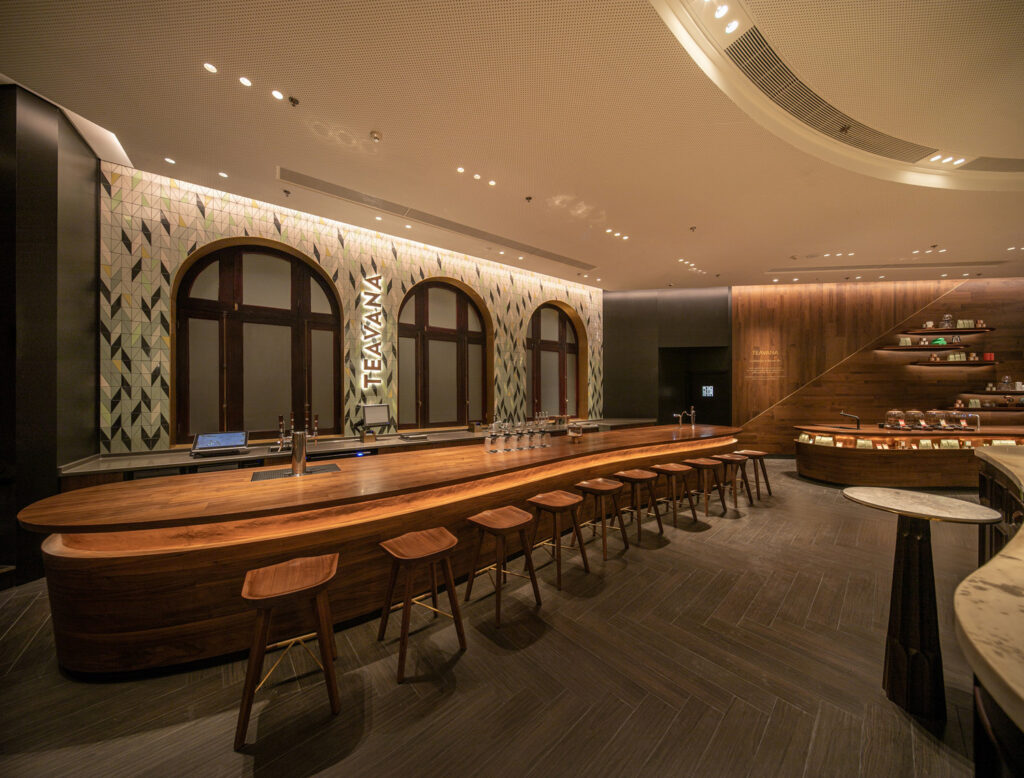
    The new store marks the first in the city to feature a Starbucks Bar Mixato and Starbucks Teavana tea bar, in addition to its Starbucks Reserve offer.

    The building, located on the city’s main commercial street, was designed by Shen Liyuan, who was among the first Chinese architects to study overseas. It housed the Zhejiang Xinye Bank until the early 1950s, a symbol of the city’s economic prosperity and development.

    In the 1980s, the early days of China’s economic transformation, it reopened as the high-end Yongzheng Tailor Shop before being converted into the Xinye Foreign Trade Mall. The location was officially designated as a city heritage site in 1997 and has been vacant for the past 20 years.

    Working with local historic preservation experts, it took Starbucks three years to navigate technical complexities and realize the vision for a modern restaurant space in a preserved building.

    Features of the building, such as the majestic Greek-style exterior facade, glass dome, imported marble columns, and marble carvings, have all been preserved, along with the original bank counters. The architects specified bronze tubes to avoid using nails in the columns when the lighting was installed. Lighting and air conditioning systems were embedded into the glass dome.

    “Beyond preserving the century-old architecture in its fullest form, the Starbucks flagship store has also made creative use of its unique features,” said Luo Shuwei, historian and senior researcher from the Tianjin Academy of Social Sciences. “Starbucks partners have shown great passion and dedication to ensure that every design detail is in harmony with the original architectural style, to create a warm and welcoming ambiance that is also filled with history.”

  • Starbucks Korea profit up with 28 percent

    Starbucks Korea profit up with 28 percent

    Starbucks Korea has reported a 28-per-cent year-on-year jump in its operating profit in the first half of the year amid rising appetite for premium coffee, discount store chain E-Mart said Tuesday.

    From January to June, the US coffee giant posted an operating profit of 74.7 billion won (US$61 million) in Korea, up from 58.3 billion won in the year-ago period, according to E-Mart’s first-half earnings results.

    E-Mart, the country’s biggest discount store chain operated by Shinsegae Group, holds a 50-per-cent stake in Starbucks Korea, with the other 50 per cent controlled by Starbucks US.

    South Korea is one of the fastest-growing premium coffee markets, and Starbucks expects further growth in this country.

    Sales also jumped 25 per cent to 887.7 billion won in the first half from 709 billion won a year earlier, the data showed. Net earnings were not available.

    Starbucks, which entered Korea in 1999, currently operates 1308 stores, including 50 upscale Starbucks Reserve outlets, in Asia’s fourth-largest economy.

    Starbucks Korea earned 1.5 trillion won in sales last year, up 20 per cent from 1.28 trillion won a year earlier.

  • Starbucks India Speeding up store rollouts

    Starbucks India Speeding up store rollouts

    Starbucks India plans to ramp up its store rollout. The global coffee chain opened 25 new stores in the last financial year and 30 new stores this year with local partner Tata Global Beverages – but plans to open a far greater number of new stores in the near future, according to Tata Starbucks CEO Navin Gurnaney, with an investment of more than US$6.4 – 7.1 million.

    “We spend anywhere between $213,000 and $284,000 to build a store,” said Gurnaney in an interview with the Business Standard. “We would not be being aggressive with our store growth if we didn’t see potential. We think the market is very strong. Excellence is always well received and we believe we have an excellent experience, partners and products. We are extremely bullish on India. India is one of the top five growing markets for Starbucks internationally.”

    Starbucks India stores serve an average of 270,000 customers per week, with 90 percent of their chosen beverages being coffee.

    “People don’t come to us just to buy a sandwich,” added Gurnaney. “It is always an accompaniment with a beverage. The coffee category has been growing with all groups of people and the millennials are certainly gravitating towards coffee. But not just millennials, it is also the 30 years something upwardly mobile, better traveled and better-educated people which are growing in India.”

    While there has been some speculation that Starbucks Tata is considering an acquisition of a rival brand, Gurnaney insisted that Starbucks India outlook is extremely optimistic, and that future plans are to be “thoughtfully aggressive”.

    Starbucks entered India with its first store in Mumbai launching in 2012.

  • Nestle starts selling Starbucks-branded coffee in China

    Nestle starts selling Starbucks-branded coffee in China

    FMCG giant Nestle started selling Starbucks-branded coffee in Mainland China today, seeking to tap growth in a market where it says coffee consumption per capita remains low compared to global standards.

    Nestle last year paid US$7.15 billion for exclusive rights to sell the US chain’s coffees and teas globally and began selling Starbucks-labelled products in Europe, Asia and Latin America in February.

    The world’s largest food company will start selling 21 Starbucks-branded capsule and instant-coffee products on Chinese e-commerce platforms like Alibaba’s Tmall and JD, as well as to offices and hotels in tier-1 cities, both companies said.

    “We believe China is the most exciting market in general but especially for coffee because… per capita cup consumption is quite low as compared to Asia,” said Rashid Aleem Qureshi, Nestle’s CEO for the Greater China region.

    “Right now the overall soluble coffee [market] in China is growing between 3 to 5 percent a year and we believe that by bringing this exciting new business opportunity we should be able to grow faster than that,” he said, referring to a category that includes capsule and instant coffee.

    Nestle’s move comes as the Swiss company experienced slower first-half growth in China, its second-largest market, where other categories like mainstream baby foods have struggled compared to pricier options.

    China’s per capita coffee consumption is about six cups a year, compared to 400 in Japan and 300 in South Korea, Nestle said.

    The partnership with Starbucks would help Nestle add a premium coffee option to the range of products it already sells in China, such as Nescafe instant coffee range and Nespresso capsule coffees, Qureshi said.

    Starbucks China CEO Belinda Wong said the Nestle deal would open two new avenues to sell its products in China, where it has been investing heavily in its store network and delivery amid tougher competition from local startups.