Tag: starbucks

  • Starbucks China sales and transaction volume grows

    Starbucks China sales and transaction volume grows

    Starbucks China sales growth out-paced the rest of Asia in the third quarter, up 6 per cent on a same-store basis and 2 per cent by transaction volume.

    But the coffee giant appears to be getting the most traction from its home market, where sales grew 7 per cent in the 13 weeks to June 30, the average ticket price was up by 4 per cent and the number of transactions rose 3 per cent.

    “Starbucks continues to be focused and disciplined in the execution of our three key strategic priorities that we established last year: accelerating growth in the US and China, expanding the global reach of the Starbucks brand through our Global Coffee Alliance with Nestle, and increasing shareholder returns,” said Kevin Johnson, president and CEO, referring to the Growth at Scale program.

    The company opened 442 net new stores in the quarter, with nearly one third of those in China and 48 per cent in other international markets outside the US. It ended the period with 30,626 stores worldwide, 7 per cent more than a year earlier.

    Johnson said Starbucks delivered strong operating performance demonstrating the success of the Growth at Scale agenda.

    “Our two targeted long-term growth markets, the US and China, performed extremely well across a number of measures as a result of our focus on enhancing the customer experience, driving new beverage innovation and accelerating the expansion of our digital customer relationships. Given the strong momentum across our business, we are raising our full-year financial outlook.

    “With our efforts to streamline the company and elevate the Starbucks brand, we are positioning the company to deliver predictable and sustainable operating results while building an enduring company that creates meaningful long-term value for Starbucks shareholders,” he concluded.

    Global comparable store sales increased 6 per cent, driven by a 3 per cent increase in average ticket and a 3 per cent increase in comparable transactions.
  • Teavana Bar and Kiosk open in Hong Kong this week

    Teavana Bar and Kiosk open in Hong Kong this week

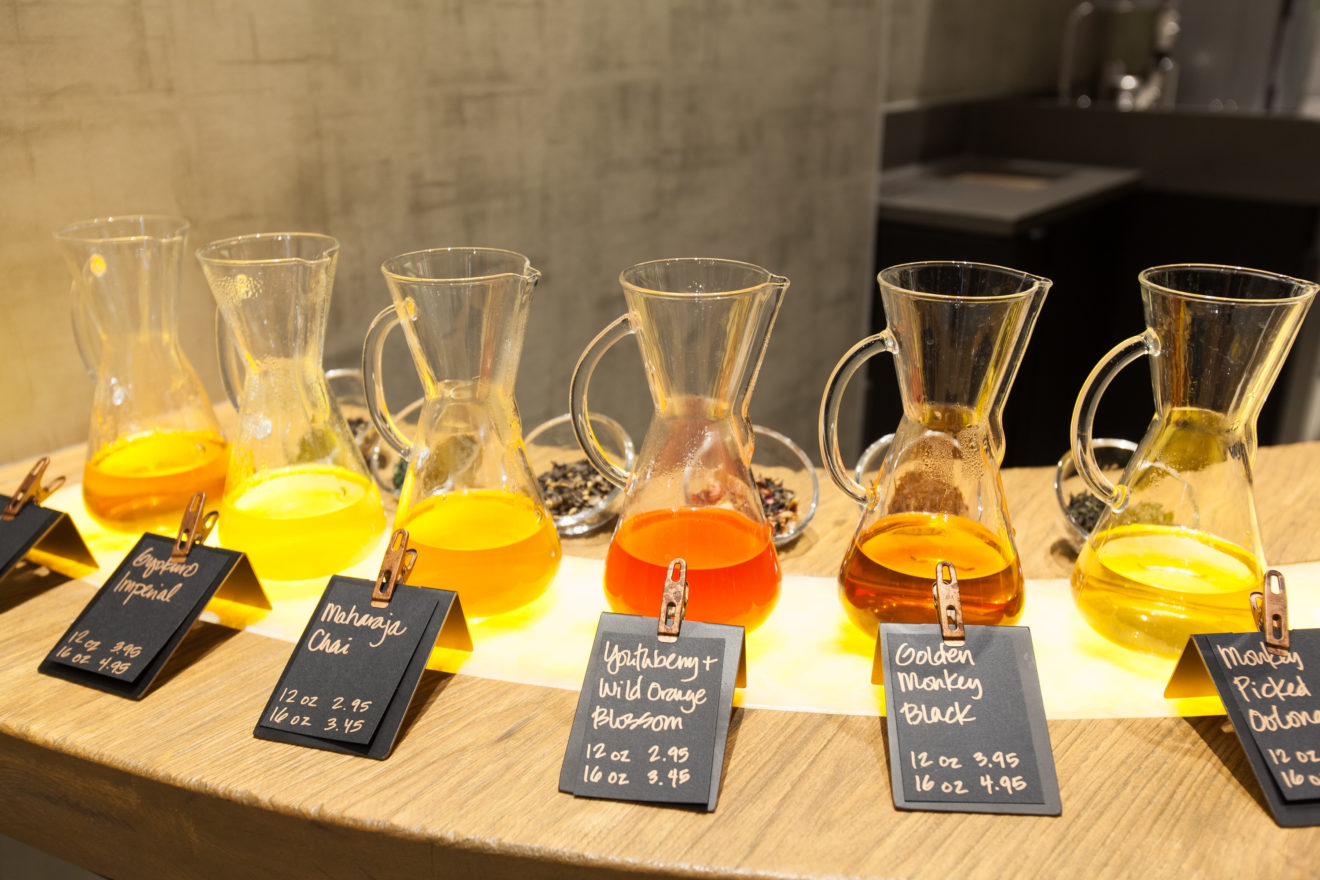
    Three years after making its Hong Kong debut, Starbucks’ Teavana brand is opening two new outlets this week.

    A Teavana Bar opens today inside Starbucks’ revamped store at APM in Kwun Tong, the brand’s first bar in Kowloon.

    The Kwun Tong bar features an open design allowing customers to watch their beverages being made by employees.

    The Teavana Bar is lined with white 3D tiles and copper accents that trace the outline of hibiscus flowers, coffee and tea leaves and botanicals, shining through an arched opening in a terracotta-toned facade.

    Meanwhile, Hong Kong’s first Teavana Kiosk opens at Starbucks’ ISquare outlet tomorrow (July 25). The new retail model offers a grab-and-go service. Designed with a grey terrazzo bar adorned with rose gold accent, set against a pink wall, the decor is aimed at shifting customers “out of work mode” even if only for a quick break.

  • Starbucks buys stake in retail-technology startup Brightloom

    Starbucks buys stake in retail-technology startup Brightloom

    Starbucks Coffee Company has announced a deal with Brightloom (formerly Eatsa), a San Francisco and Seattle tech company that is working to create a best-in-class end-to-end digital customer experience platform for the restaurant industry.

    Starbucks is granting Brightloom a software license to select components of Starbucks’ proprietary digital flywheel software. In connection with the licensing agreement, Starbucks will take an equity stake in Brightloom and receive a seat on the company’s board of directors.

    Brightloom will combine its existing technology assets with software licensed from Starbucks’ digital flywheel. The combination will lead to the development of a cloud-based software solution for the restaurant industry that will connect customers to their favorite restaurant brands – particularly valuable given the recent hypergrowth of mobile ordering and third-party delivery platforms.

    Brightloom plans on making the software solutions available to Starbucks’ global license partners and will open this platform up to the entire restaurant industry of merchants. Starbucks will continue to drive software development of the Starbucks digital flywheel for all its company-operated markets.

    “We’re delighted to partner with Brightloom and drive a broad innovation agenda that extends relevant customer experiences from brick-and-mortar to a digital-mobile customer connection,” said Starbucks CEO Kevin Johnson.

    “At Starbucks, we have experienced first-hand the power that comes through digital customer connections that are relevant to the customer. The results we’ve seen in customer loyalty and frequency within our digital ecosystem speak for themselves, and we’re excited to apply these innovations toward an industry solution that elevates the customer experience across the restaurant industry.”

  • Starbucks China launches world-first Starbucks Now store

    Starbucks China launches world-first Starbucks Now store

    Starbucks China has opened its first Starbucks Now store – an express retail experience that integrates Starbucks physical and digital customer touch points.

    Centered in Beijing’s financial district, the Starbucks Now store is the company’s first express-retail format location. The service combines the signature Starbucks cafe environment with mobile order and pay and Starbucks Delivers customer experiences.

    “The Starbucks Now store is a testament to our unwavering commitment to delivering innovative customer experiences through new retail formats,” said Starbucks China Retail president and COO Leo Tsoi. “This new retail format and design approach provides us with a platform to offer customers a fast and convenient retail experience to suit their on-the-go lifestyle.”

    Customers entering the store are greeted by a Starbucks barista at an elevated concierge counter to assist with ordering or order pickup. They can choose from a menu of handcrafted beverage options tailored for the on-the-go customer along with an assortment of popular food items. Limited seating is available for customers who choose to stay and relax with their favorite food and beverages in the store.

    For delivery riders, a dedicated area for Starbucks Delivers orders enables fast pickup supported by baristas. Fulfilled Starbucks Now and Starbucks Delivers online orders will be placed in a secure in-wall system with a designated pickup portal associated with each order.

    The store will also have the ability to serve as a centralised dispatch centre for delivery orders within a certain radius, so Starbucks baristas at neighbouring cafes can focus on delivering service to in-store customers at those locations. During peak times, Starbucks Delivers beverage orders will be prepared by baristas from a central kitchen that is part of the Starbucks Now store.

    The company plans to open new Starbucks Now stores across high-traffic areas including business and transportation hubs as well as to new cities in China.

  • Starbucks China Reshuffles Management

    Starbucks China Reshuffles Management

    Starbucks China management has been restructured as the company gears up for a more intense focus on its digital business. From June 1, CEO Belinda Wong, becomes chairman and CEO of Starbucks China.

    Two distinct business units will be created – Starbucks Retail and Digital Ventures – the heads of which will report directly to the newly created office of the chairman and CEO, Starbucks China.

    Leo Tsoi has been appointed SVP, COO & president of Starbucks Retail and Molly Liu has been appointed VP & GM of Digital Ventures.

    Wong will oversee new business development in China and focus on long-term sustainable growth.

    “The new team structure is for the next phase of growth and managing resources to balance the short-term needs of the business and the long-term strategic priorities in China,” said Starbucks group president, international, channel development and global coffee and tea, John Culver.

    “While paying more attention to customers and partners, we will accelerate the pace of innovation to capture the new opportunities in the third-place experience and digital innovation,” he said.

    Wong has headed the China business since 2011 and under her leadership, the company has grown at a rate faster than any other of the brand’s global markets. Among her achievements were setting up the New Retail partnership with Alibaba, integrating the East China business in 2017 and creating the “Coffee Wonderland” experience with the Starbucks Reserve Roastery in Shanghai.

    After 20 years in China, the company has grown to 3800 stores in 165 cities, serving 9 million customers every week.

    “For 20 years, we have worked steadily to achieve a long-term and healthy development in China,” said Wong. “For the next chapter of growth, we will stay true to our mission, values and guiding principles. About 53,000 Starbucks partners in China will work together to continue our innovation ventures and bring our passion of coffee to our customers to enhance the third-place experience.

    “We will also support our partners in their professional development to realise their full potential and give back to the community where we live in. ‘In China, for China’, we will continue to fulfill our commitment in developing a long-term and healthy development in China, making Starbucks as a faster, stronger and more loving company,” she said.

  • Starbucks launches Starbucks Now cashless in China

    Starbucks launches Starbucks Now cashless in China

    Starbucks China has launched its new mobile order & pay experience Starbucks Now to 300 selected stores in Beijing and Shanghai.

    The firm is planning to introduce this feature across China over the course of the next year.

    Starbucks Now allows customers to place an order in advance of their visit and pick up their beverage and food at a Starbucks store. The new feature is exclusively available to the cafe chain’s loyalty program members through the Starbucks China mobile app.

    “Starbucks Now represents a significant opportunity for Starbucks China to drive new innovative customer experiences,” said Starbucks China CEO Belinda Wong.

    “This builds on the latest of several digital initiatives in China, including Starbucks Delivers and locally relevant gifting and e-commerce experiences. We are excited to offer this special mobile order & pay service exclusively to our Starbucks Rewards members to provide convenience and speed to suit their on-the-go lifestyle and seamlessly integrate Starbucks into their daily lives.”

    The rollout of Starbucks Now builds on the digital capabilities and infrastructure of the recently introduced Starbucks Delivers program last year. Starbucks Now will provide customers in China a unique and convenient way to order, pay and pick up their favourite Starbucks beverage and food item without the wait.

    The service allows customers to choose a store location based on their GPS location to browse, customise a beverage, select a food offering, view order time, and pay – wherever they may be. Following confirmation of the order, baristas prepare each beverage and ensure the order is ready to hand to the customer when they arrive at the store.

    Starbucks Now is curated to enable customisation as part of the mobile order experience. Through the feature, customers can modify the beverage size, select the number of espresso shots and select their dairy preferences. In a first-ever mobile order feature for Starbucks, beverage options have been expanded to include: type of espresso shot, amount of whipped cream, and room for milk.

  • Dairy Farm adds Starbucks Thailand

    Dairy Farm adds Starbucks Thailand

    Hong Kong operator to partner with local investor, almost doubling its store network overnight.

    Dairy Farm subsidiary Maxim’s is about to add Thailand to the list of markets it operates Starbucks cafes.

    Maxim’s has partnered with a local subsidiary of Singapore-headquartered Fraser & Neave (F&N) to acquire Starbucks Thailand Ltd from the US parent company. F&N, listed in Singapore, is controlled by Thai Beverages, in turn controlled by Thai billionaire Charoen Sirivadhanabhakdi.

    Under the joint venture, Maxim’s Caterers will oversee the retail operations and new store development in Thailand, with F&N apparently taking more of an investment role and fulfilling local company ownership requirements under Thai laws.

    Financial details of the sale were not disclosed, but one US media channel, citing confidential sources, reported the deal was worth about US$500 million.

    “The acquisition allows F&N to leverage Maxim’s long-standing partnership with Starbucks and its extensive experience in running Starbucks stores in multiple markets as well as other food and beverage retail outlets, to grow Starbucks Thailand’s fast-expanding footprint of 372 Starbucks stores,” said F&N in a statement.

    Maxims, through its subsidiary Coffee Concepts, already operates more than 400 Starbucks stores in Hong Kong, Singapore, Vietnam, Macau and Cambodia.

    “This is a significant move for our company,” said John Culver, group president, Starbucks international, channel development and global coffee and tea.

    “We are pleased to transition the Thailand business to Maxim’s Caterers Limited and F&N Retail Connection Co, with their focus on accelerating new store development to realise the full potential of this important market.”

    “We look forward to leveraging our expertise and deep understanding of the Starbucks culture and brand to build on the unparalleled service, craft and passion of our Thai partners (employees) which will propel the business for the future,” said Michael Wu, chairman and MDof Maxim’s Caterers Limited. “We look forward to continuing to deliver the unique Starbucks Experience to Thai customers as we grow.”

    “This acquisition provides an interesting strategic opportunity for F&N to enter and participate in the fast-growing premium retail coffee market in Thailand, one of F&N’s three significant core markets,” said Koh Poh Tiong, F&N’s chairman. “We believe that adding Starbucks Thailand, with its store footprint and its position as a well-recognised coffee retailer in Thailand, will strengthen our competencies in the on-premise sector and elevate our capabilities in directly engaging consumers, in the long term,” he said.

    Starbucks Thailand was launched in 1998.

  • Starbucks China opens First Signing Coffee Store in Guangdong

    Starbucks China opens First Signing Coffee Store in Guangdong

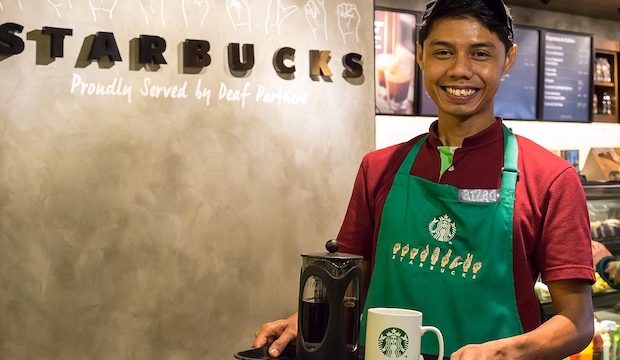
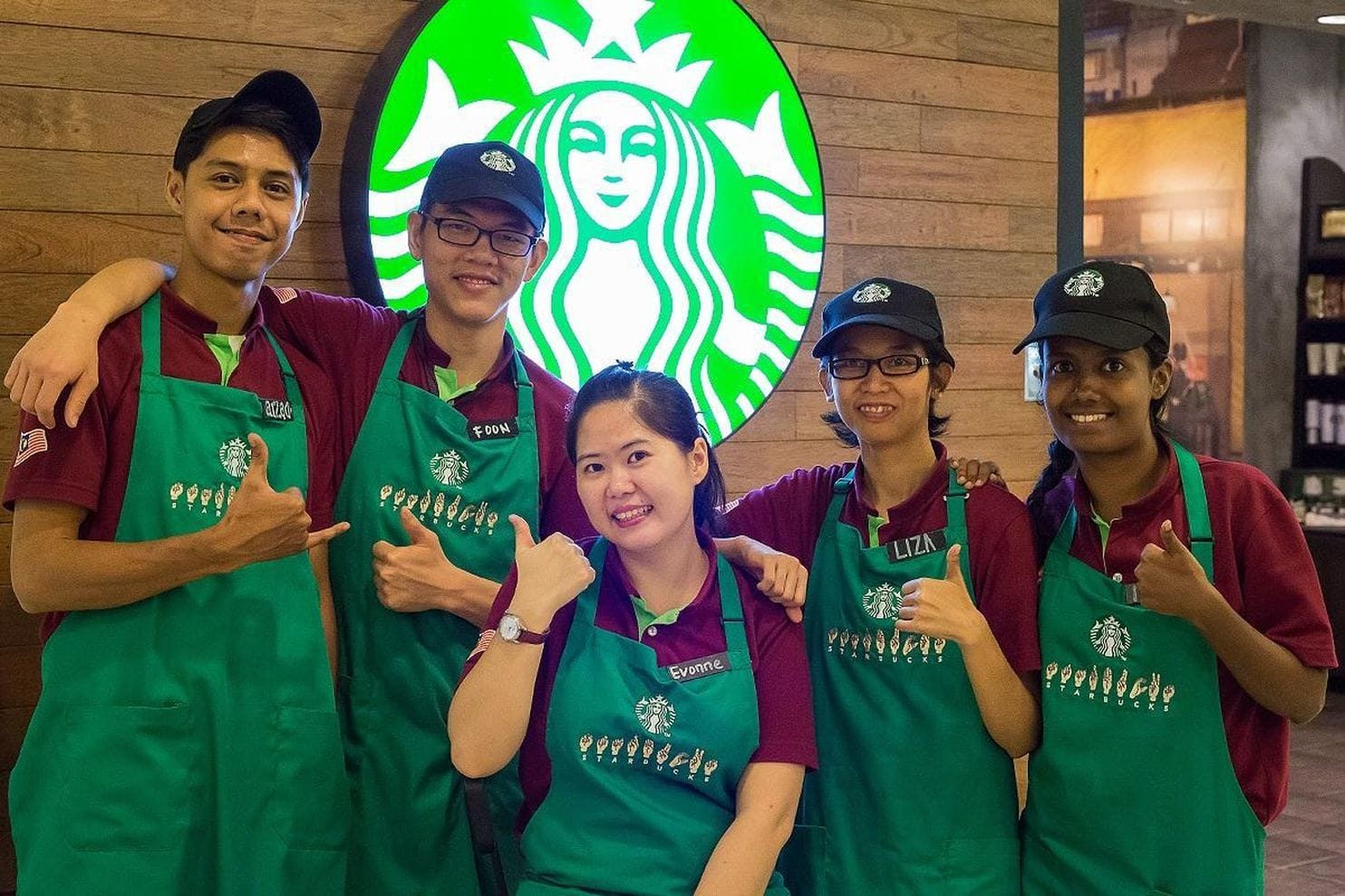
    Starbucks China has opened its first Signing Store, staffed entirely by deaf or hearing-impaired people.

    The store is in Guangzhou, in Guangdong Province which is home to about 4 percent of China’s deaf population. It is Starbucks’ third Signing Store, following outlets in Washington DC and Malaysia.

    Sign language symbols are printed on umbrellas in front of the store, and there are indicators throughout the store. Deaf baristas will wear aprons with the word “Starbucks” embroidered in sign language.

    The store is equipped with a customized ordering system. Customers and partners will be able to communicate using notepads and two-way digital displays. For customers new to sign language, there will be a dedicated area for customers to write down their orders on an electronic board and wireless vibrating pagers will notify customers when their orders are ready.

    The cafe also features exclusive artwork and unique merchandise designed by deaf artists.

    The initiative aims to offer employment and career-advancement opportunities for the deaf and hard-of-hearing community as well as “a welcoming hub for those passionate about improving accessibility and experiences for all”. It is located near the Guangdong Disabled Association and Guangdong Deaf People Association.

    “Starbucks is committed to creating equal opportunities for everyone, as well as a unique third-place experience that addresses a wide range of community needs,” said Belinda Wong, CEO of Starbucks China. “The new Signing Store is an example of how we are building inclusive environments and careers for our partners.”

    Store staff, who have been recruited from across China, are fluent in Chinese sign language.

    To create an inclusive environment and encourage customers to learn more about the deaf community, the store will also offer sign-language lessons and coffee workshops in sign language.

    “The Guangdong Deaf People Association is proud to partner with Starbucks to provide training and opportunities for the deaf and hard of hearing community,” said Yitao Fan, vice chairman, China’s Deaf People Association and president of Guangdong Deaf People Association. “Thanks to Starbucks, deaf partners are empowered to develop their careers in a vibrant and supportive environment, while the store provides a strong platform to drive societal awareness around deaf culture and the needs of the community.”

  • Starbucks China opens Signing Coffee Store in Guangdong

    Starbucks China opens Signing Coffee Store in Guangdong

    Starbucks China has opened its first Signing Store, staffed entirely by deaf or hearing-impaired people.

    The store is in Guangzhou, in Guangdong Province which is home to about 4 percent of China’s deaf population. It is Starbucks’ third Signing Store, following outlets in Washington DC and Malaysia.

    Sign language symbols are printed on umbrellas in front of the store, and there are indicators throughout the store. Deaf baristas will wear aprons with the word “Starbucks” embroidered in sign language. The store is equipped with a customized ordering system. Customers and partners will be able to communicate using notepads and two-way digital displays. For customers new to sign language, there will be a dedicated area for customers to write down their orders on an electronic board and wireless vibrating pagers will notify customers when their orders are ready.

    The cafe also features exclusive artwork and unique merchandise designed by deaf artists.

    The initiative aims to offer employment and career-advancement opportunities for the deaf and hard-of-hearing community as well as “a welcoming hub for those passionate about improving accessibility and experiences for all”. It is located near the Guangdong Disabled Association and Guangdong Deaf People Association.

    “Starbucks is committed to creating equal opportunities for everyone, as well as a unique third-place experience that addresses a wide range of community needs,” said Belinda Wong, CEO of Starbucks China. “The new Signing Store is an example of how we are building inclusive environments and careers for our partners.”

    Store staff, who have been recruited from across China, are fluent in Chinese sign language.

    To create an inclusive environment and encourage customers to learn more about the deaf community, the store will also offer sign-language lessons and coffee workshops in sign language.

    “The Guangdong Deaf People Association is proud to partner with Starbucks to provide training and opportunities for the deaf and hard of hearing community,” said Yitao Fan, vice chairman, China’s Deaf People Association and president of Guangdong Deaf People Association. “Thanks to Starbucks, deaf partners are empowered to develop their careers in a vibrant and supportive environment, while the store provides a strong platform to drive societal awareness around deaf culture and the needs of the community.”

  • Starbucks sales surge despite China Growth

    Starbucks sales surge despite China Growth

    Starbucks sales growth has surpassed expectations with a glowing earnings report released yesterday that revealed strong performance in cafes across the US and China.

    “We are especially pleased with our comparable-store sales growth in our two lead markets, the US and China,” said Starbucks CEO Kevin Johnson, “where we are also continuing to drive strong new store development with industry-leading returns.”

    The firm reported a second-quarter net income of US$663.2 million, up from $660.1 million for the same period last year.

    “While much of the beverage comp-sales growth was driven by ticket, close to half of the ticket growth was from beverage mix and match,” said company CFO Pat Grismer, “demonstrating that our higher margin premium offerings resonated with customers and customers bought more beverages per transaction.”

    The release of Starbucks’ Cloud Macchiato last month, with promotional support from singer Ariana Grande, contributed to the results with “the second-most viral Starbucks campaign ever” according to Johnson. The success accords with the firm’s strategy to build on the cold-drinks business while focussing less on limited-time offerings and Frappucinos.

    The popularity of the chain’s cold drinks, along with improvements in store, saw US sales grow 4 per cent in stores opened for at least one year.

    Same store year-on-year sales grew 3 per cent in China, where the firm is facing a serious challenge from motivated competitor Luckin Coffee. “This performance is especially noteworthy when you consider the intensity of competition from discounting in China, as well as our aggressive pace of new store development,” said Johnson.

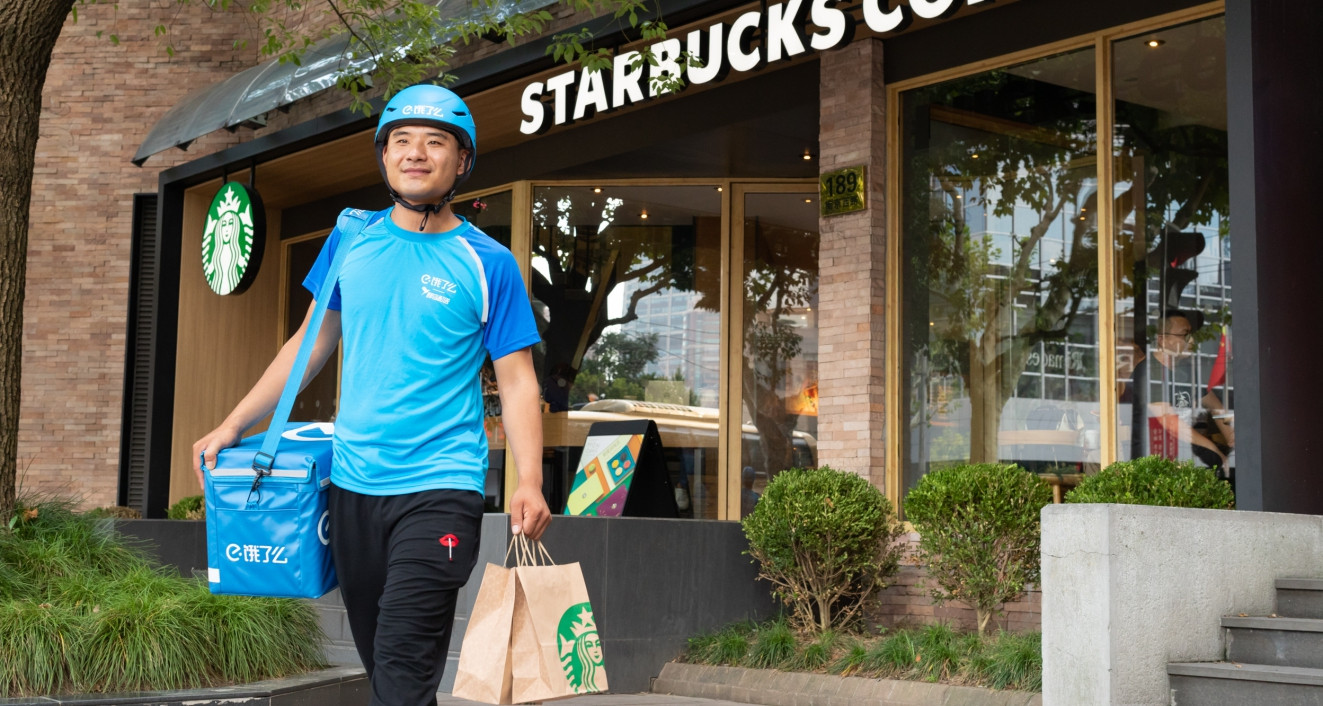
    Transactions have decreased by 1 per cent in China, most likely as a result of increased competition, which has recently forced Starbucks to introduce a fast-delivery service in partnership with Alibaba. The firm has also seen significant growth in its loyalty program, Starbucks Rewards.

    Starbucks surpassed 30,000 outlets worldwide in the second quarter, with 94 per cent of new openings occurring outside the US. A further 2100 new stores are planned for launch before the end of the current fiscal year, nearly 600 of those in China.

  • Starbucks opens its largest store in Singapore

    Starbucks opens its largest store in Singapore

    Starbucks Singapore has opened its largest store yet.

    Operating in Jewel Changi, the two-storey flagship store will serve a mix of quality coffee experiences and localised offerings.

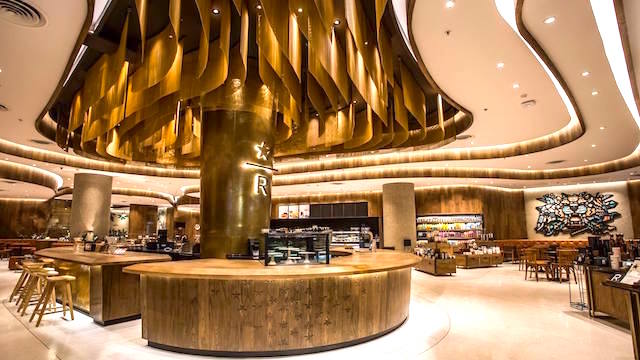
    Upon entry, visitors are greeted by a layered wooden storefront, inspired by the textures of coffee-farm landscapes. At the front and centre of the store stands a sprawling coffee bar shaped like a coffee bean. It is designed with cross-sectional honeycomb patterns carved on the wooden material for added texture.

    “Our Starbucks Jewel flagship store brings to life our vision for the Starbucks brand in Singapore – with the depth of our coffee expertise, our strength in store design and experience, and our pipeline of meaningful product innovations to elevate the customer experience – this is the epitome of our coffee leadership in Singapore,” said Starbucks Singapore GM Patrick Kwok.

    Beyond the exclusive local menu at the flagship, the space pays tribute to the whole coffee journey in the duplex’s lush indoor landscaping, polished interiors and artisanal woodwork. The bar features the VA388 Black Eagle Espresso Machine – a familiar sight at the World Barista Championships – which allows the barista full control over the consistency and precision in every aspect of a coffee, from bean ratio to brewing time and water temperature.

    To reinforce the local touch to the menu, Starbucks Singapore has also partnered with homegrown ice-cream parlour Udders. Dessert fans can take their pick from a series of coffees paired with ice cream, including a classic affogato.

  • Starbucks opens 30,000th store, somewhere in China

    Starbucks opens 30,000th store, somewhere in China

    Starbucks has opened its 30,000th store – launched in Shenzhen, China.

    The new Starbucks Reserve Shenzhen Bay Mix City location in the largest growth market for Starbucks globally serves to demonstrate the continued momentum in the firm’s global growth agenda. The new store is inspired by Shenzhen harbour, the spirit of the city as a technology hub, and the modern life of its community.

    Starbucks first opened in China in 1999, and has since grown to more than 3700 stores in its 20 years in the market.

    “The opening of Starbucks’ 30,000th store is a proud moment for all Starbucks partners,” said the firm’s president and CEO Kevin Johnson. “Over the past 48 years we have worked to build a different kind of company based on a mission grounded in the human experience, the world’s finest coffees, and a constant of pursuit of doing good.

    “Starbucks now serves more than 100 million customer occasions across 78 markets around the world. It all started with our first store in Seattle, Washington, and today we celebrate the 30,000th store that just opened in Shenzhen, China.”

    Starbucks drives net new store growth of 6–7 per cent annually, including a variety of different formats.

    Recently three new Starbucks Reserve roasteries opened in Milan, New York and Tokyo, along with a first-of-its-kind coffee sanctuary in Bali, Indonesia. A second ‘signing store’ providing employment opportunities for the deaf and hard of hearing also launched recently in Washington, DC.

    As Starbucks celebrates its 30,000th store, the company’s more than 380,000 employees deliver the brand experience to more than 100 million customers weekly across 78 markets around the world.

  • Starbucks launches a New $100 million equity fund

    Starbucks launches a New $100 million equity fund

    Starbucks has launched an investment fund to boost food and retail startup technology companies.

    The new entity, Valor Siren Ventures, will be managed by Valor Equity Partners, a growth-focused private equity investment firm that was among the first investors in food technology. Starbucks has contributed an initial US$100 million into the fund, which will identify and invest in companies developing technologies, products, and solutions relating to food or retail.

    “These verticals are increasingly relevant to Starbucks as it seeks to support its world-class talent with an innovation agenda accelerated by external relationships,” the company said in a statement.

    Valor Siren Ventures will seek to raise an additional $300 million in the coming months from other strategic partners and key institutional investors.

    Separately, Starbucks will also explore direct commercial arrangements with these start-ups. Starbucks president and CEO Kevin Johnson says the company is embracing new ideas and innovations that are relevant to its customers, inspiring to its partners, and meaningful to its business.

    “We believe that innovative ideas are fuel for the future, and we continue to build on this heritage inside our company across beverage, experiential retail, and our digital flywheel,” he said.

    “At the same time, and with an eye toward accelerating our innovation agenda, we are inspired by, and want to support the creative, entrepreneurial businesses of tomorrow with whom we may explore commercial relationships down the road. This new partnership with Valor presents exciting opportunities, not only for these startups, but also for Starbucks, as we build an enduring company for decades to come.”

    Over 20 years, Valor’s team has worked with companies, principally in the consumer, engineered products, and services sectors. Its investments in food and retail technology include GoPuff, Fooda and Sizzling Platter.

  • Starbucks Reserve Roastery in Tokyo opens

    Starbucks Reserve Roastery in Tokyo opens

    Starbucks opens a four-story fully-immersive Starbucks Reserve Roastery in Tokyo today.

    Located in the Nakameguro neighborhood, the new venue offers more than 100 unique coffee and tea beverages and merchandise exclusively available in store. It will be the fifth Roastery globally, home to the largest Teavana Bar in the world and Japan’s first Princi Italian bakery.

    It also introduces Starbuck’s first Amu Inspiration Lounge, a full floor dedicated to community gathering – and is planned as Starbucks’ first Specialty Coffee Association certified training location in Japan in the near future.

    “As the first international market outside of North America, Starbucks Japan has contributed 23 years of innovation for the company globally,” said Starbucks CEO Kevin Johnson. “The opening of the Tokyo Roastery will further amplify what Starbucks Japan has done across all stores in the market for more than two decades – innovating and delivering the finest quality coffee one person, one cup and one neighbourhood at a time.”

    “The Roastery will amplify and inspire coffee passion across all Starbucks stores, and will serve as a catalyst for a new wave of growth centered on the customer experience and passion for coffee and service,” added Starbucks Japan CEO Takafumi Minaguchi. “Beginning with the ‘Make it Yours’ campaign that will commence at every store in Japan upon the opening of the Roastery, customers will be invited to experience the first Starbucks coffee roasted exclusively in Tokyo, for Japan, and available in a variety of coffee beverage styles.

    “The Roastery signifies our commitment to fostering moments of human connection over a cup of coffee and using these moments to create positive social impact in the communities we serve.”

    The Starbucks Reserve Roastery in Tokyo  is the only one designed in collaboration with a local architect from the ground up. Inspired by the famous cherry-blossom trees lining the Meguro River, the building’s glass walls and terraced floors fold into the fabric of the neighbourhood, bringing visitors eye-level with the cherry blossoms and the four seasons of the river to reflect the natural beauty and sense of harmony found across Japan.

    The coffee journey at the Starbucks Reserve Roastery in Tokyo is an immersive experience and education in coffee, and its process – from green bean to cup – which begins at the Main Bar on the first floor. The open floor plan draws customers into the immersive experience, introducing them to the art of roasting, brewing and hand-crafting beverages. The terraced third floor features Starbucks Japan’s first cocktail bar, Arriviamo.

    Japan is the fourth largest market in terms of store count for Starbucks globally – behind the US and China – and today has more than 1400 Starbucks stores.

  • Anti-plastic campaigns pay off for Starbucks and 7-Eleven

    Anti-plastic campaigns pay off for Starbucks and 7-Eleven

    Starbucks Korea and 7-Eleven Thailand have announced positive results for their respective anti-plastic campaigns.

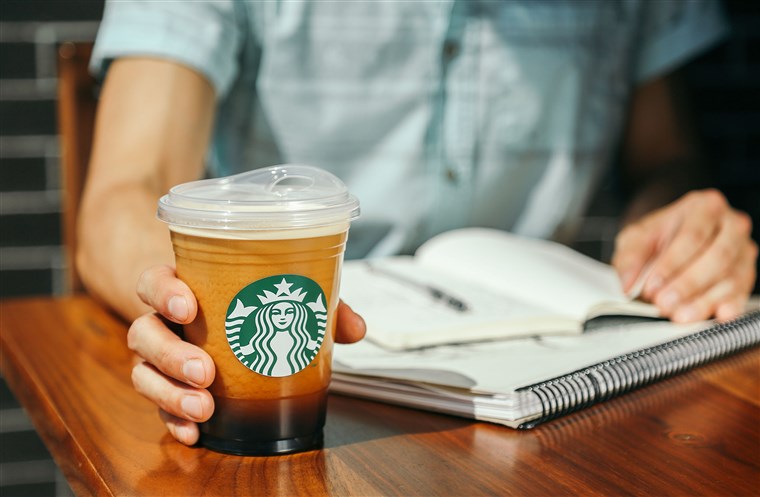
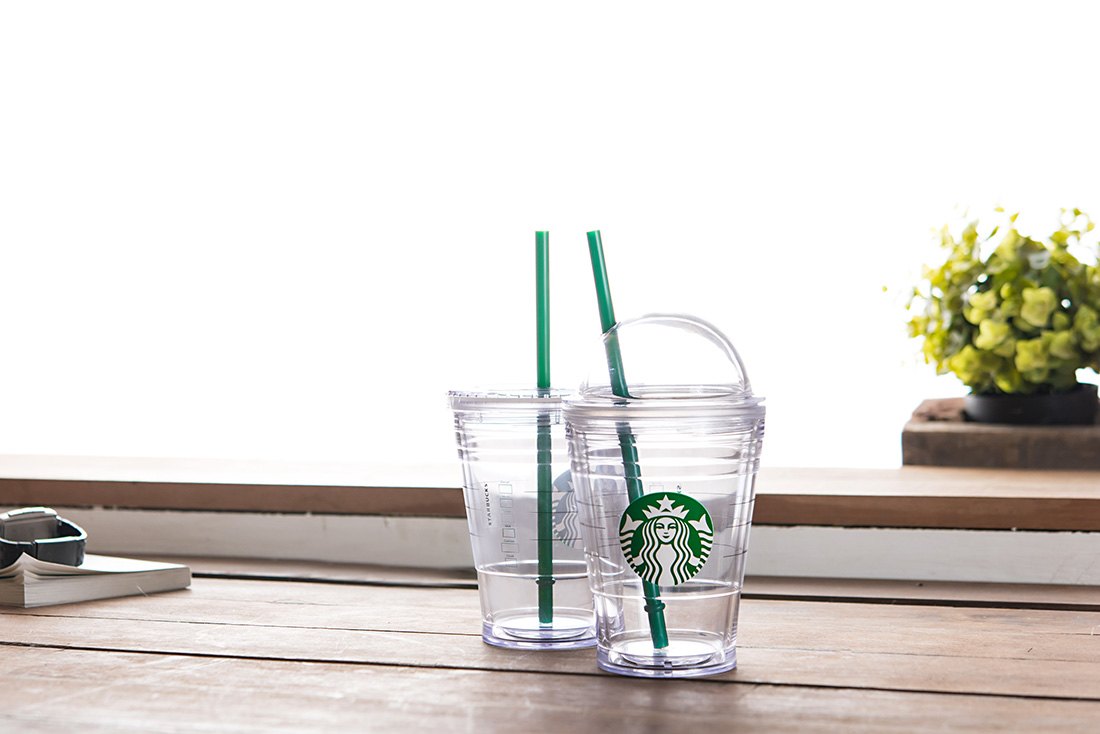
    A report revealed that the local Starbucks subsidiary has seen consumption of single-use straws cut by half in the months since introducing strawless lids on drinks without whipped cream or that do not need stirring.

    The initiative, introduced last November, has resulted in the monthly average of 15 million straws used across its coffee chain stores drop to 7.5 million per month. The company now only provides straws to customers who request them.

    Aiming to further reduce straw usage by up to 70 per cent, Starbucks Korea is planning an online event to offer rewards to customers who upload pictures of drinks taken without using straws. It has also introduced paper straws for usage in some beverages.

    7-Eleven saves 169 million bags

    Meanwhile, in Thailand, more than 169 million plastic bags have remained unused over the past two months at 7-Eleven stores, according to a report, the result of a management initiative to phase out their use. The move, which has been supported by local celebrities, encourages shoppers to refuse plastic bags or bring reusable bags to the store.

    The reductions are reported to have saved the chain more than 33 million baht, which operator CP All Public Company will donate to a local hospital.

    All about perception?

    Despite these reports, there have been growing concerns among critics in the media regarding the perceived environmental benefits of similar plastics initiatives worldwide.

    The sippy cup lid adopted in Korea is identical to the design used in North American stores, which was shown in a Reason magazine report last year to use more plastic than the previous lid design and straw put together.

    Plastic shopping bag initiatives similar to the one adopted by 7-Eleven have provoked skepticism among observers who point out that of all single-use plastic packaging used throughout supermarkets and convenience stores, the shopping bag is the only item that tends to be reused in the home.