Tag: starbucks

  • Starbucks disclosing financial support for its staff in Asia

    Starbucks disclosing financial support for its staff in Asia

    Global coffee giant Starbucks has announced a US$10 million fund to support its partners (employees) around the world impacted by the coronavirus outbreak.

    The Starbucks Global Partner Emergency Relief Programme marks the first time both company-operated and international licensed market store partners across Starbucks will be able to access hardship grants.

    In company-operated markets such as China and Japan, the grants will be made available to partners through the existing Caring Unites Partners Fund – while in the rest of Asia, where Starbucks operates with local licensed businesses, they will be available to partners through the Emergency Assistance Foundation.

    “During this very difficult time, we believe it is our responsibility to create additional support for partners facing unexpected financial hardship wherever they are,” said Starbucks’ chief partner officer Lucy Helm. “We are proud to be a catalyst for a first-of-its-kind global funding initiative to further demonstrate to our Starbucks partners that we are in this together.”

    Starbucks’ commitment will also create a pathway for international licensed markets to set up their own funds, with Starbucks contributing an initial investment – a first for the company.

    Qualified categories for fund grants include (but are not limited to) housing and utilities, sudden loss of home, death of a family member or partner, and related funeral expenses.

  • Starbucks Korea expands social-distancing plan

    Starbucks Korea expands social-distancing plan

    Starbucks Korea will expand social-distancing measures across its branches nationwide from Thursday, after a successful trial at some stores in Daegu and North Gyeongsang Province.

    The company plans to ensure a safe distance between customers and employees is maintained when ordering by placing safety line stickers in front of checkout counters.

    Furthermore, for a limited time, customers will not be able to bring their own reusable mugs.

    When ordering drinks using individual multi-use cups, customers will still get benefits for being eco-friendly, such as discounts or points, by showing personal cups. However, customers will be provided the drink in a disposable cup. This strategy was introduced in the US a fortnight ago and has since been implemented in many markets across Asia.

    Meanwhile, Starbucks will also conduct campaigns such as asking people to wear masks when ordering, and to dispose of paper straws in trash cans.

  • Starbucks Philippines shuts down all stores due to COVID-19

    Starbucks Philippines shuts down all stores due to COVID-19

    Following its temporary closure of stores in Luzon last week, Starbucks Philippines has now extended the shutdown to Visayas and Mindanao.

    In social media posts, the coffee chain said the health and well-being of its partners (employees) and customers remain top of mind and their highest priority.

    The complete closures means no delivery or takeaway services will be offered either.

    “Based on the guidance of local authorities and after much consideration, our stores in Visayas and Mindanao will also close. As such, all Starbucks stores in the Philippines will be temporarily closed”, Starbucks Philippines posted on its Facebook and Twitter account.

    The company said it looks forward to serving customers again as soon as possible, but as of now, it encourages everyone to stay indoors and stay safe and healthy.

    President Rodrigo Duterte declared the whole Luzon under “enhanced community quarantine” on March 16 and some other regions followed suit as the number of cases of coronavirus disease (COVID-19) continued to soar.

    Yesterday recorded the highest jump of COVID-19 in the Philippines with 82 confirmed patients in just a single day making it to 462 in total with 33 deaths while 18 have already recovered.

  • Starbucks Japan launches Smart Lounge railway station concept

    Starbucks Japan launches Smart Lounge railway station concept

    Starbucks Japan has launched a new concept store in collaboration with railway operator JR East.

    The “Starbucks Coffee Takanawa Gateway Station” opened yesterday, introducing its Smart Lounge concept – a store space focused on business use. The store features numerous semi-private and single-seat seats to meet the needs of using a cafe for work purposes as well as a large table used for meetings with multiple people.

    Two fully-private booth-style share offices are provided within the store. Power outlets are available for all seats, and the store also operates a mobile battery sharing service. Wifi is available throughout the premises.

    The cafe also specializes in speedy cashless payment via Starbucks Card and Suica, among other e-payment platforms. Via a dedicated app, it allows customers to settle orders in advance and receive products smoothly at stores, designed to allow more effective use of time and reduction of waiting time at cash registers.

    “Starbucks has more than 1500 stores nationwide and connects with 800,000 customers a day,” said Starbucks Japan head of store development Kazuhiro Ishihara. “Each store has its own personality and expression that reflects the locality and needs of each individual.

    “At the Takanawa Gateway Station, we provide a smart and comfortable experience that suits its location and purpose, and integrates with people’s lives to create a future city that no one has yet seen. We aim to be a store and base that can be created with people.”

    Takanawa Gateway Station is situated in Shinagawa town, a new urban area under development that aims to be a new gateway to Tokyo.

    JR East aims to operate 30 shared office spaces by the end of the financial year.

  • Starbucks China to open Coffee Innovation Park

    Starbucks China to open Coffee Innovation Park

    Starbucks China will invest US$130 million in a new roasting facility in 2022 as part of its upcoming Coffee Innovation Park in Kunshan.
    The park will be Starbucks’ largest manufacturing investment outside of the US and its first in Asia, incorporating a roasting plant, warehouse and distribution centre. The firm has committed to strengthening the specialty coffee industry in China, aiming to operate 6000 stores in China within two years.

    “Starbucks has spent the past 20 years sharing its passion for coffee across China and helping to build a leading industry that makes us all proud,” said Starbucks China chairman and CEO Belinda Wong.

    “The roasting facilities at the Coffee Innovation Park will set a blueprint for the future of coffee roasting and supply chain management, and further elevate China’s coffee industry, while supporting Starbucks’ growth in China.”

    The Coffee Innovation Park will incorporate advancements in sustainable manufacturing, smart supply chain innovation, and technology to help deliver the most energy- and water-efficient roasting operations for Starbucks in the world, while minimizing waste.

    Starbucks opened its Yunnan Farmer Support Centre eight years ago to provide open-source agronomy resources to coffee farmers throughout the region. Its new Coffee Innovation Park will source coffees from China and around the world directly from the origin for processing, roasting, packaging and distribution, for the first time in China.

  • Starbucks teams with Royal Selangor in merchandise range

    Starbucks teams with Royal Selangor in merchandise range

    Starbucks Malaysia has collaborated with iconic local pewter manufacturer and retailer Royal Selangor to produce a collection of handcrafted merchandise exclusively for coffee lovers in Malaysia.

    The collection includes a coffee stirrer, collar pin, shot glass, keychains, glass mug, and an ID tag.

    Sydney Quays, group CEO of Berjaya Food Berhad and MD of Starbucks Malaysia and Brunei, said the company is excited to offer a collection that celebrates Malaysia, and elevates Malaysian resources through the partnership.

    “Just as our customers are always looking out for meaningful trends and styles, we seek out some of the most coveted home-grown brands from across Malaysia to explore ways we can collaborate and curate a line of locally-made products through the Starbucks X Royal Selangor series,” said Quays.

    Meanwhile, Chen Tien Yue, Royal Selangor International executive director said designing the range was a fun project for both designers and crafts, developing not only coffee accessories but also personal accessories that would appeal to the Starbucks fan.

    Royal Selangor was founded in 1885 by Yong Koon. It was first named as Selangor Pewter but later changed to Royal Selangor in 1992. The company produces tableware and gift items including tankards, tea sets, photo frames, desk accessories and wine accessories distributed worldwide from its Kuala Lumpur base.

    “After 20 years in Malaysia, the Starbucks siren is now immortalised in pewter”, Yue added.

  • Starbucks opening signing store in Tokyo

    Starbucks opening signing store in Tokyo

    Starbucks Japan is to open its first signing store in early Summer 2020 in Kunitachi City, Tokyo.

    Launched for the convenience of the deaf and hard of hearing, the new Starbucks outlet will provide service to customers in Japanese Sign Language. Signing stores have previously opened in Malaysia, Washington DC, and China. The store will be the first of its kind in Japan and the fifth globally.

    Deaf and hard-of-hearing staff will work alongside hearing partners to provide service to customers. The store is located close to a school for the deaf.

    A statement from the firm read “Starbucks aspires to become a people positive company where we uplift each other, our customers, and the communities we serve. Since 2018, Starbucks Japan has taken a ‘no filter’ approach to diversity and inclusion to create a place of belonging where partners can bring their best selves to work, without prejudice, assumption or bias toward race, age, gender, position, employment status, disability, personal values, or any other basis.”

  • Starbucks sales down in Mainland China

    Starbucks sales down in Mainland China

    Starbucks China has predicted sales will halve in the current quarter due to the coronavirus crisis.

    According to the US parent company’s CEO Kevin Johnson and CFO Patrick Grismer, sales at Starbucks China stores dropped 78 percent year on year because of a sharp decline during the coronavirus outbreak.

    Prior to the outbreak, Starbucks aimed to achieve 3-per-cent sales growth in China at stores open at least 13 months. At the moment, the company predicts a 50 percent drop in sales this quarter and delays store openings in the country.

    “We remain confident in the strength of the Starbucks brand and the long-term profitability and growth potential of our business in China,” the company said in a statement.

    Starbucks China temporarily closed most of its stores in China last month to protect staff and customers from exposure to the virus. Recently, the coffee chain has progressively reopened stores business with limited trading hours. The company aimed to open 95 percent of its stores by the end of the second quarter, said CNN.

    Meanwhile, Ikea China is reopening nine more stores after resuming trade at five stores last week, as it slowly returns to normal business.

  • Starbucks Japan to open greenhouse store in theme park

    Starbucks Japan to open greenhouse store in theme park

    Starbucks Japan is to open a greenhouse store in western Tokyo this month, set in a theme park celebrating flora and fauna.

    Located inside the Hana Biyori greenhouse operated by Yomiuriland park, the Starbuck greenhouse cafe occupies a 1500sqm area, featuring colorful flower chandeliers and abundant greenery including begonia, fuchsia, petunia, geranium and bellflower.

    As can be seen from the artist’s impressions, large aquarium tanks will also be a central feature of the store.

    With 20 projectors and 18 speakers, the cafe will present an audio-visual experience filled with digital and real flora several times a day.

    Starbucks Hana Biyori will open its doors to the public on March 14.

  • Starbucks Indonesia opens first community store

    Starbucks Indonesia opens first community store

    Starbucks Indonesia has opened its first community store, aiming to support local children by funding scholarships through a portion of sales.

    Located in the Tanah Abang neighborhood in Jakarta, the store partners with two local NGOs, Yayasan Sahabat Anak and the Indonesian Street Children Organization (ISCO).

    “Starbucks is committed to using our scale and brand reputation as a force for good,” said Anthony Cottan, director, Starbucks Indonesia, at PT Sari Coffee Indonesia. “Since opening our first store in 2002, we’ve invested in creating long-term positive social impact across Indonesia, growing our community involvement alongside our businesses.”

    Occupying a 250sqm area and spanning four floors, the Starbucks Indonesia community store provides space for workshops and classrooms, and undertakes “social impact initiatives”. Most of its staff come from the Tanah Abang area, making them representative of the community, the company said in a statement.

    “One of the most important contributions Starbucks can make in return is serving as a catalyst for positive change in the communities we serve,” said Sara Trilling, senior VP, and president of Starbucks Asia Pacific. “Over the years, we’ve continued to expand the number of community stores in the region including in Thailand, South Korea, and now Indonesia.”

    Chairman of Yayasan Sahabat Anak, Dian Novita Elfrida, said with the support of Starbucks, local children will be given more opportunities for better education.

    Starbucks Indonesia operates more than 430 outlets countrywide.

  • Starbucks China closes over 2000 stores due to Coronavirus virus

    Starbucks China closes over 2000 stores due to Coronavirus virus

    More than 2000 Starbucks China stores have been closed to protect staff and customers from the coronavirus outbreak, including its giant Shanghai Roastery.

    “We currently have over half our stores closed in the market,” said Starbucks Inc group president, international, channel development and global coffee & tea, during an earnings call on Tuesday.

    “We are assessing this each and every day. We do have delivery available to customers from stores that are remaining open. But again, this is something that we continue to assess every day… This is a very complex situation.”

    The unprecedented network closure comes as the deadly coronavirus spreads beyond its epicenter of Wuhan in the Hubei province across China. As at 9am ICT Thursday, there were 7892 confirmed cases of infection the vast majority in Mainland China. To date, there have been 170 deaths, all on the mainland.

    Starbucks China’s widespread store closures coincided with the release of the parent company’s first-quarter figures which showed 5-per-cent global same-store-sales growth, including 3-per-cent growth in China. The company has more than 4100 stores on the mainland and 31,795 globally, adding a net 539 during the quarter to December 29, 167 of those in China. Consolidated net revenues of US$7.1 billion grew 7 percent year on year.

    During the earnings call, Culver said the closures were ordered because the company was making sure it was taking care of its partners, their health and well being, as well as the customers.

    “As the situation has accelerated, we’ve taken action to close stores, both working with the local government in the direction that they’ve given us, but then also proactively closing stores in the country.”

    The stores will reopen when it is considered safe, but Culver indicated Starbucks was not yet sure about the potential impact of the closures on its second-quarter performance.

    “It really is difficult to say at this juncture, what the impact to our business will be and how it will show up in our financials. Given the fluidity of the situation, the business impact is largely a function of two things – the number of stores closed and the duration of closure – and with respect to the duration, it’s not entirely in our control. We will need to move beyond the extended Chinese New Year holiday season to assess how the situation may be stabilizing, and what the implications are. We’re probably looking at early March at the earliest to reasonably assess the implications for revenue operating income and EPS for our second quarter and for the full year at the very latest will provide an update in conjunction with our Q2 earnings release on April 28.

    “As a company, we’ve navigated complex situations before and in China, we feel there’s no other company that’s better positioned to navigate this given our relationship that we’ve been able to build with our partners and the relationship and trust that they’ve been able to build with their customers.

    “We will remain transparent as the events continue to unfold. But we do have complete confidence in the decisions that we’re making. We’ve been in the market for 20 years and we have built an admired and trusted brand. And we will continue to play the long game in China, as we navigate in the coming weeks and months.”

    Meanwhile, Starbucks executives say they are focusing on lower-tier cities to maintain its Chinese market growth. Of the 167 stores opened in the December quarter, 46 percent were in tier 1 and 2 cities, the balance in tier 3, 4 and 5 cities.

    “We continue to make investments in those cities, playing the long game, clearly when we opened our first few stores, there’s a lot of demand for Starbucks coming into those cities, as we continue to build out the footprint,” said Culver. “What we’ve seen historically, is that the total transactions obviously continue to grow and volumes show up as very similar to some of our outer tier-one cities.”

    Delivery services – available in 3500 stores, or about 80 percent of its network there, we’re also paying dividends.

    “We see it as an incremental for these existing customers as well as attracting new customers in total dollar profits, continue to increase because of it, and slightly margin diluted, but it does provide a higher ticket, as well as a higher food attach,” said Culver.

    “And we also see stronger demand in the morning, and during the lunch period.”
  • Starbucks unveils ambitious sustainability commitment

    Starbucks unveils ambitious sustainability commitment

    Starbucks CEO Kevin Johnson has announced a multi-decade commitment to be a “resource-positive” company – aspiring to give more than it takes from the planet.

    “As we approach the 50th anniversary of Starbucks in 2021, we are looking ahead with a heightened sense of urgency and conviction that we must challenge ourselves, think bigger and do much more in partnership with others to take care of the planet we share,” said Johnson. “By embracing a longer-term economic, equitable and planetary value for our company, we will create greater value for all stakeholders.”

    The firm released plans to expand plant-based options, migrating toward a more environmentally friendly menu, as well as a shift from single-use to reusable packaging. It also intends to invest in “innovative and regenerative agricultural practices, reforestation, forest conservation and water replenishment in Starbucks supply chain”.

    Furthermore, Starbucks is committing to making investments in better ways to manage waste, both in its stores and its communities, to ensure more reuse, recycling and elimination of food waste. It will also develop more eco-friendly stores, operations, manufacturing and delivery processes.

    Johnson also outlined three preliminary targets for 2030, including a 50-per-cent reduction in carbon emissions in Starbucks direct operations and supply chain; a 50-per-cent conservation or replenishment of water withdrawal for direct operations and coffee production with a focus on communities and basins with high water risk; and a 50-per-cent reduction in waste sent to landfill from stores and manufacturing.

    “It is encouraging to see Starbucks embrace a data-driven and team-driven approach to creating a resource positive future,” said strategic consultancy firm SustainAbility’s executive director Mark Lee. “Their most senior leadership was directly involved in the creation of this plan, and they did an outstanding job convening experts in the field in the course of its development, inviting them to help Starbucks dream big on what’s possible for the planet. This puts Starbucks in the vanguard of corporate sustainability leaders, and we hope more businesses will be inspired to develop similarly robust approaches to addressing the world’s most pressing sustainability challenges.”

  • Starbucks Vietnam opens new concept outlet at Ecopark

    Starbucks Vietnam opens new concept outlet at Ecopark

    Starbucks Vietnam has opened a concept store at a new urban development called Ecopark in Hung Yen, near Hanoi, its 63rd store in the country.

    Located at the heart of Summer Park, Starbucks Ecopark features a mixture of rural and modern aesthetics, creating “a space that seeks a sense of harmony with its natural surroundings and the buildings bold structure,” the company said in a statement

    “Starbucks Ecopark is our first store opening for 2020, when we set our seventh anniversary of Starbucks Vietnam,” said Patricia Marques, GM of Starbucks Vietnam. “I believe it will be a great gathering place for family and friends.”

    Designed by local company Vietnambuilding and built by Ecotech, the new Starbucks cafe’s exterior features wooden louvers across the entire ceiling. Inside, further linear forms can be found in a low island serving counter which gives unobstructed views to an angled bar behind.

    Nguyen Duc Hiep, chief architect at Vietnambuilding, said the designers incorporated the exterior brick into space and used natural materials such as wood finishes to amplify the atmospheric mood.

    “Respecting the present landscape and green trees is our first thought when visiting the site,” he said.

    “It is also a challenge for us when we want to propose an impressive construction without interfering with the landscape or removing any tree in the garden.”

    Starbucks did not explain why it defines the new outlet as a concept store. however, it does appear to take the third-place concept into a more natural, landscaped garden environment not possible in a mall or high-street location.

  • Luckin Coffee stronger than Starbucks in China

    Luckin Coffee stronger than Starbucks in China

    Luckin Coffee has now become the largest coffee chain in China, surpassing Starbucks in terms of number of locations.

    The firm has launched 4500 outlets within the Chinese territory, around 200 more than its Seattle-headquartered competitor. The brand soared past Starbucks late last year and has rapidly multiplied its footprint in the market backed by strong investment from supporters such as BlackRock.

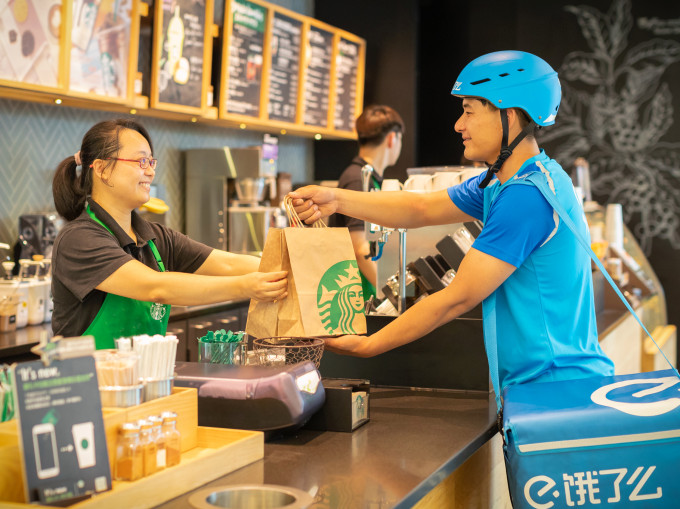
    The firm focuses primarily on the coffee delivery and pickup business, and so stores are typically smaller in size than Starbucks locations and some are without seating. Starbucks itself has responded to the challenge by entering into a partnership with Alibaba to offer a more robust delivery solution.

    Many of Luckin’s new locations are in areas not currently served by Starbucks.

  • Starbucks China staff benefits programme offers education, health and pet care

    Starbucks China staff benefits programme offers education, health and pet care

    A new Starbucks China staff benefits program has been launched, with a range of support options for employees who have served two years.

    From January 1, qualifying partners (employees) will each be given credits they can use to select from a range of benefits. Each benefit has been designed to meet the needs and aspirations of different partners in the increasingly diverse Starbucks China Family.

    With an estimated 18,500 partners eligible for the Starbucks China staff benefits program, dubbed Flex Star Benefits, the initiative constitutes a significant investment for the company.

    To support partners’ physical and mental well-being, Starbucks encourages them to use their credits to learn a new skill, or take up a hobby that relaxes the mind and body amid the hustle and bustle of everyday life. Partners may also simply apply for a five- or 10-day mini ‘coffee break’ to recharge their batteries.

    Protecting partners’ health is another area the new program covers. Partners may use credits for HPV vaccinations that protect against diseases like cervical cancer. The benefit can be extended to partners’ female family members and even friends, a first for Starbucks. In addition, the credits can be used to upgrade partners’ current benefits such as annual health checkups.

    The Starbucks China staff benefits program also supports partners in taking care of those who matter most to them. For partners working away from their hometowns, the program allows up to three additional days of paid leave so that they can spend more time with their families on their home visits. They also have the option to use their credits for discounted travel tickets, to allay any financial concerns should they need to return home in the event of a family emergency.

    In addition, Flex Star Benefits expand Starbucks existing schemes to cover ‘life partners’ beyond the immediate family – regardless of status or gender. Another inclusion is ‘paternal care’ benefits for pets. Under the new program, pet-owning partners may enroll their pets into an insurance scheme or claim reimbursement for their pets’ medical expenses. Partners who adopt pets will be granted an additional day of annual leave.

    Finally, Starbucks encourages partners to contribute to local communities, allowing them to earn additional credits by participating in social impact activities. They can also donate their credits to the Starbucks China Cup Fund, to help fellow partners in urgent need of financial assistance.

    “Starbucks success in China is down to the passion and dedication our partners bring to work every day – in every cup of coffee they brew, and every customer connection they make,” said Starbucks China chairman and CEO Belinda Wong.

    “Since entering China 20 years ago, Starbucks has always strived to be a different kind of company. We want to share our success with all partners, in a timely and thoughtful manner that recognizes their individual needs – because each of our 55,000 partners is special.”

    Over the years, Starbucks has introduced benefits such as comprehensive insurance for spouses and children of all partners, and critical illness insurance for parents. Housing subsidies are provided to 26,000 partners who work away from their hometowns, while partners may also apply to return to work in newly-opened Starbucks stores in their hometowns under the Coming Home program.

    In addition, Starbucks China also offers partners opportunities to expand their horizons through a talent exchange program, which has helped more than 100 partners complete short-term work experience in other cities across China and overseas. And, under its global Bean Stock initiative, Starbucks granted US$21 million worth of its shares to partners across China last year.

    Partners can access the Starbucks China staff benefits program through the China Green Apron partner mobile app.