Tag: starbucks

  • Starbucks expands delivery services in China with Meituan tie-up

    Starbucks expands delivery services in China with Meituan tie-up

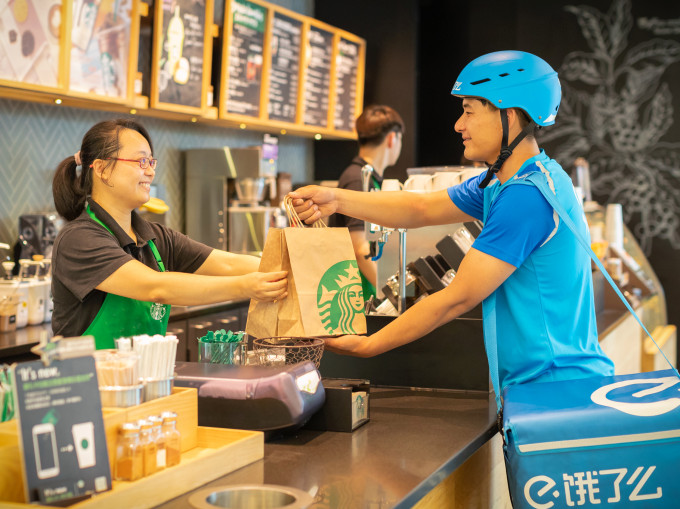
    Starbucks said on Tuesday it has entered into a partnership with China’s Meituan that will allow its Chinese customers to order coffee delivery via the super app’s platform.

    The move will expand the U.S. coffee chain’s delivery footprint in China, which has since 2018 used Alibaba Group’s Ele.me as its exclusive delivery partner.

    The two companies will also launch a service that will allow Meituan users to make private bookings for a tasting of coffees and learn to make them at Starbucks stores, it said.

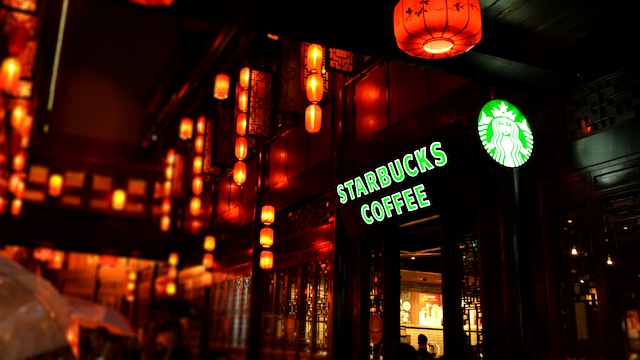
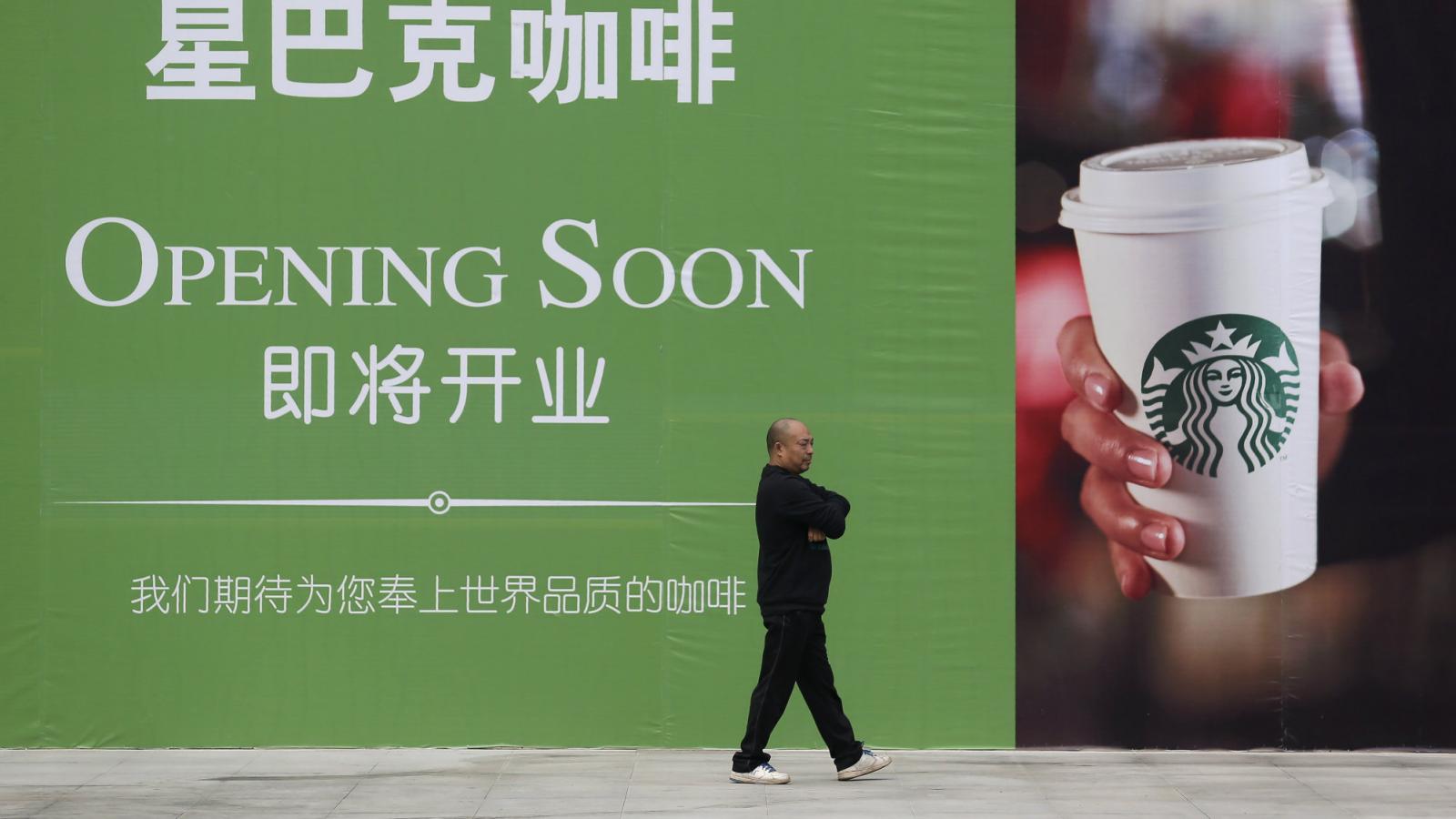
    Starbucks has 5,360 stores in more than 200 Chinese cities, making it the second-largest market only after the United States, according to the company’s most recent earnings report.

    The company also said it would utilize Meituan’s “superstore” feature under the partnership which will see each of its stores have its own unique page on Meituan’s platforms by the end of this year, from which customers can book food delivery services or check local events.

  • $4 Starbucks coffee has become a daily staple

    $4 Starbucks coffee has become a daily staple

    While the franchise’s 2021 financial results took a hit because of the Covid-19 pandemic, a tangible gain has been the Starbucks VND90,000 ($4)coffee becoming a daily staple in Vietnam.

    Starbucks Vietnam general manager Patricia Marques said that despite the impacts of the nine-week social distancing orders in 2021, the global coffee brand has built up a regular customer base for its coffee worth VND90,000-100,000.

    She said it has also established more outlets away from the downtown in new urban areas, buildings, and local communities. While people used to prefer living close to the center of a locality, they are willing to live a little further away these days, she said.

    Starbucks Vietnam closed three outlets but opened nine new ones in 2021. Between December 2021 and January 2022, it opened another six: three in Hanoi; two in HCMC; and one in the southern province of Binh Duong.

    In Vietnam, Starbucks currently has 77 outlets whose takeaway sales have grown amid Covid-19 outbreaks.

    Marques said she expected instability to continue in Vietnam’s food and beverage market this year, but takeaway revenue, non-cash payment, and e-commerce would continue to grow.

    While there is still a lot of vacant space, it will not be easy for food and beverage businesses to find satisfactory locations at a reasonable price, she said. Citing data from a partner, she said the rent of commercial premises in Vietnam increased by 3 percent, while it decreased 10 percent in Singapore, Hong Kong, Thailand, Cambodia, and Laos.

    According to the brands’ official websites, chains with the highest number of outlets in Vietnam are the domestic brands Highlands (462 stores), The Coffee House (146), and Trung Nguyen (89).

    U.S.-based Starbucks made consolidated revenues of $29.1 billion in the fiscal year 2021 (ending in the third quarter of 2021), up 24 percent against over 2020.

    In the fiscal year 2022, the brand expects global earnings of $32.5-33 billion, beating Wall Street’s estimate of $32.07 billion, and plans to open about 2,000 new outlets globally, three-quarters of them outside the U.S. According to data recorded by Statista, as of November 2021, Starbucks had 33,833 outlets worldwide.

  • Starbucks store in Korea is dedicated to disability inclusion

    Starbucks store in Korea is dedicated to disability inclusion

    Starbucks Korea has added a new location to its chain of Community Stores in the country, reaffirming its commitment to diversity, equity and inclusion.

    The store is Starbucks Korea’s first to focus on a design that creates an inclusive space and what the retailer describes as impactful programming to support members of the disability community in Seoul.

    A portion of proceeds from sales through the store will go to support the local nonprofit Heart Heart Foundation, which advocates for inclusion and awareness of people with disabilities, and support for local artists from the disabled community.

    “It is very meaningful that our store, which is an inclusive space for all, has been dedicated as a new Community Store for inclusion, furthering disability-inclusion awareness in Korea,” said Elena, assistant store manager, who is hard of hearing.

    “I feel very proud as a partner. I hope to create meaningful opportunities to build connections through the many activities we will be launching at our store.”

    Since the opening of the store, Starbucks has employed new partners with disabilities under the partnership with the Korea Employment Promotion Agency for the Disabled.

  • Starbucks shuts China outlets after reports they used expired ingredients

    Starbucks shuts China outlets after reports they used expired ingredients

    US coffee chain Starbucks said on Monday it had shut two outlets in China and was conducting an investigation after a state-backed newspaper reported that they used expired ingredients to make drinks, violating food safety rules. The incidents occurred at two stores in the eastern Chinese city of Wuxi.

    “We take what was reported by local media very seriously, and have immediately closed the two stores in question to conduct a thorough investigation,” a Starbucks spokesperson said.

    “Since entering the Chinese mainland market 22 years ago, we have been committed to implementing strict food safety standards and adopting a ‘zero-tolerance policy towards food safety issues. We welcome the continued supervision of members of the media and the public.”

    The incident became a trending topic on China’s Twitter-like Weibo social media site after the report was published.

    Chinese consumers and media have become more aggressive about protecting customer rights and monitoring the behavior of big brands, especially from overseas.

    Some targets, such as Canadian winterwear brand Canada Goose which drew complaints about its refund policies, have been subjected to government reprimands, while Chinese brands such as milk tea chain Nayuki have also drawn public attention.

    China is the largest market for Starbucks outside the United States with 5,360 stores as of Oct 3, the firm’s latest earnings report showed.

    One of the Starbucks stores used expired matcha liquid to make lattes, while another had put pastries up for sale that was meant to be thrown away.

    As of Monday afternoon, the topic of Starbucks’ response report had received more than 50 million views on Weibo. Commenters expressed both disappointment and worries over more widespread problems.

    “If Starbucks is like this, the other shops really worry me,” said one Weibo user named Revario. “They suffer the scrutiny because it is a foreign brand.”

  • Starbucks Korea faces probe over US$153 million in prepaid card takings

    Starbucks Korea faces probe over US$153 million in prepaid card takings

    Starbucks has been the subject of growing speculation as a number of Korean banks express their concerns over the US coffeehouse chain’s potential move into the competitive financial services industry.

    The global chain itself has not announced its plans to edge into financial services, but the booming success of the company’s prepaid gift card and mobile app – which Starbucks announced collectively had $1.56 billion in stored value by the end of 2019 – suggests there is a path emerging for the company to become a bank if it wanted to.

    Despite the enticing $1.56 billion figure, 3,900 US banks have less than $1 billion in total assets according to the Federal Deposit Insurance Corporation (FDIC).

    Starbucks revealed on a recent earnings call that its rewards program in the US had grown to 18.9 million active members at the end of 2019, up 16% year-over-year. “This is important because we know from experience that when customers join our rewards program, their total spend with Starbucks increases meaningfully,” he said on the call.

    South Korea’s Hana Financial Group is acutely aware of Starbucks’ competitive potential. Its chairman Kim Jung-tai said in his New Year address: “Technologies have allowed coffee companies like Starbucks to be our rivals. It will be fine to call Starbucks an unregulated bank, not a mere coffee company.”

    One year prior, South Korea’s KB Financial Group, KB Kookmin Bank and NongHyup Financial Group all mentioned Starbucks in their New Year’s addresses too. “The most-used mobile payment app in the US was the Starbucks app, not Google or Apple Pay,” KB Financial Group’s chairman Yoon Jong-kyoo said last year.

    “About 40% of its payments were made with the app, and the amount of cash loaded onto its prepaid cards and apps surpassed the amount of cash that some provincial banks had,” Jong-kyoo added. Industry experts believe Starbucks might move into asset management through its prepaid cards, as well as into the loan, insurance and currency exchange sectors.

    “Starbucks has been regarded as a fintech firm, not a coffee company, over the past few years,” an unnamed bank official said. “The removal of the word coffee from its signboard also proves this.”

    The coffeehouse partnered with cryptocurrency trading platform Bakkt at the end of last year. In the first half of 2020, Starbucks and Bakkt will test a consumer app “to make it easy for consumers to discover and unlock the value of digital assets”, Bakkt’s chief product officer Mike Blandina said in October.

    These recent movements by Starbucks against the backdrop of its prepaid card success have spurred the Korean financial industry to call for regulators to put controls on the coffeehouse. “Regulations are needed for prepaid service providers to maintain a certain level of capital adequacy ratio,” Hansung University’s economics professor Kim Sang-bong said.

    The global chain has plenty of capital to start up its own bank. According to Statista, its revenue in 2019 was roughly $26.51 billion. With Big Techs such as Amazon, Facbook, Uber and Grab all planting their flag in the space, it seems imaginable that a similarly well-known brand such as Starbucks might be able to do the same.

    But if regulators decide to clamp down on the company in certain regions, then its currently speculative appetites for a financial play could easily be curbed or at least put on hold.
  • Starbucks launches Asia’s first Greener Store

    Starbucks launches Asia’s first Greener Store

    Starbucks has expanded its Green Store initiative into Asia with the first store opening in Shanghai, focusing on reducing waste and repurposing foods.

    Greener Store Shanghai is the Chinese mainland’s first Starbucks store to use recycled and lower-impact building materials such as wood reclaimed from the renovation of other Starbucks stores.

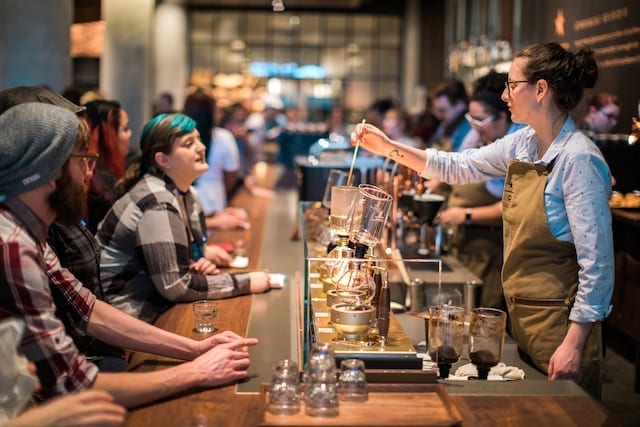
    The store features a bar made of modules which allows the store to adjust the layout by adding, removing or replacing them for different functions, such as ordering, beverage production and food display. At the ‘end of life’, modules that meet reuse standards can be refurbished and used again, hence reducing waste.

    Meanwhile, its signature green aprons are made from recycled Starbuck PET cups using advanced plastic-to-textile technologies. According to the company, each apron achieves approximately 1kg of carbon reduction in its lifecycle.

    Greener Store Shanghai will also host ‘Sustainable Coffee Classrooms’ with coffee masters selected from across the market, covering different sustainability practices adopted by Starbucks throughout the entire coffee supply chain.

    The store is the first in the country to recycle its coffee grounds for use as fertiliser. After composting, they can be used in suburban farms and shopping mall gardens. Customers can also take coffee grounds back home for free.

    In addition, Greener Store Shanghai marks the world’s first Starbucks store to host sustainability-themed exhibitions, where artists will be invited to give coffee grounds and other materials a new lease of life. Called the “Circular Lifestyle Lab,” the exhibition features sustainability-themed art installations made from recycled materials.

    The store provides coffee grounds straws and cutlery made of biodegradable materials while encouraging customers to bring their own reusable cups or tumblers. Half of the menu is plant-based food, including 15 new food items and two limited-time offer beverages. Oatmilk will be used as the default option for most beverages.

    First introduced in 2018 in collaboration with the World Wildlife Fund, Greener Store Framework has more than 2300 stores across the US and Canada. Starbucks aims to build and retrofit 10,000 Greener Stores globally by 2025.

  • Starbucks giving 2 million reusable cups away across Asia Pacific

    Starbucks giving 2 million reusable cups away across Asia Pacific

    Starbucks is giving away 2 million reusable cups across the Asia Pacific on Tuesday as part of its global commitment to reduce the waste footprint by 50 percent by 2030.

    The initiative, starting Tuesday, coincides with the coffee chain’s 50th anniversary. Starbucks’ new campaign aims to encourage its customers to use reusable cups when buying beverages and shift away from single-use plastics.

    The Starbucks limited-edition 50th anniversary cups will be first rolled out across selected Asia Pacific markets before expanding across the region in the coming months. The coffee chain said on September 28 alone, it expects to reach more than 2 million customers across the Asia Pacific region.

    “As we mark our anniversary milestone, this reusable cup is our gift to customers and our invitation to join Starbucks on our journey to becoming a resource-positive-company,” said Sara Trilling, president at Starbucks Asia Pacific.

    “This step is only one part of many more to come. Together with our customers, we’re constantly innovating new ways to scale more sustainable solutions across the region.”

    The offer will be available at participating stores, as well as select Mobile Order & Pay and delivery channels, across Cambodia, Hong Kong, Indonesia, Korea, Malaysia, Singapore and Taiwan, with an India offer on October 2.

    Customers are encouraged to bring back their cups when they next visit Starbucks to enjoy benefits and redeem additional offers.

  • Starbucks appoints its new China CEO

    Starbucks appoints its new China CEO

    Starbucks Coffee Company announced the promotion of Belinda Wong from president to chief executive officer of Starbucks China. Wong has been instrumental in Starbucks unprecedented growth in China—from 400 stores in 2011 to over 2,300 stores today—by leading on the foundational values of Starbucks mission and driving meaningful innovation for Starbucks partners (employees) and local customers in China. In this role, Wong will oversee Starbucks plans to double its scale to operate 5,000 stores in China by 2021. Wong will continue to report to John Culver, group president, Starbucks Global Retail.

    “Over the past five years, Belinda’s vision, experience and push for innovation has elevated Starbucks in the hearts and minds of the Chinese people and created a strong foundation for Starbucks growth in China,” says John Culver, group president, Starbucks Global Retail. “Belinda embodies our mission and values as a company, and her promotion will help further propel Starbucks efforts in building the partner and customer experience for the China market over the long-term.”

    “It is a privilege and honor to be appointed to lead Starbucks business in China during this important time,” adds Wong. “There continue to be tremendous opportunities for Starbucks in China and I look forward to further elevating the mission and values of our company through growth and innovation for our Chinese partners and customers.”

    Wong joined Starbucks in January 2000 and has held a number of leadership roles across the Starbucks China and Asia Pacific region. In her elevated role, Wong will focus on the overall long-term growth strategy and lead the innovation pipeline for Starbucks China. She will be responsible for key areas, including the vast digital and e-commerce opportunities across the market and overseeing the opening of Starbucks first international Starbucks Roastery in Shanghai in 2017.

    As president of Starbucks China, Wong led the evolution of the Starbucks Experience in China with the opening of four unique flagship stores which put the coffee passion and craftsmanship of baristas at the forefront of the customer experience. Over the past five years, Starbucks also launched several initiatives to elevate the Starbucks partner experience, reflecting the company’s foundational belief in the importance of investing in partners’ futures to support their growth and professional aspirations. Partner initiatives include a housing allowance subsidy for full-time baristas and shift supervisors, ongoing training and development opportunities through the Starbucks China University program and the company’s first-ever Partner Family Forums which showcased Starbucks deep culture and values to parents of Starbucks partners so they could learn about the company.

    In September 2016, Wong was among 50 recipients to receive the Magnolia Award by the Shanghai Municipal Government in appreciation of her outstanding contributions and support of Shanghai’s development. Wong was also listed as one of the 50 people shaping the future of the U.S. and China relationship by Foreign Policy, and the Top 100 Chinese Business Women by Forbes China in 2015. Since 2012, Wong has been ranked one of the top 25 on Fortune China’s prestigious annual list of China’s most influential businesswomen.

    Leo Tsoi, who most recently has served as Starbucks China’s vice president of Store Development and Design, has also been promoted to the role of chief operating officer of Starbucks China. As COO, Tsoi will continue to scale and deepen Starbucks store footprint, transform the infrastructure in the market, implement key operational systems, and evolve the Food business to elevate the customer experience in China. As VP, Store Development and Design, Tsoi and his team accelerated Starbucks store growth to 550 new stores, including flagship stores, high profile coffee-forward stores, 75 Reserve bars and more than 380 Pour Over bars for Starbucks customers.

    Since joining the company in 2012, Tsoi has led several key areas of the business as chief marketing officer and VP, North China, to firmly define Starbucks coffee leadership position in the market.

    Both Wong and Tsoi’s roles are effective immediately.

  • Starbucks plans to reduce food waste in Japan

    Starbucks plans to reduce food waste in Japan

    Starbucks today announced a new program to reduce food waste at select Starbucks stores across Japan.

    To ensure unsold food does not go to waste, participating stores have the option of marking down select bakery products by 20% several hours prior to closing.

    As part of Starbucks ongoing commitment to fight against hunger, the company will donate part of the revenue of these discounted sales to Musubie, a local non-profit which provides meals for children across Japan.

  • Coffee prices surge to seven-year high

    Coffee prices surge to seven-year high

    Arabica coffee prices rose 10 percent more on Monday, after jumping nearly 20 percent last week, to their highest in nearly seven years as unusual cold weather threatens coffee crops in the world’s largest producer Brazil.

    Severe frosts last week damaged a large part of fields in the main Brazilian coffee belt and a new polar air mass is forecast to move over the same areas later this week, which will be the third strong cold front to hit crops this year.

    Coffee trees are extremely sensitive to frost, which can cause severe damage and even kill trees completely. If a farm needs to replant trees, production would take around three years.

    Preliminary estimates from the Brazilian government’s food supply agency Conab said that last week’s frosts had affected 150,000 to 200,000 hectares – about 11 percent of the country’s total arabica crop area.

    “This marks the first time since 1994 that the country has experienced such a weather event,” coffee trader I & M Smith said in a market update, referring to the July 20 harsh frosts.

    Arabica coffee futures prices on ICE rose sharply on Monday, with the September contract climbing to a peak of $2.1520 per lb, the highest for the front month since October 2014.

    “The extent of the damage is still unclear, however, estimates are now between 5.5 million and 9 million (60 kg) bags, up from 2 million to 3 million last week,” said Charles Sargeant, softs and agricultural commodity broker at Britannia Global Markets.

    Sargeant was referring to the 2022 Brazilian crop. This year’s smaller production has been mostly harvested. A good production next year in Brazil was seen as important in balancing the global supply.

    Arabica coffee futures have risen by about 35% since the end of June, raising the prospect that major brands may have to raise prices in the coming weeks.

    Starbucks, Nestle and JAB Holdings, which are among the largest coffee processors and retailers in the world, declined requests for comments regarding possible impacts to the industry and the prospect of reduced availability next season.

    Smaller players would certainly suffer, while consumers will have to pay more.

    “We have stocks only up to September. We raised prices already three times this year, following the market moves, but the situation remains difficult,” said Luciane Carneiro Mendes, a partner at Cafe Carneiro, a small roaster in Brazil.

    Coffee prices in Brazil, she said, have risen from 400 reais ($77.30) per 60-kg bag in December to around 800 reais this month, but there are estimates for further increases ahead to around 1.000 reais.

  • Starbucks offerering BlackPink merchandise in Thailand

    Starbucks offerering BlackPink merchandise in Thailand

    Today, Starbucks announces a collaboration with the phenomenal K-pop Girl Group BLACKPINK, launching a new limited-edition merchandise collection on July 12 in select stores to Starbucks customers in Thailand.

    The Starbucks® x BLACKPINK ‘Spark in You’ collection features hearts on a dreamy starry background, with BLACKPINK’s iconic black and pink contrasting colors and sparkling star prints. The stylish collection of drinkware and lifestyle accessories is inspired by the courage and perseverance of youth who follow their heart and pursue their dreams with confidence, and the dynamic designs represent the unique personalities of BLACKPINK’s members.

    “Starbucks is very excited to offer a merchandise collection that celebrates young people’s talents and determination, as truly demonstrated by BLACKPINK,” said Nednapa Srisamai, Managing Director, Starbucks Thailand. “Starbucks merchandise collection has always created opportunities for customers to express their personal style. We are delighted to bring this special collection, inspired by BLACKPINK’s journey to stardom, to Starbucks customers in Thailand.”

  • Starbucks, Herschel Supply collection made from recycled coffee grounds

    Starbucks, Herschel Supply collection made from recycled coffee grounds

    Eco-warriors might be familiar with last year’s sustainable Starbucks x Herschel collection made from recycled plastic. The 2 brands have teamed up again on a new environmentally-friendly series, The resupply Collection. This time, it is manufactured from recycled coffee grounds. Like the previous collaboration, the Starbucks x Herschel Supply Co. 2021 collection includes drinkware and limited edition bags.

    To commemorate Earth Day 2021 on 22 April, the collection will be dropping on the same day. Read on to find out what items will be available and how you can get your hands on them a day before everyone else.

    Mugs and tumblers

    Herschel Supply Co. is a brand that often incorporates a bevy of floral patterns on its accessories. It’s no surprise that its collaboration with Starbucks will follow suit.

    For this mug, the bright green, red and white print inspired by coffee cherries pops against the black body, making for an eye-catching piece of drinkware. It will retail for $48.90.

    For something you can bring with you on the go, the tumbler features the same print as the mug above. You can also opt for the sleek, all-black tumbler if you want a more minimal piece to add to your backpack. Both tumblers will cost $56.90.

    With the Double Wall Plastic Tumbler, you can do your part for the environment while feeling like you’re drinking out of Starbucks’ iconic takeaway cup. The tumbler will retail for $36.90.

    Lunch box

    For those who like to BYO lunch boxes to dabao food, you can now do it while repping your favourite brands. The Starbucks x Herschel Supply Co. 2021 collection To Go Lunch Box is available for $35.90.

    The Chapter Carry-on Toiletry Bag might be small, but it makes a bold statement bearing the campaign’s tagline, “People, Planet, Coffee”. Use this pouch as a daily reminder to commit to sustainability while getting ready in the morning. The pouch will retail for $49.90.

    Convenience and style packed into one nifty pouch—the Fifteen Hip Bag will be the pride of all streetwear lovers once they get their hands on it. It will be available for $59.90.

    Backpacks and totes

    Tote bags are all about versatility. Whether you carry it on your shoulder, or hold it in your hands, they always look good. The Mica Tote Bag from the Starbucks x Herschel 2021 collection is no exception. You can cop the bag for $79.90.

    VSCO girls tired of pastel colours, give the Classic Mini Backpack a chance. You can achieve a more understated look while still sporting a fresh splash of green. This backpack will retail for $89.90.

    As long as you’re out and about in Singapore, you will probably come across multiple people carrying Herschel Supply Co. backpacks. This remix of the popular Retreat Backpack boasts both brands’ logos, and the campaign’s tagline to stand out. Now you can hop on the Herschel Supply Co. train without being called basic.

    The Retreat Backpack will cost $149.90.

    Good news for Starbucks Rewards Gold Members, all that bling you spent on the brand will be worth it. Gold Members will get early access to the collection in Starbucks stores on 21 April 2021. For the rest, as mentioned earlier, the collection will be released on 22 April to coincide with Earth Day. The Starbucks x Herschel collection will be available in Starbucks Singapore’s physical stores as well as its Shopee Mall and LazMall stores from 12pm onwards.

    In the meantime, you can also check out the freshly released Starbucks hedgehog mugs from the brand’s recent summer-themed collection.

  • Scandal-plagued Luckin Coffee secures US$250 million lifeline

    Scandal-plagued Luckin Coffee secures US$250 million lifeline

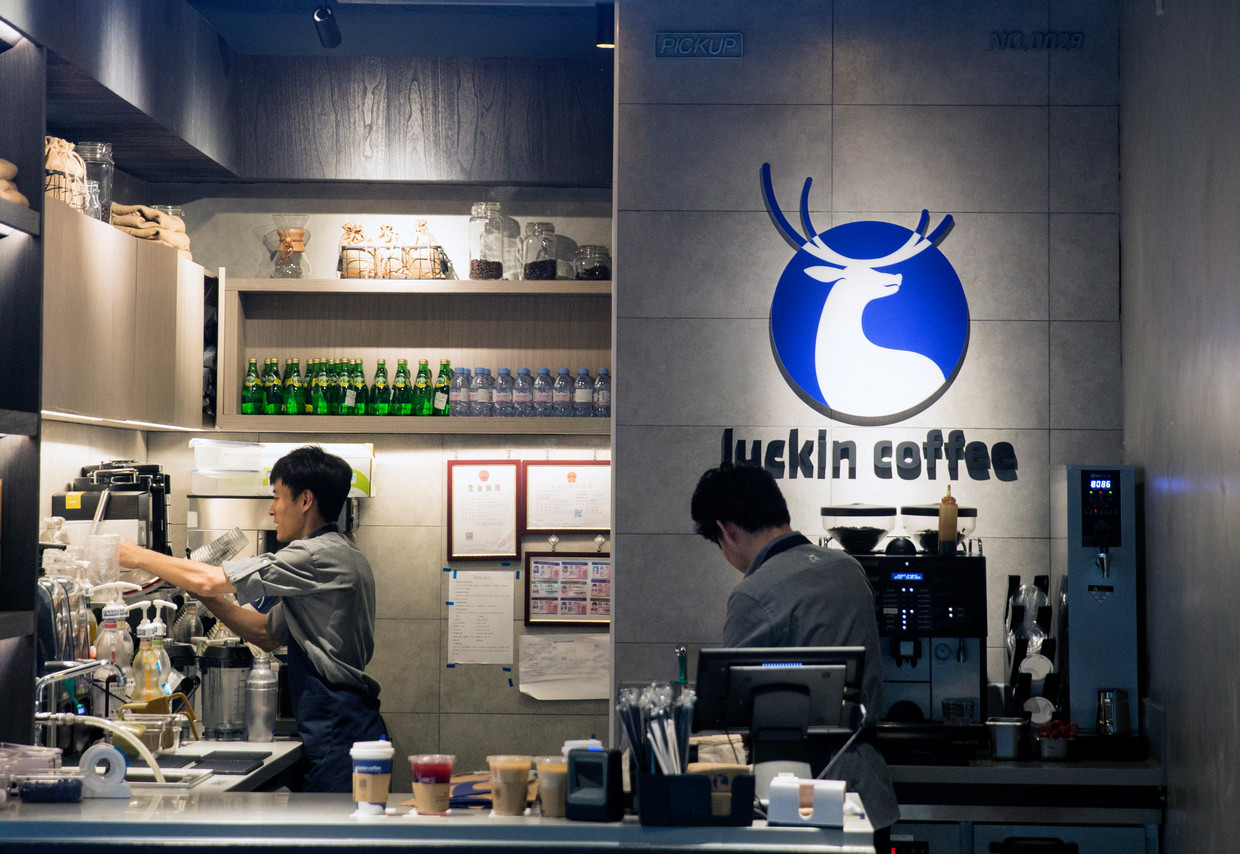
    Luckin Coffee, the scandal-plagued Chinese coffee shop chain, secured a $260 million investment from existing shareholders Centurium Capital and Joy Capital. It also replaced its independent auditor.

    This will help Luckin satisfy a $180 million settlement struck last year with the SEC, which had accused Luckin of faking retail sales figures. The company went public on the Nasdaq less than two years ago at a $4.3 billion valuation but was later delisted because of the accounting fraud.

    The investment is structured as convertible preferred stock, with an option for Centurium and Joy to invest an additional $150 million.

    The bottom line, Luckin was supposed to be China’s answer to Starbucks, but so far has been closer to China’s answer to Enron.

  • Starbucks opens with new Japanese store design

    Starbucks opens with new Japanese store design

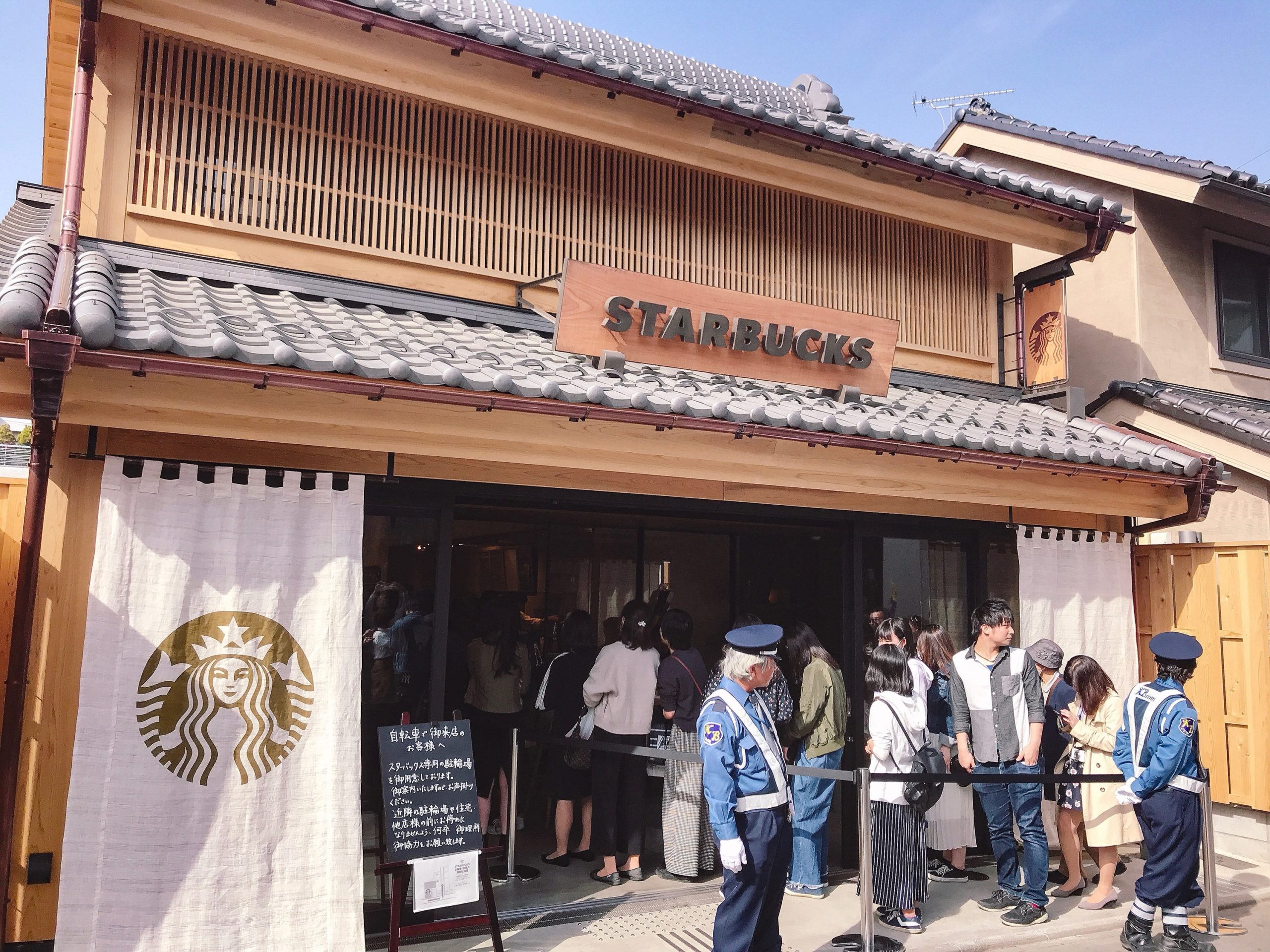
    There are several unique and beautiful Starbucks stores in Japan including the traditional Machiya style store in Kyoto and the Edo-style wooden house store in Kawagoe City, and they have been popular tourist attractions nowadays.

    In 2020 spring, Starbucks Japan opened another unique branch, featuring the tiled roof traditional Japanese house with historic stone lanterns. The “Starbucks Coffee Shinshu Zenkoji Nakamise Street Store” opened in March 2020 as the first regional landmark store in Koshinetsu Region, situated on the Nakamise Street, an approach/shopping street leading to Shinshu Zenkoji Temple in Nagano Prefecture.

    The store is set in the historical district near the magnificent temple, and feature very unique and fascinating architectural design with motifs of a traditional Japanese house.

    5 types of Nagano wood are used for the interior that warmly welcomes visitors and express the connection to the local community. The 2nd floor presents the beauty of the lights and shades of Japanese houses with Shoji (wooden-framed paper window) and skylights delivering gentle light to the space.

    In addition, there are several historical essences that present good old Japan such as stone lanterns and wooden beams. At this new Starbucks store, visitors can spend a little bit more quality and luxurious time while enjoying aromatic coffee!

  • Shinsegae seeks to buy Starbucks US’ stake in Korean business

    Shinsegae seeks to buy Starbucks US’ stake in Korean business

    South Korea’s retail giant Shinsegae is reviewing ways to double its stake in Starbucks Korea from 50% to 100%, according to an industry source on Mar. 19. Shinsegae’s affiliate E-mart currently owns 50% of Starbucks Korea, while Starbucks Corporation headquartered in the US owns the other 50%.

    If the deal is successful, Starbucks Korea would become a wholly owned subsidiary of E-mart, which will receive double the dividends from the company. Starbucks Korea paid out annual dividends of 30 billion won ($26.6 million) each to E-mart and Starbucks Corporation last year.

    “While we are having thorough reviews on the topic internally, nothing has yet been confirmed,” said a Shinsegae spokesman.

    Starbucks Korea will still have to pay royalties at the current rate of 5% to Starbucks headquarters even if E-mart owns a 100% stake in the company.

    South Korea’s retail and franchise industry has been speculating for years regarding Starbucks Korea’s next steps.

    Many had projected that Starbucks headquarters would want to purchase E-mart’s shares to operate independently, as it did in China and Japan in the last five years.

    In case of a successful deal between Shinsegae and Starbucks Corporation, South Korea will mark the first country in Asia where Starbucks is 100%-owned by a local operator.

    Starbucks Korea was established as a 50:50 joint venture between E-mart and Starbucks Corporation in 1997, opened its first branch in 1999 and expanded to 1,503 branches as of December last year.

    Starbucks Korea’s revenue now exceeds 10% of Starbucks’ total revenue generated globally, but its operating margin falls behind the global average.

    Starbucks currently holds the highest coffee franchise market share in Korea, surpassing 1 trillion won ($885 million) revenue in 2016 and maintaining more than 20% year-over-year growth rates from 2017 to 2019, at 26%, 20.5% and 22.8%, respectively.

    Last year, Starbucks Korea generated 1.92 trillion won ($1.7 billion) in revenue, just 80 billion short of 2 trillion won ($1.77 billion).