Tag: starbucks

  • Starbucks introduces first signing store in Indonesia

    Starbucks introduces first signing store in Indonesia

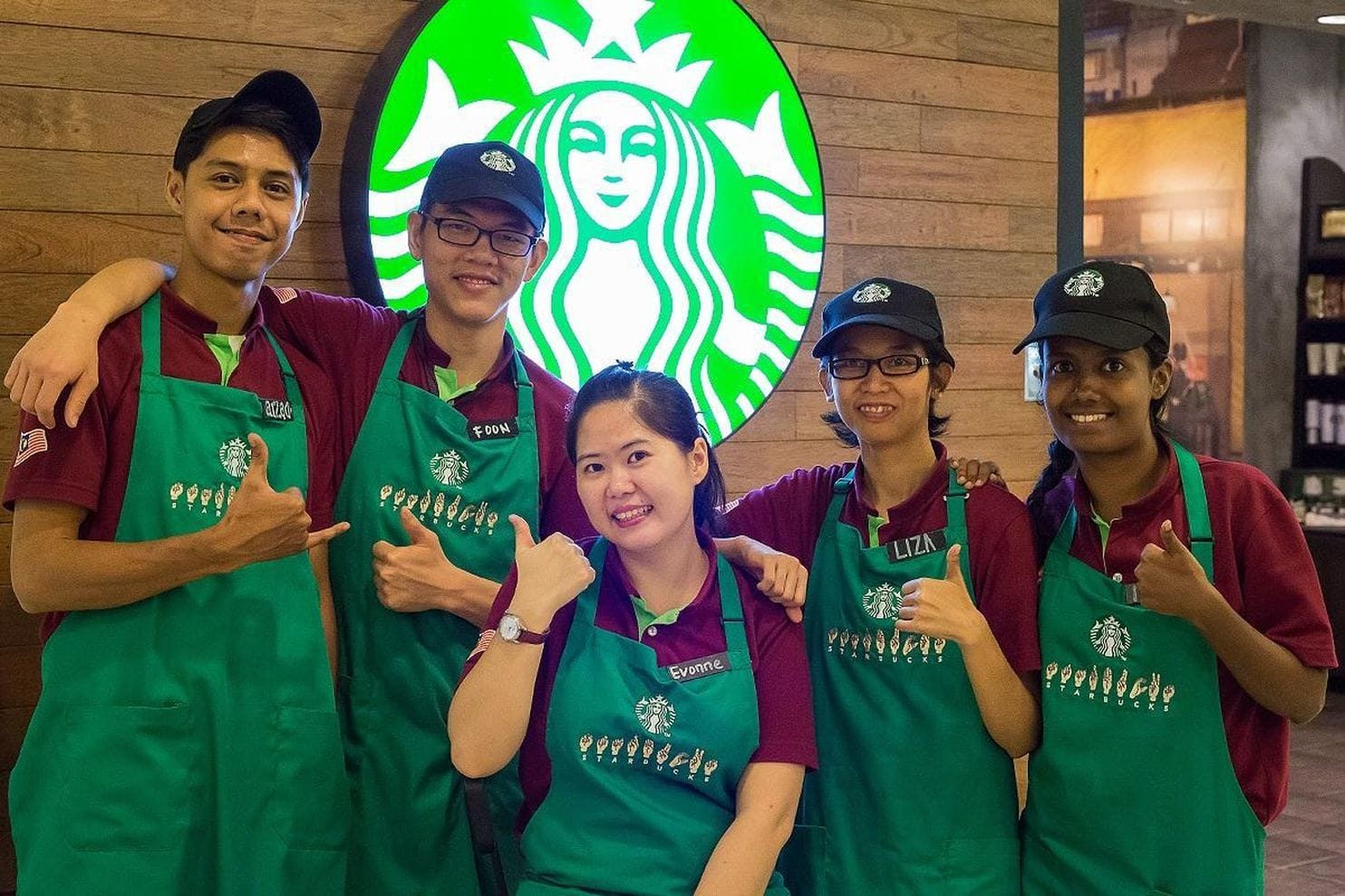
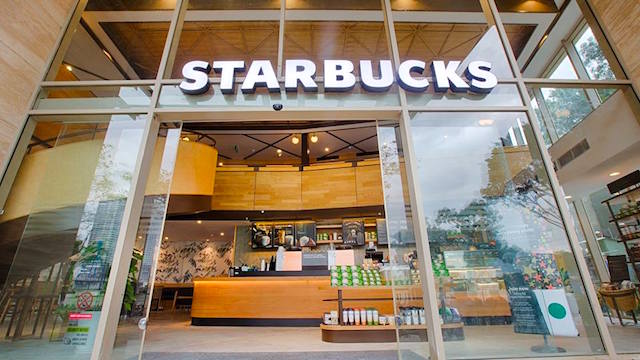
    Tomorrow, Starbucks Indonesia will open its first Signing Store dedicated to the Deaf, hard of hearing, and sign language communities in Jakarta, Indonesia. Designed with inclusivity and accessibility at its core, customers at the Starbucks Tata Puri Community Store will be served by Deaf and hard-of-hearing baristas who proudly wear the green apron. The store is located on Jl. Tanjung Karang No.3 Kebon Melati in Central Jakarta.

    The Starbucks Tata Puri Community Store provides a third place where all customers, including the Deaf and hard-of-hearing community can gather, socialize, and nurture human connections. Deaf baristas will wear green aprons embroidered in sign language with the company’s name, Starbucks. Partners (employees) who can use Bisindo sign language will wear an “I Sign” pin. Customers also will be able to order beverages and food using a writing tablet.

    The store also offers a community area for members of the Deaf community to support and conduct programs from Gerkatin (Gerakan untuk Kesejahteraan Tunarungu Indonesia) and Pusbisindo (Pusat Bahasa Isyarat Indonesia) – two organizations Starbucks has partnered with in Indonesia to support sign language education for the broader community. To encourage a culture of human connections through the celebration of Deaf culture and sign language, the store will also host sign language lessons and coffee workshops in sign language.

    “The inauguration of the Signing Store is a major achievement for Starbucks Indonesia as it celebrates its 20th anniversary in the market,” said Anthony McEvoy, leader of PT Sari Coffee Indonesia, Starbucks licensee partner in Indonesia. “The Signing Store demonstrates our commitment to creating a more inclusive and diverse work environment and to widening access to all communities.”

    “We were delighted to see the enthusiasm from the Deaf and hard-of-hearing community when we opened applications. More than 150 people applied from across the country. The baristas selected are a diverse group, including a former swimming para-athlete and fashion models,” said Anastasia Dwiyani, senior general manager of Human Capital at PT Sari Coffee Indonesia. “As with all our partners, we are excited to help nurture their talent and advance career opportunities.”

    United by the culture of sign language, this store is filled with design elements that bring communities together. The signature siren logo with Bisindo is immediately visible as customers pass the busy main road, Sudirman Street. With the Starbucks® logo with Bisindo above the main door, customers are greeted by a mural wall as soon as they enter the store and a collection of exclusive merchandise – clear cup tumblers, stainless-steel tumblers and mugs. The elongated oval shape community table, and circle details on the floor, also symbolize the store that unites the community. The most notable feature is a 4m high mural painting by Deaf artist, Indira Natalia, which extends more than 11m outside the store, depicting the warm and welcoming Starbucks experience. The signature artwork can be seen by passersby in the street.

    “As a Deaf artist, I am so proud to share my art with customers and partners at Indonesia’s first Signing Store. While brainstorming, I realized that Starbucks has always strived to create an environment where everyone feels welcome and belongs – and the inspiration for my work came from that, by presenting many different figures (communities) united by sign language and Starbucks,” says Indira. “Art can break boundaries and unite people, just like the connection people share when they drink coffee. There are many ways to communicate and connect people from diverse backgrounds, and at Starbucks, coffee makes this happen.”

    Since opening its first store in Plaza Indonesia 20 years ago, Starbucks has expanded to 44 cities in Indonesia, with more than 4,300 partners now proudly wearing the green apron. In its mission to make a difference in the lives of those connected with Starbucks, the company strives to create a positive impact in the communities it serves. In 2020, Starbucks opened the first Community Store in the Tanah Abang neighborhood.
  • Starbucks enters Laos with Maxim’s Caterers

    Starbucks enters Laos with Maxim’s Caterers

    US coffee chain Starbucks has expanded its footprint into Laos under the partnership with its licensee Coffee Concepts, a subsidiary of Hong Kong-based Maxim’s Caterers.

    The Laos launch marks Starbucks’ 84th market globally, “reaffirming the company’s long-term commitment to continued growth across Southeast Asia” the company said in a statement.

    Coffee Concepts already operates more than 900 stores across Hong Kong, Macau, Vietnam, Cambodia, Singapore and Thailand.

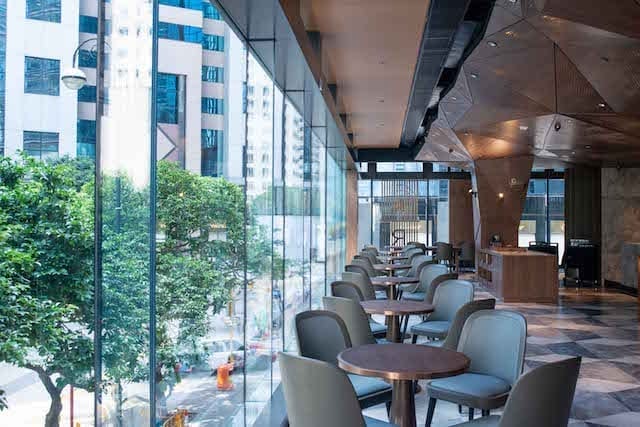
    The store’s interior design was inspired by the layers and symmetry of traditional Laotian architecture. The ceiling features “Siren-scale” wood tiles, mimicking the brand’s signature Siren emblem and the historical housing architecture in Laos. Ceiling tiles feature botanical wood, inspired by the country’s coffee plants and natural scenery. A hand-painted artwork of Siren created by a local artist is displayed on the store’s most prominent wall.

    “We are committed to delivering the best experience to our new partners and customers in the market,” said Michael Wu, chairman and MD of Hong Kong Maxim’s Group.

  • Starbucks India launches first Reserve store

    Starbucks India launches first Reserve store

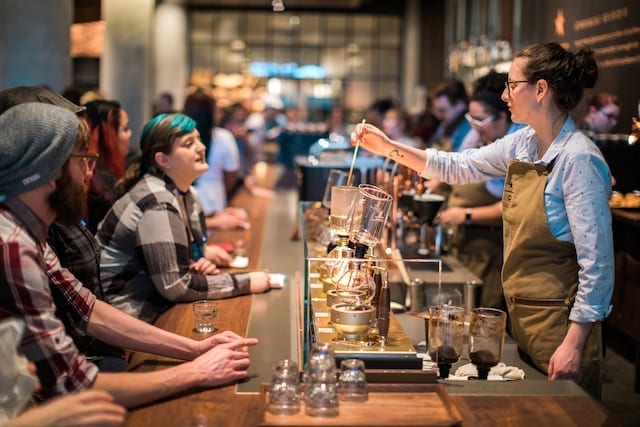
    Starbucks India has opened its first flagship Reserve store in Mumbai, Maharashtra. The 5200sqm Starbucks Reserve Fort Mumbai sells beverages, food and Reserve merchandise, such as black and gold mugs and tumblers with the Starbucks Reserve trademark. The flagship is decorated with a contemporary colour scheme and a Starbucks Siren made by two local artists from Mumbai, Sonal Vasave and Makarand Narkar. Customers can scan the nearest QR code with their Instagram camera to view the painting.

    The flagship is decorated with a contemporary colour scheme and a Starbucks Siren made by two local artists from Mumbai, Sonal Vasave and Makarand Narkar. Customers can scan the nearest QR code with their Instagram camera to view the painting in augmented reality (AR).

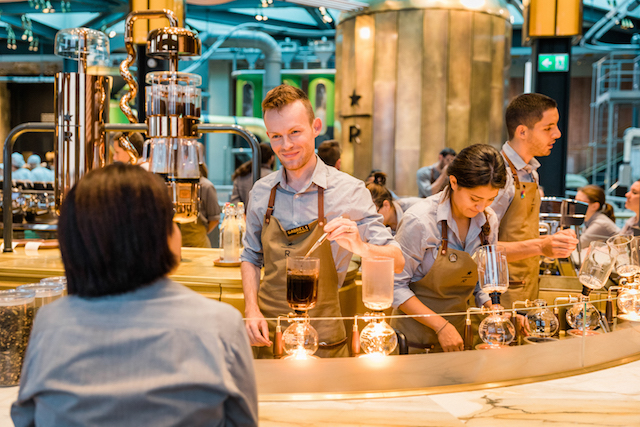
    In addition, there is a Black Eagle espresso machine in the store and Starbucks says customers can experience the “most exquisite and rarest coffees” in the world, such as Bolivia Sol de la Mañana, Rwanda Sholi and Sumatra Kerinci.

    In 2012, Starbucks made its debut in India as part of a collaboration with Tata Consumer Products. Tata Starbucks, a joint venture between two companies, now runs more than 300 locations nationwide and expanded into 14 new cities this year.

    “For 10 years, Starbucks has been elevating coffee craftsmanship and bringing unique experiences to our customers in India,” said Tata Starbucks CEO Sushant Dash.

    “We value the strong connections we have with our customers and will continue to innovate and develop to enhance India’s coffee culture. Starbucks Reserve is a selection of the rarest, most extraordinary coffees Starbucks has to offer, and transports customers and coffee aficionados to an immersive and personalised coffee journey.”

    Tata Starbucks opened its first stores run entirely by women in 2020, with the goal of expanding opportunities for female partners. That program has grown to 15 locations throughout the country

  • Starbucks opens its 6,000th China store

    Starbucks opens its 6,000th China store

    Starbucks Tuesday celebrated its 6,000th store in the Chinese mainland, located in downtown Shanghai. Shanghai thus became the first city in the world to have 1,000 Starbucks stores, Starbucks China said.

    In 2018, Starbucks announced it would have 6,000 stores on the Chinese mainland by the end of its fiscal year in September 2022. The company achieved that as scheduled despite challenges, including the COVID-19 pandemic.

    Starbucks opened its first store on the Chinese mainland in January 1999 in Beijing.

    The number of Starbucks stores on the Chinese mainland has grown dramatically over the past decade and is expected to grow to 9,000 by 2025, creating 35,000 new jobs, according to the company’s strategic plan released recently. Starbucks China also revealed a plan to set up its first digital technology innovation center on the Chinese mainland over the coming three years.

    A Starbucks coffee creative park in Kunshan, east China’s Jiangsu Province, is expected to be completed and start operating in the summer of 2023.

    Starbucks Tuesday celebrated its 6,000th store in the Chinese mainland, located in downtown Shanghai.

    Staff members work at a Starbucks store in downtown Shanghai, east China, Sept. 27, 2022. Starbucks Tuesday celebrated its 6,000th store in the Chinese mainland, located in downtown Shanghai.

    Shanghai thus became the first city in the world to have 1,000 Starbucks stores, Starbucks China said.

  • Starbucks projects profit growth from tech, stores, workers spending

    Starbucks projects profit growth from tech, stores, workers spending

    Starbucks Corp projects profits to grow between 15% to 20% per share over the next three years, a significant increase from previous guidance based on spending plans of $2.5 to $3 billion over the same period on technology, new stores and renovations, the coffee chain said on Tuesday.

    The company is introducing technology to speed up production of its increasingly popular cold beverages and send digital orders away from busy locations as it seeks to prevent U.S. cafes from being overwhelmed by orders and improve working conditions for employees, it announced during its Investor Day event.

    The Seattle-based company expects to return $20 billion to investors via share buybacks and dividends from fiscal 2023 to 2025. Wall Street analysts had largely expected earnings updates to be in line with previous guidance of 10 to 12% growth.

    A surge in digital orders, which now make up nearly a quarter of all orders, has helped the coffee chain gain market share during the COVID-19 pandemic but has also led to barista burnout and strained the physical capacity at older stores.

    The company is exploring “load balancing” technology that can send orders to stores that have capacity to actually fulfill them – instead of to stores already being slammed by drive-thru customers, for instance, Chief Technology Officer Deb Hall Lefevre said in an interview with Reuters.

    “REINVENTION” OF STARBUCKS SINCE PANDEMIC

    The pandemic changed customer behavior, leading to a deluge of mobile, delivery and drive-thru orders, as well as an increase in cold beverages and customized coffee drinks.

    Calling it a “reinvention,” the company laid out a sweeping plan spearheaded by interim Chief Executive Officer Howard Schultz, who will be replaced by Laxman Narasimhan in April.

    The plan includes new equipment to heat food faster with less plastic waste, new store designs with larger shelves for orders and additional employee benefits.

    A new system for iced coffee drinks shaves nearly a minute off the time it takes to make a Mocha Frappuccino, down to 35 seconds. Baristas would no longer need to haul a bucket of ice to the station every hour because the ice will be automatically fed into the new equipment.

    Another machine, which brews hot coffee one cup at a time instead of in bulk batches and eliminates paper filters, is being tested in Minneapolis locations and could be rolled out next year.

    Starbucks is on pace to reach 45,000 stores by the end of fiscal 2025 – or nearly eight new stores per day – it said. That includes a net new 2,000 new U.S. stores and some delivery-only locations.

    In China, it plans to nearly double the number of stores to 9,000 – or one new store nearly every nine hours.

    UNION BACKDROP

    Employees at 236 stores voted to join a union over the past year, out of Starbucks’ nearly 9,000 corporate-owned U.S. locations. Conversely, 52 stores voted against unionizing, according to National Labor Relations Board data.

    Frank Britt, brought in by Schultz to lead the company’s transformation strategy, said workers know how to solve the company’s problems because they are on the front line.

    “A lot of the concerns the partners have, whether they’re affiliated with the union or not, are valid concerns. We agree, there’s a trust deficit,” he said in an interview.

    Union members have been holding protests this week to bring attention to their demands. Billie Adeosun, a Starbucks employee since 2015 who works at a unionized location in Olympia, said on Monday higher wages were a top priority.

    The company has lifted pay to an average of nearly $17 across non-unionized U.S. locations. Starbucks says the law prohibits it from offering increased benefits to unionized workers without bargaining over them.

    “We know that these benefits or higher wages… wouldn’t even exist without unions,” said Adeosun, who makes $15 an hour. “We’ve been able to shine a spotlight on this company and show that they’re not the liberal company they claim to be.”

  • Starbucks appoints Laxman Narasimhan as its next CEO

    Starbucks appoints Laxman Narasimhan as its next CEO

    Starbucks today announced that Laxman Narasimhan will become the company’s next chief executive officer and a member of the Starbucks Board of Directors. Narasimhan will join Starbucks as incoming ceo on October 1, 2022 after relocating from London to the Seattle area and will work closely with Howard Schultz, interim ceo, before assuming the ceo role and joining the Board on April 1, 2023.

    Narasimhan brings nearly 30 years of experience leading and advising global consumer-facing brands. Known for his considerable operational expertise, he has a proven track record in developing purpose-led brands. Building on companies’ histories, he has succeeded in rallying talent to deliver on future ambitions by driving consumer-centric and digital innovations. Most recently, he served as chief executive officer of Reckitt, a FTSE-12 listed multinational consumer health, hygiene and nutrition company, where he led the company through a major strategic transformation and a return to sustainable growth.

    “Laxman is an inspiring leader. His deep, hands-on experience driving strategic transformations at global consumer-facing businesses makes him the ideal choice to accelerate Starbucks growth and capture the opportunities ahead of us. His understanding of our culture and values, coupled with his expertise as a brand builder, innovation champion, and operational leader will be true differentiators as we position Starbucks for the next 50 years, generating value for all our stakeholders. On behalf of the entire Board, I am thrilled to welcome Laxman as Starbucks next ceo,” said Mellody Hobson, Independent Starbucks Board of Directors chair.

    During the transition period, Narasimhan will be fully immersed in the company, spending time with Schultz and the management team, partners and customers and gaining in-depth exposure to the brand, company culture, and Reinvention plan. This will initially include Starbucks store immersions, visiting manufacturing plants and coffee farms, connecting with partners around the globe as well as Starbucks long term business partners.

    Schultz will remain in the role of interim ceo during this transition period, following which he will continue as a member of the Starbucks Board of Directors. He will remain closely involved with the company’s Reinvention and act as an ongoing advisor to Narasimhan.

    “When I learned about Laxman’s desire to relocate, it became apparent that he is the right leader to take Starbucks into its next chapter. He is uniquely positioned to shape this work and lead the company forward with his partner-centered approach and demonstrated track record of building capabilities and driving growth in both mature and emerging markets. As I have had the opportunity to get to know him, it has become clear that he shares our passion of investing in humanity and in our commitment to our partners, customers, and communities. The perspectives he brings will be a strong asset as we build on our heritage in this new era of greater well-being. I greatly look forward to our partnership over the coming months and years,” said Schultz.

    “Starbucks commitment to uplift humanity through connection and compassion has long distinguished the company, building an unrivaled, globally admired brand that has transformed the way we connect over coffee. I am humbled to be joining this iconic company at such a pivotal time, as the Reinvention and investments in the partner and customer experiences position us to meet the changing demands we face today and set us up for an even stronger future,” said Narasimhan. “I look forward to working closely with Howard, the Board, and the entire leadership team – and to listening and learning from Starbucks partners – as we collectively build on this work to lead the company into its next chapter of growth and impact.”

    Previously, Narasimhan held various leadership roles at PepsiCo, including as global chief commercial officer, where he was responsible for the company’s long-term strategy and digital capabilities. He also served as ceo of the company’s Latin America, Europe and Sub-Saharan Africa operations, and previously as the ceo of PepsiCo Latin America, and the cfo of PepsiCo Americas Foods. Prior to PepsiCo, Narasimhan was a senior partner at McKinsey & Company, where he focused on its consumer, retail and technology practices in the U.S., Asia and India and led the firm’s thinking on the future of retail.

    Narasimhan is also a trustee of the Brookings Institution, a member of the Council on Foreign Relations, served as a member of the UK Prime Minister’s Build Back Better Council, and is a member of Verizon’s Board of Directors. He holds a degree in Mechanical Engineering from the College of Engineering, University of Pune, India. He has an MA in German and International Studies from The Lauder Institute at The University of Pennsylvania and an MBA in Finance from The Wharton School of The University of Pennsylvania.

  • Starbucks plans rapid expansion in Thailand

    Starbucks plans rapid expansion in Thailand

    Starbucks Thailand has announced an expansion strategy, which calls for opening 30 new coffee shops in Thailand every year until 2024 – 90 in all – according to Bangkok Post.

    The company claims to be prepared to expand again this year, after sales improved during the first half of this year. In addition, Starbucks Thailand also says it will concentrate on expanding its digital platform channels, add more drive-thru locations, and introducing novel beverages.

    Nednapa Srisamai, MD of Starbucks Thailand, told the Bangkok Post that the brand’s well-known profile in the country created an opportunity to expand the network. While a major regional tourist destination, Thais also have a coffee-drinking culture.

    Starbucks began its operation in Thailand by opening its first coffeehouse in July 1998 and was acquired under the joint venture between Dairy Farm subsidiary Maxim’s and Singapore-headquartered Fraser & Neave (F&N) in 2019 in a deal valued at US$500 million.

    Last year, the brand introduced its largest store in the region, Starbucks Reserve Chao Phraya Riverfront, located at IconSiam in Bangkok.

    Starbucks also plans to strengthen its digital presence after partnering with Grab earlier this year to launch Starbucks Rewards aiming to enhance the customer experience in Southeast Asia’s six largest markets – the Philippines, Thailand, Singapore, Malaysia, Indonesia and Vietnam.

  • Starbucks closes third Vietnam outlet

    Starbucks closes third Vietnam outlet

    Starbucks Vietnam will close its Hanoi outlet after eight years, following the closure of two locations in Vietnam last year. The Starbucks Lan Vien outlet in Hoan Kiem District will operate until June 30, the company said in a Facebook post. Last year, the coffee chain had closed another outlet in Hoan Kiem District and one in Ho Chi Minh City’s District 1.

    Patricia Marques, CEO of Starbucks Vietnam, said earlier this year that the company was finding it challenging to expand the number of outlets in Vietnam due to difficulties in negotiating rent prices.

    The company, however, will continue to expand in Vietnam by focusing on new urban areas where there is a lack of services, she added.

    She also said that in central districts, Starbucks has observed that customers tended to order more takeaways, so it was considering opening small takeaway outlets where customers can pick up their drink right away.

    Starbucks has 78 outlets nationwide, while its competitor Highlands Coffee’s has 500 and The Coffee House has 156.

    The Covid-19 pandemic has forced several food and beverage chains to close outlets amid plunging revenue.

    The Coffee House closed over 20 outlets last year, while Soya Garden shut down its last one in HCMC. Soya Garden still has eight outlets in Hanoi.

  • Starbucks Japan opens new store focused on coffee grounds circularity

    Starbucks Japan opens new store focused on coffee grounds circularity

    Starbucks has announced a first look into a new drive-thru store, opening on 1 June within a bustling rest stop in Togane City, Japan. The store is the second in Japan to be certified under the Greener Stores Framework, aimed at accelerating the transformation of retail towards lower-impact stores that achieve reductions in carbon emissions, water usage and landfill waste.

    The store plays a key role in a community collaboration between Starbucks Japan, Togane City and Sanyu Plant Service Corporation, a local manufacturer, which aims to promote circularity and reduce waste, while making a positive impact for the local community. As part of the collaboration, used coffee grounds from the new store will be recycled into cattle feed, and through Starbucks coffee grounds circularity loop, milk from participating dairies is then used to create handcrafted beverages at around 200 Starbucks stores across the Kanto and Kansai areas, including the new drive-thru. In addition, other food waste from the store will be turned into compost to grow produce directly at the rest stop in Togane City, in cooperation with Chiba Prefectural University of Agriculture.

    Designed inside and out to reflect the area’s proud local industry, the store features local Sambu cedar and Japanese yew trees, the official trees of Togane City. As part of Starbucks’ global efforts to reduce carbon by 50% by 2030, the store is powered by solar panels on the roof and locally-generated renewable energy. The solar system will include batteries that can provide backup power in the event of an outage.

    Connection with the community is also central to the new store’s operation and design. “I believe that even if the actions of each of us are small, each step we take will become a path leading to the future,” says Ayumi, store manager. “Starting with what we can do, we would like to build the future together with the community.”

  • Starbucks sells its Evolution Fresh juice business

    Starbucks sells its Evolution Fresh juice business

    Starbucks is selling its cold-pressed juice brand, as the company focuses on its coffee-drink business and improving its stores and relations with its cafe workers under interim Chief Executive Howard Schultz.

    Fresh-food maker Bolthouse Farms Inc. said it agreed to acquire Starbucks’s Evolution Fresh line of juices, which currently are sold in Starbucks cafes and supermarkets. Terms of the deal, which Bolthouse said is expected to close later this year, weren’t disclosed. Starbucks said the financial impacts of the deal weren’t expected to be material.

    For Starbucks, the deal comes as Mr. Schultz directs more investment toward the coffee giant’s cafes and baristas. Mr. Schultz, the longtime Starbucks leader who returned in April for his third stint leading the chain, said the company needs to better handle increased demand, improve the cafe experience for customers and baristas, and increase communication between workers and executives.

    Starbucks said it believes Bolthouse Farms has the beverage-industry experience to help Evolution Fresh grow, and shares Starbucks’s priorities for developing the brand and its employees.

    The coffee chain in 2011 paid $30 million to acquire Evolution Fresh, when Mr. Schultz was at Starbucks’s helm for the second time. Mr. Schultz said at the time that the deal would give Starbucks a position in the $1.6 billion premium juice category, and products targeting the health and wellness sector.

    Starbucks opened a handful of Evolution Fresh-branded juice bars, but later wound down that effort after Kevin Johnson was named Starbucks’s CEO in 2017. The company continued selling bottles of Evolution Fresh organic, cold-pressed juices in all of Starbucks’s U.S. stores.

    Mr. Schultz told Starbucks investors earlier this month that since returning, he has pushed the company to focus squarely on improving its core U.S. business. In April he canceled billions of dollars in previously planned stock buybacks, saying Starbucks needed to invest more in its stores, including $200 million in additional compensation and training for workers.

    Starbucks on Monday said it would permanently leave the Russia market, closing 130 stores after the country’s invasion of Ukraine.

    The Evolution Fresh deal will add the brand to California-based Bolthouse’s portfolio of juices, which include vegetable, fruit and protein products. Bolthouse’s current brands represented about one-quarter of the U.S. sales of refrigerated beverages as of last month, according to data from market-research firm IRI.

    “This is what we do. We grow stuff and turn it into juice,” said Bolthouse CEO Jeff Dunn. “They got a great supplier and we got a great brand.”

    Bolthouse said it would keep the juice brand’s nearly 300 employees, who currently are employed directly by Starbucks in California. Over the roughly six-month sales process, Starbucks was focused on how Bolthouse would treat its employees and keep up juice supply to its stores, Mr. Dunn said.

    Evolution Fresh, which is sold at Whole Foods Market and some other retailers in addition to Starbucks, had roughly 2% of the U.S. refrigerated-beverage market as of last month, according to IRI figures. Bolthouse intends to increase marketing of Evolution Fresh and get the products onto the shelves of other retailers, said Mr. Dunn, a former executive at Campbell Soup and Coca-Cola.

    “People have awareness of it, but they don’t see it in a lot of other places other than Starbucks, or maybe Whole Foods,” he said. “We’ll expand the brand and really bring it to a lot more people.”

    Bolthouse Farms, backed by private-equity firm Butterfly Equity, bought back its namesake brands from Campbell in 2019. It has looked to acquire other fresh-food brands since, Mr. Dunn said.

  • Starbucks forges regional partnership with Grab

    Starbucks forges regional partnership with Grab

    Starbucks today announced an integrated partnership with Grab, Southeast Asia’s leading superapp, across six markets, including the Philippines, Thailand, Singapore, Malaysia, Indonesia, and Vietnam. The partnership will provide customers across Southeast Asia with a seamless Starbucks Experience, allowing them to earn Starbucks Rewards benefits on purchases through Grab, have more ways to order and pay in stores, and enjoy their Starbucks orders sooner with last-mile delivery fulfillment through Grab’s delivery network.

    Customers will be able to enjoy more personalized and convenient experiences that deepen their connection to Starbucks through a range of Grab services including GrabPay, GrabRewards, GrabFood, GrabExpress and GrabGifts. Building on Starbucks and Grab’s shared commitment to creating a positive impact, the partnership will also help provide food assistance to communities in need across Southeast Asia, while reducing food waste, through the expansion of Starbucks FoodShare food donation program, starting in the Philippines this March.

    “As one of the most digitally connected regions in the world, Southeast Asia continues to inspire us to elevate the Starbucks Experience,” said Erin Silvoy, vice president, product and marketing, Starbucks Asia Pacific. “Our partnership with Grab allows us to provide more options for customers to create a Starbucks Experience that is right for them, while also helping to deliver positive impact in the communities we serve through FoodShare program.”

    “Consumers like the convenience of food delivery but they also enjoy meeting up with friends in Starbucks over a cup of coffee. We believe the online ordering and in-store dining experience will become more connected, as brands in Southeast Asia look for ways to bridge these channels. We are excited to be working with Starbucks, one of the most iconic and loved coffee retailers, on this wide-ranging partnership to deliver a more personalized, rewarding, and seamless experience to our customers,” added Saad Ahmed, Managing Director, Commercial at Grab.

    A first for Starbucks in Southeast Asia, Starbucks will integrate Starbucks Rewards with the Grab platform so that customers can enjoy more ways to earn rewards on their Starbucks orders. Starbucks Rewards members will be able to link their accounts with GrabRewards to earn both Stars and GrabRewards points for every order made through GrabFood.

    In the future, customers will also have the option to sign up for a Starbucks Rewards membership via the Grab app and redeem free beverages, birthday treats, and exclusive offers* . The company will introduce this new feature in the Philippines in the second half of 2022, with plans to expand to additional Southeast Asia markets by 2024.

    Customers will be able to enjoy the Starbucks experience through expanded options and solutions through Grab including:

    •  Pay with the same e-wallet online and in-store: Customers will have the option to pay for their orders via their GrabPay e-wallets in-store and in-app, giving them more ways to earn GrabRewards as well as Starbucks Rewards Stars.
    • Order online for in-store pick-up via GrabFood: Customers can skip the line and order their favorite food and beverage items directly from GrabFood’s self-pick up feature, which will inform them when their orders are ready for pick up.
    • Instant delivery via GrabExpress: Customers can get their favorite Starbucks food and beverages delivered to their doorsteps faster than before by GrabExpress, when they order via Starbucks owned channels .
    • Social gifting through GrabGifts: Customers can now purchase and send pre-loaded Starbucks gift cards to friends and family via the Grab app in the Philippines, Thailand, Singapore, Malaysia, Indonesia, and Vietnam.

    Creating positive impact through Starbucks FoodShare program

    As part of Starbucks People Positive aspirations, focused on enhancing the well-being of all who connect with Starbucks, the company will launch its FoodShare food donation program this March in the Philippines, starting with 40 stores in the Metro Manila area. Starbucks regional partnership with Grab will enable participating stores to connect with Grab drivers to pick up food donations from stores daily and deliver them to local non-profit organizations such as the Philippine Food Bank Foundation. Starbucks aims to expand the reach of the program to more communities in the Philippines, as well as additional markets throughout Southeast Asia.

    FoodShare started in 2016 after Starbucks partners (employees) advocated for a program that would allow stores to donate unsold food and distribute it to people facing hunger in communities across the U.S. FoodShare is now available at 100% of US and Canada company-owned stores.

    Since entering the Southeast Asia region over 25 years ago, Starbucks has expanded to more than 1,882 stores across the Philippines, Thailand, Singapore, Malaysia, Indonesia, and Vietnam, with more than 19,853 partners proudly wearing the green apron. The company is committed to driving continued sustainable growth by investing in digital innovations that deliver meaningful value and convenience
    and social impact initiatives that create positive impact in the communities we serve.

  • Starbucks CEO Kevin Johnson is retiring, and Howard Schultz is returning as interim chief

    Starbucks CEO Kevin Johnson is retiring, and Howard Schultz is returning as interim chief

    Starbucks CEO Kevin Johnson is retiring after five years on the job. Howard Schultz will return as interim CEO, once again taking the helm of the coffee chain he elevated to a global brand while the company searches for a long-term successor. This will be his third tenure as Starbucks’ chief executive.

    Shares of the company rose 7% in morning trading on the news. Starbucks announced the leadership transition ahead of its annual shareholder meeting later Wednesday.

    “A year ago, I signaled to the Board that as the global pandemic neared an end, I would be considering retirement from Starbucks. I feel this is a natural bookend to my 13 years with the company,” Johnson said in a statement.

    Johnson, 61, joined the board in 2009 while working as CEO of Juniper Networks, and became a member of the leadership team in 2015 as president and COO. In 2017, he was named president and CEO, succeeding Schultz. Wednesday’s annual shareholder meeting marks his 14th with the company, he wrote in his final letter to employees.

    In addition to steering the company through the Covid pandemic, Johnson used his expertise as a former tech executive throughout his tenure to push Starbucks into the digital age, revamping its loyalty program and updating its store footprint to reflect the different ways consumers want to buy their coffee. He also accelerated the chain’s expansion in China, now its second-largest market.

    In his time as head of the company, shares of Starbucks rose more than 50%, including Wednesday’s gains. The stock underperformed compared with the S&P 500, which rose 83% in the same time.

    The chair of Starbucks’ board, Mellody Hobson, said on Wednesday that the company intends to select a permanent successor by the fall.

    “We’re not going to hire over Zoom, I can tell you that,” Hobson, co-CEO of Ariel Investments, said.

    She added the company already has a number of strong candidates in contention for the top job.

    Schultz, 68, said in a statement he previously had no plans to return to the company. He served as CEO from 1986 to 2000, and again from 2008 to 2017. He also weighed a potential run for president ahead of the 2020 elections.

    “When you love something, you have a deep sense of responsibility to help when called. Although I did not plan to return to Starbucks, I know the company must transform once again to meet a new and exciting future where all of our stakeholders mutually flourish,” Schultz said in a statement. “With the backdrop of COVID recovery and global unrest, its critical we set the table for a courageous reimagining and reinvention of the future Starbucks experience for our partners and customers.”

    Schultz’s salary as interim chief executive will be $1, the company said. Hobson said Starbucks wants to lean on “all of Howard’s expertise and all of his brilliance” throughout the transition, but denied he would stay on longer as the company’s next full-time chief executive.

    “We have a great slate of candidates. People want this job, and we’re fully confident we’ll have a new leader in the fall,” she said. “He’s not going to stay for three years…We get him until the fall, full stop. Trust me.”

    Some were caught by surprise that the board knew Johnson planned to retire a year before publicly discussing a transition or a successor.

    “Howard Schultz knows Starbucks. He knows the company’s strategy and goals. And Schultz is in a position to help in ways other interim CEOs could not. But, for a company the size and stature of Starbucks not to have a solid succession plan is surprising,” said Timothy Hubbard, an assistant management professor at University of Notre Dame’s Mendoza College of Business.

    Former Chief Operating Officer Roz Brewer, once thought to be the heir apparent, departed the company in early 2021 to become chief executive of Walgreens Boots Alliance. Starbucks’ CEO shift comes against a backdrop of growing efforts among the company’s baristas to unionize. To date, roughly 140 Starbucks stores in 26 states have petitioned the National Labor Relations Board to unionize, according to organizers Starbucks Workers United. Six locations so far have voted in favor of a union.

    In a move that may have signaled his return to the company, Schultz appeared at Buffalo, New York-area cafes ahead of union elections, along with other top Starbucks executives, to attempt to dissuade baristas from voting in favor of unionizing.

    This week, the National Labor Relations Board filed a complaint over accusations Starbucks retaliated against two employees in Phoenix who were seeking to unionize their store location. On Tuesday, a group of 75 investors in Starbucks sent a letter to Hobson and Johnson urging the company to adopt a policy of neutrality for all current and future attempts by its workers to organize.

    Hobson said Wednesday that Starbucks “made some mistakes” when asked about the union push.

    “When you think about, again, why we’re leaning on Howard in this moment, it’s that connection with our people where we think he’s singularly capable of engaging with our people in a way that will make a difference,” she said.

    Johnson’s retirement announcement marks the fourth notable CEO transition from a publicly traded restaurant company in recent months.

    Domino’s Pizza CEO Ritch Allison will retire at the end of April, and Darden Restaurants’ Gene Lee will do the same the following month. Wingstop announced Monday that CEO Charlie Morrison stepped down to become chief executive of Salad and Go, a much smaller drive-thru salad chain.

  • Coffee chains Starbucks, Luckin raise prices in China

    Coffee chains Starbucks, Luckin raise prices in China

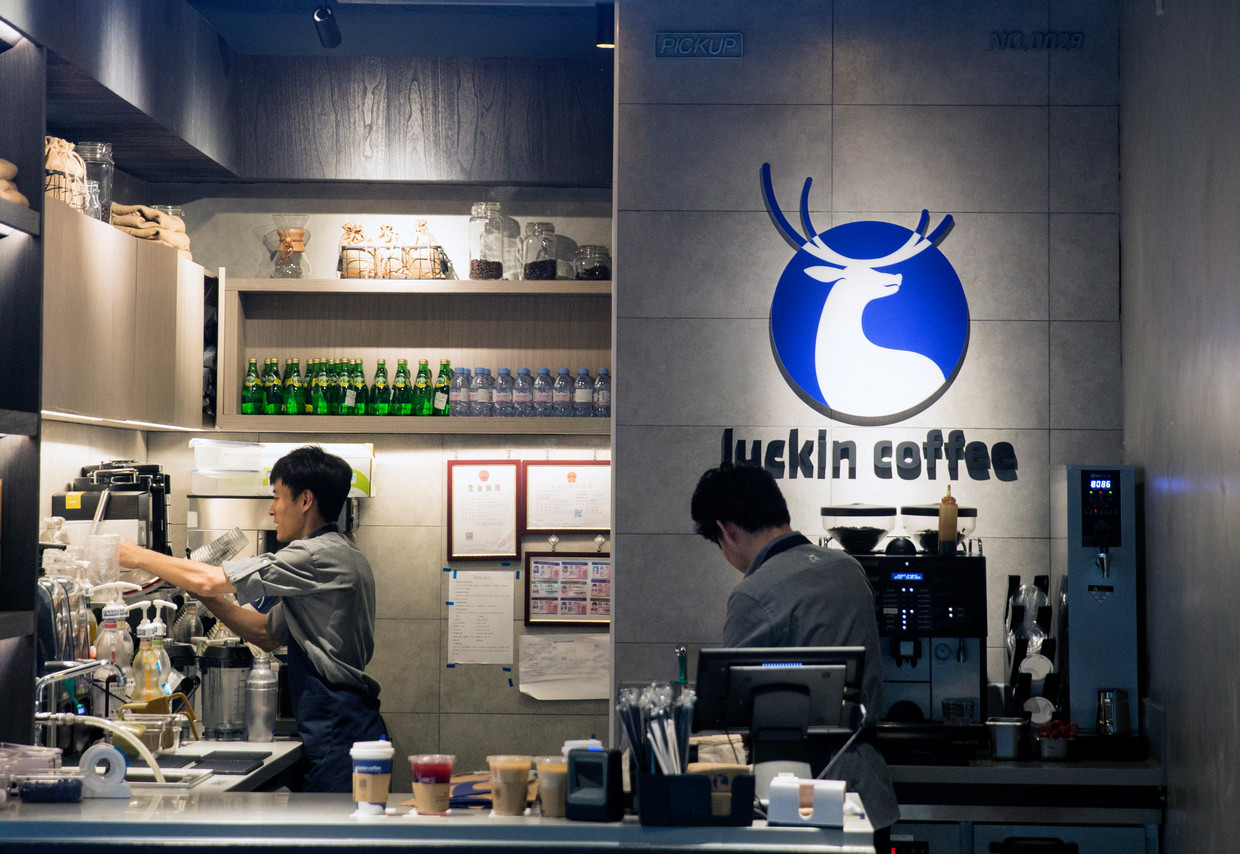
    Coffee chains such as Luckin Coffee and Tim Hortons have increased the prices of their beverages in China, with U.S. giant Starbucks blaming “multiple factors” such as higher operating costs.

    The chains, among China’s largest coffee players, raised prices by between 1 yuan and 3 yuan ($0.16 and $0.47), according to menus on mobile apps and media reports, with the topic going viral on Chinese social media on Thursday.

    Although a nation of tea drinkers, China is one of the world’s fastest-growing coffee markets, with nearly 110,000 shops in larger cities by April, consultants Deloitte have said, as young people drive consumption, which lags the United States and Europe, however.

    Starbucks said it had adjusted on Wednesday the prices of some of the items after “comprehensive evaluation and consideration of multiple factors” such as operating costs, in the first increase since 2018.

    A Starbucks Americano costs 30 yuan after the price increase, up from 28 yuan.

    Packaged coffee beans and merchandise such as mugs were not affected, however, the company said in a statement.

    China’s Luckin Coffee raised the price of some beverages by about 3 yuan, taking into account operational costs such as rent, manpower, and raw material, the state-backed Shanghai Securities Journal said.

    Starbucks hiked menu prices in October and January and plans further raises this year, Chief Executive Kevin Johnson has said, in part to offset soaring labor and goods costs, but he did not specify individual products.

    Official data showed China’s coffee market grew at an annual rate of 15% in 2018, versus a global average of 2%.

  • Starbucks faces backlash in China over police incident at store

    Starbucks faces backlash in China over police incident at store

    Starbucks is battling its second bout of public fury in China in less than three months, after an incident described by the US coffee giant as a “misunderstanding” at one of its stores sparked criticism from online users and state media.

    The company came under scrutiny on Monday after a user on Weibo said that a number of police officers had been eating outside a Starbucks store in the southwestern city of Chongqing before they were told by staff to move away.

    The user’s description of the incident quickly went viral on the Twitter-like platform, prompting the ruling Communist party’s mouthpiece People’s Daily newspaper to issue a commentary, in which it called Starbucks “arrogant”.

    Chinese consumers and media have become more aggressive about protecting customer rights and monitoring the behavior of big brands, especially from overseas.

    In December, Starbucks apologised and carried out inspections and staff training across all its roughly 5,400 stores in China after a state-backed newspaper said two of its outlets used expired ingredients.

    Starbucks apologized on its Weibo account late on Monday for “inappropriate communications,” saying the whole thing was a misunderstanding.

    But it said staff had never chased away policemen or tried to file complaints against them.

    It continued to face criticism online on Tuesday, with a few small companies announcing on Douyin, the Chinese equivalent of TikTok, that they would “boycott” Starbucks by forbidding employees from arranging meetings in or buying drinks from the shops of the coffee chain.

    However, Hu Xijin, a prolific commentator in China who is the former editor-in-chief of the Global Times newspaper, urged his Weibo users to see the Starbucks Chongqing incident as an accident and not more, adding that Starbucks’s status as a foreign brand should not subject it to more criticism.

    “China is a country that is open to the world,” he said. “To label a mistake as arrogance is not conducive to the bigger environment of opening-up.”

  • Starbucks launches Coffee Experience Center in Bali, Indonesia

    Starbucks launches Coffee Experience Center in Bali, Indonesia

    Today, Starbucks celebrates the journey of coffee from seed-to-cup by opening its largest destination in Southeast Asia – the Starbucks Dewata Coffee Sanctuary. The one-of-a-kind Coffee Sanctuary demonstrates Starbucks Indonesia’s coffee leadership in partnership with licensee PT Sari Coffee Indonesia Limited, building upon 16 years of innovation in design, customer experience, and community impact. The store pays tribute to the important role that Indonesia, the fourth largest Arabica coffee growing region in the world, plays in bringing Starbucks customers the highest quality coffees, including the popular single-origin coffee from Sumatra. Sumatra coffee has been a staple offering at Starbucks since 1971.

    “We began sourcing Indonesian coffees more than four decades ago and have always been struck by the sense of community and care for the coffee journey at every step,” said Kevin Johnson, ceo, Starbucks Coffee Company. “The Starbucks Dewata Coffee Sanctuary amplifies our passion for the coffee journey, our ongoing commitment to Indonesia’s rich coffee culture, and our tireless pursuit of fostering moments of connection between our partners and customers. This is Starbucks at its best, and we are proud to open the doors of this unique experience in one of Southeast Asia’s most dynamic markets.”

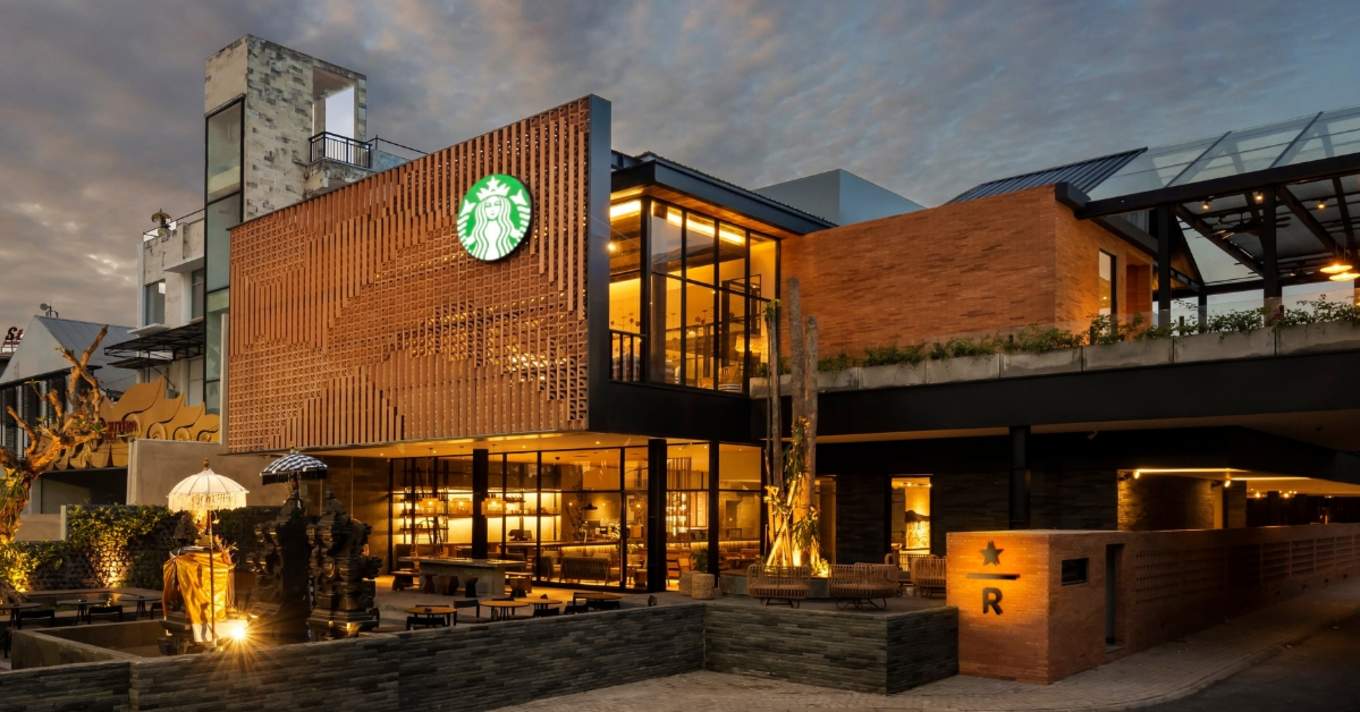
    Designed as a coffee sanctuary, the expansive 20,000 square foot store beautifully highlights local craftsmanship and culture alongside premium coffee in this one-of-a-kind coffee experience, a sort of “origin-centered version” of the Roasteries, igniting all five senses. Visitors enter through an Arabica coffee farm, try their hand at coffee bean de-pulping and washing during harvest season, dry and rake green coffee beans, visit budding seedlings in the nursery, take in the store’s locally-inspired design featuring traditional Balinese craft and Indonesian art, and enjoy the more than 100 Dewata-exclusive handcrafted beverages, food and merchandise, including the Lavender Latte.

    “Bali has an envied reputation as one of Asia’s top travel destinations and Indonesia is one of coffee’s most extraordinary coffee origin regions, so we’re excited to invite customers here to ignite their senses and explore the seed-to-cup coffee journey at this unique Coffee Sanctuary,” said Anthony Cottan, managing director, Starbucks Indonesia, at PT Sari Coffee Indonesia Limited.  “We’re very pleased to further strengthen the longstanding partnership between Starbucks and PT Sari Coffee Indonesia with this truly one-of-a-kind Starbucks store, inspired by and filled with the finest examples of Indonesian art, design, and craftsmanship.”

    Located in Bali’s up-and-coming premium retail district on Sunset Road, the Coffee Sanctuary provides a carefully curated series of interactive experiences.

    As customers enter, they’ll be greeted at the concierge reception and then guided through a working, 1,000 square foot coffee tree farm, the size of a typical Indonesian farm. Customers will continue their journey through contemporary Balinese landscaping, passing coffee plants and a de-pulping station before trying their hand at washing, drying and raking green coffee beans. Inside, the expansive Reserve bar offers customers an intimate experience to taste Starbucks Reserve small-lot coffees, while the core bar offers Starbucks signature core beverages.

    Located on the second floor is the seedling nursery, a greenhouse canopied by panes of glass to create an open-air experience. Here, customers can touch the first stages of the seed-to-cup journey, as well as deepen their understanding of the art of tending to coffee plants alongside a local Balinese farmer. In the adjoining tasting room, customers’ tastebuds will come alive as they enjoy coffee as coffee quality professionals do, without a filter – simply coffee and water – to draw out the flavors that set each cup apart.

    For those looking for more, visitors can engage with an interactive video wall and hear how coffee is planted, processed, roasted, shipped, and brewed into a delicious cup of espresso. On the second floor, a dedicated media room features two synchronized video walls, showcasing the work of the Starbucks Farmer Support Center (FSC) in Sumatra and agronomist, Dr. Surip Mawardi’s, work with Indonesian coffee farmers.

    The Sanctuary was designed as an homage to Indonesia’s rich culture and coffee heritage. The store’s expansive interior was inspired by traditional Balinese houses with free-flowing, connected rooms that promote discovery from one space to the next.

    The store’s interior was designed in partnership with local craftspeople and artists with one goal: tell the story of coffee in Indonesia. This is brought to life by a wood carving depicting the country’s six coffee-growing regions’ local culture and architecture. A two-story mural in the courtyard pays tribute to local farmers who carefully nurture and protect the beans each step of their journey to Starbucks.

    On the main floor, Starbucks partners (employees) welcome customers to the 13-meter teak Reserve bar, drawing inspiration from Bali’s terraced rural landscapes, where customers can taste some of Starbucks rarest coffee offerings. Across the store, eyes are drawn to the living wall filled with flora from the region, situated behind the core bar designed to remind customers of Bali’s ocean waves which are replicated on the layered red-brick exterior façade.

    Starbucks is dedicated to working with farmers in Indonesia to ethically and sustainably bring high-quality Indonesian coffee to the world, and today, the company is the largest buyer of Indonesian arabica coffee.

    In 2015, Starbucks opened the Farmer Support Center in Berastagi, North Sumatra where Starbucks agronomists led by Dr. Mawardi, conduct research to develop disease-resistant coffee varietals in an effort to make coffee the world’s first sustainable agricultural product through the Sustainable Coffee Challenge. The Sumatra FSC is one of nine globally, including China, which offers open-source agronomy assistance and support for regional coffee farmers to improve the productivity and sustainability of their coffee trees.

    In a combined effort, Starbucks Indonesia has donated more than 330,000 coffee seedlings, along with technical assistance, to smallholder farmers to-date. Through locally driven initiatives to support coffee tree replanting, Starbucks commits to donating 100,000 seedlings annually in partnership with the FSC.

    Since 2006, The Starbucks Foundation has provided more than $4 million dollars to support farming communities and promote education, water, sanitation and health (WASH) programs across Indonesia. In 2018, The Foundation provided grants to Lutheran World Relief to support women-led community health and hygiene programs for 2,100 households in Sumatran coffee-producing villages over the next three years and to CARE to support economic empowerment for women tea workers and community WASH programs in West Java over the next two years.

    Today, Starbucks Indonesia delivers the Starbucks Experience across 370 stores where nearly 4,500 partners proudly wear the green apron. The Dewata Coffee Sanctuary marks the first Starbucks Reserve Bar in Bali and its tenth in Indonesia as Starbucks continues to elevate the coffee journey for customers across the market.