Tag: Startups

  • APAC Venture Capital Deals in Decline

    APAC Venture Capital Deals in Decline

    Venture capital deals in Asia Pacific dropped by one-fifth in the third quarter, attributed to a Chinese economic slowdown, but tailwinds await due to upcoming policy reforms.

    Total venture capital deal value in the region dropped to $14.92 billion in the third quarter, compared to $18.61 billion in the second quarter, according to recent KPMG data. The decrease is notably steeper than the 14 percent decline in overall global transactions in the period, which totaled $55.71 billion.

    There is a lot of interest in the Asian market but investors have really slowed down their activity,» said Egidio Zarrella, partner and head of clients and innovation at KPMG China. «They are being conservative, waiting to see where things go from an economic and geopolitical perspective.

    With Alibaba’s $700 million minority stake acquisition of music streaming service NetEase Cloud Music topping the quarterly transactions, no deal surpassed the $1 billion mark compared to four in the first six months. But despite a slowdown from the region’s major contributor – seven of the 10 deals in the region involved mainland Chinese companies (with Indian startups making up the rest) – KPMG remained optimistic about the near-term outlook.

    Despite the challenges in the market, a number of sectors continued to attract investment, including fintech, Autotech and biotech, said Philip Ng, partner and head of technology, KPMG China, who also underlined upcoming tailwinds for insurance, finance, capital markets and healthcare due to policy reforms.

    While the number of funds raised for IPOs have dipped, the number of mainboard deals in the first three quarters is similar to that of last year and Hong Kong remains a top destination for IPOs,» added Irene Chu, partner and head of new economy & life sciences, Hong Kong, KPMG China. «The pipeline of companies applying for IPO in Hong Kong is still very strong – but whether they will go out before the end of the year will depend on changing market conditions.

  • OCBC Allows Instant Account Opening For Startups

    OCBC Allows Instant Account Opening For Startups

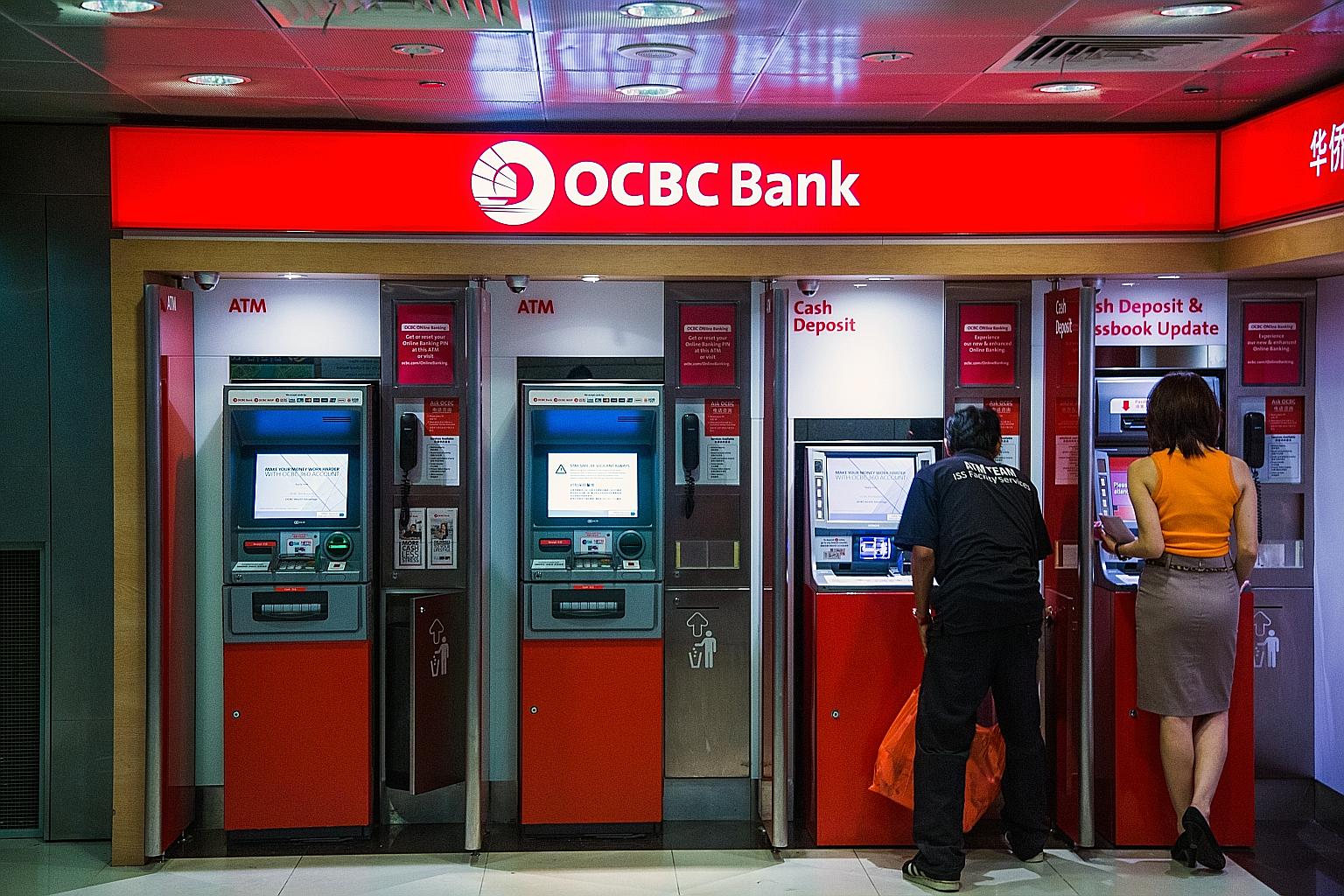
    Start-ups are now able to open an OCBC business banking account in Singapore immediately after incorporation, rather than having to wait one day. Once a business is incorporated, OCBC Bank can validate the start-up’s business profile issued by the Accounting and Corporate Regulatory Authority (ACRA). This is made possible due to an Application Programming Interface (API) between OCBC Bank and global information services provider, Experian (formerly known as DP Information).

    Banks play a key role in the start-up and SME ecosystem partly because the bank account is at the center of business operations. Given this role and our standing as banker to more than 1 in 2 SMEs in Singapore, we are in the best position to strengthen the connections among all players in this ecosystem, said Christie Chu, Head of Emerging Business and Commercial Banking Cash, OCBC Bank in a media statement on Monday.

    OCBC Bank launched a dedicated business supporting the start-up segment at the end of 2018. Since then, it has been engaging start-ups to understand the pain points when starting a business. With a track record of serving the start-up segment, the bank found that starting a business is a journey of discovery, and many stumble along the way.

    To that end, the team is putting together a start-up guide, with practical tips from successful entrepreneurs with first-hand experience. The guide will be accessible to all aspiring entrepreneurs on OCBC Bank’s website.

  • Ride-Hailing Service Gojek’s CEO Nadiem Makarim To Join Indonesia’s Cabinet

    Ride-Hailing Service Gojek’s CEO Nadiem Makarim To Join Indonesia’s Cabinet

    Gojek CEO and founder Nadiem Makarim said on Monday he had resigned from the ride-hailing and payments company to join the cabinet of Indonesian President Joko Widodo.

    “I have received a big honor to be able to join the cabinet,” Makarim told reporters at the presidential palace.

    Makarim said his specific role would be announced by the president later in the week.

    Indonesia media have linked Makarim to a possible post in a new Digital Economy ministry or in education.

    Gojek did not immediately respond to requests for comment on who his successor would be.

  • Mastercard Joins ASEAN Fintech Platform

    Mastercard Joins ASEAN Fintech Platform

    It will join AFIN’s board of directors and work with the platform to support the global fintech community and financial industry to foster greater financial inclusion.

    Southeast Asia’s fintech community has been given a boost with Mastercard joining the ASEAN Financial Innovation Network (AFIN) as the platform’s second corporate founding member, the two parties announced in a press release on Thursday.

    Mastercard’s participation in AFIN will enable the firm to work with fintechs to provide engagement and support, and it will bring its Start Path program members onto AFIN’s API Exchange (APIX) ecosystem, the statement said.

    «Having worked with tech start-ups around the globe, Mastercard looks forward to extending its support to ASEAN’s community of builders and change agents by providing access to its technology solutions, expertise and strategic partnerships to enable start-ups to rapidly and effectively scale up,» Rama Sridhar, executive vice president, Digital & Emerging Partnerships and New Payment Flows, Asia Pacific, Mastercard, said.

    AFIN is a non-profit network established in 2018 by the Monetary Authority of Singapore (MAS), the World Bank Group’s International Finance Corporation (IFC) and the ASEAN Bankers Association that aims to help financial institutions, fintech firms and regulators address issues of connectivity, local compliance and cross border compatibility.

    Its flagship product is a cloud-based APIX platform, an online marketplace for financial institutions to collaborate with innovative fintech solutions in areas from design to marketing.

  • Thailand To Shine For IPOs in 2020

    Thailand To Shine For IPOs in 2020

    Amidst growing investor interests in firms focussed on Southeast Asian consumers, Thailand, and the Philippines are seeing a pick-up in initial public offerings (IPOs). Thailand is expected to shine next year, says Credit Suisse.

    Although Singapore still leads on overall first-time share sales in Southeast Asia in 2019, it has achieved this mainly through offerings of real estate and business trusts. In Thailand, 11 companies raised a total of $1.9 billion from January to 4th October, far surpassing the $100 million raised by five firms in the same period a year ago, according to Refinitiv data. The data excludes real estate and business trusts.

    We expect Thailand to be one of the stronger IPO markets in 2020. Some more large IPOs have started preparations this year and are set to list next year, said Ho Cheun Hon, head of Southeast Asia equity capital markets at Credit Suisse.

    Bankers point to the deal pipeline for Thailand next year, which includes fundraising by a subsidiary of the mega-retailer Central Group, a retail arm of oil company PTT and others.

    Ho explains that international fund managers continued to be attracted by the growth in consumption across Southeast Asia.

    On Thursday, Asset World Corporation, the hospitality and property firm listed by Thai billionaire Charoen Sirivadhanabhakdi, and Philippine home furnishing retailer AllHome Corp, would start trading. The two firms have raised $1.6 billion and $285 million, respectively.

    Asset World Corporation was the largest IPO by a Thai firm, while AllHome was the Philippines’ biggest in three years. In the Philippines, Allhome is the third company to tap the local market this year, compared to just one IPO last year.

  • Electric Scooter Startup Bird Raises $275 Million In Latest Funding Round

    Electric Scooter Startup Bird Raises $275 Million In Latest Funding Round

    Bird, an electric scooter rental company, said on Thursday it had raised $275 million in a funding round led by Canadian pension fund CDPQ and Sequoia Capital, as it looks to take a bigger share of a rapidly growing transportation sector.

    The deal values the firm at $2.5 billion before the investment, Chief Executive Officer Travis VanderZanden told a tech conference in San Francisco.

    VanderZanden said Bird has been working hard to improve its financials, deflecting criticism that the company has been chasing growth at all costs.

    The company has designed its own rugged scooters, which last about 15 months on average, compared with the three-month life span it got from retail scooters, he said.

    Bird, known for its dockless scooters that riders can locate and unlock through a smartphone app, has enjoyed a stratospheric rise, while also causing mayhem in cities such as San Diego and San Francisco.

    It has raised the ire of regulators and residents because the scooters, which can be left anywhere, have littered sidewalks and parks and blocked driveways and doorways. Scooter riders on crowded sidewalks have also caused problems.

    A dozen electric scooter companies have received more than $1.5 billion in investments in total, according to a report issued earlier this year by Boston Consulting Group.

  • Honestbee wins creditor reprieve

    Honestbee wins creditor reprieve

    Struggling grocery retailer and delivery startup Honestbee has been granted a four-month debt moratorium by the Singapore High Court.

    While two months shorter than the protection period the company sought from the court, it allows the business to restructure free from creditor pressure.

    Reports by Singapore business media show Honestbee owed around US$236 million in current liabilities as at the end of June. On top of that it has debt of around $210 million owed to some 1800 convertible noteholders which it is trying to exchange for equity.

    While Honestbee’s debt is a major impediment to the ongoing business, as much as 80 percent of the liability is to investor Brian Koo and entities controlled by himself or family interests.

    Koo stepped down as chairman of Honestbee in mid-September but is believed to support the debt restructuring scheme.

    Following the court decision, Honestbee CEO Lay Ann Ong issued a statement about the company’s immediate future: “A successful recapitalization and restructuring of the business will set a strong path of recovery for the company. This is necessary to ensure that we have the right structure in place moving forward so that we can better serve our customers across Asia.”

    The company will release further details shortly on its recapitalization progress and plans to sell of some parts of the business.

  • Ex-GIC Head Joins Fintech Arm of Razer

    Ex-GIC Head Joins Fintech Arm of Razer

    The fintech arm of gaming hardware manufacturer Razer has appointed the former group president of Singapore sovereign wealth fund GIC as an advisory board member.

    Lim Siong Guan joins Razer Fintech as an advisory board member as the firm enters its next growth phase to expand regionally and globally.

    Lim currently is a professor at the Lee Kuan Yew School of Public Policy; a senior fell at the Singapore Civil Service College; and chairs the board of directors of Swiss Re Asia. Previously, he was the group president of GIC Private Limited from 2007 to 2016 before subsequently acting as its advisor until March 2019.

    With Mr. Lim coming on board, we will be able to leverage on his extensive experience and network in the global financial markets to scale up and successfully execute on our strategic roadmap,” said Tan Min-Liang, co-founder and CEO of Razer.

    I am a firm believer in Razer Fintech’s strategy and vision of addressing the unmet needs of underserved people, particularly the youth and the millennials who are the future consumers of the world, through technology and product innovation, Lim added.

  • PayPal-Backed Korean Fintech Raises $64 Million

    PayPal-Backed Korean Fintech Raises $64 Million

    South Korean fintech unicorn, Viva Republica, raised $64 million for its financial service platform Toss pushing the firm’s total value to $2.2 billion.

    The Seoul-based fintech has raised a total of $250 million, including $80 million in the December round, and new funding joins prominent existing investors such Singapore’s GIC and Sequoia Capital.

    Viva Republic was founded in 2013 and launched Toss in 2015 as a P2P money transfer service. It has since grown the platform to include various other financial services including banker, money transfer, credit score management and more. It currently boasts 13 million registered users with more than $42 billion of translation processed.

    This funding round was led by newly established Aspex Management (founded in 2018) which specializes in Asian equity investments in industries and firms with long-term structural tailwinds.

    We like the large addressable market financial services offer and the unique leading position Toss occupies amongst mobile consumers, said Hermes Li, founder and CIO of Aspex Management.

  • Honestbee back on track with new CEO

    Honestbee back on track with new CEO

    Struggling grocery delivery company and grocer Honestbee has won another new lease on life with the appointment of a new CEO who has promised to revive the business with the support of investors.

    Details of the additional investment were not immediately clear.

    Ong Lay Ann took up the role without fanfare on July 15 from interim CEO and investor Brian Koo, who remains chairman. That followed the resignation of CTO and co-founder Jonathan Low four days earlier.

    Koo had taken over from Honestbee former CEO and cofounder Joel Sng in early May, clearing the way for fresh funding to be injected into the company by Koo’s investment vehicle.

    New appointee Ong has almost 20 years experience in IT, infrastructure, commodities and real estate. He has experience turning around failing companies, including Perth Precast in Australia which he rebuilt and listed via a reverse takeover.

    Low cofounded Honestbee in 2015 with partners Sng and Isaac Tay.

    “It is my privilege to have worked with some of the best talents during my time here,” he said in a statement confirming his departure.

    “The decision to leave Honestbee was made before Lay Ann had come on board. However, I have full confidence that Lay Ann will help Honestbee enter its next phase and recover from its recent setbacks,” Low said.

    So far this year, Honestbee has curtailed services, suspended operations or exited altogether markets including Thailand, Hong Kong, Japan, Indonesia, Taiwan and the Philippines.

  • Visa takes stake in startup Go-Jek

    Visa takes stake in startup Go-Jek

    Digital-payments company Visa has invested an undisclosed amount into Southeast Asian ride-sharing and services startup Go-Jek giving it a foothold in the company’s payments platform.

    The two companies say they will work together to provide greater options for cashless payments and more seamless experiences for consumers across Indonesia and Southeast Asia.

    Indonesian-based Go-Jek, which has since launched in Vietnam and Thailand, has created Go-Pay which is one of the leading digital-payment providers in Indonesia and established itself as a regional rival to GrabPay

    “The partnership will see Go-Jek and Visa collaborating on innovative payment solutions for digital-first consumers and Southeast Asia’s unbanked and underserved population,” the two companies said in a statement.

    “Financial inclusion in Southeast Asia continues to be an urgent and important issue. The vast majority of Indonesia’s transactions are still cash-based and the adoption of digital payment services is as low as one-in-four users in markets like Vietnam. Addressing this opportunity could increase Gross Domestic Product levels by between 9 per cent and 14 per cent, even in relatively large Southeast Asian economies,” the statement said.

    Visa regional president Asia Pacific, Chris Clark said Visa and Go-Jek share common objectives. “We both want to make everyday life more convenient, whether it’s how people move around town in Southeast Asia’s fast-growing urban areas, or making it easier for people to pay and be paid all over the world. We also have a shared goal to bring formal financial services to the unbanked and underserved, including micro, small and medium businesses. Through this partnership, we will explore ways to leverage the power of Go-Jek and Visa’s networks to expand financial access in Southeast Asia.”

    Go-Jek president Andre Soelistyo said Visa’s investment in the company is an endorsement of its business model.

  • Consumer Fintech Use Goes Mainstream

    Consumer Fintech Use Goes Mainstream

    The use of fintech products and services in Singapore has grown substantially in the past two years, though the country still lags China and India by a large margin.

    The fintech adoption rate among Singapore consumers has almost tripled to 67 percent in 2019 from just 23 percent in 2017, according to the «Global FinTech Adoption Index 2019» published by professional services firm EY.

    The report, its third edition, was based data gathered from an online survey of over 27,000 consumers in 27 markets. Leading the index were mainland China and India, which both recorded 87 percent consumer fintech adoption, followed closely by Russia and South Africa (both 82 percent).

    Singapore has enjoyed significantly increased rates of consumer fintech adoption and we expect even higher rates in the future, due to the supportive regulatory environment. Singapore may be a relatively small business-to-consumer (B2C) market by size, but it is a hotbed for innovation and a great launchpad for startups and businesses to build their technology, test it, and then scale across Southeast Asia, Varun Mittal, EY Global Emerging Markets FinTech Leader, said.

    The report credited fintech’s phenomenal rise to the increasing consumer and SME awareness and engagement with fintech products and services. When the report was first published in 2015, the average global adoption rate stood at 16 percent. It is now 64 percent, with money transfers and payment services driving awareness globally.

    Crucially, EY noted that maturing fintech challengers are having a growing influence on the market, actively driving legacy and non-financial organizations to develop their own fintech products and services.

    Among other findings, the report said that consolidated platforms have an edge, with 6o percent of consumers preferring to access services through a single platform, and that non-financial players are on the rise, with 68 percent of respondents saying they are willing to consider a financial proposition by a non-financial company.

  • NEXEA Launches Startup-Corporate Pilot Program

    NEXEA Launches Startup-Corporate Pilot Program

     NEXEA Angels Sdn. Bhd. (“NEXEA”), a leading startup investment firm today announced the launch of its Startup-Corporate Pilot Program that aims at bringing together local technology startups and corporations for the purposes of identifying and exploring potential collaborations among them. The program is held in partnership major organizations namely Digi, HELP University, Rhombus Connexion and Spritzer. Through the program, startups will get an opportunity to explore pilot projects with these organizations, validate business with feedback from them, explore real-world product testing and build up traction by having these organizations as potential customers. In addition, startups will also get support from mentors from NEXEA and have an opportunity to get funded by NEXEA and its co-investment partners. Startup-Corporate Pilot Program will start in July and run in parallel with NEXEA’s startup accelerator program.

    The Startup-Corporate Pilot Program is open to Malaysia-based startups ranging from ideation stage all the way to pre-series A. Applications to join are now open and will be closed on 24 June 2019. NEXEA is looking to enroll startups in the areas of connectivity, fintech, Internet of Things, SME solutions, F&B’s, education, healthcare and home services.

    Ben Lim, Managing Partner of NEXEA said, “Startup-Corporate Pilot Program is bridging the gap between startups and industry players. Many startups desire a working relationship with corporate entities but many too are unable to attain it due to various reasons. So, this year, besides running our regular Startup Accelerator Program we are bringing something different to the ecosystem – a platform where startups have direct access to corporations so they can explore potential collaborations. We are delighted that Digi, HELP University, Rhombus Connexion and Spritzer join in on our mission to help provide expert insights and opportunities for startups in our program.”

    Experienced entrepreneurs, CEOs and heads of innovation from the participating organizations will get involved in the program. With this approach to collaborations, NEXEA hopes to accelerate corporate innovation and the Fourth Industrial Revolution (IR 4.0).

    NEXEA has, in its team, experienced mentors where most of them are entrepreneurs, half of them have held C-level positions like CEO and some of them have successfully brought companies to initial public offering (IPO).

    Alex Foo, Head of Strategy and Transformation at Digi said, “We share a common belief with NEXEA that Corporates and Startups have a big role to play to foster the growth of innovation and innovators in Malaysia. By partnering with NEXEA’s Startup-Corporate Pilot Program, we hope to play a role in building the local startup ecosystem by sharing our knowledge and expertise in building businesses, while exploring collaborative opportunities with startups and jointly bring new innovations to market.”

    Adam Chan, Executive Director of HELP International Corporation Bhd. stated, “As HELP University embarks on its transformation plan to become an analytics-driven institution and one that provides our students with the opportunity to test their entrepreneurial acumen, working with NEXEA provides the platform for our students and graduates to embark on this journey. NEXEA has a strong program in this area and we are confident that the resources of both parties could potentially provide the catalyst to unearth the next unicorn.”

    Kent Chua, Co-Founder of Rhombus Connexion said, “In the era of disruption we face today, it is an “innovate or die” situation for corporates. Thus what better way than to work closely with brilliant young minds via NEXEA to tap on to their wild ideas and play a role in shaping and supporting the world’s future today.”

    Meanwhile, Kenny Lim, CEO of Spritzer Bhd., said, “The market is moving into AI, robotic technology, digitalization and etc., whether you like it or not, but indeed the spirit of entrepreneurship is always the first step on how an idea can be turned into conglomerate. Spritzer is a home grown brand, the entrepreneurship spirit is one of the factors that makes us to be where we are at today. One of our roles here is to share what we have learned, so others can shine.”

  • Gojek to Be Integrated Within DBS’ PayLah

    Gojek to Be Integrated Within DBS’ PayLah

    Users of DBS Bank’s PayLah! app over the next few months will find Gojek integrated within its app, both companies said on Thursday. In addition, Gojek customers can now pay with PayLah.

    As part of its partnership with the Indonesian ride-hailing firm, DBS Bank’s payment feature has been made available in the Gojek app for both iOS and Android users in Singapore, both companies announced on Thursday.

    Through integrating DBS PayLah! in the Gojek app, our riders will have greater flexibility to choose their preferred payment methods, which allows for a more seamless travel and payment experience with every ride, said the general manager of Gojek Singapore, Lien Choong Luen, in a media statement.

    Gojek customers will be able to add DBS PayLah! as a preferred payment method for their rides after a one-time authorization and set-up. According to Gojek, about 35 percent of its daily ride-hailing transactions are paid for in cash.

    This presents an opportunity for DBS and Gojek to encourage users to adopt digital payments, the companies noted.

    As Indonesia is a key growth market for DBS, DBS and Gojek are now exploring collaboration opportunities in Indonesia, including cross-marketing initiatives. Ride-hailing company Gojek is headquartered in Indonesia, where DBS has more than 460,000 digibank customers.

    Following the success of DBS and Gojek’s partnership in Singapore, where Gojek recently celebrated their 10 million-trip milestone, we have also entered the next phase of our partnership in Indonesia, said Shee Tse Koon, DBS country head for Singapore.

  • Indonesian Start-Up Seeks Swiss Listing

    Indonesian Start-Up Seeks Swiss Listing

    Jakarta-based Achiko wants to list 100 million shares on SIX, the Swiss stock exchange, it said on Wednesday. The shares were valued at $0.70 during its last fundraising, which would make for proceeds of $70 million.

    Its seven-year-old subsidiary Mimopay offers payment services for consumers without bank accounts – thus far, the company has won 2 million clients. Mimopay’s offering includes services to pay via smartphone, at ATMs, or directly at vendors. The company said its service has potential among the 1.7 billion people with no bank account.

    From Indonesia, the fintech led by president Allen Wu and CEO Kenneth Ting wants to expand to Myanmar, Vietnam and the Philippinen. To do so, Achiko plans to seek strategic partnerships with local firms.