Retail News CRM

Tag: stock

  • Singapore Triumphs over Indonesia as Southeast Asias Dominant Stock Market

    Singapore Triumphs over Indonesia as Southeast Asias Dominant Stock Market

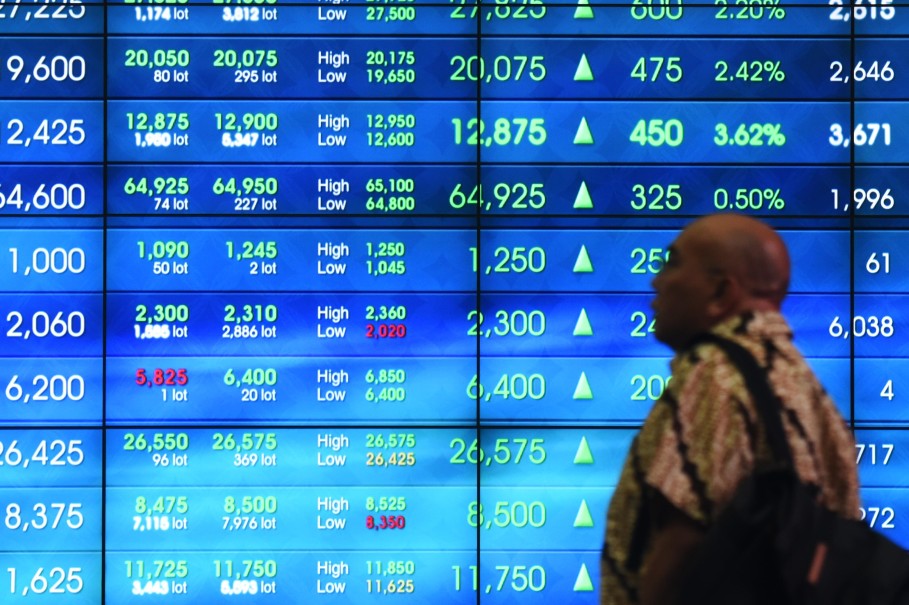
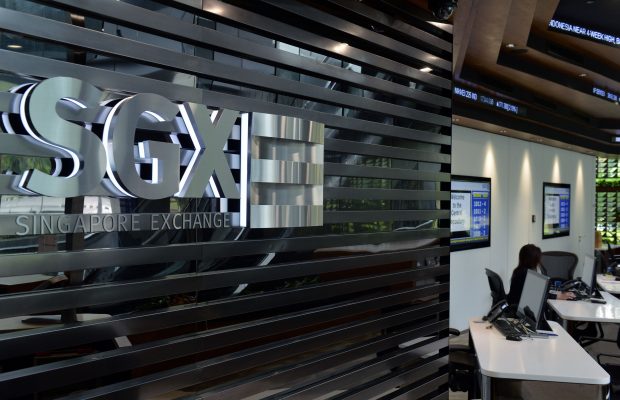
    Singapore has taken over from Indonesia as the leading stock market in Southeast Asia. This shift has come as Indonesia’s market capitalization has dropped dramatically due to an uncertain future outlook. From its peak in January, the total market capitalization of Indonesian businesses has fallen by over 30% to US$618 billion. In contrast, the market value in Singapore has increased to $645 billion.

    Investor confidence in Indonesia has seen a decline in recent months due to the possibility of its equities market being downgraded to frontier status. This uncertainty is coupled with Fitch Ratings and Moody’s Ratings both downgrading the country’s credit outlook to negative. The Indonesian stock index is currently among the most underperforming globally, and the rupiah has hit record lows repeatedly.

    Indonesia’s Struggles and Singapore’s Strength

    Despite these setbacks, Soh Chih Kai of Lion Global Investors believes that a future recovery should not be dismissed. However, he notes that the current momentum is not in Indonesia’s favor. In contrast, he points out that Singapore’s market has further strengthened its position as capital flows continue to seek certainty amid global policy ambiguity.

    In an attempt to bolster the economy, Indonesia’s central bank recently increased its policy interest rates for the first time in two years. This move aims to support the rapidly falling rupiah currency. Governor Perry Warjiyo explained that the increase is a further step to stabilize the rupiah exchange rate in the face of global volatility.

    On the other hand, Singapore’s equities have been boosted by political and economic stability, along with government-led market reforms. The Straits Times Index reached a record high this week, as investors looked for safe investments amid the instability caused by the Iran war.

    Head of research at Maybank Securities, Thilan Wickramasinghe, noted that Singapore’s equity market has remained resilient despite ongoing global volatility. This resilience is due to its defensive sector composition and consistent inflows, putting the market in a relatively advantageous position.

    Future Trends and Predictions

    Singapore’s equities are projected to outperform Indonesian stocks by a record margin in 2026. Carmen Lee, head of equity research at OCBC, attributes this to wealth being a significant driver for earnings growth. Paired with a strong Singapore dollar, Lee expects more funds to flow into the market.

    Questions & Answers

    What has led to the decline in Indonesia’s market capitalization?
    Investor confidence in Indonesia has deteriorated due to the potential reclassification of its equities market to frontier status and negative revisions in the country’s credit outlook.

    What steps has Indonesia’s central bank taken to support the economy?
    Indonesia’s central bank has raised its policy interest rates for the first time in two years in order to support the rupiah currency, which has fallen to record lows recently.

    What factors have contributed to the strength of Singapore’s equities market?
    Singapore’s equities have been boosted by the country’s political and economic stability, along with market reforms driven by the government.
  • DBS Warns Investors: Traditional Stock Strategies May Falter Amid Ongoing Mideast Conflict

    DBS Warns Investors: Traditional Stock Strategies May Falter Amid Ongoing Mideast Conflict

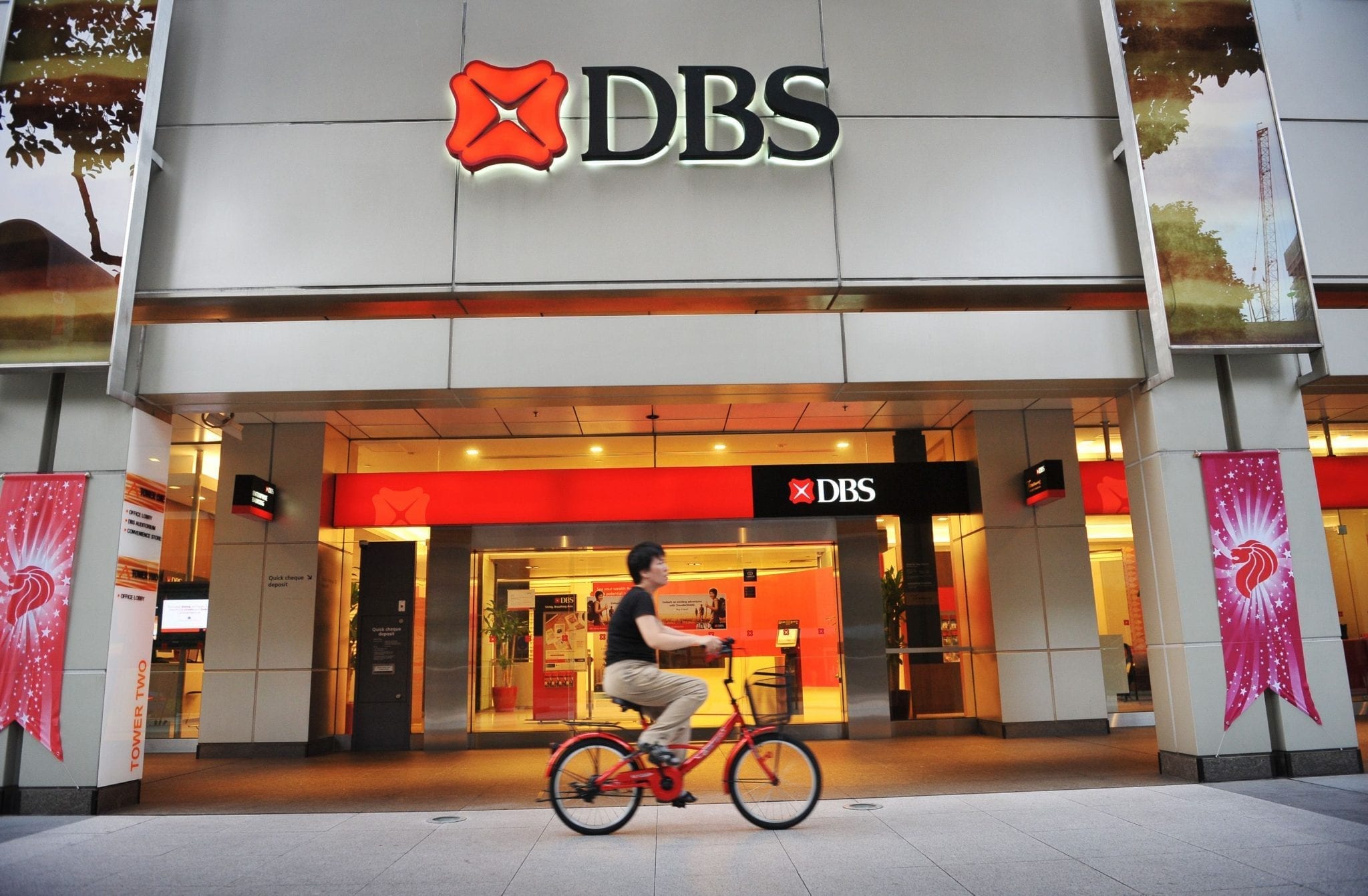
    Historically, US equities have demonstrated strong performance following significant conflicts. However, DBS asserts that the current Middle East conflict may not follow this trend, warning investors against complacency in this situation.

    The Ongoing Conflict in Iran

    The war in Iran, now in its third week, has resulted in thousands of casualties with no definitive end in sight. DBS advises investors to exercise caution and avoid putting too much stock in historical trends concerning American equities.

    DBS states, “While history may suggest that US equities often yield positive returns after major conflicts, complacency is not advisable given the current Middle East conflict.”

    As the conflict continues to unfold, DBS encourages investors to implement risk management strategies in their portfolio construction. This could involve increasing their exposure to gold and partially substituting US equity exposure with the S&P 500 Low Volatility Index.

    Predicted Themes for Q2 2026

    DBS has identified three themes they believe will heavily influence narratives in the second quarter of 2026.

    Firstly, oil continues to be a significant factor due to the ongoing military crisis in the Middle East, especially considering Iran’s role as the fourth largest OPEC producer. Rising energy prices could pose problems for risk assets.

    Secondly, the policy stance of Kevin Warsh, the nominee for Fed chair, indicates a potential reset with an increased likelihood for “renewed quantitative tightening,” which could lead to a steepening of the yield curve.

    Finally, diversification beyond crowded trades is encouraged, with recent profit-taking seen as “transitory.” A “return to fundamentals” is expected, with a focus on pre-crisis themes like precious metals and technology. These are driven by “dollar debasement” and “AI supremacy”, respectively.

    Emerging Markets and Japanese Equities

    In terms of diversification, DBS suggests investors consider increasing their exposure to emerging markets (EM) and Japanese equities. EM equities are likely to benefit from Fed rate cuts, dollar weakness, robust earnings growth, and light positioning. Conversely, Japanese equities are set to gain from fiscal stimulus, governance reforms, and an attractive yield gap.

    DBS concludes, “Global markets are currently navigating through an unusual convergence of geopolitical challenges and technological opportunities. The paradoxical nature of this situation reflects the complex yet potentially rewarding market conditions investors are currently navigating—an era where traditional strategies may no longer apply.”

    Questions & Answers

    What is the advice from DBS regarding the current Middle East conflict?
    DBS advises investors not to rely excessively on the historical trends of stock market performances following major conflicts, warning that complacency is unwarranted in this instance.

    What are the three themes DBS identified for Q2 2026?
    The three themes are the role of oil in the military crisis in the Middle East, the potential policy reset implied by Fed Chair nominee Kevin Warsh, and the need for diversification beyond crowded trades.

    What are DBS’s recommendations for diversification?
    DBS suggests investors consider increasing their exposure to emerging markets and Japanese equities, which are set to benefit from several factors including Fed rate cuts, dollar weakness, robust earnings growth, light positioning, fiscal stimulus, and governance reforms.

  • Vietnam’s VN-Index Plunges: Longest Losing Streak in Seven Years Sparks Market Concern

    Vietnam’s VN-Index Plunges: Longest Losing Streak in Seven Years Sparks Market Concern

    The VN-Index of Vietnam, which is the country’s benchmark index, experienced a decline for the seventh consecutive session on Wednesday. This represents the most extended losing streak since 2018’s final quarter. The VN-Index wrapped up the session at 1,802.91, marking a decrease of 1.51% or 27.59 points. From the beginning of the previous week, the index underwent a loss of 100 points.

    Trade Volume Increase and Major Price Movements

    A significant increase of 34% was recorded in the trading volume on the Ho Chi Minh Stock Exchange, reaching VND33.7 trillion (equivalent to US$1.29 billion).

    The VN-30 basket, which is a compilation of the 30 most significant capped stocks, witnessed a fall in 16 tickers. The VIC ticker of the private conglomerate Vingroup reached its lowest price point.

    In the realm of retail real estate, Vincom Retail’s VRE experienced a decrease of 5.8%, while the VHM of property titan Vinhomes suffered a reduction of 5.7% in its closing price.

    On the more positive side, eleven blue-chip stocks recorded gains. Among them, MSN of the Masan Group conglomerate saw a rise of 3.7%, FPT of tech powerhouse FPT Corporation increased by 2.4%, and GAS of the state-owned Petrovietnam Gas experienced a boost of 2.3%.

    Foreign Investor Activity and Other Indexes

    Foreign investors ended up as net sellers, with a net selling volume reaching VND1.78 trillion. This selling activity mainly targeted HDB of HDBank and ACB of Asia Commercial Bank.

    Taking a look at other indexes, the HNX-Index, associated with stocks on the Hanoi Stock Exchange, which mainly includes mid and small cap stocks, recorded a fall of 0.15%. Meanwhile, the UPCoM-Index, representing the Unlisted Public Companies Market, saw an increase of 0.62%.

    Questions & Answers

    What is the VN-Index?
    The VN-Index is a benchmark index in Vietnam that represents the performance of the country’s stock market.

    Which stocks experienced a price decrease?
    The VIC of Vingroup, VRE of Vincom Retail, and VHM of Vinhomes were among the stocks that saw a decrease in price.

    Which stocks saw a price increase?
    Among the stocks that recorded a price increase were MSN of the Masan Group, FPT of FPT Corporation, and GAS of Petrovietnam Gas.

  • Vietnam’s Stock Market Blazes into 2026: Skyrockets to Historical Highs in Opening Sessions

    Vietnam’s Stock Market Blazes into 2026: Skyrockets to Historical Highs in Opening Sessions

    The Vietnam stock market began the year on a high note, setting two new historic peaks within the first two trading sessions. The VN-Index, Vietnam’s benchmark stock index, closed at a record-breaking 1,788 points on Monday and escalated a further 1.56% to a fresh peak of 1,816 points on Tuesday. After closing the previous year 40% higher, it now ranks as the tenth best-performing stock index globally.

    The Ho Chi Minh Stock Exchange, the basis for the VN-Index, experienced a 6% gain in trading on Tuesday, reaching VND27.45 trillion (US$1.04 billion).

    On the other hand, the VN30 basket, which consists of the thirty largest capped stocks, saw 23 stock tickers rising. Leading the way was GAS, a state-owned Petrovietnam Gas, with a 7% increase, closely followed by property titan Vinhomes’ VHM, which climbed 6.9%.

    Fuel distributor Petrolimex’s PLX finished 6.7% higher, while MB’s MBB, a lending company, rose by 5.1%.

    However, two prominent stocks experienced a decline. Duc Giang Chemicals Group’s DGC dropped 3.8%, while Sacombank’s STB, a lender based in Ho Chi Minh City, fell by 2.1%.

    Foreign investors mainly sold off stocks of the private conglomerate Vingroup’s VIC and VHM, resulting in net sales of approximately VND387 billion.

    Meanwhile, the HNX-Index for stocks on the Hanoi Stock Exchange, which primarily consists of mid and small-cap stocks, fell by 0.09%. The UPCoM-Index for Unlisted Public Companies Market also experienced a drop, declining by 0.39%.

    Questions & Answers

    What were the new historic peaks for the Vietnam stock market at the beginning of the year?

    The VN-Index, Vietnam’s benchmark stock index, closed at a record-breaking 1,788 points on Monday and escalated a further 1.56% to a new peak of 1,816 points on Tuesday.

    Which were the top-performing stocks in the VN30 basket?

    Leading the way was GAS of state-owned Petrovietnam Gas with a 7% increase, followed closely by property giant Vinhomes’ VHM, which climbed 6.9%.

    Which stocks did foreign investors predominantly sell off?

    Foreign investors mainly sold off stocks of the private conglomerate, Vingroup’s VIC and VHM, resulting in net sales of approximately VND387 billion.

  • Coupang Executives Under Scrutiny for Stock Sales Post-Major Data Breach: A Potential Insider Trading Scandal?

    Coupang Executives Under Scrutiny for Stock Sales Post-Major Data Breach: A Potential Insider Trading Scandal?

    Concern is mounting over potential insider trading at Coupang, following the sale of company stock by two senior executives occurring after a massive data breach and before its public acknowledgment.

    Executives Sell Shares After Data Breach

    On November 10, Coupang’s Chief Financial Officer, Gaurav Anand, sold 75,350 shares at $29.0195 each, a transaction that reached approximately $2.19 million (around 3.2 billion won). Pranam Kholari, a former senior vice president with responsibilities for search and recommendations, also sold shares. On November 17, Kholari offloaded 27,388 shares for about $772,000 (1.13 billion won). Noteworthy to mention, Kholari resigned from his position just three days prior, on November 14.

    Interestingly, both transactions occurred after the unauthorized access to user accounts took place, but before the company went public with the extent of the breach. This timing has intensified scrutiny over the possibility of executives acting on nonpublic information.

    Massive Data Breach at Coupang

    Coupang, on November 29, announced that around 33.7 million customer accounts had been compromised in the data breach. The affected information included names, emails, phone numbers, addresses, and selected order details. Prior to this, on November 18, the company had reported a smaller breach affecting about 4,500 users.

    A report submitted to the Korea Internet & Security Agency reveals that Coupang detected the unauthorized access on November 6 at 6:38 p.m. However, the company did not identify the data breach until November 18, a 12-day delay that has invited questions from lawmakers and regulators.

    The timing of the stock sales and the subsequent delay in acknowledging the breach are expected to be a focal point of investigations into the data leak, which has been one of the largest in Korea’s e-commerce sector.

    Questions & Answers

    What are the implications of the stock sales by Coupang’s executives?
    The stock sales, given their timing, have raised concerns over potential insider trading, with both transactions occurring after the data breach but before its public acknowledgment.

    What information was compromised in the Coupang data breach?
    The compromised information includes customers’ names, emails, phone numbers, addresses, and selected order details, with approximately 33.7 million customer accounts affected.

    What prompted questions from lawmakers and regulators regarding the data breach?
    The company’s delay in identifying and disclosing the data breach, which was detected on November 6 but not formally acknowledged until November 18, has led to queries from regulatory bodies and lawmakers.

  • Human Made Leaps to Tokyo Stock Exchange: A Pivotal Move in Global Retail Expansion Strategy

    Human Made Leaps to Tokyo Stock Exchange: A Pivotal Move in Global Retail Expansion Strategy

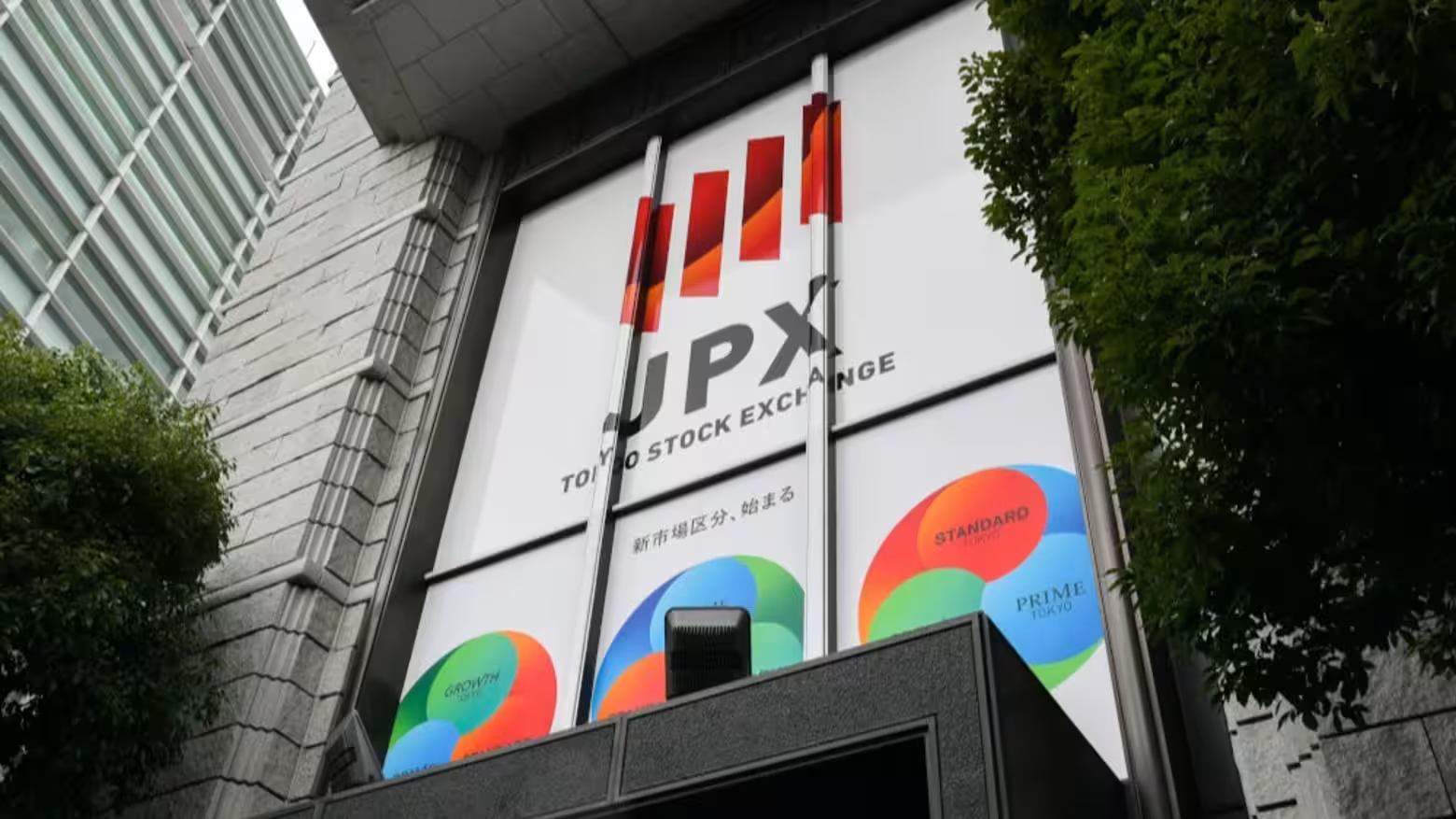
    Japanese lifestyle company Human Made has successfully been registered on the Tokyo Stock Exchange Growth Market, indicating a significant development in the firm’s expansion strategies both locally and internationally.

    Company Overview

    Human Made was established in 2010 by designer Nigo, gaining recognition for its streetwear design. The brand has gradually grown its presence, both within Japan and globally. Presently, Human Made runs seven outlets throughout Japan and has extended its reach to China, Hong Kong, and South Korea. Additionally, it has formed alliances with local distributors in Singapore, Thailand, Indonesia, and Australia.

    Diversification of Business

    Apart from its fashion-centric operations, Human Made has branched out into the food and beverage industry with its Curry Up restaurant chain. The chain expanded its operations beyond Japan for the first time, opening a location in Hong Kong in the previous year.

    Global Creative Direction

    In the previous year, the company welcomed global music and fashion figure Pharrell Williams as a creative advisor. This move reinforced the company’s global creative direction. In alignment with its flagship lifestyle brand, the company changed its name from Otsumo Co to Human Made Inc in May.

    Future Prospects of the Company

    Looking forward, Human Made has plans to inaugurate its first-ever global flagship store in Harajuku in the summer of 2026. This will be followed by a second store opening in Aoyama in 2027. These plans underscore the brand’s dedication to creating immersive retail experiences.

    Questions & Answers

    What is Human Made’s primary line of business?
    Human Made is a lifestyle brand known for its streetwear designs.

    What other industry does Human Made operate in?
    Apart from fashion, Human Made is also involved in the food and beverage sector through its Curry Up restaurant chain.

    What are some future plans of Human Made?
    The company plans to open its first global flagship store in Harajuku in 2026, followed by a second location in Aoyama in 2027.

  • Vietnam Stocks Celebrate Largest Leap in a Month: Key Players and Factors in the Remarkable 2.16% Surge

    Vietnam Stocks Celebrate Largest Leap in a Month: Key Players and Factors in the Remarkable 2.16% Surge

    On Tuesday, Vietnam’s leading VN-Index experienced a significant increase, soaring by 2.16% to reach 1,654.98 points, marking the largest surge since October 6. This remarkable growth allowed the index to close approximately 35 points higher, a notable recovery from the 69-point decline it experienced over the previous three sessions.

    The trading value also increased significantly, rising by 16% to reach VND34.25 trillion, equivalent to US$1.3 billion.

    Dominant Performers

    The VN30 basket, which consists of the 30 highest capped stocks, saw impressive growth in 24 tickers. The rise was spearheaded by SSI Securities Corporation, VPBank, and Vincom Retail, each experiencing a gain of 6.9%. Other strong performers included Techcombank, which closed 4.2% higher, and MB, which rose by 3.9%.

    Despite the general upward trend, there were a few stocks that did not follow suit. The most notable of these were the tech heavyweight FPT Corporation and the state-owned Petrovietnam Gas, both of which saw a 1.6% decrease.

    Foreign Investment

    Foreign investors demonstrated significant activity, making net purchases worth VND1.22 trillion. Notably, the majority of this investment was directed towards HDBank and Masan Consumer.

    Lastly, the HNX-Index, which hosts mid-cap and small-cap stocks on the Hanoi Stock Exchange, rose by 2.6%. Simultaneously, the UPCoM-Index for the Unlisted Public Companies Market closed 0.57% higher.

    Questions & Answers

    What was the percentage increase of the VN-Index?
    The VN-Index increased by 2.16%.

    Which companies led the rise in the VN30 basket?
    The rise was led by SSI Securities Corporation, VPBank, and Vincom Retail, each with a 6.9% gain.

    What was the trend among foreign investors?
    Foreign investors were net buyers, mainly investing in HDBank and Masan Consumer.

  • Bill Gates Could Have Surpassed Elon Musk as Richest Person with $1.2 Trillion in Microsoft Stock

    Bill Gates Could Have Surpassed Elon Musk as Richest Person with $1.2 Trillion in Microsoft Stock

    Elon Musk is making headlines with a staggering net worth of $409 billion, as reported by Forbes. Meanwhile, Melinda French Gates, co-founder of the Gates Foundation and former wife of Bill Gates, is right behind Musk, projected to become the world’s third-richest individual with a net worth of $300 billion.

    A Glimpse Into Microsoft’s Roots

    Take a step back in time to 1986, when Microsoft went public. Bill Gates owned 11.2 million shares—almost 49% of the company—valued at approximately $200 million back then. Fast forward to today: had he retained all those shares through various stock splits, his and Melinda’s holdings would balloon to an impressive 3.2 billion shares, constituting a 43% stake worth an estimated $1.4 trillion.

    The Fortune of Giving

    In addition to the astonishing value of their stake, the couple could have accrued around $100 billion in after-tax dividends over the years, positioning Bill firmly among the wealthiest, with only 18 billionaires surpassing him globally, according to Forbes.

    The Philanthropic Legacy

    However, rather than hoarding his wealth, Gates has been on a journey of giving, gradually selling and donating his shares over the years. Today, he holds only 0.9% of Microsoft, valued at $28 billion, which constitutes about a quarter of his net worth. Melinda possesses 380,000 shares worth around $170 million, a fraction of her wealth.

    Since its establishment in 2000, the Gates Foundation has received a remarkable $60.2 billion in donations from the couple, making them the second-largest philanthropists in the U.S., following Warren Buffett.

    Looking Forward

    In a bold commitment made in May, Gates pledged to donate an astonishing 99% of his more than $100 billion fortune over the next two decades to further bolster charitable initiatives through the Gates Foundation. Meanwhile, Melinda is no slouch either; she launched her own initiative, Pivotal Philanthropies, in 2022 and announced a $1 billion commitment over the next three years specifically to advocate for women’s and girls’ rights. “We all have power,” she stated in a March interview with Elle. “But there are barriers in society that often keep women from using our full power. Our job is to help remove those barriers.”

    Questions & Answers

    What is Elon Musk’s current estimated net worth?
    Musk is valued at approximately $409 billion according to Forbes.

    How much have Bill and Melinda Gates donated over the years?
    The couple has together donated around $60.2 billion since establishing the Gates Foundation in 2000.

    What initiative has Melinda Gates launched?
    Melinda founded Pivotal Philanthropies in 2022, pledging $1 billion over three years to support women’s and girls’ rights.

  • Vietnam Stock Exchange posts first profit decline

    Vietnam Stock Exchange posts first profit decline

    Vietnam Stock Exchange, which operates the country’s two main bourses, saw profit dropping 8% to VND1.92 trillion ($75 million) last year, its first decline since establishment.

    The operator of Ho Chi Minh Stock Exchange and Hanoi Stock Exchange saw revenue falling 10.5% to VND3.06 trillion.

    92% of its revenue came from stock transaction services.

    Around 60% of its revenue and profit were recorded in the second half of the year when VN-Index recovered rose 20% between May and August.

    The Vietnam benchmark closed the year 12% higher.

    Vietnam Stock Exchange was stablished in 2020-end and began operation in mid-2021. It is entirely owned by the Ministry of Finance.

  • VN-Index starts week with a 0.4% drop

    VN-Index starts week with a 0.4% drop

    Vietnam’s benchmark VN-Index fell 0.40% to 1,274.77 points Monday.

    The index closed 5.14 points lower after dropping 21.60 points in the previous session.

    Trading on the Ho Chi Minh Stock Exchange decreased by 22% to VND22.990 trillion (US$903.2 million).

    The VN-30 basket, comprising the 30 largest capped stocks, saw 20 tickers fell.

    MSN of conglomerate Masan Group saw a 2.3% decline, BID of state-owned bank BIDV fell 2.1%, and VIB of private lender VIB closed 2.0% lower.

    Eight blue chips gained. SSB of lender SeABank went up 1.8%, followed by POW of electricity producer Petrovietnam Power Corporation with a 1.5% growth and HPG of steelmaker Hoa Phat Group, up 1.2%.

    Foreign investors were net seller to the tune of VND790 billion, mainly selling VHM of property giant Vinhomes and HPG of Hoa Phat Group.

    The HNX-Index for stocks on the Hanoi Stock Exchange, home to mid and small caps, fell 0.33%, while the UPCoM-Index for the Unlisted Public Companies Market went down 0.01%.

  • Company fined $37,000 for not disclosing stock market transactions

    Company fined $37,000 for not disclosing stock market transactions

    Thai Son Investment Solutions Jsc has been fined VND870 million (US$37,100) for selling and buying back a stock in October last year without disclosing the information.

    The State Securities Commission of Vietnam announced the fine recently and prohibited the company from trading on the stock market for three months starting May 19.

    Thai Son surreptitiously sold 1.5 million shares of Electricity Investment Service Trade Jsc (EIN) on October 19, 2022, and bought 1.4 million shares three days later.

    The SSC recently placed Tan Viet Securities under restrictions for four months for publishing its unaudited financial statements.

    The company had been fined VND745 million in 2021 and 2022 for multiple stock market violations.

  • Swiss Stock Exchange Gets Boost From China

    Swiss Stock Exchange Gets Boost From China

    After a record year for IPOs in 2021, the market for initial public offerings (IPO) cooled significantly this year. Yet Switzerland has been able to buck the trend.

    The Swiss stock exchange listed more companies than London and Amsterdam this year, while a recent EY study shows that globally the number of IPOs fell 45 percent from 2021, which was a record year for IPOs.

    The fourth quarter of 2022 was the weakest fourth quarter in more than 10 years, both in terms of numbers and proceeds, Tobias Meyer, head of transaction accounting and IPO services at EY in Switzerland said in the firm’s report.

    Yet, in Switzerland, the stock exchange SIX Group recorded 13 additions this year with a total volume of more than 3.8 billion Swiss francs ($4.1 billion), with 2.26 billion francs coming in the fourth quarter.

    The increase is due to a program launched by SIX and approved by the financial regulator Finma in July this year, allowing Chinese companies to list global depository receipts (GDRs) on the Swiss exchange.

    In 2022, significantly more companies went public on the Swiss stock exchange than in 2021, in particular, due to GDR listings by Chinese companies, Meyer is quoted as saying.

    However, the Chinese listings have failed to attract European investors, or even Western banks at scale, as reports. Chinese banks are pitching these listings as arbitrage opportunities where they sell new stock listings in Zurich back to shareholders in China at a discount, the outlet wrote, quoting a BNP Paribas equities expert.

    The expert also said that in future larger, more liquid offerings would transpire.

    Yet, looking ahead globally, there are no signs of a change in sentiment on the IPO market due to the difficult market environment and geopolitical tensions, with EY’s study showing that companies were still holding back on their IPO plans.

    Nonetheless with interest rate rises slowing and volatility declining, IPO activity could pick up in the second half of next year, Meyer said.

    Citigroup investment bankers recently came to a similar conclusion, saying that the second half of next year could see an increase in IPO activity when pent-up deals materialize.

  • Stock market settlement to be speeded up by 4 hours

    Stock market settlement to be speeded up by 4 hours

    The stock settlement cycle is set to be shortened by four hours, enabling investors to receive their share or money on the second morning after a transaction.

    Thus, from August 29, they will get them at 11-11:30 a.m on the second day (T+2) instead of the current 3:30-4 p.m.

    Now they have to wait until the next morning to sell securities they buy since trading ends at 2:45 p.m.

    Depository participants must transfer money and stocks to customers before 1:00 p.m and report to the Vietnam Securities Depository before 4:30 p.m.

  • Rumors, manipulation plague Vietnam markets

    Rumors, manipulation plague Vietnam markets

    Vietnam’s stock and corporate bond markets are heavily affected by rumors and sophisticated manipulation, which pose the need for more transparent and thorough regulations, a minister has said.

    Many tickers have been pushed up to new peaks without improvement in business results, with many companies failing to submit their earnings in time, Minister of Finance Ho Duc Phoc informed the National Assembly in a recent report.

    “The stock market is still in an early stage of development and is therefore heavily affected by investor sentiment. Rumors, fears of cash flow and inflation pressure have caused the market to plunge recently.”

    Vietnam’s benchmark VN-Index hit this year’s bottom on May 16, the lowest in 11 months. The plunge came after VN-Index increased by nearly 36 percent last year as one of the best performers globally. The number of new stock accounts opened last year alone equaled that of the previous 10 years.

    But the market turned bearish in April and has struggled to recover since.

    Phoc is also concerned about risks faced by a speeding corporate bond market.

    Many amateurs who fail to meet government criteria have cheated to secure bonds, made possible by the violations of commercial banks and stock brokerages, he said.

    One typical example involves property developer Tan Hoang Minh, whose chairman Do Anh Dung was arrested in early April on suspicions of “fraudulent appropriation of assets,” he added.

    Governor of the State Bank of Vietnam Nguyen Thi Hong called for more thorough solutions to prevent future violations.

    In the long run, the government needs to make the corporate bond market a key capital mobilization channel for the economy, she added.

    Phoc said changes will be made to tighten regulations on bond issuances, listed on a dedicated market for corporate bonds.

  • Blue chip stocks hit highest in weeks

    Blue chip stocks hit highest in weeks

    Vietnam’s benchmark VN-Index rose 0.16 percent to 1290.01 points Monday with a double-digit surge in trade as blue chip stocks climbed to the highest in weeks.

    The index closed two points higher after losing nearly one point on Friday. Trading on the Ho Chi Minh Stock Exchange (HoSE) increased by 31 percent to VND16.94 trillion ($730.64 million).

    The VN-30 basket, comprising the 30 largest capped stocks, saw 11 tickers gained. GAS of state-owned Petrovietnam Gas rose 4.6 percent to a new peak, having increased by 37 percent in the last three weeks. MSN of conglomerate Masan Group went up 3.7 percent to the highest in over a month.

    PLX of fuel distributor Petrolimex gained 3.2 percent to the highest in over a month. Sixteen blue chip stocks fell, with TPB of private TPBank losing 3.6 percent. STB of Ho Chi Minh City-based lender Sacombank dropped 3.1 percent, while NVL of real estate developer Novaland Group lost 1.5 percent.

    Foreign investors were net buyers to the tune of VND44 billion, mainly buying DPM of Petrovietnam Fertilizer & Chemicals Corporation and Binh Son Refining and Petrochemical Jsc (BSR).

    The HNX-Index at the Hanoi Stock Exchange, where mid and small caps list, was down 1.18 percent while the UPCoM-Index at the Unlisted Public Companies Market fell 0.29 percent.