Retail News CRM

Tag: stock

  • Stock trading hits five-week low

    Stock trading hits five-week low

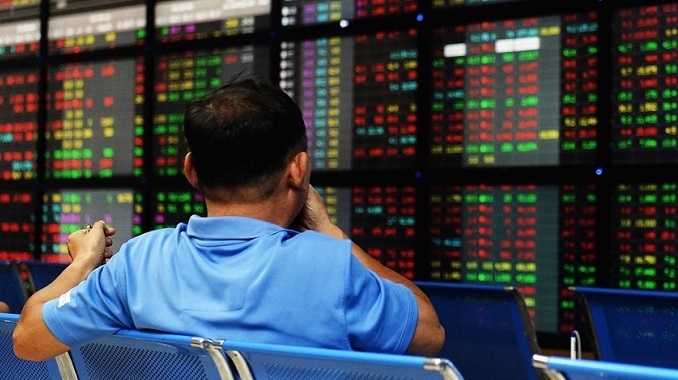
    Vietnam’s benchmark VN-Index rose 0.45 percent to 1,459.33 points Wednesday with trading value plunging to a five-week low as investors tread carefully amid uncertainties. The index stayed in the green throughout the day and closed nearly seven points higher after rising over six points Tuesday.

    Markets in China and other Asian countries also rose Wednesday afternoon on rising hopes Beijing will roll out more economic stimulus.

    But the trading value on the Ho Chi Minh Stock Exchange (HoSE), on which the index is based, plunged 14 percent to VND18.74 trillion ($819 million), lowest since February 7. The VN30 basket, comprising the 30 largest capped stocks, saw 15 tickers in the green, with BVH of insurance company Bao Viet Holdings rising 2 percent after hitting a four-week low.

    SAB of brewer Sabeco gained 1.8 percent, and VCB of state-owned lender Vietcombank went up 1.7 percent.

    Other gainers included MBB of lender MB, up 1.6 percent, and KDH of real estate firm Khang Dien House, up 1.2 percent.

    Twelve blue-chip stocks fell, with BID of state-owned lender BIDV losing 1.2 percent and VJC of budget airline Vietjet falling 0.7 percent.

    PDR of Phat Dat Real Estate Development and POW of electricity producer Petrovietnam Power Corporation both dropped 0.6 percent.

    Foreign investors were net sellers for the eight straight sessions to the tune of VND300 billion with focus on VIC of biggest private conglomerate Vingroup and VHM of real estate giant Vinhomes.

    The HNX-Index for stocks on the Hanoi Stock Exchange, home to mid and small caps, rose 0.60 percent while the UPCoM-Index for the Unlisted Public Companies Market gained 0.42 percent.

  • Vietnam stock market makes bright start after Tet holidays

    Vietnam stock market makes bright start after Tet holidays

    The VN-Index began the new lunar year with a 1.5-percent jump Monday morning, led by aviation and energy stocks. It gained 22 points to 1,503 points at 11.20 as the market reopened after the nine-day Tet break, reaching a near four-week high.

    It represents a 4.1-percent recovery from the bottom of 1,439 points reached on January 18 as investors booked profit before the holidays. Most brokerages expect the index to rise this week since no negative news came out during the holidays.

    Analysts at ASEAN Securities and BIDV Securities said the VN-Index is set to stay in the 1,500 levels this week. It closed in the green on an opening day on five of the last six years since 2016, only dipping in 2020 when Covid-19 first hit Vietnam.

    The VN30 basket, comprising the 30 largest capped stocks, saw 24 of them gain Monday, led by VJC of budget airline Vietjet, which rose by 6.6 percent as investors expect a recovery by the aviation industry after the government announced plans to revive international tourism by March-end.

    Vietnam Airlines (HVN) gained 7 percent to the ceiling and its highest in over three months. Airports Corporation of Vietnam (ACV) rose by 7.4 percent with volumes reaching 321 percent of the average of the last 10 sessions.

    Energy stocks also rose, with PLX of fuel distributor Petrolimex climbing by 6 percent and GAS of state-owned Petrovietnam Gas gaining 6.2 percent. POW of electricity producer Petrovietnam Power Corporation was up 6.5 percent.

    Companies expected to benefit from rising consumption demand, such as VRE of real estate retail firm Vincom Retail and MSN of conglomerate Masan Group were the other gainers.

    The HNX-Index on the Hanoi Stock Exchange, home to mid-and small-cap companies, was up 1.2 percent, and the UPCoM-Index on the Unlisted Public Companies Market had gained 1 percent at the time of publishing.

  • Vietnam stock market makes bright start after Tet holidays

    Vietnam stock market makes bright start after Tet holidays

    The VN-Index began the new lunar year with a 1.5-percent jump Monday morning, led by aviation and energy stocks. It gained 22 points to 1,503 points at 11.20 as the market reopened after the nine-day Tet break, reaching a near four-week high. It represents a 4.1-percent recovery from the bottom of 1,439 points reached on January 18 as investors booked profit before the holidays.

    Most brokerages expect the index to rise this week since no negative news came out during the holidays. Analysts at ASEAN Securities and BIDV Securities said the VN-Index is set to stay in the 1,500 levels this week. It closed in the green on an opening day on five of the last six years since 2016, only dipping in 2020 when Covid-19 first hit Vietnam.

    The VN30 basket, comprising the 30 largest capped stocks, saw 24 of them gain Monday, led by VJC of budget airline Vietjet, which rose by 6.6 percent as investors expect a recovery by the aviation industry after the government announced plans to revive international tourism by March-end.

    Vietnam Airlines (HVN) gained 7 percent to the ceiling and its highest in over three months.

    Airports Corporation of Vietnam (ACV) rose by 7.4 percent with volumes reaching 321 percent of the average of the last 10 sessions.

    Energy stocks also rose, with PLX of fuel distributor Petrolimex climbing by 6 percent and GAS of state-owned Petrovietnam Gas gaining 6.2 percent. POW of electricity producer Petrovietnam Power Corporation was up 6.5 percent. Companies expected to benefit from rising consumer demand, such as VRE of real estate retail firm Vincom Retail and MSN of conglomerate Masan Group were the other gainers.

    The HNX-Index on the Hanoi Stock Exchange, home to mid-and small-cap companies, was up 1.2 percent, and the UPCoM-Index on the Unlisted Public Companies Market had gained 1 percent at the time of publishing.

  • iPhone 12 Pro, Pro Max out of stock in Vietnam

    iPhone 12 Pro, Pro Max out of stock in Vietnam

    Major iPhone authorized resellers in Vietnam have stopped importing iPhone 12 Pro and Pro Max models, seeking to boost iPhone 13 sales.

    “Most retail chains told me iPhone 12 Pro and Pro Max are out of stock. Some chains still sell them but in only a few stores,” said Que Chi in Hanoi.

    The salespeople she talked to all referred her to the new iPhone 13 models, which are readily available.

    iPhone 12 Pro Max, the best-selling iPhone model in Vietnam last year, is now marked as “out of stock” on the websites of major retail chains.

    A media representative of FPT shop said iPhone 12 Pro and Pro Max are sold out and the chain does not plan to import more.

    The same comment was given by other chains like ShopDunk and Minh Tuan Mobile.

    Although there is still high demand for these products in Vietnam, most buyers now only have the option to buy used phones or pay more for the latest iPhone 13, a media representative of Minh Tuan Mobile said.

    Nguyen Lac Huy, the media representative of CellphoneS, said the chain still has iPhone 12 Pro and Pro Max but in low quantity.

    “We cannot buy more as Apple does not have plans to continue production of these models.”

    iPhone 12 Pro Max with a storage of 128 gigabytes is being sold at around VND28.5 million, while the iPhone 13 Pro Max with the same storage is on sale for just VND2 million higher, which explains why distribution chains are focusing on the newer model.

  • Apple does it again, becomes first publicly traded U.S. firm to be valued at three trillion bucks

    Apple does it again, becomes first publicly traded U.S. firm to be valued at three trillion bucks

    For a short period of time today, Apple’s stock market valuation exceeded three trillion dollars. The tech company and iPhone manufacturer hit that valuation when it topped $182.856 a share on Monday, briefly reaching a new high at $182.88. By closing time, the stock had dropped back to $182.01. Apple’s shares rose $4.44 on the first trading day of the new year.
    Remember the early days of the pandemic when investors dumped big tech names like Apple? Since its pandemic low, Apple’s stock has tripled adding two trillion dollars in market capitalization. Apple’s shares are up 41% since the start of last year making it one of the best performers among the Dow Industrials.
    You might recall the race that Apple had with Amazon more than three years ago to see which firm would be the first U.S. publicly traded firm to reach $1 trillion in value. Apple hit that mark on August 2nd, 2018. After hitting that mark, Apple’s shares declined 30% as it cleared the decks in anticipation for its run to a two trillion dollar valuation which it hit on August 19th, 2020.
    Apple has all engines on “go” right now with the iPhone 13 series continuing to be red hot, and with iPads selling well thanks to the never-ending pandemic. The Apple Watch remains the world’s top-selling timepiece and next year Apple is expected to enter the mixed reality space with a new headset. Interestingly, the company has seen its valuation surge by a factor of nine since the death of co-founder and co-CEO Steve Jobs from pancreatic cancer in 2011.
    Ironically, at the time he passed, Jobs owned just a small amount of Apple shares. His fortune came from an 8 percent stake in Disney that he received from the $7.4 billion acquisition of Pixar by Disney in 2006. Based on the current valuation of Disney, Jobs would be worth $22 billion today which is well behind the $226 billion that Elon Musk is reportedly worth. Amazon founder Jeff Bezos is believed to be worth $202 billion (you don’t suppose that Bezos still uses an Amazon Fire Phone, do you?)
    Tech stocks, including Apple, played a big role in the 27% gain earned by the S&P 500 last year. Apple, Tesla, Microsoft, Nvidia, and Alphabet combined to produce a 31% increase.
    The Journal’s iconic “Heard On The Street” column noted that it has taken nine months for Apple to tack on its latest trillion bucks in valuation even though the prospects for the company haven’t changed during that time period. In fact, the Journal mentions research firm Visible Alpha and its forecast that iPhone unit sales will rise only 1% this year compared with 24% last year.
    This is not a short-term slowdown say analysts surveyed by FactSet. Over the next three years, Apple will grow its top line by only 5% a year putting Apple dead last among other tech giants including Amazon. The latter’s valuation is $1.3 trillion less than Apple’s even though the Echo manufacturer garnered 25% more revenue than Apple last year
    Amazon is also expected to see its revenue grow 16% a year over the next three years compared to the aforementioned 5% for Apple. Apple’s products and services are doing quite well but the iPhone still makes up half of its revenue and has benefited from deals offered by the carriers looking to get more 5G phones into customers’ hands.
    Apple certainly enjoyed a bountiful fiscal 2021 with revenue up 33% to $365.8 billion, meaning that the company took in one billion clams each and every day. That was a company record, by the way, and operating income soared 64% to $108.9 billion. This was the first time Apple produced a double-digit growth rate in three years.
    Once Apple’s shares stabilize over three trillion dollars, it will be time to watch out for the rise to four trillion. However, one day the growth just won’t be there and then it truly will be the time to see what Apple has under its sleeves as the next big thing.
  • Trading value jumps to six-session high

    Trading value jumps to six-session high

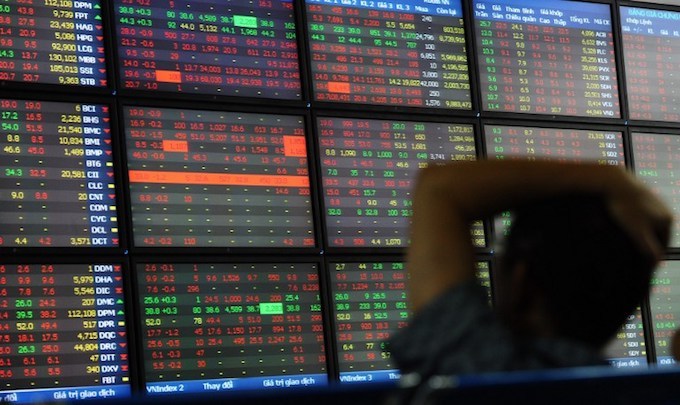
    Vietnam’s benchmark VN-Index fell 0.01 percent to 1,476.02 points Tuesday with trading value the highest in six sessions.

    The index closed 0.19 points lower after gaining nearly 13 points Tuesday.

    Trading value on the Ho Chi Minh Stock Exchange (HoSE), on which the index is based, rose 6.75 percent to VND27.65 trillion ($1.2 billion).

    The VN30 basket, comprising the 30 largest capped stocks, saw 19 tickers in the red, with PDR of Phat Dat Real Estate Development losing 5.9 percent to a near three-week low.

    The ticker has gone sideways for over two months.

    PNJ of Phu Nhuan Jewelry lost 2.3 percent, having fallen nearly 13 percent since its peak in mid-November.

    KDH of real estate firm Khang Dien House fell 2.2 percent, and STB of Ho Chi Minh City-based lender Sacombank, 1.9 percent.

    Nine blue chip tickers closed in the green, with HPG of steelmaker Hoa Phat Group and POW of electricity producer Petrovietnam Power Corporation gaining 2.5 percent each.

    Foreign investors were net sellers for the third straight session to the tune of VND879 billion, the highest in nine sessions.

    They focused on selling HPG of steelmaker Hoa Phat Group and VPB of private lender VPBank.

    The HNX-Index for stocks on the Hanoi Stock Exchange, home to mid and small caps, fell 0.63 percent while the UPCoM-Index for the Unlisted Public Companies Market dropped 0.19 percent.

  • Elon Musk Sells $5 Billion In Tesla Shares After Twitter Poll

    Elon Musk Sells $5 Billion In Tesla Shares After Twitter Poll

    Tesla Chief Executive Elon Musk sold about $5 billion in shares, the billionaire reported in filings on Wednesday, just days after he polled Twitter users about selling 10% of his stake. In his first share sale since 2016, Musk’s trust sold nearly 3.6 million shares in Tesla, worth around $4 billion, while he also sold another 934,000 shares for $1.1 billion after exercising options to acquire nearly 2.2 million shares. The 4.5 million shares equate to about 3% of his total holdings in the electric vehicle manufacturer, which makes up the vast part of his estimated $281.6 billion fortune, according to Forbes.

    Musk on Saturday polled Twitter users about selling 10% of his stake, helping to push down Tesla’s share price after a majority on Twitter said they agreed with the sale. The stock sank 12% on Tuesday in a multi-day selloff that endangered the company’s position in the $1 trillion club, but recovered 4.3% on Wednesday.

    The options-related sales were set up in September through a trading plan that allows corporate insiders to establish preplanned transactions on a schedule, the filing said. The sales of the option-related shares paid for associated taxes. It was not clear how or whether the trading plan related to Musk’s Twitter poll. Tesla did not respond to a request for comment.

    The additional share sales were separate and provide Musk with sizeable reserves of cash, given his wealth is largely tied to his stakes in Tesla and SpaceX. Musk has more than 20 million further stock options that are due to expire in August of next year. If Musk carried out the 10% stock sale plan, it would be a slight negative near term, said Mark Arnold, chief investment officer at Hyperion Asset Management in Brisbane where Tesla is the top holding in its global fund. “But the stock is pretty liquid and its not a huge percentage of total issued shares, so it shouldn’t have that much of an impact … we’re quite comfortable with the outlook for the business,” he said.

    While Tesla has lost close to $150 billion in market value this week, retail investors have been net buyers of the stock. Some 58% of Tesla trade orders on Fidelity’s brokerage website on Wednesday were for purchases, rather than sales. Retail investors made net purchases of $157 million on Monday and Tuesday, according to Vanda Research. Tesla is now up more than 51% in 2021, thanks largely to an October rally that was fueled by an agreement to sell 100,000 vehicles to rental car company Hertz.

    “The company itself is on fire, with strong results,” said Tim Ghriskey, a senior portfolio strategist at New York-based investment management firm Ingalls and Snyder. Bullish sentiment returned to Tesla’s options on Wednesday, with about 1.1 calls traded for every put. Calls are typically used for bullish trades, while buying puts shows a bearish bias. The company’s options accounted for about $109 billion in premium changing hands over the last two weeks, or about one in every three dollars traded in the U.S.-listed options market, according to a Reuters analysis of Trade Alert data.

  • Trading Volume Surges on DBS Digital Exchange

    Trading Volume Surges on DBS Digital Exchange

    A shift to round-the-clock trading in August has seen trading volumes in the two months surpassing the total trading volume of the first eight months of the year by 40 percent.

    DBS has reported strong growth in its digital asset ecosystem, anchored by DDEx, or the DBS Digital Exchange, which now has over S$600 million in digital assets under custody as of end-October, triple the amount recorded in the previous month, according to the bank.

    The bank also said it is seeing a growing number of corporate and institutional customers among its participants, with other banks, a central bank and other digital asset exchanges among the 500 participants on the exchange.

    Becoming a participant of DDEx opens many gateways for our customers to access the burgeoning cryptocurrency and digital asset economy, Eng-Kwok Seat Moey, group head of capital markets and DDEx chair, said in a statement on Thursday.

    DDEx was launched in December 2020 with an initial offering that covered cryptocurrency trading. It has since issued a  bond through a security token offering (STO) on the exchange, and plans to list at least half a dozen security tokens by end-2022. The bank also launched a crypto trust offering that combined wealth planning services with emerging digital currencies, and its brokerage arm received formal approval from the Monetary Authority of Singapore (MAS) to provide digital payment token services.

    At the presentation of its third-quarter results last week, the bank’s chief executive Piyush Gupta said it is planning to open the crypto exchange to the broader retail market in 2022.

    DBS previously said it expects to double the number of participants on DDEx to 1,000 and to grow its base by 20-30 percent annually for the next three years, as investments in digital tokens gain greater acceptance.

  • Over 130,000 investors enter stock market

    Over 130,000 investors enter stock market

    More than 130,000 new investors opened stock trading accounts in October, including 129,750 local investors, according to the Vietnam Securities Depository.

    129,200 of the local investors were retail ones.

    At the end of October there were over 3.86 million accounts. The number increased for a third straight month amid news of government economic stimulus of around VND800 trillion ($34.78 billion).

    The benchmark VN-Index rose to a new peak of 1,456.51 points on Friday, led by energy stocks, though trading on the Ho Chi Minh Stock Exchange dipped slightly to VND26.14 trillion.

    The government targets having 3 percent of the population participating in equity markets by the end of this year and 5 percent by 2025 under its Scheme for Restructuring Securities and Insurance Markets, which it finalized in early 2019.

  • HCMC stock exchange to test South Korean system

    HCMC stock exchange to test South Korean system

    Vietnam’s overloaded main bourse, the Ho Chi Minh Stock Exchange, next week will begin testing a new system from South Korea which it plans to use later this year.

    The system would have the capability to handle “many times more” transactions than now, Le Hai Tra, CEO of the exchange, said.

    A temporary system from FPT, which has been tested in recent months to deal with the overload, would serve as a backup, he added.

    HoSE signed a deal for the system in 2012 with the Korea Exchange at a cost of VND600 billion ($26.16 million).

    But since last year South Korean experts could not come to Vietnam due to the Covid-19 pandemic, and so installation was delayed.

    A record number of new investors in recent times has placed an extreme strain on HoSE’s outdated system.

    The bourse increased the trading lot from 10 shares to 100 and instructed brokerages to stop order changes and cancelations to reduce the number of transactions.

  • Vietnam stock market posts world’s highest gains

    Vietnam stock market posts world’s highest gains

    Vietnam’s benchmark VN-Index has surged 34.51 percent in the first half of this year, marking the highest increase in the world.

    Abu Dhabi was second with its stock market rising 33.06 percent, followed by Austria with 32.65 percent, according to China-based stock database StockQ.

    With an increase in five consecutive sessions in the past week, VN-Index reached 1,374.05 points last Friday, up 4.06 percent from a week earlier. Vietnam ranked third among the most active markets in the past week after Argentina and Hungary, according to the Chinese stock database.

    Abundant cash flow, constantly increasing number of new investors, and immediate measures to reduce congestion has propelled the stock market.

    The number of new investors entering the stock market in May scaled a new monthly record, with over 113,000 new trading accounts opened.

    The VN-Index’s continuous growth has broken most forecasts made by domestic securities companies.

    Citing geopolitical risks and complicated developments of the Covid-19 pandemic, the Viet Dragon Securities Company (VDSC) had forecast that the VN-Index could reach a high of 1,272 points, equivalent to a year-on-year increase of about 15 percent.

    Other securities firms like Ho Chi Minh Securities Corporation (HSC), Vietcombank Securities (VCBS) and Viet Capital Securities (VCSC) made similar forecasts of the index reaching 1,250-1,280 points.

    The index has surged rapidly, pushing the price-earnings (P/E) ratio to 18.8. While this figure is still much lower than other Southeast Asian countries, including the Philippines, Indonesia and Thailand, it shows Vietnam’s stock market is coming of age.

    In a newly released strategy report, VNDirect Securities said: “The market is no longer undervalued but also not too high, meaning that businesses need more time to improve their results and pull the valuation ground to a more attractive level.”

  • Newbies continue to flock to stock market

    Newbies continue to flock to stock market

    The number of new stock trading accounts opened by retail investors in May topped 113,670, a new monthly record, according to the Vietnam Securities Depository.

    May was the third month in a row in which more than 100,000 accounts were opened. There were 3.2 million retail accounts and nearly 12,000 belonging to organizations.

    The invasion of the market by new investors took the total trading value on the Ho Chi Minh Stock Exchange (HoSE), Hanoi Stock Exchange, and Unlisted Public Companies Market to over VND531 trillion ($23 billion) in May.

    HoSE accounted for VND448.5 trillion, a 19 percent increase from the previous month.

    The boom has created pressure on the HoSE trading board, which had to shut down for the first time ever on Tuesday after the morning session as a surge in transactions threatened to overwhelm it.

  • Global Christmas break can boost Vietnam stock market

    Global Christmas break can boost Vietnam stock market

    Global stock markets closing for Christmas break on Wednesday could reduce selling pressure from foreign investors and help the VN-Index recover, analysts say.

    With foreign investors have been net sellers for the majority of sessions in December, the Christmas break could ease selling pressure and help the VN-Index reach 958-961 points in the first few sessions this week, according to a report from Bao Viet Securities (BVSC).

    Vietnam’s benchmark Index closed at 956.41 points on Friday, having risen 0.44 percent with most blue chips stocks in the green, despite a foreign net sell of VND340 billion ($14.66 million).

    If the stock market can rise above 960 points, a psychological threshold, the market could enter a recovery phase, potentially rising up to 980-985 points in the near future, BVSC said.

    Although the VN-Index had plunged from 1015.59 points to 956.41 points in the last two months, downward momentum had slowed down in the past two weeks. It lost only 10 points in the last two weeks, and neared the 950 support level many times but never fell further.

    The market is also beginning to show positive signals at the end of the year, considered a peak time when exchange-traded funds (ETFs) restructure their portfolios and futures contract mature, according to analysts.

    For instance, liquidity on Friday session reached VND3.39 trillion ($146.13 million), the highest level in the last two weeks, most recent sessions recording net buys from domestic investors, with the VN-Index hovering above the opening for the duration of these sessions.

    However, liquidity remains relatively low to averages of previous months, showing that investors are still cautious and it will be difficult for the market to make a breakthrough in the last sessions of the year, according to BVSC.

    After this week, Vietnam’s stock market will have two last sessions for 2019. Many analysts have released reports focusing on long-term drivers for the market, with positive stimulus expected from amendments to Public Investment Law due next year, the U.S.-China reaching a trade agreement, and Vietnam’s steadily growing macroeconomic indicators.

    Vietnam’s economy is estimated to expand by 6.8 percent this year, with a continued trade surplus and declining public debt, according to the latest report by the World Bank

    Asian Development Bank this month revised its GDP growth forecast for Vietnam from 6.8 to 6.9 percent in 2019.

  • China’s Crypto Crackdown Hits Five Exchanges

    China’s Crypto Crackdown Hits Five Exchanges

    China’s crackdown on cryptocurrencies has led at least five local exchanges to halt servicing of domestic users or their whole operations altogether.

    Last week, Chinese exchange operators Bitsoda and Akdex announced that it would cease its operations. Btuex and Idax said they would close domestic operations and focus on overseas users. Biss said it had halted ops while it cooperates in investigations with local authorities.

    The exchanges account for the five known exchanges that have suspended or shut down their operations. Other players that are believed to be affected include Binance and Tron whose Webio accounts have reportedly been suspended.

    Weeks after Beijing declared support for blockchain technology, the market has been rushing to capitalize on perceived opportunities from digital currencies. This subsequently led regulators in Shanghai, Shenzhen, and Beijing to ramp up efforts to probe or shut down exchanges.

    Concurrently, China is readying to realize part of its blockchain ambitions with the launch of its own central bank-backed digital currency. It is already making accelerated efforts to ready the regulatory grounds for the launch including the introduction of new standards in 17 areas of emerging technologies which include not only blockchain but also cloud services and artificial intelligence.

  • Shanghai-Frankfurt Stock Link in the Works

    Shanghai-Frankfurt Stock Link in the Works

    In another move to internationalize Chinese markets, plans are underway for a Shanghai-Frankfurt stock link driven in part for Europe’s «unabated eagerness» for collaboration with the second-largest economy.

    The China Europe International Exchange (CEINEX) is currently preparing for a stock connect program, according to state media, which reflects European countries’ «unabated eagerness» for Chinese collaboration in areas such as finance.

    CEINEX did not disclose the exact data of the Shanghai-Frankfurt stock link launch but state media highlighted that it could be rolled out in the next one or two years.

    The program is expected to allow Germany-based blue chips to issue Chinese depositary receipts on the Shanghai Stock Exchange and for mainland-based firms, especially manufacturers, to issue global depository receipts on exchanges in Frankfurt.

    Listings aside, onlookers believe there are synergies to be realized by Germany due to its significant base of industrial powerhouses such as Mercedes Benz or BMW which could benefit from cooperation with China which has withstood the downward economic cycle in sectors such as an automobile.

    In addition to opening up markets, stock link is expected to be the first in a series of moves to boost financial cooperation between China and Europe.