Retail News CRM

Tag: stock

  • Asian shares rattled by Trump policy worries, dollar soft

    Asian shares rattled by Trump policy worries, dollar soft

    Asian shares slipped on Tuesday as stringent curbs on travel to the United States ordered by President Donald Trump brought home to investors that he is serious about carrying out his controversial campaign pledges.

    Global stocks posted their biggest loss in six weeks on Monday after Trump signed an executive order to bar Syrian refugees indefinitely and suspend travel to the United States from seven Muslim-majority countries, sparking widespread protests.

    European bourse are expected to remain fragile after big losses on Monday, with spread-betters seeing opening losses of as much as 0.1 per cent in major indexes, including Britain’s FTSE, Germany’s DAX and France’s CAC.

    “Investors are becoming worried as it appears as if he was setting fire to geopolitical risks that already exist,” said Yoshinori Shigemi, global market strategist at JPMorgan Asset Management.

    Trump’s move drew criticism from some US policymakers, and business leaders, with technology companies, which depend on talent from around the world, planning to discuss a legal challenge.

    “His stance is really inward-looking, making investors nervous about his ’moderateness’,” said Masahiro Ichikawa, senior strategist at Sumitomo Mitsui Asset Management.

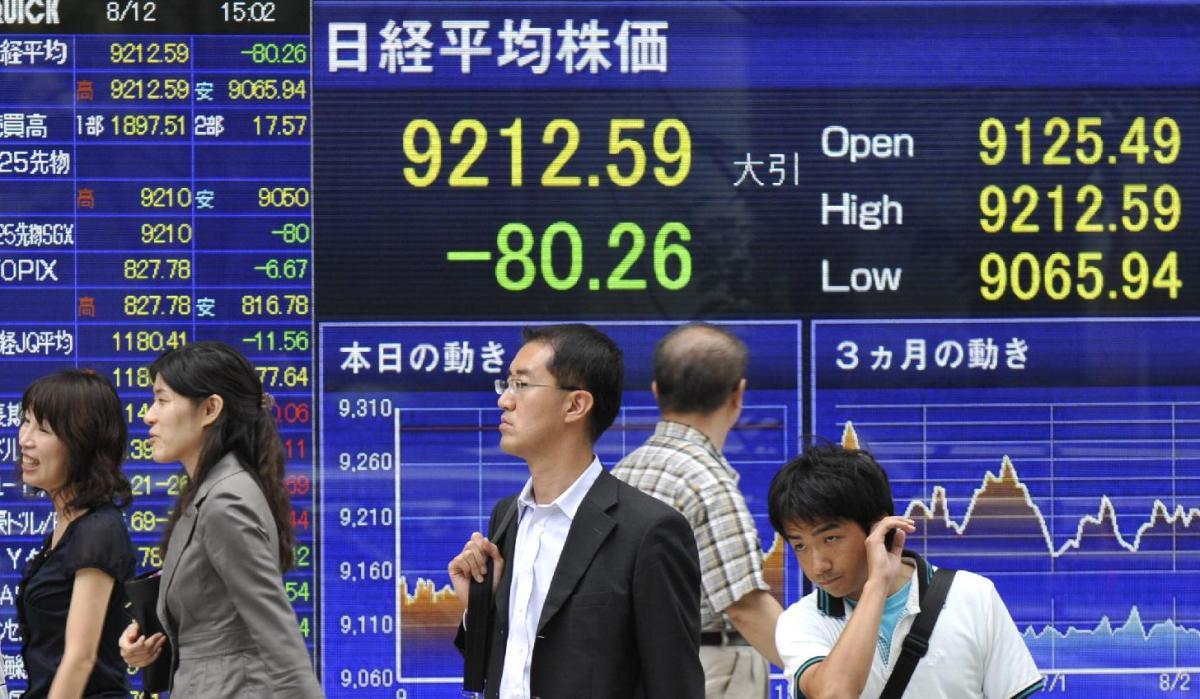
    MSCI’s broadest index of Asia-Pacific shares outside Japan fell 0.5 per cent while Japan’s Nikkei dropped 1.7 per cent, its biggest fall in almost three months.

    On Monday, the US S&P 500 Index fell 0.6 per cent, its biggest fall in a month, though it remained well above levels seen before the November 8 presidential election.

    MSCI’s gauge of the world’s 46 stock markets shed 0.6 per cent, its largest loss in a month and a half.

    The mood soured further when Trump fired the federal government’s top lawyer after she took the extraordinarily rare step of defying the White House.

    US stock futures ESc1 shed 0.3 per cent on Tuesday and the dollar extended losses against the yen.

    Still, most share prices were up on the month, supported by signs of accelerating momentum in the global economy and hopes of large fiscal stimulus from Trump.

    MSCI’s ex-Japan Asian shares index was up 5.7 per cent this month while its index of world markets was up 2.5 per cent. They were also higher than their levels before the US elections.

    In the currency market, the dollar was broadly weak and fell 0.3 per cent against the yen to 113.49 yen. It was down 3.1 per cent so far this month, after three straight months of sizable gains.

    The Japanese currency showed no reaction after the Bank of Japan kept its policy on hold, as expected. A string of recent data has suggested the economy is slowly regaining traction.

    The euro edged up to US$1.0710, consolidating after its rebound this month from its 14-year low of $1.0340 set on January 3.

    In a possible sign of increased anxiety among investors, the safe-haven Swiss franc strengthened to a seven-month high of 1.0637 franc per euro on Monday.

    Worries are also growing about a political shift to populist leaders in Europe.

    French bond yields rose to the highest level since September 2015, on rising uncertainty over the Presidential election later this year.

    Conservative leader Francois Fillon, seen as the front-runner, is now battling to contain a scandal over allegedly unlawful payments to his wife while the Socialists on Sunday picked a hard-left candidate, possibly helping popular far-right leader Marine Le Pen.

    Italian debt yields climbed to 1 1/2-year highs partly as early elections could be called following a ruling from the country’s constitutional court last week.

    Italian assets have also been hit by worries over its banking sector after UniCredit, the country’s biggest bank, revealed on Monday it expects to book a net loss of around 11.8 billion euros ($12.6 billion) for 2016 and fall short of European Central Bank capital requirements.

    By contrast, the yield on German debt fell on Monday even as data showed inflation in Germany hit a 3 1/2-year high in January.

    News that Germany posted a national inflation rate of 1.9 per cent stoked talk of an unwinding of monetary stimulus by the ECB, even though the inflation outcome was below expectations.

    Elevated uncertainty about Trump’s policies, including a lack of detail so far on his plans for tax cuts and fiscal spending, offset optimism on the US economy.

    Data on Monday showed US consumer spending accelerated in December while inflation showed some signs of picking up last month.

    The core PCE price index, the Federal Reserve’s preferred inflation measure, rose 1.7 per cent on a year-on-year basis after a similar gain in November.

    “We’ve seen a jump in US economic sentiment after Trump’s victory. But the improvement in hard economic data remains moderate,” said Haruka Kazama, senior economist at Mizuho Research Institute.

    “And if Trump takes more steps to limit permits for immigrants, that would surely boost inflation as the US is now near a full employment,” she added.

    The Federal Reserve, which will start its two-day policy meeting today, is widely expected to keep interest rates unchanged as it awaits greater clarity on Trump’s economic policies.

    Oil prices dipped as rising US drilling activity offset efforts by OPEC and other producers to cut output in a move to prop up the market.

    Brent crude futures LCOc1, the international benchmark for oil prices, were trading at $55.14 per barrel, down 0.2 per cent from Monday’s settlement price.
  • Malaysian shares rise after 2017 budget sticks to consolidation path

    Malaysian shares rise after 2017 budget sticks to consolidation path

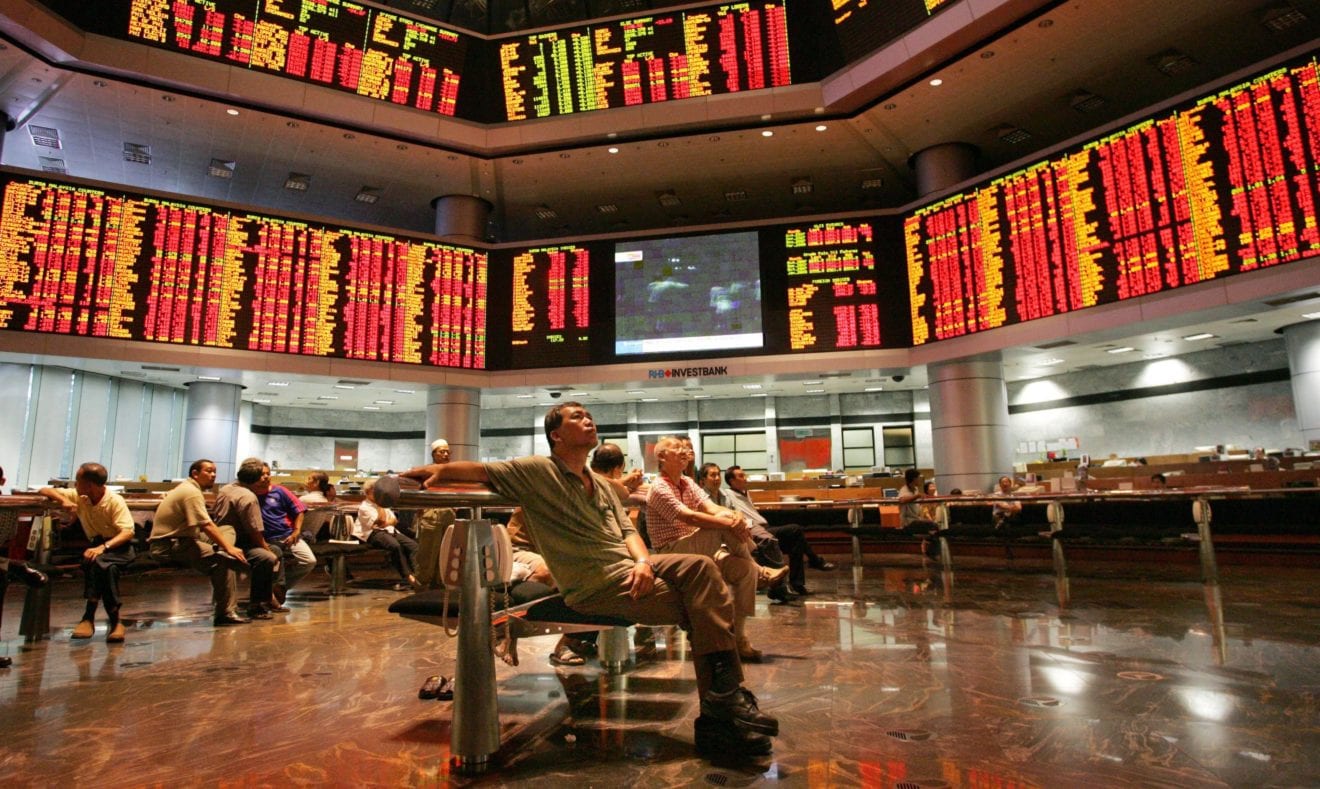
    Malaysian shares edged higher Friday, as investors cheered Prime Minister Najib Razak’s resolve to narrow the budget deficit next year.

    Najib, who pledged to hand out cash aids and push for infrastructure development to stoke growth in an uncertain global environment, expects the nation’s gross domestic product to expand 4% to 5% in 2017. He forecast fiscal deficit to narrow to 3% of GDP from the 3.1% target for this year.

    The nation’s benchmark FTSE Bursa Malaysia KLCI ended 0.2% higher at 1,669.98 points Friday. The index rose 0.7% for the week, tracking gains in most regional indexes.

    CIMB Group Holdings, British American Tobacco Malaysia and plantation stocks led gains on Friday, while YTL Corp, Genting and Genting Malaysia slipped.

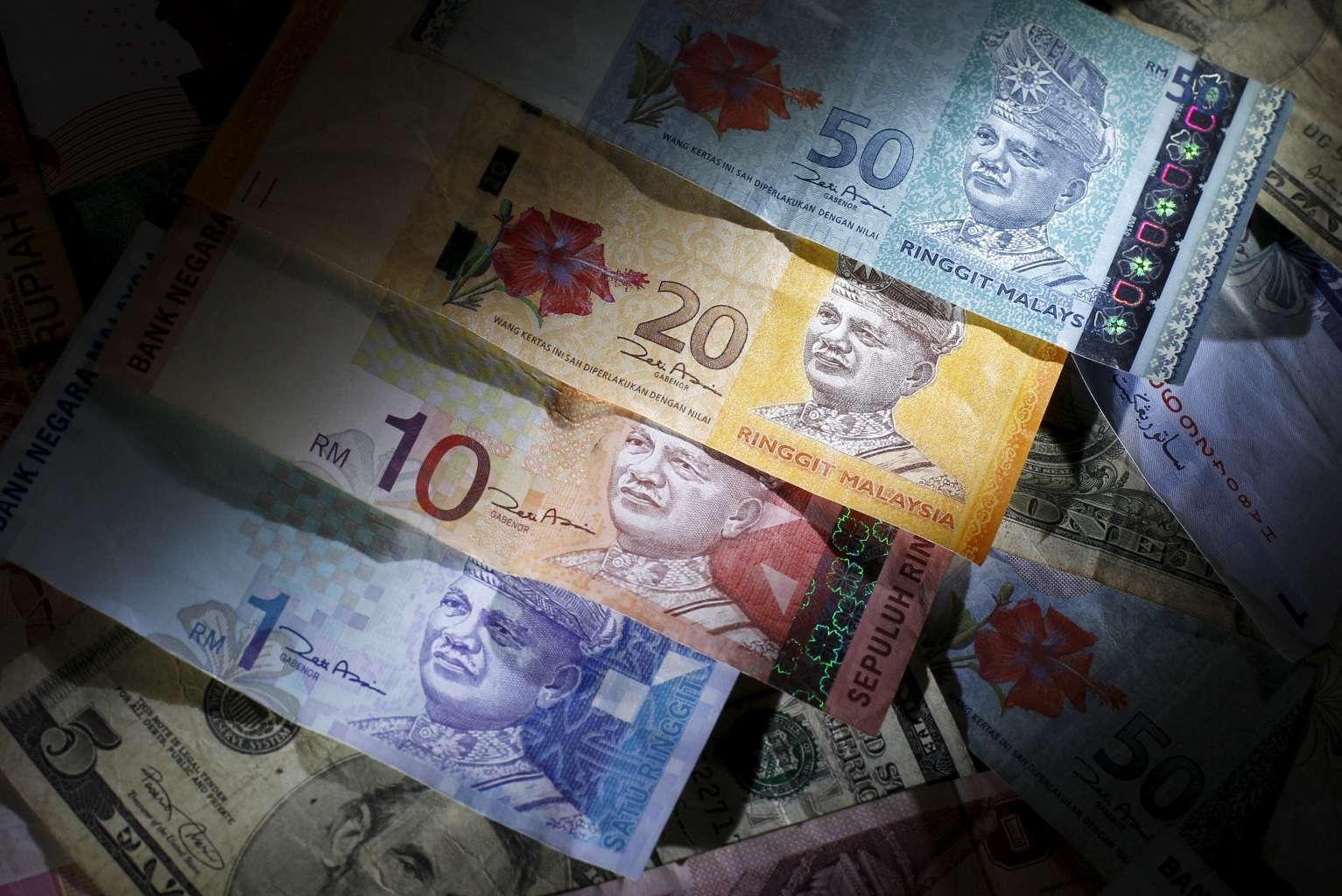
    The ringgit declined 0.05% to 4.183, tracking broad gains in the dollar as the European Central Bank’s post-policy comments pushed the euro to seven-month lows.

    Data released Friday showed Malaysia’s retail inflation rate rose a lesser-than-expected 1.5% last month, unchanged from August’s reading. Economists had expected a 1.7% increase in September.

    “At this juncture, the balance of risks is still skewed towards growth disappointment, not to mention possible fiscal slippage, with inflation pressures of second-order concern,” said Weimen Ng, an economist at ANZ Research, in a note. “A key trigger that will bring Bank Negara Malaysia back to the rate cut table at the final meeting of the year on 23 November is a significant slowdown in private consumption.”

    At today’s budget, inflation was projected at be between 2% to 3%. Malaysia’s central bank stood pat on interest rates at its September review, after delivering a surprise rate cut in July.

    Regional sentiment was tepid on Friday, weighed down by broad strength in the dollar and sliding crude prices.

    Crude oil prices slipped over 2% on Thursday, reversing the previous day’s gains.

    The dollar index, measured against a basket, rose to its highest level since February on Friday as the euro remained under pressure after the ECB stood pat. Chatter about a possible plan to taper the central bank’s 80 billion euro a month bond-buying program rattled markets earlier this month.

    ECB President Mario Draghi’s comments that a long-awaited rise in inflation required “very substantial” monetary policy accommodation also weighed on the euro.

    In Southeast Asian markets Friday, Philippine’s PSE Composite and Singapore’s Straits Times slipped 0.8% and 0.4%. Indonesia’s Jakarta Stock Exchange Composite rose 0.1%, while Thailand’s SET index advanced 0.5%.

    In rest of Asia, South Korea’s KOSPI and Japan’s Nikkei 225 declined 0.4% and 0.3%. China’s Shanghai Composite advanced 0.2%. Hong Kong markets were closed due to a typhoon.

    On the KLCI, 15 of the 30 constituents ended lower Friday and four closed unchanged, while overall declining issues outnumbered advancing ones 392 to 327.

    Foreign investors sold 15.5 million ringgit ($3.7 million) in Malaysian shares on Thursday, according to Kenanga Research.

    British American Tobacco Malaysia advanced 2.7% to 49.8 ringgit, leading gains on the KLCI. The cigarette maker reports third-quarter earnings on Monday.

    CIMB rose 2.2% to 5.04 ringgit. The banking major is trading at its highest level this year, helped by expectations of lower credit costs in Malaysia and Indonesia, especially in the second half of next year, analysts said.

    Plantation majors Kuala Lumpur Kepong and IOI Corp rose 1.8% to 24.36 ringgit and 0.5% to 4.51 ringgit. On Friday, the government said palm oil production in Malaysia is expected to rise 5.6% in 2017. Palm oil futures were up 0.4% at 2,728 ringgit per tonne.

    Plantations-to-motoring conglomerate Sime Darby ended 0.3% higher at 7.98 ringgit.

    Genting Malaysia slipped 1.7% to 4.71 ringgit Friday. The leisure and hospitality major declined 1.7% for the week, trimming last week’s 2.8% rally.

    Choppy trading in resort-to-rail conglomerate YTL Corporation continued Friday, with the stock closing 1.1% lower at 1.75 ringgit. The stock has alternated between losses and gains this week, ending the week 1% lower.

    Gaming conglomerate Genting slipped for the second day, falling 1% to 7.87 ringgit.

  • Shenzhen-Hong Kong Connect project approved

    Shenzhen-Hong Kong Connect project approved

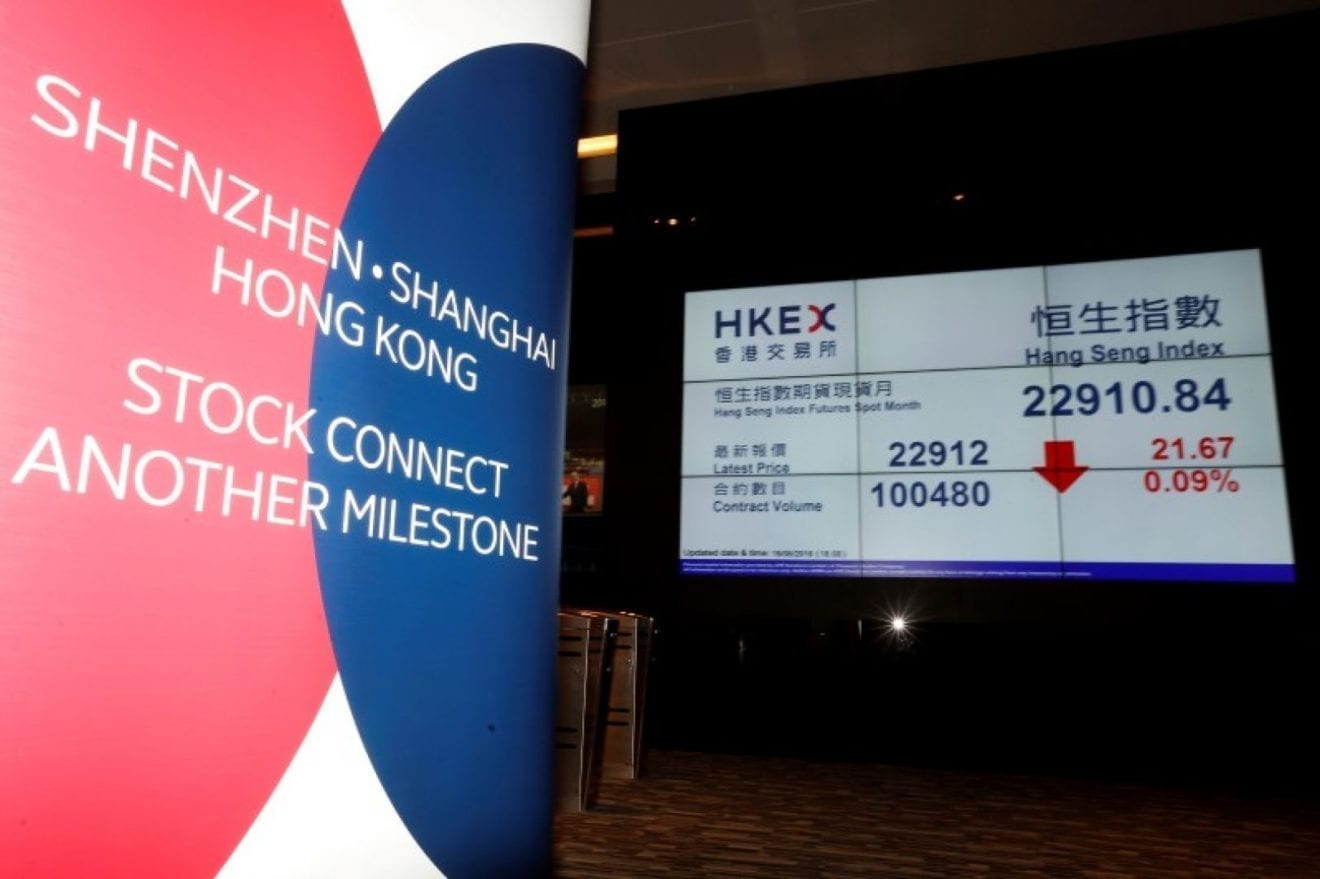
    The Securities and Futures Commission (SFC) and the China Securities Regulatory Commission (CSRC) today have given in-principle the approval of the structure of the proposed Shenzhen-Hong Kong Stock Connect.

    The project will provide mutual stock market access between Hong Kong and Shenzhen via a northbound trading link and a southbound trading link. There will be no aggregate quota under Shenzhen-Hong Kong Stock Connect.

    Today’s joint announcement issued by the SFC and the CSRC also abolishes the aggregate quota under Shanghai-Hong Kong Stock Connect with immediate effect.

    “The expansion of mutual stock market access represents yet another milestone towards strengthening the interconnectivity between the stock markets in Hong Kong and the Mainland as well as consolidating Hong Kong’s position as a major offshore renminbi centre,” said Mr Carlson Tong, the SFC’s chairman.

    The launch of Shenzhen-Hong Kong Stock Connect is subject to the finalization of all necessary regulatory approvals, market readiness and relevant operational arrangements.

    A separate announcement on the commencement of Shenzhen-Hong Kong Stock Connect will be made in due course.

  • Sa Sa’s Stock May Fall 50%

    Sa Sa’s Stock May Fall 50%

    Shares of Sa Sa International are up 27% in the past month as Chinese tourist arrivals to Hong Kong showed signs of a recovery – but it may not yet be time to put the marked down cosmetics retailer in the shopping basket.

    Once a market darling, Sa Sa has sagged 70% from its peak in September 2013 as rising online competition and a fall in the number of mainland Chinese shoppers visiting its ubiquitous neon pink stores squeezed sales. Slumping sentiment and spending among Hong Kong consumers hasn’t helped. The cosmetics retailer released its full year results on Thursday and it wasn’t pretty: earnings plummeted 54% year-on-year as revenues slipped and margins were squeezed. However, there is stirring interest in Sa Sa as a recovery play as the slump in Chinese visitors appears to be waning, while investors also get paid to wait for a turnaround given the juicy 8% yield. But the stock may have rallied too hard, too fast as a recovery in mainland visitors – if it happens – doesn’t necessarily mean fuller tills at stores, while pressures on margins abound.

    Sa Sa’s yearly revenues suffered their first decline since its public listing in 1997. The retailer reported a 12.8% fall to HKD9 billion as same store sales in Hong Kong and Macau, which account for around 80% of revenues, fell 11.8%. While the volume of transactions decreased around 4%, a 10% fall in the average value of each transaction hurt the top line. Mainland tourists made around 8% fewer transactions and on average spent 11% less on each transaction. The weaker spending by mainland shoppers reflects the growing number of tourists from smaller cities who have lower disposable incomes. Additionally, restrictions limiting Shenzhen residents to only one visit to Hong Kong a week have shrunk the number of day trippers who account for the bulk of Sa Sa’s mainland clientele.

    But it’s not just mainland tourists who are weighing on Sa Sa’s top line: local shoppers, who account for around 48% of transactions, are also spending less amid Hong Kong’s weak economy. Consumer confidence is at its lowest level since 2013, while retail sales tumbled nearly 8% year-on-year in April after reporting the steepest plunge since 1999 in February. A weak finance sector and falling property prices threaten to further depress consumer sentiment spending. Transaction volumes for local shoppers slipped roughly 1% for Sa Sa last year, while average spending decreased just over 3%.

    Morgan Stanley analyst Edward Lui expects near term trends “to stay challenging” for Hong Kong retailers and expects Sa Sa to record a double digit decline in same store sales this year. The analyst said Sa Sa, as well as jeweler Chow Tai Fook, have the “greatest de-rating and earnings risks.” Lui has an underweight rating on Sa Sa with a HKD1.40 a share target price, which is 51% below the stock’s current level of HKD2.85 a share. Sa Sa shares also aren’t cheap: they trade at 19 times forward earnings, which is above a five-year average of 17 times and compares to 14 times for fast food chain Fairwood Holdings, which is geared to benefit from a weak economy.

    Competition between Sa Sa and rivals like Bonjour Holdings has also intensified. More aggressive promotions and discounts lowered Sa Sa’s net profit margin to roughly 7% last year from around 12% the prior year. Staffing costs as a share of sales also increased as the company forked out more remuneration to retain staff. Macquarie analyst Linda Huang is concerned about the outlook for profits as “margins will likely be under pressure” due to high rent, labor costs and promotional spending. Huang has an underperform rating on Sa Sa with an HKD1.80 a share target price. A weak Hong Kong property market could lower rent for the retailer, argues Core Pacific-Yamaichi analyst Kevin Tam. Tam – who is the lone analyst with a buy rating on Sa Sa – expects an 11% decline in rent this year to be a major earnings driver. However, Sa Sa management has indicated savings on leases would show up in total rent costs only over “an extended time of several financial years.”

    While Sa Sa has diversified away from Hong Kong and Macau with stores in Southeast Asia and mainland China, its Malaysia business was the only bright spot last year. Sa Sa has also hedged itself against the squeeze of ecommerce on brick and mortar retailers with its sasa.com portal but growth has been disappointing compared to dedicated online retailers such as Vipshop.

  • Mary Buffett Launches Jitta.com for Bangkok Investors

    Mary Buffett Launches Jitta.com for Bangkok Investors

    Mary Buffett, the former daughter-in-law of famed investor Warren Buffett, helped launch Jitta.com last week, a platform aimed at retail stock investors in Thailand’s capital. Ms. Buffett brings the Buffett know-how to Bangkok to appeal to investors hoping to become as good as the famous stock picker.

    Co-author of the best-selling book “Buffetology,” Mary is putting her name behind the Jitta startup. After testing the platform for herself, Ms. Buffett found it to be an impressive tool for investors.

    Mary’s endorsement of Jitta.com is an obvious boost for the Thai-based startup, which is looking to make it big on the international retail investment scene.

    Ms. Buffett met with Jitta.com founder Trawut Luangsomboon three years ago, and was one of the initial investors in the project. The start-up launched in the U.S. in 2014.

    Jitta uses Warren Buffett’s investment style to simplify retail investment and make it easy for most individuals to get started. Buffett’s style is primarily focused on buying great stocks when they’re undervalued.

    When shares drop below Jitta’s “fair price,” investors are encouraged the buy the stock – just as Warren Buffet would do.

    Through the adoption of Buffetology’s key elements, this platform helps investors minimize risk while doing their due diligence.

    Jitta covers stocks in Singapore, U.S., Thailand, Vietnam and Hong Kong.

  • Bursa Malaysia likely to trade higher next week

    Bursa Malaysia likely to trade higher next week

    Shares on Bursa Malaysia are expected to trade higher next week, supported by positive domestic and regional sentiments.

    Affin Hwang Investment Bank vice-president/head of retail research Datuk Dr Nazri Khan Adam Khan said market has been on an upward trend for the past two months with the benchmark FTSE Bursa Malaysia KLCI (FBM KLCI) forming a solid psychology level at the 1,7000 level.

    “We have similar upward momentum from our crude palm oil (CPO) and rubber that support the sentiment for next week. “The crude oil price also has stabilised and its recovery to US$43 per barrel, orchestrated well for Bursa Malaysia’s stocks,” he told Bernama.

    Nazri said with China’s trade data remaining positive and solid, it indicated that the country is stabilising.

    The upcoming Sarawak election and the Ecoworld International initial public offering (IPO) will be a domestic catalyst in supporting the local bourse’s sentiment, he added.

    Nazri called on investors to accumulate the “Sarawak election-theme play” counters, namely Naim Holdings and Ta Ann Holdings.

    For the week just ended, the market has been on consolidation mode as expected after the previous week’s rally.

    The FBM KLCI confined in tight range as sentiment turned cautious ahead of a weekend meeting of oil producers.

    Oil producers led by top exporters, Saudi Arabia and Russia are expected to meet in Qatar on Sunday to discuss freezing output to rein in ballooning global over-production.

    On a weekly basis, the benchmark FTSE Bursa Malaysia KLCI (FBM KLCI) finished 9.59 points higher at 1,727.99.

    The FBM Emas Index rose 44.53 points to 11,997.07, the FBMT100 Index added 46.74 points to 11,693.21 while the FBM Emas Syariah Index shed 2.27 points to 12,539.76.

    On a sectoral basis, the Finance Index soared 162.16 points to 15,034.70, the Plantation Index trimmed 36.27 points to 7,785.25, while the Industrial Index gained 25.04 points to 3,290.97.

    Weekly turnover leaped to 8.17 billion units valued at RM8.65 billion from 7.78 billion units valued at RM9.60 billion last week.

    Main market volume gained to 5.61 billion shares valued at RM8.21 billion from 5.13 billion shares valued at RM9.16 billion previously.

    Warrant turnover jumped to 997.74 million units valued at RM130.26 million from last week’s 928.94 million units valued at RM130.12 million. The ACE market rose 1.56 billion shares worth RM305.06 million from 1.52 billion shares worth RM307.35 million, transacted previously.

    Gold futures contracts on Bursa Malaysia Derivatives are likely to trade slightly lower next week with the ringgit expected to continue its upward momentum.

    A dealer said the strengthening of the ringgit due to a rally in global oil prices had added pressure on gold.

    “With the equities market set to remain strong and oil prices continuing to edge higher, gold is likely to face continuing pressure,” he said.

    He said the Bursa Malaysia’s gold futures market would also track the performance of the New York Commodity Exchange’s (COMEX) gold market, the price setter for the precious metal.

    On a Friday-to-Friday basis, April 2016 loss 10 ticks to RM154.50 a gramme and July 2016 slipped 17 ticks to RM155 a gramme, while May 2016 increased three ticks to RM155.30 a gramme and June 2016 added seven ticks to RM155.65 a gramme.

    Weekly turnover rose to 151 lots worth RM2.28 million from 99 lots valued at RM1.46 million last week.

    Open interest on Friday widened to 566 contracts from 553 contracts previously.

  • IDX Expresses Optimism in Economic Growth

    IDX Expresses Optimism in Economic Growth

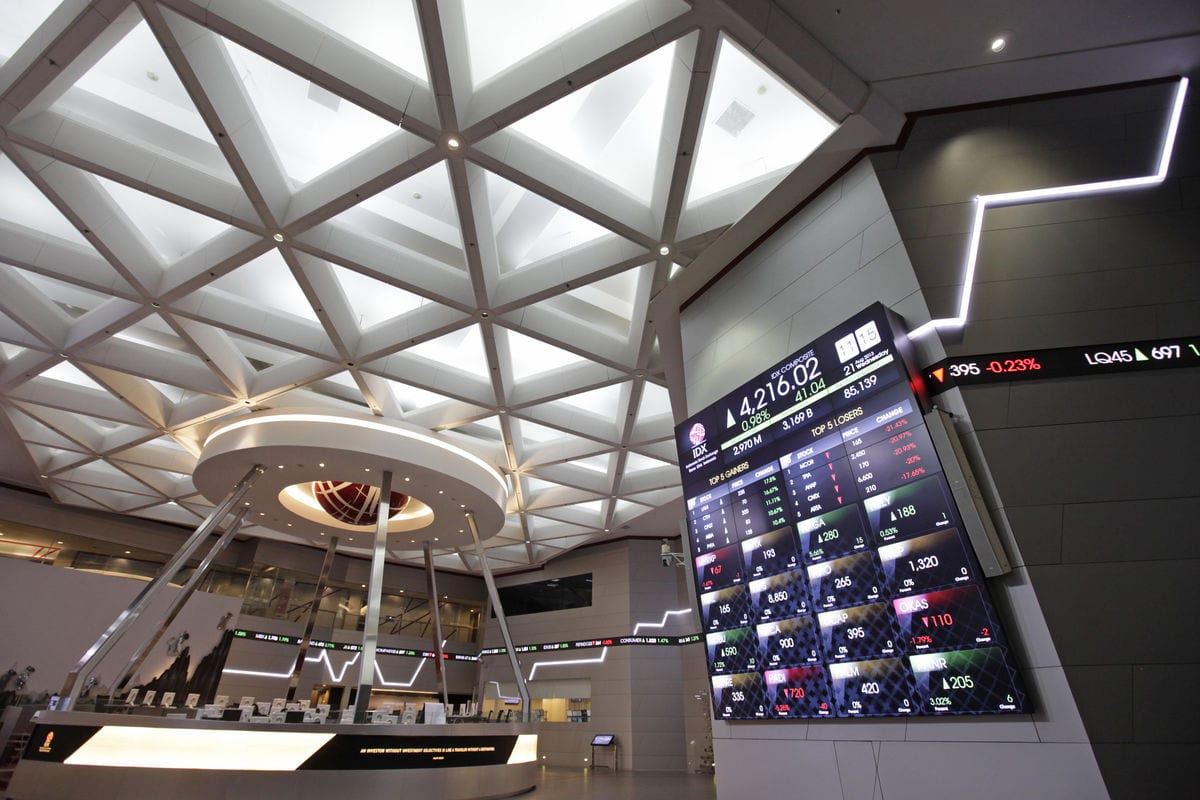
    The Indonesian Stock Exchange (IDX) expressed optimism that the companies listed on the IDX would provide positive results as the national economy was predicted to grow by above 5 percent.

    “In 2015, more than 75 percent of stock issuers at the IDX booked profits. Indeed, some of them in the commodity sector recorded somewhat significant drop. Meanwhile in 2016, we believe that the economic growth will be above 5 percent,” IDX president director Tito Sulistio said in Jakarta on Wednesday, April 13, 2016. Tito added that the Bank Indonesia (BI) rate cut to 6.75 percent and the potential of capital inflow following tax amnesty policy were among the factors that would support the national economic growth.

    “Hopefully, the tax amnesty [policy] will work. Therefore, it is expected that Indonesia will see a capital inflow of about Rp 3,000 trillion (US$220.6 billion) to build infrastructures that are important for the economy. The fund could also be invested in the capital market,” Tito explained.

    He promised that he would encourage domestic companies to obtain funds for expansion by, for instance, holding IPOs. Tito added that the IDX would call on state-owned companies to conduct privatization through the IPO mechanism.

    Earlier, IDX director of corporation assessment Samsul Hidayat said that a number of regional development banks planned to hold IPO in order to increase their capital and distribute credit to wider consumers. In addition to banks, Samsul revealed that a number of state-owned construction subsidiary companies, such as PT Waskita Beton Precast, mulled to hold an IPO.

  • German retail giant Metro to split businesses into two listed entities

    German retail giant Metro to split businesses into two listed entities

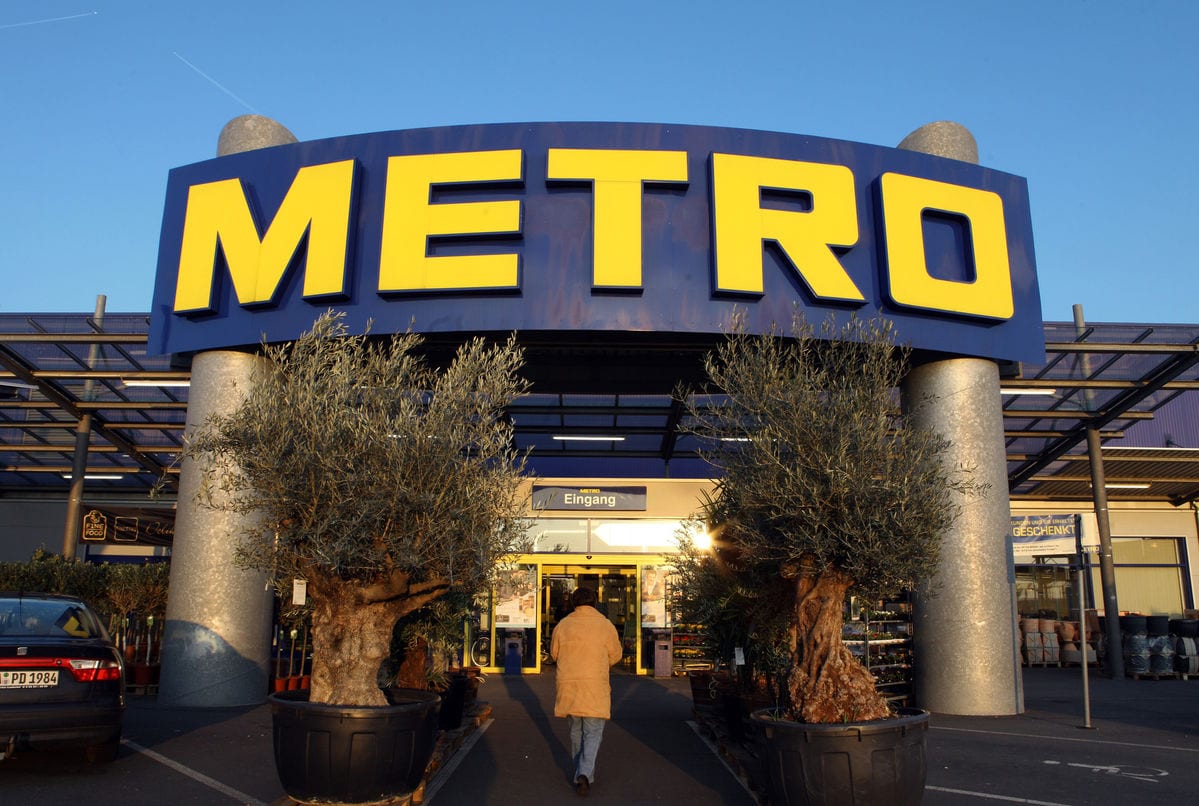
    German retail giant Metro said last week it will spin off its businesses into two separately listed units, sending its shares sharply higher.

    “The management board of Metro is preparing the creation of two independent and sector-focused companies through a demerger of the group,” Metro said in a statement.

    Metro shares were the strongest performer on the mid-cap MDAX index of the Frankfurt stock exchange on Wednesday, shooting up 7.73 per cent to €26.47 in a generally firmer market.

    A wholesale and food specialist group would be created comprising the group’s Metro, Makro and Real brands, as well as a consumer electronics products and services group centred around its Media and Saturn retail chains.

    Since there is little operational overlap between the two businesses and limited synergy effects, management felt “very strongly that a split into two independent and focused businesses would be in the best interest of all stakeholders, as it would facilitate a significant opportunity for faster and more profitable growth,” said supervisory board chief Juergen Steinemann.

    “Both entities would become individually stock-listed, with their own distinct profile, management and supervisory boards,” Metro said.

    The aim would be to give each of the companies and their respective management full control over their corporate strategies.

    “This will further increase customer focus, accelerate growth of the businesses, simplify structures and improve time-to-market and operational excellence,” it argued.

    Moreover, both entities would be able to independently pursue acquisition and partnership strategies, enabling them to define their own expansion strategies.

    Metro said its management and supervisory boards “will make a decision on the contemplated demerger of Metro group after a period of intensive consultation and review.”

    Should the boards and shareholders be in favour, “implementation of the demerger is aimed for mid-2017,” Metro said.

    “Over the past years, we have successfully revitalized our core businesses while significantly strengthening our group balance sheet,” said chief executive Olaf Koch.

    “Both our wholesale and food specialist business as well as our consumer electronics business have continued to commercially improve, are on a steady successful path and are best-equipped for an independent future,” Koch said.

    “Our shareholders would effectively own two well positioned market leaders, both of whom are increasingly focusing on their respective business areas and are generating more value for customers, employees and business partners.”

  • Did The Hong Kong Property Market Just Burst? 2 Stocks That May Be Affected

    Did The Hong Kong Property Market Just Burst? 2 Stocks That May Be Affected

    Hong Kong property prices have been surging over the past few years. A report from Swiss bank UBS indicated that Hong Kong property prices have appreciated around 340% from 2003 to 2015.

    But, 2016 might not be such a good year for Hong Kong real estate.

    Based on January 2016 data, monthly home sales in the city had reached its lowest levels since such data was first tracked in 1991. More alarming is that a recent government-released land parcel in Hong Kong’s New Territories area was sold at a price (on a per square foot basis) nearly 70% lower than a similar transaction that took place in September 2015.

    Piling on the pressure is the government of Hong Kong – it is planning to increase the amount of housing supply to the market over the next five years due to high property prices which has made housing unaffordable for the city’s residents.

    Will these developments be the trigger to mark the start of a prolonged slump in Hong Kong’s property market? Will any potential troubles that may arise in the residential real estate market hit other real estate sectors such as commercial and retail?

    In Singapore’s stock market, there are a few companies and trusts that are exposed to the Hong Kong real estate market. Two of the bigger entities in that category would be Hongkong Land Holdings Limited (SGX: H78) and Fortune Real Estate Investment Trust (SGX: F25U).

    Stock Market capitalisation (15 February 2016)
    Hongkong Land Holdings US$13.6 billion
    Fortune REIT HK$14.7 billion

    Source: S&P Global Market Intelligence

    Hongkong Land is one of the largest property owners in Hong Kong’s Central district, owning many premium commercial office towers there. Meanwhile, Fortune REIT is a real estate investment trust that invests mainly in retail malls located in Hong Kong. At the moment, the REIT has 17 properties in its portfolio.

    With the possibility of a slump in property prices in Hong Kong – at least for the residential real estate sector – what does the near term future hold for both Hongkong Land and Fortune REIT?

    Hongkong Land might have an advantage over Fortune REIT when it comes to withstanding any downturn in real estate.

    With Hongkong Land’s strong balance sheet (it has a net debt to equity ratio of only around 9%), it has flexibility and is facing lower financial risks even if its properties are revalued to a much lower level.

    That said, if there’s a prolonged slump in Hong Kong, the rental rates for Hongkong Land’s properties might still take a hit in the future, hurting its earnings going forward. Before that becomes a reality, it seems that the market is already punishing the company. Hongkong Land is currently valued at just 0.48 times its tangible book value; that’s a valuation last seen back in 2011.

    Fortune REIT is also facing a similar situation. But, given that a REIT tends to have much tighter restrictions on its debt level (whereas companies are given free rein), a huge drop in the value of its properties might have a big impact on the trust.

    Moreover, as Fortune REIT has a weaker balance sheet as compared to Hongkong Land – the REIT has a gearing ratio (total debt over total assets) of 30.1% – a sharp drop in the value of its properties might increase the REIT’s leverage to onerous heights, thereby raising the possible need for the REIT to raise equity capital and thus cause its investors to face dilution risks.

    How the Hong Kong property market will play out is still unclear. Although demand seems to be slowing, the eventual impact on property prices is yet to be seen. Moreover, the current slump is mainly in the residential sector, so it is also unclear how it might affect the commercial and the retail sector of Hong Kong’s property market.

    But, it is still wise and prudent for investors here in Singapore to be aware of possible dangers ahead for some Singapore-listed companies as a result of their exposure to the real estate market in Hong Kong.


  • How South Korea is hurting European shares

    How South Korea is hurting European shares

    Seoul hosts largest and most liquid market in the world for options on single stocks. What links a European benchmark equity index, the Hong Kong dollar and a group of blue-chip Chinese stocks? Apart from the early-year pain shared by investors in all three, Seoul may not be the first answer that springs to mind. But it appears South Korea’s outsized derivatives market, dominated by retail investors, has a lot to answer for.

    Korea hosts the largest and most liquid market in the world for options on single stocks — bigger than the US, even, according to bankers — and retail interest in derivatives does not stop there. In what looks like the latest example of a “butterfly effect” in global markets, last year Korean investors bought record amounts of so-called “autocallables” — a structured product offering an attractive yield. About $40bn are outstanding.

    Markets Insight

    This year stock market losses have forced the sellers of those deals to hedge their exposure — that has damped volatility for Euro Stoxx-linked products, pressured the tightly-pegged Hong Kong dollar and crushed the Hang Seng China Enterprises Index. On Wednesday for example, the sliding oil price prompted a weakening of stocks across Asia. While in mainland China benchmark indices closed 0.4 per cent lower, the HSCEI — consisting of many of the same stocks — dropped 2.5 per cent.

    Autocallables contain features that have blown up previous products, from “target redemption forwards” — once dubbed kill-you-later-accumulators — to “knock-in-knock-out”, or Kiko, deals. Asian investors have reason to know: the former blew a $2bn hole in the balance sheet of Citic, China’s foremost conglomerate in 2008. And Kikos caused such problems for Korean companies that had wrongly hedged the South Korean won that regulators in 2009 had to stress test banks to gauge the depth of the issue.

    Since these autocallables are two- or three-year deals, and most were sold last year, the final reckoning over who has lost what is some way off. The area of interest for now is their effect on other markets.

    The products in essence sell volatility. They work by offering investors a “worst of” basket of two or three reference securities — typically indices. The sales pitch is that investors get a yield on top of their capital if the reference securities stay within a specified range. If they rally above it, investors are “knocked out” and get their money back with a bonus. If it falls below a specified point — usually between 40 and 50 per cent of the level, when the product was sold — they are “knocked in” and lose some capital.

    Holders can be made whole if the index recovers all lost ground before the autocallable ends — hence it being difficult to gauge losses at this point. However, the nearer an index falls to that strike price, the more product sellers have to hedge, which they do via selling futures. This is what is weighing on the HSCEI, which was a popular inclusion in the first half of last year because of China’s soaring markets. But it is now down 46 per cent from its May 2015 peak — putting it right in the zone where issuer hedging will be at its highest.

    Hong Kong indices are even more popular in Korean products because of the 32-year unchanged link between the Hong Kong dollar and its US counterpart. So imagine the fear among Korean sellers of autocallables last month on seeing the Hong Kong currency suddenly spike higher after Chinese authorities quashed speculative shorts in the offshore renminbi market. The result was additional weakening pressure on the Hong Kong dollar as Korean groups rushed to hedge.

    “The bottom line remains that investors should be aware of this additional market dynamic that could drive Hong Kong dollar volatility, forwards and swaps higher,” says William Chan, head of Asia-Pacific equity derivatives research at Bank of America Merrill Lynch.

    Before the financial crisis, most autocallables would have referenced South Korea’s benchmark Kospi Composite. But as the autocallables market grew and volatility in Korea stayed low, issuers had to look elsewhere. The Euro Stoxx 600 is down about 20 per cent from last year’s peak. In the current febrile environment, that could be enough to see Korean issuers wanting to hedge early — reportedly suppressing volatility in two- and three-year options.

    Korea’s derivatives habit does not yet look big enough to cause systemic stresses. But as an example of the unexpected and little-explored links between markets, it should be watched closely.

  • Hongkongers must wake up to new yuan reality

    Hongkongers must wake up to new yuan reality

    For a long time, Hong Kong people and corporates enjoyed a free ride on the renminbi as the Chinese currency promised steady appreciation and high returns.

    But the steep devaluation this week has spoilt the party for good, and everyone — be it multinational corporations operating out of IFC 2 or housewives in Ngau Tou Kok — is now seeking to repatriate money back from China to Hong Kong.

    Thanks to the Stock Connect between Hong Kong and the mainland, the daily limit of transferring Hong Kong dollar to renminbi was lifted last year.

    But for those who took advantage of the easier rules and shifted to China assets and chose to stick with them would have got hurt by the yuan’s downward move and the recent A-share collapse.

    Apparently more corporates have been hurt, rather than benefit, from the weaker yuan.

    Among international firms, Apple Inc, for instance, saw its share price move into correction territory on Wall Street as investors were concerned about the tech giant’s large China sales exposure.

    In Hong Kong, the weak yuan led fashion-wear retailer I.T. Ltd. to issue a profit-warning on Thursday, with the firm saying that it estimates a HK$60 million loss from a decline in the value of its renminbi time deposits.

    The tiny retailer’s decision to swiftly mark down its assets sent some shockwaves through local investing circles and also led to a guessing game as to which other cash-rich listed firms might be having huge exposure to the Chinese currency.

    Last month HKTV announced the purchase of a 11 million yuan bond bearing 6.25 interest and another 15 million yuan bond of 4.85 percent interest, but the asset has seen its value come off 4 percent this week.

    Likewise, Asia Financial chief executive Bernard Chan also said his company had HK$400 million exposure in yuan which earned a 3 percent coupon. With the yuan’s devaluation, the effective returns will be zero.

    Apart from corporates, individuals would also now have to think twice on where to park their money once their fixed-term yuan deposits mature.

    As there are fears of further devaluation of the renminbi, the Chinese unit has lost its earlier safe-haven status.

    For investors, the formula that previously gave them super returns on the yuan is no longer working amid China’s new normal.

    On the bright side, imported deflation could help ease the rise in consumer prices in Hong Kong. Prices will remain elevated no doubt, but they are unlikely to climb much higher.

    Meanwhile, a weaker renminbi could also cool down mainland investor interest in Hong Kong property, providing some relief to locals.

    That said, we should also be prepared for the negative consequences of reduced overseas spending power of the mainlanders.

    There might be diminished capital flows into the local stock market, and the tourism and retail industries could also face more rough weather.

    It’s time for Hongkongers to wake up to a new reality.


  • China Jo-Jo Drugstores Announces $3 Million Registered Direct Offering

    China Jo-Jo Drugstores Announces $3 Million Registered Direct Offering

    China Jo-Jo Drugstores, Inc., a leading China-based retail and wholesale distributor of pharmaceutical and health care products through its own online and retail pharmacies, today announced that it has entered into definitive agreements with a single health-care focused institutional investor to purchase an aggregate of $3 million of its common stock in a  registered direct offering at $2.50 per share.  Additionally, for each share of common stock purchased, the investor will receive a Warrant to purchase one-half of a share of the Company’s common stock at an exercise price of $3.10 per share, which shall be initially exercisable six months following issuance and expire five years from the date of issuance.  The closing of the offering is expected to take place on or about July 23, 2015, subject to the satisfaction of customary closing conditions.

    H.C. Wainwright & Co., LLC acted as exclusive placement agent in connection with the offering.

    The net proceeds from this offering will be used for working capital purposes.  A shelf registration statement relating to the shares and warrants issued in the offering has been filed with and declared effective by the Securities and Exchange Commission (the “SEC”). A prospectus supplement relating to the offering will be filed by the company with the SEC. Once it is filed, copies of the prospectus supplement, together with the accompanying prospectus, can be obtained at the SEC’s website.

    This press release does not constitute an offer to sell or the solicitation of an offer to buy any securities of China Jo-Jo in this offering. There shall not be any offer, solicitation of an offer to buy, or sale of securities in any state or jurisdiction in which such an offering, solicitation, or sale would be unlawful prior to registration or qualification under the securities laws of any such state or jurisdiction. Any offering will be made only by means of a prospectus, including a prospectus supplement, forming a part of the effective registration statement.

    China Jo-Jo Drugstores, Inc., through its own retail drugstores, wholesale distributor and online pharmacy, is a leading retailer and wholesale distributor of pharmaceutical and healthcare products in China. As of March 31, 2015, the Company had 59 retail pharmacies in Hangzhou. The Company’s wholesale subsidiary not only supplies its retail stores, but also distributes drug and other healthcare products to other drugstores and drug vendors.

    Forward Looking Statement

    Statements in this press release regarding the Company that are not historical facts are forward-looking statements and are subject to risks and uncertainties that could cause actual future events or results to differ materially from such statements. Any such forward-looking statements, including, but not limited to, financial guidance, are made pursuant to the safe harbor provisions of the Private Securities Litigation Reform Act of 1995. These statements can be identified by the use of forward-looking terminology such as “believe,” “expect,” “may,” “will,” “should,” “project,” “plan,” “seek,” “intend,” “anticipate,” the negatives thereof, or comparable terminology.

    Such statements typically involve risks and uncertainties and may include financial projections or information regarding the progress of new product development. It is routine for the Company’s internal projections and expectations to change as the quarter and year progresses, and therefore it should be clearly understood that the internal projections and beliefs upon which the Company bases its expectations may change. Although these expectations may change, the Company is under no obligation to inform you if they do. Actual results could differ materially from the expectations reflected in such forward-looking statements as a result of numerous factors, including the risks associated with the effect of changing economic conditions in the People’s Republic of China, variations in cash flow, reliance on collaborative retail partners and on new product development, variations in new product development, risks associated with rapid technological change, and the potential of introduced or undetected flaws and defects in products. Readers are referred to the reports and documents filed from time to time by the Company with the Securities and Exchange Commission for a discussion of these and other important risk factors that could cause actual results to differ from those discussed in forward-looking statements.

  • Asia shares fall led by Shanghai as investors eye safety ahead of Greece

    Asia shares fall led by Shanghai as investors eye safety ahead of Greece

    Shares in Shanghai slumped on Friday, leading other Asian markets lower as investors headed for safety ahead of a weekend referendum that could decide whether Greece stays in the euro zone that is now too close to call.

    The Shanghai Composite fell 5.57% before the break, while the Hang Seng index eased 0.55% and the S&P/ASX 200 was down 1.78%. The Nikkei 225 was down 0.44%.

    Prime Minister Alexis Tsipras on Wednesday urged Greeks to reject an international bailout deal in a referendum due to be held on July 5, souring hopes of any breakthrough.

    Less than 24 hours before, Tsipras had written a conciliatory letter to creditors asking for a new bailout that would accept many of their terms.

    On Wednesday Greece became the first developed country to default on the International Monetary Fund after its second bailout program expired late Tuesday. The IMF confirmed that the Greek government failed to make a scheduled €1.6 billion loan repayment.

    In Australia, May retail sales data showed a 0.3% increase month-on-month, below a forecast for retail sales up 0.5% month-on-month.

    Earlier in Australia, the June AIGroup services index rose 1.6 points to 51.2.

    “The improvement in services-industry conditions so far this year has been concentrated in consumer services,” AI Group Chief Executive Innes Willox said.

    “Increased housing-market activity and very low interest rates are now assisting retail and personal and recreational services – although consumer-confidence and household-income growth are still below par. For the more business-oriented services subsectors weak business confidence, an uncertain outlook and low private and public investment are still weighing on demand across a range of design, consulting, personnel and administrative services.”

    U.S. markets are shut on Friday.

    Overnight, U.S. stocks were lower after the close on Thursday, as losses in the Financials, Healthcare and Basic Materials sectors led shares lower.

    At the close in New York, the Dow Jones Industrial Average lost 0.16%, while the S&P 500 index declined 0.03%, and the NASDAQ Composite index declined 0.08%.

    The best performers of the session on the Dow Jones Industrial Average were Intel Corporation (NASDAQ:NASDAQ:INTC), which rose 1.24% or 0.38 points to trade at 30.55 at the close. Meanwhile, Exxon Mobil Corporation (NYSE:NYSE:XOM) added 0.93% or 0.77 points to end at 83.14 and Visa Inc (NYSE:NYSE:V) was up 0.57% or 0.39 points to 68.24 in late trade.