Retail News CRM

Tag: stock

  • Hong Kong Stock Exchange Website Hit By DoS Attacks

    Hong Kong Stock Exchange Website Hit By DoS Attacks

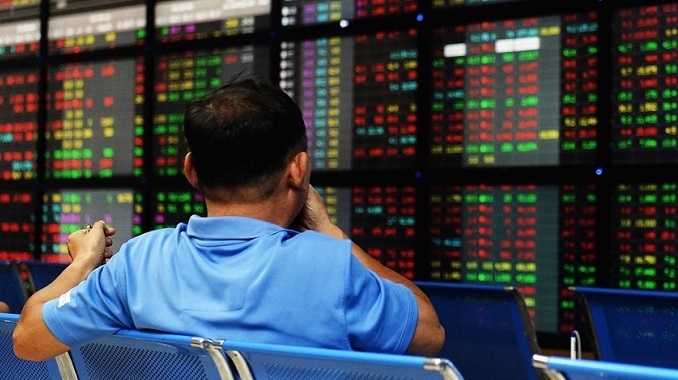
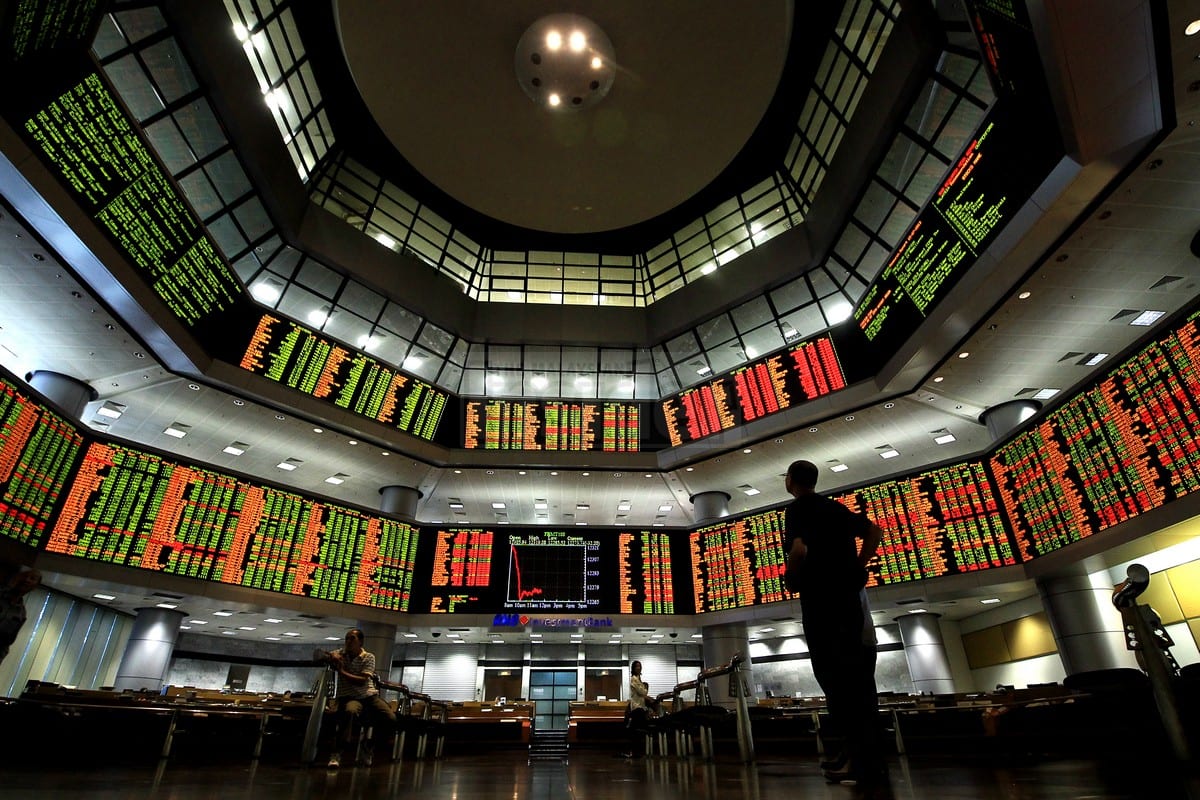
    The Hong Kong Exchanges and Clearing Limited faced a day of tech hiccups, including the latest denial-of-service attacks on its website.

    According to HKEX CEO, Charles Li Xiaojia, the bourse’s website was subject to distributed denial-of-service attacks (DDoS) – a cyberattack whereby overwhelming traffic is imposed to slow or restrict access from other browsers – and was subsequently unable to display exchange prices and other financial data.

    We will continue to invest more to safeguard and improve” the information and technical infrastructure at the exchange, Li said at a press conference. We hope the public has confidence in the robustness of our system.

    The cyberattack was not the only tech hiccup the HKEX faced just in that single day. Earlier yesterday afternoon, the HKEX had to halt derivatives trading due to a bug in the system before resuming today. According to an update from its website, the issues were caused by software issues in the vendor-supplied trading system.»

  • E-commerce explosion driving worldwide warehouse Expansion

    E-commerce explosion driving worldwide warehouse Expansion

    Global analysis firm ABI Research has found that the global Warehouse Management System (WMS) market will be worth US$5 billion by 2025, growing at a CAGR of 13.9 per cent.

    The period will see a warehouse boom with some 57,000 more distribution centres in operation by then than last year. The continued growth of the e-commerce market and rising customer expectations are putting enormous pressure on warehouses to execute more rapid and flexible deliveries. This is driving investment in warehouse facilities, automation technologies, and warehouse management systems to coordinate and optimise operations.

    “The warehouse is becoming the engine room of the supply chain and is, therefore, a focal point for investment from retailers, manufacturers, and logistics service providers,” said ABI Research principal analyst Nick Finill.

    “As the warehouse technology ecosystem becomes increasingly complex, supply chain operators require more sophisticated management systems that can orchestrate the high volume and variety of intelligent, connected devices and systems within their facilities, as well as the flow of inventory.”

    The firm finds that as the e-commerce boom grows in and extends beyond the established economies of China, Japan, and Korea, the Asia-Pacific will experience the highest growth of warehouse facilities and WMS revenue, becoming the largest market for the software by 2023. The rapid adoption of WMS is also expected in the emerging economies of the Middle East, Africa, and Latin America. Europe and North America will experience strong growth as supply chain operators increase spending on upgraded software systems.

    WMS spending will also vary according to industry verticals. The retail, food and beverage, and manufacturing sectors will be responsible for the highest growth rate as they catch up with more mature verticals, such as logistics service providers.

    ABI’s data suggests AI-driven innovation from WMS market leaders such as JDA Software, High Jump, and Manhattan Associates is enabling substantial flexibility and functionality in WMS and Warehouse Execution Systems, an increasingly important orchestration layer linking high-level management with connected machines. At the device and machine level, greater automation is creating demand for more sophisticated Warehouse Control Systems from major automated material handling solution providers such as Bastian Solutions, Dematic, and Honeywell Intelligrated.

    “The increasing velocity of goods through the supply chain is driving demand for real-time decision making and optimisation,” said Finill. “As the margin for error in the warehouse decreases, AI and ML-enabled WMS solutions are becoming imperative for warehouses that rely on speed, efficiency, and intelligence to remain competitive.”

  • Tesla Reduces Prices On Model S and X Amid Stock Slump

    Tesla Reduces Prices On Model S and X Amid Stock Slump

    Faced with a slumping stock price and questions about demand for its vehicles, Tesla has lowered the U.S. base prices of its two most expensive models. The company on Monday cut $3,000 from the price of the Model S sedan and $2,000 from the Model X SUV. Tesla said in a statement that it periodically adjusts prices and available options like other car companies. The decreases offset price increases from a month ago when Tesla offered longer battery range and added a new drive system and suspension. The statement didn’t say if slowing sales influenced the decision.

    The Model S now starts at $71,250 while the X starts at $71,950. Both prices don’t include federal and state tax credits.

    The moves come as Tesla’s stock is under pressure and has at times dropped below $200 per share. Several analysts have questioned whether the company can sell enough cars to cover its expenses without dipping into cash reserves.

    Shares traded Tuesday afternoon at $205.62, up slightly from Monday’s closing price. They are down more than 38 percent so far this year, cutting the company’s market value more than $20 billion to $36.5 billion. On Monday the shares hit their lowest point since late 2016.

    Tesla said in a statement that the reductions are about 2% to 3% on the S and X. The company last week raised the price of its top-selling Model 3 by $400, pushing the base price to $35,400. “By any reasonable standard, these small changes are not newsworthy,” the company said in a statement.

    On Monday Wedbush analyst Daniel Ives wrote in a client note that he has concerns about Tesla’s growth prospects and underlying demand for the Model 3 during the coming quarters.

    Ives called Tesla a “code red” situation. “We have continued concerns around Tesla’s ability to balance this ‘perfect storm’ of softer demand and profitability concerns, which will weigh on shares until Musk & Co. prove otherwise in terms of delivering solid results over the coming quarters,” Ives wrote, referring to CEO Elon Musk.

    Palo Alto, California-based Tesla said last month it lost $702.1 million in the first quarter, among its worst quarters in two years. Sales tumbled 31% in the period. Musk predicted another loss in the second quarter but said Tesla would be profitable again by the third quarter.

    In January, the automaker cut its prices by $2,000 per vehicle, acknowledging that the pending expiration of a $7,500 federal tax credit for its electric cars will hurt sales. The credit is gradually being phased out for Tesla by the end of the year.

  • Avelacom establishes PoP at Thai stock exchange

    Avelacom establishes PoP at Thai stock exchange

    Avelacom, a high-performance networking and IT infrastructure provider for the financial services industry, is expanding its reach in Asia with a new point of presence at The Stock Exchange of Thailand (SET).

    The new PoP at the SET’s data center facilities will provide lower latency connectivity as well as more direct connectivity options for traders, brokers and market data vendors.

    For example, it will offer a roundtrip latency of 26ms between the SET and the Singapore stock exchange, and 39ms between the SET and the Hong Kong stock exchange.

    Avelacom CEO Aleksey Larichev said the expansion has been motivated by a growing interest in Asian markets from global capital markets players, as well as the prospect of new arbitrage opportunities for equity derivative products between SET and other major exchanges worldwide.

    “Avelacom’s network has always been intended to serve latency sensitive clients by working with international institutions, accessing emerging markets, particularly on Asian trading venues,” he said.

    “A PoP in Thailand further enhances our Asian presence and provides our clients with low-latency access to yet another growth market. We hope this will bring more global clients to SET and positively influence the exchange trading volumes.”

  • Tokyo stocks close lower after Indian air strike reports

    Tokyo stocks close lower after Indian air strike reports

    Tokyo stocks closed lower on Tuesday following media reports saying Indian warplanes crossed into Pakistani airspace over the ceasefire line in Kashmir and dropped payloads. The benchmark Nikkei 225 index, which opened higher, lost 0.37%, or 78.84 points, to end at 21,449.39 while the broader Topix index was down 0.23%, or 3.67 points, to 1,617.20.

  • Asian shares rise as Trump boosts US-China talks

    Asian shares rise as Trump boosts US-China talks

    Asian stocks climbed Wednesday as US President Donald Trump said he could extend the deadline for a trade deal with China, appearing to boost the prospects of an agreement. Trump said “things are going well” at preliminary talks in Beijing, where top economic officials will gather Thursday seeking an accord to stop sharp US tariff hikes that could damage the global economy.

    “If we’re close to a deal, where we think we can make a real deal … I could see myself letting that slide for a little while,” the US president said of his March 1 deadline.

    He added that he expects a meeting with counterpart Xi Jinping to happen “at some point”.

    The comments all improved market sentiment on the likelihood of a deal to prevent US tariffs on $200 billion in Chinese imports more than doubling next month.

    Washington is demanding changes from Beijing on what it says are unfair commercial practices.

    Tokyo added 1.5%, Hong Kong rose 0.4% and Shanghai gained 0.2% on the news, following Wall Street’s lead.

    However, some analysts struck a cautious tone, noting that much work needs to be completed before a framework agreement is in reach.

    “The rally in stocks has been based on hope rather than any concrete agreements overnight,” warned Oanda senior analyst Jeffrey Halley, predicting short-term volatility to come as headlines emerge from Beijing.

    Sydney shed 0.3%, with calls for a snap election amid political tensions over refugees adding to underwhelming corporate earnings and subdued metal prices.

    Nonetheless, renewed global investor confidence saw a movement away from the greenback, which has enjoyed a strong rally in the past week, to riskier currencies.

    The pound moved upwards closer to $1.29, despite no-deal Brexit fears as Prime Minister Theresa May was accused by the opposition of “running down the clock” and “playing chicken” with Brussels over talks.

    Trump’s suggestion that another chaotic US government shutdown was now unlikely following a deal struck in Congress over border security further fuelled risk appetite.

    The deal to offer nearly $1.4 billion for construction of a Mexico border wall, as well as other security measures, fell far short of Trump’s demands but has been presented as a workable compromise.

    “I don’t think you’re going to see a shutdown,” said the president.

    Elsewhere oil continued its climb after heavyweight Saudi Arabia slashed output and exports fell in crisis-hit Venezuela.

  • SE Asia Stocks: Most end lower, Vietnam hits near 2-month high

    SE Asia Stocks: Most end lower, Vietnam hits near 2-month high

    Most Southeast Asia stock markets closed lower on Tuesday while Vietnam rallied for the second straight session to its highest level in nearly two months. Washington and Beijing will commence high-level trade talks this week to negotiate an end to their bitter trade dispute. Despite positive responses from both sides, the sailing of two U.S. destroyers near the disputed South China Sea, and China’s subsequent anger over the move appeared detrimental to negotiations.

    The Indonesian index fell the most in the region, closing 1.1 percent lower in its worst session this year, weakened by a slump in financial and telecom stocks.

    The country’s biggest bank by market value, Bank Central Asia, shed 0.6 percent, whereas Telekom Indonesia lost 2.8 percent.

    The Philippine benchmark slipped 0.6 percent, dragged by consumer and industrial stocks. Meanwhile, the country’s trade deficit narrowed in December as imports tumbled for the first time in a year.

    The stock index has outperformed other exchanges in the region so far in 2019, gaining about 7.3 percent.

    “We are mildly concerned about the surprise pullback in capital goods and raw materials. If this continues, this could show that recent aggressive tightening by the BSP (Bangko Sentral ng Pilipinas) is starting to bite into investment appetite, hampering the nascent investment-driven growth story that we have witnessed of late,” ING said in a note.

    Meanwhile, Vietnam benchmark rose for the second straight session and ended up 1.2 percent at its highest level since Dec. 17, with real estate and consumer stocks leading the gains.

    Property developer Vingroup JSC scaled 4.9 percent, while Saigon Beer Alcohol Beverage Corp jumped 1.9 percent.

    Vietnam was also chosen to host this month’s summit between U.S. President Donald Trump and his North Korean counterpart KimJong Un.

  • Axiata slides 5% in early morning trade on tax bill

    Axiata slides 5% in early morning trade on tax bill

    Axiata Group Bhd saw some selling pressure in early morning trade on news that it had been hit with a capital gains tax bill of RM2.16bil by the Nepalese Supreme Court. The stock lost as much as 20 sen or 5.1% in early morning trading on Friday to a low of RM3.70. At 9.30am, the counter was down 14 sen or 3.59% to RM3.76 a share on the back of 1.57 million shares traded.

    Analysts said the news report by the Himalayan Times yesterday came as a negative surprise, which may impact the group’s FY19E earnings forecasts.

    Kenanga research made no changes to its FY18-19E earnings forecast pending its upcoming 4Q18 results but lowered its target price to RM4.50 from RM4.60 previously.

    “All in, we are keeping our Outperform call for now in view of its relatively decent valuation (Forward EV/EBITDA of 7.2x vs. peers of 12-13x) coupled with a stronger Celcom and earnings recovery at XL.

    “Bargain-hunting opportunity could potentially arise on any share price weakness due to the recent hiccup. We advocate investors to start accumulating the share at c.RM3.70 level,” it said.

    PublicInvest research said its core earnings forecasts remain unchanged but headline profit could see a sharp decline if Axiata paid the capital gains tax in FY19F.

    “Although our core earnings forecasts and Neutral call remain unchanged, we believe share price would react negatively to this news due to uncertainties and the potential downside to headline profit,” it said.

    It maintained its target price at RM3.85.

    In its response to news reports, Axiata said in a statement that it is yet to receive the judgment and order of the Supreme Court and is yet to receive any details of the order.

    “Ncell, Reynolds, and Axiata UK were given the full clearance by the Large Tax Payers Office of Nepal [LTPO] of its obligations to withhold any CGT payment on behalf of the Seller in relation to the Transaction via the letter from LTPO dated 4 June 2017, following the full and final payment made by Ncell, albeit under protest on the basis that CGT is not applicable on offshore transactions and even if applicable, any shortfall on payment is the responsibility of the Seller,” it said.

    The group said it would provide further updates upon receiving the order of the Supreme Court.


  • Foreign buying on Bursa slows to RM146.8m last week

    Foreign buying on Bursa slows to RM146.8m last week

    Foreign funds snapped up RM146.8 million net of local equities last week during the holiday-shortened week. “Foreign funds resumed their entry into stocks listed on Bursa for the fourth consecutive week albeit at a slower pace compared to the preceding week,“ MIDF Research said in its weekly fund flow report.

    It said last Monday saw a moderate net inflow of foreign funds worth RM37.3 million, extending the daily buying streak to nine days. However, this foreign buying spree came to an end on the next day as international funds sold RM12.8 million net, coinciding with the local bourse’s 0.4% slide to settle at 1,690 points.

    Risk appetite was weak on Tuesday following the overnight 2.8% slump in Brent crude oil price combined with the anticipation ahead of the Sino-US trade negotiations.

    Notwithstanding this, offshore investors returned to Bursa on Wednesday at a tune of RM65.1 million net, the highest foreign net inflow during the week.

    The catalyst responsible for the boost of foreign net inflows on that day was 0.4% increase in Brent crude oil price as US President Donald Trump’s administration slaps sanctions on Venezuela’s state-owned oil company while Saudi Arabia had a deeper output cuts in January than initially pledged.

    The momentum of foreign net inflows continued on the last trading day of the week as foreign investors bought RM57.2 million net.

    “We opine that the sentiment was partially supported by the Malaysia’s exports in 2018 which grew by 6.7% to reach almost RM1 trillion. Meanwhile, the FBM KLCI was little changed, declining by less than 1% on Thursday ahead of the long weekend and festive season.”

    The month of January 2019 saw a foreign net inflow of RM1.03 billion or US$249.3 million, the first monthly net inflow since September last year.

    “In comparison with the three other Asean markets we monitor, Malaysia has the second lowest foreign net inflow while Indonesia leads,“ said MIDF.

    Foreign investors were the only group which saw a weekly increase in average daily traded value, jumping by 21.0% to remain above RM1 billion for the second week running.

  • Asia stocks quiet, dollar firm after upbeat US job data

    Asia stocks quiet, dollar firm after upbeat US job data

    Asia stocks hovered near four-month highs on Monday after a mixed performance on Wall Street at the close of last week, while the dollar firmed against the yen following strong US job and manufacturing data. MSCI’s broadest index of Asia-Pacific shares outside Japan was almost flat. It had scaled a four-month peak on Friday along with a surge in its global peers.

    Trade was subdued with many of the region’s markets closed for the Lunar New Year. China’s financial markets are closed all week, while those in South Korea are shut until Thursday.

    Hong Kong’s Hang Seng, which is trading for only half a day, edged up 0.2%.

    Japan’s Nikkei added 0.5%.

    On Wall Street on Friday optimism from a surge in January US job growth was offset by a weaker-than-expected outlook from Amazon.com Inc that battered retail stocks. The Dow nudged up 0.26% while the Nasdaq shed 0.25%.

    “Key points for the markets this week will be how the remaining US corporate earnings releases turn out, and whether they are in line with recent upbeat data,” said Junichi Ishikawa, senior FX strategist at IG Securities in Tokyo.

    “While corporate earnings and fundamentals remain key, political developments, notably the US-China trade situation, remain potential risk factors,” he said.

    A US Labor Department report on Friday showed nonfarm payrolls jumped by a stronger-than-forecast 304,000 jobs last month, the largest gain since February 2018.

    That report, along with better-than-expected ISM manufacturing activity numbers for January, pointed to underlying strength in the world’s biggest economy.

    “After last week’s risk appetite revival, the data pulse and the tone of Fed speakers will be important. For the Goldilocks market to continue, we need to find a delicate balance between improving data and still-neutral central banks,” strategists at ANZ wrote.

    Global equity markets performed strongly last week after the Federal Reserve pledged to be patient with further interest rate hikes, signalling a potential end to its tightening cycle.

    Friday’s robust economic data triggered a sharp rebound in US Treasury yields, in turn lifting the dollar.

    On Monday, the US currency was a shade higher at 109.555 yen after advancing 0.6% on Friday.

    The euro was little changed at $1.1456 after getting pulled back from a high of $1.1488 on Friday.

    The Australian dollar was mostly steady at $0.7244 after slipping 0.4% the previous session.

    The benchmark 10-year U.S. Treasury yield was at 2.686% after climbing nearly 6 basis points on Friday to pull away from a four-week low of 2.619% earlier last week.

    West Texas Intermediate (WTI) US crude oil futures extended Friday’s rally and were last up 0.3% at $55.42 per barrel.

    On Friday, WTI futures had rallied 2.7% on the upbeat US job report, signs that Washington’s sanctions on Venezuelan exports have helped tighten supply and data showing US drillers cut the number of oil rigs.

  • Gold scales 8-month peak on Fed rate pause hopes, trade woes

    Gold scales 8-month peak on Fed rate pause hopes, trade woes

    Gold prices edged up on Wednesday to hit their highest since May, supported by uncertainty over U.S.-China trade relations and expectations the U.S. Federal Reserve will keep rates on hold later in the day. Spot gold was up 0.2 percent at $1,313.91 per ounce by 0245 GMT, after touching its highest since May 15 at $1,314.10 early in the session. U.S. gold futures rose 0.3 percent to $1,312.30 per ounce.

    “For the short-term gold is going to move higher as the Federal Reserve will have a dovish tone, which should weaken the dollar and give gold a bit of a move up,” said INTL FCStone analyst Edward Meir.

    The absence of an agreement in U.S-China trade talks should also benefit gold, he said.

    Investors are waiting on the Federal Reserve’s policy decision later in the day, with expectations officials will reinforce their recent dovish stance given a stalemate on global trade, signs of a slowdown in the U.S. economy, and waning business and consumer confidence.

    The Fed raised interest rates four times last year.

    Investors are also concerned that criminal charges against China’s Huawei Technologies Co. Ltd. for violating U.S. sanctions against Iran could complicate U.S.-China trade talks.

    China’s Vice Premier Liu is due to meet with U.S. Trade Representative Robert Lighthizer later in the day.

    “Gold also looks good on the charts … Physical demand seems to be improving in some markets and ETF buying has been increasing. In general the path of least resistance is probably higher from here,” Meir said.

    Underscoring investor interest in the bullion, holdings of SPDR Gold Trust, the world’s largest gold-backed exchange-traded fund, rose 1 percent to 823.87 tonnes on Tuesday, to their highest since June.

    SPDR gold holdings have risen 4.6 percent so far this month, their best since September 2017.

    “A combination of falling treasury yields, anxiety over Brexit and Venezuela is all helping gold,” said Nicholas Frappell, global general manager at ABC Bullion.

    British lawmakers rejected most amendments that aimed to keep Britain from leaving the European Union without a deal, reviving worries of a chaotic withdrawal from the trading bloc that would damage the UK economy.

    Silver rose 0.3 percent to $15.88 per ounce, having hit its highest since July 2018 at $15.92 in the prior session.

    Palladium fell 0.2 percent to $1,343.50, while platinum was up 0.4 percent at $813.

  • Bursa Malaysia’s Q4 earnings fall 6.2% to RM51.9m

    Bursa Malaysia’s Q4 earnings fall 6.2% to RM51.9m

    Bursa Malaysia Bhd’s net profit in the fourth quarter ended Dec 31, 2018 (Q4FY18) was down by 6.2% to RM51.9 million, from RM55.27 million a year ago, mainly due to lower contribution from the securities segment.

    Revenue for the quarter declined 8.7% to RM128.9 million, compared with RM141.2 million in the previous corresponding quarter.

    The exchange has approved a second interim dividend of 11.6 sen per share for FY18, amounting to about RM93.7 million which is payable on Feb 28, 2019. With that, the total dividend (including special dividend) declared for the year amounts to 33.6 sen per share.

    Bursa’s full-year net profit was slightly up by 0.4% to RM224.04 million, from RM223.04 million a year ago, while revenue decreased by 1.2% to RM550 million, against RM556.8 million previously.

    For the year under review, securities market trading revenue increased 2.4% to RM265.8 million from RM259.6 million in FY17, mainly due to higher average daily trading value (ADV) for securities market’s on-market trades (OMT) in FY18.

    However, non-trading revenue saw a marginal decrease of 0.1% to RM165.9 million from RM166.1 million in FY17 due to lower listing and issuer services revenue.

    Bursa CEO Datuk Seri Tajuddin Atan said despite market volatility and challenging global economic environment, the exchange’s financial performance remained resilient.

    “Throughout the year, to create a more facilitative environment, we continued implementing initiatives to further enhance the vibrancy and liquidity of the market,” he added.

    At 2.35pm, Bursa’s share price was trading 7 sen or 0.9% lower at RM7.32 on 751,900 shares done.

  • Asia shares slip as China’s Huawei in legal hot water; focus on Sino-US talks

    Asia shares slip as China’s Huawei in legal hot water; focus on Sino-US talks

    Asian shares stumbled on Tuesday and the dollar hovered near two-week lows as prospects for a long-awaited Sino-US trade deal was dealt another blow after the United States levelled sweeping criminal charges against China’s telecom giant Huawei. MSCI’s broadest index of Asia-Pacific shares outside Japan got off to a shaky start with losses accelerating as other regional markets opened.

    Australia and New Zealand led the losses, with their benchmark indices down 0.7% each while South Korea’s KOSPI was off 0.3%. Chinese shares opened in the red too, with the blue-chip index down 0.2%.

    Japan’s Nikkei slid about 1%. US stock futures also lost ground following from a torrid overnight session on Wall Street, with E-Minis for the S&P 500 down 0.4%.

    Investor sentiment, already shaken by pessimism over global growth, took another hit after the US Justice Department unsealed indictments against China’s top telecom equipment maker, Huawei, accusing it of bank and wire fraud to evade Iran sanctions and conspiring to steal trade secrets from T-Mobile US Inc.

    The jolt to Huawei could undermine prospects for a trade deal between the economic giants as markets nervously await a fresh round of trade talks with Chinese Vice Premier Liu He set to meet US officials on Wednesday and Thursday.

    Further complicating matters, China triggered the legal process on Monday for the World Trade Organization to hear Beijing’s challenge to US tariffs, and berated the United States for blocking the appointment of judges who could rule on it.

    Souring US-China relations roiled global markets for much of last year, and have kept investors on the back foot this month. The trade war’s broadening impact on world growth is one reason the US Federal Reserve has signalled it will be patient on policy after raising rates four times in 2018.

    Overnight, markets got a reminder of the potentially damaging economic impact of the Sino-US trade war as Wall Street stocks were hit by profit warnings.

    The losses came as shares of Caterpillar and Nvidia Corp nosedived after the two manufacturers joined a growing list of companies cautioning about the crippling effects of softening Chinese demand.

    Caterpillar plunged more than 9% for its worst single-day drop since August 2011 while chipmaker Nvidia slid 13.8%.

    “Both companies are seen as industry bellwethers and their disappointing results provide further evidence that this time China’s slowdown is for real,” said Rodrigo Catril, Sydney-based strategist at National Australia Bank.

    The downbeat global growth impulse mean investors will look for further confirmation the Fed will pause its rate-hike cycle at a two-day policy meeting ending Wednesday.

    Overnight on Wall Street, the Dow and S&P 500 each closed down 0.8% and the Nasdaq was off more than 1%.

    WARNING BELLS

    Worryingly, earnings at China’s industrial firms too shrank in December, pointing to more troubles for the country’s vast manufacturing sector already struggling with a decline in orders, job layoffs and factory closures.

    Slowdown fears slugged the US dollar which faltered to its lowest in two weeks on Monday. The dollar’s index, which measures the greenback against a basket of major currencies, was last at 95.758.

    Against the safe haven Japanese yen, the dollar was down at 109.17, on track for a third straight session of losses.

    Markets will have more catalysts this week with over a 100 of the S&P500 companies reporting results, including Amazon, Apple and Facebook.

    Many economists, including the International Monetary Fund, have cut their forecasts for global growth this year citing the US-China trade war.

    “Slowdown is feeding into some acute areas of economic unease,” US investment bank Citi said in a note, citing recent disappointing factory output data out of Europe and China.

    “In some respects, markets seem to have reacted more to recent negative changes in economic data than at other points in recent decades,” it added, while noting investors are now pricing in a 1% contraction in global earnings per share (EPS) this year.

    “This would be the worst year-on-year percentage change in EPS since 2015” even though economic growth is seen much higher this year than in 2015.

    Elsewhere, Sterling dithered against the dollar ahead of voting in Britain’s parliament on Tuesday that aims to break the Brexit deadlock. It was last at $1.3148

    Oil bounced after hefty overnight losses. US crude was last up 16 cents at $52.15 a barrel while Brent gained 18 cents to $60.11.

    US gold futures hovered near a seven-month high around $1,302.3 per ounce. Spot gold was last at 1,303.3 after breaking above a key psychological barrier of $1,300 an ounce on Friday.
  • SK Telecom announces plan to take on KakaoTalk

    SK Telecom announces plan to take on KakaoTalk

    SK Telecom introduced a new messaging service on Tuesday in an attempt to compete with Korea’s dominant chat app, KakaoTalk. The new service will look a lot like Apple’s iMessage. Users won’t have to download a separate app. It is offered to SK Telecom subscribers only. Messages will be sent on data networks. Group chat and check whether your message has been read will also be offered.

    Later in the year, SK Telecom promises more features so that users can share mobile gift coupons and transfer money. These are all services already offered by KakaoTalk.

    SK Telecom is trying to make its service competitive by offering freebies. Transfers of picture or video files of less than five megabytes will be free from data charges. It is also running promotions through June that will allow sharing of files up to 100 megabytes for free.

    The carrier is also preparing to launch a dedicated message service targeting business customers within the first half of this year.

    That service is based on Rich Communication Services (RCS), a communication protocol developed by the Global System for Mobile Communication Association better known as GSMA, to replace SMS messages.

    The telecom said it is planning on making the message service compatible for customers of different carriers in Korea.

    In December, KT introduced a message service dubbed Chatting based on the same RCS specifications. Basic features are identical for the two services, but they differ in some features depending on what telecom a person uses.

    Last year, KT promoted a chatting bot service on the new message service. Simple inquiries about the company’s products and services could be handled by the chat bot. In the future, it is planning to linking shopping services to the chat bot.

    Luring customers away from KakaoTalk will not be easy. Chat app users are resistant to change because all their friends use the same app.

    In the initial stage, SK Telecom’s chat service will only be offered to owners of Samsung Electronics’ flagship smartphones Galaxy Note9, S9, S9+. By February, Galaxy Note8, S8, S8+ users will also get in through an update.

    The upcoming Galaxy S10 smartphone will come with the RCS-based message app pre-installed.

  • Vietnam scraps plan to merge stock exchanges

    Vietnam scraps plan to merge stock exchanges

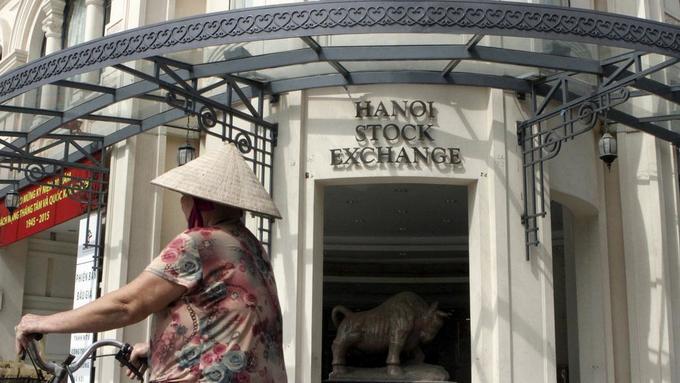
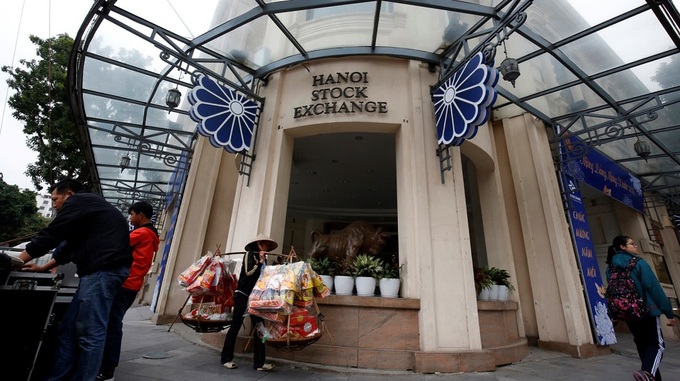
    The nation’s two bourses in Ho Chi Minh City and Hanoi will continue to operate independently under a new state-owned company. Ho Chi Minh City Stock Exchange (HoSE) and Hanoi Stock Exchange (HNX) will operate independently under the Vietnam Stock Exchange, which will be set up by the Ministry of Finance by 2020. The new company, to be headquartered in Hanoi, will have a charter capital VND3 trillion ($129 million), on the basis of combining the charter capital of both exchanges.

    The Vietnam Stock Exchange will issue regulations on stock listings and trading, monitor the stock market and supervise the two bourses. This new plan indicates that Vietnam has given up on an earlier plan to merge the two exchanges, owing to disagreement over where the combined one would be located.

    HoSE accounts for 93 percent of the two main exchanges’ total market capitalization of about $131 billion as of December. It is the main market, where blue chips such as Vietnam’s biggest private conglomerate Vingroup, dairy company Vinamilk and budget carrier Vietjet Air are listed.

    HNX, on the other hand, is home to smaller and mid-sized enterprises, bonds and derivatives.