Tag: strategy

  • Samsung to support the Olympics through 2028

    Samsung to support the Olympics through 2028

    Samsung Electronics announced on Tuesday it will extend its partnership with the International Olympic Committee (IOC) through 2028, from the original 2020 end date of the collaboration. The two parties signed an agreement at a ceremony at the Hotel Shilla in central Seoul in the presence of IOC President Thomas Bach and Samsung Electronics Vice Chairman Lee Jae-yong, as well as other executives from the company and officials from the committee.

    Samsung said it will continue as a Worldwide Olympic Partner in the wireless communications equipment and computing equipment category and promote the artificial intelligence (AI), virtual reality (VR), augmented reality (AR) and 5G features of the supplied equipment. Samsung will continue the support beyond the Olympic Games in Tokyo in 2020 through to the Los Angeles 2028 Olympics. The agreement also covers the Youth Olympic Games through 2028.

    Samsung will continue to support the IOC, the national Olympic Committee and the teams, the technology company added. The company will remain a Worldwide Partner of the International Paralympic Committee, extending a relationship that began in 2006.

    In collaboration with the IOC and the Organizing Committees, Samsung plans to continue its Athlete Phone Program. Under this program, it provides Olympic Edition Galaxy phones to all participating Olympic and Paralympic athletes.

    “As part of the agreement, the IOC and Samsung will further develop their strategic digital collaboration to engage young generations around the world in order to promote the power of sport and the values of Olympism,” Samsung said in a statement.

    “As a Worldwide Olympic Partner for the last 22 years, Samsung has been inspired by the spirit of hope, friendship and unity,” said Koh Dong-jin, president and CEO of the IT and mobile communications division at Samsung Electronics. “Through our innovative wireless and computing equipment, which supports AI, VR, AR and 5G technology, we hope to spread the excitement of the games so that fans and athletes around the world can stay connected and share in the journey to achieve greatness at the highest level of sportsmanship.”

  • KFC Thailand benefits from transforming franchise model

    KFC Thailand benefits from transforming franchise model

    Fast-food restaurant chain KFC Thailand is on track to achieve double digit year-end sales growth since transforming itself into a 100-per-cent franchised model, exceeding business expectations.The largest restaurant chain in Thailand is also set to accomplish a record high of 75 new outlet openings this year, 39 per cent above target and pushing the total number of outlets in Thailand past 700, including 65 drive-through branches.

    GM for KFC, Yum Restaurants International (Thailand) Waewkanee Assoratgoon said Yum Thailand has successfully transformed itself into a 100-per cent franchisor business in only one year.

    “Our organisation is now in a good shape with an effective structure so that we can expect the most efficiency within the entire business operation.”

    KFC Thailand franchise operator Yrit secured the No 1 position and top-of-mind QSR brand as surveyed by Thai business magazinesMarketeer and Brandage, as well as picking up awards for social media penetration.

    Thailand is KFC’s eighth largest international market.

  • Restructuring continue benefits 7-Eleven Malaysia

    Restructuring continue benefits 7-Eleven Malaysia

    New store openings are maintaining a modest 7-Eleven Malaysia sales growth rate – but improved margins are driving solid profit improvement. The listed convenience store operator released its third-quarter results on Friday, which showed third-quarter sales growth of 1 per cent and year-to-date growth of 1.3 per cent. But net profit was up 4.1 per cent for the quarter and 13.3 per cent year to date.

    CEO Colin Harvey said net profit grew 27.6 per cent quarter on quarter.

    “However, this is only the first step in the right direction towards where the organisation should be, and there is scope for improvement. I am confident that our strategy roadmap focussed on strengthening the key areas of, assortment, supply chain, operational excellence, store base, and digitally enabling the organisation will bear fruit in terms of financial performance, and overall customer shopping experience.”

    He said the group’s net revenue of RM1.66 billion year to date was driven by growth in new stores and consumer promotion activity.

    Continued store expansion has taken the network to 2259 stores.

    7-Eleven Malaysia expects trading conditions for the next quarter to improve with the anticipated heightened consumer sentiment.

    “We expect to see further improvements in the next quarter by pursuing our core strategy pillars of operations excellence, cost management and commercial innovation,” the company said.

  • Blackpink is now Shopee brand ambassador

    Blackpink is now Shopee brand ambassador

    Popular all-girl K-pop group Blackpink has been appointed Shopee’s first regional brand ambassador. The appointment is timed to coincide with Shopee’s 12.12 birthday sale, which has embarked on a two week promotional campaign. The planned deals include discounts of up to 80 per cent for the one-day-only promotion.

    To draw attention to the sale day, Blackpink have released a dedicated shopee commercial currently available for viewing on YouTube.

    The promotion coincides with the launch of Korean entertainment firm YG Group’s official shop on the platform across five Shopee markets, including Singapore.

    K-pop group Blackpink was founded in 2016 and within just two years has built a strong reputation for its unique vocals and the group members’ personalities. Hailed by Billboard as the best-charting female Korean act in history, Blackpink has established prominence with record-breaking releases, including the single Ddu-Du Ddu-Du and albums Square One, Square Two and their most recent mini-album, Square Up.

  • SK’s Chey says group is committed to U.S. society

    SK’s Chey says group is committed to U.S. society

    The chairman of Korea’s SK Group was in Washington on last Wednesday, vowing to make a commitment not only to the U.S. market but also its people and society. Chey Tae-won, who heads Korea’s third-largest conglomerate by assets, formally opened the Washington office of chipmaker SK Hynix in the presence of dozens of American dignitaries, including former U.S. Secretary of State Colin Powell.

    What was initially meant to be an opening ceremony was expanded under the name “SK Night” to provide a platform for Chey to explain the group’s current operations and investment plans in the United States, group officials said.

    “Past years, every different SK subsidiary … opened up their branches in the East Coast and West Coast, Texas … but they never actually [had] real communication with society,” Chey said in a speech.

    “Well this time, we will be investing in the U.S. about more than $7 billion here and there,” he said, citing as an example the planned construction of an electric vehicle battery plant in Jackson County, Georgia.

    “That’s going to be a $1.6 billion investment, and we’re going to hire right now more than 1,400 people,” he added to applause. “But within five years and if the market allows us, then we can expand [investment to] $5 billion and hire more than 6,000 employees there.”

    The plant is to be built by the group’s energy-chemical business, SK Innovation. On Monday, SK Biopharmaceuticals said it has applied to the U.S. Food and Drug Administration to win approval for sales of a newly-developed epilepsy treatment drug.

    Chey has pushed to expand SK’s presence in North America this year to add to business networks in China, the Middle East and Southeast Asia. During his stay here, he met with American business partners and local subsidiaries to help expand their presence on the continent.

    “[By opening up] the Washington office, I’m trying to show our commitment not only [to the] business side but also social value and commitment to society,” Chey said, adding that the group’s target is to “grow together” with U.S. society.

  • Luk Fook sales soar despite challenges ahead

    Luk Fook sales soar despite challenges ahead

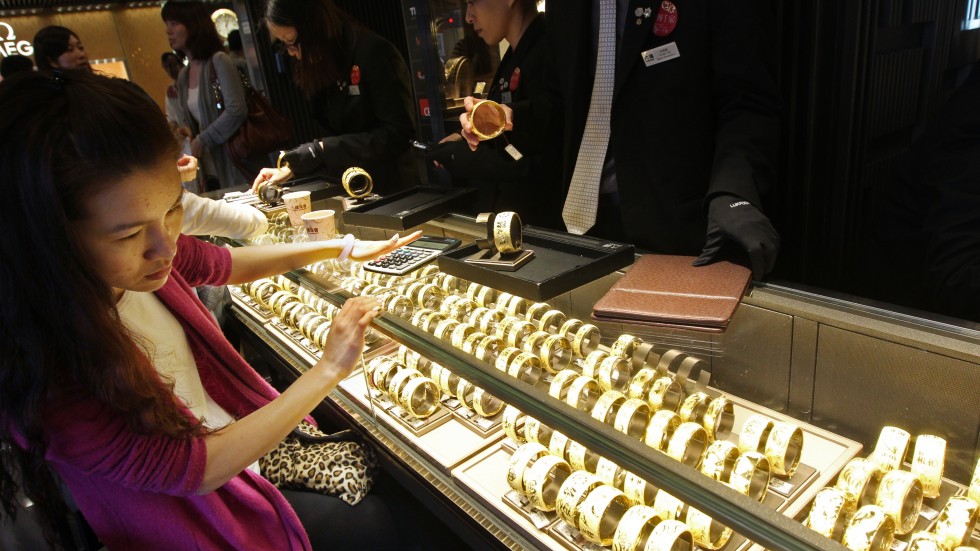
    Thanks to positive Hong Kong market sentiment and lower gold prices, Luk Fook Holdings has reported a 25.1 per cent boost in sales in the September half year. The company says sales totalled HK$7.859 billion (US$1 billion) compared with $6.283 billion in the same period last year. Profit attributable to shareholders soared 27.9 per cent to $665.4 million.

    Sales in the Hong Kong market, the company’s key source of revenue, rose 31.2 per cent as mainland Chinese visitor numbers continued to grow and retail sentiment improved.

    Sales in Macau rose 19.9 per cent.

    However the company has warned that the US-China trade war and the depreciation of the Renminbi are starting to impact on sales in the second half.

    “Same-store sales growth in the Hong Kong and Macau markets … started to see a decline since the second half of October and recorded a single-digit drop for the period from October to [the] first three weeks of November,” the company said. “In Mainland China there was a double-digit drop.

    “Therefore, the group remains prudent about its business development in the second half of the financial year. Nevertheless, with the anticipated considerable growth of the middle-class population in Mainland China, the group remains optimistic about the mid- to long-term business prospects.”

    Luk Fook said that during the coming year, it will focus on enriching its product offer, expanding its footprint in Mainland China and adopting market-oriented strategies to penetrate into the mass market, covering the middle-class, wedding couples as well as kids.

    “The group’s target for net shop addition in Mainland China for this financial year will maintain at not less than 120 shops. The group is also committed to further developing its e-commerce business and strengthening cooperation with e-commerce platforms in Mainland China.”

    Targeting younger shoppers

    In light of the enormous spending potential of young consumers on online sales platforms, the company plans to step up its efforts to promote the sales of affordable-luxury jewellery products to expand its footprint in the young consumer market.

    “By understanding customers’ spending habits, the group will adopt holistic approach to penetrate into the markets for the middle-class, wedding couples and kids. It will also continue to attract customers and encourage local consumption by visual merchandising enhancement, cross-selling boosting and VIP promotional activities, so as to improve sales and profits. Given the importance of social media in product promotion, the group will continue to showcase and promote its products on mobile applications and social media platforms such as Facebook and WeChat.”

    During the first half of the financial year, Luk Fook added a net 94 stores to its ever-growing network, including 90 in Mainland China, where is closed six self-operated stores and opened 96 licensed stores. Two company-owned stores opened in Hong Kong, one in Macau, and one in Malaysia, with a new licensed shop opening in the Philippines, However, one licensed store closed in South Korea.

    The group now boasts a global network of 1725 Lukfook shops spanning Hong Kong, Macau, Mainland China, Singapore, Malaysia, Cambodia, the Philippines and the US.

  • Plum food delivery to cut entire staff

    Plum food delivery to cut entire staff

    Food delivery startup Plum has laid off its entire staff, casting doubt on its continued operations in Singapore and its home market of Hong Kong. According to a report, Plum co-founder Desmond Clinton Cheung, who is also the company’s GM, said full-time contracts for all 110 workers, including his own, had been terminated. The company is creating a new structure which would give staff who wish to remain with the company an equity ownership.

    “In the past, they were salaried staff and they would become shareholders,” he said.

    Plum was founded in Hong Kong a year ago and Cheung said it may have grown “a bit fast”.

    Efforts to reduce losses, including laying off 40 staff several months ago, had not worked and Cheung said he believed the new company structure offered an opportunity for the company to continue trading on a more sustainable basis.

  • Dak Lak to shift coffee strategy

    Dak Lak to shift coffee strategy

    The Central Highlands province of Dak Lak plans to increase the proportion of processed coffee such as instant coffee and powdered coffee from less than 10 per cent to 15 per cent in total coffee output by 2020 and up to 30 per cent by 2030.

    Pham Ngoc Nghi, chairman of the province’s People’s Committee, said the province’s policies were being adjusted to attract more domestic and foreign enterprises to invest in coffee processing.

    He said that most locally based processing companies were private firms whose market access and product advertising capacity were modest.

    Dak Lak, which has the largest coffee area and output in Viet Nam, has more than 200,000ha and an annual coffee bean output of 450,000 tonnes.

    However, the province only has 145 coffee processing facilities with a total capacity of 32,100 tonnes, accounting for 5.55 per cent of the province’s total coffee bean output.

    To achieve the targets, the province has created a more favourable investment environment for both domestic and foreign enterprises, particularly those specialising in roasting and grinding, to invest in processing factories.

    The province has also helped coffee enterprises improve their corporate governance, promoted the use of advanced post-harvest and processing techniques and expanded market access for local companies.

    Coffee farmers, producers and businesses are being encouraged to produce beans that can be certified by the coffee global certification programme (UTZ), the fair-trade labelling organisation (FLO), Rainforest Alliance (RFA) and 4C (Common Code for the Coffee Community).

    The province, which has helped organisations, enterprises and co-operatives build brands, has offered assistance to companies to acquire rights to the geographical indication for processed coffee products.

    Last year, Dak Lak produced 28,000 tonnes of processed coffee, including 23,000 tonnes of powdered coffee and 5,000 tonnes of instant coffee.

    It exported 4,520 tonnes of instant coffee worth nearly US$ 27 million, accounting for 7.5 per cent of the province’s coffee export revenue.

    In the 2016-17 coffee season, Dak Lak estimates it will export 230,000 tonnes of coffee to 75 countries and territories.

    Export potential

    Viet Nam’s processed coffee exports are predicted to increase in the coming years due to more investment from domestic and foreign enterprises, according to experts.

    Many coffee companies, including Trung Nguyen, Me Trang and Vinacafe, for instance, are expanding the scale of their production.

    In addition, Viet Nam’s free trade agreements with the EU, Europe-Asian Economic Union and the Republic of Korea will create opportunities to boost Viet Nam’s processed coffee exports.

    Under free trade agreements, exports of Viet Nam’s processed coffee are taxed at only 0-5 per cent compared to 15 -20 per cent in the past.

    The country’s coffee industry is raising the value of coffee beans by speeding up the processing of powdered and instant coffee and other products.

    Processed coffee products from Viet Nam are sold in many international markets.

    The G7 instant coffee of Trung Nguyen, for example, has passed the requirements of Walmart Stores, Inc and is now sold at Walmart stores in many countries such as Chile, Brazil, Mexico and China.

    Luong Van Tu, chairman of the Viet Nam Coffee and Cocoa Association, said China was one of the most important markets for Viet Nam’s processed coffee.

    Coffee consumption in China is rising rapidly, particularly among younger consumers exposed to Western coffee drinking habits, he said.

  • Shang Xia launches airport strategy

    Shang Xia launches airport strategy

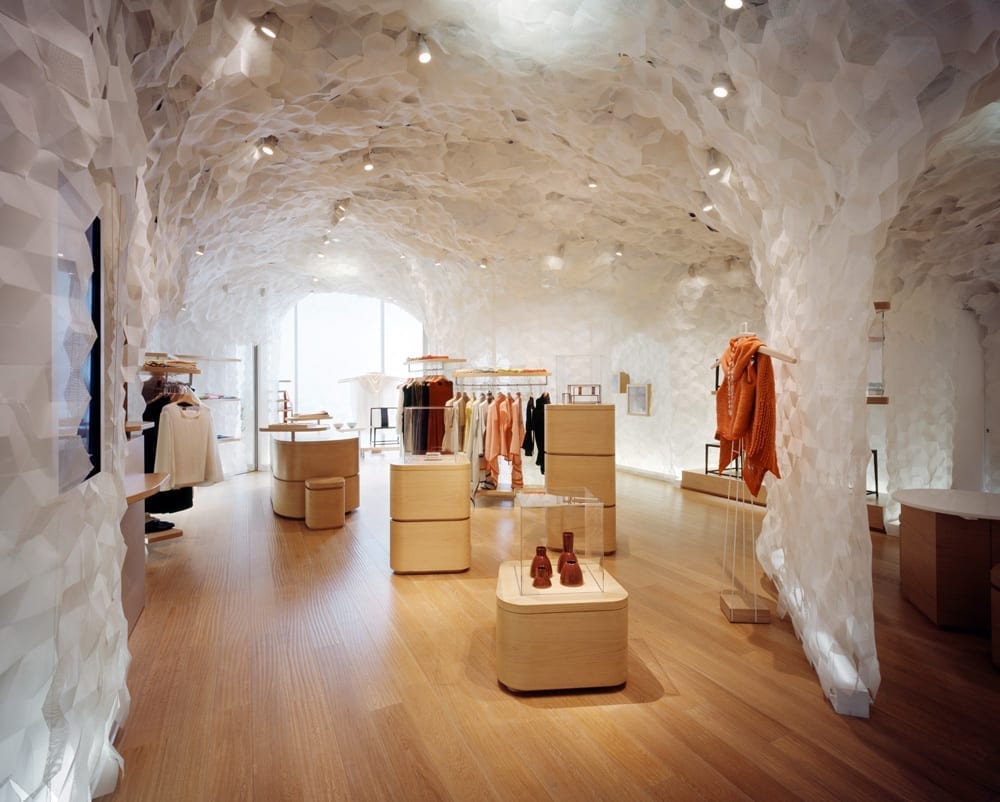
    Backed by Hermes, Chinese lifestyle, home and fashion brand Shang Xia plans to open standalone boutiques at Hong Kong, Beijing and Heathrow international airports over the next five years.

    Shang Xia’s VP of travel retail for Asia Pacific, Tina Priscilla Tam, says she believes travel retail is the ideal channel to communicate the brand’s message to travellers who “value and appreciate the beauty of the culture”, .

    “Shang Xia strives to preserve China’s fading traditions of craftsmanship and re-evaluates the tradition in the context of contemporary lifestyles,” says Tam.

    “China’s great heritage of technical ingenuity shimmers with potential. Wooden furniture, bamboo woven on porcelain, cashmere felt, eggshell porcelain … these remarkable materials are transformed by the CEO and creative designer Qionger Jiang. Her inspiration embodies both beauty and utility.”

    Tam says the translation of Shang Xia, “as above, so below”, is simple but profound. “It speaks of heritage and construction, of intangible bridges that link tradition and the present, east and west, art and lifestyle, human and nature.”

    She says travel retail is a window to the world, considered by some brands as “a sixth continent”, and Hong Kong International Airport is perfect for a standalone boutique because it offers exposure to international tourists.

    “It is a place where ‘east meets west’, reflecting the cultural mix of the territory’s Chinese roots with an influence of foreign cultures. It is a good standpoint for the brand to transmit the message of beautiful Chinese heritage and tradition to the world.”

    The brand already has boutiques in Paris, Beijing and Shanghai. Through a partnership with the Shankong Group in Taiwan it opened two shop-in-shop concept stores in August, with the next step being Hong Kong in January.

    “We focus not only on destinations for Chinese travellers. We review destinations and partners who understand the brand and share the same core values.”

    A Shang Xia standalone store will open at Beijing Airport’s Terminal 2 next year, building on its success at Shanghai’s Hongqiao Airport. It will carry ready to wear, costume jewellery, teaware and homewares.

  • Alibaba buys into retail stores strategy

    Alibaba buys into retail stores strategy

    Alibaba’s $2.6bn plan to take leading domestic department store Intime private underlines the dilemma being faced by the hoards of disrupters: how to blur the lines between online and offline shopping, and create a model that keeps the fun and feel of shopping, while letting retailers and brands collate the big data that enable them to sell more goods, more quickly and more profitably.

    “Today we cannot just separate online and offline,” Daniel Zhang, Alibaba chief executive, told a panel at Davos last week. Even when people are shopping in malls, he pointed out, they are on their phones — literally on and offline simultaneously.

    Alibaba, which already boasts investments in offline players such as retailer Suning and white goods manufacturer Haier, is not the only ecommerce name going back to bricks and mortar. Last month, Amazon launched its checkout-free Amazon Go store. Other crossover innovations are springing up. Panasonic is shopping its “intelligent baskets”, which will price items as they are placed inside.

    “To say that bricks and mortar is dead is wrong,” says Tom Birtwhistle, senior manager in PwC’s digital strategy division in Hong Kong. “It just needs to evolve, into smaller-format stores, for example, and embrace in-store digital technology.”

    It is a lesson start-ups are also learning. Luke Grana, who set up his eponymous Grana clothing company in 2014, was forced into a U-turn on his original ecommerce-only plan — introducing pop-up “fitting rooms”.

    “We realised we needed offline presence to increase brand awareness and push people online,” he says. “And lots of people want to try before they buy to get the fit right.”

    Customers can try on clothes in-store but still order online via iPads — “there are no cashier tills” — and have their purchases delivered. These partially offline purchases now account for 10 per cent of sales.

    It is a sentiment echoed by Alain Bejjani, chief executive of mall, retail and leisure operator Majid Al Futtaim Holding, who talks about stores as showrooms. “It’s not just products and price,” he told the Davos panel. “It’s about the seamlessness of the journey, and total integration between online and offline.”

    Alibaba, which represents more than one-tenth of China’s total retail sales and about 75 per cent of those made online, according to HSBC, takes that literally. Its apps enable shoppers to navigate China’s sprawling malls, some of which span more than 1m sq ft, and find where their cars are parked when they emerge hours later.

    Amazon unveiled its checkout-free grocery store last month

    But it is also rewriting the rules on the well-rehearsed “click and collect” model and corralling big data to loop back to retailers, allowing them to manage their inventory more efficiently.

    “Alibaba and Amazon have the same two goals. Two billion customers and a reinvention of the retail model and experience,” says Michael Zakkour of Tompkins International.

    “Much in the same way department stores, chain stores, malls, Big Boxes and ecommerce have reinvented retail in the past, Alibaba is using technology, big data and imagination to connect offline and online so that there is only a unichannel retail experience.”

    Mr Zhang talks about collapsing the traditional vertical system that sees manufacturers pass goods to a handful of large distributors, who in turn pass them on to smaller ones, who sell to retailers before the goods finally reach the consumer.

    Before, he says, a consumer could order a drink and have it delivered to their home. “Now you can order it and it’s delivered to your next stop.” That means inventory can no longer be managed by distributors, who lack the full picture, but requires the whole chain to be digitised and shops to become mini fulfilment centres.

    This is where Alibaba takes integration a step further — or rather, a step back, into what founder Jack Ma has called “new manufacturing”, where data can be used to tell the makers in advance what consumers want to buy.

    Manufacturers are also waking up to a flatter system and seeking ways to move closer to shoppers. Unilever, the Anglo-Dutch consumer goods manufacturer, last July paid $1bn for Dollar Shave, which sells razors and grooming products direct to consumers using home delivery.

    This month Coty, maker of perfumes and lipsticks, bought a majority stake in Younique, an online cosmetics retailer. And the crossover between internet and manufacturers can also be spotted in personnel shifts: US toymaker Mattel tapped Google executive Margaret Georgiadis as its next chief executive.

    Some question whether predictive data are enough to dictate fashion trends. “They’re not going to be on the back streets of South Korea looking at styles or pieces of fabric,” says one player.

    Others point to conflicts. Alibaba prides itself on being a platform rather than an asset-heavy ecommerce player such as Amazon, yet the Intime acquisition will see it integrate a bricks-and-mortar business into its asset-light ecosystem.

    Alicia Yap, analyst at Citigroup, is “cautious” about the future integration and about how Alibaba “would manage the potential conflicts between Intime vs other merchants and brands on its platform”, she writes in a research note.

    Others note that China’s online/offline models differ from the west, where platforms are mainly owned by the retailer or brand. Instead, China ecommerce is dominated by third party platforms, be it Alibaba’s Tmall or JD.com.

    “If customers are buying through a third party you are never going to get the same level of data granularity on the customer as if it was yours. That’s what all the big [multinational corporations] are beginning to grapple with,” says Mr Birtwhistle.

    “So linking data between on and offline is difficult. Solving that problem is the multi-billion-dollar question. No one has really got an answer to that yet.”

  • Sunway Malls Adopt New Strategy in Elevating Customer Service

    Sunway Malls Adopt New Strategy in Elevating Customer Service

    Malaysia’s mall industry, already faced with stiff competition is expected to intensify as another 27.28 mil sq ft of new retail space will be entering the market according to National Property Information Centre (Napic) data.

    Of the 27.28 mil sq ft supply, 16.2 mil sq ft is at various stages of construction while the remaining 11.08 mil sq ft is are being planned. This will add on to the 148.85 mil sq ft of existing retail space in the market and brings Malaysia’s total retail space supply to 178.13 mil sq ft.  

    The increase in retail space comes at a time when retailers are already hard pressed with slower retail sale growth and lower margin amid weak consumer sentiments.

    In the latest quarter results by Retail Group Malaysia (RGM), Q2 2016 registered a growth rate of 7.5% against the forecast of 9.9% – 24% lower than expected. RGM termed the results as ‘below market expectation’. In contrast, retail sales fell 4.4% in Q1 2016.

    In a bid to increase, sustain and retain footfall and sales, Sunway Malls re-strategise their human capital enhancement by recruiting ex-flight attendants into the customer service division to better serve its shoppers.

    While known for delivering quality service, the hiring of ex-flight attendants also allows Sunway Malls to leverage on the crew’s training and experience in safety and emergency handling which serves as an added advantage for group’s front-line service.

    The initiative has so far seen the recruitment of nine ex-flight attendants from a local carrier in both Sunway Pyramid and soon- to-be-opened Sunway Velocity Mall. Recruitment effort is also underway to place more ex-attendants in Sunway Putra Mall in Kuala Lumpur and Sunway Carnival Mall in Penang.

    “With increasing competition, it is imperative that the creation of good customer service experience in malls takes precedence as both a strategic differentiator and a loyalty tool in a saturated market,” says Kevin Tan, Chief Operating Officer of Sunway Malls.

    “From the moment a customer steps into the mall, we strive to provide world class service through our touching hearts philosophy to create a warm, welcoming and wholesome lifestyle experience. We value the different needs of each and every customer in spite of background, gender and age hence we are creating diversity in the Concierge so they can engage with the various shopper profiles we have and extend assistance every time it’s necessary,” he continues.

    The group’s effort in delivering good customer service was also acknowledged by Professor Philip Kotler, the Father of Modern Marketing when he awarded Sunway Pyarmid with My Branded Service Award in recognition of its outstanding customer service back in 2009.

    Its earlier customer service initiatives among others included carpark guiding system, powered wheelchairs, child distance monitors and auxiliary police force were known as the mall industry’s firsts.

    Although Sunway Malls is hiring ex-flight attendants as part of their new retail strategy, the brand still welcomes all who have interest in the service line.

    “Some of our best customer service employees are not from the airline industry but they have the passion and the willingness in serving customers and that’s the most important criteria of all,” says Kevin.

  • Zebra expands global ISV strategy

    Zebra expands global ISV strategy

    Zebra Technologies Corporation announced a global independent software vendor (ISV) initiative designed to increase collaboration and expand engagement with the wider developer community.

    New independent software vendor initiatives to expand solutions that help customers make smarter decisions with real-time visibility.

    Zebra also announced the appointment of James Pemberton as the global lead of this initiative, which will help our customers make smarter decisions with products, software and services that build visibility that’s visionary.

    The new initiative will increase market penetration with ISV partners and enable enterprise application development through a revamped developer community portal. Zebra’s global ISV program reflects the global nature of software businesses. Partners can join in multiple regions simultaneously; they can register and be recognized for projects globally.

    Zebra offers powerful, go-to-market tools to promote ISV partners’ apps, such as AppGallery, an online and mobile Android app-distribution and management platform. AppGallery is pre-installed on Zebra’s enterprise Android devices, including a global demo capability and virtual shop-window for ISV Partners’ apps.

    Key facts

    • The new program includes global Influence Rewards. These recognize and reward ISVs who influence customers – through their software – to buy Zebra products anywhere globally. They receive free demo kits and financial rewards for registering projects.
    • Zebra’s active developer outreach campaign includes engagement at events such as Andevcon, AppsWorld and DroidCon. Plans are also underway for Zebra’s own global enterprise developer event series, “AppForum2017”.
    • Pemberton’s work with teams across Zebra will create a common approach for ISVs to be more integrated in product development that feeds into Zebra’s enterprise asset intelligence solutions and go-to-market activities.
    • Since 2005, Pemberton has focused on developing, improving, marketing and managing the EMEA ISV program at Symbol Technologies, Motorola Solutions and Zebra. He previously worked in several retail and e-commerce software companies.

    Bill Cate, Vice President, Channel Strategy and Operations, Zebra, said: “The launch of this initiative demonstrates Zebra’s commitment to the channel and clear recognition of the importance of the ISV partner and develop communities. James’ proven dedication to building strategic relationships with these important groups is key to leading Zebra’s renewed efforts to further engage them in building solutions that help our customers know more about their business.”
    James Pemberton, Global ISV Strategy Director, Zebra, said: “Innovation driven by the ISV partner and developer communities strategically aligns with the industry leading product portfolio Zebra offers to its customers, and we are poised to successfully reach more developers focused on enterprise projects than ever before. I’m excited to see this developer outreach and our ISV partner collaboration yield new opportunities, profitability and simplicity to benefit all parties involved.”

  • Golden opportunity: why now’s the time for brands to move in Myanmar

    Golden opportunity: why now’s the time for brands to move in Myanmar

    In the street outside Yangon’s Shwedagon Pagoda, a Buddhist monk reaches into the folds of his burgundy robes for his mobile phone. He cuts a somewhat incongruous figure, tapping his screen against a backdrop of golden spires, with a steady stream of pilgrims and traffic all around. But this blend of ancient tradition with digital connectivity is now the way of modern Myanmar.

    The pace of change here is on a scale unseen in other fast-growth Asian markets. Just three years ago, buying a mobile SIM card meant handing over $2,000 in cash on the black market; now, there are now three competing networks and a SIM costs just $1.50. Ownership of mobile phones has already shot up to more than 50 per cent – a fact all the more remarkable given that only a third of people here have mains electricity in their homes.

    It is this prevalence of mobile connectivity right at the beginning of Myanmar’s growth curve that is proving such a strong accelerant of change. Mobile connectivity won’t just enable growth, it will direct it, leading entire business sectors – from banking to retailing – to leapfrog stages of development.

    The International Monetary Fund has predicted Myanmar will have the world’s fastest-growing economy this year, with GDP growth of 8.6%. Since the country embarked on a programme of ‘disciplined democracy’, investment has been increasing. The smooth transition to a civilian-led government earlier this year is giving many more businesses the confidence to invest and expand here.

    Economic growth and urbanisation are giving rise to social mobility, and with that, the world’s newest, youngest middle class. Myanmar is home to 51 million people, more than half of them aged under 30. By 2020, Boston Consulting Group anticipates that 10 million will be middle-class or affluent. These people won’t necessarily be wealthy by global standards, but they will have disposable income that puts fashion, fragrance and home appliances within reach. Later, they will be in the market for cars and overseas holidays.

    For brand owners, this represents unprecedented opportunity, and there is a clear early-mover advantage to be had. WPP’s global BrandZ study tracks the way consumers feel about different brands around the world. Some brands are so little understood by consumers, they are a ‘clean slate’ in consumers’ minds. In Myanmar, where shoppers have had little choice about where they shop and the brands they buy, about a third of all brands fall into this ‘clean slate’ category – double the global average.

    That means now is the time for brands to start making an impression, not just on people who are ready to buy, but also on those who are on their way up. Ford and Chevrolet are already here; Coca-Cola, KFC and Pizza Hut are among the other international brands to have launched in Myanmar.

    Consumers in Myanmar are open to trying new products and new brands, but while global brands can serve as shorthand for quality or safety, they are not a badge of honour and do not instantly command a premium. People are embracing the opportunities that digital connectivity offers, but do not seek an express route to ultra-modernity. The languorous pace of life here is seen as something to be treasured; thoughtfulness and self-control are admired, and modest attitudes to spending and thrift can make indulgence seem decadent.

    Brands need to be respectful of tradition, and understand that parents and grandparents are highly influential. BrandZ analysis shows that the strongest brands in Myanmar project idealism and a sense of adventure, but steer clear of individualism and rebellion. They also help consumers navigate what is becoming a sea of choice, emphasizing not just the features of a product but the difference it can make to the consumer’s life. This involves working closely with the traditional retail trade – local ‘Mom and Pop’ shops – which account for the vast majority of sales here. These stores are not just distribution points but trusted sources of information and advice.

    Norwegian mobile phone network Telenor has demonstrated how global brands can achieve local resonance. Its TV campaign reflects the importance of family as a young woman in the city calls her mother in the countryside for urgent cooking advice; she wants to cook ‘nan gyi thohk’ noodles from her home-town to impress her mother-in-law. The ad has been so popular that nan gyi thohk is now ‘the Telenor dish’.

    Similarly, the isotonic drink 100PLUS, from Malaysia, has established a powerful connection with consumers in Myanmar by reflecting what it feels like to be in a hot climate with so much that needs to be done.

    For now, access to television is higher than mobile penetration, but only just. Mobile internet is where consumers are increasingly getting their information, and going online in Myanmar means going on Facebook. Even President Htin Kyaw is a subscriber. Media plans need to be mobile-friendly, if not mobile-first.

    Success in this market requires a nuanced approach both to business and communications. The Buddhist monk on his phone appears to be straddling very distinct worlds; in fact, he is integrating the two in a uniquely Burmese way.


  • How retailers in HK can survive the crisis in the industry

    How retailers in HK can survive the crisis in the industry

    Francis Gouten, director of Gouten Consulting and former chief executive of Richemont Asia Pacific Ltd., talks to Nick Bradstreet, managing director and head of leasing for Savills Hong Kong, about the Hong Kong retail market.

    How do you see the economic environment at the moment?

    FG: It is certainly the most challenging I’ve seen since SARS (the outbreak of severe acute respiratory syndrome in 2003). But the rents in shopping malls are not decreasing. However, nobody dares to close shops in the luxury space, but it will happen; it must happen.

    What kind of pressures are having an impact on retail?

    FG: There are lots of factors, the pressure of rent and the pressure of the stock market, as major groups are managed by financial people. You have to show quick results, and we are in a world of short-term views.

    There is a complete change — in Hong Kong we now rely less on the mainland Chinese. Hong Kong was the first destination for rich people, and now they are going somewhere else. There are still many visitors in Hong Kong, but they are not spending as much.

    How can retailers respond to the crisis?

    FG: Before, many of the big brands set out to impress the mainland Chinese, and they rented bigger stores to show they are big brands. But in part, this killed the malls and the interest in those places, because when you have a brand on three floors, what else is there? What can I discover?

    If I have to advise shopping malls nowadays, I would say reduce store sizes and bring more diversity to malls. Don’t give three floors to one brand.

    So what will happen to brands?

    FG: The top brands will recover. They will remain financially strong, but right now they are cutting expenses and people, and freezing openings. They are taking a long-term view at the moment.

    Asia is still an important part of the business, but perhaps not as important as in the past 10 years. A big part of the results in Asia was gifting, around 35-40 percent, generating more exclusive and over-priced products. But this is no longer the case.

    What market strategy should brands take?

    FG: You need to go to local consumers and target them directly. Luxury took off because of the fashion brands, but now everybody is in luxury.

    Top brands need to go back to their original positioning of a premium experience by welcoming the clients, providing a high-quality service and exclusive offerings. They need go back to the heritage of brand and target the core customer.

    So service and the experience are essential to this?

    FG: What did luxury mean 60 years ago? Luxury was a well-made, high-quality product made in limited quantity. This product was made by families, with fantastic know-how of a single product, and only one or two shops in the world.

    People came from around the world to buy this special item, often customized to their own liking. Clients are still seeking that kind of exclusivity and service.

    You need to protect your DNA, origin, and essence of the brand. How can brands understand their clients? How can they serve them better?

    There needs to be an upgrade in the quality of the service, which can be done through detailed training programs for all in-store staff.

    I once purchased a beautiful jacket from a luxury brand, and the salesperson asked me if I wanted to pay an extra 50 cents for a bag. I thought, “It’s raining outside, of course I want a bag. Charge me HK$500 more, I don’t care! If you go into a luxury shop, you should be treated as a luxury client. This is important.”

    Do you need to bring the price point of luxury items down?

    FG: Brands are thinking about it, but it’s always difficult in luxury. For current products, customers who bought already will feel cheated. Some brands have done it already by only dropping prices for new products, and then rethinking their way of localizing profit.

    Is Macau doing better than Hong Kong?

    FG: A little better. A few years ago some of their shops were No. 1 in the world. Now, Macau will continue to grow, but it will be more mass-market. When you have a large mass market you have room for the upper market as well.

    Macau is a pure leisure destination, and when you are on holiday you spend money, so you’ll see some changes in tailoring a luxury experience.

    So how is the Hong Kong market developing?

    FG: You are seeing the return of activewear and mass traffic brands. Expensive sportswear is a strong trend, because these brands have improved image perceptions. Thirty years ago it was not the case. Now these brands have better designs, specializations and technology.

    And what is happening with e-commerce?

    FG: China is the world’s biggest e-commerce market – they are selling cosmetics, ladies’ shoes, kids’ toys, but it is not yet for luxury.

    You have many fake products, and e-commerce is also a discount business. I do not recommend luxury brands go there. If I can buy your products in mass on the internet, what does that do to your image?

    But e-commerce cannot be stopped – it needs regulation. The majority of brands do not understand it. But it is important for brands to have people who understand the digital environment.

    What is even more important nowadays is, as I have mentioned, to reinvigorate the luxury experience and focus on attention to detail.

    The experience of luxury should be intimate, bespoke and, above all, exclusive.

    Going back to the roots of luxury and targeting the core customer will ensure a bright future for luxury.

     

  • Jakarta shopping centers lack inter-connectivity

    Jakarta shopping centers lack inter-connectivity

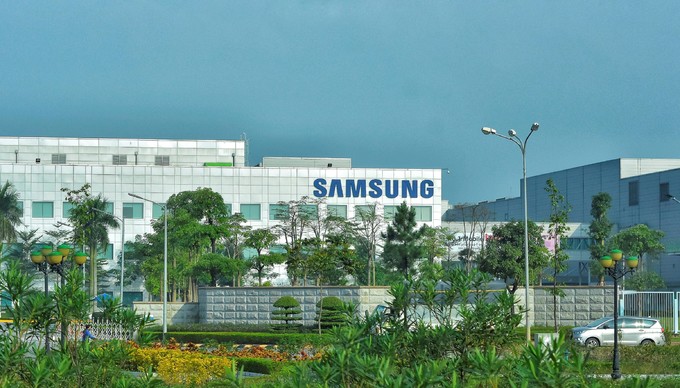
    Jakarta may have hundreds of shopping malls, but the city has a long way to go to compete with global shopping destinations like Singapore or Hong Kong, as its malls lack interconnection.

    Property consultant firm Savills Indonesia head researcher Anton Sitorus said recently that malls and shopping centers lacked interconnection as they had been developed in scattered locations all over
    the city, explaining that such conditions were unfavorable for the retail sector.

    Anton said the city had a number of traditional shopping districts like Tanah Abang in Central Jakarta and Mangga Dua in West Jakarta, Anton agreed.

    “However, modern retailers are scattered in many places. Even if some malls are next to each other, the developers have not considered connecting them,” he said.

    Anton said inter-connectivity was one of the main factors required to create an iconic shopping district and boost the market, citing the 1.9 kilometer Orchard Road shopping belt in Singapore as a prime example of a successful interconnected shopping district.

    “15.1 million foreigners visited Singapore in 2014, 41 percent of them visited Orchard Road,” he said.

    He emphasized that other well known shopping belts in the world such as the Avenue des Champs-Élysées in Paris and Fifth Avenue in New York also boast interconnection between shopping centers.

    Anton said a consortium of developers in Jakarta had attempted to create a similar concept on Jl. Satrio in South Jakarta. “However, because of the economic crisis in 1998, the plan was canceled,” he said, adding that since then developers had only built free-standing malls. “The initial Jl. Satrio concept had sidewalks along which shoppers could easily walk between various shopping malls,” he said.

    Most shopping malls in Jakarta do not provide pedestrian facilities as the management prioritize cars. Even when the distance between malls is less than 500 meters, there is no walkway connection.

    The Jakarta administration is currently mulling over plans to widen the sidewalk on Jl. MH Thamrin, Central Jakarta, but the road is mostly occupied by office buildings, not shopping malls.

    Anton said that if the city hoped to develop its retail sectors, it would be necessary to have shopping belts. “It is a good strategy. Retail will be the first sector to revive after the economic slowdown,” he said, adding that the sector also showed good resistance during times of crisis.

    Anton said resilience was the result of various factors, including purchasing power in society, government domestic business incentives, the significant wealth of individuals as well as growing middle class.

    “Although the economy is slowing, Jakartans keep shopping. Malls are packed during weekends and when there are bazaars or fairs scheduled,” he said.

    Currently, there are almost 200 malls located throughout the capital. Shopping tax return company Global Blue revealed in January that Indonesians have been listed among the top four global shoppers, behind Chinese, Middle Eastern and Russians consumers.

    The top five destination countries for shopping were listed as the UK, France, Italy, Japan and Singapore.

    Rosaline Stella Lie, Savills retail senior director, said Indonesian consumers had high purchasing power but emphasized that the price of luxury goods in Indonesia were not competitive.

    “Therefore, the rich love shopping abroad,” she said.

    Rosaline said although the luxury tax was slashed for branded items, the price had remained high due to other costs like import duty.

    Rosaline said the price should be competitive so high-end brands would be eager to open outlets in Jakarta. “More shopping districts will be developed but most of them will be in Greater Jakarta due to the city administration moratorium [2012],” she said.

    She added that shopping districts should be located downtown, near the central business district, as the area offered easy access.