Tag: Supermarket

  • Three Kaufland sites got approved for Victoria

    Three Kaufland sites got approved for Victoria

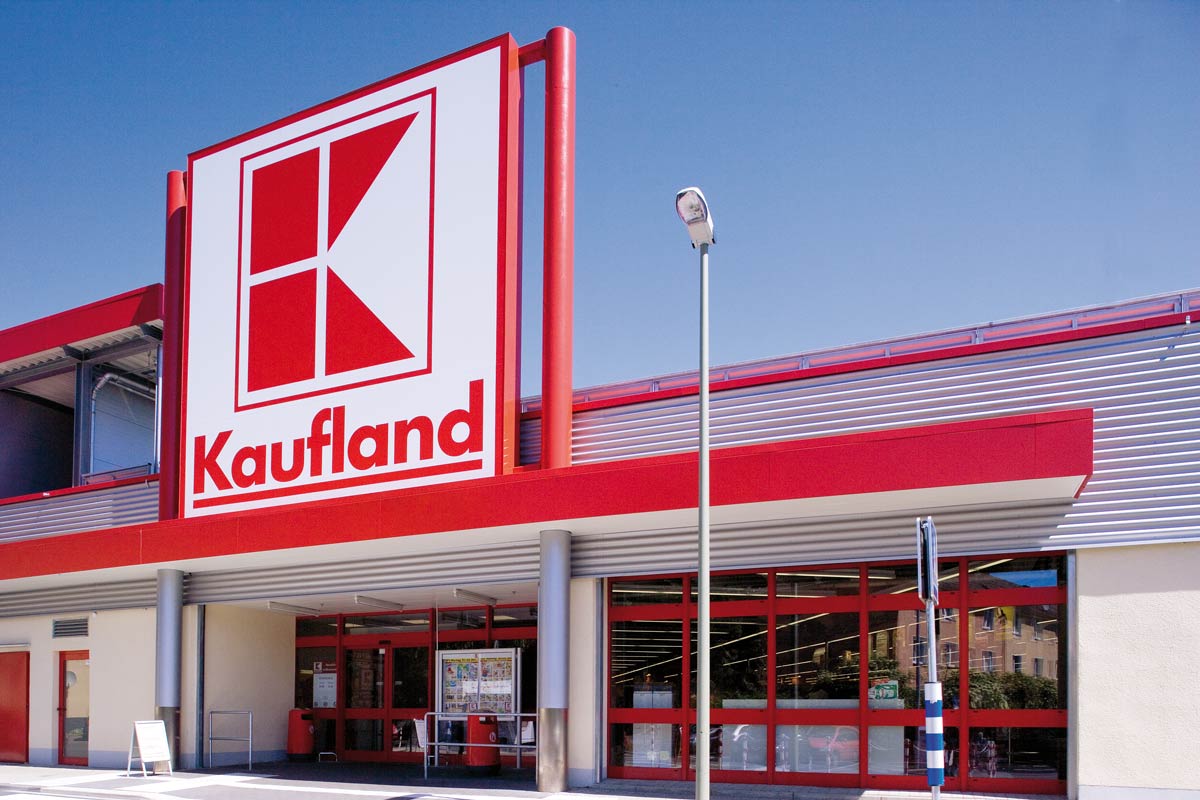
    The big players on the Australian supermarket scene will be buckling up for some stiff competition this Friday morning, with the announcement that German hypermarket Kaufland has received planning approval for its first three stores in Victoria and Australia’s largest distribution centre.

    The first stores at Chirnside Park, Dandenong and Epping received planning approval after an independent Advisory Panel process and despite the objections of many other players in the market.

    The state-of-the-art distribution centre to be located in Mickleham, will be the largest in Australia and will act as the point of consolidation and distribution of goods to its supermarkets.

    The proposed Melbourne headquarters was also approved.

    Kaufland Australia managing director Julia Kern celebrated the news today with Treasurer of Victoria and Minister for Economic Development, Tim Pallas.

    “Kaufland is committed to long term investment both in Victoria and across Australia. The development and approval of our first three stores, our distribution centre and our proposed future headquarters in Victoria will result in the creation of up to 1,600 Victorian jobs,” Kern said.

    “Our initial investment of $459 million will create opportunities for local businesses and stimulate much needed competition and consumer choice in Australia’s supermarket sector.”

    Kern thanked the Victorian Government and everyone who participated in the independent Advisory Panel process. She said she was looking forward to opening Kaufland stores in Victoria in due course.

    Kaufland supermarkets will have a total store area of 4,000 square metres and will be stocked with local, regional and international products at discount pricing. Each store will include a bakery, butcher and liquor areas.

    A number of independent local businesses such as cafés, sushi bars or nail salons will compliment the overall shopping destination.

    “Kaufland will be a one-stop destination supermarket. Our aim is to provide all Australians with more service and choice, highlighted by our principles of simplicity, quality, variety and price.”

    “Kaufland is delighted to call Australia our new home. We look forward to continuing our commitment to partner with local businesses and the wider community to ensure we create the best outcome possible.”

    “Being customer centric is at the heart of all that we do – driven by our values of Performance, Dynamics and Fairness, we aim to increase choice, provide high quality service and promote fair competition to ensure that the customer is always the winner,” Kaufland said in a statement.

    Three further proposed Kaufland sites, at Oakleigh South, Coolaroo, and Mornington, are currently being reviewed by the Advisory Panel.

    The supermarket this week began advertising for Area Manager positions after receiving an additional $145 million capital injection from its German parent Schwartz Group for its ambitious plans down under.

    The family-owned business currently operates 1,200 stores in 7 countries, with over 150,000 employees across Europe.
  • Technology helps to boost Carrefour China profit

    Technology helps to boost Carrefour China profit

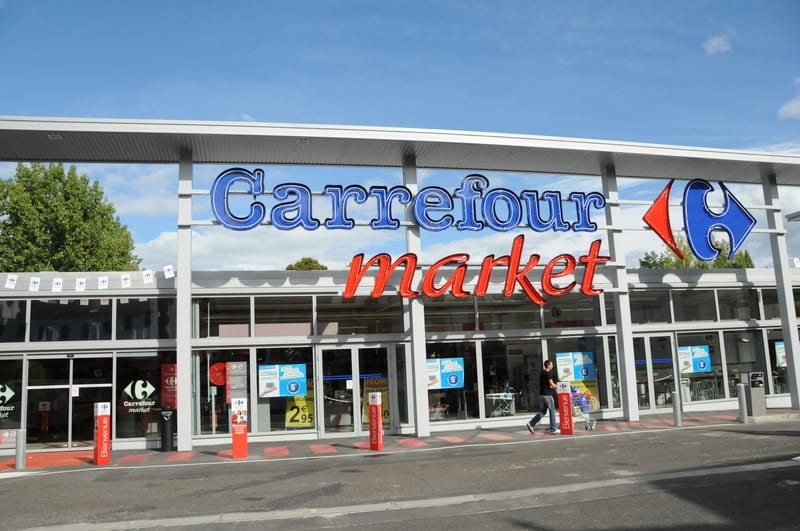
    Carrefour China has boosted its profit 11-fold according to documents filed in France, where its parent company is based. In China, Carrefour achieved €45 million operating income from its 245 outlets and online business, which it put down to investments in previous years in boosting its operations and profile there.

    The company said it has transformed the commercial model of its Le Marche hypermarket chain, and boosted sales online. An investment in technology allowing facial recognition and Scan & Go had particularly paid off.

    “China is a retailing laboratory for the world,” said Thierry Garnier, president and CEO of Carrefour China. “For Carrefour, China is a specific market that has helped us to learn and to understand the future.”

    At the end of last year, Carrefour opened a flagship on Tmall which is expected to further improve sales.

    Globally, Carrefour increased its sales by 1.4 per cent to reach €85 billion.

  • SPAR India to partner Himachal Pradesh in promoting fresh sourcing and manufacturing

    SPAR India to partner Himachal Pradesh in promoting fresh sourcing and manufacturing

    As part of ‘The Global Investors Meet’ in Dharamshala, Himachal Pradesh on June 10-11, 2019, which will have the CII as key national partner, a road show was organized in Bangalore recently that saw senior leaders from various industries participate in the event. SPAR was one such participant at the show as a representative of the retail industry.

    At the event, SPAR India’s MD & CEO Rajeev Krishnan and Solai Shakthivel, Senior Vice President – Buying and Merchandising Foods, had the opportunity for a one-on-one interaction with the Chief Minister of Himachal Pradesh Jai Ram Thakur and Industry minister Bikram Singh.

    Himachal Pradesh, known as the ‘Fruit bowl of India’, is famous for its manufacturing and SME development. With its ideal weather conditions, there are different varieties of fruits and vegetables grown in Himachal Pradesh. The state is famed for its abundance of crisp, juicy apples as well as for its pears, peaches, plums, grapes, apricots, mangoes, strawberries and citrus fruits.

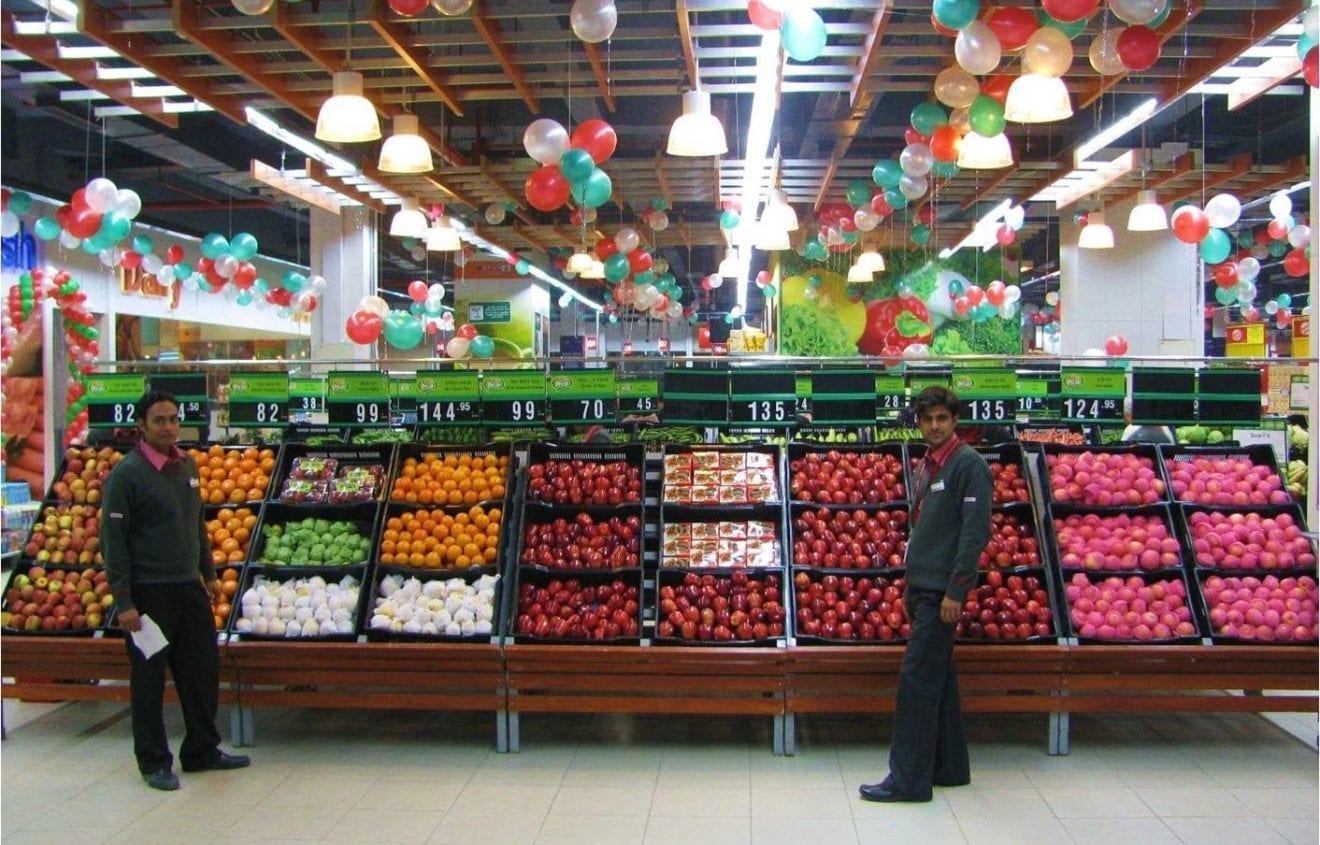
    SPAR India offers a variety of fresh produce to its customers, which are mainly sourced from Himachal Pradesh. These include apples, green peas, oranges, honey, organic produce, among other products.

    According to Krishnan, “SPAR India is committed to continue building strong farm to fork relationships. We will be working jointly with the State on sourcing and developing our private label products – soaps, handicrafts, etc which, in turn, will support the growth of SMEs.”

    In its endeavour to continue making a difference in the lives of farmers, customers and communities, SPAR wants to be a strong partner to Himachal Pradesh in promoting fresh sourcing, manufacturing and tourism in the coming years.

  • Tesco to build simpler, more sustainable business; axe 9,000 jobs

    Tesco to build simpler, more sustainable business; axe 9,000 jobs

    Tesco has recently announced that the brand is making some strategic changes to further simplify the business and this might affect jobs of 9,000 employees. “Since we launched our turnaround four years ago, we have built a stronger business focused on serving our customers. Whilst this turnaround continues, it does so in a competitive and challenging market. We’ve briefed our colleagues on some changes we’re making to our stores and offices to further simplify our business, so that we can continue to invest in serving our customers,” Tesco said in a statement.

    Jason Tarry, CEO, UK & ROI said: “In our four years of turnaround we’ve made good progress, but the market is challenging and we need to continually adapt to remain competitive and respond to how customers want to shop. We’re making changes to our UK stores and head office to simplify what we do and how we do it, so we’re better able to meet the needs of our customers. This will impact some of our colleagues and our commitment is to minimise this as much as possible and support our colleagues throughout.”

    Changes include the following:

    Counters simplification

    Over recent years, convenience and online businesses have continued to grow, as the brand has core grocery and fresh departments in large stores. Not only are customers shopping in different ways, but they have less time available to shop too – which means they are using counters less frequently. The brand will be making changes to the counters in large stores to ensure that they have the right offer for customers. It is expected that around 90 stores will close their counters, with the remaining 700 trading with either a full or flexible counter offer for customers.

    Stock control simplification

    As business changes, the brand is also changing the way they manage their stock. After a number of trials, they have found a simpler way to conduct store routines and will be rolling this out to all of the stores. These changes mean a significantly reduced workload, with fewer hours needed to complete the routines.

    Merchandising simplification

    The brand wants to make shopping with them even easier, and they are aware that when they move products around this can prove frustrating for customers. The in-store employees have expressed to the brand that they want to spend more time with  customers, rather than moving products around the store. They have been working to reduce the amount of layout changes they make, so it’s easier for customers, and less work for in-store employees meaning fewer merchandising hours are needed.

    Colleague rooms

    Currently only one third of stores provide a hot food service and, over recent years, there has been reduced demand for this. Over the last three years the brand has been rolling out new self-service colleague kitchen areas in a number of stores, and they are now extending this to all remaining stores with a hot food service. This change will impact the people working in colleague rooms, who are employed by third party caterers, and the brand is working with them to provide as much support as they can.

    Head office

    The brand has completed a detailed review and this week they are talking to employees about changes in some of their head office teams, moving to a simpler and leaner structure, which will allow them to focus on supporting customers.

    In-store bakeries

    Contrary to media reports over the weekend, the brand has no plans to make any significant changes to bakeries this year.

    “Overall, we estimate that up to 9,000 Tesco colleague roles could be impacted, however, our expectation is that up to half of these colleagues could be redeployed to other customer-facing roles. We are working with our third party providers to understand the impact on their staff in our colleague hot food service,” Tesco said in a statement.

  • Lotte Mart’s distribution fees scrutinized

    Lotte Mart’s distribution fees scrutinized

    Korea’s antitrust body is examining the practice of retailers unfairly shifting distribution costs to their suppliers. The Fair Trade Commission (FTC) has started evaluation proceedings against Lotte Mart for transferring this burden and charging an onward transportation fee after a product has been delivered. The regulator could fine the retailer 400 billion won ($353.92 million) if it is found to have violated the law. It has the authority to prosecute and punish companies that contravene the Fair Trade Act and other statutes related to anti-competitive practices.

    The FTC’s Distribution Division, which monitors the activities of retailers, submitted an evaluation report, equivalent to a prosecutor’s indictment, to the commission early last month. The document outlined Lotte Mart’s infractions over five years.

    Lotte Mart has until early February to respond.

    This will be the first time the FTC has taken action against a company for shifting distribution costs to suppliers. Lotte Mart’s practice of transferring the costs, commonly known as post-distribution costs, is widespread.

    The action comes amid FTC Chairman Kim Sang-jo’s drive to root out unfair practices in the retail industry.

    Lotte Mart’s shifting of post-distribution cost to suppliers is likely to have far-reaching implications in the industry as the practice is common.

    “When signing a contract, there are requests to supply products at a price three to five percent lower than the actual price to account for the post-distribution costs,” explained Mr. Lee, who operates a company that supplies to retail stores. “It’s not just Lotte. It is common for large retail stores such as Emart, Homeplus, department stores, convenience stores and even e-commerce companies, such as Coupang.”

    The 400 billion won fine, if charged, would be an unprecedented amount. If other companies are fined, the total sum could rise to the trillions.

    “Unlike sales promotion fees, distribution costs have to be paid,” said Mr. Kim, the president of a large food company. “We struggled as it’s impossible to know the exact figure, but the FTC took on this matter for the first time.”

    From the FTC’s perspective, large retail stores use distribution centers for their own benefit, and it is unfair to force suppliers to take on costs incurred after products are delivered to the centers.

    “Suppliers that just want to deliver to distribution centers are forced to deliver to branches,” explained a senior FTC official. “If the final delivery destination is a branch store, the supplier should be able to manage their products as they want at the distribution center, but that is not the case.”

    “From a common-sense perspective, distribution costs apply only until the delivery location, not costs after the delivery,” the official added.

    Other experts disagree with the FTC’s assessment.

    “If the retailer and supplier haven’t agreed on the location of the delivery, the supplier burdening the delivery cost abides by civil law,” said Lee Ho-young, a law professor who specializes antitrust law at Hanyang University.

    Lotte is going all out on its defense, hiring Kim & Chang’s fair-trade team to represent it.

    “In the past, when there weren’t distribution centers, suppliers used to be burdened with the distribution costs,” said a Lotte Mart official. “Post-distribution costs are paid after distribution centers were established.”

    The FTC is looking into other cases.

    “The retail business cannot work if post-distribution costs are shifted to retailers,” said an executive at a large retail company who is in charge of fair trade matters.

    The FTC could make a final decision as early as March.

  • Supermarket, apparel sales not looking good in Japan

    Supermarket, apparel sales not looking good in Japan

    Japanese supermarket sales edged down 0.2 per cent in a third consecutive year of declines, according to figures released by an industrial body this week showing last year’s financial performance. The data for last year shows sluggish consumption regardless of the country’s current period of economic growth. Observers have attributed the slump to a low demand for apparel in supermarkets relative to stronger sales in food.

    Apparel sales fell 5.3 per cent, the 27th straight year of declines, influenced by the warm winter and increased competition with retailers online. Food, by comparison, saw 0.4 per cent higher sales with an uptick in prices for vegetables and sweltering summer temperatures.

    While total sales rose 0.5 per cent to ¥12.99 trillion ($118.71 billion) last year, they still fell short of the hoped-for ¥13 trillion mark for the second year in a row.

    “Spending is weak as a deflationary mindset is still deeply rooted among consumers”, said Atsushi Inoue, a senior official of the Japan Chain Store Association.

  • New product helps Vietnam’s canned coffee market

    New product helps Vietnam’s canned coffee market

    One of the largest beverage makers in the world is hoping to ‘capture’ Vietnamese taste with its new canned coffee product. Coca-Cola, one of the two biggest players in the Vietnamese carbonated beverages market, has entered the canned coffee market with Georgia Coffee Max.

    Though Vietnam is the second largest exporter of coffee in the world, its ready-to-drink coffee market has not attracted much attention from major players.

    Coca-Cola’s move could breathe life into it, but the challenge is not a small one, industry insiders said.

    For instance, at a supermarket on Quan Hoa Street in Hanoi’s Cau Giay District, canned coffee products do not have their own section, but are placed among other carbonated and energy drinks.

    Four brands of this rarely-seen product — Birdy, Nescafe, Highlands Coffee, and My Café — sit inconspicuously among dozens of other beverages.

    According to the shop assistants, canned coffee is hardly purchased, and sometimes is not bought for weeks at a time.

    The market for canned coffee came to existence 10 years ago with the entry of Birdy Coffee from Japan’s Ajinomoto.

    A year later Nestlé, which wanted a piece of the action, established a canned coffee production line at its plant in the southern Dong Nai Province.

    Other early birds included local dairy giant Vinamilk, which started putting up ready-to-drink coffee production facilities, followed by two then-emerging brands, Tan Hiep Phat and Highlands.

    Though initially many of the brands ran aggressive marketing campaigns, the market gradually fizzled out. Many products disappeared completely within a short time.

    In 2013 local coffee giant Trung Nguyen launched a range of fresh coffee products in bottles and cartons in sizes ranging from 500 ml to a liter. Within two years these too disappeared from grocery store and supermarket shelves.

    Today only a few names are left in the market, like PepsiCo, Highlands Coffee, Nestlé, Ajinomoto, and the new entrant, Coca-Cola.

    The real challenge for producers is no longer getting market share but changing consumer habits.

    Industry insiders quoted customer feedback as saying canned coffee is like fast food, sweet and lacking the authentic coffee taste.

    Speaking at the launch of the new product, a Coca-cola executive said though there are other brands in the market, their research showed the pie is large enough for new players to enter.

    Le Trung Tin, director of the Georgia Coffee Max line, said the secret to success is capturing the Vietnamese taste in the canned coffee.

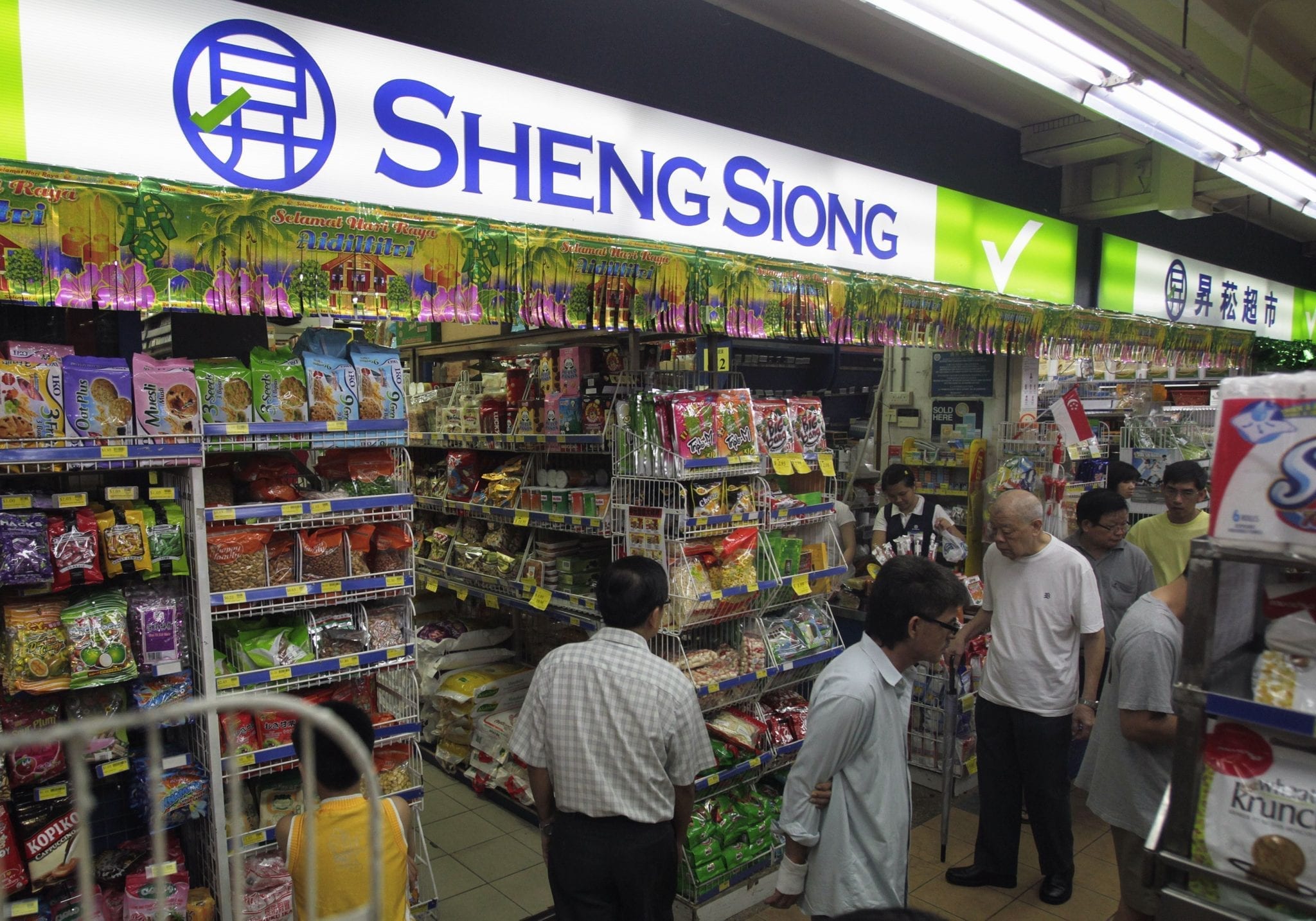
  • Sheng Siong profits surge 25 per cent

    Sheng Siong profits surge 25 per cent

    Sheng Siong profits rose a stunning 25.3 per cent for the three months to September 30, to S$19.6 million.

    The supermarket operator cited higher sales, a tax refund and lower operating costs for the improved fortunes. Excluding its $2.2 million tax refund, the profit rise was a more modest 11.5 per cent.

    Revenue for the quarter rose 4.2 per cent. New stores contributed an increase of 3.9 per cent, with same-store sales up 1.7 per cent.

    Sheng Siong said consumer sentiment remained cautious during the quarter and sales at supermarkets “remained flattish” for the greater part of the first nine months of the year.

    Lim Hock Chee, the group’s CEO, said competition in the supermarket industry is expected to remain keen, particularly with the influx of large online retailers.

    “Moving ahead, we will remain focused on our store expansion plans in Singapore, particularly in areas where our potential customers are residing. Concurrently, we will continue to drive growth of our new and existing stores.

    Besides this, we remain committed to improve cost efficiencies through lowering input costs and operating overheads. Such initiatives include increasing direct purchasing, bulk handling, changing the sales mix to a higher proportion of fresh produce and reducing operating expenses by improving productivity,” he said.

    During the quarter, Sheng Siong opened a new store of 4000sqft in Fajar 446, expanding its total retail square footage to 431,000sqft.

    The group has successfully bid for three new HDB shops at Woodlands Street 12 (11,800sqft), Edgedale Plains Block 660A in Punggol (3100sqft) and Anchorvale Crescent Block 338 in Sengkang (5100sqft). Subject to the execution of tenancy agreements with HDB, these three new stores should be operational by the end of this year.

    The group is still looking for suitable retail space particularly in areas where it does not have a presence. However, competition for retail space, particularly for new HDB shops is expected to remain keen but rational, judging by the prices at the recent biddings.

    The store at Woodlands, with an area of 41,500sq ft will be permanently closed in November because the HDB is redeveloping the area.

    Meanwhile, the fit-out of the new store in Kunming China is now completed and subject to regulatory approvals, the supermarket should commence operation before the end of the year.

  • CJ Express to invest THB4 billion in expansion

    CJ Express to invest THB4 billion in expansion

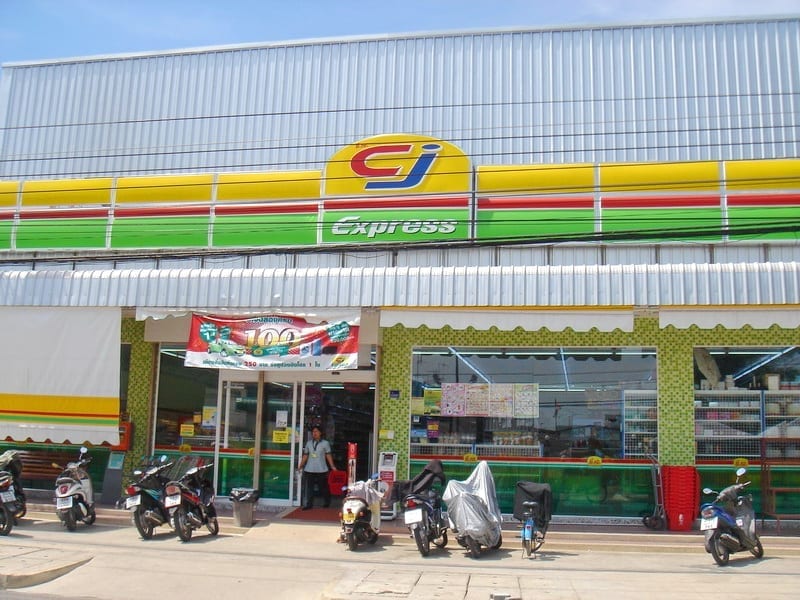
    CJ Express, which runs convenience stores and supermarkets, plans to invest THB4 billion (US$120 million) in doubling the size of the business.

    Its aim is to be earning THB20 billion in sales by 2020, says MD Sathien Setthasit.

    He says about THB3.7 billion will be used to open 370 stores and supermarkets this year through to 2020. This would bring store numbers to 600 within the next three years.

    The remaining THB300 million will be spent on store renovations and other upgrades.

    Sathien says he is confident the investment will help boost sales to THB10 billion this year, up from THB7.4 billion last year.

    This year the company has added stores in the central region and in a 250km radius from Ratchaburi province, where it has its distribution centre.

    CJ Express is owned by the same stakeholders as energy-drink maker Carabao Group, but the two businesses are run separately. Sathien, who is also a Carabao Group founder, acquired CJ Express about four years ago.

    He says CJ Express is quite strong in the central region and helps support sales of Carabao Dang energy drinks.

    There are plans to expand CJ Express outlets to the northeast, which supports about 30 per cent of Thailand’s energy-drink market.

    Sathien says CJ Express will join forces with Topvalue, a wholly owned e-commerce site, in this year’s fourth quarter.

  • Profit lift for Sheng Siong Group

    Profit lift for Sheng Siong Group

    Supermarket chain Sheng Siong Group had a 6.1 per cent increase in net profit to S$16.1 million (US$11.8 million) for its second quarter, to the end of June.

    It attributes this to higher gross profit generated by revenue growth and improved gross margin, partially offset by higher running expenses because of increased activity.

    Revenue grew by 6.8 per cent year-on-year of which 5.2 per cent was contributed by new stores, 0.9 per cent by comparable same-store sales and 0.7 per cent by Loyang Point and The Verge stores.

    Growth in same-store sales improved on the first quarter’s “flattish” growth, mainly because of improved consumer sentiment, but was offset by a drop in footfall of stores in areas affected by the slowdown in the oil and gas industry, the Tampines store’s renovation and the Woodlands store, where most residents in nearby blocks affected had moved. Excluding the contraction from the Woodlands store, comparable same-store sales growth would be 1.2 and 1.7 per cent for the first and second quarters respectively.

    Gross margins increased to 26.6 per cent for the second quarter (26.1 per cent in the same quarter last year), mainly because of input cost being lowered by efficiency gains derived from the central distribution centre, a higher level of supplier rebates, and a better sales mix of higher-gross-margin fresh versus non-fresh produce.

    The store at The Verge was closed in the third week of June, and The Woodlands store may be closed in October instead of August, as the HDB is redeveloping the area. Both these stores accounted for 7.6 per cent of the first half’s revenue.

    The group has entered into a lease for a new shop of about 4000 sqft (370 sqm) at Fajar Road, Bukit Panjang, and successfully bid for a new HDB shop of about 12,000 sqft in Woodlands Street. The stores are expected to be open in September and October respectively.

    An extension of the distribution has been started, to add another 50,000 sqft of storage space in the third quarter of next year.

    Renovation of a supermarket to be run by a subsidiary in Kunming is expected to be complete in September.

  • Indonesian supermarket opened in Qatar

    Indonesian supermarket opened in Qatar

    A supermarket selling Indonesian products was opened in the Messaieed City, located around 40 kilometers from Doha, Qatar. The Indonesian supermarket, called KWIQ Supermarket, was officially opened to the public on June 17 by Indonesian Ambassador to Qatar Muhammad Basri Sidehabi, as quoted from the official website of the Indonesian Ministry of Foreign Affairs on Monday.

    “This Indonesian supermarket serves as a concrete manifestation of Deputy Minister of Foreign Affairs A.M. Fachirs instruction during a coordination meeting last month,” Sidehabi noted.

    The deputy minister had instructed the Indonesian representative to focus on feasible and concrete efforts and to dare to innovate for the benefit of the people, he said.

    The supermarket is expected to encourage the Indonesian diaspora to develop businesses in Qatar as well as to serve as a platform for Indonesian businessmen keen to expand their business in Qatar.

    The plan to set up an Indonesian supermarket was initiated by the KWIQ cooperative group.

    Head of the KWIQ cooperative group Kartini Sarsilaningsih said Indonesian citizens living in Messaieed and Wakrah are keen to support the plan to set up an Indonesian supermarket in Qatar.

    Sasilaningsih said the business holds high potential, adding that the Government of Qatar is currently conducting diversification of products following the diplomatic rift with several gulf countries.

    She hoped that in future, the Indonesian supermarket would gain greater support from Indonesian business entities and producers that are looking to expand their business in Qatar.

    “For now, the supermarket has set a target to function as a distributor for Indonesian products since it has a business network,” she revealed.

    The supermarket has been supported by the Indonesian Business Association in Qatar and is selling Indonesian products, such as food and beverages and household appliances.

  • Yonghui to build supply chain industrial park in Sichuan with CNY1 billion

    Yonghui to build supply chain industrial park in Sichuan with CNY1 billion

    Chinese supermarket chain retailer Yonghui Supermarket has decided to build a supply chain industrial park in Sichuan’s Pengzhou city, with a total investment of CNY1 billion.

    The company says the industrial park will better support its regional distribution and warehousing demands and food processing business development in Sichuan.

    Yonghui Supermarket will purchase an area of 300 mu for this project. The first phase of the project, which covers 93 mu, will be launched first; and the second phase, which covers 207 mu, is expected to be launched in 2019.

    With an investment of CNY100 million, Yonghui Supermarket will also set up a project company in the industrial park and this project company will be named “Sichuan Caishixian Supply Chain Development Company Limited”, which is subject to the approval of industry and commercial authorities.

    Meanwhile, Yonghui Supermarket will establish two “Caishixian” processing subsidiaries – one in Hefei, Anhui province and the other in Kunshan, Jiangsu province with CNY50 million investments in each.

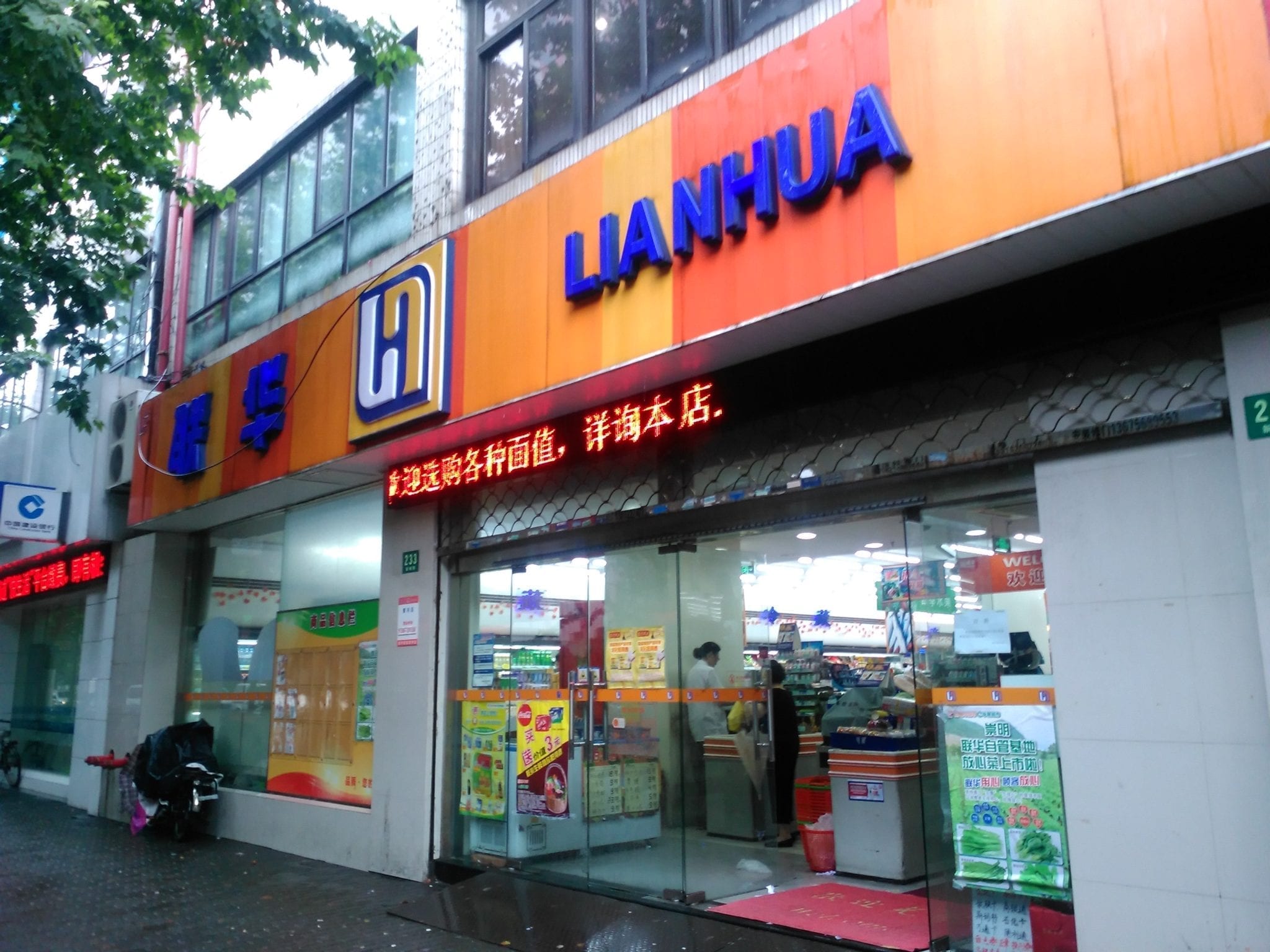
  • Alibaba buys 201.5 million shares in Lianhua Supermarket to become second-largest shareholder

    Alibaba buys 201.5 million shares in Lianhua Supermarket to become second-largest shareholder

    Lianhua Supermarket Holdings’ shares were halted in Hong Kong after the retailer’s stock jumped by almost 22 per cent following the announcement that Alibaba Group Holding has emerged as its second-largest shareholder.

    The stake purchase is the latest in a long line of Alibaba investment in brick and mortar shopping malls, part of a strategy adopted by the e-commerce giant since 2015 to broaden its exposure to markets where online and offline retailers are converging.

    Lianhua shares rose to a two-month high of HK$3.83 before trading was halted on the Hong Kong stock exchange.

    Alibaba, operator of the world’s largest online shopping platform, said it would buy 201.5 million shares of Lianhua, giving it 18 per cent of the supermarket operator and becoming its second-largest shareholder, according to a filing to the Shanghai Stock Exchange issued by the retailer’s parent Bailian Group.

    The investment by Alibaba, owner of the South China Morning Post, follows a February announcement of a strategic tie up with Bailian to use big data to improve sales at its physical stores, the largest retailer by store numbers in China

    As online sales growth slows, Alibaba has been rapidly expanding into traditional retailing in recent months.

    Alibaba announced in August 2015 that it would invest US$4.6 billion for a minority stake in Chinese electronics retailer Suning Commerce Group Co, while in January its announced it is leading a US$2.6 billion bid to privatise mainland department store and shopping mall operator Intime Retail Group.

    In November it bought a stake in supermarket chain Sanjiang Shopping Club Co for US$305 million.

    Zhu Danpeng, a researcher on China’s retail industry, said the online and offline retailing business are converging as they start to realise that they are more complementary than mutually exclusive.

    “Offline shopping fulfils an emotional need of a consumer, which is irreplaceable by the online shopping experience,” he said. “So it is natural for mature e-commerce businesses to want to capture that part of the business.”

    He also said the retailing industry will stratify into different levels of services.

    High-end products such as luxury goods will retail in brick-and-mortar shops where consumers look for a higher level of personal service, while standard grocery and household items are better suited for the online environment.

    Brett McGonegal, chief executive of Capital Link International, said that the trend towards brick-and-mortar shops will allow e-commerce businesses such as Alibaba and Amazon to learn more about the shopping habits of consumers.

    “It closes the gap between warehouse distribution and consumers,” he said, “[With better understanding of consumers’ habits] retailers can put items right where and when you need them.”

    He also said Alipay will be an important component to the convergence of online and offline shopping. He added that Alibaba ultimately wants to allow its users to finish all their shopping and transactions exclusively on its network.

    A JLL market report highlighted that an increasing number of brick-and-mortar shops on the mainland are pushing for online shopping services, which include online voucher schemes, automated check-out and order-online-pickup-offline services.

    JD.com has also been expanding into offline retailing in recent years after it invested 4.3 billion yuan (US$627.3 million) in Yonghui Supermarket and forged a partnership with Walmart.

    JD.com said that it plans to establish more than 1 million convenience stores, with half located in rural China, in five years.

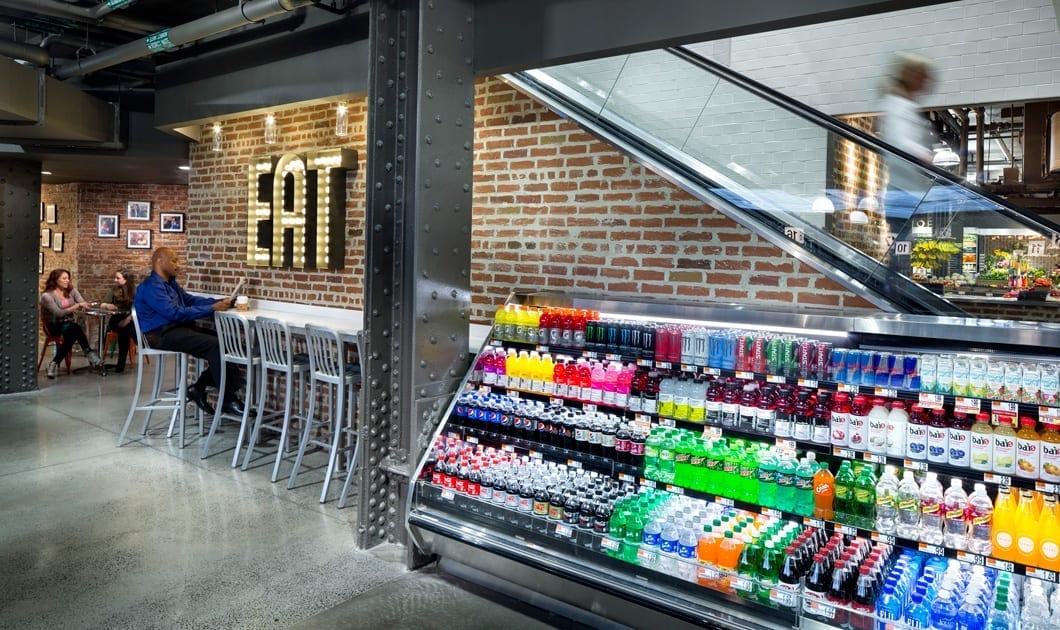
  • Eat-in supermarkets catching on in Japan

    Eat-in supermarkets catching on in Japan

    Japanese retail group Aeon will expand dining areas at its domestic stores, aiming to capture demand from the growing ranks of seniors and dual-income families wanting to spend as little time as possible on household chores.

    Within three years, group unit Aeon Retail plans to double to around 150 its stores with spaces seating at least 50. Most of its 360 locations stores already have dining spaces, but only for 20 to 30 people.

    The plan is to create the roomy spaces at 30 or so locations each year as stores undergo renovation. Dedicated registers may be set up so that customers need not wait in the same lines as grocery shoppers. Such new items as pizzas baked to order and make-your-own salads will be gradually introduced.

    Yaoko, a supermarket operator in the greater Tokyo area, has renovated a flagship store in Kawagoe, northwest of the Japanese capital. It serves freshly made meals there for eating in-store, such as a 680 yen ($6) bowl of seafood over rice with eight toppings.

    Yokohama-based discount retailer OK runs a food court at one of its stores that serves dishes made from such supermarket-section ingredients as rice, eggs and beef.

    Supermarkets sell prepared foods at lower prices than convenience stores and restaurants. Eating on the premises spares customers from dealing with the resulting trash at home. Retailers hope to leverage these benefits to pull in more shoppers. Since foods prepared on-site carry higher margins than processed foods from manufacturers, in-store eating is seen buoying earnings as well.

    In the U.S., such major retailers as Whole Foods Market have “grocerant” — a portmanteau of “grocery” and “restaurant” — dining areas offering prepared foods for purchase by weight. These are drawing attention as a new way to lure customers. The market for prepared foods from grocers has been estimated at $10 billion a year.

  • We’ll Only Shop For Groceries in This Hello Kitty Supermarket From Now On

    We’ll Only Shop For Groceries in This Hello Kitty Supermarket From Now On

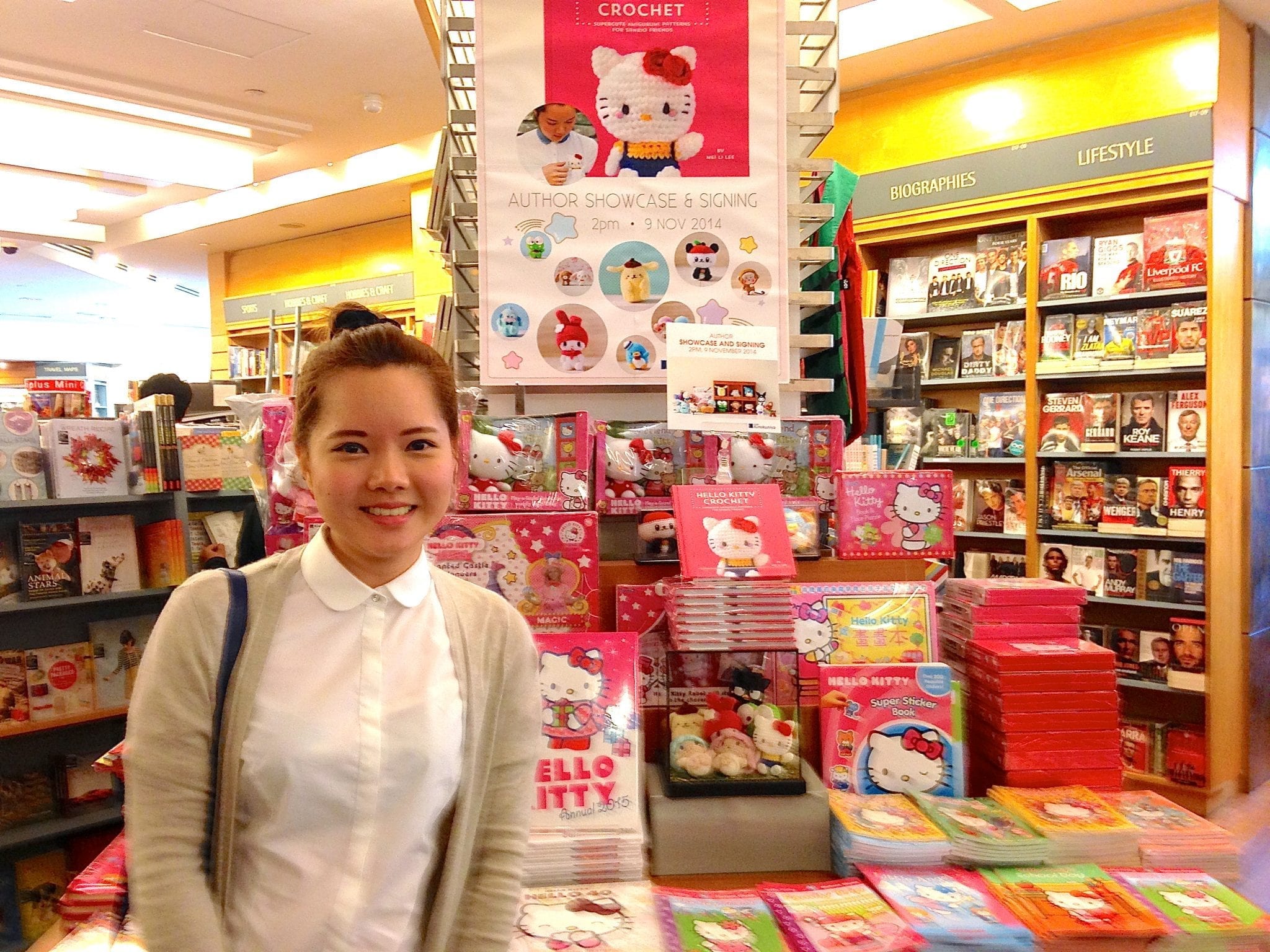
    A Hong Kong supermarket is turning grocery shopping into an unbearably adorable experience with its Hello Kitty pop-up. The delightful shop will be officially open for business — operating within Sai Wan’s Yata Supermarket — from Feb. 12 to May 31.The pop-up offers desserts, dry grocery items, home decor products, and general merchandise all inspired by the beloved Sanrio character.

    In addition, all of the shopping bags and carts will reflect the same theme, turning it into a truly immersive experience. Preview pictures reveal that the limited-edition popcorn and light-up cotton candy are hot commodities. It can also be expected that Hello Kitty herself will be stopping by the store from time to time.According to the South China Morning Post, the pop-up could be an attempt to boost Hong Kong’s struggling retail sector.

    We have a feeling the Instagram-ready supermarket will certainly be a step in the right direction.